sciepub.com
 Quick Submission

Efficacy and Safety of Methoxy Polyethylene Glycol Epoetin - Beta versus Epoetin Alpha for Treatment of Chronic Renal Anemia in Hemodialysis Patients
Abeer K. Jumaa1, , Hassan M. Abbas Al Temimi2, May S. Alsabbagh1, Jawad I.Rasheed3
1Clinical Pharmacy Department, College of Pharmacy/ Baghdad University, Baghdad, Iraq
2Clinical Pharmacy Department, Medical city, Baghdad, Iraq
3Nephrology Department, Medical city, Baghdad, Iraq
Abstract
Objective: Chronic kidney disease is a common health problem in the world and anemia is of its common complication. The aim of this study was to evaluate the efficacy and the safety of methoxy polyethylene glycol-epoetin beta in comparison with epoetin alfa in treating chronic renal anemia in hemodialysis patients. Methods: A single center randomized controlled open labeled clinical trial with three months duration was performed. 46 Patients with chronic renal anemia were allocated randomly to receive either methoxy polyethylene glycol-epoetin beta (100μg) every two week or epoetin alfa (4000 IU) twice weekly and were evaluated at baseline and monthly after starting their treatments for 3 months. Clinical assessment was done by measuring hemoglobin concentration, packed cell volume, reticulocyte count, iron parameter, potassium level, platelets count and monitoring of the adverse events. Results There was a statistically significant increase in haemoglobin concentration, packed cell volume, and reticulocyte count in the both groups. The rise in haematological parameters in methoxy polyethylene glycol-epoetin beta group was non significantly higher than that of epoetin alfa groups. Non- significant changes were observed in potassium level and platelets count between the two groups. One case of Fistula thrombosis and local pain or tissue reaction to S.C injection was reported in methoxy polyethylene glycol epoetin beta arm. Other adverse events and complications include flu-like symptoms, diarrhea and blood transfusion was reported in both arms There were no hypertension and no death reported. Conclusion: methoxy polyethylene glycol-epoetin beta every two week effectively corrected chronic kidney disease (CKD) related anemia and was well tolerated and it is efficacy and safety is comparable to twice weekly epoetin alfa for anemia correcting in hemodialysis patients.
Keywords: methoxy polyethylene glycol-epoetin beta, end-stage renal disease, anemia, epoetin alfa
Received August 24, 2015; Revised August 28, 2015; Accepted September 06, 2015
Copyright © 2015 Science and Education Publishing. All Rights Reserved.Cite this article:
- Abeer K. Jumaa, Hassan M. Abbas Al Temimi, May S. Alsabbagh, Jawad I.Rasheed. Efficacy and Safety of Methoxy Polyethylene Glycol Epoetin - Beta versus Epoetin Alpha for Treatment of Chronic Renal Anemia in Hemodialysis Patients. American Journal of Pharmacological Sciences. Vol. 3, No. 4, 2015, pp 87-93. http://pubs.sciepub.com/ajps/3/4/1
- Jumaa, Abeer K., et al. "Efficacy and Safety of Methoxy Polyethylene Glycol Epoetin - Beta versus Epoetin Alpha for Treatment of Chronic Renal Anemia in Hemodialysis Patients." American Journal of Pharmacological Sciences 3.4 (2015): 87-93.
- Jumaa, A. K. , Temimi, H. M. A. A. , Alsabbagh, M. S. , & I.Rasheed, J. (2015). Efficacy and Safety of Methoxy Polyethylene Glycol Epoetin - Beta versus Epoetin Alpha for Treatment of Chronic Renal Anemia in Hemodialysis Patients. American Journal of Pharmacological Sciences, 3(4), 87-93.
- Jumaa, Abeer K., Hassan M. Abbas Al Temimi, May S. Alsabbagh, and Jawad I.Rasheed. "Efficacy and Safety of Methoxy Polyethylene Glycol Epoetin - Beta versus Epoetin Alpha for Treatment of Chronic Renal Anemia in Hemodialysis Patients." American Journal of Pharmacological Sciences 3, no. 4 (2015): 87-93.
| Import into BibTeX | Import into EndNote | Import into RefMan | Import into RefWorks |
At a glance: Figures
1. Introduction
End Stage Renal Disease is the progression of chronic kidney disease to a GFR less than 15 ml/min, that needs renal replacement therapy, either transplantation or dialysis [1]. As the kidney disease progresses, anemia increases in occurrence affecting approximately all patients with stage 5 CKD [2].
Anemia can be defined as the reduction in one or more of the major red blood cell measurements; hemoglobin concentration, hematocrit, or red blood cell count. Anemia defined by WHO as a hemoglobin level less than 13 g/dL, HCT is<0.39 (39%) in men and post- menopausal women and Hb less than 12 g/dL HCT is <0.36 (36%) in premenopausal women [3] while it defined by NKF as a hemoglobin of less than 13.5 g/dL in men and less than 12.0 g/dL in women [2]. Data collected in 2007-2010 showed that anemia prevalence in people with CKD (15.4%) was as twice as of the general population (7.6%).In addition, anemia prevalence increased with the stage of CKD: less than 10% in stages 1 and 2, 20–40% in stage 3, 50–60% in stage 4 and more than 70% in stage 5 of CKD [4]. Erythropoietin hormone that stimulates the red blood cells production by the bone marrow, being produced in the kidneys. Chronic kidney disease patients eventually present with a shortage of this hormone, that leads to an anemia [5].
Erythropoiesis-stimulating agents (ESAs) are standard therapy for renal anemia correction, as maintenance of hemoglobin (Hb) within a preferred range and reduces the need for transfusions of red blood cell (RBC) that can have a major impression on patient outcomes [6]. However, due to the short half-lives of ESAs (Epoetin alpha and beta approximately seven to nine hours, darbepoetin alpha approximately 25 hours) frequent administration is necessary ( two to three times for Epoetin alpha or beta and once weekly for darbepoetin alpha). Short half-life of ESAs is one of the reasons behind the fluctuations of hemoglobin (Hb) levels [7]. Dosing interval of ESAs with short half-life may contribute to the problem of Hb cycling [8]. To maintaining Hb levels in the target ranges, close monitoring of Hb and frequent dosage adjustment of ESAs often required. Hence, maintaining Hb levels may load renal units, which already have to come up with growing prevalence and incidence of CKD and may be time consuming [9]. Accordingly, agents with extended dosing interval is needed to provide stable and predictable hemoglobin responses with minimal health care professionals intervention [10]. Methoxy polyethylene glycol epoetin beta or continuous erythropoietin receptor activator, is the first agent of a new class of longer-acting ESAs designed for correction and maintaining hemoglobin levels in patients with CKD. Contrasting shorter-acting ESAs, continuous erythropoietin receptor activator has lower affinity for erythropoietin receptors that prompts its repeated binding and further stimulation of bone marrow for red blood cell production. Long half-life of Methoxy polyethylene glycol epoetin beta (elimination half-life of 130 h) allows its administration as once every two weeks to correct anemia and once-monthly to maintain target hemoglobin levels [11, 12]. Amongst currently available ESAs continuous erythropoietin receptor activator has the longest half-life , making it possible to achieve steady and smooth correction of Hb and stable maintenance at extended intervals [13, 14] In addition to, longer half-life may help in minimizing the injections frequency and number of hospital visits resulting in better compliance [15].
This study was designed to assess the efficacy and safety of Methoxy polyethylene glycol-epoetin-beta in the treatment of Iraqi hemodialysis patients with chronic renal anemia and to compare it with the conventional ESAs (epoetin alpha).
2. Subjects and Methods
2.1. Study DesignThis study is a prospective single center open label randomized controlled clinical study that was carried out at hemodialysis Unit, Baghdad Teaching Hospital from 1st October 2014 to 5th May 2015. Informed consent was obtained from all participants and ethical Approval was gained from the Ethics Committee by College of Pharmacy / Baghdad University and nephrology Medical Department. Patients were randomly allocated to receive either methoxy polyethylene glycol epoetin beta (100μg) S.C injection once every two weak or epoetin alfa (4000 IU) S.C injection twice weekly for three months. The dose will be adjusted at monthly basis in order to reach to the target hemoglobin. Patients received 100 mg of IV iron sucrose once per weak to keep the transferrin saturation ≥ 20% and ferritin ≥ 100. Additionally, all the patients received folic acid 5 mg per day and vitamin B12 12 μg per day. methoxy polyethylene glycol epoetin beta was bought from Roche Company, Germany while epoetin alfa was bought from Janssen-Cilag Company, Switzerland. Patients were evaluated at baseline and monthly after starting their treatment for three months. Control groups were assessed at base line only .
2.2. Sample Selection.Forty six adult patients greater than 18 years of old on regular hemodialysis 2 time/ weak for at least previous 3 consecutive months. Patients with Hb concentration equal or greater than 7g/dl and less than 11g/dl with adequate iron status (serum ferritin greater than100 ng/mL and TSAT greater than 20%) were recruited in the study. Exclusion criteria included patients with Red blood cells transfusion during the previous 2 months; blood pressure >170/100; acute or chronic bleeding for example overt gastrointestinal bleeding; chronic, symptomatic or uncontrolled inflammatory disease such as(systemic lupus erythematosus, rheumatoid arthritis); PTH > 1000 pg/mL; epileptic seizure during the previous 6months; malignancy; vitamin B12 deficiency, folic acid deficiency dignified by local lab values, erythrocyte MCV105 fL. In addition to,20 healthy age and sex matched individuals to be considered as a control.
2.3. Clinical and Laboratory EvaluationAssessment of the patient’s outcome was done by measuring hemoglobin concentration (Hb), packed cell volume (PCV) and reticulocyte count. Ferrokinetic study including serum ferritin, serum iron, total iron binding capacity and transferrin saturation were done in order to maintain good iron store. All laboratory examinations were performed at baseline and months 1, 2, and 3 of the study. And monitoring of the adverse events of methoxy polyethylene glycol epoetin beta and epoetin alfa either by clinical examination for the objective data or by questionnaire for the subjective data. Blood specimen collection and laboratory analysis was done by specialized laboratory researchers who did not participate in this study. CBC were measured by a hematology auto-analyzer (Ruby-CELL-DYN 08H56-02).Biochemical parameters were measured by Cecil7200 Spectrophotometer, Transferrin saturation is calculated by dividing the serum iron concentration by the total iron binding capacity. the results express as a percentage by multiplying the result by 100 according to the following formula:
 |
[16]
2.4. Statistical AnalysisStatistical software (IBM SPSS version 12) was used for data input and analysis. Chi square test for independence was used to test the significance of association between discrete variables. Continuous variables were tested by the Shapiro Wilk test to determine if they were normally or abnormally distributed. ANOVA test was used to test the significance of difference in the mean of 3 independent samples in normally distributed continuous variables. Unpaired t-test was used to test the significance of difference in the mean of two independent samples in normally distributed continuous variables and Mann Whitney test for abnormally distributed data. Findings with P value less than 0.05 were considered significant.









3. Results
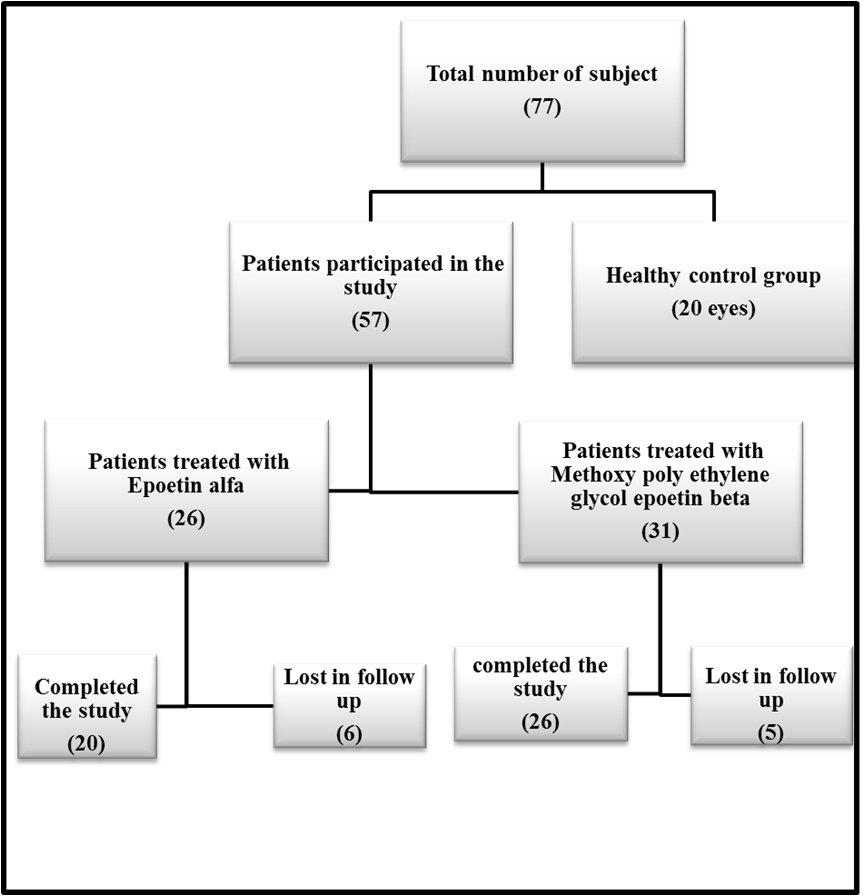
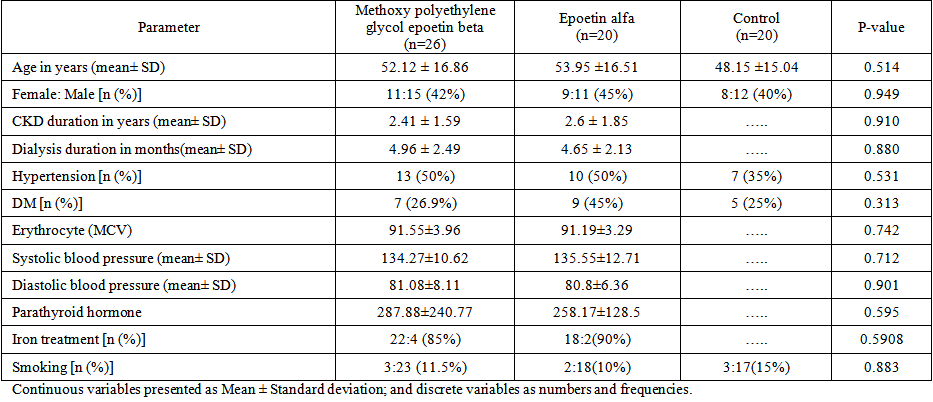
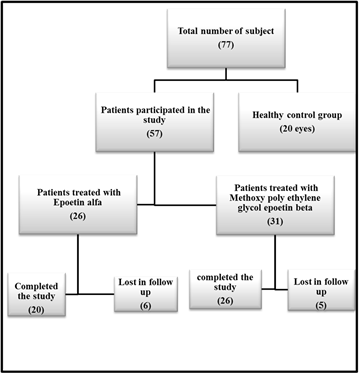
Of a total of 57 patients who were randomized in this study, 46 completed the treatment (26 from the methoxy polyethylene glycol epoetin beta group and 20 from the epoetin alfa group, Figure 1). The mean age of methoxy polyethylene glycol epoetin beta group did not differ significantly from epoetin alfa group and controls (52.12 ± 16.86 years vs 53.95 ±16.51years vs 48.15 ±15.04 years respectively, P>0.05).
 Download as
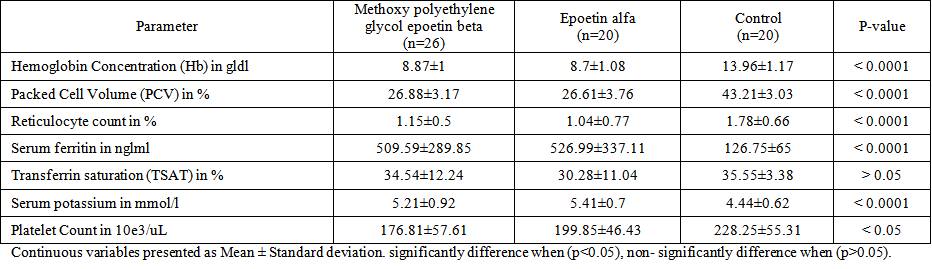
Also there was no statistical significant difference in the female to male ratio among of methoxy polyethylene glycol epoetin beta group, epoetin alfa, and controls (11:15 (42%) vs 9:11 (45%) vs 8:12 (40%) respectively, P>0.05, Table 1).The number of patient treated with iron was comparable at the base line (22 vs18) in methoxy polyethylene glycol epoetin beta group and epoetin alfa respectively P>0.05, Table 1).Baseline patients parameters showed that Hb, PCV and reticulocyte count was significantly lower in patients with renal anemia than healthy control subjects (P < 0.0001). Platelet count also was significantly lower in patients with renal anemia than healthy control subjects (P < 0.05). Whereas ferritin and Serum potassium were significantly higher in patients with renal anemia than those in control group(P < 0.0001).Furthermore, transferrin saturation was non-significantly lower in patients with renal anemia than healthy control subjects (P>0.05, Table 2).
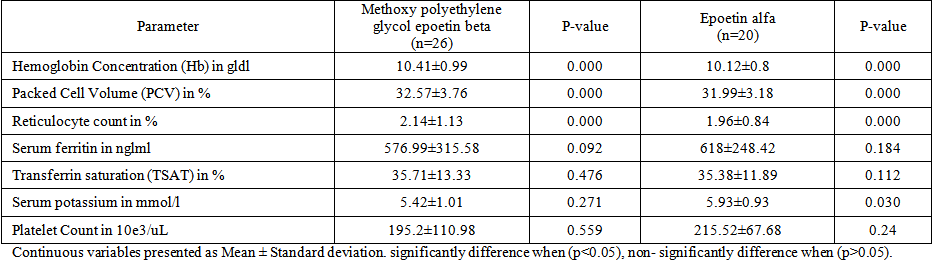
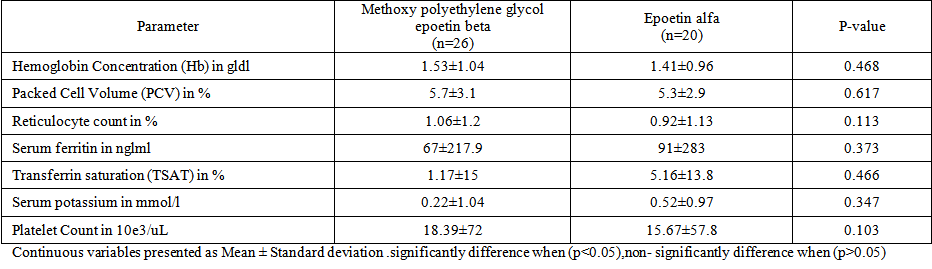
At the end of the study we found a significant increase in hematological parameter (Hb, PCV and reticulocyte count) (P<0.0001) for both methoxy polyethylene glycol epoetin beta and epoetin alfa The mean changes in hemoglobin levels from baseline to the end of the study were 1.53±1.04 g/dL with methoxy polyethylene glycol and 1.41±0.96 with epoetin alfa. In addition to, anon significant increase in iron parameter (ferritin and transferrin saturation) was found in methoxy polyethylene glycol epoetin beta and epoetin alfa groups (P= >0.05, Table 3), Anon significant difference in hematological parameter (Hb, PCV and reticulocyte count) and in iron parameter (ferritin and transferrin saturation) was found between methoxy polyethylene glycol epoetin beta and epoetin alfa groups (P= >0.05, Table 4). serum ferritin level and transferrin saturation at base line and completion of study was comparable between the two groups.
Regarding to the adverse effect, there was is a significant increase in serum potassium level with epoetin alfa group (P=< 0.05) and non-significant increase with methoxy polyethylene glycol epoetin beta group (P= >0.05). anon significant increase in platelet count for both methoxy polyethylene glycol epoetin beta and epoetin alfa groups(P= >0.05, Table 3). overall there was anon significant difference in platelet count and in potassium level between methoxy polyethylene glycol epoetin beta and epoetin alfa groups(P= >0.05, Table 4). The most common adverse event in methoxy polyethylene glycol epoetin beta and epoetin alfa was flu- like symptoms (3.8% vs10 %respectively) and diarrhea (7.7% vs 5%respectively). Fistula thrombosis and local pain or tissue reaction to S.C injection (3.8%) were reported in methoxy polyethylene glycol epoetin beta arm only. Additionally three patient (11.5%) need for blood transfusion during the study in methoxy polyethylene glycol epoetin beta group while two patient (10%) need for blood transfusion in epoetin alfa group (Table 5).


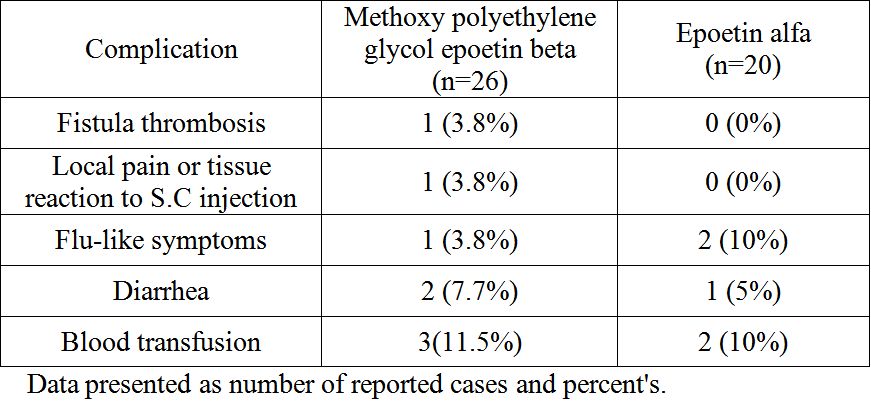

There was no clinically significant difference between methoxy polyethylene glycol epoetin beta and epoetin alfa regrding complication and adverse effect (P>0.05). There were no hypertension and no deaths reported during the study.
4. Discussion
Current ESA therapy for hemodialysis patients with chronic renal anemia requires close monitoring and frequent dose adjustments. Therefore, a modification allowing less frequent administration, with sustained efficacy, should improve the convenience and therapeutic benefits of ESA therapy[17].
The current study demonstrates that both methoxy polyethylene glycol epoetin beta and epoetin alfa increased hemoglobin concentration significantly. Overall methoxy polyethylene glycol epoetin beta was non- significantly superior to epoetin alfa in improving Hb level in patients with anemia due to CKD with greater proportion of patients gained ≥11 Hb concentration in methoxy polyethylene glycol epoetin beta group compared to epoetin alfa group. This result is consistent with results of the AMICUS study [18] which concluded that methoxy polyethylene glycol epoetin beta and epoetin resulted in significant improvement in Hb concentration over a period of 24 week with non significant difference between both drugs. The mean change in Hb concentration from baseline to week 24, 2.70 ± 1.45 g/dL with methoxy polyethylene glycol epoetin beta and 2.56 ± 1.31 g/dL with epoetin.
VANKAR et al [15] who carried out prospective, open-labelled, pilot clinical study on D.M patient who were not on dialysis nor receiving treatment with ESA were administered methoxy polyethylene glycol epoetin beta subcutaneously once in two weeks for a period of 24 weeks and found that hemoglobin concentration was increase significantly with mean Hb rise of 2.58 g/dl from baseline (9.10 versus 11.68 g/dl, P≤0.001). Argani et al [19] who carried out a multicenter clinical trial on the hemodialysis patients with a hemoglobin level less than 12 g/dL for 3 months found that epoetin alfa increase hemoglobin concentration significantly with Hb rise from 10.5 ± 2.0 at baseline to 11.8 ± 1.9 at the end of three month P = .01). Both VANKAR et al and Argani et al studies are consistence with the result of current study.
Hematocrit value or ratio; also called packed cell volume(PCV) is a measure of the relative volume occupied by RBCs in capillary or venous whole blood samples[20]. the current study demonstrates that both methoxy polyethylene glycol epoetin beta and epoetin alfa increased PCV significantly with no significant difference between both groups .This result is consistent with results of Aggarwal et al [21] who carried out open and prospective study conducted over three months on adult male patients with anemia of chronic renal failure treated with low dose of rHuEPO (2,000 IU )subcutaneously twice a week, found that there was a statistically significant rise in mean PCV from 18.8 ± 1.61 at base line to 27.8 ± 2.8(P < 0.001) at the end of study and VANKAR et al [15] found that methoxy polyethylene glycol epoetin beta significant increase the packed cell volume (PCV), value of 6.5 per cent from base line to the end of 24 week (27.4 versus 33.9% respectively, P≤0.001).
Because reticulocytes are normally released from the marrow 18 to 36 hours before their final maturation into erythrocytes, they provide a real-time assessment of the functional state of erythropoiesis .It has been suggested that a response to erythropoietin can be assessed by measuring hemoglobin and reticulocyte counts after 4 weeks of therapy; a change in hemoglobin level or a change in reticulocyte count could indicate that the patient is a responder to erythropoietin therapy[22].
Reticulocyte count will increased significantly in methoxy polyethylene glycol epoetin beta and epoetin alfa with no significant difference between both groups in this study, this consistent with Aggarwal et al [21] that found a statistically significant rise in mean % reticulocyte count from 0.39 ± 0.14 at base line to 2.30 ± 0.72 (P < 0.001) at the end of study and Forni et al [23] which found that methoxy polyethylene glycol epoetin beta increase mean absolute reticulocyte count significantly from 34147 ± 12823 cells/μl at base line to 69891±18153 cells/μl after six month of therapy(P < 0.001) and induced a more sustained reticulocytes response over time . Exactly there were no similar studies in respect of comparing PCV and reticulocyte between methoxy polyethylene glycol epoetin beta and epoetin alfa and this was the first study evaluated this.
There was a numerical difference in the Hb, PCV and reticulocyte count between those studies and the present study which may be attributed to the difference in the baseline characteristics of the participated patients. Additionally, these studies had different study designs and treatment criteria , also the short duration of this study in comparison to some of the above studies.
Thenumber of patient who received iron supplementation was comparable in the two treated groups. The serum ferritin and TSAT at baseline and at the completion of the study treatment were also comparable among the two groups. Baseline iron parameter in our patients did not show iron deficiency, probably because of the fact that these patients were on regular follow-up and were getting adequate oral iron and folic acid supplements before enrolment in the study. However, there was a non significant increase in levels of serum ferritin and transferrin saturation percent at the end of 3 months when compared with the baseline values in the two groups.
Potassium level increase non significantly with methoxy polyethylene glycol epoetin beta but increase significantly with epoetin alfa with non significant difference between the two groups. IN epoetin alfa arm, this result is consistent with Aggarwal et al [21] who observe asignificant rise in serum potassium in Patients treated with rHuEPO of from 3.96 ± 0.47 to 4.86 ± 0.56 meq/l, p < 0.001 However, no patient developed life threatening hyperkalemia. In methoxy polyethylene glycol epoetin beta arm, this result is also consistent with TAKAHASHI et al[24] who found that there was no clinically significant changes occurred from baseline in the safety laboratory values including potassium level and Potassium increase in 17% of the patient after 12 weak . However, it was shown that patients had higher K levels when their renal function became worse This is in agreement with Hsieh et al [25]. and Owiredu et al [26] they concluded that serum K level increased in correlation with the decline in the GFR in the late stages of CKD. Moreover, male gender, diabetes mellitus and anemia might be risk factors for high K level in CKD patients. The variation in the serum K level became wider as renal failure progressed. Platelet Count increase non significantly for both methoxy polyethylene glycol epoetin beta and epoetin alfa with no significant difference between them, This is in consistent with laupacis [27] study wo found that after six month of treatment with epoetin there was non-significant increase in platelet count with mean increase of 24,000 from the baseline. but contrast to Frimat et al [28] who observe a non -significant decreased in platelet count during one year study with methoxy polyethylene glycol epoetin beta, but it was considered non-serious in 87% of cases this. Several studies have shown that erythropoietin induces not only erythropoiesis but also thrombopoiesis. In healthy volunteers and uremic patients erythropoietin induced a transient 10–20% increase of platelet counts [29]. This increase was depending on the platelet counts, i.e. patients with higher platelet counts responded better to erythropoietin.
So, in terms of safety, methoxy polyethylene glycol epoetin beta were well tolerated in patients with anemia due to CKD. There were no serious adverse events observed in both arm. There were no cases of hypertension and no deaths in the study in both of the treatment arms.No significant difference between methoxy polyethylene glycol epoetin beta and epoetin alfa arms regarding adverse events were observed. The current safety findings are consistent with the results of other studies used methoxy polyethylene glycol epoetin beta in treating anemia.
In conclusion, methoxy polyethylene glycol-epoetin beta every two week effectively corrected chronic kidney disease (CKD) related anemia and was well tolerated and it is efficacy and safety is comparable to twice weekly epoetin alfa for anemia correcting in hemodialysis patients. This less frequent dosing schedule of methoxy polyethylene glycol-epoetin beta may offer clinicians and patients a simplified anemia management as compared to traditional erythropoietin (epoetin alfa).
However, future longer clinical trials are required with longer follow up periods to confirm the long term efficacy and safety of methoxy polyethylene glycol epoetin beta.
References
| [1] | Edgar V. Lerma, Jeffrey S. Berns, Allen R. Nissenson. Current Essentials of Nephrology & Hypertension McGraw-Hill Companies. United States 2012 June; chapter 3:113-123. | ||
 In article In article | |||
| [2] | KDOQI National Kidney Foundation: KDOQI Clinical Practice Guidelines and Clinical Practice Recommendations for Anemia in Chronic Kidney Disease. Am J Kidney Dis. 2006;47 [Suppl 3]: S11-S145. | ||
| In article | PubMed | ||
| [3] | World Health Organization. Worldwide Prevalence of Anaemia 1993-2005: WHO Global Database on Anaemia. In: de Benoist B, McLean E, Egli I and M Cogswell (eds), 2008. | ||
| In article | PubMed | ||
| [4] | Christina E. Lankhorst a, Jay B. Wish. Anemia in renal disease: Diagnosis and management. ELSEIVER. Blood Reviews. 2010; (24), 39-4. | ||
| In article | |||
| [5] | Lasch KF, Evans CJ, Schatell D. A qualitative analysis of patient reported symptoms of anemia. Nephrol Nurs J 2009; 36: 621-622. | ||
| In article | PubMed | ||
| [6] | Regidor DL, Kopple JD, Kovesdy CP, et al. Associations between Changes in hemoglobin and administered erythropoiesis stimulating agent and survival in hemodialysis patients. J Am Soc Nephrol. 2006; 17(4):1181-1191. | ||
| In article | View Article PubMed | ||
| [7] | Berns JS, Elzein H, Lynn RI, Fishbane S, Meisels IS, Deoreo PB. Hemoglobin variability in epoetin-treated hemodialysis patients. Kidney Int 2003;64:1514-1521. | ||
| In article | View Article PubMed | ||
| [8] | Gilbertson DT, Weinhand E, Ebben J, Collins AJ. An investigation of temporal relationship between hemoglobin levels and EPO doses J Am Soc Nephrol 2005; 16: 875A (abstract PUB430). | ||
| In article | |||
| [9] | Modi GK, Zha V et al. The incidence of end-stage renal disease in India: A population-based study. Kidney Int 2006;70:2131-2133. | ||
| In article | View Article | ||
| [10] | Macdougall IC: CERA (continuous erythropoietin receptor activator): a new erythropoiesis-stimulating agent for the treatment of anemia Curr Hematol Rep 2005;4:436-440. | ||
| In article | PubMed | ||
| [11] | Committee for Medicinal Products for Human Use, European Medicines Agency. Scientific discussion. In: Mircera: European public assessment report. London: EMEA; 2007. | ||
| In article | |||
| [12] | Francesco Locatelli,Lucia Del Vecchio. Erythropoiesis-Stimulating Agents in Renal Medicine The Oncologist .2011; 16(suppl 3): 19-24. | ||
| In article | PubMed | ||
| [13] | Macdougall IC, Walker R, Provenzano R, Alvaro FD, Locay HR, Nader PC et al. CERA Corrects Anemia in Patients with Chronic Kidney Disease not on Dialysis: Results of a Randomized Clinical Trial. Clin J Am Soc Nephrol 2008; 3: 337-347. | ||
| In article | View Article PubMed | ||
| [14] | Spinowitz B, Coyne DW, Lok CE, Fraticelli M, Azer M, Dalal S et al. CERA Maintains Stable Control of Hemoglobin in Patients with Chronic Kidney Disease on Dialysis when Administered Once Every Two Weeks. Am J Nephrol 2008;28:280–289. | ||
| In article | View Article PubMed | ||
| [15] | Sameer G. Vankar, Pinaki Dutta, H.S. Kohli, et al. Efficacy & safety of continuous erythropoietin receptor activator (CERA) in treating renal anaemia in diabetic patients with chronic kidney disease not on dialysis. Indian J Med Res .January 2014; pp 112-116. | ||
| In article | |||
| [16] | Kidney Disease: Improving Global Outcomes. KDIGO clinical practice guideline for anemia in chronic kidney disease. Kidney Int Suppl 2012; 2(4): 279-335. | ||
| In article | |||
| [17] | Francesco Locatelli, Salvatore Mandolfo, Massimo Menegato Adorati,etal. Efficacy and safety of once-monthly continuous erythropoietin receptor activator in patients with chronic renal anemia. JNEPHROL .2013; 26(6): 1114-1121. | ||
| In article | View Article | ||
| [18] | Klinger M, Arias M, Vargemezis V, et al. Efficacy of intravenous methoxy polyethylene glycol-epoetin beta administered every 2 weeks compared with epoetin administered 3 times weekly in patients treated by hemodialysis or peritoneal dialysis: a randomized trial. Am J Kidney Dis. 2007; 50(6): 989-1000. | ||
| In article | View Article PubMed | ||
| [19] | Hassan Argani, Shahrzad Ossareh, Samira Tabiban,et al. PDpoietin in comparison with Eprex in treatment of anemic patients on hemodialysis. IJKD. 2009; 3: 145-50. | ||
| In article | PubMed | ||
| [20] | England JM, Rowan RM, Bins M, et al. Recommended methods for the determination of packed cell volume by centrifugation: The Expert Panel on Cytometry of the International Committee for Standardization in Haematology. WHO/LAB; 1989:1. | ||
| In article | |||
| [21] | HK Aggarwal, R Sehgal, S Singh,etal. Evaluation of efficacy of low dose recombinant human erythropoietin in combination with androgen therapy in anaemia of chronic renal failure. JIACM. 2005; 6(3): 208-15. | ||
| In article | |||
| [22] | Lawrence T. Goodnough, Barry Skikne, and Carlo Brugnara. Erythropoietin, iron, and erythropoiesis. BLOOD, Augest 2000; 96(3). | ||
| In article | |||
| [23] | Valentina Forni, Giorgia Bianchi, Adam Ogna,etal. Reticulocyte dynamic and hemoglobin variability in hemodialysis patients treated with Darbepoetin alfa and C.E.R.A.: a randomized controlled trial. BMC Nephrology .2013; 14:157. | ||
| In article | View Article PubMed | ||
| [24] | TOSHIAKI TAKAHASHI, NOBUYUKI YAMAMOTO, TOMOHIDE TAMURA, et al. Pharmacokinetic and pharmacodynamic profiles of subcutaneous administration of continuous erythropoietin receptor activator in lung cancer patients with anemia induced by chemotherapy. ONCOLOGY LETTERS 2: 1033-1040, 2011. | ||
| In article | PubMed | ||
| [25] | Hsieh M., Wu I., Lee C., Wang S., Wu M. (2011). Higher serum potassium level associated with late stage chronic kidney disease. | ||
| In article | |||
| [26] | Owiredu W., Ephraim R., Amidu B. and Laing E. (2012). Relationship between parathyroid hormone and electrolytes in chronic kidney disease. Journal of Medical Research 1(8):0103-0111. | ||
| In article | |||
| [27] | A.laupacis, Quality of life and exercise capacity in anaemic hemodialysis patients treated with erythropoietin. NEFROLOGIA. 1990; VOL X, supplement 3. | ||
| In article | |||
| [28] | Luc Frimat, Christophe Mariat, Paul Landais,et al. Anaemia management with C.E.R.A. in routine clinical practice: (CohorteMircera patients non-dialysés), OCEANE a national, multicenter, longitudinal, observational prospective study, in patients with chronic kidney disease not on dialysis. BMJ Open 2013; 3. | ||
| In article | View Article | ||
| [29] | Stohlawetz PJ, Dzirlo L, Hergovich N, et al. Effects of erythropoietin on platelet reactivity and thrombopoiesis in humans. Blood 2000; 95: 2983-9. | ||
| In article | PubMed | ||
 CiteULike
 Mendeley
 StumbleUpon
 Delicious
 Facebook
 Twitter
 LinkedIn