Introduction: Many hospital, public health and university medical laboratories, whether public or private, contribute through their diagnostic activities to health care and the improvement of public health Objective: To evaluate the state of knowledge of the National Reference Centres (NRC) in order to identify measures for their improvement after more than a decade of practice. Method: A cross-sectional study was carried out with managers of national reference laboratories. Result: The NRCs are active in the surveillance of priority communicable diseases. Their activities are national and international in scope. The NRCs are headed by medical doctors or scientific biologists, all of whom are researchers with an experience of 18.4±9.2 years, with 8 (72.7%) men and 3 (27.3%) women. These managers were appointed by a decision of the management. The NRCs estimated the funds allocated to their activities to be (91.7%) insufficient. The NRCs did not have a laboratory information management system (66.7%). Concerning the problem of infrastructure and operational equipment, the result shows that the NRCs are confronted with an interruption of electricity in 16.6% of cases. Half of the NRCs (58.4%) do not have sufficient laboratory space to carry out their work without compromising the quality of work and the safety of staff. 9 (75%) of the NRCs have successfully participated in proficiency testing programmes and 4 (33.3%) have organised proficiency tests. Conclusion: No national reference laboratory is accredited ISO 15189. The results of the assessment can be used to develop a work plan to improve laboratory surveillance and detection of communicable and potentially epidemic diseases in Côte d'Ivoire.
The burden of infectious diseases is even greater in sub-Saharan Africa. Their diagnosis requires quality laboratory tests. This is essential to conduct infectious disease surveillance and guide public health policy 1. The laboratory therefore plays an essential role in integrated disease surveillance and response by assisting in the confirmation of cases of communicable diseases and diseases with epidemic potential.
For this reason, the International Health Regulations (IHR), adopted by the World Health Assembly in 2005, gave Member States of the World Health Organization (WHO) specific responsibilities for building and strengthening national capacities for surveillance, detection, assessment, early notification and response to disease outbreaks and other emergencies of potential public health concern. 2, 3
Existing laboratory management capacity building efforts have primarily targeted senior laboratory managers. The focus has been on laboratory policy, systems and network development as opposed to the day-to-day operations of individual laboratories. 4, 5, 6 Training programs are needed to enable laboratory managers to effectively use available resources (personnel, budgets, supplies, equipment, buildings, and information) for planning, implementing, and evaluating service delivery to meet patient and clinician expectations and public health needs. 7
Many hospital, public health and university medical laboratories, both public and private, contribute through their diagnostic activities to health care and the improvement of public health. 8, 9, 10, 11 In addition, animal health, food safety and environmental health laboratory services contribute to public health safety. As a result, many public health programs conduct laboratory assessments for different purposes and objectives. 8, 11
Some assessments focus on the technical capacity of a limited number of laboratories, such as the reference laboratories for polio or measles in WHO eradication programs. Other initiatives aim to assess laboratory services at the country level for specific diseases, such as HIV or tuberculosis programs, or cross-cutting laboratory assessments as part of measuring the availability and readiness of surveillance services. 11, 12, 13
In Côte d'Ivoire, the Institut Pasteur de Côte d'Ivoire (IPCI) provides considerable support to various health programs. Of the 23 diseases under surveillance, 14 nineteen are capable of being diagnosed at the IPCI. As a result, in 2006, an interministerial order designated several laboratories as national reference centers or laboratories (NRC or NRL). The missions assigned to these CNR are the following: expertise, surveillance and microbiological monitoring, alert, advice to public authorities, conservation and contingency of infectious agents. 15
NRCs have a critical role in managing the 2017 dengue epidemic 16, SARS Cov-2 in 2019, 17, 18, 19 in the fight against antimicrobial resistance, the Côte d'Ivoire polio eradication initiative process 20 etc.
However, the NRCs have not been subject to continuous evaluation of their technical capabilities and performance since their designation.
Despite the regulatory requirement of the interministerial decree N°393 of June 26, 2006 designating the list of NRCs of the IPCI in the field of communicable diseases, very few if any evaluations of these laboratories have been conducted to our knowledge.
The objective of this work is to evaluate the state of knowledge of NRCs in order to identify measures for their improvement after more than a decade of practice.

The setting for the study of this work was the Institut Pasteur of Côte d'Ivoire. It is a public establishment with industrial and commercial character directly placed under the supervision of the Ministry of Higher Education and Scientific Research of Côte d'Ivoire. The organization of the IPCI is made of a central direction and several technical departments. These departments are made up of units with specialized laboratories. The missions are research, training, public health, services and diagnostic activities.
This cross-sectional study was carried out over a period of 15 days from July 4 to 22, 2022. The study population of this evaluation was the managers of biology laboratories, particularly the NRCs of Côte d'Ivoire, in accordance with the interministerial decree 15 N°393 of June 26, 2006 designating the list of NRC of the Institut Pasteur of Côte d'Ivoire in the field of communicable diseases (Table 1).
All heads of laboratories or their representatives of the NRC of the IPCI were included in our evaluation, and specifically those who agreed in principle to participate in this study.
Considering the number of laboratories, the sampling was exhaustive. On the basis of the administrative documents consulted, fifteen (15) NRCs were identified and an interview was conducted with the heads.
2.2. Data CollectionThe evaluation was conducted by interview using the information sheets developed from microsof Word. Data collection was done using the Kobo toolbox v2022.1.2 software. The NRC capacity assessment form was designed and adapted, i.e., modified using the WHO International tool as a model 21 and CDC 22, 23 for laboratory assessment. The tool is organized into 13 sections. Each section consists of a series of questions that guide the laboratory capacity assessment process to help identify the laboratory's strengths and challenges, including priority areas for strengthening: 1) respondent information, 2) laboratory identification, 3) organization and management, 4) operational infrastructure and equipment, 5) human resources, 6) quality management system (QMS), 7)sample collection, 8) reporting, 9) data and information management, 10) consumables and reagents, 11) biorisk management policy, 12) public health functions of the NRC, 13) external quality assessment (EQA).
These questions were designed to determine the audited laboratory's ability to respond frequently to public health events, such as an outbreak, by accurately testing samples and reporting data in a timely manner; to identify the implementation of safety and biosafety measures in place; and to ensure the professional development of laboratory staff. These questions also gathered information on the role of the laboratory in public health surveillance; and the conditions of the facility, including the building, availability of electricity, water, and air conditioning. 2
The tool was used to capture areas of strength and weakness to enable the country to prioritize areas that need strengthening first based on their public health goals and available resources.
Visits were made to the departments housing the NRCs to interview the NRC manager or designated laboratory staff, assess the facilities, and review key documents. IPCI management sent an information letter to all NRC managers informing them of the activity and requesting their support for the project.
2.3. Data AnalysisFor the analysis, the data were transferred to an Excel file.
The analysis of the NRC components focused on the main pillars of the national health system : governance; financing; health information; human resources; infrastructure; strategic inputs, drugs and technologies; and services. This analysis was carried out from several corners : i) institutional performance ; ii) health system resources; iii) health service delivery. Progress and then difficulties or shortcomings in each area were identified. An NRC is considered active when it produces activity reports and provides systematic information to the authorities
2.4. Ethical ConsiderationsThe direction of the IPCI, which hosts the NCRs, and the institutional ethics committee gave their approval before the study was carried out.
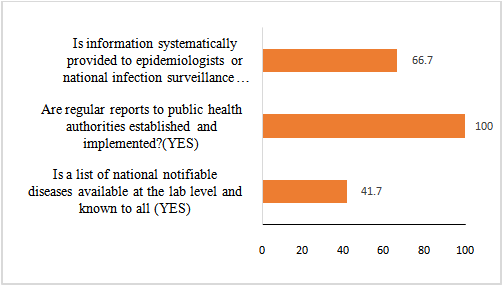
The evaluation showed that the NRCs are active in the surveillance of priority communicable diseases. The NRCs are distributed over the 2 sites of the Institut Pasteur of Côte d'Ivoire. Seven (7) are at the Adiopodoumé site (58.3%) and five (5) at the Cocody site (41.7%) (Table 1). The activities of the NRCs are national in scope for some NRCs and international for others, but it is mainly epidemiological surveillance (Table 2 and Figure 1). The list of notifiable national diseases is not available in some laboratories (41.7%) (Figure 1).

Governance
All NRCs are led by managers designated by a decision of IPCI management. Two out of 12 (16.7%) NRCs have a Stepwise Laboratory Improvement Process Towards Accreditation (SLIPTA) document, with technical support from PEPFAR Implementing Partners (IPs). Most of the 11 NRCs (81.7%) plan to acquire certification or accreditation (Table 3).
Funding
All the NRCs receive funding mainly from the state (budget of the ministry in charge 100%), and secondarily from certain research projects (66.7%). The NRCs have estimated that these funds are insufficient (91.7%) (Table 3)
Health information
Regarding the dissemination of information, all the NRCs have provided regular activity reports to the public health authorities for the implementation of the response. With regard to health information management tools, the NRCs have developed paper tools (75.0%) and electronic tools (91.7%) for regular data reporting (Table 4). This includes the electronic tools EPIINFO version 3.5.4, for epidemiological surveillance data of certain viral diseases.
Paper tools are used for routine data management. All laboratories performed immediate notification of critical results to the Ministry and provided regular statistical data (100%). However, the NRCs did not have a laboratory information management system (LIMS) in 66.7% of cases due to the lack of basic equipment for the network.
Human resources
The NRCs are directed by physicians or biologists, all of whom are researchers with an experience of 18.4±9.2 years with 8(72.7%) men and 3(27.3%) women.
Table 5 shows that all the NRCs have a training service (100%) but only 66.7% of the NRCs organize continuous training on their protocols etc. and 41.7 %of the NRCs train on site.
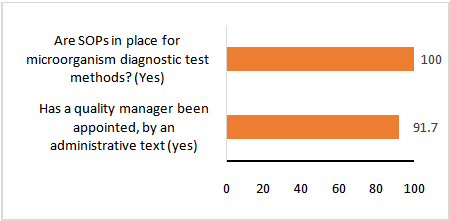
Regarding the training of human resources and the quality management system (QMS), most NRCs reported having in place standard operating procedures (SOPs) (100%) and offer a continuous training program (66.7%) for updating procedures and technical support to epidemiological surveillance sites (66.6%) (Figure 2).

Infrastructure
With regard to infrastructure and operational equipment, Table 6 shows that the NRCs are faced with an interruption of electricity in 16.6% of cases. However, all the NRCs have a backup power generator (100%), only 8 (66.6%) of the NRCs have protection for their key or sensitive equipment and 4 (33.3%) have a back-up machine in case of failure.
Concerning the allocated work space, more than half of the NRCs (58.4%) do not have laboratories that meet the standards, i.e., not large enough to carry out the work without compromising the quality of the work and the safety of the personnel.
Inputs and Technologies
For the biosafety profile, Table 7 (biorisk management) shows that a policy concerning biorisk management in the laboratory (biosafety and biosecurity) is in place in accordance with international regulations, reflected in a Ministerial Order on pathogens at risk. The security level of the laboratories differs from one laboratory to another. Respectively 3 (25.0%), 7 (58.3%) and 1 (8.3%) laboratories are at level P1, P2 and P3. Most of the laboratories only have certified level 2 biosafety cabinets or microbiological safety station (MSS type II).
With regard to samples, the samples and packaging of all the NRCs are processed according to international standards (Table 8).
In terms of technical laboratory practices, Table 9 shows that the NRCs reported performing serological tests (25%), culture/isolation (75%) and RT PCR (91.7%) and sequencing (25%). Three quarters of the NRCs (75%) have their supply of reagents and consumables centralized at the management level, as opposed to 1% of acquisition by the laboratory. All the NRCs store their inputs within the laboratory.
Table 10 shows that most of the NRCs (91.7%) were in the public health and research fields. They all have activities with a national scope. On the other hand, only a quarter of the NRCs carry out activities of sub-regional scope. All these public health laboratories offer diagnostic services while 83.3% of them offer technical support.

Table 11 showed that the NRCs are members of the national laboratory surveillance networks (91.7%). All NRCs reported having responsibilities in the diagnosis and confirmation of cases in the preparation of responses to communicable diseases and diseases with epidemic potential.
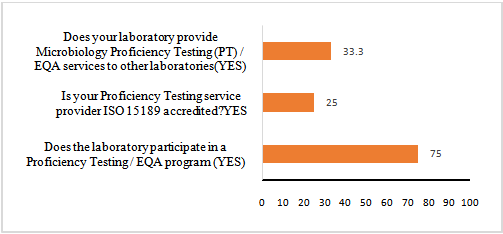
Regarding external quality assessments, 9 (75%) of the NRCs have successfully participated in proficiency testing programs and 4 (33.3%) have organized proficiency testing or external quality assessment (EQA) for other laboratories in their national network (Figure 3).
This evaluation described the situation of the NRCs after more than a decade of functioning. It will allow us to assess improvements or make comparisons. At the end of our evaluation, the institutional performance, resources and services of the NRCs have not reached the required levels. These public health laboratories require support in the various pillars of the health system and the implementation of quality improvement towards international standards.
At the legal level, the organization of the NCR has had only one interministerial order designating the list of national reference centers of the IPCI in the field of communicable diseases since 2006. 15
Despite these efforts, much remains to be done to improve the legal and institutional framework. Indeed, a review of the texts governing the health laboratory sector reveals a legal vacuum concerning certain provisions. Thus, there are no decrees specifying the attributions, organization and minimum activities to be carried out at the level of the NRCs. Even if there is no decree appointing the heads of the NRCs, these heads of the NRCs have the institutional decisions of the heads of the units to which the laboratories belong.
Regarding the process of improving the quality of laboratory services, the level of implementation of laboratory standards in the African region, as verified by the accreditation process, has always been very low. 24 An initiative to implement a quality management system (QMS) in Medical Biology Laboratories in Africa has been designed by WHO-AFRO. Indeed, in line with WHO's core functions of standard setting and institutional capacity building, WHO-AFRO, in collaboration with the African Society of Laboratory Medicine (ASLM), the US Centers for Disease Control and Prevention (CDC) and host countries, has established the Stepwise Laboratory Improvement Process Towards Accreditation (SLIPTA) to strengthen the laboratory systems of the Member States of the Region with a view to their accreditation. 7, 10. In Côte d'Ivoire, Law no. 866 of December 23, 2013 on standardization and the promotion of quality obliges all health services to commit to a quality approach. 25 Similarly, the National Strategic Plan for laboratories calls for all public and private laboratories to adopt a quality approach by 2020. However, in France, in 2020, according to Law no. 2013-442 of May 30, 2013 and Decree no. 2016-1430 of October 24, 2016 on the accreditation procedures for medical biology laboratories, any laboratory that is not accredited will have to stop its activities. 26, 27
The main challenges are the sustainability and increase of financial resources for laboratory activities and equipment maintenance (no maintenance contract), as well as the insufficient or lack of political commitment (e.g., policies, budget) to support the laboratory. This seems to be specific to developing countries where sustainable funding for monitoring and networking activities remains difficult. 28 The vast majority of funding agencies' financial resources have been focused on disease prevention and care delivery, while relatively little funding has been allocated to laboratory capacity building. 29, 30, 31
For the NRCs, the lack of financial resources has directly affected the possibility of regular calibration and maintenance of equipment and the availability of facilities.
Fortunately, in recent years, several partners (Global Fund (GF), World Bank (WB), Tony Blair Foundation, Bill Clinton, Presidential Emergency Plan for the Fight against AIDS (PEPFAR), WHO) and the Ivorian government are aware of the importance of the laboratories. The AIDS epidemic, avian influenza, dengue fever, and COVID-19 have brought home the urgency of building capacity for biological screening.
In terms of health information, the requirements of information technology (IT) in pathology now extend far beyond the provision of purely analytical data. 32
Despite the availability of tools (paper and electronic), we note: i) an insufficient supply of management tools to the NRCs due to the non-existence of a mechanism for the reprography of collection tools at the level of the IPCI and the departments, which is still dependent on external financing, ii) the poor availability of computer equipment for the management of health data due to the absence of a plan for the equipping and renewal of computer equipment.
With regard to data quality, we note i) the absence of texts on the creation and organization of a health information management service (HIMS) at the level of the IPCI and the one on the creation and organization of a body of data managers; ii) the inadequacy of personnel dedicated to data management; iii) the inadequacy of internal quality control of the data collected within the national reference laboratories; iv) the inadequacy of a mechanism for quality assurance and use of the data for decision-making.
Regarding resources, the issue of infrastructure, operational equipment and other resources is a real challenge in laboratories in general and reference laboratories in particular. The lack of adequate laboratory facilities makes laboratory diagnosis of infectious diseases difficult in many parts of the African continent. 33 This is why the Ivorian government has undertaken to build the Center for the Study of Pathogens with Severe Infectious Risks (CEPRIS) which is a P3/P4 laboratory.
For technical laboratory practices, despite the relatively good coverage of technical services, particularly molecular biology, sequencing, isolation, culture and serology, the supply of laboratory services remains limited by various factors, including: (i) the weakness of laboratory infrastructure; (ii) the inadequacy of preventive and curative maintenance of equipment and dysfunctions in the supply of reagents and essential consumables; and (iii) weaknesses in quality assurance and quality control protocols and in the management of laboratory information.
At the service level, the IPCI's NRCs are tools for diagnosis and microbiological confirmation of diseases with epidemic potential in humans and animals in accordance with the recommendations of the Integrated Disease Surveillance and Response Guide (IDSR) of Côte d'Ivoire. 34
Disease diagnosis activities are carried out in the various NRCs of the IPCI to facilitate and improve the management of the main pathologies under surveillance and with epidemic potential. Mechanisms of exemption (free of charge) and subsidy in the management of the diagnosis of these diseases have been put in place. In this context, the monitoring and evaluation of laboratory capacity requires a standardized approach and methodology. 35
4.1. Study LimitationsThis study has some limitations. Our tool focused essentially on the existence of some laboratory activities necessary for surveillance and to quickly identify related laboratory needs as well as the public health functions of the NRCs.
4.2. In PerspectiveThe results of the evaluation could be used to develop a work plan aimed at improving surveillance and laboratory detection of diseases preventable by vaccination and diseases with epidemic potential in Côte d'Ivoire.
A regular assessment of the NRCs using an in-house tool will enable the measurement of the technical capacities of the NRCs to establish a package of general and specific activities to meet their country-wide burden. Strengthening the capacity of national public health laboratories, and in particular molecular biology and or genomic capacity for communicable disease surveillance, will strengthen the NRCs for the detection of other diseases and increase the country's capacity to detect, respond to, and rapidly contain public health emergencies at their source, thereby improving global health security to meet international standards. Despite the implementation of the SLMTA and SLIPTA programs in Côte d'Ivoire, none of our IPCI NRCs has ISO 15189 accredited after almost two decades of existence.
We thank the Ministry in charge of Health and the services of the IPCI and the Ministry of Higher Education and Scientific Research for their commitment to strengthening the capacities of reference laboratories and to the surveillance and control of communicable and vaccine-preventable diseases. Our gratitude to all the laboratory leaders and stakeholders who participated in the data collection and validation of this study.
This study was financed entirely or in part by the budget of the Institut Pasteur de Côte d'Ivoire.
The datasets generated and analyzed for this study are not publicly available but can be obtained upon request from the corresponding author.
consent was obtained from all participants.
The views expressed in this article are the authors’ own, not an official position of the collaborating institutions or the funding agency responsible and no official endorsement should be inferred.
Not applicable.
The authors declare that they have no financial or personal relationships that may have inappropriately influenced them in writing this article.
ASLM African Society of Laboratory Medicine
CDC Center for Disease Control
CEPRIS Center for the Study of Pathogens with Severe Infectious Risks
NRC National Reference Centers
COVID-19 Corona virus disease 2019
EQA External Quality Assessment
GF Global Fund
HIMS health information management service
IDSR integrated disease surveillance and response.
IHR International Health Regulations
IPCI Institut pasteur de Côte d'Ivoire
IT Information technology
IATA International Air Transport Association
ISO International Organization for Standardization
LIMS Laboratory Information Management System
MSS Microbiological Safety Station
NRL National Reference Laboratories
NRC National Reference Centers
PEPFAR Presidential Emergency Plan for the Fight against AIDS
QMS Quality Management System
RT PCR Reverse Transcriptase Polymerase Chain ReactionSARS Cov-2 Severe Acute Respiratory Syndrome Corona Virus 2
SLIPTA Stepwise Laboratory Improvement Process Towards Accreditation
SLMTA Strengthening Laboratory Management Toward Accreditation
SOP Standard Operating Procedures
TIP Technical Implementation Partner
WB World Bank
WHO World Health Organization
| [1] | C. A. Petti, C. R. Polage, T. C. Quinn, A. R. Ronald, et M. A. Sande, « Laboratory medicine in Africa: a barrier to effective health care », Clinical Infectious Diseases, vol. 42, no 3, p. 377‑382, 2006. | ||
| In article | View Article PubMed | ||
| [2] | A. Ogee-Nwankwo et al., « Assessment of National Public Health and Reference Laboratory, Accra, Ghana, within Framework of Global Health Security », Emerg Infect Dis, vol. 23, no Suppl 1, p. S121‑S125, déc. 2017. | ||
| In article | View Article PubMed | ||
| [3] | World Health Organization, International health regulations (2005). World Health Organization, 2008. | ||
| In article | |||
| [4] | D. Egger, P. Travis, D. Dovlo, L. Hawken, et W. H. Organization, « Strengthening management in low-income countries », World Health Organization, 2005. | ||
| In article | |||
| [5] | M. K. Njenga et al., « Laboratory Epidemiologist: Skilled Partner in Field Epidemiology and Disease Surveillance in Kenya », Journal of Public Health Policy, vol. 29, no 2, p. 149‑164, 2008. | ||
| In article | View Article PubMed | ||
| [6] | P. Nsubuga et al., « Field Epidemiology and Laboratory Training Programs in sub-Saharan Africa from 2004 to 2010: need, the process, and prospects », Pan African Medical Journal, vol. 10, 2011. | ||
| In article | View Article | ||
| [7] | K. Yao et al., « Improving quality management systems of laboratories in developing countries: An innovative training approach to accelerate laboratory accreditation », American journal of clinical pathology, vol. 134, no 3, p. 401‑409, 2010. | ||
| In article | View Article PubMed | ||
| [8] | S. Kahn et V. Saraiva, « Tool for the evaluation of performance of veterinary services (OIE PVS tool). », in Modernising veterinary legislation for good governance. Proceedings of the OIE Global Conference on Veterinary Legislation, Djerba, Tunisia, 7-9 December 2010, OIE (World Organisation for Animal Health), 2013, p. 67‑71. | ||
| In article | |||
| [9] | G.-M. Gershy-Damet et al., « The World Health Organization African region laboratory accreditation process: improving the quality of laboratory systems in the African region », Am J Clin Pathol, vol. 134, no 3, p. 393‑400, sept. 2010. | ||
| In article | View Article PubMed | ||
| [10] | K. Yao, T. Maruta, E. T. Luman, et J. N. Nkengasong, « The SLMTA programme: Transforming the laboratory landscape in developing countries », Afr J Lab Med, vol. 3, no 3, 2014. | ||
| In article | View Article | ||
| [11] | A. Diallo et al., « Assessment Tool for Laboratory Services 2017 », USAID Global Health Supply Chain Program, 2017. https://www.ghsupplychain.org/assessment-tool-laboratory-services-2017 (consulté le 28 janvier 2023). | ||
| In article | |||
| [12] | W. H. World Health Organization, « Global measles and rubella strategic plan: 2012 », 2012. | ||
| In article | |||
| [13] | World Health Organization, « Protocol for the assessment of national communicable disease surveillance and response systems: guidelines for assessment teams », World Health Organization, 2001. | ||
| In article | |||
| [14] | W. H. Organization, « Integrated Disease Surveillance Quarterly Bulletin », 2016. | ||
| In article | |||
| [15] | MSHP et MESRS, Arreté interministeriel designant la liste des centres nationaux de reference (CNR) de l’institut pasteur de Côte d’ivoire dans le domaine des maladies transmissibles. 2006, p. 3p. | ||
| In article | |||
| [16] | Y. Sylla, M. K. Diane, V. E. Adjogoua, H. Kadjo, et M. Dosso, « Dengue Outbreaks in Abidjan: Seroprevalence and Cocirculating of Three Serotypes in 2017 », OSIR Journal, vol. 14, no 3, 2021. | ||
| In article | View Article | ||
| [17] | kouao M. Diane et al., « Improvement of the Pre-Analytical Phase of Nasopharyngeal Samples During the COVID 19 Pandemic: Experience of the Institute Pasteur De Côte d’Ivoire in 2020 », I J Infectious Disea, vol. 2, no 2, p. 1‑6, juin 2021. | ||
| In article | |||
| [18] | D. K. Odegue et al., « Nasopharyngeal Samples Management Strategy During the COVID-19 Pandemic: Experience of the Pasteur Institute of Côte d’Ivoire (2020) », JSRR, vol. 27, no 4, p. 72‑79, juin 2021. | ||
| In article | View Article | ||
| [19] | K. K. Bernadin et al., « Enquête sur le niveau de connaissance des plantes médicinales utilisées contre la maladie à Coronavirus, la grippe et le rhume auprès des voyageurs venus pour le test COVID-19 à l’Institut Pasteur de Côte d’Ivoire », Journal of Applied Biosciences, vol. 168, p. 17456‑17467, 2021. | ||
| In article | |||
| [20] | N. Gumede et al., « Polio Eradication Initiative (PEI) contribution in strengthening public health laboratories systems in the African region », Vaccine, vol. 34, no 43, p. 5164‑5169, oct. 2016. | ||
| In article | View Article PubMed | ||
| [21] | World Health Organization, « Laboratory Assessment Tool », studylib.net, 2012. https://studylib.net/doc/8793564/laboratory-assessment-tool---world-health-organization (consulté le 25 juillet 2022). | ||
| In article | |||
| [22] | CDC, « Laboratory Assessment Tool_5.0 ». https://www.cdc.gov/hai/pdfs/tap/CDI-Laboratory-Assessment-Tool-v5-508.pdf (consulté le 23 février 2023). | ||
| In article | |||
| [23] | « LEI_2013Jun_Informatics-Self-Assessment-Tool-for-PHLs.pdf ». Consulté le: 23 février 2023. [En ligne]. Disponible sur: https://www.aphl.org/programs/informatics/Documents/LEI_2013Jun_Informatics-Self-Assessment-Tool-for-PHLs.pdf | ||
| In article | |||
| [24] | R. A. Audu et al., « Improving quality in national reference laboratories: The role of SLMTA and mentorship », Afr J Lab Med, vol. 3, no 2, p. 200, sept. 2014. | ||
| In article | View Article | ||
| [25] | Assemblee nationale Côte d’Ivoire, Loi n° 2013-866 du 23 decembre 2013 relative à la normalisation et à la promotion de la qualité. 2013, p. 8. Consulté le: 11 août 2023. [En ligne]. Disponible sur: https://www.juriafrica.com/lex/loi-2013-866-30953.htm | ||
| In article | |||
| [26] | MINISTÈRE DES AFFAIRES SOCIALES ET DE LA SANTÉ, Décret no 2016-1430 du 24 octobre 2016 relatif aux modalités d’accréditation des laboratoires de biologie médicale. 2016, p. 1. Consulté le: 11 août 2023. [En ligne]. Disponible sur: https://www.legifrance.gouv.fr/download/pdf?id=DE6r2sCF670nqSB84oiWUGzksSs0uPNs9BC9diJyZ1o=. | ||
| In article | |||
| [27] | Assemblee nationale France, LOI no 2013-442 du 30 mai 2013 portant réforme de la biologie médicale portant réforme de la biologie médicale. 2013, p. 8. Consulté le: 11 août 2023. [En ligne]. Disponible sur: https://www.legifrance.gouv.fr/download/pdf?id=-ZWGCab_Kc6fUe1izLNANYiX_erjixoTD_Jy3AVXRFk= | ||
| In article | |||
| [28] | C. Nsanzabana, D. Djalle, P. J. Guérin, D. Ménard, et I. J. González, « Tools for surveillance of anti-malarial drug resistance: an assessment of the current landscape », Malar J, vol. 17, no 1, p. 75, févr. 2018. | ||
| In article | View Article PubMed | ||
| [29] | D. Featherstone, D. Brown, et R. Sanders, « Development of the global measles laboratory network », Journal of Infectious Diseases, vol. 187, no Supplement_1, p. S264‑S269, 2003. | ||
| In article | View Article PubMed | ||
| [30] | M. N. Mulders et al., « Global measles and rubella laboratory network support for elimination goals, 2010–2015 », Morbidity and Mortality Weekly Report, vol. 65, no 17, p. 438‑442, 2016. | ||
| In article | View Article PubMed | ||
| [31] | World Health Organization, « Global measles and rubella laboratory network support for elimination goals, 2010–2015 », Weekly Epidemiological Record= Relevé épidémiologique hebdomadaire, vol. 91, no 18, p. 240‑246, 2016. | ||
| In article | |||
| [32] | R. G. Jones, O. A. Johnson, et G. Batstone, « Informatics and the Clinical Laboratory », Clin Biochem Rev, vol. 35, no 3, p. 177‑192, août 2014. | ||
| In article | |||
| [33] | L. M. Parsons et al., « Laboratory Diagnosis of Tuberculosis in Resource-Poor Countries: Challenges and Opportunities », Clinical Microbiology Reviews, vol. 24, no 2, p. 314‑350, avr. 2011. | ||
| In article | View Article PubMed | ||
| [34] | « IDSR-Technical -Guidelines-2010_French _final.pdf ». Consulté le: 5 février 2023. [En ligne]. Disponible sur: https://www.afro.who.int/sites/default/files/2017-06/IDSR-Technical%20-Guidelines-2010_French%20_final.pdf | ||
| In article | |||
| [35] | WHO, « Checklist and indicators for monitoring progress in the development of IHR core capacities in states parties, April 2013 », 2013. https://www.who.int/publications-detail-redirect/who-hse-gcr-2013-2 (consulté le 25 juillet 2022). | ||
| In article | |||
Published with license by Science and Education Publishing, Copyright © 2023 Maxime Kouao Diané, Claude Aimée Diaha-Kouamé, Rita José Julie Bouagnon, Hervé A. Kadjo, Karidja Yakoura Ouattara, Mathias Kouamé N’dri, Nathalie Aya Guessennd-Kouadio and Mireille Dosso
 This work is licensed under a Creative Commons Attribution 4.0 International License. To view a copy of this license, visit
http://creativecommons.org/licenses/by/4.0/
This work is licensed under a Creative Commons Attribution 4.0 International License. To view a copy of this license, visit
http://creativecommons.org/licenses/by/4.0/
| [1] | C. A. Petti, C. R. Polage, T. C. Quinn, A. R. Ronald, et M. A. Sande, « Laboratory medicine in Africa: a barrier to effective health care », Clinical Infectious Diseases, vol. 42, no 3, p. 377‑382, 2006. | ||
| In article | View Article PubMed | ||
| [2] | A. Ogee-Nwankwo et al., « Assessment of National Public Health and Reference Laboratory, Accra, Ghana, within Framework of Global Health Security », Emerg Infect Dis, vol. 23, no Suppl 1, p. S121‑S125, déc. 2017. | ||
| In article | View Article PubMed | ||
| [3] | World Health Organization, International health regulations (2005). World Health Organization, 2008. | ||
| In article | |||
| [4] | D. Egger, P. Travis, D. Dovlo, L. Hawken, et W. H. Organization, « Strengthening management in low-income countries », World Health Organization, 2005. | ||
| In article | |||
| [5] | M. K. Njenga et al., « Laboratory Epidemiologist: Skilled Partner in Field Epidemiology and Disease Surveillance in Kenya », Journal of Public Health Policy, vol. 29, no 2, p. 149‑164, 2008. | ||
| In article | View Article PubMed | ||
| [6] | P. Nsubuga et al., « Field Epidemiology and Laboratory Training Programs in sub-Saharan Africa from 2004 to 2010: need, the process, and prospects », Pan African Medical Journal, vol. 10, 2011. | ||
| In article | View Article | ||
| [7] | K. Yao et al., « Improving quality management systems of laboratories in developing countries: An innovative training approach to accelerate laboratory accreditation », American journal of clinical pathology, vol. 134, no 3, p. 401‑409, 2010. | ||
| In article | View Article PubMed | ||
| [8] | S. Kahn et V. Saraiva, « Tool for the evaluation of performance of veterinary services (OIE PVS tool). », in Modernising veterinary legislation for good governance. Proceedings of the OIE Global Conference on Veterinary Legislation, Djerba, Tunisia, 7-9 December 2010, OIE (World Organisation for Animal Health), 2013, p. 67‑71. | ||
| In article | |||
| [9] | G.-M. Gershy-Damet et al., « The World Health Organization African region laboratory accreditation process: improving the quality of laboratory systems in the African region », Am J Clin Pathol, vol. 134, no 3, p. 393‑400, sept. 2010. | ||
| In article | View Article PubMed | ||
| [10] | K. Yao, T. Maruta, E. T. Luman, et J. N. Nkengasong, « The SLMTA programme: Transforming the laboratory landscape in developing countries », Afr J Lab Med, vol. 3, no 3, 2014. | ||
| In article | View Article | ||
| [11] | A. Diallo et al., « Assessment Tool for Laboratory Services 2017 », USAID Global Health Supply Chain Program, 2017. https://www.ghsupplychain.org/assessment-tool-laboratory-services-2017 (consulté le 28 janvier 2023). | ||
| In article | |||
| [12] | W. H. World Health Organization, « Global measles and rubella strategic plan: 2012 », 2012. | ||
| In article | |||
| [13] | World Health Organization, « Protocol for the assessment of national communicable disease surveillance and response systems: guidelines for assessment teams », World Health Organization, 2001. | ||
| In article | |||
| [14] | W. H. Organization, « Integrated Disease Surveillance Quarterly Bulletin », 2016. | ||
| In article | |||
| [15] | MSHP et MESRS, Arreté interministeriel designant la liste des centres nationaux de reference (CNR) de l’institut pasteur de Côte d’ivoire dans le domaine des maladies transmissibles. 2006, p. 3p. | ||
| In article | |||
| [16] | Y. Sylla, M. K. Diane, V. E. Adjogoua, H. Kadjo, et M. Dosso, « Dengue Outbreaks in Abidjan: Seroprevalence and Cocirculating of Three Serotypes in 2017 », OSIR Journal, vol. 14, no 3, 2021. | ||
| In article | View Article | ||
| [17] | kouao M. Diane et al., « Improvement of the Pre-Analytical Phase of Nasopharyngeal Samples During the COVID 19 Pandemic: Experience of the Institute Pasteur De Côte d’Ivoire in 2020 », I J Infectious Disea, vol. 2, no 2, p. 1‑6, juin 2021. | ||
| In article | |||
| [18] | D. K. Odegue et al., « Nasopharyngeal Samples Management Strategy During the COVID-19 Pandemic: Experience of the Pasteur Institute of Côte d’Ivoire (2020) », JSRR, vol. 27, no 4, p. 72‑79, juin 2021. | ||
| In article | View Article | ||
| [19] | K. K. Bernadin et al., « Enquête sur le niveau de connaissance des plantes médicinales utilisées contre la maladie à Coronavirus, la grippe et le rhume auprès des voyageurs venus pour le test COVID-19 à l’Institut Pasteur de Côte d’Ivoire », Journal of Applied Biosciences, vol. 168, p. 17456‑17467, 2021. | ||
| In article | |||
| [20] | N. Gumede et al., « Polio Eradication Initiative (PEI) contribution in strengthening public health laboratories systems in the African region », Vaccine, vol. 34, no 43, p. 5164‑5169, oct. 2016. | ||
| In article | View Article PubMed | ||
| [21] | World Health Organization, « Laboratory Assessment Tool », studylib.net, 2012. https://studylib.net/doc/8793564/laboratory-assessment-tool---world-health-organization (consulté le 25 juillet 2022). | ||
| In article | |||
| [22] | CDC, « Laboratory Assessment Tool_5.0 ». https://www.cdc.gov/hai/pdfs/tap/CDI-Laboratory-Assessment-Tool-v5-508.pdf (consulté le 23 février 2023). | ||
| In article | |||
| [23] | « LEI_2013Jun_Informatics-Self-Assessment-Tool-for-PHLs.pdf ». Consulté le: 23 février 2023. [En ligne]. Disponible sur: https://www.aphl.org/programs/informatics/Documents/LEI_2013Jun_Informatics-Self-Assessment-Tool-for-PHLs.pdf | ||
| In article | |||
| [24] | R. A. Audu et al., « Improving quality in national reference laboratories: The role of SLMTA and mentorship », Afr J Lab Med, vol. 3, no 2, p. 200, sept. 2014. | ||
| In article | View Article | ||
| [25] | Assemblee nationale Côte d’Ivoire, Loi n° 2013-866 du 23 decembre 2013 relative à la normalisation et à la promotion de la qualité. 2013, p. 8. Consulté le: 11 août 2023. [En ligne]. Disponible sur: https://www.juriafrica.com/lex/loi-2013-866-30953.htm | ||
| In article | |||
| [26] | MINISTÈRE DES AFFAIRES SOCIALES ET DE LA SANTÉ, Décret no 2016-1430 du 24 octobre 2016 relatif aux modalités d’accréditation des laboratoires de biologie médicale. 2016, p. 1. Consulté le: 11 août 2023. [En ligne]. Disponible sur: https://www.legifrance.gouv.fr/download/pdf?id=DE6r2sCF670nqSB84oiWUGzksSs0uPNs9BC9diJyZ1o=. | ||
| In article | |||
| [27] | Assemblee nationale France, LOI no 2013-442 du 30 mai 2013 portant réforme de la biologie médicale portant réforme de la biologie médicale. 2013, p. 8. Consulté le: 11 août 2023. [En ligne]. Disponible sur: https://www.legifrance.gouv.fr/download/pdf?id=-ZWGCab_Kc6fUe1izLNANYiX_erjixoTD_Jy3AVXRFk= | ||
| In article | |||
| [28] | C. Nsanzabana, D. Djalle, P. J. Guérin, D. Ménard, et I. J. González, « Tools for surveillance of anti-malarial drug resistance: an assessment of the current landscape », Malar J, vol. 17, no 1, p. 75, févr. 2018. | ||
| In article | View Article PubMed | ||
| [29] | D. Featherstone, D. Brown, et R. Sanders, « Development of the global measles laboratory network », Journal of Infectious Diseases, vol. 187, no Supplement_1, p. S264‑S269, 2003. | ||
| In article | View Article PubMed | ||
| [30] | M. N. Mulders et al., « Global measles and rubella laboratory network support for elimination goals, 2010–2015 », Morbidity and Mortality Weekly Report, vol. 65, no 17, p. 438‑442, 2016. | ||
| In article | View Article PubMed | ||
| [31] | World Health Organization, « Global measles and rubella laboratory network support for elimination goals, 2010–2015 », Weekly Epidemiological Record= Relevé épidémiologique hebdomadaire, vol. 91, no 18, p. 240‑246, 2016. | ||
| In article | |||
| [32] | R. G. Jones, O. A. Johnson, et G. Batstone, « Informatics and the Clinical Laboratory », Clin Biochem Rev, vol. 35, no 3, p. 177‑192, août 2014. | ||
| In article | |||
| [33] | L. M. Parsons et al., « Laboratory Diagnosis of Tuberculosis in Resource-Poor Countries: Challenges and Opportunities », Clinical Microbiology Reviews, vol. 24, no 2, p. 314‑350, avr. 2011. | ||
| In article | View Article PubMed | ||
| [34] | « IDSR-Technical -Guidelines-2010_French _final.pdf ». Consulté le: 5 février 2023. [En ligne]. Disponible sur: https://www.afro.who.int/sites/default/files/2017-06/IDSR-Technical%20-Guidelines-2010_French%20_final.pdf | ||
| In article | |||
| [35] | WHO, « Checklist and indicators for monitoring progress in the development of IHR core capacities in states parties, April 2013 », 2013. https://www.who.int/publications-detail-redirect/who-hse-gcr-2013-2 (consulté le 25 juillet 2022). | ||
| In article | |||