Background: Violence and public health have always been viewed as distinct, non-overlapping social issues. However, it is becoming increasingly apparent that violence is contagious, has incubation periods, is predictable, and is preventable. For example, in Ethiopia, racist ideas are instilled in formal and informal schools. Those ideas resulted in consecutive collective violence that ravaged Oromia-Ethiopia. Therefore, societies must think and act “upstream” to prevent violence. Objectives: This study aims to collect and evaluate the causes of violence against children and their relationship to public health to give theoretical and practical justifications and methods for “Upstream” solutions. Methodology: Using a systemic thinking framework, captured the underlying causes of violence against children and its public health repercussions. Findings: Violence in general and violence against children is an enduring problem. Racist theories taught in schools inform the Ethiopian government to covertly and overtly promote collective violence. The Ethiopian government collectively attacked the Oromo people, their institutions, and their leadership and legalized structural inequalities. Collective violence has eroded social protective factors, increased risks, and widened violence against children. Violence against children is a multiplier of social problems. Unless we apply public health strategies, slash the risks, and foster the development of protective social conditions, the problem will aggravate. Conclusions: The significant causes of violence against children are racist theories, collective violence, climate change, and poverty. Understanding the causes of violence through public health lenses offers theoretical and practical tools to foster peace. If Oromos can freely determine their affairs, they will better identify their problems and solutions. The Oromo people's efforts to self-determine their affairs are part and parcel of strategies to widen their choices, tackle structural violence, and progressively create healthy social conditions where children's growth and development can flourish.
This paper is dedicated to my lovely late wife and the mother of my three children Romee D Dugassa, who departed early in life.
Violence is a widespread and enduring social problem. It is now recognized as a public health issue 1, 2. For example, through collective violence, the Ethiopian government banned Oromo indigenous institutions such as Gada, Sinqee, and Waqefaana 3, 4, 5, denied them the ability to decide on their affairs and hampered developing their leadership 6. Instead, the Ethiopian government built Abyssinian institutions that openly advanced structural inequalities and further widened social inequalities 7. Those institutions provided theoretical and practical reasons to dehumanize the Oromo people, justify exploiting human and natural resources, legalize marginalization, and profoundly create pathologic social conditions 8. Plus, the Ethiopian government denied the Oromo people the right to develop their institutions and leadership 9. Furthermore, it controlled the encoding and retrieval of information, thus hindering learning, community resiliency, and the development of problem-solving skills. Those conditions created fertile grounds for violence against children.
Empowered societies can more readily identify their social problems and find workable solutions. However, given that Oromo institutions and leadership are banned, no adequate efforts have been made to identify the causes of the violence in general and violence against children in particular and develop prevention strategies. Notably, a failure to understand the social processes leads to analytic failures with significant implications for policies and practices 10. In principle, direct warfare and physical killing are comparatively easy to quantify and, therefore, easy to stop. Nevertheless, understanding the root causes of violence and public health impacts requires holistic approaches and systemic thinking methods.
The World Health Organization 1 grouped violence into self-directed, interpersonal, and collective. Self-inflicted violence includes suicidal behavior and self-abusive. The category of interpersonal violence is family or partner and community violence. Finally, collective violence includes social, political, economic and cultural violence 11. In Oromia, all those acts of violence are widespread. The Oromo people's experiences show that the root causes of all acts of violence are racist theories, collective violence, and climate change. The state-sponsored collective violence normalized unequal treatment and institutionalized it. The enduring state-sponsored politically motivated collective violence makes individual, family, and community violence acceptable. State-sponsored violence erodes individuals' and communities' protective factors, legalizes economic exploitation and corruption, widens competition for resources, erodes the social-cultural attitude of care, and further increases violence 8.
Throughout history, human beings have striven to widen their choices, enhance their quality of life, and identify the causes and solutions to diseases 12. The unpredictable nature of diseases and injuries and their impacts on the social well-being of people conditioned them to coordinate and cooperate in their efforts. Inevitably this led to state formation, the development of defense forces, public health institutions, and other departments 11. However, the colonized people and those who are covertly and overtly denied the right to self-determination and hindered the capacity to make protractive efforts to understand and address their needs 7, 10, 12. For those reasons, in Oromia, no research explored the impacts of violence against children and public health. There is a clear need to deeply understand the social causes of the problem and develop policy direction having health promotion strategies in mind. What is equally compelling and challenging about our understanding of violence is that the problem is as long as human history. This enduring problem is widespread, and no community group is immune. We also know that violence in some communities is more common than in others. Although it is one of the oldest public health problems, we have not made enough efforts to prevent it 14.
Research shows violence is contagious and transmittable 14, 15. It also has an incubation period —which might span from birth to adulthood in the family and community. For those reasons, violence is predictable and preventable. However, the significant difference between the transmissibility of violence and infection is that social conditions cause the prior. Meanwhile, biological agents cause the latter in favorable social conditions. We can epidemiologically establish and accurately determine violence's social causes. Violence thrives in impoverished, inequitable societies and the absence of democracy, good governance, and respect for human rights.
In Oromia, the primary causes of violence against children are a) racist views that propagate structural inequality; b) state violence, i.e., political assassinations, imprisonment, torture, eviction, conscription to the military, and others that normalizes vehement and widens the poverty level, increases competition for resources, breaks the community social fabrics; c) media that propagate violence, i.e., hate speech; d) climate change – which widens the level of poverty, increases competition for resources, and enlarges mental and physical health problems; e) capitalist ideology that advances the exploitation of human and natural resources; f) depression and hopelessness; g) deterring communities from being physically and socially active; h) low cognitive functions and poor coping skills, and others 8, 15, 16. Therefore, we can effectively apply disease prevention and health promotion strategies to prevent violence.
Oromo people deeply value children. Many Oromo social-cultural and moral standards protect children and advance their best interests. In the Oromo worldview, one can win over death if she/he has children. They believe that if they die, they will live in their children. They also see children as the foundation of future generations and communities. For those reasons raising children are the responsibility of the parents, close family members, and the community. However, the Ethiopian government's policies, practices, and procedures contradict those views.
This paper has four major parts. The first part covers the introduction, objective of the research, methodology, and key definitions. In the second part, review the past and present social conditions of the Oromo people and the social history of Ethiopia. In the third part, I discuss what inspired my research on violence against children and health. The fourth part explores the public health impacts of violence against children. Finally, the last part covers discussions and conclusions.
The healthy early development of children provides the building blocks for positive emotional, social, mental, and physical health. Healthy development of children is strongly associated with academic performance, economic participation later in life, and reduced risks of chronic diseases. Preventing abuse, neglect and enabling children to think critically, learn, remember, relate, and articulate ideas are critical to developing problem-solving skills.
Public health focuses on the health, safety, and social well-being of the entire population. It strives to maximize the public good. Public health encompasses interdisciplinary studies such as epidemiology, nutrition, ecology, sociology, psychology, and others. Those studies provide the tools necessary to identify risks and enhance protective factors. Public health intervention in violence prevention is within the health system's scope. Indeed, the public health approach to violence focuses on understanding the social causes and prevention by addressing known risk factors and enhancing protective social conditions 13, 16, 17. Therefore, the primary objective of this paper is to capture and analyze the causes of violence against children and the nexus to public health. The secondary objective is to advance children's rights and provide theoretical and practical reasons for primary, secondary, and tertiary prevention.
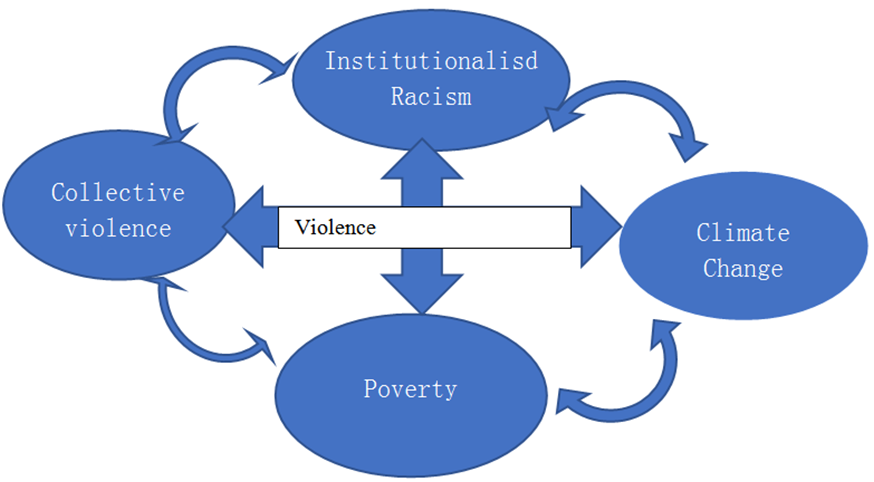
Although violence is known to be contagious, predictable, and preventable until recently, many communities did not make enough efforts to prevent it. Unless we strive to prevent it will escalate further. If violence has an incubation period and can span from birth to adulthood in the family and community- it gives room for public health intervention. Violence does not occur randomly in a silo or closed loop; prediction and prevention require meticulous efforts. The causes of the problem are complex, and understanding them requires closely observing the trends, fluctuations, pulses, loops, patterns of relationships, and their effects on one another. Deeply understanding the complexities of the problem helps to identify the major contributors. Understanding those complex dynamics of the chain of events requires more profound thinking and close observations. Rather than splitting violence and public health using a systemic thinking framework, make efforts to capture the complex interactions and identify the most important place for intervention. The systemic thinking framework can capture the complex causes of violence against children and public health problems. In this paper, using the framework of systemic thinking, I capture the complex relationships between violence against children and public health problems. In 2010 and 2019, I visited Oromia, traveled across several cities and towns, and informally interviewed homeless children.
To prevent ambiguity, I define the main concepts discussed in this paper. I borrowed from the WHO, public health literature, and United Nations (UN) documents to define the concept of child and violence. Violence is defined as the intentional use of physical force or power, threatened or actual, against oneself, another person, or against a group or community that either result in or has a high likelihood of resulting in injury, death, psychological harm, or developmental deprivation 1. Including the word “power” and the phrase “use of physical force” broaden the nature of a violent act and widens the conventional understanding of violence to include those acts resulting from political power, i.e., structural inequality. This includes neglect or acts of omission and commission. Hence, “physical force or power” includes neglect by covert and overt means. In this paper, violence means all forms of physical or mental violence, injury or abuse, covert/overt neglect or negligent treatment, maltreatment or exploitation, including economic and sexual abuse, essentially violating children's rights. The concept of physical violence includes all corporal punishment and forms of torture, cruel, inhuman, or degrading treatments or punishments, and bullying and hazing. Psychological and emotional violence refers to psychological maltreatment, mental abuse, verbal abuse, emotional abuse, and neglect. This includes placement in solitary confinement, insults, humiliation, threats, and bullying. Finally, sexual violence is understood as the inducement or coercion of a child to engage in any unlawful or psychologically harmful sexual activity; the use of children in commercial sex, the use of children's images in audio or visual of sexual abuse and sexual exploitation in travel tourism, trafficking children for sexual purposes and forced marriage.
Systems thinking is a complex science that sees and understands systems as wholes rather than parts. Understanding problems as a whole means seeing complex interconnections of all patterns that create emerging dynamic arrangements 18. Understanding the pattern helps to find the most critical places for intervention to foster change in the long‐term behavior of a system. Research shows that our inability to understand problems from a systems perspective always resulted in a solution that, sooner or later, caused new or more significant problems in the system. Most social problems are created because they were produced in reductionist thinking when designing products and developing policy directions 20. Einstein once said, “Without changing our pattern of thought, we will not be able to solve the problems we created with our current patterns of thought,” he implied that a different thinking framework could provide us with solutions.
Before analyzing the public health impacts of violence against children, it is vital to introduce the Oromo worldview. Oromos identify themselves as the people of Gadaa, Siiqqee, and Qaalluu. When Oromos say they are the people of Gadaa, they imply a society where democratic, transparent, and accountable governance is guaranteed. When they say they are the people of Siiqqee, they mean they are a society where gender equity is profoundly fostered. When they say they are the people of Qaalluu, they imply that the ethical and moral standards for social and environmental justice are well-developed [9, 19] 9, 19. Indeed, for the Oromo people, peace and health are intricately intertwined. In the Oromo perspective, personal, family, and community peace, health, and harmony with divine power are interwoven with environmental health. For them, peace has a sacred meaning. In daily prayers, they say “bunaa fi nagaa hindhabiina,” - meaning always have coffee and peace 9. Unfortunately, the successive Ethiopian regimes have deliberately attacked Oromo institutions and worldviews. The worldviews that advance social and environmental justice are overtly and covertly attacked and replaced with the knowledge that does not respect human dignity and ecosystems 21. Research on the public health impacts of violence raises awareness of the costs of violence and heightens the need for peace. Accepting those connections and earnestly maintaining those balances and harmony requires holding deep sacred views.
Consistent with their worldview, the Oromo people have developed sustainable culture. However, successive Ethiopian regimes viewed those far-reaching, progressive, sustainable, and splendid cultures as threats to their power. Consequently, the Ethiopian government continuously strived to denigrate the Oromo institutions and to invalidate their episteme. Thus, the Oromo people's aspirations to empower themselves and develop a democratic, equitable, and sustainable society is considered contrary to Ethiopian government agendas. This led to widespread human rights violations and environmental degradation 21.
Oromo people have unique perspectives about children. In their worldview, if one dies, the person will live on/in her/his children. This belief encouraged the Oromo people to have multiple children. Also, the Oromo people guarantee themselves old-age social security through their children. For those reasons, they fully invest in the children's growth and development. Another unique view is that children belong to parents, extended family members, and communities. If the immediate family members cannot provide adequate care, community members pitch in and guarantee the growth and development of the children. Until recently, homeless and abandoned children were foreign terms. However, the widespread human rights violations and structural inequality have made poverty, homelessness, and violence against children the new norm.
Ethiopia is a multi-national empire. The Ethiopian state was formed in the late 1880s when the European Empire builders provided ideological myths and racist theoretical reasons 7, 24 and helped the Abyssinian King Menelik II conquer Oromia and other independent nations 23. The colonial conquest occurred by violent means. As a result, free and independent nations have been subjected to slavery, serfdom, and colonial subjugation. The ideological myth that empire-builders provided legitimized conquest, eviction, and exploitation 7, 15, 20. Collective violence is applied to pacify, build, and widen colonial structural inequalities. Since the conquest, the conquered people have been resisting colonial subjugation. The Ethiopian government has been waging war against those resisting second-class-third-class citizenship status. Hence, the armed conflict has been going on in Ethiopia for over a century. This makes state violence a widespread problem 20. Politically motivated violence has normalized other forms of violence. State political violence fostered ethnic conflicts and competition for resources and inevitably increased the rate of violence against children.
The Abyssinian colonial rulers enslaved people and created pathogenic social conditions 20, 22. The Oromo people's experiences under the Abyssinian rule are worse than those of Kenyans and Nigerians under British rule. The Ethiopian government has not attempted to address structural injustices or mend the wounds caused by the conquest 7, 13. As a result, the colonized people struggle to end the violence and empower themselves. For instance, the Ethiopian government designated Amharic as the official language of the Federal government, despite the Oromo people being the most prominent national group and their language--Afaan Oromo, being more widely spoken 25. The Ethiopian government subdues those who struggle for the removal of structural inequalities.
Ethiopian state formation resulted from extreme violence, which created structural inequality 8. Structural inequalities widened and were maintained by violent means. The Ethiopian government systematically stripped the Oromo of natural and human resources. Although Ethiopia has ratified most of the UN Charter and Conventions, none are incorporated into policy development. For example, when this paper was drafted, the Ethiopian government was engaged in war in the North with the Agaw, Tigray, Qimant, and Oromo people. In the West, it is at war with the Benshangul and the Oromo people. In the South, East, and Central Regions, the Ethiopian government is fighting against the Oromo people. The Ethiopian government's objective is to subdue the people who are increasingly demanding autonomy. For those ethnic-national groups struggling to emancipate themselves and demanding regional autonomy - consistent with the UN Charter and Conventions 26, 27, the state-sponsored collective violence has created pathologic social conditions. For them, autonomy means empowerment and freely deciding on their social, economic, political, cultural, and environmental affairs. To subdue those legally acceptable demands, the Ethiopian government attacked them with heavy artillery and airplanes; villages, towns, and cities bombed and publicly bragging about killing and destroying. In addition, the Ethiopian government has been conscripting young men and women and using them as the human wave. Most of the victims of conscription are poor underaged children. In the twenty-first century, Ethiopian policymakers learned little from the past. In a nutshell, the social reforms that are ongoing worldwide have not translated into social policies in Ethiopia.
In Ethiopia, armed conflicts are widespread. Moreover, political violence instigated other forms of violence and substantively normalized violence against children. Indeed, casualties at the war front, political violence, and other forms of violence ranked among the leading causes of death and disability. In multiple pathways, population health has been affected by armed conflicts. The public health impacts of violence include a) aggravating poverty and malnutrition level; b) breakdown of infrastructures; c) displacement of people; d) environmental degradation; e) psychological trauma; e) hindering resiliency; f) normalizing violence 28. The Ethiopian government's social policies do not observe human rights and social justice principles 29. Those policies either directly perpetuate violence against children, remove the protective social conditions needed to create ideal conditions in which they will grow and develop, or foster violence against them. Those problems have been going on for over a century. The impacts of child violence have negative implications for the current population's health and the generation to come 28.
The Ethiopian government's discriminatory social policies and the choices the regimes make, spending resources on the war fronts and striving to preserve structural inequalities, are taking away critically needed resources to slash the multidimensional poverty level. For those reasons, the Oromo people are demanding to freely exercise the right to decide on their social, economic, political, and environmental affairs 26, 27. They demand social and environmental justice, guarantee the fair distribution of the determinants of health, and create favorable conditions for child growth and development. Those actions are a significant step forward in preventing violence against children.
The Convention on the right of children protects them from all forms of violence. Those rights are enshrined in international human rights treaties, including the Convention on the Rights of the Child (CRC) 34. For example, the founding document of the UN, the Universal Declaration of Human Rights (UDHR), 29 in the preamble states, “whereas recognition of the inherent dignity and of the equal and inalienable rights of all members of the human family is the foundation of freedom, justice, and peace in the world.” The document is a proponent of freedom, justice, and peace, which complements the core objectives of public health goals. Since human rights and public health are mutually supportive, advancing human rights leads to significant public health progress and vice-versa. The core objective of human rights is advancing autonomy, human dignity, and peace and enabling healthy social conditions 36. Those conditions are essential to public health development and child violence prevention. Also, progress in public health eases human suffering and improves human dignity. Hence, the principle of human rights and public health work synergistically 36. Advancing public health requires the protection and promotion of human rights. A greater fulfillment of human rights necessitates policymakers to give attention to and guarantee the social determinants of health. The history of public health makes it clear that social movements foster realizations of the principle of human rights, enhancing people's choices in life and improving public health conditions 12, 36.
In 1948, when the UDHR Charter was ratified, most African countries were under colonial rule. To further enhance the ability of people to live in dignity and fully participate in their social, economic, political, cultural, and environmental affairs, the UN passed the Social, Economical, Political, and Cultural Rights. Those rights include safe work conditions, adequate living standards, food security, clean water, housing, clothing, and social security. Those Charters were ratified in the spirit of “progressive realization,” requiring incremental progress and improvement over time. Unfortunately, although Ethiopia has ratified most UN human rights conventions, it never took those commitments seriously.
The UN Convention on the Rights of Children (CRC) 34 advances the harmonious development of children. Let us closely look at the Ethiopian government record in the framework of the UN Convention on the Rights of Children. Article 6 of the convention states, “States Parties recognize that every child has the inherent right to life. Article 38 says: States Parties shall take all feasible measures to ensure that persons who have not attained the age of fifteen do not take a direct part in hostilities. States Parties shall refrain from recruiting any person who has not attained the age of fifteen years into their armed forces. In recruiting among those persons who have attained the age of fifteen years but who have not attained the age of eighteen years, States Parties shall endeavor to give priority to those who are oldest.”
Ethiopian human rights records are detestable. Although Ethiopia has ratified the Rights of Children, it has violated Articles 6 and 38 by conscripting children into war and using them as minesweepers and human waves. For example, in 1999/2000, in the Ethiopian-Eritrean war, the Ethiopian military used young Oromo children as minesweepers. In 2021-22, when this paper was drafted, the Ethiopian government was engaged in war with the Tigray Defense Force (TDF) and the Oromo Liberation Army (OLA). Hence, the Ethiopian government continued using children as a human wave to fight the trenches of the TDF and OLA forces. The violation of children's rights is not limited to a few articles. As we can see below, Articles 24, 27, and 28 of the charter have been grossly violated. For example, Article 24 of the Convention says, “States Parties recognize the right of the child to the enjoyment of the highest attainable standard of health and to facilities for the treatment of illness and rehabilitation of health. States Parties shall strive to ensure that no child is deprived of his or her right of access to such health care services.” Also, Article 27 says, “States Parties recognize the right of every child to a standard of living adequate for the child's physical, mental, spiritual, moral and social development.” If we closely look at the situation of Oromo children, it is clear that those articles have been violated. In 2010 and 2019, I noticed that most homeless children belonged to families and communities evicted from their homes. Those children spend their nights in sewage and daytime begging on the street. During rainy seasons, many suffocated and died in the sewage and were carried away by the water flow. They collect food from the garbage dump sites. The Ethiopian government spends billions of dollars on war and widely conscripts children to the war front but has no intention of providing social security for them.
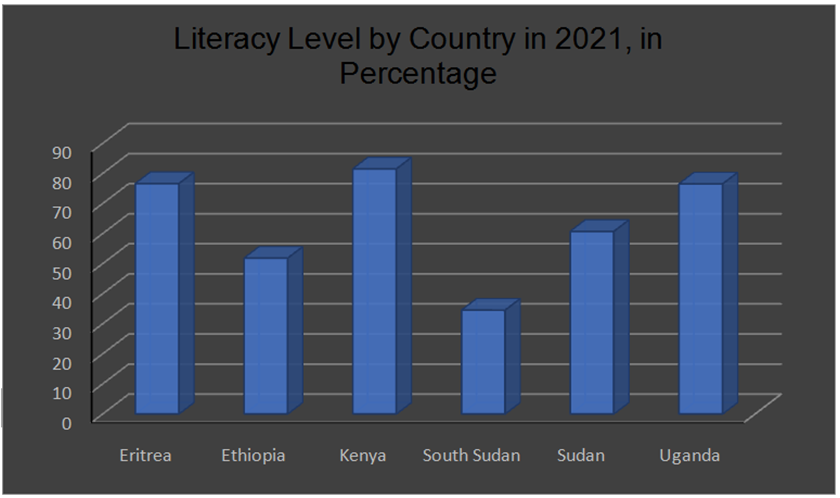
Let us examine if Article 26 of UDHR 29 and Article 28 of Children's rights are violated. Article 28 of CRC says, “States Parties recognize the right of the child to education, and with a view to achieving this right progressively and on the basis of equal opportunity.” 34 Ethiopia is one of the UN's founders and the charter's first signatories. Although Eritrea, Kenya, South Sudan, Sudan, and Uganda were under colonial rule then. Revealing the violation of the rights to education committed against the Oromo people and others, as presented below, Ethiopia is behind other countries mentioned in educational attainment 37.
Why do I choose to focus on the right to education? Educational attainment is one of the significant indicators of human rights and health status. Education empowers and gives the essential tools necessary to widen people’s choices in life and it is one of the social determinants of health. Education provides social competency, emotional maturity, and other essential skills. Educational attainment represents how much we have invested in enhancing the skills of our children. Also, for education, we can easily have quantitative data to present and substantiate if the right to education is respected. As shown in the above graphics, Ethiopia is behind neighboring countries in literacy attainments, and only 51.8% of the population is literate.
Before entering substantive discussions of violence against children and public health, I want to give my entry point. First, I did not come to investigate violence against children and public health problems by accident. From my experiences and research, I have noted that violence is a significant public health problem in Oromia. I noted that the colonial conquest and policies designed to pacify the Oromo people had inflicted profound loss, indignity, humility, and pain on the Oromo people. Children are most vulnerable to such violence. I also noted that violence is contagious and predictable. In Oromia, the Ethiopian government’s policies covertly and overtly normalized violence in general and violence against children in particular. As an elementary school student, I saw that the Ethiopian government conscribed young Oromo men and children to the war front. Most of them died there, and some of them returned wounded. They were not either paid to serve in the military or compensated after service. Those wounded who returned to their villages could not do physically demanding jobs and be as productive as their peers and conditioned to live in poverty and pass on their poverty to their children 38.
Second, as I had recorded in my previous works, in 1992, when the Ethiopian civil war ended, those young Oromo men who served in the military were sent back to their villages and towns. When those young men were in the military, they were kept in the nearby towns and cities and allowed to spend a day or two with commercial sex workers. As a result, they were exposed to HIV/AIDS. Those young men unwittingly spread HIV/AIDS in the community. This was a major contributing factor to Oromia's HIV/AIDS epidemic 39.
Third, my late wife propounded children's rights and formed a charitable organization.. She became actively involved in social activism after the Ethiopian government abducted her older brother – a father figure and noted the impacts of his absence on her younger siblings and nephews/nieces. The significance of fathers and mothers in the growth and development of children is essential; I have no other option than to think “upstream level” and speak out against state policies that attack the social fabric of family and community.
Fourth, creating a healthy and positive start for the child is essential for community health development. Child growth and development start before conception and continue to adulthood. If parents are healthy, they produce healthy egg and sperm cells, making the foundation for healthy child development. However, if one or both parents are malnourished or addicted to drugs or alcohol, they will likely produce unhealthy egg and sperm cells. Unhealthy egg and sperm cells affect pregnancy outcomes, birthing, child development, and health. Until adulthood, the children's organs, tissues, and cells continue to grow, differentiate and develop. Early development impacts positively or negatively on health throughout the lifespan. Creating a healthy society does not come because we wish for it. Society's social conditions need to be conducive to healthy child development. Societies can create those social conditions better if collective and individual rights are respected. Respect for human rights creates the foundation for individuals and communities to empower themselves and foster social transformation. I take principles of public health, i.e., health promotion ideas 40, 41, thoughtfully and have a moral duty to advance healthy social policies.
Fifth, early childhood development provides the building blocks for positive emotional, social and physical health and well-being. Healthy childhood development is strongly associated with physical and mental health, educational attainment, problem-solving skills, and productivity later in life. It also reduces the risk of criminality. Early childhood experiences impact health and well-being throughout life in complex ways. This includes exposure to violence or nurturing caregivers, which can predispose children to have positive- or adverse health outcomes and behaviors- regardless of circumstances later in life. Therefore, future-oriented societies need to invest in the growth and development of children. Consistent with the public health agenda, I have a professional duty to advance healthy social policies.
Sixth, scientific literature and tacit knowledge suggest that positive or negative experiences in early childhood can also increase the likelihood of having similar experiences in the future. In the case of the Oromo people, it is for this reason that children are seen as belonging to the community 42. For example, my late wife was born and raised among the Oromo people, and she took the idea of raising children from the community as her duty and strived to support poor children in their schooling. In her view, struggling with basic literacy skills in early childhood and receiving inadequate support to catch up with peers impacts school performance. As a result, those children are targeted for compulsory service in the military by the Ethiopian government. Alternatively, providing educational opportunities and positive experiences, such as strong connections to family and community support, prevents them from military conscriptions. Experiences in early childhood can also have cumulative effects, where they have repeatedly encountered influences on their life outcomes. In order to positively impact a child's development and, ultimately, their life's trajectory, it is essential to understand the risk and protective factors that influence children's future health and well-being.
Seventh, the unpredictable nature of diseases and injuries and their impacts on the population's health conditioned them to cooperate and coordinate their efforts. This necessitated organizing their states. Social sciences literature elaborated that the role of government includes: a) biological and cultural self-preservation of the people; b) supervision and resolution of conflicts; c) regulation of the economy and distribution of wealth; d) promotion and protection of social and political rights; e) provision of goods and services; f) public administration; g) developing and changing the political system and fostering stability and; h) stable political system 11, 43. Public health development easily flourishes if those social roles are guaranteed 44, 45. Unfortunately, judging from the Oromo people's experiences, the Ethiopian government's role is contrary to those functions listed above. As a public health researcher influenced by the theories and practices of health promotion, such as healthy social conditions and systemic thinking, I have no option but to revisit the impacts of the absence of those critical social conditions in Oromia.
Eighth, from my research, I have recorded that the Ethiopian government adopted several European Empire builders' social policies. One of the social policies experimented with was residential schooling. Oromo children were forcefully taken from their communities and kept in residential schools. For my Ph.D. thesis, I interviewed residential school survivors. The survivors talked about how they were forced to go through the Orthodox church baptism and were given Amharic names. According to my informants in the school, those children were collectively referred to as the “lost and found.” The concept of lost and found implies that children born in non-Christian families are referred to as “the lost.” However, after those children were forcefully Christianized and disassociated from their culture, they were told their status had changed and collectively referred to them as “the lost and found” 7.
Those children openly told they were born into sinners' families, so they were forced to pray more times than those born in Orthodox Christian families. When I asked one of the survivors about his experience in the residential school, he described it in a metaphor of a robot raising children. He said, “We have been stripped away from our family and community to the community that humiliated the Oromo people, inflicted damage, and created enduring problems. They gave us food and water as scheduled without considering individual needs. They scheduled a time for sleep without considering the individual needs.” The residential school raised those children with no love or compassion and treated them as if they were emotionless. If the children cried, they faced corporal punishment, making everyone in the residential school live in active terror. The school authorities expected Oromo children to treat the Amhara students highly reverent. The housing was overcrowded. Those unhealthy social conditions made the children feel hopeless. If one student developed an infection, it spread to everyone in no time. As a result of accumulated social problems, many children have died 7.
Ninth, biological/cultural racism is institutionalized in Ethiopia, and those ideas are widely taught in informal and formal schools. For example, the textbooks present that the Ethiopian kings and queens came from the line of king Solomon of Israel and teach they were sent from the Devine power. King Menelik II and Haile Selassie, whom they presented sent from Devine power, committed horrendous crimes, i.e., slave trade and genocide. Speaking the crimes those kings commit automatically categorizes you as narrow nationalist, secessionist, and condemned. Why is the African state developed the narratives that their kings and queens came from somewhere else? The narrative is not about who these kings are; instead, it is to theorize that they are entitled to rule and enjoy privileges. The Abyssinian elites propagate such racist views to maintain their privileges. The poor Abyssinians narrate such racist views because they heard from the elites and used them as a means to overcome their impoverishment.
Another racist theory widely taught in informal and formal schools is true religion. Orthodox Christianity and then Islam are the true religions. The indigenous Oromo religion is seen as paganism. Those who confess to Orthodox Christianity are entitled to rule and freely exploit human and natural resources. The Muslims come second, and the Indigenous Oromo religion comes last. Consistent with cultural racism, the Orthodox Christians falsely claim that the Covenants of Arc dropped from the sky or sprung from the earth and openly claim the Oromo land. By that, the church evicts the Oromo people from their homes.
The Ethiopian kings, political leaders, and individuals who have committed unspeakable crimes are widely romanticized. For example, the founder of the Ethiopian empire King Menelik II, committed genocide, was actively involved in the slave trade and introduced serfdom. The Amharic musicians, political figures, and others present him as a “holy man” and “saint” and romanticized violence.” Romanticizing violence is normalizing it, making it acceptable and even desirable. It occurs in textbooks, music, movies, social media, and other means of communication. This entails that public health strategies in preventing violence should include counteracting narratives that romanticize leaders responsible for crimes.
Violence is one of the easily preventable causes of death and displacement in Ethiopia. For example, from 2018 to 2022, over 600,000 people died, and over 7 million people were displaced, resulting from conflicts 46. Estimating the life costs of violence against children in Oromia is challenging. However, we know that violence is contagious, and the impact goes beyond individual victims. Under colonial rule, structural violence is institutionalized. Institutionalized structural violence legalized eviction and made poverty and illiteracy acceptable. In their turn, they further increase the rate of violence against children. In communities where violence is widespread, young men and women normalize what they have seen and heard and inevitably inherit violent attitudes. For those reasons, understanding the causes of violence is a necessary step forward in preventing violence. In the case of Oromia, state-sponsored institutionalized racism and political violence create theoretical and moral justifications for other forms of violence.
Violence and violent behavior arise profoundly from contextual, biological, environmental, systemic, and social stressors or realities. We can predict and prevent violence if we trace biological and social causes 47. In addition, we can develop intervention mechanisms and preventive strategies by accurately identifying the risks and protective factors. This necessitates the need to understand violence in the public health framework. Several public health scholars have discussed the health impacts of human rights violations and made it clear that they work synergistically 36, 39.
Unfulfilled necessities foster violence. Abraham Maslow closely studied human needs and formulated the hierarchy of needs theory. He classified human needs into five major categories, i.e., physiological, safety, belonging, esteem, and self-actualization. The physiological needs are air, food, drink, shelter, warmth, sex, sleep, and others. The second category is safety, security, stability, and peace. The third category is the need to love and belong. The fourth is esteem needs, which include dignity, independence, and acceptance by others. The fifth is self-actualization. If we apply Abraham Maslow's 48 theory, it is clear that individuals will take extreme risks to guarantee their physiological needs. Maslow's theory suggests that motivation decreases as the needs are met for the first four categories. However, motivation increases as those needs are fulfilled for the fifth category. Understanding and addressing those needs are essential to prevent violence. Providing and granting those physiological security needs significantly hinder the violent behaviors instigated by biological needs. If societies create safety, security, stability, and peace and guarantee conditions in which everyone is accepted, respected, and guaranteed independence, we also fulfill the second, third, and fourth most essential needs. Creating such conditions fosters people's aspiration to succeed and support others in succeeding. The fulfillment of those needs inevitably reduces violent motives and behaviors.
Violence has short-term and long-term impacts. Exposure to violence can have a significant impact on health. When we think of violence, it is not just about the direct victims but the impacts on entire communities. This entails the accumulated and long-term impacts of violence substantially complex. For example, exposure to violence can impact brain development in children and have lifelong impacts on health. The potential short-term and long-term effects of violence include; a) changes to the limbic system in the brain and its functions; b) sleep disturbances; c) cognitive changes; d) dissociation; e) depression; f) self-harm; g) destructive behaviors; h) withdrawal from economic and social affairs of the community 49. Violence breaks down the community's social fabric, erodes ethical standards, hinders the aspiration to plan for the future, and stunts socio-economic progress and sustainability 29.
Let me bring examples where institutionalized racism perpetuates collective violence. The Ethiopian government trained and armed the Amhara youth, Fanno and Militia, to attack other national groups. The Ethiopian government uses Fanno and the Amhara militia in the North to subdue the TDF forces and the Agaw and Qimant people. These people have been struggling to guarantee themselves autonomy. In Oromia, on the one hand, the Ethiopian security forces pretend to be OLA attack the Amhara nationals. Following such an attack, the government recruited the angry Amhara mobs, trained and armed them, and attacked the Oromo people. Many Amhara nationals romanticized Menelik II and the centralized state structure, consistent with the Ethiopian prime minister's views. Those who advance federalism and autonomy are presented as secessionists and collectively attacked.
Public health methods include assessing the needs, developing policies, and implementing and evaluating them 50, 57. The development of those critical public health measures depends on whether or not the communities have built the capacities needed, leaders have a political will, and communities are allowed to allocate appropriate resources 6. These essential conditions develop well if individuals and communities are secured and their rights are respected 36. In communities where human rights violations are widespread, public health would not flourish 43, 45. The literature on health equity reveals that health gaps exist between and within countries. The marginalized groups who are practically denied to self-govern and participate in the community's social, economic, and political affairs disproportionally suffer and die prematurely. The intent to deny ethnic/national groups autonomy is to control and exploit their human and natural resources. Such policies create pathological social conditions.
Preventing violence against children and its consequences requires reorganizing those social relationships 51. We know that the principle of human rights provides the theoretical and legal foundation for social protection. However, as we have seen in the Western World, where individuals' rights are respected, the system did not necessarily provide social security for minorities. In those countries, poverty, homelessness, and food insecurity are widespread problems. Hence, societies must be empowered, actively participate in decision-making, and enhance their social security. When people are empowered and freely participate in their affairs, they improve their understanding of their needs and develop problem-solving skills.
Advances in science and technology have provided us with the technical knowledge of how to understand better and address our social problems. However, biomedical sciences could not provide long-lasting solutions. Social sciences partnering with biomedical sciences provide culturally acceptable and financially viable solutions. Political sovereignty provides opportunities for communities to understand their needs better, allocate resources where needed, develop problem-solving skills, and foster resiliency 13. Sovereignty creates favorable conditions for the full participation of community members 58.
Let me illustrate why sovereignty matters to advance children's rights. In Oromia, education is a passport to success. For young girls, education empowers them and gives them the essential skills necessary to manage their limited resources better and develop healthy meal planning and family planning. Education enhances health literacy, delays the age of marriage, and widens spaces between children. It enables them to understand their social realities, defends their rights, and fully participate in social and economic activities 44, 52. In addition, education gives them the tools to see and use when opportunities come. In several ways, education pulls girls from poverty and human trafficking. For those reasons, education is not just one of the social determinants of health- it is the determinant of all other social determinants. In the Oromo perspective, educating a girl is seen as educating a family and a community – because she nurtures other family and community members. For boys, education is as essential as it is for girls. Consistent with the famous words of Frederic Douglass, “Knowledge makes a man unfit to be a slave,” in Oromia's case, education makes young men less likely to be targeted for military conscription. If the Oromo people are empowered and control their educational curriculum, they can effectively raise citizens “who read the word and the world” around them.
In Ethiopia, the conscription of children into the military is widespread and ongoing. The Ethiopian government's conscriptions of children in the military represent state-sponsored violence. Even the current Ethiopian Prime Minister, Abiy Ahmed, is a former child soldier. Research shows that children's brain development continues until 25 years of age 42. Before children's brain and moral development are complete, they tend to listen to authorities and internalize the information. In these years, children are malleable and adaptable, making them vulnerable to indoctrination. Training children in the military and involving them in combat make them normalize violence. In the Ethiopian military, children are told by their superiors to commit cruelties and atrocities. Exposure of children to extreme violence and brainwashing them to justify the inhuman treatment of others has devastating effects. Such experience deprives children of healthy physical, mental and social development 42, 47.
Child soldiers are highly vulnerable to war-related injuries, including bodily and mental wounds. Those injuries deprive children of healthy physical, mental and social development. Children with wounds in the body and mind experience social isolation, and they are vulnerable to depression and more likely to develop violent attitudes. Chronic and traumatic stress leaves children in poor mental and physical health. In addition, destruction brought by war widens the poverty level and further deprives vital public services. Growing up in poverty, exposure to violence, and returning to a shattered, war-torn social environment lead to hopelessness. In turn, the hopelessness makes them vulnerable to alcoholism, drug abuse, radical religious teachings, or adopting anti-social and disruptive behavior 47.
What are the public health significances of child soldiers? First, conscripting children into the military robs them of their childhood. When children are conscripted into the military, their right to enjoy the highest attainable standard of health, set to safeguard them from physical and emotional violence, is violated. This limits their choices. Such a practice hinders children's capacity to live up to their potential and makes violence acceptable. As noted above, although Abiy Ahmed, the current Ethiopian Prime Minister himself, was a child soldier, he continued conscripting children to the war. However, the Prime Minister has been using those poorly trained children as a human wave to overwhelm the TDF and OLA's forces. Second, the conscription of children into the military takes away the capacity to safely develop their mental and physical development and pass these qualities on to the next generation. Third, it denies children the ability to develop the social and economic capital and problem-solving skills necessary to widen their life choices and contribute to their community development. Fourth, it increases the mortality and morbidity of children and takes away their social security. Fifth, it removes close family and community members from socially protective factors and increases vulnerability.
Climate change is causing unprecedented social problems and existential threats to African people 21. It threatens to slash the slight progress in minor developed public health conditions in Oromia. In planning the prevention of violence against children and promoting health, it is essential to realize that climate change is one of the contributing factors. Climate change challenges our ability to create nurturing environments for children. In the Horn of Africa, climate change has aggravated poverty levels, food insecurity, water scarcity, shortened shelf-life of foods, and increased food and water-borne diseases. Those social conditions intensify competition for resources and instigate violence. For those reasons, climate change is seen as the multiplier of public health problems. Competition for resources leads to conflict between families and communities and traps communities in violence.
In Oromia, it is evident that social and environmental justice are intertwined. The Ethiopian government's social policies in Oromia focused on controlling the Oromo people and freely exploiting their human and natural resources. Those policies caused environmental degradation in multiple ways. Let us look closely at some examples. First, without considering the long-term impacts, the natural forests of Oromia are dismantled, and the land is either used to expand state farms or settle Abyssinians. Second, the Ethiopian government burned the natural forests of Oromia to deny shelter and food to the OLA. Also, in lowland areas where water scarcity is high, the Ethiopian security forces poisoned small ponds or berried them. These crimes have been documented since the mid-1970s 53.
Third, since its formation, the Ethiopian government has been evicting the Oromo people from their homes for different programs, i.e., villagization, collectivization, expansion of state farms, land grabbing, leasing to corporations, and forcing them to flee to inhabitable areas, and conditioning them to dismantle forests. Fourth, the Ethiopian government has a longstanding policy of assimilating the Oromo people into the Abyssinian culture. For this reason, the state massively settled Abyssinians in Oromia and used the settlers to control the Oromo people. Fifth, the Oromo people have developed a relatively environmentally sustainable culture 54. The Ethiopian government and its institutions present the views of the Oromo people toward the natural world as tree worshippers and condemned. They imposed upon the Oromo people and conditioned them to abandon such a valuable worldview. Sixth, population growth increases the demand for food. The Ethiopian government's policies to guarantee food security focused on expanding farmlands. These all contributed to environmental degradation and increased resource competition and violence 9, 21, 54.
For example, from 2018 to 2022, when this paper was drafted, a bloody civil war occurred in Ethiopia. Although the leading root causes of the conflict are explained by the Ethiopian government's failure to accommodate ethnic-national diversity and hindrance to democratic transitions, climate change and poverty levels are contributing factors 46. The Ethiopian Prime Minister Abiy Ahmed, who won the Nobel Peace Prize in 2019, is a former child soldier. As openly stated, he has dreamed of being a king from childhood. When his party selected him to lead the democratic transition, he took it as the opportunity to consolidate power and fulfill his dream. Instead of advancing peace, leading democratic transitions, and protecting children, he is waging a bloody war in the Oromia, Benshangul, and Tigray regions. His intent to hang on to power perfectly matched the Amhara ultranationalists' desire to dismantle the Federal government structure. For those reasons, the Prime Minster partnered with the Amhara extremists who openly claimed to be racially/culturally superior to other ethnic-national groups and by implicit entitlement to maintain domination over the land and people their king - Menelik II- had conquered. To maintain structural inequality, freely exploit the human and natural resources and widen the privileges that colonial structure offers, these ultranationalists openly advance the unitary government and claim the lands that legally belong to others 8. Those who oppose a unitary governance system and protect their rights are collectively attacked. Children are the greatest victims of this bloody war.
The war involves indiscriminately burning houses, grains in storage, and crops in the fields, destroying public infrastructure, blocking food aid and medications from reaching the needy, and conditioning people to collectively suffer. This aggravated poverty levels and environmental degradation. Extreme poverty means food insecurity, no schooling, health services, clean water, and substandard housing 55, 59. Plus, poverty means widespread malnutrition, easily preventable infectious diseases, and eroded social protective factors 56, 60. Children born and raised in extreme social conditions have impaired physical and brain development. Brain underdevelopment means the retrogression of social and problem-solving skills- these are replaced by violent attitudes. From the Oromo people's perspective, personal, community, and environmental peace and health are closely intertwined. Climate change erodes the availability of natural resources, removes essential social protective factors, aggravates poverty levels, and fosters competition for resources. The violence and war conditioned people to suffer collectively. Climate change is one of the significant concerns that public health leaders should give enough attention to and prepare society to tackle the problem at the “upstream level.”
Public health plays a primary role in identifying the causes and preparing the public health workforce, educating, analyzing, and developing policies and intervention strategies 55, 57. Research is profoundly knowledge-constructing, synthesizing, and learning 61. Closely looking at the nature of violence against children in Oromia is instrumental in understanding the root causes, identifying the risk factors, determining social protective factors, and envisioning healthy social policies. Those steps are instrumental in creating ideal social conditions for the growth and development of children. Creating healthy social conditions for children enhances their ability to think, learn, remember, relate, and articulate ideas. Those skills are essential for developing social competency, emotional maturity, and problem-solving skills. For example, academics have traditionally treated violence and public health as separate, non-overlapping disciplines. However, through vigorous research, it is becoming increasingly apparent that violence is contagious, has incubation periods, is predictable, and can be preventable. Understanding the causes of war and violence through public health lenses offers theoretical tools to promote social and environmental justice and peace. Ethiopia and the surrounding regions devastated by war and violence will benefit from thinking and acting through the public health lens.

Violence is a socially produced phenomenon. A social group developed a racist attitude against the Oromo people. The Ethiopian government, founded on such a racist attitude, fostered and granted social permission to conduct collective violence against the Oromo people. This paper raised fundamental public health questions and tried to answer them. Public health defines problems by asking questions such as who, what, where, when, and how? Understanding that institutionalized racism is responsible for collective violence, the next question is how collective violence contributes to environmental degradation, poverty, and violence, from where the racist outlook emerged.
Using a “systemic thinking framework,” this paper attempted to capture the root causes of violence against children in Oromia and closely examined the public health impacts and proposed preventive strategies. It is evident that violence has social and biological causes; it is contagious and predictable. It has acute and chronic health effects. It affects individuals, families, and communities. Like infectious diseases, violence also has incubation periods 16, 47. Risk increases with the increased length of the exposure period 15, 59. This means we can address this old social problem through public health interventions. Early childhood is the most crucial developmental period. If we prevent, reduce, suppress, and deter violence in general and violence against children, we can significantly improve the population's health and fulfill society's interest in creating social conditions in which people can be healthy. In Oromia, violence against children is widespread, making it a significant public health challenge. Although the cause of violence against children is institutionalized racism and state-sponsored collective violence, other factors also contribute. The social history of state violence in Ethiopia discussed above shows that the problem has persisted for over a century. Studies across disciplines have demonstrated that human rights, power, economic status, and population health are intertwined. In the Oromia case, through violence, power unfairly distributes privileges and risks and influences socioeconomic status and early life exposure to violence. Poverty occurring prenatally and early in childhood mean developmental delay that affects the children for a lifetime. Colonial power creates poverty that the next generation inherits. Despite recognizing this significant public health problem, the ever-increasing literature on the subject suffers from general methodological limitations that fail to capture the link. Although poverty is caused by structural violence and affects children's health and cognitive development, Ethiopian policymakers are reluctant to address it.
Research shows that poverty, illiteracy, and other public health problems are worse in countries where state violence is widespread. Human rights violations are violence against children. Children who live in extreme poverty experience worse growth and development and lower educational attainment. Human rights, political power, economic status, and health are closely intertwined. The cumulative negative interactions of those factors contribute to higher morbidity and mortality among the marginalized group. For those reasons, those engaged in advancing societal and public good have been exploring if preventing violence and promoting human rights means empowering people, reducing poverty, and enhancing population health.
If I apply the language of UDHR, violence is the infringement of the right to life and freedom from torture. Violence leads to adverse economic and ecological outcomes, depression, hopelessness, lower cognitive function, aggression, poor coping skills, deterring physical and social activities, and lower survival expectations. It puts an enormous strain on the advancement of public health. I contend that the right to life and the prohibition against torture should include providing necessities in life. Without enough food, water, air, shelter, and clothing, it is impossible to maintain life. In addition, children's immediate needs, such as the right to education, must be respected. These steps are crucial public health measures to stop the spread of violence and other related social issues.
The ongoing racist views and collective violence have institutionalized structural violence. In Oromia, structural violence is rooted in the Abyssinian racial/culturally biased laws, policies, and actions that have historically led to an interlocking system of oppression that has kept the Oromo people in pathological social conditions. Structural violence includes the Ethiopian language policy that discriminates against the Oromo people, evicting them from their homes, dispossessing their lands, and denying them employment opportunities. Structural violence denies them access to the social determinants of health. In addition, violating human rights - principles set in the UDHR charters and CRC is violence. Those human rights violations include the failure of the state to guarantee children's safety and security and provide them with the appropriate social conditions needed for their growth and development. As demonstrated above, higher illiteracy means denial of the right to education, and conscription means violating the right to life. Prevention of violence against children is critical in addressing other public health issues 31.
Exposure to violence normalizes violent behaviors. For that reason, violence is understood as one of the social determinants of violence 15. Exposure to violence in the community, from birth to adulthood, influences attitudes toward violence. For example, understanding violence through a public health lens has dramatically changed how to treat this social problem. The proposed public health intervention to curve violence includes upstream, middle, and downstream interventions. In the case of Oromia, the significant upstream intervention or primary prevention strategy is stopping racist theories and collective violence perpetrated. The middle-stream or secondary prevention plan includes promoting human rights and progressively guaranteeing necessities in life. Finally, downstream or tertiary prevention is counseling those involved or exposed to violence and healing the pain.
Based on the evidence and analyses, I make the following conclusions. First, violence is an enduring social predicament. Violence has an incubation period and is transmittable, predictable, and preventable. Conversely, preventing violence against children requires thinking and acting at “Upstream levels” and delegitimizing racist discourses. Second, violence in general and violence against children have known social causes. In Oromia, the primary causes are racist theories/practices and collective violence perpetrated by the Ethiopian government. Racist theory legalized differential treatment. Collective violence has legalized structural inequalities and multiplied the multidimensional poverty levels, i.e., no access to education, health services, housing, food security, sanitation, and clean water. Those conditions have slashed social protective factors and increased the rate of violence against children. Third, in Oromia, widespread human rights violations also manifested as lower educational attainment, food insecurity, and conscription of children to the military. Fourth, to prevent violence, public health leadership must provide evidence-based policy directions. Our efforts to prevent violence against children necessitate looking at the “upstream level,” understanding its complexities, and promoting healthy social relations and conditions. Fundamentally, social and environmental justice is the key to preventing violence. Fifth, in understanding that collective violence against the Oromo people has been increasing violence against children, the Oromo people's efforts to empower themselves should be seen as advancing social and environmental justice, preventing violence at the “upstream level,” and enhancing public health. Future-oriented societies must invest in children, prevent violence and guarantee healthy growth and development. Sixth, in the absence of democracy, respect for human rights, and good governance, violence against children thrives. Human rights violations and violence against children enlarge the poverty level. If I borrow words from one of the UNICEF documents, “poverty impacts on the realization of children's rights, including their right to an adequate standard of living, their right to social protection, and access to services such as health and education.”
| [1] | WHO, 2002, World Report on Violence and Health, Geneva, Switzerland. | ||
| In article | |||
| [2] | APHA, 2018 Violence is a Public Health Issue: Public Health is Essential to Understanding and Treating Violence in the U.S., Policy number 20185. | ||
| In article | |||
| [3] | Darkwah, Kofi R.H. 1975. Shewa, Menelik and the Ethiopian Empire. London: Heinemann. | ||
| In article | |||
| [4] | De Salviac, M. (1901/2005). The Oromo: An Ancient People: Great African Nation. | ||
| In article | |||
| [5] | Bulatovich, A. (2000). Ethiopia through Russian Eyes, Country in Transition 1896- 1898m. Trenton, NJ: The Red Sea Press, Inc | ||
| In article | |||
| [6] | Dugassa, Begna. (2012). Denial of leadership development and the underdevelopment of public health: the experience of the Oromo people in Ethiopia, The Journal of Oromo Studies, Vol. 19, Issue 1-2, p139-174. | ||
| In article | |||
| [7] | Dugassa, Begna. (2008). Indigenous Knowledge, Colonialism and Epistemological Violence. The Experience of the Oromo People Under Abyssinian Colonial Rule, A thesis submitted in conformity with the requirement for the degree of Doctor of Philosophy, Department of Theory and Policy Studies in Education, Ontario Institute for Studies in Education of the University of Toronto. | ||
| In article | |||
| [8] | Dugassa Begna. (2021B). Structural Inequality (SI) and Underdevelopment of Public Health Conditions: the Experiences of Oromo people in Ethiopia. HPHR.; 30. | ||
| In article | |||
| [9] | Dugassa, Begna. (2021). The Public Health Significance of Religious Imposition: The Experience of Oromo People in Ethiopia. J Relig Health. 60, 974-998. | ||
| In article | View Article PubMed | ||
| [10] | Czyzewski, Karina. (2011). Colonialism as a Broader Social Determinant of Health, The International Indigenous Policy Journal, Vol 2, Iss 1, Health and Wellbeing. | ||
| In article | View Article | ||
| [11] | Dugassa, Begna. (2018). The Significance of Collective Rights to Public Health Development: The Case of Oromia Regional State in Ethiopia, American Journal of Public Health Research. 6(5), 203-214. | ||
| In article | |||
| [12] | Rosen, George. (1993). The History of Public Health, The Johns Hopkins University Press, Baltimore. | ||
| In article | |||
| [13] | Dugassa, Begna. (2008). Colonial Trauma, Community Resiliency and Community Health Development: The Case of the Oromo people in Ethiopia, Journal of Health & Development, Vol. 4, No. 1-4, p43. | ||
| In article | |||
| [14] | Mercy, J; Rosenberg, M ; Powell K; Broome, C, and Roper, W (1993) Public health policy for preventing violence , Health Affairs, 12, no.4, 7-29. | ||
| In article | View Article PubMed | ||
| [15] | Glover, Chris & Makooie, Bobbak. (2018). Exposure to Community Violence as a Social Determinant of Health, Report to Toronto Board of Health. | ||
| In article | |||
| [16] | Slutkin, Gary; Ransford, Charles and Zvetina Daria (2018). How the Health Sector Can Reduce Violence by Treating it as a Contagion, AMA Journal of Ethics® January 2018, Volume 20, Number 1: 47-55. | ||
| In article | View Article PubMed | ||
| [17] | Butts, Jeffrey; Gouvis Caterina, Roman; Bostwick, Lindsay and Porter, Jeremy (2015) Cure Violence: A Public Health Model to Reduce Gun Violence, Annu.Rev. Public Health, 36: 39-53. | ||
| In article | View Article PubMed | ||
| [18] | Meadows, Donella (2008) Thinking in Systems, Chelsea Green Publishing, White River Junction, Vermount. | ||
| In article | |||
| [19] | Dugassa, Begna. (2014). Reclaiming Oromo Indigenous Organizational Structures and Fostering Supportive Environments for Health, Archives of Business Research – Vol.2, No.1, p2-24. | ||
| In article | View Article | ||
| [20] | HRW - Human Rights Watch (1991) Evil Days: Thirty Years of War and Famine in Ethiopia, An African Watch Report, New York. | ||
| In article | |||
| [21] | Dugassa, Begna; Diba Fantahun and Bachie Oli (2021) Climate Change and Public Health in the Oromia Regional State in Ethiopia and Its Implications for the Nile Basin. American Journal of Public Health Research; 9(6): 257-269. | ||
| In article | |||
| [22] | Jalata, A. (2005). Oromia and Ethiopia. State Formation and Ethnonational Conflict 1868-2004. Trenton, NJ: The Red Sea Press, Inc. | ||
| In article | |||
| [23] | Holcomb, B., & Ibssa, S. (1990). The Invention of Ethiopia: The Making of a Dependent Colonial State in North Africa. Trenton, NJ: The Red Sea Press, Inc. | ||
| In article | |||
| [24] | Bunch, A. J. (2015). Epistemic violence in the process of othering: Real-World applications and moving forward. Scholarly Undergraduate Research Journal at Clark, 1(1), 2. | ||
| In article | |||
| [25] | Dugassa, Begna. (2006). Ethiopian Language Policy and Health Promotion. Journal of Sociology and Social Welfare. Vol. XXXIII, No. 4, Page 69-86. | ||
| In article | |||
| [26] | ICESCR (1966). International Covenant on Economic, Social and Cultural Rights. http://www.ohchr.org/EN/ProfessionalInterest/Pages/CESCR.aspx ICCPR (1966). | ||
| In article | |||
| [27] | International Covenant on Civil and Political Rights. http://www.ohchr.org/en/professionalinterest/pages/ccpr.aspx. | ||
| In article | |||
| [28] | Taipale, Ilkka; Makela, Helena; Juva Kati; Taipale, Vappu; Kolesnikov, Sergei; Mutalik Raj and Christ Michael. (2002). War or Health? A Reader, University Press, Dhaka. | ||
| In article | |||
| [29] | Clay, J., & Holcomb, B. (1986). Politics and the Ethiopian Famine 1984-1985. New Brunswick and Oxford: Transaction Books. | ||
| In article | |||
| [30] | Dugassa, Begna. (2019). Public Health Impacts of Famine in the Horn of Africa American Journal of Public Health Research, 2019, Vol. 7, No. 5, 171-181. | ||
| In article | |||
| [31] | Bellis, MA; Hughes, K; Leckenby, N; et al (2014). Adverse childhood experiences and associations with health-harming behaviours in young adults: surveys in eight eastern European countries. Bull World Health Organ, 92 (2014), pp. 641-655. | ||
| In article | View Article PubMed | ||
| [32] | Lata, L. (2000). The Ethiopian State at the Crossroads: Decolonization, Democratization or Disintegration? Trenton, NJ: The Red Sea Press, Inc. | ||
| In article | |||
| [33] | WHO. (1986). Ottawa Charter Health Promotion, https://www.who.int/teams/health-promotion/enhanced-wellbeing/first-global-conference. | ||
| In article | |||
| [34] | CRC (1989) UN Convention on the Rights of the Child, https://www.ohchr.org/en/instruments-mechanisms/instruments/convention-rights-child. | ||
| In article | |||
| [35] | UDHR Universal Declaration of Human Rights, https://www.un.org/en/about-us/universal-declaration-of-human-rights. | ||
| In article | |||
| [36] | Mann, Jonathan; Gruskin, Sofia; Grodin, Michael and Annas, George (1999) Routledge, New York. | ||
| In article | |||
| [37] | World Literacy Rate by Country 2023 https://worldpopulationreview.com/country-rankings/literacy-rate-by-country (Retrieved February 9, 2023. | ||
| In article | |||
| [38] | Dugassa, Begna. (2004). Human Rights Violations and Famine in Ethiopia. The Journal of Oromo Studies, Vol.11, Number 1 and 2, page 47-68. | ||
| In article | |||
| [39] | Dugassa, Begna. (2003). Powerlessness and the HIV/AIDS Epidemics in the Ethiopian Empire. The Journal of Oromo Studies, Vol.11, Number 1 and 2, page 31-66. | ||
| In article | |||
| [40] | Scutchfield, Douglas and Keck, William. (1997). Principles of Public Health Practice, Delmar Publishers, Albany USA. | ||
| In article | |||
| [41] | WHO, (1998). Health Promotion Glossary, https://www.who.int/healthpromotion/about/HPR%20Glossary%201998.pdf?ua=1. | ||
| In article | |||
| [42] | Arain, M; Haque, M Johal, L; Mathur, P; Nel, W, Rais, A; Sandhu, R; Sharma, S (2013) Maturation of the adolescent brain, Neuropsychatric Disease & Treatment 9, 449-461. | ||
| In article | View Article PubMed | ||
| [43] | Dugassa, Begna. (2015). Epistemic Freedom and Development of Better Public Health Conditions: The case of Oromia Regional State in Ethiopia, Journal of Oromo Studies, Vol. 22, No. 1& 2, p199-238. | ||
| In article | |||
| [44] | WHO, (2006) Working together, the World Health Report, https://apps.who.int/iris/bitstream/handle/10665/43432/9241563176_eng.pdf; jsessionid=88734744401BE7668B485E6CE48B357D?sequence=1 (Retrieved February 9, 2023). | ||
| In article | |||
| [45] | Crichlow, W. (2002). Western colonization as disease: Native adoption & cultural genocide. Critical Social Work, 2(2), 104-126. | ||
| In article | |||
| [46] | Financial Times (2023) War in Tigray May have killed 600,000 people, Peace Mediator Says https://www.ft.com/content/2f385e95-0899-403a-9e3b-ed8c24adf4e7. | ||
| In article | |||
| [47] | Slutkin, G. (2013). “Violence Is a Contagious Disease.” The Contagion of Violence. Institute of Medicine. Available at: www.cureviolence.org/wp-content/ uploads/2014/01/iom.pdf. | ||
| In article | |||
| [48] | McLeod, S. A. 2018, Maslow's Hierarchy of Needs, viewed 30 November 2018, www.simplypsychology.org/maslow.html. | ||
| In article | |||
| [49] | Baker, L. L., Jaffe, P., & Ashbourne. (2002). Children exposed to domestic violence: An early childhood educator’s handbook to increase understanding and improve community responses. | ||
| In article | |||
| [50] | CDC 10 Essential Public Health Services https://www.cdc.gov/publichealthgateway/publichealthservices/essentialhealthservices.html (Retrieved on September 5, 2021). | ||
| In article | |||
| [51] | UNICEF UNICEF’s Commitment to Ending Child Poverty and Achieving the SDGs: Measurement, Advocacy and Evidence Based Policies, https://www.unicef.org/media/123281/file/UNICEF%E2%80%99s%20Commitment %20to%20Ending%20Child%20Poverty%20and%20Achieving%20the%20SDGs.pdf (Retrieve October 3, 2022). | ||
| In article | |||
| [52] | Dugassa, Begna. (2016). Free Media as the Social Determinants of Health: The Case of Oromia Regional State in Ethiopia, Open Journal of Preventive Medicine, 6, 65-83. | ||
| In article | View Article | ||
| [53] | Lemessa, Dechassa and Perault, Matthew. (2002). Forest Fires in Ethiopia: Reflections on Socio-Economic and Environmental Effects of the Fires in 2000-An Assessment Study June-September 2001. The Journal of Oromo Studies Volume 9, Numbers 1 and 2, pp95-130. | ||
| In article | |||
| [54] | Dugassa, Begna. (2021). “Climate Change and Public Health Challenges in the Horn of Africa: The Need for Sustainable Leadership and Institutions.” American Journal of Public Health Research, vol. 9, no. 1: 5-17. | ||
| In article | |||
| [55] | WHO & Alliances for Health Policy and Systems Research. (2016). Open Mindsets: Participatory Leadership for Health, https://www.who.int/alliance-hpsr/resources/publications/participatory-leadership/en/ (retrieved on July 1, 2019). | ||
| In article | |||
| [56] | Dugassa, Begna (2019). Public Health Impacts of Famine in the Horn of Africa, American Journal of Public Health Research., 7(5), 171-181. | ||
| In article | |||
| [57] | Rowith, Louis. (2001). Public Health Leadership, Putting Principles into Practice, An Aspen Publication, Maryland, USA. | ||
| In article | |||
| [58] | Krieger, Nancy. (2001). Theories for Social Epidemiology in the 21st Century: an ecological perspective, International Journal of Epidemiology, 30 668-677. | ||
| In article | View Article PubMed | ||
| [59] | World Bank Life expectancy at Birth, Total Years, https://data.worldbank.org/indicator/SP.DYN.LE00.IN?locations=ZG (retrieved on November 27, 2020). | ||
| In article | |||
| [60] | Raphael, Dennis. (2004). Social Determinants of Health, Canadian Perspectives, Canadian Scholars Press, Inc. | ||
| In article | |||
| [61] | Dugassa, Begna. (2012). Knowledge Construction: Untapped Perspective in Pursuit for Health Equity. Sociology Mind, 2, 362-372. | ||
| In article | View Article | ||
Published with license by Science and Education Publishing, Copyright © 2023 Begna Dugassa
 This work is licensed under a Creative Commons Attribution 4.0 International License. To view a copy of this license, visit
http://creativecommons.org/licenses/by/4.0/
This work is licensed under a Creative Commons Attribution 4.0 International License. To view a copy of this license, visit
http://creativecommons.org/licenses/by/4.0/
| [1] | WHO, 2002, World Report on Violence and Health, Geneva, Switzerland. | ||
| In article | |||
| [2] | APHA, 2018 Violence is a Public Health Issue: Public Health is Essential to Understanding and Treating Violence in the U.S., Policy number 20185. | ||
| In article | |||
| [3] | Darkwah, Kofi R.H. 1975. Shewa, Menelik and the Ethiopian Empire. London: Heinemann. | ||
| In article | |||
| [4] | De Salviac, M. (1901/2005). The Oromo: An Ancient People: Great African Nation. | ||
| In article | |||
| [5] | Bulatovich, A. (2000). Ethiopia through Russian Eyes, Country in Transition 1896- 1898m. Trenton, NJ: The Red Sea Press, Inc | ||
| In article | |||
| [6] | Dugassa, Begna. (2012). Denial of leadership development and the underdevelopment of public health: the experience of the Oromo people in Ethiopia, The Journal of Oromo Studies, Vol. 19, Issue 1-2, p139-174. | ||
| In article | |||
| [7] | Dugassa, Begna. (2008). Indigenous Knowledge, Colonialism and Epistemological Violence. The Experience of the Oromo People Under Abyssinian Colonial Rule, A thesis submitted in conformity with the requirement for the degree of Doctor of Philosophy, Department of Theory and Policy Studies in Education, Ontario Institute for Studies in Education of the University of Toronto. | ||
| In article | |||
| [8] | Dugassa Begna. (2021B). Structural Inequality (SI) and Underdevelopment of Public Health Conditions: the Experiences of Oromo people in Ethiopia. HPHR.; 30. | ||
| In article | |||
| [9] | Dugassa, Begna. (2021). The Public Health Significance of Religious Imposition: The Experience of Oromo People in Ethiopia. J Relig Health. 60, 974-998. | ||
| In article | View Article PubMed | ||
| [10] | Czyzewski, Karina. (2011). Colonialism as a Broader Social Determinant of Health, The International Indigenous Policy Journal, Vol 2, Iss 1, Health and Wellbeing. | ||
| In article | View Article | ||
| [11] | Dugassa, Begna. (2018). The Significance of Collective Rights to Public Health Development: The Case of Oromia Regional State in Ethiopia, American Journal of Public Health Research. 6(5), 203-214. | ||
| In article | |||
| [12] | Rosen, George. (1993). The History of Public Health, The Johns Hopkins University Press, Baltimore. | ||
| In article | |||
| [13] | Dugassa, Begna. (2008). Colonial Trauma, Community Resiliency and Community Health Development: The Case of the Oromo people in Ethiopia, Journal of Health & Development, Vol. 4, No. 1-4, p43. | ||
| In article | |||
| [14] | Mercy, J; Rosenberg, M ; Powell K; Broome, C, and Roper, W (1993) Public health policy for preventing violence , Health Affairs, 12, no.4, 7-29. | ||
| In article | View Article PubMed | ||
| [15] | Glover, Chris & Makooie, Bobbak. (2018). Exposure to Community Violence as a Social Determinant of Health, Report to Toronto Board of Health. | ||
| In article | |||
| [16] | Slutkin, Gary; Ransford, Charles and Zvetina Daria (2018). How the Health Sector Can Reduce Violence by Treating it as a Contagion, AMA Journal of Ethics® January 2018, Volume 20, Number 1: 47-55. | ||
| In article | View Article PubMed | ||
| [17] | Butts, Jeffrey; Gouvis Caterina, Roman; Bostwick, Lindsay and Porter, Jeremy (2015) Cure Violence: A Public Health Model to Reduce Gun Violence, Annu.Rev. Public Health, 36: 39-53. | ||
| In article | View Article PubMed | ||
| [18] | Meadows, Donella (2008) Thinking in Systems, Chelsea Green Publishing, White River Junction, Vermount. | ||
| In article | |||
| [19] | Dugassa, Begna. (2014). Reclaiming Oromo Indigenous Organizational Structures and Fostering Supportive Environments for Health, Archives of Business Research – Vol.2, No.1, p2-24. | ||
| In article | View Article | ||
| [20] | HRW - Human Rights Watch (1991) Evil Days: Thirty Years of War and Famine in Ethiopia, An African Watch Report, New York. | ||
| In article | |||
| [21] | Dugassa, Begna; Diba Fantahun and Bachie Oli (2021) Climate Change and Public Health in the Oromia Regional State in Ethiopia and Its Implications for the Nile Basin. American Journal of Public Health Research; 9(6): 257-269. | ||
| In article | |||
| [22] | Jalata, A. (2005). Oromia and Ethiopia. State Formation and Ethnonational Conflict 1868-2004. Trenton, NJ: The Red Sea Press, Inc. | ||
| In article | |||
| [23] | Holcomb, B., & Ibssa, S. (1990). The Invention of Ethiopia: The Making of a Dependent Colonial State in North Africa. Trenton, NJ: The Red Sea Press, Inc. | ||
| In article | |||
| [24] | Bunch, A. J. (2015). Epistemic violence in the process of othering: Real-World applications and moving forward. Scholarly Undergraduate Research Journal at Clark, 1(1), 2. | ||
| In article | |||
| [25] | Dugassa, Begna. (2006). Ethiopian Language Policy and Health Promotion. Journal of Sociology and Social Welfare. Vol. XXXIII, No. 4, Page 69-86. | ||
| In article | |||
| [26] | ICESCR (1966). International Covenant on Economic, Social and Cultural Rights. http://www.ohchr.org/EN/ProfessionalInterest/Pages/CESCR.aspx ICCPR (1966). | ||
| In article | |||
| [27] | International Covenant on Civil and Political Rights. http://www.ohchr.org/en/professionalinterest/pages/ccpr.aspx. | ||
| In article | |||
| [28] | Taipale, Ilkka; Makela, Helena; Juva Kati; Taipale, Vappu; Kolesnikov, Sergei; Mutalik Raj and Christ Michael. (2002). War or Health? A Reader, University Press, Dhaka. | ||
| In article | |||
| [29] | Clay, J., & Holcomb, B. (1986). Politics and the Ethiopian Famine 1984-1985. New Brunswick and Oxford: Transaction Books. | ||
| In article | |||
| [30] | Dugassa, Begna. (2019). Public Health Impacts of Famine in the Horn of Africa American Journal of Public Health Research, 2019, Vol. 7, No. 5, 171-181. | ||
| In article | |||
| [31] | Bellis, MA; Hughes, K; Leckenby, N; et al (2014). Adverse childhood experiences and associations with health-harming behaviours in young adults: surveys in eight eastern European countries. Bull World Health Organ, 92 (2014), pp. 641-655. | ||
| In article | View Article PubMed | ||
| [32] | Lata, L. (2000). The Ethiopian State at the Crossroads: Decolonization, Democratization or Disintegration? Trenton, NJ: The Red Sea Press, Inc. | ||
| In article | |||
| [33] | WHO. (1986). Ottawa Charter Health Promotion, https://www.who.int/teams/health-promotion/enhanced-wellbeing/first-global-conference. | ||
| In article | |||
| [34] | CRC (1989) UN Convention on the Rights of the Child, https://www.ohchr.org/en/instruments-mechanisms/instruments/convention-rights-child. | ||
| In article | |||
| [35] | UDHR Universal Declaration of Human Rights, https://www.un.org/en/about-us/universal-declaration-of-human-rights. | ||
| In article | |||
| [36] | Mann, Jonathan; Gruskin, Sofia; Grodin, Michael and Annas, George (1999) Routledge, New York. | ||
| In article | |||
| [37] | World Literacy Rate by Country 2023 https://worldpopulationreview.com/country-rankings/literacy-rate-by-country (Retrieved February 9, 2023. | ||
| In article | |||
| [38] | Dugassa, Begna. (2004). Human Rights Violations and Famine in Ethiopia. The Journal of Oromo Studies, Vol.11, Number 1 and 2, page 47-68. | ||
| In article | |||
| [39] | Dugassa, Begna. (2003). Powerlessness and the HIV/AIDS Epidemics in the Ethiopian Empire. The Journal of Oromo Studies, Vol.11, Number 1 and 2, page 31-66. | ||
| In article | |||
| [40] | Scutchfield, Douglas and Keck, William. (1997). Principles of Public Health Practice, Delmar Publishers, Albany USA. | ||
| In article | |||
| [41] | WHO, (1998). Health Promotion Glossary, https://www.who.int/healthpromotion/about/HPR%20Glossary%201998.pdf?ua=1. | ||
| In article | |||
| [42] | Arain, M; Haque, M Johal, L; Mathur, P; Nel, W, Rais, A; Sandhu, R; Sharma, S (2013) Maturation of the adolescent brain, Neuropsychatric Disease & Treatment 9, 449-461. | ||
| In article | View Article PubMed | ||
| [43] | Dugassa, Begna. (2015). Epistemic Freedom and Development of Better Public Health Conditions: The case of Oromia Regional State in Ethiopia, Journal of Oromo Studies, Vol. 22, No. 1& 2, p199-238. | ||
| In article | |||
| [44] | WHO, (2006) Working together, the World Health Report, https://apps.who.int/iris/bitstream/handle/10665/43432/9241563176_eng.pdf; jsessionid=88734744401BE7668B485E6CE48B357D?sequence=1 (Retrieved February 9, 2023). | ||
| In article | |||
| [45] | Crichlow, W. (2002). Western colonization as disease: Native adoption & cultural genocide. Critical Social Work, 2(2), 104-126. | ||
| In article | |||
| [46] | Financial Times (2023) War in Tigray May have killed 600,000 people, Peace Mediator Says https://www.ft.com/content/2f385e95-0899-403a-9e3b-ed8c24adf4e7. | ||
| In article | |||
| [47] | Slutkin, G. (2013). “Violence Is a Contagious Disease.” The Contagion of Violence. Institute of Medicine. Available at: www.cureviolence.org/wp-content/ uploads/2014/01/iom.pdf. | ||
| In article | |||
| [48] | McLeod, S. A. 2018, Maslow's Hierarchy of Needs, viewed 30 November 2018, www.simplypsychology.org/maslow.html. | ||
| In article | |||
| [49] | Baker, L. L., Jaffe, P., & Ashbourne. (2002). Children exposed to domestic violence: An early childhood educator’s handbook to increase understanding and improve community responses. | ||
| In article | |||
| [50] | CDC 10 Essential Public Health Services https://www.cdc.gov/publichealthgateway/publichealthservices/essentialhealthservices.html (Retrieved on September 5, 2021). | ||
| In article | |||
| [51] | UNICEF UNICEF’s Commitment to Ending Child Poverty and Achieving the SDGs: Measurement, Advocacy and Evidence Based Policies, https://www.unicef.org/media/123281/file/UNICEF%E2%80%99s%20Commitment %20to%20Ending%20Child%20Poverty%20and%20Achieving%20the%20SDGs.pdf (Retrieve October 3, 2022). | ||
| In article | |||
| [52] | Dugassa, Begna. (2016). Free Media as the Social Determinants of Health: The Case of Oromia Regional State in Ethiopia, Open Journal of Preventive Medicine, 6, 65-83. | ||
| In article | View Article | ||
| [53] | Lemessa, Dechassa and Perault, Matthew. (2002). Forest Fires in Ethiopia: Reflections on Socio-Economic and Environmental Effects of the Fires in 2000-An Assessment Study June-September 2001. The Journal of Oromo Studies Volume 9, Numbers 1 and 2, pp95-130. | ||
| In article | |||
| [54] | Dugassa, Begna. (2021). “Climate Change and Public Health Challenges in the Horn of Africa: The Need for Sustainable Leadership and Institutions.” American Journal of Public Health Research, vol. 9, no. 1: 5-17. | ||
| In article | |||
| [55] | WHO & Alliances for Health Policy and Systems Research. (2016). Open Mindsets: Participatory Leadership for Health, https://www.who.int/alliance-hpsr/resources/publications/participatory-leadership/en/ (retrieved on July 1, 2019). | ||
| In article | |||
| [56] | Dugassa, Begna (2019). Public Health Impacts of Famine in the Horn of Africa, American Journal of Public Health Research., 7(5), 171-181. | ||
| In article | |||
| [57] | Rowith, Louis. (2001). Public Health Leadership, Putting Principles into Practice, An Aspen Publication, Maryland, USA. | ||
| In article | |||
| [58] | Krieger, Nancy. (2001). Theories for Social Epidemiology in the 21st Century: an ecological perspective, International Journal of Epidemiology, 30 668-677. | ||
| In article | View Article PubMed | ||
| [59] | World Bank Life expectancy at Birth, Total Years, https://data.worldbank.org/indicator/SP.DYN.LE00.IN?locations=ZG (retrieved on November 27, 2020). | ||
| In article | |||
| [60] | Raphael, Dennis. (2004). Social Determinants of Health, Canadian Perspectives, Canadian Scholars Press, Inc. | ||
| In article | |||
| [61] | Dugassa, Begna. (2012). Knowledge Construction: Untapped Perspective in Pursuit for Health Equity. Sociology Mind, 2, 362-372. | ||
| In article | View Article | ||