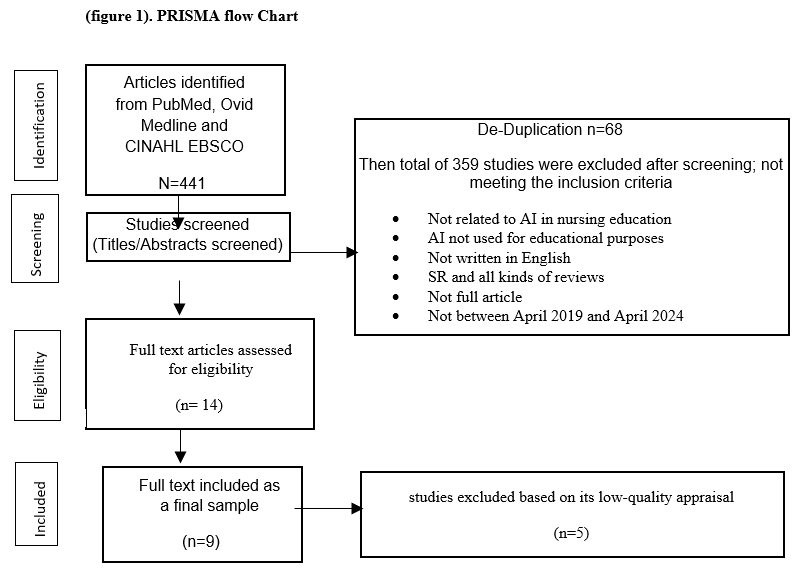
Artificial intelligence is rapidly evolving field, particularly in nursing education, where it can enhance learning and clinical decision-making. This systematic review synthesized evidence from 441 studies identified through databases like CINAHL EBSCO, Ovid Medline, and PubMed, focusing on impactful research from 2019 to 2024. After screening and applying inclusion and exclusion criteria, 9 studies were included. Two main themes emerged: the advantages and opportunities AI presents in nursing education, and the disadvantages and challenges it poses. While AI holds transformative potential, its effective integration requires strong infrastructure, ethical considerations, and active student involvement. Additionally, a significant knowledge gap in AI among nurses was noted, highlighting the need for targeted educational programs to enhance AI understanding and competencies.
Artificial intelligence (AI) is a complex field of computer science that focuses on developing systems capable of performing tasks that typically require human intelligence, such as thinking, learning, and problem solving 1. Artificial intelligence can be traced back to the 1950s 2. when pioneers such as Alan Turing and John McCarthy laid the groundwork for theoretical frameworks and the development of foundational algorithms. Artificial intelligence has progress dramatically over the last few decades, taking use of increases in processing capabilities and data availability to create complex machine learning models and neural networks 3. Today, AI has several applications in a variety fields, including healthcare, where it is used to supplement clinical practices, improve diagnostic accuracy, and expedite administrative operations 4.
In nursing education, AI technologies are increasingly being used to revolutionize instructional approaches, promote tailored learning experiences, and increase nursing practitioners' involvement 5. Artificial Intelligence driven tools, such as intelligent tutoring systems and virtual simulation platforms, are being integrated into nursing programs to create engaging learning experiences 6. These technologies enable instructors to create complex clinical scenarios, allowing nursing staff to practice important skills and decision-making in a safe environment. The use of AI in nursing education not only improves the educational experience, but also aligns the growing demand for healthcare professionals who can navigate new digital health tools 7.
The implications of integrating AI into nursing education are significant and far-reaching. AI encourages individualized learning pathways, greater understanding and mastery of clinical competence by enabling unique learning pathways. Furthermore, AI systems can provide immediate feedback and real-time assessments of nursing staff performance, allowing for timely interventions and focused support 8. Research has indicated that nurse care providers who are exposed to AI-enhanced learning settings have higher critical thinking skills and clinical reasoning abilities, which leads to better patient care practices when they enter clinical practice 9 Thus, the thoughtful implementation of AI in nursing education can significantly impact the preparedness and effectiveness of future nursing professionals.
Nursing education is the foundation for training competent healthcare professionals who are prepared to handle the complexities of patient care in today's healthcare environments 10. A complete nursing education integrates theoretical knowledge, practical skills, and interpersonal communication to ensure that nurses are well-equipped to provide high-quality, evidence-based care 11 Nursing practitioners apply the knowledge into practice through translating theoretical concepts into real-world settings. Nursing programs build a well-rounded skill set in their graduates by using a multidisciplinary educational approach) 12.
Nursing education is important for more than just individual competency; it also helps to improve overall healthcare delivery and patient outcomes 13. A well-educated nursing staff is critical for reducing risks, increasing patient safety, and promoting best practices in clinical settings. Nursing education also promotes professional socialization, which encourages a commitment to lifetime learning and ongoing professional development 14. As healthcare systems advance, nurses' ability to adapt to evolving technology and practices is determined by the quality of their educational preparation, so healthcare organizations and legislators must prioritize investment in nursing education.
Furthermore, nursing education promotes interdisciplinary collaboration, which is critical for addressing the varied nature of patient care. Nursing education fosters a patient-centered approach to healthcare delivery by providing nurses with the ability to communicate effectively with other healthcare providers 15. The capacity to collaborate across disciplines increases not only the efficiency of healthcare teams, but also the quality of treatment delivered to patients. As a result, nursing education plays a critical role in molding the future of healthcare.
The relationship between artificial intelligence and nursing education represents a paradigm shift in how nursing professionals are prepared to address the changing demands of healthcare 12. The incorporation of AI technology into nursing curricula not only enriches the educational experience, but also modernizes teaching methods to keep up with technological changes impacting the healthcare landscape. For example, AI-powered simulations can simulate real-life medical settings, allowing nursing personnel to practice clinical decision-making and problem-solving abilities in a safe environment 16. This integration of education and clinical practice equips nursing graduates to handle increasingly complex patient care scenarios with confidence and competence 8.
Furthermore, AI improves the ability for individualized learning in nursing education, allowing educators to tailor lessons to individual staff performance and learning styles 9. AI can use adaptive learning platforms to analyze data on staff interactions and assessments, allowing for individualized feedback and targeted interventions. This capability not only increases staff engagement and motivation, but it also meets the different learning demands that exist among nursing cohorts. As a result, AI-based educational initiatives help to cultivate a more skilled nursing workforce that can provide high-quality patient care 6.
The use of artificial intelligence into nursing education has significant implications for improving nursing staff performance and clinical practice 17. As the healthcare environment evolves, particularly in light of Saudi Vision 2030, it is critical to incorporate AI technology with nursing education in order to generate highly skilled nursing professionals. Furthermore, as healthcare systems around the world advance, understanding the relationship between AI and nursing education becomes increasingly important in preparing a competent nursing workforce capable of navigating complicated healthcare environments 18.
This type of research can provide critical insights into how to properly prepare nurses with the skills needed to harness emerging technology, thereby increasing service delivery and patient care standards. Saudi Arabia can realize its vision of improved nursing practitioners who are equipped to handle the needs of an increasingly digitized and complex health landscape by creating a highly skilled workforce 19. Such research initiatives will not only help to develop nursing education, but will also fit with national healthcare objectives, thereby complementing Vision 2030's overarching goals.
To comprehend the opportunities and challenges of Artificial Intelligence in nursing education from the evidence that is currently accessible.
3.2. Objectives• Review and analyze the various ways artificial intelligence is being integrated into nursing education in health care settings.
• Assess the effectiveness of artificial intelligence technologies in enhancing nursing education outcomes
• Evaluate the impact (negatively and positively) of artificial intelligence on the transformation of nursing practice within health care settings
In this systematic review, studies were sourced through searches on CINAHL EBSCO, Ovid Medline, and PubMed to identify papers published between 2019 and 2024. The aim was to capture the latest and most impactful research in the rapidly evolving field of artificial intelligence, leading to the inclusion of publications from the past five years. A systematic search strategy was implemented using the following keywords: “artificial intelligence, machine learning, natural language processing, nursing education, and healthcare” were used. The process of identifying, screening, excluding, and including studies followed the Preferred Reporting Items for Systematic Reviews and Meta-Analyses guidelines (PRISMA) as illustrated in figure 1. Data from the selected studies were synthesized using the convergent integrated analytic framework developed by the Joanna Briggs Institute to extract and analyze common themes 20.
To determine the studies' relevance, authors independently screened the titles and abstracts of the studies found. Afterwards, the full text of the chosen articles was scrutinized to confirm adherence to the inclusion criteria. These criteria were strictly followed to make sure that only studies that matched the objective of the review were included. Similarly, articles unrelated to the review's objective was eliminated using exclusion criteria. (Table 1)
Table 2 displays the characteristics of the included studies. The majority of these studies were published in 2024 (44.44%) and 2023 (33.33%). The studies conducted in many locations (Germany, Saudi Arabia, Croatia, South Korea, Egypt, Indonesia, Spain, Bangladesh, and Philippines). The study designs were diverse; four studies (44.44%) were a quasi-experimental, and 2 studies were cross-sectional. The other studies were a qualitative-descriptive research design, RCT, and mixed method Study.
This review utilized the convergent integrated analysis framework developed by the Joanna Briggs Institute (JBI) to synthesize data from the selected studies 20. In the data synthesis phase, themes concerning AI in nursing education will emerge from the key findings, highlighting both the similarities and differences across the main results of the included research.
Incorporating artificial intelligence (AI) into nursing education yields beneficial outcomes across various stakeholders, including nursing students, educators, and nursing staff. An analysis of multiple scholarly articles reveals consistently favorable results concerning the adoption and effective integration of AI in nursing educational frameworks. The study by (21) highlights the benefits of using chatbots in nursing education, such as providing immediate access to updated medical information, enhancing student engagement through a stimulating learning environment, and fostering self-learning skills. These advantages help prepare nursing students effectively for the demands of the healthcare industry by making learning more accessible and interactive. Moreover, (22) explored the use of virtual patients in nursing education, examining the impact on students' critical thinking and problem-solving skills. The study found that students who interacted with virtual patients demonstrated improved critical thinking and problem-solving abilities, as well as enhanced communication and interpersonal skills. The researchers concluded that virtual patients offered a unique and effective way to teach complex clinical scenarios, allowing students to develop essential skills in a safe and controlled environment.
Furthermore, the findings of 23 indicate that the integration of ChatGPT into nursing education has been met with positive support. The study highlights that ChatGPT serves as a valuable resource for nursing students in the preparation of educational content for patients, particularly through the use of remote simulation. Additionally, the study notes that ChatGPT is considered a reliable tool for preparing for tests related to the nursing specialty. In the context of nursing practice, the analysis conducted by 24 provides practical expertise to guide the advancement of AI in nursing education. The authors conclude that AI is expected to significantly transform patient care and nursing procedures, with a particular emphasis on the use of predictive analysis and virtual assistance. The study notes that AI will act as a patient care assistant, providing support and respite for various tasks, and will manage activities such as writing and documentation for assistance systems. The acquisition of knowledge will serve as a method for finding information, thereby enhancing the learning experience for nursing students.
Ronquillo et al. 25 make a significant point regarding the potential for AI technology to enhance nursing capabilities. They emphasize that AI has the capacity to advance nursing practice by enabling more personalized and evidence-based patient care. Through the provision of cognitive insights and decision-making support, AI stands to elevate the scope of nursing practice. This enhancement extends to fostering stronger patient relationships and granting immediate access to up-to-date evidence-based knowledge, empowering nurses to deliver tailored treatments that embrace a comprehensive approach to patient care. By leveraging artificial intelligence methods within virtual clinics, there is a promising opportunity to optimize the efficiency of nursing roles in promoting health among various segments of society 25. This integration not only simplifies processes but ensures that nursing interventions are informed by the latest evidence, customized to suit individual patient requirements, ultimately leading to enhanced healthcare outcomes and patient satisfaction.
The insights by 26 underscore a pivotal linkage between integrating AI practices into educational frameworks and the subsequent improvement in nurses' skills and educational pathways. By seamlessly embedding AI principles into nursing curricula, professionals can actively enhance their competencies, streamline their learning journeys, and ultimately fortify their proficiency, as articulated in the preceding discourse.
Artificial intelligence in the context of nursing education has been shown to offer significant advantages and competency frameworks that support educators and trainers in enhancing the quality of nursing training. These benefits include the development of critical thinking and problem-solving skills, improving productivity levels, analyzing and interpreting trainees' behaviors, aligning with advancements in the field, and ensuring up-to-date knowledge 27.
The incorporation of artificial intelligence (AI) technologies in nursing education necessitates a substantial financial investment, encompassing the development, acquisition, and upkeep of AI-driven tools and platforms. This financial commitment poses a significant challenge for educational institutions, as highlighted by 28. The cost-intensive nature of implementing AI in nursing education underscores a notable disadvantage, potentially straining the financial resources of academic institutions and impeding widespread adoption of AI technologies in educational settings.
The deployment of artificial intelligence (AI) systems in nursing education demands a robust technical infrastructure and comprehensive support mechanisms. The intricate nature of AI systems necessitates a high level of technical expertise and infrastructure to ensure optimal performance. However, as noted by 24, the sophistication of AI systems can give rise to system faults, software malfunctions, and data security vulnerabilities. These potential issues pose a significant risk to the learning process, as disruptions and reliability concerns may arise, undermining the effectiveness and trustworthiness of AI applications in nursing education.
The availability and access to artificial intelligence (AI) technologies in nursing education can vary significantly across different educational contexts, leading to disparities in learning opportunities. 29 highlights the potential for inconsistency in access to AI technologies, particularly in impoverished or rural educational settings. This disparity in access to AI tools has the potential to exacerbate existing inequities in nursing education, as students from disadvantaged backgrounds may not have the same opportunities to benefit from modern AI tools compared to their peers in more privileged settings. As a result, there is a risk that some students may fall behind in their education due to limited access to AI technologies, further widening the gap in educational outcomes and perpetuating inequities in nursing education.
The adoption of AI-driven practices in nursing education may face resistance from educators and students who prefer traditional teaching methods or are unfamiliar with new technologies. 21 emphasize the importance of addressing this resistance through effective change management and training initiatives. Overcoming the reluctance to adopt AI-driven practices requires comprehensive strategies to educate and train educators and students on the benefits and functionalities of AI technologies in nursing education. By providing adequate support, training, and resources, institutions can help educators and students transition from traditional teaching methods to AI-driven practices, ultimately enhancing the learning experience and preparing students for the evolving healthcare landscape.
The integration of artificial intelligence (AI) in nursing education represents a pivotal shift towards enhancing educational outcomes and preparing future practitioners for the complexities of modern healthcare. Recent literature emphasizes both the advantages and obstacles associated with this integration, illustrating how AI can augment learning through improved critical thinking, creativity, and data-driven decision-making capabilities. For instance, studies such as those conducted by 31 highlight AI’s role in enriching educational experiences by personalizing learning and enhancing student engagement. However, the adoption of AI also presents significant challenges, including ethical considerations, the need for standardized training protocols, and the necessity for nursing educators to possess a comprehensive understanding of AI technologies. Consequently, while AI holds transformative potential for nursing education—as identified by 26 a careful balance must be struck to navigate the associated complexities, ensuring that educators and students alike are adequately prepared to engage with these emerging technologies responsibly and effectively.
A SWOT analysis by 30 identified several strengths, weaknesses, opportunities, and threats associated with AI adoption in nursing care. The strengths include the ability of AI to analyze large amounts of data, identify patterns, and make predictions, which can improve patient outcomes and streamline workflows. The weaknesses include the lack of standardization in AI technologies, the need for large amounts of data to train AI models, and the potential for AI to perpetuate biases and inequalities. The opportunities include the potential for AI to improve patient care, reduce costs, and create new job opportunities for nurses. The threats include the potential for AI to replace human nurses, the lack of regulation and oversight, and the potential for AI to be used for malicious purposes.
Moreover. A study by 32 explored the potential of ChatGPT, a chatbot developed by China's leading AI company, to be integrated into China's nursing education system. The study found that ChatGPT could provide personalized feedback to nursing students, answer their questions, and guide them through complex nursing procedures. The study concluded that ChatGPT could be a valuable tool for nursing education, particularly in non-face-to-face classes.
A review by 30 examined the use of AI in education over the past two decades, identifying contributors, collaborations, research topics, challenges, and future directions. The review found that AI in education has made significant progress over the past two decades, with a growing number of studies exploring its potential to personalize learning, improve assessment, and support teachers. However, the review also identified several challenges, including the need for more robust evaluation studies, the need for greater collaboration between AI researchers and educators, and the need for more ethical and social considerations in AI development.
AI chatbots, or "talking bots," are employed in many educational contexts. Online learning allows students to study anytime, anyplace, reducing stress. Their quick replies and targeted support make them extremely useful for students with limited budgets, busy schedules, or health issues. AI technology in nursing education has been proved to improve students' engagement, cognition, and creativity. People who used AI chatbots or ChatGPT were more engaged, enthusiastic, and learned faster than those who used traditional problem-based learning approaches. Their case analysis comments showed a variety of viewpoints and obvious aim, exhibiting critical thinking and originality.
AI-powered virtual avatars and chatbots that simulate clinical environments have transformed medical and paramedical teaching. Technology can greatly enhance nursing education. Virtual avatars simulate patient care settings, allowing trainees to practice in a safe and controlled environment. Chatbots may simulate clinical circumstances for immediate feedback and individualized learning.
Nevertheless, successfully integrating AI into nursing education requires tackling various obstacles, including the difficulties of implementation, safeguarding data, addressing ethical considerations, and gaining student approval. In order to tackle these challenges, it is crucial to set up well-defined guidelines and standards, ensure the implementation of data governance protocols, promote the transparency of AI algorithms, incorporate ethical principles and values into educational programs, engage users in the design and evaluation processes, and offer comprehensive training.
Statistics show a close association between AI, nurse education, and healthcare delivery, highlighting AI's potential to transform these fields. Research shows that nurses are enthusiastic about AI, and educational interventions improve their viewpoints. The widespread adoption of AI in healthcare by nurses is an encouraging indication of its immense potential.
The potential of AI to completely transform nursing education and practice is absolutely remarkable. AI technology has the potential to greatly improve clinical decision-making, enhance teaching and learning methods, and equip future nurses with the necessary skills to navigate the intricate world of modern healthcare. Although there are challenges, the harmonic combination of AI and human interaction may provide a rich and powerful learning experience. AI researchers and nurse educators must collaborate to maximize AI's benefits while recognizing the value of human engagement. Nurse educators are crucial to the future of their profession.
Based on the findings, several recommendations can be made for educators, policymakers, and healthcare institutions on best practices for integrating AI into nursing education, it is essential for nurse educators to incorporate AI-related content into nursing curricula to ensure that future nurses are well-prepared to work with AI technologies in healthcare settings 25. Nurses should be encouraged to improve their understanding of artificial intelligence via participating in workshops and training programs 24, this can include training on the basics of AI, and its applications in nursing practice through methods such as focus groups to ensure that the tools meet the specific needs and workflows of nursing professionals. Furthermore, it is recommended that nurses receive technical support to use AI tools and align them with their requirements effectively 25. It is important to have access to information about the advantages, challenges, and concerns related to using artificial intelligence in nursing and the potential for these technologies to improve healthcare processes and efficiency. The study by 26 It is suggested that leaders establish organizational structures that enable nurses to actively participate in every stage of AI development. This involvement is crucial for the successful integration of nurses' expertise in the development process. It is essential for organizational leaders to establish frameworks that facilitate and promote the participation of nurses in the development of artificial intelligence technologies. This will ensure that nurses' perspectives and insights are incorporated effectively into the development process. This involvement allows leaders to benefit from nurses' valuable knowledge and skills, ensuring that AI technologies are tailored to meet the requirements of patients and healthcare professionals. By adopting an inclusive strategy, leaders can foster the development of AI solutions that are user-friendly, clinically significant, and in line with the objectives of the healthcare institution. Policymakers should prioritize targeted educational campaigns, legal frameworks, and investments supporting AI integration in nursing. Investment in artificial intelligence research, the establishment of regulatory frameworks for AI applications in healthcare, and the ethical implications of AI deployment in nursing environments are of paramount importance. It is essential that investment and development efforts prioritize AI technologies aimed at patient monitoring, route optimization, and nursing documentation, as these domains are regarded as particularly promising by nursing professionals. Overall, it is important to prioritize funding for AI research, establish clear guidelines for AI use in healthcare, and address ethical considerations in AI deployment in nursing settings. AI applications for patient monitoring, route planning, and nursing documentation are particularly promising and should be emphasized in investment and development efforts. Administration and nursing management staff can be key stakeholders, and AI developers should consider how to effectively support nurses. 25. By involving nurses in the development process, providing technical support, and integrating AI education into nursing curricula, healthcare organizations can empower nurses to effectively utilize AI technologies and enhance patient care delivery. Artificial intelligence (AI) has the potential to revolutionize nursing practice by enhancing efficiency, improving patient care, and advancing healthcare outcomes. To further explore the real-world implementation of AI in nursing practice, research is essential to understand the challenges, opportunities, and outcomes associated with integrating AI technologies into clinical settings. Additionally, interdisciplinary collaboration among nursing professionals, AI researchers, nurse educators, policymakers, and healthcare administrators can drive the development of innovative AI solutions tailored to address the unique needs and challenges in nursing education and practice. Ethical and legal implications of AI adoption in nursing, such as data privacy, patient confidentiality, algorithm bias, and professional responsibilities, require further exploration to ensure responsible and ethical use of AI technologies. Through focusing on these areas for future research and fostering collaboration across disciplines, the field of artificial intelligence in nursing can continue to advance and contribute to the improvement of nursing education, patient care delivery, and healthcare outcomes.
Integrating artificial intelligence into nursing education and practice presents substantial opportunities for enhancing both educational outcomes and patient care quality. The development of curricula that emphasize AI literacy among nursing students is imperative, equipping them to navigate the complexities of contemporary healthcare environments. Empirical evidence suggests that AI applications can significantly improve knowledge acquisition and attitudes within nursing practice; however, there remain critical challenges that must be addressed, including ethical considerations and disparities in training accessibility.
While a growing number of nurses acknowledge the transformative potential of AI, gaps in comprehension and apprehensions surrounding its implementation persist. To effectively address these concerns, sustained collaboration among educational institutions, healthcare organizations, and policymakers is essential. Furthermore, ongoing research aimed at exploring the implications of AI in nursing practice will be pivotal in overcoming the barriers to its integration.
Thus, the future trajectory of nursing will inevitably be influenced by advancements in AI technologies, necessitating a steadfast commitment to continuous education and the promotion of ethical practices to optimize patient outcomes. Failure to adequately prepare nursing professionals for these changes may hinder the potential benefits that AI can offer to the healthcare system.
| [1] | Shao, Z., et al., "Tracing the evolution of AI in the past decade and forecasting the emerging trends," Expert Systems With Applications, 209, 118221, 2022. | ||
| In article | View Article | ||
| [2] | Kaul, V., Enslin, S., & Gross, S. A., "History of artificial intelligence in medicine," Gastrointestinal Endoscopy, 92(4), 807–812, 2020. | ||
| In article | View Article PubMed | ||
| [3] | Mijwil, M., "History of Artificial Intelligence," 3, 1-8, 2015. | ||
| In article | |||
| [4] | Haleem, A., Javaid, M., & Khan, I. H., "Current status and applications of Artificial Intelligence (AI) in medical field: An overview," Current Medicine Research and Practice, 9(6), 231–237, 2019. | ||
| In article | View Article | ||
| [5] | Buchanan, C., Howitt, M. L., Wilson, R., Booth, R. G., Risling, T., & Bamford, M., "Predicted Influences of Artificial Intelligence on Nursing Education: Scoping Review," JMIR Nursing, 4(1), e23933, 2021. | ||
| In article | View Article PubMed | ||
| [6] | De Gagne, J. C., "The State of Artificial Intelligence in Nursing Education: Past, Present, and Future Directions," International Journal of Environmental Research and Public Health, 20(6), 4884, 2023. | ||
| In article | View Article PubMed | ||
| [7] | Tam, W., et al., "Nursing education in the age of artificial intelligence powered Chatbots (AI-Chatbots): Are we ready yet?" Nurse Education Today, 129, 105917, 2023. | ||
| In article | View Article PubMed | ||
| [8] | Martínez, A., et al., "Applications of Artificial Intelligence in Nursing Care: A Systematic Review," Journal of Nursing Management, 2023. | ||
| In article | View Article | ||
| [9] | Almagharbeh, W. T., "The impact of AI‐based decision support systems on nursing workflows in critical care units," International Nursing Review, 2024. | ||
| In article | View Article PubMed | ||
| [10] | Ramnarine-Singh, S., "Integration of Technology into a Nursing Curriculum Using a Mixed Method Approach," 2014. Available: https://scholarworks.waldenu.edu/cgi/viewcontent.cgi?article=1507&context=dissertations. | ||
| In article | |||
| [11] | Fiset, V. J., Graham, I. D., & Davies, B. L., "Evidence-Based Practice in Clinical Nursing Education: A Scoping Review," The Journal of Nursing Education, 56(9), 534–541, 2017. | ||
| In article | View Article PubMed | ||
| [12] | Reid, J., et al., "Enhancing utility and understanding of evidence-based practice through undergraduate nurse education," BMC Nursing, 16, 58, 2017. | ||
| In article | View Article PubMed | ||
| [13] | Weeks, K. W., et al., "Developing and integrating nursing competence through authentic technology-enhanced clinical simulation education: Pedagogies for reconceptualizing the theory-practice gap," Nurse Education in Practice, 37, 29–38, 2019. | ||
| In article | View Article PubMed | ||
| [14] | Cronenwett, L., Sherwood, G., Barnsteiner, J., Disch, J., Johnson, J., Mitchell, P., Sullivan, D. T., & Warren, J., "Quality and safety education for nurses," Nursing Outlook, 55(3), 122–131, 2007. | ||
| In article | View Article PubMed | ||
| [15] | Aktharsha, U., & Anisa, H., "Impact of Information Technology on Nursing Practices," JM INTERNATIONAL JOURNAL OF MANAGEMENT RESEARCH (JMIJMR), 2229, 272, 2011. | ||
| In article | |||
| [16] | Muafa, A., Al-Obadi, S., et al., "The Impact of Artificial Intelligence Applications on the Digital Transformation of Healthcare Delivery in Riyadh, Saudi Arabia (Opportunities and Challenges in Alignment with Vision 2030)," Al-Mağallaẗ Al-akādīmiyyaẗ Li-l-abḥāṯ Wa-al-našr Al-ʿilmī, 5(59), 61–102, 2024. | ||
| In article | View Article | ||
| [17] | Yelne, S., et al., "Harnessing the Power of AI: A Comprehensive Review of Its Impact and Challenges in Nursing Science and Healthcare," Cureus, 15(11), e49252, 2023. | ||
| In article | View Article | ||
| [18] | Rony, M. K. K., et al., "Advancing nursing practice with artificial intelligence: Enhancing preparedness for the future," Nursing Open, 11(1), 10.1002/nop2.2070, 2024. | ||
| In article | View Article PubMed | ||
| [19] | Alshammari, A., & Fayez Alanazi, M., "Use of Technology in Enhancing Learning Among Nurses in Saudi Arabia; a Systematic Review," Journal of Multidisciplinary Healthcare, 16, 1587–1599, 2023. | ||
| In article | View Article PubMed | ||
| [20] | Moola, S., et al., "Chapter 7: Systematic Reviews of Etiology and Risk," JBI Manual for Evidence Synthesis. | ||
| In article | |||
| [21] | Ni, Z., et al., "Embracing the future: Integrating ChatGPT into China's nursing education system," International Journal of Nursing Sciences, 11(2), 295–299, 2024. | ||
| In article | View Article PubMed | ||
| [22] | Shorey, S., Ang, E., Yap, J., Ng, E. D., Lau, S. T., & Chui, C. K. (2019). A virtual counseling application using artificial intelligence for communication skills training in nursing education: development study. Journal of medical Internet research, 21(10), e14658 | ||
| In article | View Article PubMed | ||
| [23] | Ni, Z., et al., "Embracing the future: Integrating ChatGPT into China's nursing education system," International Journal of Nursing Sciences, 11(2), 295–299, 2024. | ||
| In article | View Article PubMed | ||
| [24] | Sommer, D., Schmidbauer, L., & Wahl, F., "Nurses’ perceptions, experience and knowledge regarding artificial intelligence: results from a cross-sectional online survey in Germany," BMC Nursing, 23(1), 2024. | ||
| In article | View Article PubMed | ||
| [25] | Ronquillo, C. E., et al., "Artificial Intelligence in nursing: Priorities and opportunities from an international invitational think-tank of the nursing and Artificial Intelligence Leadership Collaborative," Journal of Advanced Nursing, 77(9), 3707–3717, 2021. | ||
| In article | View Article PubMed | ||
| [26] | P, A., & Padhy, P. C., "Impact of AI on Healthcare with Specific Reference to Nurses’ Education," Journal of Advanced Zoology, 44(S-5), 818–829, 2023. | ||
| In article | View Article | ||
| [27] | Marković, B., "Enhancing Nurse Education Through the Integration of Artificial Intelligence," ICERI Proceedings, 2023. | ||
| In article | View Article | ||
| [28] | Hwang, G. J., et al., "Vision, challenges, roles and research issues of Artificial Intelligence in Education," Computers and Education. Artificial Intelligence, 1, 100001, 2020. | ||
| In article | View Article | ||
| [29] | Zhang, K., & Aslan, A. B., "AI technologies for education: Recent research & future directions," Computers and Education. Artificial Intelligence, 2, 100025, 2021. | ||
| In article | View Article | ||
| [30] | Lee, D., & Yoon, S. N., "Application of Artificial Intelligence-Based Technologies in the Healthcare Industry: Opportunities and Challenges," International Journal of Environmental Research and Public Health, 18(1), 271, 2021. | ||
| In article | View Article PubMed | ||
| [31] | Liu, Q., Yang, L., & Peng, Q., "Artificial Intelligence Technology-Based Medical Information Processing and Emergency First Aid Nursing Management," Computational and Mathematical Methods in Medicine, 2022, 8677118. | ||
| In article | View Article PubMed | ||
| [32] | Hamilton, A., "Artificial Intelligence and Healthcare Simulation: The Shifting Landscape of Medical Education," Cureus, 16(5), e59747, 2024. | ||
| In article | View Article | ||
Published with license by Science and Education Publishing, Copyright © 2024 Amani Abualrahi, Sakna Habobi, Shereen Almutar, Farha Al-Khwaildi, Maryam Alalq, Rouqayah bomurah, Zainab Abdrabalnabi, Eman Al-habib, Fatimah Al-Mahdi and Fatimah Al-Sadah
 This work is licensed under a Creative Commons Attribution 4.0 International License. To view a copy of this license, visit
https://creativecommons.org/licenses/by/4.0/
This work is licensed under a Creative Commons Attribution 4.0 International License. To view a copy of this license, visit
https://creativecommons.org/licenses/by/4.0/
| [1] | Shao, Z., et al., "Tracing the evolution of AI in the past decade and forecasting the emerging trends," Expert Systems With Applications, 209, 118221, 2022. | ||
| In article | View Article | ||
| [2] | Kaul, V., Enslin, S., & Gross, S. A., "History of artificial intelligence in medicine," Gastrointestinal Endoscopy, 92(4), 807–812, 2020. | ||
| In article | View Article PubMed | ||
| [3] | Mijwil, M., "History of Artificial Intelligence," 3, 1-8, 2015. | ||
| In article | |||
| [4] | Haleem, A., Javaid, M., & Khan, I. H., "Current status and applications of Artificial Intelligence (AI) in medical field: An overview," Current Medicine Research and Practice, 9(6), 231–237, 2019. | ||
| In article | View Article | ||
| [5] | Buchanan, C., Howitt, M. L., Wilson, R., Booth, R. G., Risling, T., & Bamford, M., "Predicted Influences of Artificial Intelligence on Nursing Education: Scoping Review," JMIR Nursing, 4(1), e23933, 2021. | ||
| In article | View Article PubMed | ||
| [6] | De Gagne, J. C., "The State of Artificial Intelligence in Nursing Education: Past, Present, and Future Directions," International Journal of Environmental Research and Public Health, 20(6), 4884, 2023. | ||
| In article | View Article PubMed | ||
| [7] | Tam, W., et al., "Nursing education in the age of artificial intelligence powered Chatbots (AI-Chatbots): Are we ready yet?" Nurse Education Today, 129, 105917, 2023. | ||
| In article | View Article PubMed | ||
| [8] | Martínez, A., et al., "Applications of Artificial Intelligence in Nursing Care: A Systematic Review," Journal of Nursing Management, 2023. | ||
| In article | View Article | ||
| [9] | Almagharbeh, W. T., "The impact of AI‐based decision support systems on nursing workflows in critical care units," International Nursing Review, 2024. | ||
| In article | View Article PubMed | ||
| [10] | Ramnarine-Singh, S., "Integration of Technology into a Nursing Curriculum Using a Mixed Method Approach," 2014. Available: https://scholarworks.waldenu.edu/cgi/viewcontent.cgi?article=1507&context=dissertations. | ||
| In article | |||
| [11] | Fiset, V. J., Graham, I. D., & Davies, B. L., "Evidence-Based Practice in Clinical Nursing Education: A Scoping Review," The Journal of Nursing Education, 56(9), 534–541, 2017. | ||
| In article | View Article PubMed | ||
| [12] | Reid, J., et al., "Enhancing utility and understanding of evidence-based practice through undergraduate nurse education," BMC Nursing, 16, 58, 2017. | ||
| In article | View Article PubMed | ||
| [13] | Weeks, K. W., et al., "Developing and integrating nursing competence through authentic technology-enhanced clinical simulation education: Pedagogies for reconceptualizing the theory-practice gap," Nurse Education in Practice, 37, 29–38, 2019. | ||
| In article | View Article PubMed | ||
| [14] | Cronenwett, L., Sherwood, G., Barnsteiner, J., Disch, J., Johnson, J., Mitchell, P., Sullivan, D. T., & Warren, J., "Quality and safety education for nurses," Nursing Outlook, 55(3), 122–131, 2007. | ||
| In article | View Article PubMed | ||
| [15] | Aktharsha, U., & Anisa, H., "Impact of Information Technology on Nursing Practices," JM INTERNATIONAL JOURNAL OF MANAGEMENT RESEARCH (JMIJMR), 2229, 272, 2011. | ||
| In article | |||
| [16] | Muafa, A., Al-Obadi, S., et al., "The Impact of Artificial Intelligence Applications on the Digital Transformation of Healthcare Delivery in Riyadh, Saudi Arabia (Opportunities and Challenges in Alignment with Vision 2030)," Al-Mağallaẗ Al-akādīmiyyaẗ Li-l-abḥāṯ Wa-al-našr Al-ʿilmī, 5(59), 61–102, 2024. | ||
| In article | View Article | ||
| [17] | Yelne, S., et al., "Harnessing the Power of AI: A Comprehensive Review of Its Impact and Challenges in Nursing Science and Healthcare," Cureus, 15(11), e49252, 2023. | ||
| In article | View Article | ||
| [18] | Rony, M. K. K., et al., "Advancing nursing practice with artificial intelligence: Enhancing preparedness for the future," Nursing Open, 11(1), 10.1002/nop2.2070, 2024. | ||
| In article | View Article PubMed | ||
| [19] | Alshammari, A., & Fayez Alanazi, M., "Use of Technology in Enhancing Learning Among Nurses in Saudi Arabia; a Systematic Review," Journal of Multidisciplinary Healthcare, 16, 1587–1599, 2023. | ||
| In article | View Article PubMed | ||
| [20] | Moola, S., et al., "Chapter 7: Systematic Reviews of Etiology and Risk," JBI Manual for Evidence Synthesis. | ||
| In article | |||
| [21] | Ni, Z., et al., "Embracing the future: Integrating ChatGPT into China's nursing education system," International Journal of Nursing Sciences, 11(2), 295–299, 2024. | ||
| In article | View Article PubMed | ||
| [22] | Shorey, S., Ang, E., Yap, J., Ng, E. D., Lau, S. T., & Chui, C. K. (2019). A virtual counseling application using artificial intelligence for communication skills training in nursing education: development study. Journal of medical Internet research, 21(10), e14658 | ||
| In article | View Article PubMed | ||
| [23] | Ni, Z., et al., "Embracing the future: Integrating ChatGPT into China's nursing education system," International Journal of Nursing Sciences, 11(2), 295–299, 2024. | ||
| In article | View Article PubMed | ||
| [24] | Sommer, D., Schmidbauer, L., & Wahl, F., "Nurses’ perceptions, experience and knowledge regarding artificial intelligence: results from a cross-sectional online survey in Germany," BMC Nursing, 23(1), 2024. | ||
| In article | View Article PubMed | ||
| [25] | Ronquillo, C. E., et al., "Artificial Intelligence in nursing: Priorities and opportunities from an international invitational think-tank of the nursing and Artificial Intelligence Leadership Collaborative," Journal of Advanced Nursing, 77(9), 3707–3717, 2021. | ||
| In article | View Article PubMed | ||
| [26] | P, A., & Padhy, P. C., "Impact of AI on Healthcare with Specific Reference to Nurses’ Education," Journal of Advanced Zoology, 44(S-5), 818–829, 2023. | ||
| In article | View Article | ||
| [27] | Marković, B., "Enhancing Nurse Education Through the Integration of Artificial Intelligence," ICERI Proceedings, 2023. | ||
| In article | View Article | ||
| [28] | Hwang, G. J., et al., "Vision, challenges, roles and research issues of Artificial Intelligence in Education," Computers and Education. Artificial Intelligence, 1, 100001, 2020. | ||
| In article | View Article | ||
| [29] | Zhang, K., & Aslan, A. B., "AI technologies for education: Recent research & future directions," Computers and Education. Artificial Intelligence, 2, 100025, 2021. | ||
| In article | View Article | ||
| [30] | Lee, D., & Yoon, S. N., "Application of Artificial Intelligence-Based Technologies in the Healthcare Industry: Opportunities and Challenges," International Journal of Environmental Research and Public Health, 18(1), 271, 2021. | ||
| In article | View Article PubMed | ||
| [31] | Liu, Q., Yang, L., & Peng, Q., "Artificial Intelligence Technology-Based Medical Information Processing and Emergency First Aid Nursing Management," Computational and Mathematical Methods in Medicine, 2022, 8677118. | ||
| In article | View Article PubMed | ||
| [32] | Hamilton, A., "Artificial Intelligence and Healthcare Simulation: The Shifting Landscape of Medical Education," Cureus, 16(5), e59747, 2024. | ||
| In article | View Article | ||