The study aimed to determine clinical nurses' beliefs, knowledge, organizational readiness, and evidence-based practice implementation levels and identify the perceived factors affecting evidence-based practice implementation. A descriptive-correlational in quantitative approach with triangulation was used. Data were gathered through the administration of adapted survey questionnaires along with structured interviews and personal observation to supplement the data. Forty-two voluntarily participated and completed the survey. Frequency, percent, mean, and standard deviation were used to analyze and interpret the participants' demographic profile and evidence-based practice-related variables. Regression analysis was used to identify the predictors from the list of variables. For facilitating and hindering factors in the evidence-based practice implementation of clinical nurses, an open-ended question was asked to triangulate the quantitative data. Most of the nurses are female in their middle adulthood, have completed a bachelor’s degree in nursing, and have worked in the hospital as a senior staff nurse for considerable time. The result shows that nurses somewhat truly believe in evidence-based practice, have acceptable evidence-based practice knowledge, probably consider the culture and organizational readiness, and are interested in implementing specific evidence-based practice tasks. Also, it was found that only knowledge of evidence-based practice is a highly significant predictor of evidence-based practice implementation. Perceived facilitating factors include supportive policies, training opportunities, management, and peer support. At the same time, lack of knowledge and insufficient time were recorded as barriers to implementing evidence-based practice. The salient findings were used in crafting the policy brief.
In recent decades, evidence-based practice in nursing has become essential to providing exceptional patient care outcomes. Nurses use evidence-based interventions to provide the best possible care to improve the process and structure of health care and, to a limited extent, improve the patients' outcomes 1. These interventions are evidences gathered through critically appraised studies, which in turn help them identify possible care strategies for their patients.
In evidence-based practice (EBP), nurses combine the best available evidence with their clinical knowledge and expertise as healthcare professionals and consider patients' specific expectations and preferences to arrive at appropriate medical decisions. When used consistently, this practice results in patients more likely to obtain the best possible outcomes 2.
Evidence-based practice encourages nurses to think critically, analyze complex situations, and make decisions. Clinical nurses should always emphasize EBP to meet the challenges of defining the direction of health care, promoting optimal outcomes, and ensuring patient safety. However, in their analysis of 8409 participants in low and middle-income countries, they found that the nurses' commitment to EBP is limited because of perceived limitations in their scope of practice, time, and knowledge of EBP and their individual-related barriers 3. Also, novice clinical nurses rely on precise instructions and lack power, authority, and professional judgment in nursing decision-making 4, 5. Nevertheless, this decision-making can progress from personal opinion to relying on reliable scientific data using evidence-based practices. In fact, decision-making based on EBP leads to substantial improvements in patient safety which in turn improve clinical and organizational quality and safety 6, 7. Furthermore, evidence-based practice may help clinical nurses achieve professionalism in their field by empowering them in their professional growth, particularly in problem-solving and decision-making 8. In addition, integration should always be a part of standard practice and not be carried out in a confusing manner that frequently happens in today's world.
When nurses are at the center of the healthcare delivery process, the highest quality research evidence has the potential to be transformed into a more open and financially stable healthcare system. More importantly, the translation of evidence can change cultural norms, behavioral patterns, and practices, thereby bridging the gap between research and practice. The transformation of nurse behavior is essential to accomplishing the goals set for the implementation of research in the healthcare field, and this transformation needs to be incorporated into the implementation strategy 9.
Evidence-based practices have been critical for developing countries, particularly maximizing limited health resources, and achieving excellent patient care outcomes and efficient healthcare systems. These advantages can lead to a reduction in poverty-related problems and improved health outcomes. But despite the apparent benefits of applying EBP concepts, the rise of EBP in developing countries has been modest. Hence, the European Commission and the World Health Organization have proposed that medical care should be established based on the most recent scientific research findings standardizing nursing practice. Such move can have positive outcomes. In particular, the provision of safe patient care and the achievement of positive patient outcomes can lead to a reduction in the time spent by nurses providing care for patients, and a lower overall cost of medical treatment.
Many healthcare practitioners frequently use their opinions or non-generalizable experiences rather than evidence-based findings to guide their practice. To reduce variations in clinical practice and improve patient care, the hospital organization should issue clinical practice guidelines based on the latest evidence to clinical nurses and medical health practitioners working in the healthcare industry. The policymaker should develop these evidence-based guidelines systematically because using an approach that is not systematic could significantly negatively impact the validity and reliability of the evidence used to guide recommendations, leading to misleading information and inconsistent results 10. Putting these guidelines into clinical practice might also prove to be difficult due to a lack of time management, budget, and specialist professionals that hinder the health care system. Other significant issues that can hinder the implementation of clinical practice guidelines among health professionals may include lack of clarity and credibility in the evidence, lack of knowledge about the clinical practice guidelines, lack of motivation, and lack of self-confidence. In addition, a negative attitude toward implementation and sociocultural perspectives can influence the healthcare professionals. Thus, it can be said that the implementation of EBP is challenging either because nurses do not understand enough or do not want to do something about it 11, 12, 13.
Furthermore, at the national and international levels, the nursing profession needs to understand the beliefs, knowledge, and organizational culture and readiness of clinical nurses to implement EBP in a clinical setting with the help of their hospital organization. It was noted that knowledge of evidence-based practice, beliefs concerning EBP, and implementation of EBP contribute to limitless opportunities for improvement when supported by their organization 14. This knowledge could help them evaluate and strengthen the organization's current EBP status to improve the quality and safety of its patients.
Despite the importance of nurses in adopting EBP in the healthcare setting, evidence suggests several obstacles to EBP implementation. It showed that the biggest obstacle in using research in practice is the insufficient implementation facilities and lack of power to change care procedures 15. In Iran, individual factors account for 57% of the barriers preventing EBP implementation. These include a lack of proficiency in the English language, an inability to operate a computer, and a lack of time to read literature. In addition, the most significant organizational challenges include a lack of internet access at work, an insufficient number of registered nurses, and an excessive amount of work needed 16. Though 79.7% of clinical nurses were aware of EBP or related terms such as evidence-based nursing or health care, only 66.5% believed it was important for improving patient care quality, 25.5% of nurses rated their knowledge of implementing EBP, while 12.3% felt they had sufficient skills 17.
Interestingly, it seems that positive attitude, knowledge and skills do not necessarily translate to practice. For example, 18 revealed that nurses who have a positive attitude, knowledge, and skills toward EBP have not successfully implemented EBP. In a multi-institutional cross-sectional study of nurses in Oman, 73.5% of respondents had a diploma in nursing and 10.9 years of experience in the clinical setting and although their perspectives toward EBP were good, knowledge and implementation of the methodology were lacking 19. The most considerable perceived knowledge and skill gaps were recognized as research skills, awareness of kind and sources, abilities to obtain evidence, critical evaluation, and translating information into questions.
Conversely, some studies discovered a link among some factors like knowledge, attitude and practice or implementation. In the study, statistics show that 18% of respondents have a bachelor's degree and 17 years of clinical experience. Moreover, there was a link between their EBP skills and knowledge and higher professional qualification 18. Meanwhile, researchers found that 50% of their respondents have a bachelor's degree and 18.4 years of clinical experience. Their findings also show that participants' educational backgrounds and years of clinical nursing experience increase their knowledge adaptation of evidence-based practice showing that more exposure to EBP throughout their preparation programs results in adaptation and practice 20. Findings from a growing body of research also indicate that the levels of education and experience that nurses possess are two of the primary factors that influence the full implementation of EBP. According to the research findings, senior nurses who occupied senior positions and possessed a degree or had prior experience in EBP training had a greater intention to utilize EBP in their practice 21, 22. Moreover, nurses without administrative positions had less intention to utilize EBP in their practice 23. Researchers also found that advanced nurses' levels of knowledge and ability were noticeably more remarkable than those of beginning nurses 17. In addition, the advanced nurses had a significantly higher likelihood of utilizing evidence-based practice than the less experienced nurses. Some factors to explain this can be: evidence-based practice (EBP) content is typically integrated into other curricula, EBP coursework is not adequately integrated into the nursing curriculum, and EBP is taught as a separate subject in bachelor's and master's degree programs 24. Moreover, training and education in evidence-based practices through the development of activities and change implementation process in nursing are fundamental and necessary strategies for fostering education and training opportunities to improve EBP 25, 26, 27. However, there has not been any research on the potential indirect effects of EBP implementation training programs.
In addition to years of experience and the educational level of registered nurses, a study 103 revealed that EBP had a significant relationship with other factors such as age. Older nurses had higher EBP scores because they had more experience and were more likely to have a bachelor's degree, while younger nurses had lower EBP scores 28. Researchers also found that nurses with advanced nursing degrees, certification, and leadership positions supported EBP 29. Meanwhile, younger clinical nurses with fewer years of experience were more likely to have positive attitudes toward EBP and its incorporation into organizational culture 28. In addition, they found that the number of years of experience had a statistically significant correlation with the issues nurses encounter in adopting the evidence-based practice 30. Apparently, individual and organizational factors play a role in these challenges. Being female 28 and aware of EBP also influence EBP beliefs and implementation 31. In fact, researcher revealed that Jordanian female nurses reported practicing EBP more than male clinical nurses 21.
Moreover, a study found that there were hardly any close connections between participants' education level, work position, age, sex, organizational, individual, or research performance problems 19. However, there was a correlation between specific nursing demographics and the implementation of EBP, such as holding a leadership or faculty position 4. Leadership was determined to be a significant individual factor in implementing EBP 32. Also, clinical nurses who work in a particular area contribute a higher knowledge and attitude toward EBP than the ward clinical nurses 21.
Researchers posited that evidence-based practice training should start at the undergraduate level and advance through master's 33 and doctoral degrees by integrating EBP concepts and applications in core nursing courses 34. Early EBP education leads to adequate knowledge, confidence, and positive attitudes, significantly impacting EBP adoption 35. Another significant factor in the adoption and implementation of EBP is information literacy. Through accessing and analyzing accessible scientific data and actively seeking and incorporating relevant evidence into their nursing practices, clinical nurses can improve patient outcome. This is supported by previous research conducted which indicated the significance of information literacy skills, positive attitudes toward EBP, and intrinsic academic motivation to enhance the future implementation of EBP among nurses 36. In addition, the lack of continuity in information literacy content presents a challenge when looking for and locating sources of research 37. Moreover, as many studies 14, 38, 39 found that students and clinical educators believe in evidence-based practices, but the implementation of evidence-based practices is low, educators must implement various innovative instructional methods to facilitate nursing students to continue increasing their knowledge and experience levels.
Specifically, healthcare professionals, especially clinical nurses, need training on knowing the latest evidence to provide high-quality safety standards to their patients. Such is usually based on solid and careful research. It is essential that nurses understand sifting through information on evidence-based practices because the information they gather daily is constantly changing, impacting the delivery of quality nursing care. As it has been found that educational initiatives positively impacted the beliefs and implementation of evidence-based practice 40 and that information literacy skills, positive attitudes toward EBP, and intrinsic academic motivation enhance the future implementation of EBP among nurses 36, there is a growing need to encourage organizations to take an active role in the adoption, dissemination and implementation of EBP. In addition to this, the lack of continuity in information literacy content presents a challenge when looking for and locating sources of research 37. It was revealed that healthcare workers are selective, and they do not pay attention or can recall all available information in a structured manner. Though this information is demonstrated to be effective or ineffective (no evidence-based measures are applied), they remain on to their beliefs and interpret this ambiguous evidence to justify their viewpoints 41. Clinical nurses should advocate urging their organization to adopt the EBP approach for the best patient care decisions to resolve the identified gap. Nurses must keep up with constantly evolving information and update their skills and knowledge on the newest method, and EBP should be personalized to the patient's preferences and goals 42.
Evidence-based practice initiatives have been implemented in advanced countries such as Australia, Canada, the United Kingdom, and the United States 43, 44. However, translating research evidence into practice in developing countries such as Bahrain remains a potential opportunity. In a study of 219 Bahraini nurses, researchers found three barriers to research utilization related to their organization: nurses are concerned about lack of authority to change patient care procedures, inadequate facilities for implementation, and insufficient time on the job to implement new ideas 45. The data collected further shows that many nurses' research results are not applicable in their clinical environment because 'the conclusions drawn from the research are not justified', 'there is not a documented need to change practice', and 'the nurse is uncertain whether to believe the results of the research’. From a critical perspective, EBP in the clinical setting can be effective if nurses implement it. This means that change management is dependent on nurses' reactions in the clinical setting.
Similar findings were discovered revealing that most nurses in Egypt are reluctant to consider a new idea and that the gains of implementing evidence-based practice are minimal 46. Research was also shown not beneficial for practice. Furthermore, 81.6 percent of the clinical nurses admitted that they could not evaluate the quality of the research, and nearly half (46.4 percent) were skeptical of the research's findings. Many of the nurses surveyed stated that the three most significant organizational limitation obstacles are inadequate facilities, a lack of authority to change care, and the absence of a hospital library. Meanwhile, 47 found that Jordanian nurses perceive barriers to research utilization positively. Furthermore, organizational barriers scored the highest compared to the nurse, innovation, and communication domains.
In addition to the benefits of applying evidence-based approaches in nursing care, the use of these approaches could also provide a substantially more significant influence on socioeconomic outcomes in developing countries. Indeed, more evidence-based practices in developing countries could substantially reduce poverty and improve economic performance. The following two examples demonstrate the significance of evidence-based practice in developing countries 48. One shows evidence in drastically enhanced lives. The other is that the lack of an evidence-based response has resulted in widespread devastation. Another study 49 using evidence-based practices revealed an increase in satisfaction with the quality of excellent care provided after EBP implementation, demonstrating that an evidence-based practice approach improves life. However, 50 still discovered a gap between practices and evidence-based guidelines implementation due to unreasonable practices generated from scientific knowledge and belief. Many nurses were also unwilling to incorporate innovative approaches to patient care with 84.2% of clinical nurses preferring using the old approaches that incorporate the latest evidence and 63% of them not liking people questioning their clinical performance 51.
There have been several studies conducted and published on the beliefs, knowledge, organizational culture and readiness, and implementation levels of evidence-based practice among clinical nurses in countries such as Ireland, Finland, Korea, and Taiwan 4, 52, 53, 54. Nevertheless, investigating this in the context of Bahrain will help establish a new reference point for progress in the comprehensive integration of evidence-based practices for clinical nurses and the healthcare system in Bahrain.
1.2. Conceptual and Analytical FrameworkThe researcher used the Roy Adaptation Model as a conceptual framework and its primary source of direction. Roy Adaptation Model incorporates five critical concepts from nursing theory: health, person, nurse, environment, and adaptation. The first concept is health. According to Roy, "Health is a state and process of being and becoming an integrated and whole that reflects person and environment mutually" 55. Health is the state where humans can continually adapt to stimuli. She further discussed that illness is a part of life and health results from a process where health and illness can coexist. If humans can continue to adapt holistically, they will maintain health to reach completeness and unity within themselves. If they cannot adapt accordingly, the person's integrity can be negatively affected.
The second concept is the person. Roy defined a person as "an adaptive system with cognator and regulator subsystems acting to maintain adaptation in four adaptive modes." 55. According to Roy, humans are integrated systems constantly interacting with their surrounding environment to maintain their health and well-being. When exposed to different environmental stimuli, humans use a system of adaptation that includes both innate and acquired. Individuals and groups, such as families, organizations, and the entire global community, are examples of human systems.
The third concept in Roy’s Adaptation Model is nursing which she defines as “[The goal of nursing is] the promotion of adaptation for individuals and groups in each of the four adaptive modes, thus contributing to health, quality of life, and dying with dignity.” 55. In the adaptation model, nurses are facilitators of adaptation. They assess the patient’s behaviors for adaptation and promote positive adaptation by enhancing environment interactions and helping patients react positively to stimuli. Nurses eliminate ineffective coping mechanisms and eventually lead to better outcomes.
Lastly is the environment which she defines as “The conditions, circumstances, and influences surrounding and affecting the development and behavior of persons or groups, with particular consideration of the mutuality of person and health resources that includes focal, contextual and residual stimuli.” 55. The environment is called conditions, circumstances, and influences that affect human development and behavior as an adaptive system. The environment is a stimulus (maybe both positive and negative) or input that requires a person to adapt. These stimuli are classified as focal, contextual, or residual. The human system is confronted with focal stimuli, which require the most attention. Contextual stimuli are the rest of the stimuli present with the focal stimuli and contribute to their effect. Residual stimuli are additional environmental factors present in the situation but have an unknown effect. This can include prior exposure to certain stimuli.
Within the context of the Roy Adaptation Model, the goal of nursing is to enhance person-environment interaction to promote adaptation. For Roy, adaptation is the "process and outcome whereby thinking and feeling persons as individuals or in groups use conscious awareness and choice to create human and environmental integration." In addition, Roy's core principle is based on the idea of adaptation, which rests on the premise that a person is an open system that can respond to stimuli from both the internal and external environments in which he finds himself.
As a system, she sees it as a single entity with its inputs, outputs, controls, and feedback. For Roy, a person is more than just the sum of his parts. All the components must work together to form a unified whole. Because they are living systems, people are constantly interacting with the environment. The system and its surroundings constantly exchange information, matter, and energy. Furthermore, adaptation arises when people respond positively to environmental changes, and it is the method and outcome of individuals who use conscious awareness, self-reflection, and choice to create human and environmental incorporation 55.
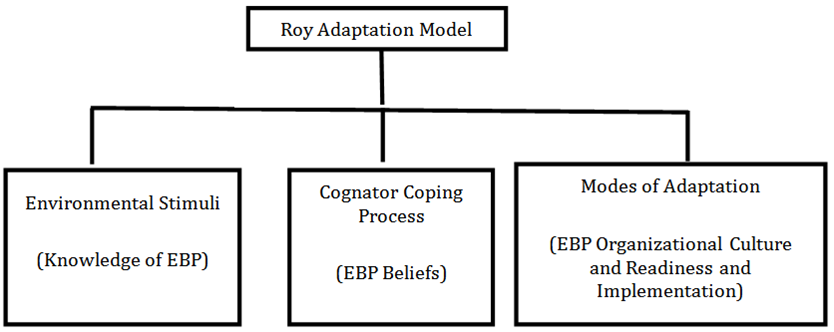
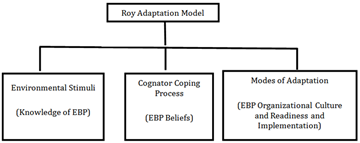
Clinical nurses' current knowledge of evidence-based practice presents the model concept of the environment (external stimuli). The model concept of the cognator coping process is a central coping process involving four cognitive-emotive channels: perceptual and information processing, learning, judgment, and emotion, and is presented by clinical nurses' beliefs toward evidence-based practice. Furthermore, the model concept of modes of adaptation is presented by the clinical nurses' current implementation of evidence-based practice and organizational culture and readiness, shown in Figure 1.
In attempting to put EBP into practice, sociodemographic factors such as age, gender, length in service, highest educational attainment, position, and work units are essential. The nurses for this study have different education levels, years of experience, and diverse personal experiences. The hospital's multi-cultural nursing staff must adhere to current research evidence to provide safe, effective, financially sound, high-quality patient-centered care. According to 46, clinical nurses' age is statistically significant in connection with barriers related to individual characteristics, research quality, and accessibility of research. It aligns with the study by 5 that stated that young clinical nurses are more confident in their research skills and computer use associated with EBP. In contrast, 16 revealed no relationship between nurses' age and evidence-based practices. According to research conducted by 15, female nurses recognize fewer barriers to implementing innovative practices and noted that being a female registered nurse who had access to the internet and nursing journals significantly impacted the students' understanding of evidence-based practices 56. It would appear that gender differences are associated with barriers concerning nurses in implementing EBP 5.
On the other hand, clinical nurses with more years of experience and specialized training in specific units (outpatient, emergency, or home health care) providing unique interventions based on clinical guidelines improve the quality of care and patient outcome. When these clinical nurses work in an environment with evidence-based practice guidelines, they are more likely to be observant and feel better about themselves, encouraging them to engage in more caring activities 57, 58. Despite this, nurses with a limited number of years of experience face more significant difficulties in implementing evidence-based practice 15, 104. Regarding years of experience in implementing EBP, graduating from and finishing a higher education program play an important role in incorporating EBP in practice. According to some studies 5, 15, 46, nurses who have attained higher education are more confident in their ability and accessibility to handle hindrances related to EBP. However, the utilization of evidence-based nursing practice was not significantly related to the professional qualifications of the nurses 59.
Considering the international workforce of the hospital where this study was conducted, it was pertinent to examine the beliefs and knowledge of the participants. 60 found that nurses' knowledge of EBP was the most crucial factor in determining whether or not they practiced EBP. This corroborates the findings of 56 who found that nurses in clinical settings view knowledge as an essential foundational component for applying EBP. Moreover, 27 found a significant correlation between having received training in evidence-based practice and having a higher perception of one's knowledge of evidence-based practice. These factors (evidence-based practice, research knowledge, length of service, job satisfaction, training in evidence, and holder of a master's degree) also influence one's beliefs regarding and using evidence-based practice. However, 61 found that beliefs and knowledge have no significant relationship with the implementation of EBP.
According to 62, evidence-based readiness is interrelated with individual and organizational readiness. They discussed that one must recognize the need for evidence-based practice and have access to and interpret that practice to achieve readiness through nursing, training, and equipping, and leadership support. At the organizational level, there is a need for careful consideration of the critical resources for the effective implementation of EBP among clinical nurses. 63 identified organizational willingness to introduce innovative breakthroughs and a learning culture about implementing evidence-based practices. Their preparedness in evidence-based practices regarding knowledge, beliefs, and work environment is highly significant to EBP readiness. However, nearly half of these clinical nurses were unsure of their ability to implement EBP in their organization 64. This was most likely due to organizational-related barriers, and EBP implementation makes a difference in factors such as gender, education level, and job position 65.

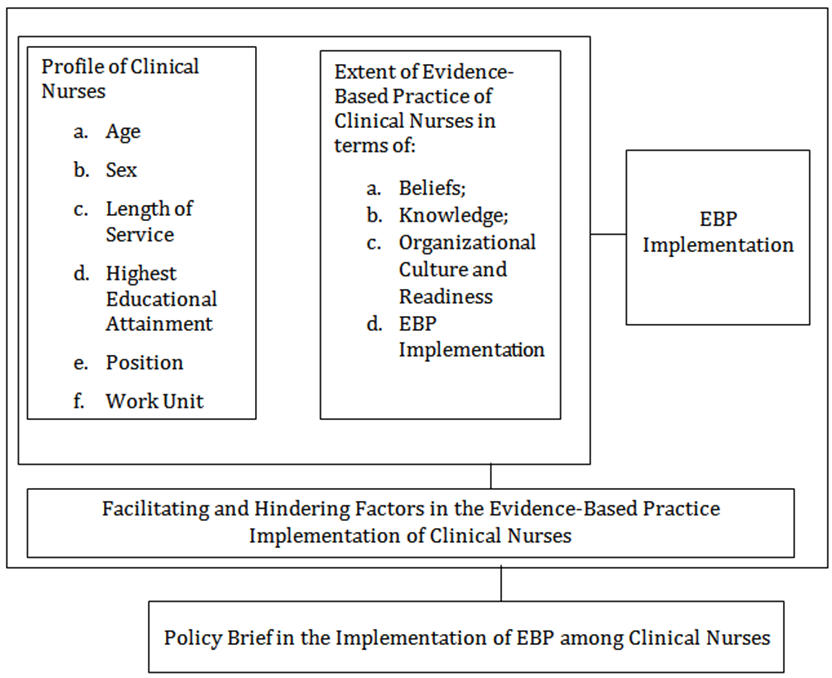
The study began by determining the profile of clinical nurses in terms of age, sex, length of service, highest educational attainment, position, and work units. Additionally, this study determined the extent of evidence-based practice of clinical nurses in the following domain: beliefs, knowledge, organizational culture and readiness, and EBP implementation. Also, the study determined the variable that is a predictor of EBP implementation. Moreover, the study identified facilitating and hindering factors that affect the level of implementation in implementing evidence-based practice among clinical nurses. Lastly, the study proposed a policy brief for implementing EBP among clinical nurses.
1.4. Statement of the ProblemThis study aimed to determine the clinical nurses’ beliefs, knowledge, organizational readiness, and evidence-based practice implementation levels and identify the perceived factors affecting evidence-based practice implementation to successfully establish the evidence-based practice.
Specifically, the study seeks to answer the subsequent questions in particular:
1. What is the profile of clinical nurses in terms of:
1.1. Age;
1.2. Sex;
1.3. Length of Service;
1.4. Highest Educational Attainment;
1.5. Position; and
1.6. Work Unit?
2. What is the extent of evidence-based practice of clinical nurses in terms of:
2.1. Beliefs;
2.2. Knowledge;
2.3. Organizational Culture and Readiness; and
2.4. EBP Implementation?
3. Which of the following variable significantly predict EBP implementation?
3.1. Demographic Profile
3.2. Beliefs
3.3. Knowledge
3.4. Organizational Culture and Readiness
4. What are the facilitating and hindering factors in the evidence-based practice implementation of clinical nurses?
5. What policy brief can be developed in the implementation of EBP among clinical nurses?
This study used a descriptive-correlational design in a quantitative approach with triangulation. A descriptive design was used to describe and interpret the independent variables age, sex, length of service, highest educational attainment, position, work units, EBP beliefs, EBP knowledge, and EBP organizational culture and readiness. The dependent variable is EBP implementation. Also, the study determined the variable that is a predictor of EBP implementation. The study used a quantitative approach in the form of a survey and triangulated through a structured interview to supplement and strengthen the data from the survey and personal observation of the current situation to determine the facilitating and hindering factors in evidence-based practice implementation of clinical nurses.
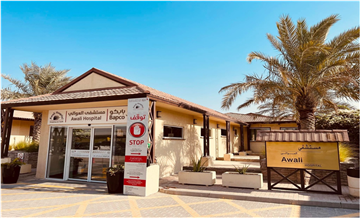
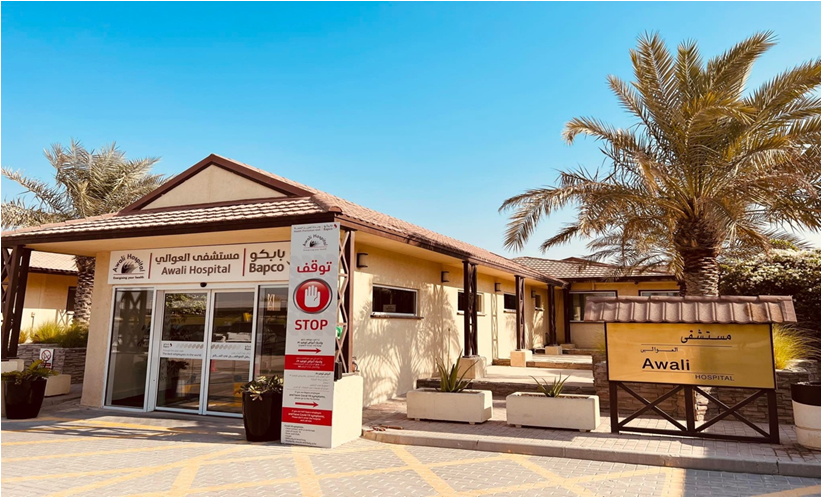
Awali is a private secondary hospital that has been in operation since 1937. Since its expansion in 2014, the hospital’s services have increased to give high-quality care to its clients. This hospital is well-known throughout Bahrain as it provides comprehensive adult and pediatric healthcare services to Bahrain Petroleum Company (BAPCO) employees and their families, Very Important Person’s (VIP’s), and private patients. Awali Hospital has several specialties, including but not limited to urgent care, cardiology, pulmonology, endocrinology, general practice, general surgery, pediatrics, dental and ophthalmology. Awali Hospital has a 35-bed capacity, with five clinical areas in operation, including urgent care (5 beds including isolation), inpatient and outpatient (26 beds), delivery rooms (2 beds), dental (3 rooms) and VIP suites (2 beds). Also, special areas like HDU and Operating Theatre (Supply and Sterilization unit) are present. Over 50 nurses from various countries, including Bahrain, India, South Africa, Romania, the Philippines, Germany, and Australia, make up the nursing workforce. Due to the nursing staff's diverse educational backgrounds and professional experiences, only some are familiar with evidence-based practice (EBP). Evidence-based practices have been incorporated into the policies and procedures. However, the staff is hesitant to adhere to and incorporate the current evidence to provide safe, effective, financially sound, and high-quality patient-centered care. Moreover, it was observed that nurses need to be made aware of evidence-based practices, like searching for evidence and appraising it.
2.3. Research RespondentsThe nursing department is made up of nurses who come from a wide variety of countries, each with his own distinct educational and professional backgrounds. The term "respondents" are reserved exclusively for the clinical nurses taking part in this research. They come from different departments, including Urgent Care, Inpatient General, Outpatient Department, Operating Theatre, Dental Unit, and Maternity Labor and Delivery.
Total enumeration was used in the study. Awali Hospital has a total population of 56 full-time registered nurses, but only 42 full-time registered nurses participated in the study. Two nurses were above 60 years old. Five participants refused to participate in the study.
2.4. Inclusion and Exclusion CriteriaParticipants must be full-time registered nurses, which include senior staff nurses, dual nurse-midwife, clinical nursing assistants, and dental nurses working at Awali Hospital and providing direct quality nursing care to patients.
Nurses who work either part-time or nurses who are not directly involved in providing patient care in the hospital are excluded. The principal nursing officer, deputy PNO, nurse educator and with supervisory position were also excluded.
2.5. InstrumentationThe researcher used adapted instruments to answer the research problems. The research instrument was subjected to internal validity and reliability tests to evaluate whether the research data were credible and replicable and whether the results were accurate. The research panel and adviser assessed the face validity and the content validity of the questionnaire.
After validation, pilot testing was conducted to verify the reliability of the questionnaire to the nurses employed in the Middle East with a sample size of 30 respondents. The research instrument was used for data gathering. The test was reliable and valid, with Cronbach's Alpha of .802 for the EBP Belief Questionnaire, α =.949 for the EBP Knowledge Questionnaire, α =.929 for the OCRSIEP Questionnaire, and α =.962 for the EBP Implementation Questionnaire.
The research instrument is made up of five parts. Part I contains the demographic profile of the participants. Part II of the questionnaire is a modified Evidence-Based Practice Beliefs (EBPB) tool created by 66 which was used to assess participants' beliefs about the value of EBP. This is an 11-item Likert-type scale ranging from 1=strongly disagree to 4=strongly agree, except for items 11 and 13. The total score varies from 11 to 44, with higher summed scores indicating stronger EBP beliefs.
Part III of the questionnaire comprises the modified knowledge-related items from the Evidence-based Practice Questionnaire, developed by 67. This was used to assess participants' knowledge of applying EBP. On a scale of 1 to 6, 1 means "extremely lack knowledge," and 6 means "extremely knowledgeable." Total scores can range from 12 to 72, with higher values suggesting a better understanding of EBP. This is an important concept in evaluating assessments and questionnaires 68. Measuring the EBP contributes to clarifying the necessary educational support for nurses and could help compare EBP activity and competency of nurses in Bahrain and other countries.
Part IV comprises the Organizational Culture and Readiness for System-wide Integration of Evidence-Based Practice (OCRSIEP) which was used to assess how cultural factors influence the system-wide implementation of EBP in the organization and overall perceived readiness for the integration of EBP. It comprises 19 questions about evidence-based practice (EBP) considering the organization's culture and its readiness for system-wide implementation of EBP.
Part V comprises the Evidence-Based Practice Implementation Scale which was created by 66 and used to assess the frequency of EBP-related activities. This tool contains 18-item Likert-type scale items on: how often in the last eight weeks have they performed specific EBP tasks, including generated a PICO (Population, Intervention, Comparison, and Outcome) question about their practice, use of evidence to change their clinical practice, and sharing outcome data collected with colleagues. The scale goes from 0 (no response) to 3 (6-8 times). Total scores can vary from 0 to 54, with higher scores indicating a more substantial commitment to EBP-related activities.
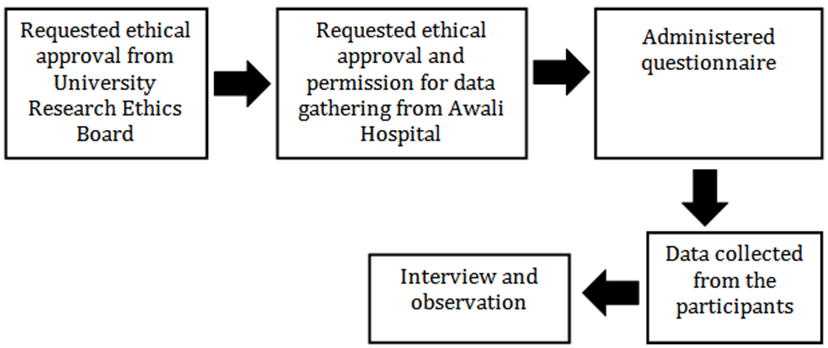
2.6. Data Gathering ProcedureThe researcher secured approval from Saint Mary's University Research Ethics Board. Saint Mary's University Research Ethics Board approved the informed consent form and the protocol. After approval, the researcher sent a letter to the Chief Medical Officer and Chairman of the Ethics Committee of Awali Hospital, Kingdom of Bahrain, for permission to conduct the study. The researcher also communicated with the hospital to explain the purpose of this study and the inclusion criteria to the ethics committee. The researcher submitted the research study, the informed consent form, and the questionnaire to Awali Hospital Ethics Committee for ethical review. The research study, informed consent form and questionnaires is approved by Awali Hospital Ethics Committee.
In this study, the supervisors, nurse educators, principal nursing officers, and her deputy were not involved in data collection. The researchers asked the selected respondents to participate voluntarily in the study. If the participants agreed to participate in the study voluntarily, the researcher asked them to read and sign the informed consent form for the survey questionnaire. Follow-up structured interviews on audio recording through mobile phones and personal observation by the researcher were conducted in their respective areas to convey their feedback and ideas on factors affecting the implementation of evidence-based practices. If a respondent does not want to participate in the study and does not wish to continue answering the questionnaire, he can withdraw from the research project at any time. The researcher left the questionnaire with the respondents and collected it after three days. The researcher collected the data at Awali Hospital from September 5, 2022, to September 7, 2022.
After data gathering and analysis, a structured follow-up interview, recorded on the mobile phone and lasting 15-20 minutes, was carried out randomly during the study. Before the interview began, the researcher clearly explained the interview's purpose and asked for the interviewee's consent. The researcher set an open-ended question, "What are the perceived factors affecting evidence-based practice implementation to successfully establish the evidence-based practice?" and allowed the participants to share answers freely and openly. The researcher was transparent and honest during the interview and encouraged the participants to ask questions to understand the course of the interview fully. The researcher explained to the participants how the information gathered was used. The researcher kept in mind that the participants were the focus of the interview. If the participants were uncomfortable or unwilling to answer the questions, the researcher did not force the respondent to answer. The researcher transcribed the audio-recorded file using Microsoft office.
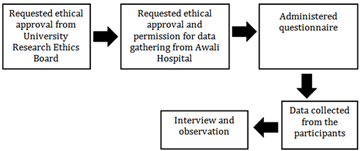
Mean, percent, frequency, and standard deviation were used to analyse and interpret the participants’ demographic profile and EBP - related variables.
Regression analysis was used to identify the predictors from the list of variables. For facilitating and hindering factors in the evidence-based practice implementation of clinical nurses, an open-ended question was asked to triangulate the quantitative data. The salient findings were used in crafting the policy brief.
2.8. Ethical ConsiderationsEthical approval to carry out the study was obtained from Saint Mary's University Research Ethics Board, Bayombong, Nueva Vizcaya, and the Ethical Committee of Awali Hospital, Awali, Kingdom of Bahrain. These ethics committees ensured that research participants were not harmed in any way. Participants must sign the written informed consent form before answering the survey questionnaire, participating in the structured interview, and agreeing to be observed regarding the present situation of nurses' evidence-based practice at their workplaces. The researcher of the study declared that he has no conflict of interest. The researcher of the study did not participate in answering the questionnaire. The researcher ensured that anonymity and identity were maintained and secured, and that all information gathered was confidential. To protect individual privacy rights and ensure the free flow of information to promote national development, the researcher followed and adhered to the implementing rules and regulations of the Bahrain Personal Data Protection Law of 2018. The researcher compiled the participants' responses and assigned a number to each participant's list. The survey questionnaires collected were kept in a secured lockbox by the researcher for the duration of the study and destroyed after the completion of the study. The study's target participants were not vulnerable and could protect their interests and rights. On the other hand, the researcher did not exploit any of the study's respondents.
The risk of participating in this study is that the information collected revealed their EBP beliefs, knowledge, organizational culture and readiness, and evidence-based practice implementation. However, it was not used against the respondents; their names and identity were not revealed anywhere, and no one other than the researcher was aware of their specific responses. This research's benefit is improving the clinical nurses' EBP beliefs, knowledge, organizational culture and readiness, and evidence-based practice implementation levels. Moreover, the result of the study will be shared among nurses and management of Awali Hospital, and a copy of the research project was given to the company's learning and development office and Awali Hospital. In addition, this research study can help the administration of Awali Hospital to develop effective and efficient protocols and procedures to implement EBP.
The informed consent form was adapted from templates for the informed consent form and designed for Awali Hospital nurses, the study's target respondents, who were voluntarily recruited for the study. The researcher explained the purpose, benefits, and risks of participating in the study. Subsequently, the researcher asked the respondents to read the content of the informed consent and sign the informed consent form for the survey questionnaire and structured interviews. The informed consent contains the purpose of the study, type of research intervention, participant selection, voluntary participation, procedures, duration, time for participants to answer the questionnaire, which is 15-20 minutes, structured follow-up open-ended questions, risks, benefits, reimbursement, confidentiality, right to refuse, whom to contact, and the consent certificate. If a respondent does not want to participate in the survey and does not want to continue answering the questionnaire, he can withdraw from the research project anytime. All the participants remained anonymous throughout the interview. The names of respondents were not used in any quotations or report findings. A pseudonym was used, and identifying details were obscured and omitted. The researcher stored audio recordings and the printed transcript in encrypted files in and locked and secure location for the entire study. After the publication of this research study, all files would be destroyed. This procedure does not impose obligations on the participant. No compensation, entitlements, or reimbursements were provided to participants, and there is no funding grant for this study. The school owns the intellectual property of the research study.
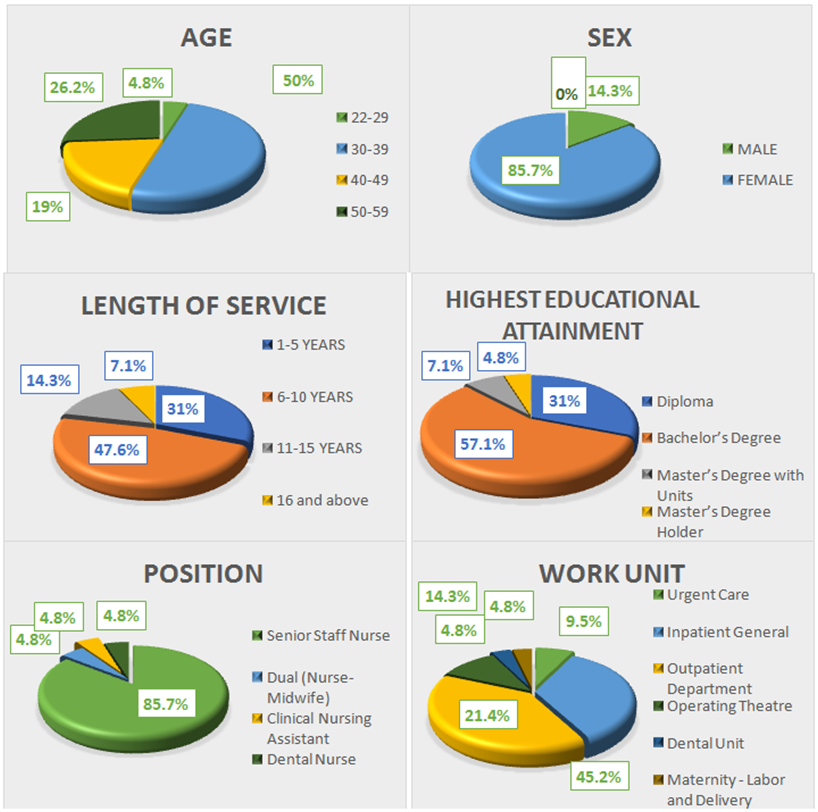
This section presents the profile characteristics of nurses at Awali hospital. The participants' demographic information is presented in Figure 5.
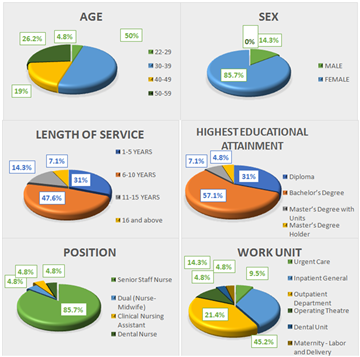
Fifty percent of the registered nurses in the study were between the ages of 30 and 39 (n=21). The next largest age group, almost 26%, is between 50 and 59 (n=11), and about 19% are 40 to 49 years old (n=8). Individuals between the ages of 22 and 29 (n=2) make up the age bracket with the lowest percentage of RNs (4.8%). Furthermore, this study includes more women (85.7%, n=36) than men (14.3%, n=6) who are RNs.
The largest group has worked in the field between 6 and 10 years (47.6%, n=20), followed by almost one-third (31%, n=13) of those with between 1 and 5 years of experience. Around 14% have been working between 11 to 15 years (n=6); subsequently, only 7% or just three participants have 16 years of experience or more. The highest educational level attained by most participants was a bachelor's degree (n=24), with almost 57%, followed by a 31% diploma in nursing (n=30) as the subsequent highest. Only 2 of the 42 participants (3.8%) have earned a master's degree, and only 3 of the 42 (7.1%) have completed any coursework toward a master's degree.
Moreover, majority of the participants hold a Senior Staff Nurse position (85.7%, n=36). Only 4.8 % are Clinical Nursing Assistants (n=2), and 4.8% on Dual Positions (Nurse-Midwife) who work in maternity, labor, and delivery (n=2). About 45.2% of the participants are registered nurses working in the inpatient-general ward (n=19), followed by those in the outpatient department (21.4%, n=9), the operating theatre 14.3%, n=9), and the urgent care department (9.5%, n=4). Only 4.8% of all participants work in the dental unit (n=2).
In general, the mean age of the 42 participants was 40.42 (SD=8.247) years (range 22-54 years), female (85.7%), and senior staff nurses (85.70%). Almost half are working in the in-patient ward (45.2%), with a mean length of service of 8.36 (SD=5.522) (range 1-30 years) that hold a bachelor’s degree (57.1%).
3.2. Section II. Nurses’ Extent of Evidence-based PracticeThis section presents the results and corresponding analysis of nurses’ extent of evidence-based practice beliefs, knowledge, organizational culture and readiness for system-wide integration of evidenced-based practice (OCRSIEP) and evidence-based implementation at Awali Hospital.
Table 5 presents the extent of the practice of Awali Hospital clinical nurses’ level of EBP beliefs.
The overall results show that nurses somewhat truly believe or agree with their level of EBP Beliefs (M=3.11, SD=.359). Eight of the following EBP beliefs were consistently maintained by participants and somewhat truly believed by them: evidence-based practice can lead to the best clinical care; critically appraising evidence is an essential component of the EBP process; know how to measure the outcomes of clinical care; EBP takes too much time of their time; they have access to the best resources to implement EBP; they are capable in implementing EBP to the point where they can change their practice; confident in their ability to implement EBP at their workplace, and the care they deliver is evidence-based. The result is consistent with the study undertaken in Saudi Arabia where most participants agreed or strongly agreed with the EBP scale 31. In addition, nurses working in nursing homes were also found to have a positive attitude toward applying evidence-based practice 69. Despite the level of agreement provided by the nurses in which they only somewhat truly believe in their evidence-based practices, this still manifests that they believe in the value of EBP. In contrast, in the study of 70, nurses, especially new graduate nurses, were found to generally have fewer positive beliefs and lack complete comprehension of the practices and the vital role of understanding in EBP.
Nurses approach and understand EBP from a variety of perspectives, each with his own set of beliefs and ways of thinking. The following excerpts from the interview express this:
“A decade or more practices observed by the staff are difficult to change, and this is one of the challenges for the nursing leaders and supervisors.” – Nurse B
“…tend to ignore the importance of EBP toward safe and quality health care, with that they are resistant to change, follow their old practices even it is outdated on the information or practices.” – Nurse B
With regards to the beliefs that Awali nurses strongly agree or truly believe, the highest was on their belief that evidence-based guidelines can improve clinical care to their patients (M=3.55, SD=.550). They also strongly agree or truly believe that implementing it will improve the care that they deliver to their patients (M=3.52, SD=.552). This reveals that clinical nurses truly believe that ensuring adherence to EBP guidelines and implementing it can improve clinical patient care. The researcher observed that clinical nurses adhere to established guidelines and policies, which serve as a roadmap for their day-to-day activities in the clinical setting. The guidelines they follow can both increase the patient's sense of security and the level of care they receive from the nurses. However, to ensure that high-quality care is provided and to improve the efficiency with which guidelines are used, nurses need to actively participate in developing, implementing, and maintaining the guidelines. In relation to this, 71 suggested that adhering to the policies and procedures can encourage nurses to use research to guide their nursing practice.
The staff also highlighted that policies and procedures communicate their organizational culture, values, and philosophy. If they have any uncertainty regarding the intervention they want to implement, they always read and review the guidelines and policies of the hospital, as revealed in the following excerpts:
“We are encouraged by the management to read the policies and procedure so that we are guided with evidence-based practices in our hospital for our patient safety” – Nurse A
“The quality assurance reminds us (email us) and followed up with our supervisor to read the updated policies on the hospital DMS” – Nurse E
However, participants observed that certain content of the policies and procedures in the hospital requires content validity because there are times when they believe that the content of the policies and procedures is too vague and unclear. One participants said;
“The content of policies and procedures must be evidence-based, and the formulation of these policies must be evaluated and get feedback from end user for their effectives” – Nurse B
On the other hand, nurses agree that EBP is difficult (M=2.50, SD=.741) and that EBP requires excessive time (M=2.60, SD=.767). The nurses at Awali have somewhat truly believed in the difficulty of EBP, which requires too much of their time. The reason for this result might be the participants' lack of awareness of EBP, as observed by the researcher during the data gathering. Based on the participant's responses in the structured interview, it was determined that there was insufficient time to find a research report for a particular patient or case and that the participants were unaware of any databases containing evidence-based guidelines. The current study's findings align with those found in previous research. It has been found that a lack of personal time is the most frequently cited individual barrier in various parts of the world 16, 65, 72, 73. Moreover, the nurses with more work were more likely to have a negative opinion of implementing EBP. As what previous research suggested, policymakers should alter nurses' work schedules to give them sufficient time to obtain additional training in EBP and critically evaluate the literature 74, 75.
Researchers presented other factors saying that it was time constraint, staff shortages, limited knowledge of EBP, negative belief, and limited academic skills that prevented EBP from being put into practice 76. Due to the barriers identified, the nurses need to improve their comprehensive understanding of the advantages of EBP.
In the observation conducted, it was revealed that the clinical nurses at Awali were given the opportunity to participate in training that is grounded and supported by evidence-based practices such as prehospital trauma life support, advanced trauma care for nurses, basic life support, pediatric advanced life support, and advanced cardiac life support. Moreover, there are weekly opportunities for nurses and other medical professionals to participate in continuing in-service education. This was mentioned by one participant:
"There are training available to keep us updated in our skill and knowledge. This training includes Basic Life Support (BLS), Advanced Cardiac Life Support (ACLS), etc." and "We also have our own weekly nursing educational meeting and hospital-wide educational meeting” – Nurse E
Also, the compliance rate collected for training attendance which consisted of 25 training sessions in 2022 at Awali Hospital showed that staff attending the training were found to be more knowledgeable, and their competency completion is high. However, no training or competency was provided to help the nurses progress in their knowledge of utilizing evidence-based practices.
Table 6 presents the results and corresponding analysis of nurses’ extent of evidence-based practice knowledge at Awali Hospital.
Table 6 shows that Awali nurses have an acceptable level of EBP knowledge (M=4.39, SD=.648). There are 8 out of 12 statements with which the nurses expressed they have good knowledge on fundamentals of EBP. At the same time, nurses know well the fundamentals of EBP in 4 out of 12 statements.
Nurses are adequately knowledgeable and know well to review their practice (M=4.62, SD=.854) and share their ideas and information with their colleagues (M=4.60, SD=.912). The result implies that nurses are taking the opportunity to share their knowledge so their colleagues can learn from them. Based on the findings of 102 on knowledge sharing, it was found that it helps individuals and teams within an organization learn new things and become more creative. This practice was observed by the researcher at Awali Hospital. Nurses and doctors were asked to give educational talks to their colleagues to provide new information that contributes to the greater efficiency of the staff and organization, as expressed in the following excerpts:
“There are training available to keep us updated in our skill and knowledge.” and “We also have our own weekly nursing educational meeting and hospital-wide educational meeting.” – Nurse E
“…the weekly educational program of our hospital improves my skills and knowledge on the latest trends in nursing and medical practices” – Nurse C
Clinical nurses benefit from these learning sessions because they have an opportunity to expand their knowledge and expertise. Furthermore, 77 indicated that the exchange of information benefits the professional growth of nurses and encourages them to pursue innovative practices.
On the other hand, the nurses had low scores on their ability to determine the validity of the material (M=4.14, SD=.783) and ability to convert the information needs into a research question (M=4.17, SD=.853). Though it can be gleaned from this that nurses have an acceptable good level of knowledge regarding EBP, nurses responded to the items to a lesser extent. This is similar to the study by 78 where nurses scored lowest in the items on research skills (M=4.34, SD=1.53), retrieving evidence (M=4.77, SD=1.65), critically analyzing the evidence against set standards (M=4.87, SD=1.52), determining the validity of the material found (M=4.93, SD=1.52). and converting information needs into research questions (M=4.11, SD=1.56). Similarly, 54 found that nurses have less knowledge on how to convert data into research problems (3.8 ± 1.0) and critically analyze existing evidence (3.8 ± 0.9). The possible explanation for this result might be the continuous knowledge gap among clinical nurses regarding obstacles in implementing EBP 79. Lack of knowledge is a factor that influences not only clinical nurses but also nurse educators, clinical coaches, and nurse specialists, all of whom solely rely on personal experience, organizational policies, and protocols as traditional sources of knowledge [80]. Moreover, there is a pervasive deficit in clinical inquiry production among nurses and a lack of access to evidence, critical evaluation, and practical application—all of which are essential to the nursing profession 81.
The structured interviews revealed that participants lacked confidence in the factuality of the information to conduct or review relevant evidence-based practices. The reason for this is nurses are too busy to read the literature and often dismiss the significance of EBP in providing safe and high-quality care, even if it is readily available, as can be deduced in the following responses:
“Difficulty in understanding research reports or lack of knowledge due to staff resistance or negative attitude towards evidence-based practices. I just noticed that some of the staff are not willing to update their skills. They are idle to read literature and tend to ignore the importance of EBP toward safe and quality health care.” – Nurse A
“Though nurses undergo trainings and certification, the implementation of EBP is lacking. I know that EBP requires a complex skills and knowledge and strategies on how to implement. Some staffs are not knowledgeable to conduct research, to review relevant EBP based on clinical problems that the hospital requires, or the nursing staff requires, because I know that this is critical on implementation” – Nurse B
Nonetheless, ongoing education on EBP and participation by nurses in a wide range of education programs linked to EBP are necessary to create a favorable EBP profile 79.
Table 7 presents the results and corresponding analysis of nurses’ organizational culture and readiness level for system-wide integration of evidence-based practice at Awali Hospital.
It is reflected in Table 7 that the clinical nurses have indicated that they will probably consider a system-wide integration of evidence-based practice at their hospital. The overall organizational culture and readiness to perform EBP perceived by clinical nurses at Awali Hospital were moderate (M=2.79, SD=.456), and they are “ready to go” to implement it (M=2.90, SD=0.692). Also, the nurses are probably considering integrating the evidence-based practices (M=2.95, SD=0.582) now compared to the movement of their organization towards EBP culture six months ago, and they believe that EBP is practiced in their organization (M=3.24, SD=.656). One must recognize the need for evidence-based practice and have access to and interpret that practice to achieve readiness through nursing, training, equipping, and leadership support because evidence-based readiness is interrelated with individual and organizational readiness 62. As can be seen in the table, the nurses are provided access to high-quality computers by their organization allowing them to search electronic databases (M=3.36, SD=.791). However, the nurses do not understand how to search electronic databases for evidence and struggle to understand research because they are unfamiliar with the topic and lack the motivation to engage in EBP. Hence, nurse educators should emphasize training related to the use of information technology in accessing databases as part of their ongoing professional development. Moreover, nurses must continuously evaluate the relevance of available websites and databases that contain health-related information concerning its accuracy, validity, and reliability, and consider training that pertains to the use of information technology 82.
On the other hand, the clinical nurses demonstrated the lowest level of organizational culture and readiness in this study and reported a lack of support personnel to assist in the generation of evidence such as librarians (M=1.17, SD=.377), nurse scientists (M=2.17, SD=.621), advanced practice nurses (M=2.62, SD1.05), and EBP champions (M=2.76, SD.790). There is also lack of knowledge and skills among the staff to perform EBP (M=1.26, SD=.445). The reason for this result is that librarians had not been utilized for the process of searching for evidence. The fact that Awali hospital does not employ any librarian is the only factor that could have contributed to this outcome. According to the findings of 83, the employment of librarians in hospital settings could have resulted in the launch of numerous initiatives highlighting the importance of evidence-based practice (EBP) and its application in the field. This initiative includes developing PICO questions, searching the literature to support and inform nursing guidelines and protocol, critically appraising the evidence in the journal articles, and teaching healthcare professionals how to navigate and use databases such as CINAHL, Pubmed, and Cochrane 84, 85, 86. The results suggest that it is of the utmost priority for Awali Hospital to establish a culture within the organization that facilitates access and utilization of EBP within the clinical settings.
In addition, as 87 discussed in their findings, library resource use showed consistently positive relationships with changing patient advice, handling patient care differently, avoiding adverse events, and saving time. 88 also concluded that healthcare librarians could contribute to hospitals continuing medical education programs because of their duties and skills. Typical duties include health information and information literacy in the treatment department, in-depth knowledge of clinical terminologies, critically appraising various sources of information, communication skills, and training in professional-communication skills for working in a clinical environment 84. Healthcare librarians and nursing leaders have an essential role in addressing the search skills issues when training nurses on evidence-based practices 75. Moreover, EBP mentors such as advanced practice nurses, nursing-prepared doctoral researchers, and clinical nurse specialists are effective in educating and supporting nurses in EBP 89, 90.
Table 8 presents the results and corresponding analysis of clinical nurses’ extent of evidence-based practice implementation at Awali Hospital.
Table 8 presents the level of implementation of the nurses of specific EBP tasks. An overall level of EBP implementation means score of .961 (SD=.679) resulted from the clinical nurses' self-rated EBP implementation. Despite the low average score on the EBP implementation, the study shows signs of EBP implementation. Specifically, the nurses in this study are interested and want to keep informed on specific EBP tasks about 1-3 times in 8 weeks in using evidence to change their clinical practice (M=1.57, SD=.737) using collected data on a patient problem (M=1.19, SD=.943) and promoting the use of EBP to their colleagues (M=1.05, SD=.909). However, the nurses did not want to get involved and never discussed the research article informally (M=1.05, SD=-.909) and never shared EBP guidelines and research studies with their colleagues and patient (M=0.90, SD=.906; M=0.88, SD=.889) during the previous eight weeks. Also, nurses are only interested and want to keep informed on how to evaluate their practice systematically (M=1.19, SD=.917).
The findings are supported by the remarks of the staff nurse during the structured interview:
“lack of implementation and evaluation…for a new practice to be effective, it must be implemented with relevant guidance and hospital management support” – Nurse B
Moreover, it was observed that clinical nurses are not aware of the EBP implementation process.
The results of the current study have provided a clearer picture of nurses' use of information technology to search for pieces of evidence. The nurses in this study seldom read and critically appraised a clinical research study (M=0.81, SD .804) and never accessed systematic review databases like Medline, CINAHL, Scopus, and Cochrane (M=0.36, SD=.618) but were interested in and wanted to keep informed on how to access evidenced-based guidelines (M=1.14, SD=.926). Moreover, they do not want to get involved in generating a PICO (Problem, Intervention, Comparison Intervention, and Outcome) question about their clinical practice (M=0.33, SD=.477) and they are interested and want to keep informed on the used EBP guidelines or systematic review to change their clinical practice (M=1.05, SD=.987). The perceived reason for this is clinical nurses' lack of awareness and knowledge in performing the EBP task. Though nurses in Awali have free internet access to different sources, they were unsure whether they had access to the best sources needed to apply EBP as can be deduced from the following answer:
"I have no idea about databases for EBP, but I get the information from google" – Nurse C.
The inconsistency in reviewing and accessing clinical practice has been documented in previous studies of community and healthcare settings 69, 76, 91.
Apparently, the nurses' evidence-seeking and searching skills needed to be improved, and there was a noticeable knowledge gap regarding utilizing current information resources. To compensate for their lack of competency in EBP implementation, nurses seek advice from human resources instead of the research databases. So that nurses can become fully self-sufficient in using the most recent and relevant evidence, improving their information literacy is a much-needed step to undertake.
3.3. Section III. Predictor of Evidence-Based Practice ImplementationThis section presents the results of the multiple regression and corresponding analysis on the factors affecting the clinical nurses’ evidence-based practice implementation at Awali Hospital.
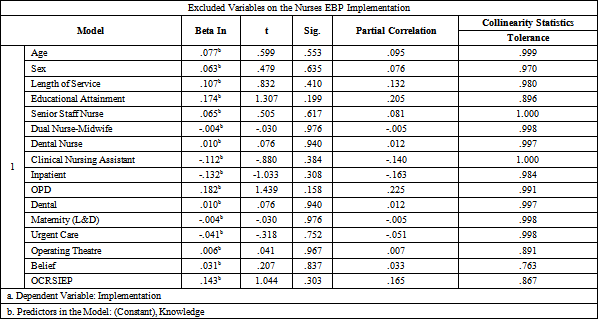
The multiple correlation coefficient R = .593 indicates a moderate positive correlation of the EBP implementation. The coefficient of determination R2=.352 indicates that EBP knowledge can explain 35.2% of the nurses’ EBP implementation variability.
Table 10 indicates that only knowledge of evidence-based practice is a highly significant predictor of EBP implementation (p<.001). This finding is similar with that of 78 that shows total EBP implementation among nurses strongly predicted by their knowledge level. Also, the study by 54 shows that EBP knowledge and organizational readiness predict EBP implementation.
Model 1 can predict the EBP implementation utilizing the average score on nurses' self-reported rating on the level of knowledge. It is reflected in Model 1 in Table 11 that out of 17 independent variables, only knowledge of EBP highly significantly predicts the EBP implementation. Using the model coefficient highlighted in Table 10, the model revealed that for every point increase in the EBP knowledge rating scale of clinical nurses, there is a 0.621 increase in total EBP implementation rating.
EBP knowledge was significantly correlated with EBP implementation, and regression presented it as a major predictor. The presented model suggests that EBP knowledge is the main influencing factor and is essential in determining the success of EBP implementation. Nurses’ knowledge of EBP was the most crucial factor in determining whether or not they practiced EBP 60 and it is an essential foundational component for applying EBP 56. With this information, it is imperative that education planning be developed to enhance EBP knowledge especially that evidence suggests that EBP training and education can result in EBP knowledge acquisition, adherence, and satisfaction 92. The study by 27 shows that a master's degree and length of service influence one's beliefs about using evidence-based practice. Moreover, specialized training in specific units (operating theatre, urgent care, or inpatient) provides a unique intervention based on clinical guidelines to improve the quality of care and patient outcome 58. Gender, education level, and job position also make a difference in EBP implementation 65.
Facilitating factors are actual or perceived individual and organizational issues that increase the likelihood of implementing EBP. These individual and organizational issues can also be hindering factors that deter nurses from implementing EBP.
Supportive Organizational Culture
One theme identified as facilitating factor is supportive organizational culture. This includes practical and efficient use of policies and procedures, training opportunities, management, and peer support as a sub-theme.
Nurses highlighted that their colleagues and management are supportive and provide training opportunities to guide them in their practice:
“On many occasions especially looking after patient I have lot of question if the care I am giving is up to date. So, if I have doubt on the intervention that I wanted to implement I always review the policies and procedures in place to guide me”. “Also, the weekly educational program of our hospital improves my skills and knowledge on the latest trends in nursing and medical practices” – Nurse C
“There are guidelines available in our hospital system and I keep myself updated on these policies and procedure, the quality assurance and the hospital management encourage us to read the updated guidelines” – Nurse A
Similar responses were shown by Saudi nurses who believed that their organization offered them the chance to improve their skills in the application of EBP and that their management was supportive of their use of EBP and research-related activities 93. On the other hand, the absence of support from institutional administrators, head nurses, and colleagues could make implementing EBP more difficult 94. Moreover, data show that training and ongoing education contribute to the adoption of EBP implementation and could positively impact their patient 95.
Indeed, educational training is important in improving clinical care as highlighted by the nurses:
“There are training available to keep us updated in our skill and knowledge. These training includes Basic Life Support, Advanced Cardiac Life Support etc.” - Nurse E
“We also have our own weekly nursing educational meeting and hospital-wide educational meeting.” – Nurse B
Moreover, the conditions of the work environment, where colleagues can be the best supporters, strongly influence the implementation of EBP at the hospital work unit level. As revealed by the nurses, their colleagues' knowledge, and skills in the work unit EBP can be a source of information and support for other nurses in understanding and implementing EBP:
"If I find myself in a situation where I need help, I ask my colleagues. I remember a doctor gave me a screenshot of literature to read on patient care. I know that this gives me knowledge and confidence that I need to face my patient to answer their questions.". – Nurse B
For hindering factors, two main themes were identified as barriers to implementing EBP: lack of knowledge and lack of time.
The overall survey result for EBP knowledge of Awali nurses shows that they have an acceptable level of EBP knowledge (M=4.39, SD=.648). Although the nurses know the fundamentals of EBP, they perceived that they still lack knowledge of EBP. Respondents verbalized their concern about the lack of knowledge and skills to implement EBP in terms of searching and understanding research evidence:
"…nurses undergo training and certification, the implementation of EBP is lacking. I know that EBP requires complex skills and knowledge, and strategies on how to implement. Some staffs are not knowledgeable to conduct research, to review relevant EBP based on clinical problems that the hospital requires, or the nursing staff requires because I know that this is critical on implementation". – Nurse B
Also, the respondent expressed a lack of awareness of the availability of databases for research literature:
"I have no idea about databases for EBP, but I get the information from google" - Nurse C
In Iran, researchers came to the same conclusions. 16 conducted a quantitative analytical cross-sectional study to identify the obstacles preventing nurses from implementing EBP. According to the findings, 54.4 % of the nurses who participated in the study acknowledged that a common barrier to implementing EB is a lack of knowledge.
In the Middle East, lack of time is cited as a barrier to the implementation of EBP among nurses 96, 16. Awali nurses believe EBP takes too much of their time (M=2.60, SD=.767) and perceive insufficient time to search literature. Respondents indicated insufficient time as a barrier to EBP implementation:
"In my opinion, the factors that affect the implementation of EBP in our hospital is insufficient to find research reports in a timely manner for a specific case or specific patient". – Nurse A
As observed, the nurses are sometimes busy providing direct and indirect care to patients and families. The same reasons were found by 97 who discovered that nurses spend 90 minutes of every 12.5-hour shift on tasks other than providing direct care to patients. Meanwhile, 98 found that nurses use 40% of their time for direct patient care and 20% for indirect care.
12 research yielded similar findings that nurses' lack of knowledge and skill in using evidence (such as research findings), poor time management, a lack of motivation, inadequate resources, and inadequate training were the most common reasons given for not adopting the evidence-based practice. The same barriers were found with other professions like physiotherapy, pharmacist, and dieticians 99, 100, 101.
3.5. Section V. Policy Brief for EBP ImplementationThis section presents the policy brief for EBP implementation. As a result of the current study, this policy brief was developed to provide an explanation and analysis of a problem. The policymaker and leaders can use the summary of information from the policy brief for creating and influencing policy.
Evidence-Based Practice Knowledge Among Clinical Nurses: Training and Use of Evidence-Based Practice
Written by John Michael Madamba Ferrer, BSN, RN, Awali Hospital
There is growing evidence that active engagement and training on evidence-based practice leads to a tremendous increase in evidence-based practice knowledge and compliance with evidence-based practice. The quality of care can be improved by teaching nurses how to consistently incorporate the most reliable evidence into their decision-making processes, as opposed to the unstructured approach that is frequently utilized in health care today.
Studies from community and healthcare settings show different barriers to the implementation of evidence-based practice. These include lack of access to a rich library with nursing journals, insufficient time to search for literature, lack of knowledge and skills, and lack of motivation. To overcome these barriers, nurses must improve their EBP knowledge and skills, including formulating research questions using the PICO (Problem, Intervention, Comparison, and Outcome) tool and searching electronic databases like COCHRANE, PubMed, CINAHL, and critically appraising literature. Also, nurses must establish and implement specific strategies to provide the best nursing care based on clinical practice guidelines derived from the best available sources.
3.6. Study Results, Conclusions, and RecommendationsIn this study, the researcher tested the evidence-based practice knowledge, beliefs, culture, and organizational readiness and implementation of clinical nurses at Awali. A baseline survey was conducted in September 2022, followed by a structured interview and personal observation to get their perceived facilitating and hindering factors in implementing evidence-based practices. It was found that nurses somewhat truly believe in evidence-based practice. They have an acceptable level of evidence-based practice knowledge and will probably consider the culture and organizational readiness. Also, the nurses are interested in implementing evidence-based practice task. The evidence-based practice knowledge of Awali Hospital nurses is the main influencing factor and is essential in determining the success of their evidence-based practice implementation.
Based on the findings and interpretation presented in the previous chapter, it can be concluded that
1. Most study participants are female in their middle adulthood, have completed a bachelor's degree in nursing, and have worked in the hospital as a senior staff nurse for a considerable time.
2. The nurses of Awali Hospital somewhat truly believe in evidence-based practice. They have an acceptable level of evidence-based practice knowledge, have indicated that they will probably consider for a system-wide integration of evidence-based practice and are interested in implementing specific evidence-based practice tasks.
3. The evidence-based practice knowledge of Awali Hospital nurses is the main influencing factor and is essential in determining the success of their EBP implementation.
4. The nurses of Awali Hospital perceived supportive policies, training opportunities, management, and peer support as facilitating factors in evidence-based practice implementation. In contrast, lack of knowledge and insufficient time were identified as barriers to implementing evidence-based practice.
5. The salient findings of the study are instrumental in crafting the policy brief.
4.2. RecommendationsBased on the conclusions above, the following recommendation are offered:
1. There are only 42 nurses sampled in this relatively small study. The results need to be replicated with a more extensive and diverse sample, including other allied health workers such as attending physicians, clinical laboratory scientists, medical imaging technologists, occupational therapists, physical therapists, and midwives.
2. Hospital management through nursing educators can educate the nurses to further increase their awareness and knowledge of evidence-based practice. Also, the management can allocate a budget for training to develop experts in EBP and training for staff. Moreover, nurses and management can welcome evidence-based culture by routinely implementing evidence-based practice as the care foundation of clinical expertise and patient values. They can also promote a mentorship program to encourage evidence-based practice among nurses to increase their knowledge and implementation of evidence-based practice.
3. Awali Hospital management may put in journal clubs and train the nurses in scientific research to develop their knowledge and skills in evidence searching, appraising, synthesizing, applying, and evaluating evidence-based practice. Also, it can create an education plan with EBP competency for practicing registered nurses, which can be then included in their orientation, job description, and performance appraisal to improve their knowledge and skills regarding evidence-based practice competencies.
4. Awali Hospital management can enhance facilitators and minimize expected barriers to implementing evidence-based practice.
5. Awali Hospital management can utilize the policy brief for evidence-based practice implementation to use in creating policies and procedures.
This thesis would not have been possible without the guidance and help of several individuals who, in one way or another, contributed and extended their valuable assistance in the preparation and completion of this proposal.
First and foremost, I appreciate all faculty of the School of Graduate Studies of Saint Mary's University, who provided professional guidance and valuable support throughout this study;
My adviser, Dr. Joman J. Baliton, RN, MSN, for his help in building ideas and who, despite the distance, has thoroughly encouraged me to do my best;
Dr. Regina D. Ramel, CPA, for her precious and encouraging support and the panel of examiners, Dr. Sherylou A. Benig, RN, MSN, Mr. Ronnie C. Dumale, RMT, MAEd, MABio, FHEA (UK), and Mrs. Gloria Vicky A. Antonio, MEd for sharing their time, knowledge, and expertise;
Awali Hospital management and staff for their support.
My friends and family, for their unwavering support and encouragement that is worth more than I can express on paper;
Lastly, to the one and only God, for giving me strength and wisdom. Thank you so much, dear God.
| [1] | Ramírez-Morera, A., Tristan, M., & Vazquez, J. C. (2019). Effects of evidence-based clinical practice guidelines in cardiovascular health care quality improvements: A systematic review. F1000Research, 8, 1041. | ||
| In article | View Article PubMed | ||
| [2] | Norwich University Online. (2021, October 27). Why use evidence-based practice in nursing. https://online.norwich.edu/academic-programs/resources/evidence-based-practice-nursing. | ||
| In article | |||
| [3] | Shayan, S. J., Kiwanuka, F., & Nakaye, Z. (2019). Barriers associated with evidence-based practice among nurses in low- and middle-income countries: A systematic review. Worldviews on Evidence-Based Nursing, 16(1), 12-20. | ||
| In article | View Article PubMed | ||
| [4] | Weng, Y. H., Kuo, K. N., Yang, C. Y., Lo, H. L., Chen, C., & Chiu, Y. W. (2013). Implementation of evidence-based practice across medical, nursing, pharmacological and allied healthcare professionals: A questionnaire survey in nationwide hospital settings. Implementation Science, 8(1). | ||
| In article | View Article PubMed | ||
| [5] | Bakr, A. (2016). Exploring the factors affecting implementation of evidence-based nursing practice in King Fahd Hospital of the University/ Al Khobar/ K.S.A. IOSR Journal of Nursing and Health Science (IOSR-JNHS). | ||
| In article | |||
| [6] | Alves S. L. (2021). Improvements in clinician, organization, and patient outcomes make a compelling case for evidence-based practice mentor development programs: An integrative review. Worldviews on evidence-based nursing, 18(5), 283-289. | ||
| In article | View Article PubMed | ||
| [7] | Melnyk, B. M., Fineout-Overholt, E., Giggleman, M., & Choy, K. (2017). A test of the ARCC© model improves implementation of evidence-based practice, healthcare culture, and patient outcomes. Worldviews on Evidence-Based Nursing, 14(1), 5-9. | ||
| In article | View Article PubMed | ||
| [8] | Yurt, S., Kolac, N., & Sadi, E. D. (2021). Nurses’ views on the use of evidence-based practice in the clinic: A qualitative study. Journal of Education and Research in Nursing, 18(2), 210-215. | ||
| In article | View Article | ||
| [9] | Curtis, K., Fry, M., Shaban, R. Z., & Considine, J. (2016). Translating research findings to clinical nursing practice. Journal of Clinical Nursing, 26(5-6), 862-872. | ||
| In article | View Article PubMed | ||
| [10] | Lunny, C., Ramasubbu, C., Puil, L., Liu, T., Gerrish, S., Salzwedel, D. M., Mintzes, B., & Wright, J. M. (2021). Over half of clinical practice guidelines use non-systematic methods to inform recommendations: A methods study. PLOS ONE, 16(4), e0250356. | ||
| In article | View Article PubMed | ||
| [11] | Correa, V. C., Lugo-Agudelo, L. H., Aguirre-Acevedo, D. C., Contreras, J. A. P., Borrero, A. M. P., Patiño-Lugo, D. F., & Valencia, D. A. C. (2020). Individual, health system, and contextual barriers and facilitators for the implementation of clinical practice guidelines: A systematic metareview. Health Research Policy and Systems, 18(1). | ||
| In article | View Article PubMed | ||
| [12] | Dagne, A. H., & Beshah, M. H. (2021). Implementation of evidence-based practice: The experience of nurses and midwives. PloS one, 16(8), e0256600. | ||
| In article | View Article PubMed | ||
| [13] | Li, S., Cao, M., & Zhu, X. (2019). Evidence-based practice: Knowledge, attitudes, implementation, facilitators, and barriers among community nurses-systematic review. Medicine, 98(39), e17209. | ||
| In article | View Article PubMed | ||
| [14] | Cleary-Holdforth, J., O'Mathúna, D., & Fineout-Overholt, E. (2021). Evidence-Based practice beliefs, implementation, and organizational culture and readiness for ebp among nurses, midwives, educators, and students in the Republic of Ireland. Worldviews on evidence-based nursing, 18(6), 379-388. | ||
| In article | View Article PubMed | ||
| [15] | Pitsillidou, M., Roupa, Z., Farmakas, A., & Noula, M. (2021). Factors Affecting the Application and Implementation of Evidence-based Practice in Nursing. Acta informatica medica : AIM : journal of the Society for Medical Informatics of Bosnia & Herzegovina : casopis Drustva za medicinsku informatiku BiH, 29(4), 281-287. | ||
| In article | View Article PubMed | ||
| [16] | Khammarnia, M., Haj Mohammadi, M., Amani, Z., Rezaeian, S., & Setoodehzadeh, F. (2015). Barriers to implementation of evidence-based practice in Zahedan Teaching Hospitals, Iran. Nursing Research and Practice, 1-5. | ||
| In article | View Article PubMed | ||
| [17] | Weng, Y. H., Chen, C., Kuo, K. N., Yang, C. Y., Lo, H. L., Chen, K. H., & Chiu, Y. W. (2015). Implementation of evidence-based practice in relation to a clinical nursing ladder system: a national survey in Taiwan. Worldviews on evidence-based nursing, 12(1), 22-30. | ||
| In article | View Article PubMed | ||
| [18] | Lunden, A., Kvist, T., Teräs, M., & Häggman-Laitila, A. (2020). Readiness and leadership in evidence-based practice and knowledge management: A cross-sectional survey of nurses’ perceptions. Nordic Journal of Nursing Research, 41(4), 187-196. | ||
| In article | View Article | ||
| [19] | Al-Busaidi, I. S., Al Suleimani, S. Z., Dupo, J. U., Al Sulaimi, N. K., & Nair, V. G. (2019). Nurses' knowledge, attitudes, and implementation of evidence-based practice in Oman: A multi-institutional, cross-sectional study. Oman Medical Journal, 34(6), 521-527. | ||
| In article | View Article PubMed | ||
| [20] | Kaplan, L., Zeller, E., Damitio, D., Culbert, S., & Bayley, K. B. (2014). Improving the culture of evidence-based practice at a Magnet® Hospital. Journal for Nurses in Professional Development, 30(6), 274-280. | ||
| In article | View Article PubMed | ||
| [21] | Aburuz, M., Abu Hayeah, H., Al-Dweik, G., & Al-Akash, Y. (2017). Knowledge, attitudes, and practice about evidence-based practice: A Jordanian study. Health Science Journal. https://www.researchgate.net/publication/319338352_Knowledge_Attitudes_and_Practice_about_Evidence-Based_Practice_A_Jordanian_Study. | ||
| In article | |||
| [22] | Park, J. W., Ahn, J. A., & Park, M. M. (2014). Factors influencing evidence-based nursing utilization intention in Korean practice nurses. International Journal of Nursing Practice, 21(6), 868-875. | ||
| In article | View Article PubMed | ||
| [23] | Zhou, F., Hao, Y., Guo, H., & Liu, H. (2016). Attitude, knowledge, and practice on evidence-based nursing among registered nurses in traditional Chinese medicine hospitals: A multiple center cross-sectional survey in China. Evidence-Based Complementary and Alternative Medicine, 2016, 1-8. | ||
| In article | View Article PubMed | ||
| [24] | Skela-Savič, B., Gotlib, J., Panczyk, M., Patelarou, A. E., Bole, U., Ramos-Morcillo, A. J., Finotto, S., Mecugni, D., Jarosova, D., Patelarou, E., Dolezel, J., & Ruzafa-Martínez, M. (2020). Teaching evidence-based practice (EBP) in nursing curricula in six European countries: A descriptive study. Nurse Education Today, 94, 104561. | ||
| In article | View Article PubMed | ||
| [25] | Tomotaki, A., Fukahori, H., & Sakai, I. (2019). Exploring sociodemographic factors related to practice, attitude, knowledge, and skills concerning evidence-based practice in clinical nursing. Japan Journal of Nursing Science, 17(1). | ||
| In article | View Article PubMed | ||
| [26] | Wu, Y., Brettle, A., Zhou, C., Ou, J., Wang, Y., & Wang, S. (2018). Do educational interventions aimed at nurses to support the implementation of evidence-based practice improve patient outcomes? A systematic review. Nurse Education Today, 70, 109-114. | ||
| In article | View Article PubMed | ||
| [27] | Skela-Savič, B., & Lobe, B. (2020). Differences in beliefs on and implementation of evidence‐based practice according to type of health care institution—A national cross‐sectional study among Slovenian nurses. Journal of Nursing Management, 29(5), 971-981. | ||
| In article | View Article PubMed | ||
| [28] | Hasheesh, M.O.A. & Aburuz, Mohannad. (2017). Knowledge, attitude, and practice of nurses towards evidence-based practice at Al-Medina, KSA. Jordan Medical Journal. 51. 47-56. | ||
| In article | |||
| [29] | Warren, J. I., McLaughlin, M., Bardsley, J., Eich, J., Esche, C. A., Kropkowski, L., & Risch, S. (2016). The strengths and challenges of implementing EBP in healthcare systems. Worldviews on Evidence-Based Nursing, 13(1), 15-24. | ||
| In article | View Article PubMed | ||
| [30] | Salem, A. (2019). Critical care nurses’ perceptions towards the challenges to adoption of evidence-based practice in the Intensive Care Units (ICUs). Alexandria Scientific Nursing Journal, 21(1), 93-107. | ||
| In article | View Article | ||
| [31] | Cruz, J. P., Colet, P. C., & Alquwez, N. (2016). Evidence-based practice beliefs and implementation among the nursing bridge program students of a Saudi University. International Journal of Health Sciences, 10(3), 387-395. | ||
| In article | View Article | ||
| [32] | Boström, A. M., Rudman, A., Ehrenberg, A., Gustavsson, J. P., & Wallin, L. (2013). Factors associated with evidence-based practice among registered nurses in Sweden: A national cross-sectional study. BMC Health Services Research, 13(1). | ||
| In article | View Article PubMed | ||
| [33] | Patelarou, A. E., Mechili, E. A., Ruzafa-Martinez, M., Dolezel, J., Gotlib, J., Skela-Savič, B., Ramos-Morcillo, A. J., Finotto, S., Jarosova, D., Smodiš, M., Mecugni, D., Panczyk, M., & Patelarou, E. (2020). Educational interventions for teaching evidence-based practice to undergraduate nursing students: A scoping review. International Journal of Environmental Research and Public Health, 17(17), 6351. | ||
| In article | View Article PubMed | ||
| [34] | Song, C. E., Park, H., Lee, M., & Stevens, K. R. (2021). Integrating EBP into an undergraduate research methodology course using the star model of knowledge transformation: A mixed-method study. Nurse Education Today, 105, 105021. | ||
| In article | View Article PubMed | ||
| [35] | Rotor, E. R., Palad, Y. Y., Cayco, C. S., Perez, K., Tiu, C., & Gorgon, E. (2022). Physical therapists' evidence-based practice profile and perspectives of entry-level EBP education: a mixed methods study in the Philippines. Physiotherapy theory and practice, 38(10), 1407-1418. | ||
| In article | View Article PubMed | ||
| [36] | Amit-Aharon, A., Melnikov, S., & Warshawski, S. (2020). The effect of evidence-based practice perception, information literacy self-efficacy, and academic motivation on nursing students’ future implementation of evidence-based practice. Journal of Professional Nursing, 36(6), 497-502. | ||
| In article | View Article PubMed | ||
| [37] | Horntvedt, M. E. T., Nordsteien, A., Fermann, T., & Severinsson, E. (2018). Strategies for teaching evidence-based practice in nursing education: A thematic literature review. BMC Medical Education, 18(1). | ||
| In article | View Article PubMed | ||
| [38] | Cardoso, D., Rodrigues, M., Pereira, R., Parola, V., Coelho, A., Ferraz, L., Cardoso, M. L., Ramis, M. A., & Apóstolo, J. (2021). Nursing educators' and undergraduate nursing students' beliefs and perceptions on evidence-based practice, evidence implementation, organizational readiness and culture: An exploratory cross-sectional study. Nurse education in practice, 54, 103122. | ||
| In article | View Article PubMed | ||
| [39] | Abu-Baker, N. N., AbuAlrub, S., Obeidat, R. F., & Assmairan, K. (2021). Evidence-based practice beliefs and implementations: A cross-sectional study among undergraduate nursing students. BMC nursing, 20(1), 13. | ||
| In article | View Article PubMed | ||
| [40] | Reid, J., Briggs, J., Carlisle, S., Scott, D., & Lewis, C. (2017). Enhancing utility and understanding of evidence-based practice through undergraduate nurse education. BMC Nursing, 16(1). | ||
| In article | View Article PubMed | ||
| [41] | Garcia-Alamino, J. M. (2020). Human biases and the SARS-CoV-2 pandemic. Intensive and Critical Care Nursing, 58, 102861. | ||
| In article | View Article PubMed | ||
| [42] | Evidence-Based Practice Is More Important Than Ever. (2021, February 17). University of North Carolina Wilmington Online. https://onlinedegree.uncw.edu/articles/nursing/evidence-based-practice.aspx. | ||
| In article | |||
| [43] | Sharplin, G., Adelson, P., Kennedy, K., Williams, N., Hewlett, R., Wood, J., Bonner, R., Dabars, E., & Eckert, M. (2019). Establishing and sustaining a culture of evidence-based practice: An evaluation of barriers and facilitators to implementing the best practice spotlight organization program in the Australian healthcare context. Healthcare (Basel, Switzerland), 7(4), 142. | ||
| In article | View Article PubMed | ||
| [44] | Correa-de-Araujo, R. (2015). Evidence-based practice in the United States: Challenges, progress, and future directions. Health Care for Women International, 37(1), 2-22. | ||
| In article | View Article PubMed | ||
| [45] | Buhaid, N., Lau, R., & O’Connor, M. (2014). A survey of nurses’ perceived barriers to research utilization in Bahrain in comparison to other countries. Middle East Journal of Nursing, 8(2), 3-9. | ||
| In article | View Article | ||
| [46] | Mahmoud, M. H., & Abdelrasol, Z. F. M. (2019). Obstacles in employing evidence-based practice by nurses in their clinical settings: A descriptive study. Frontiers of Nursing, 6(2), 123-133. | ||
| In article | View Article | ||
| [47] | Abuhammad, S., Alzoubi, K., Khabour, O., & Mukattash, T. (2020). Jordanian national study of nurses’ barriers and predictors for research utilization in clinical settings. Risk Management and Healthcare Policy, 13, 2563-2569. | ||
| In article | View Article PubMed | ||
| [48] | Sutcliffe, S., Court, J., & Overseas Development Institute (London, E. R. P. D. P. (2006). A toolkit for progressive policymakers in developing countries. Overseas Development Institute. | ||
| In article | |||
| [49] | Skaggs, M. K. D., Daniels, J. F., Hodge, A. J., & DeCamp, V. L. (2018). Using the evidence-based practice service nursing bundle to increase patient satisfaction. Journal of Emergency Nursing, 44(1), 37-45. | ||
| In article | View Article PubMed | ||
| [50] | Masuda, C., Ferolin, S. K., Masuda, K., Smith, C., & Matsui, M. (2020). Evidence-based intrapartum practice and its associated factors at a tertiary teaching hospital in the Philippines, a descriptive mixed-methods study. BMC pregnancy and childbirth, 20(1), 78. | ||
| In article | View Article PubMed | ||
| [51] | Mohamed, H. M., & Mohamed, A. I. (2018). Nurses’ perception, self-efficacy, barriers, and training needs for implementing evidence-based practice: Is it time for a change toward safe care? American Journal of Nursing Research, 6(6). http://pubs.sciepub.com/ajnr/6/6/29/index.html. | ||
| In article | |||
| [52] | Cleary-Holdforth, J. (2019). Beliefs, knowledge, and utilisation levels of evidence-based practice among nurses and midwives in the Republic of Ireland. BMJ Evidence-Based Medicine. | ||
| In article | View Article | ||
| [53] | Saunders, H., & Vehviläinen-Julkunen, K. (2016). Nurses’ Evidence-Based Practice Beliefs and the Role of Evidence-Based Practice Mentors at University Hospitals in Finland. Worldviews on Evidence-Based Nursing, 14(1), 35-45. | ||
| In article | View Article PubMed | ||
| [54] | Yoo, J. Y., Kim, J. H., Kim, J. S., Kim, H. L., & Ki, J. S. (2019). Clinical nurses’ beliefs, knowledge, organizational readiness and level of implementation of evidence-based practice: The first step to creating an evidence-based practice culture. PLOS ONE, 14(12), e0226742. | ||
| In article | View Article PubMed | ||
| [55] | Roy, C. (2009). The Roy adaptation model. Pearson Education. | ||
| In article | View Article PubMed | ||
| [56] | Labrague, L. J., McEnroe‐Pettite, D., Tsaras, K., D’Souza, M. S., Fronda, D. C., Mirafuentes, E. C., Yahyei, A. A., & Graham, M. M. (2018). Predictors of evidence‐based practice knowledge, skills, and attitudes among nursing students. Nursing Forum, 54(2), 238-245. | ||
| In article | View Article PubMed | ||
| [57] | Sundberg, F., Olausson, S., Fridh, I., & Lindahl, B. (2017). Nursing staff’s experiences of working in an evidence-based designed ICU patient room: An interview study. Intensive and Critical Care Nursing, 43, 75-80. | ||
| In article | View Article PubMed | ||
| [58] | Rudman, A., Boström, A., Wallin, L., Gustavsson, P., & Ehrenberg, A. (2020). Registered nurses’ evidence-based practice revisited: A longitudinal study in mid-career. Worldviews on Evidence-Based Nursing, 17(5), 348-355. | ||
| In article | View Article PubMed | ||
| [59] | Chijindu, A., Samantha, E., & Nkechi, E. (2016). Evaluation of barriers to the implementation of evidence-based practice (EBP) among nurses working at Federal Teaching Hospital Abakaliki (Fetha Ii). International Journal of Nursing, Midwife and Health Related Cases, 2(1), 71-90. | ||
| In article | |||
| [60] | Abuejheisheh, A., Tarawneh, O., Qaddumi, J. A. S., Almahmoud, O., & Darawad, M. W. (2020). Predictors of intensive care unit nurses’ practice of evidence-based practice guidelines. INQUIRY: The Journal of Health Care Organization, Provision, and Financing, 57, 004695802090232. | ||
| In article | View Article PubMed | ||
| [61] | Haneef, S., Hameed, A., Sarwar, H., & Hanif, M. (2017). Evidence based practice: beliefs and implementation among nurses. Pakistan Journal of Nursing and Midwifery. https://www.researchgate.net/publication/337337013_Evidence_based_practice_beliefs_ and_implementation_among_nurses. | ||
| In article | |||
| [62] | Schaefer, J. D., & Welton, J. M. (2018). Evidence-based practice readiness: A concept analysis. Journal of Nursing Management, 26(6), 621-629. | ||
| In article | View Article PubMed | ||
| [63] | Green, S. A., Bell, D., & Mays, N. (2017). Identification of factors that support successful implementation of care bundles in the acute medical setting: a qualitative study. BMC Health Services Research, 17(1). | ||
| In article | View Article PubMed | ||
| [64] | Rahmayanti, E., Kadar, K., & Saleh, A. (2020). Readiness, barriers and potential strength of nursing in implementing evidence-based practice. International Journal of Caring Sciences, 13(2), 1203. | ||
| In article | |||
| [65] | Alqahtani, J. M., Carsula, R. P., Alharbi, H. A., Alyousef, S. M., Baker, O. G., & Tumala, R. B. (2022). Barriers to implementing evidence-based practice among primary healthcare nurses in Saudi Arabia: A cross-sectional study. Nursing Reports, 12(2), 313-323. | ||
| In article | View Article PubMed | ||
| [66] | Melnyk, B. M., Fineout-Overholt, E., & Mays, M. Z. (2008). The evidence-based practice beliefs and implementation scales: Psychometric properties of two new instruments. Worldviews on Evidence-Based Nursing, 5(4), 208-216. | ||
| In article | View Article PubMed | ||
| [67] | Upton, D., & Upton, P. (2006). Development of an evidence-based practice questionnaire for nurses. Journal of Advanced Nursing, 53(4), 454-458. | ||
| In article | View Article PubMed | ||
| [68] | Tavakol, M. & Dennick, R. (2011). Making sense of Cronbach's Alpha. International Journal of Medical Education. 2. 53-55. | ||
| In article | View Article PubMed | ||
| [69] | Pereira, F., Pellaux, V., & Verloo, H. (2018). Beliefs and implementation of evidence-based practice among community health nurses: A cross-sectional descriptive study. Journal of Clinical Nursing, 27(9-10), 2052-2061. | ||
| In article | View Article PubMed | ||
| [70] | Bane, J. (2021). Beliefs about evidence-based practice among new graduate nurses. Scholar Works. https://scholarworks.waldenu.edu/dissertations/10409/. | ||
| In article | |||
| [71] | Squires, J. E., Moralejo, D., & LeFort, S. M. (2007, June 5). Exploring the role of organizational policies and procedures in promoting research utilization in registered nurses. Implementation Science, 2(1). | ||
| In article | View Article PubMed | ||
| [72] | Clarke, V., Lehane, E., Mulcahy, H., & Cotter, P. (2021). Nurse practitioners’ implementation of evidence-based practice into routine care: A scoping review. Worldviews on Evidence-Based Nursing, 18(3), 180-189. | ||
| In article | View Article PubMed | ||
| [73] | Pueyo-Garrigues, M., Pardavila-Belio, M., Canga-Armayor, A., Esandi, N., Alfaro-Díaz, C., & Canga-Armayor, N. (2022, January). Nurses’ knowledge, skills and personal attributes for providing competent health education practice, and its influencing factors: A cross-sectional study. Nurse Education in Practice, 58, 103277. | ||
| In article | View Article PubMed | ||
| [74] | Bahadori, M., Raadabadi, M., Ravangard, R., & Mahaki, B. (2016). The barriers to the application of the research findings from the nurses' perspective: A case study in a teaching hospital. Journal of education and health promotion, 5, 14. | ||
| In article | View Article PubMed | ||
| [75] | Sadoughi, F., Azadi, T., & Azadi, T. (2017, July 20). Barriers to using electronic evidence-based literature in nursing practice: A systematised review. Health Information &Amp; Libraries Journal, 34(3), 187-199. | ||
| In article | View Article PubMed | ||
| [76] | Mallion, J., & Brooke, J. (2016). Community- and hospital-based nurses' implementation of evidence-based practice: Are there any differences? British Journal of Community nursing, 21(3), 148-154. | ||
| In article | View Article PubMed | ||
| [77] | Asurakkody, T. A., & Kim, S. H. (2020). Effects of knowledge sharing behavior on innovative work behavior among nursing students: Mediating role of self- leadership. International Journal of Africa Nursing Sciences, 12, 100190. | ||
| In article | View Article | ||
| [78] | Kaseka, P. U., & Mbakaya, B. C. (2022). Knowledge, attitude and use of evidence-based practice (EBP) among registered nurse-midwives practicing in central hospitals in Malawi: A cross-sectional survey. BMC Nursing, 21(1), 144. | ||
| In article | View Article PubMed | ||
| [79] | Belowska, J., Panczyk, M., Zarzeka, A., Iwanow, L., Cieślak, I., & Gotlib, J. (2018). Promoting evidence-based practice – perceived knowledge, behaviours and attitudes of Polish nurses: a cross-sectional validation study. International Journal of Occupational Safety and Ergonomics, 26(2), 397-405. | ||
| In article | View Article PubMed | ||
| [80] | Malik, G., McKenna, L., & Plummer, V. (2014, October 30). Perceived knowledge, skills, attitude and contextual factors affecting evidence-based practice among nurse educators, clinical coaches and nurse specialists. International Journal of Nursing Practice, 21, 46-57. | ||
| In article | View Article PubMed | ||
| [81] | Zammar, A. M. A. (2022). Nurses’ knowledge and attitude regarding evidence-based practice: An integrative review. Open Journal of Nursing, 12(02), 103-112. | ||
| In article | View Article | ||
| [82] | Ahmad, M. M., Musallam, R., & Habeeb Allah, A. (2018). Nurses and internet health-related information: Review on access and utility. Medicine and Pharmacy Reports, 91(3), 266-273. | ||
| In article | View Article PubMed | ||
| [83] | Naeem, S. B., Bhatti, R., & Ishfaq, K. (2017). Nurses’ attitude and belief toward evidence-based nursing practices in tertiary care hospitals of Multan, Pakistan. Isra Med J, 9(2), 101-105. | ||
| In article | |||
| [84] | Zarghani, M., Nemati-Anaraki, L., Dinpajoo, Z., Ghamgosar, A., Khani, S., & Khazaee-Pool, M. (2021). Skills and key education needed for clinical librarians: an exploratory study from the librarians' perspectives. BMC medical informatics and decision making, 21(1), 240. | ||
| In article | View Article PubMed | ||
| [85] | Ginex, P. K., Hernandez, M., & Vrabel, M. (2016). A clinical librarian-nursing partnership to bridge clinical practice and research in an oncology setting. Oncology Nursing Forum, 43(5), 549–552. | ||
| In article | View Article PubMed | ||
| [86] | Dhakal K. (2018). Librarians collaborating to teach evidence-based practice: exploring partnerships with professional organizations. Journal of the Medical Library Association : JMLA, 106(3), 311-319. | ||
| In article | View Article PubMed | ||
| [87] | Gard Marshall, J., Morgan, J., Klem, M. L., Thompson, C., & Wells, A. (2014). The value of library and information services in nursing and patient care. Online journal of Issues in Nursing, 19(3), 8. | ||
| In article | View Article | ||
| [88] | Gerber A. L. (2017). The librarian's contribution to continuing medical education. Medical Reference Services Quarterly, 36(4), 408-414. | ||
| In article | View Article PubMed | ||
| [89] | Schuler, E., Mott, S., Forbes, P. W., Schmid, A., Atkinson, C., & DeGrazia, M. (2021). Evaluation of an evidence-based practice mentorship programme in a paediatric quaternary care setting. Journal of Research in Nursing, 26(1-2), 149-165. | ||
| In article | View Article PubMed | ||
| [90] | Spiva, L., Hart, P. L., Patrick, S., Waggoner, J., Jackson, C., & Threatt, J. L. (2017). Effectiveness of an evidence-based practice nurse mentor training program. Worldviews on Evidence-Based Nursing, 14(3), 183-191. | ||
| In article | View Article PubMed | ||
| [91] | Stokke, K., Olsen, N. R., Espehaug, B., & Nortvedt, M. W. (2014). Evidence based practice beliefs and implementation among nurses: A cross-sectional study. BMC nursing, 13(1), 8. | ||
| In article | View Article PubMed | ||
| [92] | Valenstein-Mah, H., Greer, N., McKenzie, L., Hansen, L., Strom, T. Q., Wiltsey Stirman, S., Wilt, T. J., & Kehle-Forbes, S. M. (2020, May 27). Effectiveness of training methods for delivery of evidence-based psychotherapies: A systematic review. Implementation Science, 15(1). | ||
| In article | View Article PubMed | ||
| [93] | Sindi, N. A., Hamouda, G. M., & Bankhar, M. (2017, July). Factors affecting implementation of evidence-based practice as perceived by nurses. IOSR Journal of Nursing and Health Science, 06(04), 53-57. | ||
| In article | View Article | ||
| [94] | Kalaldeh, M. A., Watson, R., & Hayter, M. (2014). Jordanian intensive care nurses’ perspectives on evidence-based practice in nutritional care. British Journal of Nursing, 23(19), 1023-1029. | ||
| In article | View Article PubMed | ||
| [95] | Mathieson, A., Grande, G., & Luker, K. (2019). Strategies, facilitators and barriers to implementation of evidence-based practice in community nursing: A systematic mixed-studies review and qualitative synthesis. Primary Health Care Research & Development, 20, e6. | ||
| In article | View Article PubMed | ||
| [96] | Alshammari, M. S., Alshurtan, R., Alsuliman, G., Alshammari, M., Alhamazani, H., Alshammry, S., Dayrit, R. D., & Alkwiese, M. (2021). Factors affecting the implementation and barriers to evidence-based practice among nurse practitioners in hail region, Saudi Arabia. Nurse Media Journal of Nursing, 11(2), 187-196. | ||
| In article | View Article | ||
| [97] | Michel, O., Garcia Manjon, A., Pasquier, J., & Ortoleva Bucher, C. (2021). How do nurses spend their time? A time and motion analysis of nursing activities in an internal medicine unit. Journal of Advanced Nursing, 77(11), 4459-4470. | ||
| In article | View Article PubMed | ||
| [98] | Antinaho, T., Kivinen, T., Turunen, H., & Partanen, P. (2014). Nurses’ working time use - how value adding it is? Journal of Nursing Management, 23(8), 1094-1105. | ||
| In article | View Article PubMed | ||
| [99] | McArthur, C., Bai, Y., Hewston, P., Giangregorio, L., Straus, S., & Papaioannou, A. (2021). Barriers and facilitators to implementing evidence-based guidelines in long-term care: A qualitative evidence synthesis. Implementation Science, 16(1). | ||
| In article | View Article PubMed | ||
| [100] | Paci, M., Faedda, G., Ugolini, A., & Pellicciari, L. (2021). Barriers to evidence-based practice implementation in physiotherapy: A systematic review and meta-analysis. International Journal for Quality in Health Care, 33(2). | ||
| In article | View Article PubMed | ||
| [101] | Toklu, H. (2015). Promoting evidence-based practice in pharmacies. Integrated Pharmacy Research and Practice, 127. | ||
| In article | View Article PubMed | ||
| [102] | Ahmad, F., & Karim, M. (2019). Impacts of knowledge sharing: A review and directions for future research. Journal of Workplace Learning, 31(3), 207-230. | ||
| In article | View Article | ||
| [103] | Abou Hashish, E. A., & Alsayed, S. (2020). Evidence-based practice and its relationship to quality improvement: a cross-sectional study among Egyptian nurses. The Open Nursing Journal, 14(1), 254-262. | ||
| In article | View Article | ||
| [104] | Zhou, F., Maier, M., Hao, Y., Tang, L., Guo, H., Liu, H., & Liu, Y. (2015). Barriers to research utilization among registered nurses in traditional Chinese medicine hospitals: A cross-sectional survey in China. Evidence-Based Complementary and Alternative Medicine, 2015, 1-8. | ||
| In article | View Article PubMed | ||
This informed consent form is designed for Awali Hospital Clinical Nurses the researcher invites to participate in the study entitled “EVIDENCE-BASED PRACTICES AMONG CLINICAL NURSES IN BAHRAIN: BASIS FOR A POLICY BRIEF IMPLEMENTATION”
Name of the Principal Investigator: John Michael M. Ferrer, BSN, RN
Name of the Affiliated Organization: Awali Hospital, Kingdom of Bahrain
Name of Sponsor: None
Name of Project: “EVIDENCE-BASED PRACTICES AMONG CLINICAL NURSES IN BAHRAIN: BASIS FOR A POLICY BRIEF IMPLEMENTATION”
This informed consent form has two parts:
• Information sheet (to share information about the study with you)
• Certificate of Consent (for signatures if you choose to participate)
PART I: INFORMATION SHEETGood day! I am John Michael M. Ferrer, BSN, RN, a Master of Science in Nursing Major in Adult Health Nursing, of Saint Mary’s University, Bayombong, Nueva Vizcaya, and affiliated at Awali Hospital. I invite you to participate in a research study “Evidence-Based Practices Among Clinical Nurses in Bahrain: Basis For A Policy Brief Implementation”. Involvement in the study is voluntary, so you can choose to participate or not. I am now going to explain the study to you. Feel free to ask any questions you may have about the research; I will be happy to explain anything in more detail.
This research study aims to determine the clinical nurses’ beliefs, knowledge, organizational culture and readiness, and evidence-based practice implementation levels and to identify the perceived factors affecting evidence-based practice implementation.
This research study will involve your participation by answering questionnaires that last for 15-20 minutes.
You are invited to participate in this research study because I think that your experience as a clinical nurse at Awali Hospital can contribute to the establishment of evidence-based practices, and unit heads are excluded from the study.
You are one of the 50-plus selected participants. Your participation in the research study is voluntary. If you do not wish to continue, you have the right to withdraw from the study at any time and do not involve any obligation.
I ask you to help me learn more about your evidence-based practices belief, knowledge, organizational culture and readiness, and implementation levels in your workplace. I invite you to participate in this research project. If you accept, you will be asked to fill out the consent form for the survey questionnaire, and a survey form which will be provided and collected by the researcher, or you may answer the questionnaire yourself, or it can be read and explained to you by the researcher. If you do not wish to answer any of the questions included in the survey, you may skip them and move on to the next question. I will leave the questionnaire and will be collected after three days. The information recorded is confidential, your name is included on the forms but only a number will identify you, and no one else except the researcher will have access to your survey. I will clearly explain the purpose of the interview and ask for your consent by signing this consent form, and the interview will be done anytime and at random, during the study. The main question for the interview is “What are the perceived factors affecting the evidence-based practice implementation among clinical nurses at Awali Hospital?”. Throughout the interview, you will remain anonymous, I will keep your name separate from your words; I will not use your name in any quotations or reports of the research findings; I will use a pseudonym of your choosing, and I will omit or obscure any identification details. I will store audio recordings and any electronic or printed transcripts in encrypted files or a locked secure location for the entire study after the publication of this research and, thereafter, all files will be destroyed. I will ensure that your anonymity, identity, and confidentiality are maintained and protect your privacy rights.
The research takes place from 5th September 2022 to 07th September 2022, after you decide to participate in the study and answer the questionnaire given to you. The entire research study will explore the clinical nurses’ beliefs, knowledge, organizational culture and readiness, and evidence-based practice implementation levels and identify the perceived factors that affect evidence-based practice implementation.
The risks to you for participating in this study are the data that will be collected from you that may reflect your EBP beliefs, knowledge, organizational culture and readiness, and implementation of EBP at Awali Hospital. On the other hand, it will not be used against you, and this means that your name will not appear anywhere, and no one except the researcher will know about your specific answers.
The benefit of this research is that it will help us understand the EBP beliefs, knowledge, organizational culture and readiness, and implementation of EBP at Awali Hospital. It will also help our administration develop effective and efficient protocols and procedures to implement EBP.
You will not receive payments or incentives for participating in the research study. No compensation, entitlements, or reimbursements will be provided to the participants, and there will be no funding grant for this study.
The researcher will ensure that your anonymity will be maintained and secured, that all information collected is confidential, and that your identity will not be part of the tool. The researcher will assign a number to your responses, and only the researcher will have the key to indicate which number belongs to which participant. The survey questionnaires will be kept in a lockbox for the entire duration of the study. After the study is completed, the survey questionnaires will be destroyed.
The research findings will be shared with you, with the nursing training office, and with the management of Awali Hospital. Furthermore, the research findings will also be shared through local and national publications and conferences.
You have the right to withdraw from participation in the research study at any time. This procedure is voluntary and does not involve any obligation. You may also stop participating in conducting survey questionnaires and/or follow-up interviews at any time.
This proposal has been reviewed and approved by the Institutional Review Board of the Research Ethics Board of Saint Mary's University, Bayombong, Nueva Vizcaya, and Awali Hospital Ethics Committee, which are the ethics committees whose task is to make sure that research participants are protected from any harm. If you have any questions, you can ask them now or later. If you wish to ask questions later, you may contact: Principal Investigator: John Michael M. Ferrer Contact Information / jahnmykel02@yahoo.com.
PART II: CERTIFICATE OF CONSENTI have been invited to participate in the research on evidence-based practice beliefs, knowledge, organizational culture and readiness, and level of implementation among clinical nurses in Bahrain.
I have read the foregoing information, or it has been read to me.
I have had the opportunity to ask questions about it and any questions
I have been asked to have been answered to my satisfaction. I voluntarily consent to be a participant in this study.
Name of the participant: _________________________
Signature of the participant: ____________________
Date: ___________________
I have accurately read out the information sheet to the potential participant and, to the best of my ability, making sure that the participant understands well what he/she is asked to do in the research study. I confirm that the participant was allowed to ask questions about the study and that all the questions asked by the participant were answered correctly and to the best of my ability. I confirm that the individual has not been coerced into giving consent and that consent has been given freely and voluntarily.
Name of the investigator: John Michael M. Ferrer, BSN, RN
Signature of the investigator: 
This survey is only for academic purposes
I. Demographic Profile
Instructions: Please fill the necessary information and check on the corresponding to each item below.
Age: _______
Sex: Male_____ Female: _____
Length of service: ______
Educational Attainment:
Diploma: ______
Bachelor’s Degree: ____
Master’s Degree with units: _____
Master’s Degree holder: ______
Position: ________
Work Unit: ________
II. EBP Beliefs Scale
Instructions: Below are 11 statements about evidence-based practice (EBP) beliefs. This is used to assess participants’ beliefs on the value of EBP. Please circle the number that best describes your agreement or disagreement with each statement. There are no right or wrong answers.
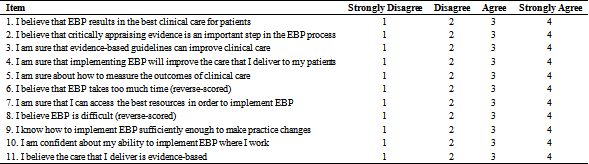 |
III. Evidence-Based Practice Knowledge Questionnaire
Instructions: This questionnaire is designed to gather information and opinions on the use of evidence-based practice amongst health professionals. There are no right or wrong answers, the researcher is interested in your opinions and your own use of evidence in your practice. Each item on the questionnaire is scored from 1-6 (i.e. 1=Poor – 6= best).
Please circle one number for each statement
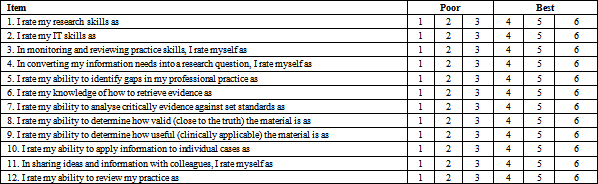 |
IV: Organizational Culture & Readiness for System-Wide Integration of Evidence-based Practice Survey
Instructions: Below are 19 questions about evidence-based practice (EBP). Please consider the culture of your organization and its readiness for system-wide implementation of EBP and indicate which answer best describes your response to each question. There are no right or wrong answers.
 |
V. EBP Implementation Scale
Instructions: Below are 18 questions about evidence-based practice (EBP). Some healthcare providers do some of these things more often than other healthcare providers. There is no certain frequency in which you should be performing these tasks. Please answer each question by circling the number that best describes how often each item has applied to you in the past 8 weeks.
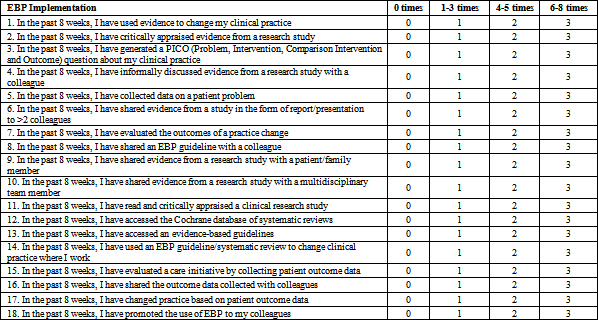 |
Published with license by Science and Education Publishing, Copyright © 2023 John Michael Madamba Ferrer and Joman Baliton
 This work is licensed under a Creative Commons Attribution 4.0 International License. To view a copy of this license, visit
http://creativecommons.org/licenses/by/4.0/
This work is licensed under a Creative Commons Attribution 4.0 International License. To view a copy of this license, visit
http://creativecommons.org/licenses/by/4.0/
| [1] | Ramírez-Morera, A., Tristan, M., & Vazquez, J. C. (2019). Effects of evidence-based clinical practice guidelines in cardiovascular health care quality improvements: A systematic review. F1000Research, 8, 1041. | ||
| In article | View Article PubMed | ||
| [2] | Norwich University Online. (2021, October 27). Why use evidence-based practice in nursing. https://online.norwich.edu/academic-programs/resources/evidence-based-practice-nursing. | ||
| In article | |||
| [3] | Shayan, S. J., Kiwanuka, F., & Nakaye, Z. (2019). Barriers associated with evidence-based practice among nurses in low- and middle-income countries: A systematic review. Worldviews on Evidence-Based Nursing, 16(1), 12-20. | ||
| In article | View Article PubMed | ||
| [4] | Weng, Y. H., Kuo, K. N., Yang, C. Y., Lo, H. L., Chen, C., & Chiu, Y. W. (2013). Implementation of evidence-based practice across medical, nursing, pharmacological and allied healthcare professionals: A questionnaire survey in nationwide hospital settings. Implementation Science, 8(1). | ||
| In article | View Article PubMed | ||
| [5] | Bakr, A. (2016). Exploring the factors affecting implementation of evidence-based nursing practice in King Fahd Hospital of the University/ Al Khobar/ K.S.A. IOSR Journal of Nursing and Health Science (IOSR-JNHS). | ||
| In article | |||
| [6] | Alves S. L. (2021). Improvements in clinician, organization, and patient outcomes make a compelling case for evidence-based practice mentor development programs: An integrative review. Worldviews on evidence-based nursing, 18(5), 283-289. | ||
| In article | View Article PubMed | ||
| [7] | Melnyk, B. M., Fineout-Overholt, E., Giggleman, M., & Choy, K. (2017). A test of the ARCC© model improves implementation of evidence-based practice, healthcare culture, and patient outcomes. Worldviews on Evidence-Based Nursing, 14(1), 5-9. | ||
| In article | View Article PubMed | ||
| [8] | Yurt, S., Kolac, N., & Sadi, E. D. (2021). Nurses’ views on the use of evidence-based practice in the clinic: A qualitative study. Journal of Education and Research in Nursing, 18(2), 210-215. | ||
| In article | View Article | ||
| [9] | Curtis, K., Fry, M., Shaban, R. Z., & Considine, J. (2016). Translating research findings to clinical nursing practice. Journal of Clinical Nursing, 26(5-6), 862-872. | ||
| In article | View Article PubMed | ||
| [10] | Lunny, C., Ramasubbu, C., Puil, L., Liu, T., Gerrish, S., Salzwedel, D. M., Mintzes, B., & Wright, J. M. (2021). Over half of clinical practice guidelines use non-systematic methods to inform recommendations: A methods study. PLOS ONE, 16(4), e0250356. | ||
| In article | View Article PubMed | ||
| [11] | Correa, V. C., Lugo-Agudelo, L. H., Aguirre-Acevedo, D. C., Contreras, J. A. P., Borrero, A. M. P., Patiño-Lugo, D. F., & Valencia, D. A. C. (2020). Individual, health system, and contextual barriers and facilitators for the implementation of clinical practice guidelines: A systematic metareview. Health Research Policy and Systems, 18(1). | ||
| In article | View Article PubMed | ||
| [12] | Dagne, A. H., & Beshah, M. H. (2021). Implementation of evidence-based practice: The experience of nurses and midwives. PloS one, 16(8), e0256600. | ||
| In article | View Article PubMed | ||
| [13] | Li, S., Cao, M., & Zhu, X. (2019). Evidence-based practice: Knowledge, attitudes, implementation, facilitators, and barriers among community nurses-systematic review. Medicine, 98(39), e17209. | ||
| In article | View Article PubMed | ||
| [14] | Cleary-Holdforth, J., O'Mathúna, D., & Fineout-Overholt, E. (2021). Evidence-Based practice beliefs, implementation, and organizational culture and readiness for ebp among nurses, midwives, educators, and students in the Republic of Ireland. Worldviews on evidence-based nursing, 18(6), 379-388. | ||
| In article | View Article PubMed | ||
| [15] | Pitsillidou, M., Roupa, Z., Farmakas, A., & Noula, M. (2021). Factors Affecting the Application and Implementation of Evidence-based Practice in Nursing. Acta informatica medica : AIM : journal of the Society for Medical Informatics of Bosnia & Herzegovina : casopis Drustva za medicinsku informatiku BiH, 29(4), 281-287. | ||
| In article | View Article PubMed | ||
| [16] | Khammarnia, M., Haj Mohammadi, M., Amani, Z., Rezaeian, S., & Setoodehzadeh, F. (2015). Barriers to implementation of evidence-based practice in Zahedan Teaching Hospitals, Iran. Nursing Research and Practice, 1-5. | ||
| In article | View Article PubMed | ||
| [17] | Weng, Y. H., Chen, C., Kuo, K. N., Yang, C. Y., Lo, H. L., Chen, K. H., & Chiu, Y. W. (2015). Implementation of evidence-based practice in relation to a clinical nursing ladder system: a national survey in Taiwan. Worldviews on evidence-based nursing, 12(1), 22-30. | ||
| In article | View Article PubMed | ||
| [18] | Lunden, A., Kvist, T., Teräs, M., & Häggman-Laitila, A. (2020). Readiness and leadership in evidence-based practice and knowledge management: A cross-sectional survey of nurses’ perceptions. Nordic Journal of Nursing Research, 41(4), 187-196. | ||
| In article | View Article | ||
| [19] | Al-Busaidi, I. S., Al Suleimani, S. Z., Dupo, J. U., Al Sulaimi, N. K., & Nair, V. G. (2019). Nurses' knowledge, attitudes, and implementation of evidence-based practice in Oman: A multi-institutional, cross-sectional study. Oman Medical Journal, 34(6), 521-527. | ||
| In article | View Article PubMed | ||
| [20] | Kaplan, L., Zeller, E., Damitio, D., Culbert, S., & Bayley, K. B. (2014). Improving the culture of evidence-based practice at a Magnet® Hospital. Journal for Nurses in Professional Development, 30(6), 274-280. | ||
| In article | View Article PubMed | ||
| [21] | Aburuz, M., Abu Hayeah, H., Al-Dweik, G., & Al-Akash, Y. (2017). Knowledge, attitudes, and practice about evidence-based practice: A Jordanian study. Health Science Journal. https://www.researchgate.net/publication/319338352_Knowledge_Attitudes_and_Practice_about_Evidence-Based_Practice_A_Jordanian_Study. | ||
| In article | |||
| [22] | Park, J. W., Ahn, J. A., & Park, M. M. (2014). Factors influencing evidence-based nursing utilization intention in Korean practice nurses. International Journal of Nursing Practice, 21(6), 868-875. | ||
| In article | View Article PubMed | ||
| [23] | Zhou, F., Hao, Y., Guo, H., & Liu, H. (2016). Attitude, knowledge, and practice on evidence-based nursing among registered nurses in traditional Chinese medicine hospitals: A multiple center cross-sectional survey in China. Evidence-Based Complementary and Alternative Medicine, 2016, 1-8. | ||
| In article | View Article PubMed | ||
| [24] | Skela-Savič, B., Gotlib, J., Panczyk, M., Patelarou, A. E., Bole, U., Ramos-Morcillo, A. J., Finotto, S., Mecugni, D., Jarosova, D., Patelarou, E., Dolezel, J., & Ruzafa-Martínez, M. (2020). Teaching evidence-based practice (EBP) in nursing curricula in six European countries: A descriptive study. Nurse Education Today, 94, 104561. | ||
| In article | View Article PubMed | ||
| [25] | Tomotaki, A., Fukahori, H., & Sakai, I. (2019). Exploring sociodemographic factors related to practice, attitude, knowledge, and skills concerning evidence-based practice in clinical nursing. Japan Journal of Nursing Science, 17(1). | ||
| In article | View Article PubMed | ||
| [26] | Wu, Y., Brettle, A., Zhou, C., Ou, J., Wang, Y., & Wang, S. (2018). Do educational interventions aimed at nurses to support the implementation of evidence-based practice improve patient outcomes? A systematic review. Nurse Education Today, 70, 109-114. | ||
| In article | View Article PubMed | ||
| [27] | Skela-Savič, B., & Lobe, B. (2020). Differences in beliefs on and implementation of evidence‐based practice according to type of health care institution—A national cross‐sectional study among Slovenian nurses. Journal of Nursing Management, 29(5), 971-981. | ||
| In article | View Article PubMed | ||
| [28] | Hasheesh, M.O.A. & Aburuz, Mohannad. (2017). Knowledge, attitude, and practice of nurses towards evidence-based practice at Al-Medina, KSA. Jordan Medical Journal. 51. 47-56. | ||
| In article | |||
| [29] | Warren, J. I., McLaughlin, M., Bardsley, J., Eich, J., Esche, C. A., Kropkowski, L., & Risch, S. (2016). The strengths and challenges of implementing EBP in healthcare systems. Worldviews on Evidence-Based Nursing, 13(1), 15-24. | ||
| In article | View Article PubMed | ||
| [30] | Salem, A. (2019). Critical care nurses’ perceptions towards the challenges to adoption of evidence-based practice in the Intensive Care Units (ICUs). Alexandria Scientific Nursing Journal, 21(1), 93-107. | ||
| In article | View Article | ||
| [31] | Cruz, J. P., Colet, P. C., & Alquwez, N. (2016). Evidence-based practice beliefs and implementation among the nursing bridge program students of a Saudi University. International Journal of Health Sciences, 10(3), 387-395. | ||
| In article | View Article | ||
| [32] | Boström, A. M., Rudman, A., Ehrenberg, A., Gustavsson, J. P., & Wallin, L. (2013). Factors associated with evidence-based practice among registered nurses in Sweden: A national cross-sectional study. BMC Health Services Research, 13(1). | ||
| In article | View Article PubMed | ||
| [33] | Patelarou, A. E., Mechili, E. A., Ruzafa-Martinez, M., Dolezel, J., Gotlib, J., Skela-Savič, B., Ramos-Morcillo, A. J., Finotto, S., Jarosova, D., Smodiš, M., Mecugni, D., Panczyk, M., & Patelarou, E. (2020). Educational interventions for teaching evidence-based practice to undergraduate nursing students: A scoping review. International Journal of Environmental Research and Public Health, 17(17), 6351. | ||
| In article | View Article PubMed | ||
| [34] | Song, C. E., Park, H., Lee, M., & Stevens, K. R. (2021). Integrating EBP into an undergraduate research methodology course using the star model of knowledge transformation: A mixed-method study. Nurse Education Today, 105, 105021. | ||
| In article | View Article PubMed | ||
| [35] | Rotor, E. R., Palad, Y. Y., Cayco, C. S., Perez, K., Tiu, C., & Gorgon, E. (2022). Physical therapists' evidence-based practice profile and perspectives of entry-level EBP education: a mixed methods study in the Philippines. Physiotherapy theory and practice, 38(10), 1407-1418. | ||
| In article | View Article PubMed | ||
| [36] | Amit-Aharon, A., Melnikov, S., & Warshawski, S. (2020). The effect of evidence-based practice perception, information literacy self-efficacy, and academic motivation on nursing students’ future implementation of evidence-based practice. Journal of Professional Nursing, 36(6), 497-502. | ||
| In article | View Article PubMed | ||
| [37] | Horntvedt, M. E. T., Nordsteien, A., Fermann, T., & Severinsson, E. (2018). Strategies for teaching evidence-based practice in nursing education: A thematic literature review. BMC Medical Education, 18(1). | ||
| In article | View Article PubMed | ||
| [38] | Cardoso, D., Rodrigues, M., Pereira, R., Parola, V., Coelho, A., Ferraz, L., Cardoso, M. L., Ramis, M. A., & Apóstolo, J. (2021). Nursing educators' and undergraduate nursing students' beliefs and perceptions on evidence-based practice, evidence implementation, organizational readiness and culture: An exploratory cross-sectional study. Nurse education in practice, 54, 103122. | ||
| In article | View Article PubMed | ||
| [39] | Abu-Baker, N. N., AbuAlrub, S., Obeidat, R. F., & Assmairan, K. (2021). Evidence-based practice beliefs and implementations: A cross-sectional study among undergraduate nursing students. BMC nursing, 20(1), 13. | ||
| In article | View Article PubMed | ||
| [40] | Reid, J., Briggs, J., Carlisle, S., Scott, D., & Lewis, C. (2017). Enhancing utility and understanding of evidence-based practice through undergraduate nurse education. BMC Nursing, 16(1). | ||
| In article | View Article PubMed | ||
| [41] | Garcia-Alamino, J. M. (2020). Human biases and the SARS-CoV-2 pandemic. Intensive and Critical Care Nursing, 58, 102861. | ||
| In article | View Article PubMed | ||
| [42] | Evidence-Based Practice Is More Important Than Ever. (2021, February 17). University of North Carolina Wilmington Online. https://onlinedegree.uncw.edu/articles/nursing/evidence-based-practice.aspx. | ||
| In article | |||
| [43] | Sharplin, G., Adelson, P., Kennedy, K., Williams, N., Hewlett, R., Wood, J., Bonner, R., Dabars, E., & Eckert, M. (2019). Establishing and sustaining a culture of evidence-based practice: An evaluation of barriers and facilitators to implementing the best practice spotlight organization program in the Australian healthcare context. Healthcare (Basel, Switzerland), 7(4), 142. | ||
| In article | View Article PubMed | ||
| [44] | Correa-de-Araujo, R. (2015). Evidence-based practice in the United States: Challenges, progress, and future directions. Health Care for Women International, 37(1), 2-22. | ||
| In article | View Article PubMed | ||
| [45] | Buhaid, N., Lau, R., & O’Connor, M. (2014). A survey of nurses’ perceived barriers to research utilization in Bahrain in comparison to other countries. Middle East Journal of Nursing, 8(2), 3-9. | ||
| In article | View Article | ||
| [46] | Mahmoud, M. H., & Abdelrasol, Z. F. M. (2019). Obstacles in employing evidence-based practice by nurses in their clinical settings: A descriptive study. Frontiers of Nursing, 6(2), 123-133. | ||
| In article | View Article | ||
| [47] | Abuhammad, S., Alzoubi, K., Khabour, O., & Mukattash, T. (2020). Jordanian national study of nurses’ barriers and predictors for research utilization in clinical settings. Risk Management and Healthcare Policy, 13, 2563-2569. | ||
| In article | View Article PubMed | ||
| [48] | Sutcliffe, S., Court, J., & Overseas Development Institute (London, E. R. P. D. P. (2006). A toolkit for progressive policymakers in developing countries. Overseas Development Institute. | ||
| In article | |||
| [49] | Skaggs, M. K. D., Daniels, J. F., Hodge, A. J., & DeCamp, V. L. (2018). Using the evidence-based practice service nursing bundle to increase patient satisfaction. Journal of Emergency Nursing, 44(1), 37-45. | ||
| In article | View Article PubMed | ||
| [50] | Masuda, C., Ferolin, S. K., Masuda, K., Smith, C., & Matsui, M. (2020). Evidence-based intrapartum practice and its associated factors at a tertiary teaching hospital in the Philippines, a descriptive mixed-methods study. BMC pregnancy and childbirth, 20(1), 78. | ||
| In article | View Article PubMed | ||
| [51] | Mohamed, H. M., & Mohamed, A. I. (2018). Nurses’ perception, self-efficacy, barriers, and training needs for implementing evidence-based practice: Is it time for a change toward safe care? American Journal of Nursing Research, 6(6). http://pubs.sciepub.com/ajnr/6/6/29/index.html. | ||
| In article | |||
| [52] | Cleary-Holdforth, J. (2019). Beliefs, knowledge, and utilisation levels of evidence-based practice among nurses and midwives in the Republic of Ireland. BMJ Evidence-Based Medicine. | ||
| In article | View Article | ||
| [53] | Saunders, H., & Vehviläinen-Julkunen, K. (2016). Nurses’ Evidence-Based Practice Beliefs and the Role of Evidence-Based Practice Mentors at University Hospitals in Finland. Worldviews on Evidence-Based Nursing, 14(1), 35-45. | ||
| In article | View Article PubMed | ||
| [54] | Yoo, J. Y., Kim, J. H., Kim, J. S., Kim, H. L., & Ki, J. S. (2019). Clinical nurses’ beliefs, knowledge, organizational readiness and level of implementation of evidence-based practice: The first step to creating an evidence-based practice culture. PLOS ONE, 14(12), e0226742. | ||
| In article | View Article PubMed | ||
| [55] | Roy, C. (2009). The Roy adaptation model. Pearson Education. | ||
| In article | View Article PubMed | ||
| [56] | Labrague, L. J., McEnroe‐Pettite, D., Tsaras, K., D’Souza, M. S., Fronda, D. C., Mirafuentes, E. C., Yahyei, A. A., & Graham, M. M. (2018). Predictors of evidence‐based practice knowledge, skills, and attitudes among nursing students. Nursing Forum, 54(2), 238-245. | ||
| In article | View Article PubMed | ||
| [57] | Sundberg, F., Olausson, S., Fridh, I., & Lindahl, B. (2017). Nursing staff’s experiences of working in an evidence-based designed ICU patient room: An interview study. Intensive and Critical Care Nursing, 43, 75-80. | ||
| In article | View Article PubMed | ||
| [58] | Rudman, A., Boström, A., Wallin, L., Gustavsson, P., & Ehrenberg, A. (2020). Registered nurses’ evidence-based practice revisited: A longitudinal study in mid-career. Worldviews on Evidence-Based Nursing, 17(5), 348-355. | ||
| In article | View Article PubMed | ||
| [59] | Chijindu, A., Samantha, E., & Nkechi, E. (2016). Evaluation of barriers to the implementation of evidence-based practice (EBP) among nurses working at Federal Teaching Hospital Abakaliki (Fetha Ii). International Journal of Nursing, Midwife and Health Related Cases, 2(1), 71-90. | ||
| In article | |||
| [60] | Abuejheisheh, A., Tarawneh, O., Qaddumi, J. A. S., Almahmoud, O., & Darawad, M. W. (2020). Predictors of intensive care unit nurses’ practice of evidence-based practice guidelines. INQUIRY: The Journal of Health Care Organization, Provision, and Financing, 57, 004695802090232. | ||
| In article | View Article PubMed | ||
| [61] | Haneef, S., Hameed, A., Sarwar, H., & Hanif, M. (2017). Evidence based practice: beliefs and implementation among nurses. Pakistan Journal of Nursing and Midwifery. https://www.researchgate.net/publication/337337013_Evidence_based_practice_beliefs_ and_implementation_among_nurses. | ||
| In article | |||
| [62] | Schaefer, J. D., & Welton, J. M. (2018). Evidence-based practice readiness: A concept analysis. Journal of Nursing Management, 26(6), 621-629. | ||
| In article | View Article PubMed | ||
| [63] | Green, S. A., Bell, D., & Mays, N. (2017). Identification of factors that support successful implementation of care bundles in the acute medical setting: a qualitative study. BMC Health Services Research, 17(1). | ||
| In article | View Article PubMed | ||
| [64] | Rahmayanti, E., Kadar, K., & Saleh, A. (2020). Readiness, barriers and potential strength of nursing in implementing evidence-based practice. International Journal of Caring Sciences, 13(2), 1203. | ||
| In article | |||
| [65] | Alqahtani, J. M., Carsula, R. P., Alharbi, H. A., Alyousef, S. M., Baker, O. G., & Tumala, R. B. (2022). Barriers to implementing evidence-based practice among primary healthcare nurses in Saudi Arabia: A cross-sectional study. Nursing Reports, 12(2), 313-323. | ||
| In article | View Article PubMed | ||
| [66] | Melnyk, B. M., Fineout-Overholt, E., & Mays, M. Z. (2008). The evidence-based practice beliefs and implementation scales: Psychometric properties of two new instruments. Worldviews on Evidence-Based Nursing, 5(4), 208-216. | ||
| In article | View Article PubMed | ||
| [67] | Upton, D., & Upton, P. (2006). Development of an evidence-based practice questionnaire for nurses. Journal of Advanced Nursing, 53(4), 454-458. | ||
| In article | View Article PubMed | ||
| [68] | Tavakol, M. & Dennick, R. (2011). Making sense of Cronbach's Alpha. International Journal of Medical Education. 2. 53-55. | ||
| In article | View Article PubMed | ||
| [69] | Pereira, F., Pellaux, V., & Verloo, H. (2018). Beliefs and implementation of evidence-based practice among community health nurses: A cross-sectional descriptive study. Journal of Clinical Nursing, 27(9-10), 2052-2061. | ||
| In article | View Article PubMed | ||
| [70] | Bane, J. (2021). Beliefs about evidence-based practice among new graduate nurses. Scholar Works. https://scholarworks.waldenu.edu/dissertations/10409/. | ||
| In article | |||
| [71] | Squires, J. E., Moralejo, D., & LeFort, S. M. (2007, June 5). Exploring the role of organizational policies and procedures in promoting research utilization in registered nurses. Implementation Science, 2(1). | ||
| In article | View Article PubMed | ||
| [72] | Clarke, V., Lehane, E., Mulcahy, H., & Cotter, P. (2021). Nurse practitioners’ implementation of evidence-based practice into routine care: A scoping review. Worldviews on Evidence-Based Nursing, 18(3), 180-189. | ||
| In article | View Article PubMed | ||
| [73] | Pueyo-Garrigues, M., Pardavila-Belio, M., Canga-Armayor, A., Esandi, N., Alfaro-Díaz, C., & Canga-Armayor, N. (2022, January). Nurses’ knowledge, skills and personal attributes for providing competent health education practice, and its influencing factors: A cross-sectional study. Nurse Education in Practice, 58, 103277. | ||
| In article | View Article PubMed | ||
| [74] | Bahadori, M., Raadabadi, M., Ravangard, R., & Mahaki, B. (2016). The barriers to the application of the research findings from the nurses' perspective: A case study in a teaching hospital. Journal of education and health promotion, 5, 14. | ||
| In article | View Article PubMed | ||
| [75] | Sadoughi, F., Azadi, T., & Azadi, T. (2017, July 20). Barriers to using electronic evidence-based literature in nursing practice: A systematised review. Health Information &Amp; Libraries Journal, 34(3), 187-199. | ||
| In article | View Article PubMed | ||
| [76] | Mallion, J., & Brooke, J. (2016). Community- and hospital-based nurses' implementation of evidence-based practice: Are there any differences? British Journal of Community nursing, 21(3), 148-154. | ||
| In article | View Article PubMed | ||
| [77] | Asurakkody, T. A., & Kim, S. H. (2020). Effects of knowledge sharing behavior on innovative work behavior among nursing students: Mediating role of self- leadership. International Journal of Africa Nursing Sciences, 12, 100190. | ||
| In article | View Article | ||
| [78] | Kaseka, P. U., & Mbakaya, B. C. (2022). Knowledge, attitude and use of evidence-based practice (EBP) among registered nurse-midwives practicing in central hospitals in Malawi: A cross-sectional survey. BMC Nursing, 21(1), 144. | ||
| In article | View Article PubMed | ||
| [79] | Belowska, J., Panczyk, M., Zarzeka, A., Iwanow, L., Cieślak, I., & Gotlib, J. (2018). Promoting evidence-based practice – perceived knowledge, behaviours and attitudes of Polish nurses: a cross-sectional validation study. International Journal of Occupational Safety and Ergonomics, 26(2), 397-405. | ||
| In article | View Article PubMed | ||
| [80] | Malik, G., McKenna, L., & Plummer, V. (2014, October 30). Perceived knowledge, skills, attitude and contextual factors affecting evidence-based practice among nurse educators, clinical coaches and nurse specialists. International Journal of Nursing Practice, 21, 46-57. | ||
| In article | View Article PubMed | ||
| [81] | Zammar, A. M. A. (2022). Nurses’ knowledge and attitude regarding evidence-based practice: An integrative review. Open Journal of Nursing, 12(02), 103-112. | ||
| In article | View Article | ||
| [82] | Ahmad, M. M., Musallam, R., & Habeeb Allah, A. (2018). Nurses and internet health-related information: Review on access and utility. Medicine and Pharmacy Reports, 91(3), 266-273. | ||
| In article | View Article PubMed | ||
| [83] | Naeem, S. B., Bhatti, R., & Ishfaq, K. (2017). Nurses’ attitude and belief toward evidence-based nursing practices in tertiary care hospitals of Multan, Pakistan. Isra Med J, 9(2), 101-105. | ||
| In article | |||
| [84] | Zarghani, M., Nemati-Anaraki, L., Dinpajoo, Z., Ghamgosar, A., Khani, S., & Khazaee-Pool, M. (2021). Skills and key education needed for clinical librarians: an exploratory study from the librarians' perspectives. BMC medical informatics and decision making, 21(1), 240. | ||
| In article | View Article PubMed | ||
| [85] | Ginex, P. K., Hernandez, M., & Vrabel, M. (2016). A clinical librarian-nursing partnership to bridge clinical practice and research in an oncology setting. Oncology Nursing Forum, 43(5), 549–552. | ||
| In article | View Article PubMed | ||
| [86] | Dhakal K. (2018). Librarians collaborating to teach evidence-based practice: exploring partnerships with professional organizations. Journal of the Medical Library Association : JMLA, 106(3), 311-319. | ||
| In article | View Article PubMed | ||
| [87] | Gard Marshall, J., Morgan, J., Klem, M. L., Thompson, C., & Wells, A. (2014). The value of library and information services in nursing and patient care. Online journal of Issues in Nursing, 19(3), 8. | ||
| In article | View Article | ||
| [88] | Gerber A. L. (2017). The librarian's contribution to continuing medical education. Medical Reference Services Quarterly, 36(4), 408-414. | ||
| In article | View Article PubMed | ||
| [89] | Schuler, E., Mott, S., Forbes, P. W., Schmid, A., Atkinson, C., & DeGrazia, M. (2021). Evaluation of an evidence-based practice mentorship programme in a paediatric quaternary care setting. Journal of Research in Nursing, 26(1-2), 149-165. | ||
| In article | View Article PubMed | ||
| [90] | Spiva, L., Hart, P. L., Patrick, S., Waggoner, J., Jackson, C., & Threatt, J. L. (2017). Effectiveness of an evidence-based practice nurse mentor training program. Worldviews on Evidence-Based Nursing, 14(3), 183-191. | ||
| In article | View Article PubMed | ||
| [91] | Stokke, K., Olsen, N. R., Espehaug, B., & Nortvedt, M. W. (2014). Evidence based practice beliefs and implementation among nurses: A cross-sectional study. BMC nursing, 13(1), 8. | ||
| In article | View Article PubMed | ||
| [92] | Valenstein-Mah, H., Greer, N., McKenzie, L., Hansen, L., Strom, T. Q., Wiltsey Stirman, S., Wilt, T. J., & Kehle-Forbes, S. M. (2020, May 27). Effectiveness of training methods for delivery of evidence-based psychotherapies: A systematic review. Implementation Science, 15(1). | ||
| In article | View Article PubMed | ||
| [93] | Sindi, N. A., Hamouda, G. M., & Bankhar, M. (2017, July). Factors affecting implementation of evidence-based practice as perceived by nurses. IOSR Journal of Nursing and Health Science, 06(04), 53-57. | ||
| In article | View Article | ||
| [94] | Kalaldeh, M. A., Watson, R., & Hayter, M. (2014). Jordanian intensive care nurses’ perspectives on evidence-based practice in nutritional care. British Journal of Nursing, 23(19), 1023-1029. | ||
| In article | View Article PubMed | ||
| [95] | Mathieson, A., Grande, G., & Luker, K. (2019). Strategies, facilitators and barriers to implementation of evidence-based practice in community nursing: A systematic mixed-studies review and qualitative synthesis. Primary Health Care Research & Development, 20, e6. | ||
| In article | View Article PubMed | ||
| [96] | Alshammari, M. S., Alshurtan, R., Alsuliman, G., Alshammari, M., Alhamazani, H., Alshammry, S., Dayrit, R. D., & Alkwiese, M. (2021). Factors affecting the implementation and barriers to evidence-based practice among nurse practitioners in hail region, Saudi Arabia. Nurse Media Journal of Nursing, 11(2), 187-196. | ||
| In article | View Article | ||
| [97] | Michel, O., Garcia Manjon, A., Pasquier, J., & Ortoleva Bucher, C. (2021). How do nurses spend their time? A time and motion analysis of nursing activities in an internal medicine unit. Journal of Advanced Nursing, 77(11), 4459-4470. | ||
| In article | View Article PubMed | ||
| [98] | Antinaho, T., Kivinen, T., Turunen, H., & Partanen, P. (2014). Nurses’ working time use - how value adding it is? Journal of Nursing Management, 23(8), 1094-1105. | ||
| In article | View Article PubMed | ||
| [99] | McArthur, C., Bai, Y., Hewston, P., Giangregorio, L., Straus, S., & Papaioannou, A. (2021). Barriers and facilitators to implementing evidence-based guidelines in long-term care: A qualitative evidence synthesis. Implementation Science, 16(1). | ||
| In article | View Article PubMed | ||
| [100] | Paci, M., Faedda, G., Ugolini, A., & Pellicciari, L. (2021). Barriers to evidence-based practice implementation in physiotherapy: A systematic review and meta-analysis. International Journal for Quality in Health Care, 33(2). | ||
| In article | View Article PubMed | ||
| [101] | Toklu, H. (2015). Promoting evidence-based practice in pharmacies. Integrated Pharmacy Research and Practice, 127. | ||
| In article | View Article PubMed | ||
| [102] | Ahmad, F., & Karim, M. (2019). Impacts of knowledge sharing: A review and directions for future research. Journal of Workplace Learning, 31(3), 207-230. | ||
| In article | View Article | ||
| [103] | Abou Hashish, E. A., & Alsayed, S. (2020). Evidence-based practice and its relationship to quality improvement: a cross-sectional study among Egyptian nurses. The Open Nursing Journal, 14(1), 254-262. | ||
| In article | View Article | ||
| [104] | Zhou, F., Maier, M., Hao, Y., Tang, L., Guo, H., Liu, H., & Liu, Y. (2015). Barriers to research utilization among registered nurses in traditional Chinese medicine hospitals: A cross-sectional survey in China. Evidence-Based Complementary and Alternative Medicine, 2015, 1-8. | ||
| In article | View Article PubMed | ||