Background: Diabetes mellitus (DM) is a major metabolic disorder currently affecting over 350 million people worldwide. Also, another one billion people in the world are pre-diabetic, who may eventually end up with full- blown diabetes. The disorder is rapidly increasing out of proportion in both developed and developing countries, especially T2DM, which is associated with modern lifestyle habits such as reduced physical activity, diet, obesity and genetic factors. If left untreated, DM can lead to a number of diseases and long-term complications leading subsequently to death. In Saudi Arabia national healthcare burden because of diabetes is likely to exceed $0.87 billion; it omits the indirect costs associated with diabetes, such as absenteeism, loss of productivity from disease-related complications, unemployment due to disability and early mortality by disease. Complications of diabetes mellitus include problems that develop rapidly (acute) or over time (chronic) and may affect many organ systems. The complications of diabetes can dramatically impair quality of life and cause long-lasting disability. Aim of the study: To assess the level of knowledge regarding complications of diabetes mellitus and associated factors among type 2 diabetic patients. Method: cross sectional descriptive study conducted at among Patients with diabetes mellitus in the Diabetic Center in Al-Noor Hospital, 2020. The Sample size of diabetic patients attending in the Diabetic Center. Our total participants were (300). Results: most of the participants (26.6%) were in the age group 45-50 years the majority of them were males (81.2%), most of participants married were (81.2%), occupation the majority of participant are working were (78.0%). Knowledge of the participant toward diabetes and Practices average (43.2%, 43.8%) while attitude the majority of participant in negative attitude (93.2%), that is a significant relation between knowledge and demographic data regarding age, gender and duration of diabetes mellitus P-value=<0.001. A significant relation between practices and demographic data regarding age, marital status and duration P-value=<0.001. A significant relation between attitude and demographic data regarding age, gender and duration of diabetes mellitus P-value=<0.001. Conclusion: Chronic complications of DM are caused largely by HG-induced cellular and molecular impairment of neural and vascular structure and function. HG-induced oxidative stress is a major contributor in the development of long-term complications of DM. DM-induced neuropathy and angiopathy, in turn, may lead to the dysfunction of cells, tissues and organ systems.
The prevalence of diabetes in various regions has attracted significant attention of the medical experts. The prevalence of diabetes is expected to increase in the future due to changes in lifestyle and unhealthy diets of individuals in KSA. 1 More than two-thirds (70%) of patients with diabetes mellitus (DM) reside in lower middle-income countries 2 In the medical services space, the most multiplied illness perceived over the world is diabetes. This is obvious from the expanded revealing of diabetes illness which is relied upon to arrive at a figure of 366 million 3 and expected to turn into the seventh driving reason for death by 2030 4. In 2014 alone, its worldwide commonness was accounted for to be 8.5 percent 2. The most widely recognized kind of diabetes is type 2 which is seen among 90 to 95% of the diabetic populace universally 5. It has stimulated as a worldwide health concern accounting to the highest rate of morbidity and mortality 3. Fareed et al. 6 show that the insufficiency of the insulin activities in sort 2 diabetes adds to the macrovascular and microvascular confusion, which mitigates the health-related personal satisfaction (HRQoL) The underlying cause of diabetes, varies by type. 6
No matter what type of diabetes, it can lead to excess sugar in your blood. Too much sugar in your blood can lead to serious health problems. Chronic diabetes conditions include type 1 diabetes and type 2 diabetes. Potentially reversible diabetes conditions include prediabetes and gestational diabetes. Prediabetes occurs when your blood sugar levels are higher than normal, but not high enough to be classified as diabetes. And prediabetes is often the precursor of diabetes unless appropriate measures are taken to prevent progression 7.
According to World Health Organization (WHO) in 2012, an estimated 1.5 million deaths were a direct outcome to diabetes and another 2.2 million deaths were attributively related to high blood glucose in a global population. As a consequence, researches confirmed that diabetics have a shorter life expectancy than non-diabetic individuals and this extravagant mortality is predominantly due to diabetic complications. 8
Gestational diabetes occurs during pregnancy but may resolve after the baby is delivered. Sufficient information on diabetes is a critical segment of diabetic consideration. Numerous research have indicated that expanding patient information in regarding disease and its complications have huge advantages concerning quiet consistence to therapy and to diminishing complexities related with infection 9. Some examination has been done into the information including health education of the disease 10 yet the commonness of the illness actually continues ascending on the world 11. Regardless of these explores and people are still less knowledgeable about the complications associated with the disease according to the international Diabetes Federation report. published data with regards to the knowledge of diabetic complications in the many of the world. It was against this background that we determine the level of knowledge of diabetes mellitus complications among diabetics visiting the diabetic clinic. 12
Diabetes mellitus (DM) is one of the most widely recognized chronic illness. 13 Type 1 diabetes mellitus (T1DM) is the most well-known immune system endocrine issue in youth and adolescence1 with expanding frequency worldwide that changes as per race, nation, and district. 14 In the most recent many years, a few examinations detailed a huge expansion in T2DM cases in different ages 15.
1.1. Literature ReviewThe pervasiveness of DM in Saudi Arabia is presently viewed as one of the most elevated in the world coming to as high as 23.7% 16. DM is one of the five driving reasons for death around the world 17. Information, practices and attitude about complications among type 2 diabetes mellitus among patients visiting the Diabetic Center and its related elements. Hypoglycemia being the rate restricting intricacy in the accomplishment of exacting glycemic controls in diabetes the executives. Significant scenes of hypoglycemia and its orderly counter-administrative hormonal reaction lead to poor glycemic control. The previous may likewise be related with cardiovascular and cerebrovascular morbidities. 18
-In Saudi Arabia:
According to International Diabetes Federation (IDF), Saudi Arabia had 3.4 million cases of diabetes in 2015 (Prevalence of diabetes in adults aged 20-79 years is 17.6%). In 2015, Saudi Arabia had 23,420 deaths in adults due to diabetes. 19
Alhowaish et a (2013) carried out a study In Saudi Arabia public medical services trouble due to diabetes is probably going to surpass $0.87 billion, it omits the indirect costs expenses related with diabetes, for example, truancy, loss of efficiency from illness related inconveniences, joblessness because of incapacity and early mortality by sickness. The social cost, for example, pain and suffering and care provided by caregivers as well as just as medical services framework authoritative costs, cost of meds, clinician preparing projects, and exploration and foundation and research and infrastructure development 20
Fatani et al (2018) carried out a study in Al-Qassim region, it is not known how much the public actually know about diabetes and its associated secondary complications. The authorities will be able to decide about the need to increase the level of awareness among the non-diabetic individuals. As prevention is better than cure, awareness is always helpful to reduce the incidence of earlier onset of DM and its associated complications. This should be very helpful to reduce the additional burden of the disease to the nation, as in KSA; DM is one the major public health issue. 21
Habib et al (2003) carried out the study in KSA focusing in especially on the occurrence, pervasiveness and socio-segment properties of DM are woefully insufficient. when contrasted the KSA and the developed countries, focusing in especially on The health trouble because of DM in Saudi Arabia is anticipated to ascend to disastrous levels, except if a wide-going epidemic control program is fused, with extraordinary accentuation laid on supporting a sound eating routine, including activity and dynamic ways of life, and weight control. To appropriately deal with the DM in Saudi Arabia, a multidisciplinary approach is required. 22
International studies
In southern Ghana. The potential seriousness of expanding pervasiveness pace of diabetes on the African continent might be converted into extreme monetary weight, high dismalness and death rates that will outperform the ravages 23. Diabetes predominance concentrates in southern Ghana have recorded a consistent increment. The most punctual examinations during the 1960s recorded 0.2 % predominance in a populace of Ghanaian men. The rough commonness of diabetes by and large populace was 6.3 % in the last part of the 1990s in Accra, Ghana and the age changed pervasiveness of diabetes and hindered glucose resistances (IGT) were 6.1 and 10.7% individually. 24 In the Pakistan. The World Bank groups Pakistan as a lower center pay nation. Pakistanis currently positioned sixth regarding DM cases universally, with a DM commonness of 6.9%. In 2020, Pakistan is extended to turn into the fourth driving nation in the quantity of patients with DM. This expansion might be ascribed to modified ways of life and the unobtrusive idea of the illness. A huge extent of Pakistan's populace stays undiscovered until indication of co-morbidities (i.e., eye illness, renal confusion) with a revealed 7.9 million individuals having weakened glucose resistance 25.
In Ireland mindfulness paces of ischemic coronary illness and stroke among diabetic populace was 89.2 and 82.8%, separately. As indicated by the IDF report most Ghanaians had absence of mindfulness about diabetic inconveniences. Numerous victims become mindful that they have diabetes, just when they create one of its perilous complexities. Medical care experts just as open approach creators are very much aware of the general wellbeing effect of diabetes. Much exertion has been given to teach people in general about diabetes through different types of media. 26
Rationale
Diabetes mellitus (DM) appears to be a global epidemic and an increasingly although it is non-communicable but disease major disease threatening both affluent and non-affluent society, life-long disorder which can be treated by a complex regimen of insulin injections, diet and exercise, the diabetics patients type 2 may find it difficult to find medical and social support at the life, and from the family around them and friends, due to the lack of understanding of those around the patient with the disease. Consequently, this study will add awareness to the limited knowledge, practice's and attitudes.
Awareness about complications is very important to reduce related morbidity and mortality. Prevention and health promotion is one of the cornerstones in our practice, thus investing in Knowledge of complications of diabetes mellitus among patients visiting the Diabetic center well fulfill the researcher aim.
This study aimed to assess the level of knowledge regarding complications of diabetes mellitus and associated factors among type 2 diabetic patients.
2.1. ObjectivesTo assess the level of knowledge regarding complications of diabetes mellitus among patients visiting the Diabetic Center in the north of in Makkah city, from April to June, 2020.
Study design:
This study is a cross sectional descriptive study.
Study Area
The study has been carried out in the city of Makkah Al-Mokarramah Makkah is the holiest spot on Earth. It is the birthplace of the Prophet Mohammad and the principal place of the pilgrims to perform Umrah and Hajj. The most important cities in Saudi Arabia. It is the holy city for all Muslims, and is located in the western region. It is located in the western area in Kingdom of Saudi Arabia. Contains a population around 1.578 million. The research has been carried at the diabetes center. There has 2 sectors in Makkah to diabetes center, one in Al-Noor Hospital, and the second in the north of Makkah.
Study Population
The study has been conducted among Patients with diabetes mellitus in the Diabetic Center in the north of Makkah, from April to June, 2020.
Selection criteria
Inclusion criteria
All type 2 diabetic patients who were on medication for more than 1 year and ≥ 18 years old were included.
Exclusion criteria
No specific exclusion criteria.
Sample size
The sample size has been calculated by applying Raosoft sample size calculator based on (The margin of error: 5%, Confidence level: 95%, and the response distribution was considered to be 20%) accordingly the Sample size is 500 of diabetic patients attending and adding 10 more to decrease margin of error. After adding 5% oversampling, the minimum calculated sample has been 550. Computer generated simple random sampling technique was used to select the study participants.
Sampling technique
Systematic random sampling technique is adopted. By using systematic sampling random as dividing the total population by the required sample size; (500).
Data collection tool
• Pretested structured interviewer-administered questionnaire, has been used to collect the data. To serve the purpose of this study. A questionnaire of similar studies has been review. An interview Questionnaire has been uses for data collection.
• The Questionnaire has been designed in the Arabic language with a cover letter to clarify the objectives of the study and the assurance of confidentiality.
• First section: demographic data.
• Second section: questions to assess the Knowledge regarding complications of diabetes mellitus
The researcher has been examining the reliability of the questionnaire by testing and retesting.
The questionnaire was translated to local language and then, retranslated back to English by another person to check its consistency and wording.
3.1. Data Collection TechniqueResearcher has been visits the selected Diabetic Center after getting the approval from the ministry of health.
After the arrival of the participants to the Diabetic Center, they should go to the reception first to register and ensure the presence of the center's card. Then, the receptionist gives to the participant's number. During that period of waiting the researcher has been select participants conveniently until the target number achieves and gives the questionnaire for answering. She has been explained the purpose of the study to all participants attending the clinic. The data has been collect through the April to June, 2020.
3.2. Study VariablesVariables of the study
Dependent variable knowledge.
The level of knowledge about the complications of diabetes mellitus.
Independent variables.
Age, gender, marital status, Occupation, economic level, Duration of diabetes mellitus.
Data entry and analysis:
The Statistical Package for Social Sciences (SPSS) software version 22.0 has been used for data entry and analysis. Descriptive statistics (e.g., number, percentage) and analytic statistics using test for the association and the difference between two categorical variables were applied. A p-value ≤ 0.05 has been considered statistically significant.
Pilot study:
A pilot study has been conducted to test the methodology of the study, the questionnaire has been clear.
Ethical considerations:
Permission has been obtained, and has been Verbal consents from all participants in the questionnaire were obtained.
All information was kept confidential, and results has been submitted to the department as feedback.
Relevance & Expectations:
Knowledge of complications of diabetes mellitus among patients
The researcher expects from the study, low level of knowledge of complications.
Budget:
Self-funded
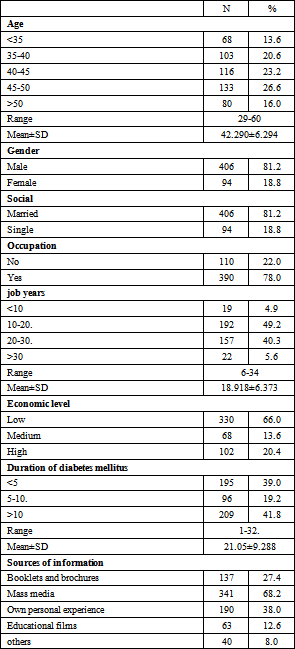
Table 1 shows that most of the participants (26.6%) were in the age group 45-50 years follow by the (23.2%) were in the age 40-50years and the data ranged from (29-60) by mean ±SD (42.290±6.294), the majority of them were males (81.2%) while female (18.8%), also regarding the social stats most of participants married were (81.2%) while single were (18.8%), regarding occupation the majority of participant are working were (78.0%) while not work were (22.0%).
Regarding the job years most of participant job years from 10-20 were (49.2%) while from 20-30 years were (40.3). Regarding the economic level the majority of participant low economic level were (66.0%), regarding the duration of diabetes mellitus the majority of participant >10 years were (41.8%) and the data ranged from (1-32) by mean ±SD (21.05±9.288). While sources of information most of participants from Mass media were (68.2%) while Own personal experience were (38.0%).
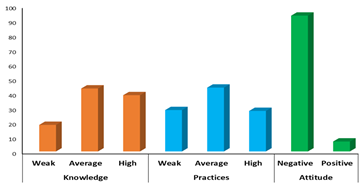
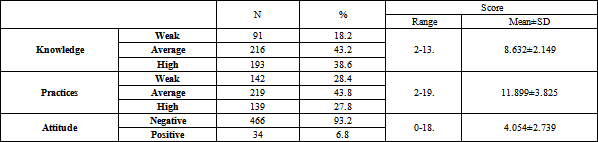
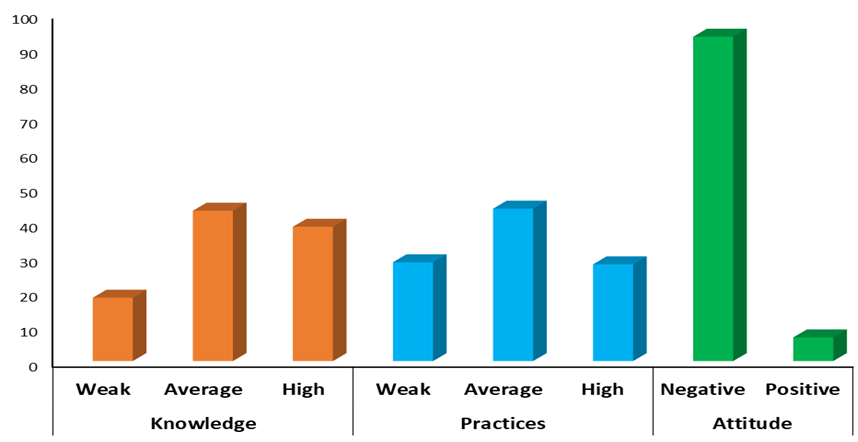
Table 2 and Figure 1 Regarding knowledge of the participant toward diabetes mellitus study results show the majority of participant had average information were (43.2%) while high knowledge were (38.6%) the data ranged from (2-13) by mean ±SD (8.632±2.149).
Regarding Practices of the participant toward diabetes mellitus the most of participant in average were (43.8%) while weak were(28.4%) the data ranged from (2-19) by mean ±SD (11.899±3.825).
Regarding Attitude of the participant toward diabetes mellitus the majority of participant in negative attitude were (93.2%) while positive were (6.8%) the data ranged from (0-18) by mean ±SD (4.054±2.739).
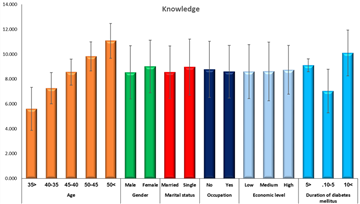
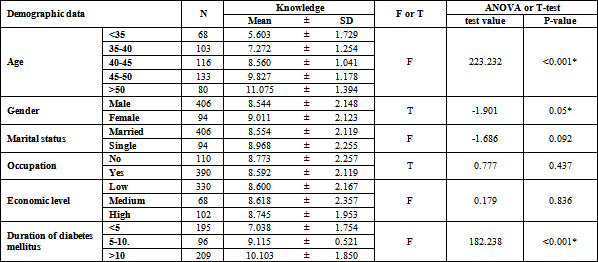
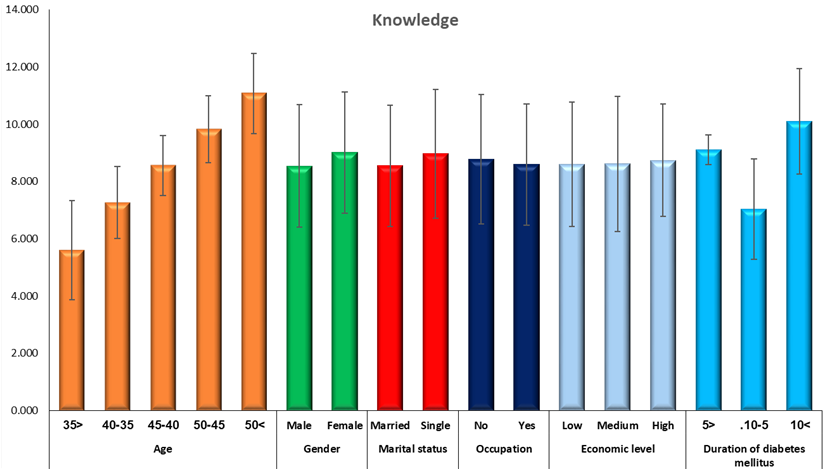
Table 3 and Figure 2 show that is a significant relation between knowledge and demographic data regarding age (increase in >50 follow by age 45-50) where F=223.232 and P-value=<0.001 by mean+ SD (11.075 ± 1.394, 9.827 ± 1.178). Regarding gender In our study the majority of our participants were noticed in female more than male with Mean± SD (9.011±2.123) with a significant relation between knowledge and gender were T=-1.901 and P-value=0.05. Regarding marital status show that is no significant relation between knowledge and marital status (increase in single) were F=-1.686 and P-value = 0.092 by mean+ SD (8.968±2.255), regarding to the Occupation show that is no significant relation between knowledge and occupation (increase in participants not work) were T=0.777 and P-value=0.437 by mean+ SD (8.773±2.119). Also regarding the economic level show that is no significant relation between knowledge and economic level (increase in the high income participants) were F=0.179 and P-value=0.836 by mean+ SD (8.745±1.953). Regarding the duration of diabetes mellitus show that is a significant relation between knowledge and duration of diabetes mellitus (increase in participant >10) were F=182.238 and P-value=<0.001 by mean+ SD (10.103±1.850).
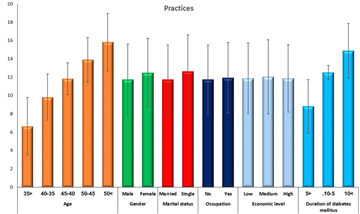
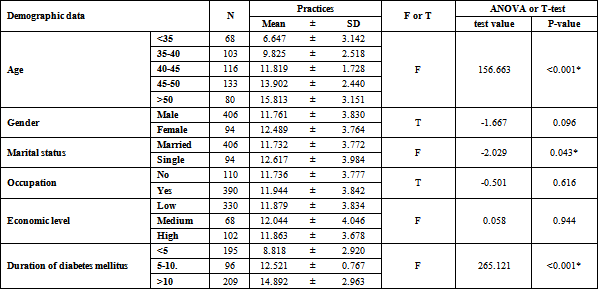
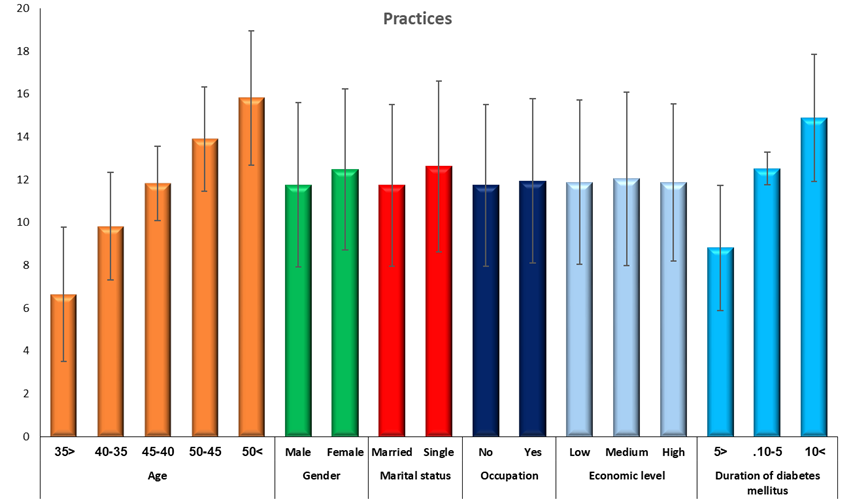
Table 4 and Figure 3 show that is a significant relation between practices and demographic data regarding age (increase in >50 follow by age 45-50) where F=156.663 and P-value=<0.001 by mean+ SD (15.813 ± 3.151, 13.902 ± 2.440). Regarding gender in our study the majority of our participants were noticed in female more than male with Mean± SD (12.489±3.764) with no significant relation between practices and gender were T=-1.667 and P-value=0.096. Regarding marital status show that is a significant relation between practices and marital status (increase in single) were F=2.029 and P-value=0.043 by mean+ SD (12.617±3.984), regarding to the Occupation show that is no significant relation between practices and occupation (increase in participants work) were T=-0.501 and P-value=0.616 by mean + SD (11.944±3.842). Also regarding the economic level show that is no significant relation between practices and economic level (increase in the medium income participants) were F=0.058 and P-value=0.944 by mean+ SD (12.044±4.046). Regarding the duration of diabetes mellitus show that is a significant relation between practices and duration of diabetes mellitus (increase in participant >10) were F=265.121 and P-value=<0.001 by mean+ SD (14.892±2.963).
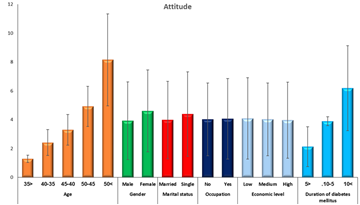
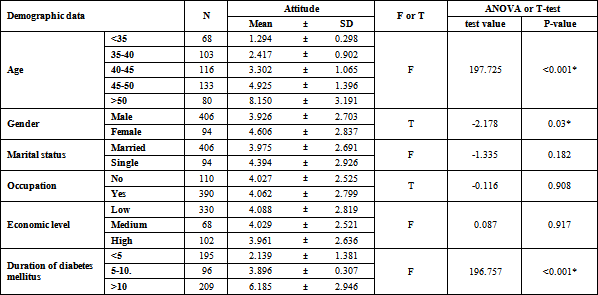
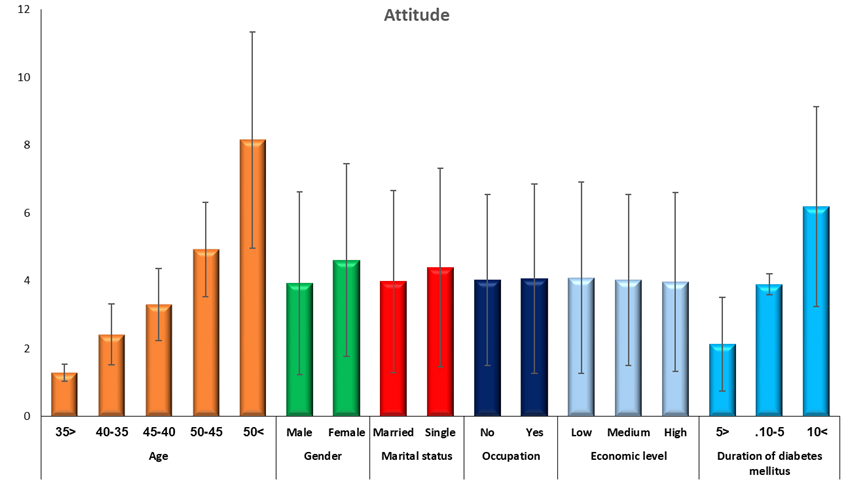
Table 5 and Figure 4 show that is a significant relation between attitude and demographic data regarding age (increase in >50 follow by age 45-50) where F=197.725 and P-value=<0.001 by mean+ SD (8.150 ± 3.191, 4.925 ± 1.396). Regarding gender in our study the majority of our participants were noticed in female more than male with Mean± SD (4.606±2.837) with a significant relation between attitude and gender were T=-2.178 and P-value=0.03. Regarding marital status show that is no significant relation between attitude and marital status (increase in single) were F=-1.335 and P-value=0.182 by mean+ SD (4.394±2.926), regarding to the Occupation show that is no significant relation between attitude and occupation (increase in participants work) were T=-0.116 and P-value=0.908 by mean + SD (4.062±2.799). Also regarding the economic level show that is no significant relation between attitude and economic level (increase in the low income participants) were F=0.087 and P-value=0.917 by mean+ SD (4.088±2.819). Regarding the duration of diabetes mellitus show that is a significant relation between attitude and duration of diabetes mellitus (increase in participant >10) were F=196.757 and P-value=<0.001 by mean+ SD (6.185±2.946).
Will remain Healthcare practices have always been a matter of interest for various medical staff and community at all. In the present time, a greater number of people are suffering from diabetes from a very young age. Knowledge of complications of diabetes mellitus among patients visiting the Diabetic Center can help patients to overcome the problem through healthy diet and other important safety measures. This pinpoints the idea that to which extent Saudis are aware of the knowledge related to diabetes. The findings of this study illustrate that the majority of the patients were male were male (81.2%) suffering from diabetes. The results proposed by this study contradict those provided by Fareed et al. 27. Accordingly, the majority of the females were affected by poor glycemic controls within the region of Saudi Arabia. It is likely that these results are due to the reason behind the problem was the high-level consumption of unhealthy diet, in our study most of the participants (26.6%) age group 45-50 years and males (81.2%), social stats most of participants married were (81.2%), occupation the participant are working were (78.0%) (See Table 1).
Previous studies reported that DM management and complications of diabetes mellitus related to adequate knowledge, and there is a correlation between DM knowledge and complications of diabetes mellitus 28. The present study demonstrated unsatisfactory outcomes in terms of DM knowledge complications, with only 38.6% of respondents knowing all knowledge items and 61.4% having inadequate knowledge. Our study also suggested there were positive practices (27.8%) while (72.2%) negative practice's regarding complications of diabetes mellitus and Attitude of the participant toward diabetes mellitus complications the majority of participant in negative attitude were(93.2%) while positive were (6.8%) (See Table 2). A previous study in Bangladesh (2012) found that 82% of people had a basic level of DM awareness 29, which was considerably higher than in our study. This disparity may be explained by the previous study using the Diabetes Knowledge Test, a tool validated by the University of Michigan, whereas our tool was researcher-constructed. Similarly, another study from Bangladesh found that 62% of the population had an adequate knowledge level 30, which was also higher than our result. Our study showed that knowledge regarding DM measuring parameters in Punjab was low, as only 30.2% of respondents know about the glucose tolerance test and 47.1% knew about how to measure diabetes.
The study has reported an association of several demographic characteristics of patients with their knowledge about complications. a significant relation between knowledge and demographic data regarding age >50 were F=223.232 and P-value=<0.001 also gender the majority of our participants were noticed in female more than male with a significant relation between knowledge and gender were T=-1.901 and P-value=0.05, the duration of diabetes mellitus show that is a significant relation between knowledge and duration of diabetes mellitus (increase in participant >10) were F=182.238 and P-value=<0.001. (see Table 3)
Which was also supported by previous studies conducted in low- and middle-income countries 31. Another study has asserted that patients’ educational level was a substantial predictor towards their self-care practices 32.
In relation to variables associated with KAP, a study by Al-Maskari et al. among patients with DM reported that age, gender, and SES were related to DM Practices, and observed a higher Practices score among males than females (p < 0.001). That study also found there was a significant difference between knowledge scores of postgraduate (19.67) and undergraduate (14.74) respondent (p < 0.001) 33. Our results were inconsistent with that study. Similarly, a study by Islam et al. showed significant associations for all demographic variables (including DM status) with knowledge scores 30; similar outcomes were observed in our study, except a non-significant association for gender, occupation and economic level Significantly higher knowledge scores among Age, marital status and duration of diabetes mellitus may be related to a higher level Practices. In our study is a significant relation between practices and demographic data regarding age increase in >50 where F=156.663 and P-value=<0.001. Regarding the duration of diabetes mellitus a significant relation between practices and duration of diabetes mellitus increase in participant >10 were F=265.121 and P-value=<0.001. (see Table 4).
A positive attitude toward complications diabetes mellitus was strongly associated that is a significant relation between practices and demographic data regarding age increase in >50, gender in female more than male and with similar results reported in the study in Bangladesh 30. In contrast, the study among patients with DM in the UAE did not report associations between attitudes and income/SES, which may be explained by the large difference between the gross domestic product (GDP) of Pakistan and the UAE. In 2015 34 also similar our results study regarding the economic level show that is no significant relation between attitude and economic level.
In our study show that is a significant relation between attitude and demographic data regarding age increase in >50 follow by age 45-50) where F=197.725 and P-value=<0.001. the gender in our study the majority of our participants were noticed in female more than male with a significant relation between attitude and gender were T=-2.178 and P-value=0.03. No significant relation between attitude and marital status (increase in single) were F=-1.335 and P-value=0.182 and also Occupation is no significant relation between attitude and occupation were T=-0.116 and P-value=0.908. Also the economic level show that is no significant relation between attitude and economic level were F=0.087 and P-value=0.917. Regarding the duration of diabetes mellitus show that is a significant relation between attitude and duration of diabetes mellitus were F=196.757 and P-value=<0.001. (see Table 5)
Saudi Arabia, despite high-level economic growth and development, is prone to health-related risks such as Knowledge of complications of diabetes mellitus among patients diabetes that serves as the root cause for the development of further diseases. Currently, people are at major risk of death due to diabetes and its consequences that are now highly developing among diabetes patients. Although the knowledge on the symptoms, remedial measures, and complications of diabetes mellitus among patients prevention of hypoglycemic episodes was weak among the type 2 diabetic patients in the study, there were gap in knowledge, practices on, attitude important aspects. The intake of regular insulin is the major prevention for further effects of diabetes. In various countries, a greater amount of money is invested in monitoring and catering to health-related issues. This indicates the need for better understanding among patients related to their healthcare. which need to be addressed by health care workers through regular educational programs.
| [1] | Alqurashi, K. A., Aljabri, K. S., & Bokhari, S. A. (2011). Prevalence of diabetes mellitus in a Saudi community. Annals of Saudi medicine, 31(1), 19-23. | ||
| In article | View Article PubMed | ||
| [2] | World Health Organization. (2016). World health statistics 2016: monitoring health for the SDGs sustainable development goals. World Health Organization. | ||
| In article | |||
| [3] | Abouammoh, N. A., & Alshamrani, M. A. (2020). Knowledge about Diabetes and Glycemic Control among Diabetic Patients in Saudi Arabia. Journal of diabetes research, 2020. | ||
| In article | View Article PubMed | ||
| [4] | Roglic, G., & Norris, S. L. (2018). Medicines for treatment intensification in type 2 diabetes and type of insulin in type 1 and type 2 diabetes in low-resource settings: synopsis of the World Health Organization guidelines on second-and third-line medicines and type of insulin for the control of blood glucose levels in nonpregnant adults with diabetes mellitus. Annals of internal medicine, 169(6), 394-397. | ||
| In article | View Article PubMed | ||
| [5] | Al-Aboudi, M. Hassali, and A. Shafie, “Knowledge, attitudes, and quality of life of type 2 diabetes patients in Riyadh, Saudi Arabia,” Journal of Pharmacy and Bioallied Sciences, vol. 8, no. 3, pp. 195-202, 2016. | ||
| In article | View Article PubMed | ||
| [6] | M. Fareed, N. Salam, A. T. Khoja, M. Abdulrahman, and M. Ahamed, “Knowledge of hypoglycemia and its associated risk factors among type 2 diabetes mellitus patients in diabetes Centre, Security Forces Hospital, Riyadh, Saudi Arabia,” Health Sciences, vol. 6, no. 10, pp. 125-132, 2017. | ||
| In article | View Article | ||
| [7] | Shriraam, V., Mahadevan, S., Anitharani, M., Jagadeesh, N. S., Kurup, S. B., Vidya, T. A., & Seshadri, K. G. (2015). Knowledge of hypoglycemia and its associated factors among type 2 diabetes mellitus patients in a Tertiary Care Hospital in South India. Indian journal of endocrinology and metabolism, 19(3), 378. | ||
| In article | View Article PubMed | ||
| [8] | Noncommunicable diseases and mental health. Global Action Plan for the Prevention and Control of Noncommunicable diseases 2013-2020. | ||
| In article | |||
| [9] | Murugesan, N., Snehalatha, C., Shobhana, R., Roglic, G., & Ramachandran, A. (2007). Awareness about diabetes and its complications in the general and diabetic population in a city in southern India. Diabetes research and clinical practice, 77(3), 433-437. | ||
| In article | View Article PubMed | ||
| [10] | Kengne, A. P., Amoah, A. G., & Mbanya, J. C. (2005). Cardiovascular complications of diabetes mellitus in sub-Saharan Africa. Circulation, 112(23), 3592-3601. | ||
| In article | View Article PubMed | ||
| [11] | Hall, V., Thomsen, R. W., Henriksen, O., & Lohse, N. (2011). Diabetes in Sub Saharan Africa 1999-2011: epidemiology and public health implications. A systematic review. BMC public health, 11(1), 564. | ||
| In article | View Article PubMed | ||
| [12] | International Diabetes Federation Guideline Development Group. (2014). Global guideline for type 2 diabetes. Diabetes research and clinical practice, 104(1). | ||
| In article | View Article PubMed | ||
| [13] | American Diabetes Association: American Diabetes Association Complete Guide to Diabetes. 4th ed. Alexandria, VA, American Diabetes Association, 2005. | ||
| In article | |||
| [14] | International Diabetes Federation (IDF). Definition and diagnosis. In: IDF. Pocketbook for Management of Diabetes in Childhood and Adolescence in Under-Resourced Countries, Vol. 6. Brussels, BelgiumIDF;2013.Availableat:https://www.idf.org/sites/default/files/attachments/ISPADLFAC- Pocketbook-final-2.pdf. Accessed November 25, 2014. | ||
| In article | |||
| [15] | Haller J, Atkinson A, Schatz D. Type 1 diabetes mellitus: etiology, presentation, and management. Pediatr Clin North Am. 2005; 52:1553-78. | ||
| In article | View Article PubMed | ||
| [16] | Alwakeel JS, Al-Suwaida A, Isnani AC, Al-Harbi A, Alam A(2009).Concomitant macro and micro-vascular complications in Diabetic nephropathy. Saudi J. Kidney Dis. Transpl., 20: 402-409. | ||
| In article | |||
| [17] | Caliskan D, Ozdemir O, Ocaktan E, Idil A (2006). Evaluation of awareness of diabetes mellitus and associated factors in four health center areas. Patient Educ. Couns., 62: 142-147. | ||
| In article | View Article PubMed | ||
| [18] | Emral, R., Pathan, F., Cortés, C. A. Y., El-Hefnawy, M. H., Goh, S. Y., Gómez, A. M., ... & Ma, Z. (2017). Self-reported hypoglycemia in insulin-treated patients with diabetes: Results from an international survey on 7289 patients from nine countries. Diabetes research and clinical practice, 134, 17-28. | ||
| In article | View Article PubMed | ||
| [19] | Atlas, D. (2015). International diabetes federation. IDF Diabetes Atlas, 7th edn. Brussels, Belgium: International Diabetes Federation. | ||
| In article | |||
| [20] | Alhowaish, A. K. (2013). Economic costs of diabetes in Saudi Arabia. Journal of family & community medicine, 20(1), 1. | ||
| In article | View Article PubMed | ||
| [21] | Fatani EM, Gari LN, Alharbi AH. Awareness of diabetic complications, perceived knowledge, compliance to medications and control of diabetes among diabetic population of Makkah city, Kingdome Saudi Arabia: cross-sectional study. Egypt J Hosp Med. 2018;70(7): 1190-5. | ||
| In article | View Article | ||
| [22] | Habib SS, and Aslam M (2003): Risk factors, knowledge and health status in diabetic patients. Saudi Med J., 24(11): 1219-1224. | ||
| In article | |||
| [23] | Bisiriyu GA. Non-adherence to lifestyle modifications (Diet and exercise) amongst type 2 diabetes mellitus patients attending extension II clinics in Gaborone. Botswana: University of Limpopo (Medunsa Campus); 2010. | ||
| In article | |||
| [24] | Aikins A-G. Ghana’s neglected chronic disease epidemic: a developmental challenge. Ghana Med J. 2007; 41(4): 154. | ||
| In article | |||
| [25] | Gillani, A. H., Amirul Islam, F. M., Hayat, K., Atif, N., Yang, C., Chang, J., ... & Fang, Y. (2018). Knowledge, attitudes and practices regarding diabetes in the general population: A cross-sectional study from Pakistan. International journal of environmental research and public health, 15(9), 1906. | ||
| In article | View Article PubMed | ||
| [26] | Agrawaal KK. Patients’ awareness about the complications of diabetes mellitus and its co relation with the glycemic status. JNMA J Nepal Med Assoc. 2015;53(200): 284-7. | ||
| In article | View Article PubMed | ||
| [27] | Shriraam, V., Mahadevan, S., Anitharani, M., Jagadeesh, N. S., Kurup, S. B., Vidya, T. A., & Seshadri, K. G. (2015). Knowledge of hypoglycemia and its associated factors among type 2 diabetes mellitus patients in a Tertiary Care Hospital in South India. Indian journal of endocrinology and metabolism, 19(3), 378. | ||
| In article | View Article PubMed | ||
| [28] | Kassahun, T., Gesesew, H., Mwanri, L., & Eshetie, T. (2016). Diabetes related knowledge, self-care behaviours and adherence to medications among diabetic patients in Southwest Ethiopia: a cross-sectional survey. BMC endocrine disorders, 16(1), 28. | ||
| In article | View Article PubMed | ||
| [29] | Saleh, F., Mumu, S. J., Ara, F., Begum, H. A., & Ali, L. (2012). Knowledge and self-care practices regarding diabetes among newly diagnosed type 2 diabetics in Bangladesh: a cross-sectional study. BMC public health, 12(1), 1112. | ||
| In article | View Article PubMed | ||
| [30] | Islam, F. M. A., Chakrabarti, R., Dirani, M., Islam, M. T., Ormsby, G., Wahab, M., ... & Finger, R. P. (2014). Knowledge, attitudes and practice of diabetes in rural Bangladesh: the Bangladesh population based diabetes and eye study (BPDES). PLoS One, 9(10), e110368. | ||
| In article | View Article PubMed | ||
| [31] | Parakh, M. K., Kasi, A., Ayyappan, V., & Subramani, P. (2020). Knowledge and awareness of oral manifestations of diabetes mellitus and oral health assessment among diabetes mellitus patients-a cross sectional study. Current Diabetes Reviews, 16(2), 156-164. | ||
| In article | View Article PubMed | ||
| [32] | Bukhsh, A., Khan, T. M., Nawaz, M. S., Ahmed, H. S., Chan, K. G., Lee, L. H., & Goh, B. H. (2018). Association of diabetes-related self-care activities with glycemic control of patients with type 2 diabetes in Pakistan. Patient preference and adherence, 12, 2377. | ||
| In article | View Article PubMed | ||
| [33] | Maskey, R., Shakya, D. R., Sharma, S. K., Karki, P., & Lavaju, P. (2011). Diabetes mellitus related complications in out-patient clinic of tertiary care hospital. Journal of College of Medical Sciences-Nepal, 7(2), 9-16. | ||
| In article | View Article | ||
| [34] | Gillani, A. H., Amirul Islam, F. M., Hayat, K., Atif, N., Yang, C., Chang, J., ... & Fang, Y. (2018). Knowledge, attitudes and practices regarding diabetes in the general population: A cross-sectional study from Pakistan. International journal of environmental research and public health, 15(9), 1906. | ||
| In article | View Article PubMed | ||
Published with license by Science and Education Publishing, Copyright © 2020 Ahmed Mahmoudaalsaeed Alahdal, Fadwa Mabkhoot Alnahdi, Najat Hussain Islami, Tahani Mubarak Alharbi, Nader Abbas Gazzaz, Shaly Mohammed Aljedaani, Hadeel Ahmed Alsubhi, Raghda Sami Hassan H. Alhazmi and Ahmad Ameen Ahmad Baghdadi
 This work is licensed under a Creative Commons Attribution 4.0 International License. To view a copy of this license, visit
http://creativecommons.org/licenses/by/4.0/
This work is licensed under a Creative Commons Attribution 4.0 International License. To view a copy of this license, visit
http://creativecommons.org/licenses/by/4.0/
| [1] | Alqurashi, K. A., Aljabri, K. S., & Bokhari, S. A. (2011). Prevalence of diabetes mellitus in a Saudi community. Annals of Saudi medicine, 31(1), 19-23. | ||
| In article | View Article PubMed | ||
| [2] | World Health Organization. (2016). World health statistics 2016: monitoring health for the SDGs sustainable development goals. World Health Organization. | ||
| In article | |||
| [3] | Abouammoh, N. A., & Alshamrani, M. A. (2020). Knowledge about Diabetes and Glycemic Control among Diabetic Patients in Saudi Arabia. Journal of diabetes research, 2020. | ||
| In article | View Article PubMed | ||
| [4] | Roglic, G., & Norris, S. L. (2018). Medicines for treatment intensification in type 2 diabetes and type of insulin in type 1 and type 2 diabetes in low-resource settings: synopsis of the World Health Organization guidelines on second-and third-line medicines and type of insulin for the control of blood glucose levels in nonpregnant adults with diabetes mellitus. Annals of internal medicine, 169(6), 394-397. | ||
| In article | View Article PubMed | ||
| [5] | Al-Aboudi, M. Hassali, and A. Shafie, “Knowledge, attitudes, and quality of life of type 2 diabetes patients in Riyadh, Saudi Arabia,” Journal of Pharmacy and Bioallied Sciences, vol. 8, no. 3, pp. 195-202, 2016. | ||
| In article | View Article PubMed | ||
| [6] | M. Fareed, N. Salam, A. T. Khoja, M. Abdulrahman, and M. Ahamed, “Knowledge of hypoglycemia and its associated risk factors among type 2 diabetes mellitus patients in diabetes Centre, Security Forces Hospital, Riyadh, Saudi Arabia,” Health Sciences, vol. 6, no. 10, pp. 125-132, 2017. | ||
| In article | View Article | ||
| [7] | Shriraam, V., Mahadevan, S., Anitharani, M., Jagadeesh, N. S., Kurup, S. B., Vidya, T. A., & Seshadri, K. G. (2015). Knowledge of hypoglycemia and its associated factors among type 2 diabetes mellitus patients in a Tertiary Care Hospital in South India. Indian journal of endocrinology and metabolism, 19(3), 378. | ||
| In article | View Article PubMed | ||
| [8] | Noncommunicable diseases and mental health. Global Action Plan for the Prevention and Control of Noncommunicable diseases 2013-2020. | ||
| In article | |||
| [9] | Murugesan, N., Snehalatha, C., Shobhana, R., Roglic, G., & Ramachandran, A. (2007). Awareness about diabetes and its complications in the general and diabetic population in a city in southern India. Diabetes research and clinical practice, 77(3), 433-437. | ||
| In article | View Article PubMed | ||
| [10] | Kengne, A. P., Amoah, A. G., & Mbanya, J. C. (2005). Cardiovascular complications of diabetes mellitus in sub-Saharan Africa. Circulation, 112(23), 3592-3601. | ||
| In article | View Article PubMed | ||
| [11] | Hall, V., Thomsen, R. W., Henriksen, O., & Lohse, N. (2011). Diabetes in Sub Saharan Africa 1999-2011: epidemiology and public health implications. A systematic review. BMC public health, 11(1), 564. | ||
| In article | View Article PubMed | ||
| [12] | International Diabetes Federation Guideline Development Group. (2014). Global guideline for type 2 diabetes. Diabetes research and clinical practice, 104(1). | ||
| In article | View Article PubMed | ||
| [13] | American Diabetes Association: American Diabetes Association Complete Guide to Diabetes. 4th ed. Alexandria, VA, American Diabetes Association, 2005. | ||
| In article | |||
| [14] | International Diabetes Federation (IDF). Definition and diagnosis. In: IDF. Pocketbook for Management of Diabetes in Childhood and Adolescence in Under-Resourced Countries, Vol. 6. Brussels, BelgiumIDF;2013.Availableat:https://www.idf.org/sites/default/files/attachments/ISPADLFAC- Pocketbook-final-2.pdf. Accessed November 25, 2014. | ||
| In article | |||
| [15] | Haller J, Atkinson A, Schatz D. Type 1 diabetes mellitus: etiology, presentation, and management. Pediatr Clin North Am. 2005; 52:1553-78. | ||
| In article | View Article PubMed | ||
| [16] | Alwakeel JS, Al-Suwaida A, Isnani AC, Al-Harbi A, Alam A(2009).Concomitant macro and micro-vascular complications in Diabetic nephropathy. Saudi J. Kidney Dis. Transpl., 20: 402-409. | ||
| In article | |||
| [17] | Caliskan D, Ozdemir O, Ocaktan E, Idil A (2006). Evaluation of awareness of diabetes mellitus and associated factors in four health center areas. Patient Educ. Couns., 62: 142-147. | ||
| In article | View Article PubMed | ||
| [18] | Emral, R., Pathan, F., Cortés, C. A. Y., El-Hefnawy, M. H., Goh, S. Y., Gómez, A. M., ... & Ma, Z. (2017). Self-reported hypoglycemia in insulin-treated patients with diabetes: Results from an international survey on 7289 patients from nine countries. Diabetes research and clinical practice, 134, 17-28. | ||
| In article | View Article PubMed | ||
| [19] | Atlas, D. (2015). International diabetes federation. IDF Diabetes Atlas, 7th edn. Brussels, Belgium: International Diabetes Federation. | ||
| In article | |||
| [20] | Alhowaish, A. K. (2013). Economic costs of diabetes in Saudi Arabia. Journal of family & community medicine, 20(1), 1. | ||
| In article | View Article PubMed | ||
| [21] | Fatani EM, Gari LN, Alharbi AH. Awareness of diabetic complications, perceived knowledge, compliance to medications and control of diabetes among diabetic population of Makkah city, Kingdome Saudi Arabia: cross-sectional study. Egypt J Hosp Med. 2018;70(7): 1190-5. | ||
| In article | View Article | ||
| [22] | Habib SS, and Aslam M (2003): Risk factors, knowledge and health status in diabetic patients. Saudi Med J., 24(11): 1219-1224. | ||
| In article | |||
| [23] | Bisiriyu GA. Non-adherence to lifestyle modifications (Diet and exercise) amongst type 2 diabetes mellitus patients attending extension II clinics in Gaborone. Botswana: University of Limpopo (Medunsa Campus); 2010. | ||
| In article | |||
| [24] | Aikins A-G. Ghana’s neglected chronic disease epidemic: a developmental challenge. Ghana Med J. 2007; 41(4): 154. | ||
| In article | |||
| [25] | Gillani, A. H., Amirul Islam, F. M., Hayat, K., Atif, N., Yang, C., Chang, J., ... & Fang, Y. (2018). Knowledge, attitudes and practices regarding diabetes in the general population: A cross-sectional study from Pakistan. International journal of environmental research and public health, 15(9), 1906. | ||
| In article | View Article PubMed | ||
| [26] | Agrawaal KK. Patients’ awareness about the complications of diabetes mellitus and its co relation with the glycemic status. JNMA J Nepal Med Assoc. 2015;53(200): 284-7. | ||
| In article | View Article PubMed | ||
| [27] | Shriraam, V., Mahadevan, S., Anitharani, M., Jagadeesh, N. S., Kurup, S. B., Vidya, T. A., & Seshadri, K. G. (2015). Knowledge of hypoglycemia and its associated factors among type 2 diabetes mellitus patients in a Tertiary Care Hospital in South India. Indian journal of endocrinology and metabolism, 19(3), 378. | ||
| In article | View Article PubMed | ||
| [28] | Kassahun, T., Gesesew, H., Mwanri, L., & Eshetie, T. (2016). Diabetes related knowledge, self-care behaviours and adherence to medications among diabetic patients in Southwest Ethiopia: a cross-sectional survey. BMC endocrine disorders, 16(1), 28. | ||
| In article | View Article PubMed | ||
| [29] | Saleh, F., Mumu, S. J., Ara, F., Begum, H. A., & Ali, L. (2012). Knowledge and self-care practices regarding diabetes among newly diagnosed type 2 diabetics in Bangladesh: a cross-sectional study. BMC public health, 12(1), 1112. | ||
| In article | View Article PubMed | ||
| [30] | Islam, F. M. A., Chakrabarti, R., Dirani, M., Islam, M. T., Ormsby, G., Wahab, M., ... & Finger, R. P. (2014). Knowledge, attitudes and practice of diabetes in rural Bangladesh: the Bangladesh population based diabetes and eye study (BPDES). PLoS One, 9(10), e110368. | ||
| In article | View Article PubMed | ||
| [31] | Parakh, M. K., Kasi, A., Ayyappan, V., & Subramani, P. (2020). Knowledge and awareness of oral manifestations of diabetes mellitus and oral health assessment among diabetes mellitus patients-a cross sectional study. Current Diabetes Reviews, 16(2), 156-164. | ||
| In article | View Article PubMed | ||
| [32] | Bukhsh, A., Khan, T. M., Nawaz, M. S., Ahmed, H. S., Chan, K. G., Lee, L. H., & Goh, B. H. (2018). Association of diabetes-related self-care activities with glycemic control of patients with type 2 diabetes in Pakistan. Patient preference and adherence, 12, 2377. | ||
| In article | View Article PubMed | ||
| [33] | Maskey, R., Shakya, D. R., Sharma, S. K., Karki, P., & Lavaju, P. (2011). Diabetes mellitus related complications in out-patient clinic of tertiary care hospital. Journal of College of Medical Sciences-Nepal, 7(2), 9-16. | ||
| In article | View Article | ||
| [34] | Gillani, A. H., Amirul Islam, F. M., Hayat, K., Atif, N., Yang, C., Chang, J., ... & Fang, Y. (2018). Knowledge, attitudes and practices regarding diabetes in the general population: A cross-sectional study from Pakistan. International journal of environmental research and public health, 15(9), 1906. | ||
| In article | View Article PubMed | ||