Introduction: Polycystic ovarian syndrome is one of the most common Endocrine disorders affecting women and is associated with a raised risk of impaired glucose tolerance, impaired fasting glucose, and type 2 diabetes mellitus. Insulin resistances, and the development of compensatory hyperinsulinemia, are usual findings in polycystic ovarian syndrome. Aims: To Compare the diagnosis of diabetes mellitus in patients with polycystic ovarian syndrome (PCOS) using glycated hemoglobin (HbA1c) and OGTT in a sample of Iraqi ladies with PCOS. Methods: This is a cross section study enrolled 40 patients female with PCOS, The patients were tested for OGTT, HbA1c and fasting blood glucose Was carried out at the endocrinological outpatient department of al Imamein Kadhimein medical city Teaching Hospital, and National diabetes center. Results: The present study included 40 diagnosed patients with PCOS. The mean age of the patients at presentation was 30.95±9.63years (range 16-44 years). According to 2h-OGTT, 28 (70%) women had normal glucose level. Among those, only 24 were also normal according to HbA1c, and 16 normal according to FPG. Impaired glucose tolerance was reported in 9 patients. 3 women (7.5%) were considered to have diabetes according to 2h-OGTT, all of whom were detected as normal in both HbA1c and FPG. Receiver operating characteristic was used to evaluate the predictive value of HbA1c in predicating IGT. The test's sensitivity and specificity were 77% and 65%, respectively. Conclusions: T2DM and prediabetes common in PCOS patient, and when compared with the 2-hr OGTT, HbA1c is insufficient screening tool for prediabetes and T2DM screening in female with PCOS
Polycystic ovarian syndrome (PCOS) is one of the most common Endocrine disorders affecting women 1. PCOS is having many facets, constantly changing disease and a challenging disorder for the treating physician due to the persistent need for treatment modifications and adjustments based on the patient’s fluctuating needs and preferences during the course of her life 1, 2. The pathophysiology of PCOS involves a combination of factors such as adrenal and ovarian hyperandrogenism, adiposity, insulin resistance and gonadotropin secretion abnormalities 4. The appearance of diabetes mellitus type 2(T2DM) in PCOS can be expected to some extent given that the two prerequisites for T2DM development, insulin resistance (IR) and ß-cell dysfunction, are commonly present in women with PCOS. Indeed, IR which is a key player in underlying PCOS pathophysiology which occurs to a greater extent compared to healthy body mass index-matched female. An additional effect of obesity on the degree of IR reported in these female must be also taken into concern 4. An insulin resistance at least in part contributes to IGT and elevates risk of developing type2 diabetes mellitus 2. PCOS is described by increased ovarian and adrenal androgen secretion, hyper androgenic symptoms, menstrual irregularity and polycystic ovaries 2. The development of compensatory hyperinsulinemia, are usual findings in PCOS 4. In particularly, evidence from large prospective cohorts has shown lead to either prediabetes or type 2 diabetes mellitus (T2D) over time 5. A meta-analysis of cross-sectional studies including 4795 female from the general population found higher testosterone concentrations in patients with T2DM compared to control 7. In addition bioavailable testosterone correlated significantly with insulin resistant, with higher concentrations predicting the development ofT2DM 8. Same results were obtained from a systematic review and meta-analysis pooling data from the Rotterdam Study and other studies, which found that patients at the highest three times of free androgen index had a 42% higher risk of developing T2DM, in a complex multivariate analysis controlling, among others, for age, BMI, glucose, and insulin concentrations 9. Given that PCOS is characterized by markedly higher androgen concentrations compared to those in the unaffected women, an association between the PCOS and T2DM constitutes a rational hypothesis 10. Ever since, several studies have confirmed this relationship in both lean and obese female with polycystic syndrome. However, IGT can be underdiagnosed, even in populations at high risk, for the reason that the diagnosis of IGT necessarily an oral glucose tolerance test (OGTT) 6. A newly meta-analysis of genetic studies suggests that there is no inherent T2DM risk in PCOS and that T2DM instead of occurs as a consequence of either increased adiposity or hyperandrogenemia 5. On the other side, PCOS constitutes a polygenic trait and elegant studies have shown that clusters of genes leading to metabolic disturbances are different from those associated with overt hyper androgenic signs in PCOS female 6. Therefore, a genetic component of dysglycemia among PCOS female must be considered. in the opinion of American study, IGT and T2DM are present in 31–35% and 7.5–10%, respectively, of American women with PCOS 7. correspondence over a definitive recommendation with regard to the optimal method of working for assessment of glycemic status has not yet been achieved to date 6. Thus, we aimed to examine the usefulness of glycated hemoglobin (HbA1c) and fasting glucose (FG) in estimating the risk of prediabetes and Type2 diabetes mellitus in this study PCOS women from national diabetes center and Al imamein kadhimein medical city teaching hospital that diagnosed with the Rotterdam criteria. On the other hand, in daily practice, the performance of OGTT may be inconvenient and time consuming in view of the fact that the patient has to be assessed while fasting and, for that reason, needs to be present at the clinic usually on two different days 7. Another screening method is fasting plasma glucose (FPG), the concentration of which depends on hepatic glucose secretion. Although cheap and easy to administer, like OGTT it requires patients to fast for at least eight hours prior to blood draw and can vary significantly relying on illness, medications, prolonged fasting, exercise, and stress. Thus, a strategy that could diminish or replace the need for an OGTT would be useful 8. A third frequently utilized screening test is HbA1C, which quantifies the quantity of glycated hemoglobin in the blood and is a measure of long-term glycemic exposure 9. HbA1c has been shown to correlate with the risk of development of microvascular disease such as diabetic retinopathy and has less within-person variation than FPG and 2h GTT values, which can fluctuate significantly from day to day 10, 11. Measuring a HbA1C value does not demand the patient to fast and only be in need of a single blood draw, to prepare it more comfortable for both the patient and health provider 12, 13. However, there are a number of hematologic conditions in which HbA1c may not give an accurate result; For example, hemoglobinopathies may interfere with the HbA1c explanation, as well as any condition in which red blood cell turnover is increased, such as hemolytic anemia, chronic malaria, and acute blood loss 14, 15, 16. Hemoglobin A1c (HbA1c) is a commonly used marker of chronic glycemia, and it reveals the average blood glucose levels over a two- to three-months period 17. The disturbance of the day-to-day variability of glucose values and the need for fasting and preceding dietary preparations can be avoided most of the time using HbA1c instead of OGTT 18. Latterly, an international expert committee composed of members of the European Association for the Study of Diabetes, the International Diabetes Federation and the American Diabetes Association (ADA) stated that HbA1c levels between 5.7- 6.4% should lead to an OGTT, whereas HbA1c levels of less than 5.7% indicate that no further tests are required (ADA, 2023).We also estimated whether the use of HbA1c resulted in the diagnosis of more cases of glucose intolerance in our PCOS inhabitants than the OGTT lonely. The objective of this study was to determine whether HbA1c precisely predicts the presence of pre-DM in this patient people when considering 2h OGTT as the gold standard.
To compare the diagnosis of diabetes mellitus in patients with polycystic ovarian syndrome (PCOS) using glycated hemoglobin (HbA1c) and OGTT.
Patients and methods:
This is a cross sectional study enrolled 40 female patients with PCOS, aged 16–45 years who were routinely referred to our outpatient clinic for PCOS evaluation from April (2022) to April (2023). Was carried out at the endocrinological outpatient department of Al imamein kadhimein medical city Teaching Hospital, and National diabetes center.
Inclusion criteria:
1. The subjects were premenopausal women (15-45)
2. PCOS
Exclusion criteria:
1. Diabetes
2. Patients outside of the designated age range (15 -45 years)
3. Disease: hyperprolactinemia, congenital adrenal hyperplasia, thyroid disorders, Cushing’s disease, hypertension, anemia and hemaglobinopathy to avoid any misinterpretation of HbA1c 22, 23, 24.
4. Using medication (e.g. insulin-sensitizing drugs, oral contraceptives, antiandrogens, corticosteroids and GnRH agonists and antagonists during the 90 days prior to enrollment were excluded.
All patients were informed about the study and consent was obtained.
The women with PCOS consulted our outpatient clinic for PCOS-related symptoms such as hirsutism, acne, obesity, infertility or menstrual abnormalities. PCOS was diagnosed using the Rotterdam criteria an established in 2003 20, 21, which requires two of the following: oligo- or anovulation, clinical and/or laboratory evidence of hyperandrogenism, and polycystic ovaries on ultrasound (≥ 12 follicles measuring 2‐9 mm in diameter and/or an ovarian volume > 10 mL in at least one ovary). an investigator determined the presence or absence of hirsutism for every woman with a modification of the Ferriman–Gallwey (mF–G score) method. Hirsutism was defined as an mF–G score > 7 25. Conventional assessment of participants included medical history, clinical evaluation, and fasting blood samples. Subjects were measure the weighed on an electronic scale. Body mass index (BMI)was calculated as the weight in kilograms divided by the square of the height in meters (kg/m2) of every one patient was calculated Normal weight was defined as BMI < 25 kg/m2 and overweight/obesity as BMI equal or >25 kg/m2, and waist circumference (WC) was measured by midway point between the lower rib and iliac crest while the patient was upright position, that was more than 80cm abnormal. An OGTT, venous blood specimen was collected from each female at early morning 8:00-10:00 am after an overnight fasting for 8-10 hours in the early follicular-stage of the spontaneous menstrual cycle (day 3–5) oron a random day of the cycle for amenorrhoeic women. Fasting plasma glucose (FPG) was measured to all women by Cobas 311 (Roche Diagnostics, Mannheim, Germany).A 75 g anhydrous glucose was dissolved in 250 mL water and was having by each female under supervision then plasma glucose was measured after 120 minutes. On the same day of measuring 2-h OGTT, HbA1c was measured to all subjects, by a procedure known as high performance liquid chromatography (HPLC). According to ADA criterion, glycemic state was defined as follows: Prediabetes: FPG=100-125 mg/dl. And/or 2-h OGTT=140-199 mg/dl and/or HbA1c=5.7-6.4%; T2DM: FPG ≥126 mg/dl and/or 2-h OGTT ≥200 mg/dl and/or HbA1c ≥6.5% (48 mmol/mol) 10.
Statistical Analysis
Statistical analyses were performed by using SPSS software version 25.0 (SPSS, Chicago). Continuous data were presented as mean and standard deviation, and analyzed with Student t-test. Categorical variables were expressed as number and percentage and analyzed with Chi-square test. Receiver operating characteristic curve (ROC) was used to evaluate predictive value of HbA1c in predicting glycemic disorder considering the 2-h OGTT as a gold standard. A p- value less than 0.05 were considered to indicate a statistically significant difference.
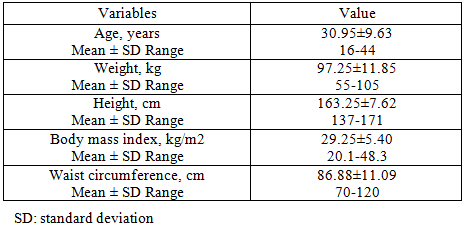
The present study included 40 diagnosed patients with PCOS. The mean age of the patients at presentation was 30.95±9.63years (range 16-44 years). The mean weight, height and BMI was 97.25±11.85 kg, 163.25±7.62 cm and 29.25±5.40 kg/m2, respectively. Waist circumference ranged from 70-120 cm with a mean of 86.88±11.09 cm (Table 3-1).
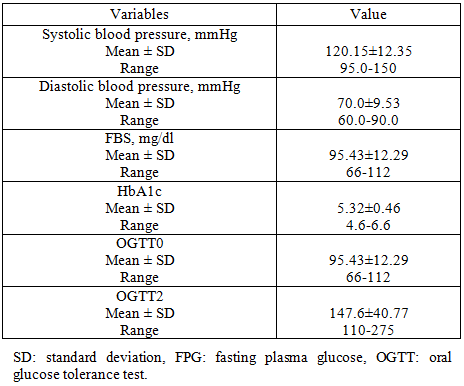
3.2. Clinical Characteristics of the PatientsThe mean systolic and diastolic blood pressure of the patients was 120.15±12.35 mmHg and 70.0±9.53 mmHg, respectively. On the other hand, the mean FPG, HbA1c 2-h OGTT was 95.43±12.29 mg/dl, 5.32±0.46% and 147.6±40.77 mg/dl, respectively (table 3-2).
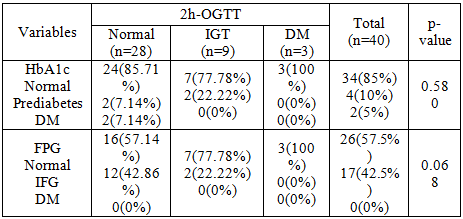
According to 2h-OGTT, 28 (70%) women had normal glucose level. Among those, only 24 were also normal according to HbA1c, and 16 normal according to FPG. Impaired glucose tolerance was reported in 9 patients (22.5%). Of those, 7 patients were considered normal according to both HbA1c and FPG. Finally, 3 women (7.5%) were considered to have diabetes according to 2h-OGTT, all of whom were detected as normal in both HbA1c and FPG. Despite this variation, statistically, there were no significant variation between the 2h-OGTT with each of HbA1 and FPG (Table 3-3).
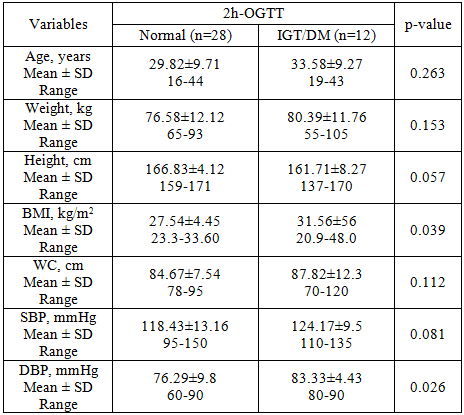
Due to the small number of diabetic patients and those with IGT, there were merged in one group to facilitate statistical analysis. Two factors were found to be significantly associated with glycemic disorder according to 2-h OGTT. The mean BMI of women with normal IGT/DM was 31.56±56 kg/m 2 which was higher than that of normal women (27.54±4.45 kg/m 2 ) with a significant difference. Likewise, the mean DBP in normal glycemic patients and those with IGT/DM was 76.29±9.8 mmHg and 83.33±4.43 mmHg, respectively with a significant difference (Table 3-4).
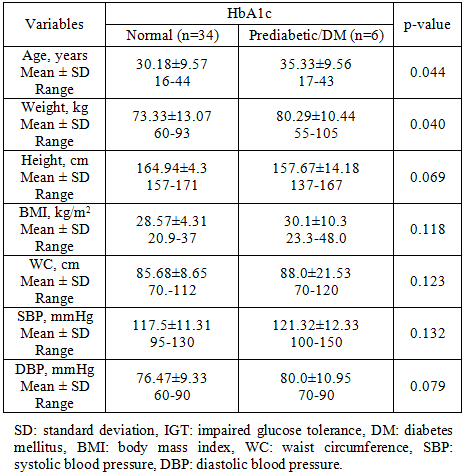
As in case of OGTT, diabetic and prediabetic patients were merged in one group. Diabetic and prediabetic patients had higher age and weight (35.33±9.56 years and 80.29±10.44 kg, respectively) than those with normal HbA1c level (30.18±9.57 years and 73.33±13.07 kg, respectively) with significant differences. Other factors were comparable between the two groups with no significant differences (table 3-5).
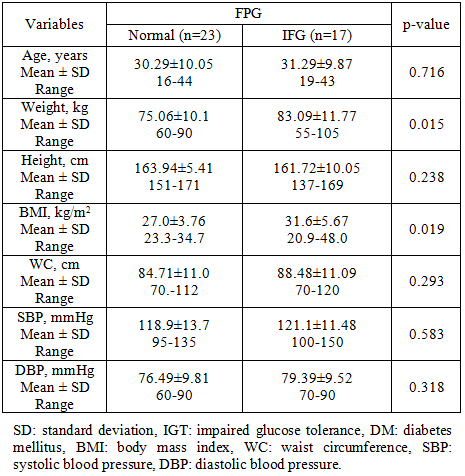
Weight and BMI were much higher in patients with IFG (83.09±11.77 kg and 31.6±5.67 kg/m 2 ) than those with normal FPG (75.06±10.1 kg and 27.0±3.76 kg/m 2 ) with significant differences. Other factors were comparable between the two groups with no significant differences (table 3-6).
Predictive Value of HbA1c in Predicting IGT
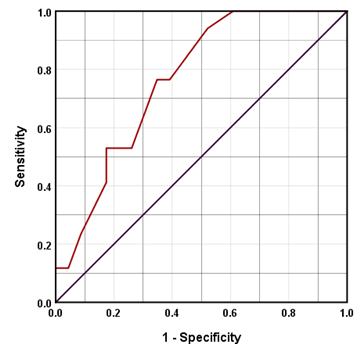
Receiver operating characteristic (ROC) was used to evaluate the predictive value of HbA1c in predicating IGT. The area under the curve (AUC) was 0.763, 95% CI= 0.618-0.909, p=0.005. The test's sensitivity and specificity were 77% and 65%, respectively, at a cut-off value of HbA1c= 5.22% (Figure 3-1).
Screening for a disease is fundamental when that situation constitutes an important health problem, a reasonable treatment for patients with known disease exists, and facilities for diagnosis and treatment are obtainable. Furthermore, there should be a recognizable latent or early symptomatic stage. There should be an effectual screening test or examination and that test should be acceptable to the patients 35. However, whether glycemic status must be evaluated in every female suffering from PCOS or in specific subgroups, as well as which is the preferable method for this evaluation, are to date unanswered questions. With consideration to which patients should be evaluated, there are at present time two points of view. One, supported by the Endocrine Society, the Androgen Excess and Polycystic Ovary Syndrome Society, as well as by the guidelines on PCOS diagnosis and management developed in Australia, suggests universal screening in all female with PCOS 11, 36, 37. on the other side, a number of experts recommend screening in female with at least one or more risk factors, such as age >40 years, family history of either T2DM or gestational diabetes mellitus, and/or obesity 12, 29, 38. The majority of the studies advocacy of these recommendations did not assess in detail the effect of age, obesity, on the development of glycemic disorder and, thus, seem to increase debate over this matter.There is controversy among experts as to whether fasting plasma glucose (FPG), OGTT, or glycated hemoglobin (HbA1c) is the best laboratory method to evaluate glycemic state in a women with PCOS, despite solid data strongly pointing to OGTT as being the most precise 17, 39. Female identified with PCOS are vulnerable to have diabetes (about 10 times higher than the general population) 40. In our study, FPG misinterpreted the diagnosis of glycemic disorder in more than half of female with IFG, and no patients with T2DM considered them as normal. Weight and BMI were much higher in patients with IFG (83.09±11.77 kg and 31.6±5.67 kg/m 2) than those with normal FPG, with significant differences. These findings suggest that FPG could be an insufficient tool to screen for glycemic disorder in female with PCOS which was also reported by an Austrian cohort study of 671 young and non-obese women with PCOS 42. One possible explanation for the failure of FPG as a screening method might be the fact that insulin secretory defects have been suggested to be present in PCOS (Holte et al., 2014) and this considered that the OGTT test was the best screening method for impaired glucose and diabetes in female with PCOS.In our study, the ability of HbA1c to distinguish female with PCOS who have normal metabolism from those with abnormal glucose metabolism was investigated. When using cut-off value of HbA1c= 5.22% with the highest specificity and sensitivity, substantially lower than the 5.7% used by the ADA, about less than two third of the women were below the cutoff value even though they were having an abnormal glucose state by the 2-h OGTT. Diabetic and prediabetic patients had higher age and weight than those with normal HbA1c with significant differences. The test's sensitivity and specificity were 77% and 65%, respectively. Therefore, normal HbA1c value should be undergo a formal OGTT may identify dysglycemia in PCOS.in our present study revealed, dysglycemia was consistent with that showed in Europe (Ehrmann DA BR et al 2019), also seen in American female with PCOS. These patients can be significantly benefited from early lifestyle modulation and/or medical therapy. According to Androgen Excess Society (AES) guidelines, 2-h OGTT is recommended as a gold standard test to detect dysglycemia in female diagnosed with PCOS especially those with one or more risk factors for diabetes mellitus 11. Overweight or obese was dominant in female diagnosed with PCOS in our study; more than half of enrolled patients were either overweight or obese.Which was the same to that disclosed in a cohort study from Alabama 41 .this patients were markedly having mean 2-h OGTT and more dysglycemia determined by 2-h OGTT than normal BMI patient with PCOS. Amazing, prediabetes was diagnosed in lean body with PCOS patients by 2-h OGTT. This finding in our study against the ADA and AES recommendations to evaluate for T2DM in asymptomatic women with PCOS if their BMI equal or more than 25kg/m2 11. many female with IGT/DM ,false negative (23%) and false positive (35%) be mistaken as normal or abnormal blood glucose by HbA1c.rendering HbA1c as insufficient screening test for glycemic disorder in female with PCOS, particularly during the detection of prediabetes and type2 DM, this result correspond with study Celik C et al (2013) on a Turkish female with PCOS ,that HbA1c show some potential weakness. But HbA1c as yet has advantage over 2-h OGTT in evaluating chronic glycemic control over 2-3months earlier, less day to day variability and convenient to patient 19. also by the way in our study, we find FPG misdiagnosed of women with hyperglycemia or IGT or even normal glucose in comparison with OGTT. therefor suggest that FPG consider weak test for evaluation of glycemic disorder in patients with PCOS, this also agreement with Lerchbaum E et al 617(2013) in Austrian female with PCOS 42 and Altemimi MT, et al. (2021) in southern Iraq 44. Thus, the OGTT consider being most reliable test to diagnosed dysglycemia among patients diagnosed with PCOS. But limitation of our study is sample size.
T2DM and prediabetes common in PCOS patient, and when compared with the 2-hr OGTT, HbA1c is insufficient screening tool for prediabetes and T2DM screening in female with PCOS, our study suggest that OGTT should be performed in all patient with PCOS
Larger lady size sample.
| [1] | Conway G, Dewailly D, Diamanti-Kandarakis E, Escobar-Morreale HF, Franks S, Gambineri A, Kelestimur F, Macut D, Micic D, Pasquali R, Pfeifer M, Pignatelli D, Pugeat M, Yildiz BO; ESE PCOS Special Interest Group. The polycystic ovary syndrome: a position statement from the European Society of Endocrinology. Eur J Endocrinol 2019; 171: P1-29. | ||
| In article | View Article PubMed | ||
| [2] | Azziz R, Carmina E, Chen Z, Dunaif A, Laven JS, Legro RS, Lizneva D, Natterson-Horowtiz B, Teede HJ, Yildiz BO. Polycystic ovary syndrome. Nat Rev Dis Primers 2016; 2: 16057. | ||
| In article | View Article PubMed | ||
| [3] | Palmert MR, Gordon CM, Kartashov AI, Legro RS, Emans SJ, Dunaif A. Screening for abnormal glucose tolerance in adolescents with polycystic ovary syndrome. J ClinEndocrinolMetab. 2020;87(3):1017–23. | ||
| In article | View Article PubMed | ||
| [4] | Cassar S, Misso ML, Hopkins WG, Shaw CS, Teede HJ, Stepto NK. Insulin resistance in polycystic ovary syndrome: a systematic review and meta-analysis of euglycaemic-hyperinsulinaemic clamp studies. Hum Reprod 2016; 31: 2619-2631. | ||
| In article | View Article PubMed | ||
| [5] | Zhu T, Cui J, Goodarzi MO. Polycystic Ovary Syndrome and Risk of Type 2 Diabetes, Coronary Heart Disease, and Stroke. Diabetes 2021; 70: 627-637. | ||
| In article | View Article PubMed | ||
| [6] | Dapas M, Lin FTJ, Nadkarni GN, Sisk R, Legro RS, Urbanek M, Hayes MG, Dunaif A. Distinct subtypes of polycystic ovary syndrome with novel genetic associations: An unsupervised, phenotypic clustering analysis. PLoS Med 2020; 17: e1003132. | ||
| In article | View Article PubMed | ||
| [7] | Ding EL, Song Y, Malik VS, Liu S. Sex differences of endogenous sex hormones and risk of type 2 diabetes: a systematic review and meta-analysis. JAMA. 2006; 295: 1288–1299. | ||
| In article | View Article PubMed | ||
| [8] | Oh JY, Barrett-Connor E, Wedick NM, Wingard DL Rancho Bernardo Study. Endogenous sex hormones and the development of type 2 diabetes in older men and women: The Rancho Bernardo study. Diabetes Care. 2019; 25: 55–60. | ||
| In article | View Article PubMed | ||
| [9] | Muka T, Nano J, Jaspers L, Meun C, Bramer WM, Hofman A, Dehghan A, Kavousi M, Laven JS, Franco OH. Associations of Steroid Sex Hormones and Sex Hormone-Binding Globulin with the Risk of Type 2 Diabetes in Women: A Population-Based Cohort Study and Meta-analysis. Diabetes. 2017; 66: 577–586. | ||
| In article | View Article PubMed | ||
| [10] | Cotrozzi G, Matteini M, Relli P, Lazzari T. Hyperinsulinism and insulin resistance in polycystic ovarian syndrome: a verification using oral glucose, I.V. Glucose and tolbutamide. ActaDiabetol Lat. 2013; 20: 135–142. | ||
| In article | View Article PubMed | ||
| [11] | The Rotterdam ESHRE/ASRM-Sponsored consensus workshop group. Revised 2003 consensus on diagnostic criteria and long-term health risks related topolycysticovary syndrome(PCOS). HumReprod2020; 19: 41–47. | ||
| In article | View Article PubMed | ||
| [12] | Wild RA CE, Diamanti-Kandarakis E, Dokras A, Escobar-Morreale HF, Futterweit W, Lobo R, Norman RJ, Talbott E, Dumesic DA. Assessment of cardiovascular risk and prevention of cardiovascular disease in women with the polycystic ovary syndrome: a consensus statement by the Androgen Excess and Polycystic Ovary Syndrome (AE-PCOS) Society. J ClinEndocrinolMetab 2018; 95: 2038–2049. | ||
| In article | View Article PubMed | ||
| [13] | Wehr E, Gruber HJ, Giuliani A, Mo¨ller R, Pieber TR, Obermayer-Pietsch B. The lipid accumulation product is associated with impaired glucose tolerance in PCOS women. J Clin Endocrinol Metab 2011; 96: E986–E990. | ||
| In article | View Article PubMed | ||
| [14] | Lillioja S, Mott DM, Spraul M, Ferraro R, Foley JE, Ravussin E, Knowler WC, Bennett PH, Bogardus C. Insulin resistance and insulin secretory dysfunction as precursors of non-insulin-dependent diabetes mellitus. Prospective studies of Pima Indians. J ClinEndocrinolMetab 2017; 329: 1988–1992. | ||
| In article | View Article PubMed | ||
| [15] | Harris MI, Hadden WC, Knowler WC, Bennett PH. Prevalence of diabetes and impaired glucose tolerance and plasma glucose levels in U.S. population aged 20–74 yr. Diabetes 2017; 36: 523–534. | ||
| In article | View Article PubMed | ||
| [16] | Ehrmann DA, Barnes RB, Rosenfield RL, Cavaghan MK, Imperial J. Prevalence of impaired glucose tolerance and diabetes in women with polycystic ovary syndrome. Diabetes Care 2019; 22: 141–146. | ||
| In article | View Article PubMed | ||
| [17] | Celik C, Abali R, Bastu E, Tasdemir N, Tasdemir UG, Gul A. Assessment of impaired glucose tolerance prevalence with hemoglobin A1c and oral glucose tolerance test in 252 Turkish women with polycystic ovary syndrome: a prospective, controlled study. Hum Reprod 2013; 28: 1062–1068. | ||
| In article | View Article PubMed | ||
| [18] | Sacks DB. A1C versus glucose testing: a comparison. Diabetes Care. 2021; 34: 518–523. | ||
| In article | View Article PubMed | ||
| [19] | American Diabetes A. 2. Classification and Diagnosis of Diabetes: Standards of Medical Care in Diabetes-2020. Diabetes Care. 2020; 43 (Suppl 1): S14-31 | ||
| In article | View Article PubMed | ||
| [20] | Mortada R, Comerford K, Kallail KJ, Karakas SE. Utility of hemoglobin-A1C in nondiabetic women with polycystic ovary syndrome. EndocrPract. 2013; 19: 284-9. | ||
| In article | View Article PubMed | ||
| [21] | de Medeiros SF, Yamamoto MM, Bueno HB, Belizario D, Barbosa JS. Prevalence of elevated glycated hemoglobin concentrations in the polycystic ovary syndrome: anthropometrical and metabolic relationship in amazonian women. J Clin Med Res. 2014; 6: 278-86. | ||
| In article | View Article PubMed | ||
| [22] | Van Leiden H, Dekker J, Moll A. Risk factors for incident retinopathy in a diabetic and non-diabetic population: the Hoorn study. Arch Ophthalmol. 2018; 121: 245–251. | ||
| In article | View Article PubMed | ||
| [23] | The International Expert Committee. International Expert Committee report on the role of the A1C assay in the diagnosis of diabetes. Diabetes Care. 2009; 32: 1327–1334 | ||
| In article | View Article PubMed | ||
| [24] | Pesant MH, Baillargeon JP. Clinically useful predictors of conversion to abnormal glucose tolerance in women with polycystic ovary syndrome. FertilSteril 2011; 95: 210-215. | ||
| In article | View Article PubMed | ||
| [25] | Norman RJ, Masters L, Milner CR, Wang JX, Davies MJ. Relative risk of conversion from normoglycaemia to impaired glucose tolerance or non-insulin dependent diabetes mellitus in polycystic ovarian syndrome. Hum Reprod 2018; 16: 1995-1998. | ||
| In article | View Article PubMed | ||
| [26] | Solomon A, Hussein M, Negash M, Ahmed A, Bekele F, Kahase D. Effect of iron deficiency anemia on HbA1c in diabetic patients at TikurAnbessa specialized teaching hospital, Addis Ababa Ethiopia. BMC Hematol 2019; 19: 2. | ||
| In article | View Article PubMed | ||
| [27] | American Diabetes Association. Standards of medical care in diabetes— 2020. Diabetes Care 2020;36: S11–S66. | ||
| In article | View Article PubMed | ||
| [28] | LegroRS, KunselmanAR, DodsonWC, DunaifA. Prevalence and predictorsof risk for type 2 diabetes mellitus and impaired glucose tolerance in polycystic ovary syndrome: a prospective, controlled study in 254 affected women. J ClinEndocrinolMetab 2018; 84: 165–169. | ||
| In article | View Article PubMed | ||
| [29] | Rotterdam EA-SPCWG. Revised 2003 consensus on diagnostic criteria and long-term health risks related to polycystic ovary syndrome. FertilSteril. 2019; 81: 19-25. | ||
| In article | View Article PubMed | ||
| [30] | Pall M, Azziz R, Beires J, Pignatelli D. The phenotype of hirsute women: a comparison of polycystic ovary syndrome and 21-hydroxylase-deficient nonclassic adrenal hyperplasia. FertilSteril. 2010; 94: 684-9. | ||
| In article | View Article PubMed | ||
| [31] | DeFronzo RA, Ferrannini E. Insulin resistance. A multifaceted syndrome responsible for NIDDM, obesity, hypertension, dyslipidemia, and atherosclerotic cardiovascular disease. Diabetes Care 2017; 14: 173–194. | ||
| In article | View Article PubMed | ||
| [32] | Goodyear LJ, Kahn BB. Exercise, glucose transport, and insulin sensitivity. Annu Rev Med 2019; 49: 235–261. | ||
| In article | View Article PubMed | ||
| [33] | Eriksson J, Franssila-Kallunki A, Ekstrand A, Saloranta C, Widen E, Schalin C, Groop L. Early metabolic defects in persons at increased risk for non-insulin-dependent diabetes mellitus. N Engl J Med 2019; 321: 337–343. | ||
| In article | View Article PubMed | ||
| [34] | Coskun A, Ercan O, Arikan DC, Ozer A, Kilinc M, Kiran G, Kostu B. Modified Ferriman-Gallwey hirsutism score and androgen levels in Turkish women. Eur J Obstet Gynecol ReprodBiol 2011; 154: 167–171. | ||
| In article | View Article PubMed | ||
| [35] | Ref.Wilson JMG, Jungner G; Organization WH. Principles and practice of screening for disease. World Health Organization, 2020. | ||
| In article | |||
| [36] | Legro RS, Arslanian SA, Ehrmann DA, Hoeger KM, Murad MH, Pasquali R, Welt CK; Endocrine Society. Diagnosis and treatment of polycystic ovary syndrome: an Endocrine Society clinical practice guideline. J ClinEndocrinolMetab 2013; 98: 4565-4592. | ||
| In article | View Article PubMed | ||
| [37] | Jean Hailes for women’s health on behalf of the PCOS Australian alliance. Evidence-based guidelines for the assessment and management of polycystic ovary syndrome. Melbourne: Jean Hailes Foundation for Women’s Health on behalf of the PCOS Australian Alliance, 2015: 64–65. | ||
| In article | |||
| [38] | Royal College of Obstetricians and Gynaecologists. Polycystic Ovary Syndrome, Long-term Consequences (Green-top Guideline No. 33). | ||
| In article | |||
| [39] | VellingMagnussen L, Mumm H, Andersen M, Glintborg D. Hemoglobin A1c as a tool for the diagnosis of type 2 diabetes in 208 premenopausal women with polycystic ovary syndrome. FertilSteril 2019; 96: 1275-1280. | ||
| In article | View Article PubMed | ||
| [40] | Diamanti-Kandarakis E, Dunaif A. Insulin resistance and the polycystic ovary syndrome revisited: an update on mechanisms and implications. Endocr Rev. 2012; 33: 981-1030. | ||
| In article | View Article PubMed | ||
| [41] | Yildiz BO, Knochenhauer ES, Azziz R. Impact of obesity on the risk for polycystic ovary syndrome. J ClinEndocrinolMetab. 2008; 93: 162-8. | ||
| In article | View Article PubMed | ||
| [42] | Lerchbaum E, Schwetz V, Giuliani A, Obermayer-Pietsch B. Assessment of glucose metabolism in polycystic ovary syndrome: HbA1c or fasting glucose compared with the oral glucose tolerance test as a screening method. Human reproduction (Oxford, England). 2013; 28: 2537-44. | ||
| In article | View Article PubMed | ||
| [43] | HolteJ, BerghT, BerneC, BerglundL, LithellH.Enhancedearly insulin response to glucose in relation to insulin resistance in women with polycystic ovary syndrome and normal glucose tolerance. J ClinEndocrinolMetab 2014; 78: 1052–1058. | ||
| In article | View Article PubMed | ||
| [44] | Altemimi MT, et al. Screening Tool for Dysglycemia in Polycystic Ovary Syndrome. Indones Biomed J. 2021; 13(2): 178-85. | ||
| In article | View Article | ||
Published with license by Science and Education Publishing, Copyright © 2026 Bilal Natiq Nuaman, Mahmood Shakir Khudhair, Mohammed Sami Turki and Sanad Asaad Abd Al-Hussein
 This work is licensed under a Creative Commons Attribution 4.0 International License. To view a copy of this license, visit
http://creativecommons.org/licenses/by/4.0/
| [1] | Conway G, Dewailly D, Diamanti-Kandarakis E, Escobar-Morreale HF, Franks S, Gambineri A, Kelestimur F, Macut D, Micic D, Pasquali R, Pfeifer M, Pignatelli D, Pugeat M, Yildiz BO; ESE PCOS Special Interest Group. The polycystic ovary syndrome: a position statement from the European Society of Endocrinology. Eur J Endocrinol 2019; 171: P1-29. | ||
| In article | View Article PubMed | ||
| [2] | Azziz R, Carmina E, Chen Z, Dunaif A, Laven JS, Legro RS, Lizneva D, Natterson-Horowtiz B, Teede HJ, Yildiz BO. Polycystic ovary syndrome. Nat Rev Dis Primers 2016; 2: 16057. | ||
| In article | View Article PubMed | ||
| [3] | Palmert MR, Gordon CM, Kartashov AI, Legro RS, Emans SJ, Dunaif A. Screening for abnormal glucose tolerance in adolescents with polycystic ovary syndrome. J ClinEndocrinolMetab. 2020;87(3):1017–23. | ||
| In article | View Article PubMed | ||
| [4] | Cassar S, Misso ML, Hopkins WG, Shaw CS, Teede HJ, Stepto NK. Insulin resistance in polycystic ovary syndrome: a systematic review and meta-analysis of euglycaemic-hyperinsulinaemic clamp studies. Hum Reprod 2016; 31: 2619-2631. | ||
| In article | View Article PubMed | ||
| [5] | Zhu T, Cui J, Goodarzi MO. Polycystic Ovary Syndrome and Risk of Type 2 Diabetes, Coronary Heart Disease, and Stroke. Diabetes 2021; 70: 627-637. | ||
| In article | View Article PubMed | ||
| [6] | Dapas M, Lin FTJ, Nadkarni GN, Sisk R, Legro RS, Urbanek M, Hayes MG, Dunaif A. Distinct subtypes of polycystic ovary syndrome with novel genetic associations: An unsupervised, phenotypic clustering analysis. PLoS Med 2020; 17: e1003132. | ||
| In article | View Article PubMed | ||
| [7] | Ding EL, Song Y, Malik VS, Liu S. Sex differences of endogenous sex hormones and risk of type 2 diabetes: a systematic review and meta-analysis. JAMA. 2006; 295: 1288–1299. | ||
| In article | View Article PubMed | ||
| [8] | Oh JY, Barrett-Connor E, Wedick NM, Wingard DL Rancho Bernardo Study. Endogenous sex hormones and the development of type 2 diabetes in older men and women: The Rancho Bernardo study. Diabetes Care. 2019; 25: 55–60. | ||
| In article | View Article PubMed | ||
| [9] | Muka T, Nano J, Jaspers L, Meun C, Bramer WM, Hofman A, Dehghan A, Kavousi M, Laven JS, Franco OH. Associations of Steroid Sex Hormones and Sex Hormone-Binding Globulin with the Risk of Type 2 Diabetes in Women: A Population-Based Cohort Study and Meta-analysis. Diabetes. 2017; 66: 577–586. | ||
| In article | View Article PubMed | ||
| [10] | Cotrozzi G, Matteini M, Relli P, Lazzari T. Hyperinsulinism and insulin resistance in polycystic ovarian syndrome: a verification using oral glucose, I.V. Glucose and tolbutamide. ActaDiabetol Lat. 2013; 20: 135–142. | ||
| In article | View Article PubMed | ||
| [11] | The Rotterdam ESHRE/ASRM-Sponsored consensus workshop group. Revised 2003 consensus on diagnostic criteria and long-term health risks related topolycysticovary syndrome(PCOS). HumReprod2020; 19: 41–47. | ||
| In article | View Article PubMed | ||
| [12] | Wild RA CE, Diamanti-Kandarakis E, Dokras A, Escobar-Morreale HF, Futterweit W, Lobo R, Norman RJ, Talbott E, Dumesic DA. Assessment of cardiovascular risk and prevention of cardiovascular disease in women with the polycystic ovary syndrome: a consensus statement by the Androgen Excess and Polycystic Ovary Syndrome (AE-PCOS) Society. J ClinEndocrinolMetab 2018; 95: 2038–2049. | ||
| In article | View Article PubMed | ||
| [13] | Wehr E, Gruber HJ, Giuliani A, Mo¨ller R, Pieber TR, Obermayer-Pietsch B. The lipid accumulation product is associated with impaired glucose tolerance in PCOS women. J Clin Endocrinol Metab 2011; 96: E986–E990. | ||
| In article | View Article PubMed | ||
| [14] | Lillioja S, Mott DM, Spraul M, Ferraro R, Foley JE, Ravussin E, Knowler WC, Bennett PH, Bogardus C. Insulin resistance and insulin secretory dysfunction as precursors of non-insulin-dependent diabetes mellitus. Prospective studies of Pima Indians. J ClinEndocrinolMetab 2017; 329: 1988–1992. | ||
| In article | View Article PubMed | ||
| [15] | Harris MI, Hadden WC, Knowler WC, Bennett PH. Prevalence of diabetes and impaired glucose tolerance and plasma glucose levels in U.S. population aged 20–74 yr. Diabetes 2017; 36: 523–534. | ||
| In article | View Article PubMed | ||
| [16] | Ehrmann DA, Barnes RB, Rosenfield RL, Cavaghan MK, Imperial J. Prevalence of impaired glucose tolerance and diabetes in women with polycystic ovary syndrome. Diabetes Care 2019; 22: 141–146. | ||
| In article | View Article PubMed | ||
| [17] | Celik C, Abali R, Bastu E, Tasdemir N, Tasdemir UG, Gul A. Assessment of impaired glucose tolerance prevalence with hemoglobin A1c and oral glucose tolerance test in 252 Turkish women with polycystic ovary syndrome: a prospective, controlled study. Hum Reprod 2013; 28: 1062–1068. | ||
| In article | View Article PubMed | ||
| [18] | Sacks DB. A1C versus glucose testing: a comparison. Diabetes Care. 2021; 34: 518–523. | ||
| In article | View Article PubMed | ||
| [19] | American Diabetes A. 2. Classification and Diagnosis of Diabetes: Standards of Medical Care in Diabetes-2020. Diabetes Care. 2020; 43 (Suppl 1): S14-31 | ||
| In article | View Article PubMed | ||
| [20] | Mortada R, Comerford K, Kallail KJ, Karakas SE. Utility of hemoglobin-A1C in nondiabetic women with polycystic ovary syndrome. EndocrPract. 2013; 19: 284-9. | ||
| In article | View Article PubMed | ||
| [21] | de Medeiros SF, Yamamoto MM, Bueno HB, Belizario D, Barbosa JS. Prevalence of elevated glycated hemoglobin concentrations in the polycystic ovary syndrome: anthropometrical and metabolic relationship in amazonian women. J Clin Med Res. 2014; 6: 278-86. | ||
| In article | View Article PubMed | ||
| [22] | Van Leiden H, Dekker J, Moll A. Risk factors for incident retinopathy in a diabetic and non-diabetic population: the Hoorn study. Arch Ophthalmol. 2018; 121: 245–251. | ||
| In article | View Article PubMed | ||
| [23] | The International Expert Committee. International Expert Committee report on the role of the A1C assay in the diagnosis of diabetes. Diabetes Care. 2009; 32: 1327–1334 | ||
| In article | View Article PubMed | ||
| [24] | Pesant MH, Baillargeon JP. Clinically useful predictors of conversion to abnormal glucose tolerance in women with polycystic ovary syndrome. FertilSteril 2011; 95: 210-215. | ||
| In article | View Article PubMed | ||
| [25] | Norman RJ, Masters L, Milner CR, Wang JX, Davies MJ. Relative risk of conversion from normoglycaemia to impaired glucose tolerance or non-insulin dependent diabetes mellitus in polycystic ovarian syndrome. Hum Reprod 2018; 16: 1995-1998. | ||
| In article | View Article PubMed | ||
| [26] | Solomon A, Hussein M, Negash M, Ahmed A, Bekele F, Kahase D. Effect of iron deficiency anemia on HbA1c in diabetic patients at TikurAnbessa specialized teaching hospital, Addis Ababa Ethiopia. BMC Hematol 2019; 19: 2. | ||
| In article | View Article PubMed | ||
| [27] | American Diabetes Association. Standards of medical care in diabetes— 2020. Diabetes Care 2020;36: S11–S66. | ||
| In article | View Article PubMed | ||
| [28] | LegroRS, KunselmanAR, DodsonWC, DunaifA. Prevalence and predictorsof risk for type 2 diabetes mellitus and impaired glucose tolerance in polycystic ovary syndrome: a prospective, controlled study in 254 affected women. J ClinEndocrinolMetab 2018; 84: 165–169. | ||
| In article | View Article PubMed | ||
| [29] | Rotterdam EA-SPCWG. Revised 2003 consensus on diagnostic criteria and long-term health risks related to polycystic ovary syndrome. FertilSteril. 2019; 81: 19-25. | ||
| In article | View Article PubMed | ||
| [30] | Pall M, Azziz R, Beires J, Pignatelli D. The phenotype of hirsute women: a comparison of polycystic ovary syndrome and 21-hydroxylase-deficient nonclassic adrenal hyperplasia. FertilSteril. 2010; 94: 684-9. | ||
| In article | View Article PubMed | ||
| [31] | DeFronzo RA, Ferrannini E. Insulin resistance. A multifaceted syndrome responsible for NIDDM, obesity, hypertension, dyslipidemia, and atherosclerotic cardiovascular disease. Diabetes Care 2017; 14: 173–194. | ||
| In article | View Article PubMed | ||
| [32] | Goodyear LJ, Kahn BB. Exercise, glucose transport, and insulin sensitivity. Annu Rev Med 2019; 49: 235–261. | ||
| In article | View Article PubMed | ||
| [33] | Eriksson J, Franssila-Kallunki A, Ekstrand A, Saloranta C, Widen E, Schalin C, Groop L. Early metabolic defects in persons at increased risk for non-insulin-dependent diabetes mellitus. N Engl J Med 2019; 321: 337–343. | ||
| In article | View Article PubMed | ||
| [34] | Coskun A, Ercan O, Arikan DC, Ozer A, Kilinc M, Kiran G, Kostu B. Modified Ferriman-Gallwey hirsutism score and androgen levels in Turkish women. Eur J Obstet Gynecol ReprodBiol 2011; 154: 167–171. | ||
| In article | View Article PubMed | ||
| [35] | Ref.Wilson JMG, Jungner G; Organization WH. Principles and practice of screening for disease. World Health Organization, 2020. | ||
| In article | |||
| [36] | Legro RS, Arslanian SA, Ehrmann DA, Hoeger KM, Murad MH, Pasquali R, Welt CK; Endocrine Society. Diagnosis and treatment of polycystic ovary syndrome: an Endocrine Society clinical practice guideline. J ClinEndocrinolMetab 2013; 98: 4565-4592. | ||
| In article | View Article PubMed | ||
| [37] | Jean Hailes for women’s health on behalf of the PCOS Australian alliance. Evidence-based guidelines for the assessment and management of polycystic ovary syndrome. Melbourne: Jean Hailes Foundation for Women’s Health on behalf of the PCOS Australian Alliance, 2015: 64–65. | ||
| In article | |||
| [38] | Royal College of Obstetricians and Gynaecologists. Polycystic Ovary Syndrome, Long-term Consequences (Green-top Guideline No. 33). | ||
| In article | |||
| [39] | VellingMagnussen L, Mumm H, Andersen M, Glintborg D. Hemoglobin A1c as a tool for the diagnosis of type 2 diabetes in 208 premenopausal women with polycystic ovary syndrome. FertilSteril 2019; 96: 1275-1280. | ||
| In article | View Article PubMed | ||
| [40] | Diamanti-Kandarakis E, Dunaif A. Insulin resistance and the polycystic ovary syndrome revisited: an update on mechanisms and implications. Endocr Rev. 2012; 33: 981-1030. | ||
| In article | View Article PubMed | ||
| [41] | Yildiz BO, Knochenhauer ES, Azziz R. Impact of obesity on the risk for polycystic ovary syndrome. J ClinEndocrinolMetab. 2008; 93: 162-8. | ||
| In article | View Article PubMed | ||
| [42] | Lerchbaum E, Schwetz V, Giuliani A, Obermayer-Pietsch B. Assessment of glucose metabolism in polycystic ovary syndrome: HbA1c or fasting glucose compared with the oral glucose tolerance test as a screening method. Human reproduction (Oxford, England). 2013; 28: 2537-44. | ||
| In article | View Article PubMed | ||
| [43] | HolteJ, BerghT, BerneC, BerglundL, LithellH.Enhancedearly insulin response to glucose in relation to insulin resistance in women with polycystic ovary syndrome and normal glucose tolerance. J ClinEndocrinolMetab 2014; 78: 1052–1058. | ||
| In article | View Article PubMed | ||
| [44] | Altemimi MT, et al. Screening Tool for Dysglycemia in Polycystic Ovary Syndrome. Indones Biomed J. 2021; 13(2): 178-85. | ||
| In article | View Article | ||