This study investigates the effect of glass fiber-reinforced polymer (GFRP) skin reinforcement on the mechanical performance of epoxy-based sandwich panels with a rigid Extruded polystyrene foam core manufactured by hand lay-up. The panels were fabricated using Kemapoxy 150 RGL epoxy resin and bidirectional E-glass woven fabric, with the number of GFRP layers per skin varied from one to four while maintaining a constant core thickness. Mechanical characterization was conducted through unnotched tensile tests (ASTM D3039), and center-notched tension tests to assess fracture behavior and damage tolerance. The results indicate that increasing the number of skin layers significantly enhances tensile strength, flexural stiffness, and fracture toughness. The unnotched tensile strength increased by more than 600% when the number of layers was raised from one to four, accompanied by a transition from brittle failure to progressive, damage-tolerant mechanisms. Center-notched specimens exhibited up to a 360% increase in remote failure stress and achieved a maximum critical energy release rate (GIC) of 9.35 kJ/m² at three skin layers, indicating optimal notch resistance. Fractographic analysis using scanning electron microscopy revealed a shift from clean fiber fracture and core exposure in thin skins to extensive matrix cracking, fiber pull-out, and distributed damage in multi-layer configurations, which promotes energy dissipation and crack blunting. Overall, the results suggest that three to four GFRP layers per skin provide an optimal balance between strength, stiffness, and damage tolerance in Extruded polystyrene foam-cored sandwich structures, offering practical design guidelines for lightweight applications in marine, aerospace, and civil engineering sectors.
Composite materials have revolutionized modern engineering by offering lightweight alternatives to traditional metals, enabling significant advancements in industries where weight reduction is critical for performance and efficiency 1. Sandwich structures, consisting of thin, stiff face sheets bonded to a lightweight core, provide exceptional bending stiffness and strength-to-weight ratios, making them ideal for load-bearing application 2. Glass fiber-reinforced polymer (GFRP) composites are widely employed as face sheets due to their cost-effectiveness, corrosion resistance, and ease of fabrication 3. When paired with (Extruded polystyrene) (XPS) foam cores, these panels achieve high thermal insulation, impact absorption, and vibrational damping properties 4. GFRP sandwich materials are also widely used in maritime structures, such as boat hulls, floors, and superstructures, resulting from corrosion resistance and durability over time in saltwater settings 5, 6, 7, 8. Mechanically, sandwich panels excel in flexural loading due to the core's role in increasing moments of inertia and stiffness 9. Performance depends on core density, face sheet thickness, and interfacial bonding quality 10. Polystyrene foam (40–60 kg/m³) provides closed-cell structure for moisture resistance and superior energy absorption compared to other foams 4, 11, 12, 13. Tensile testing reveals in-plane strength dominated by GFRP faces, with ultimate stresses often exceeding 250 MPa, though core shear can limit performance 14, 15. Tensile strength increases with additional face sheet reinforcement layers 2, 16, 17. Al-Ghazal et al. 18 studied the thermal and mechanical properties of GFRP sandwich panels with XPS and Prisma composite cores. The study indicated that XPS cores outperformed PU cores in terms of quasi-static strength, brittleness, and bond strength with GFRP. The thermal resistance of the panels ranged from 0.64 to 0.82 K m²/W per inch of thickness, indicating excellent insulation for construction applications. Similarly, Sah et al. 19 investigated pultruded square GFRP connectors in prefabricated concrete sandwich panels and discovered that shear resistance and stiffness increased with GFRP tensile and shear strength, fiber orientation (+45°/-45°), and connector size, whereas thicker insulation reduced shear performance. The study's empirical equations correctly predicted shear strength and stiffness (R² = 0.95-1.00), allowing for optimal design of composite sandwich structures. Fracture toughness, evaluated via center-notched tension tests, is critical for notched components, where notch sensitivity significantly reduces strength 20, 21. Interlaminar toughness in foam sandwiches is influenced by fiber volume fraction, resin type, and core adhesion 22. Higher skin reinforcement improves resistance to crack initiation and propagation in epoxy-based GFRP systems 12. Despite extensive research, limited studies systematically investigate the effect of varying GFRP skin layers (2–4 per face) using epoxy resin on foam-cored sandwiches under combined tensile, flexural, and notched tension loading 23, 24. The hypothesis of this study is that increasing the number of glass fiber layers in GFRP skins from 2 to 4 per face will significantly enhance tensile strength, flexural strength, and fracture toughness due to improved load distribution and reduced stress concentrations. The primary goal is to evaluate the mechanical performance of these sandwich panels through tension tests, and center-notched tension tests for fracture toughness, providing design guidelines for optimal skin configurations.
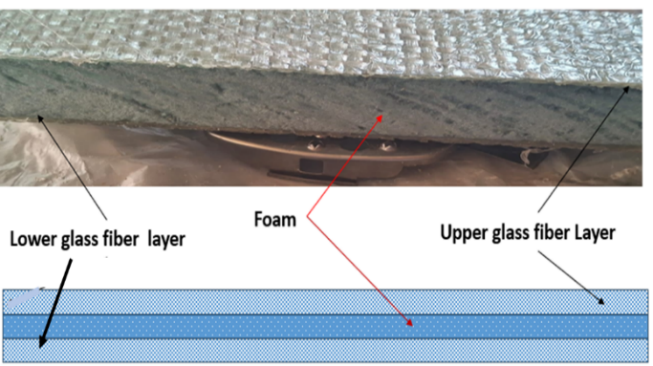
The sandwich panels consisted of glass fiber-reinforced polymer (GFRP) skins and Extruded Polystyrene foam core. The GFRP skins were fabricated using bidirectional E-glass woven fabric (areal weight approximately 800 g/m²) as reinforcement and Kemapoxy 150 RGL (supplied by Chemicals for Modern Building–- CMB, Egypt) as the epoxy matrix resin. Kemapoxy 150 RGL is a low-viscosity, solvent-free, two-component epoxy resin system specifically suited for laminating, infusion processes, and glass fiber-reinforced composites, offering high mechanical strength (tensile strength ≈ 85 MPa), good chemical resistance, and excellent wetting properties. The core material was rigid closed-cell extruded polystyrene foam with a density of 40–60 kg/m³, selected for its lightweight properties, thermal insulation, and compatibility with epoxy bonding. Three configurations of GFRP skins were prepared, varying the number of glass fiber layers per face: 1 layer, 2 layers, 3 layers, and 4 layers per skin (symmetric on top and bottom faces). This resulted in nominal skin thicknesses of approximately 2–4 mm per face, depending on the layer count (see Figure 1).
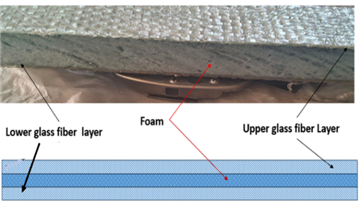
The sandwich panels were manufactured using the hand lay-up technique, which is ideal for low-viscosity resins like Kemapoxy 150 RGL to ensure complete fiber wetting and void minimization in GFRP foam sandwich structures. The fabrication process was as follows:
1. A flat mold was prepared, and the bottom GFRP skin was laid up by placing the required number of dry E-glass woven fabric layers (1, 2, 3, or 4 layers).
2. The pre-cut XPS(Extruded polystyrene) core block (thickness 25mm) was placed over the bottom dry fabric layers.
3. The top GFRP skin was laid up by placing the corresponding number of dry E-glass fabric layers over the foam core.
4. Kemapoxy 150 RGL epoxy resin (component A) was thoroughly mixed with its hardener (component B) in the recommended ratio.
5. The panels were cured at room temperature for 24 – 48 hours, followed by post-curing if required for optimal mechanical properties.
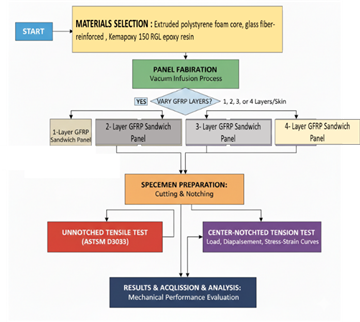
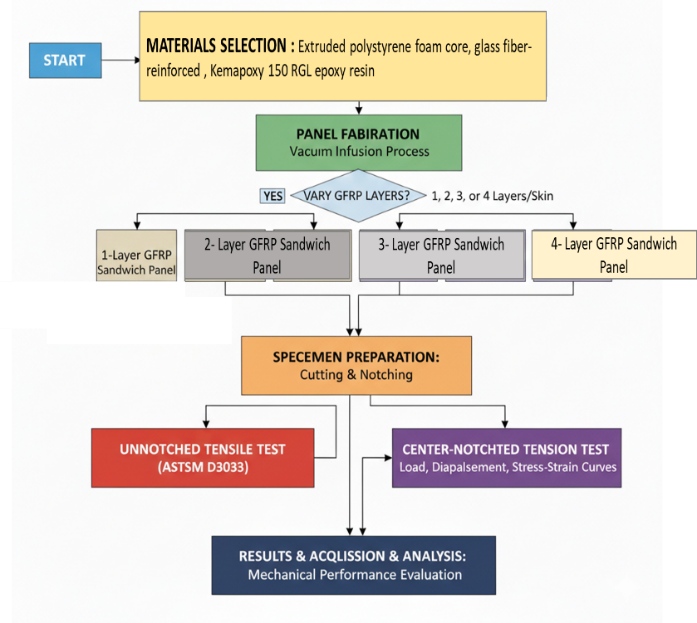
This one-step hand lay-up technique ensured simultaneous impregnation of both skins and strong interfacial adhesion to the XPS(Extruded polystyrene) foam core without the need for secondary bonding adhesives, reducing the risk of delamination. Panel dimensions were typically 600 mm × 600 mm (or larger for testing), with core thickness maintained constantly across configurations to isolate the effect of skin reinforcement layers. The described sandwich structure with GFRP skins and polystyrene foam core aligns with standard GRP foam sandwich panels, which commonly employ glass fiber reinforced plastic faces and lightweight foam cores for structural applications. The overall experimental workflow adopted in this study is illustrated in Figure 2.
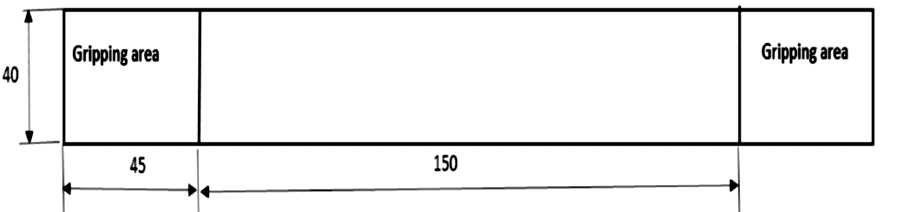
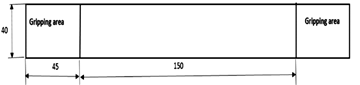
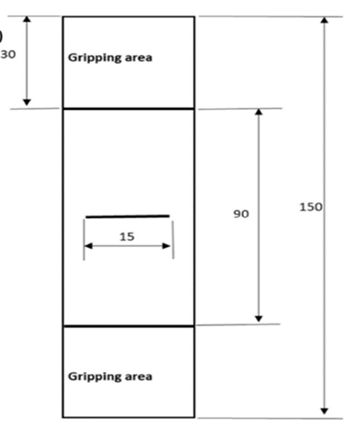
2.1. Tension TestThe unnotched tensile tests were conducted in accordance with ASTM D3039/D3039M 13 to determine the in-plane tensile properties of the epoxy-based GFRP/ polystyrene foam sandwich panels. The experiments were performed using a hydraulic universal testing machine (Zwick/Roell Z600H) 22. with a load capacity of 600 kN and a constant crosshead speed of 2 mm/min. A schematic of the specimen geometry is illustrated in Figure 3. To avoid slippage and prevent gripping-induced damage in the clamped regions, aluminum end tabs were bonded to both ends of the specimens.
The center-notched tension (CNT) test was employed to determine the mode I fracture toughness of the epoxy-based GFRP/ polystyrene foam sandwich panels, following established linear elastic fracture mechanics principles for multidirectional composites. This approach is based on the central notched specimen method, which has been widely recommended for multi-directional laminates due to its simplicity and effectiveness in measuring crack propagation behavior 15. The test measures the peak load at the onset of crack propagation from a central pre-notch, followed by calculation of the remote failure stress (σp).
The fracture toughness (KIC) is then computed using the following equation 14:
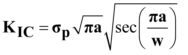 | (1) |
where σp is the remote failure stress, a is the half-crack length, and w is the specimen width. Additionally, the corresponding critical strain energy release rate (GIC) can be calculated as:
 | (2) |
where Eeq is the equivalent modulus of the sandwich panel.
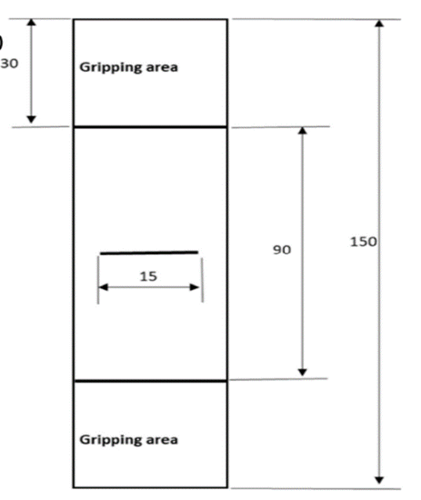
The notches were machined using a quartz disc saw, with a central crack introduced by fine sawing or tapping with a razor blade to ensure sharpness. Specimen geometry and dimensions are shown in Figure 4. Five specimens were tested per configuration, each with a width of 45 mm, total height of 90 mm, and a central crack length of 30 mm (half-length a = 15 mm), resulting in an approximate notch width of 3 mm. Aluminum end tabs were bonded to the clamping regions to prevent gripping damage and slippage during loading 15, 17. The tests were conducted on a computerized hydraulic universal testing machine (Zwick/Roell Z600H) with a maximum load capacity of 600 kN, at a constant crosshead speed of 2 mm/min. Both load and displacement were continuously recorded by the system throughout the test. This method aligns with established practices for evaluating fracture toughness in composite laminates, providing insights into notch sensitivity and crack propagation resistance in the GFRP-Xps sandwich structures.
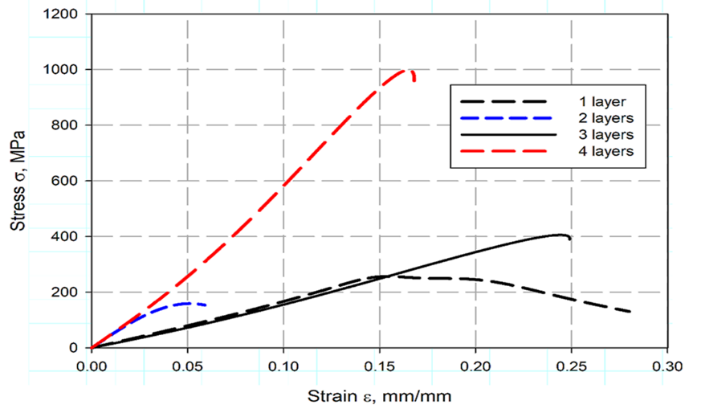
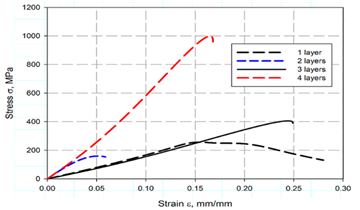
Figure 5 presents the representative stress–strain curves obtained from the unnotched tensile tests of the epoxy-based GFRP/XPS (Extruded polystyrene) foam sandwich panels with varying numbers of bidirectional E-glass woven fabric layers per skin (1, 2, 3, and 4 layers).
All configurations exhibited an initial linear elastic response dominated by the GFRP skins, as the XPS(Extruded polystyrene) foam core contributes negligibly to tensile stiffness and strength. The initial modulus increased progressively with the number of layers due to the higher fiber volume fraction in the load-bearing skins. The 1-layer configuration (black curve) displayed the lowest ultimate tensile strength (approximately 150 MPa) and the highest failure strain (~0.25). After the linear region, it showed mild nonlinearity followed by gradual softening and a prolonged post-peak plateau, where the stress remained above approximately 60–65% of the peak stress over a strain range of roughly ε = 0.16 to 0.23 indicating limited load-carrying capacity and more ductile overall behavior influenced by core deformation and skin yielding. The 2-layer configuration (blue curve) achieved a markedly higher peak stress (~300 MPa) at a reduced strain (~0.08), with a steeper initial slope and minimal nonlinearity before abrupt failure, reflecting improved stiffness and strength from additional reinforcement.
The 3-layer configuration (thick black curve) further increased the ultimate strength to ~ 450 MPa, maintaining a predominantly linear response up to near failure, followed by a slight drop-off, demonstrating efficient stress transfer and delayed damage initiation. The 4-layer configuration (red curve) exhibited the highest performance, with an ultimate tensile strength exceeding 950 MPa and failure occurring at approximately 0.28 strain. The curve is characterized by a prolonged linear elastic region up to ~ 800 MPa, followed by extended nonlinear deformation and gradual softening without a sharp drop, indicating substantial progressive damage tolerance and energy absorption prior to final rupture.
These results reveal a clear trend: increasing the number of glass fiber layers from 1 to 4 per skin dramatically enhances tensile strength (over 600% improvement) and stiffness, while shifting the failure mode from relatively brittle in thinner skins to highly damage-tolerant in the 4-layer configuration. The superior performance of the 4-layer panels is attributed to better load distribution, higher fiber content, and the activation of multiple energy-dissipating mechanisms before catastrophic failure.
Fractography Analysis
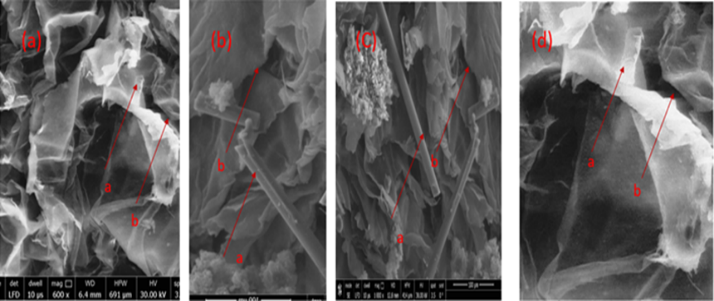
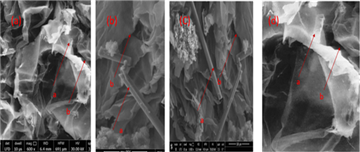
Scanning electron microscopy (SEM) images of the fracture surfaces post-tensile failure, shown in Figure 6, provide insights into the microscopic damage mechanisms. In image Figure 6a (one layer), fiber breaking is evident, with red arrows highlighting fractured glass fiber ends and clean breaks perpendicular to the loading direction, a common mode in high-stress regions where fiber tensile capacity is exceeded.
Figure 6b (two layers) depicts matrix cracking, characterized by jagged cracks propagating through the epoxy resin (arrows pointing to linear fissures), often initiating stress concentrations and contributing to the nonlinear curve portion. Additional observed failures include fiber pull-out in image Figure 6c (three layers), where arrows indicate exposed fiber pull-out observed in the three-layer configuration indicate localized interfacial debonding. The limited resin adherence on extracted fibers suggests that part of the fracture energy was dissipated through frictional sliding during pull-out, rather than solely through brittle fiber fracture. Figure 6d (four layers) reveals delamination, with arrows marking separation between fiber layers or at the skin-core interface, likely exacerbated in thicker skins (e.g., 4 layers) due to interlaminar shear stresses, correlating with reduce the structure’s ability to sustain load after peak stress. 26 27 28 29.
These mixed failure modes—fiber breaking, matrix cracking, fiber pull-out, and delamination—underscore the transition from skin-dominated tensile failure in fewer layers to interface-sensitive failure in multi-layer configurations, consistent with the stress-strain trends and emphasizing the need for optimized resin infusion and bonding in hand lay up -processed - sandwiches. The combined mechanical and microscopic observations suggest that failure mechanisms occurred sequentially with partial overlap. Matrix cracking initiated at low strain levels, followed by localized fiber–matrix debonding and fiber pull-out. As loading progressed, interlaminar delamination and skin–core interface separation became dominant, particularly in the 4-layer specimens, leading to final structural collapse.
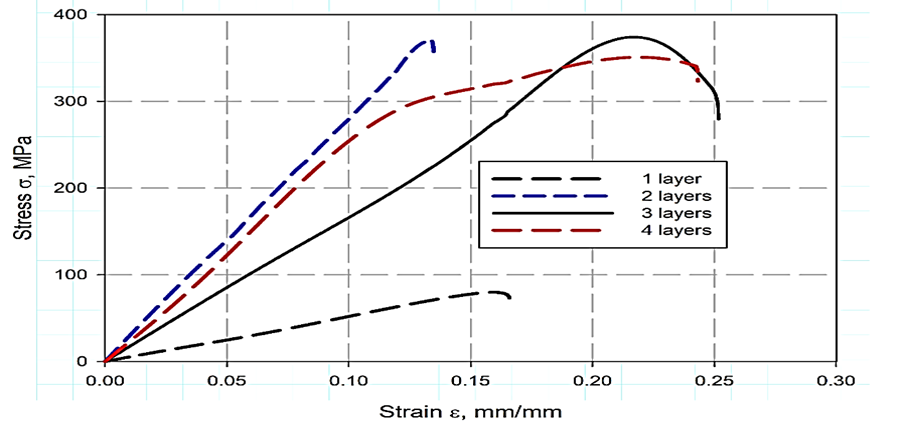
The stress–strain curves obtained from the center-notched tension tests are presented in Figure 7. The central notch introduced a significant stress concentration, leading to reduced overall strength compared to unnotched specimens, with failure initiating from crack propagation at the notch tip. The remote failure stress (σp) was determined as the peak stress for each configuration, and fracture toughness parameters were calculated using the provided equations.
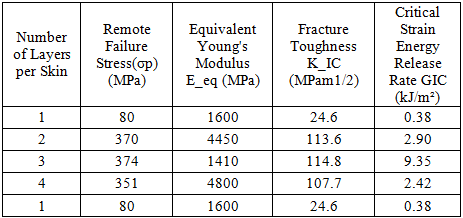
The results demonstrate that increasing the number of GFRP skin layers generally improves notched tensile performance, though with some anomalies: The 1-layer configuration exhibited the lowest peak remote stress (~80 MPa) at high strain (~0.16), with extended nonlinearity and gradual post-peak softening, indicative of limited crack resistance and more compliant behavior. The 2-layer configuration achieved a peak stress of ~370 MPa at lower strain (~0.134), showing higher stiffness and a sharper peak. The 3-layer configuration delivered the highest peak stress (~374 MPa), with balanced stiffness and prolonged linear response. The 4-layer configuration had a peak stress of ~351 MPa, despite good initial stiffness, suggesting minor processing inconsistencies (e.g., resin rich zones or slight misalignment) affecting notch sensitivity in thicker skins.
Overall, notched strength increased by over 360% from 1 to 3 layers, partially supporting the hypothesis, with the 4-layer slight drop likely attributable to fabrication variability rather than inherent material limits. Fracture toughness was evaluated using the Soutis-Fleck model for center-notched multidirectional composites:
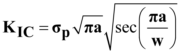 | (3) |
yielding a geometric factor of approximately 0.307 (with√πa≈0.217 and 1.414).
The equivalent Young's modulus (Eeq) for each configuration was estimated from the initial linear slope of the unnotched tension test stress–strain curves (from the provided tension test data), reflecting the effective stiffness of the sandwich structure.
The critical strain energy release rate (GIC) was then computed as:
 | (4) |
Fractography Analysis
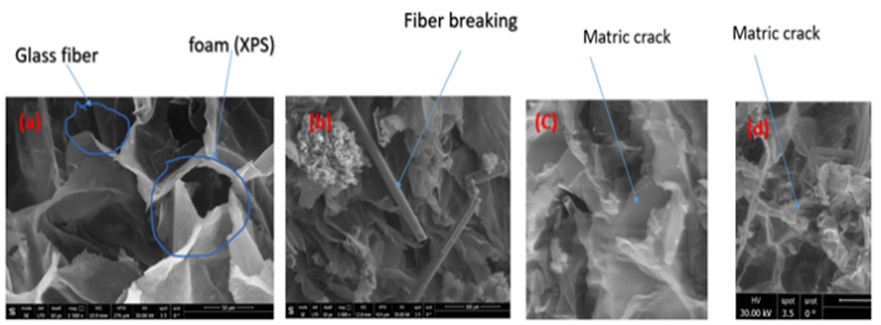
Scanning electron microscopy (SEM) images of the fracture surfaces near the crack tip in center-notched specimens are shown in Figure 10 for configurations with (a) 1 layer, (b) 2 layers, (c) 3 layers, and (d) 4 layers per skin.
The micrographs reveal distinct differences in dominant failure mechanisms as the number of GFRP skin layers increases, explaining the observed improvements in notched strength and fracture toughness. Figure 8(a) – 1 layer: The fracture surface is relatively smooth with large areas of exposed polystyrene s foam (XPS-like closed-cell structure circled in blue) and clean glass fiber breaks. The fibers exhibit brittle transverse fracture with minimal matrix adhesion or pull-out, indicating weak fiber-matrix interfacial bonding and limited energy dissipation. Failure appears to involve direct crack propagation through the thin skin and into the foam core, consistent with the low fracture toughness (KIC ≈ 24.6 MPa m 1/2) and brittle behavior observed in this configuration. Figure 8(b) – 2 layers: Fiber breaking remains prominent, but there is increased evidence of matrix cracking and rougher topography. Broken fiber ends are more irregular, and some resin fragments adhere to the fibers, suggesting improved load transfer between layers. The foam core is less exposed, indicating that the additional skin layer provides better confinement and delays core involvement in failure. This correlates with the substantial rise in (KIC to ~113.6 MPa m½). Figure 8(c) – 3 layers: The surface shows extensive matrix cracking with multiple branched cracks propagating in different directions.
Fiber fracture is still present, but the overall morphology is considerably rougher due to increased matrix deformation and splitting. This multi-site damage mechanism creates a larger process zone ahead of the crack tip, promoting higher energy absorption and explaining the peak fracture toughness (KIC ≈ 114.8 MPa m 1/2) and critical energy release rate (GIC ≈ 9.35 kJ/m²) achieved in this optimum configuration. Figure 8(d) – 4 layers:
Similar to the 3-layer case, dominant features include widespread matrix cracking and fiber breaking. However, the cracks appear slightly more localized, and there are signs of minor interlaminar separation within the thicker skin (not directly visible but inferred from reduced toughness relative to 3 layers). The slightly lower notched performance (KIC ≈ 107.7 MPa m 1/2) may be attributed to small processing-induced defects (e.g., incomplete wetting or void formation) in the thicker laminate, which facilitate easier crack deflection or delamination under the high stress concentration at the notch.
Overall, the transition from clean fiber breakage and foam exposure in thin skins to extensive matrix cracking and distributed damage in multi-layer skins demonstrates progressive activation of toughening mechanisms (matrix plasticity, crack branching, and fiber bridging). These microstructural observations fully support the macroscopic results, confirming that increasing GFRP skin layers up to three significantly enhances damage tolerance and resistance to crack propagation in center-notched polyesters foam-cored sandwich panels.
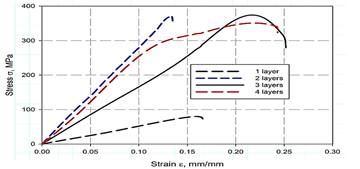
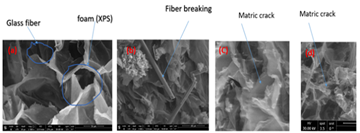
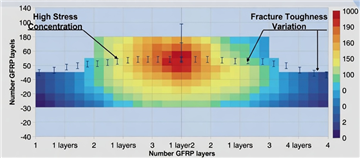
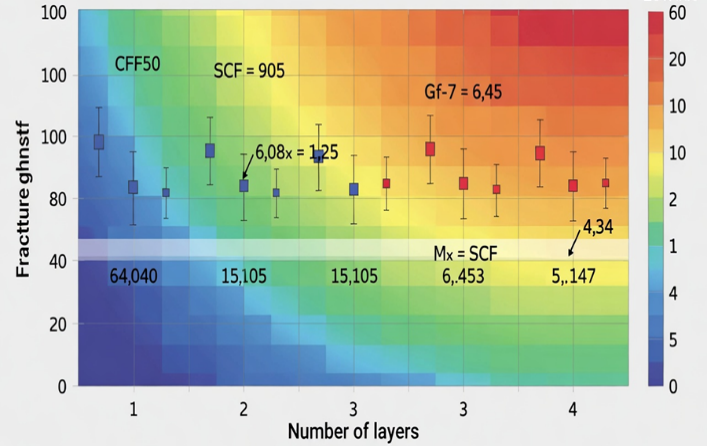
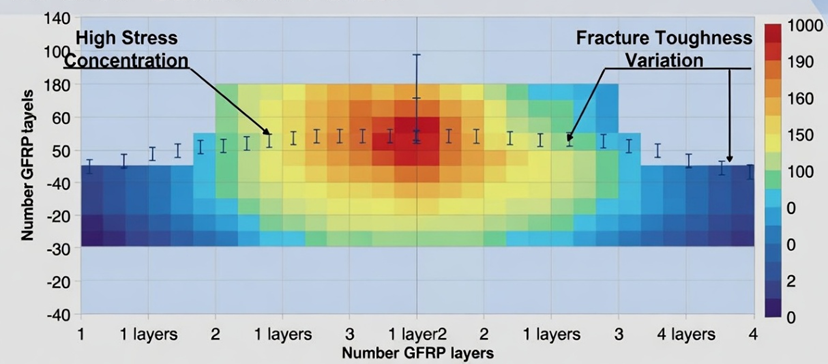
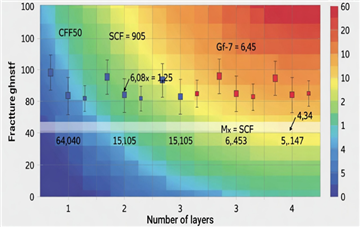
Figure 9 and Figure 10 illustrate the variation in fracture toughness of center-notched GFRP sandwich panels as a function of skin layer count (1–4 layers). The heatmaps show a clear transition from low toughness (blue) at 1–2 layers to higher toughness (yellow–red) with increasing layers, indicating improved resistance to crack propagation due to enhanced load redistribution and energy dissipation.
In Figure 9, a central high-intensity band highlights a toughness “hotspot” at higher layer counts, suggesting an optimal range around 3–4 layers. This behavior is attributed to mechanisms such as fiber bridging, matrix cracking, and delayed crack penetration into the foam core, while thinner skins exhibit brittle failure and low energy absorption. Despite some axis and labeling inconsistencies, the overall trend confirms a substantial toughness enhancement with added reinforcement.
Figure 10 provides clearer quantitative insight, combining heatmap gradients with bar overlays. Fracture toughness increases non-monotonically, peaking at approximately three layers before slightly declining at four layers, consistent with experimental KIC and GIC results. This suggests that three GFRP layers offer the best integrity, whereas excessive thickness may introduce interlaminar weaknesses.
Overall, both figures consistently demonstrate that three GFRP skin layers provide optimal fracture toughness in notched sandwich panels, marking a transition from brittle to damage-tolerant behavior and supporting their suitability for structural applications.
This study evaluated the mechanical performance of vacuum-infused epoxy-based GFRP / Extruded polystyrene foam sandwich panels with varying numbers of E-glass skin layers. Increasing the skin thickness significantly enhanced tensile strength, flexural rigidity, and fracture resistance, with unnotched tensile strength improving by over 600% from one to four layers and a clear transition from brittle to progressive failure. Flexural behavior showed higher load-carrying capacity and skin-dominated failure in multi-layer configurations. Center-notched tension tests revealed substantial improvements in damage tolerance, with remote failure stress increasing by more than 360% and peak fracture toughness and energy release rate (GIC ≈ 9.35 kJ/m²) achieved at three skin layers. SEM analysis confirmed the activation of matrix cracking, fiber bridging, and pull-out mechanisms in thicker skins. Overall, three GFRP layers per skin provide an optimal balance between strength, stiffness, and fracture toughness, offering effective design guidance for lightweight sandwich structures in marine, aerospace, and civil engineering applications. Increasing the number of GFRP layers significantly improved stiffness and ultimate strength, with the 4-layer configuration achieving the highest load capacity. However, thicker skins also generate higher interlaminar shear stresses, promoting delamination and resulting in a more abrupt post-peak response. Failure evolved progressively through matrix cracking, fiber pull-out, interfacial debonding, and eventual delamination.
Despite the valuable findings obtained in this study, several limitations should be acknowledged. First, only a single type of foam core material was investigated. Since core density, stiffness, and surface characteristics can strongly influence skin–core interaction and failure behavior, future work should examine different core materials and densities to better understand their role in overall sandwich performance.
| [1] | L. Almeida-Fernandes, J. R. Correia, and N. Silvestre, "Transverse fracture behavior of pultruded GFRP materials in tension: Effect of fiber layup," Journal of Composites for Construction, vol. 24, p. 04020033, 08 2020. | ||
| In article | View Article | ||
| [2] | M. Mohamed, S. Anandan, Z. Huo, V. Birman, and K. Chandrashekhara, "Flexural behavior and design of GFRP sandwich panels with polyurethane foam core," Construction and Building Materials, vol. 393, p. 132056, 08 2023. | ||
| In article | |||
| [3] | A. D. Almutairi, Y. Bai, and W. Ferdous, "Flexural behaviour of GFRP-softwood sandwich panels for prefabricated building construction," Polymers, vol. 15, p. 2102, 05 2023. | ||
| In article | View Article PubMed | ||
| [4] | H. Tuwair, J. Volz, M. A. ElGawady, M. Mohamed, K. Chandrashekhara, and V. Birman, "Testing and evaluation of polyurethane-based GFRP sandwich bridge deck panels with polyurethane foam core," Journal of Bridge Engineering, vol. 21, p. 04015033, 04 2016. | ||
| In article | View Article | ||
| [5] | Y. Karsandik, B. Sabuncuoglu, M. Sahin, and V. V. Silberschmidt, "Impact behavior of sandwich composites for aviation applications: A review," Composite Structures, vol. 314, p. 116941, 06 2023. | ||
| In article | View Article | ||
| [6] | K. Naresh, K. Shankar, R. Velmurugan, and N. K. Gupta, "Statistical analysis of the tensile strength of GFRP, CFRP and hybrid composites," Thin-Walled Structures, vol. 126, pp. 150-161, 05 2018. | ||
| In article | View Article | ||
| [7] | Z. Han, J. Jang, J. B. R. G. Souppez, M. Maydison, and D. Oh, "Environmental implications of a sandwich structure of a glass fiber-reinforced polymer ship," Ocean Engineering, vol. 298, p. 117122, 04 2024. | ||
| In article | View Article | ||
| [8] | P. Sharafi, S. Nemati, B. Samali, A. Bahmani, S. Khakpour, and Y. Aliabadizadeh, "Flexural and shear performance of an innovative foam-filled sandwich panel with 3-D high density polyethylene skins," Engineering Solid Mechanics, vol. 6, pp. 113-126, 2018. | ||
| In article | View Article | ||
| [9] | X. F. Yao, M. H. Kolstein, F. S. K. Bijlaard, W. Xu, and M. Xu, "Tensile strength and fracture of glass fiber-reinforced plastic (GFRP) plate with an eccentrically located circular hole," Polymer Testing, vol. 22, pp. 955-963, 12 2003. | ||
| In article | View Article | ||
| [10] | A. R. Torabi, M. A. Motamedi, B. Bahrami, M. Noushak, S. Cicero, and J. A. Álvarez, "Determination of translaminar notch fracture toughness for laminated composites using Brazilian disk test," Polymers, vol. 14, p. 3246, 08 2022. | ||
| In article | View Article PubMed | ||
| [11] | R. Shrivastava and K. K. Singh, "Interlaminar fracture toughness response of notched glass/epoxy composite," Materials Today: Proceedings, vol. 106, pp. 160-166, 2024. | ||
| In article | View Article | ||
| [12] | Z. Salleh, M. M. Islam, J. A. Epaarachchi, and H. Su, "Mechanical properties of sandwich composite made of syntactic foam core and GFRP skins," AIMS Materials Science, vol. 3, pp. 1704-1727, 2016. | ||
| In article | View Article | ||
| [13] | "ASTM D3039/D3039M-17 Standard Test Method for Tensile Properties of Polymer Matrix Composite Materials," 2017. | ||
| In article | |||
| [14] | J. C. Newman, Jr. and M. J. Haines, "Verification of stress-intensity factors for various middle-crack tension test specimens," Engineering Fracture Mechanics, vol. 72, pp. 1113-1118, 05 2005. | ||
| In article | View Article | ||
| [15] | C. Soutis, P. T. Curtis, and N. A. Fleck, "Compressive failure of notched carbon fibre composites," Proceedings of the Royal Society of London. Series A: Mathematical and Physical Sciences, vol. 440, pp. 241-256, 01 1993. | ||
| In article | View Article | ||
| [16] | N. P. Polyamide (PA, Processing and Applications. Special Chem– Plastics. Available at: https:// www.specialchem.com/ plastics/guide/polyamide-pa-nylon and a. D. 2025). | ||
| In article | |||
| [17] | Y. Mohammed, M. K. Hassan, H. A. El-Ainin, and A. Hashem, "Effect of stacking sequence and geometric scaling on the brittleness number of glass fiber composite laminate with stress raiser," Science and Engineering of Composite Materials, vol. 21, pp. 281-288, 2014. | ||
| In article | View Article | ||
| [18] | M. Al Ghazal, G. Chahine, and B. White, "Thermal and mechanical insights into sandwich structures: A comparison of XPS foam and Prisma composite cores," Journal of Sandwich Structures and Materials, vol. 27, pp. 1584-1602, 2025. | ||
| In article | |||
| [19] | T. P. Sah, A. W. Lacey, H. Hao, and W. Chen, "Numerical study of the shear performance of pultruded square glass fibre reinforced polymer connectors in composite prefabricated concrete sandwich panels," Journal of Building Engineering, vol. 119, p. 115262, 02 2026. | ||
| In article | View Article | ||
| [20] | V. K. Srivastava, "Impact behaviour of sandwich GFRP-foam-GFRP composites," International Journal of Composite Materials, vol. 2, pp. 63-66, 2012. | ||
| In article | View Article | ||
| [21] | S. M. R. Khalili, R. K. Mittal, and M. S. Kalani, "Study on flexural resilience of composite foam sandwich panels with polyurethane foam core," AIP Advances, vol. 14, p. 125105, 12 2024. | ||
| In article | View Article | ||
| [22] | Zwick/Roell, "Materials testing machine with hydraulic drive," 2022. | ||
| In article | |||
| [23] | M. K. Hassan, M. Y. Abdellah, S. K. Azabi, and W. Marzouk, "Fracture toughness of a novel GLARE composite material," International Journal of Engineering and Technology, vol. 15, pp. 36-41, 2015. | ||
| In article | |||
| [24] | M. K. Hassan, Y. Mohammed, and H. Abu El-Ainin, "Improvement of Al-6061 alloys mechanical properties by controlling processing parameters," International Journal of Mechanical and Mechatronics Engineering, vol. 12, pp. 22-29, 04 2012. | ||
| In article | |||
| [25] | H. Fouad, A.-H. I. Mourad, B. A. Alshammari, M. K. Hassan, M. Y. Abdallah, and M. Hashem, "Fracture toughness, vibration modal analysis and viscoelastic behavior of Kevlar, glass, and carbon fiber/epoxy composites for dental-post applications," Journal of the Mechanical Behavior of Biomedical Materials, vol. 101, p. 103456, 2020/01/01/ 2020. | ||
| In article | View Article PubMed | ||
| [26] | H. A. EI-Aini, Y. Mohammed, and M. K. Hassan, "Effect of mold types and cooling rate on mechanical properties of Al alloy 6061 within ceramic additives," in Second International conference of Energy Engineering; ICEE-2, 2010. | ||
| In article | |||
| [27] | M. Y. Abdellah, M. G. Sadek, H. Alharthi, and G. Abdel-Jaber, "Mechanical, thermal, and acoustic properties of natural fibre-reinforced polyester," Proceedings of the Institution of Mechanical Engineers, Part E: Journal of Process Mechanical Engineering, vol. 238, pp. 1436-1448, 2024. | ||
| In article | View Article | ||
| [28] | M. Y. Abdellah, "A comparative study to evaluate the essential work of fracture to measure the fracture toughness of quasi-brittle material," materials, vol. 15, 2022. | ||
| In article | View Article PubMed | ||
| [29] | A. F. G. Mohammed Y. Abdellah, Ahmed F. Mohamed, Ahmed Bakr Khoshaim, "Protection of limestone Coated with Different Polymeric Materials," American Journal of Mechanical Engineering, vol. 5, 2017. | ||
| In article | View Article | ||
| [30] | B. M. F. Mohammed Y. Abdellah , H. M. Abu El-Ainin, Mohamed K. Hassan, Ahmed H. Backar and A. F. Mohamed, "Experimental Evaluation of Mechanical and Tribological Properties of Segregated Al-Mg-Si Alloy Filled with Alumina and Silicon Carbide through Different Types of Casting Molds," metals, 2023. | ||
| In article | |||
Published with license by Science and Education Publishing, Copyright © 2026 Hanan S. Fahmy, Sara A. soliman, Abo-El Hagag A. Seleem, Mohammed Y. Abdellah and G. T. Abdel-Jaber
 This work is licensed under a Creative Commons Attribution 4.0 International License. To view a copy of this license, visit
http://creativecommons.org/licenses/by/4.0/
This work is licensed under a Creative Commons Attribution 4.0 International License. To view a copy of this license, visit
http://creativecommons.org/licenses/by/4.0/
| [1] | L. Almeida-Fernandes, J. R. Correia, and N. Silvestre, "Transverse fracture behavior of pultruded GFRP materials in tension: Effect of fiber layup," Journal of Composites for Construction, vol. 24, p. 04020033, 08 2020. | ||
| In article | View Article | ||
| [2] | M. Mohamed, S. Anandan, Z. Huo, V. Birman, and K. Chandrashekhara, "Flexural behavior and design of GFRP sandwich panels with polyurethane foam core," Construction and Building Materials, vol. 393, p. 132056, 08 2023. | ||
| In article | |||
| [3] | A. D. Almutairi, Y. Bai, and W. Ferdous, "Flexural behaviour of GFRP-softwood sandwich panels for prefabricated building construction," Polymers, vol. 15, p. 2102, 05 2023. | ||
| In article | View Article PubMed | ||
| [4] | H. Tuwair, J. Volz, M. A. ElGawady, M. Mohamed, K. Chandrashekhara, and V. Birman, "Testing and evaluation of polyurethane-based GFRP sandwich bridge deck panels with polyurethane foam core," Journal of Bridge Engineering, vol. 21, p. 04015033, 04 2016. | ||
| In article | View Article | ||
| [5] | Y. Karsandik, B. Sabuncuoglu, M. Sahin, and V. V. Silberschmidt, "Impact behavior of sandwich composites for aviation applications: A review," Composite Structures, vol. 314, p. 116941, 06 2023. | ||
| In article | View Article | ||
| [6] | K. Naresh, K. Shankar, R. Velmurugan, and N. K. Gupta, "Statistical analysis of the tensile strength of GFRP, CFRP and hybrid composites," Thin-Walled Structures, vol. 126, pp. 150-161, 05 2018. | ||
| In article | View Article | ||
| [7] | Z. Han, J. Jang, J. B. R. G. Souppez, M. Maydison, and D. Oh, "Environmental implications of a sandwich structure of a glass fiber-reinforced polymer ship," Ocean Engineering, vol. 298, p. 117122, 04 2024. | ||
| In article | View Article | ||
| [8] | P. Sharafi, S. Nemati, B. Samali, A. Bahmani, S. Khakpour, and Y. Aliabadizadeh, "Flexural and shear performance of an innovative foam-filled sandwich panel with 3-D high density polyethylene skins," Engineering Solid Mechanics, vol. 6, pp. 113-126, 2018. | ||
| In article | View Article | ||
| [9] | X. F. Yao, M. H. Kolstein, F. S. K. Bijlaard, W. Xu, and M. Xu, "Tensile strength and fracture of glass fiber-reinforced plastic (GFRP) plate with an eccentrically located circular hole," Polymer Testing, vol. 22, pp. 955-963, 12 2003. | ||
| In article | View Article | ||
| [10] | A. R. Torabi, M. A. Motamedi, B. Bahrami, M. Noushak, S. Cicero, and J. A. Álvarez, "Determination of translaminar notch fracture toughness for laminated composites using Brazilian disk test," Polymers, vol. 14, p. 3246, 08 2022. | ||
| In article | View Article PubMed | ||
| [11] | R. Shrivastava and K. K. Singh, "Interlaminar fracture toughness response of notched glass/epoxy composite," Materials Today: Proceedings, vol. 106, pp. 160-166, 2024. | ||
| In article | View Article | ||
| [12] | Z. Salleh, M. M. Islam, J. A. Epaarachchi, and H. Su, "Mechanical properties of sandwich composite made of syntactic foam core and GFRP skins," AIMS Materials Science, vol. 3, pp. 1704-1727, 2016. | ||
| In article | View Article | ||
| [13] | "ASTM D3039/D3039M-17 Standard Test Method for Tensile Properties of Polymer Matrix Composite Materials," 2017. | ||
| In article | |||
| [14] | J. C. Newman, Jr. and M. J. Haines, "Verification of stress-intensity factors for various middle-crack tension test specimens," Engineering Fracture Mechanics, vol. 72, pp. 1113-1118, 05 2005. | ||
| In article | View Article | ||
| [15] | C. Soutis, P. T. Curtis, and N. A. Fleck, "Compressive failure of notched carbon fibre composites," Proceedings of the Royal Society of London. Series A: Mathematical and Physical Sciences, vol. 440, pp. 241-256, 01 1993. | ||
| In article | View Article | ||
| [16] | N. P. Polyamide (PA, Processing and Applications. Special Chem– Plastics. Available at: https:// www.specialchem.com/ plastics/guide/polyamide-pa-nylon and a. D. 2025). | ||
| In article | |||
| [17] | Y. Mohammed, M. K. Hassan, H. A. El-Ainin, and A. Hashem, "Effect of stacking sequence and geometric scaling on the brittleness number of glass fiber composite laminate with stress raiser," Science and Engineering of Composite Materials, vol. 21, pp. 281-288, 2014. | ||
| In article | View Article | ||
| [18] | M. Al Ghazal, G. Chahine, and B. White, "Thermal and mechanical insights into sandwich structures: A comparison of XPS foam and Prisma composite cores," Journal of Sandwich Structures and Materials, vol. 27, pp. 1584-1602, 2025. | ||
| In article | |||
| [19] | T. P. Sah, A. W. Lacey, H. Hao, and W. Chen, "Numerical study of the shear performance of pultruded square glass fibre reinforced polymer connectors in composite prefabricated concrete sandwich panels," Journal of Building Engineering, vol. 119, p. 115262, 02 2026. | ||
| In article | View Article | ||
| [20] | V. K. Srivastava, "Impact behaviour of sandwich GFRP-foam-GFRP composites," International Journal of Composite Materials, vol. 2, pp. 63-66, 2012. | ||
| In article | View Article | ||
| [21] | S. M. R. Khalili, R. K. Mittal, and M. S. Kalani, "Study on flexural resilience of composite foam sandwich panels with polyurethane foam core," AIP Advances, vol. 14, p. 125105, 12 2024. | ||
| In article | View Article | ||
| [22] | Zwick/Roell, "Materials testing machine with hydraulic drive," 2022. | ||
| In article | |||
| [23] | M. K. Hassan, M. Y. Abdellah, S. K. Azabi, and W. Marzouk, "Fracture toughness of a novel GLARE composite material," International Journal of Engineering and Technology, vol. 15, pp. 36-41, 2015. | ||
| In article | |||
| [24] | M. K. Hassan, Y. Mohammed, and H. Abu El-Ainin, "Improvement of Al-6061 alloys mechanical properties by controlling processing parameters," International Journal of Mechanical and Mechatronics Engineering, vol. 12, pp. 22-29, 04 2012. | ||
| In article | |||
| [25] | H. Fouad, A.-H. I. Mourad, B. A. Alshammari, M. K. Hassan, M. Y. Abdallah, and M. Hashem, "Fracture toughness, vibration modal analysis and viscoelastic behavior of Kevlar, glass, and carbon fiber/epoxy composites for dental-post applications," Journal of the Mechanical Behavior of Biomedical Materials, vol. 101, p. 103456, 2020/01/01/ 2020. | ||
| In article | View Article PubMed | ||
| [26] | H. A. EI-Aini, Y. Mohammed, and M. K. Hassan, "Effect of mold types and cooling rate on mechanical properties of Al alloy 6061 within ceramic additives," in Second International conference of Energy Engineering; ICEE-2, 2010. | ||
| In article | |||
| [27] | M. Y. Abdellah, M. G. Sadek, H. Alharthi, and G. Abdel-Jaber, "Mechanical, thermal, and acoustic properties of natural fibre-reinforced polyester," Proceedings of the Institution of Mechanical Engineers, Part E: Journal of Process Mechanical Engineering, vol. 238, pp. 1436-1448, 2024. | ||
| In article | View Article | ||
| [28] | M. Y. Abdellah, "A comparative study to evaluate the essential work of fracture to measure the fracture toughness of quasi-brittle material," materials, vol. 15, 2022. | ||
| In article | View Article PubMed | ||
| [29] | A. F. G. Mohammed Y. Abdellah, Ahmed F. Mohamed, Ahmed Bakr Khoshaim, "Protection of limestone Coated with Different Polymeric Materials," American Journal of Mechanical Engineering, vol. 5, 2017. | ||
| In article | View Article | ||
| [30] | B. M. F. Mohammed Y. Abdellah , H. M. Abu El-Ainin, Mohamed K. Hassan, Ahmed H. Backar and A. F. Mohamed, "Experimental Evaluation of Mechanical and Tribological Properties of Segregated Al-Mg-Si Alloy Filled with Alumina and Silicon Carbide through Different Types of Casting Molds," metals, 2023. | ||
| In article | |||