In this study, the VAWT made from the Gorlave turbine was only able to rotate at 40 – 60 with a water speed of 0.8 – 1.5 m/s, where this speed was felt to be too small. The research took place in 2011, and by using a 500 W Ginlong generator (GL-PMG-500A), and based on the rotational performance characteristics of the generator it had to be improved. Before using sophisticated systems such as internal gears, planetary gears, the chain and sprocket systems need to be tested. To get the required increase in rotation, 1 sets of box gears are installed added which are often found on pedal bikes. The sprocket system generally has an efficiency in the range of 93-98% under optimal conditions, depending on various factors such as T radius etc. Because of the limitations to directly conduct experimental studies on the flow of water that produces the rotation of the turbine wheel. So that this measurement was carried out in the laboratory, using an electric motor placed on a turbine. This rotation will be forwarded to the gear box and compared with the results of theoretical studies. Thus, the efficiency of the experiment can also be calculated. This method provides a practical and accurate way to determine the turbine gear box efficiency at the design stage to increase the gear box output efficiency. With this chain system method a significant increase is obtained.
This study describes the creation of a system for increasing the rotational speed of a turbine (Vertical Axis Water Turbine) using a chain and sprocket so that the rotational speed of the generator shaft increases so as to produce ideal electricity. The use of this dispositive is the first step towards proving the effectiveness of this technology before using the internal gear and planetary gear. The reason for using a chain sprocket is because the theoretical turbine power with current technology is still small, the power available in a maximum flow is around 1000 Watts. Due to the low absorbed power, it is inefficient to use large gears due to the low driving force. Therefore, this study aims to design a power transmission system using a bicycle chain and sprocket. If this research is successful, it will use an internal gear system and an internet system that will regulate the gears. 1
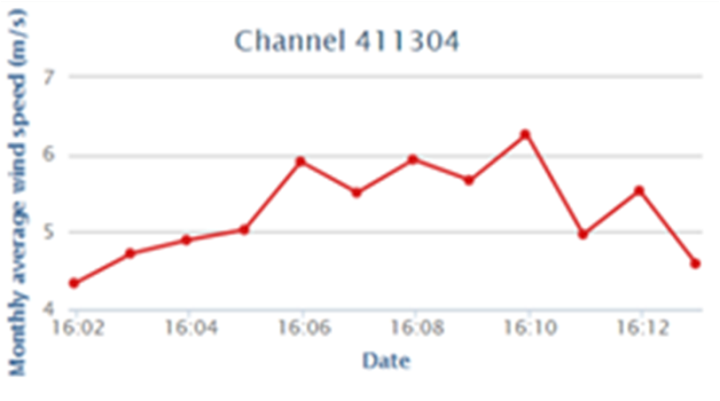
Because the location of the Gorlove water turbine (Vertical Axis Water Turbine) is placed up to 100 m from the shoreline, an internet system (IOT) is needed to be able to manage it. Thus the turbine management system can be placed on land by building a control room not far from the turbine. With advances in technology, this certainly encourages many researchers to participate in research. 2 Because the control factor is very repetitive and depends on the amount of flow around the turbine, the use of internet think is the right solution. In Figure 1 it can be seen how the variations of the waves with respect to the direction and magnitude of the wind are closely related. Variations in ocean currents on the surface are influenced by existing winds and are correlated. 3
The area between land and sea, which is better known as the beach, has prospective water flows for turbine placement. Disha, et al in their paper using NACA0018 turbine blades and in CFD simulations show that the profile is more efficient in generating power in the rotation process. 4 S. Abdolkarim Payambarpour, et al., used three alternatives in the manufacture of pipe turbines. 5 The flow of energy will decrease which will then be added again from wind or heat which is then called renewable energy. It is clear that many researchers have tried as far as possible to recover the observed fluid flows in the environment.
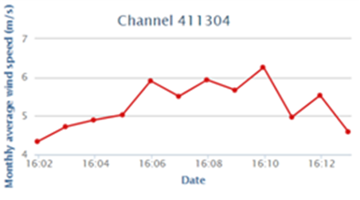
Based on Figure 1, that sea fluid in several directions tends to change as well as its energy. Likewise, the energy contained in the fluid flow will change in other forms, for example from current energy, converted into non-renewable electrical energy with the help of a turbine. Indonesia is a country that has a lot of renewable energy potential, one of which is ocean current energy. 6 Therefore, research related to renewable energy (sea water currents) continues to be developed.
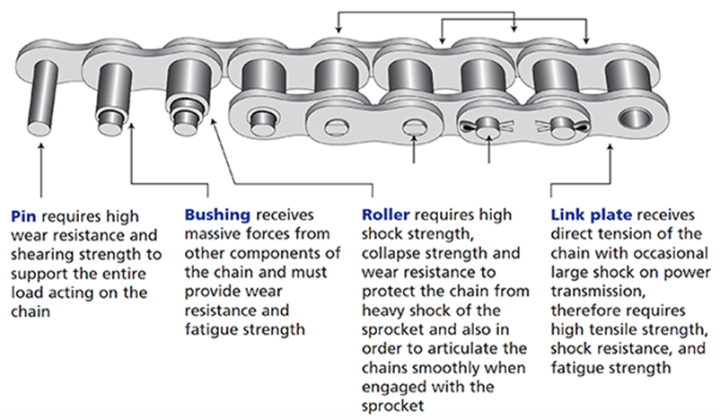
Based on preliminary research (2011) in the Jatiluhur irrigation channel testing the Gorlove helical turbine, it is known that the water velocity ranges from 0.8 - 1.5 m/s. In this study, the electrical energy obtained is 140 – 210 W, so based on the initial calculations used, the efficiency of the gear box is only 48% (using gears). This value is still small for using gearbox systems which generally produce between 85% to 92% efficiencies and for transferring large amounts of power or force. In this study, the gear box uses internal chains and chains because the power or force transmitted is not large. Figure 2 shows the components of a gear, and how friction occurs in the chain.
Bicycle chains and sprockets are the most common types of power transmission, used for transmitting mechanical power at a small range of power. The technology functions with the presence of toothed wheels called sprockets. It is a simple, reliable and efficient way to transmit power for small forces.

Sprockets, bicycle chains are generally made of general materials that do not necessarily get special treatment, such as heat treatment. The material is selected based on the required strength and stiffness. Generally made of alloy steel, so it contains the element carbon 7. Today there are many choices of chains due to advances in technology. The selection of products that have applied technology, such as heat treatment, weight, noise, etc., will certainly increase costs. 8
The superior characteristics of the component chain and sprocket are obtained based on the established heat treatment process. Heat treatment of these components is directed towards the physical properties of the material, thereby increasing the strength and wear characteristics of the chain while maintaining adequate toughness and ductility for the application. Meanwhile, in the manufacture of a gear box with a chain and sprocket, it is necessary to use the applicable standard formula to determine the length of the chain, the load on the chain, the gear ratio, and efficiency. 9, 10
The manufacturing process carried out in the manufacture of the gear box in this study is in the form of measuring, cutting, welding, turning. cleaning, cutting etch and other work. apart from that work and the most time consuming is assembly and functionality. Its functionality is not very difficult in theory, but requires a high level of pressure. In this section, the basic formulas related to chains and sprockets are also written.
The manufacturing process carried out in the manufacture of the transmission system in this study is in the form of measuring, cutting, welding, turning. cleaning, cutting etch and other work. apart from that work and the most time consuming is assembly and functionality. Its functionality is not very difficult in theory, but requires a high level of pressure. In this section, the basic formulas related to chains and sprockets are also written.
As a mover, the bicycle chain experiences a lot of wear due to friction with the sprocket. Over time, distance, and conditions, the rivets and rollers begin to wear out, causing the chain to actually lengthen. So if the chain is tighter then it's time to replace it. If stretched any further, it will most likely damage your gears.
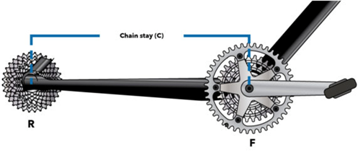
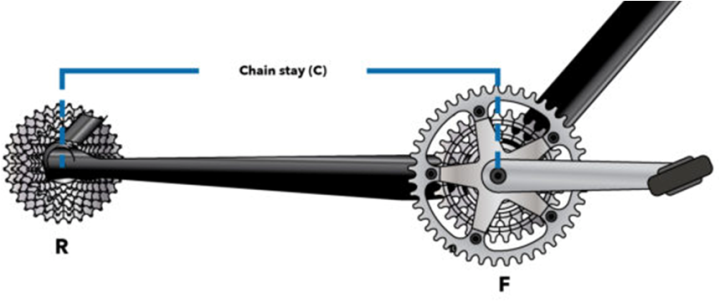
In this study the chain length can be determined from a simple equation, as stated in Eq. (1) it should be noted that only the inner plate to the outer plate of the chain should be joined. Thus it can only calculate increments of a full inch
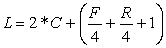 | (1) |
The gear ratio is the number of revolutions of the driving gear with the number of revolutions of the driven gear. The relationship between the speed input to the gearbox and the output speed sent to the driven load is usually referred to as the gear ratio. One of the simplest ways to determine the gear ratio is to take the gear ratio of the driven gear to the gear ratio of the drive gear. The product of the number of teeth and the rotational speed must be the same for the drive gear and the driven gear. From this we can see that the ratio of the number of teeth in each gear is the same as the inverse ratio of the speed of each gear

 | (2) |
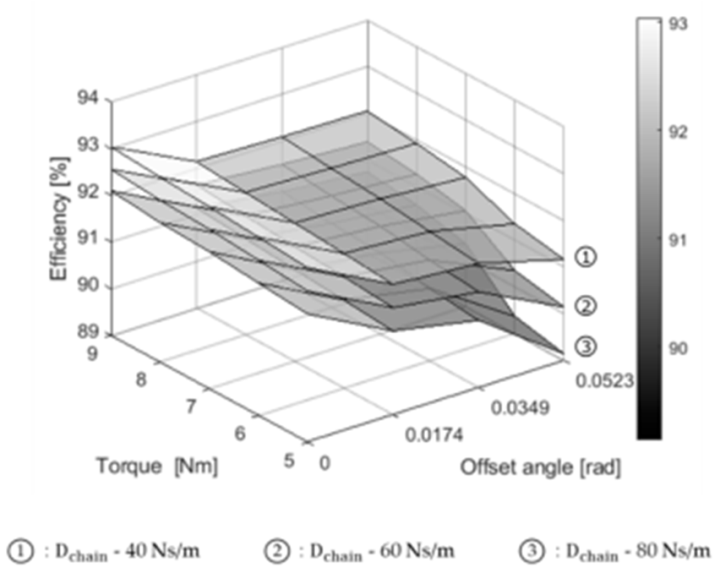
Because the formula for determining the efficiency of the sprocket and chain is so complicated, in this study it is displayed in a curve as shown in Figure 5.
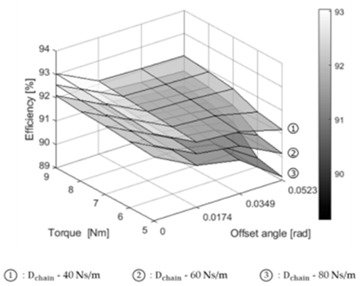
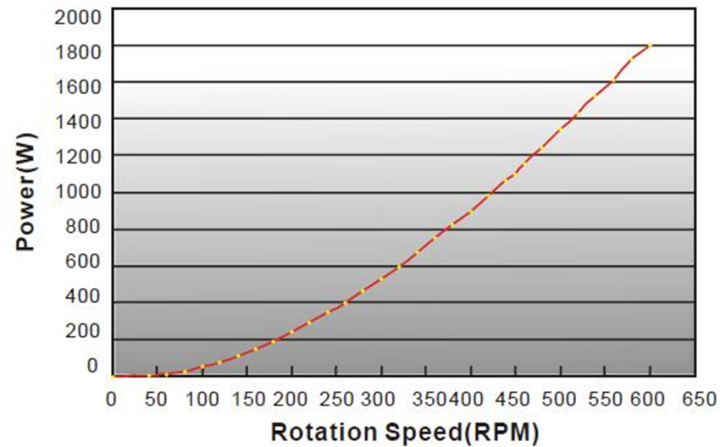
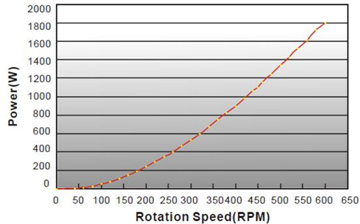
Looking at the curve in Figure 5, it is known that the efficiency of the sprocket and chain circuit will increase with increasing torque and decreasing offset angle [rad]. Both of these quantities continue to be considered to find the ideal blade. However, from the curve in Fig.6, it can be clearly observed that the power vs rotation relationship curve is non-linear, i.e. the greater the rotation, the higher the turbine power.
The purpose of this research is to get a higher rotational speed so that the electric generator can rotate faster. The increase in rotational speed will make the generator rotation speed increase, for example from 60 RPM it can be around 120 RPM or more. Thus it will produce increased electrical energy as can be seen in the curve of Figure 6. On the graph it can be seen that the 2x increase will produce more power than this value. The curve that is formed is not a linear curve but is nonlinear as can be observed in the curve.
Referring to Figure 1 it is known that VAWT requires a special system that can adjust the gear position which is regulated using IOT so that the rotation speed can change according to the fluid velocity. This is to avoid the emergence of regulatory problems autonomously. Thus, it is expected that an increase in rotational speed is greater than 100%.
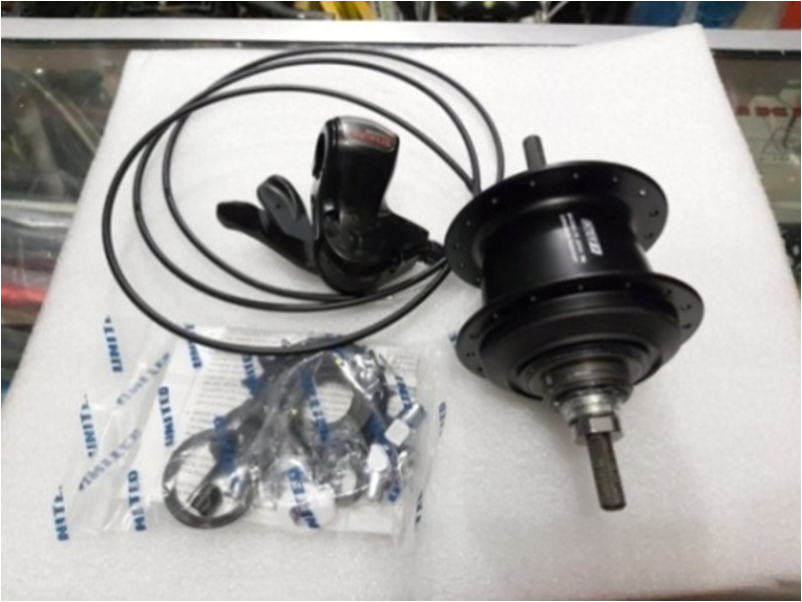
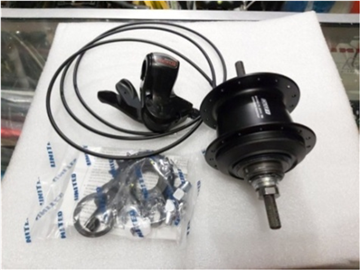
In this study it was also observed that the internal gear of the bicycle can be used. Internal gear is gear that is in a closed container so it is safer from dirt and damage. Internal gear hubs are more durable than derailleurs, although maintenance is less frequent. Shifting gears can also be done at any time, at rest, moves effortlessly without force, and is easy to assemble. With a neater shape, neat and can be used for many purposes. Figure 5, shows one of the internal gear components
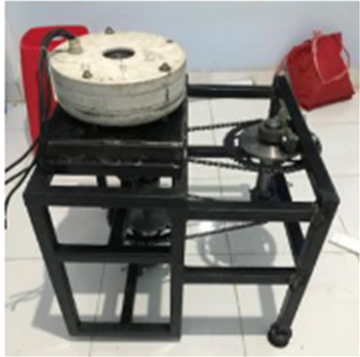
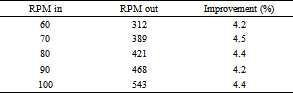
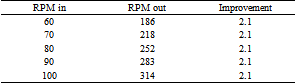
Because on the chain and sprocket a lot of material and workmanship is carried out, there is a machine to test and compare them. Apart from the material and treatment, this product is also very dependent on its geometry so it needs testing. Apart from its function, the load will also affect it apart from the working load. In this study, all of these problems will be skipped because the goal of this research is to produce an increase in speed. In Table 1, the results of the research achieved using a gear box from a chain and sprocket are shown.
By observing the test results, in Table 1 and Table 2 it is possible to use the internal gears better than the SHIMANO NEXUS as shown in Figure 5. Historically, the Internal hub gear was invented earlier than the derailleur. Seward Thomas Johnson patented internal gear since 1895, while the new derailleur patented since 1905 by Paul de Vivie. When first patented, both types of hubs had only two speeds.
Therefore, looking at the general advantages of internal gears, it can be seen that the transmission ratio is high in small overall dimensions. Thus, by obtaining a product that is very compact and with a high transmission ratio, more people are attracted. Disruption phenomenon; contact ratio; the transmission ratio is an aspect that must be analyzed very carefully in the case of internal gears with a small number of gear differences. In this paper, a brief overview of the current trend to count and study the teeth of small tooth number differences has not been considered. 12
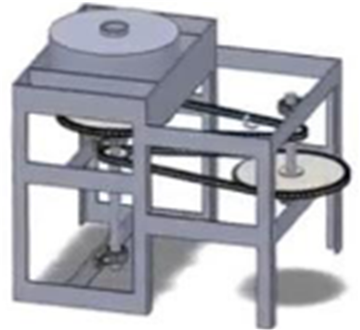
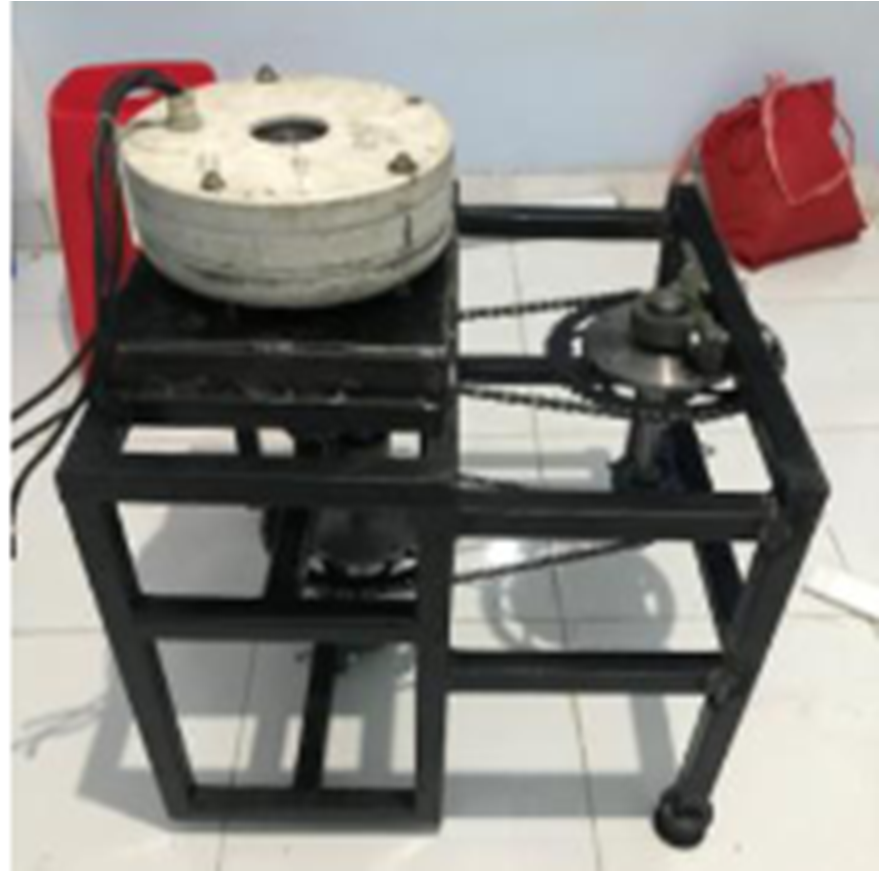
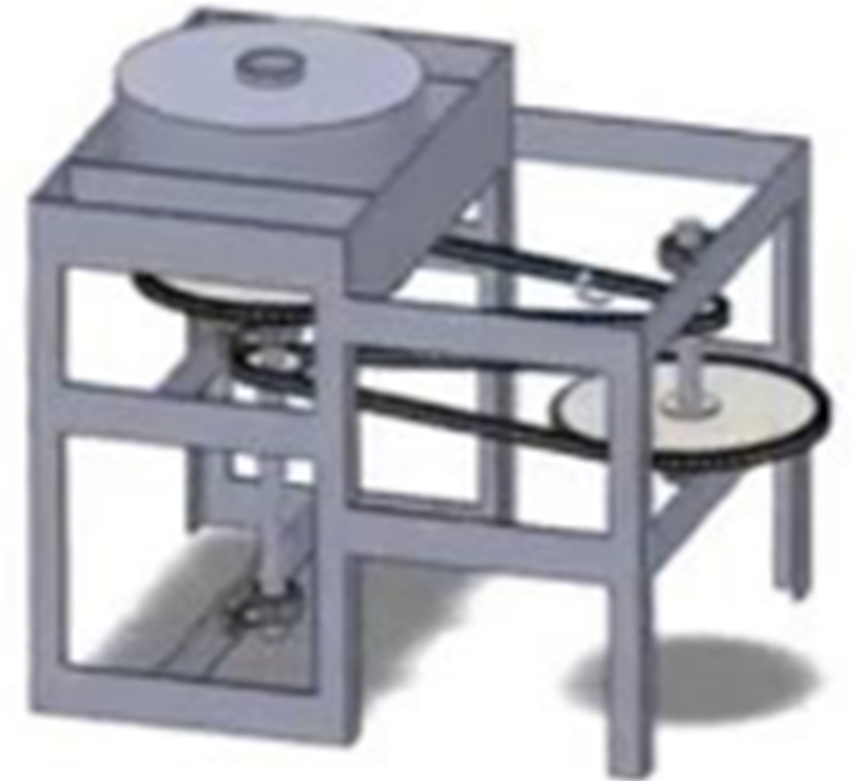
The load from the generator provides a large drag force, therefore it is also carried out in this study. This is to get the mathematical function so that it can support future research. The product obtained in the design is shown in Figure 6, while the results of manufacture and modification are shown in Figure 4.
Because it takes a lot of energy to rotate the generator, it requires a mathematical function. This equation is also a criterion for determining the results of the work. With the gain of an increase of 2.1 times from the initial RPM of the turbine, the third step has shown positive results. This study needs to be presented by adding the power loss factor to rotate the turbine.
Because of the test results even in the laboratory to be able to simulate turbine rotation every 10 RPM, from 60RPM. In these tests the output of the turbine or generator can be measured properly. It is known that the increase in rotational speed reaches even more than 2 times, thus this research must be continued with the use of a better internal gear speed. In addition, it is necessary to explore the use of IoT in order to use automated systems
L: length of chain in inches (rounded to the nearest inch)
C: chain stay, Measure to the closest ⅛
F: Front chainring
R: Rear cog
Z1: Number of teeth on driving gear
Z2: Number of teeth on driven gear
W1: Speed of driving gear
W2: Speed of driven gear
This research is supported by Polban. We are grateful to those supporters, who provided trust and expertise that greatly assisted this research, even though they may not agree with all of the interpretations/conclusions of this paper.
| [1] | Sheng-Peng Zhang, et.al., Efficiency Evaluation of Electric Bicycle Power Transmission Systems, Sustainability 2021, 13, 10988. | ||
| In article | View Article | ||
| [2] | Lina Alhmoud, et.al., IoT Applications in Wind Energy Conversion Systems, De Gruyter, 2019; 9: 490-499. | ||
| In article | View Article | ||
| [3] | Milla M., et. al., Correlation of wind waves and sea level variations on the coast of the seasonally ice-covered Gulf of Finland. Natural Hazards and Eart Systems, 17 March 2021. | ||
| In article | |||
| [4] | Disha R. Verma, et al., Horizontal Axis Water Turbine: Generation and Opti-mization of Green Energy, International Journal of Applied Engineering Research ISSN 0973-4562 Volume 13, Number 5 (2018) pp. 9-14. | ||
| In article | |||
| [5] | S. Abdolkarim Payambarpour, et al., Investigation of Blade Number Effect on Hydraulic Performance of In-Pipe Hydro Savonius Turbine, Hindawi International Journal of Rotating Machinery Volume 2019, Article ID 8394191, 14 pages. | ||
| In article | View Article | ||
| [6] | Aris Ansori, et. al., Renewable Energy Conversion with hybrid Solar Cell and Fuel Cell, Proceeding The 1st IBSC: Towards The Extended Use Of Basic Science For Enhancing Health, Environment, Energy And Biotechnology ISBN: 978-602-60569-5-5. | ||
| In article | |||
| [7] | Aman Sharma, et. al., An analytical study of mechanical power transmitting by utilizing CATIA and ANSYS techniques, European Journal of Molecular & Clinical Medicine, Volume 7, Issue 4, 2020, ISSN 2515-8260. | ||
| In article | |||
| [8] | Gaurav Soni, Effect of Tempering Heat Treatment Process Parameters on Power Transmission Chain Parts Made Up of SAE 1050, International Journal of Engineering Research & Technology (IJERT), Vol. 2 Issue 12, December – 2013, ISSN: 2278-0181. | ||
| In article | |||
| [9] | Gangsar S.W., Rancang Bangun Sistem Transmisi Daya Menggunakan Rantai Pada Turbin Savonius, TA Mahasiswa, file:///F:/Journal/TA/Gangsar/catatan_TA/jbptppolban-gdl-gangsarsat-7284-1-kelengka-4.pdf. | ||
| In article | |||
| [10] | Jourast T H, Rancang Bangun Alat Peningkatan Kecepatan Putar Turbin Air Gorlov Dengan Penambahan Internal Gear Hub, TA Mahasiswa. | ||
| In article | |||
| [11] | Ross et al., United States Patent, Machine for Testing Chain and Sprocket Type Drive Systems, 4,413,513, Nov. 8, 1983. | ||
| In article | |||
| [12] | S Macovei, et.al., An overview on internal geared mechanisms with small difference between teeth number, Modern Technologies in Industrial Engineering (ModTech2015), 95 (2015) 012053. | ||
| In article | View Article | ||
Published with license by Science and Education Publishing, Copyright © 2023 Carolus Bintoro, Vicky Wuwung and Yohanes Sinung Nugroho
 This work is licensed under a Creative Commons Attribution 4.0 International License. To view a copy of this license, visit
http://creativecommons.org/licenses/by/4.0/
This work is licensed under a Creative Commons Attribution 4.0 International License. To view a copy of this license, visit
http://creativecommons.org/licenses/by/4.0/
| [1] | Sheng-Peng Zhang, et.al., Efficiency Evaluation of Electric Bicycle Power Transmission Systems, Sustainability 2021, 13, 10988. | ||
| In article | View Article | ||
| [2] | Lina Alhmoud, et.al., IoT Applications in Wind Energy Conversion Systems, De Gruyter, 2019; 9: 490-499. | ||
| In article | View Article | ||
| [3] | Milla M., et. al., Correlation of wind waves and sea level variations on the coast of the seasonally ice-covered Gulf of Finland. Natural Hazards and Eart Systems, 17 March 2021. | ||
| In article | |||
| [4] | Disha R. Verma, et al., Horizontal Axis Water Turbine: Generation and Opti-mization of Green Energy, International Journal of Applied Engineering Research ISSN 0973-4562 Volume 13, Number 5 (2018) pp. 9-14. | ||
| In article | |||
| [5] | S. Abdolkarim Payambarpour, et al., Investigation of Blade Number Effect on Hydraulic Performance of In-Pipe Hydro Savonius Turbine, Hindawi International Journal of Rotating Machinery Volume 2019, Article ID 8394191, 14 pages. | ||
| In article | View Article | ||
| [6] | Aris Ansori, et. al., Renewable Energy Conversion with hybrid Solar Cell and Fuel Cell, Proceeding The 1st IBSC: Towards The Extended Use Of Basic Science For Enhancing Health, Environment, Energy And Biotechnology ISBN: 978-602-60569-5-5. | ||
| In article | |||
| [7] | Aman Sharma, et. al., An analytical study of mechanical power transmitting by utilizing CATIA and ANSYS techniques, European Journal of Molecular & Clinical Medicine, Volume 7, Issue 4, 2020, ISSN 2515-8260. | ||
| In article | |||
| [8] | Gaurav Soni, Effect of Tempering Heat Treatment Process Parameters on Power Transmission Chain Parts Made Up of SAE 1050, International Journal of Engineering Research & Technology (IJERT), Vol. 2 Issue 12, December – 2013, ISSN: 2278-0181. | ||
| In article | |||
| [9] | Gangsar S.W., Rancang Bangun Sistem Transmisi Daya Menggunakan Rantai Pada Turbin Savonius, TA Mahasiswa, file:///F:/Journal/TA/Gangsar/catatan_TA/jbptppolban-gdl-gangsarsat-7284-1-kelengka-4.pdf. | ||
| In article | |||
| [10] | Jourast T H, Rancang Bangun Alat Peningkatan Kecepatan Putar Turbin Air Gorlov Dengan Penambahan Internal Gear Hub, TA Mahasiswa. | ||
| In article | |||
| [11] | Ross et al., United States Patent, Machine for Testing Chain and Sprocket Type Drive Systems, 4,413,513, Nov. 8, 1983. | ||
| In article | |||
| [12] | S Macovei, et.al., An overview on internal geared mechanisms with small difference between teeth number, Modern Technologies in Industrial Engineering (ModTech2015), 95 (2015) 012053. | ||
| In article | View Article | ||