Pasteurella multocida is a gram-negative coccobacillus that causes a spectrum of illnesses. P multocida lives as commensal bacteria in the upper respiratory tracts of fowl and mammals. Infections most commonly result from cat or dog bites; however, direct inoculation via saliva has been reported. Although the majority of P. multocida infections manifest in skin and soft tissue, it may cause bacteremia with disseminated infection in an immunocompromised host. Dissemination is responsive to treatment but carries a significant mortality risk of about 30%. We present a case of a 46 year old male with type 2 diabetes mellitus, coronary artery disease and chronic kidney disease with stage 4 neuropathic heel ulcer who presented with hypothermia and chills. One day into admission, 4/4 blood culture bottles were positive for Pasteurella multocida. MRI of the foot was concerning for osteomyelitis which was confirmed via I&D. The patient did report having a dog and a cat at home, but adamantly denied any bites from either animal. Examination of his boot used for support with his foot containing the ulcer revealed extensive animal hair stuck to the boot. It was deemed likely that the route of inoculation occurred from contamination of his neuropathic ulcer from his dog’s saliva, likely from a lick, for which his diabetic neuropathy may have impaired initial sensation of the contamination. The patient was treated with ampicillin-sulbactam while admitted and discharged with oral levofloxacin 6 week course for residual osteomyelitis.
Pasteurella multocida is a gram-negative coccobacillus that causes a spectrum of illnesses. P multocida lives as commensal bacteria in the upper respiratory tracts of fowl and mammals 1. Worldwide, an estimated 70-90% of cats and 20-50% of dogs carry the microbe. Infections most commonly result from cat or dog bites; however, direct inoculation via contaminated saliva has been reported 2, 5, 6. Although the majority of P. multocida infections manifest in skin and soft tissue, many complications have been identified especially in immunocompromised patients 1, 3, 4. Associated bacteremia is rare but carries a significant mortality rate 3.
A 46-year-old male with history of coronary artery disease, chronic kidney disease stage IV and type II diabetes mellitus complicated by neuropathy and chronic heel ulcer with tracking to bone presented to the emergency department in our inner city university hospital after he was found to be lethargic in his work office. He endorsed fevers and chills.
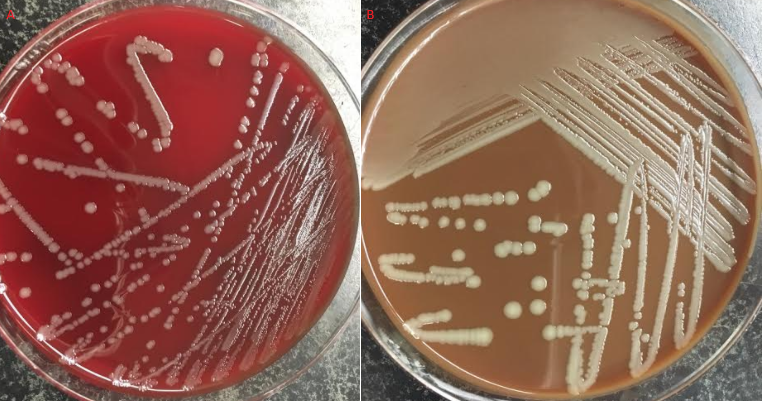
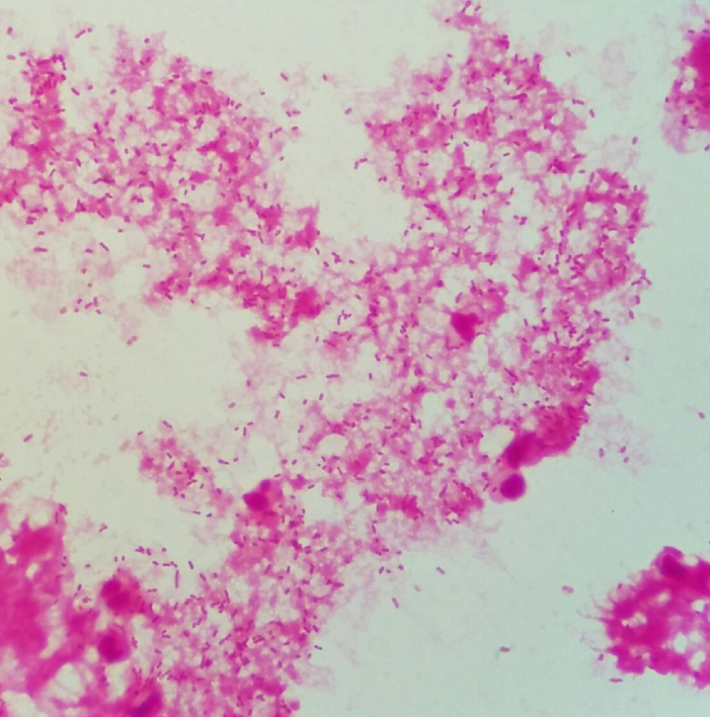
The patient had a temperature of 101.9 deg F, had a heart rate of 95 beats/minute, and a blood pressure of 166/75. His physical examination was notable for warmth, erythema, and tenderness to palpation in the area surrounding his left lower extremity heel ulcer. His admission labs revealed a leukocytosis to 16,600 with 92.9% neutrophils, 11% bands. Two sets of blood cultures were obtained prior to initiating empiric broad spectrum antibiotics for concern of infected diabetic foot ulcer. Initial gram stain of both sets of blood cultures revealed gram negative rods (Figure 1). MRI of the foot was concerning for calcaneal osteomyelitis prompting incision and debridement with bone biopsy and subsequent wound vac application. Bone consistency was soft in the region correlating with MRI findings of osteomyelitis. Two days after admission, 4/4 blood culture bottles grown on 5% sheep blood agar resulted positive on Vitek 2 Biomerioux assay for Pasteurella multocida (see Figure 2 and Figure 3) sensitive to tested antimicrobials (see Table 1). Antibiotics were narrowed to intravenous ampicillin-sulbactam.
The patient reported having a 17-year-old cat that was relatively inactive and a younger, more active dog. The patient denied any bites or scratches, however, the patient’s podiatric boot used for wound care was noted to have abundant dog fur. It was believed that contamination could have resulted from inadvertent licking or contact with the patient’s open wound for which the patient may not have noticed due to underlying diabetic neuropathy. The patient was prescribed a 6 week course of levofloxacin for Pasteurella multocida osteomyelitis.
2.1. Figures / Tables
Pasteurella multocida is an encapsulated sucrose positive, catalase and oxidase negative gram-negative coccobacillus that is commonly isolated from the upper respiratory tract of common household cats and dogs. Pasteurella spp. is most commonly isolated from dog bites and cat scratches (50% and 70% respectively) 1. Case reports have identified Pasteurella transmission and subsequent infection by contamination of non-intact skin with animal oral saliva 2, 5, 6. Infection most commonly results in rapid onset skin and soft tissue infection. In addition to contiguous local spread, uncommon cases of disseminated infection with septicemia have been reported in mostly immunocompromised population 1, 3, 4. Case reports have demonstrated sequelae of disseminated infection that may hematogenously spread and cause pneumonia, lung abscess, empyema, septic joint, osteomyelitis, intra-abdominal and central nervous system infection. Rare cases of endocarditis and ocular infections have been documented 4, 7, 8, 9, 10, 11, 12, 13. Dissemination is responsive to treatment but carries a significant mortality risk of about 30% 7 warranting hospitalization and supportive care in addition to appropriate antimicrobials.
Diagnosis of Pasteurella multocida is made by common laboratory methods. It grows readily on 5% sheep blood agar and chocolate agar but does not grow on Mackonkey agar 5. Diagnosis is confirmed by positive culture of Pasteurella spp. Pasteurella isolates are commonly sensitive to penicillin and potentiated beta-lactams (amoxicillin-clavunalate). Given the nature of polymicrobial wounds from pet flora, it is commonly recommended to use broad beta-lactam/beta-lactamase inhibitor combination therapy while awaiting susceptibilities. In highly penicillin allergic patients, floroquinolones, cephalosporins, trimethoprim-sulfamethoxazole, and macrolides may be indicated 14. More-severe infections may require parenteral antibiotics such as ampicillin-sulbactam, ticarcillin-clavulanate, piperacillin-tazobactam, cefoxitin, and carbapenems; however therapeutic decisions must be based on antibiotic susceptibility tests 14.
Our patient was more susceptible to infection given his history of uncontrolled diabetes and chronic kidney disease. His presentation was rare as there was no reason to suspect Pasteurella infection and his culture results were initially surprising. His examination was pertinent for erythema surrounding his pre-existing foot ulcer, but more common pathogens were suspected in the presenting clinical scenario. As noted in the case, he adamantly denied any animal bites but did report having both a household cat and dog, but his wound care boot was covered in animal fur and the patient did report that his foot wound was often left open to exposure while at home. The authors believe that his wound likely came in contact with cat and/or dog saliva without him noticing, as his peripheral neuropathy leading to sensation loss may have prevented him from feeling a lick or inadvertent contact with the animals. The patient ultimately did well with antimicrobial treatment.
Given the high incidence of diabetes, it is not incomprehensible to suspect that many pet owners are diabetics. The American Pet Product Association estimates nearly 89.7 million dogs and 94.2 million cats are kept as pets as of 2016 in the United States 15. Each year there are approximately 4.5 million dog bites in the US with about 20% causing infection. Of these cases, about 1% or 300,000 account for annual emergency department visits 16, leading to significant healthcare expenditures. It is not entirely clear how many cases of infection are caused by inadvertent contact with animal saliva.
Pasteurella multocida bacteremia and osteomyelitis are uncommon manifestations of a zoonotic infection, most commonly from dog or cat bites, however, inoculation without bite injury is possible. Patients with advanced neuropathy may lack awareness of the inciting event, leading to a delay in diagnosis. Pet owners, especially those who are immunocompromised with peripheral neuropathy, should be educated to exercise caution in local wound care to protect against animal contamination.
The authors acknowledge the assistance of multiple staff members, including Dr. Sahil Banka and cardiology staff for helping to recognize and to transfer the patient to the emergency department for rapid medical care. The authors also appreciate the assistance of the microbiology laboratory staff whose efforts helped properly identify and guide treatment.
Patient consent was obtained for reproducing any pertinent patient specific information
The authors declare that there are no competing interests regarding publication of this paper.
| [1] | Talan DA, Citron DM, Abrahamian FM, Moran GJ, Goldstein EJC. Bacteriologic analysis of infected dog and cat bites. Emergency Medicine Animal Bite Infection Study Group. N Engl J Med 1999; 340:85. | ||
| In article | View Article PubMed | ||
| [2] | Owen CR, Buker EO, Bell JF, Jellison WL. Pasteurella multocida in animals' mouths. Rocky Mt Med J 1968; 65:45. | ||
| In article | PubMed | ||
| [3] | Kukrety S, Parekh J, Townley T. Pasteurella multocida bacteremia in an immunocompromised patient. Case Rep Medicine (2016). | ||
| In article | View Article | ||
| [4] | Honnorat E, Seng P, Savini H, Pinelli PO. Simon F, Stein A. Prosthetic joint infection caused by Pasteurella multocida: a case series and review of the literature. BMC Infec Dis (2016); 16(1):435. | ||
| In article | View Article PubMed | ||
| [5] | Lloret A, Egberink H, Addie D, Belak S, Boucraut-Baralon C, Frymus T, Gruffydd-Jones T, Hartmann K, Hosie MJ, Lutz H, Marsilio F, Mostl K, Grazia Pennisi M, Radford AD, Thiry E, Truyen U, Horzinek MC. Pasteurella Multocida Infection in Cats. ABCD guidelines on prevention and management. Journal of Feline Medicine and Surgery (2013). 15: 570-572. | ||
| In article | View Article PubMed | ||
| [6] | Chang K, Siu LK, Chen YH, Po-Liang L, Tun-Chieh C, Hsiao-Chen H. Fatal Pasteurella multocida septicemia and necrotizing fasciitis related with wound licked by a domestic dog. Scand J Infect Dis 2007; 39:167. | ||
| In article | View Article PubMed | ||
| [7] | Ferreira J, Treger K, Busey K. Pneumonia and disseminated bacteremia with Pasteurella multocida in the immune competent host: A case report and a review of the literature. Respiratory Med Case Rep (2015); 15: 54-56. | ||
| In article | View Article PubMed | ||
| [8] | Weber DJ, Wolfson JS, Swartz MN, Hooper DC. Pasteurella multocida infections. Report of 34 cases and review of the literature. Medicine (Baltimore) 1984; 63:133. | ||
| In article | View Article | ||
| [9] | Giordano A, Dincman T, Clyburn BE, Steed LL, Rockey DC. Clinical Features and Outcomes of Pasteurella multocida Infection. Medicine (Baltimore) 2015; 94:e1285. | ||
| In article | View Article PubMed | ||
| [10] | Oehler RL, Velez AP, Mizrachi M, Lamarche J, Gompf S. Bite-related and septic syndromes caused by cats and dogs. Lancet Infect Dis 2009; 9:439. | ||
| In article | View Article | ||
| [11] | Fayad G, Modine T, Mokhtari S, Legout L, Decoene C, Azzaoui R, Al-Ruzzeh S, Naja G, Larrue B, Lecomte F, Senneville E, Warembourg H. Pasteurella multocida aortic valve endocarditis: case report and literature review. J Heart Valve Dis 2003; 12:261. | ||
| In article | PubMed | ||
| [12] | Clarke DA, McBride A, Kelsey M, Killingley B. Pasteurella multocida meningoencephalitis in an immunocompetent adult with multiple cat scratches. BMJ Case Rep (2017). | ||
| In article | View Article PubMed | ||
| [13] | Jogani SN, Subedi R, Chopra A, Judson MA. Pasteurella multocida pleural effusion: A case report and review of literature. Respir Med Case Rep (2016); 19: 68-70. | ||
| In article | View Article | ||
| [14] | Freshwater A. Why your housecat’s trite little bite could cause you quite a fright: a study of domestic felines on the occurrence and antibiotic susceptibility of Pasteurella multocida. Zoonoses Public Health 2008; 55: 507-513. | ||
| In article | View Article PubMed | ||
| [15] | 2017-2018 APPA National Pet Owners Survey Debut. http://americanpetproducts.org/Uploads/MemServices/GPE2017_NPOS_Seminar.pdf. | ||
| In article | View Article | ||
| [16] | Preventing Dog Bites. https://www.cdc.gov/features/dog-bite-prevention/index.html. 2015. | ||
| In article | View Article | ||
Published with license by Science and Education Publishing, Copyright © 2017 Ekamjeet Randhawa, John R. Woytanowski, Sara Schultz and Benjamin Bluen
 This work is licensed under a Creative Commons Attribution 4.0 International License. To view a copy of this license, visit
http://creativecommons.org/licenses/by/4.0/
This work is licensed under a Creative Commons Attribution 4.0 International License. To view a copy of this license, visit
http://creativecommons.org/licenses/by/4.0/
| [1] | Talan DA, Citron DM, Abrahamian FM, Moran GJ, Goldstein EJC. Bacteriologic analysis of infected dog and cat bites. Emergency Medicine Animal Bite Infection Study Group. N Engl J Med 1999; 340:85. | ||
| In article | View Article PubMed | ||
| [2] | Owen CR, Buker EO, Bell JF, Jellison WL. Pasteurella multocida in animals' mouths. Rocky Mt Med J 1968; 65:45. | ||
| In article | PubMed | ||
| [3] | Kukrety S, Parekh J, Townley T. Pasteurella multocida bacteremia in an immunocompromised patient. Case Rep Medicine (2016). | ||
| In article | View Article | ||
| [4] | Honnorat E, Seng P, Savini H, Pinelli PO. Simon F, Stein A. Prosthetic joint infection caused by Pasteurella multocida: a case series and review of the literature. BMC Infec Dis (2016); 16(1):435. | ||
| In article | View Article PubMed | ||
| [5] | Lloret A, Egberink H, Addie D, Belak S, Boucraut-Baralon C, Frymus T, Gruffydd-Jones T, Hartmann K, Hosie MJ, Lutz H, Marsilio F, Mostl K, Grazia Pennisi M, Radford AD, Thiry E, Truyen U, Horzinek MC. Pasteurella Multocida Infection in Cats. ABCD guidelines on prevention and management. Journal of Feline Medicine and Surgery (2013). 15: 570-572. | ||
| In article | View Article PubMed | ||
| [6] | Chang K, Siu LK, Chen YH, Po-Liang L, Tun-Chieh C, Hsiao-Chen H. Fatal Pasteurella multocida septicemia and necrotizing fasciitis related with wound licked by a domestic dog. Scand J Infect Dis 2007; 39:167. | ||
| In article | View Article PubMed | ||
| [7] | Ferreira J, Treger K, Busey K. Pneumonia and disseminated bacteremia with Pasteurella multocida in the immune competent host: A case report and a review of the literature. Respiratory Med Case Rep (2015); 15: 54-56. | ||
| In article | View Article PubMed | ||
| [8] | Weber DJ, Wolfson JS, Swartz MN, Hooper DC. Pasteurella multocida infections. Report of 34 cases and review of the literature. Medicine (Baltimore) 1984; 63:133. | ||
| In article | View Article | ||
| [9] | Giordano A, Dincman T, Clyburn BE, Steed LL, Rockey DC. Clinical Features and Outcomes of Pasteurella multocida Infection. Medicine (Baltimore) 2015; 94:e1285. | ||
| In article | View Article PubMed | ||
| [10] | Oehler RL, Velez AP, Mizrachi M, Lamarche J, Gompf S. Bite-related and septic syndromes caused by cats and dogs. Lancet Infect Dis 2009; 9:439. | ||
| In article | View Article | ||
| [11] | Fayad G, Modine T, Mokhtari S, Legout L, Decoene C, Azzaoui R, Al-Ruzzeh S, Naja G, Larrue B, Lecomte F, Senneville E, Warembourg H. Pasteurella multocida aortic valve endocarditis: case report and literature review. J Heart Valve Dis 2003; 12:261. | ||
| In article | PubMed | ||
| [12] | Clarke DA, McBride A, Kelsey M, Killingley B. Pasteurella multocida meningoencephalitis in an immunocompetent adult with multiple cat scratches. BMJ Case Rep (2017). | ||
| In article | View Article PubMed | ||
| [13] | Jogani SN, Subedi R, Chopra A, Judson MA. Pasteurella multocida pleural effusion: A case report and review of literature. Respir Med Case Rep (2016); 19: 68-70. | ||
| In article | View Article | ||
| [14] | Freshwater A. Why your housecat’s trite little bite could cause you quite a fright: a study of domestic felines on the occurrence and antibiotic susceptibility of Pasteurella multocida. Zoonoses Public Health 2008; 55: 507-513. | ||
| In article | View Article PubMed | ||
| [15] | 2017-2018 APPA National Pet Owners Survey Debut. http://americanpetproducts.org/Uploads/MemServices/GPE2017_NPOS_Seminar.pdf. | ||
| In article | View Article | ||
| [16] | Preventing Dog Bites. https://www.cdc.gov/features/dog-bite-prevention/index.html. 2015. | ||
| In article | View Article | ||


 and chocolate agar (B))