Objective. Evaluate the psychological experience of women living with HIV at Brazzaville University Hospital. Patients and Method. Descriptive and analytical cross-sectional study including women aged at least 18 years, infected with HIV during the period from April 1 to September 30, 2022 (06 months) without psychiatric history and consenting to the study. Results. Eighty patients (8,4%), mean age 45.92 ± 14.5 (21-69) years, single (n=33; 41.3%), with secondary education (72.5%), shopkeepers (n=30; 37.5%), urban residents (n=48.7%). Socioeconomic status was low (n=30; 37.5%). The mean duration of HIV infection was 118.7 months. Pre-test counseling had not been carried out (n=66; 82.5%), and HIV had been discovered during a medical check-up (n=47; 58.8%). The serological results were announced by the general practitioner (n=26; 32.5%), the nurse (n=28; 35%). The home-site distance for dispensing ARVs was between 6-10 km in 51.3% of cases. Patients were on the TDF+3TC+DTG (n=35; 43.7%) and TDF+FTC+EFV (n=36; 45%) protocols. The partner's serostatus was unknown (n=41; 51.3%), and the desire to have a child was expressed (n=21; 77.8%). ART (n=34; 42.5%) and avoidance of breastfeeding (n=30; 37.5%) were cited as means of preventing mother-to-child transmission of HIV. HIV status was disclosed within the family (n=50; 62.5%). Tuberculosis was the first opportunistic infection found (n=15; 42.8%) and patients were at WHO stage 4 (n=42; 52.5%). Psychological disorders were anxiety (n=32; 40%) and moderate depression (n=9; 3.7%). Self-esteem was very low (n=26; 32.5%) and low (n=37; 46.3%). Associated factors were: age (P=0.03), level of education (p=0.02), residence (p=0.02) as well as socio-economic level (p=0.02), pre-test counseling not done (p=0.003). Conclusion. Loss of self-esteem, anxiety and depression are common among women living with HIV in Brazzaville, and this is linked to stigmatization, low socio-economic level and lack of clear information about HIV. It is therefore important to take mental health into account in the overall care of people living with HIV.
Psychological disorders are common among people living with HIV, due to the neurological tropism of the virus which, with the advent of highly active antiretroviral tritherapies, is becoming a chronic disease. On the one hand, the central nervous system has to cope with a chronically neurotropic virus, and on the other, the side-effects of certain antiretroviral drugs further exacerbate psychological disorders 1. When patients are not informed about the natural history of HIV infection and the various treatment options, stress, anxiety and even deep depression can result.
In Africa, where HIV infection is still a factor of social discrimination and even rejection, sufferers are left to their own devices, and many drop out of follow-up care 2. In the Congo, few studies have tackled the issue of the psychological experience of women living with HIV.
To determine the prevalence of psychological disorders in women living with HIV and to identify associated factors.
This was a cross-sectional study covering six months and carried out in two sites for the management of HIV/AIDS infection, namely the infectious diseases department of the Brazzaville University Hospital and the CTA. Women aged at least 18, living with HIV, with no psychiatric history, receiving or not receiving ART and consenting to the study were included. Appropriate scales were used to determine the degree of psychological disturbance (Table 1 and 2). Data were processed using EPI Info 3.3.0 software. Qualitative variables were expressed as headcount and percentage, and quantitative variables as mean and standard deviation. Statistical tests were used according to their applicability. For all tests, a P <0.005 was considered statistically significant.
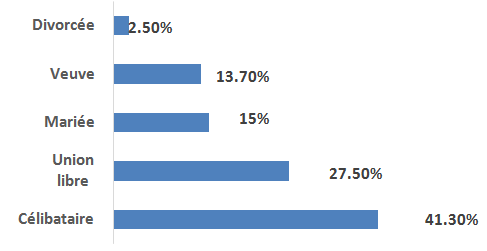
The prevalence of psychological disorders was 8.4%. These were eighty female patients with an average age of 45.92 ± 14.5 (21-69) years, single (n=33; 41.3%) (Figure 1), with secondary (72.5%) or primary (12.5%) education, shopkeepers (n=30; 37.5%), urban residents (n=48.7%). Socioeconomic status was low (n=30; 37.5%). The mean duration of HIV infection was 118.7 months. Pre-test counseling had not been carried out (n=66; 82.5%), and HIV had been discovered during a medical check-up (n=47; 58.8%). The serological result was announced by the general practitioner (n=26; 32.5%), the nurse (n=28; 35%). The home-site distance for dispensing ARVs was between 6-10 km in 51.3% of cases. Patients were on the TDF+3TC+DTG (n=35; 43.7%) and TDF+FTC+EFV (n=36; 45%) protocols. The partner's serostatus was unknown (n=41; 51.3%), and the desire to have a child was expressed (n=21; 77.8%). ART (n=34; 42.5%) and avoidance of breastfeeding (n=30; 37.5%) were cited as means of preventing mother-to-child transmission of HIV. HIV status was disclosed within the family (n=50; 62.5%). Tuberculosis was the first opportunistic infection found (n=15; 42.8%) and patients were at WHO stage 4 (n=42; 52.5%). Psychological disorders were anxiety (n=32; 40%) and moderate depression (n=9; 3.7%). Self-esteem was very low (n=26; 32.5%) and low (n=37; 46.3%). Associated factors were: age (P=0.03), level of education (p=0.02), residence (p=0.02) as well as socio-economic level (p=0.02), pre-test counseling not done (p=0.003) (Table 3).
1. Analysis of the methodology
Our study presents some biases related to the sample size, the selected sites of care for people living with HIV and its prospective nature, which did not allow us to obtain retrospective information. In addition, some hospital records and registers were unusable, making it impossible to obtain patient-related information. These difficulties were encountered by most African authors 3. Despite these limitations, the present study was able to shed light on the psychological experiences of women living with HIV in Brazzaville.
2. Epidemiological aspects
The prevalence of psychological disorders among women living with HIV in Brazzaville appears high. It is similar to that observed in Malawi 4 among people on antiretroviral treatment (12%) and among those not on treatment (16%). 5 In Morocco, the prevalence of psychological disorders in this population category is 3.4%, half as high as in Congo 6. The early introduction of ARV HAART in Morocco seems to be associated with an improvement and reduction in the prevalence of psychiatric or psychological disorders among PLWHA. The types of studies carried out, methodological differences and the tools used to diagnose these disorders, specific to each author, could partly explain the differences in prevalences observed.
These are women, whose most common age group is between 30 and 60. This is a sexually active population in search of a union situation with a view to procreation. The older you get, the more difficult it is to be HIV-positive. In Cameroon, 10.3% of women of childbearing age were between 25 and 29 7. Overall, the proportion of HIV-positive people in this population category increases with age: from a minimum of 1.1% among women aged 15-20, the proportion reaches a maximum of 49.9% among those aged 40-49. This observation is in line with that made by several authors in Africa 8, 9.
The majority of women had secondary education. It would seem that the level of education has some influence on the experience of HIV/AIDS seropositivity. The low level of education among housewives testifies to the ignorance and vulnerability of this category of the population in terms of knowledge about preventive measures against HIV infection. In a CAP study carried out in Brazzaville, Ossibi Ibara and colleagues reported that 47% of FAPs had insufficient if not mediocre knowledge of HIV, leading to psychological disorders such as depression and life uncertainty 9.
More than half the women of childbearing age infected with HIV were housewives. A significant proportion were unemployed. This is a population category with a low economic level, making these women vulnerable to external sexual solicitations and pressures. These data are in line with those published by UNAIDS in its 2019 annual report 10. Improving living conditions and, above all, the household food basket in Africa, and particularly in the Congo, could minimize the high rate of contamination in this category of the population, and thus psychological disorders.
In almost half the cases (41%), HIV-infected women were single, and in a significant proportion, they were living in common-law relationships. Living alone has a psychological impact on overcoming the burden of the disease, as reported in the sub-region. Sharing one's serostatus with one's partner can be seen as a psychological comfort in coping with the disease 11.
In 37.5% of cases, HIV-infected women had a low socio-economic status. In a context where the care of people living with HIV is not always effective at the level of African governments in general and in the Congo in particular, patients are obliged to pay out of their own pockets for examinations related to certain opportunistic infections and adjuvant medications. This takes its toll on patients' psyches, already impoverished by a disease with which they are called upon to cope chronically 12.
The average duration of HIV infection in these patients was 118.7 months, and in 82.5% of cases the interview prior to retroviral serology had not been carried out. In 35% of cases, the positive result was announced by the nursing staff. Adherence to comprehensive management of HIV infection depends on the quality of screening, explanation of the natural history of HIV infection to patients and training of healthcare staff 13. When the announcement of seropositivity is not framed by norms as recommended by the WHO, it can lead to the patient withdrawing into herself, denying the illness and ultimately to psychological disorders that are difficult to resolve 14.
In 86.3% of cases, patients living with HIV travelled a distance of more than 6 km to reach the various antiretroviral drug dispensing sites. It would seem that the distance of patients from the ARV dispensing site is a predictive factor of lost-to-sight status, added to which is the stress of looking for travel expenses in a context of low socio-economic level. This observation has already been made elsewhere 15.
In 43.7% of cases, patients were on antiretroviral therapy combining tenofovir, lamivudine and dolutegravir, and in 45% on therapy combining tenofovir, lamivudine and efavirenz. The WHO recommends positioning dolutegravir as the first integrase inhibitor in adults and adolescents, in order to minimize not only the risk of failure, but also the psychiatric side-effects associated with efavirenz in ATRIPLA 16.
2.1. Partner's serostatus
In 51.3% of cases, patients living with HIV did not know the serostatus of their partners. This can lead to additional stress during even occasional intercourse, in the sense of guilt about contaminating the partner. This feeling of guilt has already been reported in the literature 17. In 33.8% of cases, infected women had a desire to have children, and the reason given was the need to have a child in 77.8% of cases. The fact of being HIV-positive for a chronically evolving disease, added to the false information received, has a negative influence on the psyche, especially when one has not yet had a child. This real-life observation is similar to that made by Traoré Na 18.
In worrying proportions, the serological status of women living with HIV was known within the family, or at least by certain members (62.5%). Spouses were informed in only 17% of cases. The fact that serological status is disclosed within the family increases the risk of stigmatization and rejection felt towards the family by people living with HIV. These data are similar to those reported in Africa on the reasons for non-adherence or abandonment of treatment encountered in this population category 19.
3. Clinical aspects
A corollary of late recourse to healthcare structures in connection with psychological disorders is the appearance of opportunistic infections, of which tuberculosis is still the main pathology among PLWHA (42.8%), alongside others such as neuromeningeal cryptococcosis (25.7%) and toxoplasmosis (22.8%) 20, 21. These opportunistic infections, often of neurological origin, are a source of cognitive exhaustion, leading to depression and various psychological disorders 17, 21. In 52.5% of cases, women living with HIV were classified as WHO stage 4. The advent of the AIDS stage largely justifies the psychological disorders observed in women, including fear of death, the feeling of being left to one's own devices, and increased stigmatization in the immediate environment.
In 36.3% of cases, stigmatized women found the attitude of their entourage embarrassing, justifying the anxiety observed in the 40% patient population. They felt discriminated against in 26.3% of cases, and this behavior on the part of their entourage justified the therapeutic abandonment observed in nine patients (11.3%).
4. Psychological assessment
Depression, loss of self-esteem and anxiety were the main psychological disorders observed in the patients. Depression, the main psychological disorder found in women living with HIV, was rated as insignificant and moderate in 65% and 20% of cases respectively. In Malawi, the prevalence and correlation with diagnosis of probable depression in people living with HIV was more established in those not yet on ART 21.
Self-esteem, as measured by the Rosenberg scale, was low in 46.3% and high in 7.5% of cases...
Anxiety was moderate in 36.3% of cases. In the sub-region, anxiety also appears to be more frequent in PLWHA, with one-third of patients in the Casablanca series in Morocco 21, 22. There are several possible reasons for this high rate of anxiety, both in the Congo and in the sub-region: stigmatization, rejection by family and friends, and general inaccessibility to care are among the main concerns associated with anxiety among these patients.
The Caroll Riff well-being score was above 18 for 79 patients (98.7%). People living with HIV most often need to be understood, supported and made to feel fulfilled. This is what the WHO recommends in its new strategies for combating the disease, which include community outreach workers and peer educators in the follow-up of PLWHA 22.
5. Factors associated with psychological disorders
The objectives of the present study were not only to describe the different characteristics of women living with HIV with psychological disorders, but also and above all to identify the different factors associated with these disorders. Thus, age between 30 and 40 (p=0.03), level of education (P=0.02) and residence (P=0.05) were statistically significantly associated with the occurrence of depression in women living with HIV. In fact, young age, an area of intense sexual activity, also remains a fragile area when it comes to the announcement of HIV seropositivity. Young patients see their marital and social futures compromised, and more often than not find themselves depressed in a context of low educational attainment. These data are in line with those found in the literature 23.
Low socio-economic status, with its corollary lack of access to electricity (p=0.02), poor diet (p=0.003) and use of psychoactive substances (p=0.003) also influenced the occurrence of psychological disorders.
Women who had not received pre- and post-test counselling in accordance with WHO recommendations (P=0.003) and those who had not voluntarily accessed antiretroviral treatment (P=0.001) had manifested the depression-type psychological disorders found in the present study. In Malawi, the prevalence of depression was high among PLWHA not yet on ART (17%) versus those already on ARV treatment (12%). Poverty, which is specific to this population category, has an impact on the ability to feed oneself, thus justifying undernutrition as a factor influencing psychological disorders.
At clinical level, deterioration in general condition (p=0.002), undernutrition (p=0.02) and the presence of an opportunistic infection (p=0.004) were also statistically significantly associated with the occurrence of depression in patients.
On the other hand, anxiety as a psychological disorder was not associated with either age or level of education among women living with HIV. Residence (p=0.003) and the notion of taking psychoactive substances (p=0.01) determined the occurrence of anxiety-type psychological disorders in patients. Clinical factors such as AEG, undernutrition and the occurrence of opportunistic infections also had a statistically significant association with the occurrence of anxiety in women living with HIV.
Psychological disorders in women living with HIV constitute a real public health problem in the Congo, linked to depression and anxiety fostered by stigmatization. This is a sexually active population with a low socio-economic level. The factors identified are partly those found in the literature. Comprehensive care for people living with HIV, including sexual and mental health, is a necessary component of programs and policies to combat HIV/AIDS infection.
The authors declare that they have no conflict of interest in relation to the present study.
| [1] | Kasozi Namagga J, Zari Rukundo G, Niyonzima V, Voss J. Depression and HIV associated neurocognitive disorders among HIV infected adults in rural southwestern Uganda: a cross-sectional quantitative study. BMC Psychiatry. 2021; 21(350): 1‑8. | ||
| In article | View Article PubMed | ||
| [2] | Belaid BS. Les effets d’annonce dans l’infection à VIH et leur destin. Rev Psy. 2018; 176: 471‑6. | ||
| In article | View Article | ||
| [3] | Karwa R, Maina M, Mercer T, Njuguna B, Wachira J, Ngetich C, et al. Leveraging peer-based support to facilitate HIV care in Kenya. PLoS Med 14(7): e1002355. | ||
| In article | View Article PubMed | ||
| [4] | Recommandations nutritionnelles pratiques avec exemples de menus pour personnes vivant avec le VIH/sida en Afrique noire.www.ncbi.nlm.gov. PMC2984264. | ||
| In article | |||
| [5] | Jullita K. Malawa, Kathryn E., Lancaster, Mina C. Prevalence and correlates of pribable depression diagnosis and suicidal ideation among patientes receiving HIH care in Lilingwe, Malawi. Malawi Medical Journal 2018(4): 236-242. | ||
| In article | View Article PubMed | ||
| [6] | Mouna El Fane, Mustapha Sodqi, Abdelfattah Chakib. La santé mentale des patients vivant avec le VIH dans le service des maladies infectieuses du CHU Casablanca, Maroc. Annales Médico-Psychologiques 2018, 2(1): 1-5. | ||
| In article | View Article | ||
| [7] | Deepa Rao, John B. Pryor, Bambi W. Gaddist, Randy Mayer. Stigma, Secrecy, and Discrimination: Ethnic/Racial Differences in the Concerns of People Living with HIV/AIDS. AIDS behaviour. mars 2008; 12(2): 265-271. | ||
| In article | View Article PubMed | ||
| [8] | Genberg BL, Hlavka Z, Konda KA, Maman S, Chariyalertsak S, Chingono A, et al. A comparison of HIV/AIDS-related stigma in four countries: negative attitudes and perceived acts of discrimination towards people living with HIV/AIDS. Soc Sci Med. juin 2009; 68(12): 2279-2287. | ||
| In article | View Article PubMed | ||
| [9] | Goldin CS. Stigmatization and AIDS: critical issues in public health. Soc Sci Med. nov 1994; 39(9): 1359-1366. | ||
| In article | View Article PubMed | ||
| [10] | World Health Organisation. Adolescent HIV testing, counselling and care. Available at: http://www.who.int/maternal_child_adolescent/documents/hiv-testing-counselling/en/ Last accessed 15 May 2018. | ||
| In article | |||
| [11] | Baum MK, Shor-Posner G, Lu Y, Rosner B, Sauberlich HE, Fletcher MA, et al. Micronutrients and HIV-1 disease progression. AIDS Lond Engl. 1 sept 1995; 9(9): 1051‑6. | ||
| In article | View Article PubMed | ||
| [12] | M. Hentzien, A. Cabie, P. Pugliese, E. Billaud, I. Poizot-Martin, C. Duvivier, et al. Factors associated with deaths from suicide in a french nationwide HIV-infected cohort. HIV Medicine. 2018; 1‑8. | ||
| In article | View Article PubMed | ||
| [13] | Développement et Santé | Prophylaxie par le cotrimoxazole chez l’adulte en Afrique sub-saharienne: avantages, risques et conseils pratiques [Internet]. [cité 14 sept 2021]. Disponible sur: https://devsante.org/articles/prophylaxie-par-le-cotrimoxazole-chez-l-adulte-en-afrique-sub-saharienne-avantages-risques-et-conseils-pratiques. | ||
| In article | |||
| [14] | vih.org la rédaction de. L’infection à VIH chez les femmes [Internet]. vih.org. [Cité 18 sept 2021]. Disponible sur: https://vih.org/20140514/linfection-a-vih-chez-les-femmes/. | ||
| In article | |||
| [15] | L’Onusida présente de nouveaux objectifs pour 2025 pour combattre le VIH [Internet]. La Libre Afrique. 2020 [cité 19 juill 2021]. Disponible sur: https://afrique.lalibre.be/56073/lonusida-presente-de-nouveaux-objectifs-pour-2025-pour-combattre-le-vih/. | ||
| In article | |||
| [16] | OMS | VIH/SIDA au Congo [Internet]. WHO. World Health Organization; [cité 25 mai 2021]. Disponible sur: https://www.who.int/countries/cog/areas/vih_sida/fr/. | ||
| In article | |||
| [17] | Kaida A, Laher F, Strathdee SA, Janssen PA, Money D, Hogg RS, et al. Childbearing Intentions of HIV-Positive Women of Reproductive Age in Soweto, South Africa: The Influence of Expanding Access to HAART in an HIV Hyperendemic Setting. Am J Public Health. févr 2011;101(2):350‑8. | ||
| In article | View Article PubMed | ||
| [18] | Traoré NA. Décrire les aspects épidémiologiques, cliniques et thérapeutiques de l’infection à VIH au centre de santé de référence de Bafoulabé. (Région de Kayes. 2012 [cité 23 mai 2021]; Disponible sur: https://www.bibliosante.ml/handle/123456789/1297 | ||
| In article | |||
| [19] | Mboussou M, Mbadinga S, Koumou RD. Religion et psychopathologie africaine. Inf Psychiatr. 2009; Volume 85(8): 769‑74. | ||
| In article | View Article | ||
| [20] | ONUSIDA: Stratégie mondiale de lutte contre le sida, 2021-2026. | ||
| In article | |||
| [21] | World Health Organization. Consolidated guidelines on the use of antiretroviral drugs for treating and preventing HIV infection: recommendations for a public health approach. Geneva: World Health Organization: 2016. | ||
| In article | |||
| [22] | PNLS: Lignes directrices de la prise en charge de l'infection à VIH/SIDA au Congo 2019. | ||
| In article | |||
| [23] | Ekat MH, Yotebieng M, Leroy V, Mpody C, Diafouka M, Loubaki G, et al. Association between depressive symptoms and adherence among adolescents living with HIV in the Republic of Congo: a cross sectional study. Medicine (Baltimore). 2020; (35): 99. | ||
| In article | View Article PubMed | ||
Published with license by Science and Education Publishing, Copyright © 2023 Adoua Doukaga T, Ossibi Ibara BR, Bitséne Mpika G, Obembo G, Bintsindou P, Ekat M, Angonga Pabota E, Bendent Lebaho P, Adoua Ngatsongo PU, Kinga F and Itoua C
 This work is licensed under a Creative Commons Attribution 4.0 International License. To view a copy of this license, visit
http://creativecommons.org/licenses/by/4.0/
This work is licensed under a Creative Commons Attribution 4.0 International License. To view a copy of this license, visit
http://creativecommons.org/licenses/by/4.0/
| [1] | Kasozi Namagga J, Zari Rukundo G, Niyonzima V, Voss J. Depression and HIV associated neurocognitive disorders among HIV infected adults in rural southwestern Uganda: a cross-sectional quantitative study. BMC Psychiatry. 2021; 21(350): 1‑8. | ||
| In article | View Article PubMed | ||
| [2] | Belaid BS. Les effets d’annonce dans l’infection à VIH et leur destin. Rev Psy. 2018; 176: 471‑6. | ||
| In article | View Article | ||
| [3] | Karwa R, Maina M, Mercer T, Njuguna B, Wachira J, Ngetich C, et al. Leveraging peer-based support to facilitate HIV care in Kenya. PLoS Med 14(7): e1002355. | ||
| In article | View Article PubMed | ||
| [4] | Recommandations nutritionnelles pratiques avec exemples de menus pour personnes vivant avec le VIH/sida en Afrique noire.www.ncbi.nlm.gov. PMC2984264. | ||
| In article | |||
| [5] | Jullita K. Malawa, Kathryn E., Lancaster, Mina C. Prevalence and correlates of pribable depression diagnosis and suicidal ideation among patientes receiving HIH care in Lilingwe, Malawi. Malawi Medical Journal 2018(4): 236-242. | ||
| In article | View Article PubMed | ||
| [6] | Mouna El Fane, Mustapha Sodqi, Abdelfattah Chakib. La santé mentale des patients vivant avec le VIH dans le service des maladies infectieuses du CHU Casablanca, Maroc. Annales Médico-Psychologiques 2018, 2(1): 1-5. | ||
| In article | View Article | ||
| [7] | Deepa Rao, John B. Pryor, Bambi W. Gaddist, Randy Mayer. Stigma, Secrecy, and Discrimination: Ethnic/Racial Differences in the Concerns of People Living with HIV/AIDS. AIDS behaviour. mars 2008; 12(2): 265-271. | ||
| In article | View Article PubMed | ||
| [8] | Genberg BL, Hlavka Z, Konda KA, Maman S, Chariyalertsak S, Chingono A, et al. A comparison of HIV/AIDS-related stigma in four countries: negative attitudes and perceived acts of discrimination towards people living with HIV/AIDS. Soc Sci Med. juin 2009; 68(12): 2279-2287. | ||
| In article | View Article PubMed | ||
| [9] | Goldin CS. Stigmatization and AIDS: critical issues in public health. Soc Sci Med. nov 1994; 39(9): 1359-1366. | ||
| In article | View Article PubMed | ||
| [10] | World Health Organisation. Adolescent HIV testing, counselling and care. Available at: http://www.who.int/maternal_child_adolescent/documents/hiv-testing-counselling/en/ Last accessed 15 May 2018. | ||
| In article | |||
| [11] | Baum MK, Shor-Posner G, Lu Y, Rosner B, Sauberlich HE, Fletcher MA, et al. Micronutrients and HIV-1 disease progression. AIDS Lond Engl. 1 sept 1995; 9(9): 1051‑6. | ||
| In article | View Article PubMed | ||
| [12] | M. Hentzien, A. Cabie, P. Pugliese, E. Billaud, I. Poizot-Martin, C. Duvivier, et al. Factors associated with deaths from suicide in a french nationwide HIV-infected cohort. HIV Medicine. 2018; 1‑8. | ||
| In article | View Article PubMed | ||
| [13] | Développement et Santé | Prophylaxie par le cotrimoxazole chez l’adulte en Afrique sub-saharienne: avantages, risques et conseils pratiques [Internet]. [cité 14 sept 2021]. Disponible sur: https://devsante.org/articles/prophylaxie-par-le-cotrimoxazole-chez-l-adulte-en-afrique-sub-saharienne-avantages-risques-et-conseils-pratiques. | ||
| In article | |||
| [14] | vih.org la rédaction de. L’infection à VIH chez les femmes [Internet]. vih.org. [Cité 18 sept 2021]. Disponible sur: https://vih.org/20140514/linfection-a-vih-chez-les-femmes/. | ||
| In article | |||
| [15] | L’Onusida présente de nouveaux objectifs pour 2025 pour combattre le VIH [Internet]. La Libre Afrique. 2020 [cité 19 juill 2021]. Disponible sur: https://afrique.lalibre.be/56073/lonusida-presente-de-nouveaux-objectifs-pour-2025-pour-combattre-le-vih/. | ||
| In article | |||
| [16] | OMS | VIH/SIDA au Congo [Internet]. WHO. World Health Organization; [cité 25 mai 2021]. Disponible sur: https://www.who.int/countries/cog/areas/vih_sida/fr/. | ||
| In article | |||
| [17] | Kaida A, Laher F, Strathdee SA, Janssen PA, Money D, Hogg RS, et al. Childbearing Intentions of HIV-Positive Women of Reproductive Age in Soweto, South Africa: The Influence of Expanding Access to HAART in an HIV Hyperendemic Setting. Am J Public Health. févr 2011;101(2):350‑8. | ||
| In article | View Article PubMed | ||
| [18] | Traoré NA. Décrire les aspects épidémiologiques, cliniques et thérapeutiques de l’infection à VIH au centre de santé de référence de Bafoulabé. (Région de Kayes. 2012 [cité 23 mai 2021]; Disponible sur: https://www.bibliosante.ml/handle/123456789/1297 | ||
| In article | |||
| [19] | Mboussou M, Mbadinga S, Koumou RD. Religion et psychopathologie africaine. Inf Psychiatr. 2009; Volume 85(8): 769‑74. | ||
| In article | View Article | ||
| [20] | ONUSIDA: Stratégie mondiale de lutte contre le sida, 2021-2026. | ||
| In article | |||
| [21] | World Health Organization. Consolidated guidelines on the use of antiretroviral drugs for treating and preventing HIV infection: recommendations for a public health approach. Geneva: World Health Organization: 2016. | ||
| In article | |||
| [22] | PNLS: Lignes directrices de la prise en charge de l'infection à VIH/SIDA au Congo 2019. | ||
| In article | |||
| [23] | Ekat MH, Yotebieng M, Leroy V, Mpody C, Diafouka M, Loubaki G, et al. Association between depressive symptoms and adherence among adolescents living with HIV in the Republic of Congo: a cross sectional study. Medicine (Baltimore). 2020; (35): 99. | ||
| In article | View Article PubMed | ||