The mass, axial dimensions, shape indices, and some frictional related properties of alligator pepper (Aframomum meleguta) were investigated at moisture contents of 4.26 and 3.31% for the pods and seeds, respectively, following standard procedures. The average length, major and minor diameter of the alligator pepper pods were 53.83, 22.68, and 19.32 mm, respectively, while the corresponding values for the seeds were 3.61, 3.12, and 2.55 mm, respectively. The average seeds/pod weight was 4.11/5.63 g. The arithmetic mean diameter, equivalent diameter, sphericity, aspect ratio, and surface area were 31.80, 28.65, 0.54, 43.20 mm, and 2591.93 mm2, for the pods; and 3.09, 3.06, 0.85, 0.01 mm, and 29.39mm2, for the seeds, respectively. The coefficient of friction of the seeds ranged from 0.50 to 0.67 with respect to the surfaces that were considered. The angle of repose of the seeds was 20.09o. This study provides baseline information on alligator pepper seeds, these can be useful for in the development or adaptation of technologies for processing it into value-added products thereby boosting obtainable income thereof.
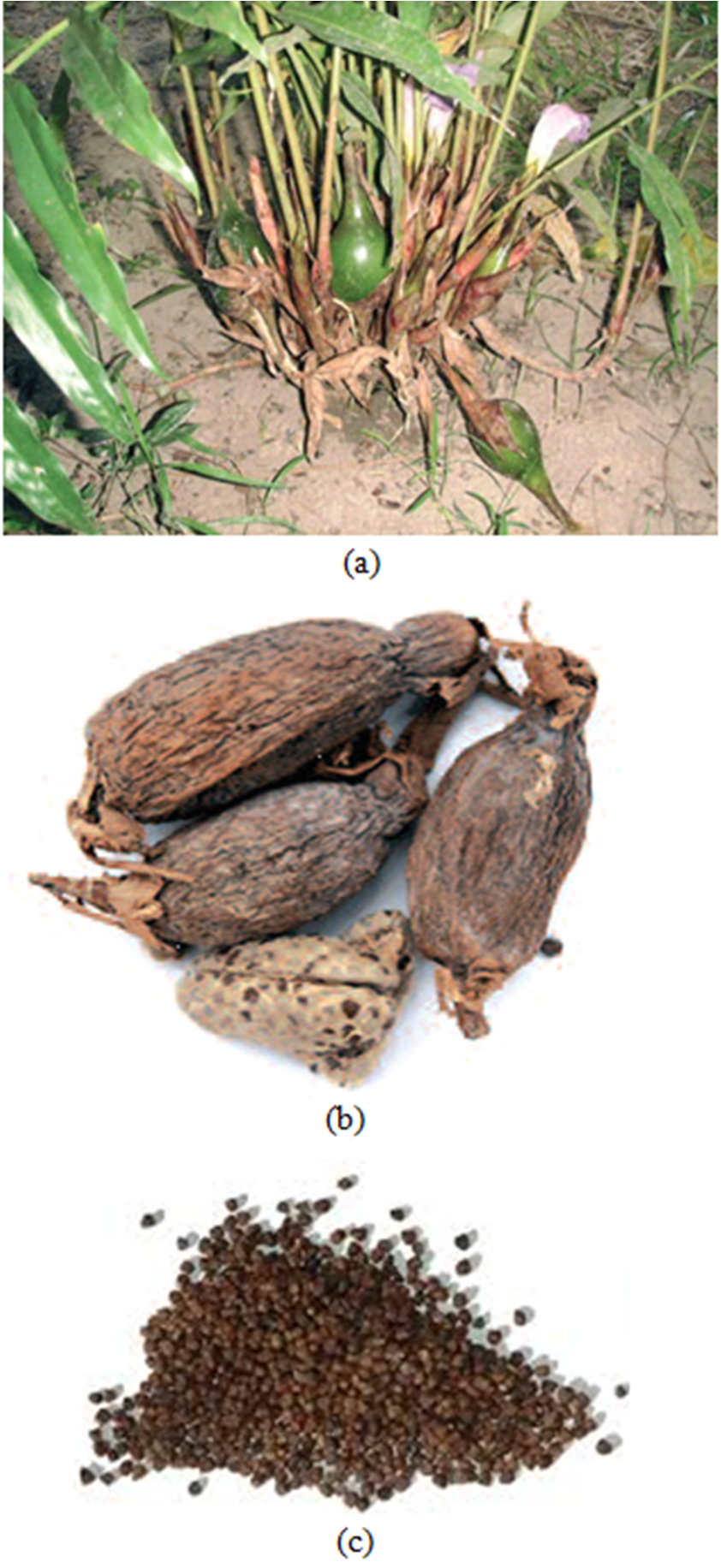
Alligator pepper (Aframomum meleguta) otherwise known as grains of paradise is a perennial deciduous herb of the Zingiberaceae family of plants native to the swampy areas on the West African coasts. Others in that family include A. danielli, A. citratum and A. exscapum. Widely known for its hot, spicy, and aromatic seeds, it is also called as mbongo spice, Afrika kakulesi, or Guinea pepper in some parts of Africa. In Nigeria, it is locally known as uda in Igbo, atare in Yoruba, and chilla or citta in Hausa 1, 2. The fruit (pod) is oval in shape and reddish in colour, when fresh. It turns brownish, when dry, containing several miniature brownish or semi-black seeds.
Alligator pepper seeds have been known for ages among spices and ingredients for different African trado-medicinal and socio-cultural applications in many parts of Africa and some parts of Asia 2. It is widely documented as an antidote for some ailments in human health 3. In addition, Ethanol extracts from the seeds indicated antibacterial and antiseptic properties found useful for wound-care and antidote for certain infections 4. The active compounds found in alligator pepper are in the class of naturally occurring food preservatives. In some traditional African meetings and events like naming ceremonies, marriages and funeral, it is snacked upon with bitter kola and kola nuts in customary rites. Apart from its medicinal applications, Sunil et al. 5 documented that alligator pepper seeds contain few calories of energy and substantial amount of iron, magnesium, and calcium 6, 7. Okunade et al. 8 reported that it contains 7.5, 4.78, 2.84, and 13.01 g/100 g dry matter of fat, crude fibre, ash, and protein, respectively. It is therefore no surprise that alligator pepper also has culinary applications as ingredient in assorted dishes such as pepper soup and barbecues. Its essential oil has been documented as having pharmaceutical and industrial applications in flavors and perfumery 9.
The engineering properties of some African spices such as dill 1, thyme 10, cilantro 11, and many others have been reported; however, such information about alligator pepper is rarely found in literature. This study provides baseline information which has implications on processing and value-addition to alligator pepper.
About 6 kg of dry alligator pepper pods were purchased from Oja tuntun, Saabo, Ile-Ife, Nigeria. From one half portion of the dry pods, seeds were extracted by hand and cleaned of all extraneous materials. From the lot, a handful of seeds was taken after mixing several times.
2.2. Determination of Moisture ContentMoisture content (MC) determination was carried out following the AOAC methods for spices and condiments 13. Seeds sample was ground to pass through sieve of 1 mm aperture. About 10 g of the ground samples was taken and the MC determined by distillation in toluene. Th e distillate was collected in a graduated tube and the volume of water was read to the nearest 0.1 ml. The average moisture content was calculated per weight of sample.

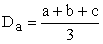
The axial dimensions of 100 randomly picked pods and seeds were determined using Venier calipers (Aerospace, Digital meter, 150 × 0.01mm, Made in India) and an electronic weighing machine (Model series KOOKYOU, 0.01-1000gram, Made in China). The values obtained were used to estimate shape indices which include: the sphericity ( ), aspect ratio (Ra%), equivalent diameter (De), arithmetic mean diameter (Da) and surface area 14, 15 using the following equations.
 | (1) |
 | (2) |
 | (3) |
 | (4) |
 | (5) |
The static coefficient of friction alligator pepper seeds was determined on four surfaces; plywood, glass, mild steel, and aluminum using a hollow box, 200 × 200 × 60 mm in dimension. The box, placed on a tilting table, was filled with seeds sample and raised slightly about 2 mm from the surface of the table 16. The table was gently tilted until the material glided down the slope by gravity. The angle of inclination at which this occurred was read from the graduated scale attached to the tilting table. The coefficient of static friction was determined 12.
2.5. Determination of Angle of ReposeThe angle of repose of the seeds was determined using an open-ended cylinder (diameter of 80 mm and height of 200 mm). The cylinder was placed at the center of a circular plate (diameter of 250 mm) and filled with the prepared samples of alligator pepper seed. The cylinder was lifted slowly until the sample formed a cone on the circular plate. The diameter and height of the cone formed were measured and recorded. The procedure was replicated five times and the angle of repose was determined 12.
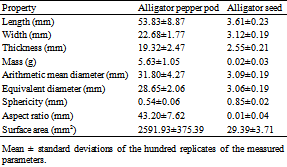
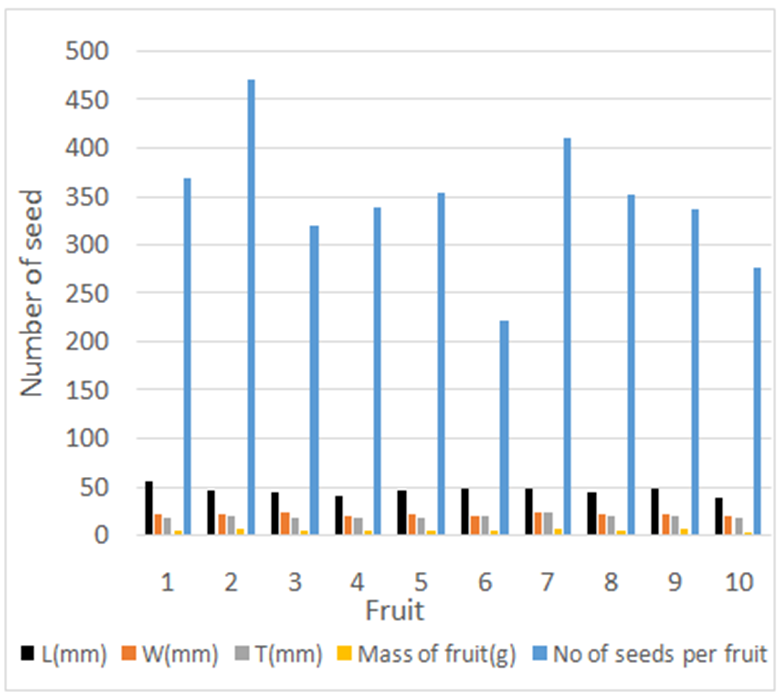
The average moisture content of the dry pod and seeds 4.23 and 3.31% (wet basis), respectively. Table 1 shows the axial dimensions and shape indices of alligator pepper pods and seeds. The average pod per seed weight for alligator pepper was 5.63/4.11 g, while the average number of seeds per pod was found to be 290. It was observed that the average length, width, and thickness of the alligator pepper pods were 53.83, 22.68, and 19.32 mm, respectively, while the average length, the major and minor diameter of the seeds were 3.61, 3.12, and 2.55 mm, respectively. Furthermore, the average arithmetic mean diameter, equivalent diameter, sphericity, aspect ratio, and surface area of the pods were 31.80, 28.65, 0.54, 43.20 mm, and 2591.93 mm2, respectively, and the corresponding values of the seeds were 3.09, 3.06, 0.85, 0.01 mm, and 29.39 mm2, respectively. As expected, the axial dimension indicated a high variation between the principal dimensions of both the pod and seed materials. Appropriate considerations must be given to this during the development of machine for its postharvest handling and processing. The dimensions of the seeds were in the range reported for millet 17 and sesame seeds 18. The frequency distribution of the seed dimension and pod mass shows a trend towards normal distribution (Figure 2). There was a wide dispersion in the correlation of the seed geometry with the pod mass. However, there was a little dispersion in the correlation between the seed width and thickness. The values of the properties obtained suggested that the seeds rank among the small seeds category in the order of sesame seed and millet.
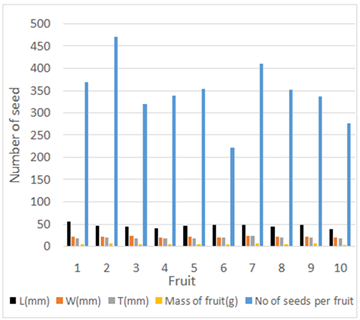
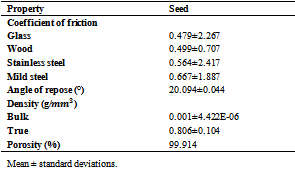
Table 2 shows the coefficient of friction and angle of repose of the seeds on various structural surfaces, namely; glass, wood, stainless steel, and mild steel. The corresponding value obtained on the surfaces were 0.497, 0.499, 0.564, and 0.667, respectively. The frictional properties of biomaterials generally depend on the roughness of the surfaces. For alligator pepper seeds, the forces of solid friction at the seed/material interface were least on the glass surface, while it was highest on the mild steel surface.
The coefficient of friction and angle of repose on various surfaces were generally lower than the 0.50 – 0.70 and 23.8° reported for the sponge gourd seeds 19, 0.40 – 0.84 and 30° reported for sesame seeds, 20, and higher than the 0.30 – 0.40 and 17° reported the oil bean seeds 21. These findings have implications in the design of processing and storage equipment for processing alligator pepper.
Some physical and mechanical properties of alligator pepper pods and seeds have been documented. Given the importance of alligator pepper in herbal medicine, its socio-cultural applications in Nigeria and other neighboring African countries, this data bears relevance in the development or adaptation of technologies for its processing into value-added products thereby boosting obtainable income thereof.
| [1] | Desai, N. N., Modi, V. M. and Patel, D. B. (2013). Analysis of physical and chemical properties of dill seed. African Journal of Biotechnology, 6 (21), 3-6. | ||
| In article | |||
| [2] | Oyegade, J. O., Awotoye, O. O., Adewumi, J. T., and Thorpe, H. T. (1999). Antimicrobial activity of some Nigerian medicinal plants, screening for antibacterial activities. Journal of Bioscience Research Communication, 11, 193-197. | ||
| In article | |||
| [3] | Anupam, K. R., Sachan, S. K., Kiran, K. and Deepti, S. (2018). Medicinal uses of spices used in our traditional culture: Worldwide. Indian Journal Pharmaceutical Sciences, 40: 104-105. | ||
| In article | |||
| [4] | Okwu, D. E. (2004). Phytochemicals vitamins content of indigenous spices of South Eastern Nigeria. Journal of Sustainable Agricultural Environment, 6: 30-34. | ||
| In article | View Article | ||
| [5] | Sunil, K., Anupam, K., Kiran, K. and Deepti, S. (2018). Antimicrobial activity of some Nigerian medicinal plants, screening for antibacterial activity. Journal of Bioscience Research Communication, 11: 193-197. | ||
| In article | |||
| [6] | Krishnapura, S. (2005). Role of spices beyond food flavoring: Nutraceuticals with multiple health effects. European Journal of Medicinal Plants, 5(4): 377-383. | ||
| In article | |||
| [7] | Yashin, A., Yashin, Y., Xiaoyan, X. and Nemzer, B. (2017). Antioxidant Activity of Spices and Their Impact on Human Health: A Review. Gordon and Breach Science Publishers, New York, pp. 1-31. | ||
| In article | View Article PubMed | ||
| [8] | Okunade, A. F., Agboola, T. L., Ogunsina, B. S., Salau, A. O. and Salami, A. (2019). Physicochemical properties of four selected food spices of Nigerian origin: Alligator pepper, Black pepper, Ginger and Cloves. Ife Journal of Technology, 26(1): 7-12. | ||
| In article | |||
| [9] | Brul, S. and Coote, P. J. (1999). Preservative agents in foods mode of action and microbial resistance mechanisms. Indian Council of Agricultural Research, 8(2): 125-132. | ||
| In article | View Article | ||
| [10] | Mustafa, T. Y., and Cemalettin, S. A. (2014). Effect of Thyme and Cumin Essential Oils and Butylated Hydroxyl Anisole/Butylated Hydroxyl Toluene on Physicochemical Properties and Oxidative/Microbial Stability of Chicken Patties. Nottingham University Press, United Kingdom, pp. 7-16. | ||
| In article | |||
| [11] | Rahman, M., Alam, A. and Naher, S. (2017). Comparative studies on physicochemical properties and analysis of essential oil of the three varieties of Coriandrum sativum Linn. Journal of Food Process Engineering, 19: 132-134. | ||
| In article | |||
| [12] | Adedeji, M. and Owolarafe, O. (2015). Some physical properties of neem seeds and kernels (Azandirachta indica) as a function of moisture content. International Journal of Scientific and Engineering Research, 6(1): 812-820. | ||
| In article | |||
| [13] | AOAC. 17th Edition 2000 Official Method 986.21. Specification No I.S. 1797 – 1985 Methods of test for spices and condiments | ||
| In article | |||
| [14] | Mohsenin, N. N. (1986). Physical Properties of Plant and Animal Materials. 2nd Edition. Gordon and Breach Science Publishers, New York, pp. 1-31. | ||
| In article | |||
| [15] | Ixtaina, V. Y., Nolasco, S. M. and Tomas, M. C. (2008). Physical properties of chia (Salvia hispanica L.) seeds. Industrial Crops and Products, 28: 286-293. | ||
| In article | View Article | ||
| [16] | Mahasneh, M. A., Ababneh, H. A. and Rababah, T. (2008). Some engineering and thermal properties of black cumin (Nigella sativa L.) seeds. International Journal of Food Science and Technology, 43: 1047-1052. | ||
| In article | View Article | ||
| [17] | Baryeh, E. A. (2002). Physical properties of millet. Journal of Food Engineering, 51, 39-46. | ||
| In article | View Article | ||
| [18] | Tunde-Akintunde, T. Y. and Akintunde, B. O. (2004). Some physical properties of sesame seed. Biosystems Engineering, 88: 127-129. | ||
| In article | View Article | ||
| [19] | Ogunsina, B. S., Adegbenjo, A. O., and Opeyemi, O. O. (2010). Compositional, mass-volume-area related and mechanical properties of sponge gourd (Luffa aegyptiaca) seeds. International Journal of Food Properties, 13: 864-876. | ||
| In article | View Article | ||
| [20] | Arafa, G. K. (2007). Some physical and mechanical properties of sesame seeds concerning the selection of separation unit. Misr Journal of Agricultural Engineering, 24(2): 415-429. | ||
| In article | |||
| [21] | Oje, K. and Ugbor, E. C. (1991). Some physical properties of oil bean seed. Journal of Agricultural Engineering Research. 50, 305-313. | ||
| In article | View Article | ||
Published with license by Science and Education Publishing, Copyright © 2021 Durodola Olamide I, Ogunmuyiwa Oluwafemi T, Olasoju Abayomi S, Salami Adams A and Ogunsina Babatunde S
 This work is licensed under a Creative Commons Attribution 4.0 International License. To view a copy of this license, visit
http://creativecommons.org/licenses/by/4.0/
This work is licensed under a Creative Commons Attribution 4.0 International License. To view a copy of this license, visit
http://creativecommons.org/licenses/by/4.0/
| [1] | Desai, N. N., Modi, V. M. and Patel, D. B. (2013). Analysis of physical and chemical properties of dill seed. African Journal of Biotechnology, 6 (21), 3-6. | ||
| In article | |||
| [2] | Oyegade, J. O., Awotoye, O. O., Adewumi, J. T., and Thorpe, H. T. (1999). Antimicrobial activity of some Nigerian medicinal plants, screening for antibacterial activities. Journal of Bioscience Research Communication, 11, 193-197. | ||
| In article | |||
| [3] | Anupam, K. R., Sachan, S. K., Kiran, K. and Deepti, S. (2018). Medicinal uses of spices used in our traditional culture: Worldwide. Indian Journal Pharmaceutical Sciences, 40: 104-105. | ||
| In article | |||
| [4] | Okwu, D. E. (2004). Phytochemicals vitamins content of indigenous spices of South Eastern Nigeria. Journal of Sustainable Agricultural Environment, 6: 30-34. | ||
| In article | View Article | ||
| [5] | Sunil, K., Anupam, K., Kiran, K. and Deepti, S. (2018). Antimicrobial activity of some Nigerian medicinal plants, screening for antibacterial activity. Journal of Bioscience Research Communication, 11: 193-197. | ||
| In article | |||
| [6] | Krishnapura, S. (2005). Role of spices beyond food flavoring: Nutraceuticals with multiple health effects. European Journal of Medicinal Plants, 5(4): 377-383. | ||
| In article | |||
| [7] | Yashin, A., Yashin, Y., Xiaoyan, X. and Nemzer, B. (2017). Antioxidant Activity of Spices and Their Impact on Human Health: A Review. Gordon and Breach Science Publishers, New York, pp. 1-31. | ||
| In article | View Article PubMed | ||
| [8] | Okunade, A. F., Agboola, T. L., Ogunsina, B. S., Salau, A. O. and Salami, A. (2019). Physicochemical properties of four selected food spices of Nigerian origin: Alligator pepper, Black pepper, Ginger and Cloves. Ife Journal of Technology, 26(1): 7-12. | ||
| In article | |||
| [9] | Brul, S. and Coote, P. J. (1999). Preservative agents in foods mode of action and microbial resistance mechanisms. Indian Council of Agricultural Research, 8(2): 125-132. | ||
| In article | View Article | ||
| [10] | Mustafa, T. Y., and Cemalettin, S. A. (2014). Effect of Thyme and Cumin Essential Oils and Butylated Hydroxyl Anisole/Butylated Hydroxyl Toluene on Physicochemical Properties and Oxidative/Microbial Stability of Chicken Patties. Nottingham University Press, United Kingdom, pp. 7-16. | ||
| In article | |||
| [11] | Rahman, M., Alam, A. and Naher, S. (2017). Comparative studies on physicochemical properties and analysis of essential oil of the three varieties of Coriandrum sativum Linn. Journal of Food Process Engineering, 19: 132-134. | ||
| In article | |||
| [12] | Adedeji, M. and Owolarafe, O. (2015). Some physical properties of neem seeds and kernels (Azandirachta indica) as a function of moisture content. International Journal of Scientific and Engineering Research, 6(1): 812-820. | ||
| In article | |||
| [13] | AOAC. 17th Edition 2000 Official Method 986.21. Specification No I.S. 1797 – 1985 Methods of test for spices and condiments | ||
| In article | |||
| [14] | Mohsenin, N. N. (1986). Physical Properties of Plant and Animal Materials. 2nd Edition. Gordon and Breach Science Publishers, New York, pp. 1-31. | ||
| In article | |||
| [15] | Ixtaina, V. Y., Nolasco, S. M. and Tomas, M. C. (2008). Physical properties of chia (Salvia hispanica L.) seeds. Industrial Crops and Products, 28: 286-293. | ||
| In article | View Article | ||
| [16] | Mahasneh, M. A., Ababneh, H. A. and Rababah, T. (2008). Some engineering and thermal properties of black cumin (Nigella sativa L.) seeds. International Journal of Food Science and Technology, 43: 1047-1052. | ||
| In article | View Article | ||
| [17] | Baryeh, E. A. (2002). Physical properties of millet. Journal of Food Engineering, 51, 39-46. | ||
| In article | View Article | ||
| [18] | Tunde-Akintunde, T. Y. and Akintunde, B. O. (2004). Some physical properties of sesame seed. Biosystems Engineering, 88: 127-129. | ||
| In article | View Article | ||
| [19] | Ogunsina, B. S., Adegbenjo, A. O., and Opeyemi, O. O. (2010). Compositional, mass-volume-area related and mechanical properties of sponge gourd (Luffa aegyptiaca) seeds. International Journal of Food Properties, 13: 864-876. | ||
| In article | View Article | ||
| [20] | Arafa, G. K. (2007). Some physical and mechanical properties of sesame seeds concerning the selection of separation unit. Misr Journal of Agricultural Engineering, 24(2): 415-429. | ||
| In article | |||
| [21] | Oje, K. and Ugbor, E. C. (1991). Some physical properties of oil bean seed. Journal of Agricultural Engineering Research. 50, 305-313. | ||
| In article | View Article | ||