Good nutrition plays an essential role in human health. However, in urban areas, living and working conditions greatly influence the pace of life. Thus, the time available, especially for shopping and cooking, is becoming increasingly shorter. To help people manage these constraints, ready-to-use food products should be developed. The objective of this study is to formulate flour for the rapid preparation of Amiwô, seasoned maize paste in Benin. The flour was obtained from a blend of maize flour, condiments (tomatoes, onions) and spices (ginger, garlic, bay leaf and shrimp) dried and ground. Five blending formulas were tested. The microbiological quality of the seasoned flours produced and the sensory characteristics of corresponding Amiwô were evaluated by standard methods. The results revealed that the five seasoned flours produced had acceptable microbiological quality according to the recommended criteria. Amiwô from the formula 5 containing 600 g of condiments/spices and 100 g of flour was best appreciated in terms of taste, flavor, color, and overall acceptability.
Food is a basic need for life. Agriculture, livestock and fishing provide man with a variety of products that must be stored for consumption over a longer period. The amount of food produced in the world and the development of preservation methods could allow feeding all humanity. However, there are great disparities in food availability, particularly in sub-Saharan Africa where food insecurity, population growth and rampant urbanization raise fears of the worst for the future 1. In urban areas, between work, transport, children's activities and social commitments, the lack of time can sometimes affect eating habits. Time spent in the kitchen can vary depending on preference and level of planning. Living and working conditions greatly influence the pace of life and the time available, especially for shopping and cooking, is becoming shorter. However, prepared meals and instant products are one of the perfectly adapted responses to this need to save time when preparing meals 2.
Maize or corn is the leading cereal crop in terms of worldwide production and used for human and animal feeding 3. It is a primary food crop for human consumption in Africa 4. Maize products constitute a large part of the daily diet in both rural and urban population in Benin Republic. These products from maize and their processing methods are as diverse as the maize crop itself 5. In Benin, Amiwô is a delicacy that people love. His name is Djenkoumé in Togo 6. It is a paste made from a maize flour porridge seasoned with tomato, the main condiment and other ingredients.
But its preparation requires a relatively long time between the purchase of raw materials; that is to say maize or its flour, condiments, spices and other ingredients and their preparation and the actual cooking of the paste.
To our knowledge, there has been no study on the production process and the quality of a ready-to-use flour to produce Amiwô made from blends of maize and tomatoes. Therefore, the aim of this study was to develop pre-seasoned flour with good microbiological quality for the production of Amiwô. This will provide information useful for formulating flour for this dish in order to reduce the time spent making it.
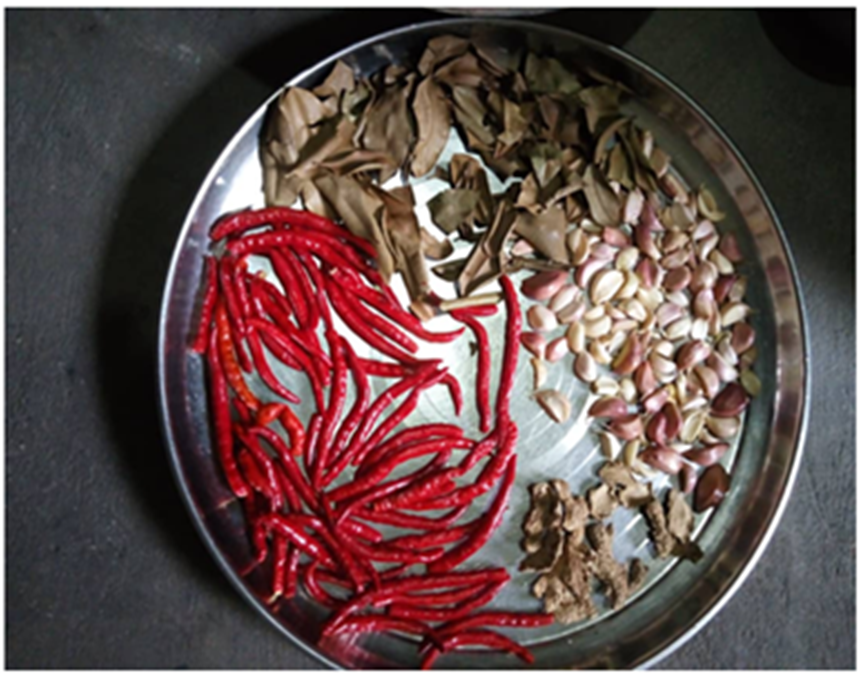
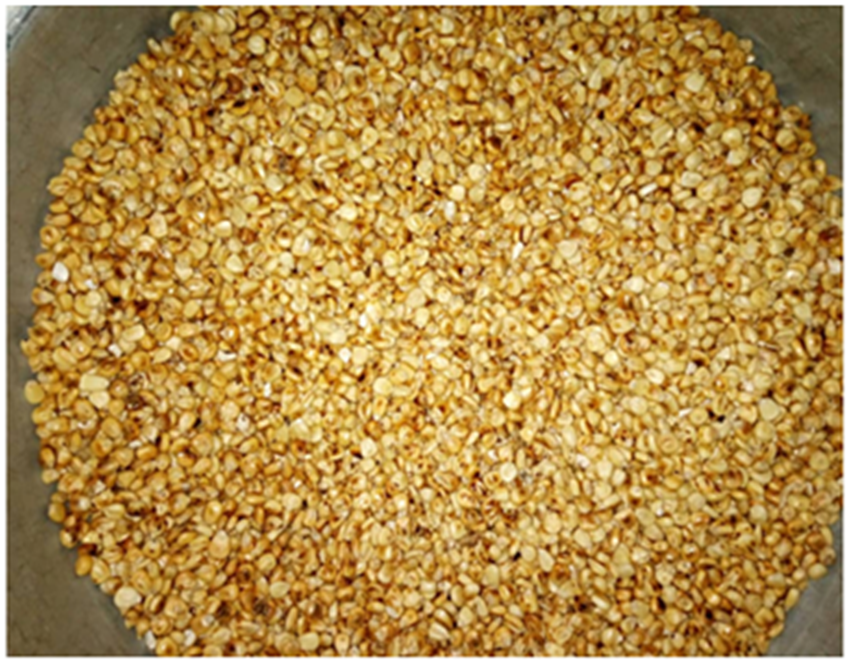
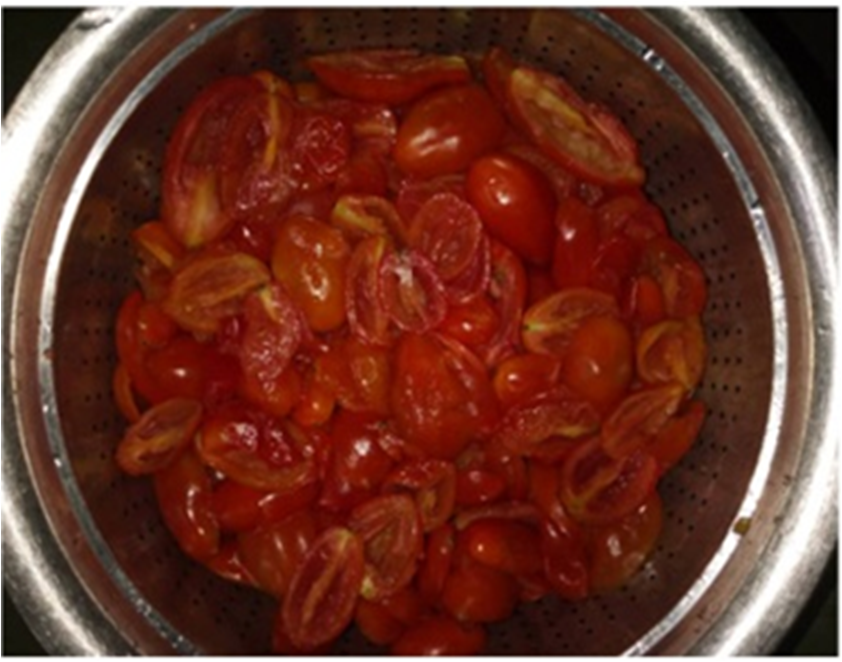
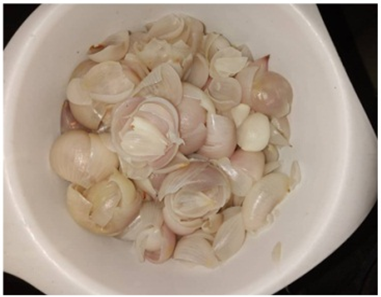
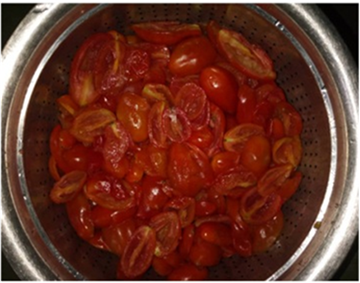
The plant materials used in this study were corn, spices (pepper, garlic, ginger and bay leaf), tomato and onion (Photo 1 to Photo 4). These raw materials were bought in the market of Sakété (6° 44′ 11″ North, 2° 39′ 29″ East) in Benin Republic.



Processing and laboratory equipment were equipment and materials usually available in food processing units and in microbiological and sensory analysis laboratories.
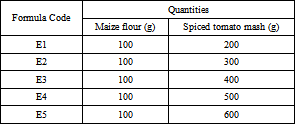
2.2. MethodsThe experimental formulas developed as part of this study to blend maize flour and condiments are presented in Table 1.
Trials were carried out until a production process was developed.
Each seasoned flours from the five formulas was mixed separately with a little cold water to form slurry in a pot. Then, the porridge was heated until boiling. Flour, salt and oil are added to the porridge obtained which is stirred vigorously little by little, stirring to remove any lumps until the desired consistency. Amiwô paste is thus obtained.
The samples of seasoned flour were evaluated by looking for microbiological quality parameters using standard methods. Thus, the total bacteria were counted by inoculation on the Plate Count Agar (PCA) medium and incubation at 30°C for 24-48 hours 7. Total and thermotolerant coliforms were sought on the Violet Red Bile Lactose (VRBL) medium with incubation at 30 and 44°C respectively for 24 hours 8. As for E. coli, one or two loops of VRBL medium are inoculated on Eosin Methylene Blue (EMB) medium and incubation was carried out for 24 hours at 37°C 9. Staphylococcus aureus was tested on Baird Parker (BP) medium with incubation at 37°C for 24-48 hours 10, while yeasts and molds were tested on Sabouraud medium with chloramphenicol, then incubated at 25°C for 3 to 5 days 11. Sulfite-Reducing Anaerobic Bacteria were sought on Tryptone Sulfite Neomycin (TSN) agar with incubation at 46°C for 20 hours 12.
The sensory characteristics of the various amiwô were assessed using a pre-established tasting sheet. The sensory panel was 30 untrained people who were screened and selected on the basis of their availability and having no aversion to the product. The sensory properties of the paste from the flours were determined by the sensory panel. The samples were served randomly to each taster in blind distribution (coded samples). The sensory attributes used to evaluate the paste from seasoned flours were taste, color aroma and overall acceptability of the product.
The mixing plan for the formulation of the seasoned flour intended for the production of Amiwô was generated with the software Minitab 16. The data from the sensory characterization of the samples was organized in tabular and graphical form using the Microsoft spreadsheet Excel 2010.
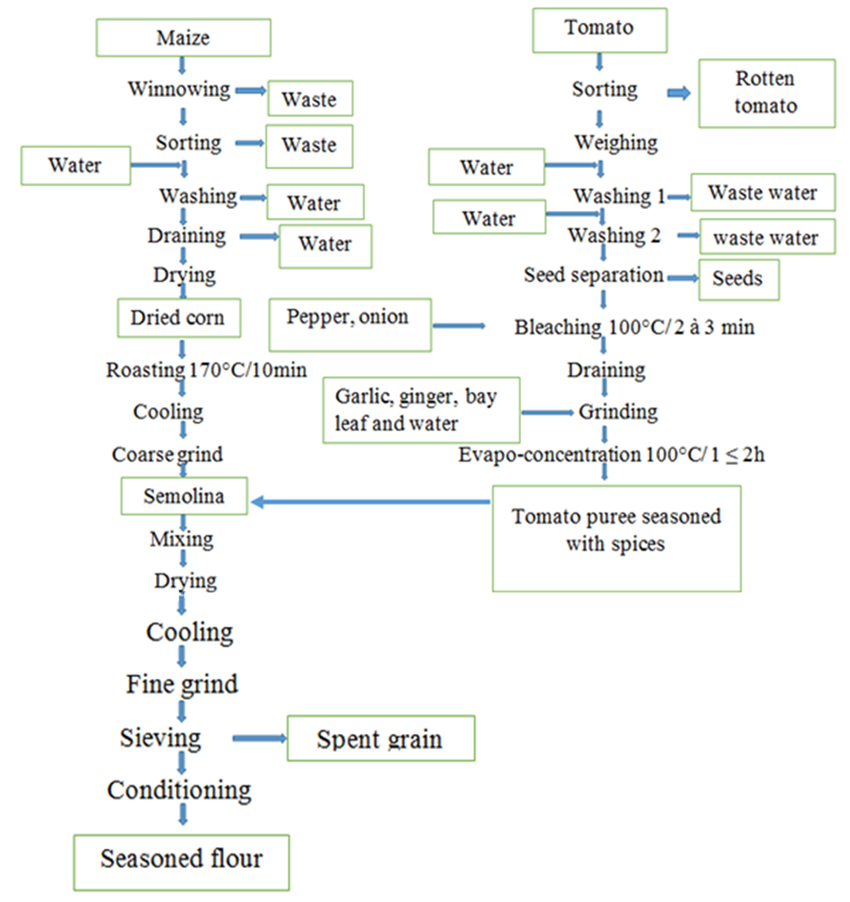
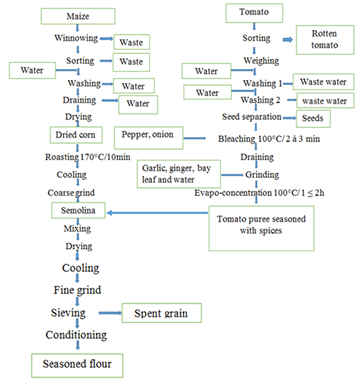
The production of seasoned flour ready for the preparation of Amiwô required several unit operations. The process is summarized in Figure 1.
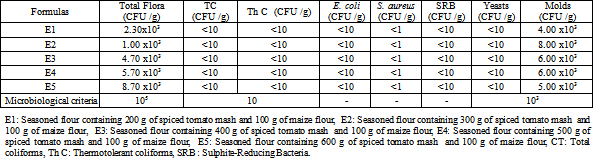
Results of the microbiological analysis of the flour obtained from the five formulas are presented in Table 2. All the seasoned flours were totally free of S. aureus. Coliforms, E. coli, sulphite-reducing bacteria and yeasts were counted at levels below 10 CFU/g of flour. The total flora was counted at levels ranging from 1.00 x10³ CFU/g to 8.70 x10³ CFU/g. The molds ranged from 4.00 x10³ to 8.00 x10³ CFU/g.
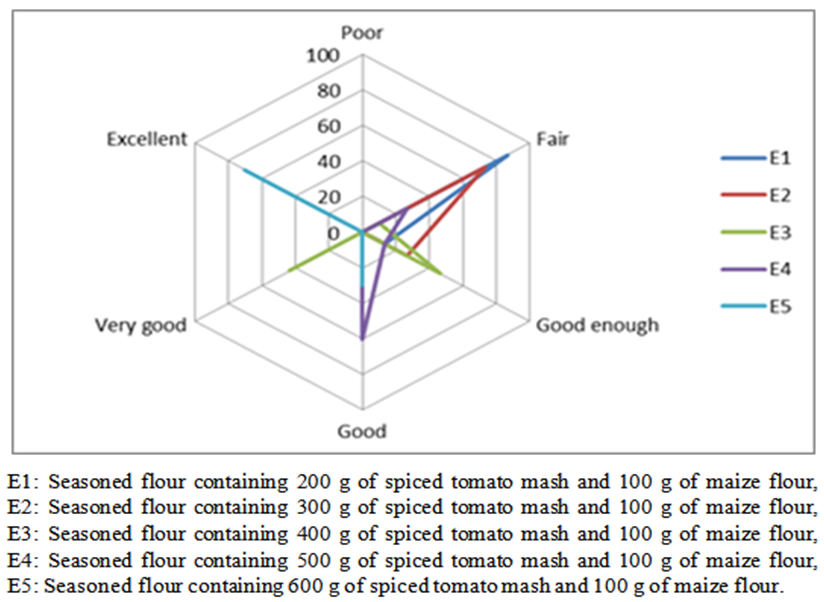
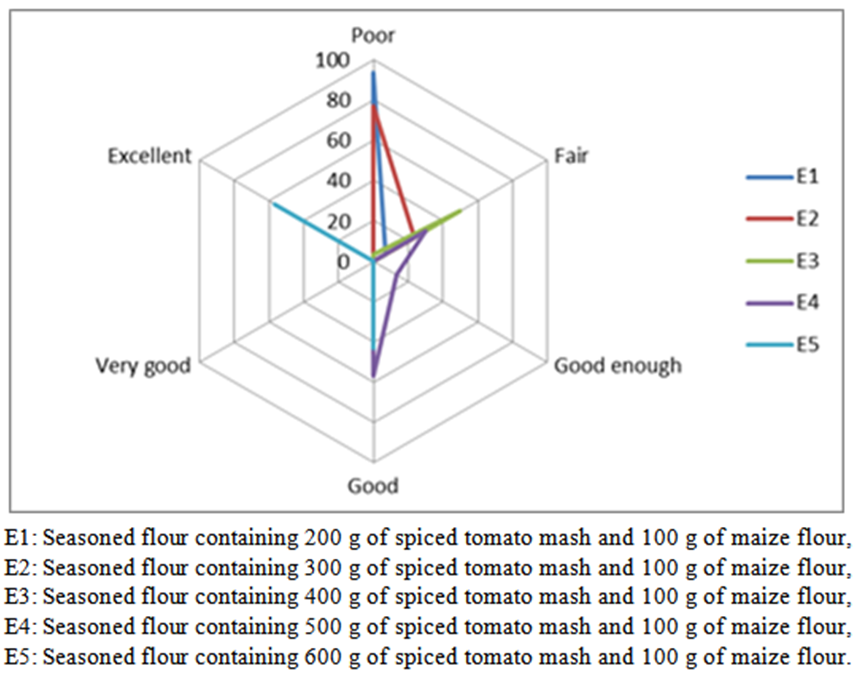
Results of the taste appreciation of Amiwô from each of the five seasoned fours are presented in Figure 2. According to 70% of the tasters, the Amiwô obtained from E5 flour (seasoned flour containing 600 g of spiced tomato mash and 100 g of maize flour) had an excellent taste, while for 43.33% of them, the Amiwô from E3 flour (seasoned flour containing 100 g of maize flour and 400 g of spiced tomato mash) tasted very good. On the other hand, 86.66% of tasters said that the taste of Amiwô E1 (from seasoned flour containing 200 g of spiced tomato mash and 100 g of maize flour) was poor.
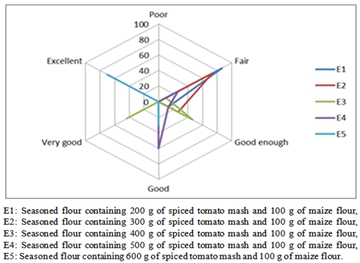
Figure 3 and Figure 4 present results of the taste and color appreciation of Amiwô from each of the five seasoned flours respectively.
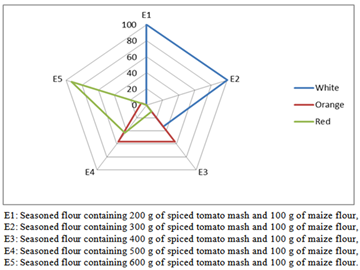
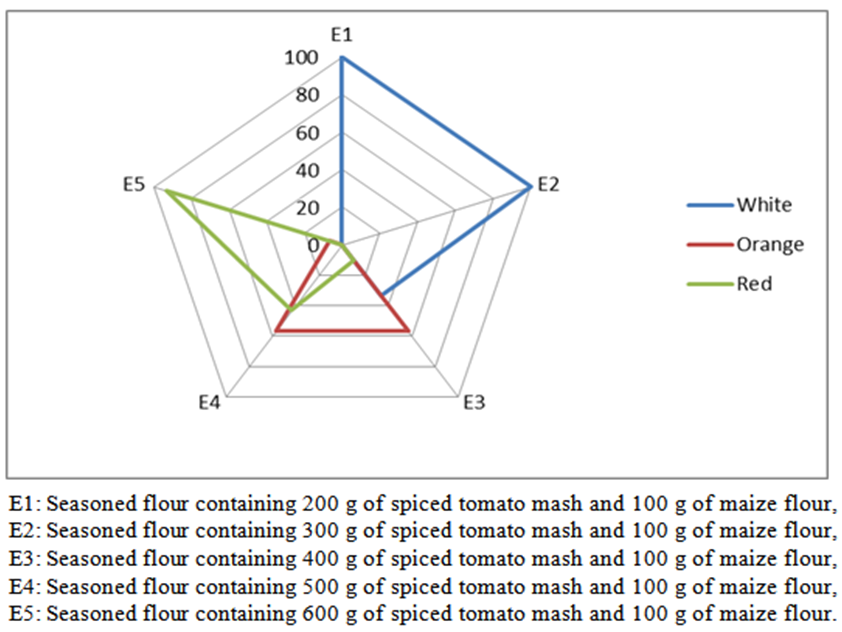
Amiwô from formula E5 flour had a red color revealed by 93.33% of tasters while those obtained from formulas E4 and E5 flours had an orange color. On the other hand, both of the paste obtained from formulas E1 and E2 flours presented a white color according to all the tasters (100% respectively).
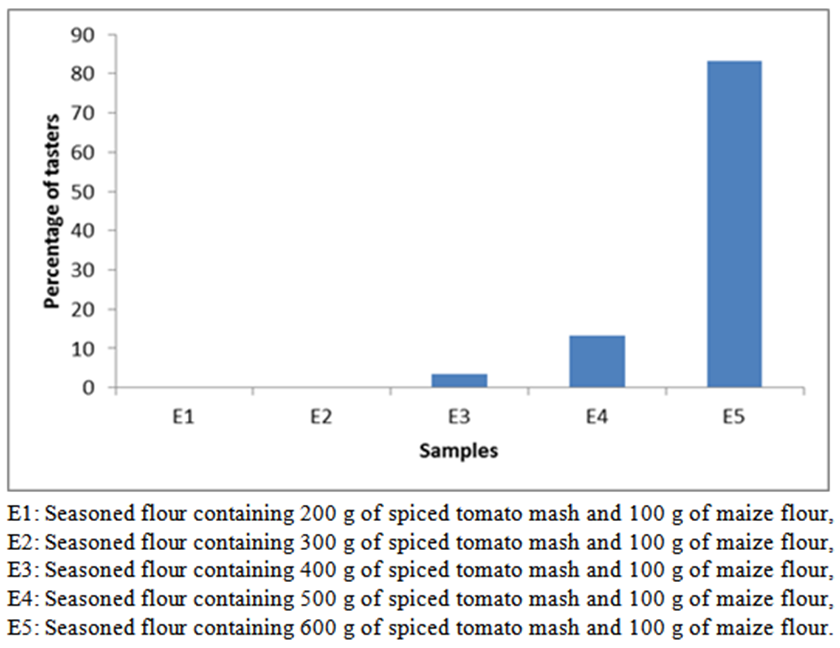
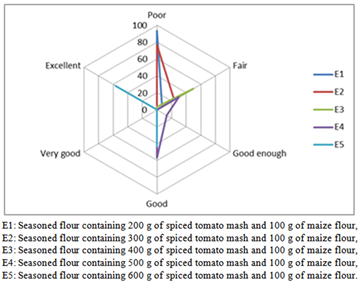
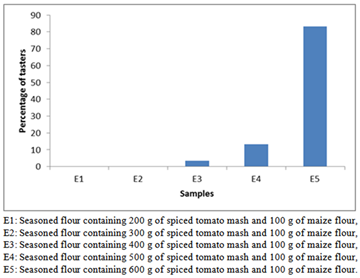
Amiwô E1 and E2 obtained the lowest scores for aroma. According respectively to 93.33 and 76.66% of the tasters, these formulas had allowed producing Amiwô whose aroma was considered poor. The aromas of the Amiwô from formulas E3 and E4 flours were judged to be good, while Amiwô from formula E5 flour had an excellent aroma according to 56.66% of tasters. To the question which of the flours do you like the most, 83.33% of the tasters have chosen formula E5 flour (Figure 5).
Ready-to-use food is in vogue all over the world. This formula allows city dwellers to save time and eat better. 13. In this context, a process to elaborate pre-seasoned maize flours intended for the production of Amiwô was developed through trials and a test of five formulas. It has shown that the blend of 100 g of maize flour with 600 g of seasoned tomato mash allowed having usable flour to produce Amiwô with accepted organoleptic quality by tasters. This acceptability could be justified by the predominance of seasoned tomato mash in this formula. Indeed, in Beninese cuisine, Amiwô refers in the Fongbé language to maize paste cooked in oil. In this language Amiwô is also called djèwô or djèwɔ̌ which in french means salty paste as opposed to Wɔ̌ (maize paste) which is cooked without oil and without salt. Amiwô is also called red paste because of its color due to the fact that it is not only cooked in oil and with salt but also with tomatoes or palm oil 14.
Unlike Wɔ̌ which is done very quickly (30 minutes to 1 hour), Amiwô takes much longer (1 hour to 2 hours or more). This relatively long time required for production is due to the time taken for the purchase of ingredients, their pre-processing and culinary preparation. The innovation proposed in this study dramatically reduces that time by incorporating the already processed and prepared ingredients into the maize flour. Indeed, reference 5 reported that the industrial dry maize–milling processes are still interesting for users because they reduce preparation time for the homemaker. It also reduces food waste by optimizing portions. According to some estimates, households that use ready-to-cook meal services can reduce their waste by 62%, a significant reduction 13.
Scientific information on the microbiological quality of seasoned maize flour is very valuable from the view point of health risk assessment from the consumption of flour. The microbiological analysis carried out on the flours produced revealed that they had acceptable microbiological quality. The total absence of S. aureus and the number of E. coli obtained from the seasoned flours produced are indicators that the hygienic conditions and good manufacturing practices were acceptable. The results obtained were better than the results of microbial contamination of flour found by 15 on maize flour from a milling company. However, the presence of certain groups of microorganisms at levels above the minimum tolerance values could be explained by the sun drying performed in this study. It is therefore essential before scaling up this technology to think about an improved dryer that can preserve the products from possible microbiological contamination.
In this study, we have highlighted the possibility of producing seasoned flour for the rapid production of Amiwô, cooked maize-based dough in West Africa. The different flour formulas proposed had an acceptable microbiological quality. Also, the sensory analyzes allowed to conclude that the formula E5 flour (containing 600 g of spices and 100 g of maize flour) was better liked by the tasters. It then becomes necessary to carry out the physico-chemical and nutritional characterization of this flour in the perspective of its popularization.
The authors thank their respective institutions for technical support.
| [1] | Van Ittersum, M. K., Van Bussel, L. G., Wolf, J., Grassini, P., Van Wart, J., Guilpart, N., ... & Cassman, K. G. (2016). Can sub-Saharan Africa feed itself?. Proceedings of the National Academy of Sciences, 113(52), 14964-14969. | ||
| In article | View Article PubMed | ||
| [2] | Van der Horst, K., Brunner, T. A., & Siegrist, M. (2011). Ready-meal consumption: associations with weight status and cooking skills. Public health nutrition, 14(2), 239-245. | ||
| In article | View Article PubMed | ||
| [3] | Serna-Saldivar S. O. and Perez Carrillo E. (2019). Chapter 16 - Food uses of whole corn and dry-milled fractions in Corn (Third Edition), AACC International Press, 435-467. | ||
| In article | View Article | ||
| [4] | Bakoyea O.N., Baouab I.B., Seynic H., Amadoua L., Murdockd L.L., Baributsad D. (2017). Quality of maize for sale in markets in Benin and Niger. Journal of Stored Products Research, 71, 99-105. | ||
| In article | View Article PubMed | ||
| [5] | Gwirtz J. A. and Garcia-Casal M. N. (2014). Processing maize flour and corn meal food products. Ann. N.Y. Acad. Sci., 1312. 66-75. | ||
| In article | View Article PubMed | ||
| [6] | Jacob, J., & Ashkenazi, M. (2006). The world cookbook for students. Greenwood Publishing Group. | ||
| In article | |||
| [7] | NF V08-051, “Food Microbiology. Enumeration of Microorganisms by Counting the Colonies Obtained at 30°C”, Routine method, 1999. | ||
| In article | |||
| [8] | NF V08-050, “Food microbiology. Coliform counts by counting the colonies obtained at 30°C”, Routine method, 1999. | ||
| In article | |||
| [9] | ISO 16649-2:2001. “Microbiologie des aliments — Méthode horizontale pour le dénombrement des Escherichia coli bêta-glucuronidase positive” — Partie 2: Technique de comptage des colonies à 44 degrés C au moyen de 5-bromo-4-chloro-3-indolyl bêta-D-glucuronate | ||
| In article | |||
| [10] | NF EN ISO 6888-1/A1, “Microbiologie des aliments - Méthode horizontale pour le dénombrement des staphylocoques à coagulase positive (Staphylococcus aureus et autres espèces) “ - Partie 1: technique utilisant le milieu gélosé de Baird-Parker-Amendement 1 : inclusion des données de fidélité, 2004. | ||
| In article | |||
| [11] | NF V08-059, “Food Microbiology. Enumeration of Yeasts and Molds by Counting Colonies at 25ºC”, Routine method. | ||
| In article | |||
| [12] | NF T90-415 “Essais des eaux - Recherche et dénombrement des spores de bactéries anaérobies sulfito-réductrices et de {Clostridium} sulfito-réducteurs” - Méthode générale par incorporation en gélose en tubes profonds. | ||
| In article | |||
| [13] | Charlebois, S (2017). Le prêt-à-cuisiner, pour ou contre? Sur le must le 15 juin 2017 (consulté le 29 août 2022). | ||
| In article | |||
| [14] | Faridah, D. (2020) « Recette: le “Amiwô” du Bénin » [archive], sur Queen MAFA, 19 juin 2020 (consulté le 26 oaût 2022) | ||
| In article | |||
| [15] | Ntuli, V., Mekbib, S. B., Asita, A. O., Molebatsi, N., Makotoko, M., & Chatanga, P. (2013). Microbial and physicochemical characterization of maize and wheat flour from a milling company, Lesotho. | ||
| In article | |||
Published with license by Science and Education Publishing, Copyright © 2022 Konfo T. R. Christian, Aissi M. Vahid, Koudoro A. Yaya, Tamou R. Alice, Dahouenon-Ahoussi Edwige and Sohounhloue C.K. Dominique
 This work is licensed under a Creative Commons Attribution 4.0 International License. To view a copy of this license, visit
http://creativecommons.org/licenses/by/4.0/
This work is licensed under a Creative Commons Attribution 4.0 International License. To view a copy of this license, visit
http://creativecommons.org/licenses/by/4.0/
| [1] | Van Ittersum, M. K., Van Bussel, L. G., Wolf, J., Grassini, P., Van Wart, J., Guilpart, N., ... & Cassman, K. G. (2016). Can sub-Saharan Africa feed itself?. Proceedings of the National Academy of Sciences, 113(52), 14964-14969. | ||
| In article | View Article PubMed | ||
| [2] | Van der Horst, K., Brunner, T. A., & Siegrist, M. (2011). Ready-meal consumption: associations with weight status and cooking skills. Public health nutrition, 14(2), 239-245. | ||
| In article | View Article PubMed | ||
| [3] | Serna-Saldivar S. O. and Perez Carrillo E. (2019). Chapter 16 - Food uses of whole corn and dry-milled fractions in Corn (Third Edition), AACC International Press, 435-467. | ||
| In article | View Article | ||
| [4] | Bakoyea O.N., Baouab I.B., Seynic H., Amadoua L., Murdockd L.L., Baributsad D. (2017). Quality of maize for sale in markets in Benin and Niger. Journal of Stored Products Research, 71, 99-105. | ||
| In article | View Article PubMed | ||
| [5] | Gwirtz J. A. and Garcia-Casal M. N. (2014). Processing maize flour and corn meal food products. Ann. N.Y. Acad. Sci., 1312. 66-75. | ||
| In article | View Article PubMed | ||
| [6] | Jacob, J., & Ashkenazi, M. (2006). The world cookbook for students. Greenwood Publishing Group. | ||
| In article | |||
| [7] | NF V08-051, “Food Microbiology. Enumeration of Microorganisms by Counting the Colonies Obtained at 30°C”, Routine method, 1999. | ||
| In article | |||
| [8] | NF V08-050, “Food microbiology. Coliform counts by counting the colonies obtained at 30°C”, Routine method, 1999. | ||
| In article | |||
| [9] | ISO 16649-2:2001. “Microbiologie des aliments — Méthode horizontale pour le dénombrement des Escherichia coli bêta-glucuronidase positive” — Partie 2: Technique de comptage des colonies à 44 degrés C au moyen de 5-bromo-4-chloro-3-indolyl bêta-D-glucuronate | ||
| In article | |||
| [10] | NF EN ISO 6888-1/A1, “Microbiologie des aliments - Méthode horizontale pour le dénombrement des staphylocoques à coagulase positive (Staphylococcus aureus et autres espèces) “ - Partie 1: technique utilisant le milieu gélosé de Baird-Parker-Amendement 1 : inclusion des données de fidélité, 2004. | ||
| In article | |||
| [11] | NF V08-059, “Food Microbiology. Enumeration of Yeasts and Molds by Counting Colonies at 25ºC”, Routine method. | ||
| In article | |||
| [12] | NF T90-415 “Essais des eaux - Recherche et dénombrement des spores de bactéries anaérobies sulfito-réductrices et de {Clostridium} sulfito-réducteurs” - Méthode générale par incorporation en gélose en tubes profonds. | ||
| In article | |||
| [13] | Charlebois, S (2017). Le prêt-à-cuisiner, pour ou contre? Sur le must le 15 juin 2017 (consulté le 29 août 2022). | ||
| In article | |||
| [14] | Faridah, D. (2020) « Recette: le “Amiwô” du Bénin » [archive], sur Queen MAFA, 19 juin 2020 (consulté le 26 oaût 2022) | ||
| In article | |||
| [15] | Ntuli, V., Mekbib, S. B., Asita, A. O., Molebatsi, N., Makotoko, M., & Chatanga, P. (2013). Microbial and physicochemical characterization of maize and wheat flour from a milling company, Lesotho. | ||
| In article | |||