Wheat bran, a by-product of roller milling during the milling process of wheat, contained substantial amounts of residual starch that may interfere with the analysis of bran’s physicochemical properties. The main objectives of this study were to develop a method that removed away most of the starch adherent to milled wheat bran and to investigate the effects of washing on the physicochemical properties (such as water binding capacity) and composition (including insoluble dietary fiber, soluble dietary fiber, total dietary fiber) of washed and non-washed wheat bran. Soft white wheat bran was washed with distilled water at room temperature and mixed with a modified Servodyne mixer to wash residual starch away from bran. The bran-starch slurry was transferred into a SoyCow presser lined with a filter cloth and rinsed to remove as much starch as possible. The washed and non-washed bran samples were dried overnight at 60°C and ground to pass through 1000 or 425 µm screens. Washing was significantly reduced starch adherent to wheat bran by 76% (w/w), a changed the contents of insoluble dietary fiber and soluble dietary fiber from 39 to 69% (w/w) and from 4.93 to 1.68% (w/w), respectively. Water binding capacity was higher for washed bran and was not affected by bran particle size. The transition onset and peak temperatures of washed wheat bran samples were significantly higher than the counterpart values of non-washed bran samples. On the other hand, transition enthalpies of washed bran samples were lower than those of non-washed bran samples.
In recent years, dietary fiber has attracted significant attention due to health care officials’ and nutritionists’ recommendations that consumption of dietary fiber can help to maintain good health 1. Dietary fiber reduced the risk of cardiovascular disease, certain forms of cancer, and constipation 2. Dietary fibers are categorized as insoluble and soluble dietary fibers, and each played a different role in human health. Insoluble dietary fiber is important for proper bowel function 3, 4 and may reduce symptoms of chronic constipation, diverticular disease, and hemorrhoids 5, 6, 7. On the other hand, soluble dietary fiber is associated with a reduction in cholesterol levels and attenuation of blood glucose 8, 9. The physiological functions of dietary fibers are related to their physicochemical properties such as water binding capacity and distribution of insoluble and soluble dietary fibers 10.
Wheat bran, a by-product of roller milling during the milling process, is rich in dietary fiber and is used by the baking industry to increase dietary fiber in baked products, especially of bread 11. It is important to know that in wheat bran, the amount of soluble dietary fiber is very low compared to that of insoluble dietary fiber, which implies that the physiological effects of wheat bran, such as proper bowel function, are attributable to the insoluble dietary fiber 12. The techniques in which fiber-containing samples are prepared to determine the hydration properties of that fiber, for example, the amount of water a fiber sample can hold in its matrix. This, in turn, can also influence a fiber’s physiological functions within the gastrointestinal tract 11. Wheat bran obtained after roller milling contained significant amounts of residual starch still adherent to it. This residual starch, if not removed, can interfere with the analyses that are used to determine the composition and physicochemical properties of wheat bran. Therefore, the major objectives of the present study were to develop a washing technique that would remove as much residual starch as possible and then study the effect of washing and particle size distribution on the composition and physicochemical properties of relatively pure wheat bran.
The non-washed wheat bran sample used in this study was milled from soft white wheat of the season 2009 and supplied by Star of the West Milling Company (Frankenmuth, MI, USA). The sample was stored at 4°C until the experiments were conducted.
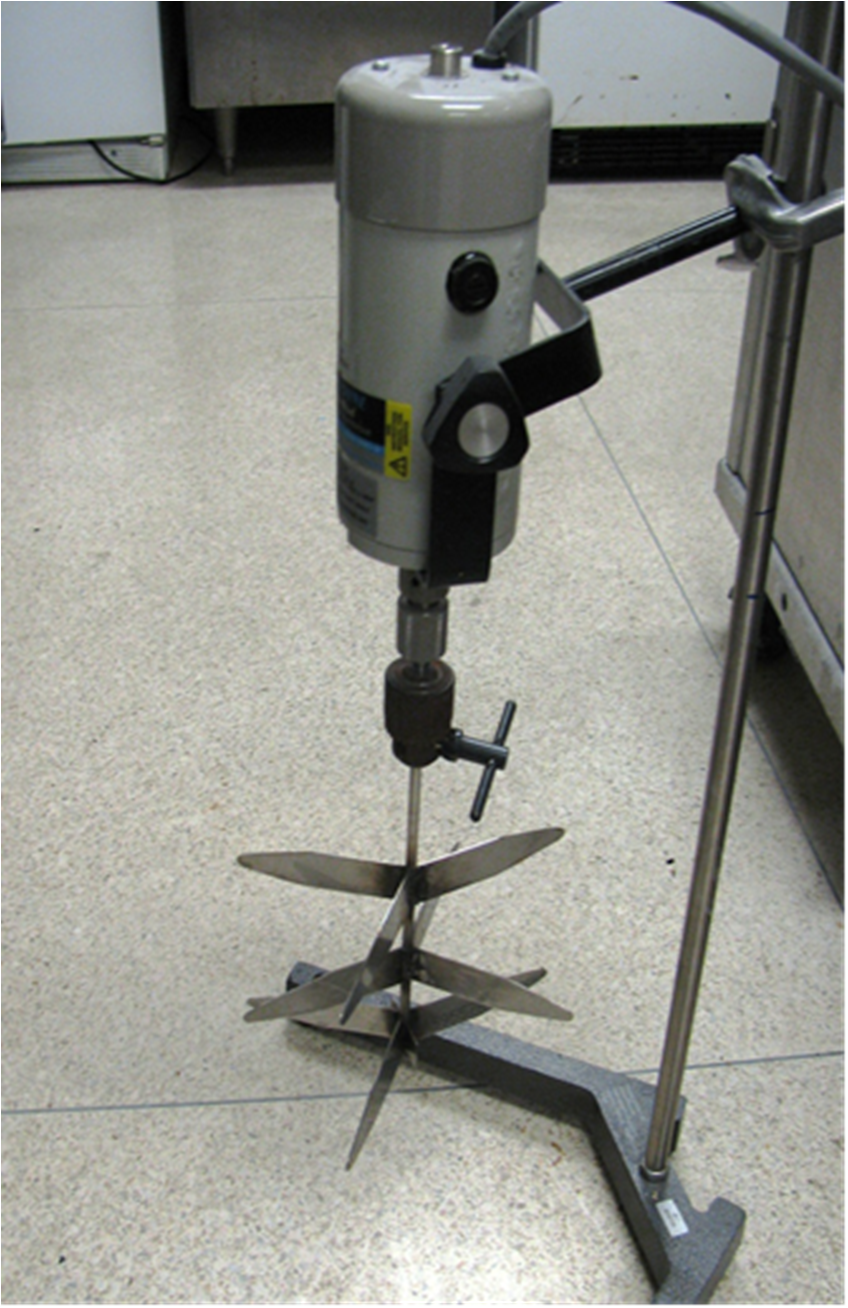
2.2. Washing of Wheat BranWashing of wheat bran was performed in batches. For each batch, 500 g of non-washed wheat bran was added to 5 l of distilled water at room temperature in a 5 gal white plastic bucket (Paragon Molding Company, Melrose Park, IL, USA) and mixed with an electronic Servodyne mixer (Cole-Palmer Instruments Company, Vernon Hills, IL, USA) at a speed of 150 rpm for 30 min to wash residual starch away from bran. The Servodyne mixer was modified by adding mixing paddles as depicted in Figure 1. After mixing, the wheat bran and starch slurry were transferred into a stainless steel SoyCow presser (ProSoya Inc., Ottawa, Canada) with a filter cloth (170 µm) laid inside the presser according to the manufacturer’s manual. The tap of the presser was opened to drain the starch slurry. Wheat bran on the filter cloth was rinsed with 5 l distilled water a second time to remove as much residual starch as possible. The washed bran (WB) and non-washed bran (NWB) were spread on 45 cm × 66 cm × 2.54 cm aluminum baking trays (WearEver, Millville, NJ, USA) and dried overnight at 60°C in a Proctor dryer (Proctor & Schwartz, Inc., Philadelphia, USA). Dried WB and NWB samples were ground using a hammer mill (Model D Comminuting Machine, W.J. Fitzpatrick Company, Chicago, Illinois, USA) to pass through a 1270 µm screen (Part Number 1532 0050, Model DAS06, W.J. Fitzpatrick Company, Chicago, Illinois, USA). NWB and WB samples were then sifted through 1000 µm (US mesh #18) or 425 μm (US mesh #40) sieves (Great Western Manufacturing Company, Leavenworth, Kansas, USA) to obtain NWB1000, NWB425, WB1000 and WB425. The samples were placed in one-gallon ziplock plastic bags and stored at 4ºC until required for analyses.
Total starch content in washed and non-washed bran was determined in triplicate according to the procedure in the total starch assay kit (Megazyme International Ireland Ltd. Co., Wicklow, Ireland). Briefly, approximately 100 mg of bran sample were placed in 17 ml glass test tubes followed by addition of 0.2 ml of 80% (v/v) ethanol to aid in dispersing the sample. Three ml of thermostable α-amylase (3,000 U/ml of Ceralpha reagent) diluted (1:30) in sodium acetate buffer (100 mM, pH 5.0) were immediately added to the samples and the tubes were incubated in a boiling water bath (Blue M, Blue Island, IL, USA) for 6 min with vortexing at 2, 4, and 6 min. The tubes were then placed in a water bath (Blue M, Blue Island, IL, USA) at 50ºC and 0.1 ml of amyloglucosidase (3300 U/ml of soluble starch) was immediately added to each tube. The samples were incubated for 30 min. After incubation, the contents of the test tubes were transferred to 100 ml volumetric flasks and the volume adjusted with deionized water to 100 ml. The contents of the volumetric flasks were then transferred to 150 ml beakers and 3 ml of the contents were placed in plastic centrifuge tubes and centrifuged at 1800 × g for 10 min at 25°C. For each sample, a 0.1 ml aliquot of the clear supernatant was pipetted to the bottom of a 15 ml test tube, followed by addition of 3 ml of glucose oxidase-peroxidase-aminoantipyrine (GOPOD) reagent. The samples were incubated in the water bath at 50°C for 20 min. A spectrophotometer (Spectronic 5, Spectronic Instruments Inc., Rochester, NY, USA) was used to measure the absorbance for each sample at 510 nm against the reagent blank (0.1 ml of deionized water and 3 ml of GOPOD reagent). Total starch (%) on a dry weight basis was calculated based on formulas outlined in the total starch kit: Starch % w/w (as is) 
The thermal properties of non-washed and washed wheat bran samples were studied by a Differential Scanning Calorimetry (DSC Model Q100 V9.9 Build 303, Greifensee, Switzerland). Each sample was weighed into a DSC aluminum pan and 20 µl of distilled water was added using a micro-syringe. The sample was hermetically sealed and the moisture was allowed to equilibrate overnight at room temperature. Samples were heated from 20 to 200°C at the heating rate of 10°C/min. A sealed empty pan was used as a reference. Transition onset temperature (To), transition peak temperature (Tp), and transition enthalpy (∆H) were recorded and analyzed using DSC software (Universal V4. 7A, TA Instruments, Newcastle, DE, USA).
2.5. Determination of Insoluble, Soluble, and Total Dietary Fiber ContentInsoluble, soluble, and total dietary fiber contents in washed and non-washed bran were measured according to the procedure in the total dietary fiber assay kit (Megazyme International Ireland Ltd. Co., Wicklow, Ireland). The kit contained three enzymes, thermostable α-amylase (3000 Ceralpha U/ml), protease (350 Tyrosine U/ml), and amyloglucosidase (3300 U/ml of soluble starch), that were used to hydrolyze and depolymerize starch after it was gelatinized, solubilize and depolymerize proteins, and hydrolyze starch fragments to glucose, respectively. MES/TRIS buffer, 0.05M, was prepared by dissolving 19.52 g 2-(N-Morpholino) ethanesulfonic acid hydrate (MES) (M8250, Sigma-Aldrich, St. Louis, MO, USA) and 14.2 g TRIS (hydroxymethyl) aminomethane (T1503, Sigma-Aldrich, St. Louis, MO, USA) in 1.7 l deionized water; the pH was adjusted to pH 8.2 with 6.0 N NaOH. The buffer was then diluted to 2 l with deionized water and its pH adjusted to 8.3 at 20°C. Other reagent chemicals used for total dietary fiber assay included ethanol (KOPTEC, King of Prussia, PA, USA), acetone (Sigma-Aldrich, St. Louis, MO, USA) and hydrochloric acid (EMD Chemicals Inc., Gibbstown, NJ, USA).
To determine insoluble, soluble, and total dietary fiber contents, approximately one gram of ground bran was weighed into a 400 ml tall-form beaker followed by addition of 40 ml of MES/TRIS buffer. The beakers were gently swirled until bran particles were completely dispersed in the buffer solution. 50 μl of heat-stable α-amylase were added to the beakers containing samples. The beakers were swirled, covered with aluminum foil, and incubated in a boiling water bath (Blue M, Blue Island, IL, USA) for 35 min with continuous shaking. After incubation with heat-stable α-amylase, the samples were cooled to 60°C and any rings around beakers were scraped down with a spatula and rinsed with 10 ml of deionized water. To every sample, 100 μl of protease were added before the samples were incubated for 30 min in a shaking water bath at 60°C. The samples were then removed from the water bath and 5 ml of 0.561 N HCl were added to each sample to bring the pH from 4.1 to 4.8. After pH adjustment, the samples were subjected to 200 μl of amyloglucosidase and incubated for 30 min in a shaking water bath at 60°C. After amyloglucosidase treatment, the samples were filtered through cleaned [Micro-90 concentrated cleaning solution (Z281506, Sigma-Aldrich, St. Louis, MO, USA)] Pyrex Gooch Crucibles (CLS329450, Sigma-Aldrich, St.Louis MO, USA) containing 0.5 g celite (C8656, Sigma-Aldrich, St. Louis, MO, USA). Each residue was washed twice with 10 ml of deionized water preheated to 70°C, and the filtrate and water washings were stored for soluble dietary fiber analysis. Each residue was then washed twice with 10 ml of 95% ethanol and 10 ml acetone. The crucibles containing washed residues were dried overnight in the convection oven (Model 737F, Fisher Scientific, Itasca, IL, USA) at 103°C. After drying, the samples were weighed and one was used to determine protein content while the other was incinerated to determine ash content. Percent insoluble dietary fiber was calculated using the formula stated in the Total Dietary Fiber Megazyme Kit: 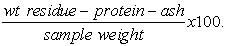
Soluble dietary fiber was determined by adding four volumes of 95% ethanol preheated to 60°C to filtrate and washings from the insoluble dietary fiber step and allowing soluble fiber to precipitate for 60 min at room temperature. The soluble fiber precipitate was filtered through crucibles containing celite. In sequence, the residue was washed twice with 15 ml of 78% ethanol, then twice with 15 ml of 95% ethanol, and finally twice with 15 ml acetone. The crucibles containing soluble fiber residues were dried overnight in the convection oven (Model 737F, Fisher Scientific, Itasca, IL, USA) at 103°C. The percentage of soluble dietary fiber was calculated using the formula stated in the Total Dietary Fiber Megazyme Kit: 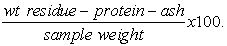 Total dietary fiber in washed and non-washed samples was calculated as the sum of insoluble dietary fiber plus soluble dietary fiber.
Water binding capacity of non-washed and washed wheat bran samples was measured in triplicate according to AACCI Approved Method 56-30 (AACCI 2000) with some modifications. 30 ml of deionized water were added to approximately one gram of bran sample in pre-weighed plastic centrifuge tubes. The tubes were vortex-mixed to ensure that all the bran particles were thoroughly wetted. The samples were allowed to hydrate for 30 min with hand shaking after 10, 20, and 30 min. The tubes were centrifuged (Model J2-21M, Beckman Instruments Inc., Fullerton, CA, USA) at 5000 × g for 30 min at 20°C. The supernatants were carefully decanted and the tubes were inverted for 10 min to allow free drain. The tubes containing sediments were then weighed and the difference between the dry and wet weights was calculated as the water binding capacity.
2.7. Proximate Composition of Non-washed and Washed BransAsh and moisture contents of washed and non-washed bran samples were determined according to AACCI Approved Methods 08-01 and 44-19, respectively (AACCI 2000). The protein contents in non-washed and washed bran were determined by Leco Nitrogen Combustion Analyzer (Model FP-2000, Leco Inc., St. Joseph, MI, USA). A factor of 5.7 was used to calculate crude protein. Total fat contents were determined using Soxhlet extraction apparatus according to AACCI Approved Method 30-25 with modifications. Samples were placed in 30 mm × 80 mm thimbles and extracted for 24 h. Following extraction, petroleum ether was removed from the sample by a rotary evaporator. The fat remaining in round bottom flasks was dried at 100°C in the convection oven (Model 737F, Fisher Scientific, Itasca, IL, USA) for 1 h.
2.8. Statistical AnalysisAll statistical analyses were performed using SAS version 9.2 (SAS Institute Inc., Cary, NC, USA). Analysis of variance (ANOVA) was performed using the general linear model (GLM) procedure to determine significant differences among the samples. Means were compared using Fisher’s Least Significant Difference (LSD) procedure. Significance was defined at the 5% level.
Table 1 showed that washing decreased total starch contents in NWB425 and NWB1000 by over 70%. Total starch was significantly higher in NWB425 than in NWB1000, and in WB425 than in WB1000. The onset transition temperatures (To) and peak transition temperatures (Tp) of washed bran samples (WB425 and WB1000) were significantly higher than those of non-washed bran samples (NWB425 and NWB1000), whereas the transition enthalpies (∆H) of washed bran samples were significantly lower than those of the non-washed bran samples (Table 2). The insoluble dietary fiber (IDF), soluble dietary fiber (SDF), and total dietary fiber (TDF) contents of NWB425, NWB1000, WB425, and WB1000 are listed in Table 3. The IDF content in NWB1000 was 21.5% higher than in NWB425. Also, the larger particle size (1000µm) had 21% higher contents of SDF than that of the smaller particle size (425µm). IDF content was significantly higher in WB425 and WB1000 than in NWB425 and NWB1000 by 42.3% and 27.3%, respectively. SDF contents were also significantly reduced by washing. SDF was 50.5% lower in WB425 compared to NWB425, whereas SDF was decreased by 65.9% in WB1000 relative to NWB1000. Water binding capacity (WBC) was significantly greater for the larger particle size bran (Table 4). For the non-washed bran samples, the larger particle size (1000µm) had a WBC 31% greater than that of the smaller particle size (425µm) bran sample. Washing decreased protein content from 14.7% in NWB425 to 11.5% in WB425 and from 15.7% in NWB1000 to 13.6% in WB1000 (Table 5).
The higher value for total starch content in NWB425 may be caused by flour that ends up in the bran fraction during the process of flour milling. Starchy endosperm that is loosely attached to the bran may also easily pass through the larger sieves (e.g., 1000 µm) during sifting and ultimately increase total starch content in NWB425. It is difficult to compare the total starch results of washed bran to published data because this is the first study to look at washed wheat bran. Ralet et al. 12 and Xie et al. 13 measured the total starch of native wheat bran and obtained 18.60% and 17.96%, respectively, which are within the range of total starch contents of both NWB425 and NWB1000 in the present study.
4.2. Effect of Washing on the Thermal Properties of Non-washed and Washed Wheat Bran Starch SamplesResults of the thermal properties indicated that the onset transition temperatures (To) and peak transition temperatures (Tp) of washed bran samples (WB425 and WB1000) were significantly different. Seib 14 pointed out that the onset and peak transition temperatures of starch granules are affected by the particle size distribution, with smaller particle starch granules (B-type starch) exhibiting lower gelatinization temperatures, whereas large particle size granules (A-type starch) exhibited higher gelatinization temperatures. However, in the present study, the differences in the gelatinization onset temperatures and gelatinization peak temperatures of non-washed and washed bran starch samples are thought to be caused by the differences in the water-binding capacities among the bran samples. The fact that washed wheat bran samples bound more water than non-washed bran samples may explain why the onset and peak transition temperatures of washed wheat bran starch were higher than those of non-washed wheat bran starch. It is possible that the ability of washed wheat bran to absorb more water reduced the water required for gelatinization of washed wheat bran starch, thereby increasing onset and peak transition temperatures. In the present study, the differences in the values of ∆H in non-washed and washed bran samples may be caused by different amounts of total starch present in these samples. The higher the concentration of starch in the sample, the greater the energy required for gelatinization to take place, thereby increasing the values of ∆H. The lower values of total starch and transition enthalpy in washed bran samples indicated that the method developed in the present study to wash away most of the residual starchy endosperm from wheat bran was effective.
4.3. Insoluble Dietary Fiber, Soluble Dietary Fiber, and Total Dietary FiberWashing of wheat bran significantly increased the insoluble dietary fiber (IDF) but decreased soluble dietary fiber (SDF). The dietary fiber contents of NWB425 and NWB1000 are in the range of those reported by previous studies 15, 16, 17. There is no published data available for comparison of dietary fiber contents of washed bran since this is the first study to determine dietary fiber contents of WB. The IDF content in NWB1000 was 21.5% higher than in NWB425. Also, the larger particle size (1000µm) had 21% higher contents of SDF than that of the smaller particle size (425µm). IDF content was significantly higher in WB425 and WB1000 than in NWB425 and NWB1000 by 42.3% and 27.3%, respectively. SDF contents were also significantly reduced by washing. SDF was 50.5% lower in WB425 compared to NWB425, whereas SDF was decreased by 65.9% in WB1000 relative to NWB1000. The increase in IDF contents in the washed bran samples was mainly due to the loss of starch, water-soluble proteins, and other soluble polysaccharides during washing. Significant decreases in SDF contents in washed wheat bran compared to non-washed bran indicate that the residual starch still adherent to wheat bran after roller milling contains significant amounts of soluble fiber. Understanding how dietary fiber varied in different layers can help in developing processing techniques that can alter physicochemical properties and the proportion of insoluble and soluble dietary fiber in wheat bran 18.
4.4. Water Binding Capacity of Non-washed and Washed Bran SamplesWater binding capacity (WBC) referred to the amount of water that a quantity of dry sample retained after centrifugation 19. The results obtained from the present study showed that WBC was affected by washing and bran particle size. The WBC results of non-washed bran samples are consistent with those published in the literature 20, 21, 22 who reported increases in WBC with increasing wheat bran particle size. Washing increased the WBC of WB1000 by 28% and of WB425 by 51% relative to their counterpart NWB samples. However, WBC was not significantly affected by the particle size of the washed wheat bran samples. The higher WBC of NWB1000 as compared to NWB425 was probably related to the presence of greater amounts of soluble dietary fiber in non-washed wheat bran. Because insoluble fibers absorb water in the manner of a sponge 23, washing to remove starchy endosperm from the bran results in the exposure of previously blocked pores and sponge-like cell structures, which may enable the WB particles to hold more water. Robertson and Eastwood 24 reported that fibers that loosely bind water increased stool weight whereas those that strongly bind water had little or no effect on stool weight.
4.5. Proximate Compositions (Dry Weight Basis) of Non-washed and Washed Wheat BranIt is clear from the results of the present study that the washing of milled bran resulted in a net decrease in protein. The decrease in protein content in washed bran samples suggested that some protein was removed along with residual endosperm adherent to wheat bran during the process of washing. However, it is important to understand that most of the protein in washed bran came from non-protein nitrogen. In general, fat contents were neither significantly different for NWB425 and WB425 nor for NWB1000 and WB1000. Fat contents in washed and non-washed bran samples are consistent with findings by other studies 25, 26. However, fat content was higher in NWB1000 and WB1000 than in NWB425 and WB425. It is possible that large particle-sized bran contained more of the germ portion of wheat than the smaller particle-sized bran.
In general, the ash contents were significantly different among the NWB425, WB425, NWB1000, and WB1000 samples, but significantly higher in the larger particle-sized bran samples. Washing process significantly affected ash contents in wheat bran samples. Ash content increased from 4.48% in NWB425 to 5.38% in WB425 and from 6.73% in NWB1000 to 6.98% in WB1000. The lower ash contents in NWB425 and NWB1000 may be attributed to higher amounts of flour in these bran samples (i.e., a dilution effect). The NWB ash values in the present study are comparable to those reported in the literature 27.
The washing process described in the present study removed a significant amount of starchy endosperm adherent to wheat bran after milling. Washing removed starchy endosperm, thereby modifying the thermal properties of the washed bran components. Washing significantly changed the contents of IDF and SDF. Particle size was not associated with significant differences in TDF, IDF, and SDF contents of washed wheat bran. The water-binding capacity of NWB425 was significantly lower than that of NWB1000. Water binding capacities of WB425 and WB1000 were not significantly different from each other, but significantly higher than those of their counterpart non-washed bran samples. Overall, the results from this study indicated that the presence of residual starchy endosperm on milled wheat bran can easily interfere with analyses to determine the bran samples’ physicochemical properties and composition.
| [1] | Mcclearly, B. V. An integrated procedure for the measurement of total dietary fiber (including resistant starch), non-digestible oligosaccharides and available carbohydrates. Anal. Bional. Chem, 2007; 389: 291-308. | ||
| In article | View Article PubMed | ||
| [2] | Park Y, Hunter DJ, Spiegelman D, Bergkvist L, Berrino F, Van Den Brandt PA, Buring JE, Colditz GA, Freudenheim JL, Fuchs CS, Giovannucci E, Goldbohm RA, Grahams S, Harnack L, Hartman AM, Jacobs DR, Kato I, Krogh V, Leitzmann MF, McCullough ML, Miller AB, Pietinen P, Rohan TE, Schatzkin A, Willet WC, Wolk A, Zeleniuch-Jacquotee A, Shumin-Zhang SM, Smith-Warner SA. (2005). Dietary fiber intake and the risk of colorectal cancer. J. Am. Med. Ass., 294 (22): 2849-2857. | ||
| In article | View Article PubMed | ||
| [3] | Anderson A. & Eastwood MA. (1986) Flow characteristics and water retention properties of wheat bran. J. Sci. Food Agri., 58: 185-196. | ||
| In article | View Article | ||
| [4] | Cummings, JH., Southgate, DAT, Branch W, Houston H, Jenkins, DJA, and James, WPT. (1978), Colonic response to dietary fiber from carrot, cabbage, apple, bran and guar gum. Lancet, 1: 5-9. | ||
| In article | View Article | ||
| [5] | Painter, NS & Burkitt, DP. (1975). Diverticular disease of the colon: a deficiency disease of western civilization. Brit. Med. J, 1975; 2: 450-454. | ||
| In article | View Article PubMed | ||
| [6] | Burkitt, DP. 1977. Food Fiber: Benefits from a surgeon’s perspective. (1977). Cereal Food World, 22: 6-9. | ||
| In article | |||
| [7] | Cummings, JH, Hill, MJ, Jivraj T, Houston H, Branch WJ, Jenkins DJA. (1979). The effect of meat protein and dietary fiber on colonic function and metabolism: changes in bowel habit, bile acid excretion, and calcium absorption. Am. J. Clin. Nutr., 32: 2086-2093. | ||
| In article | View Article PubMed | ||
| [8] | Kantor LS, Variyam JN, Allshouse JE, Putman JJ, Lin BH. (2001). Choose a variety of grains daily, especially whole grains: a challenge for consumers. J. Nutr., 131: 473-486. | ||
| In article | View Article PubMed | ||
| [9] | Drecker E, Beecher G, Slavin J, Miller HE, Marquart L. (2002). Whole grains as source of antioxidants. Cereal Foods World, 47(8): 370-373. | ||
| In article | |||
| [10] | Schneeman, BO. Building scientific consensus: the importance of dietary fiber. (1999). Am. J.Clin. Nutr., 25: 691-699. | ||
| In article | |||
| [11] | Pomeranz Y, Shogren M, Finney KF, Bechtel DB. (1977). Fiber in breadmaking process-effect on functional properties. Cereal Chem., 54: 25-41. | ||
| In article | |||
| [12] | Anderson JW. (1985). Physiological and Metabolic Effects of Dietary Fiber. Fed. Proc., 44: 2902-2906. | ||
| In article | |||
| [13] | Ralet MC, Thibault JF, Della Valle G. (1990). Influence of extrusion cooking on the physicochemical properties of wheat bran. J. Cereal Sci., 11: 249-59. | ||
| In article | View Article | ||
| [14] | Xie X, Cui SW, Li W, Tsao R. (2008). Isolation and characterization of wheat bran starch. Food Res. Int., 41: 882-887. | ||
| In article | View Article | ||
| [15] | Seib PA. (1994). Wheat starch: isolation, structure and properties. J. Appl. Glycosci., 41: 49-69. | ||
| In article | |||
| [16] | Nandini CD, Silimath PV. (2001). Carbohydrate composition of wheat, wheat bran, sorghum, and bajra with good chapatti/roti (Indian flat bread) making quality. Food Chem., 73: 197-203. | ||
| In article | View Article | ||
| [17] | Esposito F, Arlotti G, Bonifati AM, Napolitano A, Vitale D, Fogliano V. (2005). Antioxidant activity and dietary fiber in durum wheat bran by-products. Food Res. Int., 38: 1167-1173. | ||
| In article | View Article | ||
| [18] | Biligicli N, Ibanoglu S, Herken EN. (2007). Effect on dietary fibre addition on the selected nutritional properties of cookies. J. Food Eng., 78:86-89. | ||
| In article | View Article | ||
| [19] | Claye SS, Idouraine A, Weber CW. (1996). Extraction and fractionation of insoluble fiber from five fiber sources. Food Chem., 57(2): 305-310. | ||
| In article | View Article | ||
| [20] | Dexter JE, & Wood PJ. (1996). Recent Publications of debranning of wheat before milling. Trends Food Sci.Tech., 7: 35-40. | ||
| In article | View Article | ||
| [21] | Cadden AM. (1987). Comparative effects of particle size reduction on physical structure and water binding properties of several plant fibers. J. Food Sci., 52(6): 1595-1599. | ||
| In article | View Article | ||
| [22] | Blackwood AD, Salter PW, Dettmar PW, Chaplin MF. (2000). Dietary fibre, physicochemical properties and their relationship to health. J. R. Soc. Promot. Health, 120(4): 242-247. | ||
| In article | View Article PubMed | ||
| [23] | Zhang D & Moore WR. (1997). Effect of wheat bran particle size on dough rheological properties. J Sci. Food Agric., 74:490-496. | ||
| In article | View Article | ||
| [24] | Eastwood MA, Robertson JA, Brydon WG, & MacDonald D. (1983). Measurement of water-holding capacities of fiber and their fecal bulking ability in man. Brit. J. Nutr., 50: 539. | ||
| In article | View Article PubMed | ||
| [25] | Robertson JA & Eastwood MA. (1981). A method to measure the water-holding properties of dietary fiber using suction pressure. Brit. J. Nutr., 46: 247. | ||
| In article | View Article PubMed | ||
| [26] | Caprez A, Arrigoni E, Amado R, Neukom H. (1986). Influence of different types of thermal treatment on the chemical composition and physical properties of wheat bran. J. Cereal Sci., 4: 233-239. | ||
| In article | View Article | ||
| [27] | Gualberto DG, Bergman, CJ, Kazemzadeh M, Weber CW. (1997). Effect of extrusion processing on the soluble and insoluble fiber, and phytic acid contents of cereal brans. Plant Food Hum. Nutr., 51: 187-198. | ||
| In article | View Article PubMed | ||
| [28] | Shenoy HA & Prakash J. (2002). Wheat bran (Triticum aestvum): Composition, functionality, and incorporation in unleavened bread. J. Food Quality, 25: 197-211. | ||
| In article | View Article | ||
Published with license by Science and Education Publishing, Copyright © 2022 George Nyombaire and Perry K.W. Ng
 This work is licensed under a Creative Commons Attribution 4.0 International License. To view a copy of this license, visit
http://creativecommons.org/licenses/by/4.0/
This work is licensed under a Creative Commons Attribution 4.0 International License. To view a copy of this license, visit
http://creativecommons.org/licenses/by/4.0/
| [1] | Mcclearly, B. V. An integrated procedure for the measurement of total dietary fiber (including resistant starch), non-digestible oligosaccharides and available carbohydrates. Anal. Bional. Chem, 2007; 389: 291-308. | ||
| In article | View Article PubMed | ||
| [2] | Park Y, Hunter DJ, Spiegelman D, Bergkvist L, Berrino F, Van Den Brandt PA, Buring JE, Colditz GA, Freudenheim JL, Fuchs CS, Giovannucci E, Goldbohm RA, Grahams S, Harnack L, Hartman AM, Jacobs DR, Kato I, Krogh V, Leitzmann MF, McCullough ML, Miller AB, Pietinen P, Rohan TE, Schatzkin A, Willet WC, Wolk A, Zeleniuch-Jacquotee A, Shumin-Zhang SM, Smith-Warner SA. (2005). Dietary fiber intake and the risk of colorectal cancer. J. Am. Med. Ass., 294 (22): 2849-2857. | ||
| In article | View Article PubMed | ||
| [3] | Anderson A. & Eastwood MA. (1986) Flow characteristics and water retention properties of wheat bran. J. Sci. Food Agri., 58: 185-196. | ||
| In article | View Article | ||
| [4] | Cummings, JH., Southgate, DAT, Branch W, Houston H, Jenkins, DJA, and James, WPT. (1978), Colonic response to dietary fiber from carrot, cabbage, apple, bran and guar gum. Lancet, 1: 5-9. | ||
| In article | View Article | ||
| [5] | Painter, NS & Burkitt, DP. (1975). Diverticular disease of the colon: a deficiency disease of western civilization. Brit. Med. J, 1975; 2: 450-454. | ||
| In article | View Article PubMed | ||
| [6] | Burkitt, DP. 1977. Food Fiber: Benefits from a surgeon’s perspective. (1977). Cereal Food World, 22: 6-9. | ||
| In article | |||
| [7] | Cummings, JH, Hill, MJ, Jivraj T, Houston H, Branch WJ, Jenkins DJA. (1979). The effect of meat protein and dietary fiber on colonic function and metabolism: changes in bowel habit, bile acid excretion, and calcium absorption. Am. J. Clin. Nutr., 32: 2086-2093. | ||
| In article | View Article PubMed | ||
| [8] | Kantor LS, Variyam JN, Allshouse JE, Putman JJ, Lin BH. (2001). Choose a variety of grains daily, especially whole grains: a challenge for consumers. J. Nutr., 131: 473-486. | ||
| In article | View Article PubMed | ||
| [9] | Drecker E, Beecher G, Slavin J, Miller HE, Marquart L. (2002). Whole grains as source of antioxidants. Cereal Foods World, 47(8): 370-373. | ||
| In article | |||
| [10] | Schneeman, BO. Building scientific consensus: the importance of dietary fiber. (1999). Am. J.Clin. Nutr., 25: 691-699. | ||
| In article | |||
| [11] | Pomeranz Y, Shogren M, Finney KF, Bechtel DB. (1977). Fiber in breadmaking process-effect on functional properties. Cereal Chem., 54: 25-41. | ||
| In article | |||
| [12] | Anderson JW. (1985). Physiological and Metabolic Effects of Dietary Fiber. Fed. Proc., 44: 2902-2906. | ||
| In article | |||
| [13] | Ralet MC, Thibault JF, Della Valle G. (1990). Influence of extrusion cooking on the physicochemical properties of wheat bran. J. Cereal Sci., 11: 249-59. | ||
| In article | View Article | ||
| [14] | Xie X, Cui SW, Li W, Tsao R. (2008). Isolation and characterization of wheat bran starch. Food Res. Int., 41: 882-887. | ||
| In article | View Article | ||
| [15] | Seib PA. (1994). Wheat starch: isolation, structure and properties. J. Appl. Glycosci., 41: 49-69. | ||
| In article | |||
| [16] | Nandini CD, Silimath PV. (2001). Carbohydrate composition of wheat, wheat bran, sorghum, and bajra with good chapatti/roti (Indian flat bread) making quality. Food Chem., 73: 197-203. | ||
| In article | View Article | ||
| [17] | Esposito F, Arlotti G, Bonifati AM, Napolitano A, Vitale D, Fogliano V. (2005). Antioxidant activity and dietary fiber in durum wheat bran by-products. Food Res. Int., 38: 1167-1173. | ||
| In article | View Article | ||
| [18] | Biligicli N, Ibanoglu S, Herken EN. (2007). Effect on dietary fibre addition on the selected nutritional properties of cookies. J. Food Eng., 78:86-89. | ||
| In article | View Article | ||
| [19] | Claye SS, Idouraine A, Weber CW. (1996). Extraction and fractionation of insoluble fiber from five fiber sources. Food Chem., 57(2): 305-310. | ||
| In article | View Article | ||
| [20] | Dexter JE, & Wood PJ. (1996). Recent Publications of debranning of wheat before milling. Trends Food Sci.Tech., 7: 35-40. | ||
| In article | View Article | ||
| [21] | Cadden AM. (1987). Comparative effects of particle size reduction on physical structure and water binding properties of several plant fibers. J. Food Sci., 52(6): 1595-1599. | ||
| In article | View Article | ||
| [22] | Blackwood AD, Salter PW, Dettmar PW, Chaplin MF. (2000). Dietary fibre, physicochemical properties and their relationship to health. J. R. Soc. Promot. Health, 120(4): 242-247. | ||
| In article | View Article PubMed | ||
| [23] | Zhang D & Moore WR. (1997). Effect of wheat bran particle size on dough rheological properties. J Sci. Food Agric., 74:490-496. | ||
| In article | View Article | ||
| [24] | Eastwood MA, Robertson JA, Brydon WG, & MacDonald D. (1983). Measurement of water-holding capacities of fiber and their fecal bulking ability in man. Brit. J. Nutr., 50: 539. | ||
| In article | View Article PubMed | ||
| [25] | Robertson JA & Eastwood MA. (1981). A method to measure the water-holding properties of dietary fiber using suction pressure. Brit. J. Nutr., 46: 247. | ||
| In article | View Article PubMed | ||
| [26] | Caprez A, Arrigoni E, Amado R, Neukom H. (1986). Influence of different types of thermal treatment on the chemical composition and physical properties of wheat bran. J. Cereal Sci., 4: 233-239. | ||
| In article | View Article | ||
| [27] | Gualberto DG, Bergman, CJ, Kazemzadeh M, Weber CW. (1997). Effect of extrusion processing on the soluble and insoluble fiber, and phytic acid contents of cereal brans. Plant Food Hum. Nutr., 51: 187-198. | ||
| In article | View Article PubMed | ||
| [28] | Shenoy HA & Prakash J. (2002). Wheat bran (Triticum aestvum): Composition, functionality, and incorporation in unleavened bread. J. Food Quality, 25: 197-211. | ||
| In article | View Article | ||