Mosquitos continue to be insects of global attention for several centuries due to their ability to inhabit a wide range of ecological conditions that enable them to breed in diversified environments. The Anopheles species particularly the female mosquito is the main vector for malaria transmission in human. In Tanzania, for many years the control of malaria transmission is centered on attacking adult mosquitoes lagging behind the immature stages of the vector. Therefore, area- specific identification and characterization of mosquito breeding sites is important towards designing effective vector control measures among potential clusters such as higher education institutions. The study employed a repeated cross-sectional survey for six months (wet and dry season) that ran from March to August 2021. Each season had three months of data collection at an interval of two weeks. Breeding sites characterization, larval sampling, identification and measurements were done on every visit to every site and recorded. Parametric and non-parametric tests were statistically significant to most of indices at p < 0.05. During wet season, 11 072 and 3 620 mosquito larva for Anopheline and Culicine respectively were observed across institutions. For dry season, 1 436 and 880 for Anopheline and Culicine larva respectively observed across institutions. The study revealed multiple positive breeding sites across institutions that pose a great risk of exposure for malaria transmission. Thus, we recommend for intentional measures to be taken at the root grass of mosquito reproduction rather than concentrating on adult mosquitoes only.
Although the overall malaria burden has decreased by almost a half within the last decade consequent to the increased use of bed nets and indoor residual spraying alongside prompt diagnosis and treatment, it still remains one of the most widespread diseases worldwide, especially in sub-Saharan Africa (SSA) 1. In 2020, malaria caused an estimated 241 million clinical episodes, and 627,000 deaths worldwide and around 95% of those were experienced in SSA 2. The most vulnerable groups are young children, who have not developed immunity to malaria yet, and pregnant women, whose immunity has been decreased by pregnancy. Travelers or migrants coming from areas with little or no malaria transmission, who lack corresponding immunity, are equally vulnerable 2. Malaria infections in under-five children is associated with severe anemia, hypoglycemia and cerebral malaria 3. In pregnancy, the disease is associated with increased risk of maternal and fetal complications, including maternal anaemia, spontaneous abortion, low birth weight and maternal death 4, 5, 6, 7, 8, 9. Like other endemic countries, the United Republic of Tanzania is greatly affected by malaria because more than 95% of its population, particularly in the mainland, live in areas where malaria is transmitted 10, 11, 12. Notably, the country recorded the third highest estimated malaria deaths in 2018 13.
As in most malaria endemic countries, the large majority of malaria control is achieved through targeting the mosquito vectors with long lasting insecticidal nets (LLINs) and indoor residual spraying (IRS) 14, 15, 16, 17, 18. Indeed, these are the two most powerful and extensively used vector control measures. Alongside these measures, the global community increasingly advocate targeting malaria parasites with artemisinin-based combination therapy; let alone improved early disease diagnosis and treatment. Together, these interventions have greatly improved malaria control in Tanzania and beyond. The long-term effectiveness these interventions, however, are threatened by the development of resistance in major malaria vectors and parasites against the most recommended chemical insecticides and antimalarial drugs. Many studies in Tanzania and the rest of malaria endemic countries have reported resistance in mosquitoes and Plasmodium parasites to virtually all classes of recommended chemical insecticides 19, 20, 21, 22, 23 and antimalarial drugs including atermisinin-based combination therapy 24, 25, 26, 27. Besides, considering that malaria disproportionately experienced in marginalized and resource-poor countries, escalating the overall coverage of these interventions beyond the current margins is costly and operationally challenging.
Therefore, there is an immediate need for new and/or improvement of other rarely deployed control interventions worthy integrating into the prevailing malaria control toolbox whilst achieving efficient disease control at much lower cost. Larval source management provides one of the several other desirable control approaches that can complement LLINs, IRS and treatment with artemisinin-based combination therapy. Other control measures that may be worthy improving and scaling include the use of topical and spatial repellents, house improvements and odour-baited outdoor based devices, among others. In many parts of the world, larval control through source reduction and routine application of larvicides is considered a key intervention in eradicating malaria 28. Larval control measures are intended to reduce malaria transmission by preventing propagation of mosquito vectors and subsequently reducing human vector pathogen contacts 29, 30, 31. The larval source management is often advantageous because the vector species can be controlled successfully irrespective of their resistance status in adult stages; and that the larvae are usually concentrated, relatively immobile, and often readily accessible. Moreover, mosquito larvae unlike adults cannot change their behavior to avoid control interventions 32.
An in-depth understanding of the characteristics of larval habitats in tandem with their influence on larval biology, distribution and abundance is critical for providing information that would help in planning and implementing effective larval monitoring and source management measures. Several environmental characteristics affect larval density, which may influence the development and survival rate of the malaria vector larvae. Such characteristics include, among others, climate, physio-chemical conditions of the aquatic habitats, vegetation type and biological characteristics. Since these factors may vary spatio-temporal scales, localized studies may be necessary. Indeed, underpinning local changes in environmental characteristics of anopheline larval habitats can help in conducting desirable vector control surveillance and control programs 33, 34. Despite the increasing urgency of embarking to larval source management in the country, we still lack much of the aforementioned information both in the rural and urban settings. Correspondingly, the current study characterized the environmental characteristics of anopheline larval habitats and their potential influence on larval distribution and abundance across the official premises, in campus and off-campus, of four higher education institutions (HEIs) within Morogoro region, eastern Tanzania. The study aimed at assessing the characteristics, distribution and larval abundance of mosquito breeding sites in selected institutions as representative clusters so as to have a clear picture on the surroundings as the environment serves as an important component for the malaria vector reproduction attributing to the disease transmission risks. It is consequently worth to note that, the HEIs are among the most important hotspots of malaria transmission with unfortunate that they are not or under-researched. Therefore, the results of this study will provide information that are necessary for designing regular larval control programs, particularly with locally produced bio-larvicides based on Bt sphaericus and Bt. Israelensis. The Tanzanian government is strongly advocating the use of these bio-larvicides across the country including in education institutions.
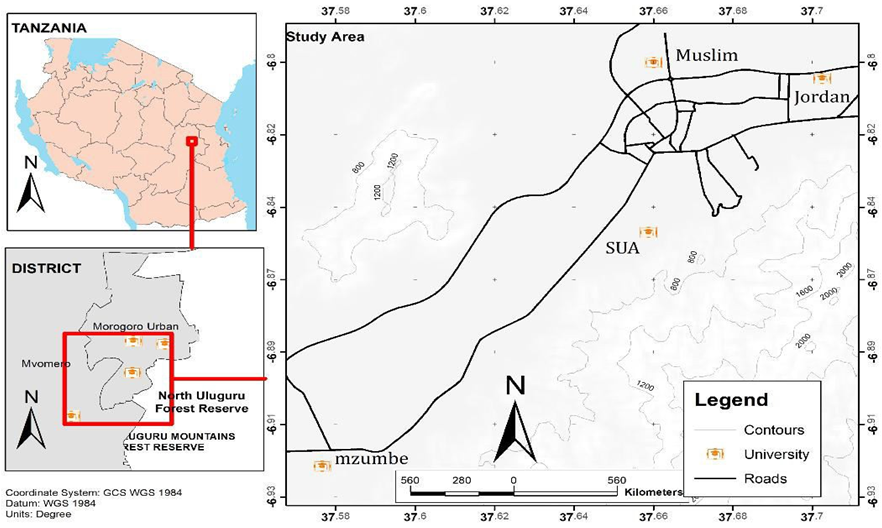
The study was conducted in four higher education institutions (HEIs), all located within Morogoro Urban district, in Morogoro region, Tanzania. The HEIs were Sokoine University of Agriculture (SUA) (6.8278ºS, 37.6591ºE), Mzumbe University (MU) (6.9239ºS, 37.5691ºE), Muslim University of Morogoro (MUM) (6.8288ºS, 37.6612ºE) and Jordan University College (JUCO) (6.8068ºS, 37.7024ºE) (Figure 1). Morogoro Urban district is about 200km west of Dar es Salaam and lies between latitudes 5º7' and 10º00' south of the Equator and longitudes 35°6' and 39°5' east of Greenwich. This district, like the rest of Morogoro region, experiences two main seasons, the wet and dry seasons. The wet season runs from March – May and October – December, with April and December being the wettest months. The dry seasons runs from June – September and January – February, with July being the driest month. The area experiences an average annual rainfall of and temperature of . The nature of economic activities across the district is variable; however, the major ones include crop cultivation, livestock keeping and micro-business. For Sokoine University, located about 3 km from Morogoro town centre, small-scale livestock keeping and agriculture, mainly for training purposes, are done within and proximal to university premises. For Mzumbe University, located about 16 km at the outskirts of Morogoro town centre, small-scale agriculture is done within and proximal to university premises involving the cultivation of maize, rice, sweet potatoes, cassava and nuts. Similarly, for Muslim University, located about 4.9 km from Morogoro town centre, comparatively small-scale cultivation of rice and vegetables is done mainly within the university premises. Jordan University premises do not have any agricultural activities within the campus. However, the surrounding community is considerably involved in agriculture of food crops similar to Mzumbe University.

The study involved the assessment of larval habitats and density in the areas within and surrounding the four study HEIs. Precisely, the assessments were done in the areas surrounding students hostels and classess/theatres. The study employed a repeated cross-sectional survey where different environmental characteristics of larval habitats as well as larval density were assessed over 6-month period during the wet and dry seasons. Each season had three months of data collection and data were collected every two weeks. The wet season started from mid-March to early June and dry season from mid-June to late August. Prior to the actual characterization of larval habitats and determination of anopheline mosquitoes larval abundance, three physical surveys were done to identify and geo-reference (Garmin M/N etrex 10CAN 310) all possible breeding habitats. Precisely, this was done by walking in 5 meter transects within a diameter of 1 kilometer in reference to the study hostels and night-time study venues. All identified breeding habitats were counted and geo-referenced using GPS machines (Garmin M/N etrex 10CAN 310).
2.3. Characterization of Larval HabitatsEnvironmental characteristics of each larval habitat were observed/measured and recorded during the larval collection. After the initial mapping, characterization and larval sampling (procedures explained below), the geo-marked habitats were revisited and assessed every two weeks for over six months (3 months each during the wet and dry season) from March to August 2021. The habitats were characterized based on different indices: whether natural or artificial, whether temporal, semi-permanent or permanent, size of the larval habitat, depth of the water, state of the water whether stagnant or moving, colour of the water whether clear or not clear, presence of shade whether none, partial or heavy, type of adjacent vegetation whether none, submerged, floating, emergent, vegetation quantity (none, scarce, moderate, abundant), presence of algae (none, mild, moderate, extreme), water pH, water temperature, electrical conductivity (EC), total dissolved solids (TDS), relative distance to the reference hostel and/or study venue. The measurements for pH, temperature, EC and were done to every breeding site using a portable pH meter that has a capacity to measure all these four parameters (Combo HI98129, HANNA Instruments Woonsocket RI US made in Romania). The PH meter measured these parameters directly from each site by inserting the tip of it into water surface, the readings came out in few seconds and then recorded into a sheet.
The nature of the breeding site, water state, water colour, presence of shade, type of adjacent vegetation, vegetation quantity and presence of algae were determined visually, size of the breeding site and water depth were determined using ruler and tape measure. The depth of water of every breeding site was measured depending on size of the habitat using a long meter ruler and the average depth was taken. The distance to the nearest building was measured using a tape measure for less than 100 m and estimated for more than 100 m. The distance was further categorized into five groups: (1) ≤ 100 m, (2) 101 - 200 m, (3) 201 - 300 m, (4) 301 - 400 m and (5) 401-700 m. Habitat type (temporal, semi-permanent or permanent) were determined by their ability to retain water; temporal if it retained water for less than two weeks, semi if it retained water for two weeks to one month and permanent if it retained water for more than one month.
2.4. Larval Sampling and IdentificationDuring each visit, mosquito larvae were sampled from each breeding site that contained water. Mosquito larval sampling was carefully done with the shadow of the Sampler being against the breeding site. Sampling was always done in the morning (09:00–12:00) and the afternoon (14:00–17:00) with the help of two experienced field assistants. All larvae were identified into two main groups (anophelines and culicines) based on their characteristic orientation on water surface and the presence/absence of respiratory siphon. After the categorization, the larvae were separated accordingly and counted.
2.5. Statistical AnalysisData were recorded into a special form at the field then were entered into an Excel sheet after every visit. It was then checked for completeness and appropriate coding and finally transferred to SPSS. Data analysis was done using Statistical Package for Social Sciences (SPSS) version 22 IBM and statistical test results are presented in tables and graphs. A p-value<0.05 was considered statistically significant for the test results. Entomological classification through physical observation, Correlational analysis for continuous variables, Mann Whitney U test for nominal dichotomous variables and Kruskal Wallis H test for nominal variables with more than two levels were done.
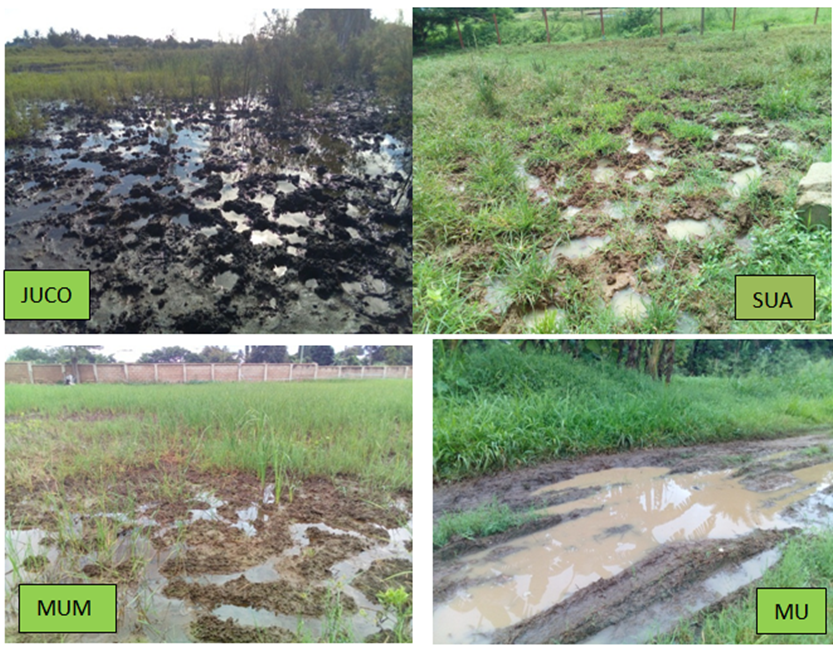
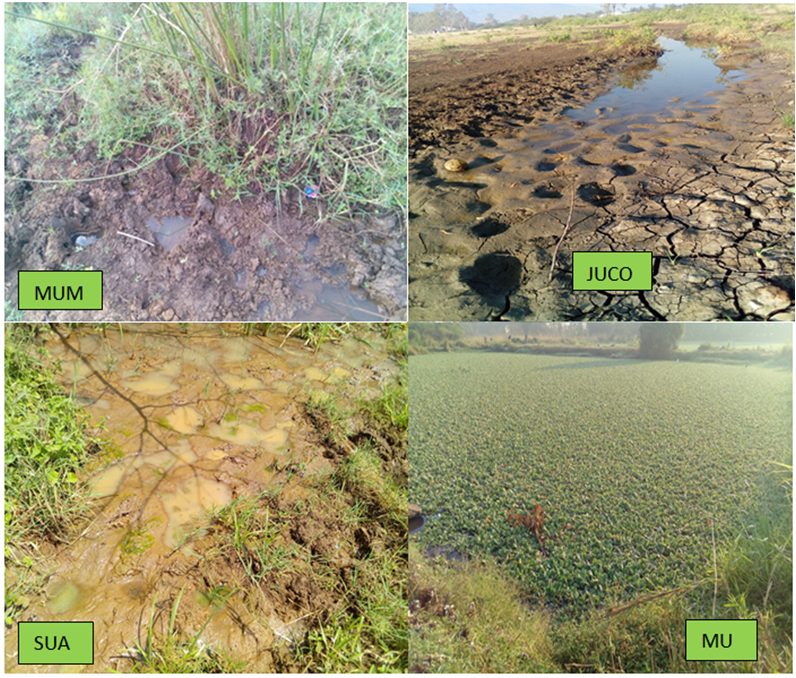
There were a total number of 181 possible breeding sites that were identified across the study area; 33, 37, 37 and 74 for JUCO, MUM, MU and SUA respectively (Table 1). Out of these , certain proportion of breeding sites were selected randomly and geo-referenced for subsequent visits across the wet and dry season; and these were 14, 17, 19 and 26 for JUCO, MUM, MU and SUA respectively. These breeding sites were re-visited during the dry season; however, some had dried up and remained 8, 7, 5 and 11 for JUCO, MUM, MU and SUA respectively.


During wet season, the total number of Anopheline larva observed across institutions were; 938, 680, 1235 and 1820 from JUCO, MUM, MU and SUA respectively. For Culicines larva were; 407, 928, 349 and 914 for JUCO, MUM, MU and SUA respectively. The average number of Anopheline larva per breeding site were; 25, 14, 21 and 33 for JUCO, MUM, MU and SUA respectively. The minimum and maximum number of mosquito larva per breeding site was 0 and 136 respectively.
During dry season, the total number of Anopheline larva observed across institutions was 447,186,111 and 692 from JUCO, MUM, MU and SUA respectively. For Culicine larva were; 183, 163, 254 and 280 for JUCO, MUM, MU and SUA respectively. The average number of Anopheline larva per breeding site were; 5, 2, 1 and 4 for JUCO, MUM, MU and SUA respectively. The minimum and maximum number of mosquito larva per breeding site was 0 and 48 respectively (Table 2). A Pearson correlation analysis was done for variables such as size of the breeding site, depth of the breeding site, water temperature, pH, EC and TDS in relation to larval abundance whereby larval abundance was obtained by taking the total larval counts divided by the number of dips per site.
The correlation results revealed the following; during wet season, size of the breeding site, water temperature, EC and TDS were correlated with larval abundance. Size of the breeding site had a negative correlation (-0.095) at p value .035 implying that the smaller the breeding site the greater number of mosquito larva is likely to contain. Water temperature had a positive correlation (0.296) at p value .000 implying that as the temperature of water increases, the greater number of mosquito larva is likely to be found in it. EC had a positive correlation (0.135) at p value .005 implying that as EC increases, the number of larva is likely to be high and the same applies for TDS that had a positive correlation (0.108) at p value 0.026. A Mann Whitney test was done for the dichotomous variables such as state of water (moving or static), Color of water (clear or not clear) and nature of the breeding site (natural or artificial).
The results shown that there was no statistical significant difference among the variables since the p value for water color was 0.317 and for nature was 0.378. For the variables with more than two levels such as habitat type, presence of shade, type of adjacent vegetation, vegetation quantity, presence of algae and distance to the nearest building. A Kruskal Wallis test revealed the following results; presence of shade had a p value of .056 implying that there was a significant difference in mosquito larval abundance in relation to amount of shade at the breeding site and vegetation quantity had a p value of .036 implying that there was a significant difference in mosquito larval abundance in relation to amount of vegetation at the breeding site and the rest did not show a statistical significant difference.
For dry season, the correlation test revealed that there was no correlation in larval abundance in relation to the size of the breeding site, water temperature, EC and TDS. Up on Mann Whitney test for the dichotomous variables such as state of water (moving or static), color of water (clear or not clear) and nature of the breeding site (natural or artificial); state of water and nature of the breeding sites were correlated with larva abundance (p = .001). Furthermore, water color of the breeding sites was not correlated with larval abundance (p. 0.490). For the variables with more than two levels such as habitat type, presence of shade, type of adjacent vegetation, vegetation quantity, presence of algae and distance to the nearest building. A Kruskal Wallis test had the following results; presence of shade, habitat type, type of adjacent vegetation, vegetation quantity, presence of algae and distance to the nearest building all had a p value of p .002 implying that there was a significant difference in mosquito larval abundance in relation to the variations of different characteristics in each particular variable.
3.2. Information Gained through Direct Observation and Management InterviewJordan is surrounded by an open space that is watery with tall grass and shrubs at a distance of about 70 and to the study premise and female hostel respectively; and the surrounding community is mainly involved in agricultural activities. Muslim has a paddy field within the campus that is about 30 meters to the male hostel and the nearby communities cultivate maize, rice and vegetables. For SUA, most of agricultural activities are within the campus for training purposes. Mzumbe is surrounded with five big sewerage ponds and the surrounding community is highly involved in agricultural activities such as growing of maize, nuts, cassava, rice and vegetables. Furthermore, Mzumbe management has thought of biological mosquito larval control in their sewerage ponds that was about to be piloted.
SUA had many potential mosquito breeding sites (74) adjacent to the campus followed by MUM (37), MU (37) and JUCO (33). Nonetheless, buildings are not sprayed with residue insecticides targeting mosquitoes and the possible surrounding breeding sites are not well handled rather only an annual fumigation is practiced by the institutions targeting other insects such as bed bugs, cockroaches, ticks, flies etc.
During wet season, a Pearson correlation results revealed the following; Size of the breeding site had a negative correlation (-0.095) at p value .035 implying that the smaller the breeding site, the greater number of mosquito larva is likely to contain. This concurs with a study in Gambia, China and Ethiopia that observed mosquito larval density to be significantly associated with habitats that had smaller perimeters 15, 20, 35. Similarly, a study in Dar es Salaam, Tanzania and Southwest Ethiopia revealed a high number of Anopheles larva to be found in breeding sites with small diameters 32, 24.
4.2. Association between Water Temperature, pH, EC, TDS and Larval Abundance during Wet SeasonWater temperature had a positive correlation (0.296) at p value .000 implying that as the temperature of water increases, the greater number of mosquito larva is likely to be found in it. This agrees with the study in Kenya and Tanzania on spatial distribution and habitat characterization of mosquito species 8, 10. Unlikely a study in Ethiopia shown water temperature was not significantly associated with larval abundance 15. EC had a positive correlation (0.135) at p value .005 and TDS (0.108) at p value 0.026. This is similarly to a study in Dakar and Muheza, Tanzania shown these parameters to be positively correlated with larval density 9, 21.
4.3. Association between Dichotomous Variables and Larval Abundance during Wet SeasonA Mann Whitney test was done for the dichotomous variables such as state of water (moving or static), colour of water (clear or not clear) and nature of the breeding site (natural or artificial). The results shown that there was no statistical significant difference among the variables since the p value for water colour was 0.317 and for nature was 0.378 except for state of water. Likewise, a study done in the Cape Verde islands revealed that mosquito’s reproduction was dependent of non-moving water shaped by human activities 23.
4.4. Association between Habitat Variables and Larval Abundance during Wet SeasonFor the variables with more than two levels such as habitat type, presence of shade, type of adjacent vegetation, vegetation quantity, presence of algae and distance to the nearest building. A Kruskal Wallis test had the following results; presence of shade had a p value of .056 implying that there was a significant difference in mosquito larval abundance in relation to amount of shade at the breeding site and vegetation quantity had a p value of .036, implying that there was a significant difference in mosquito larval abundance in relation to amount of vegetation at the breeding site and the rest did not show a statistical significant difference. Similarly, a study in Gambia, Tanzania and Ethiopia shown that larval abundance was associated with breeding sites those were sunlit, fewer vegetation cover and absence of emergent plants and it was not associated with water pH, water turbidity, amount of algae, and water depth 6, 15, 35.
4.5. Association between Water Temperature, pH, EC, TDS and Larval Abundance during Dry SeasonFor dry season, the correlational results revealed that there was no statistical significant difference in larval abundance in relation to the size of the breeding site, water temperature, EC and TDS as similarly to a study in Ethiopia 15. This is due to the fact that during dry season there is little or no dilution effect on water and only little changes occurred in most of the breeding sites surroundings.
4.6. Association between Dichotomous Variables and Larval Abundance during Dry SeasonUpon Mann Whitney test, results showed a statistical significant difference for nature of the breeding site with a p value of .000 while there was no statistical significant difference for larval abundance in relation to water colour (p. 0.490). A Kruskal Wallis test had the following results; presence of shade, habitat type, type of adjacent vegetation, vegetation quantity, presence of algae and distance to the nearest building all had a p value of p .000, implying that there was a significant difference in mosquito larval abundance in relation to the variations of different features in each particular variable. This concurs with a study in central western Senegal on mapping the mosquito breeding sites that shown larval abundance to gradually decreased with increasing distance 27. This reflects the life style of mosquito that is highly dependent on human being for blood meal especially during reproduction in female adult mosquitoes.
4.7. General Breeding Sites Characteristics and Larval Densities with Respect to SeasonalityGenerally, wet season seemed to have many breeding habitats with high larval densities as compared to dry season. This resembles a study in Ghana, Northern Côte d’Ivoire and Senegal 23, 27, 37. This also reflects as to why most of the breeding site features during dry season were statistically significant as there were no frequent changes for the surrounding vegetation due to drying effect as there was little or no water to support life.
The results from this study have revealed the presence of multiple uncontrolled mosquito breeding sites around the institutions. This situation poses a great risk of exposure for malaria transmission among students within respective institutions and the surrounding community. Thus, there is a need for intentional measures to be taken in order to control mosquito reproduction by focusing at the breeding sites which serve as the root cause for malaria transmission. The results also provide a baseline for evidence-based planning and implementation of malaria control activities targeting vectors at all levels.
1. We would recommend that higher education institutions should aim at controlling the possible surrounding mosquito breeding sites using appropriate means such as larvicides and biological control that will target the immature stage of mosquitos. This is easy and cost effective since larva are relatively immobile and confined to a particular place.
2. Both immature and adult mosquito vector control measures should be concurrently employed for effective malaria elimination in these clusters (HEIs) and the like.
3. Characterization, identification of mosquito breeding sites together with the typology of the vector species should be considered prior to deployment of malaria control/elimination interventions.
CL: Confidence Level
EC: Electrical Conductivity
GPS: Geographical Positioning System
JUCO: Jordan University College
MU: Mzumbe University
MUM: Muslim University College of Morogoro
SUA: Sokoine University of Agriculture
TDS: Total Dissolved Solids
WHO: World Health Organization
n: Number
P: Level of significance
m: Meter
EASTC: The Eastern Africa Statistical Training Centre
Ethical approval for this study was obtained from the Research and Publication Committee of Sokoine University of Agriculture (SUA) referenced SUA/DPRTC/R/06. Also a research permit was obtained from each institution and the surrounding community.
The dataset used and/or analyzed, as well as the materials collected, during the current study are available from the corresponding author on reasonable request.
The authors declare that they have no competing interests.
This study was self-funded.
Mbogo N. Kija (MNK), Ladslaus L. Mnyone (LLM) and Sharadhuli I. Kimera (SIK) conceived and designed the study. MNK, MS and CB collected the field samples. MNK, SIK and LLM analyzed the data and coordinated the work. MNK wrote the initial draft of the manuscript and LLM and SIK critically revised the manuscript. All authors have read and approved the final version of the manuscript.
We would like to thank all who participated directly or indirectly in this study. We also thank the senior management of all study HEIs for allowing us to conduct the study in their respective institutions and their cooperation throughout the study. The authors wish to especially thank the staff from the study HEIs, College of Veterinary Medicine and Biomedical Sciences and Institute of Pest Management (IPM) who in one way or the other contributed to this study. Finally, special thanks and appreciation be to Mr. Mathias Stephano (MS) and Mr. Credo Beda (CB) who assisted in breeding sites characterization and larval sampling together with Mr. Godfrey Katus and Dr. Majaliwa John from ESTC for their valuable contributions in data analysis.
| [1] | Adinan, J., Damian, D. J., Mosha, N. R., Mboya, I. B., Mamseri, R. and Msuya, S. E. (2017). Individual and contextual factors associated with appropriate healthcare seeking behavior among febrile children in Tanzania. PLoS One 12(4): 1-15. | ||
| In article | View Article PubMed | ||
| [2] | Alahmed, A. M., Munawar, K., Khalil, S. M., & Harbach, R. E. (2019). Assessment and an updated list of the mosquitoes of Saudi Arabia. Parasites and Vectors 12(1): 1-9. | ||
| In article | View Article PubMed | ||
| [3] | Ardiet, D. L., Graz, B., Szeless, T., Mauris, A., Falquet, J., Doumbo, O. K. and Motamed, S. (2014). Patterns of malaria indices across three consecutive seasons in children in a highly endemic area of West Africa: A three times-repeated cross-sectional study. Malaria Journal 13(199): 1-8. | ||
| In article | View Article PubMed | ||
| [4] | Banafshi, O., Abai, M.-R., Ladonni, H., Bakhshi, H., Karami, H. and Azari-Hamidian, S. (2013). The fauna and ecology of mosquito larvae (Diptera: Culicidae) in western Iran. Turkish Journal Zoology 37: 298-307. | ||
| In article | View Article | ||
| [5] | Becker, N., Pluskota, B., Kaiser, A. and Schaffner, F. (2012). Exotic mosquitoes conquer the world. In: Arthropods as Vectors of Emerging Diseases. Springer, Berlin, Heidelberg. pp. 31-60. | ||
| In article | View Article | ||
| [6] | Castro, M. C., Kanamori, S., Kannady, K., Mkude, S., Killeen, G. F. and Fillinger, U. (2010). The importance of drains for the larval development of lymphatic filariasis and malaria vectors in Dar es Salaam, United Republic of Tanzania. PLoS Neglected Tropical Diseases. 4(5): 1-12. | ||
| In article | View Article PubMed | ||
| [7] | Chipwaza, B., Mugasa, J. P., Mayumana, I., Amuri, M., Makungu, C. and Gwakisa, P. S. (2014). Community knowledge and attitudes and health workers' practices regarding non-malaria febrile illnesses in eastern Tanzania. PLoS Neglected Tropical Diseases 8(5): 1-11. | ||
| In article | View Article PubMed | ||
| [8] | Dida, G. O., Anyona, D. N., Abuom, P. O., Akoko, D., Adoka, S. O., Matano, A. S. and Ouma, C. (2018). Spatial distribution and habitat characterization of mosquito species during the dry season along the Mara River and its tributaries, in Kenya and Tanzania. Infectious Diseases of Poverty. 7(1): 1-16. | ||
| In article | View Article PubMed | ||
| [9] | Emidi, B., Kisinza, W. N., Mmbando, B. P., Malima, R. and Mosha, F. W. (2017). Effect of physicochemical parameters on Anopheles and Culex mosquito larvae abundance in different breeding sites in a rural setting of Muheza, Tanzania. Parasites and Vectors. 10(1): 1-12. | ||
| In article | View Article PubMed | ||
| [10] | Fagbohun, I. K., Idowu, E. T., Awolola, T. S. and Otubanjo, O. A. (2020). Seasonal abundance and larval habitats characterization of mosquito species in Lagos State, Nigeria. Scientific African 10: 1-10. | ||
| In article | View Article | ||
| [11] | Farag, E., Bansal, D., Chehab, M.A.H., Al-Dahshan, A., Bala, M., Ganesan, N., Al Abdulla, Y.A., Al Thani, M., Sultan, A. A. and Al-Romaihi, H. (2018). Epidemiology of Malaria in the State of Qatar, 2008–2015. Mediterranean Journal Hematology Infection Disease 10: 1-5. | ||
| In article | View Article PubMed | ||
| [12] | Fillinger, U., Sombroek, H., Majambere, S., van Loon, E., Takken, W., & Lindsay, S. W. (2009). Identifying the most productive breeding sites for malaria mosquitoes in The Gambia. Malaria Journal 8(1): 1-14. | ||
| In article | View Article PubMed | ||
| [13] | Finda, M. F., Moshi, I. R., Monroe, A., Limwagu, A. J., Nyoni, A. P., Swai, J. K. and Okumu, F. O. (2019). Linking human behaviours and malaria vector biting risk in south-eastern Tanzania. PloS One 14(6): 1-23. | ||
| In article | View Article PubMed | ||
| [14] | Floore, T. G. (2006). Mosquito larval control practices: past and present. Journal of American Mosquito Control Association 22: 527-533. | ||
| In article | View Article | ||
| [15] | Getachew, D., Balkew, M. and Tekie, H. (2020). Anopheles larval species composition and characterization of breeding habitats in two localities in the Ghibe River Basin, southwestern Ethiopia. Malaria Journal. 19(1): 1-13. | ||
| In article | View Article PubMed | ||
| [16] | Hasan, S., Saeed, S., Panigrahi, R. and Choudhary, P. (2019). Zika virus: A global public health menace: A comprehensive update. Journal of International Society of Preventive & Community Dentistry 9(4): 1-12. | ||
| In article | View Article PubMed | ||
| [17] | Kar, N. P., Kumar, A., Singh, O. P., Carlton, J. M. and Nanda, N. (2014). A review of malaria transmission dynamics in forest ecosystems. Parasites and Vectors 7(265): 1-12. | ||
| In article | View Article PubMed | ||
| [18] | Kardousha, M. M. (2016). First report of some adult mosquitoes captured by CDC gravid traps from North-Eastern Qatar. Asian Pacific Journal Tropical Disease 6: 100-105. | ||
| In article | View Article | ||
| [19] | Kraemer, M. U., Sinka, M. E., Duda, K. A., Mylne, A. Q. S., Barker, F. M., Moore, C. M., Carvalho, C. G., Coelho, R. G., Van Bortel, G. E., Hendrickx, W., Schaffner, G., Elyazar, F., Teng, I. R., Brady, H. J., Messina, O. J., Pigott, J. P., Scott, D. M., Smith, T. W., Wint, D. L., Golding, G. R., Hay, N., S. I. (2015). The global distribution of the arbovirus vectors Aedes aegypti and Ae. albopictus. Elife 4: 1-18. | ||
| In article | View Article PubMed | ||
| [20] | Liu, X. B., Liu, Q. Y., Guo, Y. H., Jiang, J. Y., Ren, D. S., Zhou, G. C. and Li, Q. (2012). Random repeated cross sectional study on breeding site characterization of Anopheles sinensis larvae in distinct villages of Yongcheng City, People's Republic of China. Parasites and Vectors 5(1): 1-12. | ||
| In article | View Article PubMed | ||
| [21] | Machault, V., Gadiaga, L., Vignolles, C., Jarjaval, F., Bouzid, S., Sokhna, C. and Pagès, F. (2009). Highly focused anopheline breeding sites and malaria transmission in Dakar. Malaria Journal 8(1): 1-21. | ||
| In article | View Article PubMed | ||
| [22] | Mathania, M. M., Kimera, S. I. and Silayo, R. S. (2016). Knowledge and awareness of malaria and mosquito biting behaviour in selected sites within Morogoro and Dodoma regions Tanzania. Malaria Journal 15(1): 1-9. | ||
| In article | View Article PubMed | ||
| [23] | Mattah, P. A. D., Futagbi, G., Amekudzi, L. K., Mattah, M. M., de Souza, D. K., Kartey-Attipoe, W. D. and Wilson, M. D. (2017). Diversity in breeding sites and distribution of Anopheles mosquitoes in selected urban areas of southern Ghana. Parasites and Vectors 10(1): 1-15. | ||
| In article | View Article PubMed | ||
| [24] | Mereta, S. T., Yewhalaw, D., Boets, P., Ahmed, A., Duchateau, L., Speybroeck, N. and Goethals, P. L. (2013). Physico-chemical and biological characterization of anopheline mosquito larval habitats (Diptera: Culicidae): implications for malaria control. Parasites and Vectors 6(1): 1-16. | ||
| In article | View Article PubMed | ||
| [25] | Msugupakulya, B. J., Kaindoa, E. W., Ngowo, H. S., Kihonda, J. M., Kahamba, N. F., Msaky, D. S. and Okumu, F. O. (2020). Preferred resting surfaces of dominant malaria vectors inside different house types in rural South-Eastern Tanzania. Malaria Journal 19(1): 1-15. | ||
| In article | View Article PubMed | ||
| [26] | Muzari, M.O., Devine, G., Davis, J., Crunkhorn, B., van den Hurk, A., Whelan, P., Russell, R., Walker, J., Horne, P., Ehlers, G. and Ritchie, S. (2017). Holding back the tiger: Successful control program protects Australia from Aedes albopictus expansion. PLoS Neglected Tropical Disease 11: 1-17. | ||
| In article | View Article PubMed | ||
| [27] | Ndiaye, A., Niang, E. H. A., Diène, A. N., Nourdine, M. A., Sarr, P. C., Konaté, L. and Sy, O. (2020). Mapping the breeding sites of Anopheles gambiae sl in areas of residual malaria transmission in central western Senegal. PloS One 15(12): 1-16. | ||
| In article | View Article PubMed | ||
| [28] | Nikookar, S.H., Fazeli-Dinan, M., Azari-Hamidian, S., Nasab, S.N.M., Aarabi, M., Ziapour, S.P., Enayati, A., Hemingway, J., 2018. Fauna, ecological characteristics, and checklist of the mosquitoes in Mazandaran Province. Northern Iran Journal Medicine Entomology 55: 634-645. | ||
| In article | View Article PubMed | ||
| [29] | Ramasamy, R., Surendran, S. N., Jude, P. J., Dharshini, S. and Vinobaba, M. (2011). Larval development of Aedes aegypti and Aedes albopictus in peri-urban brackish water and its implications for transmission of arboviral diseases. PLoS. Neglected Tropical Disease 5: 1-10. | ||
| In article | View Article PubMed | ||
| [30] | Ramirez, P.G., Stein, M., Etchepare, E.G., Almiron, W.R., 2016. Diversity of anopheline mosquitoes (Diptera: Culicidae) and classification based on the characteristics of the habitats where they were collected in Puerto Iguazú, Misiones, Argentina. Journal Vec. Ecology 41: 215-223. | ||
| In article | View Article PubMed | ||
| [31] | Rueda, L. M., Brown, T. L., Kim, H.C., Chong, S. T., Klein, T. A., Foley, D. H., Anyamba, A., Smith, M., Pak, E. P., Wilkerson, R. C. (2010). Species composition, larval habitats, seasonal occurrence and distribution of potential malaria vectors and associated species of Anopheles (Diptera: Culicidae) from the Republic of Korea. Malaria Journal. 9(55): 1-11. | ||
| In article | View Article PubMed | ||
| [32] | Sattler, M. A., Mtasiwa, D., Kiama, M., Premji, Z., Tanner, M., Killeen, G. F. and Lengeler, C. (2005). Habitat characterization and spatial distribution of Anopheles sp. mosquito larvae in Dar es Salaam (Tanzania) during an extended dry period. Malaria Journal 4(1): 1-15. | ||
| In article | View Article PubMed | ||
| [33] | Telemu, K., Lokina, R. B., Mujinja, P. and Mmbando, P. B. (2016). Determinants of delay in care seeking among children under five with fever in Dodoma Region, Central Tanzania: A cross-sectional study. Malaria Journal 13(348): 1-10. | ||
| In article | |||
| [34] | USAID (2019). President’s Malaria Initiative Tanzania. Centre for Diseases Control and Prevention, USA. 113pp. | ||
| In article | |||
| [35] | Vanek, M. J., Shoo, B., Mtasiwa, D., Kiama, M., Lindsay, S. W., Fillinger, U. & Killeen, G. F. (2006). Community-based surveillance of malaria vector larval habitats: A baseline study in urban Dar es Salaam, Tanzania. BioMed Central Public Health 6(1): 1-8. | ||
| In article | View Article PubMed | ||
| [36] | WHO (2018). High Burden to High Impact: A Targeted Malaria Response. Working Paper No. 25. World Health Organization, Geneva. 8pp. | ||
| In article | |||
| [37] | Zogo, B., Koffi, A. A., Alou, L. P. A., Fournet, F., Dahounto, A., Dabiré, R. K. and Pennetier, C. (2019). Identification and characterization of Anopheles spp. breeding habitats in the Korhogo area in northern Côte d’Ivoire: a study prior to a Bti-based larviciding intervention. Parasites and Vectors 12(1): 1-10. | ||
| In article | View Article PubMed | ||
Published with license by Science and Education Publishing, Copyright © 2022 Mbogo N. Kija, Sharadhuli I. Kimera and Ladslaus L. Mnyone
 This work is licensed under a Creative Commons Attribution 4.0 International License. To view a copy of this license, visit
http://creativecommons.org/licenses/by/4.0/
This work is licensed under a Creative Commons Attribution 4.0 International License. To view a copy of this license, visit
http://creativecommons.org/licenses/by/4.0/
| [1] | Adinan, J., Damian, D. J., Mosha, N. R., Mboya, I. B., Mamseri, R. and Msuya, S. E. (2017). Individual and contextual factors associated with appropriate healthcare seeking behavior among febrile children in Tanzania. PLoS One 12(4): 1-15. | ||
| In article | View Article PubMed | ||
| [2] | Alahmed, A. M., Munawar, K., Khalil, S. M., & Harbach, R. E. (2019). Assessment and an updated list of the mosquitoes of Saudi Arabia. Parasites and Vectors 12(1): 1-9. | ||
| In article | View Article PubMed | ||
| [3] | Ardiet, D. L., Graz, B., Szeless, T., Mauris, A., Falquet, J., Doumbo, O. K. and Motamed, S. (2014). Patterns of malaria indices across three consecutive seasons in children in a highly endemic area of West Africa: A three times-repeated cross-sectional study. Malaria Journal 13(199): 1-8. | ||
| In article | View Article PubMed | ||
| [4] | Banafshi, O., Abai, M.-R., Ladonni, H., Bakhshi, H., Karami, H. and Azari-Hamidian, S. (2013). The fauna and ecology of mosquito larvae (Diptera: Culicidae) in western Iran. Turkish Journal Zoology 37: 298-307. | ||
| In article | View Article | ||
| [5] | Becker, N., Pluskota, B., Kaiser, A. and Schaffner, F. (2012). Exotic mosquitoes conquer the world. In: Arthropods as Vectors of Emerging Diseases. Springer, Berlin, Heidelberg. pp. 31-60. | ||
| In article | View Article | ||
| [6] | Castro, M. C., Kanamori, S., Kannady, K., Mkude, S., Killeen, G. F. and Fillinger, U. (2010). The importance of drains for the larval development of lymphatic filariasis and malaria vectors in Dar es Salaam, United Republic of Tanzania. PLoS Neglected Tropical Diseases. 4(5): 1-12. | ||
| In article | View Article PubMed | ||
| [7] | Chipwaza, B., Mugasa, J. P., Mayumana, I., Amuri, M., Makungu, C. and Gwakisa, P. S. (2014). Community knowledge and attitudes and health workers' practices regarding non-malaria febrile illnesses in eastern Tanzania. PLoS Neglected Tropical Diseases 8(5): 1-11. | ||
| In article | View Article PubMed | ||
| [8] | Dida, G. O., Anyona, D. N., Abuom, P. O., Akoko, D., Adoka, S. O., Matano, A. S. and Ouma, C. (2018). Spatial distribution and habitat characterization of mosquito species during the dry season along the Mara River and its tributaries, in Kenya and Tanzania. Infectious Diseases of Poverty. 7(1): 1-16. | ||
| In article | View Article PubMed | ||
| [9] | Emidi, B., Kisinza, W. N., Mmbando, B. P., Malima, R. and Mosha, F. W. (2017). Effect of physicochemical parameters on Anopheles and Culex mosquito larvae abundance in different breeding sites in a rural setting of Muheza, Tanzania. Parasites and Vectors. 10(1): 1-12. | ||
| In article | View Article PubMed | ||
| [10] | Fagbohun, I. K., Idowu, E. T., Awolola, T. S. and Otubanjo, O. A. (2020). Seasonal abundance and larval habitats characterization of mosquito species in Lagos State, Nigeria. Scientific African 10: 1-10. | ||
| In article | View Article | ||
| [11] | Farag, E., Bansal, D., Chehab, M.A.H., Al-Dahshan, A., Bala, M., Ganesan, N., Al Abdulla, Y.A., Al Thani, M., Sultan, A. A. and Al-Romaihi, H. (2018). Epidemiology of Malaria in the State of Qatar, 2008–2015. Mediterranean Journal Hematology Infection Disease 10: 1-5. | ||
| In article | View Article PubMed | ||
| [12] | Fillinger, U., Sombroek, H., Majambere, S., van Loon, E., Takken, W., & Lindsay, S. W. (2009). Identifying the most productive breeding sites for malaria mosquitoes in The Gambia. Malaria Journal 8(1): 1-14. | ||
| In article | View Article PubMed | ||
| [13] | Finda, M. F., Moshi, I. R., Monroe, A., Limwagu, A. J., Nyoni, A. P., Swai, J. K. and Okumu, F. O. (2019). Linking human behaviours and malaria vector biting risk in south-eastern Tanzania. PloS One 14(6): 1-23. | ||
| In article | View Article PubMed | ||
| [14] | Floore, T. G. (2006). Mosquito larval control practices: past and present. Journal of American Mosquito Control Association 22: 527-533. | ||
| In article | View Article | ||
| [15] | Getachew, D., Balkew, M. and Tekie, H. (2020). Anopheles larval species composition and characterization of breeding habitats in two localities in the Ghibe River Basin, southwestern Ethiopia. Malaria Journal. 19(1): 1-13. | ||
| In article | View Article PubMed | ||
| [16] | Hasan, S., Saeed, S., Panigrahi, R. and Choudhary, P. (2019). Zika virus: A global public health menace: A comprehensive update. Journal of International Society of Preventive & Community Dentistry 9(4): 1-12. | ||
| In article | View Article PubMed | ||
| [17] | Kar, N. P., Kumar, A., Singh, O. P., Carlton, J. M. and Nanda, N. (2014). A review of malaria transmission dynamics in forest ecosystems. Parasites and Vectors 7(265): 1-12. | ||
| In article | View Article PubMed | ||
| [18] | Kardousha, M. M. (2016). First report of some adult mosquitoes captured by CDC gravid traps from North-Eastern Qatar. Asian Pacific Journal Tropical Disease 6: 100-105. | ||
| In article | View Article | ||
| [19] | Kraemer, M. U., Sinka, M. E., Duda, K. A., Mylne, A. Q. S., Barker, F. M., Moore, C. M., Carvalho, C. G., Coelho, R. G., Van Bortel, G. E., Hendrickx, W., Schaffner, G., Elyazar, F., Teng, I. R., Brady, H. J., Messina, O. J., Pigott, J. P., Scott, D. M., Smith, T. W., Wint, D. L., Golding, G. R., Hay, N., S. I. (2015). The global distribution of the arbovirus vectors Aedes aegypti and Ae. albopictus. Elife 4: 1-18. | ||
| In article | View Article PubMed | ||
| [20] | Liu, X. B., Liu, Q. Y., Guo, Y. H., Jiang, J. Y., Ren, D. S., Zhou, G. C. and Li, Q. (2012). Random repeated cross sectional study on breeding site characterization of Anopheles sinensis larvae in distinct villages of Yongcheng City, People's Republic of China. Parasites and Vectors 5(1): 1-12. | ||
| In article | View Article PubMed | ||
| [21] | Machault, V., Gadiaga, L., Vignolles, C., Jarjaval, F., Bouzid, S., Sokhna, C. and Pagès, F. (2009). Highly focused anopheline breeding sites and malaria transmission in Dakar. Malaria Journal 8(1): 1-21. | ||
| In article | View Article PubMed | ||
| [22] | Mathania, M. M., Kimera, S. I. and Silayo, R. S. (2016). Knowledge and awareness of malaria and mosquito biting behaviour in selected sites within Morogoro and Dodoma regions Tanzania. Malaria Journal 15(1): 1-9. | ||
| In article | View Article PubMed | ||
| [23] | Mattah, P. A. D., Futagbi, G., Amekudzi, L. K., Mattah, M. M., de Souza, D. K., Kartey-Attipoe, W. D. and Wilson, M. D. (2017). Diversity in breeding sites and distribution of Anopheles mosquitoes in selected urban areas of southern Ghana. Parasites and Vectors 10(1): 1-15. | ||
| In article | View Article PubMed | ||
| [24] | Mereta, S. T., Yewhalaw, D., Boets, P., Ahmed, A., Duchateau, L., Speybroeck, N. and Goethals, P. L. (2013). Physico-chemical and biological characterization of anopheline mosquito larval habitats (Diptera: Culicidae): implications for malaria control. Parasites and Vectors 6(1): 1-16. | ||
| In article | View Article PubMed | ||
| [25] | Msugupakulya, B. J., Kaindoa, E. W., Ngowo, H. S., Kihonda, J. M., Kahamba, N. F., Msaky, D. S. and Okumu, F. O. (2020). Preferred resting surfaces of dominant malaria vectors inside different house types in rural South-Eastern Tanzania. Malaria Journal 19(1): 1-15. | ||
| In article | View Article PubMed | ||
| [26] | Muzari, M.O., Devine, G., Davis, J., Crunkhorn, B., van den Hurk, A., Whelan, P., Russell, R., Walker, J., Horne, P., Ehlers, G. and Ritchie, S. (2017). Holding back the tiger: Successful control program protects Australia from Aedes albopictus expansion. PLoS Neglected Tropical Disease 11: 1-17. | ||
| In article | View Article PubMed | ||
| [27] | Ndiaye, A., Niang, E. H. A., Diène, A. N., Nourdine, M. A., Sarr, P. C., Konaté, L. and Sy, O. (2020). Mapping the breeding sites of Anopheles gambiae sl in areas of residual malaria transmission in central western Senegal. PloS One 15(12): 1-16. | ||
| In article | View Article PubMed | ||
| [28] | Nikookar, S.H., Fazeli-Dinan, M., Azari-Hamidian, S., Nasab, S.N.M., Aarabi, M., Ziapour, S.P., Enayati, A., Hemingway, J., 2018. Fauna, ecological characteristics, and checklist of the mosquitoes in Mazandaran Province. Northern Iran Journal Medicine Entomology 55: 634-645. | ||
| In article | View Article PubMed | ||
| [29] | Ramasamy, R., Surendran, S. N., Jude, P. J., Dharshini, S. and Vinobaba, M. (2011). Larval development of Aedes aegypti and Aedes albopictus in peri-urban brackish water and its implications for transmission of arboviral diseases. PLoS. Neglected Tropical Disease 5: 1-10. | ||
| In article | View Article PubMed | ||
| [30] | Ramirez, P.G., Stein, M., Etchepare, E.G., Almiron, W.R., 2016. Diversity of anopheline mosquitoes (Diptera: Culicidae) and classification based on the characteristics of the habitats where they were collected in Puerto Iguazú, Misiones, Argentina. Journal Vec. Ecology 41: 215-223. | ||
| In article | View Article PubMed | ||
| [31] | Rueda, L. M., Brown, T. L., Kim, H.C., Chong, S. T., Klein, T. A., Foley, D. H., Anyamba, A., Smith, M., Pak, E. P., Wilkerson, R. C. (2010). Species composition, larval habitats, seasonal occurrence and distribution of potential malaria vectors and associated species of Anopheles (Diptera: Culicidae) from the Republic of Korea. Malaria Journal. 9(55): 1-11. | ||
| In article | View Article PubMed | ||
| [32] | Sattler, M. A., Mtasiwa, D., Kiama, M., Premji, Z., Tanner, M., Killeen, G. F. and Lengeler, C. (2005). Habitat characterization and spatial distribution of Anopheles sp. mosquito larvae in Dar es Salaam (Tanzania) during an extended dry period. Malaria Journal 4(1): 1-15. | ||
| In article | View Article PubMed | ||
| [33] | Telemu, K., Lokina, R. B., Mujinja, P. and Mmbando, P. B. (2016). Determinants of delay in care seeking among children under five with fever in Dodoma Region, Central Tanzania: A cross-sectional study. Malaria Journal 13(348): 1-10. | ||
| In article | |||
| [34] | USAID (2019). President’s Malaria Initiative Tanzania. Centre for Diseases Control and Prevention, USA. 113pp. | ||
| In article | |||
| [35] | Vanek, M. J., Shoo, B., Mtasiwa, D., Kiama, M., Lindsay, S. W., Fillinger, U. & Killeen, G. F. (2006). Community-based surveillance of malaria vector larval habitats: A baseline study in urban Dar es Salaam, Tanzania. BioMed Central Public Health 6(1): 1-8. | ||
| In article | View Article PubMed | ||
| [36] | WHO (2018). High Burden to High Impact: A Targeted Malaria Response. Working Paper No. 25. World Health Organization, Geneva. 8pp. | ||
| In article | |||
| [37] | Zogo, B., Koffi, A. A., Alou, L. P. A., Fournet, F., Dahounto, A., Dabiré, R. K. and Pennetier, C. (2019). Identification and characterization of Anopheles spp. breeding habitats in the Korhogo area in northern Côte d’Ivoire: a study prior to a Bti-based larviciding intervention. Parasites and Vectors 12(1): 1-10. | ||
| In article | View Article PubMed | ||