As a concept, the term ‘Vernacular Architecture’ is mainly known for its utilization of nearby materials, labors, and culture. The vernacular architecture is practically and casually continuing the legacy of the region. For a quite few years, architects are embracing regionalism and the knowledge of traditional buildings as a result of the increased strain brought by ongoing worldwide ecological issues, stating that these structures are energy efficient and extremely sustainable. The interest for economical and sustainable structures, results in the increments in numerous designers to unravel the universe of vernacular design all throughout the planet, so to combine conventional viewpoints with current methods. Ladakh is one of the world's most hostile environments for human survival. Located in India's far north, the region sees sub-zero temperatures in the winter. Despite the harsh surroundings, humanity has continued to live in the area for generations. The native inhabitants have devised a highly efficient and climatically sensitive vernacular architecture thanks to their ancient indigenous understanding of building construction. This paper seeks to rethink vernacular architecture as a philosophy thusly intends to clarify the cultural values, identical architectural designs, and stereotypical patterns by exploring sustainability as a reason for identity in culture and architecture. A research database is created by compiling a large number of studies from original sources. The research analyses the supportability, capability of sustainability of vernacular architecture in the region through comparative study in order to develop basic principles as guidelines for recreating societal traits and expose the identity of contemporary architecture in the world.
The human civilization has evolved and survived throughout history by integrating with the surrounding environment and relying on the preservation of nature. Climate, culture, social and economic characteristics of individuals and their environments have all changed over time. Every area and region evolved distinct features that distinguished it from other places over time and via the multifarious interaction of evolution and human adaption to the ambient environment, which is the core of ‘identity’ 1. Vernacular architecture has always been a way of building locally in response to a region's cultural, social, and microclimate 2. Vernacular architecture is not static, and it changes with the changing culture and environment. It is indigenous to a region and contributes to the community's and environments long-term viability. With the shifting approach to the built environment, it's more important than ever to grasp the state of vernacular sustainability 3. As a result, functional, climatic, and socio-spatial issues were overlooked at the time. The functionally focused contributions for vernacular architecture, on the other hand, demonstrated only a limited fundamentalist approach via a steady course of straight revivalism. Much more tremendous potential of vernacular structures must still be considered. Responding to requirements using environmental energy is one of the criteria that may be renewed 2.
Sustainability is an important component of vernacular architecture, which has grown over time utilising local materials and technologies to create a harmonious relationship between man and his surroundings. The objective of this paper is to propose suitable indices for assessing vernacular architecture's long-term viability in Ladakh, a region in northern India known to be the world's highest and coldest regions that has been continually inhabited by humans. The communities are known for their monasteries and palaces, which are testaments to the indigenous people's outstanding building ability in spite of the harsh environment and topography 4. Aside from its unique and rich cultural history, any study of architecture and settlement studies is fascinated by human survival in difficult weather conditions, with temperatures as low as -30°C, posing a threat to human survival, as well as that of other life forms. Ladakh's residents have harnessed the sun's energy through the use of traditional architecture that incorporates climate - controlling passive techniques 4. Apart from using native building materials such as mud bricks, quartzite stones, poplar, grass, timber etc. and construction techniques, the buildings have a distinctive spatial arrangement to deal with the climatic circumstances.
In this paper, qualitative research method has been used. The systematic literature review has been explored through internet and secondary data from relevant published academic literature from journals articles and research papers. The research technique is focused on demonstrating an unequal geographic and climatic distribution completing a qualitative literature evaluation related to the primary issues, such as identity, culture, vernacular architecture, climate and sustainability. The data collection in the qualitative research is the data that comes from a number of case study examples that are described descriptively and qualitatively, which are supported by illustrations and photographs to reinforce the arguments put forward. The basic concepts and backgrounds are investigated through literature and on-line media; an observation to work for qualitative analysis conducted to document and explain the vernacular understandings of architecture and settlement in the Ladakh region.
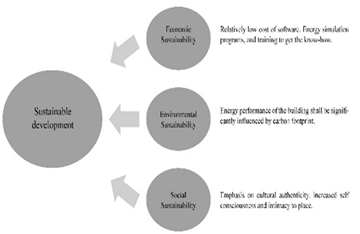
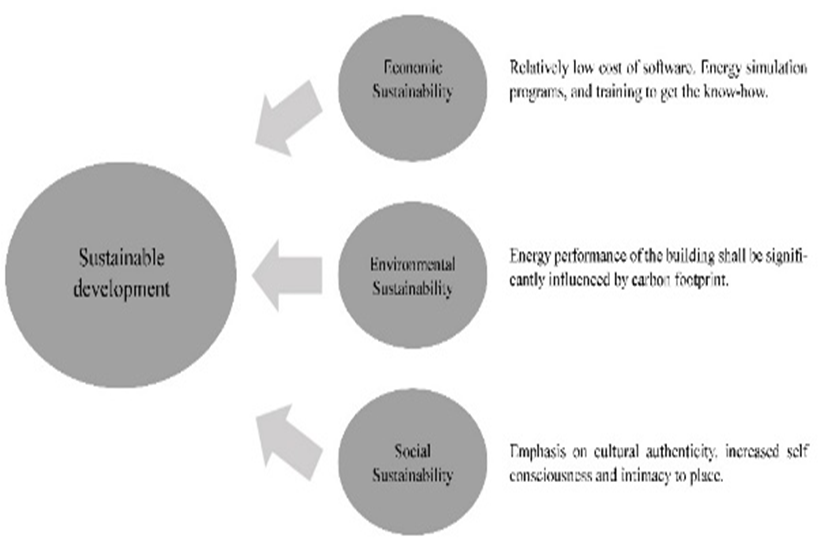
Techniques are utilised in the development of sustainable architectural models, which are also governed by ethical and functional considerations. These principles reflect a kind of functional utilitarianism and honesty from the outside in such a functional and technical framework, without pursuing stylistic considerations or aesthetic expression (Figure 1). Sustainable elements, on the other hand, were able to be more imitative and closely tied to social shared retention and regional heritage 5.
The materials used in modern construction are mostly taken from our immediate surrounds, i.e., the environment. Construction activities consume a substantial amount of energy and natural resources while also producing a big number of by-products. This means that the earth's resources are being depleted at a significantly faster rate than they are being replenished. Similarly, the manufacturing of tons of by-products releases undesirable materials into the environment, damaging it further. The modern world faces a number of issues, including several types of pollution (air, water, land, and noise pollution), natural resource scarcity, and so on. All of this emphasizes the critical importance of safeguarding the environment and preserving it for future generations, as well as the critical importance of adopting a sustainable construction and architectural approach. 6.
“Environmental benefits: Sustainable construction helps conserve and restore natural resources by improving and protecting biodiversity and ecosystems, improving air and water quality, reducing waste streams, and enhancing and protecting biodiversity and ecosystems.
Economic benefits: Green building practices help to reduce operating costs (such as fuel costs); create, expand, and shape markets for green products and services; and optimize life-cycle economic performance of buildings.
Social benefits: Sustainable design practices enhance occupant comfort and health, minimize strain on local infrastructure, and improve overall quality of life.” 7
This has led us to consider sustainability of vital importance since it promotes a healthier environment with efficient construction strategies inclusive of minimal harm to the environment.
In recent years, the question of cultural identity in contemporary architecture has become increasingly important in establishing distinctiveness and local identity in a worldwide competitive economy.
The Oxford English Living Dictionary defines the term “identity” as “the fact of being who or what a person or thing is; the attributes that determine who or what a person or thing is” 8. Identity, according to the Cambridge Dictionary, establishes or indicates who or what (someone or something) is, who a person is, or the attributes that distinguish a person or group from others 9. To put it another way, identity refers to something, a person, a group of people, a civilization, a country, or even a nation that is distinct from others.
Place (region, geography, terrain, and climate), people (society, community), and culture are all natural and human variables that contribute to creating “identity” (traditions, customs, language, religion, and artifacts). It's critical to talk about these factors and how they interact, as well as how this is reflected in design.
Culture is one of the most important components in defining identity since it is linked to the people who created it. Architect, author, educator, and architectural theorist Christian Norberg-Schulz connects cultural identity to its location through building as a manifestation of people and the surrounding environment. In Norberg-Schulz’s writings runs, “…the unquestioned assumption that architecture has an identifiable ‘essence,’ the understanding of which is essential both to the discourse and practice of architecture” 10. Schulz's Norberg-Schulz writes in his book “Genius Loci: Towards a Phenomenology of Architecture” that “Human identity presupposes the identity of place.” As a result, architecture's “essence” is defined as follows: Understanding the “vocation” of the location is hence the foundational act of architecture 11.
Vernacular architecture, in particular, is a result of people, place, and culture; it is one of the many elements of identity. The manifestation of personal and social identity can be linked to architectural symbolism. “Architecture as identity” has become the equivalent of “architecture as space” and “architecture as a language” as a result of this accretion 12. As the most visible physical artifacts of every culture, architecture has the most ability to draw from and respond to the distinctiveness of place 13.
Unpretentious, basic, indigenous, traditional structures composed of local materials and following well-tried forms and kinds are classified as vernacular architecture 14. We must identify the cultural significance of architecture in society's day-to-day life practises and experiences in order to comprehend people's experiences with ambient natural and constructed surroundings 15.
Vernacular architecture, in my opinion, is the constructed environment (city, architecture, and interior spaces) created to meet the demands of civilization. It is constructed in accordance with the natural environment (geography, terrain, site, climate, local building materials, labour experience, and construction techniques), ensuring that people's physical, economic, social, and cultural needs are met. Vernacular architecture is a symbol of national identity; it is a nation's “mirror,” reflecting place, period, and culture. Architecture is created by people for people; it has evolved over time and has been modified by trial and error to meet society's requirements while remaining in harmony with the environment.
Due to transportation constraints, vernacular architecture relied on local materials and abilities, which helped to save resources while also giving each region's architecture a distinct personality 16. Each material had its own physical and aesthetic properties, which governed the architectural technology that was appropriate for it.
Every community that has built architecture has developed its own distinctive forms, such as language, clothes, customs, and folklore. There are distinctive local shapes and details in architecture as a natural outcome of materials, technology, environment, and people's culture until the collapse of cultural frontiers in the twentieth century 17.
Earth and Timber, for example, as one of the oldest and most often used materials in dry places like the Ladakh, necessitated specific technologies due to its shape, size, and durability. The proportions of most sun-dried earth blocks are designed to fit the palm of a human's hand; this was useful for constructing walls and piers, as the thickness of these vertical elements varied depending on their constructional location, height, and structural loads. Builders had to construct new forms in accordance with the physical qualities of brick to solve the roofing problem; the trunk of native poplar trees as beams was the creative solution. These innovative forms were both aesthetically and functionally compatible with the surrounding environment and climate.
These structural materials received symbolic importance beyond functionality and aesthetics over time, and they formed part of the “culture memory.” In terms of aesthetics, the long sunny days in scorching dry locations complemented brick's particular charm. Through the juxtaposition of shade and shadow, the sun and clear sky highlighted the aesthetics of mud bricks. Despite the fact that some of these forms were designed for structural and practical reasons, the aesthetic and creative aspects were not overlooked.
In architecture, regionalism reflects local characteristics such as site, culture, climate, and technology in a given age, resulting in timeless architecture 18. Architecture, as a place definer, will lose its relationship to its region and surrounding environment if imported materials and sophisticated technology are not utilised wisely 13. Architects of Ladakh have evaluated their own traditions in order to discover their “own” set of values and ideals. This approach had tremendous impact on the creation of contemporary architecture, and it eventually sparked a heated debate about how “localism” should be formed other than through repurposing historical remnants.
Most modern cities lack identity as a result of imported global styles and practises that are incompatible with the surrounding environment and fail to reflect the individuality of each city/country, its people, and society. “A mere look at most of our towns being created today demonstrates that we have definitely lost our regard for place,” 13.
Since the mid-twentieth century, architects in the Ladakh have been developing architecture that can express local identity while also considering the region's potential; it has become a new approach to regionalism in architecture. Many buildings were completed in this tendency to reclaim identity in architecture; yet, the majority of these buildings failed to reflect the essence and dynamic context of local identity. In general, regionalism in architecture was defined as a nostalgic vision of legacy through certain forms and architectural characteristics or materials, rather than a detailed examination of vernacular architecture and local identity.
Ladakh a region in North India is a union territory, and constitutes a part of the larger Kashmir region 19, 20, is India's highest plateau, with most of it rising beyond 3,000 metres 21. Ladakh is surrounded on the east by the Tibet Autonomous Region, on the south by the Indian state of Himachal Pradesh, and on the west by Pakistan's Gilgit-Baltistan. It also stretches southward from the Siachen Glacier to the main Great Himalayas 12.
Leh is the major town in Ladakh, followed by Kargil, which each has its own district 22. Ladakh is one of India's most sparsely populated areas. Its culture and history are intertwined with Tibet's 23. With a total size of 45,100 km2, Leh-Ladakh is the country's largest district.
It encompasses the upper Indus River valley and stretches from the Himalayan to the Kunlun Ranges. Ladakh's backbone is the Indus River. The Indus River runs through most of the important historical and current settlements, including Shey, Leh, Basgo, and Tingmosgang (though not Kargil). There are no large peaks in the Ladakh Range. Ladakh is a high-altitude desert because the Himalayas provide a rain shadow, preventing monsoon clouds from entering. Winter snowfall on the mountains is the primary supply of water. Flooding in the region has been blamed on atypical rain patterns and melting glaciers, both of which have been connected to global climate change 24.
Except for streambeds and marshes, high slopes, and irrigated areas, Ladakh has very little vegetation. Ladakh is home to around 1250 plant species, including crops 25. Ladakh is a high-altitude desert with extremely little vegetation for the most part due to a lack of precipitation. Natural vegetation thrives along waterways and at higher elevations, where there is more snowfall and lower summer temperatures.
Traditional buildings in Ladakh, like those in Tibet, are made of stones, timbers, and mud in various forms, such as sun-dried mud bricks and rammed earth for floor and roof plastering. The structures reflect the people's way of life, with cow pens on the ground floor and Buddhist altar chambers on the top 12.
6.1. Climate of LadakhLadakh's landscape and climate have stayed virtually constant for generations, allowing humans and their houses to adapt slowly. Houses are basic objects that provide residents with all of the necessary indoor space. Because to their water management, agriculture, and animal husbandry, as well as their skilled house construction style, the Ladakhi people have been able to adapt to a harsh environment. Climate change and the emergence of industrial technologies have transformed the environment. Roads were only able to enter Ladakh's valleys in the 20th century, despite the fact that the high passes still make most of the locations difficult to access, especially after the winter snowfall. As a result, foreign construction materials have only recently been available in Ladakh. In 1966, military contractors built the first road in the country, connecting Srinagar and Leh 26.
Temperature variation is substantial both diurnally and seasonally, with temperatures ranging from 35°C in the summer to 35°C in the winter. The annual average rainfall in Leh is 100 mm, with most of it falling between May and September, and snowfall in the winter (November to March) is a typical occurrence. The harsh climatic conditions of India's cold desert region are characterised by dry and cold weather, heavy snowfall, and low temperatures, which can reach as low as -30°C in the late evenings. During the summer months, the average temperature can reach + 30°C in the afternoon 27. According to a 35 - year analysis of meteorological data, the minimum temperature at Leh has been rising by roughly 1 degree Celsius in the winter and 0.5 degrees Celsius in the summer 28. Apparently, rising temperatures and more precipitation have been gradually transforming this harsh and dry Himalayan desert into a warmer and wetter environment with shorter winters and pleasant summers over the last few years 29. The cultural environment of this region, particularly at higher elevations, is gradually being transformed into small farmlands and orchards, which were formerly barren of trees and flora. Recent climate change has had a large-scale and rapid impact on the cultural legacy of the landlocked state of “Ladakh.” Increased rains and rising temperatures have a potentially disastrous effect on old structures and have put historic monuments in the region in jeopardy. Climate change has impact not just on historic structures, but also on socioeconomic status, which influences the ever-changing and developing cultural landscape. Traditional building materials and procedures that can't keep up with the changing climate are being replaced with foreign-made technologies and materials.
6.2. Impact of Climate Change on BuildingsGeographical seclusion as a natural barrier in the Himalayas let historic buildings survive for centuries until the 1970s, when the region was first opened to visitors in 1974. The cultural, social, and architectural fabric of heritage components has been irreversibly eroded during the previous thirty years. The existence of these earthen buildings has been further challenged by regular rains and frequent seismic activity, which has resulted in their rapid disintegration.
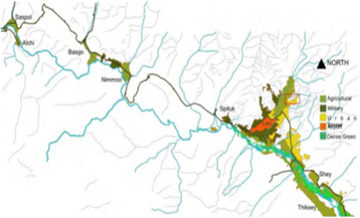
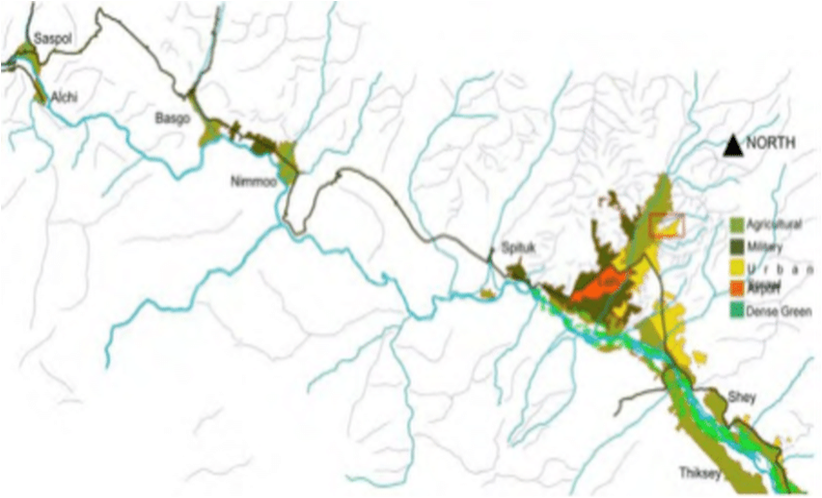
The capital of Ladakh is Leh, which is surrounded by a number of tiny communities along the Indus River as a city. This collection of villages is interconnected and has similar settlement patterns 30. Along the meandering Indus River, which flows from east to west, are villages of varied sizes. The fact that the majority of the settlements are on the river's northern bank is a key feature. This configuration allows the villages to face south, allowing the most sunshine to reach them. The settlements of Saspol, Alchi, Basgo, Nimmoo, Spituk, Leh Shey, and Thikshey are all on the northern bank of the Indus River (Figure 2).
The towns' locations were chosen so that the shadow of the adjacent mountains would not fall on them. Settlements are built on the slopes of mountains rather than the plains of the valley in order to extend the time spent in the sun 12.
They are also close to water and have fertile soil. A cultivable delta is often formed by the water channels that convey water from mountain glaciers to the river valley 12. This delta, which coincides with the availability of Sun, has been determined to be the best location for a town. (The cultivable patch where communities have arisen is shown in Figure 2)
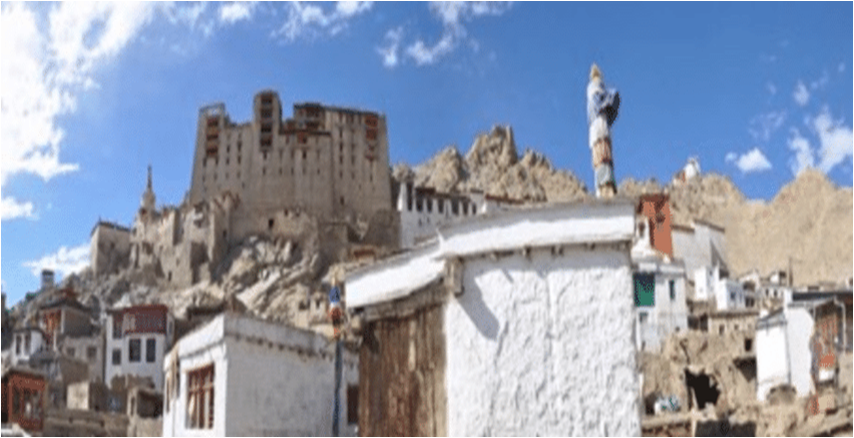
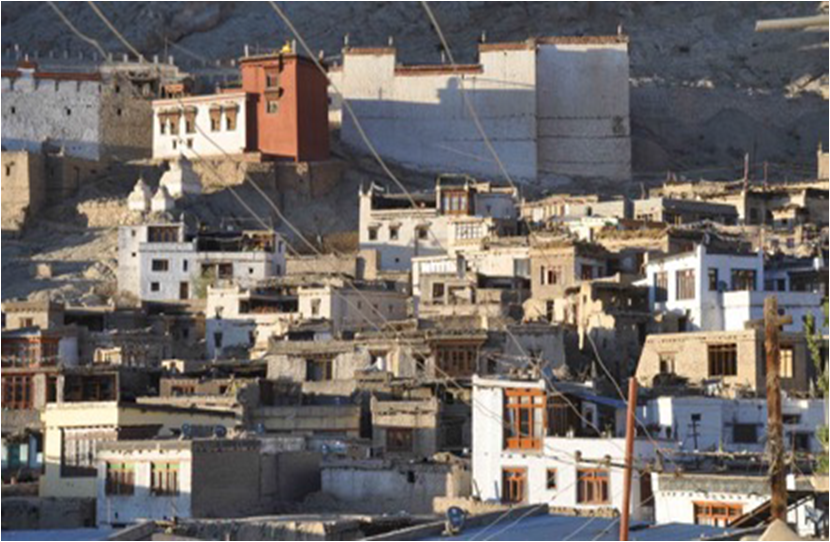
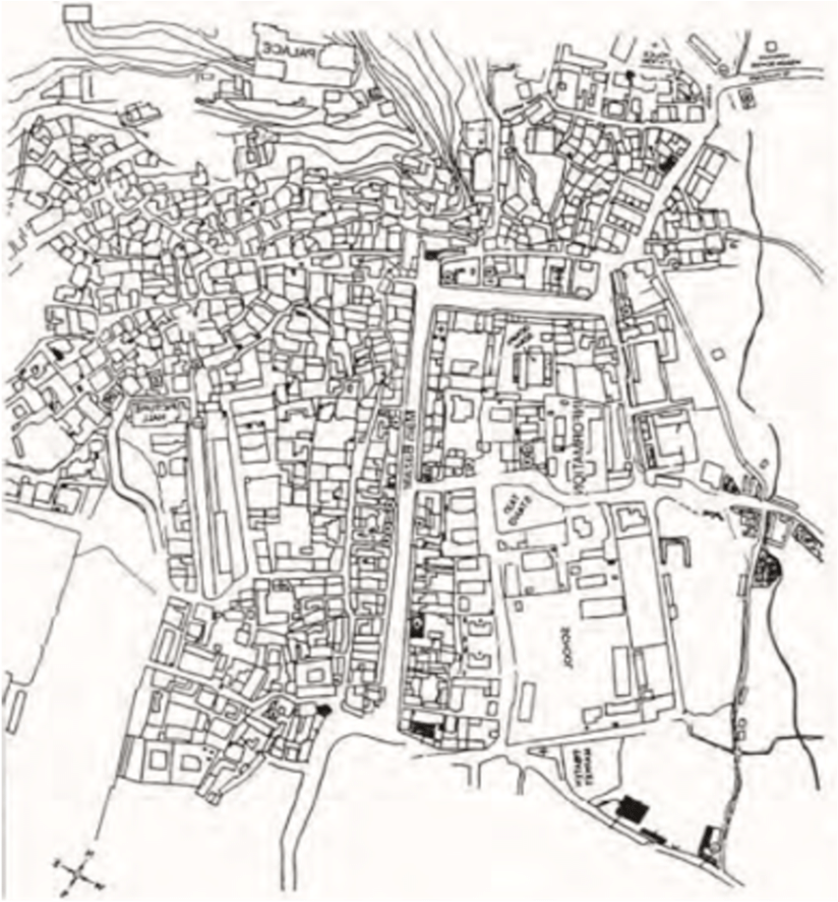
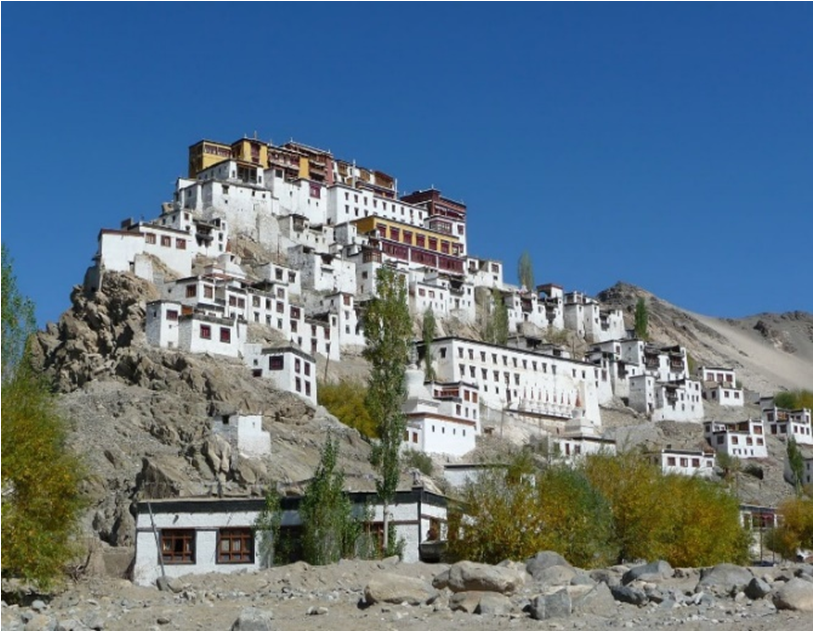
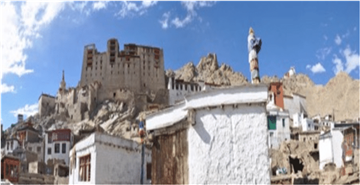
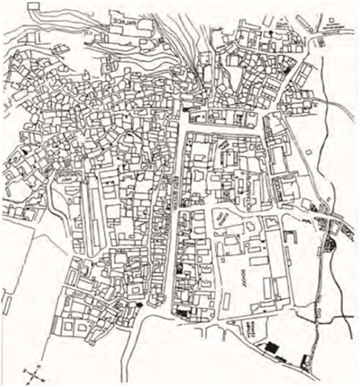
Leh is normally positioned on a plateau on the northern banks of the Indus River, similar to the habitation pattern outlined. The historic town is situated on the mountain's southern slope, allowing the community to face the sun. The plains in the south-west direction are where the newest areas are extending 31. The Tsemo Gompa is at the highest point in Leh, followed by the spectacular nine-story Leh Palace (constructed in the 17th century) and then the nobles' homes 32. The commoners' houses are in the lowest section of the village, followed by the major bazar area (Figure 3).
The vertical stacking of buildings on the hill's slope created a vast concave urban surface made up of individual residences that caught the sun's rays. The Sun's beams were a natural and essential resource for survival. As a result of the stepped terracing, each individual dwelling has access to natural light. To avoid heat loss owing to exposed facade, the houses share walls on two to three sides. This form of urban settlement differs from that of hot-climate cities, where buildings are put up in such a way that they give reciprocal shading 33.
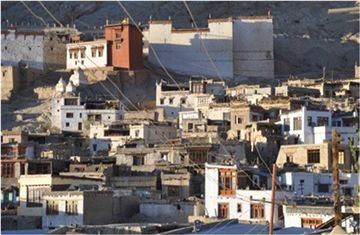
The main bazaar in Leh town is built along a roadway that runs north-south, allowing the sun to shine in the market for the majority of the day and avoiding any shadowing caused by buildings. Similarly, the ancient town's street plan provides maximum solar penetration, despite the fact that the street pattern appears to be uneven at first glance. The major thoroughfares are laid out on a north-south axis, with intersecting streets aligned at 45 degrees to the cardinal directions, avoiding any East-West orientation, which would result in mutual shading (Figure 5).
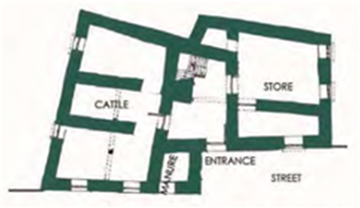
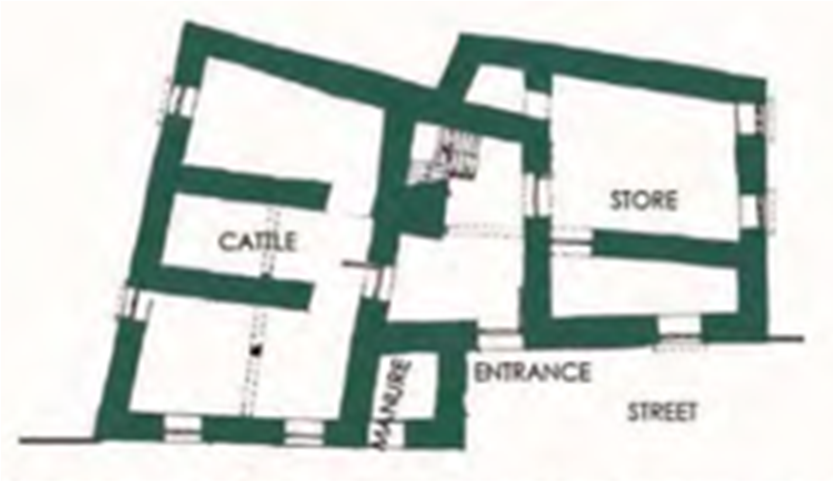
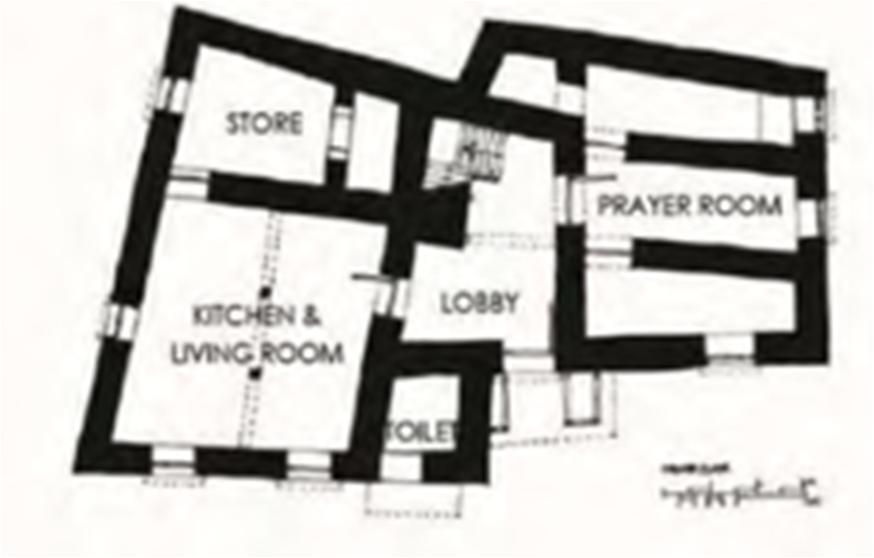
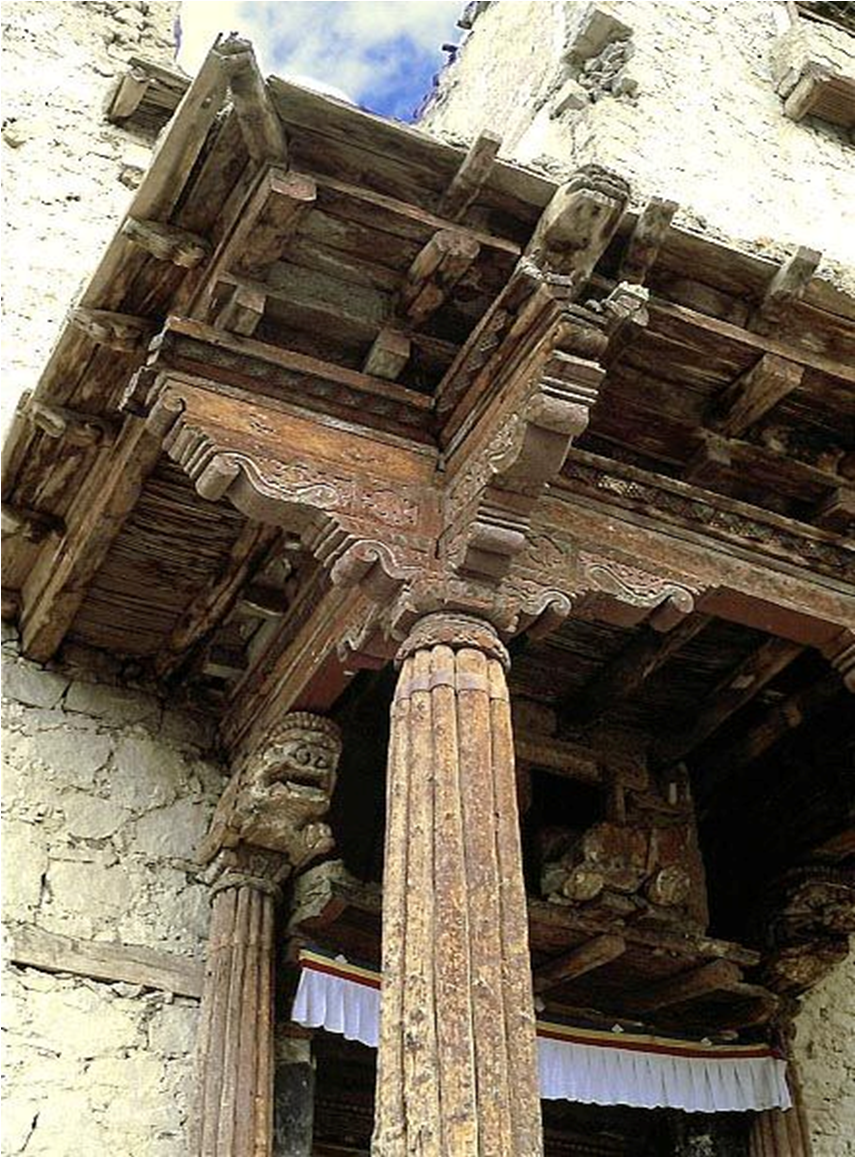
The majority of the residences are two-story structures. Larger homes are built around a courtyard, whereas smaller homes are not. The Ground Floor is usually a dwarf floor that is not intended for human use. It serves as a holding area for cattle, as well as a storage facility and a collection point for lavatory waste 4. The top levels have lavatories, whereas the lower storeys have a chamber where the excreta is collected and composted (Figure 6). Since the kitchen and sleeping areas are adjacent, the heat generated during cooking contributes to the overall warmth of the interior during the night 4. In addition, the main hall is carpeted and equipped with a furnace and a smoke stack for warmth in the winter (Figure 7). The upper floor is used for residential purpose and includes a prayer room, store, and toilet, and a relatively big space as a drawing room, kitchen, and bedroom 34. A typical timber decorative Ladakhi post in the center of the main room serves as a focal point (Figure 8).
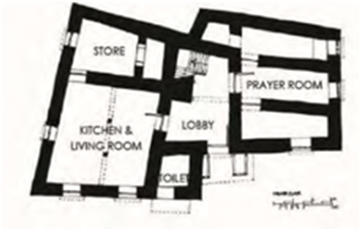
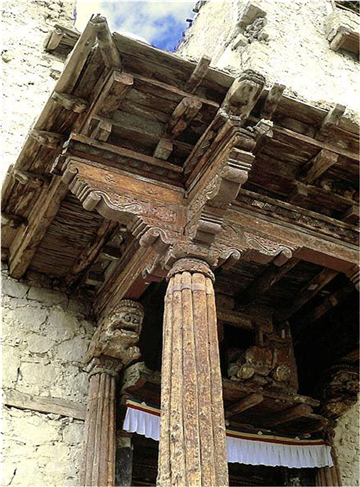
The upper floor is exposed to sunlight during the day, keeping it warm, and the heat is preserved at night using the aforementioned indigenous practices. In virtually all situations, the terrace is used for daytime family meetings as well as drying various items 30.
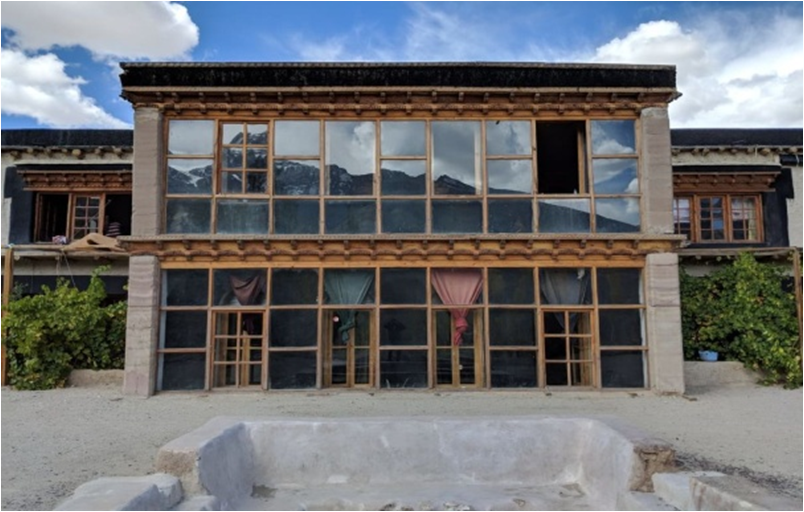
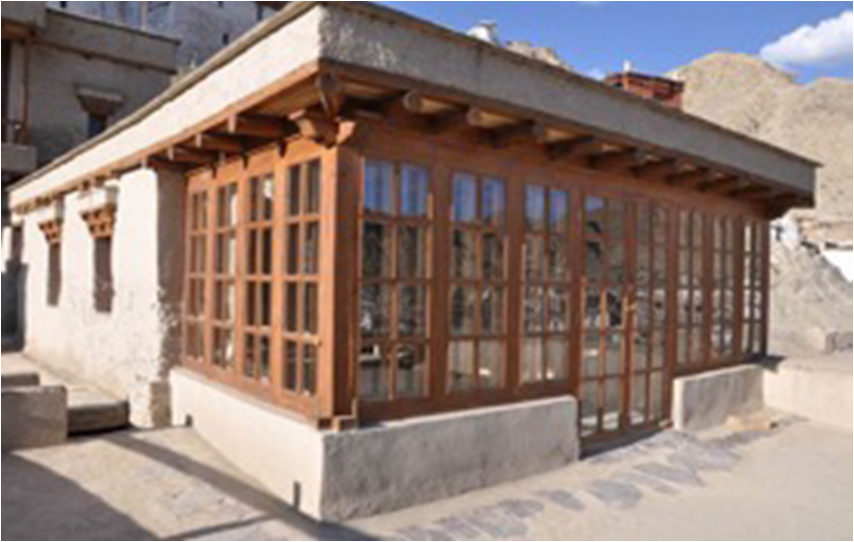
The primary living area is usually equipped with a huge window that faces the sun. The primary wide window is positioned as a corner window in cases where the structure is diagonally orientated with south, catching the sun-light from both directions 31. In order to trap solar radiation as an indigenous greenhouse mechanism, this window is kept closed most of the time and never opened during the winter. In certain situations, double glazing has been installed to improve the insulating capabilities of this window (Figure 9).
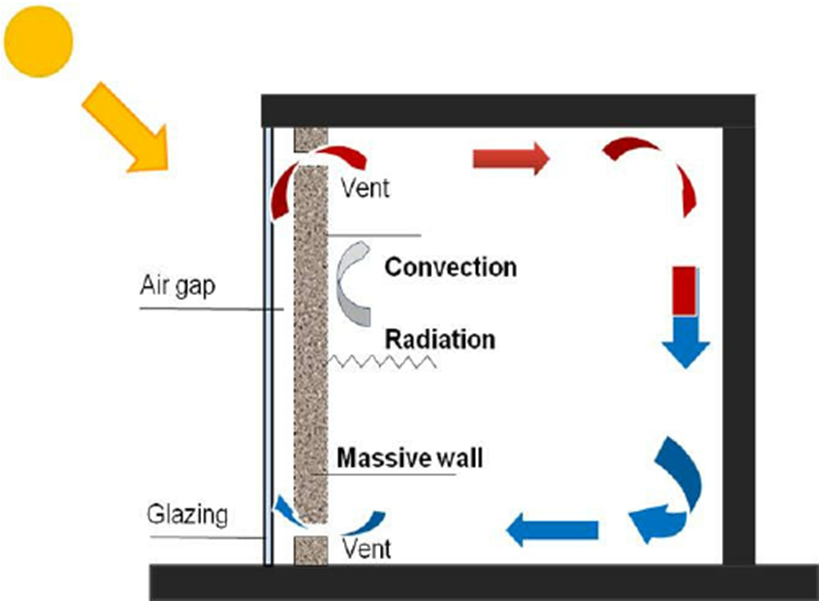
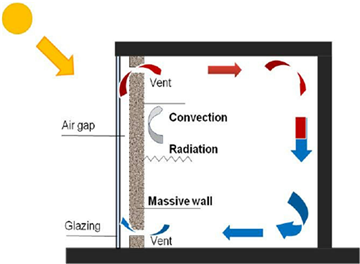
Trombe walls are often installed in homes to passively heat the building. The use of Trombe walls decreases the demand for traditional heating methods like furnaces or other space heaters, lowering the amount of energy consumed to heat the property (Figure 10).
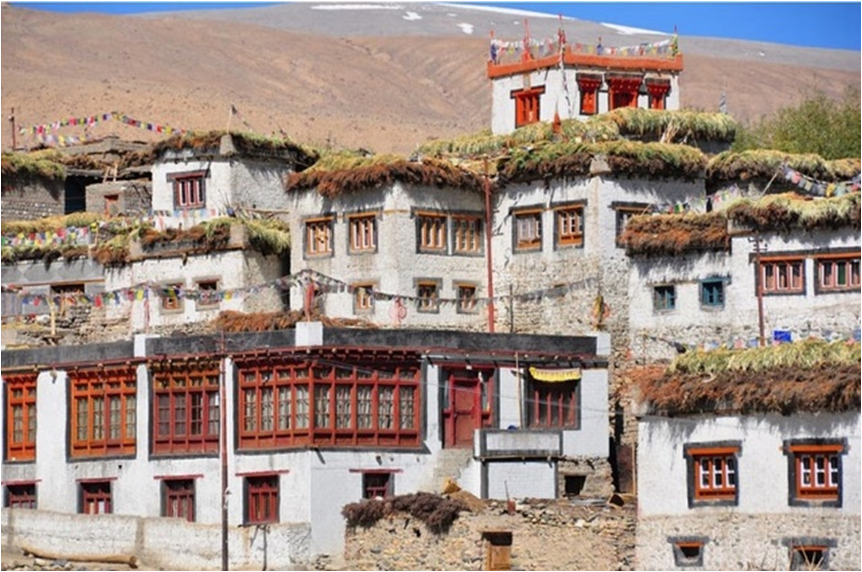
The livestock is frequently kept beneath the main hall since the cattle's body heat warms the main hall from below. Dry grass, straw, sticks, and other dry materials are commonly stored on the main hall's roof to act as an additional layer of insulation. These traditional practices add to the comfort element during the night when the main hall is used for sleeping 32.

Because of the restrictions of the building materials, the other rooms are normally 3 to 4 metres in length, which helps to keep the interior warm and comfortable. Larger rooms have a tendency to chill off quickly. The windows in the other rooms that aren't exposed to the sun are significantly smaller in order to keep the heat inside 4.
Traditional building materials and construction practices complement the reliance on sunshine to sustain suitable climatic conditions. Earth and locally available timber are the primary building materials. Earth and timber are both natural elements that provide climatic comfort in Ladakh vast diurnal range. They have been utilized for ages to construct not only dwellings but also spectacular monasteries and palaces in the region due to their high thermal insulating characteristics. Quartzite stone is only utilized in the partial building of forts and palaces, particularly the lower stories, to increase strength and water resistance 19.
Traditional buildings in Ladakh, like those in Tibet, are made of stones, timbers, and mud in various forms, such as sun-dried mud bricks and rammed earth for floor and roof plastering. The structures reflect the people's way of life, with cow pens on the ground floor and Buddhist altar chambers on the top.
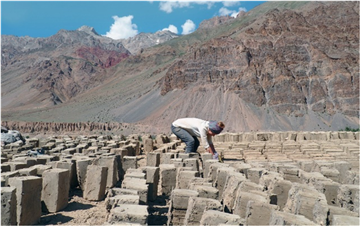
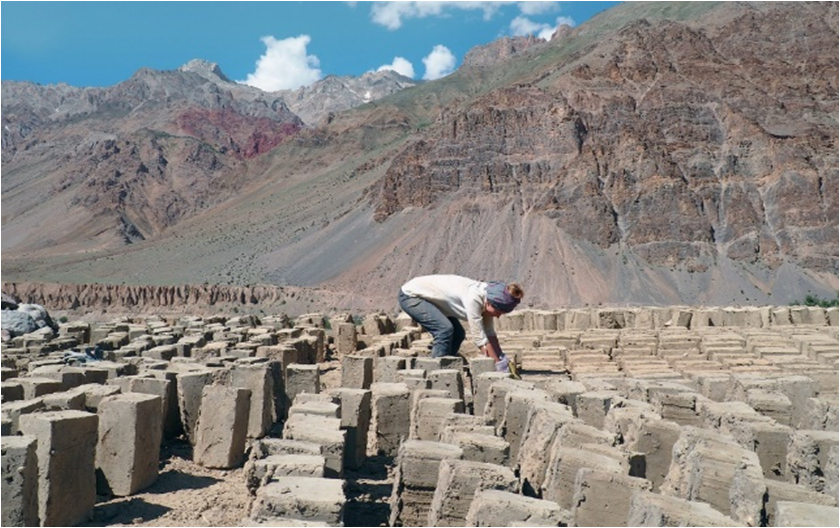
The fundamental unit of masonry building is sun-dried earth blocks. They are used in the construction of 300 or 450 mm thick walls and are usually made in sizes of 300 x 150 x 150 mm (Figure 11). Alluvial material along the banks of the Indus River was used to create these earth bricks. The majority of earth blocks are manufactured in Shey, which is around 15 kilometres from Leh 30. Stone blocks are sometimes used in the lower courses of walls for extra strength and water resistance, especially in low-lying areas. Finally, mud plaster is used to complete the wall (Figure 12).
Roofs are built with flat spans utilising the trunks of native poplar trees as beams, spaced 50-60cm apart. The trunks have an average diameter of 15 centimetres and a length of 3 to 4 metres 19. Poplar willows spread in the other direction are used to cover these timbers. Willows usually have a thickness of 20 to 30 mm. Over the layer of willows, a 15 to 20 cm layer of dried grass, hay, etc. is laid and finished with a clayey mud plaster (Figure 12).
The bottom storey on the ground has mud floors, while the upper storey has timber floors. Along with the outfitting of rugs, timber flooring provide improved thermal comfort 31.
Timber from Kashmir is used for the doors and windows. The lintels of the doors and windows are ornately corbelled elements. The plaster band, which is commonly red or black in colour, articulates the sills and jambs. The distinctive features of Ladakhi architecture are the timber lintels and plaster bands. Their growth, however, is not solely for symbolic or aesthetic purposes 32. Lintels are made up of layers of wood that operate as a thermal barrier, preventing heat loss through conduction from the wall (Figure 13).
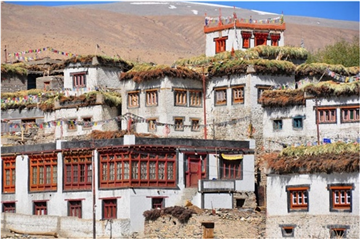
The buildings are well-insulated with mud and straw to make them suitable for the local temperature, and the most essential room is always facing south for sunlight (Figure 14). This method of passive solar energy is recognized in current design. People here have a strong sense of aesthetics and elegance, and each home has its own personality. The roof parapet, doors, and windows are frequently intricate wood-carved ornamentation, and the facades usually have an attractive arrangement.

In harsh winters, conventional earth block and timber building was able to provide a temperature difference of over 40°C. When the outside temperature drops to -20°C, the internal temperature remains at a pleasant 20°C 35.
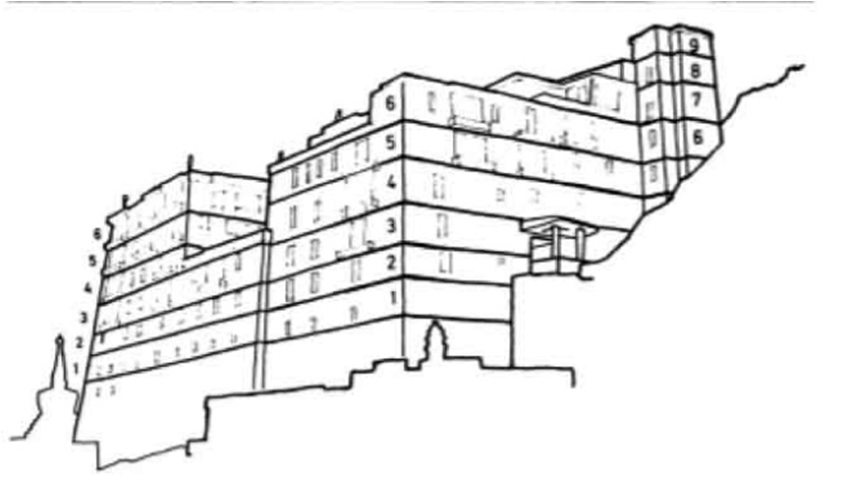
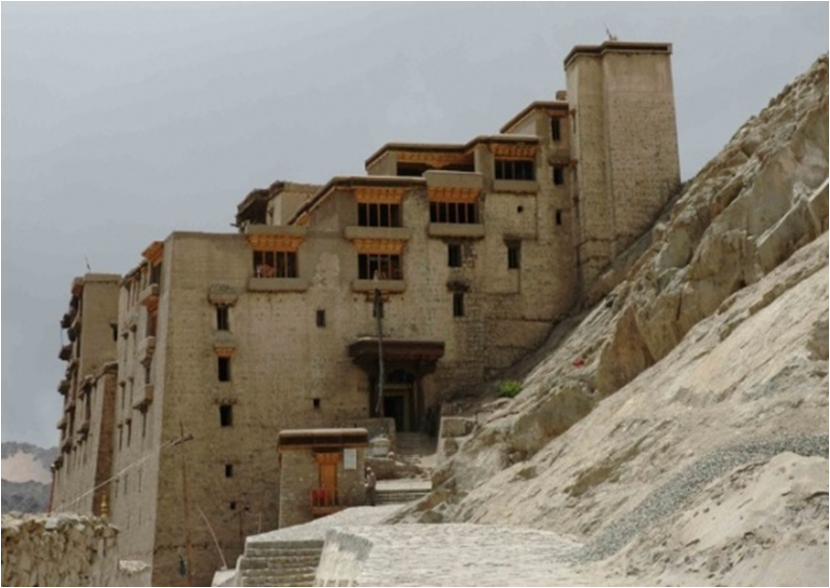
As visitors enter Leh, they are greeted by the majestic nine-storey palace, with a height of 58 metres from the base of the walls on the southern elevation (Figure 15). The royal palace of Lé is a big, attractive structure that commands a commanding position over the entire city. The outer walls have a steep incline because their thickness decreases fast as they rise in height. Long open balconies to the south are furnished on the higher stories, and the walls are punctured with a large number of windows. On the outside, the roof beams are supported by carved wooden pillars and covered with boards painted in a variety of patterns. The structure is solid and unassuming, but its height is giving a commanding presence 36. Stone, timber (juniper, poplar, and willow), sun-dried mud bricks, and markalak (waterproofing clay) are among the materials used to construct the palace. The building materials were brought in from other villages around Leh, primarily Phyang and Sabu 34.

Massive masonry walls enclose a timber structure of columns and beams supporting a flat earth roof in Ladakhi buildings, which are based on regional Himalayan and Tibetan traditions 37. The palace's main entrance is on the east side, and it features an exquisite wooden porch with three lions. The canopy and brackets are ornately carved, with traces of paint still visible, and their design appears to be a cross between Wanla's temple porch and conventional seventeenth-century Tibetan style 38.
On the fifth storey, there is a chodkhang (chapel), and on the topmost roof, there is a lhatho – GOD’s shrine. Both temples are still cared for by monks from the Hemis Monastery on a regular basis. A floor of the palace’s different levels is found here (Figure 16). The king and queen's principal chambers, as well as a big kitchen, take up the most of the space on the sixth floor. A throne room and the Samyeling Lhakhang shrine are located on the seventh floor (bsam yasgling lha khang). The northeast portion of the eighth floor comprises seven rooms, while the ninth floor has another modest shrine room. The stables were on the lowest storey, with storerooms on the second and servants on the third 39.
The traditional rammed-earth method, used in the construction of Leh Palace and most of the monasteries, is claimed to be quite unique for its engineering techniques. The walls of Leh Palace and most of the monasteries are a testament to the strength and longevity of this method. In addition, the palace employs a mud-mortared stone technique that is unique to it 40. This consists of a mud-mortared stone wall (as opposed to, for example, cement-mortared ones). The way the stones have been arranged gives the wall faces their visual character. Although the majority of the wall faces have a random texture, a handful have a unique banded texture. This banded texture is formed by first placing a row of huge stones with their best faces forward, then filling in the gaps between them with small stones to form a leveling layer for the next row of large stones 40.
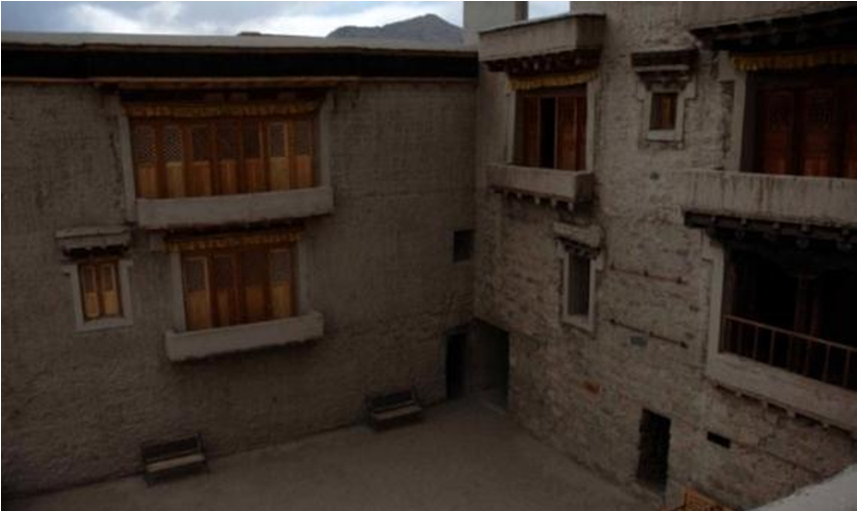
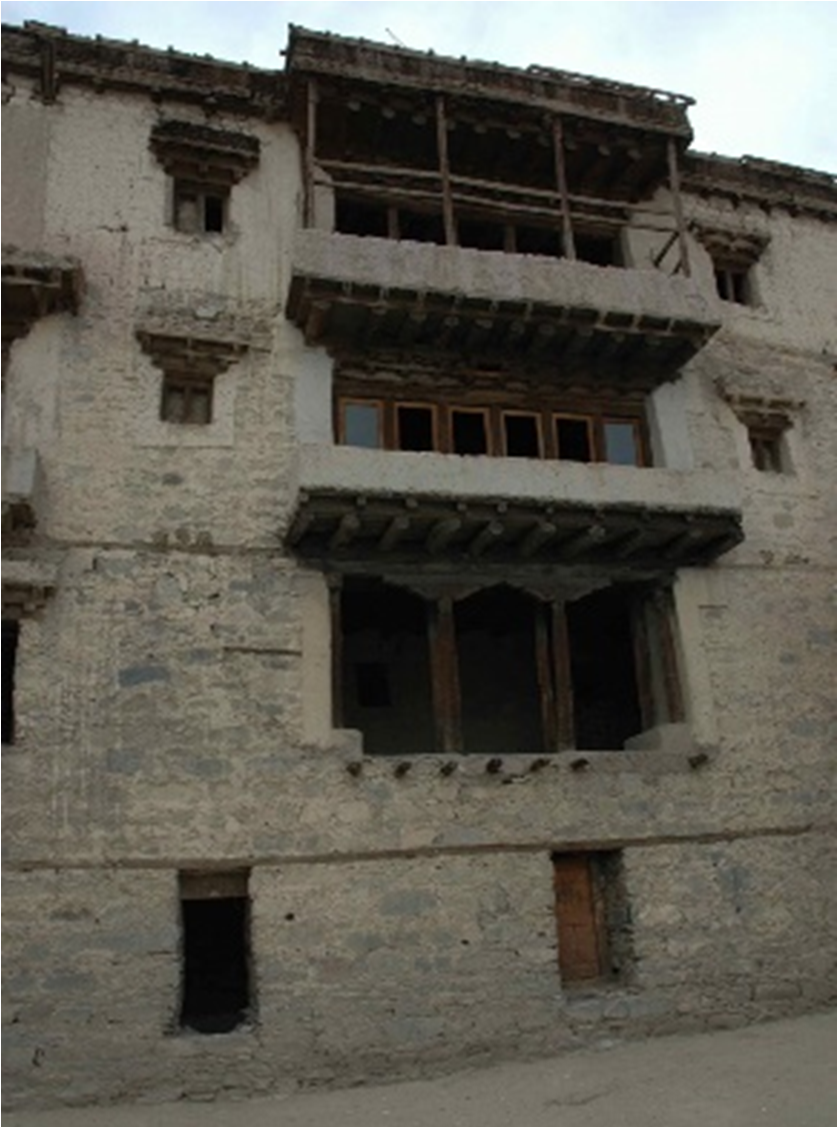
The open terrace in the centre of the building, alongside the halls, is known as kathog chenmo, or the 'Big Terrace' (Figure 16). The palace's south and east sides have a number of rabsal, or latticed and carved wooden balconies (Figure 17). Old mosques and Imambaras, as well as the residences of Baltistan's chiefs and other sections of Ladakh, have similar woodwork 39.
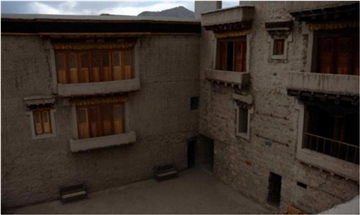

In fact, the number of balconies in a house, at one time in Ladakh, denoted the resident’s status and prosperity. Another fascinating technique is wall timber lacing, which is utilised in many places of the world, including the Himalayas - from Hunza to Central Nepal 40. The Leh Palace is a popular tourist attraction (Figure 18). Visitors flock to the building to acquire a sense of the local architectural style and to see the magnificent view of Leh town from the top. The construction of Leh Palace began to dilapidate and degrade as a result of its lack of residents and lack of regular upkeep. The Archaeological Survey of India (ASI) purchased the palace in 1991. The ASI began its refurbishment plans in 1995, with some early structural repairs and then commenced substantial repairs and renovations in 1998 38.
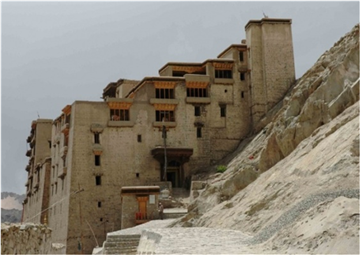
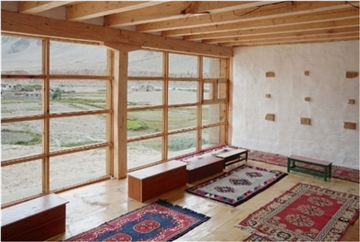
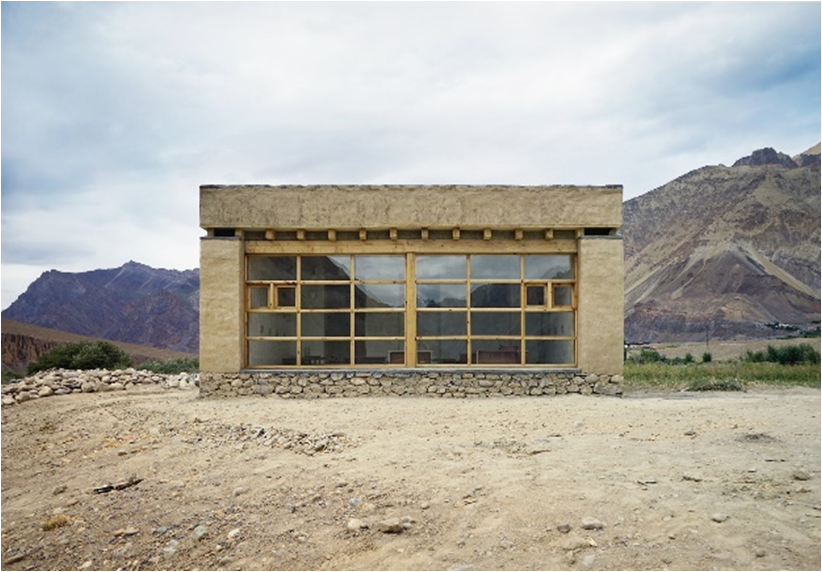
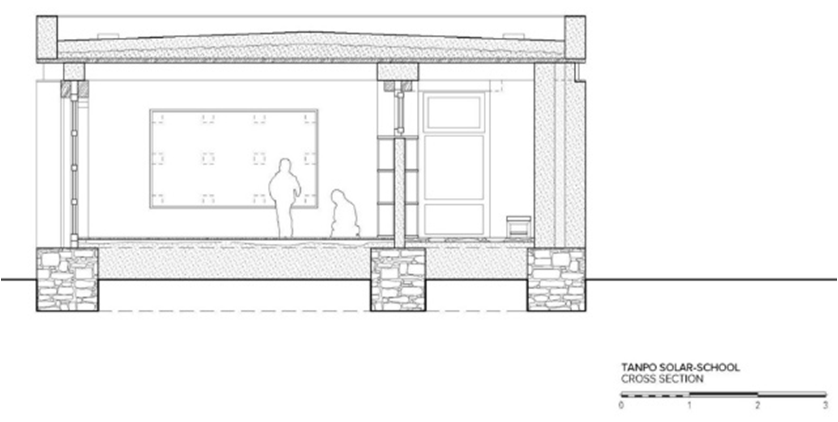
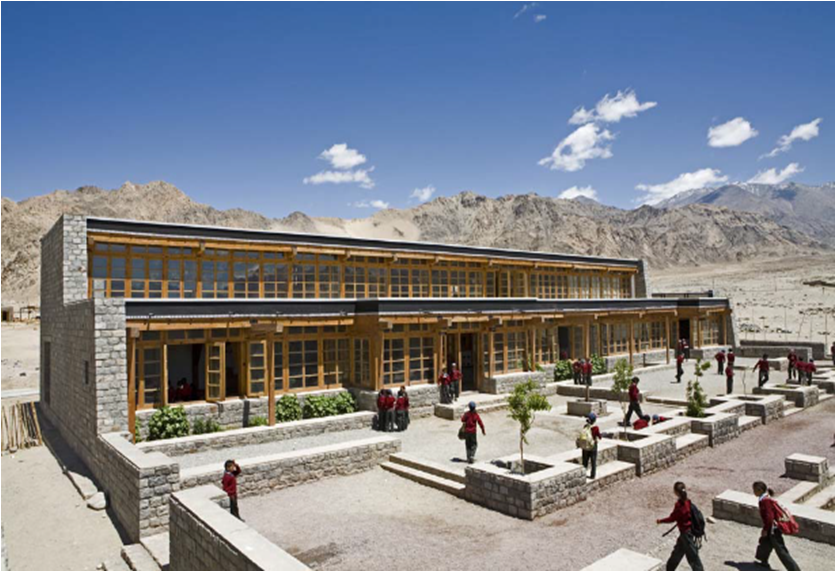
The fundamental architectural challenge was to establish a suitable setting for schooling in the Himalayan cold without burning fossil fuels. At 3800 metres above sea level, these houses are unsuitable for winter use due to a lack of heating and insulation (Figure 19). As a result, the Himalayan region experiences a three-month forced winter hiatus.

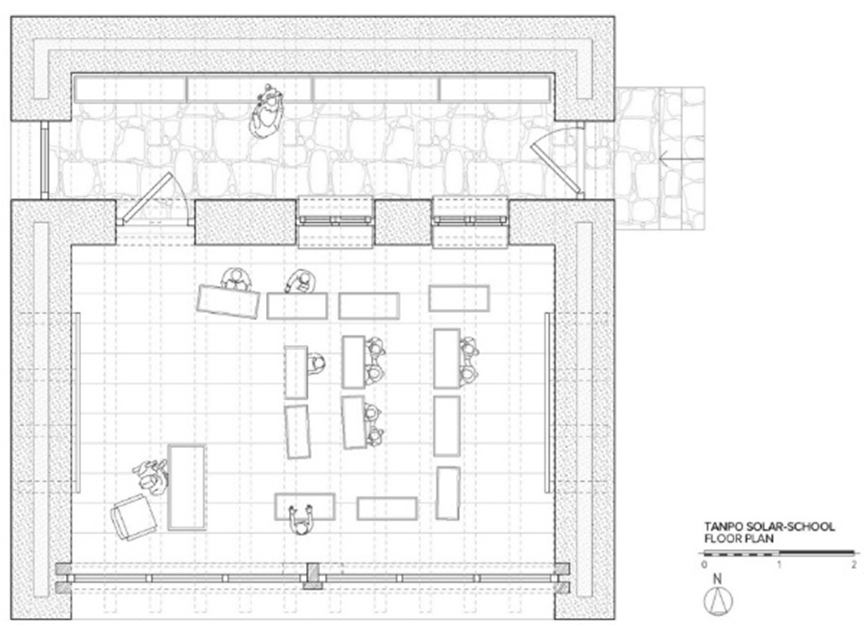
The simple geometry and solid volume were created to complement the highly utilitarian approach to the traditional architectural environment and to reassure the community of their traditional values. On the upper embankment of the Zanskar River, the location was chosen in collaboration with the hamlet, taking into account the best access from the residences and flood safety 41.
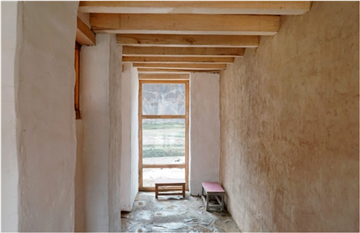
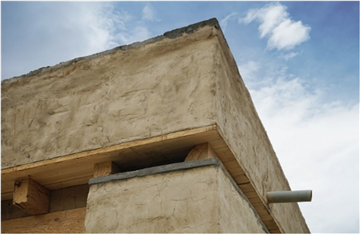
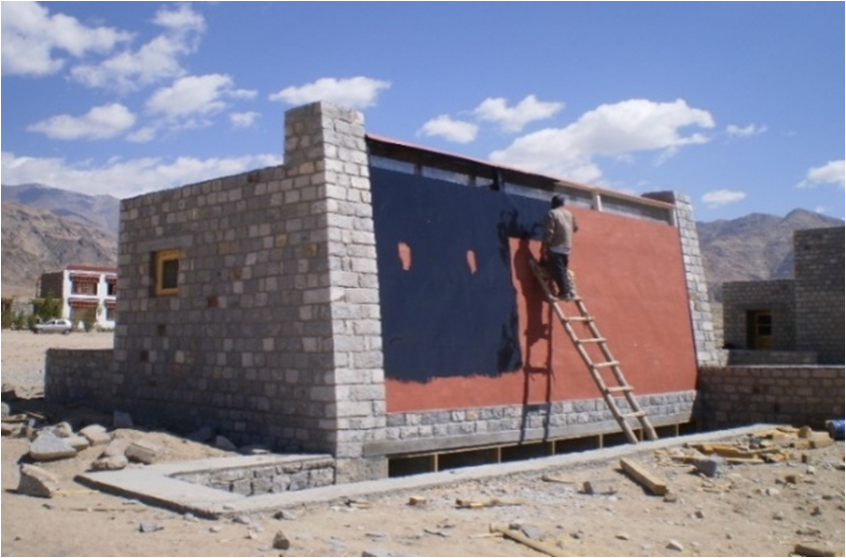
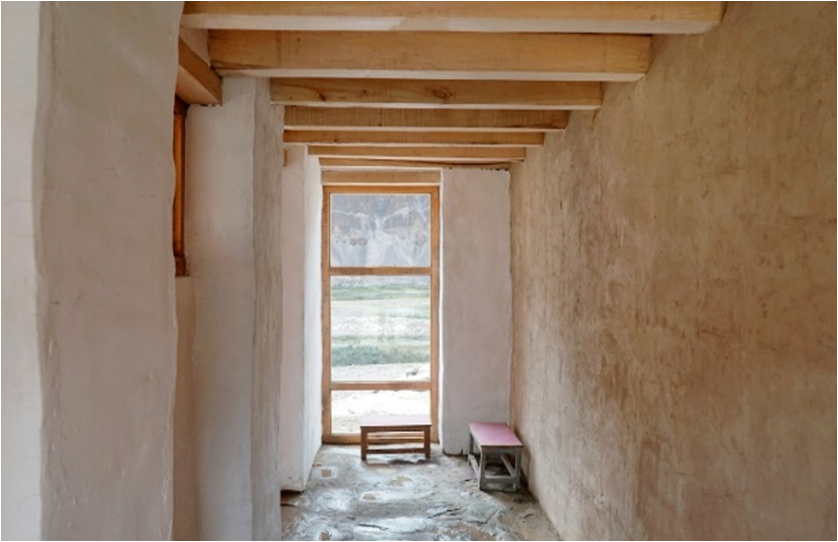
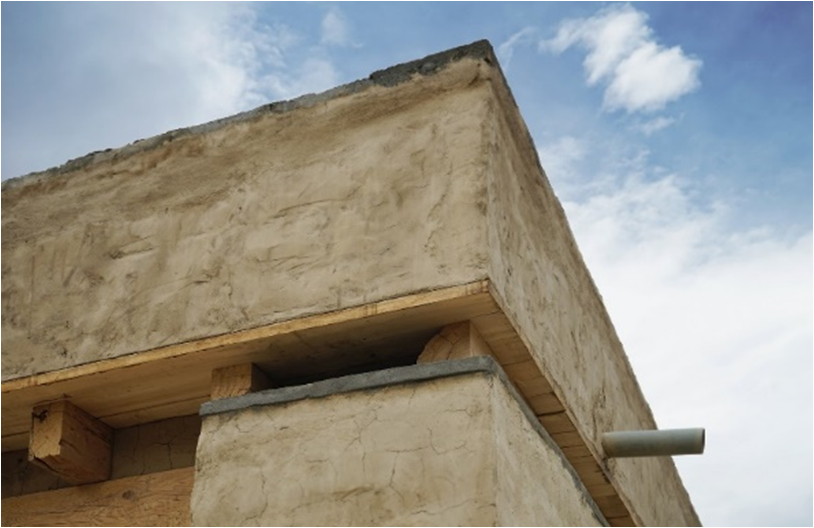
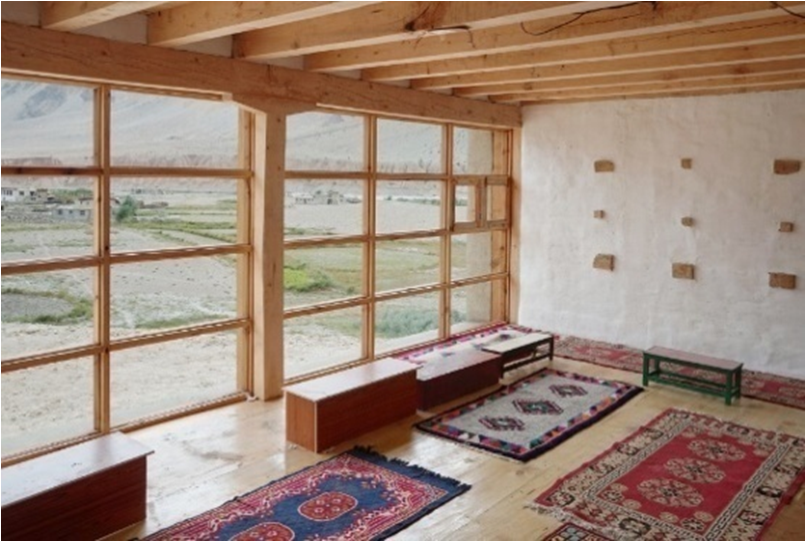
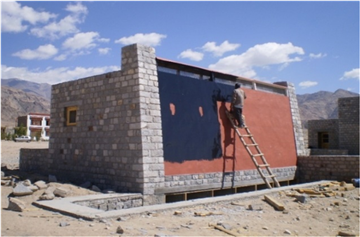
By using locally sourced construction materials such as stone, pebble, and mud, the design aims to have a low environmental impact (Figure 20). The beams wood planks were sourced from lower Ladakh, while the glass was the only non-traditional material that came from an industrial source (Figure 21). The foundation is only 300 mm deep, which is shallow by western standards, but it follows a local tradition that has shown to be enough for decades. To reach the inner floor level, the bottom half of the wall is made of stone for another 300 mm above ground 41. The upper wall is made up of two levels of 300 mm sun-dried mud bricks with straw insulation acquired locally in between (Figure 22). The concepts of planning have already begun to spread throughout the region as a result of the community-based building (Figure 23). The mortar was made from the same mud that was used to make bricks.
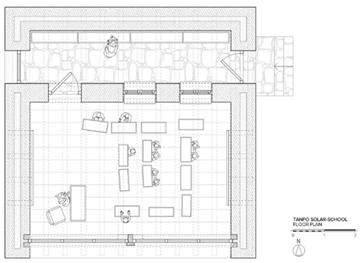
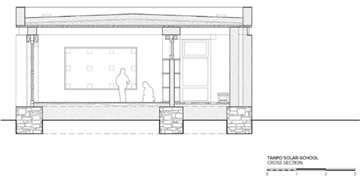
Double glazing is installed in the large window facing practically South, a simple but underutilised (for economic reasons) approach by the locals (Figure 24). On hot days, the two opening window panes assist with airflow. The corridor to the north acts as additional insulation against the coldest direction, which never receives sunlight.
The structure warms up quickly after sunrise, thanks to the big windows that operate as a greenhouse, and cools down quickly after sunset, primarily due to thermal radiation from the same windows; however the teaching only takes place during daylight hours. The project's goal was to create an open source design that could be reused and serve as an inspiration to the community
Vernacular architecture is of great potentiality to modern “…as the late twentieth century people, though, limitations of traditional cultures in helping us to know what to do are evident” 42. However, vernacular architecture elements serve as dramatic metaphors for regional forms of shelter, as well as pragmatic solutions to the harsh climate, providing modernism a subtle but telling push toward regionalism 43.
The diversity of sustainability trends has a significant impact on the city's architectural identity and image. Researches define three trends: modern technology, neo-traditional, and contemporary interpretation, and investigate the reasons for their emergence, key characteristics, and effects on architectural identities of the region. The conservation of cultural assets and the revitalization of architectural history in an environmentally conscious manner necessitate meticulous planning. It requires a thorough understanding of materials and their relationships, as well as expertise in construction, craft processes, trained technicians, and available resources, as well as a long-term dedication to the region's character through a sustainable approach. Heritage revitalization as part of a long-term strategy necessitates a more in-depth understanding of the heritage's essential values than the normal “imitation” and visual metaphors of historic forms, architectural features, and ornamentations.
The essence of vernacular architecture is sustainability, and it serves as a connection to more environmentally conscious structures. To preserve society's long-term survival, we must adapt long-term growth strategies that respect nature's ecological balance. The re-evaluation of vernacular architecture can provide an inexhaustible source of worthwhile ecological solutions for the built environment that answer to societal requirements 44.
People are drawn to vernacular architecture for reasons other than nostalgia. The architecture's sustainability and sensitivity to the climate, natural location, and locally available building materials are highly valued. The fact that they can be used as a model for new construction further adds to their worth.
People have lived in peace with nature for ages in traditional societies; they farmed their food in the surrounding environment and evolved their lifestyles in accordance with the available resources. They have built structures with their hands, employing local building materials found in the surrounding area, and developing building procedures based on the physical properties of these materials. Traditional communities knew that in order to survive, they needed to maintain a balance with the natural world. To put it another way, traditional civilizations were the true forerunners of long-term sustainable development in terms of the natural and built environment.
We must think beyond places shaped by products and buildings when describing architecture and the built environment; we must include how people adapt the environment to meet their wants, lives, habits, and culture. “The Built Environment is everything humanly made, arranged or maintained to fulfill human purposes, needs, wants and values to mediate the overall environment with results that affects the environmental context” 45. This may have something to do with how architecture and sustainability are intertwined.
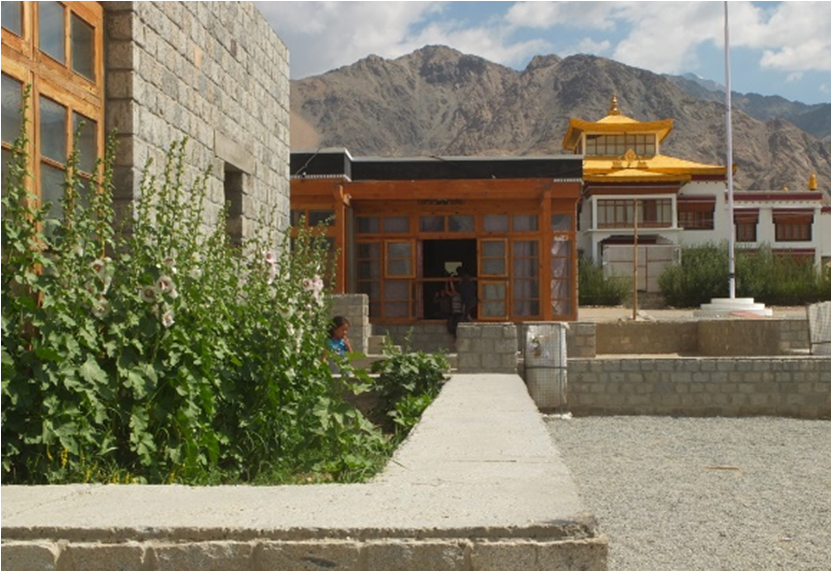
New structures should include architectural styles, designs, and construction materials that represent the cultural legacy of the community or region, as well as be environmentally and culturally sensitive and long-lasting (Figure 25).
The architecture of the region symbolises the spirit of individuality, as it was built at specific geographic locations at specific times by different persons. The concepts of sustainability and identity are intertwined. Sustainability, in its broadest sense, has become an integral part of any society's physical and spiritual history. People produced physical production (buildings, artefacts, furniture etc.) and cultural values (identity, traditions social values etc.) in reaction to the ambient environment, resulting in social and environmental sustainability. The meaning of sustainability is encapsulated by architectural identity and its interrelationship with contexts such as location, climate, environment, and local material: “... sustainability is an important part of the identity in architecture; identity is the main core in the dimension of regionalism architecture” 18.


Sustainable architecture is based on the concept of regionalism; however, it does not call for us to revert to past ways of life out of nostalgia; rather, it encourages us to use technology and design responsibly and for the long term 13. Architectural styles can be interpreted using aspects like design idea, inward oriented plan, thick brick or stone walls, small well-designed windows, entrance transom, high ceilings, and elevation treatments to teach valuable lessons about sustainability. The way these low-tech elements worked during eras when energy usage was limited demonstrates concepts that can be applied to today's efforts to preserve local identity as a solution to environmental challenges. The customary response to climate, site, and materials provides chances for beneficial environmental design lessons to be presented.
Maintaining the Ladakh’s architectural identity needs a solid grasp of the local natural systems as well as a complete comprehension of the society's cultural values that have evolved and demonstrated their validity over time. The physical environment is shaped with pristine understanding of the multi-layered relationships between nature, culture, social values, economy, and accessible resources of the region and its distinctiveness; architecture must be designed to suit the wishes and demands of its people (Figure 26).
The sustainable design philosophy respects local characteristics and opposes the idea that buildings should look and be built in the same way in every location. The mechanics of generating “regionalism” and “identification” through architecture in an international, global setting are shown in the construction of cultural identity in contemporary architecture. In essential ways, architecture should respond to place 13.
Traditional cultures and ideologies, according to sustainability advocates, include concepts and ideals that should guide sustainable living [46]. Sustainable building design aims to achieve the best possible relationships between people and their surroundings. Planners, architects, designers, developers and operators have the chance and obligations to safeguard a place’s identity, people and spirit (Figure 27).

It is not only the use of appropriate materials or local building techniques that must be preserved, nor the re–evaluation of traditional features; it is also the preservation of people’s identities that must be preserved in order to overcome the exploitation and cultural imperialism that are so prevalent in contemporary day in Ladakh’s architecture.
The goal of this research paper is to determine identity in architecture through the lens of numerous notions such as culture, vernacular architecture, and sustainability, as different facets of identity. The paper attempted to find analogies between identity as a marker of a society and sustainability as a lifestyle developed by people in that society to live in harmony with the surrounding nature and available resources while maintaining balance with the lifecycle around them through discussion and analysis as every location on the Earth faces climatic issues, and the vernacular and traditional understanding of those challenges gives remedies. Ladakh, meanwhile, exhibits a highly evolved traditional understanding of controlling adverse climatic circumstances through vernacular construction, resulting in human survival for centuries. People's architecture, particularly vernacular, is a dynamic reflection of how identity and sustainability are naturally linked in line with environment and culture.
Energy efficiency in architecture is a concept that can only be realised by incorporating indigenous solutions. Indigenous practises are tried-and-true and long-lasting. As a result, more focus should be placed on the documentation and research of indigenous techniques in order to create a knowledge repository. This information base will aid in the formulation of best practises in architecture, which will be combined with traditional techniques. Vernacular architecture is a symbol of national identity and long-term viability; it is a “mirror” of nations, reflecting place, period, and culture. Architecture that was created by people and for the people, has evolved over time and through trial and error to meet society's requirements while remaining in harmony with the environment. The search for a new regional identity entails being free of imported ideas and ideologies while maintaining cultural interconnections that benefit human civilisation. Regaining a Ladakhi identity is critical to the construction of a new culture, not only in terms of architecture but in all parts of life, in order to leave a mark in an ever-changing world.
| [1] | Salman M., “Sustainability and Vernacular Architecture: Rethinking What Identity Is, Urban and Architectural Heritage Conservation within Sustainability,” Intech Open, November 2018, [Online]. Available: https://www.intechopen.com/chapters/64381. | ||
| In article | View Article | ||
| [2] | Yousuf, W. A., “The Challenge of Sustainability in Developing Countries and the Adaptation of Heritage-Inspired Architecture in Context,” ArchNet-IJAR, 5(2), 2011. | ||
| In article | |||
| [3] | Dayaratne, R., “Toward sustainable development: Lessons from vernacular settlements of Sri Lanka. Frontiers of Architectural Research,” 7. 10.1016, 2018. | ||
| In article | View Article | ||
| [4] | Nisar Khan, “Vernacular Architecture and Climatic Control in the extreme conditions of Ladakh” Research gate Publications, 10 (11), October, 2013, [Online]. Available: https://www.researchgate.net/publication/279186605_Vernacular_Architecture_ and_Climatic_Control_in_the_extreme_conditions_of_Ladakh_ASPIRE-2013. | ||
| In article | |||
| [5] | Mahmoudi, M., & Mofidi, M., “Analysis of typology architecture of Yazd Wind-catcher and finding functional optimal such,” Fine Arts Journal, 36 (winter), 2008. | ||
| In article | |||
| [6] | Proceedings of World Congress on Sustainable development: Engineering and Technological challenges, IIE, Kolkata, 2000. | ||
| In article | |||
| [7] | U.S. Department of Housing and Urban Development, “Sustainable Construction in Indian Country,” HUD, 2015 [Online]. Available: https://www.huduser.gov/publications/pdf/na_constr_FAQ.pdf. | ||
| In article | |||
| [8] | Oxford dictionaries, Identity Meaning. Retrieved from oxford dictionaries, 2017 [Online]. Available: https://en.oxforddictionaries.com/definition/us/identity/identity. Cambridge English Dictionary, Identity meaning/definitions, 2011 [Online]. Available: https://dictionary.cambridge.org/dictionary/english/identity. | ||
| In article | |||
| [9] | Abel C., Architecture as Identity, I: The essence of architecture. In: Herzfeld M, Lenhart MD. Semiotics 1980. New York: Plenum Press; 1982. | ||
| In article | View Article | ||
| [10] | Norberg-Schulz C., Genius Loci: Towards a Phenomenology of Architecture, Rizzoli, New York, 1996. | ||
| In article | |||
| [11] | Jina, P. S., Ladakh, the Land and the People, Indus Publishing Company, Srinagar, 1996. | ||
| In article | |||
| [12] | McLennan J. F., The Philosophy of Sustainable Design, MO EcoTone, Kansas City, 2006. 6, 10, 52, 53. | ||
| In article | |||
| [13] | Curl JS, A Dictionary of Architecture and Landscape Architecture, Oxford University Press, Oxford, 2006. | ||
| In article | |||
| [14] | Salman A. Z., Maha, The sustainability potential of traditional architecture in the Arab World. Doctoral [thesis]. Huddersfield: University of Huddersfield; 2007. | ||
| In article | |||
| [15] | Winchip S. M., Sustainable Design for Interior Environments, Fairchild Books, New York, 2011. | ||
| In article | View Article | ||
| [16] | Fathy H., Architecture for the Poor, University of Chicago Press, Chicago, 1976. | ||
| In article | |||
| [17] | Hidayatun M. I., Prijotomo J, Rachmawati M. Sustainability is important part of the identity in the dimension of regionalism architecture. Applied Mechanics and Materials. 2015; 747: 145-148. | ||
| In article | View Article | ||
| [18] | Rais A., Kirk, W., “Jammu and Kashmir, State, India”, Encyclopædia Britannica, retrieved 7 August 2019. | ||
| In article | |||
| [19] | Jan·Osmaczyk, Edmund; Osmańczyk, Edmund Jan (2003), Encyclopedia of the United Nations and International Agreements: G to M, Taylor & Francis, 2003, 1191. | ||
| In article | |||
| [20] | Rizvi, Janet, Ladakh – Crossroads of High Asia, Oxford University Press, Oxford, 1996. | ||
| In article | |||
| [21] | Yukiyasu Osada, Gavin Allwright, and Atsushi Kanamaru, Mapping the Tibetan World, Kotan Publishing, Tokyo, 2000. | ||
| In article | |||
| [22] | Pile, Tim, Ladakh: the good, bad and ugly sides to India's 'Little Tibet', high in the Himalayas, South Chinan Morning Post, 2019. | ||
| In article | |||
| [23] | Strzepek, Kenneth M.; Joel B. Smith, As Climate Changes: International Impacts and Implications, Cambridge University Press, 1995. | ||
| In article | |||
| [24] | Dvorský, Miroslav, A field guide to the flora of Ladakh, Academia, Prague, 2018. | ||
| In article | |||
| [25] | H. Osmaston, N. Tsering, Ecology and Development in High Altitude Ladakh: a Convicting Paradigm, Motilal Banarsidass, 1997, 243. | ||
| In article | |||
| [26] | Sharma, V.K., Ahmed, S.B., Singhal, S.K.and Pandey, R. N., Response of barley (Hordium vulgare L.) to nitrogen and phosphorus levels under cold arid region of Ladakh (J&K), India, Agricultural Science Digest, 2011, 301-304. | ||
| In article | |||
| [27] | Singh, B. and Dwivedi, S. K., Climate change in cold arid region: Horticulture to Horti-business, New – Delhi publishers, New Delhi, 2011. | ||
| In article | |||
| [28] | IPCC, The Science of Climate Change, Cambridge University Press, Cambridge, 1995. | ||
| In article | |||
| [29] | Jina, Prem Singh, The Cultural Heritage of Ladakh, Indus Publishing Company, New Delhi, 2003. | ||
| In article | |||
| [30] | Sagwal, S.S., Specifications of Ladakh: Ecology and Environment, Ashish Publishers, 1997. | ||
| In article | |||
| [31] | Cunningham, Alexander, Ladakh, Gulshan Books Publications, Srinagar, 1997. | ||
| In article | |||
| [32] | Beek, M. V., Bertelsen, K.B., Pedersen, P., “Ladakh: culture, history, and development between Himalaya and Karokaram,” Oxford Publication House, 1999. | ||
| In article | |||
| [33] | Rabgais, Tashi, History of Ladakh Called the Mirror Which Illuminates All, C Namgyal and Tsewang Taru, Leh, 1984. | ||
| In article | |||
| [34] | Paul, Sunder, Climate Change in Ladakh, In Ladakh Studies, edited by Kim Gutschow, vol. 25: 3-6. Kargil and Leh: IALS. 2010. | ||
| In article | |||
| [35] | Cunningham, Alexander, Ladak: Physical, Statistical and Historical, Pilgrims Book House, New Delhi, 1854. | ||
| In article | |||
| [36] | Harrison, J., The LAMO Centre: Restoration and Adaptative Reuse in Leh Old Town, Leh: The LAMO Trust, 2017. | ||
| In article | |||
| [37] | Paul, Sunder and Tsering Phunchok. Ancient Palace, Leh, Leh: Archaeological Survey of India, 2017. | ||
| In article | |||
| [38] | Sheikh, A. G., Islamic Architecture in Ladakh. Ladakh: Culture at the Crossroad, Marg Publications, Mumbai, 2005 34-43. | ||
| In article | |||
| [39] | Howard, Neil F, East and West: “The Development of the Fortresses of Ladakh c.950 to c.1650 AD,” Istituto Italiano per I’Africa e I’Oriente, 1989, 217-288. | ||
| In article | |||
| [40] | Arch daily, Broadcasting Architecture Worldwide, [Online] Available from: www.archdaily.com | ||
| In article | |||
| [41] | Farmer J, Richardson K, Bradley JF, Green Shift: Towards a Green Sensibility in Architecture, Butterworth- Heinemann, 1996, 12. | ||
| In article | |||
| [42] | Abel C. Architecture and Identity: Responses to Cultural and Technological Change, Routledge, London, New York, 2000. | ||
| In article | |||
| [43] | Klinker S. Shelter and sustainable development. In: Kennedy JF, editor. Building without Borders: Sustainable Construction for the Global Village. Gabriola, B.C.: New Society Publishers; 2004. | ||
| In article | |||
| [44] | McClure W. R., Tom J. B., The Built Environment: A Collaborative Inquiry into Design and Planning, Wiley, Somerset, 2011. | ||
| In article | |||
| [45] | Mortada H., Traditional Islamic Principles of Built Environment, Routledge, London, 2011. | ||
| In article | |||
Published with license by Science and Education Publishing, Copyright © 2021 Osama Nasir and Mohammad Arif Kamal
 This work is licensed under a Creative Commons Attribution 4.0 International License. To view a copy of this license, visit
http://creativecommons.org/licenses/by/4.0/
This work is licensed under a Creative Commons Attribution 4.0 International License. To view a copy of this license, visit
http://creativecommons.org/licenses/by/4.0/
| [1] | Salman M., “Sustainability and Vernacular Architecture: Rethinking What Identity Is, Urban and Architectural Heritage Conservation within Sustainability,” Intech Open, November 2018, [Online]. Available: https://www.intechopen.com/chapters/64381. | ||
| In article | View Article | ||
| [2] | Yousuf, W. A., “The Challenge of Sustainability in Developing Countries and the Adaptation of Heritage-Inspired Architecture in Context,” ArchNet-IJAR, 5(2), 2011. | ||
| In article | |||
| [3] | Dayaratne, R., “Toward sustainable development: Lessons from vernacular settlements of Sri Lanka. Frontiers of Architectural Research,” 7. 10.1016, 2018. | ||
| In article | View Article | ||
| [4] | Nisar Khan, “Vernacular Architecture and Climatic Control in the extreme conditions of Ladakh” Research gate Publications, 10 (11), October, 2013, [Online]. Available: https://www.researchgate.net/publication/279186605_Vernacular_Architecture_ and_Climatic_Control_in_the_extreme_conditions_of_Ladakh_ASPIRE-2013. | ||
| In article | |||
| [5] | Mahmoudi, M., & Mofidi, M., “Analysis of typology architecture of Yazd Wind-catcher and finding functional optimal such,” Fine Arts Journal, 36 (winter), 2008. | ||
| In article | |||
| [6] | Proceedings of World Congress on Sustainable development: Engineering and Technological challenges, IIE, Kolkata, 2000. | ||
| In article | |||
| [7] | U.S. Department of Housing and Urban Development, “Sustainable Construction in Indian Country,” HUD, 2015 [Online]. Available: https://www.huduser.gov/publications/pdf/na_constr_FAQ.pdf. | ||
| In article | |||
| [8] | Oxford dictionaries, Identity Meaning. Retrieved from oxford dictionaries, 2017 [Online]. Available: https://en.oxforddictionaries.com/definition/us/identity/identity. Cambridge English Dictionary, Identity meaning/definitions, 2011 [Online]. Available: https://dictionary.cambridge.org/dictionary/english/identity. | ||
| In article | |||
| [9] | Abel C., Architecture as Identity, I: The essence of architecture. In: Herzfeld M, Lenhart MD. Semiotics 1980. New York: Plenum Press; 1982. | ||
| In article | View Article | ||
| [10] | Norberg-Schulz C., Genius Loci: Towards a Phenomenology of Architecture, Rizzoli, New York, 1996. | ||
| In article | |||
| [11] | Jina, P. S., Ladakh, the Land and the People, Indus Publishing Company, Srinagar, 1996. | ||
| In article | |||
| [12] | McLennan J. F., The Philosophy of Sustainable Design, MO EcoTone, Kansas City, 2006. 6, 10, 52, 53. | ||
| In article | |||
| [13] | Curl JS, A Dictionary of Architecture and Landscape Architecture, Oxford University Press, Oxford, 2006. | ||
| In article | |||
| [14] | Salman A. Z., Maha, The sustainability potential of traditional architecture in the Arab World. Doctoral [thesis]. Huddersfield: University of Huddersfield; 2007. | ||
| In article | |||
| [15] | Winchip S. M., Sustainable Design for Interior Environments, Fairchild Books, New York, 2011. | ||
| In article | View Article | ||
| [16] | Fathy H., Architecture for the Poor, University of Chicago Press, Chicago, 1976. | ||
| In article | |||
| [17] | Hidayatun M. I., Prijotomo J, Rachmawati M. Sustainability is important part of the identity in the dimension of regionalism architecture. Applied Mechanics and Materials. 2015; 747: 145-148. | ||
| In article | View Article | ||
| [18] | Rais A., Kirk, W., “Jammu and Kashmir, State, India”, Encyclopædia Britannica, retrieved 7 August 2019. | ||
| In article | |||
| [19] | Jan·Osmaczyk, Edmund; Osmańczyk, Edmund Jan (2003), Encyclopedia of the United Nations and International Agreements: G to M, Taylor & Francis, 2003, 1191. | ||
| In article | |||
| [20] | Rizvi, Janet, Ladakh – Crossroads of High Asia, Oxford University Press, Oxford, 1996. | ||
| In article | |||
| [21] | Yukiyasu Osada, Gavin Allwright, and Atsushi Kanamaru, Mapping the Tibetan World, Kotan Publishing, Tokyo, 2000. | ||
| In article | |||
| [22] | Pile, Tim, Ladakh: the good, bad and ugly sides to India's 'Little Tibet', high in the Himalayas, South Chinan Morning Post, 2019. | ||
| In article | |||
| [23] | Strzepek, Kenneth M.; Joel B. Smith, As Climate Changes: International Impacts and Implications, Cambridge University Press, 1995. | ||
| In article | |||
| [24] | Dvorský, Miroslav, A field guide to the flora of Ladakh, Academia, Prague, 2018. | ||
| In article | |||
| [25] | H. Osmaston, N. Tsering, Ecology and Development in High Altitude Ladakh: a Convicting Paradigm, Motilal Banarsidass, 1997, 243. | ||
| In article | |||
| [26] | Sharma, V.K., Ahmed, S.B., Singhal, S.K.and Pandey, R. N., Response of barley (Hordium vulgare L.) to nitrogen and phosphorus levels under cold arid region of Ladakh (J&K), India, Agricultural Science Digest, 2011, 301-304. | ||
| In article | |||
| [27] | Singh, B. and Dwivedi, S. K., Climate change in cold arid region: Horticulture to Horti-business, New – Delhi publishers, New Delhi, 2011. | ||
| In article | |||
| [28] | IPCC, The Science of Climate Change, Cambridge University Press, Cambridge, 1995. | ||
| In article | |||
| [29] | Jina, Prem Singh, The Cultural Heritage of Ladakh, Indus Publishing Company, New Delhi, 2003. | ||
| In article | |||
| [30] | Sagwal, S.S., Specifications of Ladakh: Ecology and Environment, Ashish Publishers, 1997. | ||
| In article | |||
| [31] | Cunningham, Alexander, Ladakh, Gulshan Books Publications, Srinagar, 1997. | ||
| In article | |||
| [32] | Beek, M. V., Bertelsen, K.B., Pedersen, P., “Ladakh: culture, history, and development between Himalaya and Karokaram,” Oxford Publication House, 1999. | ||
| In article | |||
| [33] | Rabgais, Tashi, History of Ladakh Called the Mirror Which Illuminates All, C Namgyal and Tsewang Taru, Leh, 1984. | ||
| In article | |||
| [34] | Paul, Sunder, Climate Change in Ladakh, In Ladakh Studies, edited by Kim Gutschow, vol. 25: 3-6. Kargil and Leh: IALS. 2010. | ||
| In article | |||
| [35] | Cunningham, Alexander, Ladak: Physical, Statistical and Historical, Pilgrims Book House, New Delhi, 1854. | ||
| In article | |||
| [36] | Harrison, J., The LAMO Centre: Restoration and Adaptative Reuse in Leh Old Town, Leh: The LAMO Trust, 2017. | ||
| In article | |||
| [37] | Paul, Sunder and Tsering Phunchok. Ancient Palace, Leh, Leh: Archaeological Survey of India, 2017. | ||
| In article | |||
| [38] | Sheikh, A. G., Islamic Architecture in Ladakh. Ladakh: Culture at the Crossroad, Marg Publications, Mumbai, 2005 34-43. | ||
| In article | |||
| [39] | Howard, Neil F, East and West: “The Development of the Fortresses of Ladakh c.950 to c.1650 AD,” Istituto Italiano per I’Africa e I’Oriente, 1989, 217-288. | ||
| In article | |||
| [40] | Arch daily, Broadcasting Architecture Worldwide, [Online] Available from: www.archdaily.com | ||
| In article | |||
| [41] | Farmer J, Richardson K, Bradley JF, Green Shift: Towards a Green Sensibility in Architecture, Butterworth- Heinemann, 1996, 12. | ||
| In article | |||
| [42] | Abel C. Architecture and Identity: Responses to Cultural and Technological Change, Routledge, London, New York, 2000. | ||
| In article | |||
| [43] | Klinker S. Shelter and sustainable development. In: Kennedy JF, editor. Building without Borders: Sustainable Construction for the Global Village. Gabriola, B.C.: New Society Publishers; 2004. | ||
| In article | |||
| [44] | McClure W. R., Tom J. B., The Built Environment: A Collaborative Inquiry into Design and Planning, Wiley, Somerset, 2011. | ||
| In article | |||
| [45] | Mortada H., Traditional Islamic Principles of Built Environment, Routledge, London, 2011. | ||
| In article | |||