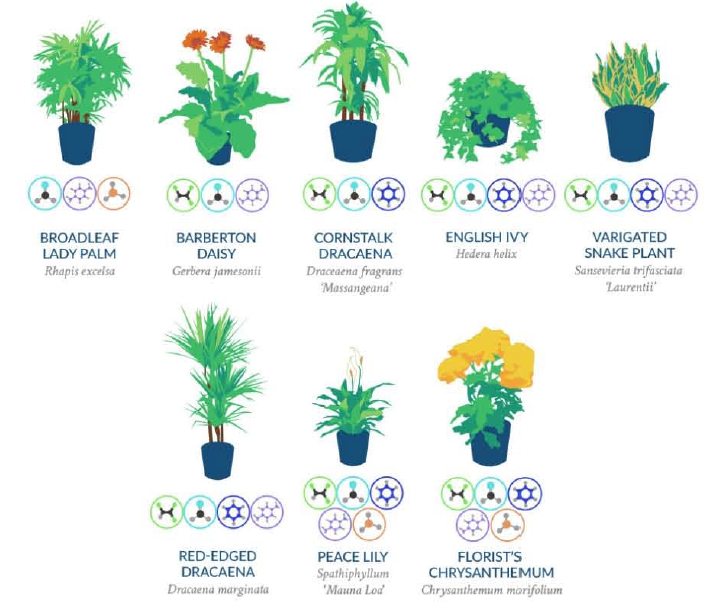
Much of the scenic beauty of nature has been replaced by densely populated areas that sprawl for miles from urban centre. This visual pollution affects us all and leaves us with a longing for a closer connection with nature. We spend about 90 percent of our time indoors. Interior plants are an ideal way to create attractive and restful settings while enhancing our sense of well being. In addition, indoor plants can help to purify the air in our homes. Indoor plants not only convert carbon dioxide to oxygen, but they also trap and absorb many pollutants. Many of these chemical compounds, which are released into our air through a process called ‘off-gassing’, come from everyday items present in our homes and offices. Indoor foliage plants are those plants that have been grown and specially trained to live in indoors for a long periods at relatively constant temperature and under low light intensities. These are used within public, private, commercial interior spaces to perform functional, psychological and aesthetical qualities. In this paper, the need of indoor landscaping in the present and future buildings has been discussed. Also the elements, details and plant typology of indoor landscaping have been studied in this paper.
In nature we have an affinity with green spaces and the plants that live in them. This affinity dates back to our distant past when plants were a necessity for our ancestors. Over the centuries, that relationship has changed dramatically. During the middle ages plants were used for their medicinal qualities. In Asia, this knowledge dates back much further. In the western world, the link between people, nature and plants were reinforced when they began adding greenhouses and conservatries to the residential areas and gardens. It was only in the 19th century that people began to realize plants had a role to play inside the buildings that it helps to make a positive contribution to air quality. A considerable amount of research on this fact has been carried out in recent decades. The results indicate clearly that the impact of plants should not be underestimated. In fact, plants are able to break down harmful chemicals in the air. But that's not all they are known to absorb heat and sound. Their presence in office spaces helps to reduce stress, illness, health issues and increase the creativity and workability. These are the functional benefits of plants, but it also has aesthetical benefits - it helps to improve the visual quality of space 1. The character of the space is completely changed when a plant is introduced. It helps to improve the visual appearance of the space and thus the quality of space is increased. Indoor plants can also be used in many ways to screen, buffer the spaces between them, thus they act as a transitional space between indoor and outdoor 2. Thus plants have a great influence to the building and the users of the space. In this paper the need of indoor landscaping in the present and future buildings has been discussed.
Much of the scenic beauty of nature has been replaced by densely populated areas that sprawl for miles from urban centers. This visual pollution affects us all and leaves us with a longing for a closer connection with nature. We spend about 90 percent of our time indoors. Interior plants are an ideal way to create attractive and restful settings while enhancing our sense of well being. In addition, indoor plants can help to purify the air in our homes. Indoor plants not only convert carbon dioxide to oxygen, but they also trap and absorb many pollutants 3. Many of these chemical compounds, which are released into our air through a process called “off-gassing,” come from everyday items present in our homes and offices. Indoor foliage plants are those plants that have been grown and specially trained to live in indoors for a long periods at relatively constant temperature and under low light intensities. These are used within public, private, commercial interior spaces to perform functional, psychological and aesthetical qualities. There is an almost limitless. Aside from creating beautiful sites, indoor landscaping provides physical and mental health benefits. The plants remove carbon dioxide and produce oxygen rich air. Adding plantscapes to interior enhances the indoor air quality by removing toxins and filtering air. Additionally, plants can save energy by increasing humidity and keeping the air temperature down. It has been proven that being surrounded by nature reduces stress, increases productivity, and generates happiness in employees. Research found that patients in hospitals rooms that are exposed to nature recover faster than those who are not 4. Plants also absorb sound; therefore, background noise in the building can be reduced 5.
Plants can be categorized into different shapes and sizes as the availability. These differences help to make visual pleasing combinations, but also highlight individual plants. There are six growth patterns and most indoor plants resemble more or less to one of these 6. A plant can grow in a tight rosette, it can spread like a bush, it can be upright, extending vertically rather than horizontally, it can be glasslike, treelike or its stem is weak so that it must climb up an external support or trail.
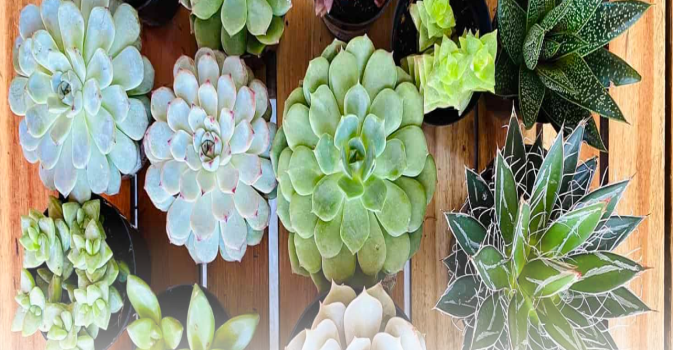
3.1. RossetteA rossette is a roughly circular cluster of leaves radiating from a central growing plant. Many small plants saintpaulias and some sinning as for example -form flat rosette that rise directly from the crown of the plant. Such low rossette associate especially well with grass-like ,bushy, or climbing foliage plants. One variation of the pattern is found in many succulents where the leaves are arranged in symmetrical tiers to create a dense ,solid rosette. Another variation found among is bromeliads. In some bromeliads the leaves form a distinct flat rosette, but in others the long ,nearly upright leaves are closely gathered around the base of the plant to form a watertight cup. These larger rosette looks best when associated with upright plant shapes or with trailing plants that contrast with the spreading appearance of the rosette.

It is the stems growing from potting -mixture level, giving the plants a spread almost equal to their height. For this reason, bushy plants are often used alone rather than in group displays .They branch naturally to form increasingly thick plants .Among the most obvious examples are plants of the genera Achimenes and Pilea. Upright bushy plants make good background for small trailing plants .And some naturally climbing plants can be induced to become bushy by regular pinching out of growing points or drastic pruning.

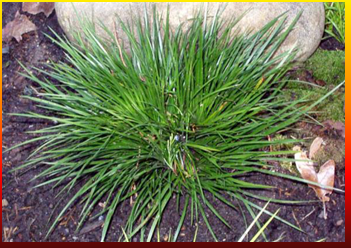
The distinguishing characteristic of true grass are slender but tough and wiry stems sheathed with narrow pointed leaves. There are however other grass like plants suitable for indoor cultivation which are highly regarded because they provide graceful contrast, texture and outline to all the foliage plants. They can be upright ,arching or even trailing in their habit. The grass-like acorus, for example ,forms a clump of stiff ,stem less leaves and like the drooping achlorophytum ,adds an attractive element to plant groups. One o the true grasses that has become popular as a house plant is Stenotaphrumseaundatum which has stems that trumble over the pot edge.

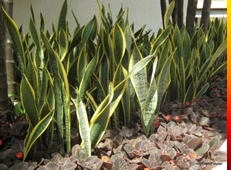
Rosette forming and bushy plants tend to grow outward instead of upright. By contrast there are numerous species that extend their growth vertically rather than horizontally. These upright plants are often composed of non-woody stems that bear leaves all along their length. In some species there is a single stem ,In others there are several. Not all upright plants have both stems and leaves. Sansevieriatrifasciata, for example, is stem-less, with sharp pointed leaves rising straight upward. Columnar cacti, on the other hand are leafless stems which can look particularly stark unless in association with other plants. Irrespective of minor differences ,upright plants are perfect foils for low-growing ,spreading rosette and trailers.

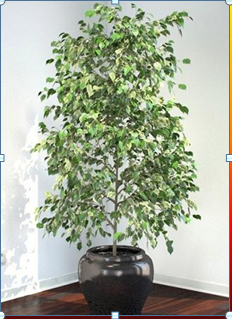
A typical tree has a single upright trunk topped by a crown of branches and foliage. Many potted plants would become trees if permitted to grow unrestricted. Ficus Benjamina, for example grows to a 20 foot tall tree in the wild. As a indoor plant it is seldom exceeds 6 feet ,but it is nevertheless treelike because its thin ,upright, unbranched , stem becomes like a woody trunk as it ages. Plants of such architectural proportions are effective when used as isolated focal points in spacious surroundings.

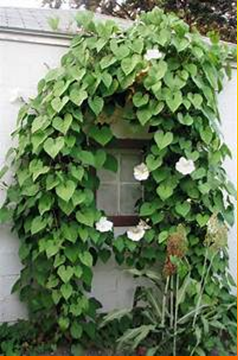
A climbing plant normally grows in any direction that provides support to which it can cling .True climbers grow rapidly and are easy to cultivate indoors, but they must be given support in the form of trellises, stakes, moss poles or even string. Many climbing plants however do equally well as trailers. Similar many plants that naturally creep or trail can be trained to climb. It is characteristic of these plants that their stems are too weak to grow unaided with thin, curling leaf tendrils by which they attach themselves to a support. They are ideal for framing archways and windows or used as living screens for room dividers. Less vigorous climber’s associate well with small and mediums-size groups of rosette and bushy plants Natural trailers such a Zebrinas and Asparagus ferns display their hand some leaf colours and tumbling shapes best from a high position. The heavy, drooping stems of succulents show to best advantage in this way. Such succulents are among the trailers that cannot be trained to climb.
Plants with their constantly changing form enhance a design concept in a number of ways .Plants contribute not only to the visual quality but also to the physical quality and have relevant design features such as form , colour , texture that can be used to add the character to the space.
Thus plants have functional and aesthetical characters. These characteristics includes the following :
Helps to create aesthetical values by adding warmth and colour to indoor areas.
• Functional values.
• Plants helps to improve air quality .
• Helps in space articulation
• Helps to act as screens .
• Soften harsh architectural surfaces.
• To create buffer zone .
• Direct traffic circulation
4.1 Aesthetical ValuesLandscaping in indoor environment helps to increase the aesthetical values of the space. Plants help to add colour, texture, form and character to the space. When plants combined with indoor environment it create a natural feeling to the space and helps to make it live.

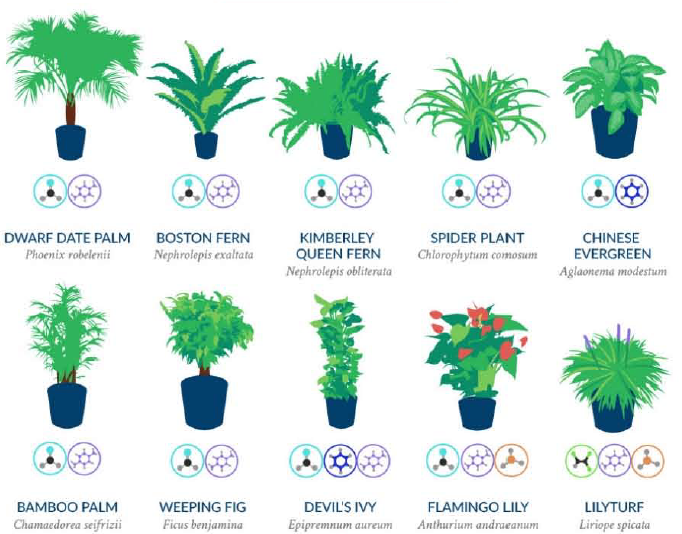
Plants improve the indoor environment and help to reduce the Sick Building Syndrome (SBS). Poor air quality, excessive background noise , inadequate amount of light and humidity are to be the important factors which leads to SBS. Since plants have large surface areas and it exchange gases and water with their surroundings, plants can help tackle some of these issues.
Physically, they contribute to cleaner, healthier air for us to breathe, thus improving our well-being and comfort. It helps to keep the surroundings more pleasant.
They help in :
• Reducing the carbon dioxide levels.
• Reducing levels of certain pollutants, such as benzene and nitrogen dioxide.
• Reducing airborne dust levels.
• Air quality is improved.
• Solve both environmental and health problems.

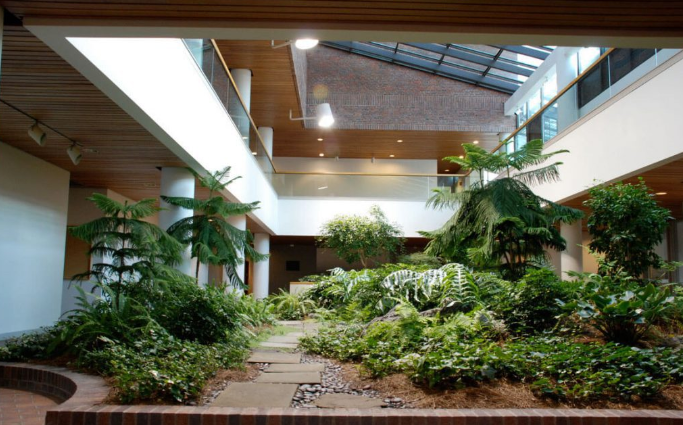
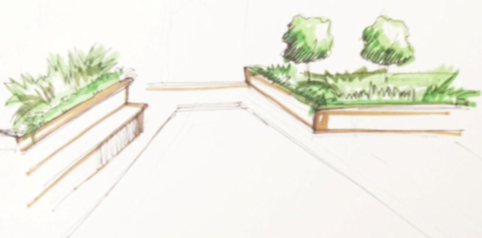
Any element, natural or manmade which is able to form a floor , wall, ceiling may be used to articulate space . Plant material can be an effective means for achieving this purpose due to its change in seasonal characteristics, form and size. A tree can form a ceiling with its spreading crown. A series of plants placed next to one another may form a ceiling as a solid visual barrier. Eventually the space that are created depend on the placement and selection of species. The form ,scale ,density and texture of plants will directly influence the character of a space.

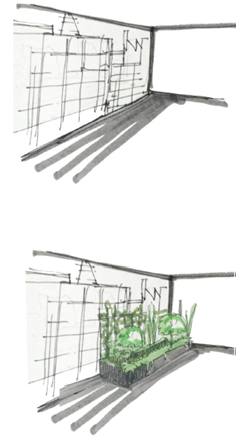
Screening is done to block out the view of any unattractive feature or enhance one's privacy and demarcate boundaries within the space. Screening with plants creates a visual barrier. For an effective dense screen a combination of shrubs of different sizes is preferred. Screening helps to do separation and subdivide larger areas into more intimate and scaled spaces.


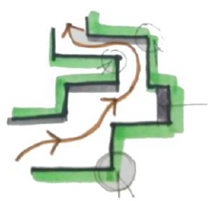
Plants can be placed in indoor areas in different patterns which helps to create direction and helps to prevent random pedestrian movement through the areas . Dense, bushy shrubs with stiff foliage are most effective. Plants helps in controlling traffic, if it is sparsely placed this allows movement through openings . Hence it should be massed together, and provide some space between the areas where we want the people to move. The effectiveness of the barrier relies on the characteristics of plants used , the height and spacing of plants and width of the planting.
The most attractive feature of interior plants is their foliage , although different leaves obviously display a variety of attributes. Leaf shapes themselves are infinitely varied . Some are gently waved ,others are finely toothed or lobed .It is this immense variety of leaf forms and their arrangement that creates the fascinating combinations of outline that we call foliage.
5.2. Texture and FormOne of the most distinctive qualities of any leaf is its texture .Where house plants are concerned it is true to say that there are as many subtle difference in leaf texture as in shape and size. For e.g. the leaf of Philodendron scandens with that of Peperomiacaperata, they both look similar, but philodendron leaf is smooth and glossy .
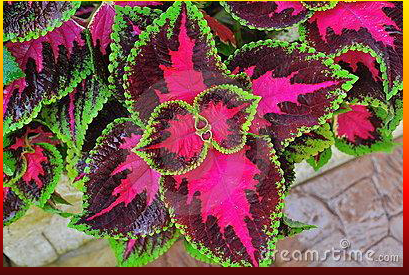
5.3. The Pattern on LeavesThe decorative effect of foliage is dramatized by endless variations of pattern. Although green is there, in every normal leaf (since chlorophyll essential for growth), sometimes there are areas where chlorophyll is missing and these parts do not look green .The resultant colour pattern is known as 'variegation'.
5.4. The Drama of ColourAlthough most variegated leaves have markings in shades of white, gray and yellow, coloration is sometimes far more brilliant. The richness of coloured patterns is often enhanced by leaf texture which can either sharpen colour contrasts or make them seem more mellow.
5.5. The Exotic World of OrchidsFor intriguing colour combinations and durability there is nothing like an orchid flower. And although many orchids cannot be grown in normal rooms ,but there are some that can be used in indoor spaces , are less exquisite. Today, orchid symbolism and meaning have a strong connection to the color of the orchid in question.
Pink – Grace, femininity, and joy
Purple – Admiration and respect
Red – Passion, desire, romance, and love
Orange – Boldness, enthusiasm, passion, and pride
Yellow – New beginnings or friendship
White – Purity, innocence, reverence, and elegance.
The orchids have taken on various culturally significant meanings in rituals that come from South and Central America to East Asia.
5.6. The Unusual BloomsIn some plants the true flowers are less notable than the bracts surrounding them. These highly flamboyant modified leaves are the main feature of such plants, to attract pollinating insects to flowers that wouldn't attract them otherwise. Sometimes, though ,bracts and flowers have similar visual impact ,but the bracts usually remain attractive long after the flowers have died.
In addition to the health benefits, plants also provide the following benefits for customers and their bottom lines:
6.1. Affect Productivity and Improve Worker SatisfactionWhen a company provides and maintains plants for their employees, a message of goodwill is sent. Workers feel management cares because plants create a tended space giving people the sense of caring and well-being. In fact, in one study workers have demonstrated 12% more productivity with plants present.
6.2. Reduce AbsenteeismStudies have shown that a reduction in employee complaints of fatigue by 20%, headaches by 45%, sore throats by 30%, and coughs by 40% in facilities with live plants2. In addition, a few well-placed plants can help moderate the noise level and thus reduce stress, keeping employees happier and healthier at work.
6.3. Make Buildings Look More WelcomingSubtle settings created by plants alleviate the harshness of the building environment. They create a warm inviting refuge. In addition, plants can hide less attractive building features with elegant, functional solutions to service areas, kitchen entries, connecting walkways, etc.
6.4. Increase Tenant Occupancy and RetentionBy maintaining healthy plants in attractively designed containers and displays, the character and appearance of the building improves.
6.5. Make a Design StatementInterior landscaping is emerging as a “fashion-oriented” business. It can be the finishing touch to the overall design as focal points to catch the eye.
Most people feel better and more comfortable with the presence of a few green plants. Green eyes rest or eyes and make for freshness. For many of us the presence of green helps successfully to overcome the stressful moments. Plants play an important role on the healthy climate in our closed homes. According to recent studies, the green space has a strong impact on all present. People who live and work with green surroundings, have more productive work. Such space have positive impact on patients and their faster recovery, as well as to better learning in students and pupils. Plants canl clean the air in the area, reduce the level of carbon dioxide emissions and increase humidity. They help to reduce the concentration of certain pollutants such as benzene and nitrogen dioxide. They reduce the concentration of dust in the air indoors. They are useful because they keep low temperature in the room during the hot summer months. House plants are especially important for us to improve our home environment and thereby provide the necessary comfort. Some more advantages of indoor plants are as follows:
• Reducing stress levels and boosting mood
• Improving concentration and productivity
• Improving indoor air quality by removing toxins and carbon dioxide
• Fostering a connection with nature and inspiring creativity
• Promoting healing and reducing chronic health issues such as depression and anxiety
• Enhancing the decoration and aesthetics of space.
Inspite of having many advantages, the plants in interior spaces have few disadvantages also. The disadvantages are summarized as below:
• Lack of sun can alter the taste of herbs.
• Certain indoor plants are bad for the health.
• Some indoor plants can try to take over.
• Indoor plants can look unsightly.
• Indoor plants can attract bugs.
• Indoor plants require care and attention, including day-to-day maintenance such as watering, wind, and sunlight.
• Indoor plants usually cost more.
• Most plants survive in humidity, which can be uncomfortable for humans.
• Plants are breeding ground for mold and bacteria.
The average person spends more than 85% of their time indoors. Indoor plants are an easy way to bring the outdoors and greenery into the residence and workplace. Studies have shown that indoor plants are associated with improved mental health. Plants with their constantly changing form enhance a design concept in a number of ways. Plants contribute not only to the visual quality but also to the physical quality and have relevant design features such as form, colour, texture that can be used to add the character to the space. Thus plants have functional and aesthetical characters. These characteristics includes the following :
• Plants helps to improve air quality .
• Helps in space articulation
• Helps to act as screens .
• Soften harsh architectural surfaces.
• To create buffer zone .
• Direct traffic circulation.


Research reveals that environments can increase or reduce our stress, which in turn impacts our bodies. What we are see, hear, or experience at any moment changes not only our mood, but how the nervous, endocrine, and immune systems works. The stress of an unpleasant environment can cause feeling of anxiousness, or sad, or helpless. This in turn elevates the blood pressure, heart rate, and muscle tension and suppresses the immune system. A pleasing environment reverses these symptoms.
| [1] | Huxley, A., Success with house plants, The Reader's Digest Association, London, U.K., 1979. | ||
| In article | |||
| [2] | Arthurs, K., How to grow house plants, Sunset books, California, USA, 1979. | ||
| In article | |||
| [3] | Farooq S., Zubair F., Kamal Arif M., Analysis of Interior Design of Restaurants with Reference to Ambience and Customer Gratification, Journal of Civil Engineering and Architecture, 8(5), 1019-1027. 2020. | ||
| In article | View Article | ||
| [4] | Afzal M. K., Faisal M. K., Shoeb M. K., Kamal Arif M., Landscape Design Considerations of a Healing Garden at an Orphanage Centre: Eco-Therapy and Health Wellness. Architecture Engineering and Science, 4(1), 1-9, 2023. | ||
| In article | |||
| [5] | Farooq S., Kamal Arif M., Analysis of Green Living Wall: Individual Awareness about its Functional Value and Aesthetical Quality, Journal of Civil Engineering and Architecture, 8(4), 444-449, 2020. | ||
| In article | View Article | ||
| [6] | Sibley E., Little books of house plants and other greenery, Quadrille Publishing, London, U.K., 2018. | ||
| In article | |||
Published with license by Science and Education Publishing, Copyright © 2023 Ramiz Khan and Mohammad Arif Kamal
 This work is licensed under a Creative Commons Attribution 4.0 International License. To view a copy of this license, visit
http://creativecommons.org/licenses/by/4.0/
This work is licensed under a Creative Commons Attribution 4.0 International License. To view a copy of this license, visit
http://creativecommons.org/licenses/by/4.0/
| [1] | Huxley, A., Success with house plants, The Reader's Digest Association, London, U.K., 1979. | ||
| In article | |||
| [2] | Arthurs, K., How to grow house plants, Sunset books, California, USA, 1979. | ||
| In article | |||
| [3] | Farooq S., Zubair F., Kamal Arif M., Analysis of Interior Design of Restaurants with Reference to Ambience and Customer Gratification, Journal of Civil Engineering and Architecture, 8(5), 1019-1027. 2020. | ||
| In article | View Article | ||
| [4] | Afzal M. K., Faisal M. K., Shoeb M. K., Kamal Arif M., Landscape Design Considerations of a Healing Garden at an Orphanage Centre: Eco-Therapy and Health Wellness. Architecture Engineering and Science, 4(1), 1-9, 2023. | ||
| In article | |||
| [5] | Farooq S., Kamal Arif M., Analysis of Green Living Wall: Individual Awareness about its Functional Value and Aesthetical Quality, Journal of Civil Engineering and Architecture, 8(4), 444-449, 2020. | ||
| In article | View Article | ||
| [6] | Sibley E., Little books of house plants and other greenery, Quadrille Publishing, London, U.K., 2018. | ||
| In article | |||