In the Moroccan school system, we do not have a real psychological global knowledge of the student. Emotional, educational and even cognitive dimensions often remain unknown. In this context, this study aims to assess the prevalence of depression, self-esteem and anxiety among high school students in the Beni Mellal region of Morocco and to identify if there are gender differences, and to determine a possible link between these parameters (depression, self esteem and anxiéty) and suicide attempts. For that, this study was conducted among 200 high school students were randomly selected, aged between 15 and 21 years, belonging to public educational institutions, in the region of BéniMellal in Morocco. Participants were asked to complete a paper version of the questionnaires after the objectives of the study were presented and students were informed of the voluntary and anonymous character of their participation. The results showed a high prevalence of depression, anxiety and suicidal attempts as well as low self-esteem. Girls are more at risk than boys. Depression, anxiety and self-esteem are significantly related to suicide attempts among these students. Future research should continue to find the origins of the mental disorders of these students and the involvement of the school system in their contribution.
Recently, many modern societies are more and more concerned about the mental health of adolescents since it represents a very important issue at the individual level, on the one hand, and on the social level, on the other.
It is very difficult to find a precise and clear definition that would explain the concept of "mental disorder".
In the DSM-IV, every mental disorder is designed as a model or a clinically significant behavioral syndrome. Among a patient, it can be associated with concomitant distress or a handicap or at risk, significantly High, of death, of suffering, of handicap or significant loss of liberty.
Studies have found that most of these disorders in adults can be traced back to adolescence 1. They can represent some harmful consequences on the generations to come : in addition to reducing their quality of life, it is possible that they are at the origin of the decrease in their future productivity 2 and can also alter their daily functioning (School performance, personal relationships…) while seriously threatening the physical well-being of adolescents (suicide attempt, narcotic abuse…) 3.
The most common signs of distress and psychological well-being noticed by many researchers are depression, anxiety 4 and self-esteem 5. We also note that the prevalence of these disorders, such as depression and suicide, increases significantly during adolescence 6, 7.
The objectives of the present study are as under:
Ÿ It attempts To assess the prevalence of depression, self-esteem and anxiety among high school students in the Beni Mellal region of Morocco and to identify if there are gender differences.
Ÿ Present study also tries to Determine a possible link between these parameters (depression, self esteem and anxiéty) and suicide attempts.
1.1. Self EsteemAlthough self-esteem is not taken as a real mental disorder but it remains strongly linked and is one of the most studied notions of psychological well-being in recent years.
Self-esteem refers to people's perception of their own worth, how much everyone loves himself, accepts and respects himself as a person. It is a reflection of an attitude of approval-disapproval which indicates how much a person sees himself as having value, importance, and as being able to succeed 8, 9, 10.
The attitude of an individual can be positive as it can be negative, it depends on the angle of perception of oneself. High self-esteem would reflect good self-worth.
Since 1976, A. Beck explains self esteem disorders and their relationship with depressive and anxiety disorders, by his cognitive model of emotional disorders.
From some negative beliefs, the individual will construct faulty assumptions and adapt his daily behavior to cope with them. Negative wrong thoughts can be reactivated following a precipitating event destabilizing. Anxious or depressive symptoms may appear 11.
The authors found that low self-esteem is associated in many studies with depression and anxiety disorders 12.
Several authors have highlighted the fact that low self-esteem is a risk factor or is associated with suicidal behavior in adolescents 13, 14.
1.2. DepressionSince the publication of the Third Diagnostic and Statistical Manual of Mental Disorders, diagnostic criteria to detect manifestations of depressive disorder in adolescents are presented, as adults. In fact, symptoms of depression seem to be expressed in a similar way in adolescents and adults 15, 16.
Like adults, school-aged children and adolescents are likely to experience symptoms associated with depression. These affect their functioning in different spheres of life such as social skills, interpersonal skills, problem-solving skills, and learning processes 17, 18, 19, 20.
Beck's cognitive model (1967) was one of the most used models to explain the problem of depression in adolescents 21.
This theoretical approach has also proved effective and very useful for understanding depression in school environment 22.
Depression in adolescence influences the cognitive and social functioning of the young person, which has repercussions on his school functioning 23.
The results of Cheung 24 indicate that there is a relationship between depression and the number of negative life events experienced by a young person, his affiliation to the peer group, the support he sees from the teacher and his expectations of his academic success.
Juon & al. in a Korean study of 9000 high school students 25, it was shown that depression is the strongest predictor of suicidal behavior.
Suicidal behavior in adolescents will be more related to depressive disorders than with other pathological factors such as antisocial, borderline or narcissistic personality disorders 26.
Most often, parents will think of the appearance of signs of the adolescent crisis as a developmental phase, rather than a major depression: sudden changes in mood, questioning by the adolescent of the rules of the society, body changes 27.
For their part, Albert and Beck administered the shortened version of the Beck Depression Inventory 28 to 63 students aged 13 and 14, more than 33% had moderate to severe depression.
10 to 15% of children and adolescents will experience depressive symptoms at some point in their childhood or adolescence 29.
Researchers say that 20% of adolescents will suffer from severe depression between the ages of 12 and 19 30, 31.
Several studies have shown that patients with depressive disorder have an increased risk of suicide 32 and attempted suicide 33, 34.
1.3. AnxietyAnxiety, represents a mood characterized by a negative affect, including somatic symptoms of tension and the presence of apprehension about a future danger or a possible misfortune 35, 36.
Among the potential causes of anxiety, there are the chronic stressors of everyday life 37, 38.
Stress, chronic or acute, has a definite effect on the body, predisposing to feel anxiety at a pathological level 39.
These are the most common pathologies among all psychic disorders 31, 40, 41.
Several epidemiological studies reveal that anxiety disorders are widespread in the population, with prevalence rates ranging from 7% to 60%,
Although they are separated in diagnostic manuals, anxiety disorders and mood disorders are very frequently expressed in the same individuals and could share important biological 42 and cognitive origins 43.
Anxiety disorders develop gradually and can become chronic. If no intervention is offered to students, some issues are observed: a risk that a mental health disorder such as an anxiety disorder or mood develops, a problem of drug or alcohol use, early school leaving and a higher risk of suicide in adulthood 44, 45.
In addition, the presence of anxiety significantly can have consequences on the adaptation of adolescents in different spheres of daily life and thus affect their development 46.
This study was conducted among 200 high school students were randomly selected, aged between 15 and 21 years (Average age = 16,7; S.D = 1,4), belonging to public educational institutions, divided between an urban area and a rural area of the region of BéniMellal in Morocco.
2.2. MeasuresWe used a form for collecting sociological variables such as age, gender, attended school class and suicidal attempt.
Depression was measured using the Beck Depression Inventory, this questionnaire gives a quantitative estimate of the intensity of depression. It consists of 21 items, each item comprising 4 corresponding phases at 4 degrees of increasing intensity of a symptom on a scale of 0 to 3. The total score is the sum of the different Items: Over the total is higher the depression is serious, and the lower the total, the better you feel about yourself.
The State Anxiety Assessment Questionnaire was used (Spielberger's questionnaire), It's a 20-item paper scale, it allows a self-assessment of the degree of anxiety. For each item we have 4 choices of answers ranging from "Not at all" to "Many".
The tool used is the Rosenberg Self Esteem Scale, it consists of 10 statements that revolve around the degree of valuation of a person, as well as the satisfaction she feels in relation to herself. Five affirmations are positively expressed and the remaining five negatively. Each statement is rated from 1 (strongly disagree) to 4 (strongly agree).
2.3. ProcedureA collaboration agreement was established with the delegation of Education of Beni Mellal in order to allow us to conduct a questionnaire survey of six institutions of public teachings. Participants were asked to complete a paper version of the questionnaires after the objectives of the study were presented and students were informed of the voluntary and anonymous character of their participation. The questionnaires were completed by students in the classroom in their free time for a period of two hours. We did a data collection and analysis with the software SPSS-22.0 (Statistical Package for the Social sciences). The data collected were analyzed with the independent t-test, Correlation and multiple regression analysis techniques.
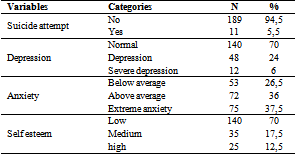
Table 1 summarizes the frequencies and percentages of mental disorders among students in the Beni Mellal region, it shows that 5.5% of the sample attempted to commit suicide. The results also show that the prevalence of depression and anxiety is high, and 70% of these students have low self-esteem.
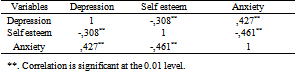
The present study states that there is a positive correlation between depression and anxiety (r = 0.427, N = 200, p = 0.000), a negative correlation between depression and self esteem (r = -0,308, N = 200, p = 0.000) and a negative correlation between anxiety and self esteem (r = -0,461, N = 200, p = 0.000).
Table 3 shows the t-test analysis of gender based on their scores on depression and the results indicated that there is a significant difference between male and female (t test = 5,815, df = 197,37, P = 0.000). From the result it was observed that girls are more prone to depression compared to boys with their mean score depression being 12,71 and 19,55 for girls.
Table 4 shows the t-test analysis of gender based on their scores on self esteem and the results indicated that there is a significant difference between girls and boys (t test = 3,102, df = 197,86, P = 0.02). The result from the table indicates that boys scored higher on self esteem than girls with mean score self esteem 28,63 and 26,60 respectively. It means that girls have low self-esteem compared to boys.
Table 5 shows the t-test analysis of gender based on their scores on anxiety and the results indicated that there is a significant difference between male and female (t test = 6,144, df = 194,28, P = 0.000). From the result it was observed that girls (51,57) are more prone to anxiety compared to boys (42,64).
Table 6 shows the t-test analysis of students who tried a suicide attempt and students who do not have it based on their scores on depression and the results indicated that there is a significant difference between them (t test = 5,815, df = 197,37, P = 0.000). From the result it was observed that students who tried a suicide attempt are more prone to depression compared to students who do not have it with their mean score depression being 15,77 and 27,91 for students who tried a suicide attempt.
Table 7 shows the t-test analysis of students who tried a suicide attempt and students who do not have it based on their scores on self esteem and the results indicated that there is a significant difference between them (t test = 3,251, df = 198, P = 0.01). The result from the table indicates that students who do not tried a suicide attempt scored higher on self esteem than students who tried a suicide attempt with mean score self esteem 27,78 and 23,09 respectively.
Table 8 shows the t-test analysis of students who tried a suicide attempt and students who do not have it based on their scores on anxiety and the results indicated that there is a significant difference between them (t test = 3,161, df = 198, P = 0.002). From the result it was observed that students who tried a suicide attempt are more prone to anxiety compared to students who do not have it with their mean score depression being 46,91 and 57,64 for students who tried a suicide attempt.
3.4. Regression AnalysisThe three independent variables predict 10.1% of the dependent variable (suicide attempt) and the regression is significant: F = 7,37; p = 0,000.
The standardized regression equation is as follows: y = 2,83*(Depression) + …..
The more students are depressed the more they try to commit suicide.
In this research it was found that the prevalence of mental health indices studied is, generally, high.
This finding is similar to that of some studies that have noted that the prevalence of some disorders such as depression and suicide increases significantly during adolescence 6, 7. Another survey conducted on behalf of the Canadian Psychiatric Association among young people aged 13 to 18 shows that 4% report having ever attempted suicide, and 20% are personally or family-related a mental health problem 47.
In our study, the results obtained showed that 30% of students manifest symptoms of depression of clinical intensity. This result is somewhat similar to that of Lévesque and Marcotte 21 who diagnosed a sample of 373 Quebec adolescents aged 12 to 17 years who completed the Beck Depression Inventory and found that 23% of these young people have symptoms of clinical intensity.
However, this percentage seems high from the results of the Julie, B (2007) survey, which found that 17% of adolescents in her sample had symptoms of depression.
The low self-esteem is very striking in the results obtained in this study, in fact, 70% of students are involved, and this percentage is slightly different from that obtained in a 1998/99 Canadian Population Health Survey, which shows that 35.9% of people aged 12 to 14 years had high self-esteem, compared to 41% for those aged 15 to 19 48.
Regarding anxiety, it appears that the 37.5% revealed having extreme anxiety is far superior to the results obtained in other research in different countries. For example, Costello and colleagues 49 report an average prevalence rate, estimated from a meta-analysis of 26 studies, of 11%, in adolescents (13 to 18 years) or an epidemiological study by Kessler & al. 50 conducted with adolescents (13 to 17 years old) who revealed a 12-month general prevalence rate of anxiety, 24.9%.
On the other hand, it was noted that these mental health indices studied are significantly correlated two by two. These are data supported by several studies that estimate that the same person often expresses several mental disorders at once
For example, a US epidemiological study of 10,123 children and adolescents between the ages of 13 and 18 was able to note the following population prevalence for the most common mental disorders, in descending order: 31.9% of youth had anxiety disorders; 19.1% of disorders related to disruptive behavior; 14.3% of mood disorders and 11.4% of substance use disorders. According to the same study, 40% of young people had two disorders at a time.
Our findings, asserting a significant relationship between low self-esteem and suicide attempts, support those obtained in a Chinese study 13, conducted on 5249 students, from primary school to high school and who found a significant association between the risk of suicidal ideation and low self-esteem.
In the same vein, several authors have highlighted the fact that low self-esteem is a risk factor or is associated with suicidal behavior in adolescents 13, 51, 52, 53.
The results of our studies also showed that depression is a predictor of suicide attempts, which is consistent with the findings of Wild & al. 54 who surveyed high school students in South Africa, and they demonstrated that among other factors such as six different dimensions of self-esteem, depression holds the largest share of variance in suicide attempts and suicidal ideation, or the study by Juon & al. 25 in a Korean study of 9000 high school students found that depression is the strongest predictor of suicidal behavior.
The suicide rate is also increased in patients with anxio-depressive comorbidity 55.
From a gender perspective, results have been obtained that confirm the high prevalence rate among girls compared to boys for most of the mental health indicators studied. These results are consistent with those of the US National Comorbidity Survey 31, as many other studies conducted since then 56, 57, who found that in women the prevalence of most affective and non-affective psychoses is higher than in men, which have higher rates of substance use disorders and dyssocial personality disorders.
Gender is a variable directly associated with depression in adolescence, which is what we have in this study, obtaining higher scores in girls. Indeed, several studies support these findings, thus, during childhood, the proportion of boys with symptoms of depression is similar to or greater than that of girls. However, they become more depressed in adolescence than their male counterparts in a ratio of two girls to one boy 58, 59, 60, 61, 62, 63, 64.
This gender disparity has led some researchers to claim that humans tended to externalize their suffering through drug abuse and aggressive behavior, thus reporting less psychological distress. Women, on the other hand, suffer more often from distress in the form of depression, anxiety, nervousness, or other disorders. Women also have significantly higher rates of post-traumatic stress disorder than men 65.
To explain this gender disparity, the relationship between a woman's reproductive functions and her mental health was examined for many years, while other areas of women's health were neglected.
Indeed, certain periods of vulnerability such as the premenstrual phase in women in general, can predispose to mental disorders.
However, other research suggests that the effect of biological and reproductive factors on women's mental health is strongly modified and, in some cases, disappears when psychosocial factors are taken into account.
Thus, girls claim to live more stressful events; they are more centered on their self-evaluation and on the bodily changes that manifest themselves; they have lower self-esteem than boys; they feel more health problems; they report more psychosomatic symptoms and are more dependent on social support received than boys 66.
This is the first study of its kind in the Beni Mellal region of Morocco, which does not compare with other results, in addition, students are not used to filling in the questionnaires, which poses some problems in understanding the objectives of the study and the reliability of the answers.
Future researchers must complete this work by examining the causes of depression, anxiety and low self-esteem among students in the region, in particular the causes relating to the Moroccan educational systems as well as the family parameters. This can anticipate the occurrence of suicide which appears as a major problem soon.
The present study showed a high prevalence of mental disorders studied, and girls are more at risk than boys. It also raised a relation between this high prevalence and occurrence of suicide attempts in the studied students. These results show that the mental health of students in this region is critical. Indeed, students' mental health is largely absent from the priorities of education in Morocco, and this will require policies, funds and other resources, training, professional development, coordination and collaboration between the education, health, and other sectors to achieve the emotional well-being of students and improve their ability to learn.
| [1] | OMS. (2005). Relever les défis, trouver des solutions. Europe: Conférence ministérielle européenne de l'OMS sur la santé mentale. Récupéré le 15 juin 2005 de http://www.euro.who.int/ mentalhealth/ Conference/2003 07181 | ||
| In article | |||
| [2] | Lyness, D. A. (2001). Blueprint for Change: Research on Child and Adolescent Mental Health. Report of the National Advisory Mental Health Council's Workgroup on Child and Adolescent Mental Health Intervention, NIMH Publication No. 01-4986. Récupéré le 05 janvier 2005 de http://kidshealth.org/teen/your_mind/mental_health/ anxiety_p3.html. | ||
| In article | |||
| [3] | Audrey, P. (2005). Relation Entre Les Comportements Interpersonnels Des Parents Et Des Enseignants Et Des Indices De Santé Mentale Chez Des Adolescents. Université Du Québec À Chicoutimi. | ||
| In article | |||
| [4] | Poirier, M., & Lafrenière, A. (2003). Perception des psychologues oeuvrant dans les PAE. Psychologie Québec; 20(1), 14-16. | ||
| In article | |||
| [5] | Campbell, A. (1981). The sense of well-being in America. New York : Me Graw-Hill. | ||
| In article | |||
| [6] | Fombonne, E. (1998). Increased rates of psychological disorders in youth. European Archives of Psychiatry and Child Neuroscience; 248, 14-21. | ||
| In article | View Article PubMed | ||
| [7] | Gould, M. S., & Kramer, R. A. (2001). Youth suicide prevention. Suicide and Lifethreatening Behaviour; 31, 6-31. | ||
| In article | View Article PubMed | ||
| [8] | Cooley, C.H. (2009)/[1902]. Human nature and the social order (7e impression, 2009). NY: Shocken Books. | ||
| In article | |||
| [9] | Coopersmith, S., 1967. The antecedents of self-esteem. W.H. Freeman and Co, San Francisco. | ||
| In article | |||
| [10] | Rosenberg, M., 1979. Conceiving the self. Basic Books, New York. | ||
| In article | |||
| [11] | Waite, P., McManus, F. & Shafran, R. (2012). Cognitive behaviour therapy for low self-esteem: a preliminary randomized controlled trial in a primary care setting. J. Behav. Ther. Exp. Psychiatry; 43, 1049-57. | ||
| In article | View Article PubMed | ||
| [12] | Sowislo, J. F. & Orth, U. (2013). Does low self-esteem predict depression and anxiety? A meta-analysis of longitudinal studies. Psychol. Bull; 139, 213-40. | ||
| In article | View Article PubMed | ||
| [13] | Yao, Y.-S. et al. (2014). Life satisfaction, coping, self-esteem and suicide ideation in Chinese adolescents: a school-based study. Child. Care. Health Dev; 40, 747-52. | ||
| In article | View Article PubMed | ||
| [14] | Martin, G., Richardson, A. S., Bergen, H. A., Roeger, L. & Allison, S. (2005). Perceived academic performance, self-esteem and locus of control as indicators of need for assessment of adolescent suicide risk: implications for teachers. J. Adolesc; 28, 75-87. | ||
| In article | View Article PubMed | ||
| [15] | Nolen-Hoeksema, S. et Girgus, J. S. (1994). The emergence of gender differences in depression during adolescence. Psychological Bulletin; 155(3), 424-443. | ||
| In article | View Article PubMed | ||
| [16] | Roberts, C.M. (1999). The prevention of depression in children and adolescents. Australian Psychologist; 34(1), 49-57. | ||
| In article | View Article | ||
| [17] | Kovacs, M. (1989). Affective disorders in children and adolescents. American Psychologist; 44, 209-215. | ||
| In article | View Article PubMed | ||
| [18] | Lewinsohn, P. M., Pettit, J. W., Joiner Jr., E., & Seeley, J. R. (2003). The symptomatic expression of major depressive disorder in adolescents and young adults. Journal of abnormal psycho/ogy; 112(2), 244-252. | ||
| In article | View Article PubMed | ||
| [19] | Puig-Antich, J. (1987). Affective disorders in children and adolescents: Diagnostic validity and psychobiology. Dans H.Y. Meltzer (Ed.), Psychopharmacology. The Third Generation of Progress. New-York: Raven Press; pp. 843-859. | ||
| In article | |||
| [20] | Puig-Antich, J., Lukens, E., Davies, M., Goetz, D., Brennan-Quattrock, J., & Todak, G. (1985). Psychosocial functioning in prepubertal major depressive disorders. 1. Interpersonal relationships during the depressive episode. Archive of General Psychiatry; 42, 500-507. | ||
| In article | View Article PubMed | ||
| [21] | Lévesque, N. et Marcotte, D. (2005). Les distorsions cognitives chez les adolescents présentant des symptômes dépressifs et des troubles extériorisés. Revue québécoise de psychologie; 26(2), 199-221. | ||
| In article | |||
| [22] | Marcotte, D. (2000). La prévention de la dépression chez les enfants et les adolescents. Dans F. Vitaro et C. Gagnon. La prévention des problèmes d’adaptation chez les enfants et les adolescents (p. 221-270). Sainte-Foy : Presses de l’Université du Québec | ||
| In article | View Article | ||
| [23] | Kovacs, M., & Goldston, D. (1991). Cognitive and social cognitive development of depressed children and adolescents. Journal of the American Academy of Child and Adolescent Psychiatry; 30(3), 388-392. | ||
| In article | View Article PubMed | ||
| [24] | Cheung, S. K. (1995). Life events, classroom environment, achievement expectation, and depression among earl y adolescent. Social Behavior and Personnality; 23(1), 83-92. | ||
| In article | View Article | ||
| [25] | Juon,H. ;Nam ,JJ.; Ensminger, ME. (1994). Epidemiology of suicidal behavior Among Korean Adolescents.Journal of child psychology And psychiatry Allied Discipline; 35, 663-677 | ||
| In article | View Article PubMed | ||
| [26] | Gould, M.S.; Greenberg, T.; Velting, D.; Schafer, D. (2003). Youth suicide risk And preventive interventions: A review of the past 10 years .Journal of American AcademicChild and Adolescence Psychiatry; 42, 386-405. | ||
| In article | View Article PubMed | ||
| [27] | Bedwani, N.C. (2011). Vivre avec un adolescent mentalement souffrant. Éditions Bayard Canada, 219 p. | ||
| In article | |||
| [28] | Beck, A. T., Ward, C. H., Mendelson, M., Mock, J., et Erbaugh, J. (1961). An inventory for measuring depression. Archives of General Psychiatry; 4, 561-571. | ||
| In article | View Article PubMed | ||
| [29] | Smucker, M. R., Craighead, W. E., Craighead, L. W., et Green, B. J. (1986). Normative and reliability data for the Children's Depression Inventory. Journal of Abnormal Child Psychology; 14, 25-39. | ||
| In article | View Article PubMed | ||
| [30] | Cicchetti, D., et Toth, S. L. (1998). The Development of Depression in Children and Adolescents. American Psychologist; 53(2), 221-241. | ||
| In article | View Article PubMed | ||
| [31] | Kessler, R. C., McGonagle, K. A., Zhao, S., Nelson, C. B., Hughes, M., Eshleman, S., et al. (1994). Lifetime and 12-month prevalence of DSM-III-R psychiatric disorders in the United States. Results from the National Comorbidity Survey. Arch Gen Psychiatry; 51(1), 8-19. | ||
| In article | View Article PubMed | ||
| [32] | Guze SB, Robins E. (1970). Suicide and primary affective disorders. Br J Psychiatry; 117:249-57. | ||
| In article | View Article PubMed | ||
| [33] | Beautrais AL. Joyce PR, Milder RT, Fergusson DM, Deavoll BJ, Nightingale SK. (1996). Prevalence and comorbidity of mental disorders in person making serious suicide attempts: a case-control study. AM J psychiatry; 153/1009-14. | ||
| In article | View Article PubMed | ||
| [34] | Hunt I Kapur N Robinson J Shaw Baily H et al. (2006). Suicide within 12 months of mental health service contact in different age and diagnostic groups. Br psychiatry; 16: 155-65. | ||
| In article | View Article PubMed | ||
| [35] | American Psychiatrie Association. (2003). Manuel diagnostic et statistique des troubles mentaux (4e éd. révisée). Washington, D.C.: Auteur. | ||
| In article | |||
| [36] | Barlow, D. (2002). Anxiety and its disorders. New York: Guilford Press. | ||
| In article | |||
| [37] | McWilliams, L. A., Cox, B. J., & Enns, M. W. (2003). Mood and anxiety disorders associated with chronic pain: an examination in a nationally representative sample. Pain, 106(1-2), 127-133. | ||
| In article | View Article | ||
| [38] | Rawana, J. (2013). Boys born small for gestational age may be at an increased risk of symptoms of depression and anxiety during adolescence if exposed to chronic stress. Evid Based Ment Health; 16(1), 25. | ||
| In article | View Article PubMed | ||
| [39] | McEwen, B. S. (2004). Protection and damage from acute and chronic stress: allostasis and allostatic overload and relevance to the pathophysiology of psychiatric disorders. Ann N Y Acad Sci, 1032, 1-7. | ||
| In article | View Article PubMed | ||
| [40] | Grant, B. F., Stinson, F. S., Dawson, D. A., Chou, S. P., Dufour, M. C., Compton, W., et al. (2004). Prevalence and co-occurrence of substance use disorders and independent mood and anxiety disorders: results from the National Epidemiologic Survey on Alcohol and Related Conditions. Arch Gen Psychiatry; 61(8), 807-816. | ||
| In article | View Article PubMed | ||
| [41] | Regier, D. A., Narrow, W. E., & Rae, D. S. (1990). The epidemiology of anxiety disorders: the Epidemiologic Catchment Area (ECA) experience. J Psychiatr Res; 24 Suppl; 2, 3-14. | ||
| In article | View Article | ||
| [42] | Coccaro, E. F., Ong, A. D., Seroczynski, A. D., & Bergeman, C. S. (2012). Affective intensity and lability: heritability in adult male twins. J Affect Disord, 136(3); 1011-1016. | ||
| In article | View Article PubMed | ||
| [43] | Watson, D., & Kendall, P. C. (1989). Common and Differentiating Features of Anxiety and Depression: Current Findings and Future Directions. In P. C. Kendall & D. Watson (Eds.), Anxiety and Depression: Distinctive and Overlapping Features (pp. 493-508). San Diego: Academic Press, Inc. | ||
| In article | |||
| [44] | Pine, D. S., Cohen, P., Gurley, D., Brook, J., & Ma, Y. (1998). The risk for earlyadulthood anxiety and depressive disorders in adolescents with anxiety and depressive disorders. Archives of General Psychiatry; 55(1), 56-64. | ||
| In article | View Article PubMed | ||
| [45] | Woodward, L. J., & Fergusson, D. M. (2001). Life course outcomes of young people with anxiety disorders in adolescence. Journal of the American Academy of Child and Adolescent Psychiatry; 40(9), 1086-1093. | ||
| In article | View Article PubMed | ||
| [46] | Essau, C. A., Conradt, J., & Petermann, F. (2000). Frequency, comorbidity, and psychosocial impairment of anxiety disorders in German adolescents. Journal of Anxiety Disorders; 14(3), 263-279. | ||
| In article | View Article | ||
| [47] | Association des psychiatres du Canada (1996). Enquête sur la santé mentale des jeunes canadiens. Journal PRO-ADO. Récupéré le 17 juillet de http://acsa-caah.ca/fran/ mainl fr.html. | ||
| In article | |||
| [48] | Statistics Canada. 2002. Profile of the Canadian Population by Age and Sex: Canada Ages. Statistics Canada Catalogue no. 96F0030XIE2001002. Ottawa, Ontario. Analysis Series, 2001 Census. | ||
| In article | |||
| [49] | Costello, E. J., Egger, H. L., Copeland, W., Erkanli, A., & Angold, A. (2011). The developmental epidemiology of anxiety disorders; phenomenology, prevalence, and comorbidity. Dans W. Silverman, K. & A. P. Field (dir.), Anxiety disorders in children and adolescent (p. 56-75). UK: Cambridge University Press. | ||
| In article | View Article | ||
| [50] | Kessler, R. C., Petukhova, M., Sampson, N. A., Zaslavsky, A. M., & Wittchen, H.-U. (2012). Twelve-month and lifetime prevalence and lifetime morbid risk of anxiety and mood disorders in the United States. International Journal of Methods in Psychiatric Research, 21, 169-184. | ||
| In article | View Article PubMed | ||
| [51] | Park, H. S., Schepp, K. G., Jang, E. H. & Koo, H. Y. (2006). Predictors of suicidal ideation among High school students by gender in South Korea. J. Sch. Health; 76, 181-8. | ||
| In article | View Article PubMed | ||
| [52] | Eskin, M., Ertekin, K., Dereboy, C. & Demirkiran, F. (2007). Risk Factors for and Protective Factors Against Adolescent Suicidal Behavior in Turkey. Crisis 28, 131-139. | ||
| In article | View Article PubMed | ||
| [53] | Mcgee, R. & Williams, S. (2000). Does low self-esteem predict health compromising behaviours among adolescents? J. Adolesc; 23, 569-82. | ||
| In article | View Article PubMed | ||
| [54] | Wild S, Roglic G, Greene A, et al (2004): Global prevalence of diabetes: estimates for the year 2000 and projections for 2030. Diabetes Care, 27: 1047-1053. | ||
| In article | View Article PubMed | ||
| [55] | Kovess V, Delavelle S. (1998). La santé mentale des Bas-Normands, in: La Basse- Normandie face à sa santé. INSEE; 21-27. | ||
| In article | |||
| [56] | Üstün, T. B. & Sartorius, N. (1995). Mental Illeness In General Health Care: An International Study. Chichester: Wiley. | ||
| In article | |||
| [57] | Brown GW. (1998). Genetic and population perspectives on life events and depression. Social Psychiatry and Psychiatric Epidemiology, 33: 363-372. | ||
| In article | View Article PubMed | ||
| [58] | Bennett, D. S., Ambrosini, P. J., Kudes, D., Metz, C. et Rabinovich, H. (2005). Gender differences in adolescent depression: Do symptoms differ for boys and girls? Journal of Affective Disorders; 89, 35-44. | ||
| In article | View Article PubMed | ||
| [59] | Bond, L., Toumbourou, J. W., Thomas, L., Catalano, R. F. et Patton, G. (2005). Individual, family, school, and community risk and protective factors for depressive symptoms in adolescents: a comparison of risk profiles for substances use and depressive symptoms. Prevention Science; 6(2), 73-88. | ||
| In article | View Article PubMed | ||
| [60] | Compas, B. E., Ey, S., et Grant, K. E. (1993). Taxonomy, assessment, and diagnosis of depression during adolescence. Psychological Bulletin; 114, 323-344. | ||
| In article | View Article PubMed | ||
| [61] | Fleming, J. E. et Orford, D. R. (1990). Epidemiology of childhood depressive disorders a critical review. Journal of the American Academy of Child and Adolescent Psychiatry; 29, 571-580. | ||
| In article | View Article PubMed | ||
| [62] | Hankin, B. L., et Abramson, L. Y. (2001). Development of gender differences in depression: An elaborated cognitive vulnerability-transactional stress theory. Psychological Bulletin; 127, 773-796. | ||
| In article | View Article PubMed | ||
| [63] | Lewinsohn, P. M., Roberts, R. E., Seeley, J. R., Rohde, P., Gotlib, I. H. et Hops, H. (1994). Adolescent psychopathology: II. Psychosocial risk factors for depression. Journal of Abnormal Psychology; 103, 302-315. | ||
| In article | View Article PubMed | ||
| [64] | Wichstrom, L. (1999). The emergence of gender difference in depressed mood during adolescence: The role of intensified gender socialisation. Developmental psychology; 35(1), 232-245. | ||
| In article | View Article PubMed | ||
| [65] | Kessler RC, Sonnega A, Bromet E et al. (1995) Posttraumatic stress disorder in the National Comorbidity Survey. Archives of General Psychiatry. 52 : 1048-1060. | ||
| In article | View Article PubMed | ||
| [66] | Albano, A. M., Chorpita, B. F., & Barlow, D. H. (2003). Childhood anxiety disorders. Dans E. J. Mash & R. A. Barkley (dir.), Childpsychopathology (pp. 279-329). NY: The Guilford Press. | ||
| In article | |||
Published with license by Science and Education Publishing, Copyright © 2020 Hicham Chahid, Ahmed O. T. Ahami, Fatiha Chigr and Mohamed Najimi
 This work is licensed under a Creative Commons Attribution 4.0 International License. To view a copy of this license, visit
http://creativecommons.org/licenses/by/4.0/
This work is licensed under a Creative Commons Attribution 4.0 International License. To view a copy of this license, visit
http://creativecommons.org/licenses/by/4.0/
| [1] | OMS. (2005). Relever les défis, trouver des solutions. Europe: Conférence ministérielle européenne de l'OMS sur la santé mentale. Récupéré le 15 juin 2005 de http://www.euro.who.int/ mentalhealth/ Conference/2003 07181 | ||
| In article | |||
| [2] | Lyness, D. A. (2001). Blueprint for Change: Research on Child and Adolescent Mental Health. Report of the National Advisory Mental Health Council's Workgroup on Child and Adolescent Mental Health Intervention, NIMH Publication No. 01-4986. Récupéré le 05 janvier 2005 de http://kidshealth.org/teen/your_mind/mental_health/ anxiety_p3.html. | ||
| In article | |||
| [3] | Audrey, P. (2005). Relation Entre Les Comportements Interpersonnels Des Parents Et Des Enseignants Et Des Indices De Santé Mentale Chez Des Adolescents. Université Du Québec À Chicoutimi. | ||
| In article | |||
| [4] | Poirier, M., & Lafrenière, A. (2003). Perception des psychologues oeuvrant dans les PAE. Psychologie Québec; 20(1), 14-16. | ||
| In article | |||
| [5] | Campbell, A. (1981). The sense of well-being in America. New York : Me Graw-Hill. | ||
| In article | |||
| [6] | Fombonne, E. (1998). Increased rates of psychological disorders in youth. European Archives of Psychiatry and Child Neuroscience; 248, 14-21. | ||
| In article | View Article PubMed | ||
| [7] | Gould, M. S., & Kramer, R. A. (2001). Youth suicide prevention. Suicide and Lifethreatening Behaviour; 31, 6-31. | ||
| In article | View Article PubMed | ||
| [8] | Cooley, C.H. (2009)/[1902]. Human nature and the social order (7e impression, 2009). NY: Shocken Books. | ||
| In article | |||
| [9] | Coopersmith, S., 1967. The antecedents of self-esteem. W.H. Freeman and Co, San Francisco. | ||
| In article | |||
| [10] | Rosenberg, M., 1979. Conceiving the self. Basic Books, New York. | ||
| In article | |||
| [11] | Waite, P., McManus, F. & Shafran, R. (2012). Cognitive behaviour therapy for low self-esteem: a preliminary randomized controlled trial in a primary care setting. J. Behav. Ther. Exp. Psychiatry; 43, 1049-57. | ||
| In article | View Article PubMed | ||
| [12] | Sowislo, J. F. & Orth, U. (2013). Does low self-esteem predict depression and anxiety? A meta-analysis of longitudinal studies. Psychol. Bull; 139, 213-40. | ||
| In article | View Article PubMed | ||
| [13] | Yao, Y.-S. et al. (2014). Life satisfaction, coping, self-esteem and suicide ideation in Chinese adolescents: a school-based study. Child. Care. Health Dev; 40, 747-52. | ||
| In article | View Article PubMed | ||
| [14] | Martin, G., Richardson, A. S., Bergen, H. A., Roeger, L. & Allison, S. (2005). Perceived academic performance, self-esteem and locus of control as indicators of need for assessment of adolescent suicide risk: implications for teachers. J. Adolesc; 28, 75-87. | ||
| In article | View Article PubMed | ||
| [15] | Nolen-Hoeksema, S. et Girgus, J. S. (1994). The emergence of gender differences in depression during adolescence. Psychological Bulletin; 155(3), 424-443. | ||
| In article | View Article PubMed | ||
| [16] | Roberts, C.M. (1999). The prevention of depression in children and adolescents. Australian Psychologist; 34(1), 49-57. | ||
| In article | View Article | ||
| [17] | Kovacs, M. (1989). Affective disorders in children and adolescents. American Psychologist; 44, 209-215. | ||
| In article | View Article PubMed | ||
| [18] | Lewinsohn, P. M., Pettit, J. W., Joiner Jr., E., & Seeley, J. R. (2003). The symptomatic expression of major depressive disorder in adolescents and young adults. Journal of abnormal psycho/ogy; 112(2), 244-252. | ||
| In article | View Article PubMed | ||
| [19] | Puig-Antich, J. (1987). Affective disorders in children and adolescents: Diagnostic validity and psychobiology. Dans H.Y. Meltzer (Ed.), Psychopharmacology. The Third Generation of Progress. New-York: Raven Press; pp. 843-859. | ||
| In article | |||
| [20] | Puig-Antich, J., Lukens, E., Davies, M., Goetz, D., Brennan-Quattrock, J., & Todak, G. (1985). Psychosocial functioning in prepubertal major depressive disorders. 1. Interpersonal relationships during the depressive episode. Archive of General Psychiatry; 42, 500-507. | ||
| In article | View Article PubMed | ||
| [21] | Lévesque, N. et Marcotte, D. (2005). Les distorsions cognitives chez les adolescents présentant des symptômes dépressifs et des troubles extériorisés. Revue québécoise de psychologie; 26(2), 199-221. | ||
| In article | |||
| [22] | Marcotte, D. (2000). La prévention de la dépression chez les enfants et les adolescents. Dans F. Vitaro et C. Gagnon. La prévention des problèmes d’adaptation chez les enfants et les adolescents (p. 221-270). Sainte-Foy : Presses de l’Université du Québec | ||
| In article | View Article | ||
| [23] | Kovacs, M., & Goldston, D. (1991). Cognitive and social cognitive development of depressed children and adolescents. Journal of the American Academy of Child and Adolescent Psychiatry; 30(3), 388-392. | ||
| In article | View Article PubMed | ||
| [24] | Cheung, S. K. (1995). Life events, classroom environment, achievement expectation, and depression among earl y adolescent. Social Behavior and Personnality; 23(1), 83-92. | ||
| In article | View Article | ||
| [25] | Juon,H. ;Nam ,JJ.; Ensminger, ME. (1994). Epidemiology of suicidal behavior Among Korean Adolescents.Journal of child psychology And psychiatry Allied Discipline; 35, 663-677 | ||
| In article | View Article PubMed | ||
| [26] | Gould, M.S.; Greenberg, T.; Velting, D.; Schafer, D. (2003). Youth suicide risk And preventive interventions: A review of the past 10 years .Journal of American AcademicChild and Adolescence Psychiatry; 42, 386-405. | ||
| In article | View Article PubMed | ||
| [27] | Bedwani, N.C. (2011). Vivre avec un adolescent mentalement souffrant. Éditions Bayard Canada, 219 p. | ||
| In article | |||
| [28] | Beck, A. T., Ward, C. H., Mendelson, M., Mock, J., et Erbaugh, J. (1961). An inventory for measuring depression. Archives of General Psychiatry; 4, 561-571. | ||
| In article | View Article PubMed | ||
| [29] | Smucker, M. R., Craighead, W. E., Craighead, L. W., et Green, B. J. (1986). Normative and reliability data for the Children's Depression Inventory. Journal of Abnormal Child Psychology; 14, 25-39. | ||
| In article | View Article PubMed | ||
| [30] | Cicchetti, D., et Toth, S. L. (1998). The Development of Depression in Children and Adolescents. American Psychologist; 53(2), 221-241. | ||
| In article | View Article PubMed | ||
| [31] | Kessler, R. C., McGonagle, K. A., Zhao, S., Nelson, C. B., Hughes, M., Eshleman, S., et al. (1994). Lifetime and 12-month prevalence of DSM-III-R psychiatric disorders in the United States. Results from the National Comorbidity Survey. Arch Gen Psychiatry; 51(1), 8-19. | ||
| In article | View Article PubMed | ||
| [32] | Guze SB, Robins E. (1970). Suicide and primary affective disorders. Br J Psychiatry; 117:249-57. | ||
| In article | View Article PubMed | ||
| [33] | Beautrais AL. Joyce PR, Milder RT, Fergusson DM, Deavoll BJ, Nightingale SK. (1996). Prevalence and comorbidity of mental disorders in person making serious suicide attempts: a case-control study. AM J psychiatry; 153/1009-14. | ||
| In article | View Article PubMed | ||
| [34] | Hunt I Kapur N Robinson J Shaw Baily H et al. (2006). Suicide within 12 months of mental health service contact in different age and diagnostic groups. Br psychiatry; 16: 155-65. | ||
| In article | View Article PubMed | ||
| [35] | American Psychiatrie Association. (2003). Manuel diagnostic et statistique des troubles mentaux (4e éd. révisée). Washington, D.C.: Auteur. | ||
| In article | |||
| [36] | Barlow, D. (2002). Anxiety and its disorders. New York: Guilford Press. | ||
| In article | |||
| [37] | McWilliams, L. A., Cox, B. J., & Enns, M. W. (2003). Mood and anxiety disorders associated with chronic pain: an examination in a nationally representative sample. Pain, 106(1-2), 127-133. | ||
| In article | View Article | ||
| [38] | Rawana, J. (2013). Boys born small for gestational age may be at an increased risk of symptoms of depression and anxiety during adolescence if exposed to chronic stress. Evid Based Ment Health; 16(1), 25. | ||
| In article | View Article PubMed | ||
| [39] | McEwen, B. S. (2004). Protection and damage from acute and chronic stress: allostasis and allostatic overload and relevance to the pathophysiology of psychiatric disorders. Ann N Y Acad Sci, 1032, 1-7. | ||
| In article | View Article PubMed | ||
| [40] | Grant, B. F., Stinson, F. S., Dawson, D. A., Chou, S. P., Dufour, M. C., Compton, W., et al. (2004). Prevalence and co-occurrence of substance use disorders and independent mood and anxiety disorders: results from the National Epidemiologic Survey on Alcohol and Related Conditions. Arch Gen Psychiatry; 61(8), 807-816. | ||
| In article | View Article PubMed | ||
| [41] | Regier, D. A., Narrow, W. E., & Rae, D. S. (1990). The epidemiology of anxiety disorders: the Epidemiologic Catchment Area (ECA) experience. J Psychiatr Res; 24 Suppl; 2, 3-14. | ||
| In article | View Article | ||
| [42] | Coccaro, E. F., Ong, A. D., Seroczynski, A. D., & Bergeman, C. S. (2012). Affective intensity and lability: heritability in adult male twins. J Affect Disord, 136(3); 1011-1016. | ||
| In article | View Article PubMed | ||
| [43] | Watson, D., & Kendall, P. C. (1989). Common and Differentiating Features of Anxiety and Depression: Current Findings and Future Directions. In P. C. Kendall & D. Watson (Eds.), Anxiety and Depression: Distinctive and Overlapping Features (pp. 493-508). San Diego: Academic Press, Inc. | ||
| In article | |||
| [44] | Pine, D. S., Cohen, P., Gurley, D., Brook, J., & Ma, Y. (1998). The risk for earlyadulthood anxiety and depressive disorders in adolescents with anxiety and depressive disorders. Archives of General Psychiatry; 55(1), 56-64. | ||
| In article | View Article PubMed | ||
| [45] | Woodward, L. J., & Fergusson, D. M. (2001). Life course outcomes of young people with anxiety disorders in adolescence. Journal of the American Academy of Child and Adolescent Psychiatry; 40(9), 1086-1093. | ||
| In article | View Article PubMed | ||
| [46] | Essau, C. A., Conradt, J., & Petermann, F. (2000). Frequency, comorbidity, and psychosocial impairment of anxiety disorders in German adolescents. Journal of Anxiety Disorders; 14(3), 263-279. | ||
| In article | View Article | ||
| [47] | Association des psychiatres du Canada (1996). Enquête sur la santé mentale des jeunes canadiens. Journal PRO-ADO. Récupéré le 17 juillet de http://acsa-caah.ca/fran/ mainl fr.html. | ||
| In article | |||
| [48] | Statistics Canada. 2002. Profile of the Canadian Population by Age and Sex: Canada Ages. Statistics Canada Catalogue no. 96F0030XIE2001002. Ottawa, Ontario. Analysis Series, 2001 Census. | ||
| In article | |||
| [49] | Costello, E. J., Egger, H. L., Copeland, W., Erkanli, A., & Angold, A. (2011). The developmental epidemiology of anxiety disorders; phenomenology, prevalence, and comorbidity. Dans W. Silverman, K. & A. P. Field (dir.), Anxiety disorders in children and adolescent (p. 56-75). UK: Cambridge University Press. | ||
| In article | View Article | ||
| [50] | Kessler, R. C., Petukhova, M., Sampson, N. A., Zaslavsky, A. M., & Wittchen, H.-U. (2012). Twelve-month and lifetime prevalence and lifetime morbid risk of anxiety and mood disorders in the United States. International Journal of Methods in Psychiatric Research, 21, 169-184. | ||
| In article | View Article PubMed | ||
| [51] | Park, H. S., Schepp, K. G., Jang, E. H. & Koo, H. Y. (2006). Predictors of suicidal ideation among High school students by gender in South Korea. J. Sch. Health; 76, 181-8. | ||
| In article | View Article PubMed | ||
| [52] | Eskin, M., Ertekin, K., Dereboy, C. & Demirkiran, F. (2007). Risk Factors for and Protective Factors Against Adolescent Suicidal Behavior in Turkey. Crisis 28, 131-139. | ||
| In article | View Article PubMed | ||
| [53] | Mcgee, R. & Williams, S. (2000). Does low self-esteem predict health compromising behaviours among adolescents? J. Adolesc; 23, 569-82. | ||
| In article | View Article PubMed | ||
| [54] | Wild S, Roglic G, Greene A, et al (2004): Global prevalence of diabetes: estimates for the year 2000 and projections for 2030. Diabetes Care, 27: 1047-1053. | ||
| In article | View Article PubMed | ||
| [55] | Kovess V, Delavelle S. (1998). La santé mentale des Bas-Normands, in: La Basse- Normandie face à sa santé. INSEE; 21-27. | ||
| In article | |||
| [56] | Üstün, T. B. & Sartorius, N. (1995). Mental Illeness In General Health Care: An International Study. Chichester: Wiley. | ||
| In article | |||
| [57] | Brown GW. (1998). Genetic and population perspectives on life events and depression. Social Psychiatry and Psychiatric Epidemiology, 33: 363-372. | ||
| In article | View Article PubMed | ||
| [58] | Bennett, D. S., Ambrosini, P. J., Kudes, D., Metz, C. et Rabinovich, H. (2005). Gender differences in adolescent depression: Do symptoms differ for boys and girls? Journal of Affective Disorders; 89, 35-44. | ||
| In article | View Article PubMed | ||
| [59] | Bond, L., Toumbourou, J. W., Thomas, L., Catalano, R. F. et Patton, G. (2005). Individual, family, school, and community risk and protective factors for depressive symptoms in adolescents: a comparison of risk profiles for substances use and depressive symptoms. Prevention Science; 6(2), 73-88. | ||
| In article | View Article PubMed | ||
| [60] | Compas, B. E., Ey, S., et Grant, K. E. (1993). Taxonomy, assessment, and diagnosis of depression during adolescence. Psychological Bulletin; 114, 323-344. | ||
| In article | View Article PubMed | ||
| [61] | Fleming, J. E. et Orford, D. R. (1990). Epidemiology of childhood depressive disorders a critical review. Journal of the American Academy of Child and Adolescent Psychiatry; 29, 571-580. | ||
| In article | View Article PubMed | ||
| [62] | Hankin, B. L., et Abramson, L. Y. (2001). Development of gender differences in depression: An elaborated cognitive vulnerability-transactional stress theory. Psychological Bulletin; 127, 773-796. | ||
| In article | View Article PubMed | ||
| [63] | Lewinsohn, P. M., Roberts, R. E., Seeley, J. R., Rohde, P., Gotlib, I. H. et Hops, H. (1994). Adolescent psychopathology: II. Psychosocial risk factors for depression. Journal of Abnormal Psychology; 103, 302-315. | ||
| In article | View Article PubMed | ||
| [64] | Wichstrom, L. (1999). The emergence of gender difference in depressed mood during adolescence: The role of intensified gender socialisation. Developmental psychology; 35(1), 232-245. | ||
| In article | View Article PubMed | ||
| [65] | Kessler RC, Sonnega A, Bromet E et al. (1995) Posttraumatic stress disorder in the National Comorbidity Survey. Archives of General Psychiatry. 52 : 1048-1060. | ||
| In article | View Article PubMed | ||
| [66] | Albano, A. M., Chorpita, B. F., & Barlow, D. H. (2003). Childhood anxiety disorders. Dans E. J. Mash & R. A. Barkley (dir.), Childpsychopathology (pp. 279-329). NY: The Guilford Press. | ||
| In article | |||