With advances in mobile technology, the obsession for the latest mobile gadgets is increasing which is further acting as a major contributor towards the generation of e-waste. So, the current study was focused to UNLOCK the value of metal content of scrap mobile printed circuit boards (PCB). For this purpose, the investigative study was done using Field Emission Scanning Electron Microscopy (FESEM) to analyze the topology of 0.5 mm particle size of Electronic Scrap Material (ESM) of PCB of scrap mobile phones and Energy Dispersive X-ray Analysis Spectroscopy (EDAX) was done to assure the presence of base and precious metals in it. Later, the confirmatory study was more focused on the determination of multi-element content by Inductively Coupled Plasma Optical Emission Spectroscopy (ICP-OES) method. ICP OES method which is a highly sensitive and accurate method was done using 0.5 mm fraction of PCB of mobile phones. The study revealed, the presence of base metals Co < Mg < Pb < Zn < Ni < Al < Cu and precious metals Ag < Pt < Au. The analysis showed among base metals Cu to be present in highest concentration i.e. 244.303 g/ Kg and Au to be present as 1106.6 mg/Kg.
Over the past few decades, with enhanced growth in technological rate the world is witnessing an accelerated increase in e-waste generation, which further is fuelled by constant, continuous and unprecedented consumer demand for the latest electronic gadgets and devices. Exponential growth in e-waste generation has expanded the non-formal sector of recyclers and disposal of e-waste has increased in the most unbefitting manner. Thus, it is accounted that electronic waste popularly known as e-waste is the fastest growing segment worldwide 1. Electronic waste is the term addressing different forms of electric and electronic equipment that have become obsolete for the owners. E-waste comprises of integrated circuits from discarded electronic goods, such as computers, mobile phones, television, computers printers, iPod, refrigerators and batteries. The enormous increase in the amount of e-waste is a concern for the hazardous environmental as well as health issues concerned with it. Basel convention which is a vigilant International Treaty, maneuver the Control of Transboundary Movements and disposal of hazardous and toxic wastes between nations. It is aimed to prohibit disposal of these hazardous waste into less developing countries (LDC). The convention though was open for signature on March 22, 1989, and entered into force on May 5, 1992 still the practice of exporting e-waste continues 2. Though the reports, studies, films and documents portray the illegal export of electronic waste none are ready to take cognizance of it. According to Green Peace, across Asia and Africa the informal recycling yards of e-waste has sprung up for gaining benefits from extracting valuable metals using most primitive methods. The poor communities of this planet are getting harmed terribly especially most vulnerable being women and children. Green Peace has been diligent in documenting e-waste export impact in Asia and Africa which also states Ghana to be an epicenter for disposal of e-waste from developed countries. Industrial revolution 4.0 ruled by cybernetic systems has defined the era in which EEE have become a prominent part of waste stream. Emerging economies of China and India are currently considered as huge generators of e-waste material. Globally, according to online Statista portal of Germany, the estimated volumes of e-waste generated in 2018 is 49.8 million metric tons. The study conducted by Associated Chambers of Commerce and Industry (ASSOCHAM) of India reveals that, India alone is likely to generate 5.2 million metric tons of e-waste per annum by 2020. Thus, the growth of electronics and the IT sector is inevitable in India and has the potential to persist unabated in the near future 3. The massive amount of waste generated from mobile phones which is still expanding is a threat to mankind in coming future. It is accounting in increasing the burden of e-waste on our planet. The increasing demand in such electronic gadgets alone is a prodigious contributor for the heaps of electronic wastes that are getting generated. The growth rate of mobile phones (80%) is very high compared to that of PC (20%) and TV (18%) in India 4. The less developed countries are tormented with increased heap of e-waste in their locality. The severity is in the way the e-waste is getting treated and disposed unscientifically. “Direct contact of harmful materials such as lead, cadmium, brominated flame retardants or polychlorinated biphenyls (PCBs) and exposure to toxic fumes may cause serious health hazards. Toxic chemicals and heavy metals leaching into soil and water may cause pollution, while toxic fumes reach into the environment and cause air pollution,” says the Ministry of Electronics and Information Technology that is quoted in an article in THE BETTER INDIA on June 25, 2019 by Rinchen Norbu Wangchuk 5.
Traditional pyrometallurgical method for metal recovery is further worsening the problem of air pollution. This method of burning e-waste at low temperature releases highly toxic gases such as furans and dioxins which are deadly poison for human as well as animal health. The toxic particles released in air can travel thousand miles to spread in neighboring community too. These noxious gases released can have deleterious effect on respiratory tract, neurological system and can also be a reason for impaired vision, lung cancer and bronchial disorder. Plastics contained in EEE pose a problem because of their large amount and potential generation of hazardous volatile substances 6. Hydrometallurgical processes use leaching chemicals such as cyanide and mixture of nitric acid and sulphuric acid for extracting precious metals from it. Though hydrometallurgical processes are favored over pyrometallurgical processes, it equally has a greater potential to affect the environment.
Landfilling and dumping of e-waste in oceans may further deteriorate the ecosystem as the metal toxicity can get an access to our food chain. The improper methods of recycling (landfilling, handpicking and burning) e-wastes and natural decomposition of these wastes in our environment are associated with emission of toxic chemicals that contaminate environmental air and water bodies 7. One of the study reports reveals the concentration of heavy metals in soils from Mandoli Industrial area, Delhi to be As (17.08ma/Kg), Cd (1.29mg/Kg), Cu (115.50 mg/Kg), Pb (2645.31 mg/Kg), Se (12.67mg/Kg), Zn (776.84 mg/Kg). Also, high accumulation of heavy metals was reported in the native plant samples (Cynodondactylon) growing at e-waste recycling areas 8. One of the most important components in the e- waste are the PCBs (printed circuit boards) where the precious metal concentration are ten times higher than in rich precious metals bearing ore 9. Thus, this has a positive impact on waste disposal and mining activities globally, as the circular economy comes to displace linear economic pathways. 10. Without recycling, the amount of such precious metals which would get lost by dumping would be staggering. Some of the elements (i.e., Al, Zn) are present in concentration that would allow an economical metal recovery. From this point of view, the fly ash of e waste could be considered as an “artificial ore” 11. Vats and Singh, 12 in their study carried out assessment of gold and silver in assorted mobile phone printed circuit boards (PCBs). Analysis of the PCB using atomic absorption spectroscopy revealed presence of gold and silver in the range of 0.009–0.017% and 0.25–0.79% by weight respectively. The PCB contributes for 15–43% of a typical mobile phone weight and contains 28% metals and 70% non-metals 13. Reports have revealed that “in one tons mobile phone waste, 340 g of gold, 3.5 kg silver, 140 g palladium, 130 kg copper exist as recoverable metals” 14. In spite of the immense potential of the PCB to be as a source of the precious metal, although in limited amounts, such objects are highly neglected and thus either end up in the scrap yard or landfills. These discarded PCBs from various equipment accounts for 3% of the total global e-waste generated worldwide 13. However, fewer studies have attempted to focus on how disposal of these electronic wastes generated from mobile and other gadgets can be disposed off safely. In regard of the PCBs the major limiting factor has been the limited knowledge pertaining to the composition and characterization of the PCB components.
Printed circuit boards (PCB) of obsolete mobile phones and computers have been a global concern not only due to the environmental impact but also due to its myriad metal content. Research has also revealed the presence of valuable metals such as Au and Ag. Studies have attempted to characterize different types of PCBs from mobile phones in relation to the amount of gold contained in it 15. Apart from precious metal content, PCBs has also been reported to contain high concentration of contaminating pollutants such as toxic and harmful metals and noxious flame retardants. Such metals when left untreated during their disposal may cause immense threat to the environmental stability and sustainability. Moreover, small and medium scale industries find it highly difficult to afford the pyrometallurgical recycling not only due to the high cost involved in deploying filters and equipment to avoid air pollution but also due the reduced knowledge regarding the metal composition of the scrap PCBs of mobile phones 16, 17. Appropriate disposal of these large amounts of electronic waste is currently challenged by the heavy and toxic base metals contained in it. This study is thus an attempt to analyze PCBs from disposed and obsolete mobile phones so as to determine their metal content. A detailed knowledge of the metal content would not also pose these wastes as the source of various precious and non-precious metalbut also would facilitate appropriate designing of disposal strategies.
The current study is thus, consciously focused on quantification of metal content in scrap mobile PCB using FESEM and ICP-OES method. The aim of present study is to better understand the constitution of e-waste generated from PCB of mobile phones. An assessment of heaps of waste getting generated by scrap mobile phones needs to be addressed through such studies which could make the community aware of its potential toxicity as well as its precious metal content.
• The electronic scrap material (ESM) of mobile phones was obtained from E- Parissara Private Limited, Bangalore (India’s first Govt. authorized electronic waste recycler) which is involved in processing, recycling and reusing of different electronic waste in an eco-friendly manner. The ESM collected was generated by shredding which was further grinded in Insmart Systems jaw crusher at Department of Geology of Govt. Institute of Science, Aurangabad (Maharashtra, India). After grinding the ESM was manually sieved, using standard sieves of ASTM of size 1.8, 1.6, 1.4mm and 0.5mm in series. The ESM was agitated manually for complete separation and 0.5mm particle size of ESM was selected for further studies.
2.2. FESEM Analysis (FEI-Quanta 200)/EDAX AMETAK• FESEM allows for greater magnification and facilitates observation of very fine features at a lower voltage as opposed to SEM found in most laboratories. Images of ESM were viewed under FESEM (FEI Quanta 200). The 0.5mm particle size of powdered electronic scrap material was selected and mounted on 12 mm sample plate of specimen stub for FESEM analysis. Sample was attached to flat plate using double side carbon tape and FESEM micrographs were taken. The sample was observed under high vacuum, at various magnification (60x to 100x), acceleration voltages (20 kV) and different spot sizes were selected.
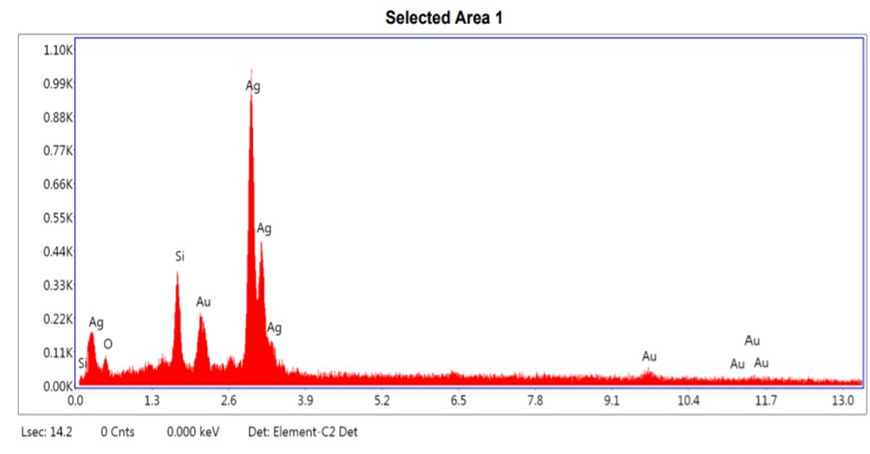
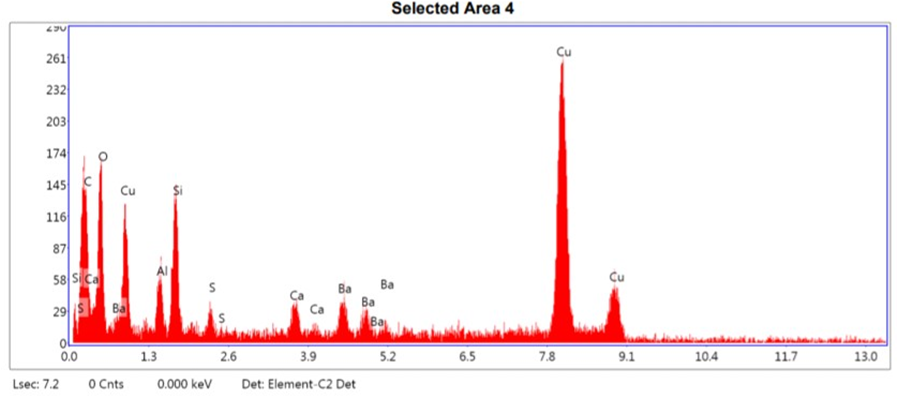
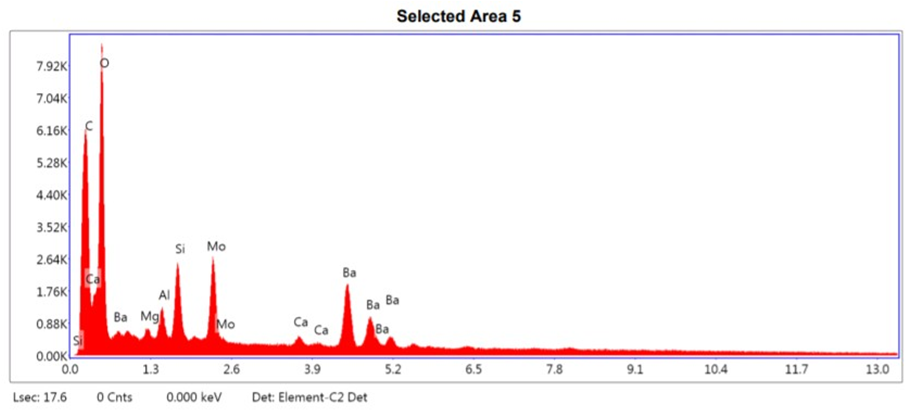
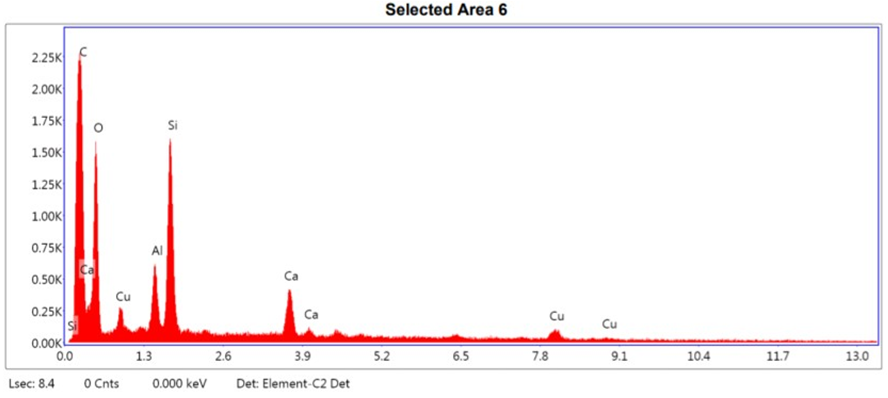
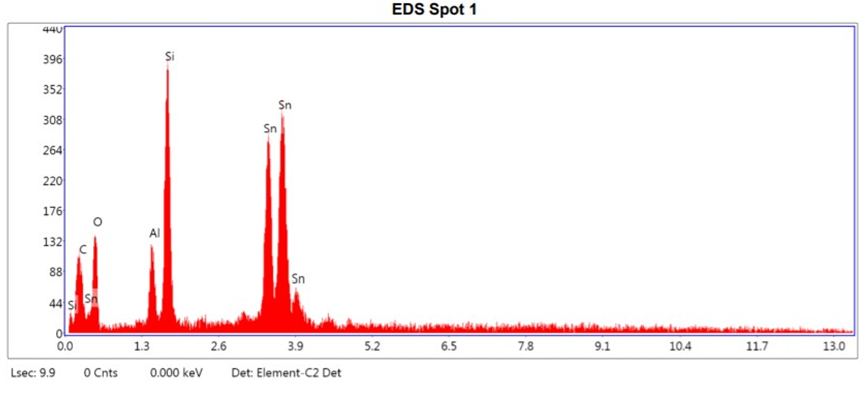
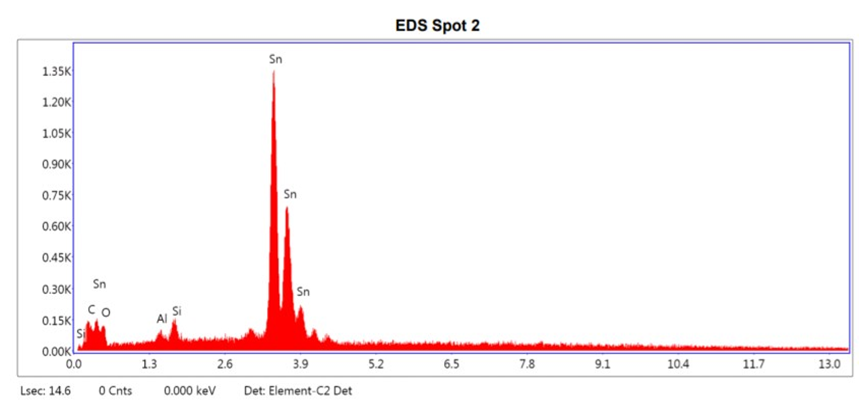
• EDAX is a technique that detects X-rays emission from the sample post its bombardment by an electron beam. The technique allows characterization of the features or phases as small as 1 µm in terms of elemental composition. The structural and elemental characterization was performed on EDAX AMETAK. The semi-quantitative SEM-EDX analysis was done using SEM (FEI Quanta 200) under an acceleration voltage of 20kV, 60x magnification and low vacuum. Samples were not treated and coated prior analysis. Also, sample was not acid digested and it only involved surface topological examination of powdered e-waste.
2.3. Sample Preparation and ICP-OES Analysis• ICP-OES is commonly adopted technique in the field of environmental, metallurgical, pharmaceutical, petrochemical, geological and food safety arenas. The method is based on the following principle. Plasma gas argon containing a significant number of argon ions are formed by seeding the argon gas passing through a plasma torch with electrons. Analysis involves introduction of the sample element into the plasma in the form of atoms. Once within the plasma the atoms get ionized and thereafter the electrons are promoted from a lower to higher energy level. The photons that are emitted on relaxation of these electrons to their initial 'ground' state produces a characteristic emission spectrum that the ICP-OES takes advantage of for identification and quantification of the elements. The complete metal analysis of ESM was done through acid dissolution using aqua regia and further the samples were analysed using ICP-OES method. The ESM was acid digested using aqua regia. For digestion glass vessels were used. Before digestion, concentrated nitric acid was used to wash the glass vessels thoroughly and later rinsed with deionised water and dried in hot air oven. About 0.1g of sample was weighed accurately and was further acid digested using aqua regia and heated at 95 C for 2 hours. The sample was allowed to cool overnight. Next day, the digested samples were filtered through Nylon 0.2µm Millipore Millex-GN and the analysis for elemental composition was done.
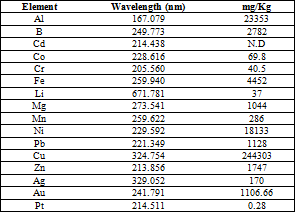
• Metal analyses was performed using ICP-OES (Agilent Technologies-700 Series) at following wavelengths (nm): Al (167.079), B (249.773), Cd (214.438), Co(228.616), Cr (205.560), Fe (259.940), Li (671.781), Mg (273.541), Mn (259.622), Ni (229.592), Pb (221.349), Cu (324.754), Zn (213.856), Ag (329.052), Au (241.791), Pt (214.511).
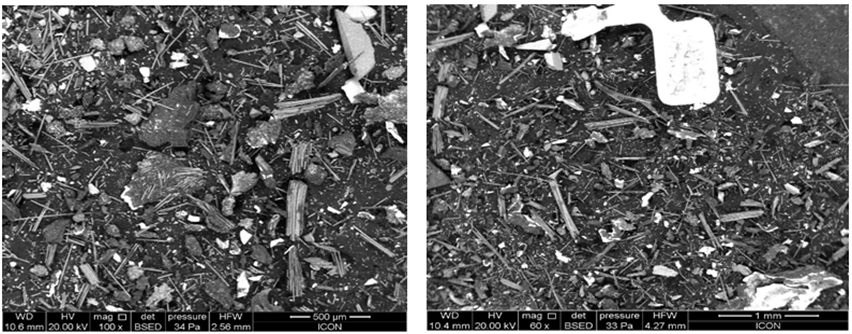
• In FE-SEM field guns which are used generated large number of electrons in a relatively small beam spot. The smaller diameter of beam spot contributed to enhanced and magnified image of 0.5 mm diameter of e-waste. Thus, it can be attributed to secondary electrons for creating a topographic contrast for visualization and resolution of particle surface structures.
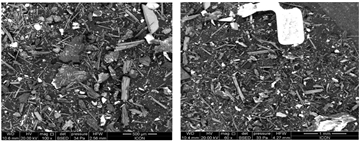
• FESEM surface examination of solid particles revealed uneven particles of ESM. This process did not require acid digestion and sample preparation. The SEM micrographs thus showed the non-homogenous matrix of ESM particles with particles showing various sizes, particle structure and textures.
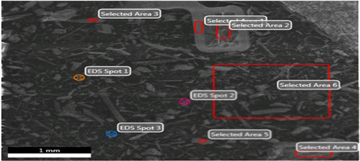
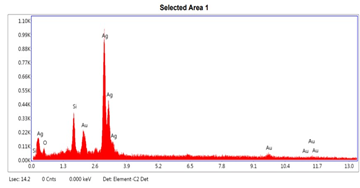
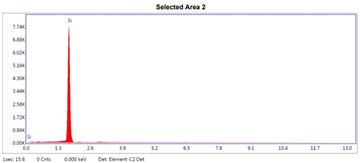
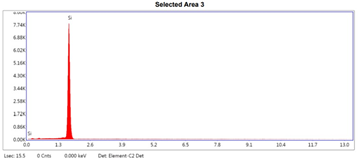
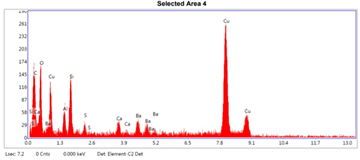
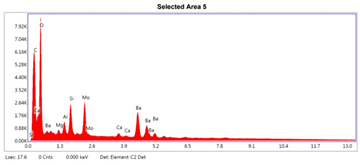
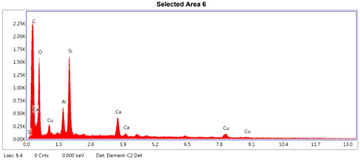
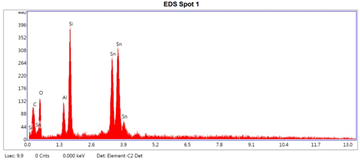
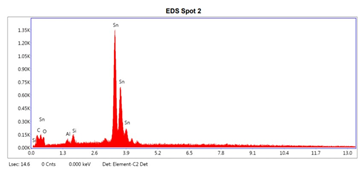
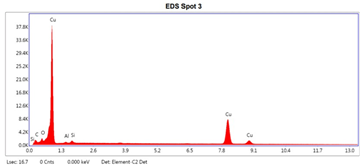
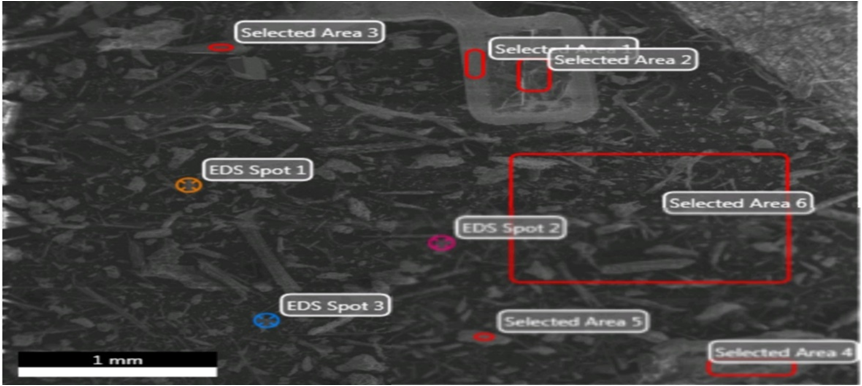
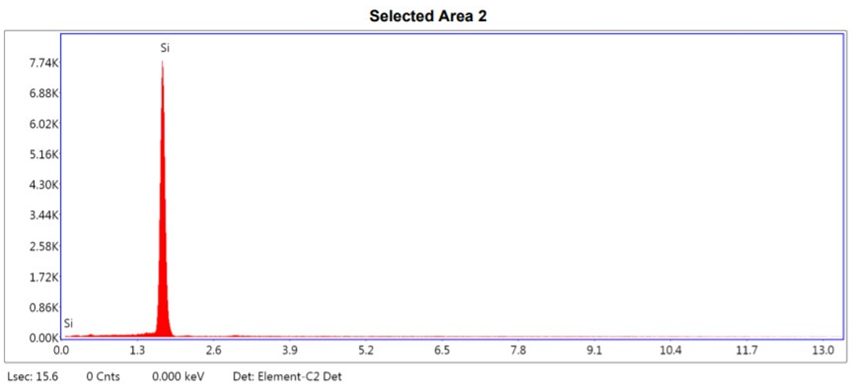
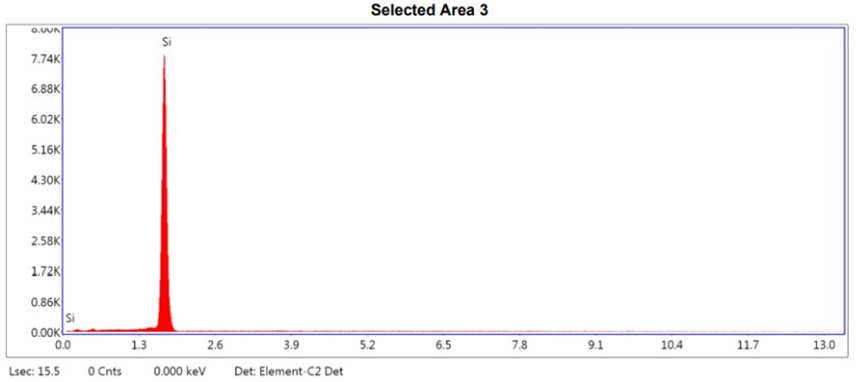
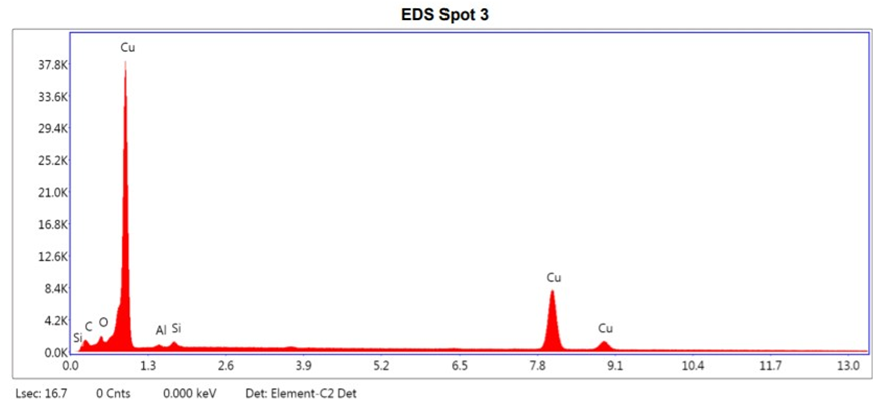
The EDAX selected area 01 showed the presence of precious metals like Ag and Au. No Pt was observed to be present in the selected areas. The EDX spectra clearly reported the presence of base metals like Cu, Mg and Al to be present in major amount. In addition, elements with high toxicological evidence were found to be present such as Sn and Mo. Area 2 and 3 predominantly showed the presence of Si metalloid. Other metals such as Ba, Ca were also found to be present at EDS spot 1 and 2. Along with these non-metals such as S, C and O were also present in significant amount.
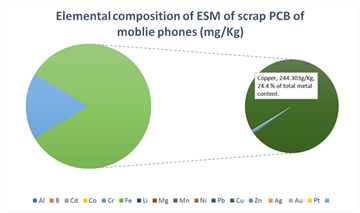
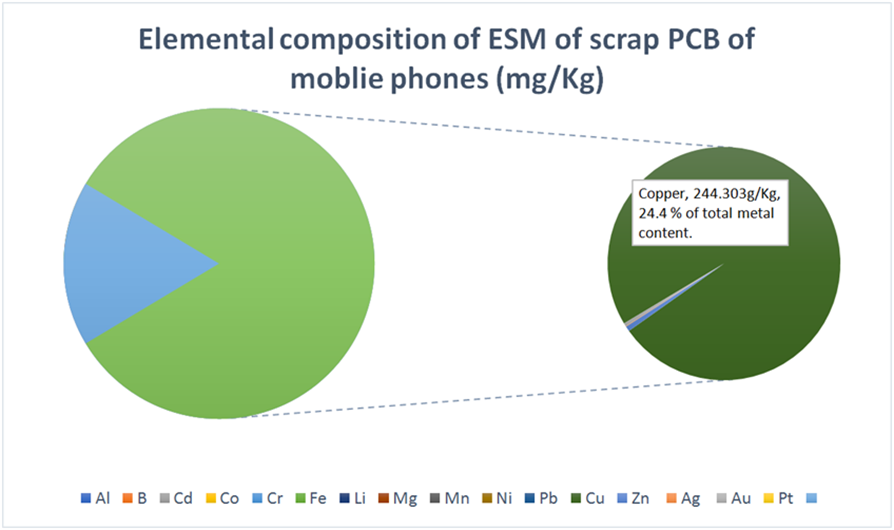
3.3. ICP-OES AnalysisThe most abundant element among the base metals was found to be of Cu, comprising of 24.4% of total elemental content of ESM. So, the informal recyclers deploy workers who extract Cu by burning PCB in open air which further pollutes the air severely. Along with Cu, the second most abundant metal noticed are Al and Ni at a concentration of 23353 and 18133 mg/Kg respectively. The presence of Ni is considered due to Ni hydride batteries that were once used which is now getting replaced by Li batteries. Other metals such as Pb, Co, Cr were found at lower concentration, i.e. 1128, 69.8 and 40.5mg/Kg respectively. The presence of these environmental toxin metals revealed in our studies are a major reason for neurological morbidity even if the presence is in low concentration. Similarly, the analysis of metal content using ICP-OES also confirmed the existence of precious and valuable metals like Au, Ag and Pt in PCB of mobile waste. Here, the Au concentration was higher than Ag and Pt i.e. 1106.66, 170 and 0.28 mg/Kg respectively. Thus, the presence of Au in substantial amount further is attracting mongers to increase in number in illegal recycling sector of the Asian and African continents. The aqua regia used in current study has been the most powerful oxidizing reagent which gave ‘total digestion’ for most base metals as well as for precious metals. Cd was not detected. The data on elemental composition obtained by ICP-OES analysis depicts the presence of important base metals like Cu, Al, and Ni along with the presence of precious metals predominantly Au. The presence of Pb, Li, Co, Cr labels electronic scrap of mobile phones as toxic nut shells which can enter the food web if left untreated in the environment. The presence and abundance of copper in e waste makes it ideal secondary ore source. The problem lies in adopting the unscientific methods of extracting this base metal. In a country like India the 2/3rd of e-waste that is getting generated globally is grabbed by illegal dealers where the urban poor are forced to segregate the PCB parts manually. This leads a way for most of the heavy metals present in e waste to impose deleterious effects on labourers involved in dismantling process. Also, it has become a common practise where most of the urban poor are burning e waste at their homes to earn their living. This has led to emergence of grey market in India where PCB are handled in unprotected manner only to extract Cu by burning process.
The current study was focused on obtaining the detailed elemental composition of scrap PCB of mobile phones using FESEM coupled with energy dispersive X-ray (FESEM-EDAX) and ICP-OES method. FESEM micrographs revealed the surface morphology of 0.5mm ESM particles where it was noted that the particle morphology, texture and topography of ESM varies greatly. The EDAX data revealed the presence of numerous and diverse metals some of which are toxic metals, precious metals as well as non-metals. It was ascertained from results obtained by ICP-OES that printed circuit boards of mobile phones is indeed a reservoir of base metals such as Cu>Al>Ni>Fe>Zn>Pb>Mg>Mn>Co>Cr along with the presence of precious metals Au>Ag>Pt. Also, the study revealed the presence of Pb, Mo, Co and Cr which pose a threat to e-waste handlers as well as an inevitable threat for the environment in coming future. Thus, it is a major concern to be on alert and further impede the e waste production globally. Also, the increase in burden of e-waste on our planet needs to be addressed with appropriate scientific method and with an eco-friendly approach. This current research work is in progress, to further leach out and recover toxic and precious metals from PCB waste using chemoorganotrophic and chemolithotrophic microorganisms.
Thanks, are extended to Trans Thane Creek Hazardous Waste Management Association (TTCWMA) for providing the facility of laboratory to carry out research work. We appreciate Icon analytical equipment Private Limited, Mumbai for their help provided for SEM. Also, we express our gratitude to E- Parisara Private Limited, Bangalore for providing shredded PCB of obsolete mobile phones.
| [1] | Needhidasan S., et.al. Electronic waste-an emerging threat to the environment of urban India, Journal of Environmental Health Science & Engineering, open access http://www.ijehse.com/content/12/1/36 (2014). | ||
| In article | View Article PubMed | ||
| [2] | Jim Puckett, The Digital Dump: Exporting reuse and abuse to Africa. The Basel Action Network. A project of earth economics. www.ban.org (2005). | ||
| In article | |||
| [3] | Anwesha Borthakur and Madhav Govind, Computer and mobile phone waste in urban India. Online Journal of environmental planning and management. www.tandfonline.com/loi/cjep20 (2018). | ||
| In article | |||
| [4] | Sharma Pramila, Fulekar M. H and Pathak Bhavana., E-waste-A Challenge for tomorrow, Research Journal of Recent Sciences, 1(3), 86-93, (2012). | ||
| In article | |||
| [5] | Rinchen Norbu Wangchuk, E-waste Recycling 101: Where to donate Your Old Electronics, Phones in India, The Better India, www.thebetterindia.com/186938/donate-ewaste-ngo-recycling-old-phones-electronics-india/. Accessed on 30 June 2019. (2019) | ||
| In article | |||
| [6] | Havlik, T. (et.al)., Leaching of copper and tin from used printed circuit boards after thermal treatment, Journal of Hazardous Materials 183, 866-873 (2010). | ||
| In article | View Article PubMed | ||
| [7] | Mohammed, A. et.al The impact of electronic waste disposal and possible microbial and plant control, The International Journal of Engineering and Sciences, Vol.2: 35-42 (2013). | ||
| In article | |||
| [8] | Jatindra Pradhan, Sudhir Kumar, Informal e-waste recycling: Environmental risk assessment of heavy metal contamination in Mandali Industrial area, Delhi, India. Environmental Science and Pollution Research, Vol 21, 7913-7928 (2014). | ||
| In article | View Article PubMed | ||
| [9] | Ricardo Montero (et al.), Recovery of Gold, Silver, Copper and Niobium from Printed Circuit Boards using Leaching Column Technique: Journal of Earth Sciences and Engineering, 2, 590-595 (2012). | ||
| In article | |||
| [10] | Xianlai Zeng, John A. Mathews, Jinhui L. Urban Mining of E-Waste is Becoming More Cost-Effective Than Virgin Mining. Environ. Sci. Technol., 52, 8, 4835-4841 (2018). | ||
| In article | View Article PubMed | ||
| [11] | Boshhard P., Bachofen R., and Brandl H. Metal leaching of fly ash from municipal waste incineration by Aspergillus niger. Environmental Science & Technology., 30, 3066-3070 (1996). | ||
| In article | View Article | ||
| [12] | Vats, M. C., & Singh, S. K. Assessment of gold and silver in assorted mobile phone printed circuit boards (PCBs): Original article. Waste Management, 45, 280–288 (2015). | ||
| In article | View Article PubMed | ||
| [13] | Sohaili, J., Muniyandi, S.K., Mohamad, S.S. A review on printed circuit boards waste recycling technologies and reuse of recuperated non-metallic materials. Int. J. Sci. Eng. Res. 3 (2), 1-7 (2012). | ||
| In article | |||
| [14] | United Nations University, 2009. Set World Standards for Electronics Recycling, Reuse to Curb E-waste Exports to Developing Countries, Experts Urge. Science Daily. http://www.sciencedaily.com/releases/2009/09/090915140919.htm. | ||
| In article | |||
| [15] | Kasper, A. C., & Veit, H. M. Gold recovery from printed circuit boards of mobile phones scraps using a leaching solution alternative to cyanide. Brazilian Journal of Chemical Engineering, 35(3), 931-942 (2018). | ||
| In article | View Article | ||
| [16] | Hall, W.J.; Bhaskar, T.; Merpati, N.M.M.; Muto, A. Sakata, Y.; Williams, P.T.; Pyrolysis of waste electrical and electronic equipment: effect of antinomy trioxide on the pyrolysis of styrenic polymers. Environmental Technology, 28(9), 1045-1054 (2007). | ||
| In article | View Article PubMed | ||
| [17] | Bidini, G.; Fantozzi, F.; Bartocci, P.; D'Alessandro, B.; D'Amico, M.; Laranci, P.; Scozza, E.; Zagaroli, M. Recovery of precious metals from scrap printed circuit boards through pyrolysis, Journal of Analytical and Applied Pyrolysis, 111, 140-147 (2015). | ||
| In article | View Article | ||
| [18] | J. H. Li, S. Gao, H. B. Duan and L. L. Liu., Recovery of valuable materials from waste liquid crystal display panel. Waste Management. 29, pp. 2033-9 (2009). | ||
| In article | View Article PubMed | ||
| [19] | Ammons J. and Sarah B., ‘Eliminating E-waste: Recycling through Reverse Production’ at www.lionhrtpub.com (2003). | ||
| In article | |||
| [20] | Boseckar K., Bioleaching metal solubilization by microorganisms, FEMS Microbiol. Rev., 20, 591-604 (1997). | ||
| In article | View Article | ||
| [21] | Choi, M.S., Cho., Microbial recovery of Copper from printed circuit boards of waste computer by Acidithiobacillus ferrooxidans. Journal of Environmental Science and Health - Part A Toxic/Hazardous Substances and Environmental Engineering, 39, 2973-2982 (2004). | ||
| In article | View Article | ||
| [22] | Mahipal Singh Sankhla, (et.al). Effect of electronic waste on environmental & Human health- A Review, Journal of environmental science, toxicology and food Technology, 10, 98-104 (2016). | ||
| In article | View Article | ||
| [23] | Ramachandra T.V and Saira V. K., Environmentally sound options for waste revolution, Journal IAEM, 31, 196-205 (2004). | ||
| In article | |||
| [24] | Toxics Link. (2004). E-Waste in Chennai Time is running out, www.toxicslink.org accessed on 14th June 2006. | ||
| In article | |||
Published with license by Science and Education Publishing, Copyright © 2020 Sonawane P.M and Gupta S.G.
 This work is licensed under a Creative Commons Attribution 4.0 International License. To view a copy of this license, visit
http://creativecommons.org/licenses/by/4.0/
This work is licensed under a Creative Commons Attribution 4.0 International License. To view a copy of this license, visit
http://creativecommons.org/licenses/by/4.0/
| [1] | Needhidasan S., et.al. Electronic waste-an emerging threat to the environment of urban India, Journal of Environmental Health Science & Engineering, open access http://www.ijehse.com/content/12/1/36 (2014). | ||
| In article | View Article PubMed | ||
| [2] | Jim Puckett, The Digital Dump: Exporting reuse and abuse to Africa. The Basel Action Network. A project of earth economics. www.ban.org (2005). | ||
| In article | |||
| [3] | Anwesha Borthakur and Madhav Govind, Computer and mobile phone waste in urban India. Online Journal of environmental planning and management. www.tandfonline.com/loi/cjep20 (2018). | ||
| In article | |||
| [4] | Sharma Pramila, Fulekar M. H and Pathak Bhavana., E-waste-A Challenge for tomorrow, Research Journal of Recent Sciences, 1(3), 86-93, (2012). | ||
| In article | |||
| [5] | Rinchen Norbu Wangchuk, E-waste Recycling 101: Where to donate Your Old Electronics, Phones in India, The Better India, www.thebetterindia.com/186938/donate-ewaste-ngo-recycling-old-phones-electronics-india/. Accessed on 30 June 2019. (2019) | ||
| In article | |||
| [6] | Havlik, T. (et.al)., Leaching of copper and tin from used printed circuit boards after thermal treatment, Journal of Hazardous Materials 183, 866-873 (2010). | ||
| In article | View Article PubMed | ||
| [7] | Mohammed, A. et.al The impact of electronic waste disposal and possible microbial and plant control, The International Journal of Engineering and Sciences, Vol.2: 35-42 (2013). | ||
| In article | |||
| [8] | Jatindra Pradhan, Sudhir Kumar, Informal e-waste recycling: Environmental risk assessment of heavy metal contamination in Mandali Industrial area, Delhi, India. Environmental Science and Pollution Research, Vol 21, 7913-7928 (2014). | ||
| In article | View Article PubMed | ||
| [9] | Ricardo Montero (et al.), Recovery of Gold, Silver, Copper and Niobium from Printed Circuit Boards using Leaching Column Technique: Journal of Earth Sciences and Engineering, 2, 590-595 (2012). | ||
| In article | |||
| [10] | Xianlai Zeng, John A. Mathews, Jinhui L. Urban Mining of E-Waste is Becoming More Cost-Effective Than Virgin Mining. Environ. Sci. Technol., 52, 8, 4835-4841 (2018). | ||
| In article | View Article PubMed | ||
| [11] | Boshhard P., Bachofen R., and Brandl H. Metal leaching of fly ash from municipal waste incineration by Aspergillus niger. Environmental Science & Technology., 30, 3066-3070 (1996). | ||
| In article | View Article | ||
| [12] | Vats, M. C., & Singh, S. K. Assessment of gold and silver in assorted mobile phone printed circuit boards (PCBs): Original article. Waste Management, 45, 280–288 (2015). | ||
| In article | View Article PubMed | ||
| [13] | Sohaili, J., Muniyandi, S.K., Mohamad, S.S. A review on printed circuit boards waste recycling technologies and reuse of recuperated non-metallic materials. Int. J. Sci. Eng. Res. 3 (2), 1-7 (2012). | ||
| In article | |||
| [14] | United Nations University, 2009. Set World Standards for Electronics Recycling, Reuse to Curb E-waste Exports to Developing Countries, Experts Urge. Science Daily. http://www.sciencedaily.com/releases/2009/09/090915140919.htm. | ||
| In article | |||
| [15] | Kasper, A. C., & Veit, H. M. Gold recovery from printed circuit boards of mobile phones scraps using a leaching solution alternative to cyanide. Brazilian Journal of Chemical Engineering, 35(3), 931-942 (2018). | ||
| In article | View Article | ||
| [16] | Hall, W.J.; Bhaskar, T.; Merpati, N.M.M.; Muto, A. Sakata, Y.; Williams, P.T.; Pyrolysis of waste electrical and electronic equipment: effect of antinomy trioxide on the pyrolysis of styrenic polymers. Environmental Technology, 28(9), 1045-1054 (2007). | ||
| In article | View Article PubMed | ||
| [17] | Bidini, G.; Fantozzi, F.; Bartocci, P.; D'Alessandro, B.; D'Amico, M.; Laranci, P.; Scozza, E.; Zagaroli, M. Recovery of precious metals from scrap printed circuit boards through pyrolysis, Journal of Analytical and Applied Pyrolysis, 111, 140-147 (2015). | ||
| In article | View Article | ||
| [18] | J. H. Li, S. Gao, H. B. Duan and L. L. Liu., Recovery of valuable materials from waste liquid crystal display panel. Waste Management. 29, pp. 2033-9 (2009). | ||
| In article | View Article PubMed | ||
| [19] | Ammons J. and Sarah B., ‘Eliminating E-waste: Recycling through Reverse Production’ at www.lionhrtpub.com (2003). | ||
| In article | |||
| [20] | Boseckar K., Bioleaching metal solubilization by microorganisms, FEMS Microbiol. Rev., 20, 591-604 (1997). | ||
| In article | View Article | ||
| [21] | Choi, M.S., Cho., Microbial recovery of Copper from printed circuit boards of waste computer by Acidithiobacillus ferrooxidans. Journal of Environmental Science and Health - Part A Toxic/Hazardous Substances and Environmental Engineering, 39, 2973-2982 (2004). | ||
| In article | View Article | ||
| [22] | Mahipal Singh Sankhla, (et.al). Effect of electronic waste on environmental & Human health- A Review, Journal of environmental science, toxicology and food Technology, 10, 98-104 (2016). | ||
| In article | View Article | ||
| [23] | Ramachandra T.V and Saira V. K., Environmentally sound options for waste revolution, Journal IAEM, 31, 196-205 (2004). | ||
| In article | |||
| [24] | Toxics Link. (2004). E-Waste in Chennai Time is running out, www.toxicslink.org accessed on 14th June 2006. | ||
| In article | |||