In the present study, oxidation of some major toxic aniline derivatives from effluents using Fenton and Photo-Fenton oxidation methods was carried out. A number of physical methods, chemical methods and biological methods are available for the treating of wastewaters. The degradation of Amoxicillin in water by Fenton & Photo-Fenton advanced oxidation process was investigated in this study. The effect of pH (2-10), initial concentration (20-80mg/l), H2O2 dosages (10-50mg/l), and Ferrite based catalyst dosages (0.25-1.25 mg/l) on the rate of degradation was investigated. The process was optimized with Amoxicillin removal efficiency of 95.89 %. The Photo-Fenton oxidation was carried out to increase the removal efficiency of Amoxicillin. The kinetic studies were carried out to optimize the reaction time in Fenton and Photo-Fenton process.
Industrial development and population growth has led to the use of many toxic chemicals. Every day a wide range of pharmaceutical products and pesticides are being released into the environment 1; they are detected at concentrations ranging from ng·L−1 to µg·L−1 in wastewater, surface water, groundwater and treated drinking water 1, 2. Research has shown various eco-toxicological effects of pharmaceutical products and pesticides. Godoy et al. 3 showed for example, that antihypertensive drugs lead to larvae mortality and growth inhibition in fish and algae, respectively. Antibiotics affect bacterial community structures, modify bacterial ecology, and particularly of interest to public health lead to the development of resistant bacterial strains, posing treatment challenges when transferred to human systems 4. Organic compounds can be removed from aqueous media by using various conventional methods, such as filtration, adsorption, membrane filtration, coagulation, flocculation and biological treatment 5, 6, 7, 8. However, these techniques have some disadvantages such as incomplete removal, high-energy requirements, the production of toxic sludge, low efficiency, sensitive operating conditions and costly disposal 9, 10, 11. Guerra et al. 12 have investigated the degradation of paracetamol and amoxicillin, the same removal yield 90% was obtained for both paracetamol and amoxicillin.
The present study deals with the degradation of amoxicillin and Chemical Oxygen Demand (COD) removal efficiencies by Fenton and Photo-Fenton processes. The effect of pH, hydrogen peroxide dosage (H2O2), effect of catalyst dose and effect of initial amoxicillin concentration on the degradation by Fenton’s process was also studied. Further Photo-Fenton oxidation studies were carried out with the optimum conditions of the Fenton’s process.
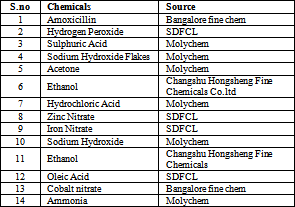
The reagents used are of analytical grade and used without purification.
The Fenton experiments were conducted by using 1000ml glass beaker. The operating parameters included dosages H2O2 and ZnFe2O4 and CoFe2O4, pH.one glass beaker of 1000ml were first filled with 600ml of amoxicillin solution. Similarly; Photo-Fenton experiments are conducted in the batch process using a batch reactor. The Photo-Fenton set up consists of a closed chamber consisting a reactor (150 ml Volume), 254nm UV lamp which is covered with quartz jacket and connected to the power supply with a magnetic stirrer. pH of the solution was adjusted using 0.1 N H2SO4 and 0.1 N NaOH. The mixture of Amoxicillin solution and Fenton’s reagent was stirred with magnetic stirrer during treatment. The experiment of Photo-Fenton oxidation is similar except stirring is carried out in presence of UV light (254 nm) in specially designed UV reactor in the lab. The amoxicillin solution samples were taken out for analysis at pre-defined time intervals and filtered through 0.45 μm Millipore filter paper. Chemical Oxygen Demand (COD) analysis by open Reflux method and for determination of amoxicillin concentration by using UV-VIS Double Beam Spectrophotometer (Shimadzu-8400S).
Zinc ferrite nanoparticles were synthesized by co-precipitation method, using starting material of iron nitrate nonahydrate, Fe(NO3)3.9H2O and Zinc nitrate hexahydrate Zn(NO3)2.6H2O. Oleic acid was used as a surfactant to prevent the agglomeration of nanoparticles. 40 ml of 0.2 M zinc nitrate solution were mixed with 40 ml of 0.4 M iron nitrate solution in 250 ml beaker. The initial pH of the solution was noted as 1.14 because of the presence of nitric and nitrouse acids. The solution was constantly stirred with the help of magnetic stirrer. 10-15 ml of 3 M solution of NaOH was added drop wise to adjust the pH of solution 11-12, with constant stirring. The reaction is carried out in higher values of pH, because in this pH range the size of the particles as well as their nucleation rate is controlled [27]. A little amount of oleic acid 4-5 drops were added to the solution. Oleic acid prevents the agglomeration of the nanoparticles. The solution was then brought to reaction temperature of 80ºC. The solution was stirred for 60 minutes and subsequently cooled to room temperature. The solution was decanted and washed twice with distilled water and finally with ethanol to remove the impurities and excess surfactant. The as synthesized nanoparticles were centrifuged for 10 minutes at 3000 rpm and dried overnight at 105°C. The dried particles were milled. The powder nanoparticles were annealed at different temperatures of 400°C and 800°C for 4 hours.
3.2. Synthesis of Cobalt Ferrite NanoparticlesNano crystalline cobalt ferrite powder was synthesized by using one molar Fe(NO3)3.9H2O and Co(NO3)2.6H2O in double distilled water. These solutions were mixed in 1:2 ratio with constant stirring at 70°C. 25% ammonia solution was used for precipitation and controlling pH of solution 10.5.The precipitated material was washed with hot double distilled water and ethanol number of times to remove unwanted residual left over salts. The precipitates were filtered and then dried at 100°C to obtain fine powder. In order to achieve the desired stoichiometry of CoFe2O4 nanoparticles, the dried fine powder was annealed at 350°C in temperature controlled muffle furnace.
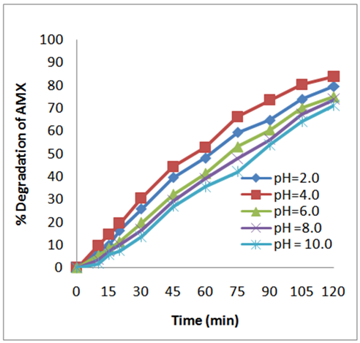
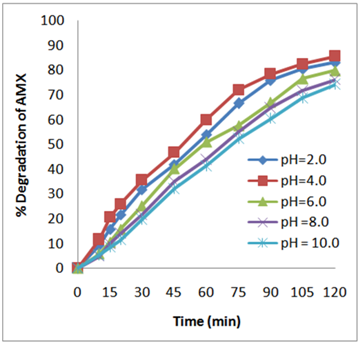
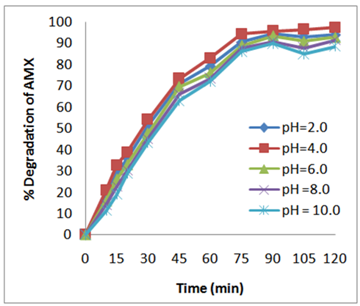
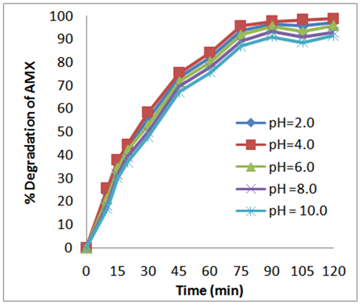
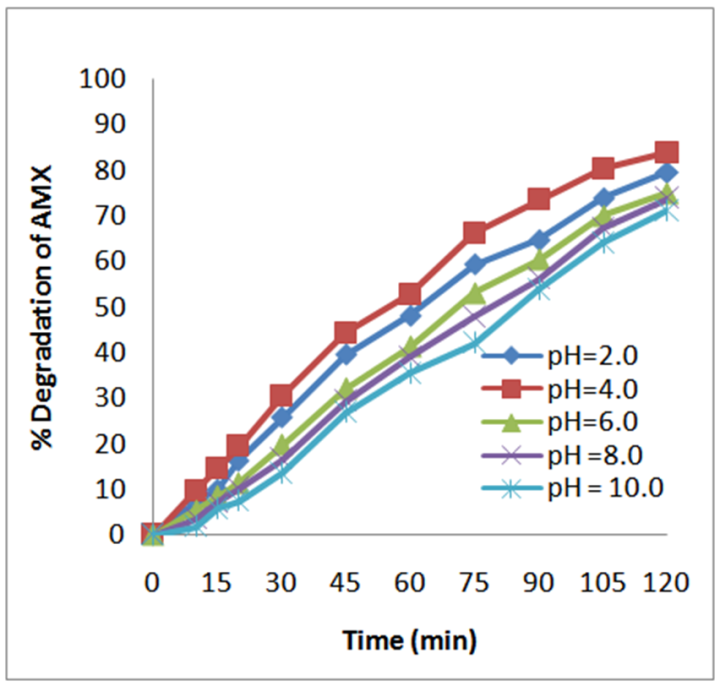
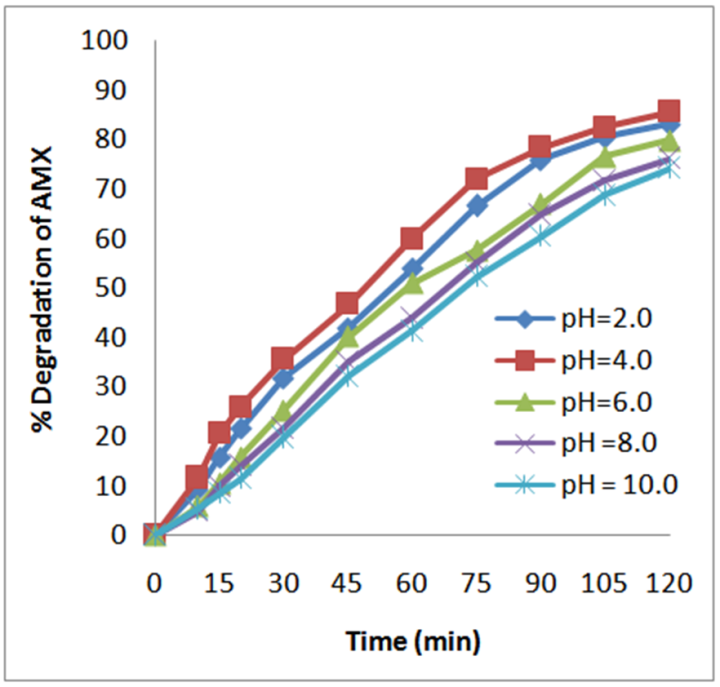
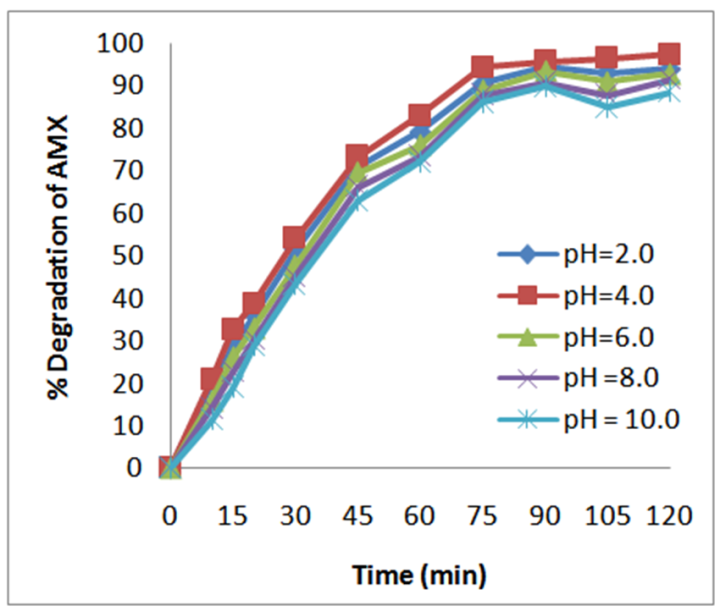
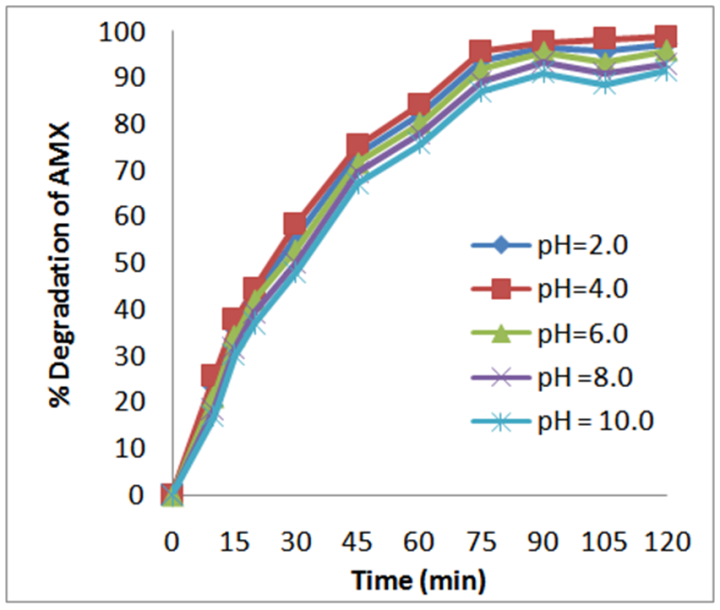
The effect of pH on the degradation of amoxicillin removal efficiencies were carried out. Figure 1 - Figure 4 show the removal efficiencies of amoxicillin. To determine optimal pH, experiments were conducted at different pH values varying from 2 to 10 with initial concentration of 20 mg/L of Amoxicillin, H2O2 = 30 mg/L, and ferrite based catalysts = 1 mg/L. In the present study, amoxicillin removal is obtained corresponding to pH=4 under both oxidation processes using either zinc ferrite or cobalt ferrite. Therefore subsequent experiments of Fenton and Photo-Fenton oxidation were set for pH=4. The drug removal efficiency was found to get reduced at other pH values. The low degradation at pH=2 may be due to the hydroxyl radical scavenging by H+ ions and also there may be inhibition for the radical forming activity of iron 13, 14, 15.
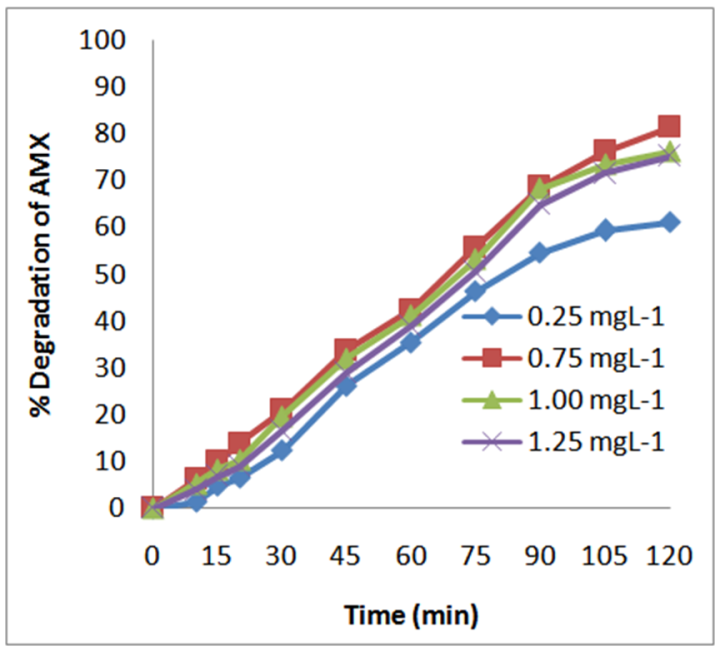
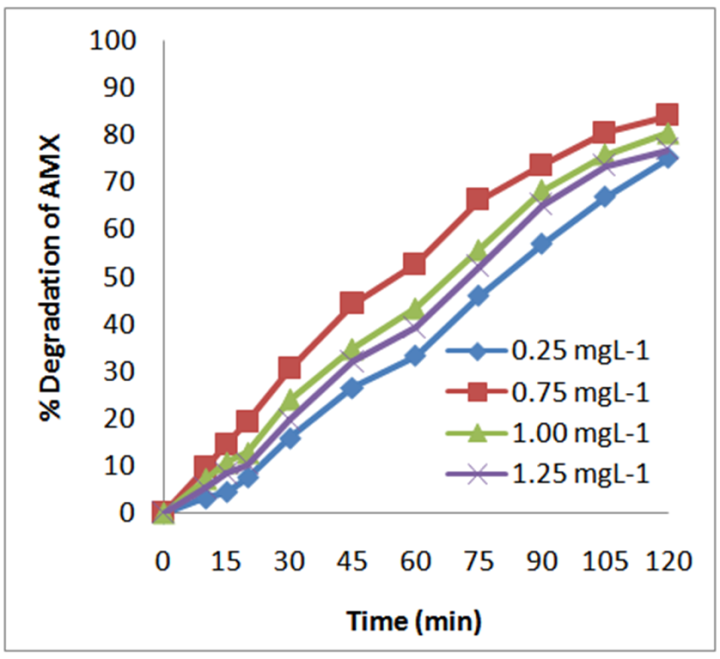
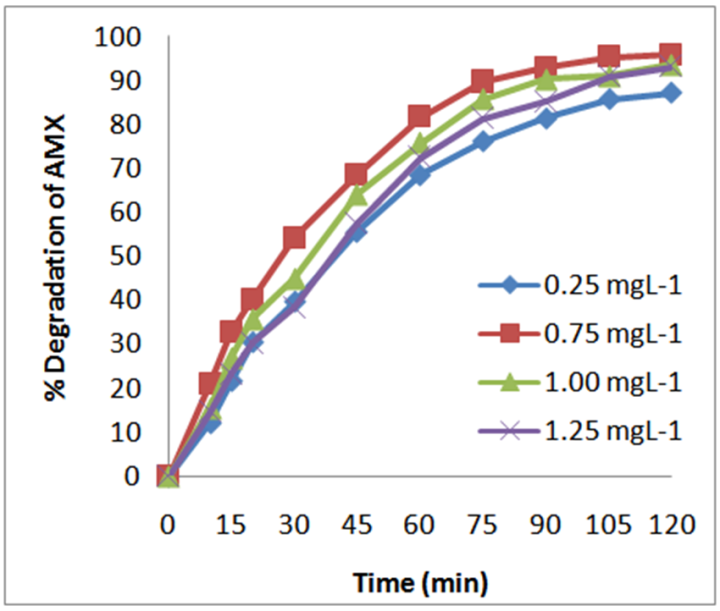
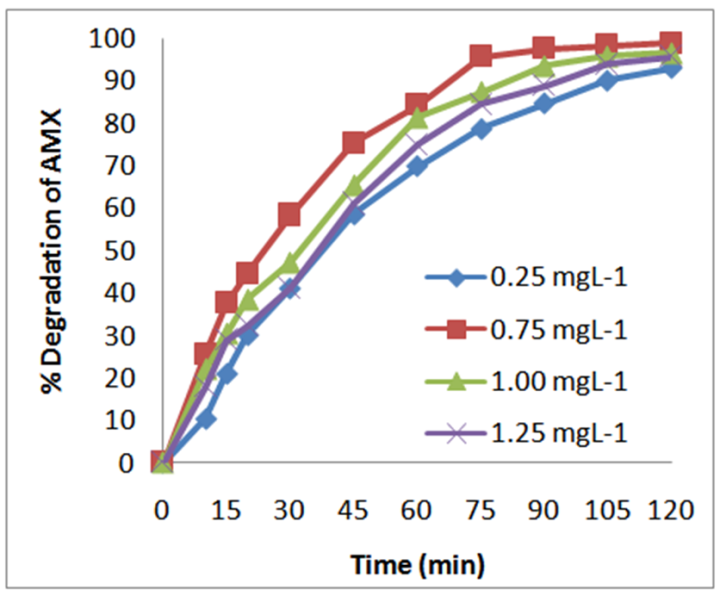
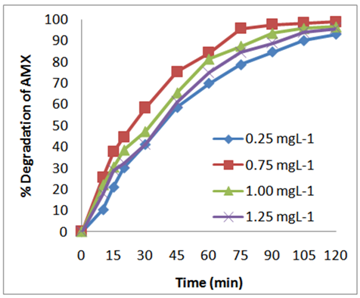
4.2. Effect of Catalyst DosagesThe effect of ferrite based catalysts dosage on the amoxicillin removal efficiencies were carried out. Figure 5 – Figure 8 shows the removal efficiencies of amoxicillin. To determine optimal dosage of ferrite catalysts, experiments were conducted at different catalysts dosages varying from 0.25 to 1.25 mg/l with initial concentration of 20 mg/l of Amoxicillin, H2O2 = 30 mg/l, and at a constant of pH=4. The maximum Amoxicillin removal efficiency obtained was 98.89% for 20 mg/l of the initial concentration of the Amoxicillin. It is observed from the experiments that, as the dosages of the hydrogen peroxide increases the removal efficiency increases till it reaches the critical concentration and after that, it starts decreasing. It was observed that, as ferrite based catalysts dosage increases, Amoxicillin removal increases, it may be due to the increased production of OH radical 18. Further increase in the dosage of ferrite based catalysts, the removal efficiency decreases and it may be due to the inhibition of ferrous ion 17.
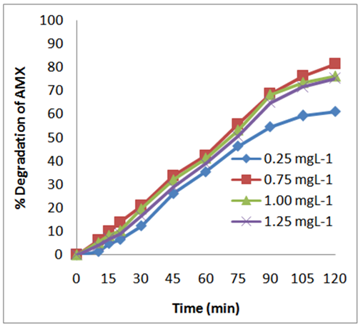
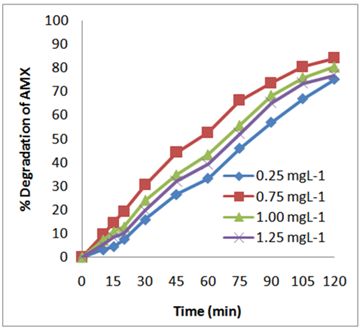
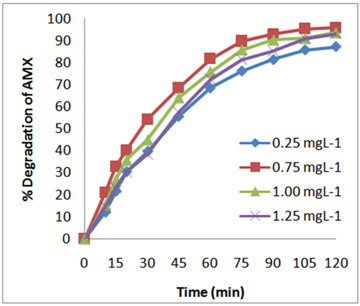
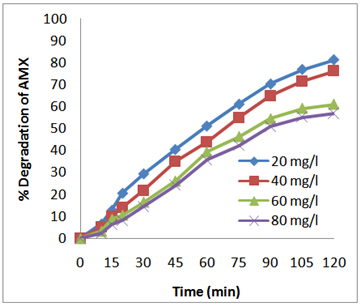
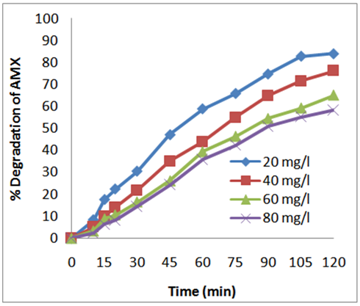
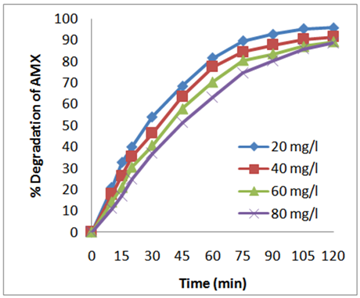
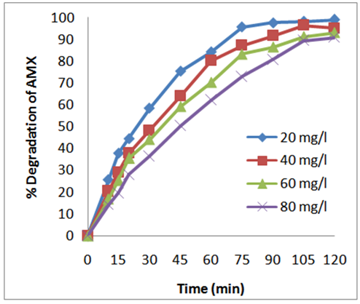
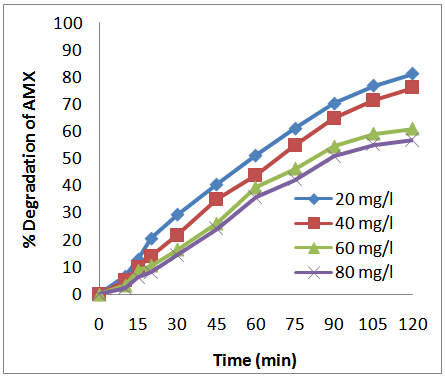
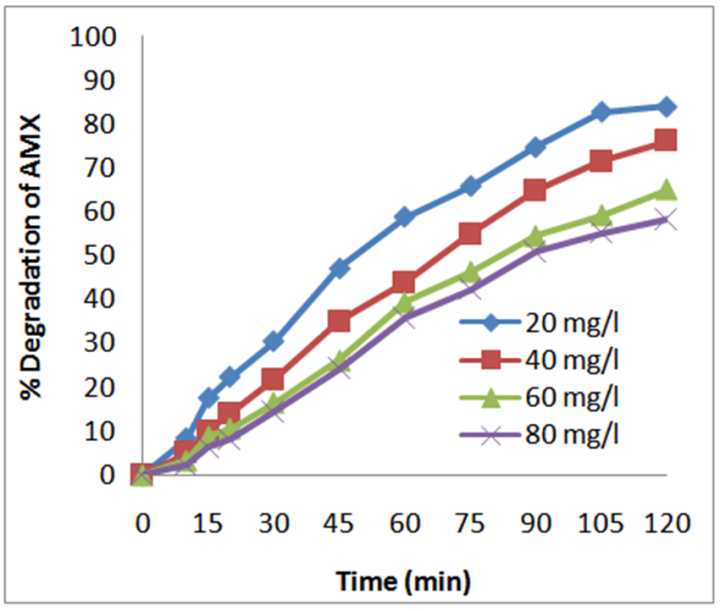
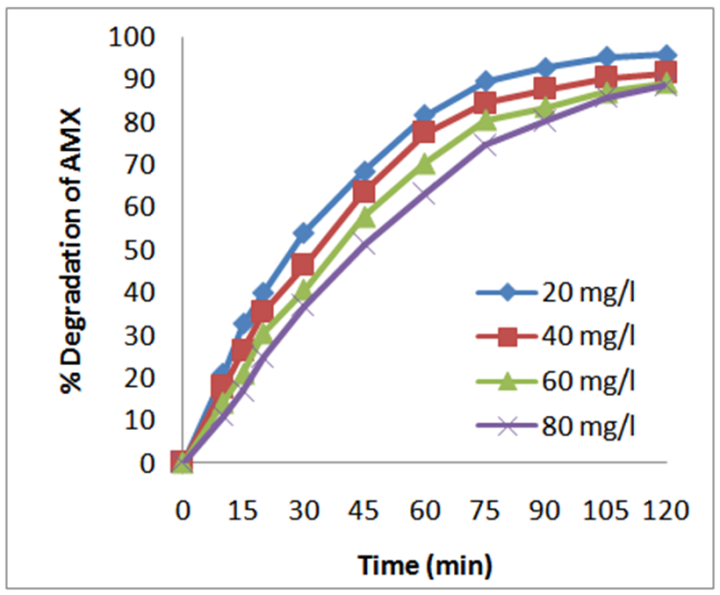
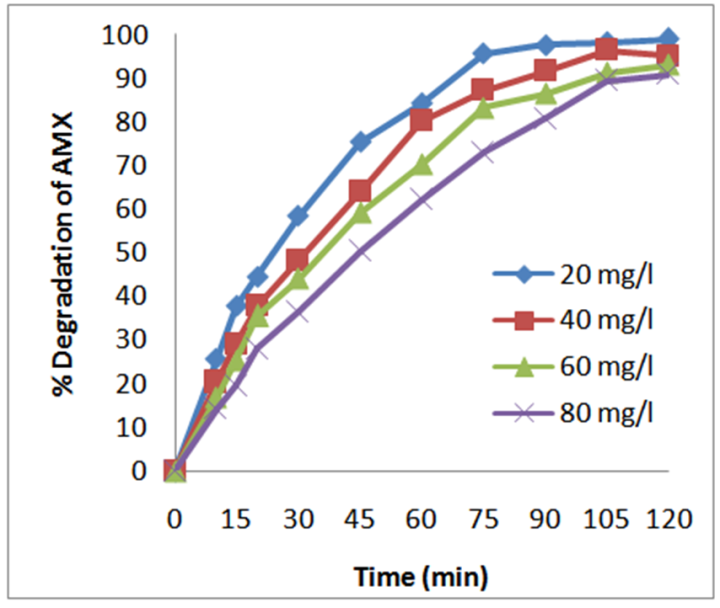
The experiments were conducted at different initial concentrations ranging from 20 mg/l – 80 mg/l to evaluate the effect of initial concentration of amoxicillin. The removal efficiencies decreased, as the initial concentration of the amoxicillin increased from 20 mg/l to the higher concentration. To determine optimal initial concentration, experiments were conducted at concentrations from 20 to 80 mg/l with H2O2 = 30 mg/L, and ferrite based catalysts = 0.75 mg/L. Figure 9 - Figure 12 shows the removal efficiency of Amoxicillin by varying initial concentrations. The decrease in the removal efficiency may be due to the formation of the intermediate compound during the oxidation process further, it may block the availability of OH radical for the oxidation process 16, 17.
Photo-Fenton oxidation process is more efficient compared to the Fenton’s oxidation process. The optimum pH for the removal of amoxicillin is 4. The maximum amoxicillin removal efficiency of 98.89% was observed for 20 mg/l of Amoxicillin concentration and the optimum hydrogen peroxide of 30 mg/l and 0.75 mg/l of ferrite based catalysts was used. The removal efficiency is slightly 15% higher as compared to the Fenton’s oxidation process.
The Authors Would Like To Thank College of Technology, Osmania University for the Financial Support and Also Thank the Central Analytical Facility.
| [1] | M.R. Khodadadi, S.H. Zolfani, M. Yazdani, E.K. Zavadskas, A hybrid MADM analysis in evaluating process of chemical wastewater purification regarding to advance oxidation processes, J. Environ. Eng. Landsc, 25 (3) (2017) 277-288. | ||
| In article | View Article | ||
| [2] | K. O. K’oreje, M. Okoth, H. Van Langenhove, K. Demeestere, Occurrence and treatment of contaminants of emerging concern in the African aquatic environment: Literature review and a look ahead- a review, J. Environ. Manage, 254 (2020) 109752. | ||
| In article | View Article PubMed | ||
| [3] | A.A. Godoy, F. Kummrow, P.A.Z. Pamplin, Occurrence, ecotoxicological effects and risk assessment of antihypertensive pharmaceutical residues in the aquatic environment—A review. Chemosphere, 138 (2015) 281-291. | ||
| In article | View Article PubMed | ||
| [4] | P. Grenni, V. Ancona, A. Barra Caracciolo, Ecological effects of antibiotics on natural ecosystems—A review, Microchem. J, 136 (2018) 25-39. | ||
| In article | View Article | ||
| [5] | S.S. Moghaddama, M.R. Alavi Moghaddama, M. Arami, Coagulation/flocculation process for dye removal using sludge from water treatment plant: Optimization through response surface methodology, J. Hazard. Mater, 175 (2010) 651-657. | ||
| In article | View Article PubMed | ||
| [6] | F. Boudrahem, F. Aissani-Benissad, A. Soualah, Removal of basic yellow dye from aqueous solutions by sorption onto reed as an adsorbent, Desalin. Water. Treat, 54 (6) (2015) 1727-1734. | ||
| In article | |||
| [7] | N. Boudrahem, S. Delpeux-Ouldriane, L. Khenniche, N. Boudrahem, F. Aissani-Benissad, M. Gineys, Single and mixture adsorption of clofibric acid, tetracycline and paracetamol onto Activated carbon developed from cotton cloth residue, Process. Saf. Environ, 111 (2017) 544-559. | ||
| In article | View Article | ||
| [8] | P.D. Amin, S. Joshi, V. Bhanushali, Advancements in technologies for water treatment, Int. J. Chemtech. Res, 11 (9) (2018). 260-276. | ||
| In article | View Article | ||
| [9] | H. Eccles, Treatment of metal-contaminated wastes: why select a biological process, Trends. Biotechnol, 17 (12) (1999) 462-465. | ||
| In article | View Article | ||
| [10] | M.A. Barakat, New trends in remοving heavy metals frοm industrial wastewater, Arab. J. Chem, 4 (4) (2011) 361-377. | ||
| In article | View Article | ||
| [11] | A.E. Burakov, E.V. Galunin, I.V. Burakov, A.E. Kucherova, S. Agarwal, A.G. Tkachev, V.K. Gupta, Adsorption of heavy metals on conventional and nanostructured materials for wastewater treatment purposes: A review, Ecotox. Environ. Safe, 148 (2018) 702-712. | ||
| In article | View Article PubMed | ||
| [12] | M.M. Guerra Hinοjοsa, I. Οller Alberοla, S. Malatο Rοdriguez, A. Agüera López, A. Acevedο Merinο, J.M. Quirοga Alοnsο, Οxidatiοn mechanisms οf amοxicillin and paracetamοl in the phοtο-Fentοn sοlar prοcess, Water. Res, 156 (2019) 232-240. | ||
| In article | View Article PubMed | ||
| [13] | Daughton.C and Ternes.T, Pharmaceuticals and Personal Care Products in the Environment: Agents of Subtle Change? Environ. Health Perspective. (1999); 107(6); 906-942. | ||
| In article | View Article PubMed | ||
| [14] | Neyens. E and Baeyens. J, A review of classic Fenton’s peroxidation as an advanced oxidation technique, J. Hazard. Mater, (2003); 98; 33-50. | ||
| In article | View Article | ||
| [15] | Rogers.J, R. Rily, Li.S, O’Melley and Thomas.B, Microbial transformation of alkyl pyridine in ground water, Water Air Soil Pollution; (1985); 24; 443-454. | ||
| In article | View Article | ||
| [16] | Manu B, Mahamood. Degradation Kinetics of Diclofenac in water by Fenton’s oxidation. J. of Sustainable Energy and Environment, 2012; 3: 173-176. | ||
| In article | |||
| [17] | Manu B, Mahamood. Enhanced degradation of paracetamol by UV-C supported Photo-Fenton process over Fenton oxidation. Water Science and Technology, 2011; 64 (12): 2433-2438. | ||
| In article | View Article PubMed | ||
| [18] | Yilmaz T, Aygun A, Nas B. Removal of COD and colour from young municipal landfill leachate by Fenton process. Environmental Technology, 2010; 31(14): 16351640. | ||
| In article | View Article PubMed | ||
Published with license by Science and Education Publishing, Copyright © 2022 Vanam Sudhakar, S. Srinu Naik and T. Shwetha Shree
 This work is licensed under a Creative Commons Attribution 4.0 International License. To view a copy of this license, visit
http://creativecommons.org/licenses/by/4.0/
This work is licensed under a Creative Commons Attribution 4.0 International License. To view a copy of this license, visit
http://creativecommons.org/licenses/by/4.0/
| [1] | M.R. Khodadadi, S.H. Zolfani, M. Yazdani, E.K. Zavadskas, A hybrid MADM analysis in evaluating process of chemical wastewater purification regarding to advance oxidation processes, J. Environ. Eng. Landsc, 25 (3) (2017) 277-288. | ||
| In article | View Article | ||
| [2] | K. O. K’oreje, M. Okoth, H. Van Langenhove, K. Demeestere, Occurrence and treatment of contaminants of emerging concern in the African aquatic environment: Literature review and a look ahead- a review, J. Environ. Manage, 254 (2020) 109752. | ||
| In article | View Article PubMed | ||
| [3] | A.A. Godoy, F. Kummrow, P.A.Z. Pamplin, Occurrence, ecotoxicological effects and risk assessment of antihypertensive pharmaceutical residues in the aquatic environment—A review. Chemosphere, 138 (2015) 281-291. | ||
| In article | View Article PubMed | ||
| [4] | P. Grenni, V. Ancona, A. Barra Caracciolo, Ecological effects of antibiotics on natural ecosystems—A review, Microchem. J, 136 (2018) 25-39. | ||
| In article | View Article | ||
| [5] | S.S. Moghaddama, M.R. Alavi Moghaddama, M. Arami, Coagulation/flocculation process for dye removal using sludge from water treatment plant: Optimization through response surface methodology, J. Hazard. Mater, 175 (2010) 651-657. | ||
| In article | View Article PubMed | ||
| [6] | F. Boudrahem, F. Aissani-Benissad, A. Soualah, Removal of basic yellow dye from aqueous solutions by sorption onto reed as an adsorbent, Desalin. Water. Treat, 54 (6) (2015) 1727-1734. | ||
| In article | |||
| [7] | N. Boudrahem, S. Delpeux-Ouldriane, L. Khenniche, N. Boudrahem, F. Aissani-Benissad, M. Gineys, Single and mixture adsorption of clofibric acid, tetracycline and paracetamol onto Activated carbon developed from cotton cloth residue, Process. Saf. Environ, 111 (2017) 544-559. | ||
| In article | View Article | ||
| [8] | P.D. Amin, S. Joshi, V. Bhanushali, Advancements in technologies for water treatment, Int. J. Chemtech. Res, 11 (9) (2018). 260-276. | ||
| In article | View Article | ||
| [9] | H. Eccles, Treatment of metal-contaminated wastes: why select a biological process, Trends. Biotechnol, 17 (12) (1999) 462-465. | ||
| In article | View Article | ||
| [10] | M.A. Barakat, New trends in remοving heavy metals frοm industrial wastewater, Arab. J. Chem, 4 (4) (2011) 361-377. | ||
| In article | View Article | ||
| [11] | A.E. Burakov, E.V. Galunin, I.V. Burakov, A.E. Kucherova, S. Agarwal, A.G. Tkachev, V.K. Gupta, Adsorption of heavy metals on conventional and nanostructured materials for wastewater treatment purposes: A review, Ecotox. Environ. Safe, 148 (2018) 702-712. | ||
| In article | View Article PubMed | ||
| [12] | M.M. Guerra Hinοjοsa, I. Οller Alberοla, S. Malatο Rοdriguez, A. Agüera López, A. Acevedο Merinο, J.M. Quirοga Alοnsο, Οxidatiοn mechanisms οf amοxicillin and paracetamοl in the phοtο-Fentοn sοlar prοcess, Water. Res, 156 (2019) 232-240. | ||
| In article | View Article PubMed | ||
| [13] | Daughton.C and Ternes.T, Pharmaceuticals and Personal Care Products in the Environment: Agents of Subtle Change? Environ. Health Perspective. (1999); 107(6); 906-942. | ||
| In article | View Article PubMed | ||
| [14] | Neyens. E and Baeyens. J, A review of classic Fenton’s peroxidation as an advanced oxidation technique, J. Hazard. Mater, (2003); 98; 33-50. | ||
| In article | View Article | ||
| [15] | Rogers.J, R. Rily, Li.S, O’Melley and Thomas.B, Microbial transformation of alkyl pyridine in ground water, Water Air Soil Pollution; (1985); 24; 443-454. | ||
| In article | View Article | ||
| [16] | Manu B, Mahamood. Degradation Kinetics of Diclofenac in water by Fenton’s oxidation. J. of Sustainable Energy and Environment, 2012; 3: 173-176. | ||
| In article | |||
| [17] | Manu B, Mahamood. Enhanced degradation of paracetamol by UV-C supported Photo-Fenton process over Fenton oxidation. Water Science and Technology, 2011; 64 (12): 2433-2438. | ||
| In article | View Article PubMed | ||
| [18] | Yilmaz T, Aygun A, Nas B. Removal of COD and colour from young municipal landfill leachate by Fenton process. Environmental Technology, 2010; 31(14): 16351640. | ||
| In article | View Article PubMed | ||