Practical training is a cornerstone in developing the professional competencies of pre-service chemistry teachers, yet traditional laboratory instruction faces persistent challenges, including high operational costs, chemical safety risks, and limited opportunities for repetitive practice. To address these barriers, this study proposes a systematic five-step framework for designing Augmented Reality (AR) laboratories specifically tailored for teacher education: (1) Pedagogical Needs and Content Analysis, (2) Scripting and 3D Modeling, (3) Technology Development and Integration, (4) Pre-deployment Alpha Testing, and (5) Pedagogical Beta Evaluation. The framework's effectiveness was validated through a pedagogical experiment conducted at a public teacher education university, involving 60 third-year pre-service chemistry teachers (n = 30 for both experimental and control groups). Focused on Essential Oil Extraction via steam distillation, this AR-assisted environment integrates scientific data overlays and real-time interaction systems, allowing students to visualize abstract concepts such as phase transitions and steam transport mechanisms. Experimental results indicated that students using the AR framework achieved a 15% higher improvement in practical psychomotor skills and a 10% increase in safety awareness compared to the control group. Furthermore, qualitative feedback highlighted high student satisfaction (4.5/5.0) due to the ability to practice complex procedures in a risk-free environment. These findings confirm that the proposed framework provides a robust, scalable foundation for modernizing chemistry laboratory instruction through digital transformation.
|
Practical training is a cornerstone in developing the professional competencies of pre-service chemistry teachers, as it enables them to bridge the gap between theoretical knowledge and hands-on operational skills 1. Mastery of experimental techniques not only builds confidence and proficiency but also fosters "Pedagogical Content Knowledge" (PCK) - the essential ability for future educators to anticipate safety hazards, scientifically explain complex phenomena, and effectively guide their students 2, 3. However, traditional laboratory instruction faces persistent and significant challenges 4. Operating a conventional laboratory requires substantial investment in chemicals, equipment, and maintenance, while inherent risks such as chemical toxicity and potential fire or explosion hazards remain constant concerns for learners 5, 6. Furthermore, spatial and temporal constraints often prevent students from repetitively practicing complex or hazardous procedures at their own discretion 7.
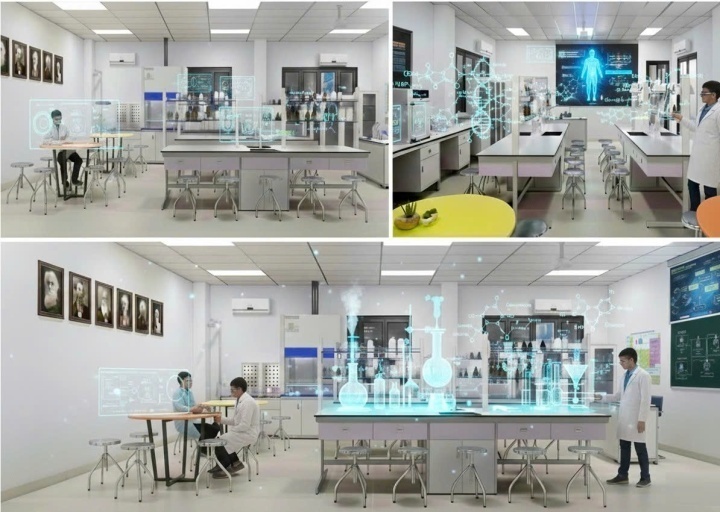
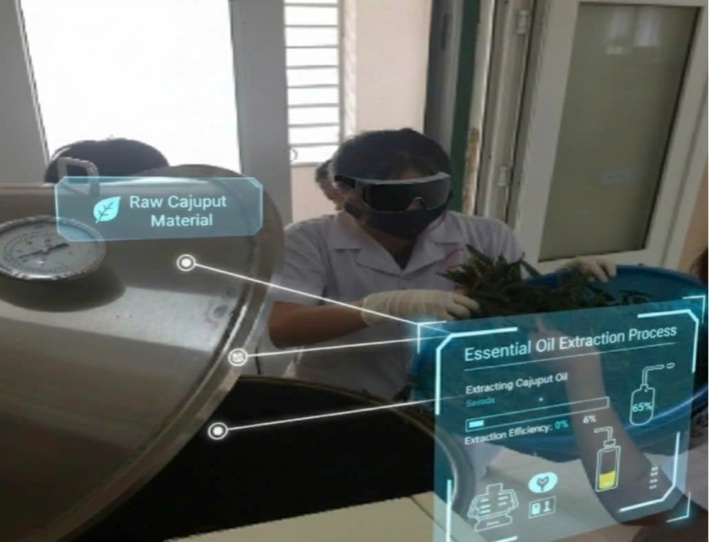
To address these barriers, the integration of Augmented Reality (AR) technology has emerged as a progressive educational trend 8, 9. AR is characterized by its ability to blend the real and virtual worlds in real-time, allowing digital information - such as 3D models and instructions - to be overlaid onto the physical environment 10. The seamless integration of the physical laboratory space with intuitive digital interfaces is specifically illustrated in Figure 1, which demonstrates a conceptual AR chemistry laboratory environment where abstract scientific data and interactive tools are accessible directly within the workspace. In such an environment, AR facilitates the visualization of 'invisible' concepts, such as molecular structures and reaction mechanisms, while providing a risk-free space for students to perform hazardous experiments without the use of physical chemicals 11.

Despite the well-documented efficacy of AR, a critical research gap remains. Most existing AR laboratory models 12, such as Labster or projects utilizing the Wikitude Software Development Kit (SDK), often focus on standalone applications or general instructional design models like Analysis, Design, Development, Implementation, and Evaluation (ADDIE) 13.
While the ADDIE model provides a fundamental instructional baseline, its generalized nature often overlooks the iterative technical and pedagogical calibration required for immersive technologies. Specifically, traditional models do not sufficiently account for the transition from conceptual scripting to 3D modeling and the dual-layer testing—comprising both technical alpha-testing and pedagogical beta-evaluation—that is essential for high-fidelity chemical simulations. Consequently, there is a clear need for a more specialized framework that bridges the gap between general instructional design and the specific professional requirements of teacher education.
In the Vietnamese context, initial research has primarily focused on testing specific experiments rather than establishing a standardized framework. Pre-service teachers require not only content knowledge but also the pedagogical skills to organize and manage technology-enhanced classrooms - a necessity that current literature has yet to fully address 14.
Consequently, the primary objective of this study is to bridge this gap by developing a systematic, five-step design framework for AR-enhanced chemistry laboratories specifically tailored for teacher training. This framework provides a standardized, logical, and feasible process ranging from initial needs analysis to pedagogical evaluation.
To guide the development and validation of this proposed framework, the research seeks to answer the following questions:
(1) What are the fundamental pedagogical and technical requirements for an effective AR laboratory in teacher education?
(2) How can a systematic framework be structured to ensure scientific accuracy and safety?
(3) To what extent does this framework enhance the practical competencies and safety awareness of pre-service chemistry teachers compared to traditional methods?
This study employs theoretical research methods to establish a robust scientific foundation for the proposed framework 15. Specifically, analytic and synthetic techniques were applied to review specialized literature on AR 16, 17, chemical education theories - particularly practical pedagogy - and existing instructional design models 18. This phase resulted in the definition of core concepts, the establishment of theoretical bases for AR integration, and the drafting of the initial design framework. Concurrently, a contextual needs survey was conducted at chemistry teacher education institutions using structured questionnaires. The goal was to collect quantitative data on the practical demand for AR applications and to assess the digital literacy and experiences of faculty and students regarding technological tools in practical training, ensuring the framework's relevance to the Vietnamese educational context.
Following the initial framework development, an expert consultation method was implemented to ensure academic rigor, pedagogical soundness, and feasibility. A purposive sample of experts was selected, comprising experienced chemistry professors in teacher training and leading specialists in educational technology and AR development. Consultations were conducted via questionnaires and semi-structured interviews, focusing on evaluating the appropriateness of design principles (e.g., pedagogical, safety, and interactivity principles), evaluation criteria (e.g., intuitiveness, usability, and scientific accuracy), and refining the detailed steps of the proposed process. Qualitative data from these experts were analyzed to iteratively refine the final design framework prior to field testing.
To evaluate the feasibility and educational efficacy of the standardized design framework, a pedagogical experiment was conducted through a structured three-stage process. First, in the Prototype Development stage, the proposed five-step framework was applied to design and develop a representative AR laboratory module focused on "Essential Oil Extraction" via steam distillation 19. This case study served as a functional prototype to validate the framework's design principles. Second, during the Implementation phase, the prototype was deployed with a cohort of third-year pre-service chemistry teachers selected through convenience sampling. The participants were divided into an experimental group, which utilized the AR-assisted laboratory environment, and a control group, which performed the same experiment using traditional laboratory methods. Finally, the Evaluation stage employed a mixed-methods approach to collect and analyze data. Quantitative instruments, including Likert-scale interest surveys, attitude scales, and pre- and post-tests on practical skills and theoretical knowledge, were combined with qualitative measures such as in-depth student interviews and systematic classroom observations of student-technology interactions. Statistical analyses were performed to identify significant differences between the two groups regarding learning performance, experimental proficiency, and user satisfaction, providing an empirical basis to confirm the framework's capacity to enhance the quality of practical chemistry teacher training.
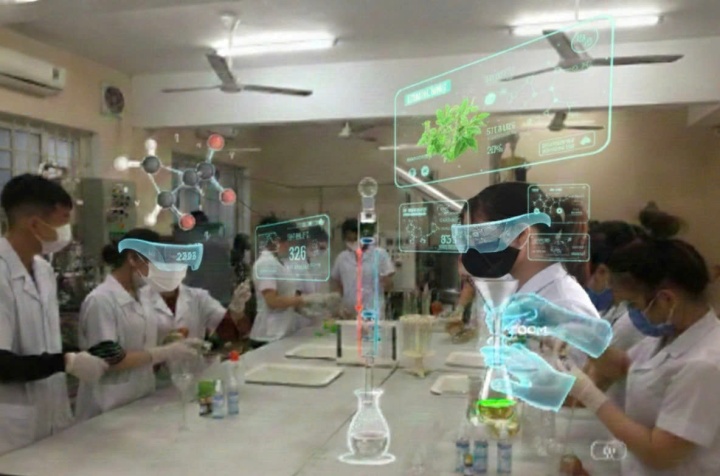
Based on the theoretical foundation and expert consultations, this study established a set of core design principles and specific criteria to ensure the efficacy and pedagogical integrity of the AR laboratory in pre-service chemistry teacher education. These principles include: (1) Domain-specific Pedagogy, ensuring that AR content aligns with teacher training objectives and facilitates the visualization of abstract chemical concepts; (2) High Interactivity, emphasizing that students must be able to manipulate virtual objects and receive instantaneous feedback to construct practical experience; (3) Safety and Cost-efficiency, highlighting AR’s primary advantages over traditional laboratories; and (4) Usability, ensuring an intuitive interface with minimal technical requirements so that students can focus on the learning content 20. The user interface (UI) within the AR environment not only supports virtual physical manipulations but also integrates a real-time safety alert system, enabling students to identify hazards immediately upon any procedural deviation (Figure 2).

In addition to the core principles, a comprehensive set of detailed design criteria was categorized into three primary groups (Table 1). For instance, within the Technical Criteria group, high fidelity is mandatory; 3D models must maintain a scientific accuracy with less than a 5% dimensional deviation from real-world lab equipment, and tracking stability must be ensured with a minimum frame rate of 30 FPS (frames per second) to prevent motion lag and user discomfort 21, 22.
The Pedagogical Criteria group focuses on the integration of error/safety warning functions and automated logging features to record and evaluate students’ procedural manipulations. Adherence to these rigorous principles and criteria is essential to ensure that the proposed design framework provides significant "added value" to the learning experience, distinguishing it from conventional, non-interactive simulation tools 23.
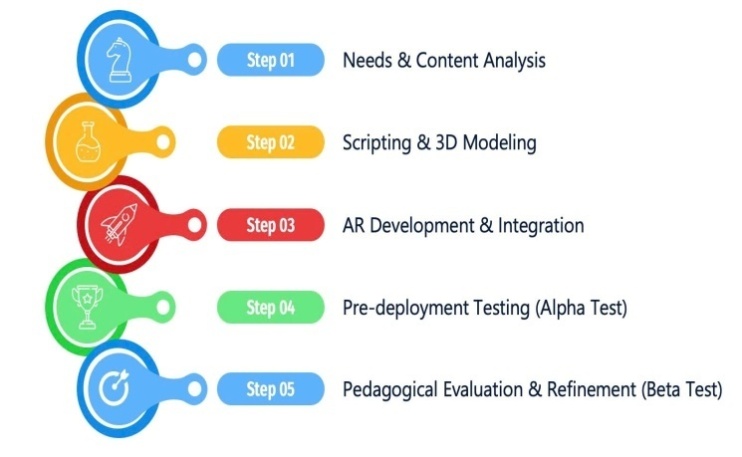
The study proposes a systematic, five-step design framework for AR chemistry laboratories 35, strictly adhering to the core principles and criteria outlined in Table 1. The detailed architecture of this framework - ranging from the initial needs analysis to pedagogical evaluation and iterative refinement - is schematically illustrated in Figure 3.

Step 1: Needs and Content Analysis
This foundational stage of the framework focuses on identifying specific training objectives, selecting the experimental content for simulation, and defining the technical requirements for the target users, specifically pre-service chemistry teachers. Within this initial phase, content selection transcends mere preference and is instead governed by three core criteria essential for an effective AR laboratory. First, the identification of cognitive barriers involves analyzing abstract concepts that students typically struggle to grasp in traditional settings 36; for instance, in the "Essential Oil Extraction" module, phase transitions and steam transport mechanisms represent "invisible" processes ideally suited for AR-enhanced graphical visualization. Second, a comprehensive risk and resource assessment is conducted to prioritize experiments characterized by high safety demands - such as those involving potential explosions or toxic chemicals - as well as those requiring prolonged durations or expensive equipment. Digitizing safety protocols via AR allows students to master standardized procedures in a risk-free environment prior to handling physical apparatus 37. Finally, through competency mapping, the framework defines the specific psychomotor skills and PCK targeted for development, which in this study focuses on optimizing the assembly of distillation systems and the precision of temperature control.
Step 2: Scripting and 3D Modeling
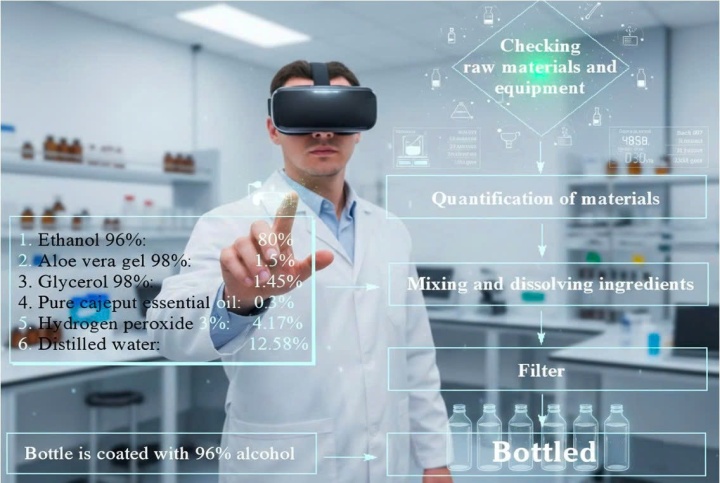
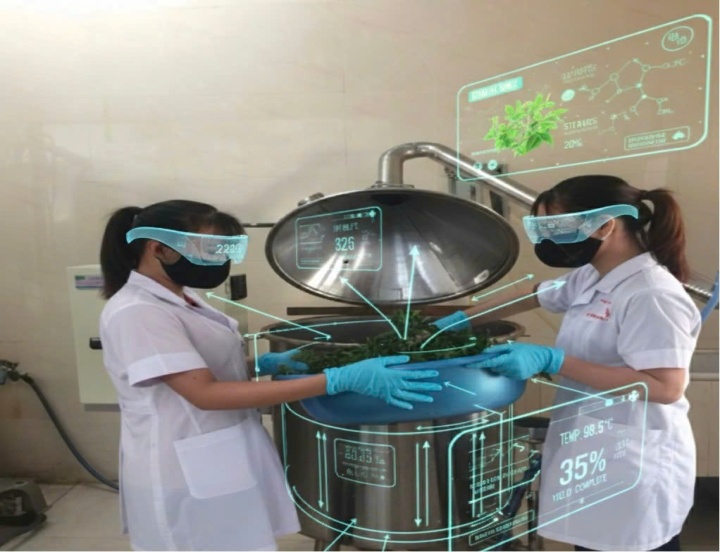
The second stage of the framework involves translating pedagogical objectives into an interactive digital environment, focusing on the synergy between scientific accuracy and user experience. This process begins with multilayered interaction scripting; rather than following a linear progression, the script is designed to provide real-time responses to student actions, such as pouring solutions, adjusting temperatures, or mixing reagents 38. Crucially, any procedural error triggers a corresponding pedagogical feedback or safety alert to reinforce correct laboratory practices. Simultaneously, the framework emphasizes scientific-grade 3D modeling, where laboratory apparatus (e.g., distillation flasks, condensers) and chemical reagents are rendered with a geometric deviation of less than 5% compared to their real-world counterparts. This high level of fidelity ensures that students develop spatial estimation skills equivalent to those required in a physical laboratory. Finally, the integration of scientific data overlays allows for the visualization of quantitative data (such as concentration, temperature, and pressure) and the simulation of "microscopic" chemical phenomena, including diffusion and phase transitions, directly onto the physical environment. These overlays are essential for helping pre-service teachers bridge the gap between observable phenomena and the underlying chemical principles (Figure 4).

Step 3: AR Technology Development and Integration
The third stage focuses on materializing the 3D models and interaction scripts into a functional digital environment optimized for mobile devices 39. This technical phase is subdivided into four critical components. First, development platform selection involves utilizing robust engines such as Unity in conjunction with specialized AR Software Development Kits (e.g., AR Foundation, Vuforia). These platforms ensure cross-device compatibility and high-performance rendering, maintaining a frame rate above 30 FPS to mitigate ocular fatigue. Second, the implementation of tracking and recognition mechanisms utilizes both marker-based and markerless AR algorithms to anchor virtual laboratory apparatus firmly within the physical workspace 40. Tracking stability is prioritized to minimize latency, ensuring that complex manipulations such as "pouring" or "assembling" feel intuitive and authentic. {i} Third, the integration of real-time feedback systems involves programming chemical simulation algorithms that calculate and immediately visualize phenomena - such as color changes, precipitation, or vaporization - in response to student inputs 41. Concurrently, quantitative data overlays for temperature and concentration are embedded to provide continuous analytical insights throughout the procedure. Finally, intelligent safety warning modules are integrated to monitor procedural compliance. These systems are designed to detect early-stage errors (e.g., heating a distillation flask without an attached condenser) and trigger immediate hazard alerts on the user's screen or wearable device, reinforcing safe laboratory practices through proactive digital intervention. {ii}
Step 4: Pre-deployment Testing (Alpha Phase)
Prior to large-scale implementation, the framework mandates a rigorous internal testing phase to ensure the AR application meets all technical standards and academic safety requirements. This stage begins with a technical stability audit, which involves debugging, cross-platform compatibility testing across various mobile devices, and assessing tracking stability under fluctuating laboratory lighting conditions. The primary goal is to maintain a consistent performance above 30 FPS to prevent any disruption in the user experience 42.
Simultaneously, the framework incorporates content accuracy validation, where a small panel of experienced chemistry faculty members interacts with the module to verify the fidelity of simulated phenomena - such as evaporation rates and color transitions - against established experimental benchmarks. During this phase, the geometric deviation of 3D apparatus is strictly monitored to remain below the 5% threshold 43. Furthermore, a preliminary usability assessment is conducted through rapid interviews and direct observations of a small target user group to evaluate interface intuitiveness and the efficacy of real-time safety alerts. Finally, the process concludes with a technical refinement loop, where data from the Alpha Test is used to immediately rectify any errors in virtual physical interactions - such as imprecise liquid pouring or data visualization discrepancies—ensuring the system is fully optimized for the subsequent pedagogical experiment (Beta Test).
Step 5: Pedagogical Evaluation and Refinement
The final stage of the framework consists of the formal pedagogical evaluation (Beta Test/Pedagogical Experiment) to assess learning outcomes and instructional efficacy. During this phase, comprehensive data collected from the implementation - as detailed bellow - are systematically analyzed to provide an empirical basis for final adjustments. These findings are used to iteratively refine the interaction scripts, 3D models, and the user interface. This critical step ensures that the design process is not merely a linear sequence but a continuous improvement loop, guaranteeing that the final AR laboratory module is both scientifically rigorous and pedagogically optimized for chemistry teacher education 44.
To evaluate the effectiveness of the proposed five-step AR framework, a pedagogical experiment was conducted at the Department of Chemistry, Vinh University (Vietnam) during the 2024-2025 academic year. The study involved a sample of 60 third-year pre-service chemistry teachers, who were randomly assigned into two equal groups: an experimental group (n = 30) and a control group (n = 30). The experimental group performed the "Essential Oil Extraction" experiment using the AR-assisted laboratory environment developed under the proposed framework, while the control group followed the traditional hands-on laboratory protocol. Both groups were assessed based on pre-test and post-test scores to measure improvements in psychomotor skills and safety awareness.
The implementation of the pedagogical experimentation, centered on the “Essential Oil Extraction” experiment, {iii} offered empirical evidence regarding the feasibility and efficacy of the proposed design framework. As illustrated in Figure 5, pre-service teachers performed the extraction protocol through an AR-assisted interface, which facilitated the standardization of technical procedures within a real-world laboratory environment.

Chemical Principles of Steam Distillation in AR Design
To ensure scientific accuracy within the AR module, the framework incorporates the fundamental principles of steam distillation. This process is governed by Dalton’s Law of Partial Pressures for immiscible liquid mixtures. In the AR simulation, students observe that the total vapor pressure ( ) is the sum of the vapor pressures of pure water (
 ) and the essential oil (
 ):
):
 |
The mixture boils when  equals the atmospheric pressure (1 atm). This allows the extraction of high-boiling-point compounds, such as Citral from lemongrass (Cymbopogon citratus), at temperatures slightly below 100°C, preventing thermal degradation of the essential oil. The AR interface visualizes these molecular interactions and phase equilibria, which are otherwise invisible in a traditional laboratory setting.
Experimental Materials and Simulation Authenticity Metrics
To ensure the scientific authenticity of the AR laboratory simulation, the extraction of essential oil from Lemongrass (Cymbopogon citratus) was selected as the primary case study. This plant material was chosen due to its distinct phase separation and the prevalence of Citral (a mixture of geranial and neral) as the major volatile component, which provides clear visual cues for students during the virtual distillation process.
The authenticity of the simulation was evaluated based on the following technical and pedagogical criteria:
Yield Efficiency and Real-time Calculation: The AR interface simulates the cumulative yield of essential oil based on the mass of the raw plant material entered by the user. The simulation uses a predetermined extraction efficiency rate (typically 1.5% - 2.0% for Cymbopogon citratus) to provide realistic output volume.
Physical Fidelity of Phase Separation: The simulation accurately represents the biphasic mixture in the Florentine flask, where the essential oil (lower density) forms a distinct upper layer above the hydrosol. Students must correctly identify this separation to complete the extraction protocol.
Thermal Control Precision: The system monitors virtual heating parameters. If the simulated temperature exceeds the safety threshold for heat-sensitive organic compounds, the AR module triggers a "Quality Degradation" warning, mimicking the real-world risk of thermal decomposition.
Vapor-Liquid Equilibrium (VLE) Visualization: To enhance conceptual understanding, the AR overlay provides a microscopic view of the steam-volatile oil interaction, governed by Dalton's Law, ensuring that the simulated boiling point remains below 100°C.
Safety Statement: While the AR framework presented in this study provides a high-fidelity simulation of essential oil extraction, it is designed to supplement, not replace, established laboratory safety protocols. The AR environment serves as a pedagogical tool to enhance hazard recognition and procedural familiarity before students engage with physical reagents and equipment. Users must continue to adhere to all standard safety practices, including the use of personal protective equipment (PPE), proper handling of heating sources, and compliance with institutional safety data sheets (SDS). The digital overlays are intended to reinforce, rather than substitute, the critical hands-on judgment required in a physical chemistry laboratory (see Appendix A in Supporting Information).
Quantitative data, derived from a validated practical skills assessment (100-point absolute scale; Cronbach’s = 0.82), revealed that the experimental group utilizing AR achieved a 15% higher improvement (equivalent to a mean score increase from 65/100 to 80/100) compared to the control group (p < 0.05). To ensure methodological rigor, the control group performed the same steam distillation protocol using traditional hands-on methods, with identical time allocation (90 minutes) and the same instructor to eliminate confounding variables. This significant increase confirms that the integration of scientific data overlays (as described in Figure 4) and the step-by-step guidance system enabled students to master complex procedures with greater precision than traditional methods.
Beyond psychomotor skills, students' chemical safety awareness also recorded a 10% enhancement (measured via a standardized safety rubric) following the use of the AR module. This result is closely linked to the error-warning system and real-time interaction illustrated in Figure 2, where students received immediate feedback on potential hazards when protocols were incorrectly executed. Furthermore, the ability to visualize abstract phenomena, such as phase transitions and diffusion processes governed by Dalton’s Law of Partial Pressures (Figure 6), provided students with a deeper understanding of the underlying chemical principles of the experiment. Although the sample size (n = 30 per group) was constrained by the specific enrollment of the pre-service teacher program, the effect sizes observed indicate a robust pedagogical utility for the proposed framework.

Qualitatively, students exhibited high levels of engagement and satisfaction, with an average score of 4.5/5.0 on a Likert scale. In semi-structured interviews, learners emphasized that the AR environment created a safe practice space, allowing them to repeat procedures involving volatile solvents multiple times without concerns regarding fire hazards or chemical costs. These positive qualitative insights, coupled with quantitative metrics, confirm that the proposed five-step design framework not only ensures scientific rigor but also significantly enhances the quality of practical training for pre-service chemistry teachers (see Appendix B in Supporting Information).
The primary advantages of the proposed design framework lie in its domain-specific pedagogy and high degree of standardization. Unlike previous studies that often focused on isolated AR application development, this framework emphasizes a systematic design approach specifically tailored for teacher education. It provides a robust, scalable workflow that can be adapted to various laboratory modules, ensuring both the quality and consistency of AR-enhanced content. Furthermore, the integration of a dedicated pedagogical evaluation and refinement phase ensures that the final AR assets remain closely aligned with the authentic needs of both instructors and learners 45.
However, certain limitations must be acknowledged. The most significant challenge remains the substantial investment of time and resources required for Step 2 (Modeling) and Step 3 (Development), which necessitate a development team with deep expertise in both chemical sciences and AR programming. Additionally, the precision of the tracking mechanisms remains susceptible to environmental factors, such as ambient lighting conditions and the hardware specifications of individual mobile cameras - a technical constraint that warrants further optimization in future research 46. Despite these challenges, the proposed framework represents a significant advancement in the development of pedagogically-driven AR laboratories for chemistry education.
This study successfully established and validated a systematic, five-step framework for designing AR laboratories specifically tailored for chemistry teacher education. The experimental implementation of the "Essential Oil Extraction" module demonstrates that AR technology transcends its role as a mere visual aid, serving instead as a robust, interactive pedagogical environment. Significant improvements in pre-service teachers' practical skills (a 15% increase) and safety awareness (a 10% increase) provide empirical evidence that integrating scientific data overlays and real-time feedback systems can effectively overcome the safety and cost constraints inherent in traditional laboratory training.
Regarding its contribution to the international chemical education community, this framework offers a highly reproducible model that enables educators and curriculum designers to transform complex chemical experiments into safe, yet scientifically rigorous, digital experiences. The research confirms that a structured design approach for AR applications fosters strong professional competencies in pre-service teachers and accelerates the modernization of chemistry instruction within the global digital transformation of education. Future research may extend this framework to diverse chemical domains and incorporate multi-user interactive features to further optimize collaborative learning environments.
Appendix A: Safety Guidelines for AR-Enhanced Chemistry Laboratory Modules (DOCX)
Appendix B: Assessment Rubric for AR-Enhanced Chemistry Laboratory Skills (DOCX)
The authors declare no competing financial interest.
{i}. https:// youtu.be/ g7impS5EhnI?si=2d_A3Kd4furHDBce
{ii}. https:// youtu.be/ NCzylC6plmg?si=uYYsBXa5XoPsldWz
{iii}. https:// youtu.be/ sz9-mZwtlBo?si=XB4jWxXweSfuyTyG
We would like to thank the School of Education - Vinh University for supporting us in this research.
Appendix A: Safety Guidelines for AR-Enhanced Chemistry Laboratory Modules
1. General Chemical Safety Protocols
• Personal Protective Equipment (PPE): Students must wear appropriate PPE, including lab coats, safety goggles, and gloves, even when interacting with AR interfaces in a laboratory setting.
• Physical Apparatus Handling: When the AR system is anchored to real-world glassware (e.g., a distillation flask), students must handle the equipment as if it contains active hazardous reagents.
• Emergency Awareness: Students must remain aware of their physical surroundings, including the locations of fire extinguishers, eye-wash stations, and emergency exits, which should not be obstructed by AR equipment.
2. AR-Specific Safety and Operational Rules
• Spatial Awareness: To prevent physical collisions or tripping, students must maintain a clear workspace. Do not move excessively while looking through a mobile screen or AR headset.
• Device Handling: Ensure that mobile devices or tablets are held with a secure grip or mounted on stable stands to prevent them from falling into chemical basins or heating sources.
• Ocular Health: Students are advised to take short breaks if they experience "motion sickness" or ocular fatigue due to prolonged AR interaction. The system is optimized at >30 FPS to minimize these effects.
3. Digital Safety Alerts and Procedural Compliance
Danh mục các cảnh báo mà hệ thống AR sẽ kích hoạt để rèn luyện tư duy an toàn cho sinh viên:
• Critical Missing Component Alert: The system triggers a high-priority warning if a heat source is activated before the cooling water in the condenser is turned on.
• Pressure and Temperature Violations: Real-time data overlays will flash red if the simulated internal pressure or temperature exceeds the safety thresholds for a standard glass apparatus.
• Incorrect Assembly Notification: Virtual physical interactions (e.g., connecting joints) must be completed correctly. Improper assembly will prevent the simulation from proceeding, simulating a "leakage" or "system failure."
4. Instructor Supervision
• The AR laboratory is a supplementary tool, not a replacement for instructor supervision.
• Instructors have access to the "Real-time Monitoring Dashboard" to identify students who repeatedly trigger safety alerts, allowing for immediate pedagogical intervention.
Appendix B: Assessment Rubric for AR-Enhanced Chemistry Laboratory Skills
|
Grading Formula
The final performance score is calculated using the weighted sum of all criteria:
|
Where:
• Scorei: The score assigned to the student for a specific criterion (typically on a scale of 1–3).
• Weighti: The relative importance of that criterion, expressed as a percentage (Percent) or decimal.
Pedagogical Interpretation
• Exemplary (2.5 – 3.0): The pre-service teacher demonstrates mastery of both chemical techniques and the ability to integrate AR technology into future teaching.
• Proficient (1.5 – 2.4): Possesses foundational skills but requires additional practice to achieve digital and manual fluency.
• Developing (< 1.5): Requires remediation in both digital literacy and core chemical principles.
Application of the Rubric: Case Study on Essential Oil Extraction
To evaluate the pedagogical effectiveness of the proposed AR framework, the rubric was applied during a steam distillation experiment for Cajuput essential oil. Below is the specific implementation of each criterion:
1. AR Interaction & Navigation (30%)
• Context: Students use AR glasses or mobile devices to identify and assemble virtual components of the distillation system (heating mantle, boiling flask, condenser).
• Assessment: Points are awarded based on how smoothly the student aligns the "virtual joints" of the glassware and interacts with the digital interface to start the heating process.
2. Chemical Technical Proficiency (30%)
• Context: The AR system displays real-time data overlays, such as the boiling point of the solvent and the distillation rate.
• Assessment: The instructor evaluates if the student maintains the optimal temperature (e.g., ensuring it does not exceed the threshold for oil degradation) by observing their interaction with the virtual control panel.
3. Safety & Risk Awareness (20%)
• Context: The "Essential Oil Extraction" module includes simulated hazards, such as high-pressure build-up if the cooling water is not turned on or the risk of flammable solvents (e.g., Ethanol).
• Assessment: If the student fails to activate the condenser's water flow, the AR system triggers a "RED ALERT". A score of "Exemplary" is given only if the student immediately corrects the error before a simulated "explosion" occurs.
4. Micro-Macro Connection (20%)
• Context: During extraction, the AR interface visualizes the microscopic process of essential oil molecules diffusing from the plant cells into the steam.
• Assessment: Students are asked to explain why increasing the steam temperature affects the diffusion rate, using the 3D molecular model as a visual aid.
Impact on Learning Outcomes
By using this structured assessment, the study found that pre-service teachers in the AR group:
• Improved practical skills by 15% because they could repeat the "virtual extraction" multiple times before touching real chemicals.
• Increased safety awareness by 10% due to the high-fidelity simulation of hazardous scenarios that are impossible to demonstrate in a traditional lab.
| [1] | Agouzoul, E. M., El Hammouchi, A., & Faik, T. (2025). Reflective training and its impact on developing professional competencies of pre-service teachers in Morocco’s regional centres for education and training professions. Journal of Pedagogy and Education Science, 4(03), 723-741. | ||
| In article | View Article | ||
| [2] | Khurshid, J., Khurshid, N., Ashraf, N., & Arshad, A. (2025). Examining the diverse sources influencing the development of pedagogical content knowledge (PCK) among educators in various educational settings. Advances in Educational Marketing, Administration, and Leadership, 31-40. | ||
| In article | View Article | ||
| [3] | Giac, C. C., Hang, N. T., & Giang, C. T. (2025). STEM education in natural science teaching to secondary school students: Case study of making a pH measuring pen in soil application of IoT technology. Journal of Chemical Education, 102(4), 1518-1528. | ||
| In article | View Article | ||
| [4] | Implementation Of A Two-Level Inquiry- And Project-Based Modular Approach to teaching a second-semester physical chemistry laboratory course. Journal of Chemical Education, 100(5), 1885-1894. | ||
| In article | View Article | ||
| [5] | Davletshina, T. A., & Cheremisinoff, N. P. (1998). Fire, explosion and chemical reactivity data for industrial chemicals. Fire and Explosion Hazards Handbook of Industrial Chemicals, 265-469. | ||
| In article | View Article | ||
| [6] | Wang, H., Chen, J., Liu, W., Wang, D., Song, Y., Hong, H., Wang, T., Anastas, P. T., & Zimmerman, J. B. (2026). Using machine learning for green substitution of industrial chemicals: Integrating functionality, hazard, and life cycle impact. Chemical Reviews, 126(2), 841-894. | ||
| In article | View Article PubMed | ||
| [7] | Pölloth, B., Schwarzer, S., & Zipse, H. (2019). Student individuality impacts use and benefits of an online video library for the organic chemistry laboratory. Journal of Chemical Education, 97(2), 328-337. | ||
| In article | View Article | ||
| [8] | Nandy, M., & Lalnunthari, (2025). Augmented reality (AR) and virtual reality (VR) for educational applications. A Study on Next-Generation Materials and Devices, 107-110. | ||
| In article | View Article | ||
| [9] | Huwer, J., & Seibert, J. (2018). A new way to discover the chemistry laboratory: The augmented reality laboratory-license. World Journal of Chemical Education, 6(3), 124-128. | ||
| In article | View Article | ||
| [10] | Gothandaraman, R., & Muthuswamy, S. (2021). Virtual models in 3D digital reconstruction: Detection and analysis of symmetry. Journal of Real-Time Image Processing, 18(6), 2301-2318. | ||
| In article | View Article | ||
| [11] | Abdinejad, M., Ferrag, C., Qorbani, H. S., & Dalili, S. (2021). Developing a simple and cost-effective Markerless augmented reality tool for chemistry education. Journal of Chemical Education, 98(5), 1783-1788. | ||
| In article | View Article | ||
| [12] | Zambri, M. A., & De Backere, J. R. (2023). A mobile device application for visualizing molecular symmetry and orbitals in augmented reality. Journal of Chemical Education, 101(2), 382-391. | ||
| In article | View Article | ||
| [13] | Rahman, M., & Duran, M. (2022). Deep learning in instructional analysis, design, development, implementation, and evaluation (ADDIE). Advances in Educational Technologies and Instructional Design, 126-141. | ||
| In article | View Article | ||
| [14] | Oztay, E. S., & Boz, Y. (2022). Interaction between pre-service chemistry teachers pedagogical content knowledge and content knowledge in electrochemistry. Journal of Pedagogical Research. | ||
| In article | View Article | ||
| [15] | Zhang, S., Zhou, C., & Zhao, J. (2023). Chinese pre-service chemistry teachers’ perception of augmented reality assisted secondary chemistry learning. Disciplinary and Interdisciplinary Science Education Research, 5(1). | ||
| In article | View Article | ||
| [16] | Hertel, J., Karaosmanoglu, S., Schmidt, S., Braker, J., Semmann, M., & Steinicke, F. (2021). A taxonomy of interaction techniques for immersive augmented reality based on an iterative literature review. IEEE International Symposium on Mixed and Augmented Reality (ISMAR), 431-440. | ||
| In article | View Article | ||
| [17] | Quinn, K., & Gabbard, J. L. (2024). Augmented reality visualization techniques for attention guidance to out-of-View objects: A systematic review. IEEE International Symposium on Mixed and Augmented Reality (ISMAR), 826-835. | ||
| In article | View Article | ||
| [18] | Zhunissova, S., Zhussupova, L., Abyzbekova, G., & Balykbayeva, G. (2025).A review of teaching experimental design in chemistry. Journal of Chemical Education, 102(9), 3817-3827. | ||
| In article | View Article | ||
| [19] | Cao, G. C., & Le, H. T. (2024). Organizing activities for chemistry pedagogy students to research and practice extracting cajeput essential oils from Melaleuca leaves using the CDIO approach. Vietnam Journal of Education, 121-137. | ||
| In article | View Article | ||
| [20] | Giac, C. C., Giang, C. T., Hoang, L. H., & Ngan, T. T. (2025). A study on teachers' acceptance of digital technology in Vietnamese secondary education: An assessment using the technology acceptance model. International Journal of Learning, Teaching and Educational Research, 24(2), 38-62. | ||
| In article | View Article | ||
| [21] | Grande, R., Albusac, J., Vallejo, D., Glez-Morcillo, C., & Castro-Schez, J. J. (2024). Performance evaluation and optimization of 3D models from low-cost 3D scanning technologies for virtual reality and Metaverse e-Commerce. Applied Sciences, 14(14), 6037. | ||
| In article | View Article | ||
| [22] | Darejeh, A., Chilcott, G., Oromiehie, E., & Mashayekh, S. (2025). Virtual reality and digital twins for mechanical engineering lab education: Applications in composite manufacturing. Education Sciences, 15(11), 1519. | ||
| In article | View Article | ||
| [23] | Czok, V., & Weitzel, H. (2025). Impact of augmented reality and game-based learning for science teaching: Lessons from pre-service teachers. Applied Sciences, 15(5), 2844. | ||
| In article | View Article | ||
| [24] | Miranto, C., Firmanda, A., Rante, H., Sukaridhoto, S., Agus Zainuddin, M., & Rahman, H. (2025). Performance analysis of 3D assets in virtual reality simulations for climate change: A case study in sustainable energy systems. Bulletin of Electrical Engineering and Informatics, 14(5), 3659-3670. | ||
| In article | View Article | ||
| [25] | Wirth, M., Gradl, S., Prosinger, G., Kluge, F., Roth, D., & Eskofier, B. M. (2021). The impact of avatar appearance, perspective and context on gait variability and user experience in virtual reality. IEEE Virtual Reality and 3D User Interfaces (VR), 326-335. | ||
| In article | View Article | ||
| [26] | Pladere, T., Apsitis, E., Abols, A., & Krumina, G. (2025). Development of approach for assessing visual performance and comfort in Multifocal augmented reality. Frontiers in Optics + Laser Science 2025 (FiO, LS), JW5A.23. | ||
| In article | View Article | ||
| [27] | Nurhadi, Saparudin, Adam, N., Purnamasari, D., Fachruddin, & Ibrahim, A. (2019). Implementation of object tracking augmented reality Markerless using FAST corner detection on user defined-extended target tracking in multivarious intensities. Journal of Physics: Conference Series, 1201(1), 012041. | ||
| In article | View Article | ||
| [28] | Black, D., & Salcudean, S. (2023). Robust object pose tracking for augmented reality guidance and Teleoperation. | ||
| In article | View Article | ||
| [29] | An, J., Poly, L., & Holme, T. A. (2019). Usability testing and the development of an augmented reality application for laboratory learning. Journal of Chemical Education, 97(1), 97-105. | ||
| In article | View Article | ||
| [30] | Bullock, M., Thoms, L., & Huwer, J. (2026). A closer look at how students use augmented reality to learn about a chemical reaction in the classroom. Journal of Chemical Education. | ||
| In article | View Article | ||
| [31] | Plunkett, K. N. (2019). A simple and practical method for incorporating augmented reality into the classroom and laboratory. Journal of Chemical Education, 96(11), 2628-2631. | ||
| In article | View Article | ||
| [32] | Vierhauser, M., Groher, I., Sauerwein, C., Antensteiner, T., & Hatmanstorfer, S. (2024). Learning analytics support in higher-education: Towards a multi-level shared learning analytics framework. Proceedings of the 16th International Conference on Computer Supported Education, 635-644. | ||
| In article | View Article | ||
| [33] | Maier, P., & Klinker, G. (2013). Augmented chemical reactions: An augmented reality tool to support chemistry teaching. 2nd Experiment@ International Conference (exp.at'13), 164-165. | ||
| In article | View Article | ||
| [34] | Qin, T., Cook, M., & Courtney, M. (2020). Exploring chemistry with wireless, PC-less portable virtual reality laboratories. Journal of Chemical Education, 98(2), 521-529. | ||
| In article | View Article | ||
| [35] | Akçayır, M., & Akçayır, G. (2017). Advantages and challenges associated with augmented reality for education: A systematic review of the literature. Educational Research Review, 20, 1-11. | ||
| In article | View Article | ||
| [36] | Chanlekha, H., & Niramitranon, J. (2018). Student performance prediction model for early-identification of at-risk students in traditional classroom settings. Proceedings of the 10th International Conference on Management of Digital EcoSystems, 239-245. | ||
| In article | View Article | ||
| [37] | Jones, A. (2021). Use of virtual reality for hazard safety training to reduce high risk and significant safety incidents and increase training engagement. Management for Professionals, 75-81. | ||
| In article | View Article | ||
| [38] | Williams, N. D., Gallardo-Williams, M. T., Griffith, E. H., & Bretz, S. L. (2021). Investigating meaningful learning in virtual reality organic chemistry laboratories. Journal of Chemical Education, 99(2), 1100-1105. | ||
| In article | View Article | ||
| [39] | Schmidt, R., & Stumpe, B. (2025). Systematic review of mobile augmented reality applications in geography education. Review of Education, 13(1). | ||
| In article | View Article | ||
| [40] | Chandrasekar, B. (2022). Application of augmented reality in TVET, a modern teaching-learning technology. Augmented Reality and Its Application. | ||
| In article | View Article | ||
| [41] | Mehta, K., & Singh, C. (2024). Digital learning environments—Constructing augmented and virtual reality in educational applications. Augmented Reality and Virtual Reality in Special Education, 1-31. | ||
| In article | View Article | ||
| [42] | Kandil, A., Al-Jumaah, B., & Doush, I. (2021). Enhancing user experience of interior design mobile augmented reality applications. Proceedings of the 5th International Conference on Computer-Human Interaction Research and Applications. | ||
| In article | View Article | ||
| [43] | Mojsoska, B., Pande, P., Moeller, M. E., Ramasamy, P., & Jepsen, P. M. (2024). Virtual reality in an eco-niche undergraduate organic chemistry laboratory course: New practice in chemistry lab teaching. Journal of Chemical Education, 101(11), 4686-4693. | ||
| In article | View Article | ||
| [44] | An, J., & Holme, T. A. (2021). Evaluation of augmented reality application usage and measuring students’ attitudes toward instrumentation. Journal of Chemical Education, 98(4), 1458-1464. | ||
| In article | View Article | ||
| [45] | Syskowski, S., Lathwesen, C., Kanbur, C., Siol, A., Eilks, I., & Huwer, J. (2024). Teaching with augmented reality using tablets, both as a tool and an object of learning. Journal of Chemical Education, 101(3), 892-902. | ||
| In article | View Article | ||
| [46] | Pratama, F. A., Jeckson Siahaan, & Nora Listantia (2025). Development of augmented reality (ar)-based learning media assisted by the Assemblr Edu application for molecular shape materials. Chemistry Education Practice, 8(2), 407-419. | ||
| In article | View Article | ||
Published with license by Science and Education Publishing, Copyright © 2026 Cao Thi Van Giang, Le Thi Thu Hiep and Cao Cu Giac
 This work is licensed under a Creative Commons Attribution 4.0 International License. To view a copy of this license, visit
http://creativecommons.org/licenses/by/4.0/
This work is licensed under a Creative Commons Attribution 4.0 International License. To view a copy of this license, visit
http://creativecommons.org/licenses/by/4.0/
| [1] | Agouzoul, E. M., El Hammouchi, A., & Faik, T. (2025). Reflective training and its impact on developing professional competencies of pre-service teachers in Morocco’s regional centres for education and training professions. Journal of Pedagogy and Education Science, 4(03), 723-741. | ||
| In article | View Article | ||
| [2] | Khurshid, J., Khurshid, N., Ashraf, N., & Arshad, A. (2025). Examining the diverse sources influencing the development of pedagogical content knowledge (PCK) among educators in various educational settings. Advances in Educational Marketing, Administration, and Leadership, 31-40. | ||
| In article | View Article | ||
| [3] | Giac, C. C., Hang, N. T., & Giang, C. T. (2025). STEM education in natural science teaching to secondary school students: Case study of making a pH measuring pen in soil application of IoT technology. Journal of Chemical Education, 102(4), 1518-1528. | ||
| In article | View Article | ||
| [4] | Implementation Of A Two-Level Inquiry- And Project-Based Modular Approach to teaching a second-semester physical chemistry laboratory course. Journal of Chemical Education, 100(5), 1885-1894. | ||
| In article | View Article | ||
| [5] | Davletshina, T. A., & Cheremisinoff, N. P. (1998). Fire, explosion and chemical reactivity data for industrial chemicals. Fire and Explosion Hazards Handbook of Industrial Chemicals, 265-469. | ||
| In article | View Article | ||
| [6] | Wang, H., Chen, J., Liu, W., Wang, D., Song, Y., Hong, H., Wang, T., Anastas, P. T., & Zimmerman, J. B. (2026). Using machine learning for green substitution of industrial chemicals: Integrating functionality, hazard, and life cycle impact. Chemical Reviews, 126(2), 841-894. | ||
| In article | View Article PubMed | ||
| [7] | Pölloth, B., Schwarzer, S., & Zipse, H. (2019). Student individuality impacts use and benefits of an online video library for the organic chemistry laboratory. Journal of Chemical Education, 97(2), 328-337. | ||
| In article | View Article | ||
| [8] | Nandy, M., & Lalnunthari, (2025). Augmented reality (AR) and virtual reality (VR) for educational applications. A Study on Next-Generation Materials and Devices, 107-110. | ||
| In article | View Article | ||
| [9] | Huwer, J., & Seibert, J. (2018). A new way to discover the chemistry laboratory: The augmented reality laboratory-license. World Journal of Chemical Education, 6(3), 124-128. | ||
| In article | View Article | ||
| [10] | Gothandaraman, R., & Muthuswamy, S. (2021). Virtual models in 3D digital reconstruction: Detection and analysis of symmetry. Journal of Real-Time Image Processing, 18(6), 2301-2318. | ||
| In article | View Article | ||
| [11] | Abdinejad, M., Ferrag, C., Qorbani, H. S., & Dalili, S. (2021). Developing a simple and cost-effective Markerless augmented reality tool for chemistry education. Journal of Chemical Education, 98(5), 1783-1788. | ||
| In article | View Article | ||
| [12] | Zambri, M. A., & De Backere, J. R. (2023). A mobile device application for visualizing molecular symmetry and orbitals in augmented reality. Journal of Chemical Education, 101(2), 382-391. | ||
| In article | View Article | ||
| [13] | Rahman, M., & Duran, M. (2022). Deep learning in instructional analysis, design, development, implementation, and evaluation (ADDIE). Advances in Educational Technologies and Instructional Design, 126-141. | ||
| In article | View Article | ||
| [14] | Oztay, E. S., & Boz, Y. (2022). Interaction between pre-service chemistry teachers pedagogical content knowledge and content knowledge in electrochemistry. Journal of Pedagogical Research. | ||
| In article | View Article | ||
| [15] | Zhang, S., Zhou, C., & Zhao, J. (2023). Chinese pre-service chemistry teachers’ perception of augmented reality assisted secondary chemistry learning. Disciplinary and Interdisciplinary Science Education Research, 5(1). | ||
| In article | View Article | ||
| [16] | Hertel, J., Karaosmanoglu, S., Schmidt, S., Braker, J., Semmann, M., & Steinicke, F. (2021). A taxonomy of interaction techniques for immersive augmented reality based on an iterative literature review. IEEE International Symposium on Mixed and Augmented Reality (ISMAR), 431-440. | ||
| In article | View Article | ||
| [17] | Quinn, K., & Gabbard, J. L. (2024). Augmented reality visualization techniques for attention guidance to out-of-View objects: A systematic review. IEEE International Symposium on Mixed and Augmented Reality (ISMAR), 826-835. | ||
| In article | View Article | ||
| [18] | Zhunissova, S., Zhussupova, L., Abyzbekova, G., & Balykbayeva, G. (2025).A review of teaching experimental design in chemistry. Journal of Chemical Education, 102(9), 3817-3827. | ||
| In article | View Article | ||
| [19] | Cao, G. C., & Le, H. T. (2024). Organizing activities for chemistry pedagogy students to research and practice extracting cajeput essential oils from Melaleuca leaves using the CDIO approach. Vietnam Journal of Education, 121-137. | ||
| In article | View Article | ||
| [20] | Giac, C. C., Giang, C. T., Hoang, L. H., & Ngan, T. T. (2025). A study on teachers' acceptance of digital technology in Vietnamese secondary education: An assessment using the technology acceptance model. International Journal of Learning, Teaching and Educational Research, 24(2), 38-62. | ||
| In article | View Article | ||
| [21] | Grande, R., Albusac, J., Vallejo, D., Glez-Morcillo, C., & Castro-Schez, J. J. (2024). Performance evaluation and optimization of 3D models from low-cost 3D scanning technologies for virtual reality and Metaverse e-Commerce. Applied Sciences, 14(14), 6037. | ||
| In article | View Article | ||
| [22] | Darejeh, A., Chilcott, G., Oromiehie, E., & Mashayekh, S. (2025). Virtual reality and digital twins for mechanical engineering lab education: Applications in composite manufacturing. Education Sciences, 15(11), 1519. | ||
| In article | View Article | ||
| [23] | Czok, V., & Weitzel, H. (2025). Impact of augmented reality and game-based learning for science teaching: Lessons from pre-service teachers. Applied Sciences, 15(5), 2844. | ||
| In article | View Article | ||
| [24] | Miranto, C., Firmanda, A., Rante, H., Sukaridhoto, S., Agus Zainuddin, M., & Rahman, H. (2025). Performance analysis of 3D assets in virtual reality simulations for climate change: A case study in sustainable energy systems. Bulletin of Electrical Engineering and Informatics, 14(5), 3659-3670. | ||
| In article | View Article | ||
| [25] | Wirth, M., Gradl, S., Prosinger, G., Kluge, F., Roth, D., & Eskofier, B. M. (2021). The impact of avatar appearance, perspective and context on gait variability and user experience in virtual reality. IEEE Virtual Reality and 3D User Interfaces (VR), 326-335. | ||
| In article | View Article | ||
| [26] | Pladere, T., Apsitis, E., Abols, A., & Krumina, G. (2025). Development of approach for assessing visual performance and comfort in Multifocal augmented reality. Frontiers in Optics + Laser Science 2025 (FiO, LS), JW5A.23. | ||
| In article | View Article | ||
| [27] | Nurhadi, Saparudin, Adam, N., Purnamasari, D., Fachruddin, & Ibrahim, A. (2019). Implementation of object tracking augmented reality Markerless using FAST corner detection on user defined-extended target tracking in multivarious intensities. Journal of Physics: Conference Series, 1201(1), 012041. | ||
| In article | View Article | ||
| [28] | Black, D., & Salcudean, S. (2023). Robust object pose tracking for augmented reality guidance and Teleoperation. | ||
| In article | View Article | ||
| [29] | An, J., Poly, L., & Holme, T. A. (2019). Usability testing and the development of an augmented reality application for laboratory learning. Journal of Chemical Education, 97(1), 97-105. | ||
| In article | View Article | ||
| [30] | Bullock, M., Thoms, L., & Huwer, J. (2026). A closer look at how students use augmented reality to learn about a chemical reaction in the classroom. Journal of Chemical Education. | ||
| In article | View Article | ||
| [31] | Plunkett, K. N. (2019). A simple and practical method for incorporating augmented reality into the classroom and laboratory. Journal of Chemical Education, 96(11), 2628-2631. | ||
| In article | View Article | ||
| [32] | Vierhauser, M., Groher, I., Sauerwein, C., Antensteiner, T., & Hatmanstorfer, S. (2024). Learning analytics support in higher-education: Towards a multi-level shared learning analytics framework. Proceedings of the 16th International Conference on Computer Supported Education, 635-644. | ||
| In article | View Article | ||
| [33] | Maier, P., & Klinker, G. (2013). Augmented chemical reactions: An augmented reality tool to support chemistry teaching. 2nd Experiment@ International Conference (exp.at'13), 164-165. | ||
| In article | View Article | ||
| [34] | Qin, T., Cook, M., & Courtney, M. (2020). Exploring chemistry with wireless, PC-less portable virtual reality laboratories. Journal of Chemical Education, 98(2), 521-529. | ||
| In article | View Article | ||
| [35] | Akçayır, M., & Akçayır, G. (2017). Advantages and challenges associated with augmented reality for education: A systematic review of the literature. Educational Research Review, 20, 1-11. | ||
| In article | View Article | ||
| [36] | Chanlekha, H., & Niramitranon, J. (2018). Student performance prediction model for early-identification of at-risk students in traditional classroom settings. Proceedings of the 10th International Conference on Management of Digital EcoSystems, 239-245. | ||
| In article | View Article | ||
| [37] | Jones, A. (2021). Use of virtual reality for hazard safety training to reduce high risk and significant safety incidents and increase training engagement. Management for Professionals, 75-81. | ||
| In article | View Article | ||
| [38] | Williams, N. D., Gallardo-Williams, M. T., Griffith, E. H., & Bretz, S. L. (2021). Investigating meaningful learning in virtual reality organic chemistry laboratories. Journal of Chemical Education, 99(2), 1100-1105. | ||
| In article | View Article | ||
| [39] | Schmidt, R., & Stumpe, B. (2025). Systematic review of mobile augmented reality applications in geography education. Review of Education, 13(1). | ||
| In article | View Article | ||
| [40] | Chandrasekar, B. (2022). Application of augmented reality in TVET, a modern teaching-learning technology. Augmented Reality and Its Application. | ||
| In article | View Article | ||
| [41] | Mehta, K., & Singh, C. (2024). Digital learning environments—Constructing augmented and virtual reality in educational applications. Augmented Reality and Virtual Reality in Special Education, 1-31. | ||
| In article | View Article | ||
| [42] | Kandil, A., Al-Jumaah, B., & Doush, I. (2021). Enhancing user experience of interior design mobile augmented reality applications. Proceedings of the 5th International Conference on Computer-Human Interaction Research and Applications. | ||
| In article | View Article | ||
| [43] | Mojsoska, B., Pande, P., Moeller, M. E., Ramasamy, P., & Jepsen, P. M. (2024). Virtual reality in an eco-niche undergraduate organic chemistry laboratory course: New practice in chemistry lab teaching. Journal of Chemical Education, 101(11), 4686-4693. | ||
| In article | View Article | ||
| [44] | An, J., & Holme, T. A. (2021). Evaluation of augmented reality application usage and measuring students’ attitudes toward instrumentation. Journal of Chemical Education, 98(4), 1458-1464. | ||
| In article | View Article | ||
| [45] | Syskowski, S., Lathwesen, C., Kanbur, C., Siol, A., Eilks, I., & Huwer, J. (2024). Teaching with augmented reality using tablets, both as a tool and an object of learning. Journal of Chemical Education, 101(3), 892-902. | ||
| In article | View Article | ||
| [46] | Pratama, F. A., Jeckson Siahaan, & Nora Listantia (2025). Development of augmented reality (ar)-based learning media assisted by the Assemblr Edu application for molecular shape materials. Chemistry Education Practice, 8(2), 407-419. | ||
| In article | View Article | ||