CQDs have emerged in recent years as a promising topic within nanotechnology due to their presumed high biocompatibility, low toxicity, and ability to absorb near-UV light. These properties make them attractive candidates for solar energy applications. In this contribution, we present the synthesis of CQDs via a simple bottom-up process using sucrose as a readily available and non-toxic precursor. Based on this material, we introduce the first CQD-based solar cell specifically designed for educational purposes. Our experiments enable learners not only to engage in the synthesis of nanomaterials, but also to explore their application by measuring solar cell key performance parameters such as open-circuit voltage and short-circuit current. Furthermore, the use of renewable carbon sources and environmentally benign synthesis conditions emphasizes the potential of CQDs as sustainable materials for green energy technologies.
In the context of the increasing demand for renewable energies, research focuses on the development of new types of solar cells. Besides established technologies such as silicon-based photovoltaics and emerging alternatives like organic and perovskite solar cells, quantum dot solar cells (QDSCs) have attracted considerable attention. From 2011 to 2023, the total efficiency of QDSCs could be increased from 4.4% to 19.1%, stimulating discussions on QDSCs as the “next big thing in photovoltaics”. 1 2 Despite these advancements, the use of heavy metal-based quantum dots (like CdSe 2) poses substantial risks to both human health and the environment. This has prompted growing interest in the search for safer, more sustainable alternatives.
Carbon Quantum Dots (CQDs), which have been the subject of intensive research for several years, represent a promising alternative to conventional quantum dots. Due to their frequent occurrence as byproducts of pyrolytic processes involving everyday organic materials, CQDs are assumed to exhibit low toxicity and high biocompatibility. 3 Owing to their optical properties – specifically, their ability to absorb light in the near-ultraviolet region – CQDs are suitable candidates for photovoltaic applications. Recent studies have demonstrated that the dye component in classical dye-sensitized solar cells (DSSCs) can be replaced with (more stable) CQDs. 4 5 The possibility of using waste-derived materials as precursors further enhances the sustainability and educational relevance of carbon quantum dot solar cells (CQD solar cells).
In this paper, we present for the first time a simplified assembly of a CQD solar cell tailored for use in high school and undergraduate chemistry education. Using a basic experimental setup, students can readily investigate the basic characteristics of the solar cell by measuring open circuit voltage (UOC) and short circuit current (ISC). Finally, this experiment encourages the comparison of different types of solar cells and promotes discussion on innovative functional materials for a sustainable energy future.
The following section outlines key properties of CQDs and the operating principle of a CQD solar cell.
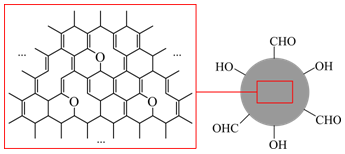
2.1. Carbon Quantum Dots (CQDs)CQDs are small carbon-based nanoparticles with a size of approx. 1-15 nm consisting of a partially graphitic core and polar surface-attached functional groups. In addition to carbon, CQDs commonly contain elements such as hydrogen, nitrogen, and sulfur. The degree of graphitization and the elemental composition of CQDs can be adjusted through variations in synthesis conditions, allowing for the tuning of their structural and optical properties. 3 CQDs can be synthesized via a bottom-up approach, in which small molecular precursors undergo chemical reactions to form larger nanoparticulate structures. One possible precursor for a bottom-up synthesis is sucrose, a non-toxic and readily available substance. Figure 1 shows a proposed structure of CQDs synthesized from sucrose. 5

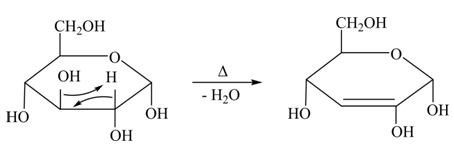
This process often involves the application of heat to induce condensation and dehydration reactions. As a result of the hydrolytic cleavage of sucrose into glucose and fructose [5-6] 5, the subsequent thermal degradation of these monosaccharides constitutes a key pathway in the overall thermal conversion of sucrose. 6 One plausible mechanistic step is the Maccoll elimination (Figure 2). 7

Elevated pressures – frequently applied in closed systems such as autoclaves – can further facilitate nanoparticle formation. 5
Carbon quantum dots (CQDs) are capable of absorbing near-ultraviolet (UV) light and subsequently emitting lower-energy light in the form of fluorescence. Typically, the emission characteristics of most molecular fluorophores are largely independent of the excitation wavelength. 8 In contrast, CQDs often display excitation-wavelength-dependent emission behavior, which is attributed to the presence of multiple electronic transitions, arising not only from the partially graphitic carbon core but also from surface-attached functional groups. Furthermore, due to the quantum confinement effect, the motion of charge carriers (electrons and holes) becomes spatially restricted in CQDs, leading to quantization of their energy states. 5
To investigate the extent of excitation-dependent fluorescence, emission spectra can be recorded at various excitation wavelengths. Such measurements provide insight into the structural and electronic heterogeneity of the particles: a narrow and well-defined emission peak suggests a homogeneous particle population, whereas broader emission bands are indicative of heterogeneity in particle size or in the distribution of electronic states. Further conclusions about electronic transitions can be drawn from UV-Vis measurements.
2.2. Working Principle of a CQD Solar CellOne possible application of CQDs is their integration into photovoltaic devices, several fabrication methods have been described in the literature. 4 Among these, a particularly accessible and educationally valuable approach is the adaptation of DSSC systems which have already been successfully implemented in chemistry education contexts. 9
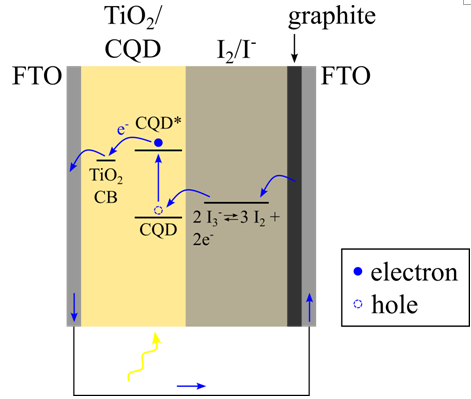
Figure 3 shows a schematic drawing of the structure and the operating principle of a CQD solar cell.

The photoelectrochemical processes in the CQD solar cell involve the following steps: Upon light absorption of the photoanode, electrons in the CQDs are promoted in a higher energetic state, resulting in the generation of positively charged holes. The photoexcited electrons are subsequently injected into the conduction band of TiO2. Regeneration of the CQDs is achieved by electron donation from the redox electrolyte, wherein triiodide ions (I3-) are oxidized to molecular iodine (I₂), releasing electrons as described in equation (1).
 (1)
(1)
These electrons subsequently pass through the external circuit to the counter electrode (cathode), where they reduce iodine to regenerate the triiodide ions (equation 2), thus closing the electrochemical cycle.
 (2)
(2)
CQDs are synthesized via a modified bottom-up method; their structure and photophysical properties have been well documented for sucrose-derived systems. 5
Equipment: beaker (50 mL), pipette, spatula, tripod with clamp, heating plate (with thermometer), silicone oil bath
Chemicals: water (demineralized), sucrose
Safety Instruction: Burn injuries may occur from contact with hot silicone oil; heat-protective gloves are recommended.
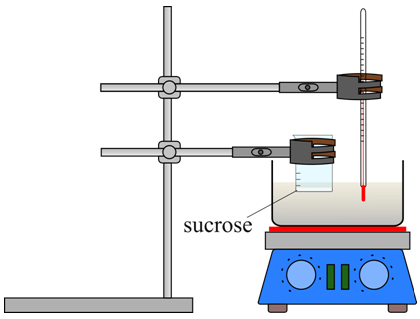
Procedure: The silicone oil bath is pre-heated to a temperature of approx. 250 °C. Subsequently, sucrose (4 g) is added to the beaker and placed in the hot oil bath for 6 minutes. After slight cooling, the solid residue is dissolved in 50 mL of demineralized water under continuous stirring to yield a dark-colored CQD solution. The experimental setup is illustrated in Figure 4.

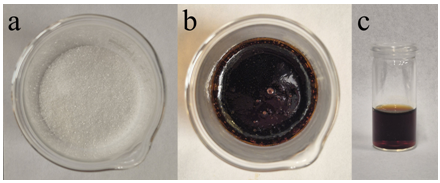
Observation: Upon heating, the initially white crystalline sucrose undergoes thermal conversion resulting in a dark-brown solid. The residue readily dissolves in water, forming a stable, dark-colored solution (Figure 5).

Interpretation: Sucrose undergoes dehydration and condensation reactions under high-temperature conditions (Figure 2) forming size-heterogeneous and partially graphitic CQDs. 5
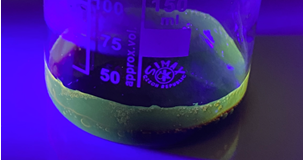
To demonstrate the successful formation of CQDs, the fluorescence of the dark-brown reaction residue can be examined under UV illumination (λ ≈ 400 nm, e.g., LunartecTM NC-5997-675). As shown in Figure 6, the residue exhibits a characteristic green fluorescence, consistent with photoluminescent properties of CQDs. 5
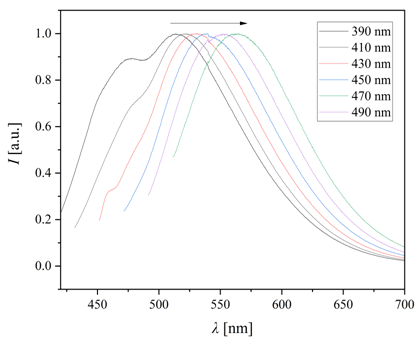
To further investigate the fluorescence properties, a fluorescence spectrum was recorded using a Jasco® FP8550 Spectrofluorometer. The resulting emission spectrum is shown in Figure 7.


The broad photoluminescence emission bands indicate the presence of carbonaceous nanostructures as well as emission maxima varying as a function of the excitation wavelength. 10 Furthermore, a heterogenous particle size distribution as well as the relevance of different electronic transitions in the graphitic core and the surface-attached functional groups can be assumed.
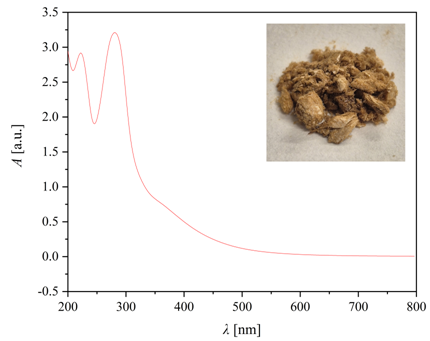
To further clarify the electronic transitions, the CQD solution from experiment 1 was purified via dialysis against demineralized water for 24 h using a membrane with a molecular weight cut-off (MWCO) of 3500 Da to separate molecular byproducts. 5 Subsequent freeze-drying of the dialyzed solution yields a soft, wood-like solid residue. Figure 8 displays the UV-Vis-absorption spectrum (recorded with a Jasco® V-750 Spectrophotometer) displaying absorption maxima of approx. 220 nm for a π → π* transition (C=C bond) and 280 nm for a n → π* transition (C=O bond). 5
3.2. Experiment 2: Assembly and Test of a CQD Solar CellA CQD solar cell is assembled using the solution from experiment 1. To simplify the setup process and adapt it for educational settings, purification by dialysis and freeze-drying can be left out. The method of solar cell assembly is described in 5 and 11.
Equipment: fluorine-doped tin oxide (FTO) glass slides (2 pieces, 3.0 cm x 3.5 cm each), adhesive tape, spatula, pipette, glass rod, snap-cap vial, microscope slide, ceramic heating plate, aluminum foil, hot air gun, pencil, multimeter, crocodile clamps (2x), connecting wires (2x), lamp.
Chemicals: CQD solution (see 3.1, Figure 5c), acetic acid solution (c = 10 mol L-1), water (demineralized), titanium(IV)-oxide nanopowder (anatase, e.g., Sigma Aldrich), Lugol’s solution [potassium iodide (GHS 08), iodine (GHS 07/08/09)], sodium thiosulfate
Safety Instruction: A diluted sodium thiosulfate solution should be kept ready for disposal of the Lugol's solution.
Procedure: Lugol’s solution is prepared by dissolving iodine (1 g) and potassium iodide (2 g) in demineralized water (4 mL), followed by dilution to a final volume of 300 mL. 12 The solution remains stable for several weeks when stored in a closed container.
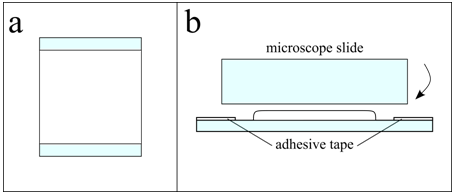
To prepare the photoanode, one FTO glass slide is masked on both narrow sides (ca. 0.5 cm) using adhesive tape. The conductive side of the slide can be identified by measuring its surface resistance (typically ~10–20 Ω) with a multimeter. One spatula of titanium(IV)-oxide is mixed with several drops of the acetic acid solution in a snap-cap vial until a low viscous, milky suspension is formed.
This suspension is applied to the FTO glass and spread into a thin, uniform film using a microscope slide, following the doctor-blade method (Figure 9).

After removing the adhesive tape, the slide is sintered on a ceramic hot plate at approximately 500 °C for 30 minutes. For uniform heat distribution, an aluminum foil cover can be placed over the heating surface. After cooling to room temperature, the titanium(IV)-oxide-coated slide is immersed in the CQD solution for approx. 15 minutes and subsequently dried with a hot air gun.
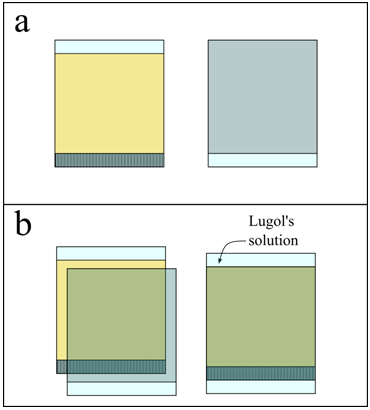
Figure 10 summarizes the assembly of the CQD solar cell. One narrow side of the sensitized slide is again masked with adhesive tape (Figure 10a). The second FTO glass slide is coated with a graphite layer using a pencil, leaving one narrow edge uncoated to ensure electrical contact (Figure 10a). This slide is placed onto the CQD-sensitized photoanode with the graphite-coated side facing downward, and both slides are fixed together using adhesive tape. Several drops of the Lugol’s solution are added to one edge of the assembly, allowing the electrolyte to infiltrate the space between the electrodes by capillary action (Figure 10b).


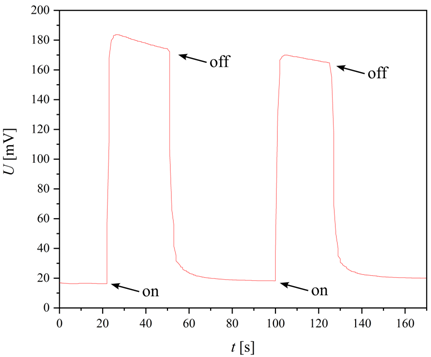
After assembling the solar cell, it is connected to the multimeter using connecting wires and crocodile clamps and covered with a black paper. Upon illumination with a lamp, open circuit voltage (UOC) and short circuit current (ISC) can be measured.
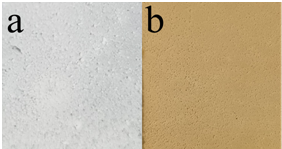
Observation: After immersion into the CQD solution and drying with the hot air gun, the titanium(IV)-oxide layer appears yellow-brownish (Figure 11).
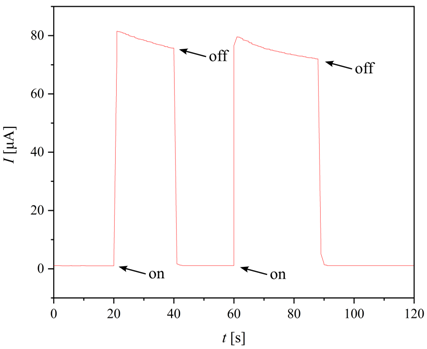
Upon illumination, the solar cell generates a measurable voltage and current. Figure 12 and 13 show time-resolved measurements of UOC and ISC values for an exemplary CQD solar cell, respectively. The values obtained can vary depending on variations in the TiO2 layer’s uniformity and structural integrity.


Interpretation: When illuminated with light, electrons in the CQDs are excited in a higher energetic state. These excited electrons can be injected into the conduction band of the TiO2 semiconductor and transferred to the counter electrode via the external circuit. As a result, the solar cell generates electrical power, which can be detected as voltage and current.
Following the experiment, the solar cell can be stored in a sealed container. Refreshing the device is possible by reintroducing fresh Lugol’s solution.
In recent years, CQDs have emerged as an innovative research topic within the field of nanoscience, with a wide range of potential applications in areas such as bioimaging, chemical sensing, and solar energy conversion. Due to their relatively simple synthesis and versatile functional properties, CQDs offer promising opportunities for integration into educational contexts – particularly when coupled with the construction of CQD-based solar cells. These aspects make them suitable for both high school education and introductory courses at undergraduate level.
The educational implementation of CQD solar cells can serve as a valuable extension of already established instructional models involving other solar cell types, such as perovskite-based or dye-sensitized solar cells (DSSCs), which have been adapted for use in classroom and undergraduate teaching. 13 14 15 By simplifying experimental setups, the fabrication and operation of CQD solar cells becomes feasible in educational contexts.
The close structural and functional parallels between CQD solar cells and classical DSSCs are particularly advantageous from an educational perspective allowing for a comparative analysis between the two concepts, thus fostering deeper conceptual understanding. Moreover, CQD-based solar cells can be considered a functional evolution of DSSCs, embedding similar electrochemical principles while introducing a novel, carbon-based photosensitizer.
The synthesis of CQDs – as outlined in experiment 1 – offers a low-threshold entry into nanotechnology. This process makes use of readily available, low-cost organic precursors such as sucrose, and can even incorporate waste materials, thereby enabling connections to topics such as sustainability, green chemistry and circular economy. The visible green fluorescence of CQDs under UV light serves as an engaging phenomenon that often stimulates student interest, as observed in pilot runs conducted at the XLAB student laboratory. For demonstration purposes, a simplified version of the synthesis, using a gas burner as heat source, may be sufficient to illustrate the formation and fluorescence properties of CQDs 16. However, the method described in experiment 1 and in the literature 5 appears to yield substantially higher amounts of CQDs, which is beneficial for their subsequent application in solar cell assembly.
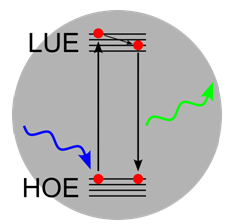
A simplified excitation-emission-model (Figure 14) of HOE (highest occupied energetic state) and LUE (lowest unoccupied energetic state) according to Tausch can be applied to explain the CQD’s fluorescence. 17 In this model, an excitation-dependent emission as well as the presence of different electronic transitions and particle sizes is neglected.
Electrons in the HOE of the CQDs are excited in the LUE when exposed to UV light. After non-radiative relaxation processes, lower energetic visible light is emitted. 7
This simplified excitation-emission-model provides a suitable framework for introducing the light-harvesting function of CQDs and their role as photosensitizers in the solar cell. By measuring voltage and current values in the dark and under illumination, the functionality of the solar cell can be easily demonstrated. To exemplify the practical use of photogenerated electrical energy, a capacitor with sufficient storage capacity may be charged over the course of several minutes.

In this article, we present first approaches on the implementation of CQD solar cells in chemistry education. The synthesis of CQDs is achieved through a straightforward bottom-up process using sucrose as a renewable precursor, providing an accessible entry point into nanotechnology. The green fluorescence of CQDs under UV light offers an engaging demonstration, which can be contextualized through discussions of the donor–acceptor mechanism. Subsequently, these CQDs are utilized in the assembly of a solar cell, which can be experimentally tested with a lamp and multimeter.
From an educational perspective, the operation principle of a CQD solar cell closely resembles that of dye-sensitized solar cells (DSSCs), thereby positioning CQD solar cells as an extension of existing educational solar cell models. As such, CQD solar cells serve as an effective and easily implementable experiment for high school and undergraduate chemistry courses that bridges the gap between current solar cell research and the application of innovative functional materials.
We thank Gina Berg for taking photos and conducting measurements.
| [1] | NREL Best Research-Cell Efficiency Chart. Available: https://www.nrel.gov/pv/cell-efficiency. [Accessed Apr. 15, 2025]. | ||
| In article | |||
| [2] | Kamat, P.V., "Quantum Dot Solar Cells. The Next Big Thing in Photovoltaics," The Journal of Physical Chemistry Letters, 4(6), February 2013. | ||
| In article | View Article PubMed | ||
| [3] | Haufe, H. and Böttcher, H., "Zwerge mit leuchtender Zukunft [Gnomes with Bright Future]," Chemie in unserer Zeit, 52(6), February 2018. | ||
| In article | View Article | ||
| [4] | Kim, A.; Dash, J.K.; Kumar, P. and Patel, R., "Carbon-Based Quantum Dots for Photovoltaic Devices: A Review," ACS Applied Electronic Materials, 4(1), December 2021. | ||
| In article | View Article | ||
| [5] | Tang, Q.; Zhu, W.; He, B. and Yang, P., "Rapid Conversion from Carbohydrates to Large-Scale Carbon Quantum Dots for All-Weather Solar Cells," ACS Nano, 11(2), February 2017. | ||
| In article | View Article PubMed | ||
| [6] | Nolasco, J. and De Massaguer, P. R., “Thermal Degradation Kinetics of Sucrose, Glucose and Fructose in Sugarcane Must for Bioethanol Production,” Journal of Food Processing Engineering, 29(5), September 2006. | ||
| In article | View Article | ||
| [7] | Easton, M.W.; Nash, J.J. and Kenttämaa, H.I., "Dehydration Pathways for Glucose and Cellobiose During Fast Pyrolysis," The Journal of Physical Chemistry A, 122(41), September 2018. | ||
| In article | View Article PubMed | ||
| [8] | Lakowicz, Joseph R., Principles of Fluorescence Spectroscopy, Springer, New York, 2006, 7. | ||
| In article | View Article | ||
| [9] | Chien, S.-I.; Su, C.; Chou, C.-C. and Li, W.-R., "Visual Observation and Practical Application of Dye Sensitized Solar Cells in High School Energy Education," Journal of Chemical Education, 95(7), May 2018. | ||
| In article | View Article | ||
| [10] | Elugoke, S. E.; Uwaya, G. E.; Quadri, T. W.; Ebenso, E. E., “Carbon Quantum Dots: Basics, Properties, and Fundamentals”, in Berdimurodov, E.; Verma, D. K.; Guo, L., Carbon Dots: Recent Developments and Future Perspectives, ACS Symposium Series, Washington DC, 2024, 6. | ||
| In article | View Article | ||
| [11] | Guo, X.; Zhang, H.; Sun, H.; Tade, M.O. and Wang, S., "Green Synthesis of Carbon Quantum Dots for Sensitized Solar Cells," ChemPhotoChem, 1(4), January 2017. | ||
| In article | View Article | ||
| [12] | Herstellen einer Iod-Kaliumiodid-Lösung (Lugol’sche Lösung) [Preparation of an iodine-potassium iodide solution (Lugol's solution)]. Available: https:// www.chemieunterricht.de/ dc2/ haus/nw1.htm. [Accessed Apr. 3, 2025]. | ||
| In article | |||
| [13] | Patwardhan, S.; Cao, D.H.; Hatch, S.; Farha, O.K.; Hupp, J.T.; Kanatzidis, M.G. and Schatz, G.C., "Introducing Perovskite Solar Cells to Undergraduates," The Journal of Physical Chemistry Letters, 6(2), January 2015. | ||
| In article | View Article PubMed | ||
| [14] | Cherrette, V.L.; Hutcherson, C.J.; Barnett, J.L. and So, M.C., "Fabrication and Characterization of Perovskite Solar Cells: An Integrated Laboratory Experience," Journal of Chemical Education, 95(4), January 2018. | ||
| In article | View Article | ||
| [15] | Smith, Y.R.; Crone, E. and Subramanian, V., "A Simple Photocell To Demonstrate Solar Energy Using Benign Household Ingredients," Journal of Chemical Education, 90(10), September 2013. | ||
| In article | View Article | ||
| [16] | Bogdan, E.; Waitz, T., “Fabrication of Carbon-containing Nanoparticles in Chemistry Class,” Chemkon, 32(5), January 2025. | ||
| In article | View Article | ||
| [17] | Tausch, M., Chemie mit Licht [Chemistry with Light], Springer, Berlin/Heidelberg, 2019. | ||
| In article | View Article | ||
Published with license by Science and Education Publishing, Copyright © 2025 Edwin Bogdan, Leo Weise and Thomas Waitz
 This work is licensed under a Creative Commons Attribution 4.0 International License. To view a copy of this license, visit
http://creativecommons.org/licenses/by/4.0/
This work is licensed under a Creative Commons Attribution 4.0 International License. To view a copy of this license, visit
http://creativecommons.org/licenses/by/4.0/
| [1] | NREL Best Research-Cell Efficiency Chart. Available: https://www.nrel.gov/pv/cell-efficiency. [Accessed Apr. 15, 2025]. | ||
| In article | |||
| [2] | Kamat, P.V., "Quantum Dot Solar Cells. The Next Big Thing in Photovoltaics," The Journal of Physical Chemistry Letters, 4(6), February 2013. | ||
| In article | View Article PubMed | ||
| [3] | Haufe, H. and Böttcher, H., "Zwerge mit leuchtender Zukunft [Gnomes with Bright Future]," Chemie in unserer Zeit, 52(6), February 2018. | ||
| In article | View Article | ||
| [4] | Kim, A.; Dash, J.K.; Kumar, P. and Patel, R., "Carbon-Based Quantum Dots for Photovoltaic Devices: A Review," ACS Applied Electronic Materials, 4(1), December 2021. | ||
| In article | View Article | ||
| [5] | Tang, Q.; Zhu, W.; He, B. and Yang, P., "Rapid Conversion from Carbohydrates to Large-Scale Carbon Quantum Dots for All-Weather Solar Cells," ACS Nano, 11(2), February 2017. | ||
| In article | View Article PubMed | ||
| [6] | Nolasco, J. and De Massaguer, P. R., “Thermal Degradation Kinetics of Sucrose, Glucose and Fructose in Sugarcane Must for Bioethanol Production,” Journal of Food Processing Engineering, 29(5), September 2006. | ||
| In article | View Article | ||
| [7] | Easton, M.W.; Nash, J.J. and Kenttämaa, H.I., "Dehydration Pathways for Glucose and Cellobiose During Fast Pyrolysis," The Journal of Physical Chemistry A, 122(41), September 2018. | ||
| In article | View Article PubMed | ||
| [8] | Lakowicz, Joseph R., Principles of Fluorescence Spectroscopy, Springer, New York, 2006, 7. | ||
| In article | View Article | ||
| [9] | Chien, S.-I.; Su, C.; Chou, C.-C. and Li, W.-R., "Visual Observation and Practical Application of Dye Sensitized Solar Cells in High School Energy Education," Journal of Chemical Education, 95(7), May 2018. | ||
| In article | View Article | ||
| [10] | Elugoke, S. E.; Uwaya, G. E.; Quadri, T. W.; Ebenso, E. E., “Carbon Quantum Dots: Basics, Properties, and Fundamentals”, in Berdimurodov, E.; Verma, D. K.; Guo, L., Carbon Dots: Recent Developments and Future Perspectives, ACS Symposium Series, Washington DC, 2024, 6. | ||
| In article | View Article | ||
| [11] | Guo, X.; Zhang, H.; Sun, H.; Tade, M.O. and Wang, S., "Green Synthesis of Carbon Quantum Dots for Sensitized Solar Cells," ChemPhotoChem, 1(4), January 2017. | ||
| In article | View Article | ||
| [12] | Herstellen einer Iod-Kaliumiodid-Lösung (Lugol’sche Lösung) [Preparation of an iodine-potassium iodide solution (Lugol's solution)]. Available: https:// www.chemieunterricht.de/ dc2/ haus/nw1.htm. [Accessed Apr. 3, 2025]. | ||
| In article | |||
| [13] | Patwardhan, S.; Cao, D.H.; Hatch, S.; Farha, O.K.; Hupp, J.T.; Kanatzidis, M.G. and Schatz, G.C., "Introducing Perovskite Solar Cells to Undergraduates," The Journal of Physical Chemistry Letters, 6(2), January 2015. | ||
| In article | View Article PubMed | ||
| [14] | Cherrette, V.L.; Hutcherson, C.J.; Barnett, J.L. and So, M.C., "Fabrication and Characterization of Perovskite Solar Cells: An Integrated Laboratory Experience," Journal of Chemical Education, 95(4), January 2018. | ||
| In article | View Article | ||
| [15] | Smith, Y.R.; Crone, E. and Subramanian, V., "A Simple Photocell To Demonstrate Solar Energy Using Benign Household Ingredients," Journal of Chemical Education, 90(10), September 2013. | ||
| In article | View Article | ||
| [16] | Bogdan, E.; Waitz, T., “Fabrication of Carbon-containing Nanoparticles in Chemistry Class,” Chemkon, 32(5), January 2025. | ||
| In article | View Article | ||
| [17] | Tausch, M., Chemie mit Licht [Chemistry with Light], Springer, Berlin/Heidelberg, 2019. | ||
| In article | View Article | ||