Today, there is much demand for stabilised foam globally. The primary concern for surfactant foam in enhanced oil recovery (EOR) is its foam stability. The applications of surfactant-nanoparticles mixture for foam stabilisation have been increased significantly because of the combined role of nanoparticles (NPs) and surfactant in the mechanism of foam stabilisation. This paper focuses on enhancing the aqueous foam stability by NPs and respective mechanisms of the aqueous foam stability. Nanoparticles have unique physical and chemical properties, so they alter the surface and rheological properties of the fluid system. It is the outcome of various research that nanoparticles adhere to the gas-liquid interface of the foam to improve foam stability. Therefore, NPs can enhance the stability of surfactant-stabilised foams. The use of nanoparticles increases foam stability, but its drawbacks cannot be ignored. Probable, the synthesis and production technique of nanoparticles is steeply-priced, which have to be made cheap using cutting-edge technology.
Foam consists of a gas phase dispersed in a continuous phase of liquid 1. Absolute pure liquids do not foam, and to create foaming, the presence of surface-active materials is compulsory 2. Foams are thermodynamically unstable, and they are stable by surface-active agents such as surfactants, proteins, polymers, or particles 3, 4. Surface properties and intermolecular forces play essential roles in foam stability. Surface-active agents stabilise the foam by decreasing the surface tension and modifying the interaction forces and rheological properties 5. The foam we get using surfactants is called surfactant foam. Surfactant foams have a significant contribution in various fields such as detergent preparation, the enhanced oil recovery process, personal care products, and other different technological processes 6, 7, 8. Enhancement of foam properties is required in many fields, and many methods can do it. The foam stability can be improved by different types of surfactants and mixtures of surfactants 9, 10, 11, 12, 13, 14, 15; polymers 16; salts 17, 18, 19; and nanoparticles 1, 14, 15, 20, 21, 22, 23. The stability of foam is the main challenge when it is used in the process of enhanced oil recovery (abbreviated EOR). EOR, also called tertiary recovery, is crude oil extraction from an oil field that cannot be extracted otherwise 24.
Researchers have also used different types of nanoparticles to stabilise foam. For example, aqueous foams are stabilised by partially hydrophobic fumed silica nanoparticles 25, 26, 27; alkyl polyglucoside phosphate foams are stabilised by zero-valent iron and iron oxide nanoparticles 20; foam stabilised by silica nanoparticles 1, 21, 25, 28; aqueous foam stabilised by hydrophobic SiO2 nanoparticles 29, 30; carbon dots stabilised foam 5; It is determined that the generation of foam process starts with surfactants, and the presence of the NPs in the solution cause better stabilisation of the foams 31.
Surface-active materials are classified into many kinds of surfactants based on their hydrophobic groups. The solution prepared by using surfactant is called surfactant solution 2. There are two essential factors of surfactant solutions-foamability and foam stability. Foamability means the foam generating power at the initial stage of foaming, and foam stability refers to the rate of foam decay. Foamability is explained as the easiness of foam generation, and on the other hand, foam stability refers to the time a foam film exists without bursting 32. Stable foam is desirable in some applications of liquid foam, e.g. hand dishwashing, shampoos, light-duty and heavy-duty detergents, in hydrology and petroleum engineering 4, 33, 34, 35. The most helpful way to stabilise foams is the introduction of surfactants. Increasing the surfactant concentration causes decreasing surface tension (ST) until it reaches a minimum value (STmin), which happens at the Critical Micellar Concentration (CMC). A smaller value of (STmin) is required because it shows better foaming stability potential of the surfactant. For example, a common surfactant, such as sodium dodecyl sulfate (SDS), exhibits a perfect lather, but the stability does not exceed several hours. This problem was solved by adding different surfactants, which produce better stable foam. Some recent research has shown that when combined with surfactants (ionic and/or cationic), solid particles provide high foamability and long-term foam stability 36.
Nanotechnology is a new technology for creating applicable matters, systems and devices, and new phenomena and properties at the nanoscale using nanosized materials 37. It significantly contributes to the electronics, biomedical, pharmaceutical, materials and manufacturing, aerospace, photography, and energy industries. In addition, nanotechnology can revolutionise many areas of the oil and gas industry, such as exploration, refining and distribution. For example, nanosensors may show better capabilities to provide accurate and detailed information about reservoirs. Specially fabricated nanoparticles might be utilised for scale inhibition. Structural nanomaterials could be used to develop much lighter and more reliable and long-lasting equipment for petroleum industries.
Other rising applications of nanotechnologies in the petroleum industry are new types of “smart fluids' for EOR and drilling. Nanofluids can be created by adding nanosized particles in the low volumetric fractions to a fluid. The NPs enhance the fluid properties, and their suspensions can produce various benefits. NPs perform better than their base material in many fields- like thermal, optical, mechanical, electrical, rheological and magnetic 35. When the particle size is reduced to the nanoscale, properties change as a function of the particle size. NPs have unique physical and chemical properties due to their dimensions. So, NPs can improve the properties of the fluid system, including viscosity, magnetism and interfacial tension (IFT) 13, 38.
Many studies demonstrated that the presence of nanoparticles increases foam stability for a longer time 27, 39, 40, 41. Most of the commonly used nanoparticles, such as calcium carbonate and silica, are known to be water-wet in the field of enhanced oil recovery fields 38, 42, 43. TiO2, CuO, modified carbon, and hydrophilic silica dioxide NPs were studied to improve oil recovery. It is demonstrated that increasing nanoparticle concentrations reduces oil drops' IFT and zeta potential but increases dilatational viscoelasticity 37. Many researchers have tried to stabilise the aqueous foam using different types of nanoparticles-e.g. silica, iron oxide, TiO2, CuO, SiO2, Al2O3, ZrO2, nickel, ZnO, clay, calcium carbonate, and carbon dots 24, 37.
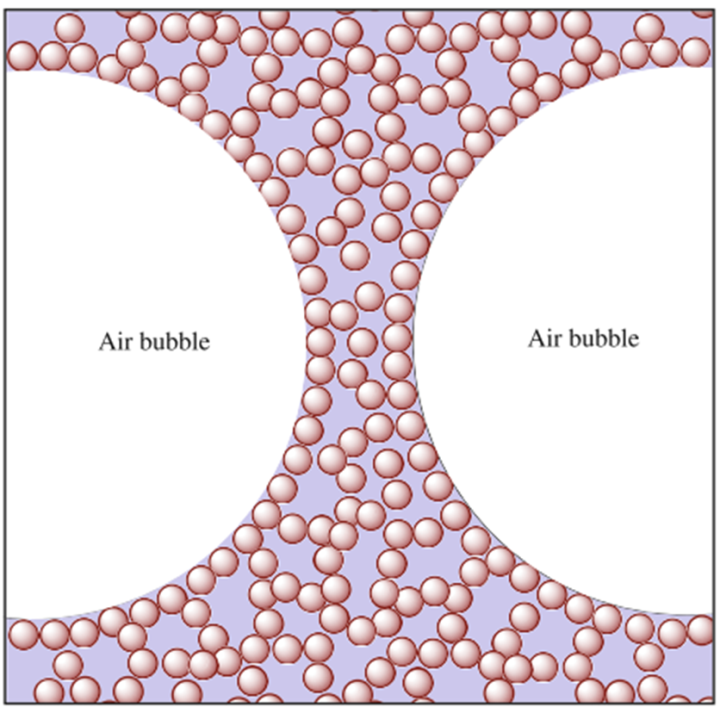
The destabilisation of foams is understood by following three mechanisms: drainage, coarsening and coalescence. Drainage is the gravity-driven removal of the liquid between bubbles, facilitating gas diffusion from smaller to bigger bubbles (coarsening) and the rupture of thin films separating neighbouring bubbles (coalescence). Surface active particles can fight all three destabilisation mechanisms simultaneously. Although the ability of particles to stabilise foams has been known for nearly one hundred years, the fundamental understanding of the stabilisation mechanisms of individual bubbles or entire foams is still incomplete 44. The presence of NPs enhances the foam stability by reducing the surface tension and supporting the particulate network in the void between bubbles 4, 29, 44, 45. Balancing the growth of bubbles and drainage of the liquid are two crucial factors responsible for the stability of the foam. In addition, NPs adsorbed irreversibly with surfactants at the interface and the plateau border of the foam (shown in Figure 1), responsible for the higher stability of the foam 4, 24, 44.

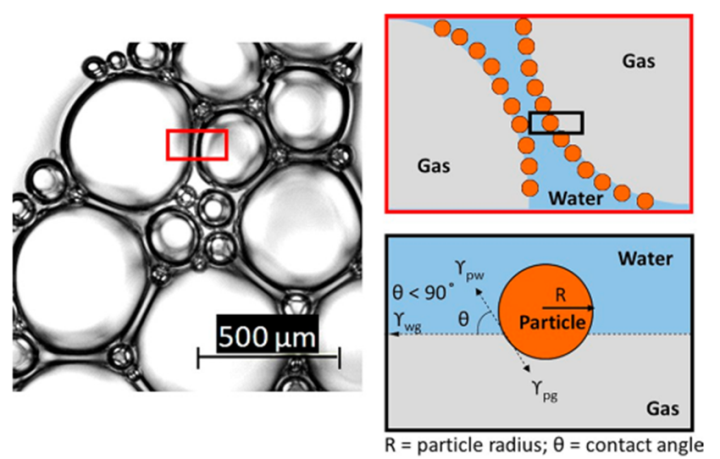
Several studies explain the effect of nanoparticles on foam stabilisation and the liquid films between foam bubbles. In brief, two essential mechanisms can be considered for foam stabilisation by nanoparticles. First, very high adhesion energy between nanoparticles and gas/liquid interface prevents particles deformation of bubbles, so nanoparticles stabilised foams show better stability than surfactant-stabilised foams. The high adsorption energy of the particle at the air-water interface is the essential ingredient in the particle-stabilised foams. Alien species are used as a stabiliser to absorb on the air-liquid interface to stabilise the liquid foams (usually aqueous foams) kinetically by reducing their surface energy. Surface energy can be approximated as Eads = πR2γW(1-cosθ)2, where R is the particle radius, γW the surface tension of the air-water interface and θ is the contact angle of the particle at the air-water interface measured through the water (shown in Figure 2). In stabilising the foam, the particles' adsorption on the bubbles' liquid-air interfaces is vital for the dynamic particle-foaming process. Primarily contact angle (θ), the surface properties of the absorbed particles, plays a vital role in the foam stability 29, 44.

Though the force balance at particle-laden air-water interfaces is not well understood, the optimal contact angle is known to be less than 90°. Consider a particle with a typical radius of 10 nm and a contact angle of 80°, and it would have adsorption energy of approximately 103 kBT (with kB being the Boltzmann constant and T is the absolute temperature), the three orders of magnitude of the energy are higher than that associated with surfactants. The more significant amount of the energy causes an irreversible attachment of the particles to the air-water interface and at the plateau border of the foam, producing solid-like surface layers which may restrain both coarsening and coalescence. On the contrary, particles with contact angles of 90° or higher have an anti-foaming capacity 4, 44. According to the second mechanism, the presence of NPs makes a monolayer in the liquid film between bubbles that hinders the film drainage 29, 31, 45. Several studies studied the thickness of lamella and drainage behaviour of the foam, which is generated from the solution having NPs and surfactant, by fluorescence microscopy. It illuminates the trapping of NPs in Plateau borders and lamellas, which hinder the liquid drainage and bubble coalescence 46.
Suleymani et al. 38 reported that inside a thin film of foam, the capillary pressure tries to rupture the thin film, which causes the decay of foam. Against this film's destruction, Interfacial interactions work as a barrier. Derjaguin, Landau, Vervey, and Overbeek (DLVO) developed a theory to determine interfacial interactions. According to this theory, when two charged spheres are separated by distance h, they experience both van der Waals (attractive force) and double layer (repulsive force) interactions. It was found that, generally, foam stability was noticeably enhanced in the presence of nanoparticles. Furthermore, the adsorption of nanoparticles increases the resistance of the interface against mass transfer, which causes reduces the effective diffusion coefficient of the system, which leads to foam stability improvement in both bulk and porous media 47.
Dehdari et al. 24 used six different nanoparticles (SiO2; Al2O3; ZrO2; TiO2; Fe2O3; NiO) in their study and reported that increasing the concentration of nanoparticles up to the optimal concentration (> 0.06 wt%) increased their adsorption at the interface, which resist gas diffusion into the lamella. The nanoparticles formed a second surfactant-nanoparticle layer and configured themselves uniformly inside the thin film of liquid. Due to the nanoparticle mass growth and cork formation, the rate of liquid outflow from lamella was reduced. So, by increasing the concentration of nanoparticles, the foam stability increased, and the cohesion rate between the bubbles decreased. The highest level of foam stability was obtained with Al2O3 nanoparticles, which were due to their low ionisation potential, low electronegativity, and high density. Besides, Al2O3 nanoparticles help to prevent liquid drainage from lamella.
Karthick and Chattopadhyay 21 reported that the foam stability of aqueous alkylpolyglucoside phosphate (APG-Ph) surfactant solutions increases with the addition of Fe3O4 or Fe0 nanoparticles significantly. At 0.1 vol % concentration of surfactant, for Fe0 and Fe3O4, the foam stability was enhanced by 54% and 42% due to Fe0 and Fe3O4, respectively. It is found that the nature and concentration of nanoparticles have significant effects on foam stability which shows concurrence with the existing literature.
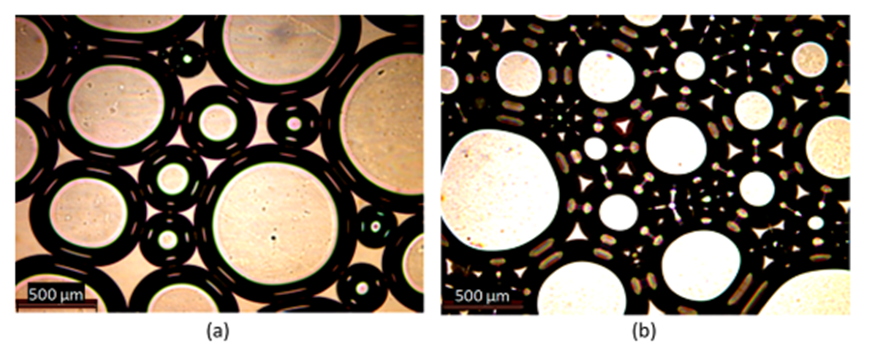
Sakthivel et al. 45 obtained confocal microscopy images (shown in Figure 3) of the foam structure containing carbon nanoparticles (CND). They concluded that the enhancement of foam stability is due to the presence of carbon particles responsible for increasing the thickness of the lamellae, decreasing the drainage rate of lamellae and delaying the bubble rupture point. Slower the film thinning process, NPs help increase the fluid's surface tension when added to the foaming fluid. Microscopic studies of different foam systems show the arrangement of nanoparticles in the gas-liquid interface, which causes an increase in the lamellae thickness.

Foams are widely used in ore flotation, food manufacturing, cosmetic formulations, and personal care products 48. Foam stability has greater importance in many applications such as hydraulic fracturing, acidising, environment, aquifer remediation, and water production control. Foam is also being used extensively in the field of EOR. EOR methods are used to recover trapped oil in place. Using foams improves the oil sweep efficiency by decreasing the gas mobility via reducing the gas's relative permeability and increasing the effective viscosity 24. However, the drawback is that the stability of the foam is affected when the foam comes into contact with the oil. Further, under harsh reservoir conditions, such as high temperature and high salinity, the process faces limitations caused by the destabilisation of foams. Several solutions have been proposed to address this issue, one of which is nanoparticles to stabilise the foam. Some studies suggested that surfactant solutions with NPs as nanofluids improve oil recovery in EOR operations. These nano-fluids cause the release of oil drops which are trapped in the thin throats and microchannel of the reservoir rock. The reason for this phenomenon is that the combination of surfactants and NPs changes some parameters such as wettability, the viscosity of the injected fluid, spontaneous emulsion formation, changing IFT between the fluids and the rocks, rheological properties and relative permeability, which favours greater EOR efficiency 12, 15, 37, 38, 42, 45, 46, 49, 50, 51, 52, 53, 54, 55, 56.
Suleymani et al. 38 evaluated the behaviours of cationic surfactant (HTAB) foam in the presence of CaCO3 nanoparticles with different hydrophobicity. A series of long-chain fatty acids were used to treat CaCO3 nanoparticles to generate a range of wettability. The effect of increasing nanoparticle hydrophobicity was also observed, and it was found that effective diffusion coefficient, solubility, and IFT were reduced, indicating higher foam stability. The experimental results attributed a general guideline for understanding the role of influencing parameters ((effective diffusion coefficient, Henry's constant, IFT, and zeta potential of nanoparticles). The reduction of effective diffusion coefficient, Henry's constant, IFT with increasing the nanoparticles wettability enhances foam stability. At the same time, the reduction of the zeta potential of nanoparticles tends to decrease the total disjoining pressure between air bubbles, which may be the reason for lower foam stability. The foam stability experiments were performed with 0.1 wt% unmodified/modified CaCO3 dispersed in 0.07 wt% HTAB (0.1 wt% NaCl) solution, and a half-life time was found. It is reported that the Foam half-life of the HTAB solution is enhanced by almost 50 % in the presence of nanoparticles compared to the HTAB solution in the absence of nanoparticles.
Suleimanov et al. 52 reported that the presence of nanoparticles changes the rheological properties of surfactant solution. Nanoparticle addition modifies the flow character from Newtonian to non-Newtonian (pseudoplastic). With added Nano-particles viscosity of the aqueous surfactant solution became twice as higher as the minimal Newtonian viscosity of aqueous surfactant solution. The addition of NPs in sulphanole (anionic surfactant-alkyl aryl sodium sulphonate) increases the stability and reduces the surface tension of the fluid.
Singh and Mohanty 46 investigated the synergistic effects of silica nanoparticles and anionic surfactants on foam stability. The synergistic effect of nanoparticles and surfactants was observed, and foam performance was also evaluated. The addition of NPs at a low concentration (0.3%) enhances the foam stability. The foam heights almost remained the same for greater than four days. Static foam tests were conducted with NPs dispersed in 0.5 wt% surfactants at 0.1-0.5 wt%. The foam decay was compared with that of 0.5 wt% surfactants alone. When the concentration of NPs was increased to 0.1 wt%, the half-life increased to 68 h.
Fereidooni and Azizian 57 studied the effect of ZnO nanoparticles on the dynamic (IFT) and equilibrium interfacial tension (IFT) in the presence of the cationic surfactant hexadecyltrimethylammonium bromidecationic surfactant CTAB. It is observed that the presence of CTAB and nanoparticles show a synergistic effect which leads to decreases in the interfacial tension, and the mixed diffusion kinetic controlled model controls the adsorption mechanism of the surfactant to the interface. Adsorption of CTAB on the surface of nanoparticles changes the surface of ZnO from a hydrophilic to a hydrophobic surface. As a result, nanoparticles increase the rate of decreasing interfacial tension.
Rattanaudom et al. 30 used a dispersed solution prepared by the mixed C15-18 IOS system at a surfactant concentration above CMC (0.015 wt. %). The concentrations of the SiO2-NP added varied from 0 ppm to 1000 ppm. It is reported that foam stability improved significantly at higher concentrations of the SiO2-NP. The system, mixed C15-18IOS formulation improved with 100ppm and 500ppm of SiO2-NP showed four times better foam stability than that of the mixed C15-18 IOS system alone.
Sakthivel et al. 45 examined the foam stability of foams formed with the addition of carbon nanoparticles (or nanodots) ranging from 5 to 500 ppm and different types of surfactants (anionic, cationic and nonionic). Foam stability improved by 70% and more than doubled the foam half-life for some foams due to the presence of the particles.
AlYousef et al. 58 studied three nonionic surfactants and silica NPs to enhance foam stability. It is reported that a balance in concentration between the nonionic surfactants and the NPs can enhance the foam stability due to forming of flocs in the solution. The combination of surfactant and NPs produces more stable foam than the surfactant. NPs provide a barrier between the gas bubbles and delay the coalescence of bubbles. Further, flocs increase the solution viscosity, which causes slowing the drainage rate of the lamellae. The authors confirmed the conclusion by measuring the foam half-life and bubble size. The longest foam half-life was reported at 0.50 and 0.75 wt% NPs, 28 and 29 hours, respectively. NPs' presence helps to produce smaller bubbles.
Li et al. 59 studied the synergistic effect of hydrophilic SiO2 nanoparticles and hexadecyltrimethylammonium bromide (CTAB) on foam stability. It was found that the synergistic effect requires a CTAB/SiO2 concentration ratio of 0.02-0.07, and 0.033 gives the concentration ratio. As a result, NPs adsorb on the gas-liquid interface and increase foam stability. The CTAB/SiO2 stabilises generated foam via three mechanisms: decreasing the coarsening of CO2 bubbles, improving interfacial properties, and reducing liquid discharge.
AlYousef et al. 60 studied the ability of anionic surfactant and a mixture of the surfactant and nanoparticles. The synergistic effect of surfactant and nanoparticles was seen. Furthermore, better foam stabilisation was seen as the concentration of nanoparticles increased.
Khajehpour et al. 31 studied the synergistic effect of nanoparticles and surfactants (an alkyl-benzene sulfonate and an olefin-sulfonate surfactant) (Surfactant A and Surfactant B, respectively) on foam generation. Synergy is shown by the system having 0.1-wt% nanoparticles and 0.05-wt% surfactant solution. On the contrary, insufficient or excess amounts of NPs would produce less foam.
When NPs are added to an aqueous surfactant solution, they increase the surface tension and viscosity of the solution. Hence, the foam stability also increases. The synergistic effect of surfactants and NPs can result in more substantial and stable foam. This foam can enhance the operations where higher foam stability is required. Therefore, NPs and surfactant stabilised foams can provide solutions to overcome the challenges faced by surfactant foam.
The use of nanoparticles is beneficial in terms of increasing foam stability, but its drawbacks cannot be turned away. The cost of NPs is an important issue that needs to be looked into at the start of every new project. The synthesis and production process of nanoparticles is possibly expensive, which should be made cheap using state-of-the-art technology. Apart from this, nanotechnology is a comparatively new technology, so there is a need to do more experiments in foam and surfactant science so that nanotechnology and nanoparticles can be used in an even better way to increase foam stability. The synergistic effect of NPs and surfactants for foam stabilisation is still poorly understood. It is still in its introductory stage, so more investigations are needed to understand it properly. Numerical and simulation investigations need more attention to understand nanoparticle-stabilised foams' theory.
| [1] | Simjoo, M., Rezaei, T., Andrianov, A., & Zitha, P. L. J. (2013). Foam stability in the presence of oil: Effect of surfactant concentration and oil type. Colloids and Surfaces A: Physicochemical and Engineering Aspects, 438, 148-158. | ||
| In article | View Article | ||
| [2] | Sakai, T. and Kaneko, Y., 2004. The effect of some foam boosters on the foamability and foam stability of anionic systems. Journal of Surfactants and Detergents, 7(3), pp.291-295. | ||
| In article | View Article | ||
| [3] | Belhaij A, Mahdy OA (2015) Foamability and Foam Stability of Several Surfactants Solutions: The Role of Screening and Flooding. J Pet Environ Biotechnol 6: 227. | ||
| In article | View Article | ||
| [4] | Cui, H., Zhao, Y., Ren, W., Liu, Y. and Wang, M., 2013. Aqueous foams stabilised solely by CoOOH nanoparticles and the resulting construction of hierarchically hollow structure. Journal of Nanoparticle Research, 15(8). | ||
| In article | View Article | ||
| [5] | Sakthivel, S., Adebayo, A., & Kanj, M. Y. (2019). Experimental Evaluation of Carbon Dots Stabilized Foam for Enhanced Oil Recovery. Energy and Fuels, 33(10), 9629-9643. | ||
| In article | View Article | ||
| [6] | Amaral, M. H., Das Neves, J., Oliveira, M., & Bahia, M. F. (2008). Foamability of detergent solutions prepared with different types of surfactants and waters. Journal of Surfactants and Detergents, 11(4), 275-278. | ||
| In article | View Article | ||
| [7] | Petkova, B., Tcholakova, S., Chenkova, M., Golemanov, K., Denkov, N., Thorley, D. and Stoyanov, S., 2020. Foamability of aqueous solutions: Role of surfactant type and concentration. Advances in Colloid and Interface Science, 276, p.102084. | ||
| In article | View Article PubMed | ||
| [8] | Chowdiah, P., 1998. Foam propagation through soils for enhanced in-situ remediation. Journal of Hazardous Materials, 62(3), pp.265-280. | ||
| In article | View Article | ||
| [9] | Angarska, J. K., Ivanova, D. S., & Manev, E. D. (2015). Drainage of foam films stabilised by nonionic, ionic surfactants and their mixtures. Colloids and Surfaces A: Physicochemical and Engineering Aspects, 481, 87-99. | ||
| In article | View Article | ||
| [10] | Carey, E., & Stubenrauch, C. (2013). Free drainage of aqueous foams stabilised by mixtures of a nonionic (C 12 DMPO) and anionic (C 12 TAB) surfactant. Colloids and Surfaces A: Physicochemical and Engineering Aspects, 419, pp.7-14. | ||
| In article | View Article | ||
| [11] | Elhag, A. S., Da, C., Chen, Y., Mukherjee, N., Noguera, J. A., Alzobaidi, S., Reddy, P. P., AlSumaiti, A. M., Hirasaki, G. J., Biswal, S. L., Nguyen, Q. P., & Johnston, K. P. (2018). Viscoelastic diamine surfactant for stable carbon dioxide/water foams over a wide range in salinity and temperature. Journal of Colloid and Interface Science, 522, 151-162. | ||
| In article | View Article PubMed | ||
| [12] | Ramadhan, G., Hirasaki, G., & Nguyen, Q. P. (2018). Foaming behaviour of CO2-soluble, viscoelastic surfactant in homogenous porous media. Proceedings - SPE Symposium on Improved Oil Recovery, 2018-April. | ||
| In article | View Article | ||
| [13] | Olayiwola, S. O., & Dejam, M. (2019). A comprehensive review on interaction of nanoparticles with low salinity water and surfactant for enhanced oil recovery in sandstone and carbonate reservoirs. Fuel, 241(October 2018), 1045-1057. | ||
| In article | View Article | ||
| [14] | Stocco, A., Garcia-Moreno, F., Manke, I., Banhart, J., & Langevin, D. (2011). Particle-stabilised foams: Structure and ageing. Soft Matter, 7(2), 631-637. | ||
| In article | View Article | ||
| [15] | Razavi, S., Shahmardan, M., Nazari, M. and Norouzi, M., 2020. Experimental study of the effects of surfactant material and hydrocarbon agent on foam stability with the approach of enhanced oil recovery. Colloids and Surfaces A: Physicochemical and Engineering Aspects, 585, p.124047. | ||
| In article | View Article | ||
| [16] | Amirian, E., Dejam, M., & Chen, Z. (2018). Performance forecasting for polymer flooding in heavy oil reservoirs. Fuel, 216, 2018, 83-100. | ||
| In article | View Article | ||
| [17] | Saboorian-Jooybari, H., Dejam, M., & Chen, Z. (2016). Heavy oil polymer flooding from laboratory core floods to pilot tests and field applications:Half-century studies. Journal of Petroleum Science and Engineering, 142, 85-100. | ||
| In article | View Article | ||
| [18] | Rostami, P., Mehraban, M. F., Sharifi, M., Dejam, M., & Ayatollahi, S. (2019). Effect of water salinity on oil/brine interfacial behaviour during low salinity water flooding: A mechanistic study. Petroleum, 5(4), 367-374. | ||
| In article | View Article | ||
| [19] | Farajzadeh, R., Andrianov, A., Bruining, H., & Zitha, P. L. J. (2009). Comparative study of CO2 and N2 foams in porous media at low and high-pressure temperatures. Industrial and Engineering Chemistry Research, 48(9), 4542-4552. | ||
| In article | View Article | ||
| [20] | Karthick, R. and Chattopadhyay, P., 2017. Remediation of Diesel Contaminated Soil by Tween-20 Foam Stabilized by Silica Nanoparticles. International Journal of Chemical Engineering and Applications, 8(3), pp.194-198. | ||
| In article | View Article | ||
| [21] | Karthick, A., Roy, B., & Chattopadhyay, P. (2020). Comparison of zero-valent iron and iron-oxide nanoparticle stabilised alkyl polyglucoside phosphate foams for remediation of diesel contaminated soils Comparison of zero-valent iron and iron oxide nanoparticle stabilised alkyl polyglucoside phosphate foam. Journal of Environmental Management, 240(August), 93-107. | ||
| In article | View Article PubMed | ||
| [22] | Yekeen, N., Xin Kun, T., Al-Yaseri, A., Sagala, F. and Kamal Idris, A., 2021. Influence of critical parameters on nanoparticles-surfactant stabilised CO2 foam stability at sub-critical and supercritical conditions. Journal of Molecular Liquids, 338, p.116658. | ||
| In article | View Article | ||
| [23] | Li, S., Li, Z., & Wang, P. (2016). Experimental Study of the Stabilisation of CO2 Foam by Sodium Dodecyl Sulfate and Hydrophobic Nanoparticles. Industrial and Engineering Chemistry Research, 55(5), 1243-1253. | ||
| In article | View Article | ||
| [24] | Dehdari, B., Parsaei, R., Riazi, M., Rezaei, N., & Zendehboudi, S. (2020). New insight into foam stability enhancement mechanism, using polyvinyl alcohol (PVA) and nanoparticles. Journal of Molecular Liquids, 307, 112755. | ||
| In article | View Article | ||
| [25] | Chattopadhyay, P. and Karthick, R.A. (2017), Characterisation and Application of Surfactant Foams Produced from Ethanol-Sodium Lauryl Sulfate-Silica Nanoparticle Mixture for Soil Remediation. Macromol. Symp., 376: 1600182. | ||
| In article | View Article | ||
| [26] | Sun, Q., Li, Z., Wang, J., Li, S., Li, B., Jiang, L., Wang, H., Lü, Q., Zhang, C., & Liu, W. (2015). Aqueous foam stabilised by partially hydrophobic nanoparticles in the presence of surfactant. Colloids and Surfaces A: Physicochemical and Engineering Aspects, 471, 54-64. | ||
| In article | View Article | ||
| [27] | Choi, M., Choi, W., Jung, C. and Kim, S., 2020. The surface modification and characterisation of SiO2 nanoparticles for higher foam stability. Scientific Reports, 10(1). | ||
| In article | View Article PubMed | ||
| [28] | Binks, B. P., & Horozov, T. S. (2005). Aqueous foams stabilised solely by silica nanoparticles. Angewandte Chemie - International Edition, 44(24), 3722-3725. | ||
| In article | View Article PubMed | ||
| [29] | Stocco, A., Rio, E., Binks, B. and Langevin, D., 2013. Aqueous foams stabilised solely by particles. Soft Matter, 7(4), p.1260. | ||
| In article | View Article | ||
| [30] | Rattanaudom, P., Shiau, B. J., Suriyapraphadilok, U., & Charoensaeng, A. (2019). Aqueous foam Stabilised by Hydrophobic SiO2 Nanoparticles using Mixed Anionic Surfactant Systems under High-Salinity Brine Condition. Journal of Surfactants and Detergents, 22(5), 1247-1263. | ||
| In article | View Article | ||
| [31] | Khajehpour, M., Reza Etminan, S., Goldman, J.C., Wassmuth, F.R., & Bryant, S.L. (2018). Nanoparticles as Foam Stabilizer for Steam-Foam Process. SPE Journal. | ||
| In article | View Article | ||
| [32] | Boos, Julia, Wiebke Drenckhan, and Cosima Stubenrauch. 2012. Protocol for Studying Aqueous Foams Stabilised by Surfactant Mixtures. Journal of Surfactants and Detergents. | ||
| In article | View Article | ||
| [33] | Sheng, Y., Wu, X., Lu, S., & Li, C. (2016). Experimental Study on Foam Properties of Mixed Systems of Silicone and Hydrocarbon Surfactants. Journal of Surfactants and Detergents, 19(4), 823-831. | ||
| In article | View Article | ||
| [34] | Binks, B. P., Murakami, R., Armes, S. P., Fujii, S., & Schmid, A. (2007). pH-responsive aqueous foams stabilised by ionisable latex particles. Langmuir: the ACS journal of surfaces and colloids, 23(17), 8691-8694. | ||
| In article | View Article PubMed | ||
| [35] | Heydarian, A., Kharrat, R., Heydarian, S., & Hashemi, A. (2013). Impact of nanoparticles on static performance of surfactant foams. Journal of American Science, 9(6). | ||
| In article | |||
| [36] | Russo, M., Amara, Z., Fenneteau, J., Chaumont-Olive, P., Maimouni, I., Tabeling, P., & Cossy, J. (2020). Stable liquid foams from a new polyfluorinated surfactant. Chemical Communications, 56 (43), 5807-5810. | ||
| In article | View Article PubMed | ||
| [37] | Cheraghian, G., Rostami, S., & Afrand, M. (2020). Nanotechnology in enhanced oil recovery. Processes, 8(9), 1-17. | ||
| In article | View Article | ||
| [38] | Suleymani, M., Ghotbi, C., Ashoori, S., Moghadasi, J., & Kharrat, R. (2020). Theoretical and experimental study of foam stability mechanism by nanoparticles: Interfacial, bulk, and porous media behaviour. Journal of Molecular Liquids, 304, 112739. | ||
| In article | View Article | ||
| [39] | Derjaguin, B. and Landau, L., 1993. Theory of the stability of strongly charged lyophobic sols and of the adhesion of strongly charged particles in solutions of electrolytes. Progress in Surface Science, 43(1-4), pp.30-59. | ||
| In article | View Article | ||
| [40] | Binks, B. P., & Lumsdon, S. O. (2000). Influence of particle wettability on the type and stability of surfactant-free emulsions. Langmuir, 16(23), 8622-8631. | ||
| In article | View Article | ||
| [41] | Sun, Q., Li, Z., Li, S., Jiang, L., Wang, J., & Wang, P. (2014). Utilisation of surfactant-stabilised foam for enhanced oil recovery by adding nanoparticles. Energy and Fuels, 28(4), 2384-2394. | ||
| In article | View Article | ||
| [42] | Li, X., Ying, Z., Jia, Y., Liu, X., Yang, T., & Ma, L. (2012). Application of nanosphere deep profile control and displacement technology in Chanqing oilfield. Oilfield Chem, 29(4), 419-422. | ||
| In article | |||
| [43] | Cheraghian, G., & Hendraningrat, L. (2016). A review on applications of nanotechnology in the enhanced oil recovery part B: effects of nanoparticles on flooding. International Nano Letters, 6(1), 1-10. | ||
| In article | View Article | ||
| [44] | Arriaga, L.R., Drenckhan, W., Salonen, A., Rodrigues, J.A., Iñiguez-Palomares, R.A., Rio, E., & Langevin, D. (2012). On the long-term stability of foams stabilised by mixtures of nanoparticles and oppositely charged short chain surfactants. Soft Matter, 8, 11085-11097. | ||
| In article | View Article | ||
| [45] | Sakthivel, S., Adebayo, A., & Kanj, M. Y. (2019). Experimental Evaluation of Carbon Dots Stabilized Foam for Enhanced Oil Recovery. Energy and Fuels, 33(10), 9629-9643. | ||
| In article | View Article | ||
| [46] | Singh, R., & Mohanty, K. K. (2015). Synergy between nanoparticles and surfactants in stabilising foams for oil recovery. Energy and Fuels, 29(2), 467-479. | ||
| In article | View Article | ||
| [47] | Wijenayaka, A. K. L. A. (2015) Improved theoretical prediction of nanoparticle stability and the synthesis, characterisation, and application of gold nanopartticles of various morphology in surface-enhanced infrared spectroscopy. [Online]. University of Iowa. [online]. Available from: https://iro.uiowa.edu/esploro/outputs/doctoral/Improved-theoretical-prediction-of-nanoparticle-stability/9983777188302771#file-0. | ||
| In article | |||
| [48] | Zhang, H., Miller, C. A., Garrett, P. R., & Raney, K. H. (2005). Lauryl Alcohol and Amine Oxide as Foam Stabilizers in the Presence of Hardness and Oily Soil. J Surfact Deterg 8, 99-107 (2005). | ||
| In article | View Article | ||
| [49] | Yekeen, N., Idris, A., Manan, M., Samin, A., Risal, A. and Kun, T., 2017. Bulk and bubble-scale experimental studies of influence of nanoparticles on foam stability. Chinese Journal of Chemical Engineering, 25(3), pp.347-357. | ||
| In article | View Article | ||
| [50] | Zargartalebi, M., Kharrat, R., & Barati, N. (2015). Enhancement of surfactant flooding performance by the use of silica nanoparticles. Fuel, 143 (November), 21-27. | ||
| In article | View Article | ||
| [51] | Olayiwola, S. O., & Dejam, M. (2020). Interfacial energy for solutions of nanoparticles, surfactants, and electrolytes. AIChE Journal, 66(4). | ||
| In article | View Article | ||
| [52] | Suleimanov, B. A., Ismailov, F. S., & Veliyev, E. F. (2011). Nanofluid for enhanced oil recovery. Journal of Petroleum Science and Engineering, 78(2), 431-437. | ||
| In article | View Article | ||
| [53] | Hamza, M. F., Soleimani, H., Merican, Z. M. A., Sinnathambi, C. M., Stephen, K. D., & Ahmad, A. A. (2020). Nanofluid viscosity screening and study of in situ foam pressure buildup at high-temperature high-pressure conditions. Journal of Petroleum Exploration and Production Technology, 10(3), 1115-1126. | ||
| In article | View Article | ||
| [54] | Zhang, T., Davidson, A., Bryant, S. L., & Huh, C. (2010). Nanoparticle-Stabilised Emulsions for Applications in Enhanced Oil Recovery. In SPE Improved Oil Recovery Symposium (p. SPE-129885-MS). | ||
| In article | View Article | ||
| [55] | Aminzadeh, B.., DiCarlo, D. A., Chung, D. H., Kianinejad, A., Bryant, S. L., and C.. Huh. “Effect of Nanoparticles on Flow Alteration during CO2 Injection.” Paper presented at the SPE Annual Technical Conference and Exhibition, San Antonio, Texas, USA, October 2012. | ||
| In article | View Article | ||
| [56] | Aroonsri, Archawin , Worthen, Andrew , Hariz, Tarek , Johnston, Keith, Huh, Chun, and Steven Bryant. “Conditions for Generating Nanoparticle-Stabilised CO2 Foams in Fracture and Matrix Flow.” Paper presented at the SPE Annual Technical Conference and Exhibition, New Orleans, Louisiana, USA, September 2013. | ||
| In article | View Article | ||
| [57] | Fereidooni Moghadam, T. and Azizian, S., 2014. Effect of ZnO Nanoparticle and Hexadecyltrimethylammonium Bromide on the Dynamic and Equilibrium Oil-Water Interfacial Tension. The Journal of Physical Chemistry B, 118(6), pp.1527-1534. | ||
| In article | View Article PubMed | ||
| [58] | AlYousef, Z. A., Almobarky, M. A., & Schechter, D. S. (2018). The effect of nanoparticle aggregation on surfactant foam stability. Journal of Colloid and Interface Science, 511, 365-373. | ||
| In article | View Article PubMed | ||
| [59] | Li, S., Qiao, C., Li, Z., & Wanambwa, S. (2017). Properties of Carbon Dioxide Foam Stabilised by Hydrophilic Nanoparticles and Hexadecyltrimethylammonium Bromide. Energy and Fuels, 31(2), 1478-1488. | ||
| In article | View Article | ||
| [60] | AlYousef, Z., Almobarky, M., & Schechter, D. (2017). Enhancing the Stability of Foam by the Use of Nanoparticles. Energy and Fuels, 31 (10), 10620-10627. | ||
| In article | View Article | ||
Published with license by Science and Education Publishing, Copyright © 2022 Ketan Jangir, Umesh Kumar, Naveen Kumar Suniya, Naginder Singh and Kapil Parihar
 This work is licensed under a Creative Commons Attribution 4.0 International License. To view a copy of this license, visit
http://creativecommons.org/licenses/by/4.0/
This work is licensed under a Creative Commons Attribution 4.0 International License. To view a copy of this license, visit
http://creativecommons.org/licenses/by/4.0/
| [1] | Simjoo, M., Rezaei, T., Andrianov, A., & Zitha, P. L. J. (2013). Foam stability in the presence of oil: Effect of surfactant concentration and oil type. Colloids and Surfaces A: Physicochemical and Engineering Aspects, 438, 148-158. | ||
| In article | View Article | ||
| [2] | Sakai, T. and Kaneko, Y., 2004. The effect of some foam boosters on the foamability and foam stability of anionic systems. Journal of Surfactants and Detergents, 7(3), pp.291-295. | ||
| In article | View Article | ||
| [3] | Belhaij A, Mahdy OA (2015) Foamability and Foam Stability of Several Surfactants Solutions: The Role of Screening and Flooding. J Pet Environ Biotechnol 6: 227. | ||
| In article | View Article | ||
| [4] | Cui, H., Zhao, Y., Ren, W., Liu, Y. and Wang, M., 2013. Aqueous foams stabilised solely by CoOOH nanoparticles and the resulting construction of hierarchically hollow structure. Journal of Nanoparticle Research, 15(8). | ||
| In article | View Article | ||
| [5] | Sakthivel, S., Adebayo, A., & Kanj, M. Y. (2019). Experimental Evaluation of Carbon Dots Stabilized Foam for Enhanced Oil Recovery. Energy and Fuels, 33(10), 9629-9643. | ||
| In article | View Article | ||
| [6] | Amaral, M. H., Das Neves, J., Oliveira, M., & Bahia, M. F. (2008). Foamability of detergent solutions prepared with different types of surfactants and waters. Journal of Surfactants and Detergents, 11(4), 275-278. | ||
| In article | View Article | ||
| [7] | Petkova, B., Tcholakova, S., Chenkova, M., Golemanov, K., Denkov, N., Thorley, D. and Stoyanov, S., 2020. Foamability of aqueous solutions: Role of surfactant type and concentration. Advances in Colloid and Interface Science, 276, p.102084. | ||
| In article | View Article PubMed | ||
| [8] | Chowdiah, P., 1998. Foam propagation through soils for enhanced in-situ remediation. Journal of Hazardous Materials, 62(3), pp.265-280. | ||
| In article | View Article | ||
| [9] | Angarska, J. K., Ivanova, D. S., & Manev, E. D. (2015). Drainage of foam films stabilised by nonionic, ionic surfactants and their mixtures. Colloids and Surfaces A: Physicochemical and Engineering Aspects, 481, 87-99. | ||
| In article | View Article | ||
| [10] | Carey, E., & Stubenrauch, C. (2013). Free drainage of aqueous foams stabilised by mixtures of a nonionic (C 12 DMPO) and anionic (C 12 TAB) surfactant. Colloids and Surfaces A: Physicochemical and Engineering Aspects, 419, pp.7-14. | ||
| In article | View Article | ||
| [11] | Elhag, A. S., Da, C., Chen, Y., Mukherjee, N., Noguera, J. A., Alzobaidi, S., Reddy, P. P., AlSumaiti, A. M., Hirasaki, G. J., Biswal, S. L., Nguyen, Q. P., & Johnston, K. P. (2018). Viscoelastic diamine surfactant for stable carbon dioxide/water foams over a wide range in salinity and temperature. Journal of Colloid and Interface Science, 522, 151-162. | ||
| In article | View Article PubMed | ||
| [12] | Ramadhan, G., Hirasaki, G., & Nguyen, Q. P. (2018). Foaming behaviour of CO2-soluble, viscoelastic surfactant in homogenous porous media. Proceedings - SPE Symposium on Improved Oil Recovery, 2018-April. | ||
| In article | View Article | ||
| [13] | Olayiwola, S. O., & Dejam, M. (2019). A comprehensive review on interaction of nanoparticles with low salinity water and surfactant for enhanced oil recovery in sandstone and carbonate reservoirs. Fuel, 241(October 2018), 1045-1057. | ||
| In article | View Article | ||
| [14] | Stocco, A., Garcia-Moreno, F., Manke, I., Banhart, J., & Langevin, D. (2011). Particle-stabilised foams: Structure and ageing. Soft Matter, 7(2), 631-637. | ||
| In article | View Article | ||
| [15] | Razavi, S., Shahmardan, M., Nazari, M. and Norouzi, M., 2020. Experimental study of the effects of surfactant material and hydrocarbon agent on foam stability with the approach of enhanced oil recovery. Colloids and Surfaces A: Physicochemical and Engineering Aspects, 585, p.124047. | ||
| In article | View Article | ||
| [16] | Amirian, E., Dejam, M., & Chen, Z. (2018). Performance forecasting for polymer flooding in heavy oil reservoirs. Fuel, 216, 2018, 83-100. | ||
| In article | View Article | ||
| [17] | Saboorian-Jooybari, H., Dejam, M., & Chen, Z. (2016). Heavy oil polymer flooding from laboratory core floods to pilot tests and field applications:Half-century studies. Journal of Petroleum Science and Engineering, 142, 85-100. | ||
| In article | View Article | ||
| [18] | Rostami, P., Mehraban, M. F., Sharifi, M., Dejam, M., & Ayatollahi, S. (2019). Effect of water salinity on oil/brine interfacial behaviour during low salinity water flooding: A mechanistic study. Petroleum, 5(4), 367-374. | ||
| In article | View Article | ||
| [19] | Farajzadeh, R., Andrianov, A., Bruining, H., & Zitha, P. L. J. (2009). Comparative study of CO2 and N2 foams in porous media at low and high-pressure temperatures. Industrial and Engineering Chemistry Research, 48(9), 4542-4552. | ||
| In article | View Article | ||
| [20] | Karthick, R. and Chattopadhyay, P., 2017. Remediation of Diesel Contaminated Soil by Tween-20 Foam Stabilized by Silica Nanoparticles. International Journal of Chemical Engineering and Applications, 8(3), pp.194-198. | ||
| In article | View Article | ||
| [21] | Karthick, A., Roy, B., & Chattopadhyay, P. (2020). Comparison of zero-valent iron and iron-oxide nanoparticle stabilised alkyl polyglucoside phosphate foams for remediation of diesel contaminated soils Comparison of zero-valent iron and iron oxide nanoparticle stabilised alkyl polyglucoside phosphate foam. Journal of Environmental Management, 240(August), 93-107. | ||
| In article | View Article PubMed | ||
| [22] | Yekeen, N., Xin Kun, T., Al-Yaseri, A., Sagala, F. and Kamal Idris, A., 2021. Influence of critical parameters on nanoparticles-surfactant stabilised CO2 foam stability at sub-critical and supercritical conditions. Journal of Molecular Liquids, 338, p.116658. | ||
| In article | View Article | ||
| [23] | Li, S., Li, Z., & Wang, P. (2016). Experimental Study of the Stabilisation of CO2 Foam by Sodium Dodecyl Sulfate and Hydrophobic Nanoparticles. Industrial and Engineering Chemistry Research, 55(5), 1243-1253. | ||
| In article | View Article | ||
| [24] | Dehdari, B., Parsaei, R., Riazi, M., Rezaei, N., & Zendehboudi, S. (2020). New insight into foam stability enhancement mechanism, using polyvinyl alcohol (PVA) and nanoparticles. Journal of Molecular Liquids, 307, 112755. | ||
| In article | View Article | ||
| [25] | Chattopadhyay, P. and Karthick, R.A. (2017), Characterisation and Application of Surfactant Foams Produced from Ethanol-Sodium Lauryl Sulfate-Silica Nanoparticle Mixture for Soil Remediation. Macromol. Symp., 376: 1600182. | ||
| In article | View Article | ||
| [26] | Sun, Q., Li, Z., Wang, J., Li, S., Li, B., Jiang, L., Wang, H., Lü, Q., Zhang, C., & Liu, W. (2015). Aqueous foam stabilised by partially hydrophobic nanoparticles in the presence of surfactant. Colloids and Surfaces A: Physicochemical and Engineering Aspects, 471, 54-64. | ||
| In article | View Article | ||
| [27] | Choi, M., Choi, W., Jung, C. and Kim, S., 2020. The surface modification and characterisation of SiO2 nanoparticles for higher foam stability. Scientific Reports, 10(1). | ||
| In article | View Article PubMed | ||
| [28] | Binks, B. P., & Horozov, T. S. (2005). Aqueous foams stabilised solely by silica nanoparticles. Angewandte Chemie - International Edition, 44(24), 3722-3725. | ||
| In article | View Article PubMed | ||
| [29] | Stocco, A., Rio, E., Binks, B. and Langevin, D., 2013. Aqueous foams stabilised solely by particles. Soft Matter, 7(4), p.1260. | ||
| In article | View Article | ||
| [30] | Rattanaudom, P., Shiau, B. J., Suriyapraphadilok, U., & Charoensaeng, A. (2019). Aqueous foam Stabilised by Hydrophobic SiO2 Nanoparticles using Mixed Anionic Surfactant Systems under High-Salinity Brine Condition. Journal of Surfactants and Detergents, 22(5), 1247-1263. | ||
| In article | View Article | ||
| [31] | Khajehpour, M., Reza Etminan, S., Goldman, J.C., Wassmuth, F.R., & Bryant, S.L. (2018). Nanoparticles as Foam Stabilizer for Steam-Foam Process. SPE Journal. | ||
| In article | View Article | ||
| [32] | Boos, Julia, Wiebke Drenckhan, and Cosima Stubenrauch. 2012. Protocol for Studying Aqueous Foams Stabilised by Surfactant Mixtures. Journal of Surfactants and Detergents. | ||
| In article | View Article | ||
| [33] | Sheng, Y., Wu, X., Lu, S., & Li, C. (2016). Experimental Study on Foam Properties of Mixed Systems of Silicone and Hydrocarbon Surfactants. Journal of Surfactants and Detergents, 19(4), 823-831. | ||
| In article | View Article | ||
| [34] | Binks, B. P., Murakami, R., Armes, S. P., Fujii, S., & Schmid, A. (2007). pH-responsive aqueous foams stabilised by ionisable latex particles. Langmuir: the ACS journal of surfaces and colloids, 23(17), 8691-8694. | ||
| In article | View Article PubMed | ||
| [35] | Heydarian, A., Kharrat, R., Heydarian, S., & Hashemi, A. (2013). Impact of nanoparticles on static performance of surfactant foams. Journal of American Science, 9(6). | ||
| In article | |||
| [36] | Russo, M., Amara, Z., Fenneteau, J., Chaumont-Olive, P., Maimouni, I., Tabeling, P., & Cossy, J. (2020). Stable liquid foams from a new polyfluorinated surfactant. Chemical Communications, 56 (43), 5807-5810. | ||
| In article | View Article PubMed | ||
| [37] | Cheraghian, G., Rostami, S., & Afrand, M. (2020). Nanotechnology in enhanced oil recovery. Processes, 8(9), 1-17. | ||
| In article | View Article | ||
| [38] | Suleymani, M., Ghotbi, C., Ashoori, S., Moghadasi, J., & Kharrat, R. (2020). Theoretical and experimental study of foam stability mechanism by nanoparticles: Interfacial, bulk, and porous media behaviour. Journal of Molecular Liquids, 304, 112739. | ||
| In article | View Article | ||
| [39] | Derjaguin, B. and Landau, L., 1993. Theory of the stability of strongly charged lyophobic sols and of the adhesion of strongly charged particles in solutions of electrolytes. Progress in Surface Science, 43(1-4), pp.30-59. | ||
| In article | View Article | ||
| [40] | Binks, B. P., & Lumsdon, S. O. (2000). Influence of particle wettability on the type and stability of surfactant-free emulsions. Langmuir, 16(23), 8622-8631. | ||
| In article | View Article | ||
| [41] | Sun, Q., Li, Z., Li, S., Jiang, L., Wang, J., & Wang, P. (2014). Utilisation of surfactant-stabilised foam for enhanced oil recovery by adding nanoparticles. Energy and Fuels, 28(4), 2384-2394. | ||
| In article | View Article | ||
| [42] | Li, X., Ying, Z., Jia, Y., Liu, X., Yang, T., & Ma, L. (2012). Application of nanosphere deep profile control and displacement technology in Chanqing oilfield. Oilfield Chem, 29(4), 419-422. | ||
| In article | |||
| [43] | Cheraghian, G., & Hendraningrat, L. (2016). A review on applications of nanotechnology in the enhanced oil recovery part B: effects of nanoparticles on flooding. International Nano Letters, 6(1), 1-10. | ||
| In article | View Article | ||
| [44] | Arriaga, L.R., Drenckhan, W., Salonen, A., Rodrigues, J.A., Iñiguez-Palomares, R.A., Rio, E., & Langevin, D. (2012). On the long-term stability of foams stabilised by mixtures of nanoparticles and oppositely charged short chain surfactants. Soft Matter, 8, 11085-11097. | ||
| In article | View Article | ||
| [45] | Sakthivel, S., Adebayo, A., & Kanj, M. Y. (2019). Experimental Evaluation of Carbon Dots Stabilized Foam for Enhanced Oil Recovery. Energy and Fuels, 33(10), 9629-9643. | ||
| In article | View Article | ||
| [46] | Singh, R., & Mohanty, K. K. (2015). Synergy between nanoparticles and surfactants in stabilising foams for oil recovery. Energy and Fuels, 29(2), 467-479. | ||
| In article | View Article | ||
| [47] | Wijenayaka, A. K. L. A. (2015) Improved theoretical prediction of nanoparticle stability and the synthesis, characterisation, and application of gold nanopartticles of various morphology in surface-enhanced infrared spectroscopy. [Online]. University of Iowa. [online]. Available from: https://iro.uiowa.edu/esploro/outputs/doctoral/Improved-theoretical-prediction-of-nanoparticle-stability/9983777188302771#file-0. | ||
| In article | |||
| [48] | Zhang, H., Miller, C. A., Garrett, P. R., & Raney, K. H. (2005). Lauryl Alcohol and Amine Oxide as Foam Stabilizers in the Presence of Hardness and Oily Soil. J Surfact Deterg 8, 99-107 (2005). | ||
| In article | View Article | ||
| [49] | Yekeen, N., Idris, A., Manan, M., Samin, A., Risal, A. and Kun, T., 2017. Bulk and bubble-scale experimental studies of influence of nanoparticles on foam stability. Chinese Journal of Chemical Engineering, 25(3), pp.347-357. | ||
| In article | View Article | ||
| [50] | Zargartalebi, M., Kharrat, R., & Barati, N. (2015). Enhancement of surfactant flooding performance by the use of silica nanoparticles. Fuel, 143 (November), 21-27. | ||
| In article | View Article | ||
| [51] | Olayiwola, S. O., & Dejam, M. (2020). Interfacial energy for solutions of nanoparticles, surfactants, and electrolytes. AIChE Journal, 66(4). | ||
| In article | View Article | ||
| [52] | Suleimanov, B. A., Ismailov, F. S., & Veliyev, E. F. (2011). Nanofluid for enhanced oil recovery. Journal of Petroleum Science and Engineering, 78(2), 431-437. | ||
| In article | View Article | ||
| [53] | Hamza, M. F., Soleimani, H., Merican, Z. M. A., Sinnathambi, C. M., Stephen, K. D., & Ahmad, A. A. (2020). Nanofluid viscosity screening and study of in situ foam pressure buildup at high-temperature high-pressure conditions. Journal of Petroleum Exploration and Production Technology, 10(3), 1115-1126. | ||
| In article | View Article | ||
| [54] | Zhang, T., Davidson, A., Bryant, S. L., & Huh, C. (2010). Nanoparticle-Stabilised Emulsions for Applications in Enhanced Oil Recovery. In SPE Improved Oil Recovery Symposium (p. SPE-129885-MS). | ||
| In article | View Article | ||
| [55] | Aminzadeh, B.., DiCarlo, D. A., Chung, D. H., Kianinejad, A., Bryant, S. L., and C.. Huh. “Effect of Nanoparticles on Flow Alteration during CO2 Injection.” Paper presented at the SPE Annual Technical Conference and Exhibition, San Antonio, Texas, USA, October 2012. | ||
| In article | View Article | ||
| [56] | Aroonsri, Archawin , Worthen, Andrew , Hariz, Tarek , Johnston, Keith, Huh, Chun, and Steven Bryant. “Conditions for Generating Nanoparticle-Stabilised CO2 Foams in Fracture and Matrix Flow.” Paper presented at the SPE Annual Technical Conference and Exhibition, New Orleans, Louisiana, USA, September 2013. | ||
| In article | View Article | ||
| [57] | Fereidooni Moghadam, T. and Azizian, S., 2014. Effect of ZnO Nanoparticle and Hexadecyltrimethylammonium Bromide on the Dynamic and Equilibrium Oil-Water Interfacial Tension. The Journal of Physical Chemistry B, 118(6), pp.1527-1534. | ||
| In article | View Article PubMed | ||
| [58] | AlYousef, Z. A., Almobarky, M. A., & Schechter, D. S. (2018). The effect of nanoparticle aggregation on surfactant foam stability. Journal of Colloid and Interface Science, 511, 365-373. | ||
| In article | View Article PubMed | ||
| [59] | Li, S., Qiao, C., Li, Z., & Wanambwa, S. (2017). Properties of Carbon Dioxide Foam Stabilised by Hydrophilic Nanoparticles and Hexadecyltrimethylammonium Bromide. Energy and Fuels, 31(2), 1478-1488. | ||
| In article | View Article | ||
| [60] | AlYousef, Z., Almobarky, M., & Schechter, D. (2017). Enhancing the Stability of Foam by the Use of Nanoparticles. Energy and Fuels, 31 (10), 10620-10627. | ||
| In article | View Article | ||