The overall objective of this work was to apply beneficial fertilizers to improve growth in L. esculentum while evaluating their impact on Fusarium oxysporum and pest attacks. The work was conducted under two conditions (in greenhouses and outdoors). The Rio Grande and Kéro F1 varieties of L. esculentum were used. The experimental design was a complete block with four treatments applied, control, NPK, black soldier fly frass fertilizer (BSFFF), and arbuscular mycorrhizal fungi. Agronomic growth parameters, disease incidence and severity, and the various pests responsible for the attacks were evaluated. In the presence of the BSFFF treatment, an average height increase of L. esculentum plants of 30% was observed for the Kéro F1 variety in greenhouses and 19% for the Rio Grande variety (outdoors) compared to the controls. Similarly, the values of the parameters diameters at the collar, 48.44% for Rio Grande (greenhouse) and 17% for Kero F1 (outside greenhouse); leaf area, 45% for Rio Grande (greenhouse) and 60% for Rio Grande (outside greenhouse), are also influenced by BSFFF compared to the controls. In the greenhouse and outside the greenhouse, plants inoculated with AMF presented a colonization rate of 70% and 60% compared to the controls. The evaluation of the effect of BSFFF and AMF on plant health showed that the development of the disease occurs according to the treatments. There is a significant reduction in the severity of the diseases in plants having received AMF and BSFFF treatment compared to the controls, with respectively -15% and -7% (greenhouse) and -16% and -8% (outside greenhouse). This reduction appears more remarkable on Fusarium wilt caused by F. oxysporum. In view of these results, the use of BSFFF and AMF could be an avenue to explore in the context of soil fertilization and plant protection during the cultivation of L. esculentum.
Lycopersicon esculentum (L.H. Karst.) is a vegetable grown worldwide for its edible fruits. According to FAO data 1, global production is estimated at 120 million tons, covering an area of approximately 5 million hectares 2. Cameroon ranks 22nd with an estimated production of 1,090,212.34 tons, representing a 12.55% decrease from the previous year for an area of 86,553 hectares 2. This widely consumed plant represents the world's second most important food resource after cereals. L. esculentum fruits are known to be a good source of phytochemicals and nutrients such as lycopene, potassium, iron, folate, and vitamin C 3, 4. Lycopene, present in the fruits, is a natural antioxidant that can help fight different types of cancer, including prostate, breast, lung, stomach, colorectal, oral, esophageal, pancreatic, bladder, cervical, and ovarian cancers 5, 6. However, despite its importance, the cultivation of this vegetable crop not only has a high demand for fertilizers but also faces many constraints. These constraints include, among others, poor agricultural practices, declining soil fertility due to lack of fallow land, parasitic attacks of bacterial and fungal origin, and also attacks by insects, nematodes, and other crop enemies 7, 8.
L. esculentum plants are almost entirely fertilized using chemical fertilizers. However, their low persistence over time not only contributes to environmental pollution but also presents risks to human and animal health. Today, the challenge is to propose solutions that tend to preserve the health of humans, animals, soils, and the environment. Plant fertilization methods using arbuscular mycorrhizal fungi and the droppings of Hermitia illucens larvae (black soldier flies or BSF), also called entomocompost or black soldier fly frass fertilizer (BSFFF), are increasingly being explored. It is also known that arbuscular mycorrhizal fungi are valued for several of their properties. They contribute to nutrition and improved growth in plants; influence soil enzymatic activities while promoting microbial activity; and are involved in defense in plants 9, 10, 11, 12, 13. As for the use of Hermitia illucens lava droppings, authors mention that its application as an organic fertilizer contributes to improving plant growth thanks to its richness in black soldier fly frass fertilizer in mineral elements such as nitrogen, which is essential for plants 14, 15, 16. However, what would be the influence of arbuscular mycorrhizal fungi and black soldier fly frass fertilizer on the growth of L. esculentum plants? Certainly, some reports also indicate that AMF protect plants against pathogens and, similarly, that the high chitin content of BSFFF contributes to improved plant health and disease resistance 16. This work is therefore presented in this context, the objective of which was to apply beneficial fertilizers to improve growth in L. esculentum while evaluating their impact on Fusarium oxysporum expression and pest attacks.
The work was conducted between August and October in the Centre region, Mfoundi Department, and more specifically on the campus of the Faculty of Sciences of the University of Yaoundé (03.8°59’56” North latitude and 11.5°00’39” East longitude). The Central region is covered by an equatorial climate of the Guinean type with bimodal rainfall, with an average annual temperature of around 25°C. The plant material used consisted of the seed grains of two varieties of L. esculentum: the hybrid variety Kéro F1, very adaptable, resistant to various diseases that can attack L. esculentum, and the variety Rio Grande, very adaptable, less resistant to various diseases that can attack L. esculentum. The substrate soil used had a clayey loam texture with 37% clay; 31.25% silt and 31.75% sand, an acid pH (pH-H2O, 5.9 and pH-HCl, 4.9), a poor organic matter content of 2.76%, according to the standard proposed by 17 and an average CEC content of 12.5, a sum of exchangeable bases SBE is normal of 5.62 (1.4% Mg+; 0.53% K+; 0.02% Na+; 3.68% Ca+). This soil was rich in nitrogen, but had a very low available phosphorus content (Pass), which corresponds to the most biologically available phosphorus (labile organic and inorganic forms and microbial phosphorus) (21.18 ppm), according to the available phosphorus interpretation standards of 17.
2.2. Germination and Transfer of L. esculentum Seedlings under Different TreatmentsTo ensure the viability of the L. esculentum seeds used, the germination test was conducted both in the greenhouse and outside the greenhouse. For this purpose, twelve 10L basins, each containing 5kg of sterilized soil, were used for each condition. Six basins were used per variety, with three basins per growing condition. 300 seeds of each variety were sown at a rate of 50 seeds per basin, resulting in 600 seeds for both varieties. For each variety, the six basins were divided into two batches, three for the greenhouse condition and three for the outside-the-greenhouse condition. Whether in the greenhouse or outside the greenhouse, these basins were placed on a shelf 1 m above the ground. The number of germinated seeds and the germination rate were assessed every 5 days for 20 days. The germination rate, which is the ratio of the number of germinated seeds to the total number of seeds sown, was determined using the formula of 18: T = (nG/N) x 100 (where T: germination rate, nG: germinated seeds, and N: total number of seeds germinated). After 20 days of growth, the germinated L. esculentum plants were transferred according to the treatments to be applied. There were 32 greenhouse trays and 32 outdoor trays. In each block unit, represented by the tray, 8 plants were transplanted in parallel. The distance between two rows was 10 cm, and 15 cm between plants. The treatments were applied 14 days after sowing.
2.3. Experimental Design and FertilizationTwo growing conditions were used. L. esculentum plants were placed in a greenhouse and outside the greenhouse. The experimental design used for each growing condition was a non-randomized complete block consisting of four treatments: control (T), fertilizer (NPK), arbuscular mycorrhizal fungi (AMF), and black soldier fly frass fertilizer (BSFFF). For each treatment, 15L of sterile soil substrate consisting of black soil and sand was introduced into trays at a ratio of 2:1 (10L soil: 5L sand). Each treatment consisted of 4 trays, in which one tray was replicated three times. The treatments were 0.5m apart, and the distance between the two varieties was 1.5m. 30g of each fertilizer was applied. The AMF used were a Glomus complex consisting of the strains G. etunicatum, G. aggregatum, G. intraradices, G. mosseae, G. claroideum, and G. geosporum, at a concentration of 20 spores/g of soil; the black soldier fly frass fertilizer obtained from the diet of BSF larvae and produced at the Laboratory of Animal Biology and Physiology at the University of Yaoundé I according to the protocol of 19, and NPK fertilizer (20.10.10).
2.4. Effect of the Treatments Applied on Agronomic Growth Parameters and Assessment of Mycorrhizal StatusThe effect of the different fertilizers used was evaluated on the two varieties of L. esculentum. Morphological growth parameters were measured every 30 days for 90 days. These were height, average plant diameter, average collar diameter, average number of leaves, average leaf area, etc. 20, 21. Endomycorrhizal infection was detected by staining the fine roots of L. esculentum plants using the method of Phillips and Hayman (1970). The frequency and intensity of mycorrhization were assessed under an optical microscope at 400X magnification using the method of 22.
2.5. Influence of Fertilization on Fusarium Wilt Expression in L. esculentum PlantsDuring growth, phenotypically diseased plants were identified, counted, and labeled by unit and by variety. These L. esculentum plants were then counted by infection level, and disease quantification was performed by unit and over time. Disease incidence 23 and severity 24 were determined using the formulas: I (%) = Na /Nt × 100 (Where, I: is the disease incidence in %, Na: the number of affected plants and Nt: the total number of plants) and IS = 1x F1+2xF2+3xF3+4xF4+5x F5/N (IS: leaf symptom severity index; F: number of plants for each degree in the rating scale from 1 to 5; N: total number of plants used). The scale used for the severity of infection was that proposed by 24, with symptom classes varying according to the scale from 0 to 4, (0: Healthy plants, no symptoms; 1: Some leaves are infected; 2: Half of the leaves are infected; 3: More than half of the leaves are infected with or without wilting and 4: Dead plant). Furthermore, the susceptibility or resistance of L. esculentum plants was defined using the method of 25, 26, 27, showing that if S < 1, the cultivar is highly resistant; 1 < S ≤ 2, the cultivar is resistant; S > 2, the cultivar is susceptible; and S ≥ 3, the cultivar is highly susceptible.
2.6. Isolation and Characterization of the Fusarium Strain from Diseased L. esculentum LeavesUnder both culture conditions, symptomatic L. esculentum leaves were washed with tap water and dried with blotting paper. These leaves were cut into fragments along the edges of the necrosis. The method of 28 modified, and 29 was used. Three fragments were placed per Petri dish on PDA medium. The sealed dishes were incubated in a growth chamber at 25°C. Mycelial colony development was observed from the leaf fragments. These colonies were purified by successive subcultures. The resulting pure fungal strains were used to reinfect healthy L. esculentum leaves according to Koch's postulate. Observations were made under a LEICA optical microscope at 400X magnification.
2.7. Identification of Insect Faunal Species Present on L. esculentum PlantsInsects were captured on L. esculentum plants grown outside the greenhouse in the morning and evening daily for 30 minutes. Depending on the insect group, different techniques were used, namely: sweep nets for flying insects, and vacuum cleaners and fine forceps for non-flying insects 30, 31. The captured insects were preserved in pill boxes containing 70% diluted ethanol. The identification of the specimens was done at the Zoology laboratory of the University of Yaoundé I, using an Olympus binocular microscope (X40). The specimens were classified by morphotypes, then identified up to the specific level for some orders and to the family level for others. The dichotomous keys of 32 were used for identification at the family level, while at the species level, those of 33 and 34 were used for Diptera, 35 and 36 for Hemiptera, and the African Insect Identification Guide (GBIF Secretariat, 2023) for other insect groups.
2.8. Statistical AnalysisThe results were analyzed descriptively (mean ± standard deviation). The results are presented in graphs and tables (Microsoft Excel 2013 software). IBM SPSS Version 20.0 software was used to perform statistical analyses and compare means using analysis of variance (ANOVA) using the Student-Newman-Keuls test at the 5% threshold.
The results obtained showed that the seed germination rate of both L. esculentum varieties increased over time in both varieties under both conditions. The maximum germination rates were recorded on day 20, and were 92 and 100% for the Kéro F1 variety and 96 and 100% for the Rio Grande variety (Table 1). The low germination rate values were recorded on day 5 for both varieties. However, there was no significant difference between the average of the germination test, at P<0.05 using the Student Newman-Keuls test for both varieties under greenhouse and non-greenhouse growing conditions (Table 1).
The average plant height of the two L. esculentum varieties used varied significantly using the Student Newman-Keuls test at 5%, depending on the treatments applied under both growing conditions (Table 2 and Table 3). Under greenhouse growing conditions, the results show a variation in the average plant height of L. esculentum between the different treatments over time. The maximum plant heights were recorded on day 90 for Kero F1 plants treated with BSFFF and NPK (67.5 ± 6.28 and 67.19 ± 14.12 cm) and Rio Grande plants treated with BSFFF (65.16 ± 4.35 cm), respectively. However, outside of the greenhouse, on day 60, the NPK treatment for both L. esculentum varieties showed significantly higher values than the other treatments, with 43 cm and 46.5 cm, respectively. However, after 90 days, the maximum values were recorded with the BSFFF treatment for both varieties, with 60.16 ± 3.97 cm and 57.66 ± 4.71 cm, respectively. The smallest value was noted for the T treatment, at 17.59 cm.
As for the average stem collar diameter in the two L. esculentum varieties used, it did not vary significantly according to the 5% Student Newman and Keuls test, depending on the treatments applied under the two growing conditions (Table 2 and Table 3). Under greenhouse growing conditions, in both varieties, the maximum values for this diameter were recorded under the BSFFF treatment. It was very high in plants of the Rio Grande variety compared to the Kéro F1 variety. The maximum peak is 0.76 cm for the Rio Grande variety on day 90. In greenhouse cultivation, the average stem collar diameter of L. esculentum plants does not vary significantly between the different treatments over time. On day 30, the BSFFF treatment for both varieties shows the highest values, with 0.49±0.063 and 0.48±0.075 cm. Furthermore, on day 90, the AMF treatment for the Kéro F1 variety shows the maximum value, with 0.58±0.14 cm. It is also noted that the NPK and BSFFF treatments applied to the Kéro F1 variety show identical values, i.e., 0.56±0.017 and 0.56±0.016 cm, respectively (Table 2 and Table 3).
The average leaf number in the two L. esculentum varieties used does not vary according to the 5% Student Newman and Keuls test, according to the treatments applied under the two growing conditions (Table 2 and Table 3). Under greenhouse conditions, the highest values are obtained in the NPK and BSFFF treatments for the Kéro F1 variety on day 30 with 11.06 ± 3.58 leaves and 10.66 ± 1.63 leaves, respectively. This average leaf number decreases over time. The low values are generally recorded on day 90 for all treatments. In non-greenhouse cultivation, the results show that on day 30, the highest value is 11.16 ± 2.58 leaves for plants of the Rio Grande variety. On day 60, the AMF treatment for Kéro F1 and BSFFF for Rio Grande gave significantly higher values, i.e., 9.9±3.15 leaves and 9.66±1.5 leaves. On day 90, average values of 10.66±1.03 and 10.33±1.5 leaves were recorded, respectively, in the plants of the AMF treatment for Kéro F1 and the BSFFF treatment for Rio Grande (Table 2 and Table 3).
3.4. Average Leaf Area of the Two L. esculentum Varieties According to the Treatments AppliedThe results show that the average leaf area values of the two L. esculentum varieties used vary significantly according to the 5% Student Newman and Keuls test, according to the treatments applied under the two growing conditions (Table 2 and Table 3). Under greenhouse growing conditions, the maximum values are obtained with NPK and BSFFF treatments. On day 30, the plants treated with BSFFF for both varieties show the highest values with 10.84 ± 3.56 cm² and 10.67 ± 2.57 cm², respectively. However, on day 60, the same trend is observed with BSFFF treatment, which shows the same value for both varieties with 9.84 ± 3.37 cm². Similarly, on day 90, the highest value with the BSFFF treatment for Kero F1 was 10.15 ± 2.37 cm². In greenhouse cultivation, NPK treatments had the greatest influence on the average leaf area parameter in both varieties. The highest values were 10.42 ± 1.45 and 10.11 ± 1.59 cm², respectively, on day 30. These values decreased between days 60 and 90 (Table 2 and Table 3).
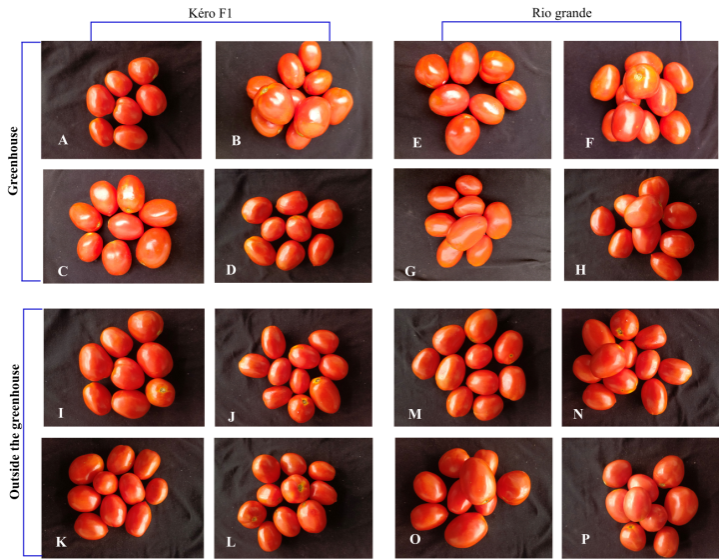
3.5. Mean Number of Flowers and Fruits in the Two Varieties of L. esculentum Depending on the Treatments AppliedThe mean number of flowers observed in the two varieties of L. esculentum varied significantly using the 5% Student Newman and Keuls test, depending on the treatments applied under both growing conditions (Table 2 and Table 3). Flower emergence was observed between days 60 and 90. Under greenhouse conditions, the average number of flowers varied over time. Plants treated with BSFFF produced the most flowers in the Rio Grande variety compared to other treatments. NPK and BSFFF treatments significantly influenced flower production in both varieties (Table 2 and Table 3). Maximums of 13.21±04.75 and 15.33±03.01 were noted for the NPK and BSFFF treatments in the Rio Grande variety in the greenhouse. At D90, plants treated with BSFFF and AMF presented values of 5.33±1.36 and 5.33±1.26 flowers, respectively, for the Rio Grande and Kéro F1 varieties. In non-greenhouse cultivation, the analysis of the results shows a variation in the average number of flowers of L. esculentum plants according to the different treatments over time, with maxima for the NPK and BSFFF treatments (Table 3). The influence of the applied treatments, compared to the control plants, was recorded for the Rio Grande variety compared to the Kero F1 variety. The high average flower count was noted on day 90, with 13±7.61 and 9.33±5.68 flowers, respectively, in L. esculentum plants treated with BSFFF for the Rio Grande and Kero F1 variety (Table 2). The average fruit count in the two L. esculentum varieties used varied significantly according to the 5% Student Newman and Keuls test, depending on the treatments applied in the two growing conditions (Table 3 and Figure 1). Whether under growing conditions, in the greenhouse, or outside the greenhouse, the maximum fruit counts were obtained in the NPK treatments applied. We noted 8.81±1.06 and 8.84±1.39 fruits, respectively, in Rio Grande and Kero F1, in the greenhouse and outside the greenhouse (Table 2 and Table 3).

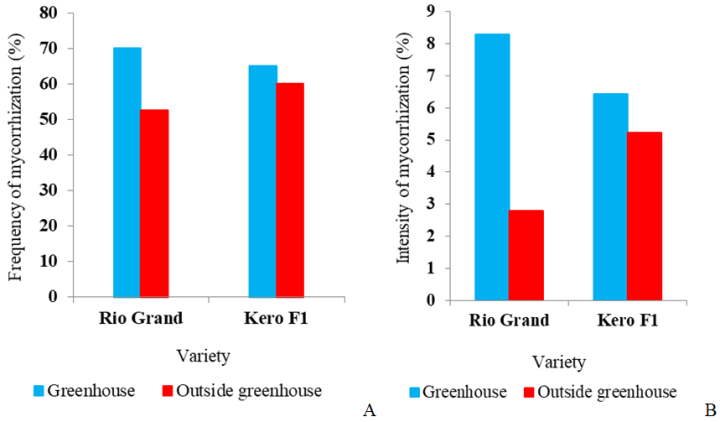
Analysis of the mycorrhization parameters assessed at D90 shows that when L. esculentum plants are grown in shaded conditions, the frequency and intensity of mycorrhization are more significant compared to those grown outside greenhouses (Figure 2). Under greenhouse conditions, the maximum frequency is 70% for plants of the Rio Grande variety. It is noted that the Kéro F1 variety has the lowest frequency (65%). Similarly, the mycorrhization intensity value is very low for the Kéro F1 variety (6.44%). However, under greenhouse conditions, the Rio Grande variety has the lowest mycorrhization frequency (52.5%) compared to the Kéro F1 variety (60%). Mycorrhization intensity values are lower outside the greenhouse compared to greenhouse conditions. We note 2.79 and 5.23% respectively for the Rio Grande and Kéro F1 varieties.

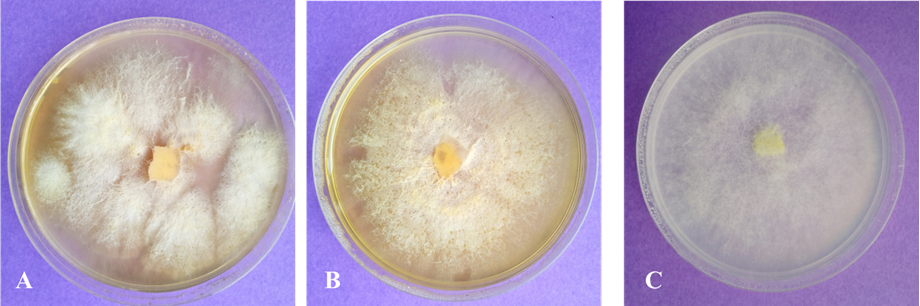
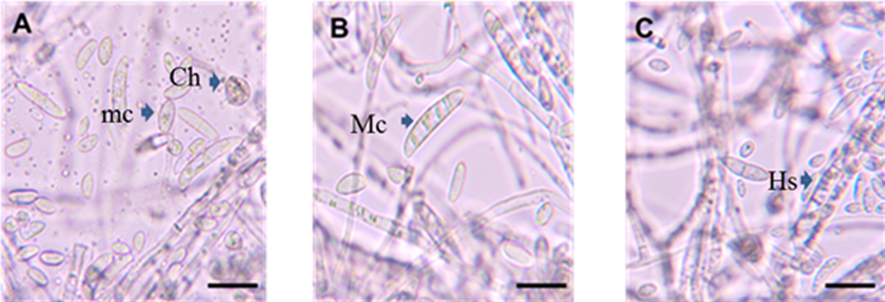
Macroscopic study of Fusarium oxysporum strains isolated and cultivated on PDA medium revealed three morphotypes: cottony (with a dense colony, with a diffuse border and a very abundant cottony aerial mycelium) (Figure 3A), senescent Ras (extremely sparse, low-viscosity aerial mycelium with a very slow growth rate) (Figure 3B), and fluffy (with a sparse colony and often a clear outline, thus presenting a poorly developed and fairly short aerial mycelium) (Figure 3C). Microscopic observations of these three morphological aspects of Fusarium oxysporum strains revealed the abundant presence of microconidia, macroconidia of varying size, chlamydospores, and septate mycelial hyphae (Figure 4).
3.8. Disease Incidence and SeverityDisease incidence and severity, assessed in the two L. esculentum varieties used, varied significantly using the Student's Newman and Keuls test at 5%, depending on the treatments applied under the two growing conditions (Table 4). The results show a variation in disease incidence in L. esculentum plants between the different treatments. This incidence appears very low in all mycorrhizal plants under both conditions, in both L. esculentum varieties, compared to the other treatments (Table 4). It is noted that this disease expression appears higher in greenhouse plants compared to plants grown outside the greenhouse. Outside the greenhouse, we note that on Day 60, values of 22.22% and 28% were recorded in the BSFFF treatment for the two varieties, respectively, in Kéro F1 and Rio Grande. Furthermore, the highest incidence values were obtained in the control treatment for both varieties, with 45% and 44%, respectively. On day 90, the same trend was observed, with the BSFFF treatment showing 81.48% for the Kéro variety and 82.12% for the Rio Grande variety. However, in the greenhouse on day 90, the incidence rate in plants of both L. esculentum varieties was 100% for all treatments except the AMF treatment (Table 4). Furthermore, there was a variation in disease severity in L. esculentum plants depending on the different treatments applied. This severity remained very high in plants of both varieties under greenhouse conditions compared to the outdoor conditions, but appeared low in mycorrhizal plants (Table 4).


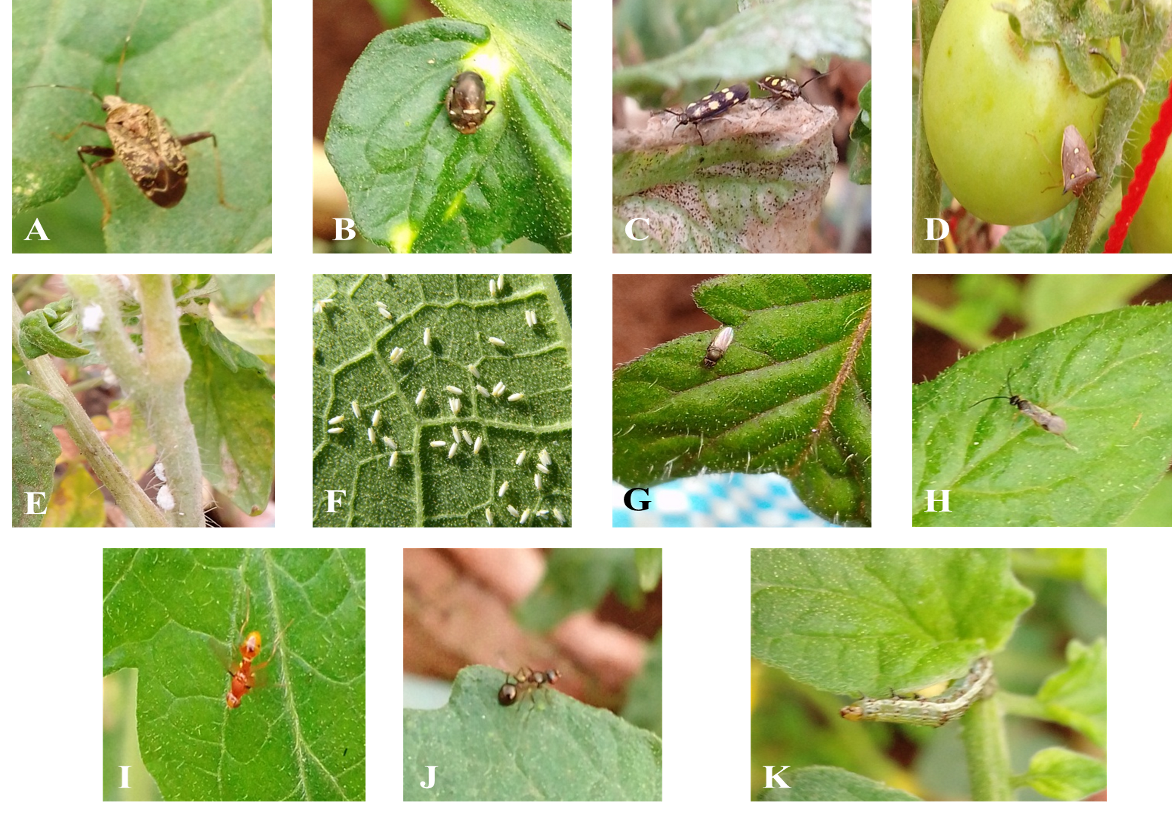
The results show that the insects collected from the experimental site are diverse. These insects, which inhabit the L. esculentum plant during the study period, belong to four insect orders, 11 families, and 11 genera (3 identified) (Table 5). The Diptera and Hemiptera orders were the most representative, with four and five families each. The Coleoptera and Lepidoptera orders were the least represented, with one family each. Considering the lifestyle and mouthparts of the species encountered, they can be categorized into five groups: piercing-sucking insects, leaf-eating insects, saprophagous insects, and predators.
The overall objective of this work was to apply beneficial fertilizers to improve growth in L. esculentum while evaluating their impact on Fusarium oxysporum and pest attacks. The results obtained varied significantly over time, depending on the fertilizers applied under greenhouse and outdoor growing conditions. The morphological growth parameters evaluated varied significantly using the Student and Keuls t-test at P<0.05. The nursery growth phase for both varieties showed 92 and 96% recovery, reflecting the good health of the L. esculentum seeds used. In greenhouses and outdoors, plants receiving the BSFFF treatment were found to have a higher average height, collar diameter, leaf area, and flower count than control plants. This translates to the fact that the enrichment of the substrate by BSFFF would have led to an improvement in the organic matter content, the major consequence of which would also be an increase in microbial activity, thus contributing to the availability of nutrients beneficial to cultivated L. esculentum plants, because the excrement is rich in nitrogen, phosphorus, potassium, and micronutrients. The applied BSFFF would have revitalized the soil substrate used, which was acidic, poor in organic matter, and nutrients such as phosphorus. 37, emphasize that black soldier fly (BSF) excrement has significant potential to revitalize marginalized soils. Rosmiati et al. 38 also highlight good growth performance in lettuce plants fertilized with BSFF produced from Coffee Husk. Moreover, the work of 39 showed that the applications of BSF treatments in watermelon plants not only significantly influenced the growth parameters of watermelons compared to the control but also contributed to the availability of P, while improving the soil pH compared to other amended treatments. However, the good growth observed at D90 in L. esculentum plants that received the NPK treatment is justified by the fact that NPK immediately makes available to plants mineral elements such as nitrogen, phosphorus, and potassium, directly assimilable by plants. Although urea provides sufficient nitrogen to the plant compared to BSFFF, BSFFF also provides other nutrients such as phosphorus, potassium, calcium, and magnesium, essential for plant growth. On the other hand, the results obtained from the growth parameters show that the plants in the AMF treatment do not present any significant difference compared to the control plants. This would indicate that the symbiosis is, on the one hand, costly for the L. esculentum plants concerning the applied mycorrhizal complex. This established symbiosis appears to be conditioned not only by the clayey loam nature (which shows that it was a little compact), the volume of the substrate used (which would partly influence the quantity of available nutrients), but also by the quantity of non-assimilable phosphorus to be assimilated by the mycorrhizal strains of the complex used. This also explains the low yield observed in all the mycorrhizal plants. The ineffectiveness of the mycorrhizal inoculation on the height growth and the diameter at the collar of the L. esculentum plants obtained could also indicate that the action of the applied AMF would have intervened rather for the protection of plants against Fusarium oxysporum.
It is also noted that the results on mycorrhization show that the roots of L. esculentum were mycorrhized by the mycorrhizal isolates used, and the absence of mycorrhizal infection on the roots of the controls shows that the treatments are free from any mycorrhizal contamination. Previous work on the colonization of L. esculentum roots by AMF has shown a frequency and intensity of mycorrhization greater than 90% and 30% 21. However, the results of the present study show a frequency of mycorrhization not exceeding 70% and an intensity of less than 10% in both culture conditions. Similar rates were obtained by 41, who observed low mycorrhization rates in L. esculentum plants in the nursery and further emphasized that post-transplanting soil cultivation may also be responsible for the low mycorrhization rate observed in the field.
Disease incidence varied significantly at day 90 for all treatments under both growing conditions, suggesting that under these conditions, despite the fertilization applied, all L. esculentum varieties were susceptible to attack. The authors of 40 report that not all organic fertilizers have the potential to protect plants against infection. Some can be sources of contaminants if improperly treated. However, the low severity obtained with BSFFF treatments, and much lower in the presence of AMF, in the greenhouse, could be explained by their ability to induce resistance. The applied BSFFF would have made the plants more vigorous. But it should be noted that both varieties used are susceptible to F. oxysporum. So, these two treatments would have allowed the plants to tolerate attacks compared to the Control and NPK treatments applied. 41 points out that insect excrement functions as a nematicide and fungicide, and at the same time promotes plant growth. Similarly, the work of 16 states that insect excrement is rich in chitin from the shed exoskeleton, which is known to have several beneficial effects on plant growth and health. In addition to this protection against pathogens, some authors like 42 have shown that good quality compost can also stimulate the defenses of the entire plant. 43 showed that the pretreatments of the S. miltiorrhiza plant with AMF reduce the progression of Fusarium wilt, thereby preventing a loss of biomass and photosynthesis. The morphological study of F. oxysporum isolates reveals three different morphotypes: the cottony appearance, the senescent Ras appearance, and the downy appearance. The analysis of the structure of the conidia of the different fungal isolates confirms the identification of F. oxysporum with the presence of the three types of conidia, which are macroconidia, microconidia, chlamydospores, and septate hyphae, by the characteristics defined by 44.
The results obtained on the identification of pests show that market garden crops in general and those of L. esculentum in particular harbor enough enemies. The results of the present study show that the insects associated with the cultivation of L. esculentum belonged to 4 orders, 11 families, and 12 genera (3 identified). The low diversity of the insects listed could be explained by the environmental factors, the method, and the period of the collections, which would have influenced the antomaufone species. However, previous work on the Characterization of the entomofauna of L. esculentum (Lycopersicon esculentum Mill) in the field in Cameroon showed that the insects associated with the cultivation of L. esculentum belonged to 8 orders, 21 families, 22 genera, and species by 45. The authors of 46 on the evaluation of harmful insects of Capsicum annuum in cultivation in Yaoundé identified 7 orders and 28 species of insects. In the group of piercing-sucking insects, the order of Hemiptera constitutes the greatest pest of L. esculentum. These observations are contrary to those of 47, who showed that the order of Lepidoptera was the major pest of L. esculentum in the field in Senegal. It should be noted, however, that the majority of insects inventoried were present at the vegetative stage of the plant, particularly on the leaves and stems. Lepidoptera larvae were more remarkable and frequent on the fruits of the plant. These observations are supported by the work of 48 on the population dynamics of Tuta absoluta in Algeria. These species attack the vegetative organs of the L. esculentum plant much more and prevent their development. These different pests are also believed to have contributed to the spread of the disease in plants.
The nursery recovery showed germination percentages, highlighting the good health of the seed grains used. The treatments applied influenced growth differently depending on the variety and growing conditions. The BSFFF treatment was generally the most effective in greenhouses, while NPK showed good potential at the beginning of outdoor cultivation. Evaluation of the effect of BSFFF and AMF on plant health showed that disease development occurred according to the treatments and time. Over time, BSFFF and AMF plants were found to be the least affected by the disease than the control treatments, and this was confirmed by the disease index obtained. The identified insect pests caused several types of damage to different parts of the L. esculentum plant. Leaf and fruit perforations, as well as flower drop and rotting of infested fruits, were observed. These various pests would also have contributed to the spread of disease in plants such as leaf curl disease in L. esculentum.
All authors contributed to the conception, implementation, analysis and interpretation of the results obtained and also to the writing of the article. Furthermore, their approval for publication of the final version was subject to its critical revision for important intellectual and scientific content.
The authors declare no conflicts of interest regarding the publication of this paper.
The datasets used and/or analyzed during the current study are available from the corresponding author on reasonable request.
The authors thank all the members of the Araceae research team of the Laboratory of Plant Physiology and Biochemistry of the Department of Biological Sciences of the École Normale Supérieure (ENS) of the University of Yaoundé 1, for their involvement in the realization of this research work.
Nguetrapouna Issofa:
Mbenoun Masse Paul Serge:
Djeuani Astride Carole:
Meguekam Tekam Liliane:
Mbouobda Hermann Désiré:
Manuela Diobe Motassy:
| [1] | Anonyme, Record historique de la production mondiale de L. esculentum. , (FAO). Retrieved on 20/11/2023. 2021. | ||
| In article | |||
| [2] | Anonyme, Production mondiale de L. esculentum par pays. , . Retrieved on 26/06/2025. 2025. | ||
| In article | |||
| [3] | Bhowmik, D., Sampath Kumar, K.P., Paswan, S., Srivastava, S., Tomato-A Natural Medicine and Its Health Benefits. Journal of Pharmacognosy and Phytochemistry, 1(1):33-43. 2012. . | ||
| In article | |||
| [4] | Toor, R.K., Lister, C.E. and Savage, G.P., Antioxidant activities of New Zealand-grown tomatoes. International Journal of Food Sciences and Nutrition, 56(8): 597-605. 2005. | ||
| In article | View Article PubMed | ||
| [5] | Ali, M.Y., Sina, A.A., Khandker, S.S., Neesa, L., Tanvir, E.M., Kabir, A., Khalil, M.I., Gan, S.H., Nutritional Composition and Bioactive Compounds in Tomatoes and Their Impact on Human Health and Disease: A Review. Foods. 10(1):45. 2020. | ||
| In article | View Article PubMed | ||
| [6] | Luo, Y., Liang, J., Zeng, G., Chen, M., Mo, D., Li, G., and Zhang, D., Seed germination test for toxicity evaluation of compost: Its roles, problems and prospects, Waste Management, 71: 109-114, 2018. | ||
| In article | View Article PubMed | ||
| [7] | De Bon Hubert, Fondio Lassina, Dugué Patrick, Coulibali Z., Biard Yannick. Etude d'identification et analyse des contraintes à la production maraîchère selon les grandes zones agro-climatiques de la Côte d'Ivoire. Rapport d'expertise. Montpellier: CIRAD, 140 p. 2019. | ||
| In article | |||
| [8] | Yah N’guettia, M., Amako Pauline, N., Marie Hélène, K.A., Senan, S., Drissa, K., et Boni Clovis, K. Contrôle des maladies de la tomate (L. esculentum (Solanum Lycopercicum L.) en culture avec trois extraits de plantes à Daloa (Cote D’ivoire) European Scientific Journal, 18 (17): 111. 2022. | ||
| In article | View Article | ||
| [9] | Clark, R.B. and Zeto, S.K., Growth and root colonization of mycorrhizal maize grown on acid and alkaline soil. Soil Biology and Biochemistry, 28 (10–11): 1505-1511. 1996. | ||
| In article | View Article | ||
| [10] | Abdel Latef, A.A.H., Influence of arbuscular mycorrhizal fungi and copper on growth, accumulation of osmolyte, mineral nutrition and antioxidant enzyme activity of pepper (Capsicum annuum L.). Mycorrhiza. 21(6):495-503. 2011. | ||
| In article | View Article PubMed | ||
| [11] | Nelly, S.A., Angelbert, D.C., and Consorcia, E.R., Growth response of cacao (Theobroma cacao L.) plant as affected by bamboo biochar and arbuscular mycorrhizal fungi in sterilized and unsterilized soil. Biocatalysis and Agricultural Biotechnology, 22, 101347, 2019. | ||
| In article | View Article | ||
| [12] | Liu, J., Maldonado-Mendoza, I., Lopez-Meyer, M., Cheung, F., Town, C.D., Harrison, M.J., Arbuscular mycorrhizal symbiosis is accompanied by local and systemic alterations in gene expression and an increase in disease resistance in the shoots. Plant Journal, 50(3):529-544. 2007. | ||
| In article | View Article PubMed | ||
| [13] | Campos-Soriano, L., García-Garrido, J.M., San Segundo, B. Activation of basal defense mechanisms of rice plants by Glomus intraradices does not affect the arbuscular mycorrhizal symbiosis. New Phytologist, 188(2):597-614. 2010. | ||
| In article | View Article PubMed | ||
| [14] | Agustiyani, D., Agandi, R., Arinafril, Nugroho, A.A., and Antonius S., The effect of application of compost and frass from Black Soldier Fly Larvae (Hermetia illucens L.) on growth of Pakchoi (Brassica rapa L.). IOP Conference Series: Earth and Environmental Science, 762, 012036. 2021. | ||
| In article | View Article | ||
| [15] | Beesigamukama, D., Mochoge, B., Korir, N.K., Fiaboe, K.K.M., Nakimbugwe, D., Khamis, F.M., Subramanian, S., Dubois, T., Musyoka, M.W., Ekesi, S., Kelemu, S., Tanga, C.M., Exploring Black Soldier Fly Frass as Novel Fertilizer for Improved Growth, Yield, and Nitrogen Use Efficiency of Maize Under Field Conditions. Frontier in Plant Science 23(11):574592. 2020. | ||
| In article | View Article PubMed | ||
| [16] | Quilliam, R.S., Nuku-Adeku, C., Maquart, P., Little, D., Newton, R., and Murray, F., Integrating Insect Frass Biofertilisers into Sustainable Peri-Urban Agro-Food Systems. Journal of Insects as Food and Feed 6: 315-322. 2020. | ||
| In article | View Article | ||
| [17] | Calvet, G. and Villemin, P., Interprétation des analyses de terre. IPAS, SADEF-SCPA, Aspach le Bas, France, 25 p. 1986. | ||
| In article | |||
| [18] | Shumo, M., Osuga, I.M., Khamis, F.M., Tanga, C.M., Fiaboe, K., Subramanian, S. and Borgemeister, C., The nutritive value of black soldier fly larvae reared on common organic waste streams in Kenya. Scientific Reports. 9 (0110): 1-13. 2019. | ||
| In article | View Article PubMed | ||
| [19] | Djeuani, A.C., Amama Amama, B., Mbouobda, H.D., Tiki, A.M.K., Adounga, S.B., Nyimiebolo, B.A.M., Manuela, D.M., Nshanji, J., Niemenak, N., Application of the PIF Method in Seed Multiplication in Xanthosoma sagittifolium L. Schott: Effect of the Mass of the Corm Fragment and Realization of the Field Transfer Test. American Journal of Agriculture and Forestry, 11(5): 203-211. 2023. | ||
| In article | |||
| [20] | Rijal, M., Sulastri, Sahubauwa, L., Safitri, D., Samputri, S., Hiariej, A., La Ridwan., Plant height, number of leaves, and flowers of tomato (Solanum lycopersicum l) after the application of eco-enzyme from nutmeg leaf waste. Jurnal Bioedukasi, 8 (1): 516-527. 2025. | ||
| In article | View Article | ||
| [21] | Phillips, J.M. and Hayman, D.A., Improved Procedures for Clearing Roots and Staining Parasitic and Vesicular-Arbuscular Mycorrhizal Fungi for Rapid Assessment of Infection. Transactions of the British Mycological Society, 55: 158-161. 1970. | ||
| In article | View Article | ||
| [22] | Trouvelot, A., Kough, J.L. and Gianinazzi-Pearson, V., Mesure du taux de mycorhization VA d’un systeme radiculaire. Recherche de methods d’estimation ayant une signification fonctionnelle. In: Gianinazzi-Pearson V. and Gianinazzi, S., Eds, Physiological and Genetical Aspects of Mycorrhizae, INRA, Paris, 217-221. 1986. | ||
| In article | |||
| [23] | Manikandan, R., Saravanakumar, D., Rajendran, L., Raguchander, T. and Samiyappan, R., Standardization of liquid formulation of Pseudomonas fluorescens Pf1 for its efficacy against Fusarium wilt of tomato, Biological Control, 54(2): 83-89, 2010. | ||
| In article | View Article | ||
| [24] | Vakalounakis, D.J. and Fragkiadakis, G.A., Genetic Diversity of Fusarium oxysporum Isolates from Cucumber: Differentiation by Pathogenicity, Vegetative Compatibility, and RAPD Fingerprinting. Phytopathology, 89(2):161-8. 1999. | ||
| In article | View Article PubMed | ||
| [25] | Cabrer de la colina, Races of Fusarium oxysporum f.sp.ciceri in Andalucia, Southern Spain. International Chickpea Newsletter 13: 34B26. 1987. | ||
| In article | |||
| [26] | Lechappe, J., Rouxel, F., et Sanson, M.T., Le complex parasitaire du pied du haricot. I. Mise en évidence des principaux champignons responsables de la maladie: Fusarium solani f. sp. phaseoli et Thielaviopsis basicola. Agronomie 8(5):451-457. 1988. . | ||
| In article | View Article | ||
| [27] | Nasir, M. and Hoppe, H. Evaluation of seed treatments to control Mycosphaerella pinodes. Ann. Appl. Biol. 112 (Supplement), Testing agrochemical and cultivars 19: 20 – 21. 1998. | ||
| In article | |||
| [28] | Djeugap, J.F., Abireche, H.U., Donfack, C.P.Z., Sonkoue, A.M., Ndogho, A., Nouteka, J.N.K., Cultural characterization of five isolates of Fusarium oxysporum F. Sp. Cubense (Banana fusarium wilt) and antifungal activity of plant extracts. Pakistan Journal of Phytopathology, 35 (01): 43-53. 2023. | ||
| In article | View Article | ||
| [29] | Yang, Y., Wang, Y., Gao, J., Shi, Z., Chen, W., Huangfu, H., Li, Z., and Liu, Y., Characterisation of Fusarium oxysporum f. sp. radicis-lycopersici in Infected Tomatoes in Inner Mongolia, China. J Fungi (Basel). 10(9): 622. 2024. | ||
| In article | View Article PubMed | ||
| [30] | Borror, D.J., Triplehorn, C.A. and Johnson, N.F., An introduction to the study of insects. 6th ed. Philadelphia: Saunders, USA. 1989. | ||
| In article | |||
| [31] | Southwood, T.R.E. and Henderson, P.A., Ecological Methods, 3th Edition. Published by Blackwell Science Ltd Editorial Offices: Osney Mead, Oxford OX2. 594 pages. 2000. | ||
| In article | |||
| [32] | Delvare et Aberlenc, Les insectes d’Afrique et d’Amérique tropicale ; clés pour la reconnaissance des familles. PRIFAS, CIRAD-GERDAT, 298 pp. 1989. | ||
| In article | |||
| [33] | Gelhaus, J.K., The crane-fly Tipula (Tipula) oleracea (Diptera: Tipulidae) reported from Michigan; A new pest of turfgrass in Eastern North America. Great Lakes Entomology, 38(1 & 2), 97-99. 2005. | ||
| In article | View Article | ||
| [34] | Panahi, M., Sadhasivam, N., Pourghasemi, H.R., Rezaie, F. and Lee, S., Spatial prediction of groundwater potential mapping based on convolutional neural network (CNN) and support vector regression (SVR). Journal of Hydrology, 588, 125033. 2020. | ||
| In article | View Article | ||
| [35] | Swanson, D.R. Taxonomic changes in Salyavatinae (Heteroptera:Reduviidae), with an updated generic key. Zootaxa, 4312, 515–530. 2017. | ||
| In article | View Article | ||
| [36] | Aigner, B.L., Crossley, M.S., Abney, M.R., Biology and Management of Peanut Burrower Bug (Hemiptera: Cydnidae) in Southeast U.S. Peanut. Journal of Integrated Pest Management, 12(1), 29. 2012. | ||
| In article | View Article | ||
| [37] | Mubekaphi, C., Nciizah, A.D., Dube, E. and Fanadzo, M. The Potential of Black Soldier Fly Frass to Revitalise Marginal Soils. In: Nciizah, A.D., Roopnarain, A., Ndaba, B., and Malobane, M.E., (eds) The Marginal Soils of Africa. Springer, Cham. 2024. | ||
| In article | View Article PubMed | ||
| [38] | Rosmiati, M., Nurjanah, K.A, Suantika, G. et Putra, R.E. Application de compost produit par bioconversion de coque de café par des larves de mouches soldats noires (Hermetia illucens) comme engrais solide pour la laitue (Lactuca sativa Var. Crispa): Impact sur la croissance. Actes de la Conférence internationale sur les technologies vertes 8: 38-44. 2017. | ||
| In article | |||
| [39] | Unagwu, B.O., Odu, C.F., Amuji, C.F., Eze, M.O., Ebido, N.E., Abara, C.U., Igboka, C.R. and Chukwudi, U.P., The Influence of Black Soldier Fly Residue on Watermelon Growth and the Properties of a Coarse-Textured Ultisol. Soil Systems, 9(2), 43. 2025. | ||
| In article | View Article | ||
| [40] | Banito, A., Banla, E.M., Ayisah, D.K., Sogbedji, J.M., Efficacité des champignons mycorhiziens contre les nématodes parasites de la tomate au Togo. Journal of Applied Biosciences 89: 8256– 8262. 2015. | ||
| In article | View Article | ||
| [41] | Fuchs, J. and Larbi, M. Disease Control with Quality Compost in Pot and Field Trails. I International Conference on Soil and Composts Eco-Biology, León, Spain, 15-17 September 2004, 157-166. 2004. | ||
| In article | |||
| [42] | Sharp, R., Examen des applications de la chitine et de ses dérivés en agriculture pour modifier les interactions plantes-microbes et améliorer les rendements des cultures. Agronomie 3: 757-793. 2013. | ||
| In article | |||
| [43] | Pu, C., Ge, Y., Yang, G., Zheng, H., Guan, W., Chao, Z., Shen, Y., Liu, S., Chen, M. and Huang, L. 2022. Arbuscular mycorrhizal fungi enhance disease resistance of Salvia miltiorrhiza to Fusarium wilt. Frontier in Plant Science 13: 975558. | ||
| In article | View Article PubMed | ||
| [44] | Bernard, T. Guide d’identification des différentes espèces ou variétés de Fusarium rencontrées en France sur la pomme de terre et dans son environnement. Agronomie, 8 (3): 211-222. Hal-00885091. 1988. . | ||
| In article | View Article | ||
| [45] | Patouma, L., Nukenine, E.N., Adamou, I., Djieto-Lordon. C. Caractérisation de l’entomofaune de la tomate (Lycopersicon esculentum Mill) en champ dans la localité de Meskine, région de l’Extrême-nord, Cameroun. International Journal of Biological and Chemical Sciences, 14(6): 2069-2076. 2020. | ||
| In article | View Article | ||
| [46] | Djieto-Lordon, C., Heumou, C.R., Azang, P.S.E., Alene, C.D., Ngueng, A.C. and Ngassam, P., Assessment of pest insects of Capsicum annuum L.1753 (Solanaceae) in a cultivation cycle in Yaoundé. International Journal of Biological and Chemical Sciences, 8(2): 621-632. 2014. | ||
| In article | View Article | ||
| [47] | Diatte, M., Brévault, T., Sylla, S., Sall-Sy, D., Coly, E.V., Diarra, K., Incidence de deux ravageurs clés des cultures de tomate plein champ dans la zone maraîchère des Niayes au Sénégal. UCAD. 2015. . | ||
| In article | |||
| [48] | Hammou L.B., La dynamique des populations de Tuta absoluta (Meyrick, 1917) (Lepidoptera, Gelechiidae) sur une culture de tomate sous abris au niveau de la ferme expérimentale de Mazagran Mostaganem. Mémoire de Master, Université Abdelhamid Ibn Badis, 49 pages. 2017. . | ||
| In article | |||
Published with license by Science and Education Publishing, Copyright © 2026 Nguetrapouna Issofa, Mbenoun Masse Paul Serge, Meguekam Tekam Liliane, Mbouobda Hermann Désiré, Manuela Diobe Motassy, Mbansie Gbetkom Louhd and Djeuani Astride Carole
 This work is licensed under a Creative Commons Attribution 4.0 International License. To view a copy of this license, visit
http://creativecommons.org/licenses/by/4.0/
This work is licensed under a Creative Commons Attribution 4.0 International License. To view a copy of this license, visit
http://creativecommons.org/licenses/by/4.0/
| [1] | Anonyme, Record historique de la production mondiale de L. esculentum. , (FAO). Retrieved on 20/11/2023. 2021. | ||
| In article | |||
| [2] | Anonyme, Production mondiale de L. esculentum par pays. , . Retrieved on 26/06/2025. 2025. | ||
| In article | |||
| [3] | Bhowmik, D., Sampath Kumar, K.P., Paswan, S., Srivastava, S., Tomato-A Natural Medicine and Its Health Benefits. Journal of Pharmacognosy and Phytochemistry, 1(1):33-43. 2012. . | ||
| In article | |||
| [4] | Toor, R.K., Lister, C.E. and Savage, G.P., Antioxidant activities of New Zealand-grown tomatoes. International Journal of Food Sciences and Nutrition, 56(8): 597-605. 2005. | ||
| In article | View Article PubMed | ||
| [5] | Ali, M.Y., Sina, A.A., Khandker, S.S., Neesa, L., Tanvir, E.M., Kabir, A., Khalil, M.I., Gan, S.H., Nutritional Composition and Bioactive Compounds in Tomatoes and Their Impact on Human Health and Disease: A Review. Foods. 10(1):45. 2020. | ||
| In article | View Article PubMed | ||
| [6] | Luo, Y., Liang, J., Zeng, G., Chen, M., Mo, D., Li, G., and Zhang, D., Seed germination test for toxicity evaluation of compost: Its roles, problems and prospects, Waste Management, 71: 109-114, 2018. | ||
| In article | View Article PubMed | ||
| [7] | De Bon Hubert, Fondio Lassina, Dugué Patrick, Coulibali Z., Biard Yannick. Etude d'identification et analyse des contraintes à la production maraîchère selon les grandes zones agro-climatiques de la Côte d'Ivoire. Rapport d'expertise. Montpellier: CIRAD, 140 p. 2019. | ||
| In article | |||
| [8] | Yah N’guettia, M., Amako Pauline, N., Marie Hélène, K.A., Senan, S., Drissa, K., et Boni Clovis, K. Contrôle des maladies de la tomate (L. esculentum (Solanum Lycopercicum L.) en culture avec trois extraits de plantes à Daloa (Cote D’ivoire) European Scientific Journal, 18 (17): 111. 2022. | ||
| In article | View Article | ||
| [9] | Clark, R.B. and Zeto, S.K., Growth and root colonization of mycorrhizal maize grown on acid and alkaline soil. Soil Biology and Biochemistry, 28 (10–11): 1505-1511. 1996. | ||
| In article | View Article | ||
| [10] | Abdel Latef, A.A.H., Influence of arbuscular mycorrhizal fungi and copper on growth, accumulation of osmolyte, mineral nutrition and antioxidant enzyme activity of pepper (Capsicum annuum L.). Mycorrhiza. 21(6):495-503. 2011. | ||
| In article | View Article PubMed | ||
| [11] | Nelly, S.A., Angelbert, D.C., and Consorcia, E.R., Growth response of cacao (Theobroma cacao L.) plant as affected by bamboo biochar and arbuscular mycorrhizal fungi in sterilized and unsterilized soil. Biocatalysis and Agricultural Biotechnology, 22, 101347, 2019. | ||
| In article | View Article | ||
| [12] | Liu, J., Maldonado-Mendoza, I., Lopez-Meyer, M., Cheung, F., Town, C.D., Harrison, M.J., Arbuscular mycorrhizal symbiosis is accompanied by local and systemic alterations in gene expression and an increase in disease resistance in the shoots. Plant Journal, 50(3):529-544. 2007. | ||
| In article | View Article PubMed | ||
| [13] | Campos-Soriano, L., García-Garrido, J.M., San Segundo, B. Activation of basal defense mechanisms of rice plants by Glomus intraradices does not affect the arbuscular mycorrhizal symbiosis. New Phytologist, 188(2):597-614. 2010. | ||
| In article | View Article PubMed | ||
| [14] | Agustiyani, D., Agandi, R., Arinafril, Nugroho, A.A., and Antonius S., The effect of application of compost and frass from Black Soldier Fly Larvae (Hermetia illucens L.) on growth of Pakchoi (Brassica rapa L.). IOP Conference Series: Earth and Environmental Science, 762, 012036. 2021. | ||
| In article | View Article | ||
| [15] | Beesigamukama, D., Mochoge, B., Korir, N.K., Fiaboe, K.K.M., Nakimbugwe, D., Khamis, F.M., Subramanian, S., Dubois, T., Musyoka, M.W., Ekesi, S., Kelemu, S., Tanga, C.M., Exploring Black Soldier Fly Frass as Novel Fertilizer for Improved Growth, Yield, and Nitrogen Use Efficiency of Maize Under Field Conditions. Frontier in Plant Science 23(11):574592. 2020. | ||
| In article | View Article PubMed | ||
| [16] | Quilliam, R.S., Nuku-Adeku, C., Maquart, P., Little, D., Newton, R., and Murray, F., Integrating Insect Frass Biofertilisers into Sustainable Peri-Urban Agro-Food Systems. Journal of Insects as Food and Feed 6: 315-322. 2020. | ||
| In article | View Article | ||
| [17] | Calvet, G. and Villemin, P., Interprétation des analyses de terre. IPAS, SADEF-SCPA, Aspach le Bas, France, 25 p. 1986. | ||
| In article | |||
| [18] | Shumo, M., Osuga, I.M., Khamis, F.M., Tanga, C.M., Fiaboe, K., Subramanian, S. and Borgemeister, C., The nutritive value of black soldier fly larvae reared on common organic waste streams in Kenya. Scientific Reports. 9 (0110): 1-13. 2019. | ||
| In article | View Article PubMed | ||
| [19] | Djeuani, A.C., Amama Amama, B., Mbouobda, H.D., Tiki, A.M.K., Adounga, S.B., Nyimiebolo, B.A.M., Manuela, D.M., Nshanji, J., Niemenak, N., Application of the PIF Method in Seed Multiplication in Xanthosoma sagittifolium L. Schott: Effect of the Mass of the Corm Fragment and Realization of the Field Transfer Test. American Journal of Agriculture and Forestry, 11(5): 203-211. 2023. | ||
| In article | |||
| [20] | Rijal, M., Sulastri, Sahubauwa, L., Safitri, D., Samputri, S., Hiariej, A., La Ridwan., Plant height, number of leaves, and flowers of tomato (Solanum lycopersicum l) after the application of eco-enzyme from nutmeg leaf waste. Jurnal Bioedukasi, 8 (1): 516-527. 2025. | ||
| In article | View Article | ||
| [21] | Phillips, J.M. and Hayman, D.A., Improved Procedures for Clearing Roots and Staining Parasitic and Vesicular-Arbuscular Mycorrhizal Fungi for Rapid Assessment of Infection. Transactions of the British Mycological Society, 55: 158-161. 1970. | ||
| In article | View Article | ||
| [22] | Trouvelot, A., Kough, J.L. and Gianinazzi-Pearson, V., Mesure du taux de mycorhization VA d’un systeme radiculaire. Recherche de methods d’estimation ayant une signification fonctionnelle. In: Gianinazzi-Pearson V. and Gianinazzi, S., Eds, Physiological and Genetical Aspects of Mycorrhizae, INRA, Paris, 217-221. 1986. | ||
| In article | |||
| [23] | Manikandan, R., Saravanakumar, D., Rajendran, L., Raguchander, T. and Samiyappan, R., Standardization of liquid formulation of Pseudomonas fluorescens Pf1 for its efficacy against Fusarium wilt of tomato, Biological Control, 54(2): 83-89, 2010. | ||
| In article | View Article | ||
| [24] | Vakalounakis, D.J. and Fragkiadakis, G.A., Genetic Diversity of Fusarium oxysporum Isolates from Cucumber: Differentiation by Pathogenicity, Vegetative Compatibility, and RAPD Fingerprinting. Phytopathology, 89(2):161-8. 1999. | ||
| In article | View Article PubMed | ||
| [25] | Cabrer de la colina, Races of Fusarium oxysporum f.sp.ciceri in Andalucia, Southern Spain. International Chickpea Newsletter 13: 34B26. 1987. | ||
| In article | |||
| [26] | Lechappe, J., Rouxel, F., et Sanson, M.T., Le complex parasitaire du pied du haricot. I. Mise en évidence des principaux champignons responsables de la maladie: Fusarium solani f. sp. phaseoli et Thielaviopsis basicola. Agronomie 8(5):451-457. 1988. . | ||
| In article | View Article | ||
| [27] | Nasir, M. and Hoppe, H. Evaluation of seed treatments to control Mycosphaerella pinodes. Ann. Appl. Biol. 112 (Supplement), Testing agrochemical and cultivars 19: 20 – 21. 1998. | ||
| In article | |||
| [28] | Djeugap, J.F., Abireche, H.U., Donfack, C.P.Z., Sonkoue, A.M., Ndogho, A., Nouteka, J.N.K., Cultural characterization of five isolates of Fusarium oxysporum F. Sp. Cubense (Banana fusarium wilt) and antifungal activity of plant extracts. Pakistan Journal of Phytopathology, 35 (01): 43-53. 2023. | ||
| In article | View Article | ||
| [29] | Yang, Y., Wang, Y., Gao, J., Shi, Z., Chen, W., Huangfu, H., Li, Z., and Liu, Y., Characterisation of Fusarium oxysporum f. sp. radicis-lycopersici in Infected Tomatoes in Inner Mongolia, China. J Fungi (Basel). 10(9): 622. 2024. | ||
| In article | View Article PubMed | ||
| [30] | Borror, D.J., Triplehorn, C.A. and Johnson, N.F., An introduction to the study of insects. 6th ed. Philadelphia: Saunders, USA. 1989. | ||
| In article | |||
| [31] | Southwood, T.R.E. and Henderson, P.A., Ecological Methods, 3th Edition. Published by Blackwell Science Ltd Editorial Offices: Osney Mead, Oxford OX2. 594 pages. 2000. | ||
| In article | |||
| [32] | Delvare et Aberlenc, Les insectes d’Afrique et d’Amérique tropicale ; clés pour la reconnaissance des familles. PRIFAS, CIRAD-GERDAT, 298 pp. 1989. | ||
| In article | |||
| [33] | Gelhaus, J.K., The crane-fly Tipula (Tipula) oleracea (Diptera: Tipulidae) reported from Michigan; A new pest of turfgrass in Eastern North America. Great Lakes Entomology, 38(1 & 2), 97-99. 2005. | ||
| In article | View Article | ||
| [34] | Panahi, M., Sadhasivam, N., Pourghasemi, H.R., Rezaie, F. and Lee, S., Spatial prediction of groundwater potential mapping based on convolutional neural network (CNN) and support vector regression (SVR). Journal of Hydrology, 588, 125033. 2020. | ||
| In article | View Article | ||
| [35] | Swanson, D.R. Taxonomic changes in Salyavatinae (Heteroptera:Reduviidae), with an updated generic key. Zootaxa, 4312, 515–530. 2017. | ||
| In article | View Article | ||
| [36] | Aigner, B.L., Crossley, M.S., Abney, M.R., Biology and Management of Peanut Burrower Bug (Hemiptera: Cydnidae) in Southeast U.S. Peanut. Journal of Integrated Pest Management, 12(1), 29. 2012. | ||
| In article | View Article | ||
| [37] | Mubekaphi, C., Nciizah, A.D., Dube, E. and Fanadzo, M. The Potential of Black Soldier Fly Frass to Revitalise Marginal Soils. In: Nciizah, A.D., Roopnarain, A., Ndaba, B., and Malobane, M.E., (eds) The Marginal Soils of Africa. Springer, Cham. 2024. | ||
| In article | View Article PubMed | ||
| [38] | Rosmiati, M., Nurjanah, K.A, Suantika, G. et Putra, R.E. Application de compost produit par bioconversion de coque de café par des larves de mouches soldats noires (Hermetia illucens) comme engrais solide pour la laitue (Lactuca sativa Var. Crispa): Impact sur la croissance. Actes de la Conférence internationale sur les technologies vertes 8: 38-44. 2017. | ||
| In article | |||
| [39] | Unagwu, B.O., Odu, C.F., Amuji, C.F., Eze, M.O., Ebido, N.E., Abara, C.U., Igboka, C.R. and Chukwudi, U.P., The Influence of Black Soldier Fly Residue on Watermelon Growth and the Properties of a Coarse-Textured Ultisol. Soil Systems, 9(2), 43. 2025. | ||
| In article | View Article | ||
| [40] | Banito, A., Banla, E.M., Ayisah, D.K., Sogbedji, J.M., Efficacité des champignons mycorhiziens contre les nématodes parasites de la tomate au Togo. Journal of Applied Biosciences 89: 8256– 8262. 2015. | ||
| In article | View Article | ||
| [41] | Fuchs, J. and Larbi, M. Disease Control with Quality Compost in Pot and Field Trails. I International Conference on Soil and Composts Eco-Biology, León, Spain, 15-17 September 2004, 157-166. 2004. | ||
| In article | |||
| [42] | Sharp, R., Examen des applications de la chitine et de ses dérivés en agriculture pour modifier les interactions plantes-microbes et améliorer les rendements des cultures. Agronomie 3: 757-793. 2013. | ||
| In article | |||
| [43] | Pu, C., Ge, Y., Yang, G., Zheng, H., Guan, W., Chao, Z., Shen, Y., Liu, S., Chen, M. and Huang, L. 2022. Arbuscular mycorrhizal fungi enhance disease resistance of Salvia miltiorrhiza to Fusarium wilt. Frontier in Plant Science 13: 975558. | ||
| In article | View Article PubMed | ||
| [44] | Bernard, T. Guide d’identification des différentes espèces ou variétés de Fusarium rencontrées en France sur la pomme de terre et dans son environnement. Agronomie, 8 (3): 211-222. Hal-00885091. 1988. . | ||
| In article | View Article | ||
| [45] | Patouma, L., Nukenine, E.N., Adamou, I., Djieto-Lordon. C. Caractérisation de l’entomofaune de la tomate (Lycopersicon esculentum Mill) en champ dans la localité de Meskine, région de l’Extrême-nord, Cameroun. International Journal of Biological and Chemical Sciences, 14(6): 2069-2076. 2020. | ||
| In article | View Article | ||
| [46] | Djieto-Lordon, C., Heumou, C.R., Azang, P.S.E., Alene, C.D., Ngueng, A.C. and Ngassam, P., Assessment of pest insects of Capsicum annuum L.1753 (Solanaceae) in a cultivation cycle in Yaoundé. International Journal of Biological and Chemical Sciences, 8(2): 621-632. 2014. | ||
| In article | View Article | ||
| [47] | Diatte, M., Brévault, T., Sylla, S., Sall-Sy, D., Coly, E.V., Diarra, K., Incidence de deux ravageurs clés des cultures de tomate plein champ dans la zone maraîchère des Niayes au Sénégal. UCAD. 2015. . | ||
| In article | |||
| [48] | Hammou L.B., La dynamique des populations de Tuta absoluta (Meyrick, 1917) (Lepidoptera, Gelechiidae) sur une culture de tomate sous abris au niveau de la ferme expérimentale de Mazagran Mostaganem. Mémoire de Master, Université Abdelhamid Ibn Badis, 49 pages. 2017. . | ||
| In article | |||