Quarrying activities create significant health, environmental and visual impacts which require to be addressed through the implementation of some rehabilitation practices. The process usually starts and proceeds using key steps following a decision to reach a targeted desired final ecosystem. As the processes progresses however, the most important factor considered to affect ecosystem integrity, is soil quality which is determined using the physicochemical and biological characteristics for ecosystem structure and function. Literature has indicated that most past ecosystem rehabilitation research has been using inaccurate, time consuming and costly methods. This study evaluated the changes among selected soil physicochemical properties and enzyme activity as measures of the quarry rehabilitation status. The study analyzed the soil bulk density (BD), organic matter (OM), pH, nitrates (NO3--N), nitrites (NO2--N), ammonium ion (NH4+), phosphates (PO43-) and Cation Exchange Capacity (CEC) of the Tezo rehabilitated quarry sites in Kilifi County, Kenya. In addition, amylase, cellulase and protease enzyme activities were also evaluated. Soil samples were collected from early (< 10 years), intermediate (11 – 20 years) and mature (> 20 years) rehabilitation plots. Undisturbed virgin plots and abandoned plots which were recovering naturally represented the control plots. Findings showed that soil bulk density was significantly different (P ˂ .0001) and was highest among the intermediate and early plots while the mature plots had the lowest BD values. Relative to soil organic matter, the study results showed that BD decreased as OM increased among all the plots. Additionally, soil OM revealed significant difference (P ˂ .0001) among all plots while reporting a general increase with rehabilitation stages. All the selected soil chemical parameters revealed significant differences (P ˂ .0001) across all rehabilitation stages. Both nitrates and nitrites ions were highest within intermediate plot but on the contrast, nitrates were lowest within early plots while nitrites were lowest within the virgin plots. The highest ammonium ion levels were reported in mature plot which were twice that of the early plots while phosphate levels were however, highest among the natural sites but similarly lowest within the early plots. Virgin plots reported CEC levels that were about 2.5 times higher than the early sites. Soil pH measurements were within a narrow range of between 7.7 and 8.6 between the lowest and highest value. Except protease enzyme activity, which had significant differences (P ˂ .02) only among the naturally recovering plots, amylase and cellulase were significantly different across all plots at different rehabilitation stages. There were, in addition, strongly to moderately positive correlations between amylase and cellulase with organic matter, nitrates, nitrites ammonium and phosphate ions. Protease activity however, revealed negative correlations with organic matter. The study therefore identified, due to their consistent trend, OM, CEC, ammonium phosphate ions as well as amylase and cellulase activity as being the most reliable soil quality indicators that can be used to predict the rehabilitations status of quarries.
Construction works require cement and concrete which are produced using carbonate rocks from open pit quarry mines. The worldwide production of carbonate rocks ranks third in terms of volume and fourth in terms of value compared to all non-fuel mineral products 1. The extraction of limestone and other quarrying activities create significant health, environmental and visual impacts due to wastes and the alteration of the original topography and soil profiles. In addition, large ugly and sterile sites are usually left behind, stripped of all their living materials, which in most cases do not support any life 2, 3.
Quarry rehabilitation is a process that aims at creating a self-supporting ecosystem that will be resilient to perturbations 4. The process requires the application of technical measures in order to increase the speed of regeneration and the development of site specific and self-sustaining plant communities and ecosystems. To achieve this, soil ecology knowledge is useful, depending on the severity of the original disturbance and the goals of the quarrying rehabilitation project 5. The process usually starts and proceeds using key steps following the selection of a desired target ecosystem and its successional phase. For instance, the process can begin with land form modeling, substrate preparation, plant species selection, revegetation and post-plantation interventions 6. Due to variations in the degree of ecosystem degradation, specificity of restoration goals can challenge rehabilitationists in making generalizations with regard to the approaches that lead to successful rehabilitation 5. Many studies have concentrated on a single rehabilitation method while a few experimental studies have so far tested the efficacy of different restoration approaches and in particular the use of different plant species for re-vegetation 6, 7.
During quarry rehabilitation, the most important factors affecting ecosystem integrity is soil quality which is determined by the physical, chemical and biological support characteristics for ecosystem structure and function. The specific soil properties on rehabilitated land will determine the level of ecosystem development and the extent to which development will progress 8. Rehabilitation efforts should recognize the integral role of soil physical and chemical properties in successful re-vegetation of degraded sites. The main challenge in rehabilitation success is the failure to understand the link between ecosystem degradation and specific restoration goals 5. Initiation of quarry rehabilitation plans should therefore be based on a clear set of objectives, reflecting the legislative requirements, local social, economic and environmental considerations for future use of the site, which should be technically and financially sustainable (Wbcsd, 2011). Plans to rehabilitate quarry mines need to be developed prior to mining of new sites and operating the quarries accompanied by a plan to monitor and manage the corrective measures, including measurement of performance against objectives 9, 10.
The key attributes used in measuring rehabilitation progress for most past research have focused on vegetation structure, species diversity, species abundance, ecological functions and socio-economic factors 11. These approaches have proved to be inaccurate, time consuming and costly. Literature review shows that there are only a few published studies that address the use of soil quality indicators as measures of ecosystem integrity and their relationship with the diversity of plant communities.
This study therefore, examined the status of soil physical, chemical and microbial enzyme activities as measures of ecosystem recovery status within rehabilitated quarry in Tezo ward in Kilifi County, Kenya. The most suitable soil physicochemical and soil activity data for evaluation of rehabilitation status were established by examining their trends across different stages of rehabilitated quarry study sites.
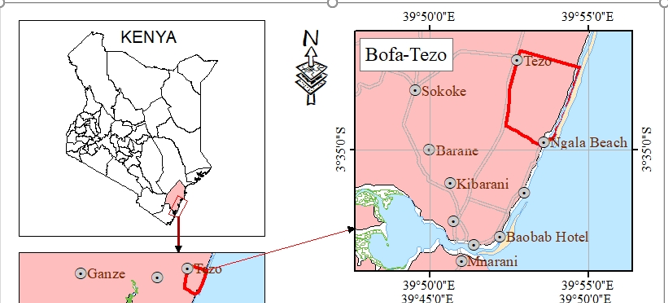
This study was conducted in Tezo ward (TZ), in Kilifi County along the coast of Kenya. Soil samples were collected form plots that were formerly limestone quarries which had undergone post closure revegetation using nitrogen fixing casuarina trees. Three plots measuring thirty meters by thirty meters (30 m x 30 m) were identified based on their rehabilitation stage which were categorized as early (E; <10), Intermediate (I; 11 - 20) and mature (M; > 20) years. To enable establishment of baseline and to allow for comparison of effect of rehabilitation, an undisturbed virgin plot and an abandoned naturally recovering pot of similar size were also identified and sampled to represent the negative and positive control plots.

Soil samples were collected using core rings along six transects measuring 30 m long from each of the five plots. These samples were collected at 0 to 15 cm depth around the root zones underneath the growing trees at 0, 10, 20 and 30 m along the transects. A composite soil sample from each plot was then made by thoroughly mixing the individual samples in order to minimize within plot soil spatial heterogeneity. The composite samples were thereafter separated into three replicate batches for laboratory tests and sealed in aseptic plastic bags. Some samples were taken for soil moisture content analysis while others were air dried for analysis of physicochemical and enzyme activities after they had been sifted to remove gravel and undecomposed litter.
2.3. Soil Physicochemical and Enzyme Activity AnalysisDifferent laboratory soil analysis protocols were used to determine the different soil physicochemical properties and enzyme activities. The thermogravimetric method was used for determination of soil water content where the content was expressed as a mass per unit volume 12. Soil bulk density was determined as a ratio between the dry weight to soil volume (g/cm3) 13. Determination of soil organic matter was done using the wet oxidation method 12 while soil textural classes were determined using the USDA soil texture calculator for the soil particle size distribution. Soil pH was measured using a pH meter after allowing the soil suspension to settle for 30 minutes 12. Available Orthophosphate ions (PO43-) determination was done by the micro-kjeldahl protocols 14 in which is a colorimetric procedure followed after the samples were digested at 360°C for 2 hours. Ammonium ion (NH4+-N) measurement was done using the micro-Kjeldahl colorimetric method after extraction using 2 M KCl solution 12. The cadmium reduction method was used for determination of nitrate nitrogen in which nitrates were first reduced to nitrites. Determination of CEC was done by extraction method with 1M neutral NH4AC 14. Amylase and Cellulase activity were determined by the modified dinitrosalicylic by acid Miller (1959) while protease activity was determined by the trichloroacetic acetic acid by Ladd and Butler (1986).
2.4. Statistical AnalysisSample means for each of the three batches of soil physicochemical properties and enzyme activity analyzed for each rehabilitation stage and the control plots were compared using a One-way Analysis of Variance (ANOVA) computed using Statistical Analysis System (SAS). This computation was done after data had been tested for normality using the Shapiro Wilk normality test (P > .05). The treatment groups in this analysis were therefore the different rehabilitation stages and the control groups were used to determine any significant changes over the rehabilitation period on the soil properties of the quarry soil materials. Treatment means were separated using the Tukey Honest Significant Difference Test (HSD). The Pearson correlation coefficients (r) between physico-chemical properties and enzyme activities were determined using the Microsoft excel function.
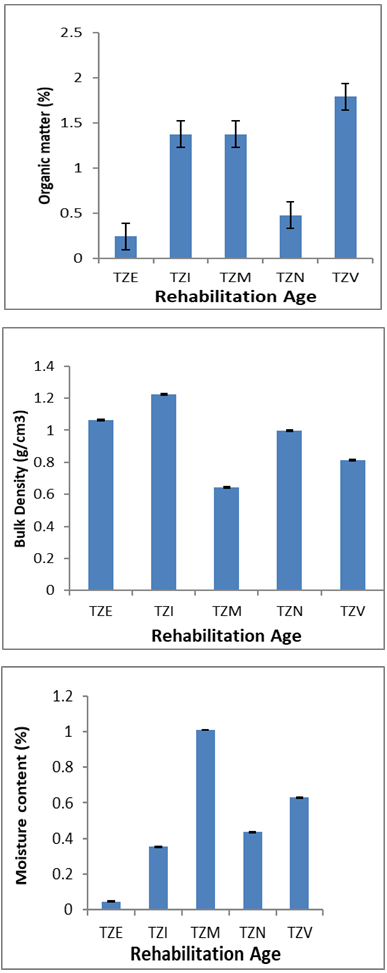
Results for soil physical properties for Tezo early (TZE), Tezo intermediate (TZI), Tezo mature (TZM), Tezo naturally recovering (TZN) and Tezo virgin (TZV) plots are summarized in Table 1 and Figure 2 below.
The soil physical property values among all rehabilitation plots were significantly different (P ˂.0001). Soil bulk density values in the early plots were about 1.5 times (1.064 g/cm3) higher than the lowest (0.642 g/cm3) recorded among the mature sites. Soil organic matter content was lowest (0.245 %) within the early sites while the virgin sites had the highest (1.79 %). Soil moisture was highest within the mature plots (1.009 %) while the early sites had the lowest values (0.046 %). The intermediate, mature and natural sites had loamy sand soils while the early and virgin site soils were sandy loam.

Results for soil chemical properties for rehabilitation plots are presented in Table 2 and Figure 3 below.
Within all plots of the study the site, the soil chemical parameters revealed significant differences (P ˂.0001) across all rehabilitation stages. Both nitrates and nitrites ions were highest within intermediate plot (5850.47 and 1899.6 µmol/l respectively) while nitrates were lowest within early plots (1574 µmol/l) while nitrites were lowest within the virgin sites (47.103 µmol/l). The highest ammonium ion levels were reported in mature plot (10517.6 µmol/l) which were twice that of the early sites (5011.1 µmol/l). On the contrast, phosphate levels were however, highest among the natural sites (112.07 µmol/l) while they were similarly lowest within the early sites (1.64933 µmol/l). The virgin study sites reported CEC levels that were about 2.5 times higher than the early sites. Soil pH measurements were within a narrow range of between 7.7 and 8.6 for the natural and early plots respectively.

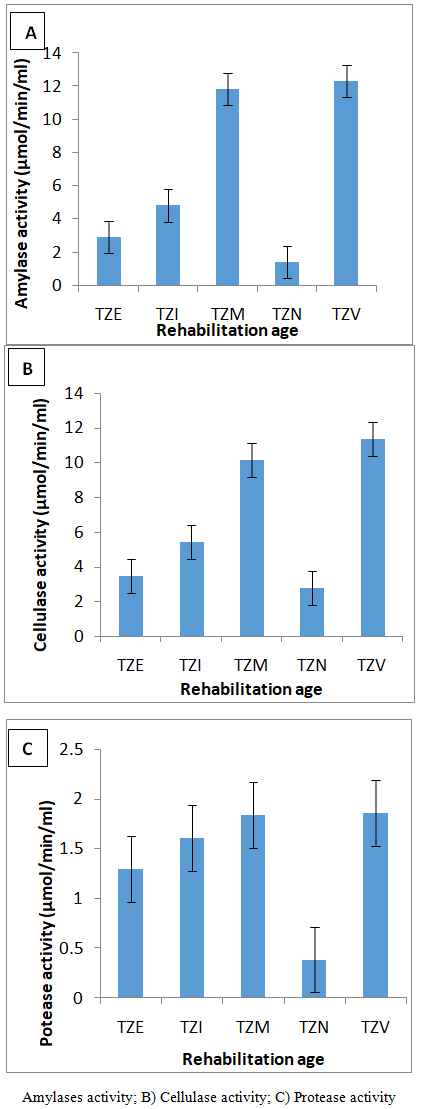
Table 3 and Figure 4 below presents the microbial enzyme activities for soil samples collected from Tezo quarry site.
Amylase activity results indicated a significant difference (P = .0004) between the virgin and mature sites, while there was no significant difference within the early, intermediate and naturally recovering sites. The naturally recovering site had the lowest level of activity (1.38 µmol/min/ml) while the virgin site recorded the highest values (12.28 µmol/min/ml). Similarly, cellulase activity among the intermediate, mature and virgin sites showed significant differences (P = .0011) within the early and naturally recovering plots. On the contrary, protease activity levels revealed significant differences (P = .02) only among the naturally recovering plots compared to the rest of the plots.

A correlation analysis between soil microbial enzyme activity and selected physicochemical properties was computed using the raw triplicate data values. This arrangement resulted into a sample size of 15 data values across rehabilitation stages and the controls plots. The Microsoft Excel correlation function was used to carry out the correlation analysis. Other than establishing the strength of the linear relationships between any two categories of variables, the correlation results further enabled the identification of variables that can be tied together and more reliably used as rehabilitation monitoring indicators.
The results of the correlation analysis are presented in the Table 4 below and discussed individually in the subsequent sections. The directions of correlation are represented by blue colour (positive), red colour (negative), and white colour (neutral) while the intensity of the colour indicates the level of strength or weakness of the correlation.
Soil bulk density, which affects root growth, increases with compaction and is also affected by the soil’s particle size distribution. Conventionally, the bulk density critical values indicate that any value less than 1.5g/cm3 is generally considered as low. In this study, all rehabilitation stages generally reported low values which were significantly different at different rehabilitation stages. Although the results did not reveal clearly distinct trends, bulk densities were generally higher within the early rehabilitation stages and lower within the mature stages. As expected, soil organic matter levels were generally lowest within early rehabilitation plots which corresponded with high bulk density levels and vice versa (Table 1 and Figure 2). The observed soil physical property trends in this study were in agreement with the results of a study by Pittarello et al. (2021). Similar study results published by Gajda, Czyz, and Dexter (2016) indicated that farming systems based on less invertible management resulted in a decrease in soil bulk density. In addition, Pittarello et al. (2021) confirmed that the amount of crop residues incorporated into soils also influences the bulk density changes. Organic matter contents were about 7 times higher among virgin sites and 5 times higher within the mature plot. A significant negative correlation between organic matter and bulk density was also reported by Nabayi et al. (2021) which signifies the importance of organic matter in improving the physical conditions of soils. Any contradicting result therefore, may be associated with differences in crop species composition, other soil properties and the complex interactions of all these soil factors 18. Soil organic matter has long been considered the key quality factor affecting physical, chemical and biological properties of soil within rehabilitation sites 19.
Unlike other physical properties, soil moisture is usually replenished by rainfall input into the soil profile within the top surface layer rather than being influenced by rehabilitation stage of quarry plots. Evaporation, on the other hand, accounts for large proportions of the total water loss from soil while mulching practices play an important role in reducing it 20. In this study site, the average soil moisture levels were 4.9 % where the highest moisture levels occurred within the virgin plot (10%). Further, soil moisture conservation is also generally influenced by soil management practices. According to results published by Ding, Wang, and Jin (2023) soil moisture can greatly vary in the surface layer due to the influence of plant characteristics and changes in the hydrological processes of rainfall in the soils.
4.2. Effect of Quarry Rehabilitation on Soil Chemical PropertiesNitrogen exits in different oxidation states in the soil, this study, examined the trends of three oxidation states across rehabilitation stages. Plants normally take up nitrogen in form of nitrates or ammonium ion while nitrites, needed in relatively small quantities, are an intermediate product in the conversion of ammonium ion to nitrates. Forest restoration is important in determining the changes in soil concentration of nitrogen and available phosphorous. Nitrates were reported to be two times higher among the intermediate plots compared with the early stage (Table 2 and Figure 3). Because the rehabilitation process involved the introduction of nitrogen fixing plants, this observation could be associated with the ability of casuarina trees to fix nitrates together with the decomposition of organic residues. It was also reported that nitrate supply within the root zone relied upon N2-fixing ability of the leguminous trees such as casuarina and the microbe-driven litter return 20, 22. Soil nutrients ions, especially nitrates, can however also become deficient due to differences in soil management practices, leaching from soil and denitrification. Denitrification alone has been reported to cause up to 30% of the total loss of nitrates which is favoured by warm and wet conditions with large amounts of decomposable matter 23. Nitrogen from both enzymatic degradation and nitrogen fixation contribute to the total nitrogen and ammonium ion. It was also suggested by some research studies that the differences in root densities, from early to mature stages, could explain differences in nutrient supply. For instance, the turnover rate of fine roots, which is generally high in mature stages, could result in higher soil organic carbon and nitrates concentration in the soil 24.
Nitrites, just like nitrates, in this study, similarly recorded highest levels within the intermediate plot although there were no clear nitrites trends established in reference to rehabilitation stages (Figure 3). Nitrites are a transition product formed when ammonium ions are being converted into nitrates. The rate of conversion could however be affected by a number of factors such as soil aeration and climatic factors including soil temperature. It was reported in a study that most of the soils recording high nitrites levels also similarly have high nitrate amounts 25.
Ammonium ion, one of the most preferred forms of nitrogen by plants, is easily oxidized into nitrate ions under aerobic conditions. In this study, the mature plot recorded the highest (twice) levels while the lowest levels of ammonium ion were recorded among the early plot (Table 2 and Figure 3). These results are similar to a study which reported that restoration is a critical factor in determining changes in soil nitrogen and phosphates, and as it proceeds, the concentration of these nutrients and stocks also increase 24. Usually, ammonium ions are formed following the decomposition of protein macro molecules in organic matter by aerobic microorganisms. This ion is highly soluble and is usually attached and held on colloidal exchange sites which are favoured by low pH levels 26. Ammonium ion is also relatively unstable and therefore easily oxidized to form nitrate ions in the soil.
Weathering, sorption and precipitation are essential geochemical processes that control phosphorous dynamics and speciation in the soil. The major mobile forms of phosphates are dihydrogen phosphate, hydrogen phosphate and the fully dissociated orthophosphate ions. Orthophosphate ion levels evaluated revealed that the mature and natural plots had about 70 times higher phosphates than the early rehabilitation plots (Figure 3). These high levels could be attributed to the extended period of rock weathering where the phosphate ions were still in available states. However, studies by Brown and Grant (2000), showed that the availability of phosphates in soils can be reduced when it combines with other ions such as iron to form some insoluble precipitates. Phosphate compounds differ significantly in their contribution to phosphate availability due to their chemical and biological nature. There availability is however, also determined by a balance between adsorption and desorption, which govern the equilibrium with phosphate in solution and the buffer capacity in soils 27.
The Cation Exchange Capacity (CEC) values were found to be highest among the virgin and mature plots which were about two and a half times higher than the early plot which recorded the lowest level (Table 2 and Figure 3). Maturity of rehabilitation plots is closely associated with abundance of soil organic matter which increases the availability of cation exchange sites in soils. In a similar study, soil organic matter was reported to be significantly related to CEC by Harada and Inoko (1975). Additionally, the study also confirmed that when the pH of soil solution decreased from 7.0 to 6.0, the CEC decreased from 40% to 30%. This relationship between CEC and organic matter was however shown to be weaker in soils that are more acidic 29. The same study by Solly et al (2020) also concluded that the significant influence of CEC by organic matter content evolved as a function of soil pH. These patterns can be explained by the fact that more cation exchange sites are provided by soil organic matter. An et al. (2020), in their study, also reported that the concentration of base cations, CEC and electrical conductivity decreased with time due to root absorption by vegetation and soil pH could be decreased by the decomposing plant residues 31.
Soil pH affects the form and solubility of nutrients and therefore the amount of nutrients available for plant absorption. In this study, the pH range was observed to be close to neutral to a weak base value (Figure 3) and therefore the values were not very different among the rehabilitated quarry study plots. The early plot however, had slightly higher pH values while the virgin sites reported the lowest values These results generally meant that the mature the vegetation with the accompanied decomposition of litter, the lower the soil pH will be. This observation was in agreement with the values reported by An et al. (2020), where they found a decrease in soil pH in some vegetated restoration areas which they argued could be due to uptake of cations by roots which require the reverse influx of H+. Soil pH was also noted to resist drastic changes with afforestation but rather, it changes slowly over a prolonged period of time. Dignam et al. (2018), in their study report, agreed that pH values in the same region, with different land use types, did not also differ significantly. They further argued that some unaccounted variations can be attributed to bacterial community structure changes and other factors not directly measured in their study.
4.3. Effect of quarry Rehabilitation on Enzyme Activity and their Correlation with Physicochemical PropertiesAmylase and cellulase enzymes are responsible for catalyzing the hydrolytic depolymerization of starch and cellulose hydrolysis in soils respectively. Proteases on the other hand are a group of proteolytic enzymes that hydrolyze polypeptides and oligopeptides into amino acids. In this study, the activities of all the three enzymes in the virgin and mature plots were highest than within natural rehabilitation plot which recorded the lowest activity (Table 3 and Figure 4). The three enzyme activity trends revealed in the study was an indication that their activity generally increased with rehabilitation maturity and absence of soil disturbance among other factors. In their study, De Melo et al. (2002), reported that soil enzymes are generally not very different in their response to several soil factors that either activate or inhibit them. As reported by An et al. (2020), soil nutrient improvement is indicated by an increase in enzyme activity which helped in the survival of pioneering afforestation species and facilitated vegetation success. It was suggested that the influence of vegetation on soil enzyme amylase activity is mainly exerted by the presence of substrate contained in plant residues which then can induce amylase synthesis 31. Restrained enzyme activities can occur due to lack of microorganisms appropriately adapted to the available substrate in soils 33.
In this study, the correlation results between amylase and cellulase activity and organic matter were reported to be strongly positive within all rehabilitation stages while protease and organic matter revealed a weak positive correlation (Figure 4). The occurrence of strong positive correlation between amylase and cellulase and organic matter generally implied that organic matter, which is a source of organic carbon, positively influenced the diversity of either individual or microbial communities. Although it is the soil organic matter quality and quantity that affects soil enzyme activity, it is most importantly, the extracellular enzyme activity which determined by the liter chemistry of the soil organic matter 31, 33. Similar research studies reported a positive correlation between soil organic carbon content and amylase activity 34. Reports form a study by Fan et al. (2021) on the other hand revealed the existence of a strongly positive correlation between cellulase activity and carbon, indicating the enzyme’s role in driving the carbon cycle. The reported weak positive correlation with protease activity is further in agreement with a study which also showed that consistent seasonal variations within different reforestation stages was due to differences in soil moisture 35.
A strong positive correlation between moisture and amylase activity was also observed while cellulase and protease had a moderately positive correlation. Soil moisture usually affects soil nutrient movement and substrate availability resulting into changes in microbial community composition and activity (Wang et al. 2023)
Cation Exchange Capacity (CEC) revealed a positive correlation with three enzyme activities (Figure 4). These results indicated that CEC, which usually increases with maturity and organic colloidal matter content results in increased microbial activity 31. Correlations were moderately to strongly positive between nitrates, nitrites, ammonium and phosphate ions and all the three enzyme activities consistent with findings from a similar study 19. These positive correlations agreed with reports that showed the existence of a positive relationship between soil organic carbon and plant root biomass with enzyme activity as afforestation progresses 37, 38.
Soil quality monitoring is a complex concept because it is determined by multiple structural and functional parameters. This study was able to establish individual physicochemical parameter trends with the highest potential for use as indicators for monitoring rehabilitation status.
Soil bulk density and soil moisture content across rehabilitation stages and the virgin control site did not have clearly distinct trends. Soil bulk densities were however generally high within the early rehabilitation and lowest within the mature plots. Conversely, organic matter systematically increased with rehabilitation progress. As expected, soil moisture content is replenished by rainfall input into the soil profile rather than rehabilitation stage. These observations therefore indicated that among the physical properties evaluated, soil organic matter had the highest potential for use in monitoring rehabilitation status.
Whereas nitrates and nitrites revealed similar patterns with the highest levels occurring within mature plot, these two forms of nitrogen are however prone to leaching, denitrification losses and are also affected by other soil management practices. These dynamics makes their use for rehabilitation monitoring unreliable. Cation Exchange Capacity (CEC), ammonium ions and phosphates showed a consistent pattern where the mature plots recorded the highest levels while the lowest levels were within the early rehabilitation plots. This observation suggests that the three soil properties can be useful indicators for assessing rehabilitation status.
Finally, pH values ranged between close to neutral to a weak alkaline value. Although its changes affect the solubility of nutrients in soil and consequently the amount of nutrients available for plants, it does not drastically change with rehabilitation and therefore may not be considered as a sensitive indicator for rehabilitation status evaluation.
• Soil quality indicators can be used to complement the current restoration evaluation methods such as the use of vegetation structure, species diversity, abundance and ecological functions because as much as the soil factors influence vegetation performance, the vegetation is also influenced by the soils.
• There is need to establish standard practices that guide ecosystem restoration. It was observed that quarry mine closure and soil management plans differed and, in some instances, there was complete lack of knowledge of the same.
• The composition and diversity of soil microbial communities should also form part of the evaluation methods because they are influenced by both biotic and abiotic conditions and quantity and quality of substrate.
| [1] | Rasti A, Ebrahimi N, Tabaei M, Adarmanabadi HR. Maximizing the Mining Exploitation Efficiency of a Quarry: A Case Study. Rud Geol Naft Zb. 2021 Nov 24; 36(5): 21–31. | ||
| In article | View Article | ||
| [2] | Wang X, Wang B, Gu W, Li J. Effects of Carbon-Based Fertilizer on Soil Physical and Chemical Properties, Soil Enzyme Activity and Soil Microorganism of Maize in Northeast China. Agronomy. 2023 Mar 1; 13(3). | ||
| In article | View Article | ||
| [3] | Pagouni C, Pavloudakis F, Kapageridis I, Yiannakou A. Transitional and Post-Mining Land Uses: A Global Review of Regulatory Frameworks, Decision-Making Criteria, and Methods. Land. 2024 Jul 13; 13(7): 1051. | ||
| In article | View Article | ||
| [4] | Ruiz-Jaén MC, Aide TM. Vegetation structure, species diversity, and ecosystem processes as measures of restoration success. For Ecol Manage. 2005; 218(1–3): 159–73. | ||
| In article | View Article | ||
| [5] | Heneghan L, Miller SP, Baer S, Callaham MA, Montgomery J, Pavao-Zuckerman M, et al. Integrating soil ecological knowledge into restoration management. Restor Ecol. 2008; 16(4): 608–17. | ||
| In article | View Article | ||
| [6] | Gilardelli F, Sgorbati S, Citterio S, Gentili R. Restoring Limestone Quarries: Hayseed, Commercial Seed Mixture or Spontaneous Succession? L Degrad Dev. 2016; 27(2): 316–24. | ||
| In article | View Article | ||
| [7] | Ruiz-Jaen MC, Aide TM. Restoration success: How is it being measured? Restor Ecol. 2005; 13(3): 569–77. | ||
| In article | View Article | ||
| [8] | Kravchenko YS, Zhang X, Song C, Hu W, Yarosh A V., Voitsekhivska O V. Seasonal Dynamics of Organic Carbon and Nitrogen in Biomasses of Microorganisms in Arable Mollisols Affected by Different Tillage Systems. Land. 2022 Apr 1; 11(4). | ||
| In article | View Article | ||
| [9] | Wbcsd. Cement Sustainability Initiative ( CSI ) Guidelines on Quarry Rehabilitation. Rehabilitation. 2011; (December). | ||
| In article | |||
| [10] | Zhang H, Chu LM. Early development of soil microbial communities on rehabilitated quarries. Restor Ecol. 2013; 21(4): 490–7. | ||
| In article | View Article | ||
| [11] | Wortley L, Hero JM, Howes M. Evaluating ecological restoration success: A review of the literature. Restor Ecol. 2013; 21(5): 537–43. | ||
| In article | View Article | ||
| [12] | Okalebo JR, Gathua KW, Paul LW. Laboratory Methods of Soil and Plant Analysis: A Working Manual The Second Edition. SACRED Africa, Kenya Any. 2002; SECOND EDI: 1–131. | ||
| In article | |||
| [13] | Pal S. Soil Sampling and Methods of Analysis. Soil Sampling and Methods of Analysis. 2013. | ||
| In article | View Article | ||
| [14] | Rokupr Agricultural Research Center & Japan International Cooperation Agency. Soil Analysis Manual. Japan Int Coop Agency. 2014; (June): 1–107. | ||
| In article | |||
| [15] | Pittarello M, Ferro ND, Chiarini F, Morari F, Carletti P. Influence of tillage and crop rotations in organic and conventional farming systems on soil organic matter, bulk density and enzymatic activities in a short-term field experiment. Agronomy. 2021 Apr 1; 11(4). | ||
| In article | View Article | ||
| [16] | Gajda AM, Czyz EA, Dexter AR. Effects of long-term use of different farming systems on some physical, chemical and microbiological parameters of soil quality. Int Agrophysics. 2016 Apr 1; 30(2): 165–72. | ||
| In article | View Article | ||
| [17] | Nabayi A, Girei AH, Garba Hayatu N, Garba J, Santuraki HA. Effect of Soil Organic Matter (SOM) Content on True Particle Density and other Physical Properties of Sudan Savannah Entisols [Internet]. 2021. Available from: www.bsss.bg | ||
| In article | |||
| [18] | Enang RK, Yerima BPK, Kome GK, Van Ranst E. Effects of Forest Clearance and Cultivation on Bulk Density Variations and Relationships with Texture and Organic Matter in Tephra Soils of Mount Kupe (Cameroon). Commun Soil Sci Plant Anal. 2017 Oct 28; 48(19): 2231–45. | ||
| In article | View Article | ||
| [19] | Sudhakaran M, Ramamoorthy D, Savitha V, Kirubakaran N. Soil Enzyme Activities and Their Relationship with Soil Physico-Chemical Properties and Oxide Minerals in Coastal Agroecosystem of Puducherry. Geomicrobiol J. 2019 May 28; 36(5): 452–9. | ||
| In article | View Article | ||
| [20] | Qu B, Liu Y, Sun X, Li S, Wang X, Xiong K, et al. Effect of various mulches on soil physico—Chemical properties and tree growth (Sophora japonica) in urban tree pits. PLoS One. 2019 Feb 1; 14(2). | ||
| In article | View Article PubMed | ||
| [21] | Ding W, Wang F, Jin K. Effects of Rainfall and Plant Characteristics on the Spatiotemporal Variation of Soil Moisture in a Black Locust Plantation (Robinia pseudoacacia) on the Chinese Loess Plateau. Water (Switzerland). 2023 May 1; 15(10). | ||
| In article | View Article | ||
| [22] | You F, Dalal RC, Huang L. Biochemical properties of highly mineralised and infertile soil modified by acacia and spinifex plants in northwest Queensland, Australia. Soil Res. 2016; 54(3): 265–75. | ||
| In article | View Article | ||
| [23] | Brown GMC, Grant CD. Nutrient status of pasture ecosystems established on rehabilitated overburden and topsoil sites in the Hunter Valley, New South Wales. Aust J Soil Res. 2000; 38(2): 479–91. | ||
| In article | View Article | ||
| [24] | Xu C, Xiang W, Gou M, Chen L, Lei P, Fang X, et al. Effects of forest restoration on soil carbon, nitrogen, phosphorus, and their stoichiometry in Hunan, Southern China. Sustain. 2018 Jun 4; 10(6). | ||
| In article | View Article | ||
| [25] | Liu D, Huang Y, Yan H, Jiang Y, Zhao T, An S. Dynamics of soil nitrogen fractions and their relationship with soil microbial communities in two forest species of northern China. PLoS One. 2018 May 1; 13(5). | ||
| In article | View Article PubMed | ||
| [26] | Wang Y, Liu L, Yue F, Li D. Dynamics of carbon and nitrogen storage in two typical plantation ecosystems of different stand ages on the Loess Plateau of China. PeerJ. 2019; 2019(9). | ||
| In article | View Article PubMed | ||
| [27] | Menyailo O V., Sobachkin RS, Makarov MI, Cheng CH. Tree Species and Stand Density: The Effects on Soil Organic Matter Contents, Decomposability and Susceptibility to Microbial Priming. Forests. 2022 Feb 1; 13(2). | ||
| In article | View Article | ||
| [28] | Harada Y, Inoko A. Cation exchange properties of soil organic matter. Soil Sci Plant Nutr. 1975; 21(4): 361–9. | ||
| In article | View Article | ||
| [29] | Solly EF, Weber V, Zimmermann S, Walthert L, Hagedorn F, Schmidt MWI. A Critical Evaluation of the Relationship Between the Effective Cation Exchange Capacity and Soil Organic Carbon Content in Swiss Forest Soils. Front For Glob Chang. 2020 Sep 4; 3. | ||
| In article | View Article | ||
| [30] | An J, Chang H, Han SH, Khamzina A, Son Y. Changes in basic soil properties and enzyme activities along an afforestation series on the dry Aral Sea Bed, Kazakhstan. Forest Sci Technol. 2020 Jan 2; 16(1): 26–31. | ||
| In article | View Article | ||
| [31] | De Melo WJ, Marques MO, Ferreira ME, De Melo GMP, De Melo VP. Chemical properties and enzyme activity in a sewage sludge-treated soil. Commun Soil Sci Plant Anal. 2002; 33(9–10): 1643–59. | ||
| In article | View Article | ||
| [32] | Dignam BEA, O’Callaghan M, Condron LM, Kowalchuk GA, Van Nostrand JD, Zhou J, et al. Effect of land use and soil organic matter quality on the structure and function of microbial communities in pastoral soils: Implications for disease suppression. PLoS One. 2018 May 1; 13(5). | ||
| In article | View Article PubMed | ||
| [33] | Schnecker J, Wild B, Hofhansl F, Alves RJE, Bárta J, Čapek P, et al. Effects of soil organic matter properties and microbial community composition on enzyme activities in cryoturbated arctic soils. PLoS One. 2014 Apr 4; 9(4). | ||
| In article | View Article PubMed | ||
| [34] | Zhao Q, Tang J, Li Z, Yang W, Duan Y. The influence of soil physico-chemical properties and enzyme activities on soil quality of saline-alkali agroecosystems in western Jilin Province, China. Sustain. 2018 May 11; 10(5). | ||
| In article | View Article | ||
| [35] | Fan L, Tarin MWK, Zhang Y, Han Y, Rong J, Cai X, et al. Patterns of soil microorganisms and enzymatic activities of various forest types in coastal sandy land. Glob Ecol Conserv [Internet]. 2021; 28: e01625. | ||
| In article | View Article | ||
| [36] | Wang P, Xie W, Ding L, Zhuo Y, Gao Y, Li J, et al. Effects of Maize–Crop Rotation on Soil Physicochemical Properties, Enzyme Activities, Microbial Biomass and Microbial Community Structure in Southwest China. Microorganisms. 2023; 11(11). | ||
| In article | View Article PubMed | ||
| [37] | An J, Chang H, Han SH, Khamzina A, Son Y, Zhang LL, et al. Improving the Key Enzyme Activity, Conversion Intensity, and Nitrogen Supply Capacity of Soil through Optimization of Long-Term Oilseed Flax Rotation Planting Patterns in Dry Areas of the Loess Plateau of China. Agronomy [Internet]. 2024; 14(2): 1–13. | ||
| In article | View Article | ||
| [38] | Wu J, Wang H, Li G, Chen N. Effects of nitrogen deposition on soil nitrogen fractions and enzyme activities in wet meadow of the Qinghai-Tibet Plateau. Sci Rep. 2024; 14(1): 1–12. | ||
| In article | View Article PubMed | ||
Published with license by Science and Education Publishing, Copyright © 2026 Tunje Mwamuye Pole, Mwakio Tole and Suhaila Hashim
 This work is licensed under a Creative Commons Attribution 4.0 International License. To view a copy of this license, visit
http://creativecommons.org/licenses/by/4.0/
This work is licensed under a Creative Commons Attribution 4.0 International License. To view a copy of this license, visit
http://creativecommons.org/licenses/by/4.0/
| [1] | Rasti A, Ebrahimi N, Tabaei M, Adarmanabadi HR. Maximizing the Mining Exploitation Efficiency of a Quarry: A Case Study. Rud Geol Naft Zb. 2021 Nov 24; 36(5): 21–31. | ||
| In article | View Article | ||
| [2] | Wang X, Wang B, Gu W, Li J. Effects of Carbon-Based Fertilizer on Soil Physical and Chemical Properties, Soil Enzyme Activity and Soil Microorganism of Maize in Northeast China. Agronomy. 2023 Mar 1; 13(3). | ||
| In article | View Article | ||
| [3] | Pagouni C, Pavloudakis F, Kapageridis I, Yiannakou A. Transitional and Post-Mining Land Uses: A Global Review of Regulatory Frameworks, Decision-Making Criteria, and Methods. Land. 2024 Jul 13; 13(7): 1051. | ||
| In article | View Article | ||
| [4] | Ruiz-Jaén MC, Aide TM. Vegetation structure, species diversity, and ecosystem processes as measures of restoration success. For Ecol Manage. 2005; 218(1–3): 159–73. | ||
| In article | View Article | ||
| [5] | Heneghan L, Miller SP, Baer S, Callaham MA, Montgomery J, Pavao-Zuckerman M, et al. Integrating soil ecological knowledge into restoration management. Restor Ecol. 2008; 16(4): 608–17. | ||
| In article | View Article | ||
| [6] | Gilardelli F, Sgorbati S, Citterio S, Gentili R. Restoring Limestone Quarries: Hayseed, Commercial Seed Mixture or Spontaneous Succession? L Degrad Dev. 2016; 27(2): 316–24. | ||
| In article | View Article | ||
| [7] | Ruiz-Jaen MC, Aide TM. Restoration success: How is it being measured? Restor Ecol. 2005; 13(3): 569–77. | ||
| In article | View Article | ||
| [8] | Kravchenko YS, Zhang X, Song C, Hu W, Yarosh A V., Voitsekhivska O V. Seasonal Dynamics of Organic Carbon and Nitrogen in Biomasses of Microorganisms in Arable Mollisols Affected by Different Tillage Systems. Land. 2022 Apr 1; 11(4). | ||
| In article | View Article | ||
| [9] | Wbcsd. Cement Sustainability Initiative ( CSI ) Guidelines on Quarry Rehabilitation. Rehabilitation. 2011; (December). | ||
| In article | |||
| [10] | Zhang H, Chu LM. Early development of soil microbial communities on rehabilitated quarries. Restor Ecol. 2013; 21(4): 490–7. | ||
| In article | View Article | ||
| [11] | Wortley L, Hero JM, Howes M. Evaluating ecological restoration success: A review of the literature. Restor Ecol. 2013; 21(5): 537–43. | ||
| In article | View Article | ||
| [12] | Okalebo JR, Gathua KW, Paul LW. Laboratory Methods of Soil and Plant Analysis: A Working Manual The Second Edition. SACRED Africa, Kenya Any. 2002; SECOND EDI: 1–131. | ||
| In article | |||
| [13] | Pal S. Soil Sampling and Methods of Analysis. Soil Sampling and Methods of Analysis. 2013. | ||
| In article | View Article | ||
| [14] | Rokupr Agricultural Research Center & Japan International Cooperation Agency. Soil Analysis Manual. Japan Int Coop Agency. 2014; (June): 1–107. | ||
| In article | |||
| [15] | Pittarello M, Ferro ND, Chiarini F, Morari F, Carletti P. Influence of tillage and crop rotations in organic and conventional farming systems on soil organic matter, bulk density and enzymatic activities in a short-term field experiment. Agronomy. 2021 Apr 1; 11(4). | ||
| In article | View Article | ||
| [16] | Gajda AM, Czyz EA, Dexter AR. Effects of long-term use of different farming systems on some physical, chemical and microbiological parameters of soil quality. Int Agrophysics. 2016 Apr 1; 30(2): 165–72. | ||
| In article | View Article | ||
| [17] | Nabayi A, Girei AH, Garba Hayatu N, Garba J, Santuraki HA. Effect of Soil Organic Matter (SOM) Content on True Particle Density and other Physical Properties of Sudan Savannah Entisols [Internet]. 2021. Available from: www.bsss.bg | ||
| In article | |||
| [18] | Enang RK, Yerima BPK, Kome GK, Van Ranst E. Effects of Forest Clearance and Cultivation on Bulk Density Variations and Relationships with Texture and Organic Matter in Tephra Soils of Mount Kupe (Cameroon). Commun Soil Sci Plant Anal. 2017 Oct 28; 48(19): 2231–45. | ||
| In article | View Article | ||
| [19] | Sudhakaran M, Ramamoorthy D, Savitha V, Kirubakaran N. Soil Enzyme Activities and Their Relationship with Soil Physico-Chemical Properties and Oxide Minerals in Coastal Agroecosystem of Puducherry. Geomicrobiol J. 2019 May 28; 36(5): 452–9. | ||
| In article | View Article | ||
| [20] | Qu B, Liu Y, Sun X, Li S, Wang X, Xiong K, et al. Effect of various mulches on soil physico—Chemical properties and tree growth (Sophora japonica) in urban tree pits. PLoS One. 2019 Feb 1; 14(2). | ||
| In article | View Article PubMed | ||
| [21] | Ding W, Wang F, Jin K. Effects of Rainfall and Plant Characteristics on the Spatiotemporal Variation of Soil Moisture in a Black Locust Plantation (Robinia pseudoacacia) on the Chinese Loess Plateau. Water (Switzerland). 2023 May 1; 15(10). | ||
| In article | View Article | ||
| [22] | You F, Dalal RC, Huang L. Biochemical properties of highly mineralised and infertile soil modified by acacia and spinifex plants in northwest Queensland, Australia. Soil Res. 2016; 54(3): 265–75. | ||
| In article | View Article | ||
| [23] | Brown GMC, Grant CD. Nutrient status of pasture ecosystems established on rehabilitated overburden and topsoil sites in the Hunter Valley, New South Wales. Aust J Soil Res. 2000; 38(2): 479–91. | ||
| In article | View Article | ||
| [24] | Xu C, Xiang W, Gou M, Chen L, Lei P, Fang X, et al. Effects of forest restoration on soil carbon, nitrogen, phosphorus, and their stoichiometry in Hunan, Southern China. Sustain. 2018 Jun 4; 10(6). | ||
| In article | View Article | ||
| [25] | Liu D, Huang Y, Yan H, Jiang Y, Zhao T, An S. Dynamics of soil nitrogen fractions and their relationship with soil microbial communities in two forest species of northern China. PLoS One. 2018 May 1; 13(5). | ||
| In article | View Article PubMed | ||
| [26] | Wang Y, Liu L, Yue F, Li D. Dynamics of carbon and nitrogen storage in two typical plantation ecosystems of different stand ages on the Loess Plateau of China. PeerJ. 2019; 2019(9). | ||
| In article | View Article PubMed | ||
| [27] | Menyailo O V., Sobachkin RS, Makarov MI, Cheng CH. Tree Species and Stand Density: The Effects on Soil Organic Matter Contents, Decomposability and Susceptibility to Microbial Priming. Forests. 2022 Feb 1; 13(2). | ||
| In article | View Article | ||
| [28] | Harada Y, Inoko A. Cation exchange properties of soil organic matter. Soil Sci Plant Nutr. 1975; 21(4): 361–9. | ||
| In article | View Article | ||
| [29] | Solly EF, Weber V, Zimmermann S, Walthert L, Hagedorn F, Schmidt MWI. A Critical Evaluation of the Relationship Between the Effective Cation Exchange Capacity and Soil Organic Carbon Content in Swiss Forest Soils. Front For Glob Chang. 2020 Sep 4; 3. | ||
| In article | View Article | ||
| [30] | An J, Chang H, Han SH, Khamzina A, Son Y. Changes in basic soil properties and enzyme activities along an afforestation series on the dry Aral Sea Bed, Kazakhstan. Forest Sci Technol. 2020 Jan 2; 16(1): 26–31. | ||
| In article | View Article | ||
| [31] | De Melo WJ, Marques MO, Ferreira ME, De Melo GMP, De Melo VP. Chemical properties and enzyme activity in a sewage sludge-treated soil. Commun Soil Sci Plant Anal. 2002; 33(9–10): 1643–59. | ||
| In article | View Article | ||
| [32] | Dignam BEA, O’Callaghan M, Condron LM, Kowalchuk GA, Van Nostrand JD, Zhou J, et al. Effect of land use and soil organic matter quality on the structure and function of microbial communities in pastoral soils: Implications for disease suppression. PLoS One. 2018 May 1; 13(5). | ||
| In article | View Article PubMed | ||
| [33] | Schnecker J, Wild B, Hofhansl F, Alves RJE, Bárta J, Čapek P, et al. Effects of soil organic matter properties and microbial community composition on enzyme activities in cryoturbated arctic soils. PLoS One. 2014 Apr 4; 9(4). | ||
| In article | View Article PubMed | ||
| [34] | Zhao Q, Tang J, Li Z, Yang W, Duan Y. The influence of soil physico-chemical properties and enzyme activities on soil quality of saline-alkali agroecosystems in western Jilin Province, China. Sustain. 2018 May 11; 10(5). | ||
| In article | View Article | ||
| [35] | Fan L, Tarin MWK, Zhang Y, Han Y, Rong J, Cai X, et al. Patterns of soil microorganisms and enzymatic activities of various forest types in coastal sandy land. Glob Ecol Conserv [Internet]. 2021; 28: e01625. | ||
| In article | View Article | ||
| [36] | Wang P, Xie W, Ding L, Zhuo Y, Gao Y, Li J, et al. Effects of Maize–Crop Rotation on Soil Physicochemical Properties, Enzyme Activities, Microbial Biomass and Microbial Community Structure in Southwest China. Microorganisms. 2023; 11(11). | ||
| In article | View Article PubMed | ||
| [37] | An J, Chang H, Han SH, Khamzina A, Son Y, Zhang LL, et al. Improving the Key Enzyme Activity, Conversion Intensity, and Nitrogen Supply Capacity of Soil through Optimization of Long-Term Oilseed Flax Rotation Planting Patterns in Dry Areas of the Loess Plateau of China. Agronomy [Internet]. 2024; 14(2): 1–13. | ||
| In article | View Article | ||
| [38] | Wu J, Wang H, Li G, Chen N. Effects of nitrogen deposition on soil nitrogen fractions and enzyme activities in wet meadow of the Qinghai-Tibet Plateau. Sci Rep. 2024; 14(1): 1–12. | ||
| In article | View Article PubMed | ||