Short chain salicylate esters naturally occur in a variety of foods, from blackberries and pineapple to mint and teas. They are also common additives to fragrances, flavoring agents, and topical analgesics. However, methyl salicylate is a potential allergen and is toxic in high doses, so identifying and quantifying it, particularly in goods intended for human consumption or pharmaceutical use, is crucial. Since short chain salicylate esters share similar structures, they can prove challenging to differentiate in mixtures. In this study, gas chromatography with flame ionization detection (GC–FID) along with quantitative proton nuclear magnetic resonance (1H NMR) and Fourier-transform infrared (FTIR) spectroscopies were utilized to not only distinguish between these compounds, but also to quantify their relative concentrations when present simultaneously. GC-FID chromatograms and 1H NMR and FTIR spectra were first obtained for neat methyl salicylate (MS), ethyl salicylate (ES), propyl salicylate (PS), and butyl salicylate (BS), and then for binary mixtures of varying weight percent. GC-FID produced fully resolved chromatograms for all samples. 1H NMR spectra showed hydroxyl resonances at different frequencies for each compound and unique peaks for the hydrogens along each alkyl chain. A deconvolution script was applied for peaks that were not fully resolved. FTIR spectra displayed unique peaks in the fingerprint region for three out of the four compounds. Integrated peaks in the chromatograms and spectra were then used to quantify the relative concentrations of the components in binary mixtures to a high degree of accuracy. These results confirm the use of GC-FID, 1H NMR, and FTIR in the identification and quantification of these organic compounds.
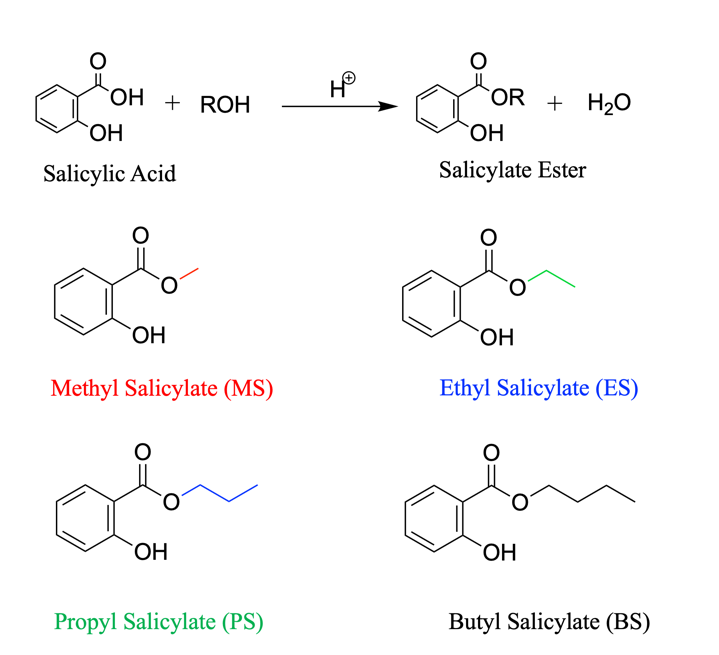
Salicylate esters occur naturally in a variety of plant-derived materials including foods, herbs, and spices like berries, pineapple, mint, cinnamon, cumin and tea. 1, 2, 3 Their pungent, mint-like, “wintergreen” aroma also makes them attractive as additives in perfumes 4, 5, 6, 7 and artificial flavors, 1, 8 while their rubefacient and analgesic properties coupled with high dermal absorbability have long made them ubiquitous ingredients in over-the-counter gels, creams, and patches marketed for the topical treatment of muscle aches and pains. 9, 10, 11 Figure 1 below shows a simple organic reaction by which synthetic salicylate esters may be produced for a variety of uses.
However, some individuals have salicylate sensitivities and some salicylates - methyl salicylate in particular - have been identified as possible allergens. 12 Methyl salicylate is also known to be toxic in high doses, with doses as small as one teaspoon leading to fatalities. 13 In one well-publicized, fairly recent event, a high-school athlete’s sudden death was attributed to over-use of a methyl-salicylate containing topical pain reliever. Since these compounds are both widely used and potentially harmful, identifying and quantifying them, especially in goods intended for human consumption or pharmaceutical use, is crucial – both the US and EU have strict labelling and usage limitations on methyl salicylate. 14, 15, 16 Complicating this analysis, though, is that fact that short chain salicylate esters share similar structures, making them somewhat challenging to differentiate in mixtures.
It is not surprising, therefore, that articles describing the identification, separation and/or quantification of salicylate esters in the context of foods, perfumes, or topical pain relievers appear regularly in the literature. 17, 18, 19, 20 21, 22, 23 24, 25, 26 Many of these studies leverage the power of methods like gas or liquid chromatography (GC or LC). Additionally, FITR and 1H NMR techniques have been successfully employed for similar analyses of comparable organic compounds such as short-chain phenyl esters, oleate esters, benzyl esters, cinnamyl esters, et al. 27, 28, 29, 30, 31, 32, 33


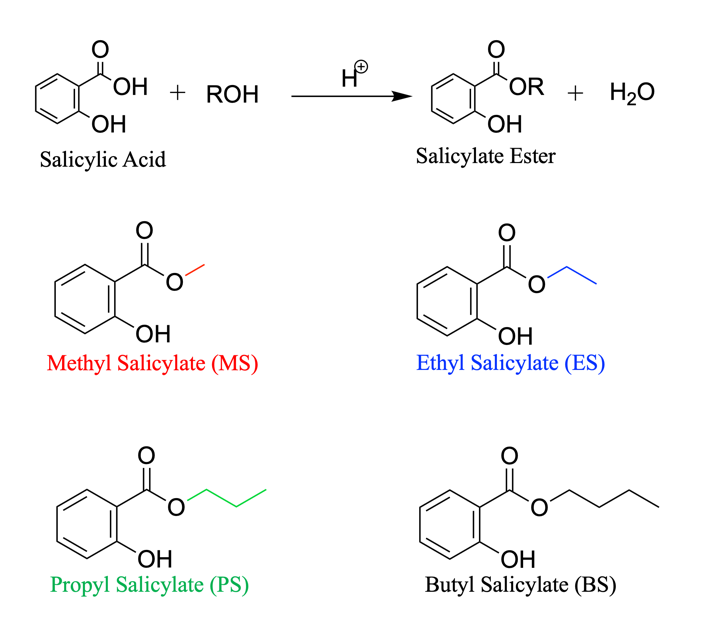
In the current study, we tested the efficacy of three instrumental methods: GC, proton nuclear magnetic resonance spectroscopy (1H NMR), and Fourier-Transform infrared spectroscopy (FTIR) in determining relative concentrations and identifying components of binary mixtures of the four salicylic acid derivatives shown in Figure 2: methyl salicylate (MS), ethyl salicylate (ES), propyl salicylate (PS), and butyl salicylate (BS). The results confirm the utility of GC, 1H NMR, and FTIR in the identification and quantification of these organic compounds.
All the salicylate esters were purchased as anhydrous liquids from TCI Chemical. The percent purity was 99% for methyl, ethyl, and butyl salicylates, and 98% for propyl salicylate. All four reagents were pipetted directly from their containers and utilized without further purification.
2.2. Sample PreparationTwenty-four 5 mL binary mixtures of methyl salicylate, ethyl salicylate, propyl salicylate, and butyl salicylate were prepared in labeled 7 mL vials as outlined in Table 1. All of the dry, labeled 7 mL vials were weighed before adding any of the salicylates. Each salicylate was added with the use of an Eppendorf series 2100 research 500 – 5000 μL pipette. After adding the respective amount of salicylate, the vials mass was recorded with an analytical balance with 0.1-mg precision. These masses were then used to calculate the weight percent composition of each component in the binary mixtures using the following equation:
 | (1) |
where Mx and My are gravimetrically determined masses of each component of a binary mixture.
Six one to one binary mixtures of MS:ES, MS:PS, MS:BS, ES:PS, ES:BS, and PS:BS were also prepared to serve as “unknowns” as shown in Table 2.
An Agilent 6890N GC-FID equipped with a 19091J-413 HP-5 Agilent capillary column (30 m 0.32 mm 0.25 μm) with a 5% phenyl 95% methyl siloxane stationary phase was used to obtain chromatograms for all samples. The carrier gas was helium with a constant flow of 4.0 mL/min. The front inlet had a split, and the initial temperature was 225ºC with the pressure at 19.4 psi. The split ratio was 10:1 with a flow rate of 39.9 mL/min. The total flow was 46.6 mL/min. The oven had an equilibration time of 1.00 min and an initial temperature of 100ºC. The temperature program used a ramp of 5.00ºC per minute with the final temperature at 170ºC. The final temperature was held for 1.00 min. The total run time was 16.00 minutes. The flame ionization detector (FID) was set at a temperature of 250ºC, hydrogen flow at 30.0 mL/min, and air flow of 400.0 mL/min. The FID had a constant makeup flow at 25.0 mL/min with nitrogen gas. The detector signal had a data rate of 20 Hz. Data was collected using Agilent OpenLab CDS software. Relative concentrations of components of binary mixtures were calculated using the formula:
 | (2) |
where Ax and Ay are the area under the peak for each component of the binary mixture based on the GC chromatogram.
2.4. Proton Nuclear Magnetic Resonance Spectroscopy (1H NMR)1H NMR spectra were obtained using a 400 MHz JEOL model ECS–400 NMR spectrometer. Each sample was run neat with no deuterated solvent. Prior to running the samples, the NMR was gradient shimmed on ethyl benzene (5%) in CDCl3 standard. A single-pulse experiment was used for all samples with a 90º pulse width of 12.51 ms and a relaxation delay of 5 s. Each sample underwent 16 scans. The acquisition time was 2.73 s. JEOL Delta NMR Processing and Control Software version 6.0.0 (Mac OSX) and a MATLAB 2024a script developed in-house that takes a raw FID and performs a Fourier transform, peak picking routine, and peak integration were used to analyze each spectrum. A secondary script was used for spectral deconvolution and individual integration of non-resolved peaks by fitting them to theoretical Lorentzian curves. Relative concentrations of the components of the binary mixtures were calculated using the formula:
 | (3) |
where Ix and Iy are the value of the integral for peaks corresponding to equivalent functional groups (hydroxyl or terminal methyl) from each component of the binary mixture based on the processed NMR spectrum.
2.5. Fourier Transform Infrared Spectroscopy (FTIR)All salicylate ester samples were analyzed using a Bruker Alpha-P FT-IR spectrometer with a Platinum® attenuated total internal reflectance (ATR) quick snap module with a diamond crystal. The Alpha-P had a Michelson Interferometer with a SiC globar as the IR source, and the time dependence of the IR intensity was measured with a pyroelectric DTGS detector. The data analyses were done using the Bruker OPUS® software version 7.0.122. Background measurements were conducted with 48 scans and a resolution of 2 cm-1. Approximately 10 μL of each sample was analyzed by pressing the droplet between the anvil and diamond crystal. Each measurement represents the average spectrum of the 48 scans after a background measurement (ambient air) was subtracted. Spectra were processed using a MATLAB 2024a script developed in-house Relative concentrations of components of binary mixtures were calculated using the formula:
 | (4) |
where Hx and Hy are the heights of selected peaks unique to each component of the binary mixture based on the FTIR spectrum.
2.6. HazardsAll the salicylate esters are liquids at room temperature. All have been used as fragrances and flavors ingredients and have been generally recognized as safe in small quantities as a flavor ingredient by the USDA. All can cause mild skin irritation on contact, so wear gloves and work in the hood area as much as possible. An advantage of this experiment, particularly for working with undergraduate research assistants, is that all samples were run neat with no deuterated or halogenated solvents such as CDCl3, reducing safety hazards, costs, and environmental impact.
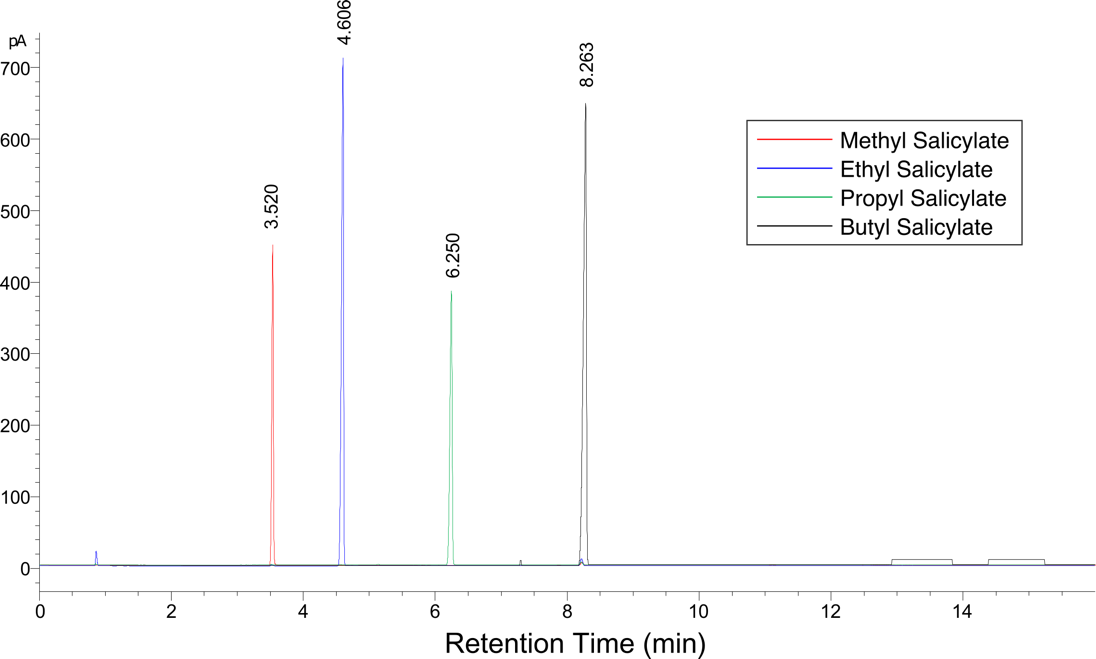
Using the retention times determined for each compound when run as a neat, standard sample, well-resolved peaks for each component in chromatograms of all binary mixtures were identified. Methyl salicylate had a retention time of 3.520 minutes; ethyl salicylate had a retention time of 4.606 minutes; propyl salicylate had a retention time of 6.250 minutes; and butyl salicylate had a retention time of 8.263 minutes. The retention times of each of these salicylate esters increased with increasing alkyl chain length, because as the molar mass of the molecule increased, the boiling point increased. Additionally, as a nonpolar column was used, the molecules that are more nonpolar will have a longer retention time than those that are more polar.
The retention times of the four alkyl salicylate esters were well-resolved enough to easily analyze the GC-FID determined peak areas, allowing straightforward quantification of relative concentrations of the components in binary mixtures by their relative peak areas. Example gas chromatograms for the pure compounds MS, ES, PS, and BS are shown overlapped in Figure 3.
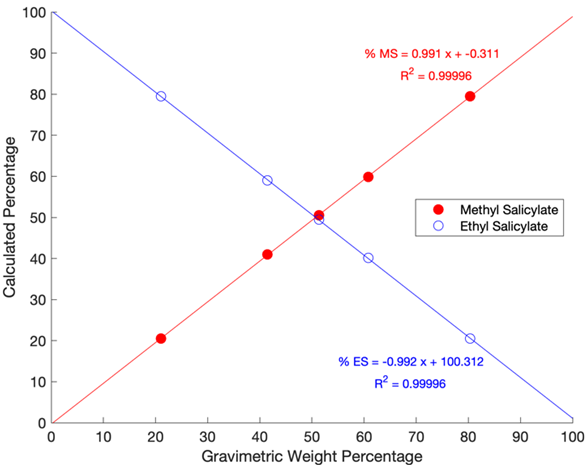
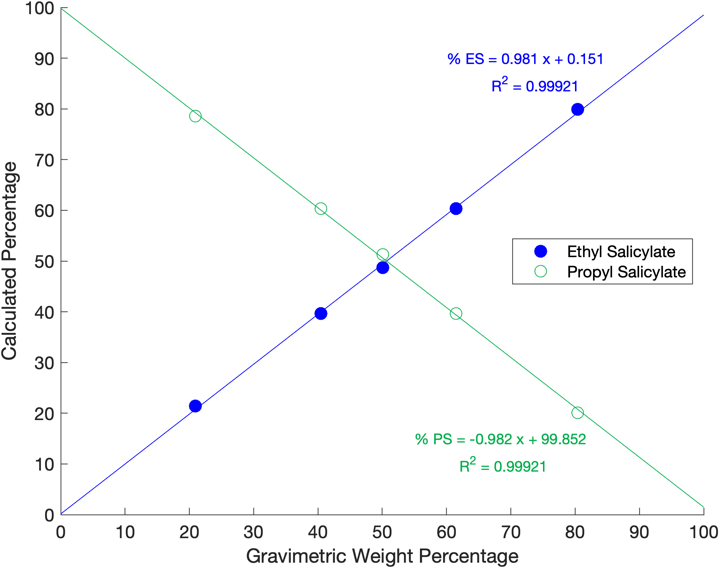
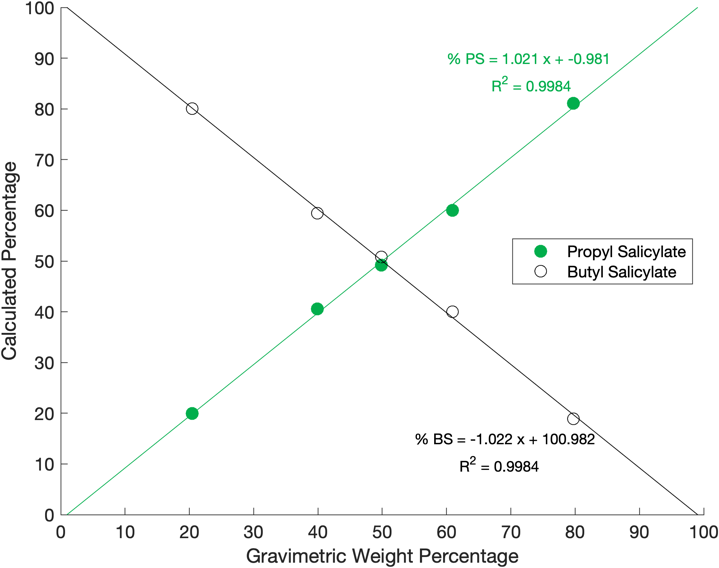
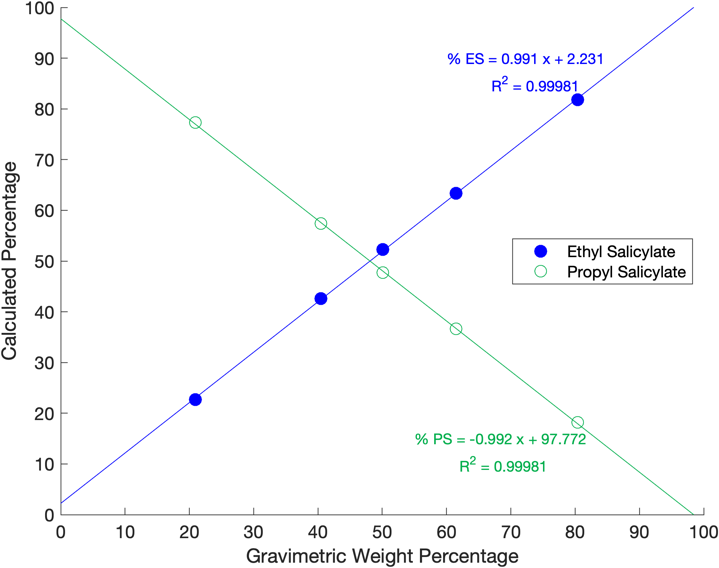
Peak areas were used to quantify the amount of one salicylate ester in each binary mixture. Validation of the ratios calculated from the GC-FID determined peak areas was performed by plotting them against the gravimetrically determined weight percentage for the components of each binary mixture. Figures 4, 5, and 6 illustrate the peak area vs. gravimetric weight percentage plots for the two components in MS:ES, ES:PS, and PS:BS binary mixtures, respectively. The high R2 values (0.99996, 0.99921, and 0.9984, respectively) for the trendlines in all plots indicate a strong correlation between the gravimetric weight percentage and the GC-derived calculated values. Similar results were also obtained for MS:PS, MS:BS, and ES:BS mixtures. The quality of the data obtained using the GC-FID method underscores its acceptance as the method of choice for analyzing mixtures involving salicylate esters.


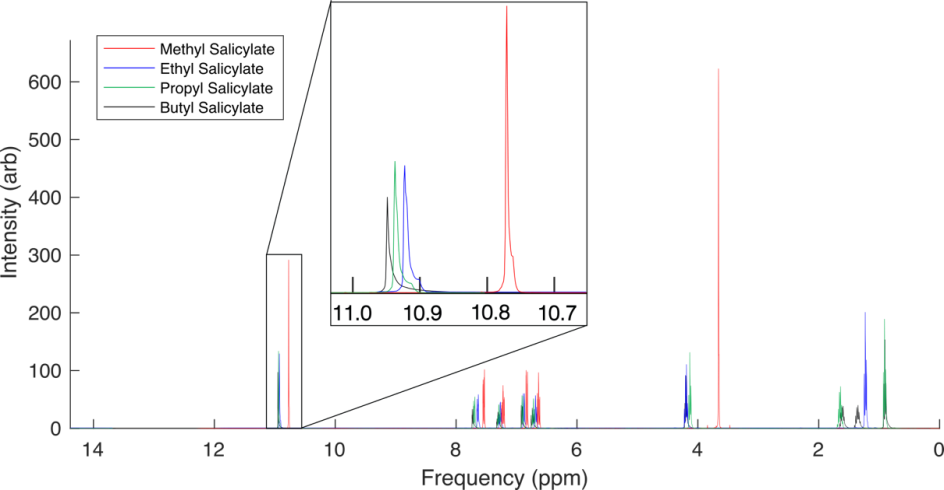
As shown by the overlapped spectra for pure MS, ES, PS, and BS in Figure 7, all spectra exhibited a singlet correlating to the hydroxyl proton near 10.9 ppm, a cluster of multiplets between 6.5 ppm and 8.0 ppm correlating to the ring, and a variety of peaks produced by the protons in the unique alkyl chains. Each salicylate ester differs in the number of carbons attached to the terminal oxygen of the ester group. Methyl salicylate has a singlet peak at 3.6586 ppm, ethyl salicylate has a triplet at 1.2298 ppm and a quartet at 4.1964 ppm, propyl salicylate has a triplet at 0.9106 ppm, a multiplet at 1.6471 ppm, and a triplet at 4.1329 ppm, and butyl salicylate has a triplet at 0.9049 ppm, a multiplet at 1.3505 ppm, a multiplet at 1.6506 ppm, and a triplet at 4.1997 ppm. Collectively, these peaks correspond to the alkyl groups of each salicylate ester, with slight variations in chemical shifts attributed to the structural differences between each of the compounds.


The hydroxyl proton peak was used to quantify the salicylate esters as it appears in every structure and was the easiest to isolate with minimal overlap. The hydroxyl proton was observed at 10.7710 ppm, 10.9233 ppm, 10.9382 ppm, and 10.9497 ppm in the standard spectra for methyl, ethyl, propyl, and butyl salicylates, respectively. As the length of the alkyl group increased, the hydroxyl proton signal shifted slightly downfield. Furthermore, the proton peaks for the terminal methyl groups of methyl, ethyl, and propyl salicylates were resolved enough to be isolated and integrated. The integral values for these peaks could also be used for quantification when it proved difficult to determine the hydroxyl proton peak integrals or to corroborate the hydroxyl peak-derived ratios. The terminal methyl group proton peaks were found at approximately 3.5 ppm, 1.2 ppm, and 0.9 ppm for methyl, ethyl, and propyl salicylates, respectively. Unfortunately, the methyl group proton peak for butyl salicylate is found near 0.9 ppm as well, so the methyl group proton peaks were less helpful for use in quantifying the mixture components in the PS:BS binary mixtures due to the overlap.
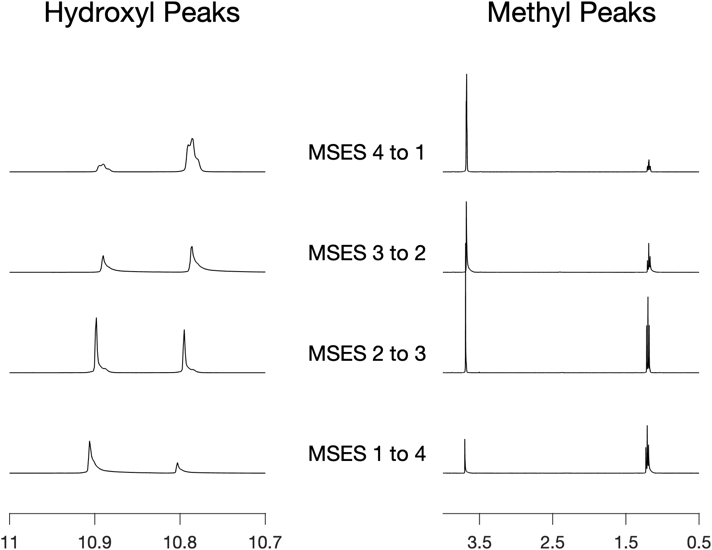
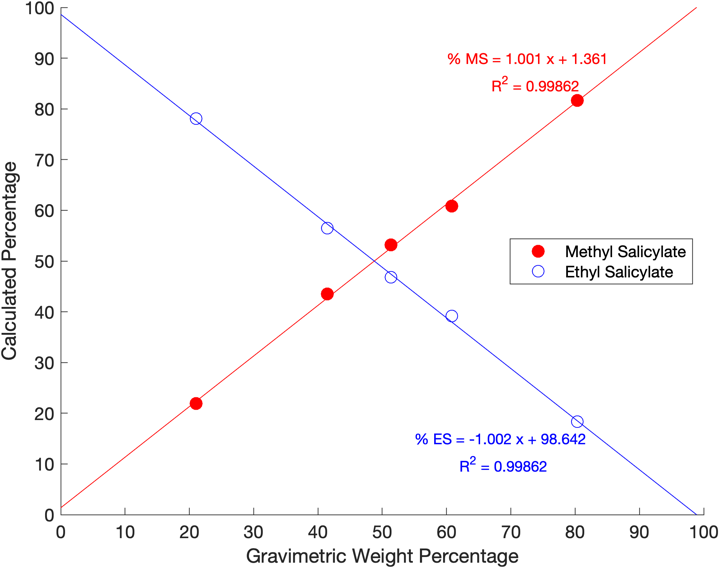
All binary mixtures containing methyl salicylate had perfectly resolved hydroxyl peaks, as depicted in the example spectra for the MS:ES binary mixtures in Figure 8, so straightforward integration ratios were used to quantify the relative concentrations of their components. The trendlines of the plot in Figure 9 indicate the strong correlation (R2 = 0.9986) between component percentages calculated from hydroxyl peak integration data for the MS:ES binary mixtures. Similar results were obtained for MS:PS (R2 = 0.9995) and MS:BS (R2 = 0.9975). However, as the alkyl chain length increased, the signals for the hydroxyl proton occurred at frequencies too close to produce fully resolved peaks, as can be seen in Figures 11 and 14. Therefore, a deconvolution script was used to resolve these peaks. This script performed spectral deconvolution and integrated overlapping peaks separately by fitting them to theoretical Lorentzian curves.
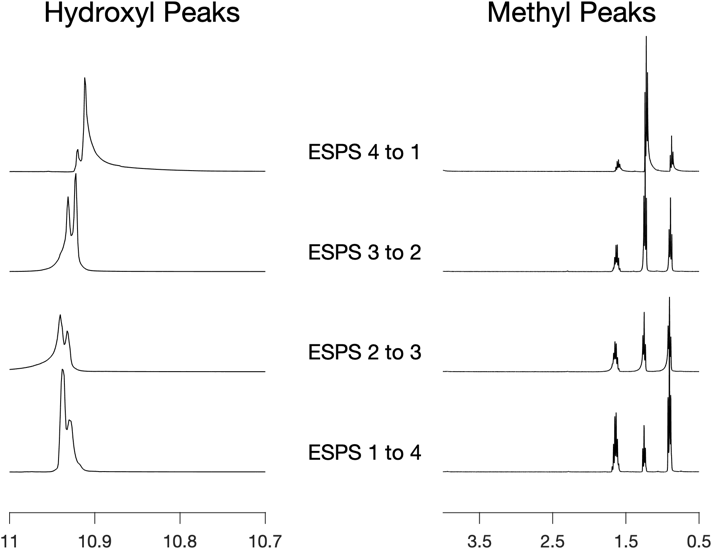
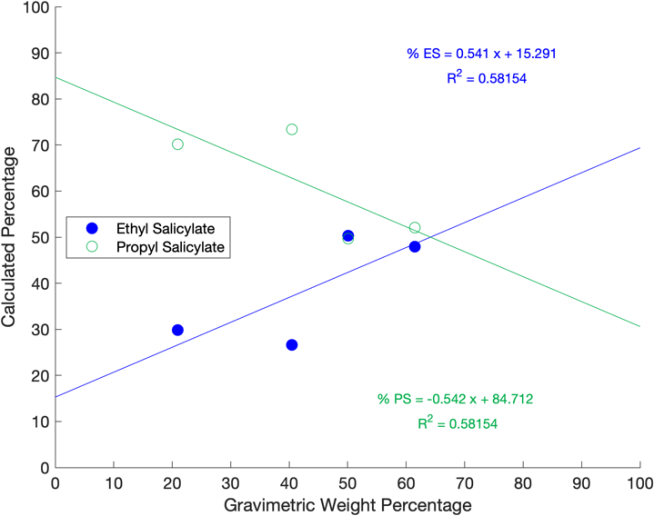
The ethyl salicylate and butyl salicylate ester hydroxyl proton peaks were able to be easily deconvoluted to obtain their integrations for quantification, except for the 3 to 2 mixture in which the spectral resolution was particularly poor (R2 = 0.9959, omitting the value for 3 to 2). Deconvoluting the ES:PS binary mixtures’ hydroxyl proton peaks also proved to be a challenge, as although the peaks were able to be deconvoluted, their fitted values were as not always accurate, as shown in Figure 12 (R2 = 0.5815). This issue was likely due to the asymmetry in the peaks caused by imperfect shimming; the lack of deuterated solvent in the sample made it impossible to shim on the sample itself. Since these peaks are not perfect Lorentzian peaks, the deconvolution script produced fitted theoretical peaks that were too wide, and there was a margin of error regarding their accuracy when using the peak integrations to calculate the percentage of each component. As an alternative, the terminal methyl group protons for each ester were integrated for quantification as they did not overlap with each other. These values were closer to the expected values, as shown in Figure 13 (R2 = 0.9998), so they were more useful for performing accurate quantification.
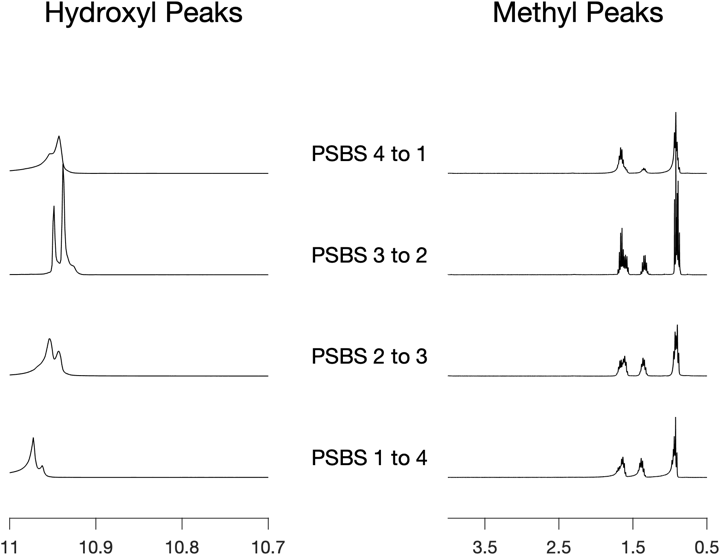
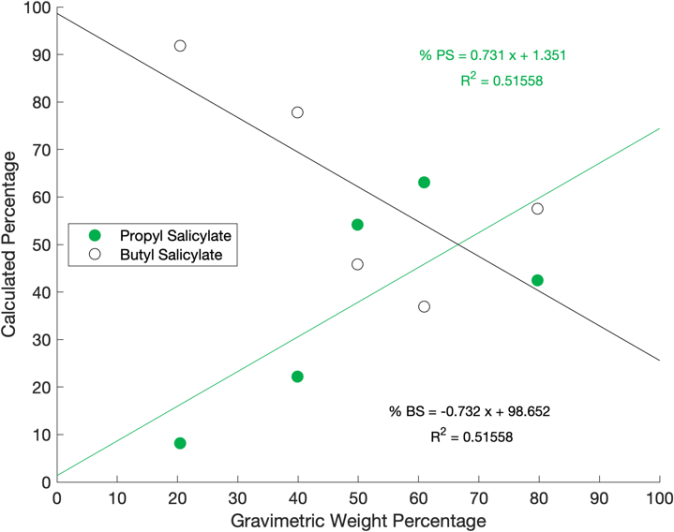
Analyzing the PS:BS binary mixtures also proved to be challenging as the hydroxyl protons were very close to each other and were difficult to deconvolute, as shown in Figure 14. The terminal methyl group proton peaks could not be used either as they fully overlapped. This left the hydroxyl peak integrations the only data to be extracted from the spectra to allow quantification, leading to poor correlation (R2 = 0.5156) between gravimetric weight percent and spectroscopically-derived component percentage, as shown in Figure 15.
When considering the “unknowns” (1:1 binary mixtures), all of the mixtures with methyl salicylate were again easy to analyze. Deconvolution was used for the rest of the mixtures and the values were reasonable. However, when observing ES:BS 1 to 1, it was difficult to isolate the hydroxyl proton peaks because there was again an issue with the shimming. Due to the shimming being poor, this spectrum had a significant amount of noise and asymmetry.


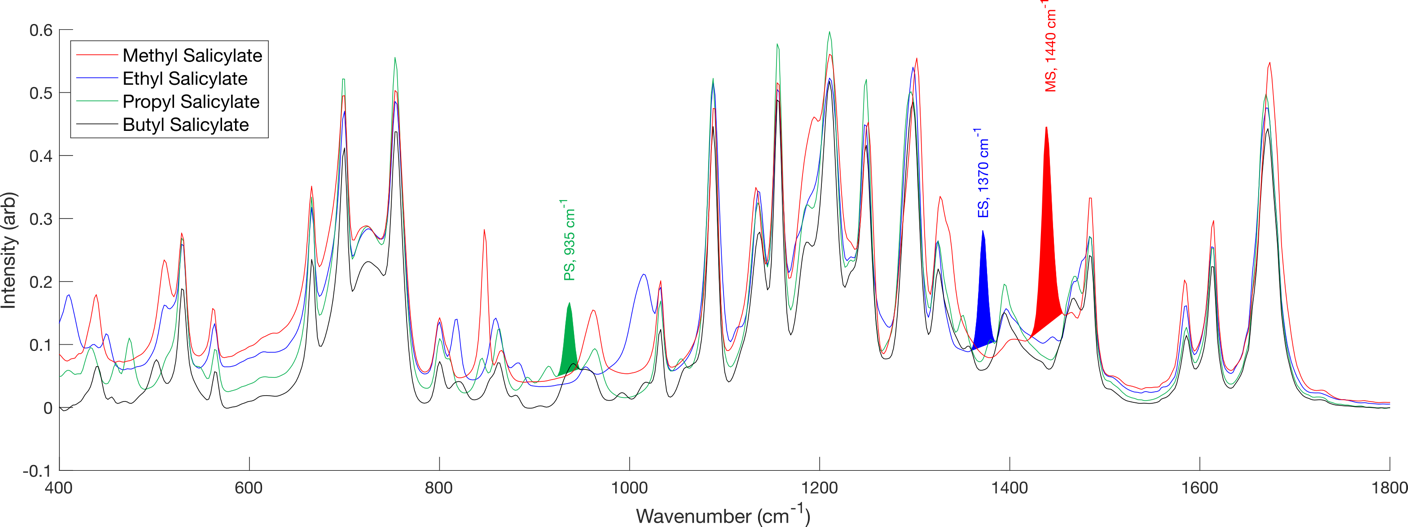
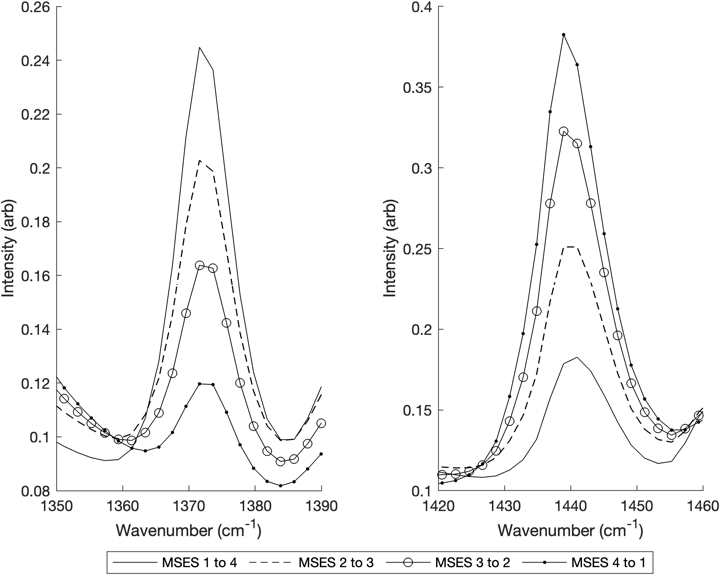
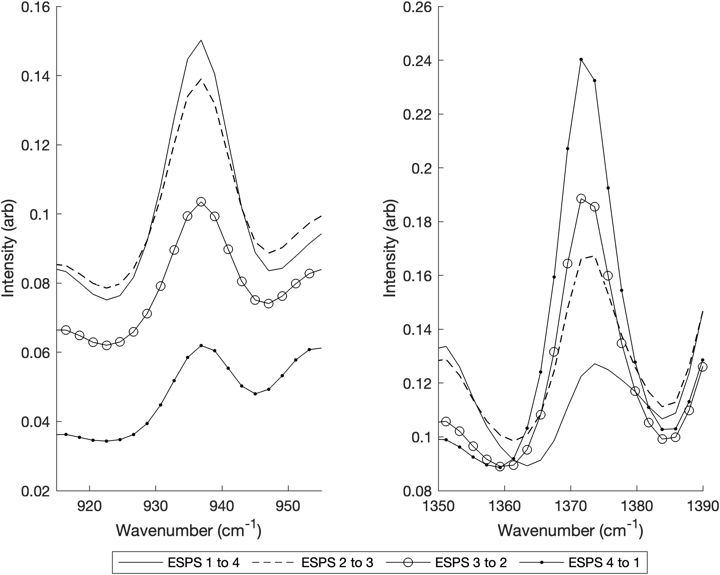
All FTIR spectra have a broad peak corresponding to an O–H stretch between 3100-3000 cm-1, a methyl C–H stretch around 2950 cm-1, a C=O stretch around 1680 cm-1, and a C=C stretch of the aromatic ring near 1600 cm-1. As shown by the overlapped spectra for pure MS, ES, PS, and BS in Figure 16, distinct peaks were found for methyl, ethyl, and propyl salicylates within the fingerprint region between 1435–1445 cm-1, 1365–1375 cm-1, and 930–940 cm-1, respectively. These peaks were visualized and analyzed using a MATLAB script developed in-house. Overlapped spectra showing the changes in peak intensity in MS:ES and ES:PS mixtures of varying composition are shown in Figures 17 and 19, respectively. Butyl salicylate did not have any useful distinct peaks in the fingerprint region, so it was omitted from FTIR analysis.
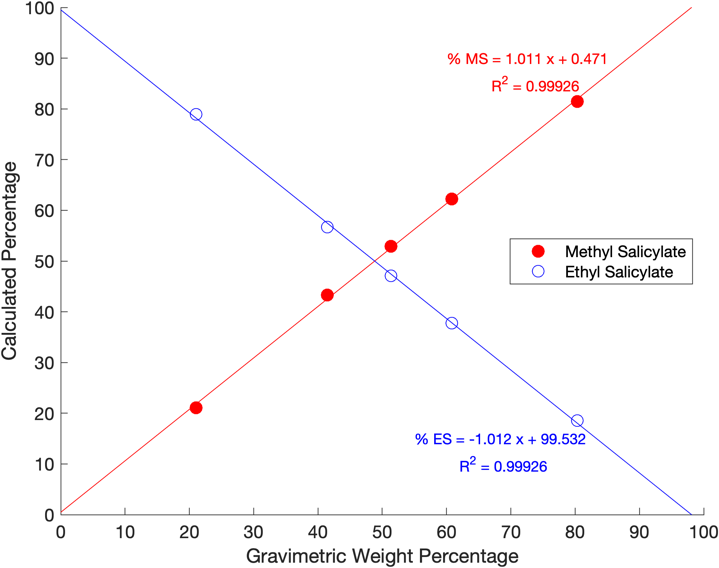
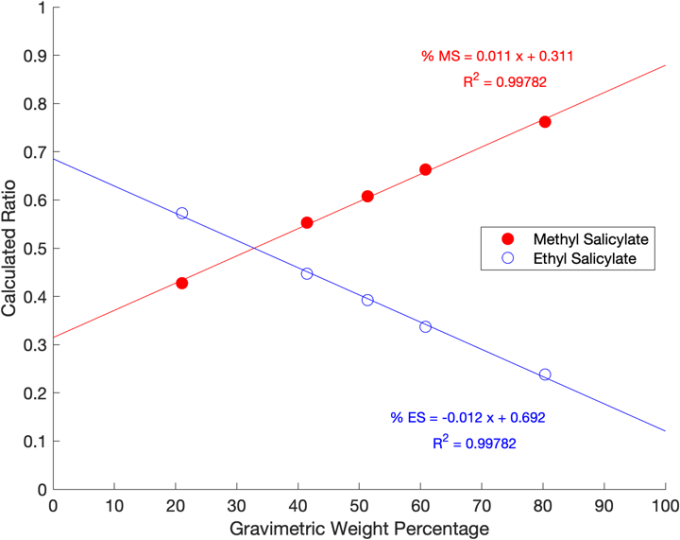
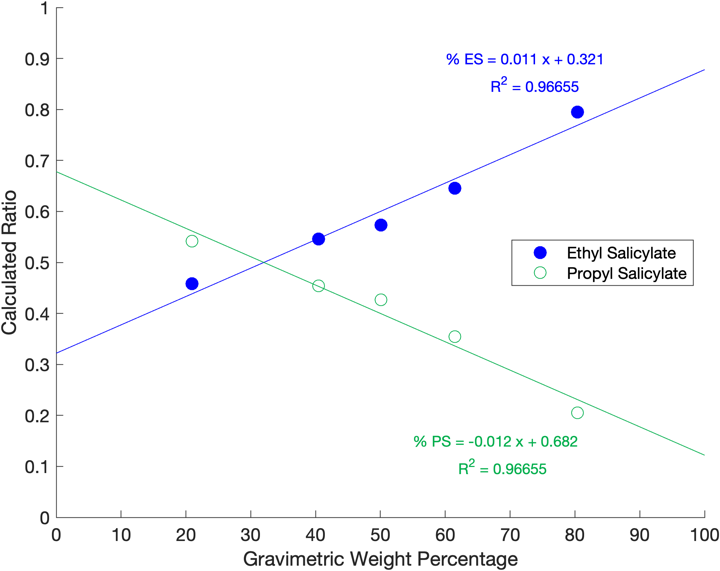
The theoretical weight percentages calculated from the unique peak ratios had good accuracy for mixtures of methyl, ethyl, and propyl salicylates. On the scatter plot in Figures 18 and 20, fractions of MS and ES and ES and PS derived from relative peak intensities in the FTIR absorbance spectra of the MS:ES and ES:PS binary mixtures are compared to the gravimetrically determined


weight percentages. The R2 values of 0.9978 and 0.9666 for the lines of best fit of the MS:ES and ES:PS mixtures, respectively, indicate a strong correlation between the peak intensity ratios and the gravimetric weight percentages. Similar results were obtained for MS:PS binary mixtures (R2 = 0.9615). Despite the strong correlation between the gravimetric weight percentage and the spectroscopically-derived calculated ratios, the trendline does not have the expected slope of approximately one as observed for the GC-FID and 1H NMR data. This likely reflects the contributions of neighboring peaks to the intensities of the peaks of interest used for quantification, causing a non-zero baseline.
Each method has its own strengths and weaknesses. GC-FID yielded highly effective results as the data for each set of binary mixtures had a strong linear correlation with high R2 values. There was no problem with separating and quantifying the salicylate esters with longer alkyl chains. 1H NMR worked exceptionally well for the compounds with fully resolved peaks, however, when deconvoluting some of the peaks, the data was not as accurate. Issues pertaining to the instrument in terms of


shimming and referencing played a role in producing imperfect peaks. As the alkyl chain length increased, it became more and more challenging to have fully resolved peaks without any overlap. Thus, this made it difficult to quantify the propyl salicylate and butyl salicylate binary mixtures. Lastly, using FTIR proved to be tricky because the unique peaks were located in the fingerprint region and when comparing the butyl salicylate ester spectrum to those of the three other compounds, no unique peaks were able to be identified. Therefore, butyl salicylate needed to be removed from the analysis of binary mixtures using FTIR, resulting in this technique only being useful for analyzing only three of the six mixtures used in this study. For the salicylates that had unique peaks, the data illustrated strong linear correlations with high R2 values.
Short chain salicylate esters were identified and quantified using GC–FID, 1H NMR, and FTIR spectroscopy. GC-FID produced fully resolved chromatograms for all samples, which ensured that both components in the binary mixtures could be easily analyzed. 1H NMR spectra depicted hydroxyl resonance at different frequencies for each compound and unique peaks for the hydrogens along each alkyl chain. For the peaks that were not fully resolved, a deconvolution script was applied. Additionally, terminal methyl group proton peaks that experienced no overlap could also be used to confirm the quantifications of the binary mixtures. FTIR spectra displayed unique peaks in the fingerprint region for three out of the four compounds. The integrated peaks in the spectra and the chromatograms were then used to quantify the relative concentrations of the individual components in the binary mixtures to a high degree of accuracy. The peaks in the NMR and IR spectra and the GC-FID chromatograms were able to quantify the relative concentrations of each of the salicylate esters when present in the binary mixtures simultaneously. These results confirm the use of GC-FID, 1H NMR, and FTIR in the identification and quantification of Methyl Salicylate (MS), Ethyl Salicylate (ES), Propyl Salicylate (PS), and Butyl Salicylate (BS).
We acknowledge financial support from new lab startup funds from Hofstra University to Dr. Mary T. Rooney and a Hofstra University HCLAS Faculty Research and Development Grant to Dr. Ronald P. D’Amelia.
MS = methyl salicylate
ES = ethyl salicylate
PS = propyl salicylate
BS = butyl salicylate
NMR = nuclear magnetic resonance spectroscopy
1H NMR = proton nuclear magnetic resonance spectroscopy
FTIR = Fourier-transform infrared spectroscopy
GC-FID = gas chromatography – flame ionization detection
ATR = attenuated total reflectance
| [1] | Swain, A. R., Dutton, S. P. and Truswell, A. S. (1985) Salicylates in foods. J Am Diet Assoc 85. | ||
| In article | View Article | ||
| [2] | Duthie, G. G. and Wood, A. D. (2011) Natural salicylates: Foods, functions and disease prevention. Food Funct. | ||
| In article | View Article PubMed | ||
| [3] | Janssen, P. L. T., Hollman, P. C. H., Venema, D. P., Van Staveren, W. A. and Katan, M. B. (1996) Salicylates in foods. Nutr Rev. | ||
| In article | |||
| [4] | Lapczynski, A., McGinty, D., Jones, L., Bhatia, S., Letizia, C. S. and Api, A. M. (2007) Fragrance material review on ethyl salicylate. Food and Chemical Toxicology. | ||
| In article | View Article PubMed | ||
| [5] | Lapczynski, A., Jones, L., McGinty, D., Bhatia, S. P., Letizia, C. S. and Api, A. M. (2007) Fragrance material review on methyl salicylate. Food and Chemical Toxicology. | ||
| In article | View Article PubMed | ||
| [6] | Lapczynski, A., Jones, L., McGinty, D., Bhatia, S. P., Letizia, C. S. and Api, A. M. (2007) Fragrance material review on butyl salicylate. Food and Chemical Toxicology. | ||
| In article | View Article PubMed | ||
| [7] | Gaudin, J. M. (2014) The quest for odorants having salicylate notes. Flavour Fragr J 29. | ||
| In article | View Article | ||
| [8] | Adams, T. B., Cohen, S. M., Doull, J., Feron, V. J., Goodman, J. I., Marnett, L. J., et al. (2005) The FEMA GRAS assessment of hydroxy- and alkoxy-substituted benzyl derivatives used as flavor ingredients. Food and Chemical Toxicology. | ||
| In article | View Article PubMed | ||
| [9] | Wong, J. M. (2010) Topical salicylates. In The Essence of Analgesia and Analgesics. | ||
| In article | View Article | ||
| [10] | Yeoh, S. C. and Goh, C. F. (2022) Topical delivery of salicylates. Drug Deliv Transl Res. | ||
| In article | View Article PubMed | ||
| [11] | Mason, L., Moore, R. A., Edwards, J. E., Mcquay, H. J., Derry, S. and Wiffen, P. J. (2004) Systematic review of efficacy of topical rubefacients containing salicylates for the treatment of acute and chronic pain. BMJ 328. | ||
| In article | View Article PubMed | ||
| [12] | Mahajan, V. K. (2022) Perfumes and associated allergens: A brief review. Cosmoderma 2. | ||
| In article | View Article | ||
| [13] | Dasgupta, A. and Wahed, A. (2021) Common poisonings including heavy metal poisoning. In Clinical Chemistry, Immunology and Laboratory Quality Control. | ||
| In article | View Article | ||
| [14] | (2025) Labeling of drug preparations containing significant proportions of wintergreen oil. Code Fed Regul, United States | ||
| In article | |||
| [15] | (2025) Labeling of drug preparations containing salicylates. Code Fed Regul, United States | ||
| In article | |||
| [16] | EU. (2009) Regulation (EC) No 1223/2009 of the European Parliament and of the Council of 30 November 2009 on cosmetic products (recast) (Text with EEA relevance). Official Journal of the European Union | ||
| In article | |||
| [17] | Stevens, S. G. E. and Warren, B. (1964) Determination of methyl salicylate in pharmaceutical preparations. Journal of Pharmacy and Pharmacology 16. | ||
| In article | View Article PubMed | ||
| [18] | Sapio, J. P., Sethachutkul, K. and Moody, J. E. (1979) Simultaneous GLC determination of methyl salicylate and menthol in a topical analgesic formulation. J Pharm Sci 68. | ||
| In article | View Article PubMed | ||
| [19] | Tan, H. S. I., Kemper, P. A. and Padron, P. E. (1982) Gas-liquid chromatographic assay of mixtures of camphor, menthol, and methyl salicylate in ointments. J Chromatogr A 238. | ||
| In article | View Article | ||
| [20] | Valdez, J. S., Martin, D. K. and Mayersohn, M. (1999) Sensitive and selective gas chromatographic methods for the quantitation of camphor, menthol and methyl salicylate from human plasma. J Chromatogr B Biomed Sci Appl 729. | ||
| In article | View Article PubMed | ||
| [21] | González-Peñas, E., López-Alvarez, M., Martinez De Narvajas, F. and Ursúa, A. (2000) Simultaneous GC determination of turpentine, camphor, menthol and methyl salicylate in a topical analgesic formulation (Dologex®). Chromatographia 52. | ||
| In article | View Article | ||
| [22] | Krzek, J., Czekaj, J. S. and Rzeszutko, W. (2003) Validation of a method for simultaneous determination of menthol and methyl salicylate in pharmaceuticals by capillary gas chromatography with cool on-column injection. Acta Poloniae Pharmaceutica - Drug Research 60. | ||
| In article | |||
| [23] | Shabir, G. A. and Bradshaw, T. K. (2011) Development and validation of a liquid chromatography method for the determination of methyl salicylate in a medicated cream formulation. Turk J Pharm Sci 8 | ||
| In article | |||
| [24] | Pauwels, J., D’Autry, W., Van den Bossche, L., Dewever, C., Forier, M., Vandenwaeyenberg, S., et al. (2012) Optimization and validation of liquid chromatography and headspace-gas chromatography based methods for the quantitative determination of capsaicinoids, salicylic acid, glycol monosalicylate, methyl salicylate, ethyl salicylate, camphor and l-menthol in a topical formulation. J Pharm Biomed Anal 60. | ||
| In article | View Article PubMed | ||
| [25] | Anyakudo, F., Adams, E. and Van Schepdael, A. (2019) Simultaneous analysis of volatile and semi-volatile components in a topical formulation by gas chromatography using a programmed temperature vaporization inlet and flame ionization detection. J Pharm Biomed Anal 171. | ||
| In article | View Article PubMed | ||
| [26] | James, T., Collins, S., Amlôt, R. and Marczylo, T. (2019) Optimisation and validation of a GC–MS/MS method for the analysis of methyl salicylate in hair and skin samples for use in human-volunteer decontamination studies. J Chromatogr B Analyt Technol Biomed Life Sci 1109. | ||
| In article | View Article PubMed | ||
| [27] | D’Amelia, R. P., Kimura, M. W. and Villon, M.-C. (2021) Qualitative and Quantitative Analyses of Synthesized Short-Chain Fatty Acid Phenyl Esters Using Fourier-Transform Infrared Spectroscopy. World Journal of Organic Chemistry 9. | ||
| In article | View Article | ||
| [28] | D’Amelia, R. P. and Khanyan, B. (2022) Compositional Analysis of Mixtures of Oleate Esters of Short Chain Alcohols (C1-C4) by Quantitative Proton Nuclear Magnetic Resonance Spectroscopy (qPNMR). World Journal of Chemical Education 10. | ||
| In article | View Article | ||
| [29] | D’Amelia, R. P., Kimura, M. W. and Nirode, W. F. (2021) Application of Quantitative Proton Nuclear Magnetic Resonance Spectroscopy for the Compositional Analysis of Short-Chain Fatty Acid Ethyl Ester Mixtures. World Journal of Chemical Education 9. | ||
| In article | View Article | ||
| [30] | D’Amelia, R. P., Kimura, M. W. and Nirode, W. F. (2020) Application of Quantitative Proton Nuclear Magnetic Resonance Spectroscopy for the Compositional Analysis of Short-Chain Fatty Acid Ethyl Ester Mixtures. World Journal of Chemical Education 8. | ||
| In article | View Article | ||
| [31] | D’Amelia, R. P., Mancuso, J. and Wachter, N. (2019) Application of Quantitative Proton Nuclear Magnetic Resonance Spectroscopy for the Compositional Analysis of Short Chain Fatty Acid Benzyl Ester Mixtures. World Journal of Chemical Education 7. | ||
| In article | View Article | ||
| [32] | D’Amelia, R. P., Huang, L., Nirode, W. F., Rotman, E., Shumila, J. and Wachter, N. M. (2015) Application of 1H-NMR for the Quantitative Analysis of Short Chain Fatty Acid Methyl Ester Mixtures: An Undergraduate Instrumental Analysis Experiment. World Journal of Chemical Education 3. | ||
| In article | View Article | ||
| [33] | D’Amelia, R. P. and Kreth, E. H. (2024) Application of Molecular Spectroscopies for the Compositional Analysis of Short Chain Cinnamyl Ester Mixtures. World Journal of Analytical Chemistry 9, 1–9. | ||
| In article | View Article | ||
Published with license by Science and Education Publishing, Copyright © 2025 Ronald P. D’Amelia, Shreya Prasad and Mary T. Rooney
 This work is licensed under a Creative Commons Attribution 4.0 International License. To view a copy of this license, visit
http://creativecommons.org/licenses/by/4.0/
This work is licensed under a Creative Commons Attribution 4.0 International License. To view a copy of this license, visit
http://creativecommons.org/licenses/by/4.0/
| [1] | Swain, A. R., Dutton, S. P. and Truswell, A. S. (1985) Salicylates in foods. J Am Diet Assoc 85. | ||
| In article | View Article | ||
| [2] | Duthie, G. G. and Wood, A. D. (2011) Natural salicylates: Foods, functions and disease prevention. Food Funct. | ||
| In article | View Article PubMed | ||
| [3] | Janssen, P. L. T., Hollman, P. C. H., Venema, D. P., Van Staveren, W. A. and Katan, M. B. (1996) Salicylates in foods. Nutr Rev. | ||
| In article | |||
| [4] | Lapczynski, A., McGinty, D., Jones, L., Bhatia, S., Letizia, C. S. and Api, A. M. (2007) Fragrance material review on ethyl salicylate. Food and Chemical Toxicology. | ||
| In article | View Article PubMed | ||
| [5] | Lapczynski, A., Jones, L., McGinty, D., Bhatia, S. P., Letizia, C. S. and Api, A. M. (2007) Fragrance material review on methyl salicylate. Food and Chemical Toxicology. | ||
| In article | View Article PubMed | ||
| [6] | Lapczynski, A., Jones, L., McGinty, D., Bhatia, S. P., Letizia, C. S. and Api, A. M. (2007) Fragrance material review on butyl salicylate. Food and Chemical Toxicology. | ||
| In article | View Article PubMed | ||
| [7] | Gaudin, J. M. (2014) The quest for odorants having salicylate notes. Flavour Fragr J 29. | ||
| In article | View Article | ||
| [8] | Adams, T. B., Cohen, S. M., Doull, J., Feron, V. J., Goodman, J. I., Marnett, L. J., et al. (2005) The FEMA GRAS assessment of hydroxy- and alkoxy-substituted benzyl derivatives used as flavor ingredients. Food and Chemical Toxicology. | ||
| In article | View Article PubMed | ||
| [9] | Wong, J. M. (2010) Topical salicylates. In The Essence of Analgesia and Analgesics. | ||
| In article | View Article | ||
| [10] | Yeoh, S. C. and Goh, C. F. (2022) Topical delivery of salicylates. Drug Deliv Transl Res. | ||
| In article | View Article PubMed | ||
| [11] | Mason, L., Moore, R. A., Edwards, J. E., Mcquay, H. J., Derry, S. and Wiffen, P. J. (2004) Systematic review of efficacy of topical rubefacients containing salicylates for the treatment of acute and chronic pain. BMJ 328. | ||
| In article | View Article PubMed | ||
| [12] | Mahajan, V. K. (2022) Perfumes and associated allergens: A brief review. Cosmoderma 2. | ||
| In article | View Article | ||
| [13] | Dasgupta, A. and Wahed, A. (2021) Common poisonings including heavy metal poisoning. In Clinical Chemistry, Immunology and Laboratory Quality Control. | ||
| In article | View Article | ||
| [14] | (2025) Labeling of drug preparations containing significant proportions of wintergreen oil. Code Fed Regul, United States | ||
| In article | |||
| [15] | (2025) Labeling of drug preparations containing salicylates. Code Fed Regul, United States | ||
| In article | |||
| [16] | EU. (2009) Regulation (EC) No 1223/2009 of the European Parliament and of the Council of 30 November 2009 on cosmetic products (recast) (Text with EEA relevance). Official Journal of the European Union | ||
| In article | |||
| [17] | Stevens, S. G. E. and Warren, B. (1964) Determination of methyl salicylate in pharmaceutical preparations. Journal of Pharmacy and Pharmacology 16. | ||
| In article | View Article PubMed | ||
| [18] | Sapio, J. P., Sethachutkul, K. and Moody, J. E. (1979) Simultaneous GLC determination of methyl salicylate and menthol in a topical analgesic formulation. J Pharm Sci 68. | ||
| In article | View Article PubMed | ||
| [19] | Tan, H. S. I., Kemper, P. A. and Padron, P. E. (1982) Gas-liquid chromatographic assay of mixtures of camphor, menthol, and methyl salicylate in ointments. J Chromatogr A 238. | ||
| In article | View Article | ||
| [20] | Valdez, J. S., Martin, D. K. and Mayersohn, M. (1999) Sensitive and selective gas chromatographic methods for the quantitation of camphor, menthol and methyl salicylate from human plasma. J Chromatogr B Biomed Sci Appl 729. | ||
| In article | View Article PubMed | ||
| [21] | González-Peñas, E., López-Alvarez, M., Martinez De Narvajas, F. and Ursúa, A. (2000) Simultaneous GC determination of turpentine, camphor, menthol and methyl salicylate in a topical analgesic formulation (Dologex®). Chromatographia 52. | ||
| In article | View Article | ||
| [22] | Krzek, J., Czekaj, J. S. and Rzeszutko, W. (2003) Validation of a method for simultaneous determination of menthol and methyl salicylate in pharmaceuticals by capillary gas chromatography with cool on-column injection. Acta Poloniae Pharmaceutica - Drug Research 60. | ||
| In article | |||
| [23] | Shabir, G. A. and Bradshaw, T. K. (2011) Development and validation of a liquid chromatography method for the determination of methyl salicylate in a medicated cream formulation. Turk J Pharm Sci 8 | ||
| In article | |||
| [24] | Pauwels, J., D’Autry, W., Van den Bossche, L., Dewever, C., Forier, M., Vandenwaeyenberg, S., et al. (2012) Optimization and validation of liquid chromatography and headspace-gas chromatography based methods for the quantitative determination of capsaicinoids, salicylic acid, glycol monosalicylate, methyl salicylate, ethyl salicylate, camphor and l-menthol in a topical formulation. J Pharm Biomed Anal 60. | ||
| In article | View Article PubMed | ||
| [25] | Anyakudo, F., Adams, E. and Van Schepdael, A. (2019) Simultaneous analysis of volatile and semi-volatile components in a topical formulation by gas chromatography using a programmed temperature vaporization inlet and flame ionization detection. J Pharm Biomed Anal 171. | ||
| In article | View Article PubMed | ||
| [26] | James, T., Collins, S., Amlôt, R. and Marczylo, T. (2019) Optimisation and validation of a GC–MS/MS method for the analysis of methyl salicylate in hair and skin samples for use in human-volunteer decontamination studies. J Chromatogr B Analyt Technol Biomed Life Sci 1109. | ||
| In article | View Article PubMed | ||
| [27] | D’Amelia, R. P., Kimura, M. W. and Villon, M.-C. (2021) Qualitative and Quantitative Analyses of Synthesized Short-Chain Fatty Acid Phenyl Esters Using Fourier-Transform Infrared Spectroscopy. World Journal of Organic Chemistry 9. | ||
| In article | View Article | ||
| [28] | D’Amelia, R. P. and Khanyan, B. (2022) Compositional Analysis of Mixtures of Oleate Esters of Short Chain Alcohols (C1-C4) by Quantitative Proton Nuclear Magnetic Resonance Spectroscopy (qPNMR). World Journal of Chemical Education 10. | ||
| In article | View Article | ||
| [29] | D’Amelia, R. P., Kimura, M. W. and Nirode, W. F. (2021) Application of Quantitative Proton Nuclear Magnetic Resonance Spectroscopy for the Compositional Analysis of Short-Chain Fatty Acid Ethyl Ester Mixtures. World Journal of Chemical Education 9. | ||
| In article | View Article | ||
| [30] | D’Amelia, R. P., Kimura, M. W. and Nirode, W. F. (2020) Application of Quantitative Proton Nuclear Magnetic Resonance Spectroscopy for the Compositional Analysis of Short-Chain Fatty Acid Ethyl Ester Mixtures. World Journal of Chemical Education 8. | ||
| In article | View Article | ||
| [31] | D’Amelia, R. P., Mancuso, J. and Wachter, N. (2019) Application of Quantitative Proton Nuclear Magnetic Resonance Spectroscopy for the Compositional Analysis of Short Chain Fatty Acid Benzyl Ester Mixtures. World Journal of Chemical Education 7. | ||
| In article | View Article | ||
| [32] | D’Amelia, R. P., Huang, L., Nirode, W. F., Rotman, E., Shumila, J. and Wachter, N. M. (2015) Application of 1H-NMR for the Quantitative Analysis of Short Chain Fatty Acid Methyl Ester Mixtures: An Undergraduate Instrumental Analysis Experiment. World Journal of Chemical Education 3. | ||
| In article | View Article | ||
| [33] | D’Amelia, R. P. and Kreth, E. H. (2024) Application of Molecular Spectroscopies for the Compositional Analysis of Short Chain Cinnamyl Ester Mixtures. World Journal of Analytical Chemistry 9, 1–9. | ||
| In article | View Article | ||