sciepub.com
 Quick Submission

Synthesis, Characterization and Biodegradation of Gum Arabic-based Bioplastic Membranes
S. S. Z. Hindi1, , Mona. O. Albureikan2, Attieh A. Al-Ghamdi3, Haya Alhummiany4, M. Shahnawaze Ansari5
1Department of Arid Land Agriculture, Faculty of Meteorology, Environment and Arid Land Agriculture, King Abdulaziz University, P.O. Box 80208, Jeddah-21589, Saudi Arabia
2Department of Microbiology, Faculty of Science, King Abdulaziz University
3Department of Physics, University of Jeddah, Saudi Arabia
4Department of Physics, Faculty of Science, Al-Faisaliah Campus, King Abdulaziz University
5Center of Nanotechnology, King Abdulaziz University
Abstract
Gum Arabic (GA) collected from Acacia senegal trees was used with polyvinyl alcohol (PVA) to prepare a series biodegradable membranes. Great success was achieved for production of transparent bioplastic membranes by applying a novel casting method termed as free horizontal flow. The similarities between the six FTIR spectra in their principal peaks are due to their common functional groups. The broad pattern of the GA diffractogram obtained confirmed the amorphous nature of the GA, while the relatively sharpness of the PVA confirmed its semi-crystallinity.The crystallinity index (CI) values were increased with the increasing in the PVA allocation in the blend. Thermal degradation of the samples occurred at the higher temperatures (300-500°C) were greater than those for the lower temperatures (25-300°C). The PVA lost more weight than that for the GA at higher temperatures.The overall energy absorbed up to 500°C and subsequently thermal stability of the bioplastic membranes were increased as the PVA allocation in the blend is increased although the mass loss has the same trend. The GA membranes had the lowest nanometric particle size (NPS), while those for PVA had the highest ones. Increasing the PVA concentrations in the blends increased the NPS gradually. The bioplastic membranes were degraded by the isolated bacteria and fungi comparing with control samples. The major strains of isolated bacteria were Pseudomonas spp. and Bacillus spp., while Rhizobus spp was the major fungus. Addition PVA to GA enhanced the membranes formation and their properties such as crystallinity index, thermal stability and surface roughness.
Keywords: Gum Arabic, polyvinyl alcohol, FTIR, XRD, TGA, DTA, AFM,biodegradation
Copyright © 2017 Science and Education Publishing. All Rights Reserved.Cite this article:
- S. S. Z. Hindi, Mona. O. Albureikan, Attieh A. Al-Ghamdi, Haya Alhummiany, M. Shahnawaze Ansari. Synthesis, Characterization and Biodegradation of Gum Arabic-based Bioplastic Membranes. Nanoscience and Nanotechnology Research. Vol. 4, No. 2, 2017, pp 32-42. http://pubs.sciepub.com/nnr/4/2/1
- Hindi, S. S. Z., et al. "Synthesis, Characterization and Biodegradation of Gum Arabic-based Bioplastic Membranes." Nanoscience and Nanotechnology Research 4.2 (2017): 32-42.
- Hindi, S. S. Z. , Albureikan, M. O. , Al-Ghamdi, A. A. , Alhummiany, H. , & Ansari, M. S. (2017). Synthesis, Characterization and Biodegradation of Gum Arabic-based Bioplastic Membranes. Nanoscience and Nanotechnology Research, 4(2), 32-42.
- Hindi, S. S. Z., Mona. O. Albureikan, Attieh A. Al-Ghamdi, Haya Alhummiany, and M. Shahnawaze Ansari. "Synthesis, Characterization and Biodegradation of Gum Arabic-based Bioplastic Membranes." Nanoscience and Nanotechnology Research 4, no. 2 (2017): 32-42.
| Import into BibTeX | Import into EndNote | Import into RefMan | Import into RefWorks |
At a glance: Figures
1. Introduction
Global environmental concerns regarding non-degradability, unsustainability and non-renewability of petroleum based polymers have forced researchers for developing fully depended on natural resources materials. There are several kinds of biodegradable polymers have been using in different industrial applications such as poly-lactic acid/poly-lactide, poly-3-hydroxy-butyrate, thermo plastic starch, gelatin and gum Arabic (GA). It is the kind of natural edible exudate gum derived from mature stems and branches of different species of acacia trees, especially Acacia Senegal [1]. The GA liquid is rich in soluble fibers and is usually produces under drought conditions in poor soil fertility and for injured plant [2]. It has main compounds with different functional properties, namely carbohydrate (hydrophilic) and protein components (hydrophobic) that makes it a favorable as a food additive [3].
The GA has a nobel physio-chemical properties [4, 5] that makes it is desired as a stabilizer, a thickener, and as a packaging material in food and pharmaceuticals [6]. In addition, it can be used to produce biodegradable bioplastic products with high strength. It is heterogeneous in nature and plays an important role in stabilization of dispersed system [7, 8]. The effective stabilization properties of the GA are due to its solubility in water and affinity for oil at a wide range of pH. For the chemical structure of the GA, it consists essentially of polysaccharides with high molecular weights as well as high concentrations of Ca, Mn, and K minerals [9].
Three different fractions constitute the GA matrix: 1) Arabinogalactan-protein complex with a molecular weight (MW) of 1500 kDa representing about 10% total gum solids, 2) Arabinogalactan having a MW of 280 kDa with about 88% total gum solids, 3) and glycoprotein that has a low MW of 250 kDa in about 2% total gum solids) [10, 11, 12]. The production of arabinogalactan films are difficult due its branching pattern and low molecular weight [13, 14].
For the modern in vivo and in vitro medical applications, the GA is suitable due to its biocompatibility and stabilization of its nanostructures. Furthermore, the GA was used to coat and increase biocompatibility of iron oxide magnetic nanoparticles [15, 16], gold nanoparticles [17], carbon nanotubes [18] and quantum dot nanocolloidals [19].
PVA is a synthetic polymer that has been used globally during the first half of the 20th century [20]. It has a solubilized crystalline structure in water and aqueous solutions [21]. The PVA has the ability to produce excellent film with good mechanical properties [22] and chemically resistant-emulsifier [23] with good adhesion property [24]. The PVA has wide commercial applications due to its unique chemical and physical properties such as nontoxicity, high crystallinity and water solubility [25]. It has been applied in the industrial, commercial, medical, pharmaceutical and food sectors such as lacquers, resins, surgical threads, food packaging materials [4, 5, 20], paper coating and textile sizing [26]. Furthermore, the PVA is utilized for various industrial applications to enhance the mechanical properties of films because of its compatible structure and hydrophilic properties [27].
Researchers have tried to enhance the processing ability, physico-chemical properties of natural polymers and reducing the non-biodegradability of synthetic polymers by blending them in different ratios to obtain a new composite with suitable properties. Studies shows that polyethylene, polyethylene oxide, and, poly-vinyl-pyrolidone), poly-lactic acid, and polyvinyl-alcohol when blended with natural polymers exhibits tendency towards biodegradability [28, 29, 30, 31, 32, 33].
The presence of huge number of hydroxyl, carboxylic and carbonyl groups in bioplastic make it chemical reluctant and environmentally benign medium [34]. The PVA is easily degradable by biological organisms [21, 34]. Many microorganism that able to degrade PVA and GA have been identified [35, 36, 37].
The degradation mechanism of a bioplastic includes biotic and abiotic factors which exist together naturally in the soil [38]. Recently, many of biodegradable polymers have prepared recently and some of microbial enzymes of identified are found to be able to degrade them [39]. In biodegradation process, the microbial communities of bacteria, fungi, and yeasts can consume a bioplastic as a nutrient source [30, 34, 40]. Some petroleum-based polymers are biologically decomposable under aerobic (composting) or anaerobic (landfill) conditions [41, 42]. Many microorganism that are able to degrade PVA and GA have been identified [35, 37]. Biodegradability of gum Arabic was studied by Abdalla [43] who studied the effect of enzymatic degradation by using Papain at 63°C and 37°C for 60 minutes. Maximum degradation was observed at 63°C. The results from gel permeation chromatography showed that the samples were completely removed.
The degree of hydrolysis, stereo-regularity, 1,2-glycol content and molecular weight determines the biodegradability of PVA. Symbiotic and single microorganisms capable of degrading PVA have been found. The main chains of PVA are degraded in the presence of different enzymes. In enzymatic degradation, oxidase or dehydrogenase are responsible for breaking the carbon-carbon linkages present in PVA. In previous studies, both of PVA and GA were blended together or with other polymers to improve their properties and biodegradability [25, 31, 33].
Objectives
The aim of the current research is to study the effects of different compositions of GA and PVA blended together in different concentrations and biodegradability of the resultant bioplastic membranes.
2. Experimental
Raw Material
The GA with molecular weight (about Mw: 1.827 × 10⁶ g/mole) was collected from Acacia senegal trees habitated at Hada Al-Sham (about 120 km apart from Jeddah). PVA as ACS reagent, Mw 88000, 88% deacetylated) was blended with the GA to prepare six bio-plastic membranes using deionized water as a solvent.
Preparation of precursor Solutions
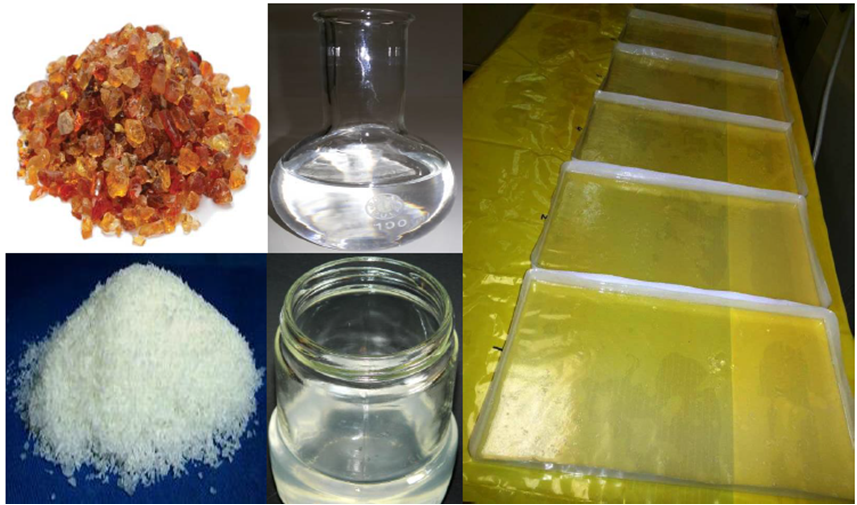
5 wt% aqueous solutions of each of AG, and PVA were prepared in deionized water. For the aqueous solution of the GA, the crude granules were dissolved in deionized water at 80°C with continuous stirring until all the granules were disappeared. The clear solution (Figure 1) was obtained by removal of insoluble components by vacuum filtration using 120 mesh standard screen.

 Download as

Preparation of the Bioplastic Blends
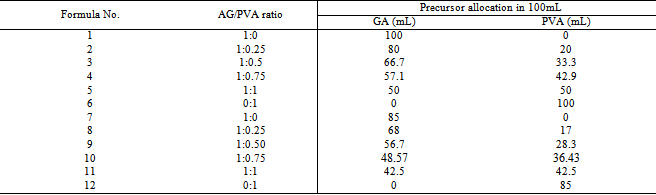
The different bioplastic blends of AG/PVA were prepared by mixing their 5% wt/wt aqueous solutions according to the different weight ratios shown in Table 1 with continuous calm stirring until the solution becomes completely homogenous. The stirring process must be calm to ensure non-introducing much air bubbles into the solution.
Table 1. GA/PVA ratio and precursor allocation in 100mL-blend of bioplastic membrane blended from 5% wt/wt-aquous solutions of gum Arabic (GA), and polyvinyl alcohol (PVA)


, and polyvinyl alcohol (PVA))


Preparation of the Bioplastic Membranes
After obtaining the homogeneity and clearance, the bubble-free blend solution was poured onto a clean panel of poly(methyl methacrylate) termed as acrylic with prominent frame and allowed to be evaporated at room temperature. The acrylic panel was chosen to be non-sticky with the blend materials and the membranes can be easily peeled off the panels after drying and curing. The peeled membranes were kept in vacuum desiccators until use (Figure 1). The pouring process of the blends onto the acrylic substrate was done by application of the free horizontal flow method for production of transparent biodegradable films according to Hindi and Albureikan [45]. The thickness of the membrane was controlled by pouring a definite amount of blend solution.
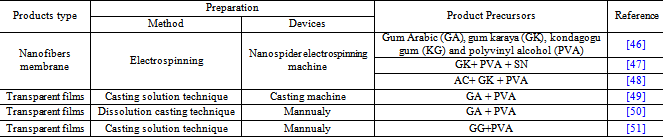
The novelty of the free horizontal flow method for production of relatively thick-transparent membranes are confirmed by collecting the most recent attempts related to the bioplastic materials and manufacturing (Table 2).
Table 2. Recent attempts of prior art of bioplastics made from gum Arabic (GA), gum karaya (GK), kondagogu gum (KG), guar gum (GG), polyvinyl alcohol (PVA), silver nanoparticles (SN), activated carbon (AC)

, gum karaya (GK), kondagogu gum (KG), guar gum (GG), polyvinyl alcohol (PVA), silver nanoparticles (SN), activated carbon (AC))


3. Characterization
Fourier transform infrared spectroscopy (FTIR)
For studying the chemical structure of the six bioplastic blends (GA/PVA=1/0, 1/0.25, 1/0.5, 1/0.75, 1/1 and 0/1), functional groups were studied using a Bruker Tensor 37 FTIR spectrophotometer. The samples were oven-dried at 100°C±5°C for about 4-5 h, mixed with potassium bromide in a ratio of 1:200 (w/w) and pressed under vacuum into pellets. The FTIR-spectra of the samples were recorded between 4000-500 cm-1 in the transmittance mode [52].
X-Ray Diffraction (XRD)
The XRD spectra of the six bioplastics membranes were measured by using XRD 7000 Shimadzu diffractometer (Japan) according to Hindi [53]. The system contains a rotating anode generator with a copper target and wide angle powder goniometer. The measurements were applied using CuKα radiation constituted from Kα1 (0.15406 nm) and Kα2 (0.15444 nm.) The resultant radiation is filtered out from the noises using a single-channel analyzer. Each of the divergence and scatter slits was 1⁰ and the receiving slit was 0.15 mm at the same radius. About 0.5 g of a dried bioplastic membrane was mounted on a quartz substrate by using drops of diluted amorphous glue. All samples were scanned in two theta ranged from 5° to 40°. All the experiments were applied at a scan speed of 4° /min in steps of 0.05° in the reflection mode.
Crystallinity Index (CI)
After smoothing the resultant crystalline peaks from the diffraction intensity profiles, the CI was estimated by dividing the area under the crystalline peak of the bioplastic blend by the total area of the original diffractogram. The area under the curve was determined by summing of adjacent trapezoids using Excel (Microsoft, USA) as indicated by Hindi [53].
Thermal Analysis
This characterization was done for the six bioplastic formulas. The thermogravimetric analysis (TGA) and the differential thermal analysis (DTA) of each formula was performed by using a Seiko & star 6300 analyzer, Central Laboratory, Faculty of Science, Alexandria University, Egypt. Heating scans were done from 30°C up to the final maximum temperature of 550 °C with a heating rate of 20 °C/min in nitrogen atmosphere [52].
Surface roughness (SR)
The SR was investigated by atomic force microscopy (AFM) by using Omicron VT AFM. XA to see the membranous surfaces in full three-dimensional structure up to the nanometric scale. The method can be applied to synthetic or natural materials such as tissues, cells and biomolecules irrespective of their opaqueness or conductivity. The AFM topography investigations were performed by Omicron VT AFM. XA.
Biodegradation by bacteria and fungi
The soil used for burying the bioplastic samples were obtained from the Agricultural Research Station (ARS) of the Faculty of Meteorology, Environment and Arid Land Agriculture of King Abdullaziz University in Hada Al-Sham. The site is located at about 120 km Northern–West of Jeddah (N= 21° 48- 3=, E= 39° 43- 25=), 240 m above sea level.
Isolation of microbial communities.
One gram of each soil sample was suspended in sterile distilled water and allowed to stand for several minutes. After that, the supernatant was serial diluted among six tubes and 1 ml from each dilution was plated in nutrient agar medium NA (Oxoid) for bacterial isolation while using potato dextrose agar medium PDA (Oxoid) for fungi isolates. Finally, the plates were incubated at 30°C and pH 7 for 2-7 days in order to count the bacteria and for 7–10 days at 25°C and pH 5 to count the fungi. The microorganisms were isolated and identified by using standard biochemical tests based on the cultural and morphological characters [30].
Sample Preparation and soil burial studies
The different bioplastic samples were cut into 2 × 2 cm pieces and buried in the soil that wear in boxes (1L) /sample at a depth of 10 cm. All pieces were weighed before being placed in the soil and they were between 0.040- 0.038 mg. The soil boxes were placed in the laboratory, and the moisture of the soil was adjusted by the addition of sterile water to compensate water loss through evaporation. A hole at the bottom of the boxes was put to drain the excess water through it. Soil samples were taken carefully after 30 days and 60 days to isolate and count the microorganism's community and observing the different morphological change in in their surfaces as a result of degradation [54].
Statistical Design and Analysis
Randomized complete block design was used to evaluate the different properties of the six bioplastic membranes blended from the aqueous solutions of GA, and PVA. Statistical analysis of the obtained data was performed using the analysis of variance method and least significant difference test (LSD) at 0.05 according to El-Nakhlawy [55].
4. Results and Discussion
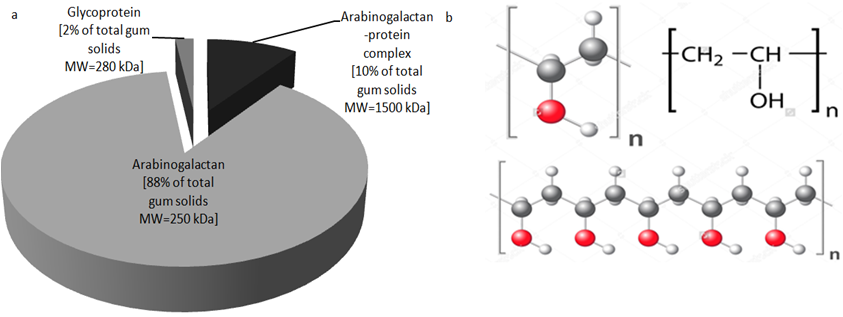
It is clear from Figure 2a that the GA is chemically constituted from three components, namely Arabinogalactan that constitutes about 88% of total gum solids having a molecular weight (MW) of 250 kDa, Arabinogalactan-protein complex (10% of total gum solids and MW=1500 kDa), and glycoprotein (2% of total gum solids and MW=280 kDa). According to the chemical structure of PVA presented in Figure 2b with the formula of [CH2CH(OH)]n, it has three atoms, namely carbon, hydrogen, and oxygen that they are principally constitute the GA matrix.
 Download as
Fourier Transform Infrared Spectroscopy (FTIR)
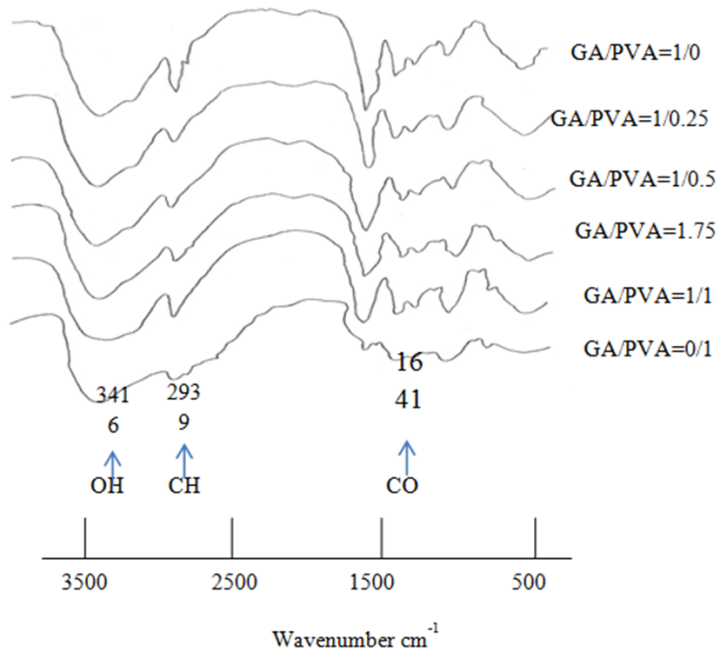
It can be seen from Figure 3 that the FTIR spectra of the six bioplastic membranes are dominated by the strong and broad 0-H stretching vibrations at 3416 cm-1. The C-H stretching modes are riding over the board peak at 2939cm-1. The carbonyl stretching modes are observed at 1641 cm-1 together with bulk ring mode at 1426 cm-1. The characteristic C-O-C antisymmetric strecthing mode was detected at 1047 cm-1. These results are adapted with those obtained by Sismanoglu et al. [56] and Bouaziz et al. [57] as well as Anicuta et al. [58] for PVA investigation. The similarities between the six FTIR spectra in their principal peaks are due to their common functional groups.
 Download as
X-Ray Diffraction (XRD)
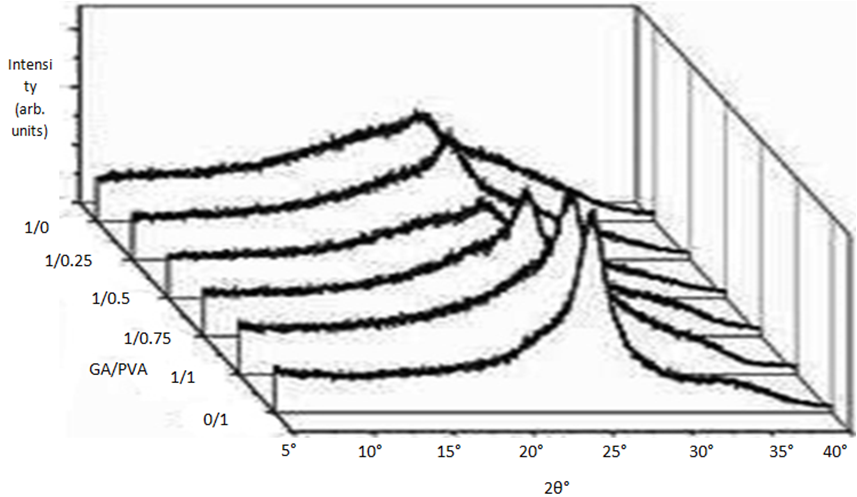
The XRD technique is used to determine the crystallinity of polymeric blends. The maximum intensity of the GA-broad diffractogram was obtained at 2θ=20° (Figure 4) that confirms the amorphous nature of the gum Arabic [9]. In addition, pure PVA known as a semi-crystalline polymer [58, 59] exhibited a typical peak at 2θ=19.9° (Figure 4).
 Download as
Crystallinity Index (CI)
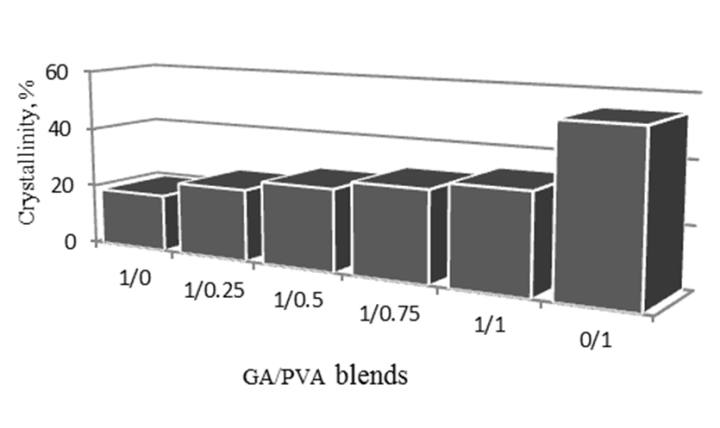
The CI is a useful indicator about the physical, chemical, and mechanical properties of a material [74]. For the bioplastic blends, the CI values were found to be increased from 18.9% (for pure GA) up to 53.7% (for pure PVA) as shown in Figure 5. Accordingly, it is clear that the increasing in the CI of the bioplastic blends can be attributed to the increasing of the PVA allocation in the blend.
 Download as
Thermal Analysis (TA)
Thermal analysis included two different techniques, namely thermogravimetric analysis (TGA), and differential thermal analysis (DTA).
Thermogravimetric analysis (TGA)
The TGA measures the change in mass for the bioplastic blend as affected by temperature and time in well controlled atmosphere. It is ideally used to investigate volatile content, thermal stability, degradation response, aging and lifetime breakdown, sintering behavior and reaction kinetics.
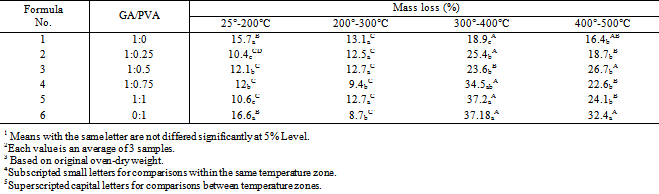
The mass losses of the bioplastic membranous samples were focused on four temperature regions, namely 25°-200°C, 200°-300°C, 300°-400°C, and 400°-500°C (Table 3). Comparing the mass losses between temperature regions revealed that thermal degradation of the samples occurred at the higher temperatures (300-500°C) were higher than those for the lower temperatures (25-300°C). Comparing the mass losses within the temperature regions showed that PVA lost more weight (37.18 % and 32.4%) than that for the GA (18.9% and 16.4%) at the higher temperature zones (300°-400°C and 400°-500°C, respectively).
The mass loss occurred up to 100°C can be attributed to high solvation capacity with water molecule showing evaporation of free water. Furthermore, upon heating up to 150°C, the mass loss can be attributed to the evaporation of hygroscopic water [52].
Table 3. Mean1-5 values of mass loss (%) of the six bioplastic membranes blended from gum Arabic (GA) and polyvinyl alcohol (PVA) with the different ratios occurred upon thermal exposure up to 500°C

 of the six bioplastic membranes blended from gum Arabic (GA) and polyvinyl alcohol (PVA) with the different ratios occurred upon thermal exposure up to 500°C)

Differential Thermal Analysis (DTA)
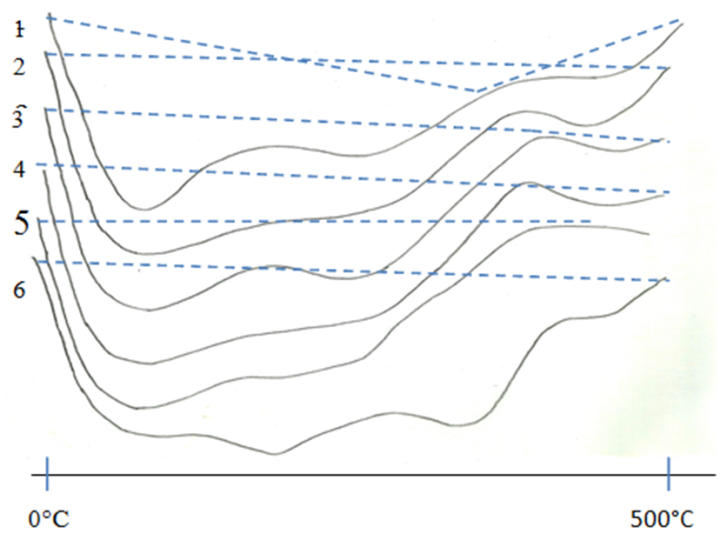
The DTA measures the temperature difference of the sample versus a reference, caused by thermal treatments in a material providing similar information to differential scanning calorimetry (DSC). The DTA usually complements TGA with phase transition information. It is well known that upon thermal reactions, there are two types of thermograms can be differentiated for a certain material, namely endotherm that consumes energy and/or exotherm that excludes energy. The formation of exograms can be attributed to depolymerization of the bioplastic materials themselves as a result of heat treatment. Furthermore, the endotherm can be attributed to evaporation of free moisture (up to 100°C) and hygroscopic moisture (up to 120°C) as well as fusion or melting process of crystallites [52].
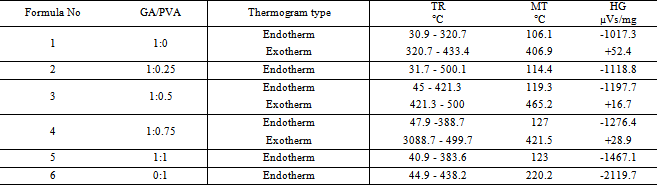
The DTA results of the six bioplastic are presented in Table 4 and Figure 6. Comparing the thermograms of pure GA and PVA membranes (GA/PVA=0/1 and 1/0, respectively) revealed that the GA thermogram was differentiated into two distinct regions (endotherm and exotherm), while the PVA thermogram had a unique thermal state termed as endotherm. In addition, the bioplastic thermograms of GA/PVA of 1/0.5, and 1/0.75 had both endo-and exotherms, while GA/PVA blends of 1/0.25, and 1/1 had a unique endotherm. For more details, the temperature range of each thermogram and the maximum temperature of the six bioplastic blends are presented in Table 4. In addition, the absolute values of the heat change values for the endotherms ranged from 1017.3 µVs/mg to 2268.8 µVs/mg and were higher than those for the exotherms (16 µVs/mg -52.4 µVs/mg). In addition, the endotherm of the pure PVA (Formula no. 6) absorbed the highest energy (2119.7 µVs/mg) among the other bioplastic blends, while the GA had the lowest value of the heat change (-1017.3 µVs/mg). The overall energy absorbed up to 500°C and subsequently thermal stability of the bioplastic membranes were increased as the PVA allocation in the blend is increased although the mass loss has the same trend. Accordingly, the PVA is more thermally stable than the GA due to its higher absorption of the heat released that prevents the bioplastic sample from probable thermal degradation caused by increasing temperature [52]. In addition, the thermal stability of the bioplastic membranes were increased with the increasing in the PVA allocation in the blends.
Table 4. Differential thermal analysis (DTA) output for temperature range (TR), maximum temperature (MT) and heat change (HG) of the six bioplastic membranes blended from gum Arabic (GA) and polyvinyl alcohol (PVA) with different ratios upon thermal exposure up to 500°C

 output for temperature range (TR), maximum temperature (MT) and heat change (HG) of the six bioplastic membranes blended from gum Arabic (GA) and polyvinyl alcohol (PVA) with different ratios upon thermal exposure up to 500°C)

 Download as
Nanometric Particle Size (NPS)
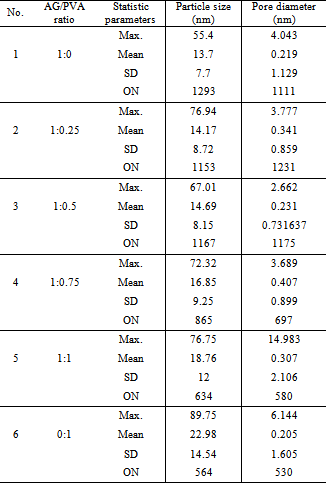
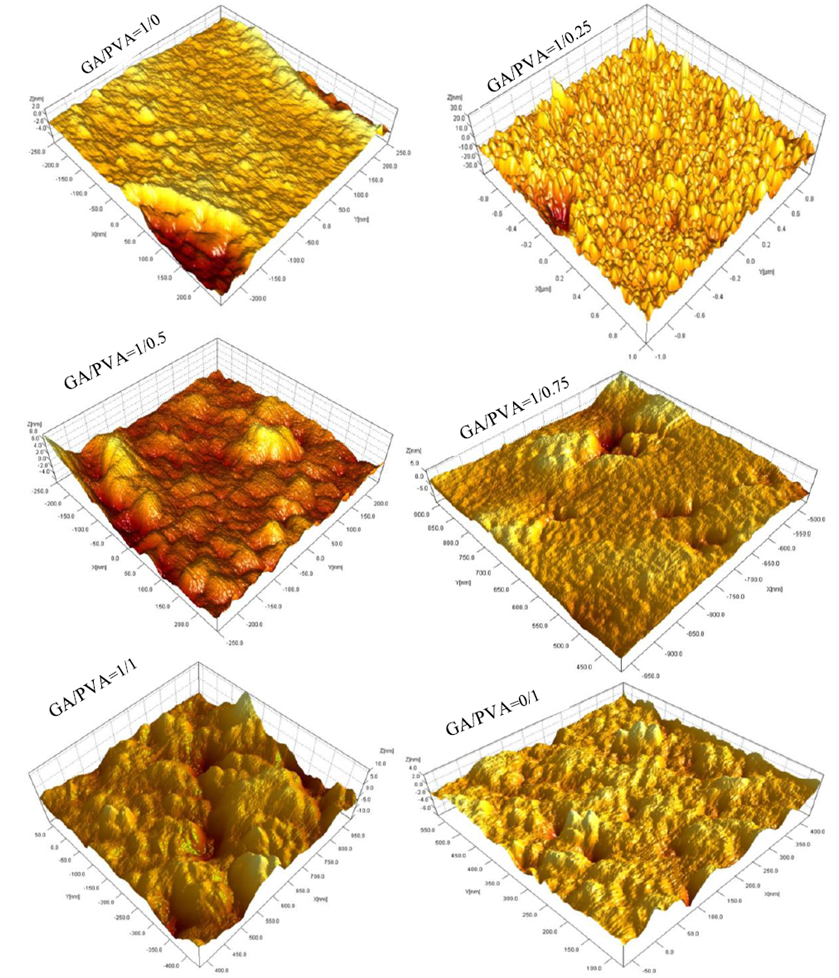
For the nanometric particle size (NPS) of the six bioplastic membranes presented at Table 5, the GA membranes had the lowest NPS for each of mean (13.7 nm) and maximum values (55.4 nm). On the other hand, the PVA membranes had the highest NPS values (22.98 and 89.75 nm for mean and maximum values, respectively). In between, increasing the PVA concentration in the bioplastic blends increased the NPS gradually. This can be confirmed by the surface roughness features investigated by atomic force microscope (AFM) as shown in Figure 7.
Table 5. Some statistic parameters, namely maximum value (Max.), mean, observations number (ON) and standard deviation (SD) of particle size and pore diameter of the bioplastic membranes blended from gum Arabic (GA) and polyvinyl alcohol (PVA)

, mean, observations number (ON) and standard deviation (SD) of particle size and pore diameter of the bioplastic membranes blended from gum Arabic (GA) and polyvinyl alcohol (PVA))

 Download as
Biodegradation bacteria and fungi
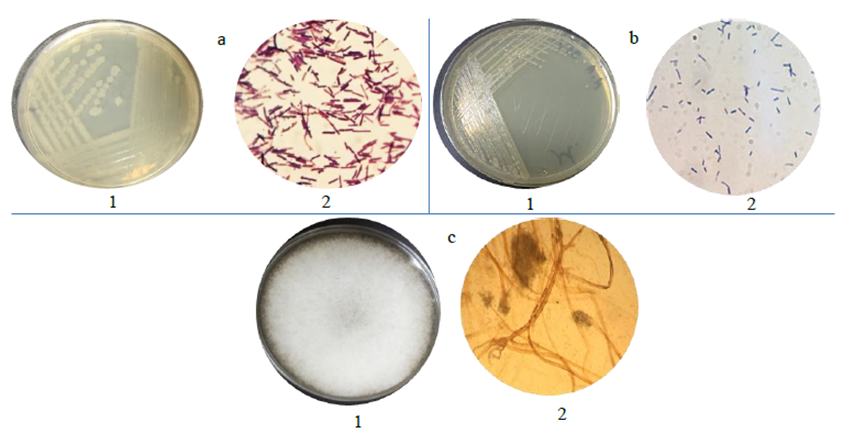
The microbial communities for the initial soil samples the buried bioplastic membranes were found to be different in number and species (Figure 8).
 Download as
The species of bacteria and fungi were differed according to the type of buried membrane. For the buried PVA, the dominant species were Pseudomonas spp [60], Bacillus spp, Azotobacter spp, [36, 60], Aspergillus spp [61] and Penicillium spp [62]. In addition, for the buried GA, the major species were Bacillus spp [37], Pseudomonas spp, Aspergillus spp, Rhizorpous spp, Fusarium spp, Penicillium spp, and yeast Saccharomyces [37]. In addition, the microbial communities of the bioplastic blends, namely (GA/PVA=1:1), (GA/PVA=1: 0.75), (GA/PVA=0.5) and (GA/PVA=1:0.25) contained Bacillus spp [36], Pseudomonas spp, Aspergillus spp, Rhizorpous spp, Fusarium spp and Penicillium spp. Furthermore, the bacteria species detected were more than fungi that disagree with that found by Mergaert et al. [30] who found that the fungal isolates had high capability of utilizing his membranes as growth substrates than bacteria.
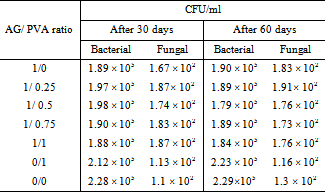
The data of the colony forming units (CFU) of microbial populations species are presented in Table 6. The total numbers of bacteria and fungi including yeast in the initial soil sample were found to be 2.28 × 10⁵ and 1.1 × 10² CFU/ml, respectively and were greater than those for GA and PVA (Table 6). The CFU of GA alone (GA/PVA=1/0) was lower than that for pure PVA (GA/PVA=0/1) after 30 and 60 days. There were no clear differences in the CFU values obtained after 30 and 60 days for all the six bioplastic membranes. It is very clear that the number and the species of bacterial and fungal strains in all types of bioplastic membranes comparing with the initial soil sample were different, and this is because the microbial communities of bacteria, fungi, and yeasts can consume GA and PVA as a nutrient source especially as carbon [29, 30, 34]. Also, the number and the bacterial with fungal species in the GA membrane were more than PVA which is proved that microorganisms prefer the GA as a source of carbon than PVA depending on the microbial degrading enzymes and this is explain the long time that required to degrade the PVA [35]. Finally, consuming of GA and PVA by microorganisms leading to visible change in the membranes surface after 30 and 60 days comparing with the original membranes which proved the biodegradation [63].
Table 6. Colony forming units (CFU) of microbial populations for bacterial and fungal species in the six buried bioplastic membranes blended from gum Arabic (GA) and polyvinyl alcohol (PVA) with the different GA/PVA ratios of 1/0, 1/0.25, 1/0.5, 1/0.75, 1/1 and 0/1 as compared with the control soil samples (GA/PVA=0/0)

 of microbial populations for bacterial and fungal species in the six buried bioplastic membranes blended from gum Arabic (GA) and polyvinyl alcohol (PVA) with the different GA/PVA ratios of 1/0, 1/0.25, 1/0.5, 1/0.75, 1/1 and 0/1 as compared with the control soil samples (GA/PVA=0/0))

5. Conclusions
• Great success was achieved for production of transparent bioplastic membranes by applying a novel casting method termed as the free horizontal flow on the non-sticky acrylic surfaces.
• FTIR peaks of the six bioplastic membranes were arisen at 3416 cm-1 for O-H stretching vibrations, 2939 cm-1 for C-H stretching modes, 1641 cm-1 for the carbonyl stretching modes together with bulk ring mode at 1426 cm-1 and 1047 cm-1 and 1047 cm-1 for C-O-C antisymmetric strecthing. The similarities between the FTIR spectra are due to their common functional groups.
• The absolute values of the heat change values for the endotherms ranged from 1017.3 µVs/mg to 2268.8 µVs/mg and were higher than those for the exotherms (16 µVs/mg -52.4 µVs/mg).
• The broad pattern of the gum Arabic diffractogram confirmed its amorphous nature, while the relatively sharpness of the polyvinyl alcohol confirmed its semi-crystallinity. The crystallinity index values were increased with the increasing in the polyvinyl alcohol concentration.
• Thermal degradation of the samples occurred at the higher temperatures (300-500°C) were higher than those for the lower temperatures (25-300°C).
• The gum Arabic membrane had the lowest nanometric particle size, while those for the polyvinyl alcohol had the highest ones. Increasing the polyvinyl alcohol concentration in the bioplastic blends increased the NPS gradually.
• The species of bacteria and fungi were differed according to the type of buried membrane the and bacterial species detected were more than fungi.
• For the buried polyvinyl alcohol, the dominant species were Pseudomonas spp, Bacillus spp, Aspergillus spp and Penicillium spp., while for the buried GA, the major species were Bacillus spp, Pseudomonas spp, Aspergillus spp, Rhizorpous spp, Fusarium spp, Penicillium spp, and yeast Saccharomyces.
Acknowledgments
This project was funded by the Deanship of Scientific Research (DSR), King Abdulaziz University, Jeddah under grants no. 85/155/1434 and, respectively. The authors therefore, acknowledge with thanks the DSR for technical and financial support. Appreciation to the Center of Nanotechnology (CN) for its technical assistance.
References
| [1] | Badreldin H. A., Al-Husseni, I., Beegam, S., Al-Shukaili, A., Nemmar, A., Schierling, S., Queisser, N. and Schupp, N. 2013. Effect of gum Arabic on oxidative stress and inflammation in adenine–induced chronic renal failure in rats. PLoS One, 8(2): e55242. | ||
 In article In article | View Article PubMed | ||
| [2] | Williams, P. A., and Phillips, G. O. 2000. Handbook of Hydrocolloids. Williams, P. A., Phillips, G. O., Eds.; CRC Press, Cambridge, Elsevier. 2000. 155-168. | ||
| In article | |||
| [3] | FAO Rome. 1990. Food and Nutrition. Food and Agriculture Organiztion, Rome: pp 49. | ||
| In article | |||
| [4] | Wang, H., Williams, P. A., and Senan, C. 2014. Synthesis, characterization and emulsification properties of dodecenyl succinic anhydride derivatives of gum Arabic. Food Hydrocoll., 37: 143-148. | ||
| In article | View Article | ||
| [5] | Ali, B. H., Ziada, A., and Blunden, G. 2009. Biological effects of gum arabic: a review of some recent research. Food Chem. Toxicol., 47(1): 1-8. | ||
| In article | View Article PubMed | ||
| [6] | Verbeken, D., Dierckx, S., and Dewettinck, K. 2003. Exudate gums: occurrence, production, and applications. Appl. Microbiol. Biotechnol., 63(1): 10-21. | ||
| In article | View Article PubMed | ||
| [7] | Anderson, D. M. W., and Farquhar, J. G. K. 1982. Gum exudates from the genus Prosopis. International Tree Crops Journal, 2(1): 15-24. | ||
| In article | View Article | ||
| [8] | Anderson, D. M. W., McNab, C. G. A., Anderson, C. G., Brown, P. M., and Pringuer, M. A. 1983. Studies of uronic acid materials, Part 58: Gum exudates from the genus Sterculia (gum karaya). International Tree Crops Journal, 2(2): 147-154. | ||
| In article | View Article | ||
| [9] | Almuslet, N. A., Hassan, E. A., Al-Sherbini, A. A. M., Muhgoub, M. G. A. 2012. Diode laser (532 nm) induced grafting of polyacrylamide onto gum Arabic. Journal of Physical Science, 23: 43-53. | ||
| In article | |||
| [10] | Randall, R. C., Phillips, G. O., and Williams, P. A. 1988. The role of the proteinaceous component on the emulsifying properties of gum Arabic. Food hydrocoll., 2(2), 131-140. | ||
| In article | View Article | ||
| [11] | Randall, R. C., Phillips, G. O., and Williams, P. A. 1989. Fractionation and characterization of gum from Acacia senegal. Food hydrocoll., 3(1), 65-75. | ||
| In article | View Article | ||
| [12] | Azzaoui, K., Hammouti, B., Lamhamdi, A., Mejdoubi, E., and Berrabah, M. 2014. The gum Arabic in the southern region of Morocco. Moroccan Journal of Chemistry, 3(1), Mor-J. | ||
| In article | |||
| [13] | Elsabee, M. Z., Naguib, H. F., and Morsi, R. E. 2012. Chitosan based nanofibers, review. Mater. Sci. Eng., C, 32(7): 1711-1726. | ||
| In article | View Article | ||
| [14] | Pakravan, M., Heuzey, M. C., and Ajji, A. (2011). A fundamental study of chitosan/PEO electrospinning. Polym. J., 52(21), 4813-4824. | ||
| In article | View Article | ||
| [15] | Banerjee, S. S. and Chen, D.-H. 2007. Magnetic nanoparticles grafted with cyclodextrin for hydrophobic drug delivery. Chem. Mater., 19 (25): 6345-6349. | ||
| In article | View Article | ||
| [16] | Wilson Jr., O.C., Blair, E., Kennedy, S., Rivera, G., Mehl, P., 2008. Surface modification of magnetic nanoparticles with oleylamine and gum Arabic. Mater. Sci. Eng. C, 28: 438-442. | ||
| In article | View Article | ||
| [17] | Kattumuri, V., Katti, K., Bhaskaran, S., Boote, E. J., Casteel, S.W., Fent, G. M., Robert-son, D. J., Chandrasekhar, M., Kannan, R., Katti, K.V. 2007. Gum Arabic as a photochemical construct for the stabilization of gold nanoparticles: in vivo pharmacokinetics and X-ray-contrast-imaging studies. Small, 3: 333-341. | ||
| In article | View Article PubMed | ||
| [18] | Kumar, M.K., Reddy, A.L.M., Ramaprabhu, S., 2008. Exfoliated single-walled carbon notube-based hydrogen sensor. Sens. Actuators B, 130: 653-660. | ||
| In article | View Article | ||
| [19] | Park, C., Lim, K.H., Kwon, D., Yoon, T.H., 2008. Biocompatible quantum dot nanocolloids stabilized by gum Arabic. Bull. Kor. Chem. Soc., 29: 1277-1279. | ||
| In article | View Article | ||
| [20] | DeMerlis, C. C., and Schoneker, D. R. 2003. Review of the oral toxicity of polyvinyl alcohol (PVA). Food Chem. Toxicol., 41(3): 319-326. | ||
| In article | View Article | ||
| [21] | Razzak, M. T., and Darwis, D. 2001. Irradiation of polyvinyl alcohol and polyvinyl pyrrolidone blended hydrogel for wound dressing. Radiat. Phys. Chem., 62(1): 107-113. | ||
| In article | View Article | ||
| [22] | Masti S. P. and Chougale, R. B. 2014. Influence of Poly (Vinyl pyrrolidone) on Binary Blend Films Made from Poly (Vinyl Alcohol)/Chitosan. Inter. Res. J. Env. Sci., 3(3): 11-13. | ||
| In article | |||
| [23] | Mudigoudra, B. S., Masti, S. P., and Chougale, R. B. 2012. Thermal behavior of poly (vinyl alcohol). Poly (vinyl pyrrolidone)/chitosan ternary polymer blend films. Research Journal of Recent Sciences, 1: 83-86. | ||
| In article | |||
| [24] | Dos Reis E.F., Campos F.S., Lage A.P., Leite R.C., Heneine L.G., Vasconcelosc W.L., Portela Lobato Z.I. and Mansur H.S. 2006. Synthesis and characterization of poly (vinyl alcohol) hydrogels and hybrids for rMPB70 protein adsorption., Mat. Res., 9(2): 185-191. | ||
| In article | View Article | ||
| [25] | Nair, N. R., Nampoothiri, K. M., and Pandey, A. 2012. Preparation of poly (L-lactide) blends and biodegradation by Lentzea waywayandensis. Biotechnol. Lett, 34(11): 2031-2035. | ||
| In article | View Article PubMed | ||
| [26] | Liu, M., Guo, B., Du, M., and Jia, D. 2007. Drying induced aggregation of halloysite nanotubes in polyvinyl alcohol/halloysite nanotubes solution and its effect on properties of composite film. Appl. Phys. A , 88(2): 391-395. | ||
| In article | View Article | ||
| [27] | Limpan, N., Prodpran, T., Benjakul, S., and Prasarpran, S. 2012. Influences of degree of hydrolysis and molecular weight of poly (vinyl alcohol)(PVA) on properties of fish myofibrillar protein/PVA blend films. Food Hydrocoll., 29(1): 226-233. | ||
| In article | View Article | ||
| [28] | Karamanlioglu, M. 2013. Environmental degradation of the compostable plastic packaging material poly (lactic) acid and its impact on fungal communities in compost. PhD thesis, University of Manchester, UK. 198 PP. | ||
| In article | |||
| [29] | Merugu, R. 2012. Studies on PHB (Polyhydroxybutyrate) degradation by some species of Aspergillus. Studies, 4 (3): 1111-1113. | ||
| In article | |||
| [30] | Mergaert, J. Anderson, C. Wouters, A. Swings, J. and Kersters, K. F. E. M. S. 1992. Biodegradation of polyhydroxyalkanoates. FEMS Microbiology Letters, 103(2-4): 317-321. | ||
| In article | View Article | ||
| [31] | Onyari, J. M., Mulaa, F., Muia, J., and Shiundu, P. 2008. Biodegradability of poly (lactic acid), preparation and characterization of PLA/gum Arabic blends. Journal of Polymers and the Environment, 16(3): 205-212. | ||
| In article | View Article | ||
| [32] | Cozic, C., Picton, L., Garda, M. R., Marlhoux, F., and Le Cerf, D. 2009. Analysis of Arabic gum: Study of degradation and water desorption processes. Food Hydrocoll, 23(7): 1930-1934. | ||
| In article | View Article | ||
| [33] | Tiwari, A., Terada, D., and Kobayash, H. 2011. Polyvinyl modified guar-gum bioplastics for packaging applications. Handbook of Bioplastics and Biocomposites Engineering Applications, 24: 177. | ||
| In article | View Article | ||
| [34] | Volova, T. G., Boyandin, A. N., Vasil’ev, A. D., Karpov, V. A., Kozhevnikov, I. V., Prudnikova, S. V., and Gitel’Zon, I. I. 2011. Biodegradation of polyhydroxyalkanoates (PHAs) in the South China Sea and identification of PHA-degrading bacteria. Microbiology, 80(2): 252. | ||
| In article | View Article | ||
| [35] | Chen, J., Zhang, Y., Du, G. C., Hua, Z. Z., and Zhu, Y. 2007. Biodegradation of polyvinyl alcohol by a mixed microbial culture. Enzyme Microb. Technol. 40(7): 1686-1691. | ||
| In article | View Article | ||
| [36] | Rong, D., Usui, K., Morohoshi, T., Kato, N. O. R. I. H. I. R. O., Zhou, M., and Ikeda, T. S. U. K. A. S. A. 2009. Symbiotic degradation of polyvinyl alcohol by Novosphingobium sp. and Xanthobacter flavus. Journal of Environ. Biotechnol., 9(2): 131-134. | ||
| In article | |||
| [37] | Abd Alla, F. A. A. 2012. The Effects of Microbiological biodegradation on gum Arabic structure and molecular mass (Doctoral dissertation, Sudan University of Science and Technology). | ||
| In article | |||
| [38] | Nampoothiri, K. M., Nair, N. R., and John, R. P. 2010. An overview of the recent developments in polylactide (PLA) research. Bioresour. Technol., 101(22): 8493-8501. | ||
| In article | View Article PubMed | ||
| [39] | Gautam, N., and Kaur, I. 2013. Soil burial biodegradation studies of starch grafted polyethylene and identification of Rhizobium meliloti therefrom. Journal of Environmental Chemistry and Ecotoxicology, 5(6): 147-158. | ||
| In article | |||
| [40] | Boyandin, A. N., Prudnikova, S. V., Filipenko, M. L., Khrapov, E. A., Vasil’ev, A. D., and Volova, T. G. 2012. Biodegradation of polyhydroxyalkanoates by soil microbial communities of different structures and detection of PHA degrading microorganisms. Appl. Biochem. Microbiol., 48(1): 28-36. | ||
| In article | View Article | ||
| [41] | Qiu, K., and Netravali, A. N. 2013a. A Composting study of membrane-like polyvinyl alcohol based resins and nanocomposites. Journal of Polymers and the Environment, 21(3), 658-674. | ||
| In article | View Article | ||
| [42] | Tang, Y., Zhou, D., and Zhang, J. 2013. Novel polyvinyl alcohol/styrene butadiene rubber latex/carboxymethyl cellulose nanocomposites reinforced with modified halloysite nanotubes. Journal of Nanomaterials, vol. 2013: 1-8. | ||
| In article | View Article | ||
| [43] | Abdalla, I. G. 2015. Enzymatic degradation and analysis of gum Arabic. PhD Thesis. University of Khartoum. | ||
| In article | |||
| [44] | Nair, N. R., Nampoothiri, K. M., and Pandey, A. 2012. Preparation of poly (L-lactide) blends and biodegradation by Lentzea waywayandensis. Biotechnol. Lett, 34(11): 2031-2035. | ||
| In article | View Article PubMed | ||
| [45] | Hindi, S. S. Z. and Albureikan, M. O. 2017. Application of the free horizontal flow method for production of transparent biodegradable films from gum arabic. Patent under registraion. | ||
| In article | |||
| [46] | Vinod, V. T. P. and Cerník, M., C. 2014. Tree gum based electropun nanofiber membranes: Process optimization, characterization and environmental application. Paper presented at Nanoconference Nov 5th – 7th, Brno, Czech Republic, EU. | ||
| In article | |||
| [47] | Vinod, V. T. P., Nhung H. A. Nguyen, N. A. N., Ševcu, A. and Cerník, M. 2015a. Fabrication, characterization, and antibacterial properties of electrospun membrane composed of gum Karaya, polyvinyl alcohol, and silver nanoparticles. Journal of Nanomaterials. 2015(7): 1-12. | ||
| In article | |||
| [48] | Vinod, V. T. P., Stanisław, W. and Miroslav, C. 2015b. Activated carbon nanofibers from gum kondagogu for remediation of toxic metals. Paper presented at the Nanoconference in Oct 14th – 16th held at Brno, Czech Republic, EU. | ||
| In article | |||
| [49] | Ibrahim, M. S., Ibrahim, S. M. and Farag, S. A. 2007. Characterization, thermal, and mechanical behaviours of gamma irradiated gum Arabic/poly vinyl alcohol polymer blends. Polymer-Plastics Technology and Engineering, 46: 1143-1149. | ||
| In article | View Article | ||
| [50] | Falath, W., Sabir, A. and Jacob, K. I. 2017. Novel reverse osmosis membranes composed of modified PVA/gum Arabic conjugates: Biofouling mitigation and chlorine resistance enhancement. Carbohydrate Polymers, 155:28-39. | ||
| In article | View Article PubMed | ||
| [51] | Gupta, A. P. and Arora, G. 2011. Preparation and characterization of guar-gum/polyvinyl alcohol blend films. Journal of Materials Science and Engineering B1: 28-33. | ||
| In article | |||
| [52] | Hindi, S. S. Z. 2017a. Suitability of date palm leaflets for sulphated cellulose nanocrystals synthesis. Nanoscience and Nanotechnology Research, 4(1): 7-16. | ||
| In article | |||
| [53] | Hindi, S. S. Z. 2017b. Some crystallographic properties of cellulose I as affected by cellulosic resource, smoothing, and computation methods. International Journal of Innovative Research in Science, Engineering and Technology (IJIRSET). 6 (1): 732-752. | ||
| In article | |||
| [54] | Mostafa, H. M., Sourell, H., and Bockisch, F. J. 2010. Mechanical properties of some bioplastics under different soil types used as biodegradable drip tubes. Agricultural Engineering International: CIGR Journal, 12(1): 12-21. | ||
| In article | |||
| [55] | El-Nakhlawy, F.S. 2008. Principles of statistics, biostatistical experimental design and analysis”. KAU Pub. Center. KSA. | ||
| In article | |||
| [56] | Sismanoglu, T. et al. 2015. Preparation and characterization of antibacterial Senegalia (acacia) Senegal / iron - silica bio-nanocomposites, Applied Surface Science, 2015. 354: 250-255. | ||
| In article | View Article | ||
| [57] | Bouaziz, F.; Koubaa, M.; Barba, F.J.; Roohinejad, S.; Chaabouni, S.E. 2016. Antioxidant properties of water-soluble gum from flax seed hulls. Antioxidants. 5 (3): 26. | ||
| In article | View Article PubMed | ||
| [58] | Rathna, G. V. N., Jog, J. P., and Gaikwad, A. B. 2011. Development of non-woven nanofibers of egg albumen-poly (vinyl alcohol) blends: influence of solution properties on morphology of nanofibers. Polym. J., 43(7): 654-661. | ||
| In article | View Article | ||
| [59] | Bajpai, A. K.; Shukla, S. K.; Bhanu, S.; Kankane, S. 2008. Responsive polymers in controlled drug delivery. Progress in Polymer Science, 33(11): 1088-1118. | ||
| In article | View Article | ||
| [60] | Mori, T., Sakimoto, M., Kagi, T., and Sakai, T. 1996. Isolation and characterization of a strain of Bacillus megaterium that degrades poly (vinyl alcohol). Biosci., Biotechnol., Biochem., 60(2): 330-332. | ||
| In article | View Article PubMed | ||
| [61] | Jecu, L., Grosu, E., Raut, I., Ghiurea, M., Constantin, M., Stoica, A., and Vasilescu, G. 2012. Fungal degradation of polymeric materials: morphological aspects. http://www.inginerie-electrica.ro/acqu/2011/P_1_Fungal_degradation_of_polymeric_materials_Morfological_aspects.pdf. | ||
| In article | |||
| [62] | Kawai, F. and Hu, X. 2009. Biochemistry of microbial polyvinyl alcohol degradation. Appl. Microbiol. Biotechnol., 84(2): 227-237. | ||
| In article | View Article PubMed | ||
| [63] | Mostafa, H. M., Sourell, H., and Bockisch, F. J. 2010. Mechanical properties of some bioplastics under different soil types used as biodegradable drip tubes. Agricultural Engineering International: CIGR Journal, 12(1): 12-21. | ||
| In article | |||
 CiteULike
 Mendeley
 StumbleUpon
 Delicious
 Facebook
 Twitter
 LinkedIn

 of gum Arabic (GA), and b) polyvinyl alcohol (PVA))
/polyvinyl alcohol (PVA) blends in the wavenumber range of 3500 to 500 cm-1)
 and polyvinyl alcohol (PVA))
 of the various bioplastic membranes made from the different gum Arabic (GA)/polyvinyl alcohol (PVA) blends)
 thermograms of the sex bioplastic membranes blended from gum Arabic (GA) and polyvinyl alcohol (PVA) with different GA/PVA ratios: 1) 1/0, 2) 1/0.25, 3) 1/0.5, 4) 1/0.75, 5) 1/1 and 6) 0/1)
 and polyvinyl alcohol (PVA) with the different ratios of GA/PVA)
 rod-shaped gram negative bacterium colonies of Pseudomonas spp. in Nutrient agar plate (NA), and a-2 Microscopic morphology of Pseudomonas spp. b-1) rod-shaped gram positive bacterium colonies of Bacillus spp., and b-2 Microscopic morphology of Bacillus spp. c-1) Fungal growth of Rhizupus spp in Potato dextrose agar plate (PDA). c-2 Microscopic morphology of Rhizupus spp staining with Lactophenol cotton blue (LPCB))