BACKGROUND: Although enhancing physical activity (PA) is important to improve physical and/or cognitive recovery, little is known about PA of patients admitted to an inpatient rehabilitation setting. Therefore, this study assessed the quantity, nature and context of inpatients PA admitted to a rehabilitation center. METHODOLOGY/PRINICIPAL FINDINGS: Prospective observational study using accelerometry & behavioral mapping. PA of patients admitted to inpatient rehabilitation was measured during one day between 7.00-22.00 by means of 3d-accelerometery (Activ8; percentage of sedentary/active time, number of sedentary/active bouts (continuous period of ≥1 minute), and active/sedentary bout lengths and behavioral mapping. Behavioral mapping consisted of observations (every 20 minutes) to assess: type of activity, body position, social context and physical location. Descriptive statistics were used to describe PA on group and individual level. At median the 15 patients spent 81% (IQR 74%-85%) being sedentary. Patients were most sedentary in the evening (maximum sedentary bout length minutes of 69 (IQR 54-95)). During 54% (IQR 50%-61%) of the observations patients were alone) and in their room (median 50% (IQR 45%-59%)), but individual patterns varied widely. CONCLUSION/SIGNIFICANCE: The results of this study enable a deeper understanding of the daily PA patterns of patients admitted for inpatient rehabilitation treatment. PA patterns of patients differ in both quantity, day structure, social and environmental contexts. This supports the need for individualized strategies to support PA behavior during inpatient rehabilitation treatment.
Rehabilitation treatment is effective in improving functioning in patients after acute events or with chronic diseases, e.g., stroke and other cardiovascular or lung diseases. Since many of those chronic conditions are lifestyle related, supporting a healthy lifestyle should be integrated in rehabilitation treatment. [1-3] 1 Not only to optimize outcomes but also to prevent recurrence of disease (secondary prevention) or worsening of consequences of disease (tertiary prevention).
Physical activity (PA) behavior is an important lifestyle component and therefore often part of the goals of rehabilitation treatment regardless of diagnosis. [4-9] 4 Nevertheless, literature shows that patients are often sedentary in an inpatient rehabilitation setting due to their health conditions and due to the restrictions of the clinical setting. [10-13] 10 For example, patients recovering from stroke in inpatient rehabilitation facility are sedentary 10.6 hours of the day and patients recovering from a lower limb condition in an inpatient rehabilitation facility are active 58 minutes of the day. 10, 13 Although literature shows room for improvement of physical behavior, it is complex to compare results. This is due to differences in methods of assessment, devices to measure PA, differences in diagnostic groups and/ or different settings.
Patients’ PA behavior is not only influenced by their health conditions but also by the restrictions of the clinical setting. This is supported by Mitchie’s Capability, Opportunity, and Motivation Model of Behavior (COM-B) model stating that changing PA behavior is a resultant of not only capabilities, but also of opportunities and motivation one experiences to be physically active. 14 This requires a deep insight in PA. Historically, accelerometry is often used in the inpatient rehabilitation setting because it can assess the capabilities of patients in terms of duration and intensity of PA behavior. [10-13] 10 However, to develop interventions for enhancing PA behavior, relying solely on quantitative accelerometry data is limited. Contextual information is needed on various aspects such as, the specific activity being performed (what), the location (where), and the social context (with whom) in which PA takes place to find key-factors to support behavioral change. 14, 15 Studies have used solely behavioral mapping to collect these types of contextual data about the PA behavior of stroke patient in an inpatient rehabilitation setting. [16-19] 16
So far, the use of both accelerometry and behavioral mapping has only been combined to evaluate the validity and reliability of the accelerometry. 20, 21 In our study we aim to combine accelerometry data and contextual data obtained through behavioral mapping. Thereby obtaining a more comprehensive understanding of PA behavior patterns incorporating both quantitative and contextual information at the individual and group levels in the inpatient rehabilitation setting. In this study a small and mixed sample is chosen because behavioral mapping is more challenging in a rehabilitation center compared to a hospital. Moreover, the constraints of the center were more important to us in this phase than the disease-specific limitations of the patients. This knowledge can help to understand PA behavior and can be used to tailor treatment to the needs of patients in rehabilitation centers. Therefore, the aim of this study is to examine PA behavior patterns in combination with an in-depth contextual analysis of PA and position, daily activities, social context and location of group and individual PA behavior in inpatient rehabilitation center.
Design and setting
This cross-sectional study measured the amount, nature and context of physical activities among patients admitted for inpatient rehabilitation treatment in Basalt rehabilitation center, The Hague in The Netherlands between 17- 28 September 2018. The center is a six-floor building with four inpatient rehabilitation units; each unit comprises 19 single bedrooms with personal bathroom and one double bedroom with bathroom (80 rooms in total). Each patient has an individual schedule with planned therapy sessions between 9.00 and 17.00. The therapy rooms are not on the clinical units but spread around the building. The meals are scheduled between 8.00-10.00 (breakfast); 12.00-13.00 (lunch); 17:00-18:00 (dinner). Visiting hours are from 15.00-21.00, moreover family sometimes attend therapy sessions. In between therapy sessions, patients are free to leave the premises. This study was judged non-medical research by ethics board of Leiden University Medical Centre (LUMC) with protocol number G21.088.
Study population and inclusion
Patients from different diagnostic groups who received inpatient rehabilitation treatment in a specialized rehabilitation center were recruited to participate in the study. Patients were eligible to participate in the study if they met the following inclusion criteria: being able to be out of bed for more than 8 hours between 8.00-20.00 and scoring ≥ 4 on the Functional Ambulation Classification (FAC, 0-5 lowest to highest level of mobility). FAC score of 4 equals walking independently without supervision on an even surface, if necessary, with a walking aid. 22 Patients with sensory problems or who were only able to walk a few steps, were excluded. Patients who were unable to provide an informed consent, because of a language barrier, severe aphasia, or cognitive problems, were also excluded. A physician selected the patients by means of the inclusion criteria. Subsequently the researcher approached the eligible patients to participate in the study and gave the patient information about the study. All patients who agreed to participate in the study signed an informed consent.
Sociodemographic, clinical, rehabilitation & lifestyle characteristics
Sex (man/woman/x), age (continuous), living status (living alone yes/no), smoking habits (never smoked/stopped smoking/currently smoking), diagnosis (stroke/ spinal cord injury/ spine injury/ vascular diseases/ multiple trauma), start and end date of rehabilitation treatment, use of a wheelchair and/or walking aids (yes/no) and therapy schedule (continuous) were derived from the medical file. The patient reported length (continuous) and weight (continuous), which were used to calculate the Body Mass Index (BMI) (kg/m²). BMI was divided in 3 categories i.e., normal (18.5-24.9), overweight (25.0-29.9) and obese (≥30.0). 23
PA behavior measurements
PA behavior was assessed by both accelerometry, and behavioral mapping and patients were observed during one weekday between 7.00 and 22.00.
Accelerometry
The tri-axial accelerometer Activ8 (30X32X10, 20 gram) was attached on the frontside of the upper leg with water-resistant adhesive fixation material 10 cm. above the basis of the patella. Because of the water-resistant material, patients had no restrictions in daily activities, including swimming or showering. 24 The Activ8 is sensitive to accelerations and analyses angular positions of human activity. The Activ8 has been validated to measure sedentary and active behavior and distinguished between lying/sitting, walking, standing, and running. 25, 26 The Activ8 was worn only during waking hours and measured withing a 60-s epoch length. The Activ8 was used to measure PA activity continuously.
Behavioral mapping
Behavioral mapping was based on the method of Valkenet et al. 20 that was adjusted for the rehabilitation setting (Supplemental Appendix I). Patients were observed every 20 minutes between 07:00 and 22:00 on one single day. The observations were performed by three trained students during two consecutive shifts (three students in the early respectively three students in the late shift with one hour overlap to transfer relevant information about the preceding shift). The observations consisted of 1) the PA and the position of the patient, 2) the daily activity the patient performed, 3) the persons who were present during the activity and 4) the location where the activity was performed and were scored by predefined items. When more than one activity was performed during a single observation, the activity with the highest intensity was scored. The observations started at 7.00 and stopped at 22.00 or before 22.00 if the patient decided to go to bed. If the patient was not found, it was scored as ‘not observed’. When a patient was not in the building or premises of the rehabilitation center for example when a patient went home, the observation was marked as ‘missing’. Observations were scored on a pen and paper form and afterwards data were entered in a Microsoft Excel spreadsheet. To ensure data quality, a second investigator checked the data-entry and registered and corrected discrepancies. The Excel files were imported in SPSS version 24, IBM, Illinois, USA for further analysis.
Accelerometry data processing
Matlab R2020b, MathWorks, Massachusetts, USA was used to calculate the sedentary and active behavior. The data measured with accelerometry were divided into parts of the day i.e. morning 7.00- 12.00; afternoon 12.00-17.00 and evening 17.00-22.00. Sitting and lying were categorized as sedentary behavior. Cycling, standing, and walking were categorized as active behavior. A sedentary bout was defined as a period of ≥1 minute when 90% of that specific minute was sedentary behavior. An active bout was defined as a period of ≥1 minute when 80% of that specific minute was active behavior. The minutes which were not marked as either sedentary bout or active bout were marked as neutral minutes. A break of 1 minute or longer interrupted the sedentary or active bout.
Statistical analyses
Descriptive statistics were performed with IBM SPSS version 24 to determine the median (IQR) and n (%).
Accelerometry analyses
The outcome parameters of sedentary behavior were calculated based on the parameters of sedentary behavior. 27, 28
- The percentages and the hours of sedentary behavior during waking hours were calculated. 27, 28
- Number of sedentary bouts ≥ 30 minutes during the total day, morning, afternoon, evening was calculated. 27
- Maximum sedentary bout length (MSB) during the total day, morning, afternoon, evening was calculated. 28
- Weighted median sedentary bout length (WMSB) during the total day, morning, afternoon, evening was calculated. WSMB means that the sedentary bout lengths are ordered from shortest to longest. The WMSB is the length of the bout at 50% of the total sedentary time the patient is measured. [27-29] 27
The outcome parameters of PA behavior were based on the parameters of active behavior. 30
- The percentages and the hours of active behavior during waking hours were calculated. 30
- Number of active bouts ≥ 10 minutes during the total day, morning, afternoon, evening was calculated. 30
- Maximum active bout length (MABL) during the total day, morning, afternoon, evening was calculated.
Behavioral mapping analyses
Percentage of an item (Supplemental Appendix I) for each patient was calculated by dividing the counts of the item by the total counts in each category (PA & position, persons present, location and daily activity). The percentages of items and PA behavior of an individual patient was used to calculate the group median. To connect the categories to sedentary or active behavior, the items lying and sitting were categorized as sedentary behavior. Cycling, standing, walking and riding a wheelchair were categorize as active behavior.
Patients
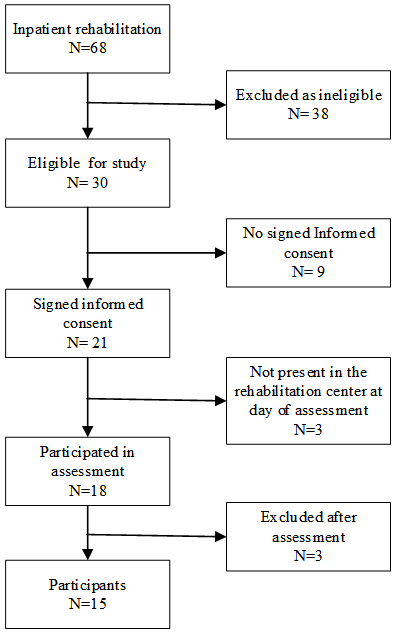
Figure 1 shows the flow diagram of the inclusion of patients in this study. Sixty-eight patients were admitted for inpatient rehabilitation during the recruitment period. Thirty were eligible to participate in this study and were invited, of whom 21 (70%) agreed to participate and signed an informed consent. Due to unexpected absence (n=3) and re-evaluation of the FAC scores (n=3) 6 patients were excluded from participation.


Table 1 shows the sociodemographic, clinical and treatment characteristics of the participants. Of the 15 participants, 13 (87%) were male, 10 (67%) were admitted due to a stroke. Regarding mobility, seven (47%) used a walking aid and four (27%) were partly dependent on a wheelchair. The median age was 65 years.
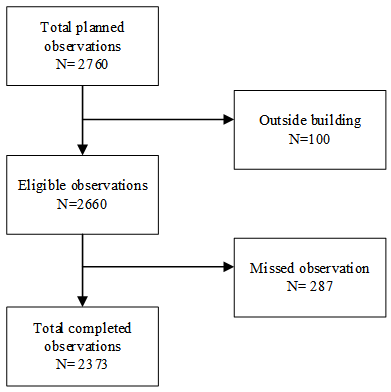
Figure 2 shows the flow diagram of the planned observations measured with behavioral mapping. Of the 2,660 planned and possible observations 2,373 were completed (89%). One participant was not observed from 16.20 hours and onwards (18 missed observations), due to early discharge from the rehabilitation center.
PA behavior measured with accelerometer
Table 2 shows both group and individual results of sedentary and active behavior measured by accelerometry, ordered from most active participant to least active participant. The median percentage (Interquartile range (IQR)) of the time of the day spent on active behavior was 19% (15-26%) and on sedentary behavior was 81% (74-85%).
On a group level, the median (IQR) MSB during the entire day was 86 minutes (63-131) and sedentary behavior was longest during the evening (69 minutes (54-95)) followed by the afternoon (55 minutes (32-81)) and morning (41 minutes (19-70)). On the individual level, the MSB showed that PA levels between patients varied over the day. For example, ID4 and ID5 show similar activity levels, i.e., both showed 26% active behavior during the day. However, these patients differed in median sedentary bout lengths between parts of the day 70 minutes vs 26 minutes in the morning, 58 minutes vs 43 minutes afternoon and 43 minutes vs 72 minutes in the evening respectively.
PA behavior measured with behavioral mapping
Social and physical context
Table 3 shows both the group results and the individual results of the behavioral mapping and measurements sorted in the same order as Table 2 (i.e., highest to lowest percentage of active behavior from accelerometry). Patients spent most time in their patient room (median 50% (IQR 46%-59%)) and spent most of the day alone (median 54% (IQR 50-61%)).
Comparing active and less active patients, no clear patterns of social context and physical location were visible. E.g., ID13, ID 14 showed almost comparable activity levels (14% vs 12% active of the day) but differed in time the participant spent alone (59% vs 72%) and spent in the patient room (27% vs 65%). On the other hand, ID2 and ID 12 varied hugely in activity levels (28% vs 15%) but were (almost) equal in time spent alone (50% vs 50%) and time spent in the patient room (50% vs 48%).
PA linked to social and phsyical context
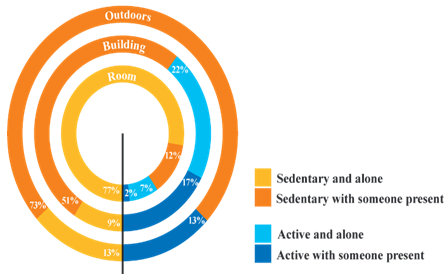
The group level relations between PA and social and phsycial context are shown in Figure 3, a stacked pie charts. Each pie chart represents the PA behavior in a single physical environment: the patient room, the building (not including patient room) and outside the building. Most sedentary behavior was observed: in the patient room 78% in which the patient was alone or in and outside the building (i.e., excluding patient room) 51% and 73% in which someone was present, respectively. Most active behavior was observed: in the patient room and in the building (i.e., excluding patient room) 8% and 22% in which the patient was alone or outside 13% in which someone present.

This in-depth exploration of PA behavior among 15 patients during inpatient rehabilitation treatment showed a large variation in PA behavior among patients. On median patients spent 81% (IQR 74%-85%) of the day being sedentary. Furthermore, regardless of being among the more active or more sedentary patients, patients spent most time inside their patient rooms (median time 50%) and being alone (median time 54%). Outside their patient room, patients were mostly observed while sitting and in the presence of at least one other person (i.e., 51% of the observations inside the rest of the building). However, the ratio of active versus sedentary behavior, the context (where, what, with whom) and the dayparts (i.e., morning, afternoon, evening) during which patients perform activities varied largely among patients.
Sedentary behavior is a generic problem within inpatient clinical facilities. Studies about PA and sedentary behavior in inpatient rehabilitation facilities are scarce. When available these studies are difficult to compare with each other or with our results due to the variation in outcomes or different methods for assessment used. [10-13] 10 However, compared to the literature, the patients in our study show a trend towards being relatively active (median of 81% sedentary behavior) compared to hospitalized stroke patients in the systematic review of Fazio et al. 31 who reported that patients were sedentary 81-94% of their time during business hours. This result can be explained by differences between a hospital and a rehabilitation center although but should be interpreted with care because we assessed a small number of patients in our study. In the rehabilitation center patients are further in the recovery process. Therefore, patients in inpatient rehabilitation are more able and stimulated to be physically active during the day. Furthermore, rehabilitation aims to facilitate patients’ recovery towards participation in society, social integration and to regaining their independence. 32
In addition to the amount of PA, the patterns of PA over the day provide important information about inpatients. Our study shows that, on a group level, patients tend to become increasingly sedentary throughout the day. These findings are consistent with findings of De Jong et al. 13 who reported that the levels of PA in an inpatient stroke rehabilitation ward decline after 12:00. One possibility is that the patients' physical capabilities and energy level decrease during the day. Alternatively, it could be that the opportunities for PA become more limited or that patients' motivation decreases during the day. However, on an individual level our study showed huge differences in day patterns of PA with some patients becoming more active throughout the day. As an illustration, we observed two stroke patients’ high PA levels (26% active behavior) whose PA patterns differed between the dayparts (most sedentary in the morning versus most sedentary in the evening). This also shows that being physically active and becoming less sedentary are different constructs, which is in line with literature regarding this topic. 33 Therefore, data analysis on a group level also requires an individual perspective and to support the development different interventions for reducing sedentary behavior or enhancing active behavior.
To understand PA behavior in the best possible way we also investigated the context where the activities take place by adding behavioral mapping data (where, what, with whom) to the quantitative accelerometry data (how much). During rehabilitation treatment most opportunities for PA takes place outside the patient’s room, e.g., active therapy sessions, group activities or leisure activities. However, our study showed that patients are mostly observed alone in their room where the opportunities for PA are very limited. Other studies using behavioral mapping among stroke patients Skarin et al. 19 and brain injury patients Hassett et al. 17 showed comparable results as our study. In our study, patients were lying in bed for 28% of the time compared to 25% in Skarin’s study. 19 In our study, patients were in their room for 54% of the time vs 52% in Hasset’s study. 17 In addition, in our study patients were alone for 54% of the time vs 52% in Skarin’s study 19 and 34% in Hasset’s study 17. The reason that patients in Hasset’s study spent less time alone could be due to patient rooms for multiple patients. 17 A remarkable finding on an individual level in our study was that active patients spent equal amounts of time in their rooms compared to sedentary patients. Therefore, the assumption that forcing patients out of their room does not automatically make them more active. Moreover, rehabilitation treatment is intense so taking a rest when needed also has a purpose to recharge.
The combination of social context and physical environment are important influencers of PA behavior and this combination supports to develop a tailored (group) intervention in a successful social context and a suitable physical environment. 34 For instance, our study revealed that patients are most active when they are in the building outside their room, with 39% of their time spent in active behavior. This suggests that the physical environment outside of patients' rooms is a driver for more active behavior and has the potency to increase PA even more.
It was also found that patients tend to be more sedentary when in the presence of others, with 73% of their time spent being sedentary when with others, as compared to 51% sedentary when alone. These findings highlight the need to reconsider the social context of PA, as social interaction alone does not always result in active behavior. This provides points for engagement for supporting PA behavior and adding the contextual data of PA behavior helps to understand individual or group patterns of physical behavior and to develop strategies (e.g., interventions, motivation, physical environment, family support) to support PA behavior in a clinical setting. 25
The data collected in our study provides a deep insight in the PA behavior of rehabilitation inpatients. However, a better insight in the perspective of patients, barriers and facilitators for PA and personal motivators for PA is indispensable for developing PA behavior interventions and should also be included in future research. For example, by discussing outcomes of accelerometry and/or behavioral mapping with the patients in a semi-structured interview. This would complete the insight of the important aspects of behavior and change thereof from the theory of the behavioral change wheel and the underlying COM-B model. 14 Behavior (being active and/or less sedentary) is the resultant of the interactions of an individual’s Competencies (e.g., knowledge), Opportunities (e.g. exercise facilities), and Motivation (e.g. return to work).
Strengths & weaknesses
A strength of our study is the use of recommended uniform PA outcomes [20-22] 20, which allows for comparisons with other studies in the inpatient rehabilitation setting. Uniformity in PA outcome measures is important for accurate comparison of results across different studies. By using recommended outcomes, our study contributes to a better understanding of PA behavior in the inpatient rehabilitation setting. 35
Although our study provides deeper insights in the PA behavior patterns of patients in the inpatient rehabilitation setting, including individual patient results, data collected outside of therapy hours, and contextual information on active and sedentary behavior, this study also has a number of limitations. 16, 18, 19
First, the study was conducted in a single rehabilitation center and included a relatively small and mixed population which may limit the generalizability of the findings to the entire population of patients in an inpatient rehabilitation center. However, it is worth noting that all patients had the same day structure in the rehabilitation center (e.g., eating hours, therapy times between 8.30-17.00) during the inpatient rehabilitation. Second, we only measured during one single day since behavioral mapping is extremely time-consuming. So, differences in week structure and non-daily activities is missing. Third, it is important to acknowledge that the Activ8 device used in our study measures activity by detecting movement, and therefore may not accurately capture PA behavior related to wheelchair use. As a result, some PA behavior may have been missed in patients who used a wheelchair.
This study provides a deeper understanding in the daily patterns of patients admitted in an inpatient rehabilitation facilitation. The data of this article show that quantity, day structure and patterns (social and environmental context) of PA vary largely among individual patients admitted in an inpatient rehabilitation facility but levels of PA are relatively high. The group results and overall amount of PA may not be sufficient for choosing an appropriate intervention. The variability of PA patterns observed among individual patients highlights the need for tailored and individualized strategies. To improve the PA behavior of patients admitted to an inpatient rehabilitation facility, it is important to conduct a screening of different factors influencing PA behavior in order to tailor the intervention to the needs of patients.
We would like to thank Martijn Nieuwenhuis, Martijn van de Ent and Hanneke Braakhuis for contributing to this study.
The authors have no competing interests.
PA: Physical activity
COM-B: Capability, Opportunity, and Motivation Model of Behavior
LUMC: Leiden University Medical Centre
FAC: Functional Ambulation Classification
MSB: Maximum sedentary bout length
WMSB: Weighted median sedentary bout length
MABL: Maximum active bout length
|
| [1] | Kleindorfer, D.O., Towfighi, A., Chaturvedi, S., Cockroft, K.M., Gutierrez, J., Lombardi-Hill, D., Kamel, H., Kernan, W.N., Kittner, S.J., Leira, E.C., Lennon, O., Meschia, J.F., Nguyen, T.N., Pollak, P.M., Santangeli, P., Sharrief, A.Z., Smith Jr, S.C., Turan, T.N. and Williams L.S, ''2021 Guideline for the Prevention of Stroke in Patients With Stroke and Transient Ischemic Attack: A Guideline From the American Heart Association/American Stroke Association'', Stroke, 52(7), e364-e467, May 2021. | ||
| In article | View Article | ||
| [2] | Visseren, F.L.J., Mach, F., Smulders, Y.M., Carballo, D., Koskinas, K.C., Back, M., Benetos, A., Biffi, A., Boavida, J., Capodanno, D., Cosyns, B., Crawford, C., Davos, C.H., Desormais, I., Di Angelantonio, E., Franco, O.H., Halvorsen, S., Hobbs, F.D.R., Hollander, M., Jankowska, E.A., Michal, M., Sacco, S., Sattar, N., Tokgozoglu, L., Tonstad, S., Tsioufis, K.P., Van Dis, I., Van Gelder, I.C., Wanner, C., Williams, B., ESC Natinonal Cardiac Societies and ESC Scientific Document Group, ''2021 ESC Guidelines on cardiovascular disease prevention in clinical practice'', Eur Heart J, September 2021. | ||
| In article | |||
| [3] | Ambrosino, N. and Bertella, E, ''Lifestyle interventions in prevention and comprehensive management of COPD'', Breathe (Sheff), 14(3), 186-94, September 2018. | ||
| In article | View Article PubMed | ||
| [4] | Jacobs, P.L. and Nash, M.S, ''Exercise recommendations for individuals with spinal cord injury'', Sports Med. 34(11), 727-51, September 2012. | ||
| In article | View Article PubMed | ||
| [5] | Winstein, C.J., Stein, J., Arena, R., Bates, B., Cherney, L.R., Cramer, S.C., Deruyter F., Eng, J.J., Fisher, B., Harvey, R.L., Lang, C.E., MacKay-Lyons, M., Ottenbacher, K.J., Pugh, S., Reeves, M.J., Richards, L.G., Stiers, W. and Zorowitz, R.D, ''Guidelines for Adult Stroke Rehabilitation and Recovery: A Guideline for Healthcare Professionals From the American Heart Association/American Stroke Association'', Stroke, 47(6), e98-e169, June 2016. | ||
| In article | View Article PubMed | ||
| [6] | Amonette, W.E. and Mossberg, K.A, ''Ventilatory anaerobic thresholds of individuals recovering from traumatic brain injury compared with noninjured controls'', J Head Trauma Rehabil, 28(5), E13-20, September 2013. | ||
| In article | View Article PubMed | ||
| [7] | Bragaru, M., Dekker, R., Geertzen, J.H. and Dijkstra, P.U, ''Amputees and sports: a systematic review'', Sports Med, 41(9), 721-40, September 2011. | ||
| In article | View Article PubMed | ||
| [8] | Spruit, M.A, ''Pulmonary rehabilitation'', Eur Respir Rev, 23(131), 55-63, March 2014. | ||
| In article | View Article PubMed | ||
| [9] | Stout, N.L., Santa Mina, D., Lyons, K.D., Robb, K. and Silver, J.K, ''A systematic review of rehabilitation and exercise recommendations in oncology guidelines'', CA Cancer J Clin, 71(2), 149-75, March 2021. | ||
| In article | View Article PubMed | ||
| [10] | Peiris, C.L., Taylor, N.F. and Shields, N, ''Patients receiving inpatient rehabilitation for lower limb orthopaedic conditions do much less physical activity than recommended in guidelines for healthy older adults: an observational study'', J Physiother, 59(1), 39-44, March 2013. | ||
| In article | View Article PubMed | ||
| [11] | Ramsey, J., Driver, S., Swank, C., Bennett, M., Dubiel, R, ''Physical activity intensity of patient's with traumatic brain injury during inpatient rehabilitation'', Brain Inj, 32(12), 1518-24, July 2018. | ||
| In article | View Article PubMed | ||
| [12] | Zbogar, D., Eng, J.J., Miller, W.C., Krassioukov, A.V. and Verrier, M.C, ''Physical activity outside of structured therapy during inpatient spinal cord injury rehabilitation'', J Neuroeng Rehabil, 13(1), 99, November 2016. | ||
| In article | View Article PubMed | ||
| [13] | de Jong, A.U., Smith, M., Callisaya, M.L., Schmidt, M. and Simpson, D.B, ''Sedentary time and physical activity patterns of stroke survivors during the inpatient rehabilitation week'', Int J Rehabil Res, 44(2), 131-7, June 2021. | ||
| In article | View Article PubMed | ||
| [14] | Michie, S., van Stralen, M.M. and West, R, ''The behaviour change wheel: a new method for characterising and designing behaviour change interventions'', Implement Sci, 23:6(42), April 2011. | ||
| In article | View Article PubMed | ||
| [15] | Cane, J., O'Connor, D. and Michie, S. ''Validation of the theoretical domains framework for use in behaviour change and implementation research'', Implement Sci, 7: 37, April 2012. | ||
| In article | View Article PubMed | ||
| [16] | Adey-Wakeling, Z., Jolliffe, L., O'Shannessy, E., Hunter, P., Morarty, J., Cameron, I.D. Cameron I.D, Liu, E. and Lannin, N.A, ''Activity, Participation, and Goal Awareness After Acquired Brain Injury: A Prospective Observational Study of Inpatient Rehabilitation'', Ann Rehabil Med, 45(6), 413-21, December 2021. | ||
| In article | View Article PubMed | ||
| [17] | Hassett, L., Wong, S., Sheaves, E., Daher, M., Grady, A., Egan, C., Seeto, C., Hosking, T. and Moseley A, ''Time use and physical activity in a specialised brain injury rehabilitation unit: an observational study'', Brain Inj, 32(7), 850-7, April 2018. | ||
| In article | View Article PubMed | ||
| [18] | Sjoholm, A., Skarin, M., Churilov, L., Nilsson, M., Bernhardt, J. and Linden, T, ''Sedentary behaviour and physical activity of people with stroke in rehabilitation hospitals'' Stroke Res Treat, 591897, March 2014. | ||
| In article | View Article PubMed | ||
| [19] | Skarin, M., Sjoholm, A., Nilsson, A., Nilsson, M., Bernhardt, J. and Linden, T, ''A mapping study on physical activity in stroke rehabilitation: establishing the baseline'', J Rehabil Med, 45(10), 997-1003, November 2013. | ||
| In article | View Article PubMed | ||
| [20] | Valkenet, K., Bor, P., van Delft, L. and Veenhof, C, ''Measuring physical activity levels in hospitalized patients: a comparison between behavioural mapping and data from an accelerometer'', Clin Rehabil, 33(7), 1233-40, July 2019. | ||
| In article | View Article PubMed | ||
| [21] | Wu, Y., Smits, E.J., Window, P., Beningfield, A., Johnston, V. and McRae, P, ''Mobility levels of acute medical patients: Is behavioural mapping comparable to accelerometry?'', Clin Rehabil, 35(4), 595-605, November 2020. | ||
| In article | View Article PubMed | ||
| [22] | Holden, M.K., Gill, K.M., Magliozzi, M.R., Nathan, J. and Piehl-Baker, L, ''Clinical gait assessment in the neurologically impaired. Reliability and meaningfulness'', Phys Ther, 64(1), 35-40, January 1984. | ||
| In article | View Article PubMed | ||
| [23] | World Health Organization, ''Obesity: preventing and managing the global epidemic. Report of a WHO consultation'', World Health Organ Tech Rep Ser. 894: i-xii, 1-253, January 2000. | ||
| In article | |||
| [24] | Horemans, H., Kooijmans, H., van den Berg-Emons, R. and Bussmann, H, ''The Activ8 activity monitor: Validation of posture and movement classification'', J Rehabil Assist Technol Eng, 7, 2055668319890535, March 2020. | ||
| In article | View Article PubMed | ||
| [25] | Fanchamps, M.H.J., Horemans, H.L.D., Ribbers, G.M., Stam, H.J. and Bussmann, J.B.J, ''The Accuracy of the Detection of Body Postures and Movements Using a Physical Activity Monitor in People after a Stroke'', Sensors (Basel), 18(7), 2167, May 2018 | ||
| In article | View Article PubMed | ||
| [26] | Valkenet, K. and Veenhof, C, ''Validity of three accelerometers to investigate lying, sitting, standing and walking'', PLoS One, 14(5), e0217545, May 2019. | ||
| In article | View Article PubMed | ||
| [27] | Boerema, S.T., van Velsen, L., Vollenbroek, M.M. and Hermens, H.J, ''Pattern measures of sedentary behaviour in adults: A literature review'', Digit Health, 6, 2055207620905418, January 2020. | ||
| In article | View Article PubMed | ||
| [28] | Byrom, B., Stratton, G., Mc Carthy, M. and Muehlhausen, W, ''Objective measurement of sedentary behaviour using accelerometers'', Int J Obes (Lond), 40(11), 1809-12, November 2016. | ||
| In article | View Article PubMed | ||
| [29] | Chastin, S.F.M., Winkler, E.A.H., Eakin, E.G., Gardiner, P.A., Dunstan, D.W., Owen, N. and Healy G.N. ''Sensitivity to change of objectively-derived measures of sedentary behavior'', Measurement in Physical Education and Exercise Science, 19(3), 138-47, Augustus 2015. | ||
| In article | View Article | ||
| [30] | Wondergem, R., Pisters, M.F., Heijmans, M.W., Wouters, E.J.M., de Bie, R.A., Veenhof, C., and Visser-Meily, J.M.A, ''Movement behavior remains stable in stroke survivors within the first two months after returning home'', PLoS One, 15(3), e0229587, March 2020. | ||
| In article | View Article PubMed | ||
| [31] | Fazio, S., Stocking, J., Kuhn, B., Doroy, A., Blackmon, E., Young, H.M., and Adams, J.Y, ''How much do hospitalized adults move? A systematic review and meta-analysis'', Appl Nurs Res, 51, 151189, Februari 2020. | ||
| In article | View Article PubMed | ||
| [32] | Åstrand, A., Saxin, C., Sjoholm, A., Skarin, M., Linden, T., Stoker, A., Roshandel, S., Dedering, Å., Halvorsen, M., Bernhardt, J. and Cumming, T, ''Poststroke Physical Activity Levels No Higher in Rehabilitation than in the Acute Hospital'', J Stroke Cerebrovasc Dis, 25(4), 938-45, April 2016. | ||
| In article | View Article PubMed | ||
| [33] | Thivel, D., Tremblay, A., Genin, P.M., Panahi, S., Riviere, D. and Duclos, M, ''Physical Activity, Inactivity, and Sedentary Behaviors: Definitions and Implications in Occupational Health'', Front Public Health, 6, 288, October 2018. | ||
| In article | View Article PubMed | ||
| [34] | Reifsnider, E., Gallagher, M. and Forgione, B, ''Using ecological models in research on health disparities'', J Prof Nurs. 21(4), 216-22, July 2005. | ||
| In article | View Article PubMed | ||
| [35] | Silfee, V.J., Haughton, C.F., Jake-Schoffman, D.E., Lopez-Cepero, A., May, C.N., Sreedhara, M., Rosal, M.C. and Lemon, S.C, ''Objective measurement of physical activity outcomes in lifestyle interventions among adults: A systematic review'', Prev Med Rep, 11, 74-80, May 2018. | ||
| In article | View Article PubMed | ||
Published with license by Science and Education Publishing, Copyright © 2023 Åsa Mennema, Aleid de Rooij, Karen A van den Oever, Thea PM Vliet Vlieland and Jorit JL Meesters
 This work is licensed under a Creative Commons Attribution 4.0 International License. To view a copy of this license, visit
https://creativecommons.org/licenses/by/4.0/
This work is licensed under a Creative Commons Attribution 4.0 International License. To view a copy of this license, visit
https://creativecommons.org/licenses/by/4.0/
| [1] | Kleindorfer, D.O., Towfighi, A., Chaturvedi, S., Cockroft, K.M., Gutierrez, J., Lombardi-Hill, D., Kamel, H., Kernan, W.N., Kittner, S.J., Leira, E.C., Lennon, O., Meschia, J.F., Nguyen, T.N., Pollak, P.M., Santangeli, P., Sharrief, A.Z., Smith Jr, S.C., Turan, T.N. and Williams L.S, ''2021 Guideline for the Prevention of Stroke in Patients With Stroke and Transient Ischemic Attack: A Guideline From the American Heart Association/American Stroke Association'', Stroke, 52(7), e364-e467, May 2021. | ||
| In article | View Article | ||
| [2] | Visseren, F.L.J., Mach, F., Smulders, Y.M., Carballo, D., Koskinas, K.C., Back, M., Benetos, A., Biffi, A., Boavida, J., Capodanno, D., Cosyns, B., Crawford, C., Davos, C.H., Desormais, I., Di Angelantonio, E., Franco, O.H., Halvorsen, S., Hobbs, F.D.R., Hollander, M., Jankowska, E.A., Michal, M., Sacco, S., Sattar, N., Tokgozoglu, L., Tonstad, S., Tsioufis, K.P., Van Dis, I., Van Gelder, I.C., Wanner, C., Williams, B., ESC Natinonal Cardiac Societies and ESC Scientific Document Group, ''2021 ESC Guidelines on cardiovascular disease prevention in clinical practice'', Eur Heart J, September 2021. | ||
| In article | |||
| [3] | Ambrosino, N. and Bertella, E, ''Lifestyle interventions in prevention and comprehensive management of COPD'', Breathe (Sheff), 14(3), 186-94, September 2018. | ||
| In article | View Article PubMed | ||
| [4] | Jacobs, P.L. and Nash, M.S, ''Exercise recommendations for individuals with spinal cord injury'', Sports Med. 34(11), 727-51, September 2012. | ||
| In article | View Article PubMed | ||
| [5] | Winstein, C.J., Stein, J., Arena, R., Bates, B., Cherney, L.R., Cramer, S.C., Deruyter F., Eng, J.J., Fisher, B., Harvey, R.L., Lang, C.E., MacKay-Lyons, M., Ottenbacher, K.J., Pugh, S., Reeves, M.J., Richards, L.G., Stiers, W. and Zorowitz, R.D, ''Guidelines for Adult Stroke Rehabilitation and Recovery: A Guideline for Healthcare Professionals From the American Heart Association/American Stroke Association'', Stroke, 47(6), e98-e169, June 2016. | ||
| In article | View Article PubMed | ||
| [6] | Amonette, W.E. and Mossberg, K.A, ''Ventilatory anaerobic thresholds of individuals recovering from traumatic brain injury compared with noninjured controls'', J Head Trauma Rehabil, 28(5), E13-20, September 2013. | ||
| In article | View Article PubMed | ||
| [7] | Bragaru, M., Dekker, R., Geertzen, J.H. and Dijkstra, P.U, ''Amputees and sports: a systematic review'', Sports Med, 41(9), 721-40, September 2011. | ||
| In article | View Article PubMed | ||
| [8] | Spruit, M.A, ''Pulmonary rehabilitation'', Eur Respir Rev, 23(131), 55-63, March 2014. | ||
| In article | View Article PubMed | ||
| [9] | Stout, N.L., Santa Mina, D., Lyons, K.D., Robb, K. and Silver, J.K, ''A systematic review of rehabilitation and exercise recommendations in oncology guidelines'', CA Cancer J Clin, 71(2), 149-75, March 2021. | ||
| In article | View Article PubMed | ||
| [10] | Peiris, C.L., Taylor, N.F. and Shields, N, ''Patients receiving inpatient rehabilitation for lower limb orthopaedic conditions do much less physical activity than recommended in guidelines for healthy older adults: an observational study'', J Physiother, 59(1), 39-44, March 2013. | ||
| In article | View Article PubMed | ||
| [11] | Ramsey, J., Driver, S., Swank, C., Bennett, M., Dubiel, R, ''Physical activity intensity of patient's with traumatic brain injury during inpatient rehabilitation'', Brain Inj, 32(12), 1518-24, July 2018. | ||
| In article | View Article PubMed | ||
| [12] | Zbogar, D., Eng, J.J., Miller, W.C., Krassioukov, A.V. and Verrier, M.C, ''Physical activity outside of structured therapy during inpatient spinal cord injury rehabilitation'', J Neuroeng Rehabil, 13(1), 99, November 2016. | ||
| In article | View Article PubMed | ||
| [13] | de Jong, A.U., Smith, M., Callisaya, M.L., Schmidt, M. and Simpson, D.B, ''Sedentary time and physical activity patterns of stroke survivors during the inpatient rehabilitation week'', Int J Rehabil Res, 44(2), 131-7, June 2021. | ||
| In article | View Article PubMed | ||
| [14] | Michie, S., van Stralen, M.M. and West, R, ''The behaviour change wheel: a new method for characterising and designing behaviour change interventions'', Implement Sci, 23:6(42), April 2011. | ||
| In article | View Article PubMed | ||
| [15] | Cane, J., O'Connor, D. and Michie, S. ''Validation of the theoretical domains framework for use in behaviour change and implementation research'', Implement Sci, 7: 37, April 2012. | ||
| In article | View Article PubMed | ||
| [16] | Adey-Wakeling, Z., Jolliffe, L., O'Shannessy, E., Hunter, P., Morarty, J., Cameron, I.D. Cameron I.D, Liu, E. and Lannin, N.A, ''Activity, Participation, and Goal Awareness After Acquired Brain Injury: A Prospective Observational Study of Inpatient Rehabilitation'', Ann Rehabil Med, 45(6), 413-21, December 2021. | ||
| In article | View Article PubMed | ||
| [17] | Hassett, L., Wong, S., Sheaves, E., Daher, M., Grady, A., Egan, C., Seeto, C., Hosking, T. and Moseley A, ''Time use and physical activity in a specialised brain injury rehabilitation unit: an observational study'', Brain Inj, 32(7), 850-7, April 2018. | ||
| In article | View Article PubMed | ||
| [18] | Sjoholm, A., Skarin, M., Churilov, L., Nilsson, M., Bernhardt, J. and Linden, T, ''Sedentary behaviour and physical activity of people with stroke in rehabilitation hospitals'' Stroke Res Treat, 591897, March 2014. | ||
| In article | View Article PubMed | ||
| [19] | Skarin, M., Sjoholm, A., Nilsson, A., Nilsson, M., Bernhardt, J. and Linden, T, ''A mapping study on physical activity in stroke rehabilitation: establishing the baseline'', J Rehabil Med, 45(10), 997-1003, November 2013. | ||
| In article | View Article PubMed | ||
| [20] | Valkenet, K., Bor, P., van Delft, L. and Veenhof, C, ''Measuring physical activity levels in hospitalized patients: a comparison between behavioural mapping and data from an accelerometer'', Clin Rehabil, 33(7), 1233-40, July 2019. | ||
| In article | View Article PubMed | ||
| [21] | Wu, Y., Smits, E.J., Window, P., Beningfield, A., Johnston, V. and McRae, P, ''Mobility levels of acute medical patients: Is behavioural mapping comparable to accelerometry?'', Clin Rehabil, 35(4), 595-605, November 2020. | ||
| In article | View Article PubMed | ||
| [22] | Holden, M.K., Gill, K.M., Magliozzi, M.R., Nathan, J. and Piehl-Baker, L, ''Clinical gait assessment in the neurologically impaired. Reliability and meaningfulness'', Phys Ther, 64(1), 35-40, January 1984. | ||
| In article | View Article PubMed | ||
| [23] | World Health Organization, ''Obesity: preventing and managing the global epidemic. Report of a WHO consultation'', World Health Organ Tech Rep Ser. 894: i-xii, 1-253, January 2000. | ||
| In article | |||
| [24] | Horemans, H., Kooijmans, H., van den Berg-Emons, R. and Bussmann, H, ''The Activ8 activity monitor: Validation of posture and movement classification'', J Rehabil Assist Technol Eng, 7, 2055668319890535, March 2020. | ||
| In article | View Article PubMed | ||
| [25] | Fanchamps, M.H.J., Horemans, H.L.D., Ribbers, G.M., Stam, H.J. and Bussmann, J.B.J, ''The Accuracy of the Detection of Body Postures and Movements Using a Physical Activity Monitor in People after a Stroke'', Sensors (Basel), 18(7), 2167, May 2018 | ||
| In article | View Article PubMed | ||
| [26] | Valkenet, K. and Veenhof, C, ''Validity of three accelerometers to investigate lying, sitting, standing and walking'', PLoS One, 14(5), e0217545, May 2019. | ||
| In article | View Article PubMed | ||
| [27] | Boerema, S.T., van Velsen, L., Vollenbroek, M.M. and Hermens, H.J, ''Pattern measures of sedentary behaviour in adults: A literature review'', Digit Health, 6, 2055207620905418, January 2020. | ||
| In article | View Article PubMed | ||
| [28] | Byrom, B., Stratton, G., Mc Carthy, M. and Muehlhausen, W, ''Objective measurement of sedentary behaviour using accelerometers'', Int J Obes (Lond), 40(11), 1809-12, November 2016. | ||
| In article | View Article PubMed | ||
| [29] | Chastin, S.F.M., Winkler, E.A.H., Eakin, E.G., Gardiner, P.A., Dunstan, D.W., Owen, N. and Healy G.N. ''Sensitivity to change of objectively-derived measures of sedentary behavior'', Measurement in Physical Education and Exercise Science, 19(3), 138-47, Augustus 2015. | ||
| In article | View Article | ||
| [30] | Wondergem, R., Pisters, M.F., Heijmans, M.W., Wouters, E.J.M., de Bie, R.A., Veenhof, C., and Visser-Meily, J.M.A, ''Movement behavior remains stable in stroke survivors within the first two months after returning home'', PLoS One, 15(3), e0229587, March 2020. | ||
| In article | View Article PubMed | ||
| [31] | Fazio, S., Stocking, J., Kuhn, B., Doroy, A., Blackmon, E., Young, H.M., and Adams, J.Y, ''How much do hospitalized adults move? A systematic review and meta-analysis'', Appl Nurs Res, 51, 151189, Februari 2020. | ||
| In article | View Article PubMed | ||
| [32] | Åstrand, A., Saxin, C., Sjoholm, A., Skarin, M., Linden, T., Stoker, A., Roshandel, S., Dedering, Å., Halvorsen, M., Bernhardt, J. and Cumming, T, ''Poststroke Physical Activity Levels No Higher in Rehabilitation than in the Acute Hospital'', J Stroke Cerebrovasc Dis, 25(4), 938-45, April 2016. | ||
| In article | View Article PubMed | ||
| [33] | Thivel, D., Tremblay, A., Genin, P.M., Panahi, S., Riviere, D. and Duclos, M, ''Physical Activity, Inactivity, and Sedentary Behaviors: Definitions and Implications in Occupational Health'', Front Public Health, 6, 288, October 2018. | ||
| In article | View Article PubMed | ||
| [34] | Reifsnider, E., Gallagher, M. and Forgione, B, ''Using ecological models in research on health disparities'', J Prof Nurs. 21(4), 216-22, July 2005. | ||
| In article | View Article PubMed | ||
| [35] | Silfee, V.J., Haughton, C.F., Jake-Schoffman, D.E., Lopez-Cepero, A., May, C.N., Sreedhara, M., Rosal, M.C. and Lemon, S.C, ''Objective measurement of physical activity outcomes in lifestyle interventions among adults: A systematic review'', Prev Med Rep, 11, 74-80, May 2018. | ||
| In article | View Article PubMed | ||