Despite advances in health research, many evidence-informed interventions fail to translate into sustained real-world practice. The gap between research and implementation contributes to delayed impact, diminished reach, and persistent health inequities. Men, in particular, experience poorer health outcomes than women and remain under-served in health promotion and healthcare systems. Community-based approaches that prioritise accessibility, flexibility and peer connection are needed to more effectively reach this group. Recreational football (American soccer), especially informal “pick-up” formats, has emerged as a promising vehicle for engaging men in physical activity and improving wellbeing. The Football Cooperative (FC) initiative delivers volunteer-led recreational ‘pick up’ football games that are low-cost, inclusive, and locally embedded. At its two existing sites, it has demonstrated high levels of engagement, positive health and wellbeing outcomes, and strong social return on investment. The purpose of this paper is to detail the protocols used in developing an implementation strategy to replicate the FC initiative across multiple sites (n=12) in Q1 2026 with a view to supporting sustainable scale-up across Ireland and beyond from 2027. Using an ecological implementation design and multiple implementation science frameworks, stakeholders were engaged across four levels: participant, provider, organisational, and community/system both within and outside of the FC initiative. The ecological model guided sampling; the Consolidated Framework for Implementation Research (CFIR) informed data collection and analysis; the PRACTical planning for Implementation and Scale-up (PRACTIS) supported analysis; and the Intervention Scalability Assessment Tool (ISAT) was used to assess readiness for scale. Data were gathered through ethnographic methods, semi-structured interviews, reflective logs, and focus groups across several Irish and European sites and a draft implementation strategy was developed, structured using the PRACTIS framework. A modified Delphi process with the FC initiatives Advisory Board was used to prioritise actions and refine the final implementation strategy. The resulting strategy is co-produced, theory-informed and tailored to the realities of scale-up in community sport and health promotion settings. By publishing this protocol, the study aims to contribute to the growing field of implementation science and to support others engaging in formative evaluation and translational planning.
The fact that not all evidence-based practices (EBPs) traverse the estimated 17-year "know-do” or "research-practice” gap has been well documented 1 2; only about half of EBPs reach widespread usage for the benefit of population health 1. The consequences of delayed or failed implementation of EBPs are considerable and include wasted resources, suboptimal healthcare outcomes 3, inefficiencies in service delivery, disparities in access to effective interventions, and ultimately, missed opportunities for improved health outcomes as interventions fail to reach the intended populations 4. The field of implementation science (IS) has thus evolved to support researchers and practitioners to bridge this gap.
Unlike traditional research, which focuses primarily on establishing intervention efficacy 5, IS focuses on how interventions are implemented 6. Traditional research tends to emphasise internal validity, ensuring that interventions produce expected results under controlled conditions. However, external validity and real-world applicability are often overlooked, meaning that interventions proven to be effective in research settings may fail when scaled in diverse, complex environments 7. Therefore, a fundamental principle of IS is its pragmatic and applied nature and stakeholder-centred approach, ensuring that interventions are not only effective in ideal circumstances but also adaptable to real-world constraints 8. Employing IS methodologies ensures that interventions a) are tailored to the environmental conditions in which they exist, b) account for the delivery capacity of organisations and partners, c) address barriers to delivery across the ecological model and d) build upon delivery facilitators across the ecological model. As such, IS is now widely recognised as a critical discipline in ensuring EBPs lead to system-wide improvements 9.

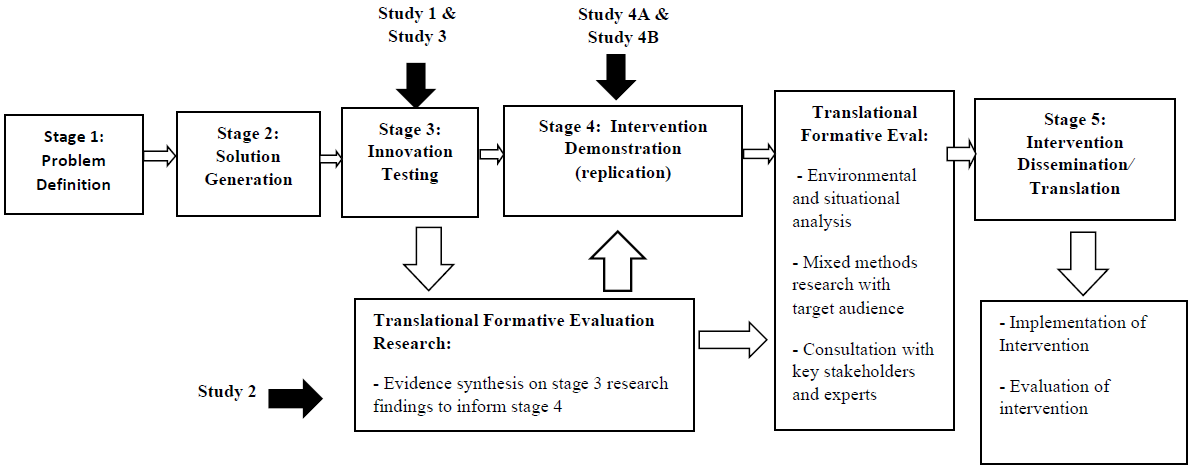
O’Hara et al., (2014) 10 provide a conceptual framework for how to address a public health problem at a population level which involves five distinct stages (see Figure 1). Specifically, the stages are 1) identifying the problem, 2) developing potential solutions, 3) testing the solution in a controlled or ‘real world’ setting, 4) replicating effective solutions across multiples sites and 5) disseminating the effective solution for wider use at scale. Critically, translational formative evaluation adopting IS methodologies, underpins the transition from stage 3 to stage 5. Initially, an assessment of scalability must be conducted and this includes reviewing a) effectiveness, b) reach and adoption, c) alignment with strategic context and d) acceptability and feasibility of the solution 11. If a solution is deemed ‘scalable’, appropriate IS frameworks, of which there are some 170 to choose from, should be adopted to evaluate ‘implementation outcomes’ that include 1) acceptability to stakeholders across the ecological model 12, 2) adoption by stakeholders, 3) appropriateness (of setting or to a target group), 4) feasibility, 5) implementation cost, 6) coverage, 7) sustainability (maintenance of the solution in a given setting) 13 and 8) context 14.
1.2. ‘Football’ – A Men’s Health SolutionPhysical activity (PA) is a prophylactic to and a key factor in the management of non-communicable diseases 15. In fact, physical inactivity is one of the leading risk factors for noncommunicable disease mortality 15. Notably, men are more inclined to rely on PA than diet for good health with 54% of men in Ireland (38% of women) currently meeting the PA guidelines 16. Despite this, men continue to experience poorer health outcomes than women; male life expectancy (LE) remains 3.6 years lower than female LE (80.5 v 84.1 years) 17 and men are more likely to die of the leading causes of death and at all ages 18. Therefore, Irish national men’s health policy 19 and the World Health Organisations’(WHO) European men’s health strategy 20 have called for gender sensitive health promotion initiatives for men, recognising recreational sport and sports settings as part of such approaches to engaging men.
Following two decades of research in Denmark with healthy and patient groups of all ages, the evidence-base has been established to claim that ‘Football is Medicine (FIM)’ 21. In brief, small-sided recreational football (American soccer) offers a potent combination of high-intensity aerobic and anaerobic activity, with significant impacts on cardiovascular, musculoskeletal, and metabolic health 23; just two to three 60-minute sessions per week can lead to substantial improvements in VO2 max, reduced systolic and diastolic blood pressure, decreased body fat, and enhanced bone mineral density. These effects have been consistently supported by several meta-analyses 23 24 25, and are often more pronounced than those seen in comparable interventions involving continuous running or strength training.
The FIM model now underpins a broader social and clinical recognition of football as a low-cost, scalable, and enjoyable intervention for the prevention and management of non-communicable diseases 26. It is increasingly used in community, workplace, and clinical settings across Europe to support inactive men, men with long-term conditions, and other underserved groups.
Importantly, football and football settings are effective in engaging men who are seen as reluctant or unwilling to access traditional health services 27. Football is believed to allow the safe expression of emotion, allowing men to express feelings 28; football training also legitimised and promoted mutual caring behaviour in a male-oriented context 29. The safety and emotional connection that many men experience with football appears to enable men to feel safer engaging with football-based health initiatives 30. Notably, as the dominant global game, with an estimated 4 billion supporters worldwide, football not only represents a unique opportunity to engage men in their health but also to do so at scale on a global level.
An excellent example of a solution to address male overweight and obesity that successfully traversed the research-practice gap is the Football Fans in Training (FFIT) programme. Following evidence of effectiveness under real world conditions 31, this 13-week, gender sensitised, professional football club based, weight loss programme for overweight and obese men, successfully scaled up from the initial 13 clubs that took part in the randomised controlled trial (RCT; 2011-2012) to 23 clubs in the 2023-24 season 32. The intervention also successfully transitioned from a university-based project to being institutionalised within the Scottish Professional Football League (SPFL) Trust who, at the time of writing, are responsible for delivering programmes across clubs in Scotland with funding from the Scottish Government 32. By 2024, 122 FFIT coaches were trained to deliver the programme of which 24 had completed mental health awareness training 32. The SPFL Trust has also effectively ‘scaled out’ the programme to other population groups (women and men with prostate cancer) to great effect and it is reported that to date, it has helped to create a positive, long-term impact on the lives of over 13,000 people in Scotland 32. The transition from stage 3 to stage 5 in Scotland is in its 14th year with 55% of professional clubs hosting the programme. Therefore, its critical when planning for scale to ‘pace’ implementation appropriately to ensure it is sustainable and continually supported by evidence. Notably in 2015, the programme scaled out to 15 professional football clubs in other jurisdictions (England, the Netherlands, Norway, and Portugal) to great effect (EuroFITT) 33 and later to others sports such as football in Australia (AussieFITT) 34, rugby in England (Move like a Pro) and New Zealand (RU-FIT NZ) 35 and ice-hockey in Canada (Hockey-FIT) 36 37. In each of these jurisdictions and sporting codes, scale up is ongoing with varied success.
1.3. Football Cooperative: The InterventionFootball Cooperative (FC) is an Irish social enterprise (SE) that was established in 2017 (see www.footballcooperative.ie). It uses ‘pick-up-football’ to engage men to improve overall health and wellbeing. Pick-up-football is a flexible form of football; games are 60-90 mins depending on pitch availability, played on a rectangular pitch that has floodlit capability and an Astroturf surface to ensure year-round activity and 5 to 10 a-side depending on the availability of participants on a game night. FC games are currently available in two locations in Ireland and are organised by a core team of volunteers (Game Coordinators) who manage the game play cycle and ensure that the values, that center around fair play, respect, integrity, inclusivity and community, are upheld. These are enacted by ensuring that games are a) accessible i.e. community-based; b) flexible regarding attendance [played 2-3 nights/week], c) affordable to ensure inclusion of all (participants pay a nominal fee {1}) and d) offered to all levels of fitness and football capacity.
The Game Coordinator that is leading the game night is often a participant in the games themselves and through this are also responsible for ensuring that the FC values are followed by all participants. Games are not refereed and therefore, via leadership from Game Coordinators, the onus is on all participants to manage the situations on the pitch to achieve a fluid, enjoyable and competitive game. The FC initiative is promoted via social media and ‘word of mouth’ and is continually open to new members (males ≥ 18 years) of all abilities.
The vision of the SE is to scale up the FC initiative, as per FFIT, to bring ‘pick up football’ games to men in communities across Ireland and beyond to reduce isolation and to improve their health. In order to achieve this, the FC project, which is a culmination of multiple studies as per Figure 1 above, was established.
When planning for scale, it is good practice to ensure that those stakeholders who may have a role at the end of the process i.e. disseminating the innovation at scale, are involved from the beginning and play a part in shaping the implementation strategy. Therefore, in June 2021, an Advisory Board (AB) to the overall project was established whose role was, and at the time of writing, continues to be, to support the research team and the FC initiative on the design and implementation of the overall project and to plan for scale. Therefore, representation on the AB was based upon an organisations a) policy/strategic function to improve population health and/or men’s health and/or physical activity and/or participation in recreational football OR b) knowledge and expertise in implementing effective practice to scale OR c) knowledge and expertise in upskilling and sustaining volunteers OR d) role in funding health/men’s health/sport/social initiatives. Since its establishment, the AB has evolved into include 46 individuals across 32 organisations (at the time of writing) that represent government departments, national and international football organisations, sporting organisations, national and regional health organisations, a social enterprise organisation, an all-island men’s health organisation and a volunteer organisation. The research team, representing academics from Ireland and Denmark across Departments of Sports and Exercise and Faculties of Health Sciences and Business also sit on the AB.
To date, the AB has met on 9 occasions (biannually) and for the first 8 meetings, the agenda included a) input from an external organisation about their experience of building a health/sport/social initiative to scale, b) project progress updates and discussions re implications, c) the strategic direction of the project in terms of data collection, initiating new studies and securing funding and d) the strategic direction of the FC initiative in terms of representation on the AB, planning for replication and securing funding. These meetings played a key role in the educational process of all stakeholders in terms of sustaining efficacious practice at scale both in terms of ‘pacing’ scale-up appropriately and ensuring the facilitators to scale-up underpin implementation and that barriers are explored and addressed. The 9th meeting focused on getting input from the AB on the draft implementation strategy and it is envisaged that future meetings will move to a) supporting implementation at scale, b) guiding the strategic direction of the FC initiative and c) advising on monitoring and evaluation to inform strategic decision making.
1.4. Purpose of the PaperThis study is the second within a larger project; the purpose of the overall project is to test (Stage 3: effectiveness; see Figure 1), replicate the FC initiative (the ‘innovation’; Stage 4) and to conduct translational formative evaluation on the processes underpinning the innovation in order to disseminate it nationally and internationally, sustainably. The investigation of the effectiveness of the FC initiative via Social Return on Investment (SROI) and health impact frameworks (Study 1) (see Carroll et al., 2023 for full protocol, 38) and game play demands (Study 3) have been completed. Baseline data indicates the FC initiative appeals to men who present with multiple modifiable cardiovascular disease (CVD) risk factors despite predominantly perceiving their health to be good-excellent 39. The FC initiative has also demonstrated effectiveness in improving health outcomes up to 12M 40 and returning a social value of €17.60 for every €1 invested 41 42. The health outcomes observed may be due to the game play demands experienced whereby men ran, on average 6.8Km, and spent 50% of their time with a heart rate (HR) of ≥80% of HRmax during games 43. The aim of the second study reported here (see Figure 1) is to conduct translational formative evaluation with a view to developing an implementation strategy to replicate the FC initiative across multiple sites. The replication will be the subject of Study 4 (commencing Q1 2026) which will inform national and international scale up. Specifically, the purpose of this paper is to detail the protocols used in a) the exploration of the barriers and facilitators to implementation to date using an ecological framework design both within and beyond the FC initiative to develop a draft implementation strategy and b) the adapted Delphi Study to finalise that strategy for implementation in Study 4. Detailing these protocols will support others engaged in translational research to ensure that good practice is translated to scale sustainably for the benefit of population health.
Sustainably scaling up any initiative is challenging; there are multiple facets to implementation that need consideration and therefore multiple frameworks are increasingly being used to address these 44. The FC initiative operates within a complex environment; games are currently offered in two diverse geographic locations, to diverse and transient populations and the provision of games is via volunteerism. To address the multifaceted challenges of scaling within a complex, volunteer-led environment, a suite of complementary implementation science frameworks was employed to a) determine whether the initiative should/could be scaled and b) understand the factors influencing successful implementation.
The Ecological Model is a process model that provides a structured approach to guide the identification of stakeholders {2}, emphasising the importance of considering multiple levels of influence that affect the initiative’s implementation and success 12 45 46. Stakeholders were categorised across four ecological levels: individual (user characteristics), provider (implementer characteristics), organisational (setting characteristics), and community/systems (broader structural context) (see Table 1). The determinant framework, the Consolidated Framework for Implementation Research (CFIR), offers a systematic structure for assessing key factors affecting implementation 8 47; in the current study, the CFIR domains (inner and outer settings, innovation characteristics, characteristics of individuals and process) underpinned data collection and analysis. PRACTIS, the PRACTical planning for Implementation and Scale-up guide, was designed to support researchers to ‘navigate the complex considerations and decision-making processes involved in translating evidence-based interventions into practice’ [45,p2]. In the current study, data analysed using CFIR was distilled into the four steps as per PRACTIS. Finally, the Intervention Scalability Assessment Tool (ISAT), an evaluative tool for assessing scalability across domains such as effectiveness, cost, adaptability, and system capacity, was used to determine whether the FC initiative could be adapted for broader implementation 48. In summary each framework played a distinct role: the Ecological Model guided stakeholder mapping; CFIR structured data collection and analysis; PRACTIS synthesised findings into an actionable strategy; and ISAT evaluated the readiness and feasibility of scaling the initiative. Specifically, the potential scalability of the FC initiative, shown to be successful in a specific context and on a smaller scale (see Study 1), was assessed to ascertain whether it could be expanded or adapted to a broader context or a larger population.
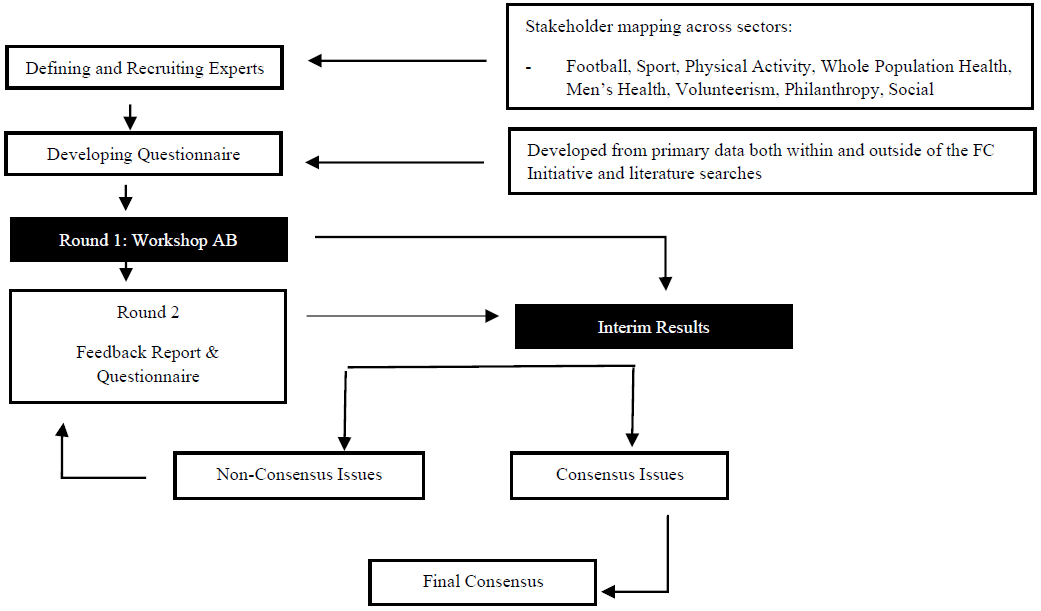
In order to finalise the implementation strategy, an adaptation of the Delphi technique was adopted as per Figure 2. This technique is a systematic process that uses the collective intelligence of a diverse panel of experts where research is limited, ethically/logistically difficult or evidence is conflicting 49. It involves using a number of rounds of consultation to generate consensus i.e. when all panellists agree or disagree on the items under discussion. However, this is almost never achieved and therefore a level of consensus is assigned depending upon the study’s aim 50.
2.2. ParticipantsA number of stakeholder groups were recruited as per the Ecological Model (see Table 1). Within the FC initiative these included a) male participants, b) volunteer coordinators, c) the FC founder, and d) community and systems levels representatives. Outside of the FC initiative a number of organisations that have been successful in growing football related initiatives to scale were identified; stakeholders across the ecological framework involved in these initiatives in Scotland [Scottish FA], Denmark [Danish FA & Football for Life Programme], Germany [Hamburg FA], and Belgium [Belgian FA & Hypercube] were also recruited to participate in this research. Finally, organisations in Ireland that have been successful in growing health/sport/physical activity related initiatives to scale were identified and stakeholders across the ecological framework involved in these initiatives were recruited to participate in this study. The inclusion criteria for each stakeholder group was as follows: a) ≥18 years, b) provided written informed consent, and c) participates in the initiative/is involved in providing the initiative/is involved in founding the initiative/is involved in providing funding or implementing policy related to football/sport for good initiatives/health related initiatives in Ireland or Europe. Purposive and snowball sampling were used to recruit participants for this study.
Project information was shared with participants and coordinators via the FC gatekeeper. As per Study 1, the gatekeeper informed players and coordinators of the research and signposted them to a member of the research team (CMcD). Specifically, two weeks prior to data collection an invitation seeking an expression of interest (EOI) to take part in the study was sent from the FC gatekeeper to all participants and coordinators via email. Thereafter, a second (5 days later) and third (10 days later) was sent via email and the FC messaging network on WhatsApp. Once permission was given to CMcD to contact a player/coordinator, he was then responsible for informing them about the research and obtaining informed consent. CMcD also embedded himself as a player in FC games during which time he approached players directly and asked if they would consent to participating in the research (hard copies of consent forms were brought to games). The FC gatekeeper is the FC Founder and was directly recruited by CMcD for participation in this study. Members of the research team (PC) and AB contacted organisational and community and systems levels representatives directly and requested their participation in this study.

With the exception of the Danish organisation, the Union of European Football Associations (UEFA) representative on the AB acted as a gatekeeper for the European organisations identified. Project information was shared with the lead in the organisation and they were signposted to a member of the research team (PC) who was responsible for informing them about the research. If agreeable, the lead within the organisation then acted as a gatekeeper for the service users, service providers and those in the wider ecological system. PK acted a gatekeeper for the Danish organisations.
Stakeholders were members of the AB who were not on the research team (n=36) and all were invited to participate in this study by the FC gatekeeper.
The use of a gatekeeper in this study is in keeping with good practice. All gatekeepers (outside of the research team) were at ‘arm’s length’ of the study. Therefore, those gatekeepers who are on the AB do not have a conflict of interest as they had no influence on who participated in the research and no access to the data collected.
2.3. Data CollectionThe data collection described in this protocol took place between February 2023 and June 2025 as part of a planned, sequential evaluation. While data collection is now complete, this paper outlines the protocol and methodological frameworks established prior to and throughout the implementation process (see Table 1).
Multiple data collection methodologies were adopted across all stakeholder levels both within (see Figure 3) and outside (see Figure 4) the FC initiative to inform the development of the FC implementation strategy for replication. In cases where the opportunity to conduct focus groups was not viable due to availability, then semi-structured interviews were chosen as the alternative.
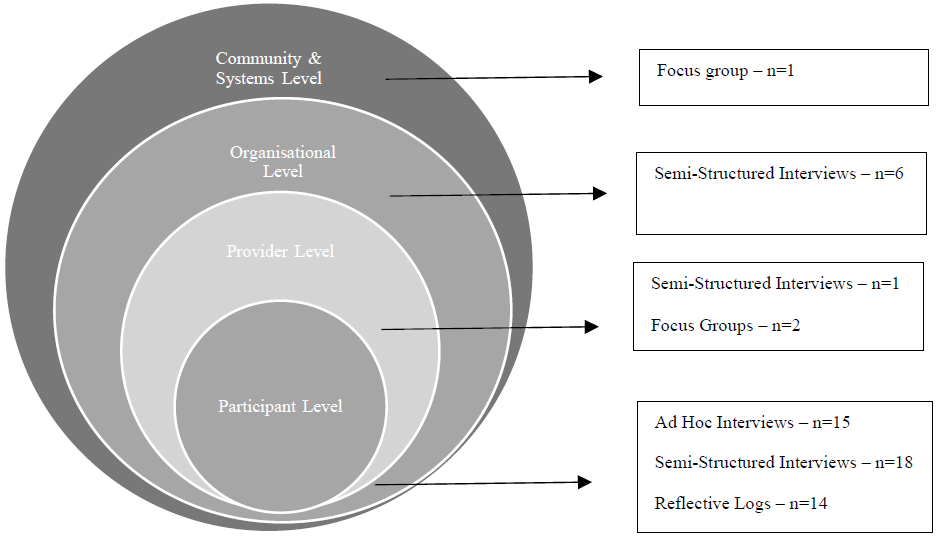
Stakeholders across levels within the FC initiative were consulted to inform the development of the implementation strategy as per Figure 3.
Participant Level: Ethnographic methods were employed at FC sites to gain a deeper understanding of the games’ culture, conventions, and social dynamics to facilitate iterative decision making to inform adaptations for implementation and knowledge co-production. A member of the research team (CMcD) actively participated in Monday night, 90-minute games at the two FC sites (Site 1, 8 weeks, March-May, 2023; Site 2, 6 weeks, March-May, 2024) and generated reflective logs (n=14) that focused on a) the logistics of the organisation of the game (from a player’s perspective), b) their experience as a participant on the night, c) reflections on relevant CFIR domains and d) other general observations. At weekly meetings, reflections were reviewed by members of the research team (PC, AMcG, TE, LF) and collectively explored to deepen meaning in terms of facilitators and barriers to implementation. Reflections were revised after meetings and stored on the OneDrive for analysis.
While embedded in the games at each site, CMcD conducted informal short ‘pitch side’ interviews with participants (Site 1, n=9; 7-19 mins; Site 2, n=6; 5-10 mins) ad-hoc around the game (half time/after the game) that captured the player’s a) motivations to play, b) experience of the games in terms of duration of playing, logistics, likes and dislikes as well as c) what changes they would make to improve their experience and the d) the impact of playing on their lives.
Semi-structured interviews were also conducted with players (CMcD; Site 1, n=4; 23-43 mins). In keeping with the ethical principal of not ‘over-researching’ the same people, semi-structured interviews with participants from Study 1, collected for the purpose of the developing a ‘Theory of Change’, were re-analysed for this study (PC & SD; Site 2, n=14; 23-50 mins, collected in April 2021). Interviews at both sites focused on relevant CFIR domains (inner setting & individuals) around a) beliefs, b) needs assessment, c) attitude and motivation, d) perceived barriers and facilitators, e) community impact and f) sustainability and fidelity.


Provider Level: Three focus groups (Site 1, n=5, 23-26 mins (CMcD); Site 2, n=3, 64 mins (PC, SD)) and 1 semi-structured interview (Site 1, 60 mins, (CMcD)) were conducted with Game Coordinators and focused on all CFIR domains.
Organisational Level: Six semi structured interviews (50-103mins) were conducted with the Founder of the FC initiative (CMcD with support at different interviews from PC, AMcG, TE and LF). Given the Founder’s familiarity with the FC initiative, sequential interviews (Feb 2023-July 2024), which allowed time for ongoing reflection and analysis, were required to collect data across all CFIR domains in depth.
Community & Systems Levels: One focus group (n=2; 53 mins) was conducted with strategic leads in the Football Association of Ireland (FAI) and UEFA which focused on the CFIR domains a) inner setting, b) outer setting and c) process.
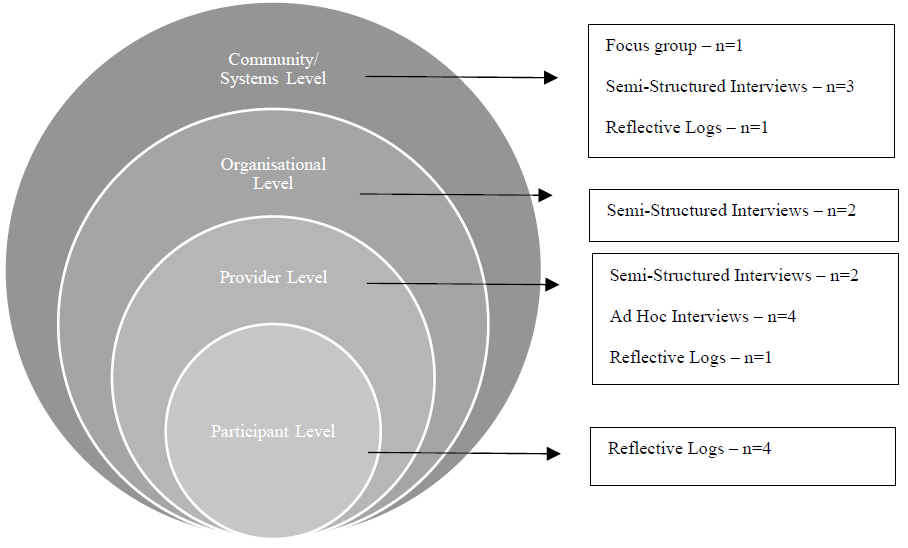
As per within the FC initiative, stakeholders across levels outside of FC were also consulted to inform the development of the implementation strategy as per Figure 4.
Participant Level: Ethnographic observations (CMcD & PC) were carried out with two club-based groups within the Danish “Football for Life” initiative: an older women’s football group (60-min game with breaks followed by 60-min social discussion with players in their clubhouse) and a patient football group (60-min game, which PC played, followed by pitch side discussion with players). Post-game, PC and CMcD discussed and collaboratively interpreted experiences before formally drafting reflective logs (n=4) that focused on relevant CFIR domains (inner setting, innovation characteristics and process). Reflective logs were particularly suitable for this informal setting, where more structured methods, such as focus groups, were not feasible; time constraints prevented a planned focus group with the patient group, while the older women’s setting, being highly relaxed and social, was not conducive to structured discussions.
Provider Level: In Hamburg, members of the research team (CMcD, LF) conducted semi-structured interviews (n=2; 28-49 mins) with project coordinators. In addition, ad hoc interviews (n=4; 8-10 mins) were conducted with volunteers who provide a variety of recreational football games and projects. Data collection was guided by the CFIR constructs, namely the, a) intervention characteristics, b) inner setting, c) outer setting, d) characteristics of the individuals and e) process. CMcD & LF also attended a ‘Volunteer Reward’ evening and collaboratively generated a reflective log guided by the CFIR domains.
Organisational Level: Semi-structured interviews (n=2, 56-69 mins) were conducted with two national organisations in Ireland (Volunteer (CMcD & LF) and Sport (CMcD)) who were well positioned to provide critical insights into best practices for scaling initiatives, managing the volunteer lifecycle, implementing policies, and addressing operational challenges in contexts relevant to the FC initiative. Data collection was guided by the CFIR constructs, namely the, a) intervention characteristics, b) inner setting, c) outer setting, d) characteristics of the individuals and e) process.
Community/Systems Level: Semi-structured interviews (n=2, 16-41 mins) were conducted with policy leads in Denmark (CMcD & PC) and Hamburg (CMcD & LF) and focus groups were conducted with policy leads in Scotland (n=2, 61 mins, CMcD & LF) and consultant project managers in Belgium (Zoom, n=2, 31 mins, CMcD & LF). For the funders and policy maker stakeholder groups, data collection was guided by some of the CFIR constructs namely the a) outer setting, b) characteristics of the individuals, and c) process. In addition, focus was paid to areas such as a) governance structures, b) sustainable funding streams and c) capacity building, in order to plan for sustainability at scale.
All data were audio recorded via a digital Dictaphone [Sony, ICD -SX733] and transcribed verbatim.
In addition to data collection, desk based research was conducted that involved reviewing and synthesising findings from Study 1, specifically with respect to men’s experiences [motivation to play and stay involved in FC games], health impact and social return on investment. Participation data at FC games was also reviewed to understand the nature of participation.
In the current study, stakeholder mapping across sectors was ongoing to expand the AB from 2021 so that it represented a ‘diverse panel of experts. Some 33 members of the AB participated in this study’ which represented 92% of the AB and was therefore deemed sufficiently rigorous 51 52. The ‘questionnaire’ (see Figure 2) was developed from the draft implementation strategy which was underpinned by evidence from this study and literature. A mixed methodology was adopted for the Round 1 consultation. In May 2025 AB members participated in a workshop whereby small groups [online (n=2) and in-person (n=6)] were facilitated by members of the research team [CMcD, MH, LF, AMcG, NR]. The ‘questionnaire’ was drafted as worksheets that focused on either the Provider level or Organisational level facilitators and barriers to implementation; 3 in-person groups and 1 online group got each level for consideration. In these groups, AB members were enabled to express their opinions about the items presented in terms of how they should happen as well as generating new ideas of what should/should not happen. Furthermore, these experts were then asked to rate items in terms of urgency and importance using the Eisenhower Priority Matrix 53 in order to prioritise strategies for action.
Data from the workshops was collated into Provider level and Organisational level Masterfiles. These Masterfile’s were then merged and organised via the Priority Matrix; individual items were prioritised as ‘Do it Now’, ‘Schedule it’, ‘Delegate it’ and ‘Drop it’ and guidance on what to do regarding each item, collated from all data sources along with the literature was detailed. This was then circulated to all members of the AB, with the exception of those on the research team (n=36), as the Round 2 consultation (see Figure 2). Members were instructed to comment on and/or make edits to the document whereby a non-response signified acceptance.
The datasets generated during the current study will be made available from the corresponding author on reasonable request.
2.4. Data AnalysisData analysis is ongoing. All sources of data from the ‘draft implementation strategy study’ will be deductively analysed using the CFIR codebook 54 and summary meanings drafted of each domain. Thereafter, the data will be retrofitted to the PRACTIS framework to determine the place, people, process, provisions, barriers and facilitators as well as strategies to overcome those barriers [66]. Data from the Adapted Delphi study will be triangulated with PRACTIS to both inform and prioritise implementation outcomes. The final implementation strategy will be presented as per the PRACTIS framework. In parallel, the Intervention Scalability Assessment Tool (ISAT) will be used to evaluate the initiative’s overall readiness for scale, drawing on data from CFIR and PRACTIS to assess domains such as strategic alignment, cost, fidelity, and sustainability. This layered approach will ensure that both the content and feasibility of the implementation strategy are robustly assessed. The final strategy will be presented in accordance with the PRACTIS framework, with scalability considerations from ISAT embedded throughout.
2.5. Consent, Data Management and EthicsParticipants were fully informed of the research through written instruction prior to data collection (via email) and verbally, immediately before data collection. All study participants provided written informed consent prior to participation.
Qualitative data was collected both in person and on the Zoom platform. Data collected in-person was recorded on a digital Dictaphone (Sony, ICD -SX733) and the audio file was uploaded that day to the principal investigator’s (PIs; PC) password-protected OneDrive to be transcribed. Once stored safely, the original file was erased from the Dictaphone. Data collected via Zoom was handled as per South East Technological Universitys’ (SETU) protocol; only the audio recording was saved on the desktop and subsequently stored on the PI’s password-protected OneDrive for transcription. When audio files were saved to OneDrive, it was deleted from the Dictaphone or desktop and transcribed within 7 days post data and subsequently deleted from OneDrive.
Compliance with SETU’s data protection and retention policies ensured confidentiality and anonymity of participants. Specifically, all identifiable information such as consent forms, were stored securely on OneDrive separately from the transcribed data and only accessible by named researchers (PC, CMcD). Some hard copies of consent forms were collected and these have been stored in a locked filing cabinet in the PI’s office. All data sets have been kept on the PI’s OneDrive and only members of the research team have access to specific data sets (CMcD, AMcG, TE, LF). No data is stored on portable devices or desktop computers. Qualitative research data was fully anonymised by assigning participants a unique code and de-identifying all information e.g. places will be de-identified in any reporting of data. Personal identifiable data will be retained for 10 years as per SETU’s policy and then appropriately destroyed.
Ethical approval for the study was sought and obtained from the School of Health Sciences Ethics Committees at SETU and this study was retrospectively registered with the ‘International Standard Randomised Controlled Trial Number' registry (ISRCTN66120372).
This paper sought to detail the protocols used in the development of an implementation strategy for the FC initiative to be replicated across 10 new sites in Q1 2026 (to be evaluated in Studies 4A & 4B; see Figure 1). It is essential that the protocols used in such studies are detailed so that more researchers and practitioners can engage in translational research to ensure they bridge the knowledge-practice gap for the benefit of population health.
We know that the implementation process is affected by variables related to communities, providers, the prevention delivery system (i.e., organisational functioning) and the prevention support system (i.e., training and technical assistance) 55 and therefore it is critical that diverse perspectives are heard in IS research. This diversity can be achieved via the inclusion of stakeholders that represent a variety of categories. The Ecological Model, founded upon Bronfenbrenner’s Ecological Systems Theory 12 and used by Koorts et al., (2018) 45 in the PRACTIS Framework categorises stakeholders as those that (i) fund and/or have overarching responsibility or ‘ownership’ for the innovation (community/systems level); (ii) disseminate (distribute) the innovation (organisational level); (iii) host and/or deliver the innovation (provider level); and (iv) receive the innovation (individual level). Banke-Thomas et al., (2015) 56 also identified four categories of stakeholders whereby beneficiary stakeholders are the direct/indirect ‘users’ of the innovation; implementer stakeholders include those who support the innovation; promoter stakeholders include those who provide support and a conducive environment for the innovation to take place; funders stakeholders include those who finance the innovation. It is evident from the similarity of these models that diversity needs to span from those experiencing/using the innovation to those in the wider environment funding and/or strategically mandating for such innovations. In IS research, these models are useful tools to support stakeholder mapping to ensure stakeholder diversity is achieved and that all perspectives inform implementation. While this diversity was achieved with respect to the FC initiative in the current study, given the limited number of existing sites (n=2), the experiences of a diverse range of stakeholders beyond the FC initiative was also sought so that the final implementation strategy would be informed by best practice elsewhere. Nevertheless, this work captured the value of combining multiple IS frameworks to capture complex, real-world considerations in scaling a largely volunteer-led initiative. It demonstrates the importance of early and sustained involvement of stakeholders at all ecological levels in order to anticipate barriers around fidelity, sustainability and strategic alignment. Indeed, the adapted Delphi process captures tension between standardisation and local adaptation highlighting factors central to successful scale up.
IS theories, models and frameworks 44 are necessary to explain how and why implementation of interventions succeeds or fails 57. While some 170 currently exist 58, not all studies use one as a guiding principle for assessing implementation, nor do they report implementation outcomes 59. However, they are essential in a) understanding context, b) evaluating implementation, c) developing generalisable knowledge and d) maximising impact 7. In the current study a combination of the CFIR framework and the PRACTIS process model were used to guide stakeholder discussions; specifically innovation characteristics, outer setting, inner setting, characteristics of individuals, process, context, facilitators and barriers along with strategies to overcome barriers were explored. This is in keeping with Koorts et al., (2018) 45 who propose that stakeholder discussions should aim to increase awareness of innovation practice as well as policy activities involved in implementation and scale up.
Koorts et al., (2018) 45 also proposes that IS research should facilitate effective information exchange and collaboration between stakeholders and the effective use of existing knowledge. In the current study, the sharing of information and generating collaborations was facilitated via the AB that was established to support the research project and the development of the FC initiative. At AB meetings, research findings were presented along with input from those engaged in best practice that has scaled elsewhere. Critically, the AB acted as the panel of experts (regarding implementation in an Irish context) in the Adapted Delphi study to finalise the implementation strategy.
While data collection was extensive, it was conducted within only two established FC sites, which may limit generalisability. Furthermore, while the use of multiple frameworks added rigour, it also introduced analytic complexity, with overlapping domains between CFIR and PRACTIS sometimes requiring interpretive judgement. Notably ISAT will be applied at a later stage of the process. While this may limit its full evaluative reach, its inclusion at that point reflects a central strength of the implementation science approach: adaptability. The protocol was intentionally flexible, allowing real-time adjustments in response to contextual realities and emerging data gaps, an essential feature of complex, real-world implementation planning. The capacity to incorporate ISAT retrospectively to address macro-level considerations such as cost, strategic alignment, and system capacity demonstrates the pragmatic value of adaptive protocol design. Ultimately, ISAT will serve as a valuable complement to CFIR’s micro-level diagnostic power and PRACTIS’s structured planning process, helping to bridge the gap between stakeholder-informed strategy development and system-level feasibility. This layered use of frameworks will enrich the final implementation strategy by ensuring that both operational and strategic dimensions of scale-up will be robustly addressed.
National policy 19 and European strategy 20 have called for men’s health inequalities to be addressed; to do so, EBPs need to bridge the ‘knowledge -practice’ gap and translate to scale for the benefit of male population health. Bridging this gap requires not only EBPs but also robust, context-sensitive implementation strategies. This study responds to that call by developing a co-produced, theory-informed implementation protocol to support the national replication of the FC initiative, a low-cost, volunteer-led, community-based model for engaging men in health-promoting physical activity.
A key strength of this protocol lies in its adaptability. Guided by IS principles, the research design allowed for real-time modifications in response to contextual demands, stakeholder feedback, and emergent data needs. Such flexibility is essential for the successful scale-up of complex, community-driven interventions operating in dynamic environments.
Achieving scale up will not only enhance men’s health outcomes, but through reduction in healthcare costs and the prevention of chronic diseases that result in loss of work, disability and financial stress, it will also enhance the health of the whole populations, irrespective of gender 20.
The contribution of the funders, South East Technological University PhD Co-Fund Programme, UEFA, Sport Ireland via Fingal County Council along with the in-kind contribution of all the partners on the Advisory Board is gratefully acknowledged. The funding bodies had no role in the design of the study and collection, analysis, and interpretation of data and in writing the manuscript. The Football Cooperative players for participating in games and this research and all other participants at provider, organisational and ecological levels in this research. We would also like to acknowledge the contribution by Dr Steve Daly who shared data from Site 2 which was collected as part of his PhD and Chief Ibrahim and Panos Papageorgiou who supported the research team to collect data for the Adapted Delphi study.
Authors declare that they have a close and ongoing relationship with the FC initiative in they provide independent evidence to inform strategic decision making parallel to the delivery of the FC initiative by the SE. The FC initiative are the Applied Partner on the HRB funding that was awarded to the research team for Studies 4A and 4B and are therefore part-funders of that award (~€40,000). The FC initiative also funded a staff buyout for the PI in 2023 (€15,000), enabling her to complete the SROI report for Study 1 referenced here. Notably, FC had no role and will not have any role in the future in the design, data collection, analysis, and interpretation and the writing of reports and/or manuscripts related to any study in this project.
CMcDChristopher McDermott
EBPEvidence-Based Practice
ISImplementation Science
FIMFootball is Medicine
FFITFootball Fans in Training
SPFL TrustScottish Professional Football League Trust
FCFootball Cooperative
SESocial Enterprise
ABAdvisory Board
SROI Social Return on Investment
CFIRConsolidated Framework for Implementation Research
PRACTISPRACTical planning for Implementation and Scale-up guide,
ISATIntervention Scalability Assessment Tool
EOIExpression of Interest
FAFootball Association
FAIFootball Association of Ireland
PCPaula Carroll
PIPrinciple Investigator
PKPeter Krustrup
UEFAUnion of European Football Associations
SETU South East Technological University
{1}. Players pay €5 per game, however, the fee is reduced or waived for those who may struggle to pay and this is at the organisers discretion.
{2}. A stakeholder is generally defined as an individual, group, or organisation that has an interest in, or is affected by, the outcome of a particular project or endeavour.
| [1] | Balas, E.A. and Boren, S.A., "Managing clinical knowledge for health care improvement," Yearbook of Medical Informatics, 9(1), pp. 65–70, 2000. | ||
| In article | View Article | ||
| [2] | Bauer, G.R. and Scheim, A.I., "Advancing quantitative intersectionality research methods: Intracategorical and intercategorical approaches to shared and differential constructs," Social Science & Medicine, 226, pp. 260–262, 2019. | ||
| In article | View Article PubMed | ||
| [3] | Greenhalgh, T. and Papoutsi, C., "Studying complexity in health services research: Desperately seeking an overdue paradigm shift," BMC Medicine, 16, p. 95, Jul. 2018. | ||
| In article | View Article PubMed | ||
| [4] | Wensing, M. and Grol, R., "Knowledge translation in health: How implementation science could contribute more," BMC Medicine, 17, p. 88, May 2019. | ||
| In article | View Article PubMed | ||
| [5] | Fixsen, D. L., Naoom, S. F., Blase, K. A., Friedman, R. M., and Wallace, F., Implementation research: A synthesis of the literature (FMHI Publication No. 231), University of South Florida, Louis de la Parte Florida Mental Health Institute, The National Implementation Research Network, 2005. | ||
| In article | |||
| [6] | Proctor, E. K., Landsverk, J., Aarons, G., Chambers, D., Glisson, C., and Mittman, B., "Implementation research in mental health services: An emerging science with conceptual, methodological, and training challenges," Administration and Policy in Mental Health and Mental Health Services Research, 36 (1), pp. 24–34, Jan. 2009. | ||
| In article | View Article PubMed | ||
| [7] | Bauer, M. S., and Kirchner, J., "Implementation science: What is it and why should I care?" Psychiatry Research, 283, 112376, Jan. 2020. | ||
| In article | View Article PubMed | ||
| [8] | Damschroder, L. J., Aron, D. C., Keith, R. E., Kirsh, S. R., Alexander, J. A., and Lowery, J. C., "Fostering implementation of health services research findings into practice: A consolidated framework for advancing implementation science," Implementation Science, 4 (1), 50, Jul. 2009. | ||
| In article | View Article PubMed | ||
| [9] | Greenhalgh, T. and Papoutsi, C., "Studying complexity in health services research: Desperately seeking an overdue paradigm shift," BMC Medicine, 16, p. 95, Jul. 2018. | ||
| In article | View Article PubMed | ||
| [10] | O'Hara, B.J., Phongsavan, P., King, L., Develin, E., Milat, A.J., Eggins, D., and Bauman, A.E., "‘Translational formative evaluation’: Critical in up-scaling public health programmes," Health Promotion International, 29(1), 38-46, Mar. 2014. | ||
| In article | View Article PubMed | ||
| [11] | Centre for Epidemiology and Evidence, Increasing the Scale of Population Health Interventions: A Guide, Evidence and Evaluation Guidance Series, Population and Public Health Division, NSW Ministry of Health, Sydney, 2023. Available: https://www.health.nsw.gov.au/research/publications/scalability-guide.pdf. | ||
| In article | |||
| [12] | Bronfenbrenner, U., The Ecology of Human Development: Experiments by Nature and Design, Harvard University Press, Cambridge, 1979. | ||
| In article | View Article PubMed | ||
| [13] | Peters, D.H., Adam, T., Alonge, O., Agyepong, I.A., and Tran, N., "Implementation research: What it is and how to do it," BMJ, 347, f6753, Nov. 2013. | ||
| In article | |||
| [14] | Craig, P., Di Ruggiero, E., Frohlich, K.L., Mykhalovskiy, E., White, M., and Campbell, R., Taking Account of Context in Population Health Intervention Research: Guidance for Producers, Users and Funders of Research, National Institute for Health Research, 2018. | ||
| In article | View Article | ||
| [15] | World Health Organization, Global Status Report on Physical Activity 2024, WHO, Geneva, 2024. [Online]. Available: https://www.who.int/news-room/fact-sheets/detail/physical-activity. [Accessed Jul. 3, 2025]. | ||
| In article | |||
| [16] | Department of Health, Healthy Ireland Survey 2024: Summary Report, Government of Ireland, Dublin, 2024. [Online]. Available: https://www.gov.ie/en/healthy-ireland/publications/healthy-ireland-survey-2024/#physical-activity. [Accessed Jul. 3, 2025]. | ||
| In article | |||
| [17] | Men’s Health Forum in Ireland, Men’s Health in Numbers: Republic of Ireland Men’s Health Report Card 2024, Men’s Health Forum in Ireland, 2024. [Online]. Available: https://www.mhfi.org/MensHealthInNumbers2.pdf. [Accessed Jul. 3, 2025]. | ||
| In article | |||
| [18] | Central Statistics Office, Vital Statistics Yearly Summary 2024, Central Statistics Office, Dublin, 2025. [Online]. Available: https://www.cso.ie/en/releasesandpublications/ep/p-vsys/vitalstatisticsyearlysummary2024. [Accessed Jul. 3, 2025]. | ||
| In article | |||
| [19] | Health Service Executive, National Men’s Health Action Plan: Healthy Ireland – Men (HI-M) 2024–2028. Working with Men in Ireland to Achieve Optimum Health and Wellbeing, Health Service Executive and Department of Health, Dublin, 2024. Available: https://www.hse.ie/eng/services/publications/health-and-wellbeing/national-men-s-health-action-plan-2024-2028.pdf [Accessed Jul. 3, 2025]. | ||
| In article | |||
| [20] | World Health Organization Regional Office for Europe, The health and well-being of men in the WHO European Region: Better health through a gender approach (WHO/EURO: 2018-4209-43968-61973), WHO Regional Office for Europe, Copenhagen, Oct. 2018. [Online]. Available: https:// www.who.int/ europe/ publications/ i/item/WHO-EURO-2018-4209-43968-61973. [Accessed Jul. 3, 2025]. | ||
| In article | |||
| [21] | Krustrup, P. and Krustrup, B.R., "Football is medicine: it is time for patients to play!", British Journal of Sports Medicine, 52(22), pp. 1412–1414, Nov. 2018. | ||
| In article | View Article PubMed | ||
| [22] | Krustrup, P., Aagaard, P., Nybo, L., Petersen, J., Mohr, M. and Bangsbo, J., "Recreational football as a health promoting activity: A topical review," Scandinavian Journal of Medicine & Science in Sports, 20(S1), pp. 1–13, 2010. | ||
| In article | View Article PubMed | ||
| [23] | Milanović, Z., Sporiš, G. and Weston, M., "Effectiveness of high-intensity interval training (HIT) and continuous endurance training for VO₂max improvements: A systematic review and meta-analysis of controlled trials," Sports Medicine (Auckland, N.Z.), 45(10), pp. 1469–1481, Oct. 2015. | ||
| In article | View Article PubMed | ||
| [24] | Milanović, Z., Pantelić, S., Čović, N., Sporiš, G., Mohr, M. and Krustrup, P., "Broad-spectrum physical fitness benefits of recreational football: A systematic review and meta-analysis," British Journal of Sports Medicine, 53(15), pp. 926–939, Aug. 2019. | ||
| In article | View Article PubMed | ||
| [25] | Milanović, Z., Čović, N., Helge, E.W., Krustrup, P. and Mohr, M., "Recreational football and bone health: A systematic review and meta-analysis," Sports Medicine (Auckland, N.Z.), 52(12), pp. 3021–3037, Dec. 2022. | ||
| In article | View Article PubMed | ||
| [26] | Bennike, S., Andersen, T.R. and Krustrup, P. (Eds.), Football as prevention and treatment: A white paper focusing on 10 non-communicable diseases and risk factors, Danish Football Association & University of Southern Denmark, 2024. [Online]. Available: https://www.sdu.dk/en/fim. | ||
| In article | |||
| [27] | White, A. and Witty, K., "Men's under use of health services – finding alternative approaches," Journal of Men's Health, 6(2), pp. 95–97, Jun. 2009. | ||
| In article | View Article | ||
| [28] | Spandler, H. and McKeown, M., "A critical exploration of using football in health and welfare programs: Gender, masculinities, and social relations," Journal of Sport and Social Issues, 36(4), pp. 387–409, Nov. 2012. | ||
| In article | View Article | ||
| [29] | Bruun, D.M., Krustrup, P., Hornstrup, T., Uth, J., Brasso, K., Rørth, M., Christensen, J.F. and Midtgaard, J., "All boys and men can play football: A qualitative investigation of recreational football in prostate cancer patients," Scandinavian Journal of Medicine & Science in Sports, 24(Suppl 1), pp. 113–121, Jan. 2014. | ||
| In article | View Article PubMed | ||
| [30] | Robertson, S., Understanding men and health: Masculinities, identity and well-being, Open University Press, Buckingham, UK, 2007. | ||
| In article | |||
| [31] | Hunt, K., Wyke, S., Gray, C.M., Anderson, A.S., Brady, A., Bunn, C., Donnan, P.T., Fenwick, E., Grieve, E., Leishman, J., Miller, E., Mutrie, N., Rauchhaus, P., White, A. and Treweek, S., "A gender-sensitised weight loss and healthy living programme for overweight and obese men delivered by Scottish Premier League football clubs (FFIT): a pragmatic randomised controlled trial," Lancet, 383(9924), pp. 1211–1221, Apr. 2014. | ||
| In article | View Article PubMed | ||
| [32] | SPFL Trust, Football Fans in Training: 2023–2024 annual report, SPFL Trust, 2025. [Online]. Available: https:// spfltrust.org.uk/ 2023-24-football-fans-in-training-annual-report/ [Accessed Jul. 3, 2025]. | ||
| In article | |||
| [33] | Wyke, S., Bunn, C., Andersen, E., Silva, M.N., van Nassau, F., McSkimming, P., Kolovos, S., Gill, J.M.R., Gray, C.M., Hunt, K., Anderson, A.S., Bosmans, J., Jelsma, J.G.M., Kean, S., Lemyre, N., Loudon, D.W., Macaulay, L., Maxwell, D.J., McConnachie, A., Mutrie, N., Nijhuis-van der Sanden, M., Pereira, H.V., Philpott, M., Roberts, G.C., Rooksby, J., Røynesdal, Ø.B., Sattar, N., Sørensen, M., Teixeira, P.J., Treweek, S., van Achterberg, T., van de Glind, I., van Mechelen, W., and van der Ploeg, H.P., "The effect of a programme to improve men's sedentary time and physical activity: The European Fans in Training (EuroFIT) randomised controlled trial," PLoS Medicine, 16(2), e1002736, Feb. 2019. | ||
| In article | View Article PubMed | ||
| [34] | Kwasnicka, D., Ntoumanis, N., Hunt, K., Gray, C.M., Newton, R.U., Gucciardi, D.F., Thøgersen-Ntoumani, C., Olson, J.L., McVeigh, J., Kerr, D.A., Wyke, S., Morgan, P.J., Robinson, S., Makate, M., and Quested, E., "A gender-sensitised weight-loss and healthy living program for men with overweight and obesity in Australian Football League settings (Aussie-FIT): A pilot randomised controlled trial," PLoS Medicine, 17(8), e1003136, Aug. 2020. | ||
| In article | View Article PubMed | ||
| [35] | Maddison, R., Hargreaves, E.A., Jiang, Y., Calder, A.J., Wyke, S., Gray, C.M., Hunt, K., Lubans, D., Eyles, H., Draper, N., Heke, I., Kara, S., Sundborn, G., Arandjus, C., Gao, L., Lee, P., Lim, M., and Marsh, S., "Rugby Fans in Training New Zealand (RUFIT NZ): A randomized controlled trial to assess the effectiveness of a healthy lifestyle program for overweight men delivered through professional rugby clubs," International Journal of Behavioral Nutrition and Physical Activity, 20(1), 37, Jan. 2023. | ||
| In article | View Article PubMed | ||
| [36] | Petrella, R.J., Gill, D.P., Boa Sorte Silva, N.C., Riggin, B., Blunt, W.M., Kfrerer, M., and Zwarenstein, G.Y., "The Hockey Fans in Training intervention for men with overweight or obesity: A pragmatic cluster-randomised trial," eClinicalMedicine, 77, 102911, Jan. 2024. | ||
| In article | View Article PubMed | ||
| [37] | Hunt, K., Wyke, S., Bunn, C., Donnachie, C., Reid, N., and Gray, C.M., "Scale-up and scale-out of a gender-sensitized weight management and healthy living program delivered to overweight men via professional sports clubs: The wider implementation of Football Fans in Training (FFIT)," International Journal of Environmental Research and Public Health, 17(2), 584, Jan. 2020. | ||
| In article | View Article PubMed | ||
| [38] | Carroll, P., Daly, S., Egan, T., Harrison, M., Richardson, N., Finnegan, L., McGrath, A., and Krustrup, P., "Football Cooperative, a community-based physical activity social intervention for men: Protocol paper for a pragmatic feasibility trial," Journal of Physical Activity Research, 8(1), 16–26, Jan. 2023. | ||
| In article | View Article PubMed | ||
| [39] | Daly, S., Carroll, P., Egan, T., Harrison, M., McGrath, A., Finnegan, L., Richardson, N., and Krustrup, P., "The pre-adoption characteristics of the men in a community-based social intervention: Who wants a game of ball?" International Journal of Health Promotion and Education, [Online]. | ||
| In article | |||
| [40] | Daly, S., Carroll, P., Harrison, M., Egan, T., Richardson, N., McGrath, A., Finnegan, L., and Krustrup, P., "More than a game of football: A 1-year pilot investigation of the impact of participation in a community-based recreational football initiative for men in Ireland on health and cardiovascular risk," International Journal of Men's Social and Community Health, 8(1), [Online]. | ||
| In article | View Article | ||
| [41] | Carroll, P., Egan, T., and Daly, S., Football Cooperative. Social Return on Investment (SROI), Evaluation Analysis, 2024. [Unpublished Report]. Available upon request: Paula.Carroll@setu.ie. | ||
| In article | |||
| [42] | Daly, S., Egan, T., Carroll, P., Ormond, G., Harrison, M., McGrath, A., Finnegan, L., Richardson, N., and Krustrup, P., "Capturing the wider benefits from football participation: An SROI of a Community Based Football Intervention." Available upon request: Paula.Carroll@setu.ie. | ||
| In article | |||
| [43] | Everard, E., Carroll, P., Doherty, S., Harrison, M., and Krustrup, P., "Normative data for gameplay and cardiovascular demands of recreational football among the male general population – the Football Collective initiative." Available upon request: Paula.Carroll@setu.ie. | ||
| In article | |||
| [44] | Nilsen, P., "Making sense of implementation theories, models and frameworks," Implementation Science, 10, 53, Apr. 2015. | ||
| In article | View Article PubMed | ||
| [45] | Koorts, H., Eakin, E., Estabrooks, P., Timperio, A., Salmon, J., Bauman, A., and Carter, R., "Implementation and scale up of population physical activity interventions for clinical and community settings: The PRACTIS guide," International Journal of Behavioral Nutrition and Physical Activity, 15(1), 51, May 2018. | ||
| In article | View Article PubMed | ||
| [46] | Reis, R.S., Salvo, D., Ogilvie, D., Lambert, E.V., Goenka, S., Brownson, R.C., and Lancet Physical Activity Series Working Group, "Scaling up physical activity interventions worldwide: Stepping up to larger and smarter approaches to get people moving," The Lancet, 388(10051), 1255–1264, Sep. 2016. | ||
| In article | View Article PubMed | ||
| [47] | Damschroder, L.J., and Lowery, J.C., "Evaluation of a large-scale weight management program using the Consolidated Framework for Implementation Research (CFIR)," Implementation Science, 8(1), 51, May 2013. | ||
| In article | View Article PubMed | ||
| [48] | Milat, A.J., Newson, R., and King, L., "Increasing the scale of population health interventions: A guide," Implementation Science, 9(1), 151, Oct. 2014. | ||
| In article | |||
| [49] | Nasa, P., Jain, R., and Juneja, D., "Delphi methodology in healthcare research: How to decide its appropriateness," World Journal of Methodology, 11(4), 116–129, Jul. 2021. | ||
| In article | View Article PubMed | ||
| [50] | Chuenjitwongsa, S., How to: Conduct a Delphi study, Cardiff University, 2017. [Online]. Available: https:// www.cardiff.ac.uk/ __data/assets/pdf_file/0010/1164961/how_to_conduct_a_delphistudy.pdf. | ||
| In article | |||
| [51] | Kilroy, D. and Driscoll, P., "Determination of required anatomical knowledge for clinical practice in emergency medicine: National curriculum planning using a modified Delphi technique," Emergency Medicine Journal, 23(9), 693–696, Sep. 2006. | ||
| In article | View Article PubMed | ||
| [52] | Masud, T., et al., "European undergraduate curriculum in geriatric medicine developed using an international modified Delphi technique," Age and Ageing, 1–8, 2014. | ||
| In article | |||
| [53] | Kennedy, D. R. and Porter, A. L., "The illusion of urgency," American Journal of Pharmaceutical Education, 86(7), 8914, 2022. | ||
| In article | View Article PubMed | ||
| [54] | Damschroder, L. J., CFIR constructs and definitions [Codebook], Consolidated Framework for Implementation Research, 2022. [Online]. Available: https://cfirguide.org/constructs/. | ||
| In article | View Article | ||
| [55] | Durlak, J. A. and DuPre, E. P., "Implementation matters: a review of research on the influence of implementation on program outcomes and the factors affecting implementation," American Journal of Community Psychology, 41, 327–350, 2008. | ||
| In article | View Article PubMed | ||
| [56] | Banke-Thomas, A., Madaj, B., Ameh, C. and Broek, N., "Social return on investment (SROI) methodology to account for value for money of public health interventions: A systematic review," BMC Public Health, 15, 582, 2015. | ||
| In article | View Article PubMed | ||
| [57] | Joseph Davey, D. L., de Villiers, L. and Evens, E., "Importance of rigorous implementation science studies to scale-up evidence-based interventions to end the HIV epidemic in the United States," AIDS, 35(2), 335–336, Feb. 2021. | ||
| In article | View Article PubMed | ||
| [58] | Amsterdam UMC Division of Implementation Science. (2021). Theories, models and frameworks (TMFs) used in implementation science [Website]. Amsterdam UMC Implementation Science. Retrieved July 2025 from https:// www.amsterdamumc.org/ en/research/institutes/amsterdam-public-health/strengths/aph-implementation-science/implementation-theories-models-frameworks.htm. | ||
| In article | |||
| [59] | Ryan, A., Prieto-Rodriguez, E., Miller, A. and Gore, J., "What can implementation science tell us about scaling interventions in school settings? A scoping review," Educational Research Review, 44, 100620, 2024. | ||
| In article | View Article | ||
Published with license by Science and Education Publishing, Copyright © 2025 Paula Carroll, Christopher McDermott, Aisling McGrath, Laura Finnegan, Tom Egan, Michael Harrison, Noel Richardson and Peter Krustrup
 This work is licensed under a Creative Commons Attribution 4.0 International License. To view a copy of this license, visit
http://creativecommons.org/licenses/by/4.0/
This work is licensed under a Creative Commons Attribution 4.0 International License. To view a copy of this license, visit
http://creativecommons.org/licenses/by/4.0/
| [1] | Balas, E.A. and Boren, S.A., "Managing clinical knowledge for health care improvement," Yearbook of Medical Informatics, 9(1), pp. 65–70, 2000. | ||
| In article | View Article | ||
| [2] | Bauer, G.R. and Scheim, A.I., "Advancing quantitative intersectionality research methods: Intracategorical and intercategorical approaches to shared and differential constructs," Social Science & Medicine, 226, pp. 260–262, 2019. | ||
| In article | View Article PubMed | ||
| [3] | Greenhalgh, T. and Papoutsi, C., "Studying complexity in health services research: Desperately seeking an overdue paradigm shift," BMC Medicine, 16, p. 95, Jul. 2018. | ||
| In article | View Article PubMed | ||
| [4] | Wensing, M. and Grol, R., "Knowledge translation in health: How implementation science could contribute more," BMC Medicine, 17, p. 88, May 2019. | ||
| In article | View Article PubMed | ||
| [5] | Fixsen, D. L., Naoom, S. F., Blase, K. A., Friedman, R. M., and Wallace, F., Implementation research: A synthesis of the literature (FMHI Publication No. 231), University of South Florida, Louis de la Parte Florida Mental Health Institute, The National Implementation Research Network, 2005. | ||
| In article | |||
| [6] | Proctor, E. K., Landsverk, J., Aarons, G., Chambers, D., Glisson, C., and Mittman, B., "Implementation research in mental health services: An emerging science with conceptual, methodological, and training challenges," Administration and Policy in Mental Health and Mental Health Services Research, 36 (1), pp. 24–34, Jan. 2009. | ||
| In article | View Article PubMed | ||
| [7] | Bauer, M. S., and Kirchner, J., "Implementation science: What is it and why should I care?" Psychiatry Research, 283, 112376, Jan. 2020. | ||
| In article | View Article PubMed | ||
| [8] | Damschroder, L. J., Aron, D. C., Keith, R. E., Kirsh, S. R., Alexander, J. A., and Lowery, J. C., "Fostering implementation of health services research findings into practice: A consolidated framework for advancing implementation science," Implementation Science, 4 (1), 50, Jul. 2009. | ||
| In article | View Article PubMed | ||
| [9] | Greenhalgh, T. and Papoutsi, C., "Studying complexity in health services research: Desperately seeking an overdue paradigm shift," BMC Medicine, 16, p. 95, Jul. 2018. | ||
| In article | View Article PubMed | ||
| [10] | O'Hara, B.J., Phongsavan, P., King, L., Develin, E., Milat, A.J., Eggins, D., and Bauman, A.E., "‘Translational formative evaluation’: Critical in up-scaling public health programmes," Health Promotion International, 29(1), 38-46, Mar. 2014. | ||
| In article | View Article PubMed | ||
| [11] | Centre for Epidemiology and Evidence, Increasing the Scale of Population Health Interventions: A Guide, Evidence and Evaluation Guidance Series, Population and Public Health Division, NSW Ministry of Health, Sydney, 2023. Available: https://www.health.nsw.gov.au/research/publications/scalability-guide.pdf. | ||
| In article | |||
| [12] | Bronfenbrenner, U., The Ecology of Human Development: Experiments by Nature and Design, Harvard University Press, Cambridge, 1979. | ||
| In article | View Article PubMed | ||
| [13] | Peters, D.H., Adam, T., Alonge, O., Agyepong, I.A., and Tran, N., "Implementation research: What it is and how to do it," BMJ, 347, f6753, Nov. 2013. | ||
| In article | |||
| [14] | Craig, P., Di Ruggiero, E., Frohlich, K.L., Mykhalovskiy, E., White, M., and Campbell, R., Taking Account of Context in Population Health Intervention Research: Guidance for Producers, Users and Funders of Research, National Institute for Health Research, 2018. | ||
| In article | View Article | ||
| [15] | World Health Organization, Global Status Report on Physical Activity 2024, WHO, Geneva, 2024. [Online]. Available: https://www.who.int/news-room/fact-sheets/detail/physical-activity. [Accessed Jul. 3, 2025]. | ||
| In article | |||
| [16] | Department of Health, Healthy Ireland Survey 2024: Summary Report, Government of Ireland, Dublin, 2024. [Online]. Available: https://www.gov.ie/en/healthy-ireland/publications/healthy-ireland-survey-2024/#physical-activity. [Accessed Jul. 3, 2025]. | ||
| In article | |||
| [17] | Men’s Health Forum in Ireland, Men’s Health in Numbers: Republic of Ireland Men’s Health Report Card 2024, Men’s Health Forum in Ireland, 2024. [Online]. Available: https://www.mhfi.org/MensHealthInNumbers2.pdf. [Accessed Jul. 3, 2025]. | ||
| In article | |||
| [18] | Central Statistics Office, Vital Statistics Yearly Summary 2024, Central Statistics Office, Dublin, 2025. [Online]. Available: https://www.cso.ie/en/releasesandpublications/ep/p-vsys/vitalstatisticsyearlysummary2024. [Accessed Jul. 3, 2025]. | ||
| In article | |||
| [19] | Health Service Executive, National Men’s Health Action Plan: Healthy Ireland – Men (HI-M) 2024–2028. Working with Men in Ireland to Achieve Optimum Health and Wellbeing, Health Service Executive and Department of Health, Dublin, 2024. Available: https://www.hse.ie/eng/services/publications/health-and-wellbeing/national-men-s-health-action-plan-2024-2028.pdf [Accessed Jul. 3, 2025]. | ||
| In article | |||
| [20] | World Health Organization Regional Office for Europe, The health and well-being of men in the WHO European Region: Better health through a gender approach (WHO/EURO: 2018-4209-43968-61973), WHO Regional Office for Europe, Copenhagen, Oct. 2018. [Online]. Available: https:// www.who.int/ europe/ publications/ i/item/WHO-EURO-2018-4209-43968-61973. [Accessed Jul. 3, 2025]. | ||
| In article | |||
| [21] | Krustrup, P. and Krustrup, B.R., "Football is medicine: it is time for patients to play!", British Journal of Sports Medicine, 52(22), pp. 1412–1414, Nov. 2018. | ||
| In article | View Article PubMed | ||
| [22] | Krustrup, P., Aagaard, P., Nybo, L., Petersen, J., Mohr, M. and Bangsbo, J., "Recreational football as a health promoting activity: A topical review," Scandinavian Journal of Medicine & Science in Sports, 20(S1), pp. 1–13, 2010. | ||
| In article | View Article PubMed | ||
| [23] | Milanović, Z., Sporiš, G. and Weston, M., "Effectiveness of high-intensity interval training (HIT) and continuous endurance training for VO₂max improvements: A systematic review and meta-analysis of controlled trials," Sports Medicine (Auckland, N.Z.), 45(10), pp. 1469–1481, Oct. 2015. | ||
| In article | View Article PubMed | ||
| [24] | Milanović, Z., Pantelić, S., Čović, N., Sporiš, G., Mohr, M. and Krustrup, P., "Broad-spectrum physical fitness benefits of recreational football: A systematic review and meta-analysis," British Journal of Sports Medicine, 53(15), pp. 926–939, Aug. 2019. | ||
| In article | View Article PubMed | ||
| [25] | Milanović, Z., Čović, N., Helge, E.W., Krustrup, P. and Mohr, M., "Recreational football and bone health: A systematic review and meta-analysis," Sports Medicine (Auckland, N.Z.), 52(12), pp. 3021–3037, Dec. 2022. | ||
| In article | View Article PubMed | ||
| [26] | Bennike, S., Andersen, T.R. and Krustrup, P. (Eds.), Football as prevention and treatment: A white paper focusing on 10 non-communicable diseases and risk factors, Danish Football Association & University of Southern Denmark, 2024. [Online]. Available: https://www.sdu.dk/en/fim. | ||
| In article | |||
| [27] | White, A. and Witty, K., "Men's under use of health services – finding alternative approaches," Journal of Men's Health, 6(2), pp. 95–97, Jun. 2009. | ||
| In article | View Article | ||
| [28] | Spandler, H. and McKeown, M., "A critical exploration of using football in health and welfare programs: Gender, masculinities, and social relations," Journal of Sport and Social Issues, 36(4), pp. 387–409, Nov. 2012. | ||
| In article | View Article | ||
| [29] | Bruun, D.M., Krustrup, P., Hornstrup, T., Uth, J., Brasso, K., Rørth, M., Christensen, J.F. and Midtgaard, J., "All boys and men can play football: A qualitative investigation of recreational football in prostate cancer patients," Scandinavian Journal of Medicine & Science in Sports, 24(Suppl 1), pp. 113–121, Jan. 2014. | ||
| In article | View Article PubMed | ||
| [30] | Robertson, S., Understanding men and health: Masculinities, identity and well-being, Open University Press, Buckingham, UK, 2007. | ||
| In article | |||
| [31] | Hunt, K., Wyke, S., Gray, C.M., Anderson, A.S., Brady, A., Bunn, C., Donnan, P.T., Fenwick, E., Grieve, E., Leishman, J., Miller, E., Mutrie, N., Rauchhaus, P., White, A. and Treweek, S., "A gender-sensitised weight loss and healthy living programme for overweight and obese men delivered by Scottish Premier League football clubs (FFIT): a pragmatic randomised controlled trial," Lancet, 383(9924), pp. 1211–1221, Apr. 2014. | ||
| In article | View Article PubMed | ||
| [32] | SPFL Trust, Football Fans in Training: 2023–2024 annual report, SPFL Trust, 2025. [Online]. Available: https:// spfltrust.org.uk/ 2023-24-football-fans-in-training-annual-report/ [Accessed Jul. 3, 2025]. | ||
| In article | |||
| [33] | Wyke, S., Bunn, C., Andersen, E., Silva, M.N., van Nassau, F., McSkimming, P., Kolovos, S., Gill, J.M.R., Gray, C.M., Hunt, K., Anderson, A.S., Bosmans, J., Jelsma, J.G.M., Kean, S., Lemyre, N., Loudon, D.W., Macaulay, L., Maxwell, D.J., McConnachie, A., Mutrie, N., Nijhuis-van der Sanden, M., Pereira, H.V., Philpott, M., Roberts, G.C., Rooksby, J., Røynesdal, Ø.B., Sattar, N., Sørensen, M., Teixeira, P.J., Treweek, S., van Achterberg, T., van de Glind, I., van Mechelen, W., and van der Ploeg, H.P., "The effect of a programme to improve men's sedentary time and physical activity: The European Fans in Training (EuroFIT) randomised controlled trial," PLoS Medicine, 16(2), e1002736, Feb. 2019. | ||
| In article | View Article PubMed | ||
| [34] | Kwasnicka, D., Ntoumanis, N., Hunt, K., Gray, C.M., Newton, R.U., Gucciardi, D.F., Thøgersen-Ntoumani, C., Olson, J.L., McVeigh, J., Kerr, D.A., Wyke, S., Morgan, P.J., Robinson, S., Makate, M., and Quested, E., "A gender-sensitised weight-loss and healthy living program for men with overweight and obesity in Australian Football League settings (Aussie-FIT): A pilot randomised controlled trial," PLoS Medicine, 17(8), e1003136, Aug. 2020. | ||
| In article | View Article PubMed | ||
| [35] | Maddison, R., Hargreaves, E.A., Jiang, Y., Calder, A.J., Wyke, S., Gray, C.M., Hunt, K., Lubans, D., Eyles, H., Draper, N., Heke, I., Kara, S., Sundborn, G., Arandjus, C., Gao, L., Lee, P., Lim, M., and Marsh, S., "Rugby Fans in Training New Zealand (RUFIT NZ): A randomized controlled trial to assess the effectiveness of a healthy lifestyle program for overweight men delivered through professional rugby clubs," International Journal of Behavioral Nutrition and Physical Activity, 20(1), 37, Jan. 2023. | ||
| In article | View Article PubMed | ||
| [36] | Petrella, R.J., Gill, D.P., Boa Sorte Silva, N.C., Riggin, B., Blunt, W.M., Kfrerer, M., and Zwarenstein, G.Y., "The Hockey Fans in Training intervention for men with overweight or obesity: A pragmatic cluster-randomised trial," eClinicalMedicine, 77, 102911, Jan. 2024. | ||
| In article | View Article PubMed | ||
| [37] | Hunt, K., Wyke, S., Bunn, C., Donnachie, C., Reid, N., and Gray, C.M., "Scale-up and scale-out of a gender-sensitized weight management and healthy living program delivered to overweight men via professional sports clubs: The wider implementation of Football Fans in Training (FFIT)," International Journal of Environmental Research and Public Health, 17(2), 584, Jan. 2020. | ||
| In article | View Article PubMed | ||
| [38] | Carroll, P., Daly, S., Egan, T., Harrison, M., Richardson, N., Finnegan, L., McGrath, A., and Krustrup, P., "Football Cooperative, a community-based physical activity social intervention for men: Protocol paper for a pragmatic feasibility trial," Journal of Physical Activity Research, 8(1), 16–26, Jan. 2023. | ||
| In article | View Article PubMed | ||
| [39] | Daly, S., Carroll, P., Egan, T., Harrison, M., McGrath, A., Finnegan, L., Richardson, N., and Krustrup, P., "The pre-adoption characteristics of the men in a community-based social intervention: Who wants a game of ball?" International Journal of Health Promotion and Education, [Online]. | ||
| In article | |||
| [40] | Daly, S., Carroll, P., Harrison, M., Egan, T., Richardson, N., McGrath, A., Finnegan, L., and Krustrup, P., "More than a game of football: A 1-year pilot investigation of the impact of participation in a community-based recreational football initiative for men in Ireland on health and cardiovascular risk," International Journal of Men's Social and Community Health, 8(1), [Online]. | ||
| In article | View Article | ||
| [41] | Carroll, P., Egan, T., and Daly, S., Football Cooperative. Social Return on Investment (SROI), Evaluation Analysis, 2024. [Unpublished Report]. Available upon request: Paula.Carroll@setu.ie. | ||
| In article | |||
| [42] | Daly, S., Egan, T., Carroll, P., Ormond, G., Harrison, M., McGrath, A., Finnegan, L., Richardson, N., and Krustrup, P., "Capturing the wider benefits from football participation: An SROI of a Community Based Football Intervention." Available upon request: Paula.Carroll@setu.ie. | ||
| In article | |||
| [43] | Everard, E., Carroll, P., Doherty, S., Harrison, M., and Krustrup, P., "Normative data for gameplay and cardiovascular demands of recreational football among the male general population – the Football Collective initiative." Available upon request: Paula.Carroll@setu.ie. | ||
| In article | |||
| [44] | Nilsen, P., "Making sense of implementation theories, models and frameworks," Implementation Science, 10, 53, Apr. 2015. | ||
| In article | View Article PubMed | ||
| [45] | Koorts, H., Eakin, E., Estabrooks, P., Timperio, A., Salmon, J., Bauman, A., and Carter, R., "Implementation and scale up of population physical activity interventions for clinical and community settings: The PRACTIS guide," International Journal of Behavioral Nutrition and Physical Activity, 15(1), 51, May 2018. | ||
| In article | View Article PubMed | ||
| [46] | Reis, R.S., Salvo, D., Ogilvie, D., Lambert, E.V., Goenka, S., Brownson, R.C., and Lancet Physical Activity Series Working Group, "Scaling up physical activity interventions worldwide: Stepping up to larger and smarter approaches to get people moving," The Lancet, 388(10051), 1255–1264, Sep. 2016. | ||
| In article | View Article PubMed | ||
| [47] | Damschroder, L.J., and Lowery, J.C., "Evaluation of a large-scale weight management program using the Consolidated Framework for Implementation Research (CFIR)," Implementation Science, 8(1), 51, May 2013. | ||
| In article | View Article PubMed | ||
| [48] | Milat, A.J., Newson, R., and King, L., "Increasing the scale of population health interventions: A guide," Implementation Science, 9(1), 151, Oct. 2014. | ||
| In article | |||
| [49] | Nasa, P., Jain, R., and Juneja, D., "Delphi methodology in healthcare research: How to decide its appropriateness," World Journal of Methodology, 11(4), 116–129, Jul. 2021. | ||
| In article | View Article PubMed | ||
| [50] | Chuenjitwongsa, S., How to: Conduct a Delphi study, Cardiff University, 2017. [Online]. Available: https:// www.cardiff.ac.uk/ __data/assets/pdf_file/0010/1164961/how_to_conduct_a_delphistudy.pdf. | ||
| In article | |||
| [51] | Kilroy, D. and Driscoll, P., "Determination of required anatomical knowledge for clinical practice in emergency medicine: National curriculum planning using a modified Delphi technique," Emergency Medicine Journal, 23(9), 693–696, Sep. 2006. | ||
| In article | View Article PubMed | ||
| [52] | Masud, T., et al., "European undergraduate curriculum in geriatric medicine developed using an international modified Delphi technique," Age and Ageing, 1–8, 2014. | ||
| In article | |||
| [53] | Kennedy, D. R. and Porter, A. L., "The illusion of urgency," American Journal of Pharmaceutical Education, 86(7), 8914, 2022. | ||
| In article | View Article PubMed | ||
| [54] | Damschroder, L. J., CFIR constructs and definitions [Codebook], Consolidated Framework for Implementation Research, 2022. [Online]. Available: https://cfirguide.org/constructs/. | ||
| In article | View Article | ||
| [55] | Durlak, J. A. and DuPre, E. P., "Implementation matters: a review of research on the influence of implementation on program outcomes and the factors affecting implementation," American Journal of Community Psychology, 41, 327–350, 2008. | ||
| In article | View Article PubMed | ||
| [56] | Banke-Thomas, A., Madaj, B., Ameh, C. and Broek, N., "Social return on investment (SROI) methodology to account for value for money of public health interventions: A systematic review," BMC Public Health, 15, 582, 2015. | ||
| In article | View Article PubMed | ||
| [57] | Joseph Davey, D. L., de Villiers, L. and Evens, E., "Importance of rigorous implementation science studies to scale-up evidence-based interventions to end the HIV epidemic in the United States," AIDS, 35(2), 335–336, Feb. 2021. | ||
| In article | View Article PubMed | ||
| [58] | Amsterdam UMC Division of Implementation Science. (2021). Theories, models and frameworks (TMFs) used in implementation science [Website]. Amsterdam UMC Implementation Science. Retrieved July 2025 from https:// www.amsterdamumc.org/ en/research/institutes/amsterdam-public-health/strengths/aph-implementation-science/implementation-theories-models-frameworks.htm. | ||
| In article | |||
| [59] | Ryan, A., Prieto-Rodriguez, E., Miller, A. and Gore, J., "What can implementation science tell us about scaling interventions in school settings? A scoping review," Educational Research Review, 44, 100620, 2024. | ||
| In article | View Article | ||