Water contamination by trace metals (TM), particularly lead (Pb²⁺), poses a major threat to human health and the environment. In Côte d’Ivoire, the growth of industrial and mining activities is exacerbating this pollution, creating a need for effective and accessible solutions. This study evaluated the effectiveness of raw bivalve shell powders (COQ) and iron-modified bivalve shell powders (COQ-Fe) for the removal of lead from aqueous solution. The lead in solution was analyzed by atomic absorption spectroscopy (AAS). The optimal conditions identified were: 1.5 g of powder per 100 mL, pH 5, and a contact time of 60 minutes. Under these conditions, COQ achieved 98.84% removal, and COQ-Fe achieved over 99% removal. Kinetic analysis showed a fit to the pseudo-second-order model, while the modified Langmuir model confirmed an ion exchange mechanism between Pb²⁺ and Ca²⁺. These results highlight the potential of bivalve shells as a local, sustainable, and low-cost solution for the remediation of water contaminated with heavy metals.
Water pollution caused by trace metals is a major problem due to their toxicity, persistence, and accumulation in living organisms. Primarily resulting from industrial, mining, agricultural, and urban activities, these metals cause long-term contamination of aquatic environments and pose a serious risk to ecosystems and human health. Numerous studies have shown that human activities lead to high levels of metal contamination in water, soil, plants, and sediments in many regions of the world 1, 2.
Developing effective and sustainable processes to remove metals from contaminated water is a priority. Several techniques are used, including flocculation-coagulation, chemical precipitation, adsorption, ion exchange, reverse osmosis, and solvent extraction.… 3. Adsorption is the most widely used method for treating contaminated water, with activated carbon and clay serving as traditional adsorbents. Shellfish waste, which is often not recycled, represents an interesting alternative. In fact, using this waste helps both reduce marine pollution and purify water, thanks to its calcium carbonate content, which is effective against metal cations 4, 5, 6. Furthermore, modifying the powder through iron treatment can enhance its ability to remove metal species 7. This study aims to evaluate the effectiveness of raw and iron-modified oyster shell powder in removing lead from aqueous solutions. The study examines the influence of parameters such as the mass of oyster shell powder, pH, contact time, and initial concentration on the process’s performance.
The shells used were collected in the village of Bodou, located 13 km southwest of Dabou, in the Lagunes District of Côte d’Ivoire. This site was chosen for its abundance of shells and ease of access. The geographic coordinates are 5°18’11’’ N and 4°27’59’’ W.
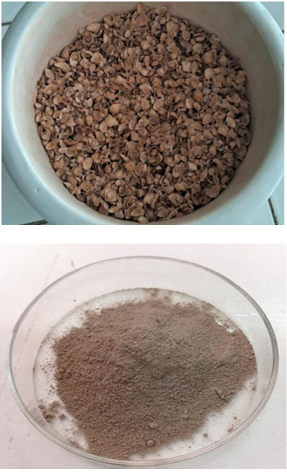
2.2. MethodsBefore use, the shells were washed in cold water to remove impurities, dried at 40°C for 24 hours, and then ground and sieved. Only particles with a diameter of less than 0.2 mm were selected for further analysis. Figure 1 shows the appearance of the raw and ground samples.
The mineral composition and pH at the zero-charge point of the shell powder are presented in Table 1.

The shell powder was modified by impregnation with iron polycations. To do this, a ferric solution prepared by reacting iron (III) chloride hexahydrate with NaOH under agitation was mixed with a suspension of shell powder in order to incorporate the ferric species into the material.
The iron solution was prepared by slowly titrating 40 mL of an iron(III) chloride hexahydrate solution (FeCl₃·6H₂O, 0.43 M) with 46 mL of a sodium hydroxide solution (NaOH, 0.75 M) under constant magnetic stirring. This titration was performed to maintain a molar ratio of OH⁻/Fe³⁺= 2, promoting the formation of Fex(OH)y polycations. The resulting reddish-brown solution had a final iron concentration of 0.2 mol/L. It was then left to stand in the dark for 48 hours to allow the solution to mature.
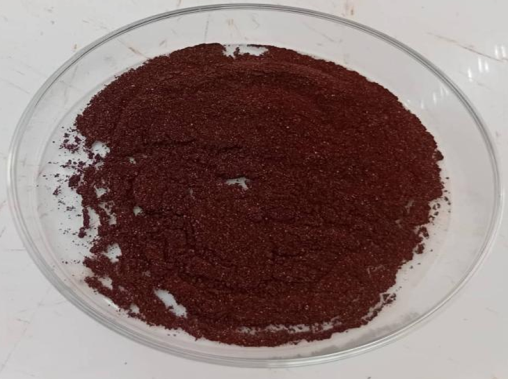
The fine shell powder was modified using a ferric solution (Fex(OH)y). The treatment consisted of adding this solution drop by drop to a suspension of shell powder that was kept under continuous stirring. The suspension was prepared using 2.45 g of powder in 490 mL of water (0.5% w/v). After the ferric solution had been fully added, stirring was continued for 24 hours to promote the incorporation of the polycations. The resulting powder was then washed with distilled water until the AgNO₃ test was negative, then dried at 70°C and calcined at 450°C for 4 hours. Figure 2 shows the appearance of the iron-treated shell powder (COQ-Fe).

A 1000 mg/L lead stock solution was prepared by dissolving 1.6 g of Pb(NO₃)₂ (99.99% purity) in 1 L of distilled water. This solution was used to prepare various working solutions at the desired concentrations by dilution.
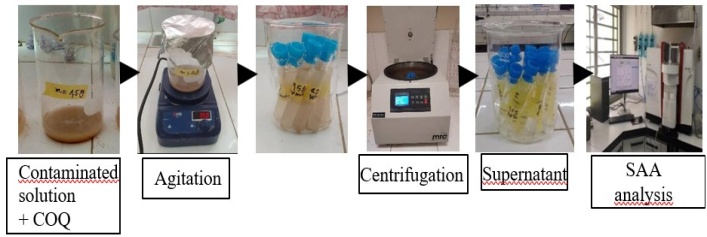
For each experiment, a quantity of shell powder (COQ or COQ-Fe) is placed in contact with lead-contaminated water in a beaker. The shell-solution mixture is stirred for a short time at room temperature. After stirring, the mixture is centrifuged at 3,000 rpm for 15 minutes, and the supernatant is collected for the determination of chemical species using the SAA method to determine the residual lead content in solution. The efficiency of the lead removal process is determined by calculating the sorption capacity (Qt =  ) and the removal efficiency of the compound (R =
 *100). The influence of the mass of shell powder, the pH of the solution, and the contact time was first examined to determine the optimal conditions for lead removal using raw shell powder (COQ). Subsequently, the efficiency of lead removal was evaluated using both raw shell powder (COQ) and iron-modified shell powder (COQ-Fe), while varying the initial lead concentration. Figure 3 summarizes the lead removal reaction that was carried out.

Lead removal was studied as a function of the mass of shell powder. Suspensions containing 100 mL of a 20-ppm lead solution were prepared using different masses of powder (0.5 to 2 g) and stirred for 1 hour at pH 6 to determine the optimal amount of material for decontamination.
pH is a key parameter in the study of lead removal. In this study, the effectiveness of raw oyster shell powder (COQ) was evaluated at different pH values. To do this, 100 mL of a 20 ppm lead solution was mixed with 1.5 g of raw oyster shell powder. The pH of the suspensions was adjusted using HCl and NaOH solutions, and lead removal was studied at pH values ranging from 3 to 7.
Lead sorption was monitored over a time range of 5 to 90 minutes, with an initial concentration of 20 mg·L⁻¹ and 1.5 g of shell powder in 100 mL of solution. The pH of the suspensions was maintained at 5. This study characterizes the kinetics of lead removal and evaluates the material’s effectiveness.
Lead removal was evaluated at various initial concentrations. In a series of beakers, 1.5 g of raw shell powder (COQ) was added and brought into contact with 100 mL of lead solutions whose concentrations ranged from 5 to 30 mg/L, depending on the beaker. The mixture was stirred for 60 minutes at room temperature using magnetic stirrers. The pH of the solutions was maintained at 5. After centrifugation, the supernatants were analyzed. The residual concentrations at equilibrium (Ce) were measured, and the amounts removed per unit mass at equilibrium (Qe) were determined. This study was also conducted using iron-modified oyster shell powder (COQ-Fe) to evaluate the effect of iron oxides on lead removal efficiency.
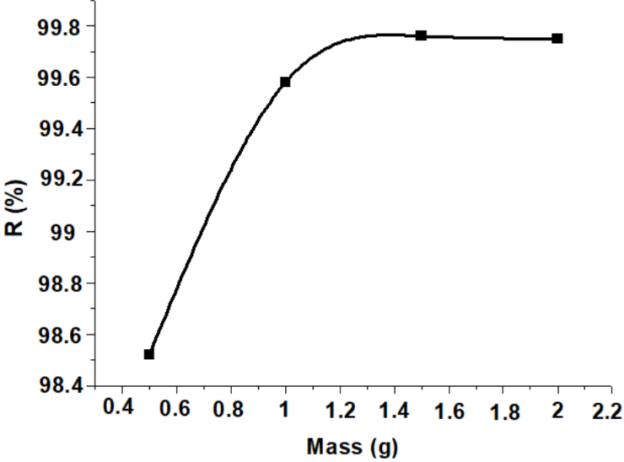
The results for the percentage of lead removal are shown in Figure 4.
Increasing the mass of shell powder from 0.5 g to 2 g results in a higher percentage of lead removal, with retention rates consistently above 98% and a maximum of 99.76% for 1.5 g. This improvement can be explained by the increased availability of active sites that promote the binding of Pb²⁺ ions, consistent with the results reported by Amimeur 8 and Wu et al. 9. The observation of a plateau starting at 1.5 g suggests that the active ingredients available for lead removal have reached saturation. Based on this study, 1.5 g was selected as the optimal mass for more effective lead removal in subsequent work.

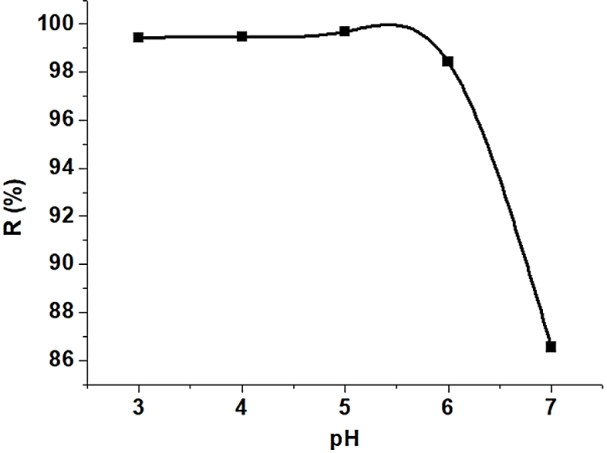
The pH of the solution is a key factor in lead removal processes. The results showing the effect of pH on decontamination are presented in Figure 5.

For different pH values, the percentage of lead removal varies to a greater or lesser extent. When the pH is between 3 and 5, a pseudo-plateau is observed, with removal efficiencies exceeding 99%. The lead removal rate peaks at pH = 5 (99.69%). At pH values above 5, the removal rate gradually decreases until it reaches 86.56%.
This observation can be attributed to the high capacity of shell powder to effectively bind Pb²⁺ ions in an acidic environment. This behavior is confirmed by Akou’s research 10, which reported zinc removal rates ranging from 94% to 99% for initial pH values of 3 to 6, as well as by Lee et al. 11 who achieved removal rates close to 99% for lead using crab shell particles within a pH range of 3 to 7.
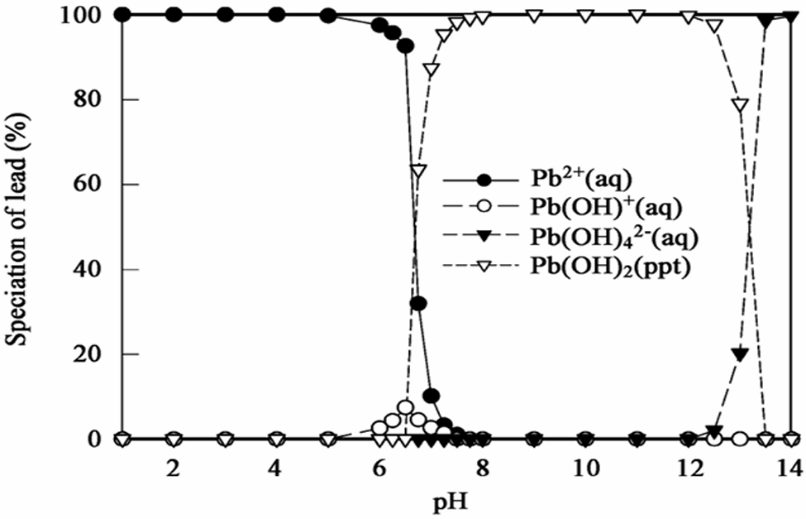
Between pH 6 and 7, a decrease in efficiency is observed due to the precipitation of lead as hydroxide (Pb(OH)₂). Indeed, the Pb²⁺ ion remains the dominant species below pH 6, whereas above that value, the precipitated form Pb(OH)₂ becomes predominant (Figure 6). This phenomenon was also demonstrated by Sedira 4, which showed that the adsorption of heavy metals on activated carbon derived from date pits is strongly influenced by pH, with a significant decrease when the precipitation of metal ions becomes thermodynamically favorable. Similarly, Mimanne et al. 12 reported that the adsorption of lead and cadmium peaks within an optimal pH range, after which it decreases due to the formation of metal precipitates. At pH values above 6, Pb(OH)2 species which are larger than Pb²⁺ ions limit the efficiency of ion exchange with the Ca²⁺ ions present in the shell powder, thereby reducing the percentage of lead removed.
In light of the above, lead retention is optimal at pH 5.

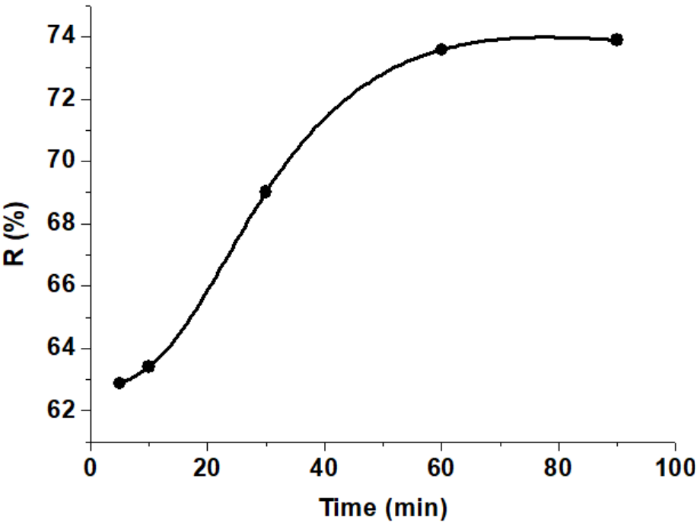
The results of lead removal as a function of agitation time are shown in Figure 7.

According to the results obtained, lead removal progresses rapidly from the very first minutes of contact, reaching a retention rate of 62.88% after only 5 minutes of agitation. This trend continues as contact time increases, until a pseudo-plateau is reached starting at 60 minutes, at which point the recovery rate exceeds 73%. The rapid removal of lead observed at the start of the process is characteristic of the physicochemical interactions between metal ions and the shell powder. These interactions, which require little energy, are based on phenomena such as electrostatic attraction, hydrogen bonding, and Van der Waals forces, allowing for effective binding of the ions from the very first moments of contact 13. The abundant availability of functional sites on the surface of the biosorbent also promotes this initial adsorption. As the contact time increases, these sites gradually become saturated, leading to a decrease in the adsorption rate 8.
The equilibrium time can be estimated at 60 minutes for the entire process.
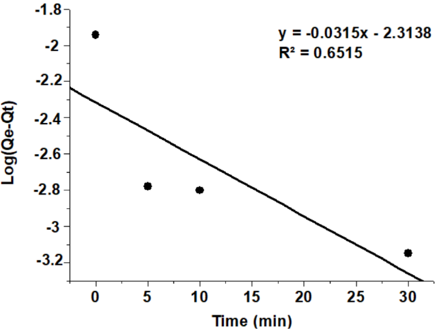
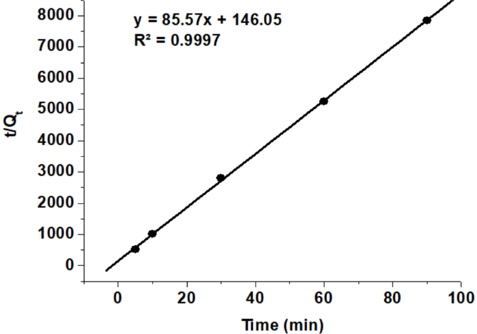
3.4. Modeling the Kinetics of Lead RemovalThe results of the elimination kinetics were modeled using the assumptions of pseudo-first-order (Figure 8) and pseudo-second-order (Figure 9) models. The equations used for these models are as follows:  = K1(
 and
 = K2(
 2 with K1: first-order rate constant (min⁻¹); Qt : adsorption capacity at time t in mg/g; Qe : equilibrium adsorption capacity in mg/g; and K2: pseudo-second-order adsorption rate constant (g·mol⁻¹·min⁻¹ or g·mg⁻¹·min⁻¹). The correlation coefficient values and the experimental and theoretical adsorption capacities determined by the two models are summarized in Table 2.


The theoretical removal capacity calculated using the pseudo-second-order kinetic model (0.0117 mg/g) is very close to the experimental value (0.0114 mg/g). This model also exhibits an excellent coefficient of determination (R² ≥ 0.99), unlike the pseudo-first-order model, which has a low R² (0.6515). Furthermore, the rate constant obtained with the pseudo-second-order model (K₂ = 50.018) is more than 1,500 times greater than that of the pseudo-first-order model (K1 = 0.0315). These results show that the retention of Pb²⁺ ions by shell powder follows the pseudo-second-order model perfectly, suggesting a mechanism dominated by chemisorption. This conclusion is consistent with the work of Bozbaş and Boz, who observed similar behavior for the biosorption of Pb(II) and Cu(II) ions on the shells of the gastropod Rapana venosa 14.
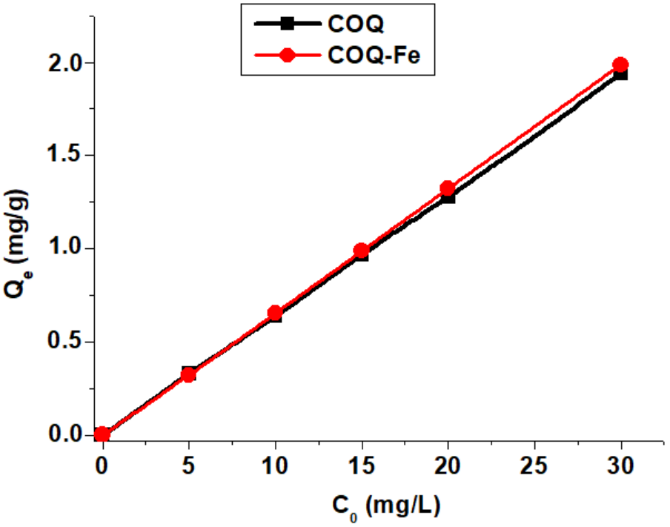
3.5. Effect of Initial Lead Concentration on the COQ and COQ-Fe Retention CapacityFigure 10 shows the variation in the sorption capacity of raw oyster shell powder (COQ) and iron-treated oyster shell powder (COQ-Fe) as a function of the initial lead concentration. The calcium concentrations before ([Ca2+]i) and after ([Ca2+]f) the sorption reaction with COQ are also presented in Table 3.
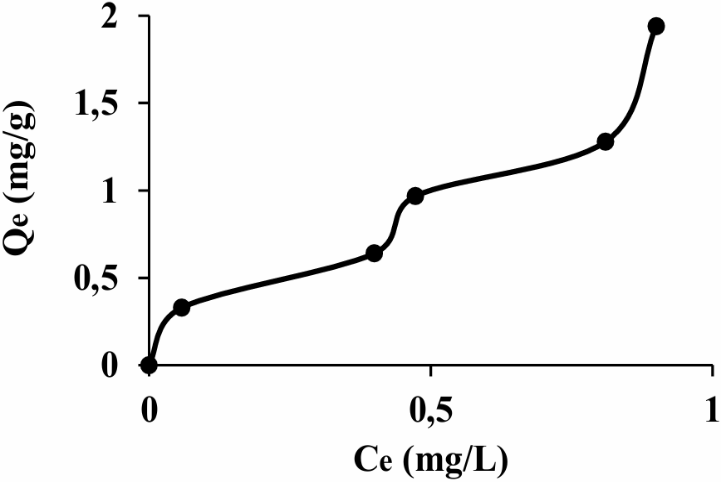
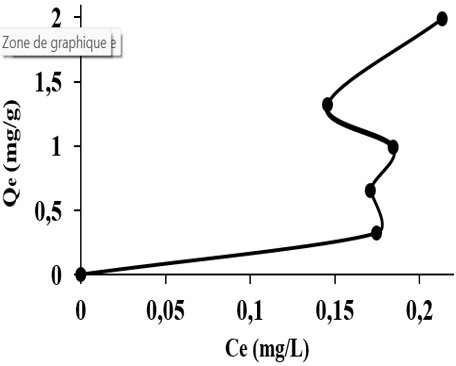
An increase in the initial lead concentration (0–30 ppm) results in a significant increase in the amount removed. Raw shell powder (COQ) exhibits a retention capacity ranging from 0.329 to 1.940 mg/g, with a removal rate of up to 98.84%. The concentration of Ca²⁺ ions in solution increases from 1.845 mg/L before the reaction to more than 79 mg/L after sorption. The iron-modified powder (COQ-Fe) exhibits slightly superior performance, with a capacity ranging from 0.322 to 1.986 mg/g and lead removal exceeding 99%. The sorption isotherms plotted (Figure 11 and Figure 12) show a similar trend for both materials, characterized by two pseudo-plateaus.
The efficiency of lead removal by COQ and COQ-Fe increases with the initial concentration, because a stronger gradient promotes the diffusion and binding of Pb2+ ions to the material’s active sites 15. The high sorption rates obtained demonstrate that the shell powder used in this study is a particularly effective material for the remediation of lead-contaminated solutions. Similarly, numerous studies have confirmed the remarkable effectiveness of calcium carbonate derived from shells in the treatment of wastewater containing metal cations 11, 16, 17. The slight improvement in the lead removal rate observed with the COQ-Fe sample can be attributed to the presence of iron in the shell powder. Indeed, several studies have shown that incorporating iron into materials enhances their effectiveness, creating matrices that are particularly effective at removing trace metals 18, 19. According to the classification proposed by Giles and his colleagues, the isotherms obtained in this study belong to type S. This profile reflects a variable affinity between the shell powder and lead ions, which is particularly pronounced at low concentrations 18.


The results regarding lead removal were modeled based on the assumptions of Langmuir's mathematical models ( , Freundlich (Log
 f +
 , Temkin (Qe = B ln KT + B ln Ce), Dubinin-Radushkevitch (lnQe = lnQmDR −βε2) and Elovich (Ln
 =Ln KeQm -
 20.
The correlation coefficients obtained from the various models were calculated and summarized in Table 3.
The linear adsorption models tested exhibit insufficient correlation coefficients (R² < 0.90), indicating that they do not accurately describe the lead removal process. This observation suggests that the mechanism at work in the oyster shell powder is not solely a matter of adsorption. It therefore appears necessary to use more appropriate models to accurately represent the observed removal mechanism.
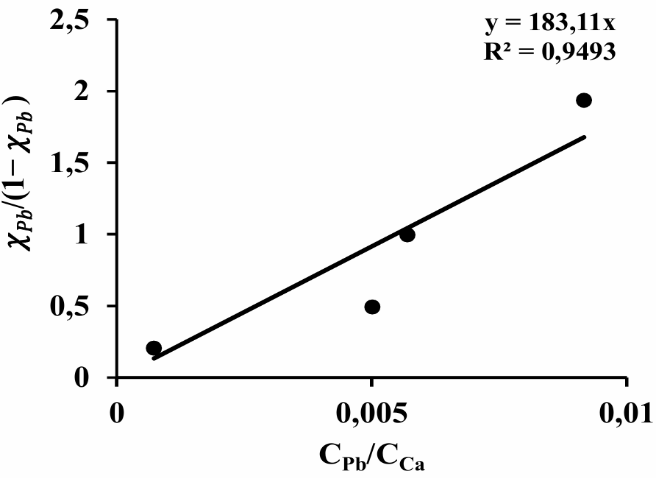
3.7. Application of the Modified Langmuir Model to Ion Exchange in Sorption IsothermsWhen dealing with a binary ion-exchange system, it is more appropriate to use a derived formulation known as the modified Langmuir model. This approach accounts for the competition between the two cations for exchange sites and expresses the relationship between the equivalent fractions in the reactive solid and in the solution 21, 22. This approach is illustrated by the following relationship :  =
 where:
 : Fraction of metal ions occupying the solid phase;
 : Ion exchange constant ;
 reflects the sorbent’s capacity to retain the metal ion and is a key indicator of the efficiency of the ion exchange process 21. Plotting the line
 = f (
 ) allows the slope
 to be determined.
Figure 13 illustrates the fit of the modified Langmuir model applied to the ion exchange mechanism to the lead sorption isotherm on raw oyster shell powder.
Lead removal by the COQ sample is better described by the modified Langmuir model applied to the ion exchange mechanism. In fact, the correlation coefficient obtained is greater than 0.9, while the ion exchange constant ( ) is significantly greater than 1 (183.11). This result confirms that lead removal is not simply a matter of uniform monolayer adsorption. Other mechanisms may be involved, such as precipitation, ion exchange, or specific chemical reactions with the constituents of the shell powder, particularly calcium carbonate. According to Papadopoulos et al., at low concentrations, Cd2+ cations can substitute for Ca2+ ions present at accessible surface sites (Cd2+ + CaCO3 → CdCO3 + Ca2+). Once these sites are saturated with Cd2+ ions, the formation of CdCO3 continues through a nucleation process, followed by precipitation on the surface of CaCO₃, according to the following reaction : Cd²⁺ + HCO₃⁻ → CdCO₃ + H⁺ 23. The high value of the ion exchange constant (
 = 183.11), significantly greater than one, confirms that lead removal occurs primarily through an ion-exchange mechanism, involving the replacement of Ca2+ ions present in the shell matrix with Pb2+ ions.
The purpose of this study was to evaluate the effectiveness of raw shell powder (COQ) and iron-modified shell powder (COQ-Fe) in removing lead (Pb2+) from aqueous solution. A powder enriched with iron polycations was synthesized from the raw powder to enhance its ability to remove lead. The influence of several physicochemical parameters, such as the mass used, the solution pH, and the contact time, was examined. The optimal conditions identified were: 1.5 g of powder per 100 mL of solution, a pH of 5, and a contact time of 60 minutes, resulting in maximum lead removal.
Under these conditions, the effect of the initial lead concentration (5 to 30 mg/L) was studied for both materials. The raw powder achieved a removal rate of up to 98.84%, while the iron-modified version exceeded 99%. Kinetic analysis revealed that the process follows a pseudo-second-order model, reflecting a gradual interaction between Pb²⁺ ions and the material’s active sites.
Conventional adsorption models (Langmuir, Freundlich, Temkin, Dubinin-Radushkevich, Elovich) failed to accurately describe the observed mechanism. In contrast, the modified Langmuir model, when applied to the ion exchange mechanism, proved to be more relevant. The high ion exchange constant (K_(Pb/Ca) = 183.11) confirms that lead is primarily removed by substitution of Ca²⁺ ions in the carbonate matrix.
These results highlight the potential of oyster shell powder as an effective material for the remediation of lead-contaminated water.
Our thanks to the Laboratory of Constitution and Reactions of Matter (LCRM) of the Félix HOUPHOUET-BOIGNY University where the work was carried out.
| [1] | Mahuno, S. E. R, Optimisation de l’élimination de la pollution organique et métallique des eaux usées par lagunage à Eichhornia crassipes, Thèse de Doctorat, Institut National Polytechnique Félix Houphouët-Boigny, Yamoussokro, Côte d’Ivoire, 2019, 182p. | ||
| In article | |||
| [2] | Otmani, H. E. S, Evaluation de la toxicité de quelques métaux lourds sur le comportement d’un modèle animal du groupe des coelomates, Thèse de Doctorat, Université Badji Mokhtar - Annaba, Algérie, 2018, 159p. | ||
| In article | |||
| [3] | Braiech, I. C. E and Bousnina, M. B, Elimination des métaux lourds, des effluents industriels, par des zéolites de types fau, Mémoire de Master, Université Kasdi-Merbah Ouargla, Algérie, 2019, 90p. | ||
| In article | |||
| [4] | Sedira, N, Etude de l’adsorption des métaux lourds sur un charbon actif issu de noyaux de dattes, Mémoire de magister, Université Mohamed Chérif Massaadia Souk-Ahras, Algérie, 2013, 149p. | ||
| In article | |||
| [5] | Brahimi, M, Etude comparative des procédés de traitement des eaux chargées en métaux lourds, Mémoire de Master, Ecole Nationale Polytechnique d’Algérie, 2017. | ||
| In article | |||
| [6] | Soumahoro, G, Elimination des acides humiques présents dans l’eau par adsorption et/ou photocatalyse, Thèse de Doctorat, Université de Lorraine, France, 2019, 135p. | ||
| In article | |||
| [7] | Cherifi-naci, H., Boughrara, S. and Louhab, K, Efficacité des argiles à piliers d’oxydes d’aluminium et de fer pour l’élimination du Cu (II) à partir des solutions aqueuses, Algerian journal of environmental science and technology, 1(3), 11-19, 2015. | ||
| In article | |||
| [8] | Amimeur, D, Contribution à l’étude de l’élimination du plomb par coagulation floculation et par adsorption sur charbon actif : Effet de la minéralisation et des paramètres réactionnels, Thèse de Doctorat, Université Mohamed Khider – Biskra, Algérie, 2018, 151P. | ||
| In article | |||
| [9] | Wu, X. W., Ma, H. W., Yang, J., Wang, F. J. and Li, Z. H, Adsorption of Pb (II) from aqueous solution by a poly-elemental mesoporous adsorbent, Applied surface science, 258(14), 5516‑5521, 2012. | ||
| In article | View Article | ||
| [10] | Akou, N, Adsorption des métaux lourds par la poudre de coquillages de la côte de Bejaia, Mémoire de Magister, Université Abderrahmane MIRA- Bejaïa, Algérie, 2010, 119p. | ||
| In article | |||
| [11] | Lee, M. Y., Lee, S. H., Shin, H. J., Kajiuchi, T. and Yang, J. W, Characteristics of lead removal by crab shell particles, Process Biochem, 33, 749–753. | ||
| In article | View Article | ||
| [12] | Mimanne, G., Benhabib, K., Benghalem, A. and Taleb, S, Etude de l’Adsorption des Métaux Lourds (Pb et Cd) en Solution Aqueuse sur Charbon Actif et Montmorillonite Sodée de l’Ouest Algérien, Journal of Materials and Environmental Science, 5(4), 1298-1307, 2014. | ||
| In article | |||
| [13] | Bouhamed, F., Elouear, Z., Bouzid, J. et Ouddane, B, Batch sorption of Pb (II) ions from aqueous solutions using activated carbon prepared from date stones : Equilibrium, kinetic, and thermodynamic studies, Desalination and water treatment, 52(10‑12), 2261‑2271, 2014. | ||
| In article | View Article | ||
| [14] | Bozbaş, S. K. and Boz, Y, Low-Cost biosorbent : Anadara inaequivalvis shells for removal of Pb(II) and Cu(II) from aqueous solution, Process safety and environmental protection, 103, 144‑152, 2016. | ||
| In article | View Article | ||
| [15] | Ahmad, M., Islam, I. U., Ahmad, M., Rukh, S. and Ullah, I, Preparation of iron-modified biochar from rice straw and its application for the removal of lead (pb+2) from lead contaminated water by adsorption, Chemical Papers, 76(8), 3789‑3808, 2022. | ||
| In article | View Article | ||
| [16] | Volesky, B., Figueira, M. M. and Ciminelli, V. S. T, Assessment of Interference in Biosorption of heavy metals, Biotechnol Prog, 11, 235–250, 1995. | ||
| In article | View Article PubMed | ||
| [17] | Lee, M. Y., Park, J. M. and Yang, J. W, Micro precipitation of lead on the surface of crab shell particles, Process Biochemistry, 32(8), 671-677. | ||
| In article | View Article | ||
| [18] | Fayoud, N., Younssi, S. A., Tahiri, S. and Albizane, A, Etude cinétique et thermodynamique de l’adsorption de bleu de méthylène sur les cendres de bois, Journal of Materials and Environmental Science, 6 (11), 3295-3306, 2015. | ||
| In article | |||
| [19] | Mohapatra, D., Mishra, D., Chaudhury, G. R. and Das, R. P, Arsenic adsorption mechanism on clay minerals and its dependence on temperature, Korean Journal of Chemical Engineering, 24(3), 426–430, 2007. | ||
| In article | View Article | ||
| [20] | Salim, D. B. and Loubna, B, Modélisation des Isothermes d’Adsorption Expérimentales du Colorant Jaune Basique 28 (BYE 28) sur Trois Photocatalyseurs (TiO2, ZnO et Fe2O3) par des Modèles à Deux, Trois, Quatre et Cinq Paramètres, Mémoire de Master, Université Salah Boubnidir Constantine 3, Algérie, 2018, 105p. | ||
| In article | |||
| [21] | Hadioui, M., Mecherri M. O., Fernane, F. and Harrache, Z, Cinétiques et isothermes de fixation de Zn(II) et Cd(II) sur des résines échangeuses de cations, Sciences & Technologie, A(20), 93-98, 2003. | ||
| In article | |||
| [22] | Mckay, G., Ho, Y. S. and J. Ng, C. Y, Biosorption of copper from waste waters : A review, Separation and purification methods, 28(1), 87‑125, 1999. | ||
| In article | View Article | ||
| [23] | Papadopoulos, P. and Rowell, D. L, The reactions of cadmium with calcium carbonate surfaces, Journal of Soil Science, 39, 23-36, 1988. | ||
| In article | View Article | ||
Published with license by Science and Education Publishing, Copyright © 2026 KOUADIO Lucas Moses, KOUASSI Kouassi Éric, SAKO Ibrahima and SEI Joseph
 This work is licensed under a Creative Commons Attribution 4.0 International License. To view a copy of this license, visit
http://creativecommons.org/licenses/by/4.0/
| [1] | Mahuno, S. E. R, Optimisation de l’élimination de la pollution organique et métallique des eaux usées par lagunage à Eichhornia crassipes, Thèse de Doctorat, Institut National Polytechnique Félix Houphouët-Boigny, Yamoussokro, Côte d’Ivoire, 2019, 182p. | ||
| In article | |||
| [2] | Otmani, H. E. S, Evaluation de la toxicité de quelques métaux lourds sur le comportement d’un modèle animal du groupe des coelomates, Thèse de Doctorat, Université Badji Mokhtar - Annaba, Algérie, 2018, 159p. | ||
| In article | |||
| [3] | Braiech, I. C. E and Bousnina, M. B, Elimination des métaux lourds, des effluents industriels, par des zéolites de types fau, Mémoire de Master, Université Kasdi-Merbah Ouargla, Algérie, 2019, 90p. | ||
| In article | |||
| [4] | Sedira, N, Etude de l’adsorption des métaux lourds sur un charbon actif issu de noyaux de dattes, Mémoire de magister, Université Mohamed Chérif Massaadia Souk-Ahras, Algérie, 2013, 149p. | ||
| In article | |||
| [5] | Brahimi, M, Etude comparative des procédés de traitement des eaux chargées en métaux lourds, Mémoire de Master, Ecole Nationale Polytechnique d’Algérie, 2017. | ||
| In article | |||
| [6] | Soumahoro, G, Elimination des acides humiques présents dans l’eau par adsorption et/ou photocatalyse, Thèse de Doctorat, Université de Lorraine, France, 2019, 135p. | ||
| In article | |||
| [7] | Cherifi-naci, H., Boughrara, S. and Louhab, K, Efficacité des argiles à piliers d’oxydes d’aluminium et de fer pour l’élimination du Cu (II) à partir des solutions aqueuses, Algerian journal of environmental science and technology, 1(3), 11-19, 2015. | ||
| In article | |||
| [8] | Amimeur, D, Contribution à l’étude de l’élimination du plomb par coagulation floculation et par adsorption sur charbon actif : Effet de la minéralisation et des paramètres réactionnels, Thèse de Doctorat, Université Mohamed Khider – Biskra, Algérie, 2018, 151P. | ||
| In article | |||
| [9] | Wu, X. W., Ma, H. W., Yang, J., Wang, F. J. and Li, Z. H, Adsorption of Pb (II) from aqueous solution by a poly-elemental mesoporous adsorbent, Applied surface science, 258(14), 5516‑5521, 2012. | ||
| In article | View Article | ||
| [10] | Akou, N, Adsorption des métaux lourds par la poudre de coquillages de la côte de Bejaia, Mémoire de Magister, Université Abderrahmane MIRA- Bejaïa, Algérie, 2010, 119p. | ||
| In article | |||
| [11] | Lee, M. Y., Lee, S. H., Shin, H. J., Kajiuchi, T. and Yang, J. W, Characteristics of lead removal by crab shell particles, Process Biochem, 33, 749–753. | ||
| In article | View Article | ||
| [12] | Mimanne, G., Benhabib, K., Benghalem, A. and Taleb, S, Etude de l’Adsorption des Métaux Lourds (Pb et Cd) en Solution Aqueuse sur Charbon Actif et Montmorillonite Sodée de l’Ouest Algérien, Journal of Materials and Environmental Science, 5(4), 1298-1307, 2014. | ||
| In article | |||
| [13] | Bouhamed, F., Elouear, Z., Bouzid, J. et Ouddane, B, Batch sorption of Pb (II) ions from aqueous solutions using activated carbon prepared from date stones : Equilibrium, kinetic, and thermodynamic studies, Desalination and water treatment, 52(10‑12), 2261‑2271, 2014. | ||
| In article | View Article | ||
| [14] | Bozbaş, S. K. and Boz, Y, Low-Cost biosorbent : Anadara inaequivalvis shells for removal of Pb(II) and Cu(II) from aqueous solution, Process safety and environmental protection, 103, 144‑152, 2016. | ||
| In article | View Article | ||
| [15] | Ahmad, M., Islam, I. U., Ahmad, M., Rukh, S. and Ullah, I, Preparation of iron-modified biochar from rice straw and its application for the removal of lead (pb+2) from lead contaminated water by adsorption, Chemical Papers, 76(8), 3789‑3808, 2022. | ||
| In article | View Article | ||
| [16] | Volesky, B., Figueira, M. M. and Ciminelli, V. S. T, Assessment of Interference in Biosorption of heavy metals, Biotechnol Prog, 11, 235–250, 1995. | ||
| In article | View Article PubMed | ||
| [17] | Lee, M. Y., Park, J. M. and Yang, J. W, Micro precipitation of lead on the surface of crab shell particles, Process Biochemistry, 32(8), 671-677. | ||
| In article | View Article | ||
| [18] | Fayoud, N., Younssi, S. A., Tahiri, S. and Albizane, A, Etude cinétique et thermodynamique de l’adsorption de bleu de méthylène sur les cendres de bois, Journal of Materials and Environmental Science, 6 (11), 3295-3306, 2015. | ||
| In article | |||
| [19] | Mohapatra, D., Mishra, D., Chaudhury, G. R. and Das, R. P, Arsenic adsorption mechanism on clay minerals and its dependence on temperature, Korean Journal of Chemical Engineering, 24(3), 426–430, 2007. | ||
| In article | View Article | ||
| [20] | Salim, D. B. and Loubna, B, Modélisation des Isothermes d’Adsorption Expérimentales du Colorant Jaune Basique 28 (BYE 28) sur Trois Photocatalyseurs (TiO2, ZnO et Fe2O3) par des Modèles à Deux, Trois, Quatre et Cinq Paramètres, Mémoire de Master, Université Salah Boubnidir Constantine 3, Algérie, 2018, 105p. | ||
| In article | |||
| [21] | Hadioui, M., Mecherri M. O., Fernane, F. and Harrache, Z, Cinétiques et isothermes de fixation de Zn(II) et Cd(II) sur des résines échangeuses de cations, Sciences & Technologie, A(20), 93-98, 2003. | ||
| In article | |||
| [22] | Mckay, G., Ho, Y. S. and J. Ng, C. Y, Biosorption of copper from waste waters : A review, Separation and purification methods, 28(1), 87‑125, 1999. | ||
| In article | View Article | ||
| [23] | Papadopoulos, P. and Rowell, D. L, The reactions of cadmium with calcium carbonate surfaces, Journal of Soil Science, 39, 23-36, 1988. | ||
| In article | View Article | ||