sciepub.com
 Quick Submission

Porphyra tenera Extracts Have Immune Stimulation Activity via Increasing Cytokines in Mouse Primary Splenocytes and RAW264.7 Macrophages
Hee-Bum Kang1, 2,#, Ji-Hye Song1, 2,#, Yanghee You3, 4, Jeongjin Park3, 4, Sungmin Kwak1, 2, Yoo-Hyun Lee5, Jeongmin Lee6, Su-il Kim7, Kyung-Chul Choi1, 2, , Woojin Jun3, 4,
1Department of Biomedical Sciences, Asan Medical Center, University of Ulsan College of Medicine, Seoul, South Korea
2Department of Pharmacology, University of Ulsan College of Medicine, Seoul, South Korea
3Division of Food and Nutrition, Chonnam National University, Gwangju, South Korea
4Research Institute for Human Ecology, Chonnam National University, Gwangju, South Korea
5Department of Food Science and Nutrition, The University of Suwon, Kyunggi-do, South Korea
6Department of Medical Nutrition, Kyung Hee University, Yongin-si, Kyunggi-do, South Korea
7Marine Biotechnology Research Center, Jellanam-do, South Korea
#These authors are co-first authors and contributed equally to this work.
Abstract
Porphyra tenera has long been consumed as food in Korea and Asia. The effects of Porphyra tenera extracts on the immune system are largely unknown. Therefore, this study investigated the immune-stimulating effects of ethanol and water extracts of P. tenera. The immunomodulatory potential of P. tenera was evaluated by determining its effect on cell viability and cytokine expression of mouse RAW264.7 cells and splenocytes. We investigated the effect of 10% ethanol extracts of laver (P. tenera) on the RAW264.7 cells. Production of nitric oxide (NO) and cytokines (interleukin [IL]-1β, IL-2, and IL-4, inducible NO synthase, and interferon-γ) in RAW264.7 macrophages was slightly higher after treatment with P. tenera extracts. Ethanol extracts upregulated and enhanced the functions of macrophages, such as NO and cytokines (IL-1β, IL-2, and IL-4, inducible NO synthase, and interferon-γ) production. In addition, cytokine concentrations were significantly increased in cells treated with different doses of P. tenera ethanol extracts compared to the control group. Overall, the results demonstrated that P. tenera extracts enhanced cytokine secretion in mouse splenocytes and macrophages. From these findings, it can be concluded that P. tenera possess a natural compound with immune-stimulatory activity. P. tenera extract is a good immunostimulant from natural compounds.
Keywords: porphyra tenera, immune stimulation, RAW264.7 cells, cytokines, splenocytes
Copyright © 2016 Science and Education Publishing. All Rights Reserved.Cite this article:
- Hee-Bum Kang, Ji-Hye Song, Yanghee You, Jeongjin Park, Sungmin Kwak, Yoo-Hyun Lee, Jeongmin Lee, Su-il Kim, Kyung-Chul Choi, Woojin Jun. Porphyra tenera Extracts Have Immune Stimulation Activity via Increasing Cytokines in Mouse Primary Splenocytes and RAW264.7 Macrophages. Journal of Food and Nutrition Research. Vol. 4, No. 9, 2016, pp 558-565. http://pubs.sciepub.com/jfnr/4/9/1
- Kang, Hee-Bum, et al. "Porphyra tenera Extracts Have Immune Stimulation Activity via Increasing Cytokines in Mouse Primary Splenocytes and RAW264.7 Macrophages." Journal of Food and Nutrition Research 4.9 (2016): 558-565.
- Kang, H. , Song, J. , You, Y. , Park, J. , Kwak, S. , Lee, Y. , Lee, J. , Kim, S. , Choi, K. , & Jun, W. (2016). Porphyra tenera Extracts Have Immune Stimulation Activity via Increasing Cytokines in Mouse Primary Splenocytes and RAW264.7 Macrophages. Journal of Food and Nutrition Research, 4(9), 558-565.
- Kang, Hee-Bum, Ji-Hye Song, Yanghee You, Jeongjin Park, Sungmin Kwak, Yoo-Hyun Lee, Jeongmin Lee, Su-il Kim, Kyung-Chul Choi, and Woojin Jun. "Porphyra tenera Extracts Have Immune Stimulation Activity via Increasing Cytokines in Mouse Primary Splenocytes and RAW264.7 Macrophages." Journal of Food and Nutrition Research 4, no. 9 (2016): 558-565.
| Import into BibTeX | Import into EndNote | Import into RefMan | Import into RefWorks |
At a glance: Figures
1. Introduction
The immune defense system is a biological process within an organism that protects against infection and disease. In function, an immune defense system must find the molecules, known as pathogens, from viruses.
Host immune defenses are quickly upregulated in response to invasion by pathogens and outside material; therefore, the immune system is critical for good health. Because the immune response begins quickly, it is good for maintaining good health and therapy for diseases. Immune stimulation means therapeutic effects that have purposes at the stimulation of our nonspecific immune defense. Immune stimulation by natural compounds comprises another alternative therapy for diseases, enhancing immune response of the host. Cytokines include interleukins and the interferons which are involved in immune defense response to infection and disease. Cytokines may enhance as a thousand-fold in response to an infection. Cytokines are the immunomodulating agents that increase the immune response. Cytokines are key players for the innate and adaptive immune response [26]. Pro-inflammatory cytokines are produced mainly to amplify inflammatory reactions. Even though cytokines are necessary for an immune response, it results in excessive inflammation. For this reason anti-inflammatory cytokines counteract the effects of pro-inflammatory cytokines to regulate the inflammation [27]. Immune stimulation is regarded as one of the strategies enhancing the body’s defense system. The immunomodulatory potential was evaluated by determining its effect on cell viability and cytokine expression in macrophage cells. In pharmacological effect, the ingredient of food is best way to stimulate the immune defense mechanism. The natural products from extracts of plants that stimulate host immune system can provide a potential therapy over chemotherapy.
Porphyra tenera is seaweed that has long been consumed as a traditional food in Korea, China, and Japan, and its cultivation has improved with time [21, 22]. In Korea, Porphyra tenera is called Gim. Gim is korean-style edible seaweed in the Porphyra tenera, similar to the Japanese- style nori. Seaweeds have the extremely high mineral content - especially iodine. Iodine is important for thyroid functions. Vitamins A, C and B-12 were in seaweed. The high vitamin B-12 content in seaweed is good source for vegetarian [28]. Although the effect of consuming various seaweeds has been investigated over the years, the effect of P. tenera remains unknown. Therefore, the aim of the current study was to evaluate the in vitro and in vivo immunomodulatory potential of extracts from P. tenera Kjellaman (PTEs) on RAW264.7 cells and primary splenocytes of mice fed PTEs. Immune stimulation of P. tenera was investigated by giving the extracts to RAW264.7 cells and mouse. Nitric oxide (NO) is known to be a key player in immune response. NO is involved in pathogenesis, tumor growth, autoimmune processes, and chronic degenerative diseases [1] largely because of its reactivity with DNA and proteins, reactive oxygen intermediates, widespread production by NO synthases (NOS), and its concentration-dependent activity. Interleukin (IL)-1β, IL-2, and IL-4, inducible NOS (iNOS), and interferon (IFN)-γ are produced by macrophages with PTE in vitro and in vivo in mice.
2. Materials and Methods
2.1. RAW264.7 Cell CultureRAW264.7 cells were maintained in RPMI 1640 supplemented with 100-U/mL penicillin, 100-mg/mL streptomycin, and 10% fetal bovine serum. Cells were grown at 37°C with 5% CO2.
2.2. Preparation of PTEsP. tenera (10 kg) extractions were performed with 600 L of solvent (10% ethanol [PTE10], 70% ethanol [PTE70], or water [PTW]) for 3 h at 80°C. After, the solvent was filtered and concentrated into 60 L before freeze-drying. The dried extracts were then mixed and dissolved in water for 10 min. The supernatants were retained after centrifugation at 13,000 rpm for 10 min.
2.3. Preparation of Mouse SplenocytesMice were sacrificed, spleens removed, and splenocyte suspensions prepared. Splenocytes were washed three times with PBS buffer (phosphate buffered saline) and suspended in complete RPMI 1640 medium. The cells were then seeded in culture dishes at a density of 1 × 10⁶ cells/mL.
2.4. Cell ViabilityThe cytotoxic effects of PTE and lipopolysaccharides (LPS) were evaluated by 3-(4,5-dimethylthiazol-2-yl)-2,5-diphenyltetrazolium bromide (MTT) assay. Prior to culture termination, 10 μL of MTT solution (10 mg/mL in phosphate-buffered saline, pH 7.4) was added and cultured with cells for 3 h. The reaction was stopped by adding 15% sodium dodecyl sulfate, and the optical density of the supernatants was measured at 570 nm.
2.5. Cytokine ExpressionQuantitative real-time polymerase chain reaction (qRT-PCR) was used to evaluate mRNA levels in LPS-induced and PTE-induced cells. Total RNA from LPS and PTE-treated and untreated RAW264.7 cells was prepared according to the manufacturer’s protocol (iNtRON Biotechnology Inc., Korea). All samples were normalized to GAPDH and expressed as fold changes; all reactions were done in triplicate. Relative expression and standard deviations were calculated using the comparative quantification method. The primers used were as follows: IL-1β, 5'-CCCTGCAGCTGGAGAGTGTGGA-3' and 5'-TGTGCTCTGCTTGTGAGGTGCTG-3'; IL-2, 5'-CCTGAGCAGGATGGAGAATTACA-3' and 5'-TCCAGAACATGCCGCAGAG-3'; IL-4, 5'-ACAGGAGAAGGGACGCCAT-3' and 5'-GAAGCCCTACAGACGAGCTCA-3'; IFN-γ, 5'-TCAAGTGGCATAGATGTGGAAGAA-3' and 5'-TGGCTCTGCAGGATTTTCATG-3'; iNOS, 5'-CGAAACGCTTCACTTCCAA-3' and 5'-TGAGCCTATATTGCTGTGGCT-3'.
2.6. Western Blot AnalysisCells (5 × 10⁶ cells/mL) were lysed in lysis buffer (20-mM Tris-HCl [pH 7.4], 2-mM EDTA, 2-mM EGTA, 50-mM β-glycerophosphate, 1-mM sodium orthovanadate, 1-mM dithiothreitol, 1% Triton X-100, 10% glycerol, 10-μg/mL leupeptin, 10-μg/mL aprotinin, 10-μg/mL pepstatin, and 1-mM benzimide) for 30 min with rotation at 4°C. Then, lysates were clarified by centrifugation at 13,000 rpm for 10 min at 4°C.
2.7. NO ProductionAfter pre-incubation of RAW264.7 cells (1 × 10⁶ cells/mL) for 18 h, PTE (10 and 20 µg/mL) or LPS (1 µg/mL) samples were added and incubated with cells for 24 h. The concentration of nitrite in culture supernatants was measured by adding 100 µL of Griess reagent (1% sulfanilamide and 0.1% N-[1-naphthyl]-ethylenediamine dihydrochloride in 5% phosphoric acid) to 100 µL of each sample.
2.8. Experimental AnimalsAnimal protocols were approved by the Institutional Animal Care and Use Review Committee of the University of Ulsan College (2016-12-143; Seoul, South Korea). Male, 6-week-old ICR mice were distributed into three groups of 5 mice each. The highest extract dosage used was 1000 mg/kg body weight; control groups were given 500 or 1000 mg/kg body weight of the vehicle. Mice were orally dosed once a day and once every 2 days for a total of 8 days (short-term treatment) or 30 days (long-term treatment).
2.9. Plasma BiochemistryAfter withdrawing blood from mice, and plasma parameters assessed included alanine aminotransferase (ALT), aspartate aminotransferase (AST), creatine, and urea. Plasma was obtained from blood by centrifuging of the anticoagulated blood.
2.10. Statistical AnalysisStatistical analysis was performed using Student’s t-test and SPSS software (SPSS Inc., Chicago, IL, USA). A statistical threshold of P < 0.05 was considered statistically significant.
3. Results
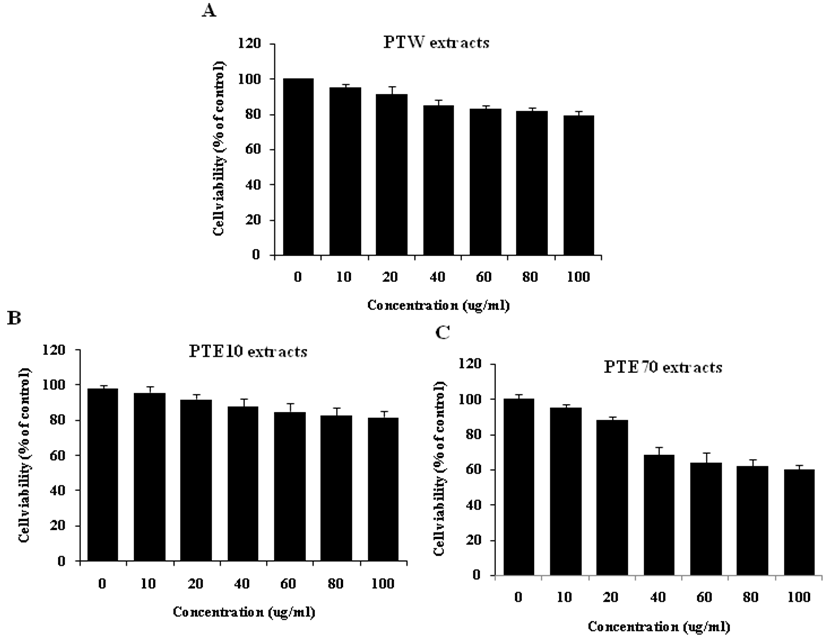
3.1. The Cell Viability Studied in PTW, PTE10, and PTE70PTW, PTE10, andPTE70 were prepared from water and ethanol extraction of P. tenera. PTW, PTE10, and PTE70 samples were solubilized in water before use. The cell viability was detected with PTW, PTE 10, and PTE 70. To examine cell viability from PTW and PTEs in vitro, RAW 264.7 cells were used. The viability of RAW 264.7 cells was examined by MTT assay after treatment with PTW, PTE10, or PTE70 for 24 h. As shown in Figure 1, PTW and PTE10 did not exhibit cytotoxicity at 10–40 μg/mL and PTE70 also did not show cytotoxicity (10–25 μg/mL; Figure 1C). Therefore, we selected 20-μg/mL and 40-μg/mL PTW and 10-μg/mL and 20-μg/mL PTE10 for further experiments.
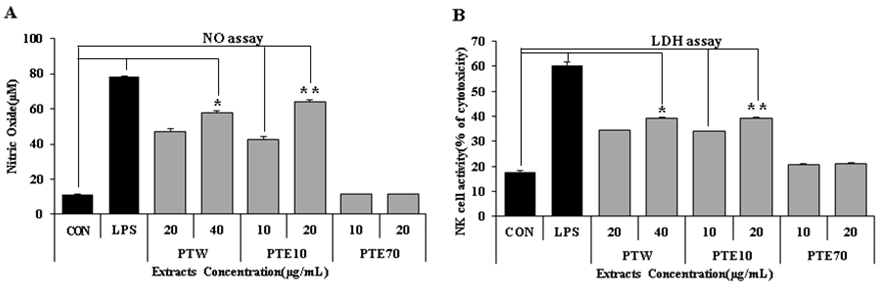
3.2. NO and Lactate Dehydrogenase (LDH) Activation by PTW and PTE10Next, the effects of PTW, PTE10, and PTE70 on NO production in RAW264.7 cells were determined by NO assay. NO is a key molecule in the immune system. After incubation with extracts for 24 h, NO production was determined by NO assay. When cells were treated with various concentrations of PTW and PTE10 for 24 h, the level of NO increased with both extracts in a dose-dependent manner relative to untreated cells. However, PTE10 was a more effective mediator of immune signaling than PTW. Both PTW and PTE10 upregulated similarly NO released from the macrophages. PTW and PTE10 dose-dependently triggered NO production, respectively. Furthermore, modulation of natural killer cell activity in RAW264.7 cells by PTW, PTE10, and PTE70 was determined by short-term LDH release assay. Thus, we show that LDH was determined by measuring the immune activity. To investigate the LDH level occurring in RAW 264.7 with treatment of extracts, we attempted to determine the LDH release assay with PTW, PTE10, and PTE70. LDH levels in RAW264.7 cells increased when treated with PTW and PTE10. There is a dose-dependent increase in LDH released by RAW264.7 cells when treated with the PTW and PTE10 as much as the treatment of LPS. These results suggest that PTEs stimulate immune activity through increased production of NO and LDH in macrophages.

 Download as

 Download as
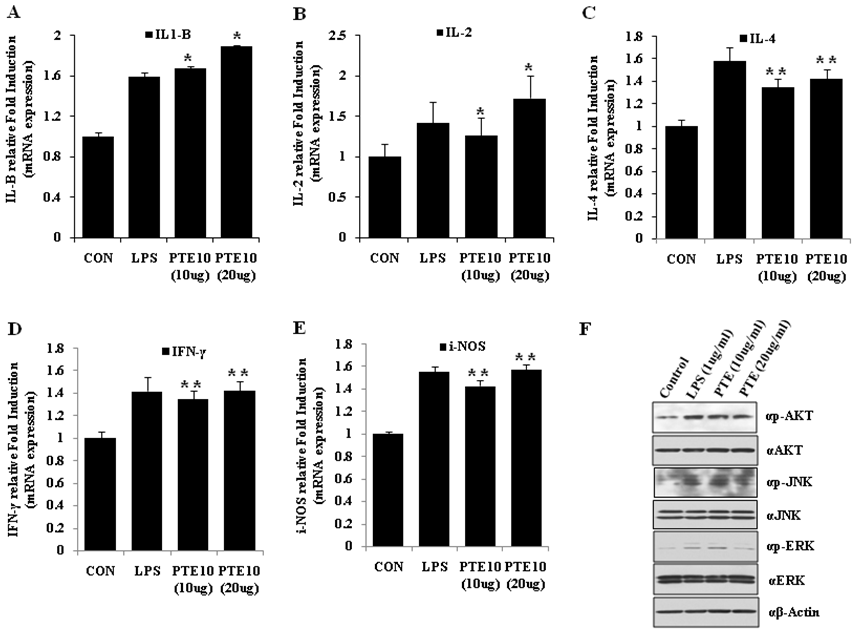
Next, we measured cytokine secretion (IL-1β, IL-2, and IL-4, IFN-γ, and iNOS) with PTE10 treatment of RAW264.7 cells. The proinflammatory cytokines IL-1β, IL-2, and IL-4, IFN-γ and iNOS are reported to be potent immunomodulators in activated macrophages and T-lymphocytes. To stimulate innate immunity by macrophages, regulatory proteins, such as proinflammatory cytokines and inflammatory enzymes, are required. Therefore, we examined expression of cytokine and inflammatory enzyme mRNA with PTE10 and LPS (positive control) treatment by qRT-PCR. As shown in Figure 3, PTE10 induced greater IL-1β, IL-2, and IL-4, IFN-γ, and iNOS expression than LPS. In particular, NO upregulation by PTE10 was accompanied by increased iNOS expression according to qRT-PCR analysis (Fig. 3E). We also examined the effects of PTE10 on the protein kinase B (or Akt) and JNK and ERK signaling pathway (Figure 3F) by Western blot and found PTE10 upregulated expression of phosphorylated and unphosphorylated Akt. Taken together, these results indicate that PTE10 dramatically stimulates immune system activity by increasing the expression of cytokines and Akt proteins in a dose-dependent manner.
 Download as
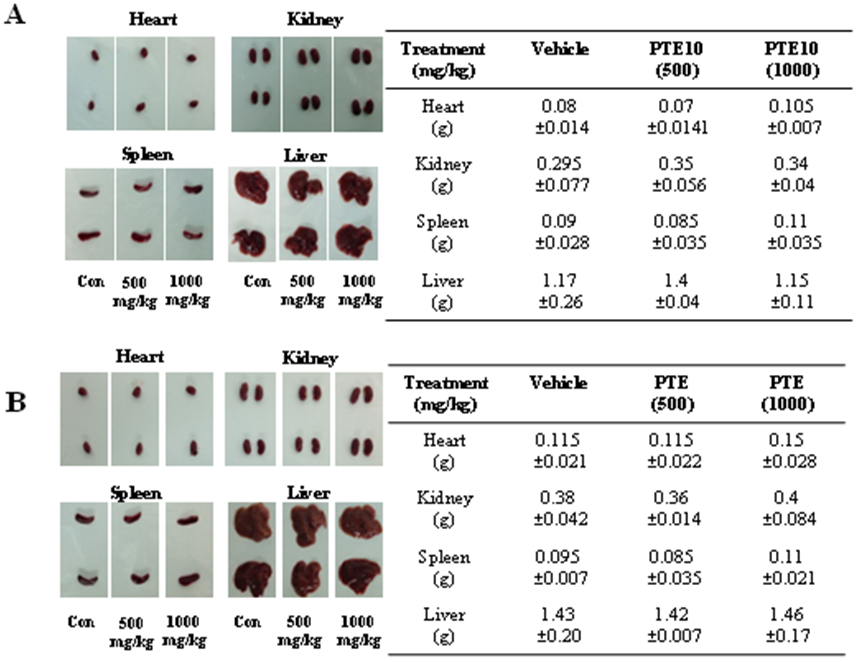
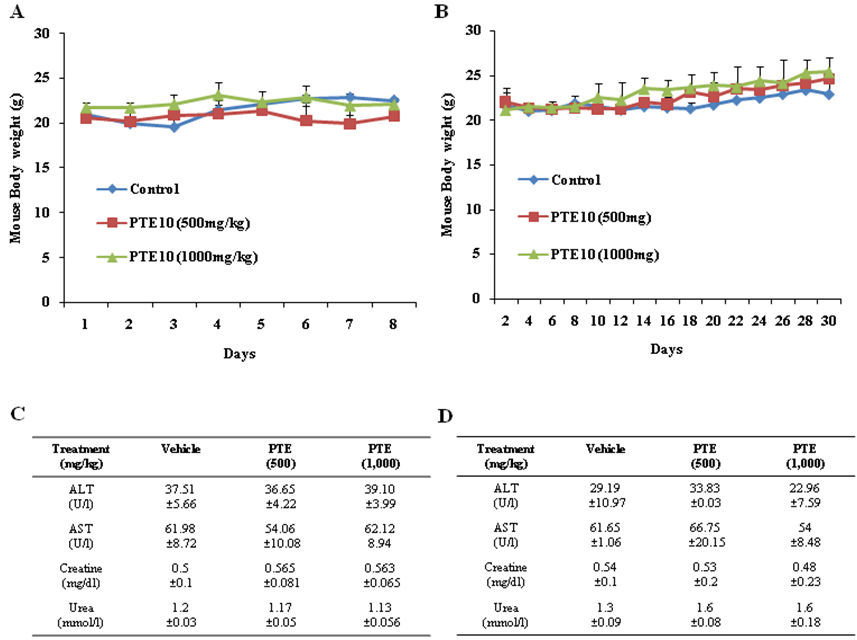
In vivo toxicity was observed from Figures 4A and B that the body weight of the mouse in control and PTE10 groups was not significant. In short-term and long-term toxicity tests, mouse weights were measured for 8 days (Figure 4A) and 30 days (Figure 4B), respectively. There is no significant change in each group of body weight was detected compared to that of vehicle control in PTE10 (500 and 1000 mg/kg body weight). Furthermore, no significant changes in the absolute and/or relative weight of principal organs were observed with PTE10 treatment at either concentration. The effects of short-term (Figure 4C) and long-term (Figure 4D) PTE10 treatment (500 and 1000 mg/kg body weight) on plasma ALT and AST levels in mice was also examined. The mean ± standard error of the mean levels of ALT and AST at 8 days in the three groups are tested for toxicity in short-term toxicity (Figure 4C). In the long-term toxicity, the mouse serum was used for analysis after 30 days (Figure 4D). Liver function assays showed fluctuations in the normal range of AST and ALT. Mean AST and ALT levels between untreated versus PTE10-treated groups were not significantly different. The mean of ALT in untreated and treated groups also did not show difference. Thus, there were no significantly changes in ALT and AST assay for liver function. Renal function was assessed by creatine and blood urea assay; creatine and urea levels during the observation period are shown in Figure 4C and Figure 4D. Similarly, there were no significant differences in creatine or urea levels in mice with PTE10 treatment at either dose relative to control mice. Finally, PTE10 was not affecting the short-term toxicity and long-term toxicity in vivo mouse.
 Download as
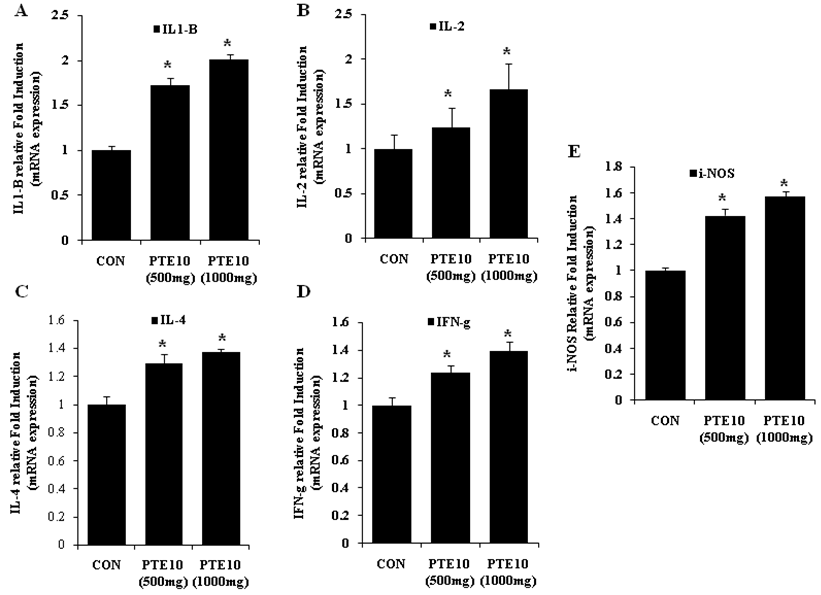
Examination of primary splenocytes prepared from mice orally administered PTE10 (500 and 1000 mg/kg body weight) revealed an increase in IL1-B, IL-2, and IL-4, IFN-γ, and iNOS were increased in splenocyte of PTE10 (500 and 1000 mg/kg body weight) feeding as extracts of Porphyra tenera. The expression of cytokines was induced in PTE10 (500 and 1000 mg/kg body weight) as much as LPS treatment (Figure 5). These results demonstrate the immune stimulation effects of P. tenera extracts, and P. tenera extracts enhanced to secrete cytokines in vivo mouse model by oral injection. Thus, these results suggest that natural compounds within PTEs are good immune stimulators.
 Download as
4. Discussion
P. tenera has been consumed as food in Korea, China, and Japan for years. However, there are currently few reports regarding the biological activity of seaweed components on immune response. In the current study, we tested the effect of different PTEs on immunity. Before starting study, the extracts were prepared from P. tenera by industrial process. Immunostimulation is beneficial for fighting infections, and although many artificial immunostimulants have been developed by pharmaceutical companies, they have undesired side effects. Therefore, natural compounds which stimulate the immune system with few or no side effects represent a promising alternative.
The main organ of immunity in the human body is the spleen, and increases in cytokine production in splenocytes are a key indicator of immune reactivity. For this reason, we tested the immunomodulatory effects of our PTEs in vitro on RAW264.7 cells and in vivo by oral administration in mice and found that PTE10 is able to enhance both NO production and cytokine (IL-1β, IL-2, and IL-4, IFN-γ, and iNOS) expression. This is the first study to demonstrate the nontoxic, immune-stimulating effects of P. tenera in vitro and in vivo in mice. The differences in biochemical profile in mice treated orally with PTE daily over 8 days were examined. In addition, we investigated the oral dose toxicity of PTE10 on the mice as a part of the safety test. PTE10 was administered orally to mice at dose levels of PTE10 (500 and 1000 mg/kg body weight). Furthermore, oral PTE10 treatment at either concentration did not elicit any notable side effects, such as changes in body and organ weights.
Taken together, the results of the current study indicate that PTE10 has immune-stimulating effects, enhancing NO, IL-1β, IL-2, and IL-4, IFN-γ, and iNOS secretion, and is nontoxic even at high doses. In the current study, we found that PTEs to be novel natural immunostimulants by examining their immunomodulatory effects in in vitro and in vivo in mice. Overall, PTEs were found to enhance secretion of cytokines in mouse splenocytes and macrophages.
5. Conclusions
We found that PT extracts are one of the novel immunostimulants from natural products by identification the immune-stimulation effects of PT extracts in mouse model and PT extracts enhanced to secret cytokines in splenocyte and macrophage.
Conflict of Interest Statement
We declare that we have no conflict of interest.
Acknowledgements
This research was supported by a grant from the Marine Biotechnology Program (Project No. PJT200672) funded by the Ministry of Oceans and Fisheries (South Korea).
Abbreviations
NOS, NO synthases
PTE10, 10% ethanol extracts of Porphyra. tenera;
PTE70, 70% ethanol extracts of P.orphyra tenera;
PTW, water extracts of Porphyra tenera.
References
| [1] | Alexander RB, Ponniah S, Hasday J, Hebel JR: Elevated levels of proinflammatory cytokines in the semen of patients with chronic prostatitis/chronic pelvic pain syndrome. Urology. 1998; 52(5): 744-749. | ||
 In article In article | |||
| [2] | Bogdan C: Nitric oxide and the immune response. Nature immunology. 2001; 2(10): 907-916. | ||
| In article | |||
| [3] | Chaudhuri D, Suriano R, Mittelman A, Tiwari RK: Targeting the immune system in cancer. Current pharmaceutical biotechnology. 2009; 10(2): 166-184. | ||
| In article | |||
| [4] | Jeremy JY, Rowe D, Emsley AM, Newby AC: Nitric oxide and the proliferation of vascular smooth muscle cells. Cardiovascular research. 1999; 43(3): 580-594. | ||
| In article | |||
| [5] | Kim HJ, Chang EJ, Bae SJ, et al.: Cytotoxic and antimutagenic stilbenes from seeds of Paeonia lactiflora. Archives of pharmacal research. 2002; 25(3): 293-299. | ||
| In article | View Article PubMed | ||
| [6] | Klimp AH, de Vries EG, Scherphof GL, Daemen T: A potential role of macrophage activation in the treatment of cancer. Critical reviews in oncology/hematology. 2002; 44(2): 143-161. | ||
| In article | |||
| [7] | Lee E, Jeong KW, Shin A, et al.: Binding model for eriodictyol to Jun-N terminal kinase and its anti-inflammatory signaling pathway. BMB reports. 2013; 46(12): 594-599. | ||
| In article | View Article PubMed | ||
| [8] | Lee JS, Hong EK: Immunostimulating activity of the polysaccharides isolated from Cordyceps militaris. International immunopharmacology. 2011; 11(9): 1226-1233. | ||
| In article | |||
| [9] | Lee SE, Hwang HJ, Ha JS, Jeong HS, Kim JH: Screening of medicinal plant extracts for antioxidant activity. Life sciences. 2003; 73(2): 167-179. | ||
| In article | |||
| [10] | Lee WH, Gam CO, Ku SK, Choi SH: Single oral dose toxicity test of platycodin d, a saponin from platycodin radix in mice. Toxicological research. 2011; 27(4): 217-224. | ||
| In article | |||
| [11] | Medzhitov R, Janeway C, Jr.: Innate immune recognition: mechanisms and pathways. Immunological reviews. 2000; 173: 89-97. | ||
| In article | View Article PubMed | ||
| [12] | Na YS, Kim WJ, Kim SM, et al.: Purification, characterization and immunostimulating activity of water-soluble polysaccharide isolated from Capsosiphon fulvescens. International immunopharmacology. 2010; 10(3): 364-370. | ||
| In article | View Article PubMed | ||
| [13] | Senthil Kumar KJ, Wang SY: Lucidone inhibits iNOS and COX-2 expression in LPS-induced RAW 264.7 murine macrophage cells via NF-kappaB and MAPKs signaling pathways. Planta medica. 2009; 75(5): 494-500. | ||
| In article | View Article PubMed | ||
| [14] | Turpaev K, Bouton C, Drapier JC: Nitric oxide-derived nitrosating species and gene expression in human monocytic cells. Biochemistry. 2004; 43(33): 10844-10850. | ||
| In article | |||
| [15] | Umansky V, Hehner SP, Dumont A, et al.: Co-stimulatory effect of nitric oxide on endothelial NF-kappaB implies a physiological self-amplifying mechanism. European journal of immunology. 1998; 28(8): 2276-2282. | ||
| In article | View Article | ||
| [16] | Vassalli P: The pathophysiology of tumor necrosis factors. Annual review of immunology. 1992; 10: 411-452. | ||
| In article | |||
| [17] | Wink DA, Hines HB, Cheng RY, et al.: Nitric oxide and redox mechanisms in the immune response. Journal of leukocyte biology. 2011; 89(6): 873-891. | ||
| In article | View Article PubMed | ||
| [18] | Yamamura Y, Azuma I: Immunostimulation in cancer patients. Advances in experimental medicine and biology. 1983; 166: 1-13. | ||
| In article | |||
| [19] | Yu Q, Nie SP, Li WJ, et al.: Macrophage immunomodulatory activity of a purified polysaccharide isolated from Ganoderma atrum. Phytotherapy research : PTR. 2013; 27(2): 186-191. | ||
| In article | View Article PubMed | ||
| [20] | Lull C, Harry J. W, Huub F. J. Savelkoul Antiinflammatory and Immunomodulating Properties of Fungal Metabolites. Mediators Inflamm. 2005 June 9; (2): 63-80. | ||
| In article | |||
| [21] | Hwang ES, Ki KN, Chung HY. Proximate composition, amino Acid, mineral, and heavy metal content of dried laver. Prev Nutr Food Sci. 2013 Jun; 18(2): 139-44. | ||
| In article | |||
| [22] | Hafting JT, Craigie JS, Stengel DB, Loureiro RR, Buschmann AH, Yarish C, Edwards MD, Critchley AT. Prospects and challenges for industrial production of seaweed bioactives.J Phycol. 2015 Oct; 51(5): 821-37. | ||
| In article | |||
| [23] | Kitajima H, Komizu Y, Ichihara H, Goto K, Doi T, Inano T, Ueoka R. Immunostimulatory Effects of Extract from Nori (Porphyra yezoensis) in Vitro and in Vivo. KAGAKU KOGAKU RONBUNSHU, 2013. Vol. 39, No.4, 359-362, | ||
| In article | |||
| [24] | Park SY, Kim HB, Kim JH, Lee JM, Kim SR, Shin HS, Yi TH. Immunostimulatory effect of fermented Red Ginseng in the Mouse Model. Prev Nutr Food Sci. 2014 Jan; 19(1): 10-8. | ||
| In article | |||
| [25] | Hamed I, Özogul F, Özogul Y,Regenstein J. M. Marine Bioactive Compounds and Their Health Benefits: A Review. Comprehensive Reviews in Food Science and Food Safety. 2015, July Vol 14, Issue 4, pages 446-465. | ||
| In article | |||
| [26] | Wojdasiewicz P, Poniatowski ŁA, Szukiewicz D. The role of inflammatory and anti-inflammatory cytokines in the pathogenesis of osteoarthritis.Mediators Inflamm. 2014; 2014: 561459. | ||
| In article | View Article PubMed | ||
| [27] | Souza KL, Gurgul-Convey E, Elsner M, Lenzen S.Interaction between pro-inflammatory and anti-inflammatory cytokines in insulin-producing cells. J Endocrinol. 2008 Apr; 197(1): 139-50. | ||
| In article | |||
| [28] | Sharifuddin Y, Chin YX, Lim PE, Phang SM. Potential Bioactive Compounds from Seaweed for Diabetes Management.Mar Drugs. 2015 Aug 21; 13(8): 5447-91. | ||
| In article | |||
Supplementary
 Download as
 CiteULike
 Mendeley
 StumbleUpon
 Delicious
 Facebook
 Twitter
 LinkedIn
 The cell viability of PTW for 24 h. (B) The cell viability of PTE10 for 24 h. (C) The cell viability of PTE70 for 24 h)
 The amount of NO was measured in PTW, PTE10, and PTE70. PTW and PTE10 induced NO production. (B) LDH assay performed in RAW264.7 cell by the treatment of PTW, PTE10, and PTE70. PTW and PTE10 induced LDH level. *P < 0.05 and **P < 0.01 compared to control)
 IL-1β expression in mouse primary splenocytes. (B) IL-2 expression in mouse primary splenocytes. (C) IL-4 expression in mouse primary splenocytes. (D) IFN-γ expression in mouse primary splenocytes. (E) iNOS expression in mouse primary splenocytes. (F) phosphorylated-Akt, phosphorylated-JNK, phosphorylated-ERK expression was detected by Western blot analysis with PTE10 treatment. *P < 0.05 and **P < 0.01 compared to control)
 In vivo toxicity of PTE10 in short-term. (B) In vivo toxicity of PTE10 in long-term. Data are presented as mean values of enzymatic activities (U/L) in various organs of mice fed PTE10 (500 and 1000 mg/kg body weight) or water as a control. ALT, AST, creatine, and urea levels in plasma of mice fed PTE10 or vehicle [500 and 1000 mg/kg body weight] (C) short-term and (D) long-term)
 Expression of IL-1β in primary splenocytes fed PTE10 (500 and 1000 mg/kg body weight). (B) Expression of IL-2 in splenocytes fed PTE10 (500 and 1000 mg/kg body weight). (C) Expression of IL-4 in splenocytes fed PTE10 (500 and 1000 mg/kg body weight). (D) Expression of IFN-γ in splenocytes fed PTE10 (500 and 1000 mg/kg body weight). (E) Expression of iNOS in splenocytes fed PTE10 (500 and 1000 mg/kg body weight). *P < 0.05 compared to control)
 and long term (B). There is no toxicity in the change of mouse’s weight. The mortality and changes on body weight, organ weight were monitored short term and term. The weight of the organs from mouse are not significant change. There are no toxicity effect on organs)