Hypercholesterolemia is a major metabolic disorder associated with cardiovascular disease, oxidative stress, and impaired immune function, yet effective dietary interventions with mechanistic evidence remain limited. Agaricus bisporus, a member of the Basidiomycota, is recognized for its dietary and medicinal properties. This study assessed its phytochemical composition and its effects on metabolic biomarkers in a hypercholesterolemic rat model. A total of 36 rats were used. Twelve rats were assigned to a control group receiving a chow maintenance diet (CMD), while 24 rats were fed a hypercholesterolemic diet. After induction, these were divided into HC and HCAB groups (n=12 each). The hypercholesterolemia was confirmed through blood samples analyzed for total cholesterol, triglycerides, HDL, and LDL. One hypercholesterolemic group continued the same diet, while the other group received dried A. bisporus powder incorporated into the diet at 5% w/w concentration for an additional 21 days. A. bisporus supplementation significantly reduced total oxidant status and improved HDL cholesterol levels (p<0.05). Additionally, the cell-mediated immune response increased significantly in the A. bisporus-treated group, and the fungus positively influenced key enzymes involved in carbohydrate metabolism and inflammatory markers. A significant improvement was also observed in the expression of metabolic and insulin regulatory genes, indicating the potential of A. bisporus as a therapeutic dietary intervention for hypercholesterolemia, metabolic impairments, and related cardiovascular diseases.
A cholesterol-rich diet is considered a fundamental factor in the initiation and progression of hypercholesterolemia and cardiovascular diseases 1. In hypercholesterolemic conditions, blood cholesterol levels are elevated 2. High cholesterol levels, along with enhanced production of oxidants, result in the initiation of various diseases such as diabetes mellitus, cardiovascular diseases, and impaired immune function 3. The immune system is highly vulnerable to oxidative stress due to the presence of polyunsaturated fatty acids in immune cell membranes 4. Over the past ten years, numerous bioactive compounds from diverse plants and fungi have been explored 5. Research on both human and animal models has demonstrated the superior ability of these biomolecules to modulate the immune system and prevent disease 6. Fresh and preserved mushrooms are enjoyed as a delicacy in many nations, primarily for their distinct aroma and texture. It is well known that mushrooms contain numerous bioactive compounds with dietary and pharmacological properties 7. As a result of these qualities, mushrooms have gained recognition as natural sources for the manufacture of pharmaceuticals and nutraceuticals 8.
A. bisporus is one of the most commonly grown mushrooms exhibiting robust medicinal properties due to the presence of bioactive compounds. It possesses elevated levels of dietary fiber and antioxidant agents together with vitamins C, D, and B12; polyphenols and folates that may have beneficial effects on the cardiovascular and immune system 9. Moreover, the mushrooms are known to possess several biological effects, including antimicrobial, antihypercholesterolemic 10, immunomodulatory 11, antitumor 12, and anti-inflammatory 13. In previous studies, in vitro antioxidant activities of A. bisporus have been established. According to these studies, polysaccharides of A. bisporus possess antioxidant activity 13. A. bisporus has been demonstrated to have a marked radical scavenging activity 14. However, limited in vivo studies have comprehensively evaluated the combined effects of A. bisporus on metabolic biomarkers, oxidative stress, immune response, and gene expression in hypercholesterolemic conditions.
Therefore, this study aimed to investigate the effects of A. bisporus dietary supplementation on lipid profile (total cholesterol, LDL, HDL, triglycerides, atherogenic index, cardiac risk factor), liver enzymes (ALT, AST), serum proteins (total protein, albumin, globulin), oxidative stress markers (total oxidant status, total antioxidant capacity, paraoxonase, arylesterase), cell-mediated immune response, glycemic markers (fasting and, oral glucose tolerance, insulin resistance via HOMA-IR), carbohydrate-metabolizing enzymes (α-amylase, α-glucosidase, hexokinase, phosphofructokinase, G6PDH, glycogen phosphorylase, G6PC), inflammatory cytokines (TNF-α, IL-6, leptin, adiponectin), renal function markers (creatinine, blood urea nitrogen), and mRNA expression of key metabolic genes (GCK, IGF-1, GLUT2, UCP2, vasopressin, HMG-CoA lyase, lactate dehydrogenase, angiotensin II receptor) in a hypercholesterolemic rat model.
A. bisporus powder: A. bisporus was obtained from the Institute of Horticulture Sciences, University of Agriculture, Faisalabad, Pakistan. A. bisporus was dehydrated by oven heating at 37ºC and then ground into powder. The powder was added at 5% w/w into the CMD+HC diet in the HCAB group.
Proximate analysis: Three replicates of A. bisporus samples were analyzed for crude proteins, carbohydrates, fat, fiber, moisture, and ash, which were determined according to standard procedures 15.
Total phenolic contents
The Folin-Ciocalteu reagent method was used to determine TPC. Briefly, 1mg/ml diluted A. bisporus sample (100µl) was mixed with 1 mL Folin-Ciocalteu reagent (0.2 mol/L). After 4 minutes, 200 µl of 2.5% sodium carbonate solution was added to the reaction mixture. This mixture was incubated for 60 minutes at room temperature, and absorbance was determined at 760 nm 16.
Total flavonoid content
Flavonoid contents were determined by using rutin as a standard according to the method previously adopted by 16. In a nutshell, 1ml of distilled water was added to 100µL of an A. bisporus sample (1 mg/mL). 125µL of AlCl3 and 75µL of 5% NaNO2 were added after 5 minutes of room temperature incubation, and the mixture was again incubated for 6 minutes at room temperature. After adding 125µL of 1 M NaOH, the final volume was adjusted to 2.5 mL using distilled water. Utilizing a chemical analyzer (Biolab 3110), the absorbance at 540 nm was measured, and the total flavonoid content of the A. bisporus sample was assessed using the rutin standard curve.
Radical scavenging activity
Different dilutions of the mushroom sample (15µl) in dimethyl sulfoxide at 1, 2, and 3mg/ml concentrations were mixed with 585µl DPPH working solution (0.025 g/L methanol). After 20 minutes of incubation at room temperature, absorbance was measured at 515nm. The percentage scavenging activity of DPPH was measured by the following equation:
 | (1) |
Where A0 is the absorbance of the control (sample was replaced with distilled water) and A1 is the absorbance of the sample.
High-performance liquid chromatography (HPLC) analyses
After being sonicated, A. bisporus powder was extracted in ethanol (63%) and 6 M HCl, refluxed for two hours in a water bath, filtered through a membrane filter (0.2 µm), and then injected into an HPLC system (Shimadzu LC-20AT) outfitted with an auto-sampler (SIL-20A), column oven (CTO-20A), and diode array detector (SPD-M20A). A guard column (KJO-4282, Phenomenex) and an analytical column (Purospher Star RP-18 endcapped 5 m 100 A°; 250 x 4.60 mm, Merck, Germany) were utilized. The gradient program was 10% B for 10 min, 30% B for 10 min, 50% B for 10 min, 65% B for 10 min, 80% B for 10 min, 90% B for 10 min, and 100% B for 10 min, with the mobile phase consisting of (A) 0.1% acetic acid and (B) methanol.
Induction of hypercholesterolemia
Thirty-six albino male rats of 6 weeks of age were obtained from Government College University, Faisalabad, and acclimatized for 1 week under standard laboratory conditions. Per day water and food intake were measured by subtracting the remaining food and water from the food and water supplied to each cage daily. An automated weight balance was also used every day to assess the rats' weight. To get the food efficiency ratio, we estimated the amount of weight gain that would occur each day after eating the recommended amount of food. Before beginning medication, the rats had their triglycerides and total cholesterol checked, which were found to be less than 150 mg/dL and 140 mg/dL, respectively. Initially, rats were distributed into two groups: twelve rats were fed a simple chow maintenance diet (CMD), and twenty-four rats were fed a hypercholesterolemia diet for the induction of hypercholesterolemia for 24 days. The composition of the diets is shown in Table 1 17. On Day 24, blood was taken from the tail vein for serum confirmation of hypercholesterolemia (>200 mg/dL total cholesterol and triglycerides) with the help of a commercially available kit (Human Diagnostics, Max-Planck-65205, Wiesbaden, Germany). All procedures and protocols involving animals were approved by the Institutional Review Board of Government College University, Faisalabad.
Experimental design: A total of 36 albino male Wistar rats were used in this study. The animals were randomly assigned to three experimental groups (n=12 per group) as follows:
Group I: Control (CON): Twelve rats received a standard chow maintenance diet (CMD) throughout the experimental period. This group served as the negative control, representing normal physiological baseline values.
Group II: Hypercholesterolemic Control (HC): Twelve rats were fed a hypercholesterolemic diet (CMD supplemented with 1.5% cholesterol and 0.5% cholic acid) for 24 days to induce hypercholesterolemia, and continued on this diet until the end of the experiment. This group represented the disease model without any intervention.
Group III: Hypercholesterolemic + A. bisporus (HCAB): Twelve rats were fed the same hypercholesterolemic diet for 24 days for induction, followed by treatment with the hypercholesterolemic diet supplemented with 5% w/w dried A. bisporus powder for an additional 21 days. This group was used to evaluate the therapeutic effect of A. bisporus supplementation on hypercholesterolemia-induced metabolic perturbations.
All groups were provided access to a 48 g/kg/rat diet daily. The composition of the diet in each group is presented in Table 1.
Serum biochemical analysis: Blood samples without anticoagulant were collected by cutting the jugular vein after completion of the experimental period. Serum was separated from the blood by centrifugation in a centrifuge (Eppendorf, Temperature control 5810R, Hamburg, Germany) at 2500 × g for 10 minutes at 4◦C, stored at −20 °C.
Serum Lipid Profile (mg/dL): To measure the Total cholesterol (TC) concentration (Human Diagnostics, Max-Planck-65205, Wiesbaden, Germany), HDL-Cholesterol (HDL-C), and triglycerides (TG; Monoreagent, iTron, Paris, France) in the serum, the mentioned commercial kits were used. The detection ranges for TC, LDL-C, and HDL-C were 0-750 mg/dL, and for TG, 0-1000 mg/dL. The procedures for all the assays were according to the instructions of the kit manufacturer. The Coefficient of variance (CV) within run was 1.81% and between runs was 1.96 % for all the assays. Absorbance was taken at 546 nm. The formulae were used to generate the atherogenic index 18 and cardiac risk factor 19.
Serum Liver Enzymes
Serum level of Aspartate aminotransferase (AST) and alanine aminotransferase (ALT) was determined by kit Randox Laboratories Ltd. (BT29 4QY; Crumlin, County Antrim, UK) according to the manufacturer’s protocol.
Serum Protein Levels
Serum levels of total proteins were measured using the Biuret method and total albumin levels using the BCG method with the help of commercially available kits, Randox Laboratories Ltd. (BT29 4QY; Crumlin, County Antrim, UK) 20.
Oxidative stress index
Through a Biosystem calibrated spectrophotometer, serum samples were analyzed 21. The assay was linear up to 30 mmol of vitamin C equivalent per liter, and the intra-assay coefficient of variation (CV) was under 3%. Using H2O2 as the instrument's calibration standard and concentrations of 25, 12.5, 6.25, 3.12, 1.56, 0.78, and 0.39 µmol/L H₂O₂ equivalent/L at 37°C temperature, the total oxidant status (TOS; mol of H2O2 equiv. L1) in the serum was determined spectrophotometrically at biochromatic wavelengths of 560 and 800 nm 21. For paraoxonase activity, 2 mmol/L paraoxon was used as the substrate to assess the paraoxonase activity. This assay's minimal detection threshold ranged from 80 to 100 U/min/L. Phenylacetate was used as a substrate to assess the activity of arylesterase. At 660 nm, there was an absorbance 22.
Cell-mediated immunity evaluation (DNCB assay)
Four rats from each group had their hind thighs shaved and cleaned three days before the conclusion of the experiment. Using the aid of an insulin syringe, 1% 2, 4-dinitrochlorobenzene (DNCB) produced in acetone was applied in a one-inch circular mark on the thigh after measuring the skin's thickness using a Vernier caliper. Skin thickness was tested again after the DNCB application for 24, 48, and 72 hours 23.
Assessment of Glucose, insulin, and pyruvate metabolism test
Oral glucose tolerance test was performed by (24]. For the insulin tolerance test, animals were fasted for 4 hours, followed by 25, and then AUC was determined and presented as hepatic gluconeogenesis 25.
Assessment of serum levels of carbohydrate-metabolizing enzymes
The enzymatic activities of glucose-6-phosphatase (G6PC), α-amylase, α-glucosidase, hexokinase, phosphofructokinase, glucose-6-phosphate dehydrogenase, and glycogen phosphorylase were quantified using commercially available ELISA assay kits (Elabscience®, USA) following the manufacturer’s instructions (Catalog Nos: G6PC E-EL-M1362; α-amylase E-BC-K007-M; α-glucosidase E-EL-H6168; hexokinase E-EL-H1345; phosphofructokinase E-BC-K612-M; glucose-6-phosphate dehydrogenase E-BC-K763-M; glycogen phosphorylase E-AB-11510) 26.
Estimation of first-line antioxidant enzymes
The levels of catalase, superoxide dismutase, and glutathione peroxidase were estimated through the spectrophotometric method according to our previously adopted method 27.
A. bisporus effect on lipid profile
High-density lipids, low-density lipids, and the level of triglycerides were determined through a bioanalyzer. HMG-CoA-reductase level was investigated by an ELISA kit (Catalog Number: E-EL-H2472, Elabscience®) according to the manufacturer’s protocol.
A. bisporus effect on hypercholesterolemia-induced inflammation
The serum levels of tumor necrosis factor-α (TNF-α) and interleukin-6 (IL-6) were estimated 28. Leptinemia was determined by using commercial kits of leptin (catalogue # E-EL-R0582, Elabscience®) and adiponectin E-EL-R3012, Elabscience®) through ELISA.
qRT-PCR
Animals were sacrificed, and liver tissues were isolated. mRNA was isolated using TRIzol reagent (ThermoFisher Scientific, Massachusetts, USA). RNA samples were transcribed to cDNA using reverse transcriptase (ThermoFisher Scientific). After loading the Bio-Rad PCR 96-well plate with forward and reverse primers and CybrGreen master mix, amplification was performed. Thermal cycling was performed using a Bio-Rad machine at 95°C for 5 min, followed by 40 cycles (denaturation for 15 s at 95°C, annealing for 20 s at 60°C, and extension for 20 s at 72°C). By using GAPDH as a housekeeping gene, mRNA expression was calculated by the Livak method 27.
Histopathology
After anesthesia, animals were sacrificed by cervical dislocation; liver, kidney, pancreas, and adipose tissues were isolated and stained with hematoxylin and eosin, and observed under a digital microscope at 10X.
Statistical analysis: The SPSS-26 and GraphPad Prism version 05 programs were used to perform a one-way analysis of variance on all of the data. The Tukey and Bonferroni post hoc tests were used to assess differences across groups.
Proximate analysis: Proximate composition of three replicates of A. bisporus samples (100g each) is tabulated in Table 1, showing the mean value with standard error.
Total phenolic and flavonoid contents: Contents were assessed by (29]. The Mean value of flavonoid contents of three replicates of A. bisporus was found to be 91 mg Gallic acid equivalent per gram dry weight, and total flavonoid contents were 47 mg rutin equivalent per gram dry weight.
DPPH radical scavenging activity: DPPH scavenging activity of the crude A. bisporus extract was found to be maximum (58 %) at the concentration of 2 mg/ml.
HPLC analysis of A. bisporus extract
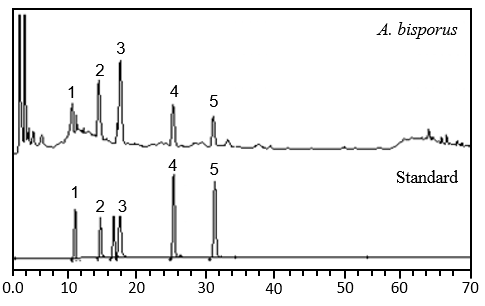
HPLC analysis revealed the presence of five bioactive compounds. Gallic acid, Caffeic acid, p-hydroxybenzoic acid, p-coumaric acid, and ferulic acid were present as µg g-1 dry weight, as shown in Figure 1 and Table 4.

Effect of food and water consumption on body weight
Mean values of average daily body weight (BW), food efficiency ratio, and food and water intake with standard errors are presented in Table 5. A. bisporus-fed rats show a similar weight gain, food consumption, and efficiency ratio to those of the HC group. Moreover, the HC group showed higher values of Daily food intake, weight gain, and food efficiency ratios as compared to the control group (p<0.05). Water intake of the other groups was similar (Table 5).
Lipid profile
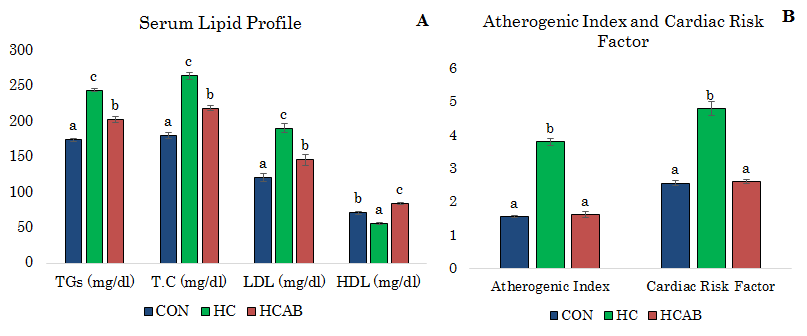
The HC group had a significantly higher total cholesterol concentration (p ˂ 0.05) compared to the CON group (Figure 1A). Figure 2 showed that the HC group had significantly higher levels of LDL compared to the CON group (p ˂0.05). On the other hand, the HCAB group had significantly higher HDL levels (p ˂ 0.05) than the HC group. A notable increase (p ˂ 0.05) in the TG value was seen when comparing the HC group in comparison to the CON and HCAB groups (Table S1). Both the control and HCAB groups' atherogenic indices and cardiac risk factors exhibit comparable outcomes and are considerably lower than those of the HC group (p ˂ 0.05) (Figure 2A and B).

Serum liver enzymes
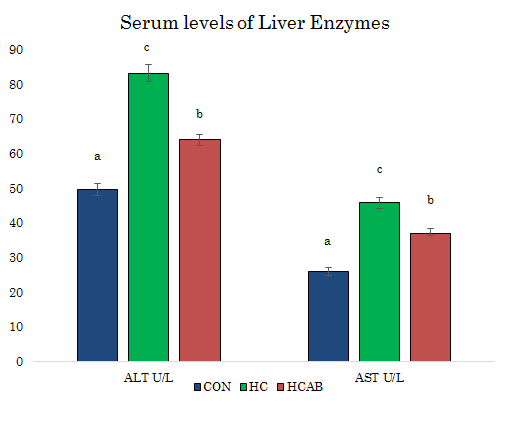
A. bisporus supplementation in the diet significantly decreased the levels of ALT and AST in the HCAB group (p ˂ 0.05), despite serum liver enzyme concentrations being greater in the HC group compared to the control group (Table S2) (p ˂ 0.05) (Figure 3).

Serum proteins
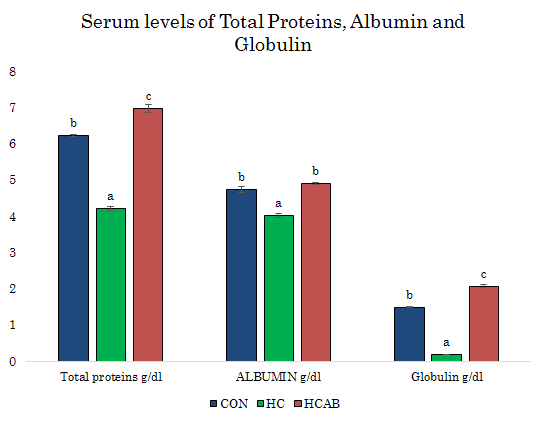
Rats that were given A. bisporus had significantly greater amounts of total protein, albumin, and globulin in their blood when contrasted with the HC and control groups (p<0.05) (Table S3). Figure 4 showed that total albumin levels were not significantly different between the control and HCAB groups.

Oxidative stress
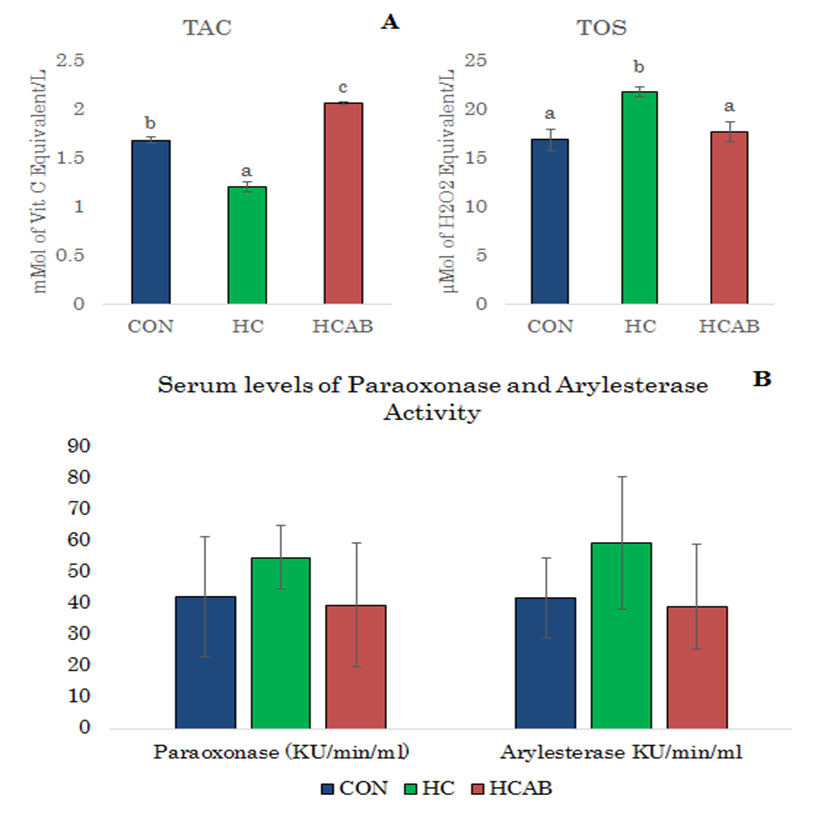
The mean TOS level was considerably elevated (p < 0.05) in the HC group relative to the CON and HCAB groups. The supplementation of A. bisporus reduced TOS concentration; nevertheless, the mean TAC value was significantly greater (p<0.05) in the HCAB group compared to the HC and CON groups (Table S4). The activity of paraoxonase and arylesterase enzymes did not change substantially across the groups (Figure 5).

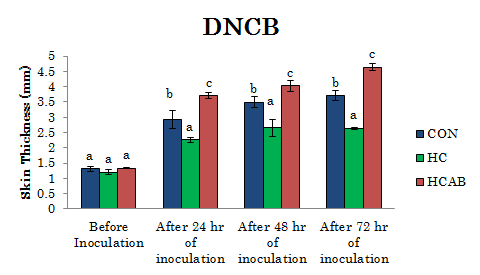
Cell-mediated immunity (Delayed type of hypersensitivity reaction): The mean skin thickness as a measure of cell-mediated immune (CMI) response (Delayed type hypersensitivity immune response) between the groups didn’t vary significantly before the inoculation of DNCB (Table S5). The mean value of CMI was higher (p<0.05) in the HCAB group as compared to the HC and CON groups at all the time points. The CMI response was even higher (p<0.05) in the CON group as compared to the HC group at all time points, though the maximum level was observed after 24 hours of DNCB inoculation in the HCAB group (Figure 6).

Effect of A. bisporus on glycemic markers
To find out how A. bisporus treatment affected blood glucose levels, the study looked at fasting blood glucose levels before, during, and after the treatment. The results demonstrated that the HC diet considerably increased fasting blood glucose levels, as compared to the normal control group (P<0.001). Different from the HC diet group, the A. bisporus extract administration in the last week of the trial had a gradual hypoglycemic impact that affected both fasting sugar measurements.

Effect of A. bisporus extract treatment on oral glucose tolerance test
Oral glucose tolerance testing was carried out in the last week of therapy, after an overnight fasting interval, to evaluate the effect of A. bisporus extract on this measure. Blood sugar and insulin levels were measured in the treated animals before they were given a weight-based standardized dose of glucose (Table S7). After that, at 30, 60, 90, and 120 minutes after glucose injection, blood glucose levels were checked. Blood glucose levels in the group fed the hypercholesterolemic (HC) diet were significantly higher than in the normal control group after 30 minutes (P<0.001) and continued to be raised for up to 120 minutes, according to the data. Figure 8 showed that, in contrast to the hypercholesterolemic control group (HC), the AB extract therapy showed a gradual hypoglycemic effect (P<0.001).

Insulin tolerance test
The study measured serum insulin levels in individuals on a hypercholesterolemia (HC) diet and found significant variations throughout the experimental period. Initially, animals on the HC diet showed increased insulin levels (P<0.001) compared to controls, indicating heightened secretion. However, those treated with A. bisporus and the HC diet exhibited a marked reduction in insulin levels (P<0.001), suggesting improved insulin sensitivity (Table S8, S9, S10, S11). The Homeostatic Model Assessment of Insulin Resistance (HOMA-IR) indicated higher insulin resistance in the HC group versus controls (P<0.001), but A. bisporus extract ameliorated this in the HCAB group. An insulin tolerance test revealed elevated blood insulin levels in the HC group after fasting (P<0.001), while treatment with A. bisporus significantly enhanced insulin levels in the HCAB group. This research underscores the potential benefits of A. bisporus extract in mitigating insulin resistance associated with high cholesterol. (Figure 9).

Effect of A. bisporus extract treatment on the pyruvate tolerance test
Participants fasted for eighteen hours to assess the impact of A. bisporus extract on gluconeogenesis. After fasting, administration of pyruvate revealed that the HC group exhibited significantly higher blood glucose levels compared to the CON group (P<0.001) at 30 minutes, with levels remaining elevated for up to 120 minutes. In contrast, HCAB therapy significantly reduced blood glucose levels (P<0.001), returning them to baseline within the same timeframe (Table S12, S13). An area under the curve (AUC) analysis indicated considerably elevated AUC in the HC group compared to CON (P<0.001), while HCAB treatment resulted in a substantial reduction in both blood glucose levels and AUC (P<0.001) compared to the HC group.


Effect of A. bisporus on carbohydrate metabolism biomarkers
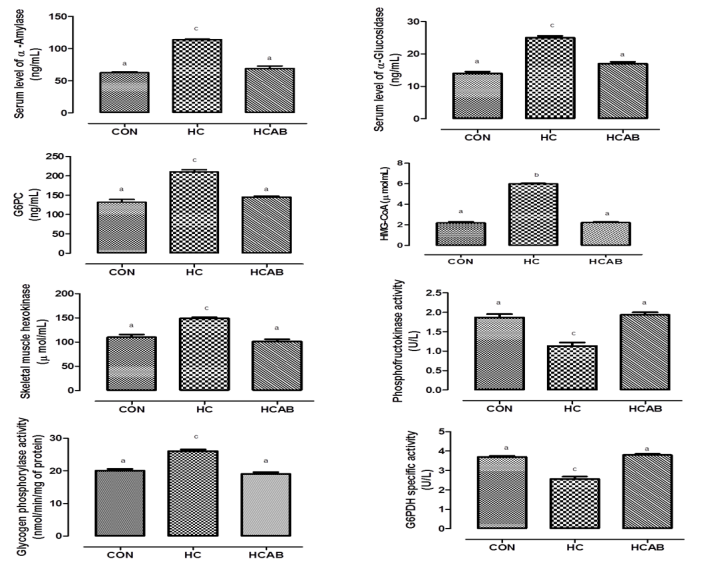
The hypercholesterolemic (HC) group showed impaired glucose metabolism with increased α-amylase and α-glucosidase levels on the HC diet. HCAB therapy effectively reduced these enzyme levels. The A. bisporus diet in the HCAB group led to a significant reduction in glucose-6-phosphate dehydrogenase (G6PDH) levels compared to the HC group (P<0.001). Glycogen phosphorylase activity was higher in the HC group than in the control, but decreased significantly in the HCAB group after treatment (P<0.001). Additionally, phosphofructokinase activity was restored in the HCAB group, contrasting with reduced levels in the HC group (P<0.001). Hexokinase activity increased in the HC group (P<0.001), while it significantly decreased in the HCAB group post-treatment (P<0.001) (Table S14). Glucose-6-phosphatase activity surged in the HC group (P<0.001), but returned to normal levels following A. bisporus extract treatment in the HCAB group.


Effect of A. bisporus extract treatment on leptinemia and inflammatory biomarkers
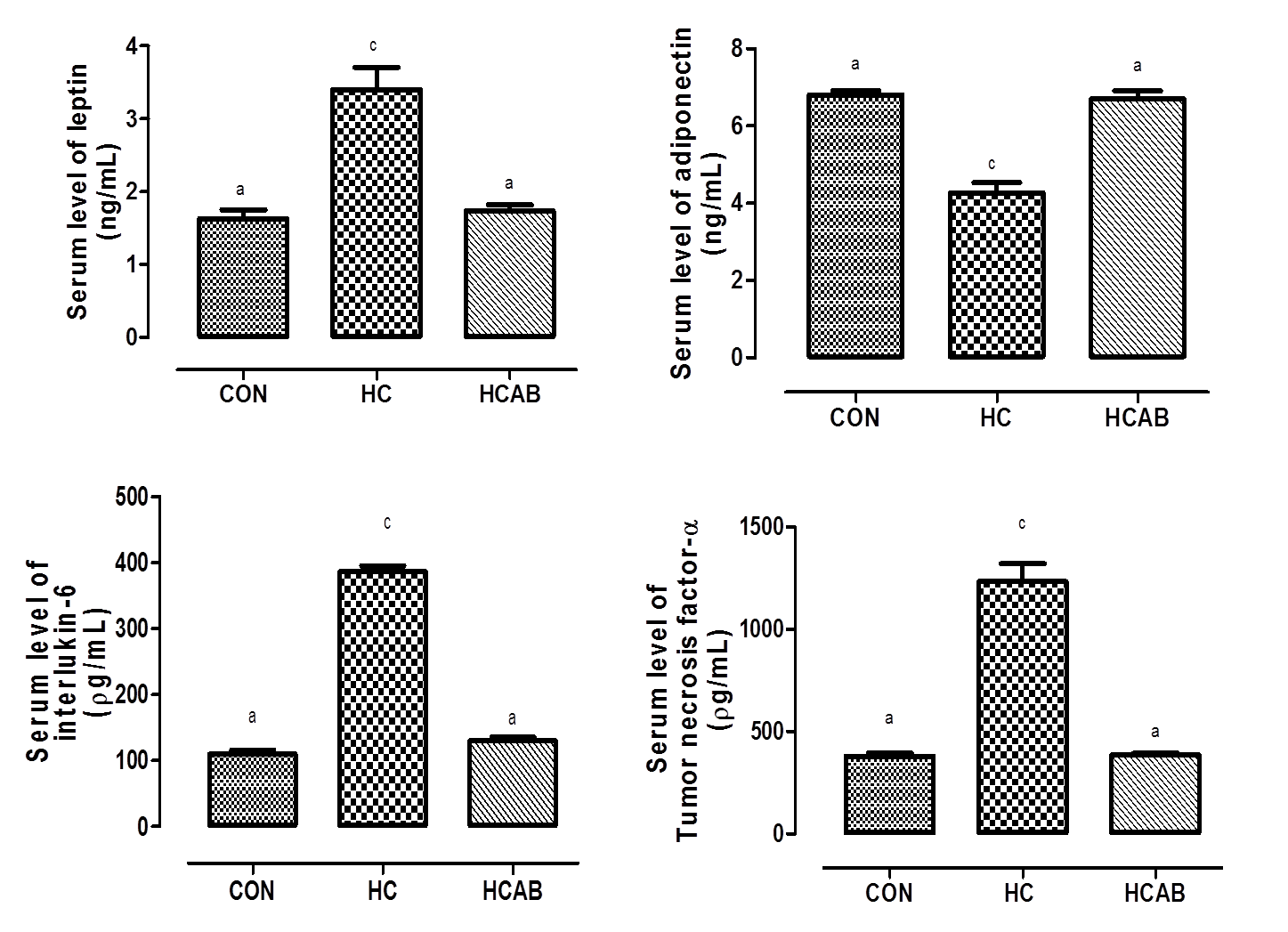
A considerable release of cytokines associated with inflammation (TNF-α and IL-6), leptin, and adiponectin from white adipose tissues was seen in the hypercholesterolemic (HC) group compared to the control (CON) group, when a cholesterol-rich meal was administered (P<0.05). Treatment with A. bisporus extract resulted in a substantial decrease (P<0.05) in the pro-inflammatory mediators TNF-α and IL-6, as well as a decrease in leptin levels (Table S15). This was accomplished by the high-cholesterol A. bisporus (HCAB) group via reduced adipose tissue excessive production of leptin and adiponectin (Figure 16).
Effect of A. bisporus treatment on creatinine and blood urea nitrogen
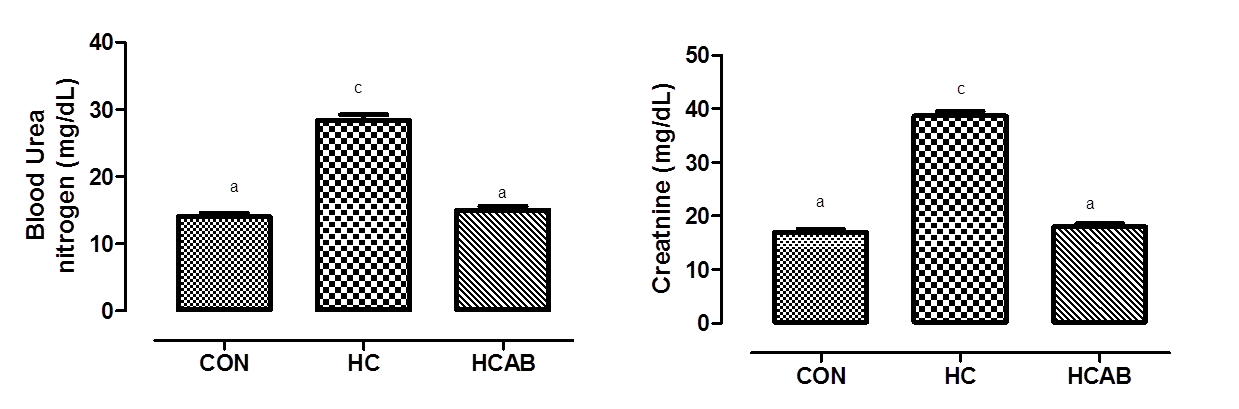
The hypercholesterolemia-related increase in blood urea nitrogen and serum creatinine levels in the HC group was statistically significant (P<0.05) when contrasted with the CON group (Table S16). A. bisporus extract therapy, on the other hand, significantly improved matters, reducing the other groups' increased urea nitrogen levels and creatinine levels (Figure 17).

Effect of A. bisporus on gene expression
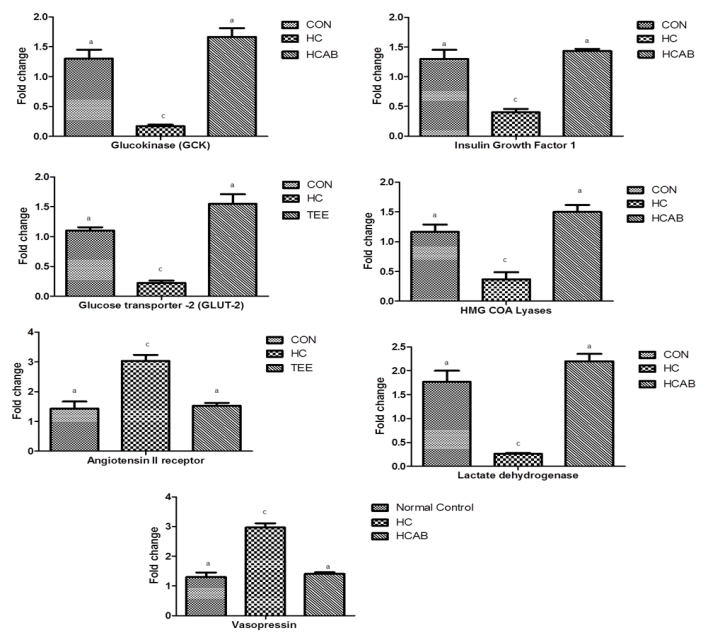
The hypercholesterolemic (HC) diet led to a significant reduction in mRNA expression of glucokinase (GCK), insulin-like growth factor 1 (IGF-1), and glucose transporter 2 (GLUT-2) compared to controls (CON), with P<0.001. Conversely, the addition of A. bisporus extract to the diet restored these mRNA levels. The HC group showed increased uncoupling protein 2 (UCP2) expression relative to both the CON and HCAB groups; however, UCP2 levels rose notably in the HCAB group following A. bisporus treatment. HC intoxication also caused a drop in vasopressin and HMG-COA lyase expressions (P<0.001 compared to CON), while A. bisporus extract notably improved these expressions (Table S17. Additionally, lactate dehydrogenase and angiotensin receptor II levels were higher in the HC group (P<0.001), but showed decreased expression after A. bisporus treatment, particularly in the HCAB group (P<0.001).
Effect of A. bisporus treatment on histopathology
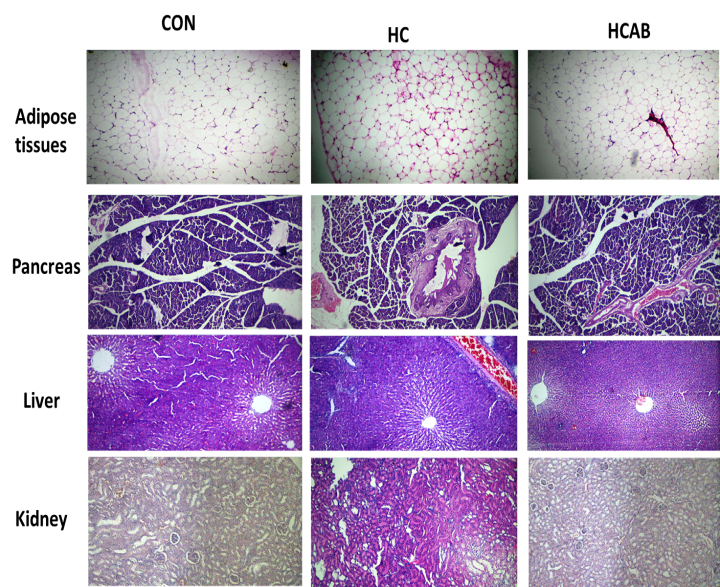
Hypercholesterolemia induces significant histopathological changes in adipose tissues and organs, presenting as adipocyte hypertrophy, inflammation, and necrosis in the HC group, which are notably remedied by A. bisporus treatment. The CON group exhibited preserved liver architecture, while the HC group showed inflammation and damaged hepatic cords. Treatment with A. bisporus resulted in improved liver histopathology. Similarly, the HC group displayed reduced pancreatic Islets of Langerhans, indicative of impaired insulin synthesis, but the HCAB group showed restoration of these islets, signaling pancreatic recovery. Additionally, renal examination revealed glomerular lesions and infiltration of immune cells in the HC group; however, these conditions were alleviated in the HCAB group, suggesting potential therapeutic benefits.

Hypercholesterolemia is a multifactorial metabolic disorder characterized by dysregulated lipid metabolism, oxidative stress, inflammation, and impaired glucose homeostasis, all of which contribute to the progression of cardiovascular and metabolic diseases 30, 31. In the present study, dietary supplementation with Agaricus bisporus exerted a comprehensive protective effect across biochemical, molecular, and histopathological parameters in a hypercholesterolemic rat model.
The improvement in lipid profile represents a key outcome of this study. Hypercholesterolemic rats exhibited elevated total cholesterol, LDL, and triglycerides with reduced HDL levels, consistent with established experimental models 9, 28. Supplementation with A. bisporus significantly reversed these alterations and reduced atherogenic indices and cardiac risk factors. These findings are in agreement with previous studies demonstrating the hypolipidemic potential of A. bisporus, where reductions in serum cholesterol and triglycerides were attributed to bioactive components such as dietary fiber, sterols, and polysaccharides 22, 32. Similar lipid-lowering effects have also been reported for Lentinus edodes, further supporting the role of edible mushrooms in regulating lipid metabolism 33.
Hepatic dysfunction induced by hypercholesterolemia was evident through elevated serum ALT and AST levels, indicating hepatocellular injury and altered membrane permeability 34, 35. The significant reduction of these enzymes following A. bisporus supplementation suggests hepatoprotective activity, likely mediated through attenuation of oxidative stress and lipid accumulation. These findings are consistent with earlier reports showing that mushroom-derived compounds improve liver enzyme profiles and hepatic integrity 36, 37. Furthermore, the restoration of total protein, albumin, and globulin levels supports improved hepatic synthetic function, in line with previous studies on diet-induced hepatotoxicity 38, 39.
Oxidative stress plays a central role in hypercholesterolemia-associated complications. The elevated total oxidant status observed in the hypercholesterolemic group reflects excessive reactive oxygen species generation 40. Treatment with A. bisporus significantly reduced oxidative burden while enhancing total antioxidant capacity, indicating strong antioxidative potential. This effect may be attributed to phenolic constituents such as gallic acid, caffeic acid, and ferulic acid identified in the present study. Comparable antioxidant activity of A. bisporus and other mushrooms has been reported previously, highlighting their ability to scavenge free radicals and protect against oxidative damage 41. The immunomodulatory effects observed, as indicated by enhanced delayed-type hypersensitivity response, suggest restoration of cell-mediated immunity compromised under hypercholesterolemic conditions. Oxidative stress is known to impair immune function, particularly T-cell-mediated responses. The enhanced immune response observed in the treated group aligns with previous findings that mushroom polysaccharides, especially β-glucans, stimulate macrophages and lymphocytes, thereby improving immune competence 42, 43, 44.
In addition to lipid and immune modulation, A. bisporus significantly improved glycemic control. Hypercholesterolemic rats exhibited elevated fasting and impaired glucose tolerance, and increased insulin resistance, consistent with previous reports linking dyslipidemia to insulin resistance 24, 25. Supplementation with A. bisporus resulted in significant reductions in blood glucose levels, improved glucose tolerance, and decreased HOMA-IR values, indicating enhanced insulin sensitivity. These findings are supported by earlier studies demonstrating improved glucose metabolism and insulin signaling following mushroom supplementation 45, 46. The regulation of carbohydrate-metabolizing enzymes further substantiates these findings. The reduction in α-amylase, α-glucosidase, and glucose-6-phosphatase activities, along with restoration of phosphofructokinase activity, indicates improved glucose utilization and reduced gluconeogenesis. Similar enzymatic modulation has been associated with improved metabolic control in previous studies 26.
At the molecular level, the upregulation of glucokinase (GCK), insulin-like growth factor-1 (IGF-1), and glucose transporter-2 (GLUT2) provides mechanistic insight into the observed metabolic improvements. Glucokinase facilitates hepatic glucose phosphorylation 47, while GLUT2 regulates glucose transport across hepatocytes 48. Increased IGF-1 expression enhances insulin sensitivity and lipid metabolism 49. These findings are consistent with previous evidence demonstrating that A. bisporus bioactives modulate glucose transporter expression and insulin signaling pathways 50. The normalization of uncoupling protein 2 (UCP2) expression suggests improved mitochondrial function and reduced oxidative stress.
Overexpression of UCP2 under hypercholesterolemic conditions is associated with impaired ATP production and insulin secretion 51. The observed modulation indicates restoration of mitochondrial efficiency, likely mediated by antioxidant compounds present in A. bisporus. Inflammatory markers, including TNF-α and IL-6, were significantly elevated in the hypercholesterolemic group, reflecting chronic low-grade inflammation. A. bisporus supplementation significantly reduced these cytokines, along with leptin levels, indicating anti-inflammatory and adiporegulatory effects. These findings are in agreement with previous studies demonstrating the anti-inflammatory potential of mushroom-derived bioactive compounds 42. Renal dysfunction, indicated by elevated creatinine and blood urea nitrogen levels, was also ameliorated following A. bisporus treatment, suggesting systemic protective effects.
Histopathological findings further validated the biochemical and molecular results. Hypercholesterolemia-induced structural alterations in liver, pancreas, kidney, and adipose tissues were markedly improved following treatment. Restoration of hepatic architecture, pancreatic islets, and renal morphology confirms the multi-organ protective effects of A. bisporus, consistent with previous reports of tissue-level recovery following antioxidant and hypolipidemic interventions 37. Collectively, the present study demonstrates that A. bisporus exerts a multi-targeted therapeutic effect by modulating lipid metabolism, oxidative stress, inflammation, and glucose homeostasis. These effects are mediated through both biochemical and molecular mechanisms, including regulation of key metabolic enzymes and gene expression pathways. However, further studies are required to isolate specific bioactive compounds, elucidate precise molecular mechanisms, and validate these findings in clinical settings.
Agaricus bisporus is a nutritionally rich edible mushroom characterized by significant levels of crude protein (27.76%), crude fiber (12.01%), and carbohydrates (51.58%), along with key phytochemicals including gallic acid, caffeic acid, p-hydroxybenzoic acid, p-coumaric acid, and ferulic acid as identified by HPLC analysis. These bioactive phenolic compounds are likely responsible, at least in part, for the observed therapeutic effects. The findings of the present study demonstrated that A. bisporus supplementation at 5% w/w exerted significant anti-hypercholesterolemic, antioxidant, hepatoprotective, immunomodulatory, hypoglycemic, and anti-inflammatory effects in a hypercholesterolemic rat model. These effects were further substantiated at the molecular level through upregulation of GCK, IGF-1, and GLUT2, and downregulation of lactate dehydrogenase and angiotensin II receptor expression. Collectively, these findings position A. bisporus as a promising functional dietary adjunct for managing hypercholesterolemia and associated metabolic and cardiovascular disorders. Further clinical studies are warranted to validate these findings in human subjects.
The authors affirm that they have no interests in conflict with anyone.
The major body of the manuscript presents all significant findings, illustrations, and tables with descriptions.
After receiving approval from the Government College University's Institutional Review Board with reference number (GCUF/ERC/130), this study was launched.
SAB and ZC designed the research concept, validated it, and supervised it. RR and AI experimented and collected results. AI, FT, and AR collected data, critically analyzed it, and prepared the manuscript.
| [1] | Bakaeva Z, Goncharov M, Frolov F, Krasilnikova I, Sorokina E, Zgodova A, et al. Regulatory Peptide Pro-Gly-Pro Accelerates Neuroregeneration of Primary Neuroglial Culture after Mechanical Injury in Scratch Test. International Journal of Molecular Sciences. 2024; 25(20): 10886. | ||
| In article | View Article PubMed | ||
| [2] | Pindwarawala M, Bose S, Brunham LR. Apparent Nonresponse to PCSK9 Inhibition in a Patient with Heterozygous Familial Hypercholesterolemia Due to PCSK9 Gene Duplication. Case Reports. 2025; 30(18): 103953. | ||
| In article | View Article PubMed | ||
| [3] | Starck CS, Cassettari T, Beckett E, Marshall S, Fayet-Moore F. Priority nutrients to address malnutrition and diet-related diseases in Australia and New Zealand. Frontiers in Nutrition. 2024; 11: 1370550. | ||
| In article | View Article PubMed | ||
| [4] | Khadim R, Al-Fartusie F, editors. Antioxidant vitamins and their effect on the immune system. Journal of Physics: Conference Series; 2021: IOP Publishing. | ||
| In article | View Article | ||
| [5] | Ku YH, Lee H, Ryu HY, Kang JH. Clinical trial to analyze the effects of oral intake of Phellinus linteus (sanghuang) extract on immune function: a study protocol for a randomized, double-blind controlled trial. Trials. 2021; 22(1): 849. | ||
| In article | View Article PubMed | ||
| [6] | Cateni F, Gargano ML, Procida G, Venturella G, Cirlincione F, Ferraro V. Mycochemicals in wild and cultivated mushrooms: nutrition and health. Phytochemistry Reviews. 2022; 21(2): 339-83. | ||
| In article | View Article | ||
| [7] | Wang W, Chi X, Ji J, Zhang J, Xiang S, Xiong B, et al. Global status and trends of invasive pulmonary aspergillosis: A bibliometric study. Medicine. 2025; 104(22): e42603. | ||
| In article | View Article PubMed | ||
| [8] | Dong Y, Wang T, Zhao J, Gan B, Feng R, Miao R. Polysaccharides derived from mushrooms in immune and antitumor activity: A review. International Journal of Medicinal Mushrooms. 2023; 25(8). | ||
| In article | View Article PubMed | ||
| [9] | Goyal R, Grewal R. Effect of feeding Agaricus bisporus (white button) mushroom on serum and liver cholesterol and excretion of cholesterol and bile acids in rats. Journal of Scientific Research. 2024; 16(2): 579-87. | ||
| In article | View Article | ||
| [10] | Singh N, Sohrab S. Algae and fungi-based micronutrient enrichment in food. Phytoremediation and Biofortification: Apple Academic Press; 2024. p. 335-54. | ||
| In article | View Article | ||
| [11] | Chun S, Gopal J, Muthu M. Antioxidant activity of mushroom extracts/polysaccharides—Their antiviral properties and plausible antiCOVID-19 properties. Antioxidants. 2021; 10(12): 1899. | ||
| In article | View Article PubMed | ||
| [12] | Işık H, Özsoy C, Tutar U, Dinçer E. Evaluation of Antibiofilm, Antimicrobial, Cytotoxic and Antioxidant Effects of Some Wild Mushroom Species. Mantar Dergisi. 2024; 15(2): 60-9. | ||
| In article | View Article | ||
| [13] | Xu J, Xiao C, Xu H, Yang S, Chen Z, Wang H, et al. Anti-inflammatory effects of Ganoderma lucidum sterols via attenuation of the p38 MAPK and NF-κB pathways in LPS-induced RAW 264.7 macrophages. Food and Chemical Toxicology. 2021; 150: 112073. | ||
| In article | View Article PubMed | ||
| [14] | Dhawan A, Chakraborty S. Pulsed light treatment of whole white button mushroom (Agaricus bisporus): Kinetics and mechanism of microbial inactivation and storage study. Journal of Food Science. 2024; 89(9): 5319-34. | ||
| In article | View Article PubMed | ||
| [15] | Cunniff P. Official methods of analysis. Association of Official Analytical Chemists (AOAC) 16th ed Arlington, Virginia, USA. 1995. | ||
| In article | |||
| [16] | Kumar JA, Sharma P, Sikarwar MS. Evaluation of anti-inflammatory and anti-pyretic activity of total alcoholic extract of Croton sparsiflorus and its fractions. J Pharm Res. 2010; 3(5): 1149-51. | ||
| In article | |||
| [17] | Lichtman AH, Clinton SK, Iiyama K, Connelly PW, Libby P, Cybulsky MI. Hyperlipidemia and atherosclerotic lesion development in LDL receptor–deficient mice fed defined semipurified diets with and without cholate. Arteriosclerosis, thrombosis, and vascular biology. 1999; 19(8): 1938-44. | ||
| In article | View Article PubMed | ||
| [18] | Hostmark AT, Berg JE, Osland A, Simonsen S, Vatne K. Lipoprotein-related coronary risk factors in patients with angiographically defined coronary artery disease and controls: improved group separation by indexes reflecting the balance between low-and high-density lipoproteins. Coronary Artery Disease. 1991; 2(6): 679-84. | ||
| In article | |||
| [19] | Kim D-H, Soh K-S. Experimental study of Pinus densiflora Siebold et Zuccarini on hyperlipidemia and lipid in rats. Journal of Korean Institute of Herbal Acupuncture. 2007; 10(1): 109-19. | ||
| In article | View Article | ||
| [20] | Idoko A, Oladiji A, Maibulangu B, Nwonuma C. Assessment of Some Biochemical Parameters of Rats Maintained on Different Dietary Levels of Heat-Treated Citrullus colocynthis Seed Coat-based Diets. Journal of Applied Life Sciences International. 2016; 6(1): 1-8. | ||
| In article | View Article PubMed | ||
| [21] | Anwar H, Rahman Z, Javed I, Muhammad F. Effect of protein, probiotic, and symbiotic supplementation on serum biological health markers of molted layers. Poultry Science. 2012; 91(10): 2606-13. | ||
| In article | View Article PubMed | ||
| [22] | Nisar J, Mustafa I, Anwar H, Sohail MU, Hussain G, Ullah MI, et al. Shiitake culinary-medicinal mushroom, Lentinus edodes (Agaricomycetes): a species with antioxidant, immunomodulatory, and hepatoprotective activities in hypercholesterolemic rats. International journal of medicinal mushrooms. 2017; 19(11). | ||
| In article | View Article PubMed | ||
| [23] | Anwar H, Rahman Z, Javed I, Muhammad F. Immune potentiating role of protein, probiotic and symbiotic supplementation in moulted White Leghorn hens. Avian Biology Research. 2015; 8(1): 25-34. | ||
| In article | View Article | ||
| [24] | Sarmiento-Ortega VE, Moroni-González D, Díaz A, Eduardo B, Samuel T. Oral subacute exposure to cadmium LOAEL dose induces insulin resistance and impairment of the hormonal and metabolic liver-adipose axis in Wistar rats. Biological trace element research. 2022; 200(10): 4370-84. | ||
| In article | View Article PubMed | ||
| [25] | Yonamine CY, Pinheiro-Machado E, Michalani ML, Alves-Wagner AB, Esteves JV, Freitas HS, et al. Resveratrol improves glycemic control in type 2 diabetic obese mice by regulating glucose transporter expression in skeletal muscle and liver. Molecules. 2017; 22(7): 1180. | ||
| In article | View Article PubMed | ||
| [26] | Sabir S, Akash MSH, Fiayyaz F, Saleem U, Mehmood MH, Rehman K. Role of cadmium and arsenic as endocrine disruptors in the metabolism of carbohydrates: Inserting the association into perspectives. Biomedicine & pharmacotherapy. 2019; 114: 108802. | ||
| In article | View Article PubMed | ||
| [27] | Saleem U, Chauhdary Z, Raza Z, Shah S, Rahman M-u, Zaib P, et al. Anti-Parkinson’s Activity of Tribulus terrestris via Modulation of AChE, α-Synuclein, TNF-α, and IL-1β. ACS Omega. 2020; 5(39): 25216-27. | ||
| In article | View Article PubMed | ||
| [28] | Iqbal T, Sohaib M, Iqbal S, Rehman H. Exploring therapeutic potential of Pleurotus ostreatus and Agaricus bisporus mushrooms against hyperlipidemia and oxidative stress using animal model. Foods. 2024; 13(5): 709. | ||
| In article | View Article PubMed | ||
| [29] | Lin J-Y, Tang C-Y. Determination of total phenolic and flavonoid contents in selected fruits and vegetables, as well as their stimulatory effects on mouse splenocyte proliferation. Food Chemistry. 2007; 101(1): 140-7. | ||
| In article | View Article | ||
| [30] | Jebari-Benslaiman S, Larrea-Sebal A, Benito-Vicente A, Martín C. Cardiovascular disease, atherosclerosis and familial hypercholesterolemia: from molecular mechanisms causing pathogenicity to new therapeutic approaches. MDPI; 2023. p. 7659. | ||
| In article | View Article PubMed | ||
| [31] | Harfi Maulana AR. High-fat diets-induced metabolic disorders to study molecular mechanisms of hyperlipidemia in rats. Heart disease (CHD). 2021; 3: 18. | ||
| In article | View Article | ||
| [32] | Jeong SC, Jeong YT, Yang BK, Islam R, Koyyalamudi SR, Pang G, et al. White button mushroom (Agaricus bisporus) lowers blood glucose and cholesterol levels in diabetic and hypercholesterolemic rats. Nutrition research. 2010; 30(1): 49-56. | ||
| In article | View Article PubMed | ||
| [33] | Ebeid TA, Al-Homidan IH, Fathi MM. Physiological and immunological benefits of probiotics and their impacts in poultry productivity. World's Poultry Science Journal. 2021; 77(4): 883-99. | ||
| In article | View Article | ||
| [34] | Risha ME, Arafa MA, Aboraya AO, Ibrahem ES. Hepatoprotective And Antioxidant Activities Of The Edible Mushroom (Agaricus Bisporus) On Carbon Tetrachloride-Induced Chronic Hepatitis In Rats. Journal of Pharmaceutical Negative Results. 2023; 14. | ||
| In article | |||
| [35] | Haal S, Guman MS, Bruin S, Schouten R, van Veen RN, Fockens P, et al. Risk factors for symptomatic gallstone disease and gallstone formation after bariatric surgery. Obesity Surgery. 2022; 32(4): 1270-8. | ||
| In article | View Article PubMed | ||
| [36] | Charoensuk L, Thongpon P, Sitthirach C, Chaidee A, Intuyod K, Pairojkul C, et al. High-fat/high-fructose diet and Opisthorchis viverrini infection promote metabolic dysfunction-associated steatotic liver disease via inflammation, fibrogenesis, and metabolic dysfunction. Acta tropica. 2025; 261: 107491. | ||
| In article | View Article PubMed | ||
| [37] | Huang J, Ou Y, Yew TWD, Liu J, Leng B, Lin Z, et al. Hepatoprotective effects of polysaccharide isolated from Agaricus bisporus industrial wastewater against CCl4-induced hepatic injury in mice. International journal of biological macromolecules. 2016; 82: 678-86. | ||
| In article | View Article PubMed | ||
| [38] | Vahedi H, Atefi M, Entezari MH, Hassanzadeh A. The effect of sesame oil consumption compared to sunflower oil on lipid profile, blood pressure, and anthropometric indices in women with non-alcoholic fatty liver disease: a randomized double-blind controlled trial. Trials. 2022; 23(1): 551. | ||
| In article | View Article PubMed | ||
| [39] | Akhter S, Jahan I, Roy DC, Shah A, Islam D, Lipy EP, et al. Combined hepatoprotective potentials of medicinal plants on CCl4-induced hepatotoxic Wistar rats. Indian Journal of Traditional Knowledge (IJTK). 2024; 23(5): 433-40. | ||
| In article | |||
| [40] | Tumilaar SG, Hardianto A, Dohi H, Kurnia D. A comprehensive review of free radicals, oxidative stress, and antioxidants: Overview, clinical applications, global perspectives, future directions, and mechanisms of antioxidant activity of flavonoid compounds. Journal of Chemistry. 2024; 2024(1): 5594386. | ||
| In article | View Article | ||
| [41] | Latif A, Khan MI, Khan UM, Latif A, Abdi G, Aadil RM. Assessment of in vitro and in vivo antioxidant activity of white button mushroom polyphenols extracted with ultrasound-assistance. Measurement: Food. 2025; 19: 100233. | ||
| In article | View Article | ||
| [42] | Zhao S, Gao Q, Rong C, Wang S, Zhao Z, Liu Y, et al. Immunomodulatory effects of edible and medicinal mushrooms and their bioactive immunoregulatory products. Journal of Fungi. 2020; 6(4): 269. | ||
| In article | View Article PubMed | ||
| [43] | Yin Z, Liang Z, Li C, Wang J, Ma C, Kang W. Immunomodulatory effects of polysaccharides from edible fungus: a review. Food Science and Human Wellness. 2021; 10(4): 393-400. | ||
| In article | View Article | ||
| [44] | Smiderle FR, Alquini G, Tadra-Sfeir MZ, Iacomini M, Wichers HJ, Van Griensven LJ. Agaricus bisporus and Agaricus brasiliensis (1→ 6)-β-d-glucans show immunostimulatory activity on human THP-1 derived macrophages. Carbohydrate polymers. 2013; 94(1): 91-9. | ||
| In article | View Article PubMed | ||
| [45] | Das M, Geetha V, Zarei M, Harohally NV. Modulation of obesity associated metabolic dysfunction by novel lipophilic fraction obtained from Agaricus bisporus. Life Sciences. 2022; 305: 120779. | ||
| In article | View Article PubMed | ||
| [46] | Das M, Gurusiddaiah SK. Ergosterol fraction from Agaricus bisporus modulates adipogenesis and skeletal glucose uptake in high-fat diet-induced obese C57BL/6 mice. Life Sciences. 2023; 315: 121337. | ||
| In article | View Article PubMed | ||
| [47] | Postic C, Shiota M, Magnuson MA. Cell-specific roles of glucokinase in glucose homeostasis. Recent progress in hormone research. 2001; 56: 195-218. | ||
| In article | View Article PubMed | ||
| [48] | Chadt A, Al-Hasani H. Glucose transporters in adipose tissue, liver, and skeletal muscle in metabolic health and disease. Pflügers Archiv-European Journal of Physiology. 2020; 472(9): 1273-98. | ||
| In article | View Article PubMed | ||
| [49] | Brener A, Sagi L, Shtamler A, Levy S, Fattal-Valevski A, Lebenthal Y. Insulin-like growth factor-1 status is associated with insulin resistance in young patients with spinal muscular atrophy. Neuromuscular Disorders. 2020; 30(11): 888-96. | ||
| In article | View Article PubMed | ||
| [50] | Kumar V, Kumar P, Singh J, Kumar P. Use of sugar mill wastewater for Agaricus bisporus cultivation: prediction models for trace metal uptake and health risk assessment. Environmental Science and Pollution Research. 2021; 28(21): 26923-34. | ||
| In article | View Article PubMed | ||
| [51] | Ruiz-Ramírez A, Chávez-Salgado M, Peñeda-Flores JA, Zapata E, Masso F, El-Hafidi M. High-sucrose diet increases ROS generation, FFA accumulation, UCP2 level, and proton leak in liver mitochondria. American Journal of Physiology-Endocrinology and Metabolism. 2011; 301(6): E1198-E207. | ||
| In article | View Article PubMed | ||
Published with license by Science and Education Publishing, Copyright © 2026 Shazia Anwer Bukhari, Asim Rehman, Ali Ihsan, Farrukh Tahir and Rehana Ramzan
 This work is licensed under a Creative Commons Attribution 4.0 International License. To view a copy of this license, visit
http://creativecommons.org/licenses/by/4.0/
This work is licensed under a Creative Commons Attribution 4.0 International License. To view a copy of this license, visit
http://creativecommons.org/licenses/by/4.0/
| [1] | Bakaeva Z, Goncharov M, Frolov F, Krasilnikova I, Sorokina E, Zgodova A, et al. Regulatory Peptide Pro-Gly-Pro Accelerates Neuroregeneration of Primary Neuroglial Culture after Mechanical Injury in Scratch Test. International Journal of Molecular Sciences. 2024; 25(20): 10886. | ||
| In article | View Article PubMed | ||
| [2] | Pindwarawala M, Bose S, Brunham LR. Apparent Nonresponse to PCSK9 Inhibition in a Patient with Heterozygous Familial Hypercholesterolemia Due to PCSK9 Gene Duplication. Case Reports. 2025; 30(18): 103953. | ||
| In article | View Article PubMed | ||
| [3] | Starck CS, Cassettari T, Beckett E, Marshall S, Fayet-Moore F. Priority nutrients to address malnutrition and diet-related diseases in Australia and New Zealand. Frontiers in Nutrition. 2024; 11: 1370550. | ||
| In article | View Article PubMed | ||
| [4] | Khadim R, Al-Fartusie F, editors. Antioxidant vitamins and their effect on the immune system. Journal of Physics: Conference Series; 2021: IOP Publishing. | ||
| In article | View Article | ||
| [5] | Ku YH, Lee H, Ryu HY, Kang JH. Clinical trial to analyze the effects of oral intake of Phellinus linteus (sanghuang) extract on immune function: a study protocol for a randomized, double-blind controlled trial. Trials. 2021; 22(1): 849. | ||
| In article | View Article PubMed | ||
| [6] | Cateni F, Gargano ML, Procida G, Venturella G, Cirlincione F, Ferraro V. Mycochemicals in wild and cultivated mushrooms: nutrition and health. Phytochemistry Reviews. 2022; 21(2): 339-83. | ||
| In article | View Article | ||
| [7] | Wang W, Chi X, Ji J, Zhang J, Xiang S, Xiong B, et al. Global status and trends of invasive pulmonary aspergillosis: A bibliometric study. Medicine. 2025; 104(22): e42603. | ||
| In article | View Article PubMed | ||
| [8] | Dong Y, Wang T, Zhao J, Gan B, Feng R, Miao R. Polysaccharides derived from mushrooms in immune and antitumor activity: A review. International Journal of Medicinal Mushrooms. 2023; 25(8). | ||
| In article | View Article PubMed | ||
| [9] | Goyal R, Grewal R. Effect of feeding Agaricus bisporus (white button) mushroom on serum and liver cholesterol and excretion of cholesterol and bile acids in rats. Journal of Scientific Research. 2024; 16(2): 579-87. | ||
| In article | View Article | ||
| [10] | Singh N, Sohrab S. Algae and fungi-based micronutrient enrichment in food. Phytoremediation and Biofortification: Apple Academic Press; 2024. p. 335-54. | ||
| In article | View Article | ||
| [11] | Chun S, Gopal J, Muthu M. Antioxidant activity of mushroom extracts/polysaccharides—Their antiviral properties and plausible antiCOVID-19 properties. Antioxidants. 2021; 10(12): 1899. | ||
| In article | View Article PubMed | ||
| [12] | Işık H, Özsoy C, Tutar U, Dinçer E. Evaluation of Antibiofilm, Antimicrobial, Cytotoxic and Antioxidant Effects of Some Wild Mushroom Species. Mantar Dergisi. 2024; 15(2): 60-9. | ||
| In article | View Article | ||
| [13] | Xu J, Xiao C, Xu H, Yang S, Chen Z, Wang H, et al. Anti-inflammatory effects of Ganoderma lucidum sterols via attenuation of the p38 MAPK and NF-κB pathways in LPS-induced RAW 264.7 macrophages. Food and Chemical Toxicology. 2021; 150: 112073. | ||
| In article | View Article PubMed | ||
| [14] | Dhawan A, Chakraborty S. Pulsed light treatment of whole white button mushroom (Agaricus bisporus): Kinetics and mechanism of microbial inactivation and storage study. Journal of Food Science. 2024; 89(9): 5319-34. | ||
| In article | View Article PubMed | ||
| [15] | Cunniff P. Official methods of analysis. Association of Official Analytical Chemists (AOAC) 16th ed Arlington, Virginia, USA. 1995. | ||
| In article | |||
| [16] | Kumar JA, Sharma P, Sikarwar MS. Evaluation of anti-inflammatory and anti-pyretic activity of total alcoholic extract of Croton sparsiflorus and its fractions. J Pharm Res. 2010; 3(5): 1149-51. | ||
| In article | |||
| [17] | Lichtman AH, Clinton SK, Iiyama K, Connelly PW, Libby P, Cybulsky MI. Hyperlipidemia and atherosclerotic lesion development in LDL receptor–deficient mice fed defined semipurified diets with and without cholate. Arteriosclerosis, thrombosis, and vascular biology. 1999; 19(8): 1938-44. | ||
| In article | View Article PubMed | ||
| [18] | Hostmark AT, Berg JE, Osland A, Simonsen S, Vatne K. Lipoprotein-related coronary risk factors in patients with angiographically defined coronary artery disease and controls: improved group separation by indexes reflecting the balance between low-and high-density lipoproteins. Coronary Artery Disease. 1991; 2(6): 679-84. | ||
| In article | |||
| [19] | Kim D-H, Soh K-S. Experimental study of Pinus densiflora Siebold et Zuccarini on hyperlipidemia and lipid in rats. Journal of Korean Institute of Herbal Acupuncture. 2007; 10(1): 109-19. | ||
| In article | View Article | ||
| [20] | Idoko A, Oladiji A, Maibulangu B, Nwonuma C. Assessment of Some Biochemical Parameters of Rats Maintained on Different Dietary Levels of Heat-Treated Citrullus colocynthis Seed Coat-based Diets. Journal of Applied Life Sciences International. 2016; 6(1): 1-8. | ||
| In article | View Article PubMed | ||
| [21] | Anwar H, Rahman Z, Javed I, Muhammad F. Effect of protein, probiotic, and symbiotic supplementation on serum biological health markers of molted layers. Poultry Science. 2012; 91(10): 2606-13. | ||
| In article | View Article PubMed | ||
| [22] | Nisar J, Mustafa I, Anwar H, Sohail MU, Hussain G, Ullah MI, et al. Shiitake culinary-medicinal mushroom, Lentinus edodes (Agaricomycetes): a species with antioxidant, immunomodulatory, and hepatoprotective activities in hypercholesterolemic rats. International journal of medicinal mushrooms. 2017; 19(11). | ||
| In article | View Article PubMed | ||
| [23] | Anwar H, Rahman Z, Javed I, Muhammad F. Immune potentiating role of protein, probiotic and symbiotic supplementation in moulted White Leghorn hens. Avian Biology Research. 2015; 8(1): 25-34. | ||
| In article | View Article | ||
| [24] | Sarmiento-Ortega VE, Moroni-González D, Díaz A, Eduardo B, Samuel T. Oral subacute exposure to cadmium LOAEL dose induces insulin resistance and impairment of the hormonal and metabolic liver-adipose axis in Wistar rats. Biological trace element research. 2022; 200(10): 4370-84. | ||
| In article | View Article PubMed | ||
| [25] | Yonamine CY, Pinheiro-Machado E, Michalani ML, Alves-Wagner AB, Esteves JV, Freitas HS, et al. Resveratrol improves glycemic control in type 2 diabetic obese mice by regulating glucose transporter expression in skeletal muscle and liver. Molecules. 2017; 22(7): 1180. | ||
| In article | View Article PubMed | ||
| [26] | Sabir S, Akash MSH, Fiayyaz F, Saleem U, Mehmood MH, Rehman K. Role of cadmium and arsenic as endocrine disruptors in the metabolism of carbohydrates: Inserting the association into perspectives. Biomedicine & pharmacotherapy. 2019; 114: 108802. | ||
| In article | View Article PubMed | ||
| [27] | Saleem U, Chauhdary Z, Raza Z, Shah S, Rahman M-u, Zaib P, et al. Anti-Parkinson’s Activity of Tribulus terrestris via Modulation of AChE, α-Synuclein, TNF-α, and IL-1β. ACS Omega. 2020; 5(39): 25216-27. | ||
| In article | View Article PubMed | ||
| [28] | Iqbal T, Sohaib M, Iqbal S, Rehman H. Exploring therapeutic potential of Pleurotus ostreatus and Agaricus bisporus mushrooms against hyperlipidemia and oxidative stress using animal model. Foods. 2024; 13(5): 709. | ||
| In article | View Article PubMed | ||
| [29] | Lin J-Y, Tang C-Y. Determination of total phenolic and flavonoid contents in selected fruits and vegetables, as well as their stimulatory effects on mouse splenocyte proliferation. Food Chemistry. 2007; 101(1): 140-7. | ||
| In article | View Article | ||
| [30] | Jebari-Benslaiman S, Larrea-Sebal A, Benito-Vicente A, Martín C. Cardiovascular disease, atherosclerosis and familial hypercholesterolemia: from molecular mechanisms causing pathogenicity to new therapeutic approaches. MDPI; 2023. p. 7659. | ||
| In article | View Article PubMed | ||
| [31] | Harfi Maulana AR. High-fat diets-induced metabolic disorders to study molecular mechanisms of hyperlipidemia in rats. Heart disease (CHD). 2021; 3: 18. | ||
| In article | View Article | ||
| [32] | Jeong SC, Jeong YT, Yang BK, Islam R, Koyyalamudi SR, Pang G, et al. White button mushroom (Agaricus bisporus) lowers blood glucose and cholesterol levels in diabetic and hypercholesterolemic rats. Nutrition research. 2010; 30(1): 49-56. | ||
| In article | View Article PubMed | ||
| [33] | Ebeid TA, Al-Homidan IH, Fathi MM. Physiological and immunological benefits of probiotics and their impacts in poultry productivity. World's Poultry Science Journal. 2021; 77(4): 883-99. | ||
| In article | View Article | ||
| [34] | Risha ME, Arafa MA, Aboraya AO, Ibrahem ES. Hepatoprotective And Antioxidant Activities Of The Edible Mushroom (Agaricus Bisporus) On Carbon Tetrachloride-Induced Chronic Hepatitis In Rats. Journal of Pharmaceutical Negative Results. 2023; 14. | ||
| In article | |||
| [35] | Haal S, Guman MS, Bruin S, Schouten R, van Veen RN, Fockens P, et al. Risk factors for symptomatic gallstone disease and gallstone formation after bariatric surgery. Obesity Surgery. 2022; 32(4): 1270-8. | ||
| In article | View Article PubMed | ||
| [36] | Charoensuk L, Thongpon P, Sitthirach C, Chaidee A, Intuyod K, Pairojkul C, et al. High-fat/high-fructose diet and Opisthorchis viverrini infection promote metabolic dysfunction-associated steatotic liver disease via inflammation, fibrogenesis, and metabolic dysfunction. Acta tropica. 2025; 261: 107491. | ||
| In article | View Article PubMed | ||
| [37] | Huang J, Ou Y, Yew TWD, Liu J, Leng B, Lin Z, et al. Hepatoprotective effects of polysaccharide isolated from Agaricus bisporus industrial wastewater against CCl4-induced hepatic injury in mice. International journal of biological macromolecules. 2016; 82: 678-86. | ||
| In article | View Article PubMed | ||
| [38] | Vahedi H, Atefi M, Entezari MH, Hassanzadeh A. The effect of sesame oil consumption compared to sunflower oil on lipid profile, blood pressure, and anthropometric indices in women with non-alcoholic fatty liver disease: a randomized double-blind controlled trial. Trials. 2022; 23(1): 551. | ||
| In article | View Article PubMed | ||
| [39] | Akhter S, Jahan I, Roy DC, Shah A, Islam D, Lipy EP, et al. Combined hepatoprotective potentials of medicinal plants on CCl4-induced hepatotoxic Wistar rats. Indian Journal of Traditional Knowledge (IJTK). 2024; 23(5): 433-40. | ||
| In article | |||
| [40] | Tumilaar SG, Hardianto A, Dohi H, Kurnia D. A comprehensive review of free radicals, oxidative stress, and antioxidants: Overview, clinical applications, global perspectives, future directions, and mechanisms of antioxidant activity of flavonoid compounds. Journal of Chemistry. 2024; 2024(1): 5594386. | ||
| In article | View Article | ||
| [41] | Latif A, Khan MI, Khan UM, Latif A, Abdi G, Aadil RM. Assessment of in vitro and in vivo antioxidant activity of white button mushroom polyphenols extracted with ultrasound-assistance. Measurement: Food. 2025; 19: 100233. | ||
| In article | View Article | ||
| [42] | Zhao S, Gao Q, Rong C, Wang S, Zhao Z, Liu Y, et al. Immunomodulatory effects of edible and medicinal mushrooms and their bioactive immunoregulatory products. Journal of Fungi. 2020; 6(4): 269. | ||
| In article | View Article PubMed | ||
| [43] | Yin Z, Liang Z, Li C, Wang J, Ma C, Kang W. Immunomodulatory effects of polysaccharides from edible fungus: a review. Food Science and Human Wellness. 2021; 10(4): 393-400. | ||
| In article | View Article | ||
| [44] | Smiderle FR, Alquini G, Tadra-Sfeir MZ, Iacomini M, Wichers HJ, Van Griensven LJ. Agaricus bisporus and Agaricus brasiliensis (1→ 6)-β-d-glucans show immunostimulatory activity on human THP-1 derived macrophages. Carbohydrate polymers. 2013; 94(1): 91-9. | ||
| In article | View Article PubMed | ||
| [45] | Das M, Geetha V, Zarei M, Harohally NV. Modulation of obesity associated metabolic dysfunction by novel lipophilic fraction obtained from Agaricus bisporus. Life Sciences. 2022; 305: 120779. | ||
| In article | View Article PubMed | ||
| [46] | Das M, Gurusiddaiah SK. Ergosterol fraction from Agaricus bisporus modulates adipogenesis and skeletal glucose uptake in high-fat diet-induced obese C57BL/6 mice. Life Sciences. 2023; 315: 121337. | ||
| In article | View Article PubMed | ||
| [47] | Postic C, Shiota M, Magnuson MA. Cell-specific roles of glucokinase in glucose homeostasis. Recent progress in hormone research. 2001; 56: 195-218. | ||
| In article | View Article PubMed | ||
| [48] | Chadt A, Al-Hasani H. Glucose transporters in adipose tissue, liver, and skeletal muscle in metabolic health and disease. Pflügers Archiv-European Journal of Physiology. 2020; 472(9): 1273-98. | ||
| In article | View Article PubMed | ||
| [49] | Brener A, Sagi L, Shtamler A, Levy S, Fattal-Valevski A, Lebenthal Y. Insulin-like growth factor-1 status is associated with insulin resistance in young patients with spinal muscular atrophy. Neuromuscular Disorders. 2020; 30(11): 888-96. | ||
| In article | View Article PubMed | ||
| [50] | Kumar V, Kumar P, Singh J, Kumar P. Use of sugar mill wastewater for Agaricus bisporus cultivation: prediction models for trace metal uptake and health risk assessment. Environmental Science and Pollution Research. 2021; 28(21): 26923-34. | ||
| In article | View Article PubMed | ||
| [51] | Ruiz-Ramírez A, Chávez-Salgado M, Peñeda-Flores JA, Zapata E, Masso F, El-Hafidi M. High-sucrose diet increases ROS generation, FFA accumulation, UCP2 level, and proton leak in liver mitochondria. American Journal of Physiology-Endocrinology and Metabolism. 2011; 301(6): E1198-E207. | ||
| In article | View Article PubMed | ||