Depression is a multifactorial mental disorder in which the gut–brain axis and gut microbiota have been suggested to play important roles. This study aimed to investigate the effects of psychobiotic (Bifidobacterium breve CCFM1025) and prebiotic (inulin) interventions on gut microbiota composition and depression-like behaviors in a chronic unpredictable mild stress (CUMS) mouse model. A total of 24 male C57BL/6 mice were randomly divided into four groups (n = 6): control, CUMS, CUMS + psychobiotic, and CUMS + prebiotic. Depression-like behaviors were induced using a 5-week CUMS protocol. The psychobiotic group received Bifidobacterium breve CCFM1025 (10⁹ CFU/day), while the prebiotic group received inulin (66 mg/kg) via oral gavage. Behavioral assessments were performed using the forced swim test (FST), tail suspension test (TST), and sucrose preference test (SPT). Gut microbiota composition was analyzed using 16S rRNA gene sequencing. Statistical analyses were conducted using Kruskal–Wallis and Mann–Whitney U tests. The results showed that both psychobiotic and prebiotic interventions significantly improved depression-like behaviors compared to the CUMS group, as indicated by reduced immobility time in FST and increased sucrose preference (p < 0.05). However, no statistically significant differences were observed in overall gut microbiota diversity or composition among the groups (p > 0.05). In conclusion, psychobiotic and prebiotic interventions improved behavioral outcomes in a CUMS-induced depression model; however, these effects were not accompanied by significant changes in gut microbiota composition. Therefore, the observed behavioral improvements may not be directly mediated by alterations in microbial diversity and may instead involve alternative mechanisms. These findings should be interpreted with caution due to the limited sample size and lack of functional analyses. These findings highlight the need for future studies incorporating detailed mechanistic investigations to better understand the underlying pathways.
Depression is defined as one of the most common mental and behavioral disorders worldwide, characterized by low mood and avoidance of activity, and arising from a combination of factors such as family history, medications, substance abuse, chronic health problems, and major life changes 1. The gut–brain axis is a complex neurohumoral communication network required for maintaining metabolic homeostasis 2. The gut microbiota connects the gastrointestinal system to the central nervous system through biochemical signaling pathways by modulating circulating serotonin, kynurenine, tryptophan, and short-chain fatty acids (SCFAs) 3. Microorganisms and their metabolites regulate the body through a series of biochemical and functional interactions. It is believed that the gut microbiota and its metabolites play key roles in absorption, metabolism, the immune system, and the maintenance of brain function, and may influence host behavior 4.
Chronic stress is known to lead to changes in gastrointestinal motility and increased intestinal permeability, resulting in dysbiosis in the gut 5. Alterations in gut microbiota composition and increases in the abundance of certain taxa have been associated with depressive disorders 6. Probiotics are defined as live microorganisms that provide health benefits to the host when administered in adequate amounts. Probiotics that exert beneficial effects on cognitive functions are also referred to as “psychobiotics”, emphasizing their antidepressant-like and cognitive effects 3. Psychobiotics have positive effects on the intestinal barrier. Their beneficial effects include reductions in cortisol levels and Hypothalamic–pituitary–adrenal (HPA) axis activity, as well as modulation of vagal nerve stimulation 7. Due to their beneficial effects on the microbiota and their influence on brain function and behavior, the use of psychobiotics is considered a promising strategy 8.
The International Scientific Association for Probiotics and Prebiotics defines prebiotics as substrates that are selectively utilized by host microorganisms and confer health benefits 9. Dietary prebiotics, including galacto-oligosaccharides, fructooligosaccharides, inulin, and oligofructose, are known to regulate the ecosystem structure of the gut microbiota, particularly taxa such as Lactobacillus, Bacteroides, and Bifidobacterium, which are significantly reduced in depression 1.
Bifidobacterium breve has been identified as one of the most effective species showing antidepressant-like effects in mice exhibiting depression-like behavior 10. Probiotics also reduce the abundance of pathogenic bacteria by competing for nutrients required for growth and proliferation within the microbiota 11.
Inulin, a type of prebiotic, is recognized for its remarkable effect on regulating the gut microbiota by stimulating the growth of beneficial bacteria. Inulin has also been reported to be effective in regulating lipid metabolism, inhibiting the expression of inflammatory factors, and alleviating depression 12. Determining the properties and effects of psychobiotics and prebiotics on gut and brain health, and focusing on their potential roles in the prevention and treatment of cognitive and mental disorders, is of critical importance. In this study, the effects of psychobiotic (Bifidobacterium breve CCFM1025, 10⁹ CFU/day) and prebiotic (inulin, 66 mg/kg) supplementation on depression-like behaviors and microbial alterations were evaluated in C57BL/6 mice subjected to the CUMS (chronic unpredictable mild stress) model.
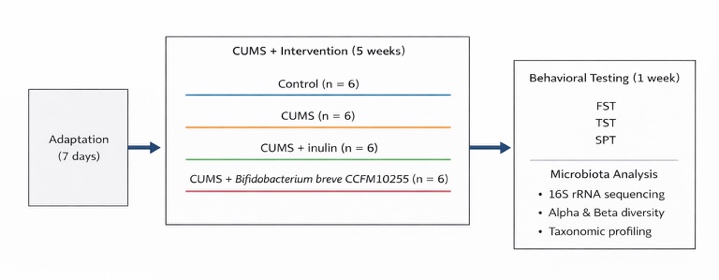
This experimental study was conducted to investigate the effects of psychobiotic (Bifidobacterium breve CCFM1025) and prebiotic (inulin) interventions on gut microbiota composition and depression-like behaviors using a chronic unpredictable mild stress (CUMS) mouse model. As shown in Figure 1, the study duration consisted of a one-week adaptation period, followed by a five-week intervention period and a one-week behavioral assessment phase, for a total duration of seven weeks.

A total of 24 male C57BL/6 mice (6 weeks old) were obtained from the Kobay Laboratory Animal Facility. All animals were housed under standard laboratory conditions (12 h light/dark cycle, controlled temperature and humidity) with ad libitum access to food and water. All experimental procedures were conducted in accordance with institutional and national guidelines and were approved by the Animal Experiments Local Ethics Committee (HADYEK) of Kobay Laboratory Animal Facility (Approval No: 712).
2.3. Experimental GroupsMice were randomly assigned into four experimental groups (n = 6 per group) to evaluate the effects of chronic stress and dietary interventions:
Control group: Mice were maintained under standard housing conditions without exposure to the CUMS protocol and received no treatment.
CUMS group: Mice were subjected to the chronic unpredictable mild stress (CUMS) protocol without any intervention.
Psychobiotic group: Mice were exposed to the CUMS protocol and received Bifidobacterium breve (CCFM1025) via oral gavage throughout the intervention period.
Prebiotic group: Mice were exposed to the CUMS protocol and received inulin via oral gavage during the intervention period.
2.4. CUMS ProcedureDepression-like behaviors were induced using a chronic unpredictable mild stress (CUMS) protocol applied for five weeks. The stressors included cage tilting (24 h), wet bedding (24 h), predator sounds (24 h), swimming in cold water at 4°C (5 min), exposure to warm water at 45°C (5 min), 24 h food deprivation, 24 h water deprivation, 15 min shaking, 1 min restraint, placement in an empty cage, and reversal of the light/dark cycle. To prevent habituation, one stressor was randomly applied each day.
2.5. Treatment ProtocolThe psychobiotic group received Bifidobacterium breve CCFM1025 (0.1 mL/10 g body weight) dissolved in distilled water and administered daily via oral gavage. The psychobiotic strain Bifidobacterium breve CCFM1025 was obtained from Shanghai Helplifes Technology Co., Ltd. (Shanghai, China). The prebiotic group received inulin (66 mg/kg) dissolved in distilled water via oral gavage. The prebiotic inulin used in the study was obtained from the Fibrelle brand, produced by Kardel Gıda Pazarlama Ltd. Şti. (Istanbul, Turkey). Control and CUMS groups received distilled water only. All treatments were administered once daily throughout the five-week intervention period.
2.6. Behavioral AssessmentsThe forced swim test (FST), tail suspension test (TST), and sucrose preference test (SPT) were selected as behavioral tests 13.
In this study, the mice were suspended by their tails, allowing their bodies to hang upside down in the air. During the test, the duration of immobility while the mice were suspended was recorded for 6 minutes using video recording. The first 2 minutes of the experiment were considered the habituation period, and the time during which the mice remained immobile during the last 4 minutes was recorded in seconds 14.
All 6-min forced swim tests (FST) were conducted using C57BL/6J mice. The animals were allowed to swim in plexiglass containers, and the water level was adjusted to 4.5 cm below the top of the container to prevent the animals from touching the bottom with their tails or escaping from the top. The container was thoroughly cleaned before each test, and the water temperature was maintained between 23–26°C. At the beginning of each test, the animal was gently picked up by its tail from the home cage and quickly placed in the center of the container. The recording time was started when the animal was placed in the water, and the duration of each standard FST was set to 6 minutes. The entire FST session was video-recorded for later analysis. After the test, the animal was removed from the water, dried with a towel, and placed in a warm cage (bedding temperature 31–33°C) for 15 minutes before being returned to its home cage. All animals were first-time swimmers, and none were used in more than one FST test 15.
On the first day of the behavioral tests, mice were habituated to sucrose consumption by placing two bottles containing 1% sucrose solution on both sides of the cages for 12 hours overnight. On the test days (days 2 and 4), two identical bottles were placed on each side of the cages, one filled with tap water and the other with 1% sucrose solution. To control for side preference bias, the bottle containing the sucrose solution was placed on the right side for half of the animals and on the left side for the other half. On the second test day (day 4), the positions of the bottles containing tap water and sucrose solution were switched. All bottles were weighed before and after the 12-hour test period, and the difference between the initial and final weights of each bottle was used as a measure of the amount of water or sucrose solution consumed 16.
Sucrose preference (%) = (sucrose solution consumed / total liquid consumed) ×100 16
2.7. Microbiota AnalysisDNA isolation of the samples was performed using the EurX GeneMATRIX Tissue & Bacterial DNA Purification Kit according to the manufacturer’s protocol. DNA concentration and purity were measured using a Qubit 3.0 fluorometer (Invitrogen, USA), and samples with concentrations of ≥50 ng/µL were included in the analysis. The V3–V4 hypervariable regions of the bacterial 16S rRNA gene were amplified using specific forward and reverse primers, generating amplicons of approximately 460 bp in length. PCR amplification was performed using KAPA HotStart PCR Master Mix under standard cycling conditions.
PCR products were purified using AMPure XP magnetic beads (Beckman Coulter, USA). Indexing was performed using the Nextera XT Index Kit (Illumina, USA), and sequencing adapters were added. The indexed libraries were purified again and quantified by real-time PCR. Libraries pooled at equal molar concentrations were sequenced on the Illumina NovaSeq 6000 platform using sequencing-by-synthesis technology.
2.8. Statistical AnalysisStatistical analysis was performed using the SPSS 24.0 software package (IBM SPSS Inc., Chicago, IL, USA). Due to the limited number of subjects in each group (n=6), the non-parametric Kruskal-Wallis H test was used to examine differences between groups. When a significant difference was detected among groups, pairwise comparisons were performed using the Mann-Whitney U test.
Prior to the study, a power analysis was conducted using the G*Power software to determine the required sample size and ensure sufficient statistical power for meaningful comparisons. Based on this analysis, the total sample size was calculated as n = 24. The level of statistical significance was set at p < 0.05 for all comparisons.
All behavioral test outcomes are summarized in Table 1. The Tail Suspension Test (TST) results of the mice showed that, although the minimum immobility times were recorded as 82 s in the control group, 90 s in the probiotic group, 94 s in the stress group, and 102 s in the prebiotic group, no statistically significant difference was observed among the groups in terms of immobility time (p = 0.204).
The analysis of sucrose preference ratios revealed a statistically significant difference among the groups (p = 0.003). The mean sucrose preference ratio was 46.10 in the control group, 43.82 in the probiotic group, and 44.15 in the prebiotic group. In contrast, the stress group exhibited a markedly lower sucrose preference ratio, with a mean value of 26.03. Post hoc comparisons indicated that the sucrose preference ratio in the stress group was significantly lower than that of the control, probiotic, and prebiotic groups. No statistically significant differences were observed among the control, probiotic, and prebiotic groups.
The analysis of immobility time in the Forced Swim Test (FST) revealed a statistically significant difference among the groups (p = 0.003). The mean immobility time was 145.00 s in the control group, 105.17 s in the probiotic group, and 150.50 s in the prebiotic group. In contrast, the stress group exhibited a markedly increased immobility time, with a mean value of 205.67 s. Post hoc comparisons indicated that the immobility time in the stress group was significantly higher than that in the control group. In addition, the psychobiotic group showed significantly lower immobility times compared with both the prebiotic and stress groups.
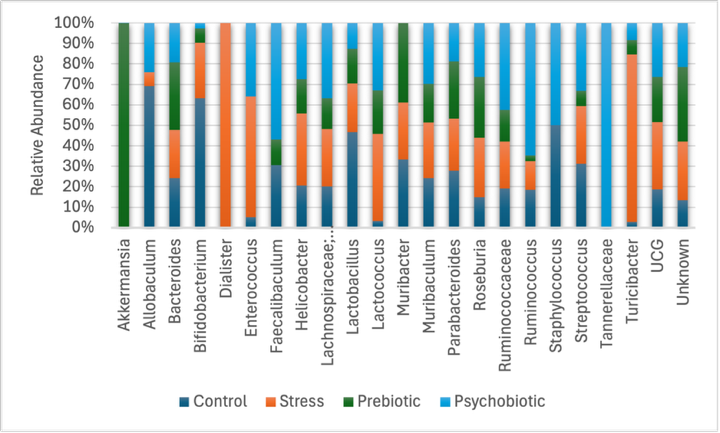
Genus-level relative abundance analysis revealed that only Lachnospiraceae; Unknown_2 showed a statistically significant difference among the groups (Kruskal-Wallis, p=0.029), with the highest value observed in the probiotic group. No statistically significant differences were detected among the groups for the other taxa (p > 0.05). However, Akkermansia showed higher mean values in the prebiotic group, Ruminococcus in the probiotic group, and Turicibacter in the stress group. Overall, although no statistically significant differences were observed, relative abundance trends associated with stress and dietary interventions, as shown in Figure 2, were noted in certain bacterial genera.

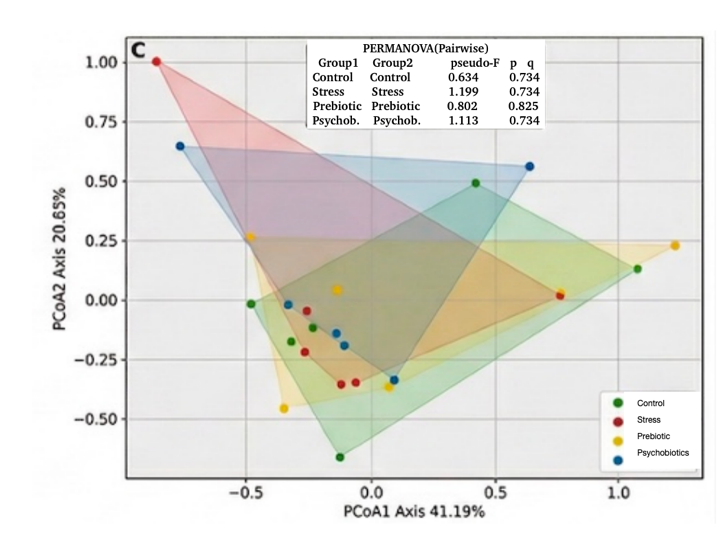
When other pairwise comparisons between groups were examined, no statistically significant difference in microbiota profiles was observed between the control and prebiotic groups (pseudo-F = 0.919, p = 0.489, q = 0.7335). Similarly, no significant difference was found between the control and probiotic groups (pseudo-F = 0.870, p = 0.691, q = 0.825). Comparisons between the prebiotic and probiotic intervention groups also revealed no statistically significant difference (pseudo-F = 1.113, p = 0.275, q = 0.7335). No distinct clustering of samples was observed in the PCoA plot, as shown in Figure 3.

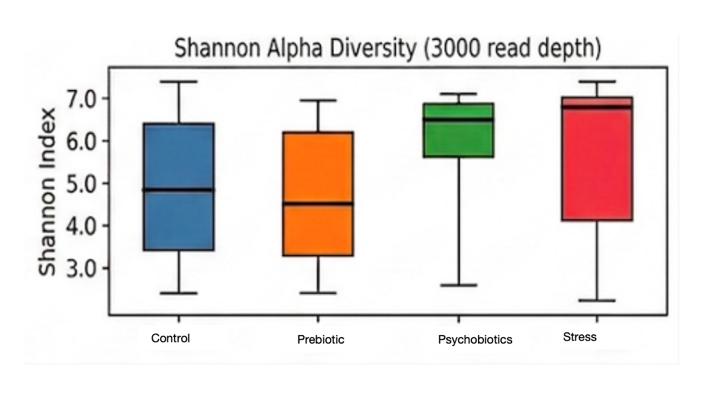
Within the scope of the study, the Shannon index, an important indicator of alpha diversity, was calculated at different sampling depths to determine the effects of probiotic and prebiotic supplementation on the gut microbiota diversity of mice exposed to stress.

The analysis results obtained at the maximum sampling depth of 3000 iterations confirmed that no statistically significant difference was observed among the groups in terms of the Shannon index of the gut microbiota (p = 0.518), as shown in Figure 4. These findings indicate that probiotic and prebiotic interventions or exposure to stress did not produce a statistically distinguishable effect on microbial diversity (evenness and richness) within the current sample size and study duration, and that alpha diversity parameters exhibited a homogeneous distribution across the groups.
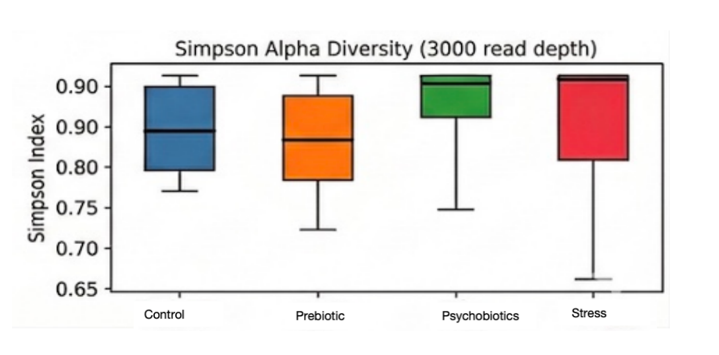
Within the scope of the study, the Simpson index, was examined at different sampling depths in order to evaluate the effects of probiotic and prebiotic supplementation on gut microbiota diversity and species distribution balance in mice exposed to stress. The non-parametric Kruskal–Wallis H test was applied for comparisons among groups.
Analyses performed at the maximum sampling depth of 3000 iterations confirmed that no statistically significant difference was observed among the groups in terms of the Simpson index (p = 0.729), as shown in Figure 5. These findings indicate that neither exposure to stress nor the applied probiotic and prebiotic interventions produced a statistically significant differentiation in gut microbiota diversity and community balance, and that alpha diversity components exhibited a consistent homogeneity across the experimental groups.
This study investigated the effects of Bifidobacterium breve CCFM1025 and inulin on depression-like behaviors and gut microbiota in a depression model induced by the chronic unpredictable mild stress (CUMS) paradigm. Behavioral tests, including the sucrose preference test and forced swim test, demonstrated that stress significantly affected behavioral parameters. However, microbiota analyses revealed no distinct separation among the groups at the levels of alpha diversity (Shannon and Simpson indices) and beta diversity (Bray–Curtis distance). Previous studies have reported that chronic stress can disrupt gut microbiota and host metabolism, thereby contributing to the development of depression 17, 18. In the present study, mice in the CUMS group exhibited pronounced depression-like behaviors in the behavioral assessments. In contrast, both the psychobiotic and prebiotic intervention groups showed improvements in selected behavioral outcomes compared with the CUMS group. These findings suggest that Bifidobacterium breve CCFM1025 and inulin may have beneficial effects on stress-induced behavioral alterations. Nevertheless, since no statistically significant changes were observed in overall gut microbiota composition, these behavioral improvements cannot be attributed solely to changes in microbial diversity.
In the present study, no statistically significant difference in Akkermansia abundance was observed among the control, stress (CUMS), inulin, and CCFM1025 groups (p = 0.733). The high maximum value observed in the inulin group, together with the accompanying high standard deviation, suggests that the increase in Akkermansia may have occurred at the individual level rather than consistently across the entire group. Akkermansia muciniphila, a mucin-degrading, Gram-negative anaerobic bacterium, colonizes the intestinal mucus layer and utilizes mucin as its primary nutrient source 19. In a previous study conducted in C57BL/6 mice, inulin was reported to prevent the inner mucus layer of the colon from becoming permeable 20. Taken together, although inulin administration in the present study did not significantly increase Akkermansia abundance at the group level, the observed trend may still be biologically relevant and may warrant further investigation in larger studies.
Short-chain fatty acids (SCFAs) are neuroactive bacterial metabolites that can translocate from the intestinal lumen into the systemic circulation and subsequently cross the blood–brain barrier. Under certain conditions, SCFAs exhibit anti-inflammatory properties and are known to reduce lipopolysaccharide (LPS)-induced immune responses. It has been reported that SCFAs exert beneficial effects on both intestinal barrier integrity and blood–brain barrier permeability 21. In addition, SCFAs have been shown to influence central nervous system activity, including the modulation of microglial activation and cytokine production. Dysregulation of neurotransmitters such as glutamate, γ-aminobutyric acid (GABA), dopamine, and serotonin, produced by gut microorganisms or their precursor molecules, has also been associated with central nervous system disorders 22. In the present study, these functional pathways were not directly measured. Therefore, although such mechanisms may help explain the observed behavioral improvements, any interpretation regarding SCFA or neurotransmitter-mediated effects should be made with caution.
Although statistical significance was not achieved, a relative increase in Ruminococcus abundance was observed in the CCFM1025-treated group. In a previous study consistent with our findings, CCFM1025 intervention significantly increased Ruminococcus abundance. In the literature, certain Ruminococcus species, such as R. obeum, which possess the propanediol pathway, have been reported to be associated with propionate production 13. Furthermore, Ruminococcus species are known to produce SCFAs that exert neuroprotective effects on dopaminergic neurons 23. Although the increase observed in the present study was not statistically significant, this trend may indicate a possible association between psychobiotic administration and functionally relevant microbial shifts that should be explored further using larger sample sizes and functional analyses.
The Lachnospiraceae family is considered one of the primary sources of butyrate production in the gut. Members of this family possess genes that enable butyrate synthesis via the acetyl-CoA to butyryl-CoA pathway, and some genera are also capable of producing butyrate from acetic acid and lactic acid 24. In the present study, taxa belonging to Lachnospiraceae showed relatively higher abundance, particularly in the probiotic-treated group. However, because this difference did not reach statistical significance, these findings should be interpreted cautiously. Rather than indicating a confirmed modulation of microbiota composition, the observed pattern may represent a preliminary trend that could be relevant in the context of gut microbial metabolic activity and deserves further investigation.
Consistent with the previous findings, the present study also observed an enrichment of Turicibacter in the stress group. This observation suggests the potential involvement of additional mechanisms contributing to the increased abundance of Turicibacter under stress conditions 25. In a study conducted in mice, demonstrated that Turicibacter sanguinis may have coevolved with the host to induce serotonin production. These findings support the concept that bidirectional host–microbiota signaling through the serotonergic system can shape the composition of bacterial communities in the gastrointestinal tract 26. In the present study, although not statistically significant, the increased abundance of Turicibacter in the CUMS group may be associated with altered serotonergic signaling under stress conditions. Likewise, the relative decrease observed in the intervention groups may reflect a possible association with improved behavioral status; however, this interpretation remains speculative in the absence of direct neurochemical measurements.
Although trends in group means were observed for several taxa in the present study, statistical significance was not achieved. Several factors may account for this finding. First, the limited sample size (n = 6 per group) may have reduced the statistical power, particularly for taxa with low relative abundance. In addition, gut microbiota data have a compositional structure and are characterized by high inter-individual variability, which can increase standard deviations and reduce statistical significance, especially for low-abundance taxa. Furthermore, the 16S rRNA sequencing approach provides taxonomic information but does not directly reflect the functional metabolic capacity of the microbiota. Therefore, functionally relevant biological changes in certain taxa may not have been statistically detectable at the level of relative abundance.
This study also has several limitations. First, the relatively small sample size (n = 6 per group) may have reduced the statistical power, particularly for taxa with low abundance. Second, microbiota analysis was performed using 16S rRNA sequencing, which provides information on taxonomic composition but does not directly reveal the functional metabolic potential of bacterial communities. Consequently, the levels of microbial metabolites such as short-chain fatty acids (SCFAs) were not directly measured. Moreover, although the relationship between the serotonergic system and gut microbiota was discussed, serotonin levels and related molecular markers were not directly analyzed. This limitation restricts a more detailed mechanistic interpretation of the observed microbial changes. Considering these limitations, future studies should incorporate larger sample sizes, metabolomic analyses, and neurochemical marker measurements to provide a more comprehensive understanding of the mechanisms underlying microbiota–brain interactions.
Overall, the present findings indicate that psychobiotic and prebiotic interventions improved behavioral outcomes in the CUMS model, whereas no statistically significant changes were detected in overall gut microbiota composition or diversity. This discrepancy suggests that the observed behavioral effects may not be directly mediated by alterations in microbial diversity alone and may instead involve alternative mechanisms that were not evaluated in the present study. These findings should be interpreted with caution due to the limited sample size and lack of functional analyses. Future studies incorporating larger sample sizes and detailed mechanistic investigations may help to better clarify the pathways underlying microbiota–brain interactions.
The authors have no acknowledgements to declare.
| [1] | Zhu, F., Tu, H., & Chen, T. (2022). The microbiota–gut–brain axis in depression: the potential pathophysiological mechanisms and microbiota combined antidepression effect. Nutrients, 14(10), 2081. | ||
| In article | View Article PubMed | ||
| [2] | Gonzalez Olmo, B. M., Butler, M. J., & Barrientos, R. M. (2021). Evolution of the human diet and its impact on gut microbiota, immune responses, and brain health. Nutrients, 13(1), 196. | ||
| In article | View Article PubMed | ||
| [3] | Jach, M. E., Serefko, A., Szopa, A., Sajnaga, E., Golczyk, H., Santos, L. S., ... & Sieniawska, E. (2023). The role of probiotics and their metabolites in the treatment of depression. Molecules, 28(7), 3213. | ||
| In article | View Article PubMed | ||
| [4] | Huang, F., & Wu, X. (2021). Brain neurotransmitter modulation by gut microbiota in anxiety and depression. Frontiers in cell and developmental biology, 9, 649103. | ||
| In article | View Article PubMed | ||
| [5] | Kraimi, N., Lormant, F., Calandreau, L., Kempf, F., Zemb, O., Lemarchand, J., ... & Leterrier, C. (2022). Microbiota and stress: a loop that impacts memory. Psychoneuroendocrinology, 136, 105594. | ||
| In article | View Article PubMed | ||
| [6] | Radford-Smith, D. E., & Anthony, D. C. (2023). Prebiotic and probiotic modulation of the microbiota–gut–brain axis in depression. Nutrients, 15(8), 1880. | ||
| In article | View Article PubMed | ||
| [7] | Trzeciak, P., & Herbet, M. (2021). Role of the intestinal microbiome, intestinal barrier and psychobiotics in depression. Nutrients, 13(3), 927. | ||
| In article | View Article PubMed | ||
| [8] | Wei, C. L., Wang, S., Yen, J. T., Cheng, Y. F., Liao, C. L., Hsu, C. C., ... & Tsai, Y. C. (2019). Antidepressant-like activities of live and heat-killed Lactobacillus paracasei PS23 in chronic corticosterone-treated mice and possible mechanisms. Brain research, 1711, 202-213. | ||
| In article | View Article PubMed | ||
| [9] | Gibson, G. R., Hutkins, R., Sanders, M. E., Prescott, S. L., Reimer, R. A., Salminen, S. J., ... & Reid, G. (2017). Expert consensus document: The International Scientific Association for Probiotics and Prebiotics (ISAPP) consensus statement on the definition and scope of prebiotics. Nature reviews Gastroenterology & hepatology, 14(8), 491-502. | ||
| In article | View Article PubMed | ||
| [10] | Tian, P., Chen, Y., Zhu, H., Wang, L., Qian, X., Zou, R., ... & Chen, W. (2022). Bifidobacterium breve CCFM1025 attenuates major depression disorder via regulating gut microbiome and tryptophan metabolism: A randomized clinical trial. Brain, behavior, and immunity, 100, 233-241. | ||
| In article | View Article PubMed | ||
| [11] | Magalhães-Guedes, K. T. (2022). Psychobiotic therapy: method to reinforce the immune system. Clinical Psychopharmacology and Neuroscience, 20(1), 17. | ||
| In article | View Article PubMed | ||
| [12] | Qin, Y. Q., Wang, L. Y., Yang, X. Y., Xu, Y. J., Fan, G., Fan, Y. G., ... & Li, X. (2023). Inulin: Properties and health benefits. Food & function, 14(7), 2948-2968. | ||
| In article | View Article PubMed | ||
| [13] | Tian, P., O'Riordan, K. J., Lee, Y. K., Wang, G., Zhao, J., Zhang, H., ... & Chen, W. (2020). Towards a psychobiotic therapy for depression: Bifidobacterium breve CCFM1025 reverses chronic stress-induced depressive symptoms and gut microbial abnormalities in mice. Neurobiology of stress, 12, 100216. | ||
| In article | View Article PubMed | ||
| [14] | Steru, L., Chermat, R., Thierry, B., & Simon, P. (1985). The tail suspension test: a new method for screening antidepressants in mice. Psychopharmacology, 85(3), 367-370. | ||
| In article | View Article PubMed | ||
| [15] | Chen, L., Faas, G. C., Ferando, I., & Mody, I. (2015). Novel insights into the behavioral analysis of mice subjected to the forced-swim test. Translational psychiatry, 5(4), e551-e551. | ||
| In article | View Article PubMed | ||
| [16] | Gross, M., & Pinhasov, A. (2016). Chronic mild stress in submissive mice: Marked polydipsia and social avoidance without hedonic deficit in the sucrose preference test. Behavioural brain research, 298, 25-34. | ||
| In article | View Article PubMed | ||
| [17] | Wu, M., Tian, T., Mao, Q., Zou, T., Zhou, C. J., Xie, J., & Chen, J. J. (2020). Associations between disordered gut microbiota and changes of neurotransmitters and short-chain fatty acids in depressed mice. Translational Psychiatry, 10(1), 350. | ||
| In article | View Article PubMed | ||
| [18] | Yang, X., Wang, G., Gong, X., Huang, C., Mao, Q., Zeng, L., ... & Xie, P. (2019). Effects of chronic stress on intestinal amino acid pathways. Physiology & behavior, 204, 199-209. | ||
| In article | View Article PubMed | ||
| [19] | Jin, S., Lu, Y., Zuo, Y., Xu, Q., Hao, Y., Zuo, H., ... & Li, Y. (2025). Akkermansia muciniphila ameliorates chronic stress-induced colorectal tumor growth by releasing outer membrane vesicles. Gut microbes, 17(1), 2555618. | ||
| In article | View Article PubMed | ||
| [20] | Schroeder, B. O., Birchenough, G. M., Ståhlman, M., Arike, L., Johansson, M. E., Hansson, G. C., & Bäckhed, F. (2018). Bifidobacteria or fiber protects against diet-induced microbiota-mediated colonic mucus deterioration. Cell host & microbe, 23(1), 27-40. | ||
| In article | View Article PubMed | ||
| [21] | Liu, P., Liu, Z., Wang, J., Wang, J., Gao, M., Zhang, Y., ... & Zhang, K. (2024). Immunoregulatory role of the gut microbiota in inflammatory depression. Nature communications, 15(1), 3003. | ||
| In article | View Article PubMed | ||
| [22] | Ju, S., Shin, Y., Han, S., Kwon, J., Choi, T. G., Kang, I., & Kim, S. S. (2023). The gut–brain axis in schizophrenia: the implications of the gut microbiome and SCFA production. Nutrients, 15(20), 4391. | ||
| In article | View Article PubMed | ||
| [23] | Hamamah, S., Aghazarian, A., Nazaryan, A., Hajnal, A., & Covasa, M. (2022). Role of microbiota-gut-brain axis in regulating dopaminergic signaling. Biomedicines 2022, 10, 436. | ||
| In article | View Article PubMed | ||
| [24] | Li, H., Xiang, Y., Zhu, Z., Wang, W., Jiang, Z., Zhao, M., ... & Ho, C. S. (2021). Rifaximin-mediated gut microbiota regulation modulates the function of microglia and protects against CUMS-induced depression-like behaviors in adolescent rat. Journal of neuroinflammation, 18(1), 254. | ||
| In article | View Article PubMed | ||
| [25] | Nguyen, T. Q., Martínez-Álvaro, M., Lima, J., Auffret, M. D., Rutherford, K. M., Simm, G., ... & Roehe, R. (2023). Identification of intestinal and fecal microbial biomarkers using a porcine social stress model. Frontiers in Microbiology, 14, 1197371. | ||
| In article | View Article PubMed | ||
| [26] | Fung, T. C., Vuong, H. E., Luna, C. D., Pronovost, G. N., Aleksandrova, A. A., Riley, N. G., ... & Hsiao, E. Y. (2019). Intestinal serotonin and fluoxetine exposure modulate bacterial colonization in the gut. Nature microbiology, 4(12), 2064-2073. | ||
| In article | View Article PubMed | ||
Published with license by Science and Education Publishing, Copyright © 2026 Gülçin Yılmaz and Ayhan Dağ
 This work is licensed under a Creative Commons Attribution 4.0 International License. To view a copy of this license, visit
http://creativecommons.org/licenses/by/4.0/
This work is licensed under a Creative Commons Attribution 4.0 International License. To view a copy of this license, visit
http://creativecommons.org/licenses/by/4.0/
| [1] | Zhu, F., Tu, H., & Chen, T. (2022). The microbiota–gut–brain axis in depression: the potential pathophysiological mechanisms and microbiota combined antidepression effect. Nutrients, 14(10), 2081. | ||
| In article | View Article PubMed | ||
| [2] | Gonzalez Olmo, B. M., Butler, M. J., & Barrientos, R. M. (2021). Evolution of the human diet and its impact on gut microbiota, immune responses, and brain health. Nutrients, 13(1), 196. | ||
| In article | View Article PubMed | ||
| [3] | Jach, M. E., Serefko, A., Szopa, A., Sajnaga, E., Golczyk, H., Santos, L. S., ... & Sieniawska, E. (2023). The role of probiotics and their metabolites in the treatment of depression. Molecules, 28(7), 3213. | ||
| In article | View Article PubMed | ||
| [4] | Huang, F., & Wu, X. (2021). Brain neurotransmitter modulation by gut microbiota in anxiety and depression. Frontiers in cell and developmental biology, 9, 649103. | ||
| In article | View Article PubMed | ||
| [5] | Kraimi, N., Lormant, F., Calandreau, L., Kempf, F., Zemb, O., Lemarchand, J., ... & Leterrier, C. (2022). Microbiota and stress: a loop that impacts memory. Psychoneuroendocrinology, 136, 105594. | ||
| In article | View Article PubMed | ||
| [6] | Radford-Smith, D. E., & Anthony, D. C. (2023). Prebiotic and probiotic modulation of the microbiota–gut–brain axis in depression. Nutrients, 15(8), 1880. | ||
| In article | View Article PubMed | ||
| [7] | Trzeciak, P., & Herbet, M. (2021). Role of the intestinal microbiome, intestinal barrier and psychobiotics in depression. Nutrients, 13(3), 927. | ||
| In article | View Article PubMed | ||
| [8] | Wei, C. L., Wang, S., Yen, J. T., Cheng, Y. F., Liao, C. L., Hsu, C. C., ... & Tsai, Y. C. (2019). Antidepressant-like activities of live and heat-killed Lactobacillus paracasei PS23 in chronic corticosterone-treated mice and possible mechanisms. Brain research, 1711, 202-213. | ||
| In article | View Article PubMed | ||
| [9] | Gibson, G. R., Hutkins, R., Sanders, M. E., Prescott, S. L., Reimer, R. A., Salminen, S. J., ... & Reid, G. (2017). Expert consensus document: The International Scientific Association for Probiotics and Prebiotics (ISAPP) consensus statement on the definition and scope of prebiotics. Nature reviews Gastroenterology & hepatology, 14(8), 491-502. | ||
| In article | View Article PubMed | ||
| [10] | Tian, P., Chen, Y., Zhu, H., Wang, L., Qian, X., Zou, R., ... & Chen, W. (2022). Bifidobacterium breve CCFM1025 attenuates major depression disorder via regulating gut microbiome and tryptophan metabolism: A randomized clinical trial. Brain, behavior, and immunity, 100, 233-241. | ||
| In article | View Article PubMed | ||
| [11] | Magalhães-Guedes, K. T. (2022). Psychobiotic therapy: method to reinforce the immune system. Clinical Psychopharmacology and Neuroscience, 20(1), 17. | ||
| In article | View Article PubMed | ||
| [12] | Qin, Y. Q., Wang, L. Y., Yang, X. Y., Xu, Y. J., Fan, G., Fan, Y. G., ... & Li, X. (2023). Inulin: Properties and health benefits. Food & function, 14(7), 2948-2968. | ||
| In article | View Article PubMed | ||
| [13] | Tian, P., O'Riordan, K. J., Lee, Y. K., Wang, G., Zhao, J., Zhang, H., ... & Chen, W. (2020). Towards a psychobiotic therapy for depression: Bifidobacterium breve CCFM1025 reverses chronic stress-induced depressive symptoms and gut microbial abnormalities in mice. Neurobiology of stress, 12, 100216. | ||
| In article | View Article PubMed | ||
| [14] | Steru, L., Chermat, R., Thierry, B., & Simon, P. (1985). The tail suspension test: a new method for screening antidepressants in mice. Psychopharmacology, 85(3), 367-370. | ||
| In article | View Article PubMed | ||
| [15] | Chen, L., Faas, G. C., Ferando, I., & Mody, I. (2015). Novel insights into the behavioral analysis of mice subjected to the forced-swim test. Translational psychiatry, 5(4), e551-e551. | ||
| In article | View Article PubMed | ||
| [16] | Gross, M., & Pinhasov, A. (2016). Chronic mild stress in submissive mice: Marked polydipsia and social avoidance without hedonic deficit in the sucrose preference test. Behavioural brain research, 298, 25-34. | ||
| In article | View Article PubMed | ||
| [17] | Wu, M., Tian, T., Mao, Q., Zou, T., Zhou, C. J., Xie, J., & Chen, J. J. (2020). Associations between disordered gut microbiota and changes of neurotransmitters and short-chain fatty acids in depressed mice. Translational Psychiatry, 10(1), 350. | ||
| In article | View Article PubMed | ||
| [18] | Yang, X., Wang, G., Gong, X., Huang, C., Mao, Q., Zeng, L., ... & Xie, P. (2019). Effects of chronic stress on intestinal amino acid pathways. Physiology & behavior, 204, 199-209. | ||
| In article | View Article PubMed | ||
| [19] | Jin, S., Lu, Y., Zuo, Y., Xu, Q., Hao, Y., Zuo, H., ... & Li, Y. (2025). Akkermansia muciniphila ameliorates chronic stress-induced colorectal tumor growth by releasing outer membrane vesicles. Gut microbes, 17(1), 2555618. | ||
| In article | View Article PubMed | ||
| [20] | Schroeder, B. O., Birchenough, G. M., Ståhlman, M., Arike, L., Johansson, M. E., Hansson, G. C., & Bäckhed, F. (2018). Bifidobacteria or fiber protects against diet-induced microbiota-mediated colonic mucus deterioration. Cell host & microbe, 23(1), 27-40. | ||
| In article | View Article PubMed | ||
| [21] | Liu, P., Liu, Z., Wang, J., Wang, J., Gao, M., Zhang, Y., ... & Zhang, K. (2024). Immunoregulatory role of the gut microbiota in inflammatory depression. Nature communications, 15(1), 3003. | ||
| In article | View Article PubMed | ||
| [22] | Ju, S., Shin, Y., Han, S., Kwon, J., Choi, T. G., Kang, I., & Kim, S. S. (2023). The gut–brain axis in schizophrenia: the implications of the gut microbiome and SCFA production. Nutrients, 15(20), 4391. | ||
| In article | View Article PubMed | ||
| [23] | Hamamah, S., Aghazarian, A., Nazaryan, A., Hajnal, A., & Covasa, M. (2022). Role of microbiota-gut-brain axis in regulating dopaminergic signaling. Biomedicines 2022, 10, 436. | ||
| In article | View Article PubMed | ||
| [24] | Li, H., Xiang, Y., Zhu, Z., Wang, W., Jiang, Z., Zhao, M., ... & Ho, C. S. (2021). Rifaximin-mediated gut microbiota regulation modulates the function of microglia and protects against CUMS-induced depression-like behaviors in adolescent rat. Journal of neuroinflammation, 18(1), 254. | ||
| In article | View Article PubMed | ||
| [25] | Nguyen, T. Q., Martínez-Álvaro, M., Lima, J., Auffret, M. D., Rutherford, K. M., Simm, G., ... & Roehe, R. (2023). Identification of intestinal and fecal microbial biomarkers using a porcine social stress model. Frontiers in Microbiology, 14, 1197371. | ||
| In article | View Article PubMed | ||
| [26] | Fung, T. C., Vuong, H. E., Luna, C. D., Pronovost, G. N., Aleksandrova, A. A., Riley, N. G., ... & Hsiao, E. Y. (2019). Intestinal serotonin and fluoxetine exposure modulate bacterial colonization in the gut. Nature microbiology, 4(12), 2064-2073. | ||
| In article | View Article PubMed | ||