Ready-to-Use Therapeutic Food (RUTF) is a high-energy food used to address malnutrition in children. However, its paste-like form may be less acceptable to children in certain regions. Developing RUTF from locally available food ingredients may improve its acceptability among the target population. This study aimed to analyze the sensory and physical properties of RUTF developed from local food ingredients, namely cowpeas, tempeh, and banana, and supplemented with probiotics. The formulation consisted of tempeh flour, cowpea flour, banana flour, milk powder, powdered sugar, vegetable oil, probiotics, and a mineral mix in accordance with the requirements of the Codex Alimentarius. The treatments consisted of different proportions of cowpea and tempeh flour: FA (0:100), FB (25:75), FC (50:50), FD (75:25), and FE (100:0). Sensory analysis was conducted using a paired-comparison test involving 30 semi-trained panelists and an acceptance test involving 31 mother–child pairs. The physical properties analyzed included color, morphology, particle size, and viscosity of the RUTF. Statistical analyses were performed using one-way analysis of variance (ANOVA), followed by Duncan’s multiple range test (DMRT) to determine differences among treatment groups. The paired-comparison test was analyzed using a two-tailed binomial test. The results showed that although the paired-comparison test indicated that the addition of probiotics affected the taste and color of the RUTF, the products remained acceptable to mothers and children. The sensory findings were supported by the physical property analyses, which showed an increase in lightness (L*) and decreases in a* and b* values as the proportion of cowpea flour increased relative to tempeh flour. A higher proportion of cowpea flour was not associated with particle size, whereas viscosity significantly decreased. Further research is warranted to evaluate the efficacy of the developed RUTF in the target population, particularly children with malnutrition.
Global child mortality rates remain high, with 20% of deaths directly linked to severe acute malnutrition 1. This figure reaches as high as 40% in developing countries 2. In Indonesia, the prevalence of acute malnutrition remains high, despite a decline from 8.5% in 2023 to 7.5% in 2024 3. Malnutrition can lead to growth impairments, including stunting, as well as increased infection risk, poor brain development, and reduced work productivity 4. The WHO and the Indonesian Ministry of Health recommend the administration of ready-to-use therapeutic food (RUTF) for severe acute malnutrition cases without medical complications 5, 6. RUTF is a high-energy, fat-based food that is soft, dissolves easily, and requires no preparation 6. While RUTF products like Plumpy'Nut are produced globally, their availability in Indonesia is limited. Developing local RUTF using plant-based proteins, such as peanuts, soybeans, and mung beans, is preferable due to ingredient accessibility, affordability, and the reduction of import dependency 5. Incorporating other local ingredients into RUTF development is crucial for ensuring long-term supply and strengthening national resilience.
Many countries have pursued the development of local food products by substituting some or all ingredients with locally available alternatives, while still adhering to standards established by the WHO. Beyond ensuring greater availability, lower costs, and reducing reliance on imports, the use of local ingredients often fosters greater public acceptance, as the resulting taste, aroma, and texture are already familiar to the community 7. Several study on RUTF in Indonesia found that the use of local ingredients, such as combinations of soybean, mung bean, and local peanut; cowpea and tempeh; local peanut and milk; rice, corn, soybean, and tempeh; and banana and peanut were as effective at promoting weight gain as standard RUTF, with some formulations achieving higher levels of acceptability 8, 9, 10, 11, 12. Other countries are also increasingly developing RUTFs based on local foods; for instance, Bangladesh and Ethiopia have developed versions using rice, lentils, and chickpeas, while Tanzania has utilized sorghum and millet 13.
A novel RUTF has been developed using a combination of tempeh, cowpea, and banana, with the addition of probiotics. The selection of tempeh and cowpea as primary ingredients was based on their high energy and protein content, which is comparable to that of soybean and mung bean 14. Cowpea also exhibits higher vitamin B1 levels, that was essential for energy metabolism, as well as elevated concentrations of sulfur- containing amino acids 15, 16. Furthermore, tempeh offers superior nutrient bioavailability and lower antinutrient levels compared to unfermented soybean 17, 18, 19. Banana was incorporated to enhance flavor and mask the characteristic beany off-flavor of legumes. It also contains flavonoids and polyphenols functioning as antioxidants, along with fructooligosaccharides serving as prebiotics 20. Additionally, probiotic supplementation was proposed to ameliorate intestinal morphological changes and restore gut microbiota equilibrium, thereby enhancing nutrient absorption and mitigating infection risk 21. This product contains both prebiotics and probiotics, suggesting its potential as a synbiotic product.
This formulation has been disclosed in Patent Application No. S00202611991 with the title Composition of Ready-to-Use Therapeutic Food Based on Soybean Tempeh (Glycine max L. Merr.), Cowpea (Vigna unguiculata L. Walp.), Kepok Banana (Musa paradisiaca L.), and Probiotics. Based on the reported formulation, the adequacy of macronutrients meets WHO requirements 6. However, its potential acceptability among the target population has not yet been established, particularly in relation to its physical properties, which may influence consumer acceptance.
A high level of RUTF acceptability can enhance nutritional intake and support successful recovery from malnutrition. This acceptability is influenced by how much the target population likes the product's taste, aroma, color, and texture. Since sensory attributes are subjective and vary among individual panelists, physical property testing serves as a means to quantify these characteristics. Assessing both sensory and physical properties in new RUTF formulations is crucial, given that each raw material possesses unique characteristics 7. Therefore, this paper aimed to analyze the impact of an RUTF formulation utilizing a local blend of tempeh, cowpeas, and banana, supplemented with probiotics on sensory acceptability and physical properties such as viscosity and color.
The ingredients used to produce the RUTF included tempeh flour and kepok banana (Musa paradisiaca L.) flour that was purchased from PT Kusuka Ubiku, while cowpea (Vigna unguiculata) flour was obtained from a local market in Yogyakarta, Indonesia. Other ingredients included Bimoli-brand palm oil, Indoprima-brand full-cream powder milk, and local powdered sugar. The probiotic used was the Lactobacillus acidophilus LA1, Bifidobacterium longum BG7, Streptococcus thermophilus ST3 with total viable count of 2.66 x 10¹⁰ CFU/gram, produced by Cell Biotech Co. Ltd., Korea and imported by PT Novell Pharmaceutical Laboratories with the Brand of Lacto-Band. Mineral mix was obtained from DSM Firmenich, PT Ridda Manna Sejati, Indonesia.
2.2. RUTF ProductionThe RUTF formulation used in this study was based on the formulation disclosed in Patent Application No. S00202611991 with the title Composition of Ready-to-Use Therapeutic Food Based on Soybean Tempeh (Glycine max L. Merr.), Cowpea (Vigna unguiculata L. Walp.), Kepok Banana (Musa paradisiaca L.), and Probiotics. The formulation consisted of 27% mix flour (tempeh flour, cowpea flour, banana flour), 46% of milk powder and powdered sugar, 26% of vegetable oil and mineral mix, also 0.88% of probiotics with calculated fat and protein contents ranging from 29% to 32% and 11% to 16%, respectively, in accordance with the provisions established by the Codex Alimentarius 6. The treatments consisted of different proportion of cowpea flour to tempeh flour (%w/w): FA (0:100), FB (25:75), FC (50:50), FD (75:25), and FE (100:0). Probiotics were added at a proportion of 0.88 g per 100 g, yielding a microbial density of 7.7x10⁹-4.8x10¹⁰ CFU/gram.
The production of RUTF began by sifting the flours through an 80-mesh sieve. The tempeh and cowpea flours were dry-roasted for 2.5 min and then mixed with banana flour, milk powder, and powdered sugar. The mixture was subsequently dry-roasted with continuous stirring for 1 min, followed by the addition of oil and blending for 180 s. The probiotic and mineral mix were then manually incorporated into the formulation at the end of the process, after the paste had reached a temperature of 25–30°C. Samples for sensory and physical analyses were prepared immediately and were not subjected to storage before analysis.
2.3. Sensory AnalysisSensory analysis was conducted in two stages: a paired-comparison sensory test and an acceptance test.
The paired-comparison sensory test was conducted with 30 semi-trained panelists who met the following inclusion criteria: students or alumni of the Undergraduate Nutrition Program at Universitas Alma Ata who had completed sensory testing sessions and practical sessions in the Food and Nutrition Science course; were healthy; had no history of food allergies or sensory impairments; were non-smokers; and had signed an informed consent form. This test was conducted to determine whether there were differences in taste and flavor between samples with and without probiotics.
The samples consisted of two sets. Set 1 comprised probiotic-containing samples from formulas FA, FB, FC, FD, and FE, coded A1, B1, C1, D1, and E1, respectively. Set 2 comprised the corresponding samples without probiotics, coded A2, B2, C2, D2, and E2, respectively. Each panelist was presented with two samples from the same formula in pairs, beginning with A1 and A2. After evaluating each pair, the panelists were instructed to rinse their mouths with neutral water before proceeding to the next pair, B1 and B2, and so forth until the evaluation of E1 and E2 was completed.
The panelists were asked to indicate their response by checking one of two options on the evaluation form: “different” or “not different.” They were not provided with any information regarding the sample composition or the differences between the formulations. The samples were prepared on the same day as the sensory evaluation and served at room temperature. Each sample was presented in a quantity of 2 g in a clear, disposable cup and accompanied by a spatula.
Sensory evaluation was conducted in individual booths designed to minimize visual, auditory, and interpersonal distractions among panelists. The sensory testing area was maintained under controlled environmental conditions, with neutral-colored surfaces, uniform lighting, adequate ventilation, and minimal extraneous odors and noise. The testing booths were equipped with clean, odor-free surfaces and sufficient space for sample presentation and response recording, following the general principles of ISO 8589 for sensory test room design 22.
The acceptance test was conducted with 31 panelists of mother-child pairs living in Bembem RT 01, Trimulyo, Jetis, Bantul, Yogyakarta, Indonesia. The panelists were selected based on the following inclusion criteria: mothers with children aged 6–59 months; good health; no history of food allergies or sensory impairments; children who were already consuming complementary foods; and provision of written informed consent. The exclusion criterion was the inability to assess the child's level of liking.
The sensory evaluation was conducted in a village meeting room, where mothers and their children were invited to participate. Before the evaluation, the mothers were provided with general information about the types of samples and the basic ingredients used, without being informed of the specific formulations. They were also given instructions on the sample evaluation procedure, including the requirement to drink water between samples, as well as instructions on how to complete the evaluation form. Each mother was also asked to select the sample she liked the most and subsequently offer the selected sample to her child for evaluation.
Each mother received one set of samples consisting of the five formulations, which were coded using three-digit random numbers. The codes for formulas FA, FB, FC, FD, and FE were 371, 714, 995, 631, and 156, respectively. The samples were prepared on the day of the sensory evaluation, served in a-3g-portion, placed in covered, clear, disposable cups, and each cup was provided with a spatula. The samples were served at room temperature.
The evaluation forms for the mothers and children were provided separately. The mothers' preference test used a five-point hedonic scale: 1 = strongly dislike, 2 = dislike, 3 = like slightly, 4 = like, and 5 = like very much. Meanwhile, the children's level of liking was assessed using a seven-point facial expression scale: 1=super bad, 2=really bad, 3=bad, 4=maybe good or maybe bad, 5=good, 6=really good, and 7=super good 23.
2.4. Physical AnalysisPhysical analysis includes tests for color, macro-morphology, particle size, and viscosity. RUTF color assessment used a colorimeter (Chromameter, Konica Minolta CR-400) with the assessment parameters L* (brightness), a* (reddish–greenish), and b* (yellowish–bluish). For the paste samples, color measurements were performed on four different sections. Prior to this, the paste was stirred to ensure uniformity.
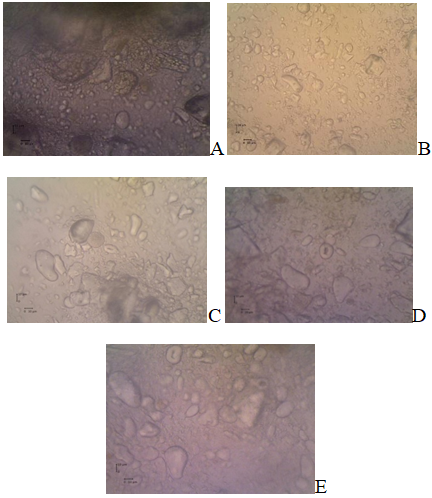
The macro morphology and granule size of paste was observed using a light microscope (BX51, Olympus Corp., Tokyo, Japan) equipped with an OptiLab prodigital camera (PT Miconos, Indonesia). The granule size was determined by randomly selecting six particles within a single image field.
The viscosity of the paste was measured using a viscometer NDJ 5s from Huanghua Faithful Instrument Co.,LTD. A 100 mL sample of the paste was placed in a beaker, and its viscosity was measured at rotational speeds of 6 and 12 rpm using spindle number 4 for 1 minute. Six replications for each sample were performed.
2.5. Statistical AnalysisThe experimental data were presented as mean ± standard deviation (SD). Statistical analyses were performed using the Statistical Package for the Social Sciences (SPSS) version 26. Differences between groups of viscosity, particle size, color, and sensory acceptance test for mother and children were assessed using one-way analysis of variance (ANOVA), followed by Duncan’s Multiple Range Test (DMRT). A paired comparison sensory test in the stage 1 was evaluated using a two-tailed binomial test. A p-value of less than 0.05 was considered statistically significant.
2.6. Ethics ApprovalEthics approval for this study was received from the Universitas Alma Ata Ethics Committee (KE/AA/V/10113402/EC/2026). Written informed consent was obtained from all the mothers of the participating children before recruitment into the study.
The results of the paired difference test for RUTF are presented in Table 1.
The majority of panelists indicated a difference in taste between the samples with and without the addition of probiotics, with a statistically significant difference (p < 0.05). Based on the comments provided by the panelists, differences were detected in sweetness, bitterness, creaminess, spiciness, savoriness, nuttiness, banana, rancidity, tempeh, saltiness, acidity, and biscuit flavor. These findings indicate that the commercial probiotic preparation, which contains additional ingredients besides the bacterial culture, influenced the taste of the RUTF. The difference in sweetness may be attributed to the addition of dextrose; bitterness and saltiness may be associated with the mineral concentrate; creaminess and savoriness may originate from milk and vegetable cream powders; and acidity may be attributed to vitamin C. Meanwhile, the other flavors perceived by the panelists, including nuttiness, banana, tempeh, biscuit, and rancidity, may have originated from the raw ingredients used in the paste, particularly nuts, oil, and tempeh. Among these attributes, rancid flavor is generally associated with the oxidation of fats and is more likely to develop during storage, particularly in high-fat products 24. However, because the paste samples in this study were prepared on the day of sensory evaluation, the perceived rancid flavor was unlikely to have resulted from prolonged storage. Instead, it may have been associated with the characteristic raw or beany odor of the legume-based ingredients. The perception of these taste and aroma attributes may also have varied among panelists due to differences in olfactory and gustatory sensitivity, age and physiological condition, previous sensory experience and training, sensory adaptation and fatigue, as well as attention and psychological factors 25. These factors may therefore have contributed to the variation in taste and aroma perceptions reported by the panelists.
Regarding the color parameters, panelists detected significant differences between the samples for formulas FA, FD, and FE (p < 0.05). In contrast, no significant differences were detected between the samples for formulas FB and FC (p > 0.05). The commercial probiotic preparation had a whitish-yellow color. Its addition did not significantly affect the color of samples containing 100% KT or 100% TM but affected samples containing a mixture of KT and TM, with a maximum KT proportion of 50%. This may be attributed to the brownish color of KT, which allows the whitish color of the probiotic preparation to produce a lightening effect when incorporated into the paste. At higher KT proportions, however, the darker color of KT may have become more dominant, making the color contribution of the probiotic preparation less perceptible.
The lightening effect of the commercial probiotic preparation may also be related to the presence of milk-derived ingredients in its formulation. Previous research has shown that the whiteness of dairy products is influenced by casein content, which enhances light scattering 26. In addition, skim milk has a lightness (L*) value of approximately 96–97, indicating a very high degree of brightness 27. These properties may contribute to the whitish appearance of the probiotic preparation and explain its potential to increase the perceived brightness of RUTF formulations containing lower proportions of KT.
The level of acceptance for the paste in this study was also assessed using panelists of mothers and children. These panelists provided an indication of the product's level of acceptance among the public, aligning with the intended target market. The results of the RUTF acceptance test among mothers are presented in Table 2.
Based on Table 2, the scores for almost all sensory preference parameters were similar across all RUTF formulas (p>0.05), except the taste. The level of preferences ranged from "like slightly" to "like." Regarding the taste, the RUTF sample with the lowest acceptance score was FA, which utilized 100% tempeh without any added cowpea flour. Two mothers detected a bitter taste; this was attributed to the inclusion of the mineral mix, which typically imparts a bitter and astringent flavor.
The sample most preferred by the mothers was subsequently tested for acceptance among children. Acceptance testing for children involved facial expression assessment 23 while verbal feedback was obtained from children capable of responding. The results of the preference test are presented in Table 3.
Based on Table 3, most mothers selected formulas FC and FE as the most suitable formulations for their children. The children's evaluation of the samples showed acceptance scores ranging from 4.25 to 5.55, corresponding to the qualitative facial-response categories of “maybe good or maybe bad” to “really good,” although the scores did not differ significantly among the formulations (p > 0.05). These findings indicate that none of the children showed an apparent negative response to the products. However, 25% of the children who consumed formulas FA and FC were observed to spit out the product. he discrepancy between facial expressions and spitting behavior may reflect children's initial responses to unfamiliar foods, which can be influenced by food neophobia, food selectivity, tactile sensitivity, or negative responses to the texture of unfamiliar foods 28.
3.2. Physical PropertiesRUTF color assessment was conducted using a chromameter, measuring the parameters L* (lightness), a* (redness–greenness), and b* (yellowness–blueness). The color test results are presented in Table 4.
L* values ranged from 42.78 ± 2.38 to 49.49 ± 0.54. These results indicate that increasing the proportion of cowpea flour tended to increase the lightness of the product (p < 0.05). This may be attributed to the lighter color of cowpea flour compared with tempeh flour; thus, increasing the proportion of cowpea flour while reducing the proportion of tempeh flour resulted in higher L* values. The darker color of tempeh flour may be attributed to both fermentation and drying processes. During fermentation, the development of a darker color may be associated with fungal growth and maturation 28. During drying, brown-colored melanoidin compounds may be formed through non-enzymatic reactions, including the Maillard reaction, caramelization, and lipid oxidation 29.
a* values ranged from 3.11 to 5.24 and significantly different among groups (p<0.05). The highest a* value (5.24 ± 0.25) was observed in FA (100% tempeh flour), while the lowest (3.11 ± 0.23) was found in FE (100% cowpea flour). These results demonstrate that increasing the proportion of tempeh flour tends to raise the a* value, whereas increasing the proportion of cowpea flour tends to lower it.
b* values ranged from 14.06 to 17.21 and significantly different among groups (p<0.05). The highest b* value was obtained with Formula FA, which used 100% tempeh flour (17.21 ± 0.68), whereas the lowest value was observed in Formula FE (14.06 ± 0.13), which used 100% cowpea flour. These results indicate that increasing the proportion of tempeh flour tends to increase the b* value, while increasing the proportion of cowpea flour tends to decrease it. It demonstrates that variations in the ratio of cowpea flour to tempeh flour had a significant effect on the b* value of the RUTF (p<0.05).
The decrease in L* values observed in this study, accompanied by increases in a* and b* values, indicates that the RUTF became darker, particularly as the proportion of tempeh increased. The darker color may also be influenced by other ingredients used in the RUTF, such as milk and sugar. The presence of lactose and milk proteins can promote the Maillard reaction, leading to the formation of intermediate compounds such as Amadori products, followed by the formation of various compounds, including 5-hydroxymethylfurfural (HMF), and ultimately melanoidins, which contribute to brown coloration. In addition, vitamin C degradation in milk and caramelization may further contribute to the development of a darker brown color in the product 28.
Figure 1 illustrates the relatively uniform appearance of the RUTF granules, with only a small proportion of larger granules visible in the cross-section. The particle size measurements showed no significant differences among the formulations, with particle sizes ranging from 7.76 to 10.26 µm (p > 0.05) (Table 5). The relatively uniform particle size distribution may indicate greater physical homogeneity of the powdered ingredients, which may contribute to a more consistent texture and mouthfeel of the RUTF. In contrast, a wider particle size distribution may increase the presence of coarse particles and contribute to a gritty mouthfeel.

Granule size can influence the texture of RUTF. Previous studies have reported that particle size and paste texture are affected by the oil-to-powder ratio, with a lower oil-to-powder ratio resulting in coarser granules in the cream or paste 30. In the present study, the oil-to-powder ratio was kept constant across all formulations. Therefore, the differences in particle size may be more closely related to the characteristics of the tempeh and cowpea flours. Although the differences were not statistically significant, the numerical values showed a tendency for particle size to increase with increasing proportions of cowpea flour in the RUTF. This may be attributed to the relatively harder physical structure of cowpeas compared with tempeh, which may have limited the complete breakdown of some cowpea particles during milling. Although sieving was performed during sample preparation to standardize particle size, differences in the structural characteristics of the raw materials may have resulted in distinct particle characteristics after milling.
In tempeh, the smaller particle size may be related to the fermentation process, which alters the structural properties of soybeans and may facilitate the formation of finer particles during milling 31.
Viscosity describes the thickness of the RUTF. The analysis results of paste viscosity are presented in Table 6.
Based on Table 6, the viscosity of the RUTF was classified as very high. The viscosity decreased significantly with increasing cowpea flour content and decreasing tempeh flour content (p < 0.05). This finding may be related to the particle size of the paste (Table 5). The tendency toward larger particle sizes may reduce the surface area available for interactions with other components, including water and oil. Consequently, the paste may form a less cohesive structure, with some components remaining less integrated within the matrix, resulting in lower viscosity.
In contrast, increasing the proportion of tempeh flour significantly increased the viscosity of the paste (p<0.05). Fermentation of soybeans into tempeh may have contributed to the breakdown of large protein molecules into smaller peptides and amino acids. The smaller molecular size, together with the presence of hydrophilic groups in soybean proteins, may facilitate interactions with water and contribute to increased paste viscosity 32. Previous research has shown that soy protein can act as an effective emulsifier, promoting the formation of a stable emulsion system and contributing to the thickening of food products. Furthermore, tempeh contains approximately four times more protein (20.8% wet basis) than cowpeas (5% wet basis) 14. Soybean proteins include major protein fractions such as globulins and glycinin, which can contribute to increased hydrodynamic volume and water absorption, as well as the formation of a three-dimensional protein network. These properties may contribute to the thickening capacity of soy protein 33.
This study demonstrates that RUTF can be produced from local ingredients, specifically cowpea flour and tempeh with the addition of probiotics. Although a difference test conducted by semi-trained panelists revealed that the probiotic addition affected the RUTF's taste and color, the product remained acceptable in the acceptance test involving mothers and children. Sensory test results were validated through physical property analyses, which showed an increase in lightness (L*) and a decrease in a* and b* values (color parameters) as the ratio of cowpea flour to tempeh increased. A higher proportion of cowpea flour was not associated with particle size, whereas viscosity significantly decreased. Further research is warranted to evaluate the product's efficacy among the target population, particularly malnourished children.
This research and publication were funded by the Ministry of Higher Education, Science, and Technology (Kemdiktisaintek) under Contract No. 284/ C3/ DT.05.00/ PL-BARU/ 2026. The authors would also like to thank PT Ridda Manna Sejati for its support in providing the vitamin and mineral premix from DSM-Firmenich.
| [1] | UNICEF, “Severe Wasting: an Overlooked Child Survival Emergency,” Unicef – Child Alert, no. May, p. 20, 2022. | ||
| In article | |||
| [2] | Z. J. Madewell et al., “Contribution of malnutrition to infant and child deaths in Sub-Saharan Africa and South Asia,” BMJ Glob. Heal., vol. 9, no. 12, 2024. | ||
| In article | |||
| [3] | UNICEF, “Indonesia Nutritional Status Survey (SSGI) 2024: Continued Progress in Tackling Child Malnutrition,” Nutr. Indones. Surv. Status Dev. Natl. Mediu. Status, Nutr. Progress, Contin. Heal. Creat., vol. 6, no. June, pp. 2021–2024, 2024. | ||
| In article | |||
| [4] | A. Soliman et al., “Early and long-term consequences of nutritional stunting: From childhood to adulthood,” Acta Biomed., vol. 92, no. 1, pp. 1–12, 2021. | ||
| In article | |||
| [5] | United Nations Children’s Fund Indonesia, “Kajian pentingnya produksi massal ready-to-use therapeutic food (RUTF) lokal di Indonesia,” Jakarta, Indonesia, 2022. | ||
| In article | |||
| [6] | FAO and WHO, “Guidlines for ready to use therapeutic foods CXG 95-2022.” 2023, [Online]. Available: www.codexalimentarius.org. | ||
| In article | |||
| [7] | F. Fetriyuna et al., “Heliyon Ready-to-use therapeutic / supplementary foods from local food resources : Technology accessibility , program effectiveness , and sustainability , a review,” Heliyon, vol. 9, no. 12, p. e22478, 2023. | ||
| In article | View Article PubMed | ||
| [8] | A. Rachmadewi et al., “Ready-to-Use Therapeutic Foods (RUTFs) Based on Local Recipes Are as Efficacious and Have a Higher Acceptability than a Standard Peanut-Based RUTF: A Randomized Controlled Trial in Indonesia,” Nutrients, vol. 15, no. 14, 2023. | ||
| In article | View Article PubMed | ||
| [9] | K. F. Alhakim, N. N. Amalia, Nurfadilah, and V. Aprilia, “Pengembangan Ready to Use Therapeutic Food (RUTF) Berbahan Tempe, Pisang, dan Probiotik,” Yogyakarta, Indonesia, 2022. | ||
| In article | |||
| [10] | R. Rimbawan, Z. Nasution, P. E. Griwono, K. Tamimi, and K. Fadly, “Nutritional Profile of Locally Produced Ready-to-Use Therapeutic Food (RUTF) for Severe Acute Malnourished Children in Indonesia,” IOP Conf. Ser. Earth Environ. Sci., vol. 1359, no. 1, 2024. | ||
| In article | View Article | ||
| [11] | A. D. Mentari, B. Setiawan, and E. Palupi, “Pengembangan RUTF (Ready to Use Therapeutic Food) Berbahan Serealia dan Kedelai bagi Balita Malnutrisi Akut Berat,” Media Gizi Indones., vol. 17, no. 1, p. 11, 2022. | ||
| In article | View Article | ||
| [12] | R. Ambarwati and V. A. Rahmawati, “Nutrient density cookies RUTF (ready to use therapeutic food) dari pangan lokal untuk intervensi balita wasting,” J. Nutr. Coll., vol. 12, no. 2, pp. 179–183, 2023. | ||
| In article | View Article | ||
| [13] | O. F. Akinmoladun, O. P. Bamidele, V. A. Jideani, and C. N. Nesamvuni, “Severe Acute Malnutrition: The Potential of Non-Peanut, Non-Milk Ready-to-Use Therapeutic Foods,” Curr. Nutr. Rep., vol. 12, no. 4, pp. 603–616, 2023. | ||
| In article | View Article PubMed | ||
| [14] | Kemenkes RI, Tabel Konsumsi Pangan Indonesia (TKPI). Jakarta, Indonesia: Kementerian Kesehatan Republik Indonesia, 2020. | ||
| In article | |||
| [15] | F. Rahmawati, Alsuhendra, and Efrina, “Kacang Tunggak sebagai Alternatif Bahan Yoghurt Nabati : Tinjauan Potensi Gizi dan Teknologi Pengolahan,” J. Rev. Pendidik. dan Pengajaran, vol. 8, no. 3, pp. 7724–7729, 2025. | ||
| In article | |||
| [16] | T. Nur Adistiya, V. Aprilia, and S. Ariftiyana, “Pengaruh substitusi terigu dengan kacang tunggak (Vigna unguiculata L.) dan ikan gabus (Channa striata) terhadap elastisitas dan warna MP-ASI mie basah,” Teknol. Pangan Media Inf. dan Komun. Ilm. Teknol. Pertan., vol. 15, no. 2, pp. 302–310, 2024. | ||
| In article | View Article | ||
| [17] | H. Moa et al., “Effect of soybean processing on content and bioaccessibility of folate, vitamin B12 and isoflavones in tofu and tempe,” Food Chem., vol. 141, no. 3, pp. 2418–2425, 2013. | ||
| In article | View Article PubMed | ||
| [18] | M. Jawad, R. Schoop, A. Suter, P. Klein, and R. Eccles, “Perfil de eficacia y seguridad de Echinacea purpurea en la prevención de episodios de resfriado común: Estudio clínico aleatorizado, doble ciego y controlado con placebo,” Rev. Fitoter., vol. 13, no. 2, pp. 125–135, 2013. | ||
| In article | |||
| [19] | N. Watanabe, “Tempe and Mineral Availability,” in Soybean - Biochemistry, Chemistry and Physiology, Tzi Bun Ng, Ed. Rijeka, Croasia: InTechOpen, 2011, pp. 189–199. | ||
| In article | View Article | ||
| [20] | N. Shinde, V. Pawar, S. Jiwtode, M. Joshi, and A. Rayyan, “Banana: A comprehensive review of its nutritional value, medicinal potential, antimicrobial properties and by-product utilization,” Int. J. Agric. Food Sci., vol. 7, no. 11, pp. 94–101, 2025. | ||
| In article | View Article | ||
| [21] | M. S. Hossain et al., “Environmental enteric dysfunction and small intestinal histomorphology of stunted children in Bangladesh,” PLoS Negl. Trop. Dis., vol. 17, no. 1, pp. 1–12, 2023. | ||
| In article | View Article PubMed | ||
| [22] | International Organization for Standardization, “ISO 8589:2007. Sensory analysis — General guidance for the design of test rooms.” ISO Central Secretariat, Geneva, Switzerland, 2007. | ||
| In article | |||
| [23] | G. Jean-Xavier, “Sensory and consumer testing with children,” Trends Food Sci. Technol., vol. 11, pp. 273–283, 2001. | ||
| In article | View Article | ||
| [24] | M. Al-khalili, P. B. Pathare, S. Rahman, and N. Al-habsi, “Measurement : Food Aroma compounds in food : Analysis, characterization and flavor perception,” Meas. Food, vol. 18, no. October 2024, p. 100220, 2025. | ||
| In article | View Article | ||
| [25] | E. M. Sara Spinelli, Caterina Dinnella, “Determining Individual Variation in Ability to Discriminate,” in Discrimination Testing in Sensory Evaluation, T. H. Lauren Rogers, Joanne Hort, Sarah E. Kemp, Ed. Hoboken, New Jersey, Amerika Serikat.: John Wiley & Sons Ltd (Wiley), 2024, pp. 67–83. | ||
| In article | View Article | ||
| [26] | H. J. Clarke, M. G. O. Sullivan, J. P. Kerry, and K. N. Kilcawley, “with Consumer Sensory Data in Dairy Based Powders during Storage,” 2020. | ||
| In article | |||
| [27] | A. Pugliese, G. Cabassi, E. Chiavaro, M. Paciulli, E. Carini, and G. Mucchetti, “Physical characterization of whole and skim dried milk powders,” J. Food Sci. Technol., vol. 54, no. 11, pp. 3433–3442, 2017. | ||
| In article | View Article PubMed | ||
| [28] | C. Y. Chow, S. Skouw, A. C. Bech, A. Olsen, and W. L. P. Bredie, “A review on children’s oral texture perception and preferences in foods,” Crit. Rev. Food Sci. Nutr., vol. 64, no. 12, pp. 3861–3879, 2024. | ||
| In article | View Article PubMed | ||
| [29] | B. Z. Yuanyuan Hu, Xiangbo Zeng, Kaiyu Jiang, Ying Luo, Zhengze Quan, Jinjin Li, Yurong Ma, Xiaoming Guo, Dayong Zhou, “Effect of non-enzymatic browning on oysters during hot air drying process: Color and chemical changes and insights into mechanisms,” Food Chem., vol. 454, 2024. | ||
| In article | View Article PubMed | ||
| [30] | V. Armini, N. A. Miele, M. Albero, R. Sacchi, and S. Cavella, “Formula optimization approach for an alternative Ready-to-Use Therapeutic Food,” LWT, vol. 98, no. August, pp. 148–153, 2018. | ||
| In article | View Article | ||
| [31] | C. Dai et al., “Effect of single and two-stage fermentation on the antioxidative activity of soybean meal, and the structural and interfacial characteristics of its protein,” Lwt, vol. 183, no. May, p. 114938, 2023. | ||
| In article | View Article | ||
| [32] | Z. Kazemi-taskooh and M. Varidi, “How can plant-based protein–polysaccharide interactions affect the properties of binary hydrogels? (A review),” Food Funct., vol. 14, no. June, pp. 5891–5909, 2023. | ||
| In article | View Article PubMed | ||
| [33] | M. S. H. Veljko S Krstonošić, Marina D Kalić, Tamara R Dapčević-Hadnađev, Ivana S Lončarević, “Physico-chemical characterization of protein stabilized oil-in-water emulsions,” Colloids Surfaces A Physicochem. Eng. Asp., vol. 602, 2020. | ||
| In article | View Article | ||
Published with license by Science and Education Publishing, Copyright © 2026 Veriani Aprilia, Herwinda Kusuma Rahayu, Siska Ariftiyana, Khomsa Fadhilah Alhakim, Davanita Nurriza, Elvi F.I. Siando and Dwi Kusumawati
 This work is licensed under a Creative Commons Attribution 4.0 International License. To view a copy of this license, visit
http://creativecommons.org/licenses/by/4.0/
| [1] | UNICEF, “Severe Wasting: an Overlooked Child Survival Emergency,” Unicef – Child Alert, no. May, p. 20, 2022. | ||
| In article | |||
| [2] | Z. J. Madewell et al., “Contribution of malnutrition to infant and child deaths in Sub-Saharan Africa and South Asia,” BMJ Glob. Heal., vol. 9, no. 12, 2024. | ||
| In article | |||
| [3] | UNICEF, “Indonesia Nutritional Status Survey (SSGI) 2024: Continued Progress in Tackling Child Malnutrition,” Nutr. Indones. Surv. Status Dev. Natl. Mediu. Status, Nutr. Progress, Contin. Heal. Creat., vol. 6, no. June, pp. 2021–2024, 2024. | ||
| In article | |||
| [4] | A. Soliman et al., “Early and long-term consequences of nutritional stunting: From childhood to adulthood,” Acta Biomed., vol. 92, no. 1, pp. 1–12, 2021. | ||
| In article | |||
| [5] | United Nations Children’s Fund Indonesia, “Kajian pentingnya produksi massal ready-to-use therapeutic food (RUTF) lokal di Indonesia,” Jakarta, Indonesia, 2022. | ||
| In article | |||
| [6] | FAO and WHO, “Guidlines for ready to use therapeutic foods CXG 95-2022.” 2023, [Online]. Available: www.codexalimentarius.org. | ||
| In article | |||
| [7] | F. Fetriyuna et al., “Heliyon Ready-to-use therapeutic / supplementary foods from local food resources : Technology accessibility , program effectiveness , and sustainability , a review,” Heliyon, vol. 9, no. 12, p. e22478, 2023. | ||
| In article | View Article PubMed | ||
| [8] | A. Rachmadewi et al., “Ready-to-Use Therapeutic Foods (RUTFs) Based on Local Recipes Are as Efficacious and Have a Higher Acceptability than a Standard Peanut-Based RUTF: A Randomized Controlled Trial in Indonesia,” Nutrients, vol. 15, no. 14, 2023. | ||
| In article | View Article PubMed | ||
| [9] | K. F. Alhakim, N. N. Amalia, Nurfadilah, and V. Aprilia, “Pengembangan Ready to Use Therapeutic Food (RUTF) Berbahan Tempe, Pisang, dan Probiotik,” Yogyakarta, Indonesia, 2022. | ||
| In article | |||
| [10] | R. Rimbawan, Z. Nasution, P. E. Griwono, K. Tamimi, and K. Fadly, “Nutritional Profile of Locally Produced Ready-to-Use Therapeutic Food (RUTF) for Severe Acute Malnourished Children in Indonesia,” IOP Conf. Ser. Earth Environ. Sci., vol. 1359, no. 1, 2024. | ||
| In article | View Article | ||
| [11] | A. D. Mentari, B. Setiawan, and E. Palupi, “Pengembangan RUTF (Ready to Use Therapeutic Food) Berbahan Serealia dan Kedelai bagi Balita Malnutrisi Akut Berat,” Media Gizi Indones., vol. 17, no. 1, p. 11, 2022. | ||
| In article | View Article | ||
| [12] | R. Ambarwati and V. A. Rahmawati, “Nutrient density cookies RUTF (ready to use therapeutic food) dari pangan lokal untuk intervensi balita wasting,” J. Nutr. Coll., vol. 12, no. 2, pp. 179–183, 2023. | ||
| In article | View Article | ||
| [13] | O. F. Akinmoladun, O. P. Bamidele, V. A. Jideani, and C. N. Nesamvuni, “Severe Acute Malnutrition: The Potential of Non-Peanut, Non-Milk Ready-to-Use Therapeutic Foods,” Curr. Nutr. Rep., vol. 12, no. 4, pp. 603–616, 2023. | ||
| In article | View Article PubMed | ||
| [14] | Kemenkes RI, Tabel Konsumsi Pangan Indonesia (TKPI). Jakarta, Indonesia: Kementerian Kesehatan Republik Indonesia, 2020. | ||
| In article | |||
| [15] | F. Rahmawati, Alsuhendra, and Efrina, “Kacang Tunggak sebagai Alternatif Bahan Yoghurt Nabati : Tinjauan Potensi Gizi dan Teknologi Pengolahan,” J. Rev. Pendidik. dan Pengajaran, vol. 8, no. 3, pp. 7724–7729, 2025. | ||
| In article | |||
| [16] | T. Nur Adistiya, V. Aprilia, and S. Ariftiyana, “Pengaruh substitusi terigu dengan kacang tunggak (Vigna unguiculata L.) dan ikan gabus (Channa striata) terhadap elastisitas dan warna MP-ASI mie basah,” Teknol. Pangan Media Inf. dan Komun. Ilm. Teknol. Pertan., vol. 15, no. 2, pp. 302–310, 2024. | ||
| In article | View Article | ||
| [17] | H. Moa et al., “Effect of soybean processing on content and bioaccessibility of folate, vitamin B12 and isoflavones in tofu and tempe,” Food Chem., vol. 141, no. 3, pp. 2418–2425, 2013. | ||
| In article | View Article PubMed | ||
| [18] | M. Jawad, R. Schoop, A. Suter, P. Klein, and R. Eccles, “Perfil de eficacia y seguridad de Echinacea purpurea en la prevención de episodios de resfriado común: Estudio clínico aleatorizado, doble ciego y controlado con placebo,” Rev. Fitoter., vol. 13, no. 2, pp. 125–135, 2013. | ||
| In article | |||
| [19] | N. Watanabe, “Tempe and Mineral Availability,” in Soybean - Biochemistry, Chemistry and Physiology, Tzi Bun Ng, Ed. Rijeka, Croasia: InTechOpen, 2011, pp. 189–199. | ||
| In article | View Article | ||
| [20] | N. Shinde, V. Pawar, S. Jiwtode, M. Joshi, and A. Rayyan, “Banana: A comprehensive review of its nutritional value, medicinal potential, antimicrobial properties and by-product utilization,” Int. J. Agric. Food Sci., vol. 7, no. 11, pp. 94–101, 2025. | ||
| In article | View Article | ||
| [21] | M. S. Hossain et al., “Environmental enteric dysfunction and small intestinal histomorphology of stunted children in Bangladesh,” PLoS Negl. Trop. Dis., vol. 17, no. 1, pp. 1–12, 2023. | ||
| In article | View Article PubMed | ||
| [22] | International Organization for Standardization, “ISO 8589:2007. Sensory analysis — General guidance for the design of test rooms.” ISO Central Secretariat, Geneva, Switzerland, 2007. | ||
| In article | |||
| [23] | G. Jean-Xavier, “Sensory and consumer testing with children,” Trends Food Sci. Technol., vol. 11, pp. 273–283, 2001. | ||
| In article | View Article | ||
| [24] | M. Al-khalili, P. B. Pathare, S. Rahman, and N. Al-habsi, “Measurement : Food Aroma compounds in food : Analysis, characterization and flavor perception,” Meas. Food, vol. 18, no. October 2024, p. 100220, 2025. | ||
| In article | View Article | ||
| [25] | E. M. Sara Spinelli, Caterina Dinnella, “Determining Individual Variation in Ability to Discriminate,” in Discrimination Testing in Sensory Evaluation, T. H. Lauren Rogers, Joanne Hort, Sarah E. Kemp, Ed. Hoboken, New Jersey, Amerika Serikat.: John Wiley & Sons Ltd (Wiley), 2024, pp. 67–83. | ||
| In article | View Article | ||
| [26] | H. J. Clarke, M. G. O. Sullivan, J. P. Kerry, and K. N. Kilcawley, “with Consumer Sensory Data in Dairy Based Powders during Storage,” 2020. | ||
| In article | |||
| [27] | A. Pugliese, G. Cabassi, E. Chiavaro, M. Paciulli, E. Carini, and G. Mucchetti, “Physical characterization of whole and skim dried milk powders,” J. Food Sci. Technol., vol. 54, no. 11, pp. 3433–3442, 2017. | ||
| In article | View Article PubMed | ||
| [28] | C. Y. Chow, S. Skouw, A. C. Bech, A. Olsen, and W. L. P. Bredie, “A review on children’s oral texture perception and preferences in foods,” Crit. Rev. Food Sci. Nutr., vol. 64, no. 12, pp. 3861–3879, 2024. | ||
| In article | View Article PubMed | ||
| [29] | B. Z. Yuanyuan Hu, Xiangbo Zeng, Kaiyu Jiang, Ying Luo, Zhengze Quan, Jinjin Li, Yurong Ma, Xiaoming Guo, Dayong Zhou, “Effect of non-enzymatic browning on oysters during hot air drying process: Color and chemical changes and insights into mechanisms,” Food Chem., vol. 454, 2024. | ||
| In article | View Article PubMed | ||
| [30] | V. Armini, N. A. Miele, M. Albero, R. Sacchi, and S. Cavella, “Formula optimization approach for an alternative Ready-to-Use Therapeutic Food,” LWT, vol. 98, no. August, pp. 148–153, 2018. | ||
| In article | View Article | ||
| [31] | C. Dai et al., “Effect of single and two-stage fermentation on the antioxidative activity of soybean meal, and the structural and interfacial characteristics of its protein,” Lwt, vol. 183, no. May, p. 114938, 2023. | ||
| In article | View Article | ||
| [32] | Z. Kazemi-taskooh and M. Varidi, “How can plant-based protein–polysaccharide interactions affect the properties of binary hydrogels? (A review),” Food Funct., vol. 14, no. June, pp. 5891–5909, 2023. | ||
| In article | View Article PubMed | ||
| [33] | M. S. H. Veljko S Krstonošić, Marina D Kalić, Tamara R Dapčević-Hadnađev, Ivana S Lončarević, “Physico-chemical characterization of protein stabilized oil-in-water emulsions,” Colloids Surfaces A Physicochem. Eng. Asp., vol. 602, 2020. | ||
| In article | View Article | ||