To explore the effect of chickpea powder addition on the quality and structural characteristics of noodles, chickpea powder (0% ~ 20%) was added to wheat flour. The physicochemical properties of the mixed powder, texture characteristics, cooking characteristics, sensory characteristics, and structural characteristics of noodles were investigated. The results showed that with the increase in the amount of chickpea powder, the color of the mixed powder was yellowish, the water holding capacity decreased first and then increased, the oil holding capacity increased, and the viscosity value decreased. The water absorption and cooking loss rate gradually increased. Mixed flour of 10% and 15% chickpea flour showed moderate lightness and attractive redness in color. When the amount of chickpea powder was 15%, the particle size distribution was more uniform, When the amount of chickpea powder was 10%, the hardness, gumminess, and chewiness of chickpea noodles were moderate and could be accepted by most consumers, the highest sensory score was 90.2. The noodles had a smooth taste, moderate hardness, and good quality. The crystal type of noodles changed, but the type of functional groups did not change. The research results provide a theoretical basis for the comprehensive utilization of chickpea resources, broadening its application in the food industry and developing noodles.
Chickpea (Cicer arietinum L.) belongs to the genus Cicer of Leguminosae. It is the third most important legume crop in the world. The cultivated area in the world is extensive. Chickpeas are rich in high-quality protein, dietary fiber, and high-energy-resistant starch 1. The protein contained in chickpeas has the advantages of high yield, low cost, balanced proportion of essential amino acids, and low sensitization 2. Chickpea protein affects the structure and sensory characteristics of food through hydrophobic, electrostatic, hydrogen bonding, and covalent bonds 3, so it has potential research value in the field of food. In addition, the active ingredients such as flavonoids and polyphenols in chickpeas have hypoglycemic, lipid-lowering, antioxidant, and anti-tumor functions 4, 5. Based on this, the development of products added with chickpea powder helps to improve the economic value of chickpeas and the nutritional value of the product.
Wheat is widely planted all over the world. As one of the important cereal crops, wheat flour-based flour products are becoming increasingly popular 6. However, traditional wheat flour lacks B vitamins, minerals, lysine, and other nutrients due to bran removal 7. Nowadays, with the rapid development of the social economy, people's requirements for living standards are also constantly improving. Consumers gradually begin to shift from quality demand to nutritional demand, requiring flour products to have certain chewing strength and elasticity, but also to have the effects of lowering blood sugar, health care, and prevention of chronic diseases. Adding chickpeas to flour to make flour products not only enriches the taste of flour products but also supplements the lack of amino acids and dietary fiber in flour, thereby improving the nutritional value and health care function of flour products.
Noodles are the main staple food in Asian countries. They are popular among consumers because of their cooking, chewing, and rich nutrition 8. Starch is the main component of wheat flour, accounting for about 78 ~ 82% of the total weight 9. It has important determinants on the processing characteristics and texture of noodles 10. The results showed that the starch swelling force was positively correlated with the elasticity and softness of noodles, and negatively correlated with the hardness 11. Starch pasting properties (such as pasting viscosity and final viscosity) were positively correlated with the hardness and springiness of noodles 12. In the wheat dough system, gluten protein acts as a skeleton, and starch acts as a filler. Protein-starch interaction is the main reason for the difference in the viscoelastic behavior of wheat flour dough 13. Therefore, it is also of great significance to study the effect of chickpeas rich in protein on the quality of noodles.
The present study was to add different ratios of chickpea flour to flour. Its effects on the functional properties, pasting properties of mixed flour, and the quality and structural properties of noodles were investigated. To determine the optimum addition amount of chickpea flour and develop nutritious noodles. As a result, substituting chickpeas for wheat flour in common dishes not only increases the value of okara but also addresses the nutritional deficits of foods made from refined rice, resulting in the creation of a product with beneficial health effects. This study might fill a gap in chickpea noodle research and provide a new strategy for the development of functional food.
Wheat flour was purchased from Henan Kangyuan Grain and Oil Food Processing Co., Ltd. Chickpea powder was purchased from Xinjiang Zhonggeng Agricultural Development Co., Ltd. Distilled water was used for all the experimental work. All other chemicals and reagents were of analytical grade unless otherwise stated.
2.2. Compositional AnalysisProximate analyses of wheat flour, chickpea powder (CP), and mixed powder, including moisture (AOAC Method 361), total crude protein (AOAC Method 220), wet gluten contents (AOAC Method 211), and ash contents (AOAC Method 923.03), were performed using standard methods of the Association of Official Analytical Chemists (AOAC,2005). The damaged starch (76-33.01) of mixed flour was determined using the AACC approved Methods (AACC,2010) 14.
2.3. Sample PreparationThrough the pre-test, samples of 0%, 5%, 10%, 15%, and 20% CP substituted per 500g of wheat flour were prepared. The wheat flour and CP mixture samples were packed in aluminum-lined bags and stored at 4°C 15.
2.4. Color MeasurementsThe color change of the mixed powder was measured by colorimeter (CR-400/410, Konica Minolta, Inc., Osaka, Japan)., and the results were expressed by L*(lightness; 0 = black, 100 = white), a*(+a* = redness, −a* = greenness), b*(+b* = yellowness, −b* = blueness) 16.
2.5. Particle Size DistributionRefer to the method of Shi et al. 17 with a slight modification. The particle size distribution of the mixed powder was measured by a particle size analyzer (BT-9300H, Baite Instrument Co., Ltd. China). The refractive index was controlled at 10% ~ 15% and the particle size distribution was 0.1 ~ 340 μm. The results were expressed as the D10, D50, D90, volume average diameter (VAD), specific surface area (SSA), and span of distribution (Span). Span was calculated according to equation 1:
 | (1) |
Where the D90, D50, and D10 represent particle diameters at cumulative volume percentages of 90%, 50%, and 10%, respectively.
2.6. Water and Oil Holding CapacityRefer to the method of Alim et al. 18 with a slight modification. 2 g mixed powder was weighed and placed in a centrifuge tube that had been weighed. After adding 20 mL of distilled water/vegetable oil, the mixture was mixed evenly, centrifuged at 4500 r / min for 15 min, and the supernatant was discarded to record the precipitation weight. The water holding capacity and oil holding capacity are calculated according to equation 2:
 | (2) |
m1-the mass of the gel sample before centrifugation, g; m2-the mass of the gel sample after centrifugation, g.
2.7. Pasting Measurements2.8. Preparation of Chickpea Powder Noodles100 g of mixed powder was poured into the needle and flour machine, 43 g of distilled water was added, the surface was mixed for 5 min at room temperature, and the wake-up time was 25 min. The distance between the two rollers of the press was adjusted to 4 mm, 3 mm, and 2 mm in turn, and the chickpea powder noodles were obtained by cutting and forming.
2.9. Cooking Characteristics20 pieces of noodles were placed in 500 mL of boiling distilled water, and one piece of noodles was taken out every 5 s. The best cooking time was when the white hardcore disappeared.
Refer to the method of Alim et al. 18 with a slight modification. About 20 g of fresh noodles were weighed and cooked according to the best cooking time in the experiment. The cooked noodles were weighed after 5 min of drainage. The water absorption rate is calculated according to equation 3:
 | (3) |
M1 - fresh noodle quality, g; M2 - cooked noodle quality, g.
Refer to the method of Alim et al. 18 with a slight modification. Take 10 mL noodle soup to the aluminum box with constant weight (M3), dry to the weight of dry matter (G), and calculate the cooking loss rate according to equation 4:
 | (4) |
According to the method of Tian et al. 19 with a slight modification. The cooked noodles were cooled and drained, and the texture characteristics of the samples were measured using the HDP/PFS probe of the TA-XT Plus instrument (Stable Micro System Ltd., Godalming, UK). The speeds before, during and after the test were 1 mm/s, 0.8 mm/s, and 0.8 mm/s, respectively. The compression ratio was 70%, and the trigger force was 5 g. The texture characteristics of noodles were analyzed from six parameters: hardness, viscosity, elasticity, adhesiveness, chewiness and resilience.
2.11. Sensory Evaluation of CPNRefer to the method of Zhu et al. 20 with a slight modification. Looking for 10 professionally trained evaluators (5 male and 5 female) with different eating habits whose ages range from 20 to 25 years to taste the cooked noodles after cooling. 20 pieces of fresh noodles were placed in 500 mL of boiling distilled water for 150 s. After cooking, samples were removed from heating and cooling for 10 min. The noodles were presented without additives. The serving temperature was 25°C. Each evaluator was to taste the sample in a separate room. Samples were placed on white-colored plastic plates. Samples were coded and placed randomly. Evaluators were given an evaluation list, a pen, and water. Evaluators were requested to keep the sample 10 s in their mouth and rate the sensory qualities on a scale of 0 to 20 points. The five sensory attributes assessed were color, appearance, taste toughness, and palatability. After the evaluation, all residual samples were discarded. Pungent food was avoided before the test. Panelists were instructed to rinse their mouths after checking each sample and before checking the next sample.
2.12. X-ray Diffraction(XRD)Refer to the method of Ma et al. 21 with a slight modification. The crystallization properties of freeze-dried samples were determined by an X-ray diffractometer (Ultima IV, Rigaku Co., Ltd. Japan). The scanning speed was 10 °/min, and the test angle was 5 ° ~ 90 °.
2.13. Fourier Transform Infrared Spectroscopy (FT-IR)Refer to the method of Bai et al. 22 with slight modifications. The determination was carried out at room temperature using an infrared spectrometer (TENSOR II, BRUKER Co., Ltd. Germany). The required scan wave number range was 4000 cm-1 ~ 400 cm-1, and the number of scans was 32. The freeze-dried sample and potassium bromide were placed in a mortar at a ratio of 1:100 (mg/mg). After grinding, the tablets were pressed and pressed into transparent small sheets for determination in a sample tank.
2.14. Statistical AnalysisEach sample was analyzed three times. Excel 2016 was used for data statistics, Origin 2021 was used to draw all graphs, and data obtained were analyzed utilizing SPSS 26.0 using ANOVA while Tukey multiple comparison was applied to separate the means. Statistical significance was considered at P < 0.05.
The main chemical compositions of wheat flour, chickpea powder, and the CP/wheat flour mixture were detected (Table 1). With the increase of chickpea flour, moisture, ash, protein, and damaged starch contents in each sample were significantly different (P < 0.05). The moisture content of the mixed powder showed a downward trend because chickpea flour contained less moisture than the flour. The protein content gradually increased, mainly because chickpeas contained more protein. The reason for the gradual increase in ash content was that chickpeas contain insoluble components. When the additional amount of chickpea powder was 15% and 20%, there were no significant differences in gluten content (P > 0.05), because gluten was a unique component in wheat flour, and chickpeas do not contain gluten. Adding chickpea powder would dilute the gluten protein content in the dough 23. Gluten content will directly affect the processing performance of flour products. The additional amount of chickpea flour was negatively correlated with gluten content.
The color of flour products directly affects the visual experience of consumers. The L* value represents brightness, and a* value represents green and red. The larger the a* value, the redder the color; the smaller the a* value, the greener the color. The b* value represents blue and yellow. The larger the b* value, the yellower the color. The smaller the b* value, the bluer the color 24. Table 1 shows that with the increase in the amount of chickpea flour added, the brightness of the mixed powder gradually decreased, and the color was yellowish. This was due to the chickpea flour being dark yellow. When compared with the control (85.85), increasing substitution levels of chickpea flour decreased the L* value significantly (P < 0.05) from 85.38 to 83.21. As more chickpea flour is incorporated into the wheat flour, the a* value falls while the b* value rises, suggesting decreasing redness and greater yellowness. Mixed flour of 10% and 15% chickpea flour showed moderate lightness and attractive redness in color.
The particle size will affect the processing accuracy of wheat flour and the quality of flour products. The effect of different additions of chickpea powder on the particle size distribution of mixed powder is shown in Table 1. When the additional amount of chickpea powder was 0% ~ 20%, there was no significant difference in the particle size distribution of the mixed powder (P > 0.05). However, the particle size distribution of chickpea powder was significantly different from that of other samples (P < 0.05). When the addition of chickpea powder was 0% ~ 15%, the particle size distribution of the mixed powder shifted to the left, indicating that the addition of chickpea powder reduced the particle size of the mixed powder, when the additional amount of chickpea powder was 20%, the increase in particle size affected the formation and stability of the gluten network, thus affecting the stretchability and ductility of flour products. From Table 1, the addition of chickpea powder makes the distribution span value of the mixed powder decrease first and then increase, and there was no significant difference between each sample (P > 0.05), when the amount of chickpea powder added is 0% to 15%, the distribution of wheat flour more uniform.
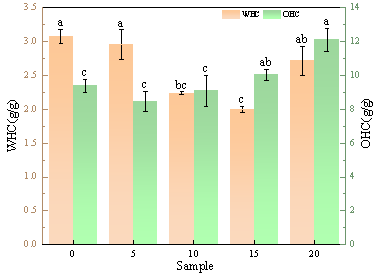
3.3. Water and Oil Holding CapacityWater holding capacity and oil holding capacity are closely related to the quality of products. As shown in Figure 1, the water holding capacity of the mixed powder showed a trend of decreasing first and then increasing, indicating that the addition of chickpea powder will change the conformation of gluten protein in wheat flour, thus affecting its ionic strength and charge distribution, and affecting its water holding capacity 25. When the additional amount of chickpea powder increased from 0% to 20%, the oil holding capacity of the mixed powder showed an upward trend. This may be due to the release of more lipophilic groups from the fibers contained in chickpea powder, and the loose and well-dispersed particles will be beneficial to the retention of oil in the system 26. And the larger specific surface area, relatively loose structure, and easier contact with oil molecules of chickpea powder. When the addition amount of chickpea powder was 5%, there was no significant difference in water holding capacity and oil holding capacity compared with pure wheat flour (P > 0.05), indicating that the addition of chickpea powder was low, it did not affect the functional properties of the mixed powder.

Through the pasting properties, the swelling ability of starch in the mixed powder and the binding ability of starch to water can be reflected. As shown in Table 2, peak viscosity and trough viscosity had a significant difference (P < 0.05) when chickpea flour was added from 5% to 20%. When chickpea flour was added from 0% to 20%, the peak viscosity of the dough decreased from 2249 cP to 1531.5 cP, through viscosity decreased from 1866 cP to 1233.5 cP, and the final viscosity decreased from 2843.5 cP to 1871.5 cP. These results indicated that the viscosity of the mixed flour gradually decreased with the increase of chickpea flour content, possibly due to the high amylose content. Yuan et al. 27 also obtained this result when studying the effect of pleurotus eryngii powder on the quality characteristics of dough. This result is consistent with the particle size distribution. The larger the particle size, the greater the viscosity.
The breakdown value is related to the thermal stability of starch during high temperature and shearing, and the setback value will affect the recrystallization of molecules during starch gelatinization 28. With the addition of chickpea powder, there was no significant difference in breakdown value (P > 0.05). When chickpea flour was added from 10% to 20%, the setback value significantly differed (P < 0.05). The decrease in the breakdown value indicates that the stability of the mixed powder increased, which was mainly because the chickpea powder contains dietary fiber to improve the stability of the mixed flour. In addition, the addition of chickpea flour reduced the recrystallization of starch molecules and inhibited the retrogradation of starch, which may be because the starch content in wheat flour was higher than that in chickpea flour.
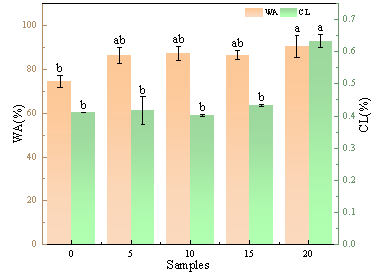
3.5. Cooking CharacteristicsCooking time, water absorption, and cooking loss rate were mainly used to evaluate the quality of noodles. According to the method of 2.9.1, the best cooking time for noodles was 150 s. The water absorption of noodles is mainly related to the pasting properties of starch. During the cooking process, the starch in the noodles will continue to absorb water and expand. The greater the cooking loss rate of noodles, the more the loss of nutrients such as starch or protein in noodles, and the more turbid the noodles.
In Figure 2, when the additional amount of chickpea powder increased from 0% to 20%, the water absorption rate of noodles increased from 74.35% to 90.45%, and the cooking loss rate of noodles increased from 0.41% to 0.63%. This is consistent with the experimental results of CAO et al., who studied the effect of soybean protein isolate on wheat flour. 29. When the additional amount of chickpea powder was 0% ~ 15%, there was no significant difference in water absorption and cooking loss (P > 0.05). When the additional amount of chickpea powder was 20%, the water absorption and cooking loss of noodles reached the maximum value, which may be due to the strong water absorption of the protein contained in chickpea powder. In addition, the addition of chickpea powder weakened the gluten network and the starch or protein in the starch-protein network structure of noodles fell off into the noodle soup, increasing cooking loss.

Hardness, springiness, and chewiness are important indicators of noodle texture characteristics and are also closely related to the taste quality of noodles 29. As shown in Table 2, as the amount of chickpea flour increased from 0% to 20%, its hardness, springiness, cohesiveness, gumminess, chewiness, and resilience all showed a downward trend. This may be due to the increase of the additional amount, the gluten protein content decreased, and the gluten network structure became loose, which makes the hardness and cohesion of the noodles decrease. On the other hand, in the presence of heating and water, the interaction between protein and starch in chickpea powder was enhanced, which reduced its gumminess.
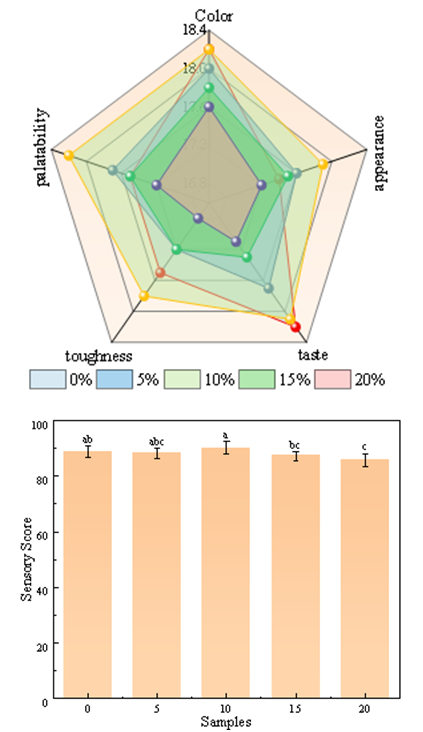
3.7. Sensory EvaluationAs shown in Figure 3, adding chickpea powder had different effects on the sensory characteristics of noodles. The sensory quality of CPN was improved compared with the control noodles under the condition of low dosage, but the sensory quality and overall acceptability decreased with the increasing dosage. Except for toughness, other indicators showed a trend of first decreasing, then increasing, and then decreasing with the addition of chickpea powder. The sensory score gradually increased when the additional amount of chickpea powder was 0% ~ 10%. When the additional amount of chickpea powder was 15% ~ 20%, the sensory score of noodles showed a decreasing trend, which may be due to the taste of chickpea powder itself affecting the acceptability of noodles by evaluators. When the additional amount of chickpea powder was 10%, the sensory scores for color, appearance, taste, toughness, and palatability of CPN reached the maximum value of 90.2, which was significantly different from other groups (P ≤ 0.05). The taste of the CPN was smooth, soft, and resilient. This also shows that the addition of chickpea powder can effectively improve the edible quality of noodles, and it is best when the additional amount is 10%.

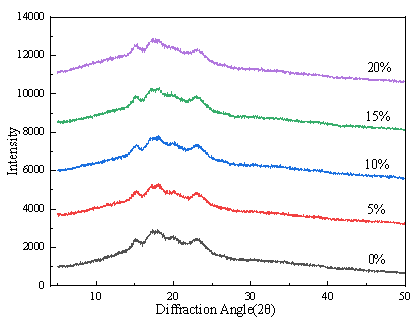
The XRD pattern was mainly used to reflect the changes in the crystal region, crystal form, and crystallinity of chickpea flour noodles with different addition amounts. As shown in Figure 4, the noodles without chickpea flour showed a diffraction peak at 15 ° and 23 ° and a double diffraction peak at 17 ° and 18 °, which belonged to the characteristic peak of an A-type structure. With the addition of chickpea powder, the diffraction peak near 20 ° appeared to decrease or disappear, and the double diffraction peaks at 17 ° and 18 ° became the characteristic peaks of the single peak structure belonging to the B-type structure 30, indicating that the crystal structure of the starch of the noodles added with chickpea powder was destroyed during high-temperature cooking.

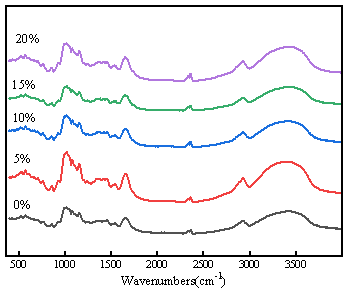
As shown in Figure 5, with the increased amount of chickpea powder added, the Fourier spectra of each sample were not significantly different, with many similar characteristic peaks, and the types of functional groups did not change. The wave number of 1600 cm-1~1700 cm-1 is the amide I region of the protein. Peak Fit v4.12 software was used to analyze the peak intensity of the amide I band. The secondary structure of the protein includes β-sheet, α-helix, and β-turn. The β-sheet and α-helix belong to the tightly ordered structure, the β-turn belongs to the loose partially ordered structure. The peak at 1600-1640 cm−1 indicated a β-sheet. The peak at 1650 ~ 1660 cm-1 indicated α-helix. The peak at 1660 ~ 1700 cm-1 indicated a β-turn 31.

Table 2 shows the effect of chickpea powder addition on the secondary structure of noodle protein. There was a significant difference between β with chickpea powder and β without chickpea powder (P < 0.05). It can be seen from Table 2 that with the increase of chickpea powder addition, β-sheet and α-helix showed an increasing trend. When the addition amount was 5%, the content of β-sheet (1.64%) and α-helix (3.52%) reached the maximum. The content of β-sheet and α-helix structure increased, indicating that the addition of chickpea powder would change the secondary structure of the protein and make it more orderly. The addition of chickpea flour increased the content of β-turn, probably because chickpea flour contains more protein, which can compete with wheat protein for water, affecting the extension of the gluten protein and thus disrupting the ordered structure. In addition, chickpea flour improves the hydrogen bonding force in gluten protein. Han et al. 32 have shown that the enhancement of the hydrogen bonding force is of great significance for the improvement of the microscopic quality of dough and noodles.
In this paper, the effects of different amounts of chickpea flour on the quality and structural characteristics of noodles were investigated. With the increase in the amount of chickpea powder added, the moisture content and gluten content of the mixed powder gradually decreased, and the protein content, ash content, and damaged starch content gradually increased. The results of chromaticity showed that the addition of chickpea powder reduced the brightness of the mixed powder, the color was yellowish, the particle size distribution was more uniform, the water holding capacity decreased first and then increased, and the oil holding capacity increased. The viscosity value of the mixed powder gradually decreased. The water absorption rate and cooking loss rate of the noodles with chickpea flour gradually increased, and the hardness, elasticity, chewiness, and resilience gradually decreased. When the amount of chickpea powder was 10%, the highest sensory score was 90.2. The noodles had a smooth taste, moderate hardness, and good quality. After freeze-drying, the crystal type of chickpea flour noodles changed, and the type of functional groups did not change. β-sheet, α-helix, and β-turn showed an increasing trend. Therefore, this study suggests that adding the appropriate amount of chickpea flour can improve the quality of noodles and reduce the hardness and chewiness of noodles.
The authors declare that they do not have any conflict of interest.
This study does not involve any human or animal testing.
Guoxia Wang: Visualization, Methodology, Writing-original draft, Writing-review & editing Supervision, Project administration, Funding acquisition; Chunge Li: Resources; Shiqi Xu:Methodology; Chunxiao Wang: Methodology; Mingrui Zhao: Methodology; Yimeng Li: Methodology;Yujie Zhu: Methodology.
Written informed consent was obtained from all study participants.
Science and Technology Project of Henan Province(252102310529); Zhengzhou Normal University 2024 College Students' Innovation and Entrepreneurship Training Program Project(DCZ2024005); The project was supported by the Key Scientific Research Project of Universities in Henan Province (24B550024).
| [1] | Shreyas E M, Devindra S. A review of the nutritional and antinutritional constituents of chickpea (Cicer arietinum) and its health benefits [J]. Crop and Pasture Science, 2022, 73(4): 401-414. | ||
| In article | View Article | ||
| [2] | Karabulut G, Goksen G, Khaneghah A M. Plant-based protein modification strategies towards challenges [J]. Journal of Agriculture and Food Research, 2024, 15: 101017. | ||
| In article | View Article | ||
| [3] | Nadia G, L L N, K A E, et al. Chickpea protein ingredients: A review of composition, functionality, and applications. [J]. Comprehensive reviews in food science and food safety, 2021, 21(1): 435-452. | ||
| In article | View Article PubMed | ||
| [4] | Zhang H, Yin L, Zheng Y, et al. Rheological, textural, and enzymatic hydrolysis properties of chickpea starch from a Chinese cultivar [J]. Food Hydrocolloids, 2016, 54: 23-29. | ||
| In article | View Article | ||
| [5] | Kaur R, Prasad K. Technological, processing and nutritional aspects of chickpea (Cicer arietinum)-A review [J]. Trends in Food Science & Technology, 2021, 109: 448-463. | ||
| In article | View Article | ||
| [6] | Grażyna C, Dariusz D, Urszula G, et al. Dandelion Flowers as an Additive to Wheat Bread: Physical Properties of Dough and Bread Quality [J]. Applied Sciences, 2022, 13(1): 477. | ||
| In article | View Article | ||
| [7] | Choo C L, Aziz N A A. Effects of banana flour and β-glucan on the nutritional and sensory evaluation of noodles [J]. Food Chemistry, 2009, 119(1): 34-40. | ||
| In article | View Article | ||
| [8] | Zhao C, Zhou J, Zhang Z, et al. Effects of different adzuki bean flour additions on structural and functional characteristics of extruded buckwheat noodles. [J]. Journal of the science of food and agriculture, 2024. | ||
| In article | View Article PubMed | ||
| [9] | Di A, Haiteng L, Dongsheng Z, et al. Relation between adhesiveness and surface leachate rheological properties of cooked noodles: From the view of starch fine molecular structure [J]. Food Research International, 2022, 155: 111111. | ||
| In article | View Article PubMed | ||
| [10] | Jing H, Di A, Mansheng W, et al. Wheat noodles enriched with A-type and/or B‐type wheat starch: physical, thermal and textural properties of dough sheet and noodle samples from different noodle‐making process [J]. International Journal of Food Science & Technology, 2021, 56(6): 3111-3122. | ||
| In article | View Article | ||
| [11] | Hongwei W, Yusong Z, Panpan S, et al. Insights into the aggregation structure and physicochemical properties of heat-moisture treated wheat starch and its associated effects on noodle quality [J]. Journal of Cereal Science, 2023, 112. | ||
| In article | View Article | ||
| [12] | Li Q, Li C, Li E, et al. A molecular explanation of wheat starch physicochemical properties related to noodle eating quality [J]. Food Hydrocolloids, 2020, 108(prepublish). | ||
| In article | View Article | ||
| [13] | Jiaying S, Bo Z, Chong L, et al. Impact of wheat starch granule size on viscoelastic behaviors of noodle dough sheet and the underlying mechanism [J]. Food Hydrocolloids, 2023, 134. | ||
| In article | View Article | ||
| [14] | Naifu W, G. H G, Yibin Z. Effects of cottonseed flour and enzyme addition on the wheat flour dough characteristics and snack cracker quality [J]. LWT, 2024, 191: 115671. | ||
| In article | View Article | ||
| [15] | Liangyi L, Wenhua Z, Anqi W, et al. Effect of Ginkgo Biloba Powder on the Physicochemical Properties and Quality Characteristics of Wheat Dough and Fresh Wet Noodles [J]. Foods, 2022, 11(5): 698. | ||
| In article | View Article PubMed | ||
| [16] | Zhao C, Zhou J, Zhang Z, et al. Effects of different adzuki bean flour additions on structural and functional characteristics of extruded buckwheat noodles. [J]. Journal of the science of food and agriculture, 2024. | ||
| In article | View Article PubMed | ||
| [17] | Shi S, Wen J, Geng H, et al. Physicochemical properties, structural properties and gels 3D printing properties of wheat starch. [J]. International journal of biological macromolecules, 2024, 261(P2): 129885. | ||
| In article | View Article PubMed | ||
| [18] | Alim M A, Abedin M Z, Reza M S A, et al. Development and characterization of composite wheat flour incorporated with psyllium husk (Plantago ovata) and peanut (Arachis hypogea) and sensory properties of composite flour noodles [J]. Food and Humanity, 2024, 2: 100279. | ||
| In article | View Article | ||
| [19] | Tian W, Wu C, Tang P, et al. Effect of bran backfilling on the quality and nutritional properties of extruded Tartary buckwheat noodles [J]. Journal of Cereal Science, 2024, 117: 103909. | ||
| In article | View Article | ||
| [20] | Qiaolei Z, Zuoyun Y, Yunping Z, et al. Processing, physicochemical and nutritional properties of steamed bread fortified with Chinese Huai-shan Yam [J]. Food Chemistry Advances, 2023, 3. | ||
| In article | View Article | ||
| [21] | Ma Y, Xu D, Sang S, et al. Effect of superheated steam treatment on the structural and digestible properties of wheat flour [J]. Food Hydrocolloids, 2021, 112: 106362. | ||
| In article | View Article | ||
| [22] | Jie B, Mengxue D, Jiayu L, et al. Effects of egg white on physicochemical and functional characteristics of steamed cold noodles (a wheat starch gel food) [J]. LWT, 2022, 169. | ||
| In article | View Article | ||
| [23] | Cao Y, Jiang L, Suo W, et al. Influence of emulsifiers and enzymes on dough rheological properties and quality characteristics of steamed bread enriched with potato pulp [J]. Food Chemistry, 2021, 360: 130015. | ||
| In article | View Article PubMed | ||
| [24] | Sundaresan T, Subramaniam S, Chinnapa V, et al. Effect of defatted coconut flour on functional, nutritional, textural and sensory attributes of rice noodles [J]. International Journal of Food Science & Technology, 2023, 58(10): 5077-5088. | ||
| In article | View Article | ||
| [25] | Peiqing Y, Wenxin W, Zhenzhen X, et al. New insights into the pH dependence of anthocyanin-protein interactions by a case study of cyanidin-3-O-glucoside and bovine serum albumin [J]. Food Hydrocolloids, 2023, 140. | ||
| In article | View Article | ||
| [26] | Zhanmei J, Minghan Z, Yuxuan H, et al. Comparison and Characterization of the Structure and Physicochemical Properties of Three Citrus Fibers: Effect of Ball Milling Treatment [J]. Foods, 2022, 11(17): 2665. | ||
| In article | View Article PubMed | ||
| [27] | Yuan B, Xin C, Song W, et al. Impact of mushroom ( Pleurotus eryngii ) flour upon quality attributes of wheat dough and functional cookies-baked products. [J]. Food science & nutrition, 2020, 8(1):361-370. | ||
| In article | View Article PubMed | ||
| [28] | Li Q, Li Y, Zou J, et al. Influence of Adding Chinese Yam (Dioscorea opposita Thunb.) Flour on Dough Rheology, Gluten Structure, Baking Performance, and Antioxidant Properties of Bread [J]. Foods, 2020, 9(3): 256. | ||
| In article | View Article PubMed | ||
| [29] | Zhongfu C, Yang L, Hong Z, et al. Effect of Soy Protein Isolate on Textural Properties, Cooking Properties and Flavor of Whole-Grain Flat Rice Noodles [J]. Foods, 2021, 10(5): 1085. | ||
| In article | View Article PubMed | ||
| [30] | Carbohydrate Laboratory S O F S, Carbohydrate Laboratory S O F S, Carbohydrate Laboratory S O F S, et al. Effect of heat-moisture treatment on the physicochemical properties and in vitro digestibility of the starch-guar complex of maize starch with varying amylose content [J]. Food Hydrocolloids, 2018, 83: 213-221. | ||
| In article | View Article | ||
| [31] | Huang L, Zhang X, Zhang H, et al. Interactions between dietary fiber and ferulic acid changed the aggregation of gluten in a whole wheat model system [J]. LWT, 2018, 91: 55-62. | ||
| In article | View Article | ||
| [32] | Han C, Ma M, Zhang H, et al. Progressive study of the effect of superfine green tea, soluble tea, and tea polyphenols on the physico-chemical and structural properties of wheat gluten in noodle system [J]. Food Chemistry, 2020, 308(C): 125676. | ||
| In article | View Article PubMed | ||
Published with license by Science and Education Publishing, Copyright © 2025 Guoxia Wang, Chunge Li, Shiqi Xu, Chunxiao Wang, Mingrui Zhao, Yimeng Li and Yujie Zhu
 This work is licensed under a Creative Commons Attribution 4.0 International License. To view a copy of this license, visit
http://creativecommons.org/licenses/by/4.0/
This work is licensed under a Creative Commons Attribution 4.0 International License. To view a copy of this license, visit
http://creativecommons.org/licenses/by/4.0/
| [1] | Shreyas E M, Devindra S. A review of the nutritional and antinutritional constituents of chickpea (Cicer arietinum) and its health benefits [J]. Crop and Pasture Science, 2022, 73(4): 401-414. | ||
| In article | View Article | ||
| [2] | Karabulut G, Goksen G, Khaneghah A M. Plant-based protein modification strategies towards challenges [J]. Journal of Agriculture and Food Research, 2024, 15: 101017. | ||
| In article | View Article | ||
| [3] | Nadia G, L L N, K A E, et al. Chickpea protein ingredients: A review of composition, functionality, and applications. [J]. Comprehensive reviews in food science and food safety, 2021, 21(1): 435-452. | ||
| In article | View Article PubMed | ||
| [4] | Zhang H, Yin L, Zheng Y, et al. Rheological, textural, and enzymatic hydrolysis properties of chickpea starch from a Chinese cultivar [J]. Food Hydrocolloids, 2016, 54: 23-29. | ||
| In article | View Article | ||
| [5] | Kaur R, Prasad K. Technological, processing and nutritional aspects of chickpea (Cicer arietinum)-A review [J]. Trends in Food Science & Technology, 2021, 109: 448-463. | ||
| In article | View Article | ||
| [6] | Grażyna C, Dariusz D, Urszula G, et al. Dandelion Flowers as an Additive to Wheat Bread: Physical Properties of Dough and Bread Quality [J]. Applied Sciences, 2022, 13(1): 477. | ||
| In article | View Article | ||
| [7] | Choo C L, Aziz N A A. Effects of banana flour and β-glucan on the nutritional and sensory evaluation of noodles [J]. Food Chemistry, 2009, 119(1): 34-40. | ||
| In article | View Article | ||
| [8] | Zhao C, Zhou J, Zhang Z, et al. Effects of different adzuki bean flour additions on structural and functional characteristics of extruded buckwheat noodles. [J]. Journal of the science of food and agriculture, 2024. | ||
| In article | View Article PubMed | ||
| [9] | Di A, Haiteng L, Dongsheng Z, et al. Relation between adhesiveness and surface leachate rheological properties of cooked noodles: From the view of starch fine molecular structure [J]. Food Research International, 2022, 155: 111111. | ||
| In article | View Article PubMed | ||
| [10] | Jing H, Di A, Mansheng W, et al. Wheat noodles enriched with A-type and/or B‐type wheat starch: physical, thermal and textural properties of dough sheet and noodle samples from different noodle‐making process [J]. International Journal of Food Science & Technology, 2021, 56(6): 3111-3122. | ||
| In article | View Article | ||
| [11] | Hongwei W, Yusong Z, Panpan S, et al. Insights into the aggregation structure and physicochemical properties of heat-moisture treated wheat starch and its associated effects on noodle quality [J]. Journal of Cereal Science, 2023, 112. | ||
| In article | View Article | ||
| [12] | Li Q, Li C, Li E, et al. A molecular explanation of wheat starch physicochemical properties related to noodle eating quality [J]. Food Hydrocolloids, 2020, 108(prepublish). | ||
| In article | View Article | ||
| [13] | Jiaying S, Bo Z, Chong L, et al. Impact of wheat starch granule size on viscoelastic behaviors of noodle dough sheet and the underlying mechanism [J]. Food Hydrocolloids, 2023, 134. | ||
| In article | View Article | ||
| [14] | Naifu W, G. H G, Yibin Z. Effects of cottonseed flour and enzyme addition on the wheat flour dough characteristics and snack cracker quality [J]. LWT, 2024, 191: 115671. | ||
| In article | View Article | ||
| [15] | Liangyi L, Wenhua Z, Anqi W, et al. Effect of Ginkgo Biloba Powder on the Physicochemical Properties and Quality Characteristics of Wheat Dough and Fresh Wet Noodles [J]. Foods, 2022, 11(5): 698. | ||
| In article | View Article PubMed | ||
| [16] | Zhao C, Zhou J, Zhang Z, et al. Effects of different adzuki bean flour additions on structural and functional characteristics of extruded buckwheat noodles. [J]. Journal of the science of food and agriculture, 2024. | ||
| In article | View Article PubMed | ||
| [17] | Shi S, Wen J, Geng H, et al. Physicochemical properties, structural properties and gels 3D printing properties of wheat starch. [J]. International journal of biological macromolecules, 2024, 261(P2): 129885. | ||
| In article | View Article PubMed | ||
| [18] | Alim M A, Abedin M Z, Reza M S A, et al. Development and characterization of composite wheat flour incorporated with psyllium husk (Plantago ovata) and peanut (Arachis hypogea) and sensory properties of composite flour noodles [J]. Food and Humanity, 2024, 2: 100279. | ||
| In article | View Article | ||
| [19] | Tian W, Wu C, Tang P, et al. Effect of bran backfilling on the quality and nutritional properties of extruded Tartary buckwheat noodles [J]. Journal of Cereal Science, 2024, 117: 103909. | ||
| In article | View Article | ||
| [20] | Qiaolei Z, Zuoyun Y, Yunping Z, et al. Processing, physicochemical and nutritional properties of steamed bread fortified with Chinese Huai-shan Yam [J]. Food Chemistry Advances, 2023, 3. | ||
| In article | View Article | ||
| [21] | Ma Y, Xu D, Sang S, et al. Effect of superheated steam treatment on the structural and digestible properties of wheat flour [J]. Food Hydrocolloids, 2021, 112: 106362. | ||
| In article | View Article | ||
| [22] | Jie B, Mengxue D, Jiayu L, et al. Effects of egg white on physicochemical and functional characteristics of steamed cold noodles (a wheat starch gel food) [J]. LWT, 2022, 169. | ||
| In article | View Article | ||
| [23] | Cao Y, Jiang L, Suo W, et al. Influence of emulsifiers and enzymes on dough rheological properties and quality characteristics of steamed bread enriched with potato pulp [J]. Food Chemistry, 2021, 360: 130015. | ||
| In article | View Article PubMed | ||
| [24] | Sundaresan T, Subramaniam S, Chinnapa V, et al. Effect of defatted coconut flour on functional, nutritional, textural and sensory attributes of rice noodles [J]. International Journal of Food Science & Technology, 2023, 58(10): 5077-5088. | ||
| In article | View Article | ||
| [25] | Peiqing Y, Wenxin W, Zhenzhen X, et al. New insights into the pH dependence of anthocyanin-protein interactions by a case study of cyanidin-3-O-glucoside and bovine serum albumin [J]. Food Hydrocolloids, 2023, 140. | ||
| In article | View Article | ||
| [26] | Zhanmei J, Minghan Z, Yuxuan H, et al. Comparison and Characterization of the Structure and Physicochemical Properties of Three Citrus Fibers: Effect of Ball Milling Treatment [J]. Foods, 2022, 11(17): 2665. | ||
| In article | View Article PubMed | ||
| [27] | Yuan B, Xin C, Song W, et al. Impact of mushroom ( Pleurotus eryngii ) flour upon quality attributes of wheat dough and functional cookies-baked products. [J]. Food science & nutrition, 2020, 8(1):361-370. | ||
| In article | View Article PubMed | ||
| [28] | Li Q, Li Y, Zou J, et al. Influence of Adding Chinese Yam (Dioscorea opposita Thunb.) Flour on Dough Rheology, Gluten Structure, Baking Performance, and Antioxidant Properties of Bread [J]. Foods, 2020, 9(3): 256. | ||
| In article | View Article PubMed | ||
| [29] | Zhongfu C, Yang L, Hong Z, et al. Effect of Soy Protein Isolate on Textural Properties, Cooking Properties and Flavor of Whole-Grain Flat Rice Noodles [J]. Foods, 2021, 10(5): 1085. | ||
| In article | View Article PubMed | ||
| [30] | Carbohydrate Laboratory S O F S, Carbohydrate Laboratory S O F S, Carbohydrate Laboratory S O F S, et al. Effect of heat-moisture treatment on the physicochemical properties and in vitro digestibility of the starch-guar complex of maize starch with varying amylose content [J]. Food Hydrocolloids, 2018, 83: 213-221. | ||
| In article | View Article | ||
| [31] | Huang L, Zhang X, Zhang H, et al. Interactions between dietary fiber and ferulic acid changed the aggregation of gluten in a whole wheat model system [J]. LWT, 2018, 91: 55-62. | ||
| In article | View Article | ||
| [32] | Han C, Ma M, Zhang H, et al. Progressive study of the effect of superfine green tea, soluble tea, and tea polyphenols on the physico-chemical and structural properties of wheat gluten in noodle system [J]. Food Chemistry, 2020, 308(C): 125676. | ||
| In article | View Article PubMed | ||