“Variations in the FTO gene and specific dietary interventions have been linked to inflammatory and hormonal biomarker changes in obese individuals. This research focused on assessing the impact of a 28-day balanced diet intervention on inflammation markers associated with cardiovascular risk among different FTO rs9939609 gene single nucleotide polymorphisms (SNPs) in obese women. This randomized controlled trial involved 38 women aged 18–25 with high body fat, who were randomly categorized into four groups based on FTO rs9939609 SNP and balanced diet intervention for 28 days: Allele A carriers + diet (DAC, n=12), TT genotype + diet (DTH, n=8), Allele A carriers without diet (CAC, n=10), and TT genotype without diet (CTH, n=8). Participants underwent nutritional education and had interleukin-6 (IL-6), high-sensitivity C-reactive protein (hs-CRP), and adiponectin (ADP) measured pre- and post-intervention. The students' t-test statistical analyses were conducted using SPSS software. Initial IL-6 levels were highest in CAC (99.6 ± 29.4 ng/L) and lowest in DAC (76.4 ± 22.4 ng/L). Hs-CRP was highest in CTH (26.6 ± 9.48 ng/mL) and lowest in DTH (21.6 ± 6.0 ng/mL). ADP was highest in CTH (0.54 ± 0.08 ng/mL) and lowest in DAC (0.48 ± 0.10 ng/mL). After 28 days of balanced diet, none of the inflammatory markers showed statistically significant changes in all groups (P≥0.05). The balanced diet intervention did not significantly affect inflammatory markers linked to cardiovascular risk among all variants. Future studies should explore the prolonged effects of specific dietary components on inflammation and cardiovascular outcomes across diverse populations or other genes.”.
One of the practical ways of helping the obese population lose weight is changing their eating pattern. It has been evidenced that even small weight loss (5-10% of baseline body weight) through lifestyle interventions leads to improvement in cardiometabolic complications, which are commonly associated with obesity 1 2. The interaction between FTO gene polymorphisms and diet, for instance, with interventions based on the Mediterranean diet, calorie-restricted diets, and high-protein, low-carbohydrate regimens, has been studied in several analyses and meta-analyses. These considerations emphasize the relationships between variations in dietary conditions, body composition, and various inflammatory and hormonal biomarkers in individuals with obesity 3 4 5 6 7 8 9. However, some aspects remain unclear or constrained. In Indonesia, the regulations regarding proper dietary practice and behaviour are outlined under the Republic of Indonesia Minister of Health Regulation No. 41 of 2014 on Guidelines for Balanced Nutrition 10.
Several studies have investigated the relationship between the FTO rs9939609 genotype and circulating interleukin-6 (IL-6) levels. Only a few of these studies have reported significant findings 4, 11 12 13 14. Research has indicated a correlation between the FTO rs9939609 genotype and increased levels of C-reactive protein (CRP) 15 16 17 18, although some studies reported conflicting results 11. Besides, Mehrdad et al. and Li et al. 19 20 reported that carriers of the A allele (AA and AT genotypes) exhibited lower adiponectin levels than those with wild-type TT genotype; homozygous AA individuals had the lowest levels, although this did not reach statistical significance. Numerous additional studies have documented comparable findings among obese individuals and various adult demographics 21 22. Conversely, De Luis et al. and Duicu et al. 12 23 researched that adiponectin levels were lower in the TT genotype group than in the AA genotype group. The study aimed to evaluate the impact of a balanced nutrition intervention on several inflammation markers related to cardiovascular risk in two groups of FTO rs9939609 genotype in obese women in Bandung City.
This study was conducted at the Nutrition Study Program and Nursing Laboratory, Faculty of Sport Education and Health, Universitas Pendidikan Indonesia, from November 2023 to January 2024. Initially, 115 participants were recruited, all of whom agreed to undergo pre-screening. Of these, 86 completed the screening process, 38 participants consented to participate fully and completed the study.
The inclusion criteria specified that participants must be obese women with a body fat percentage of ≥35%, engaged in light to moderate physical activity or minimal exercise based on their Physical Activity Level (PAL). Additionally, participants had to be of Sundanese descent, aged 18 to 25, and had normal fasting glucose levels. Only those who provided informed consent were eligible to participate. Participants were excluded if they were pregnant or lactating, had a history of chronic illnesses, regularly consumption of antioxidant supplements, and current participation in other research studies. Participants were also subject to termination if they chose to withdraw voluntarily, developed conditions meeting the exclusion criteria during the study, or failed to complete required blood tests or assessments.
2.2. ProcedureWeight, total body fat, health status (fasting glucose, pulse, and blood pressure), levels of interleukin-6 (IL-6), high-sensitivity C-reactive protein (hs-CRP), and adiponectin (ADP) were measured at the beginning of the trial and repeated 28 days after the intervention.
Before the study began, all participants underwent anthropometric measurements after a 12-hour overnight fast. They were instructed to remove their shoes and wear light clothing prior to the measurements. Body weight, mass, and body fat percentage were assessed using a Body Composition Analyzer, while height was measured using a stadiometer with precision to the nearest 0.1 cm. Baseline and end-line measurements included pulse, blood pressure, and fasting blood glucose.
2.3. DesignThe study utilized a randomized controlled trial design with a parallel structure over a 28-day intervention period. Participants were randomized into four groups. The intervention groups included Group 1 (DAC), consisting of A allele carriers receiving a balanced nutritional intervention, and Group 2 (DTH), composed of homozygous T allele carriers receiving a modified nutritional intervention. The control groups included Group 3 (CAC), consisting of A allele carriers without dietary intervention, and Group 4 (CTH), composed of homozygous T allele carriers without dietary intervention. All participants received detailed explanations of the study protocols and signed informed consent forms. Ethical approval was granted by the Research Ethics Committee of the Faculty of Medicine, Padjadjaran University (No. 285/UN6.KEP/EC/2023).
2.4. DNA Isolation, PCR Analysis, and SequencingFor each participant, 2–3 cc of venous blood was collected into an EDTA tube. DNA was isolated from 200 μl of the buffy coat in each sample using the Genomic DNA Mini Kit (Geneaid, Taiwan). The purified DNA was quantified with a Nanodrop ND 1000 Spectrophotometer (Thermo Scientific, USA). The FTO rs9939609 polymorphism was genotyped using the SNP Genotyping Assay (IDT, Singapore). Genotyping was conducted on a One-Step Real-Time PCR thermocycler (Connected Biosystems) under the following high-temperature cycling conditions: an initial denaturation step at 95°C for 10 minutes, followed by 40 cycles of denaturation at 96 °C for 15 seconds, and annealing/extension at 60 °C for 1 minute. The results were analyzed using Allele Separation software (Applied Biosystems, Foster City, CA, USA), following the manufacturer's standard instructions.
2.5. Dietary AssessmentAt baseline, participants' dietary habits were assessed using a 2x24-hour dietary recall method, conducted once on a weekday and once on a weekend day. Participants were instructed to record the weights or measurements of all foods and beverages consumed as precisely as possible. During the intervention phase, the control group repeated the 2x24-hour dietary recall assessments, while the dietary intervention group received their nutritional intake through specially prepared catered meals designed for the study. Nutritional data, including caloric and nutrient intake, were analyzed using Nutrisurvey 2007 dietary software, referencing the Indonesian Food Composition Table and data from FatSecret.com.
2.6. Dietary InterventionDuring the intervention phase, participants in the dietary group received three daily meals—breakfast, lunch, and dinner—based on a 28-day menu cycle. The Adjusted Nutrition Diet adhered to macronutrient distributions of 45-55% carbohydrates, 15-20% protein, and 20-25% fats, following guidelines from the Indonesian Ministry of Health (2014) 10. Meal types and portion sizes were standardized unless modifications were required for dietary restrictions or allergies. Caloric allocation per meal was set at 300-400 kcal for breakfast, 400-500 kcal for lunch, and 300-500 kcal for dinner.
The carbohydrate sources emphasized complex carbohydrates, especially whole grains, while protein sources prioritized low-fat options, with 50% derived from plant-based proteins. Fat intake focused on monounsaturated and polyunsaturated fats, using natural ingredients whenever possible. Meals followed the "Fill My Plate" and "Balanced Nutrition Tumpeng" concepts. Cooking methods included boiling, sautéing, or broiling, avoiding frying. Canola oil, low-sodium salt, and mushroom stock were used to enhance flavor while maintaining nutritional balance.
Energy requirements for each participant were calculated using the Mifflin-St. Jeor Equation (Mifflin et al., 1990) to determine Resting Energy Expenditure (REE), which was then adjusted by multiplying with the Physical Activity Level (PAL) recommended by WHO-FAO. For women, REE was calculated using the formula: REE = 9.99 × BW + 6.25 × S - 5 × A - 161. Control group participants did not follow a specific dietary plan but received general healthy eating advice. Their energy needs were also calculated using REE and standard formulas and monitored throughout the study.
2.7. Analysis of Blood SamplesBlood samples were obtained from participants following a 12-hour overnight fast, using sterile EDTA Vacutainer tubes and immediately placed in an ice container. Plasma was separated through centrifugation at 1600 rpm for 10 minutes at 4 °C. The plasma was then aliquoted and stored at −80 °C until analysis. Biomarkers, including interleukin-6, high-sensitivity C-reactive protein (hs-CRP), and adiponectin, were measured using enzyme-linked immunosorbent assay (ELISA) techniques. These measurements were performed with an ELISA microplate reader (Thermo Fisher Scientific, USA), using ELISA kits sourced from Bioenzy, Indonesia.
2.8. Nutritional EducationParticipants received valuable educational sessions through online Zoom meetings featuring PowerPoint presentations and recorded materials prior to the intervention period. The first session, titled “Balanced Nutrition, Food Security, and Stress Management," introduced foundational topics such as the principles of balanced nutrition, the concept of the balanced nutritional “Tumpeng” and the composition of a balanced plate. It also included a sample balanced meal plan, recommendations for physical activity, hygiene and sanitation practices, food additives information, stress management strategies, and the importance of adequate rest. The second session, "Suggestions for Parcels and Adjusted Nourishment Menus," provided guidance on daily dietary allowances based on age and gender, food ingredient choices, family size considerations, and exercise examples to help participants design balanced nutrition menus tailored to their needs.
2.9. Data AnalysisStatistical analysis was performed using IBM SPSS Statistics for Windows, version 26.0 (SPSS Inc., Chicago, IL, USA). The Shapiro-Wilk test was used to evaluate the normality of variable distributions. Differences in demographic, biochemical, and clinical characteristics among the various genotypes were analyzed using one-way ANOVA. To assess mean changes in plasma levels of IL-6, hs-CRP, and adiponectin (ADP), paired t-tests were performed. Data were presented as mean ± standard deviation (SD), and statistical significance was defined as p < 0.05.
Table 1 presents participants' general and baseline characteristics, categorized by intervention group and FTO rs9939609 allele variation. The data revealed no significant differences among the groups, as determined by ANOVA. Group 2 (TT genotype with dietary intervention) had the highest mean ± SD for body weight, BMI, visceral fat, and body fat percentage. Group 4 (control group with TT genotype) exhibited the highest mean ± SD for the waist-to-hip circumference ratio.
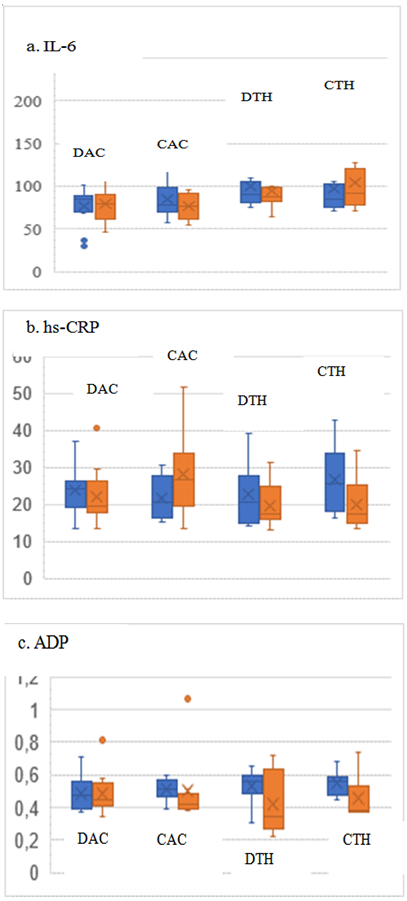
In terms of IL-6 levels, the highest mean ± SD (99.6 ± 29.4 ng/l) was observed in Group 3 (allele A carriers with no dietary changes). In contrast, the lowest mean ± SD (76.4 ± 22.4 ng/l) was found in Group 1 (allele A carriers with dietary intervention). For hs-CRP levels, Group 4 (control group with TT genotype) showed the highest mean ± SD (26.6 ± 9.5 ng/ml), while Group 2 (TT genotype with dietary caloric adjustment) had the lowest mean ± SD (21.6 ± 6.0 ng/ml). Regarding adiponectin (ADP) levels, Group 4 (control group with TT genotype) recorded the highest mean ± SD (0.54 ± 0.08 ng/ml), and Group 1 had the lowest mean ± SD (0.48 ± 0.10 ng/ml). Despite these variations, the differences in blood biochemical markers across groups were not statistically significant (P ≥ 0.05).

The changes in IL-6, hs-CRP, and ADP levels varied across intervention groups. In DAC group, 41.7% (5 out of 12) of participants showed a decrease in IL-6 levels, 58.3% (7 out of 12) experienced a reduction in hs-CRP levels, and 50% (6 out of 12) demonstrated an increase in ADP levels. In DTH, 62.5% (5 out of 8) of participants had a decrease in IL-6 levels, 37.5% (3 out of 8) experienced a reduction in hs-CRP levels, and 25% (2 out of 8) showed an increase in ADP levels. Meanwhile in CAC, 60% (6 out of 10) of participants exhibited a decrease in IL-6 levels, 50% (5 out of 10) experienced a reduction in hs-CRP levels, and 30% (3 out of 10) showed an increase in ADP levels. In contrast, CTH had the lowest proportion of participants with a decrease in IL-6 levels (25%, 2 out of 8), but the highest proportion with a reduction in hs-CRP levels (75%, 6 out of 8). Only 12.5% (1 out of 8) of Group 4 participants showed an increase in ADP levels. These findings indicate varying responses among groups, with notable differences in the trends of IL-6, hs-CRP, and ADP level changes.
Previous research has indicated that fasting IL-6 levels do not significantly differ across FTO rs9939609 genotypes. However, during postprandial phases, carriers of the AA genotype were observed to have lower IL-6 levels compared to those with TT and TA genotypes 13. Consistent with these findings, the present study found no statistically significant differences in baseline plasma IL-6 levels among the groups, though numerical variations were noted across cohorts. These results align with earlier studies 4 11, 24 25 26 all of which reported no significant associations between FTO rs9939609 variants and IL-6 levels.
Regarding hs-CRP, Zimmermann et al. 11 identified a positive correlation between hs-CRP and BMI, but this relationship did not vary significantly by FTO rs9939609 genotype. Similarly, previous studies 7 12 24 26 27 reported no significant differences in CRP levels across FTO rs9939609 genotypes, consistent with the current findings. These results contrast with those of Sun et al. 16, who found a strong association between the FTO rs9939609 variant and both weight and hs-CRP in Chinese populations, echoing earlier findings in European populations 15 17. Additionally, Tupikowska-Marzec et al. 18 noted that individuals carrying at least one risk allele exhibited higher CRP levels compared to TT homozygotes. It is hypothesized that obesity-induced inflammation, driven by fat tissue promoting pro-inflammatory cytokine production, contributes to elevated hs-CRP levels 28.
Adiponectin levels have also been explored in relation to FTO rs9939609 genotypes. Studies observed reduced adiponectin levels in individuals with the TT genotype and among diabetic women carrying the SNP rs9939609 12 29. Furthermore, individuals with the A allele often exhibit greater waist circumferences and lower adiponectin levels compared to non-carriers 22. However, other studies found no significant differences in adiponectin levels across FTO rs9939609 genotypes 19 21 27. It is well-established that adipokines, such as adiponectin, are inversely related to fat mass and directly correlated with leptin 23. Consistent with these findings, the present study showed no significant variation in adiponectin concentrations among FTO rs9939609 variants. Overall, the relationship between FTO rs9939609 and IL-6, hs-CRP, and adiponectin levels is multifaceted and influenced by various biological and environmental factors, underscoring the complexity of these interactions.
“After a 28-day balanced diet intervention, no significant differences were observed in the biochemical markers (IL-6, hs-CRP, and ADP), either between groups or within each group. These results align with the null hypothesis, suggesting that the dietary intervention did not influence inflammatory markers associated with cardiovascular risk in either variant of the FTO rs9939609 gene among obese young women in Indonesia. The lack of significant results may be attributed to the short duration of the intervention and a limited sample size.”
And please delete the remaining conclusion before because that should be included in other publications outside of this one.
The author expresses sincere appreciation to Ms. Vetty Nur Aeni, S.TRGz, and the research team from the UPI FPOK Nutrition Study Program for their dedicated assistance in data collection. Gratitude is also extended to all respondents for their valuable participation in this research.
| [1] | Espeland, M., Zomer, E., Razquin, C., De Luis, D. A., Di Renzo, L., Luglio, H. F., & Parastouei, K., "Reduction in weight and cardiovascular disease risk factors in individuals with type 2 diabetes: One-year results of the Look AHEAD trial," Diabetes Care, 30 (6), 1374–1383, 2007. | ||
| In article | View Article PubMed | ||
| [2] | Zomer, E., Razquin, C., Martinez, J. A., Martinez-Gonzalez, M. A., Bes-Rastrollo, M., Fernández-Crehuet, J., & Marti, A., "Interventions that cause weight loss and the impact on cardiovascular risk factors: A systematic review and meta-analysis," Obesity Reviews, 17 (10), 1001–1011, 2016. | ||
| In article | View Article PubMed | ||
| [3] | Razquin, C., Martinez, J. A., Martinez-Gonzalez, M. A., Bes-Rastrollo, M., Fernández-Crehuet, J., & Marti, A., "A 3-year intervention with a Mediterranean diet modified the association between the rs9939609 gene variant in FTO and body weight changes," International Journal of Obesity, 34 (2), 266–272, 2010. | ||
| In article | View Article PubMed | ||
| [4] | De Luis, D. A., Aller, R., Izaola, O., Primo, D., Urdiales, S., & Romero, E., "Evaluation of weight loss and adipocytokine levels after two hypocaloric diets with different macronutrient distribution in obese subjects with rs9939609 gene variant," Diabetes/Metabolism Research and Reviews, 28, 663–668, 2012. | ||
| In article | View Article PubMed | ||
| [5] | De Luis, D. A., Aller, R., Izaola, O., Primo, D., Urdiales, S., & Romero, E., "Effects of a high-protein/low-carbohydrate diet versus a standard hypocaloric diet on weight and cardiovascular risk factors: Role of a genetic variation in the rs9939609 FTO gene variant," Journal of Nutrigenetics and Nutrigenomics, 8 (3), 128–136, 2015. | ||
| In article | View Article PubMed | ||
| [6] | Luglio, H. F., Sulistyoningrum, D. C., Muharomin, I. R., & Huriyati, E., "Leptin, appetite and weight rebound in overweight/obesity individuals undertook weight loss program using a low-calorie diet with or without exercise," Medical Journal of Nutrition and Metabolism, 10 (3), 223–233, 2017. | ||
| In article | View Article | ||
| [7] | Di Renzo, L., De Luis, D. A., Aller, R., Izaola, O., Primo, D., & Parastouei, K., "Influence of FTO rs9939609 and Mediterranean diet on body composition and weight loss: A randomized clinical trial NCT01890070," Journal of Translational Medicine, 16 (1), 1–12, 2018. | ||
| In article | View Article PubMed | ||
| [8] | De Luis, D. A., Izaola, O., Primo, D., Lopez Gomez, J. J., & Aller, R., "RS9939609 FTO gene variant modified weight loss and insulin resistance after a partial meal-replacement hypocaloric diet," European Review for Medical and Pharmacological Sciences, 24 (10), 5573–5581, 2020. | ||
| In article | |||
| [9] | Parastouei, K., De Luis, D. A., Izaola, O., Primo, D., Lopez Gomez, J. J., & Aller, R., "Gene-diet interaction of FTO-rs9939609 gene variant and hypocaloric diet on glycemic control in overweight and obese adults: A systematic review and meta-analysis of clinical trials," Chinese Medical Journal (English), 133 (3), 310–317, 2020.. | ||
| In article | View Article PubMed | ||
| [10] | Indonesian Ministry of Health, Regulation of the Minister of Health of the Republic of Indonesia Number 41 of 2014 on Pedoman Gizi Seimbang, Indonesian Ministry of Health, Jakarta, 2014. | ||
| In article | |||
| [11] | Zimmermann, E., Magno, F. C. C. M., Hosseini, S., Fisher, E., Sun, Y., Lappalainen, T., & Mehrdad, M., "Influences of the common FTO rs9939609 variant on inflammatory markers throughout a broad range of body mass index," PLoS One, 6 (1), 1–6, 2011. | ||
| In article | View Article PubMed | ||
| [12] | De Luis, D. A., Aller, R., Izaola, O., Primo, D., & Romero, E., "Association of the rs9939609 gene variant in FTO with insulin resistance, cardiovascular risk factor and serum adipokine levels in obese patients," Nutrición Hospitalaria, 33 (5), 1102–1107, 2016. | ||
| In article | View Article | ||
| [13] | Magno, F. C. C. M., Zimmermann, E., Fisher, E., Sun, Y., Mehrdad, M., & Yang, F., "Influence of FTO rs9939609 polymorphism on appetite, ghrelin, leptin, IL6, TNFα levels, and food intake of women with morbid obesity," Diabetes, Metabolic Syndrome and Obesity: Targets and Therapy, 11, 199–207, 2018. | ||
| In article | View Article PubMed | ||
| [14] | Hosseini, S., Alipour, M., Zakerkish, M., Cheraghian, B., & Ghandil, P., "Effects of epigallocatechin gallate on total antioxidant capacity, biomarkers of systemic low-grade inflammation and metabolic risk factors in patients with type 2 diabetes mellitus: The role of FTO-rs9939609 polymorphism," Archives of Medical Science, 2020. | ||
| In article | View Article PubMed | ||
| [15] | Fisher, E., Zimmermann, E., Sun, Y., Magno, F. C. C. M., Lappalainen, T., & Yang, F., "Association of the FTO rs9939609 single nucleotide polymorphism with C-reactive protein levels," Obesity, 17 (2), 330–334, 2009. | ||
| In article | View Article PubMed | ||
| [16] | Sun, Y., Sun, J., Wang, X., & Yang, M., "Variants in the fat mass and obesity-associated (FTO) gene are associated with obesity and C-reactive protein levels in Chinese Han populations," Clinical and Investigative Medicine, 33 (6), 405–412, 2010. | ||
| In article | View Article PubMed | ||
| [17] | Lappalainen, T., Fisher, E., Magno, F. C. C. M., Mehrdad, M., Yang, F., & Tupikowska-Marzec, M., "Association of the FTO gene variant (rs9939609) with cardiovascular disease in men with abnormal glucose metabolism - The Finnish Diabetes Prevention Study," Nutrition, Metabolism & Cardiovascular Diseases, 21 (9), 691–698, 2011. | ||
| In article | View Article PubMed | ||
| [18] | Tupikowska-Marzec, M., Kolačkov, K., Zdrojowy-Wełna, A., Słoka, N. K., Szepietowski, J. C., & Maj, J., "The influence of FTO polymorphism rs9939609 on obesity, some clinical features, and disturbance of carbohydrate metabolism in patients with psoriasis," Biomedical Research International, vol. 2019, 2019. | ||
| In article | View Article PubMed | ||
| [19] | Mehrdad, M., Doaei, S., Gholamalizadeh, M., Fardaei, M., Fararouei, M., & Eftekhari, M. H., "Association of FTO rs9939609 polymorphism with serum leptin, insulin, adiponectin, and lipid profile in overweight adults," Adipocyte, 9 (1), 51–56, 2020. | ||
| In article | View Article PubMed | ||
| [20] | Yang, F., Lappalainen, T., Fisher, E., Magno, F. C. C. M., Tupikowska-Marzec, M., & Mehrdad, M., "Effect of epidemic intermittent fasting on cardiometabolic risk factors: A systematic review and meta-analysis of randomized controlled trials," Frontiers in Nutrition, 8 (October), 2021. | ||
| In article | View Article PubMed | ||
| [21] | Saucedo, R., Isgin-Atici, K., Duicu, C., Lappalainen, T., De Luis, D. A., & Äijälä, M., "Gene variants in the FTO gene are associated with adiponectin and TNF-alpha levels in gestational diabetes mellitus," Diabetology & Metabolic Syndrome, 9 (1), 1–7, 2017.. | ||
| In article | View Article PubMed | ||
| [22] | Isgin-Atici, K., Duicu, C. O., MǍrginean, C. O., VoidǍzan, S., Tripon, F., & BǍnescu, C., "FTO gene–lifestyle interactions on serum adiponectin concentrations and central obesity in a Turkish population," International Journal of Food Sciences and Nutrition, 72 (3), 375–385, 2021. | ||
| In article | View Article PubMed | ||
| [23] | Duicu, C., MǍrginean, C. O., VoidǍzan, S., Tripon, F., & BǍnescu, C., "FTO rs9939609 SNP is associated with adiponectin and leptin levels and the risk of obesity in a cohort of Romanian children population," Medicine (United States), 95 (20), 1–7, 2016. | ||
| In article | View Article PubMed | ||
| [24] | Lappalainen, T., Duicu, C., De Luis, D. A., Saucedo, R., Äijälä, M., & Qi, L., "Gene expression of FTO in human subcutaneous adipose tissue, peripheral blood mononuclear cells, and adipocyte cell line," Journal of Nutrigenetics and Nutrigenomics, 3 (1), 37–45, 2010. | ||
| In article | View Article PubMed | ||
| [25] | De Luis, D. A., Aller, R., Izaola, O., & Pacheco, D., "Relación del polimorfismo rs9939609 del gen FTO con factores de riesgo cardiovascular y niveles de adipocitoquinas en pacientes con obesidad mórbida," Nutrición Hospitalaria, 27 (4), 1184–1189, 2012. | ||
| In article | |||
| [26] | De Luis, D. A., Aller, R., Izaola, O., & Pacheco, D., "Papel de la variante del gen FTO rs9939609 en la pérdida de peso, resistencia a la insulina y parámetros metabólicos tras dos dietas hipocalóricas, ricas en grasas monoinsaturadas vs polinsaturadas," Nutrición Hospitalaria, 32 (1), 175–181, 2015. | ||
| In article | |||
| [27] | Äijälä, M., Lappalainen, T., De Luis, D. A., Duicu, C., Saucedo, R., & Qi, L., "The fat mass and obesity-associated (FTO) gene variant rs9939609 predicts long-term incidence of cardiovascular disease and related death independent of the traditional risk factors," Annals of Medicine, 47 (8), 655–663, 2015. | ||
| In article | View Article PubMed | ||
| [28] | Carbone, S., Canada, J. M., Billingsley, H. E., Siddiqui, M. S., Elagizi, A., & Lavie, C. J., "Obesity paradox in cardiovascular disease: Where do we stand?" Vascular Health and Risk Management, 15, 89–100, 2019. | ||
| In article | View Article PubMed | ||
| [29] | Qi, L., Saucedo, R., Lappalainen, T., De Luis, D. A., & Äijälä, M., "Fat mass-and obesity-associated (FTO) gene variant is associated with obesity; Longitudinal analyses in two cohort studies and functional test," Diabetes, 57 (11), 3145–3151, 2008. | ||
| In article | View Article PubMed | ||
Published with license by Science and Education Publishing, Copyright © 2025 Putri Novitasari, Rimbawan Rimbawan, Hardinsyah Hardinsyah and Hadi Riyadi
 This work is licensed under a Creative Commons Attribution 4.0 International License. To view a copy of this license, visit
http://creativecommons.org/licenses/by/4.0/
This work is licensed under a Creative Commons Attribution 4.0 International License. To view a copy of this license, visit
http://creativecommons.org/licenses/by/4.0/
| [1] | Espeland, M., Zomer, E., Razquin, C., De Luis, D. A., Di Renzo, L., Luglio, H. F., & Parastouei, K., "Reduction in weight and cardiovascular disease risk factors in individuals with type 2 diabetes: One-year results of the Look AHEAD trial," Diabetes Care, 30 (6), 1374–1383, 2007. | ||
| In article | View Article PubMed | ||
| [2] | Zomer, E., Razquin, C., Martinez, J. A., Martinez-Gonzalez, M. A., Bes-Rastrollo, M., Fernández-Crehuet, J., & Marti, A., "Interventions that cause weight loss and the impact on cardiovascular risk factors: A systematic review and meta-analysis," Obesity Reviews, 17 (10), 1001–1011, 2016. | ||
| In article | View Article PubMed | ||
| [3] | Razquin, C., Martinez, J. A., Martinez-Gonzalez, M. A., Bes-Rastrollo, M., Fernández-Crehuet, J., & Marti, A., "A 3-year intervention with a Mediterranean diet modified the association between the rs9939609 gene variant in FTO and body weight changes," International Journal of Obesity, 34 (2), 266–272, 2010. | ||
| In article | View Article PubMed | ||
| [4] | De Luis, D. A., Aller, R., Izaola, O., Primo, D., Urdiales, S., & Romero, E., "Evaluation of weight loss and adipocytokine levels after two hypocaloric diets with different macronutrient distribution in obese subjects with rs9939609 gene variant," Diabetes/Metabolism Research and Reviews, 28, 663–668, 2012. | ||
| In article | View Article PubMed | ||
| [5] | De Luis, D. A., Aller, R., Izaola, O., Primo, D., Urdiales, S., & Romero, E., "Effects of a high-protein/low-carbohydrate diet versus a standard hypocaloric diet on weight and cardiovascular risk factors: Role of a genetic variation in the rs9939609 FTO gene variant," Journal of Nutrigenetics and Nutrigenomics, 8 (3), 128–136, 2015. | ||
| In article | View Article PubMed | ||
| [6] | Luglio, H. F., Sulistyoningrum, D. C., Muharomin, I. R., & Huriyati, E., "Leptin, appetite and weight rebound in overweight/obesity individuals undertook weight loss program using a low-calorie diet with or without exercise," Medical Journal of Nutrition and Metabolism, 10 (3), 223–233, 2017. | ||
| In article | View Article | ||
| [7] | Di Renzo, L., De Luis, D. A., Aller, R., Izaola, O., Primo, D., & Parastouei, K., "Influence of FTO rs9939609 and Mediterranean diet on body composition and weight loss: A randomized clinical trial NCT01890070," Journal of Translational Medicine, 16 (1), 1–12, 2018. | ||
| In article | View Article PubMed | ||
| [8] | De Luis, D. A., Izaola, O., Primo, D., Lopez Gomez, J. J., & Aller, R., "RS9939609 FTO gene variant modified weight loss and insulin resistance after a partial meal-replacement hypocaloric diet," European Review for Medical and Pharmacological Sciences, 24 (10), 5573–5581, 2020. | ||
| In article | |||
| [9] | Parastouei, K., De Luis, D. A., Izaola, O., Primo, D., Lopez Gomez, J. J., & Aller, R., "Gene-diet interaction of FTO-rs9939609 gene variant and hypocaloric diet on glycemic control in overweight and obese adults: A systematic review and meta-analysis of clinical trials," Chinese Medical Journal (English), 133 (3), 310–317, 2020.. | ||
| In article | View Article PubMed | ||
| [10] | Indonesian Ministry of Health, Regulation of the Minister of Health of the Republic of Indonesia Number 41 of 2014 on Pedoman Gizi Seimbang, Indonesian Ministry of Health, Jakarta, 2014. | ||
| In article | |||
| [11] | Zimmermann, E., Magno, F. C. C. M., Hosseini, S., Fisher, E., Sun, Y., Lappalainen, T., & Mehrdad, M., "Influences of the common FTO rs9939609 variant on inflammatory markers throughout a broad range of body mass index," PLoS One, 6 (1), 1–6, 2011. | ||
| In article | View Article PubMed | ||
| [12] | De Luis, D. A., Aller, R., Izaola, O., Primo, D., & Romero, E., "Association of the rs9939609 gene variant in FTO with insulin resistance, cardiovascular risk factor and serum adipokine levels in obese patients," Nutrición Hospitalaria, 33 (5), 1102–1107, 2016. | ||
| In article | View Article | ||
| [13] | Magno, F. C. C. M., Zimmermann, E., Fisher, E., Sun, Y., Mehrdad, M., & Yang, F., "Influence of FTO rs9939609 polymorphism on appetite, ghrelin, leptin, IL6, TNFα levels, and food intake of women with morbid obesity," Diabetes, Metabolic Syndrome and Obesity: Targets and Therapy, 11, 199–207, 2018. | ||
| In article | View Article PubMed | ||
| [14] | Hosseini, S., Alipour, M., Zakerkish, M., Cheraghian, B., & Ghandil, P., "Effects of epigallocatechin gallate on total antioxidant capacity, biomarkers of systemic low-grade inflammation and metabolic risk factors in patients with type 2 diabetes mellitus: The role of FTO-rs9939609 polymorphism," Archives of Medical Science, 2020. | ||
| In article | View Article PubMed | ||
| [15] | Fisher, E., Zimmermann, E., Sun, Y., Magno, F. C. C. M., Lappalainen, T., & Yang, F., "Association of the FTO rs9939609 single nucleotide polymorphism with C-reactive protein levels," Obesity, 17 (2), 330–334, 2009. | ||
| In article | View Article PubMed | ||
| [16] | Sun, Y., Sun, J., Wang, X., & Yang, M., "Variants in the fat mass and obesity-associated (FTO) gene are associated with obesity and C-reactive protein levels in Chinese Han populations," Clinical and Investigative Medicine, 33 (6), 405–412, 2010. | ||
| In article | View Article PubMed | ||
| [17] | Lappalainen, T., Fisher, E., Magno, F. C. C. M., Mehrdad, M., Yang, F., & Tupikowska-Marzec, M., "Association of the FTO gene variant (rs9939609) with cardiovascular disease in men with abnormal glucose metabolism - The Finnish Diabetes Prevention Study," Nutrition, Metabolism & Cardiovascular Diseases, 21 (9), 691–698, 2011. | ||
| In article | View Article PubMed | ||
| [18] | Tupikowska-Marzec, M., Kolačkov, K., Zdrojowy-Wełna, A., Słoka, N. K., Szepietowski, J. C., & Maj, J., "The influence of FTO polymorphism rs9939609 on obesity, some clinical features, and disturbance of carbohydrate metabolism in patients with psoriasis," Biomedical Research International, vol. 2019, 2019. | ||
| In article | View Article PubMed | ||
| [19] | Mehrdad, M., Doaei, S., Gholamalizadeh, M., Fardaei, M., Fararouei, M., & Eftekhari, M. H., "Association of FTO rs9939609 polymorphism with serum leptin, insulin, adiponectin, and lipid profile in overweight adults," Adipocyte, 9 (1), 51–56, 2020. | ||
| In article | View Article PubMed | ||
| [20] | Yang, F., Lappalainen, T., Fisher, E., Magno, F. C. C. M., Tupikowska-Marzec, M., & Mehrdad, M., "Effect of epidemic intermittent fasting on cardiometabolic risk factors: A systematic review and meta-analysis of randomized controlled trials," Frontiers in Nutrition, 8 (October), 2021. | ||
| In article | View Article PubMed | ||
| [21] | Saucedo, R., Isgin-Atici, K., Duicu, C., Lappalainen, T., De Luis, D. A., & Äijälä, M., "Gene variants in the FTO gene are associated with adiponectin and TNF-alpha levels in gestational diabetes mellitus," Diabetology & Metabolic Syndrome, 9 (1), 1–7, 2017.. | ||
| In article | View Article PubMed | ||
| [22] | Isgin-Atici, K., Duicu, C. O., MǍrginean, C. O., VoidǍzan, S., Tripon, F., & BǍnescu, C., "FTO gene–lifestyle interactions on serum adiponectin concentrations and central obesity in a Turkish population," International Journal of Food Sciences and Nutrition, 72 (3), 375–385, 2021. | ||
| In article | View Article PubMed | ||
| [23] | Duicu, C., MǍrginean, C. O., VoidǍzan, S., Tripon, F., & BǍnescu, C., "FTO rs9939609 SNP is associated with adiponectin and leptin levels and the risk of obesity in a cohort of Romanian children population," Medicine (United States), 95 (20), 1–7, 2016. | ||
| In article | View Article PubMed | ||
| [24] | Lappalainen, T., Duicu, C., De Luis, D. A., Saucedo, R., Äijälä, M., & Qi, L., "Gene expression of FTO in human subcutaneous adipose tissue, peripheral blood mononuclear cells, and adipocyte cell line," Journal of Nutrigenetics and Nutrigenomics, 3 (1), 37–45, 2010. | ||
| In article | View Article PubMed | ||
| [25] | De Luis, D. A., Aller, R., Izaola, O., & Pacheco, D., "Relación del polimorfismo rs9939609 del gen FTO con factores de riesgo cardiovascular y niveles de adipocitoquinas en pacientes con obesidad mórbida," Nutrición Hospitalaria, 27 (4), 1184–1189, 2012. | ||
| In article | |||
| [26] | De Luis, D. A., Aller, R., Izaola, O., & Pacheco, D., "Papel de la variante del gen FTO rs9939609 en la pérdida de peso, resistencia a la insulina y parámetros metabólicos tras dos dietas hipocalóricas, ricas en grasas monoinsaturadas vs polinsaturadas," Nutrición Hospitalaria, 32 (1), 175–181, 2015. | ||
| In article | |||
| [27] | Äijälä, M., Lappalainen, T., De Luis, D. A., Duicu, C., Saucedo, R., & Qi, L., "The fat mass and obesity-associated (FTO) gene variant rs9939609 predicts long-term incidence of cardiovascular disease and related death independent of the traditional risk factors," Annals of Medicine, 47 (8), 655–663, 2015. | ||
| In article | View Article PubMed | ||
| [28] | Carbone, S., Canada, J. M., Billingsley, H. E., Siddiqui, M. S., Elagizi, A., & Lavie, C. J., "Obesity paradox in cardiovascular disease: Where do we stand?" Vascular Health and Risk Management, 15, 89–100, 2019. | ||
| In article | View Article PubMed | ||
| [29] | Qi, L., Saucedo, R., Lappalainen, T., De Luis, D. A., & Äijälä, M., "Fat mass-and obesity-associated (FTO) gene variant is associated with obesity; Longitudinal analyses in two cohort studies and functional test," Diabetes, 57 (11), 3145–3151, 2008. | ||
| In article | View Article PubMed | ||