Meat and meat analog patties are considered an important part of human nutrition and are among the best sources of B-group vitamins. Therefore, studies measuring the losses and bioavailability of B vitamins during cooking are of great importance for understanding the vitamin content of meat and meat analog patties. The aim of this study is to examine the content and losses of vitamins B1, B2, B3, and B6 in meat and meat analog patties cooked using pan-frying, oven-baking, and deep-frying methods, and to determine the bioavailability of these vitamins in cooked patties using a simulated in vitro human gastrointestinal digestion system. High-Performance Liquid Chromatography (HPLC) was used to determine the amounts of vitamins B1, B2, B3, and B6 in each raw and cooked meat and meat analog patty sample. In meat patties, the cooking losses of vitamins B1, B2, B3, and B6 after pan-frying, oven-baking, and deep-frying ranged between 13.09–54.75%, 19.42–84.28%, 10.82–81.50%, and 16.83–69.72%, respectively. In meat analog patties, these rates were found to range between 15.43–50.14%, 23.34–76.92%, 17.42–77.13%, and 31.17–61.26%, respectively. The bioavailability of vitamins B1, B2, B3, and B6 after pan-frying, oven-baking, and deep-frying ranged between 57.08–68.57%, 62.1–64.82%, 62.59–65.1%, and 30.61–53.57%, respectively, in meat patties; and between 56.49–65.46%, 55.13–72.19%, 58.4–77.6%, and 48.34–76.17%, respectively, in meat analog patties. The digestion process affected the of the bioavailability vitamins. In particular, meat analog patties showed lower bioavailability compared to meat patties. Knowing the content and bioavailability of these vitamins in meat and meat analog patties is essential for determining healthy nutrition and daily intake levels in the population.
Animal-based products are considered a nutritious food source due to their high energy content and essential nutrients, including amino acids. In low- and middle-income countries, the consumption of nutrient-dense foods such as meat is particularly important. However, a growing trend in global meat consumption has been observed, with especially high per capita meat consumption noted in high-income countries 1.
Vitamin B1 (thiamine) functions as a coenzyme in the conversion of pyruvate to acetyl-CoA during energy metabolism. Vitamin B2 (riboflavin) plays a role in the tricarboxylic acid (TCA) cycle and in electron transport chains. Vitamin B3 (niacin) plays a central role in energy metabolism, particularly in the oxidative phosphorylation process. This process is critically important not only for protein, carbohydrate, and fat metabolism but also for maintaining overall body functions. Vitamin B6 mainly contributes to protein metabolism, particularly through its involvement in transamination and deamination reactions. It also plays an important role in the prevention of vascular diseases related to homocysteine 2.
Vitamin B1's average requirement is approximately 0.072 mg/MJ for adult men and women, vitamin B2 is 1.3 mg/d, niacin is 1.3 mg NE/MJ, and vitamin B6 is 1.5 and 1.3 mg/d 3.
The average daily vitamin requirements for adults are as follows: 0.072 milligrams of vitamin B1, 1.3 milligrams of vitamin B2 per day, 1.3 milligrams of vitamin B3 (niacin equivalent) per megajoule, and for vitamin B6, 1.5 milligrams per day for men and 1.3 milligrams per day for women 3.
Excessive consumption of red and processed meat has been associated with increased risks of cardiovascular diseases, type 2 diabetes, and colorectal cancer 4.
Among meat alternatives are processed plant-based products such as textured soy protein or pea protein, which are generally categorized as ultra-processed foods (UPFs) and are designed to be used as meat substitutes in meals. Recently, the consumption of plant-based meat alternatives (PBMAs) has been increasing. One reason for this rise is the belief that these products are healthier than meat, and another is the perception that they are better for the environment. Processed PBMAs offer an appealing meat alternative, especially for individuals with limited cooking knowledge, as they easily adapt to existing recipes 5, 6.
The concept of bioavailability refers to the portion of a nutrient that becomes available for absorption in the gastrointestinal tract after digestion 7. Today, understanding the bioavailability of micronutrients such as vitamins in the diet is of critical importance for establishing healthy dietary patterns 8. However, due to the ethical procedures, time, and cost challenges associated with clinical trials required for bioavailability studies, there is insufficient data on vitamin digestibility in humans. For this reason, in vitro methods are used to investigate the bioavailability of nutrients. Compared to animal or human studies, in vitro methods offer several advantages, including lower cost, faster results, better control of test variables, and the ability to rapidly monitor the digestion process, nutrient release, and structural changes 9, 10, 11.
In the literature, there are no studies that simultaneously examine cooking methods and B vitamin bioavailability levels in meat and meat analog patties. Therefore, the aim of this study is to investigate and evaluate the bioavailability of vitamins B1, B2, B3, and B6 in meat and meat analog patties using an in vitro gastrointestinal digestion model. The results obtained may provide valuable information for both meat consumers and individuals opting for meat alternatives, contributing to the development of nutrition policies and food production processes.
Vitamin standards (B1, B2, B3, B6), pepsin (lyophilized powder, ≥250 U/mg solid), alpha-amylase (powder, 1.5 U/mg), pancreatin, lipase (from porcine pancreas, Type II, 100–500 U/mg protein), sodium chloride, calcium chloride, hydrochloric acid (37%), urea, uric acid, mucin, acetonitrile, potassium chloride, potassium dihydrogen phosphate, bovine serum albumin, and a bile salts mixture were obtained from Sigma-Aldrich (St. Louis, Missouri, USA).
Working standards were freshly prepared each day at six different levels from a 0.1N HCl stock standard solution.
2.3. SamplingThis study included 25 meat patties and 25 meat analog patties sold in national supermarkets. For the meat patties, products containing the same type of animal protein (beef) and having similar energy, protein, fat, and carbohydrate values were selected. Products containing different types of animal protein or enriched with additional nutrients were not included in the study.
For the meat analog patties, products containing the same plant-based protein (soy protein) and with similar energy, protein, fat, and carbohydrate values were selected. Products containing different plant proteins (e.g., pea, quinoa, tofu, lentils, etc.) or enriched in terms of nutritional value were not included in the study.
Both meat patties and meat analog patties were stored in a deep freezer at −20˚C until use. Prior to the experiments, the samples were thawed at 4˚C for 24-36 hours. Then, the samples were cut into cube shapes approximately 5 cm × 3 cm × 1 cm in size, and different cooking methods were applied to the patties.
This study was conducted with ethical approval from the Fırat University Non-Interventional Research Ethics Committee, dated 19.12.2024 and numbered 2024/15-02.
2.4. Cooking MethodsShallow Frying: A carbon steel frying pan with a diameter of 13 cm was used. Sunflower oil suitable for frying was added just enough to cover the bottom of the pan and heated. The patties were fried at 150°C for 10–12 minutes until their internal temperature reached 75°C. The fried samples were removed from the oil, cooled at room temperature, and placed in plastic Zip-Lock sample bags. The sunflower oil used for frying was replaced for each brand 12.
Oven Baking: The patties were cooked in a convection oven (Inoksan FKE 006) at 180°C for 15–20 minutes after a 20-minute preheating period. A probe thermometer was used to ensure that the internal temperature of the patties reached 75°C. After baking, the samples were removed from the oven, cooled at room temperature, and placed in plastic Zip-Lock sample bags 13.
Deep Frying: The patties were fried in a home-type deep fryer (Miletto 5 L Home-Type Professional Deep Fryer - MF10) using sunflower oil, as recommended on the product label, at 170–180°C for 6–8 minutes until their internal temperature reached 75°C. After frying, the samples were removed from the oil, cooled at room temperature, and placed in plastic Zip-Lock sample bags. The sunflower oil used for frying was replaced for each brand 12.
2.5. Extraction of Vitamin B1, B2, B3, and B62.6. HPLC AnalysisFor the separation of vitamins, a Shimadzu brand Diode Array Detector (DAD) was used. Analyses were performed at a wavelength of 210 nm using a C18 column (5 µm, 4.6 × 150 mm I.D.) at a flow rate of 1 mL/min. The mobile phase consisted of a mixture of water containing 0.03% trifluoroacetic acid (pH 2.6) and acetonitrile in a ratio of 83:17 (v/v).
2.7. In Vitro Bioavailability AnalysisThe bioavailability of naturally occurring vitamins B1, B2, B3, and B6 in the studied patties was determined by simulating the human digestive system in vitro. The method proposed by Lee et al. was used for in vitro analysis. Accordingly, oral, gastric, and intestinal digestion solutions were prepared 16.
2.8. In Vitro DigestionOral Phase: A total of 1.7 mL of sodium chloride solution (175.3 g/L) and 8 mL of urea solution (25 g/L) were added to a 500 mL Erlenmeyer flask. Then, 400 mL of deionized water were added. Next, 15 g of uric acid, 280 mg of alpha-amylase, and 25 mg of mucin were added and mixed. The final volume was adjusted to 500 mL. The pH of the solution was adjusted to 6.8–7.0 using 1 M HCl or 1 M NaOH.
Gastric Phase: A mixture of 6.5 mL hydrochloric acid (37 g/L) and 18 mL of calcium chloride dihydrate solution (22 g/L) was prepared and diluted with deionized water to a total volume of 500 mL. Then, 1 g of bovine serum albumin, 2.5 g of pepsin, and 3 g of mucin were added and dissolved. The pH was adjusted to 1.5 using 1 M HCl or 1 M NaOH.
Intestinal Phase: A mixture of 6.3 mL of KCl solution (89.6 g/L) and 9 mL of CaCl₂∙2H₂O solution (22.2 g/L) was prepared and diluted to 500 mL with deionized water. Then, 1 g of bovine albumin, 1.5 g of lipase, and 1 g of pancreatin were added and dissolved. The pH was adjusted to 8.0 using 1 M HCl or 1 M NaOH.
Bile Solution: NaHCO₃ (84.7 g/L) and CaCl₂·2H₂O (22.2 g/L) solutions were prepared, and 400 mL of deionized water were added. Then, 1.8 g of bovine albumin and 30 g of bile salts were added and dissolved. The final volume was adjusted to 500 mL, and the pH was set to 7.0 using 1 M HCl or 1 M NaOH.
2.9. In Vitro Digestion ProcessFive grams of homogenized patty were placed into a 100 mL beaker, and 5 mL of oral solution was added. The mixture was thoroughly vortexed to ensure complete mixing. It was then incubated in a shaking water bath at 37°C for 5 minutes. After this step, 12 mL of gastric solution were added and mixed well. The mixture was incubated at 37°C for 2 hours to simulate the gastric phase.
Next, 5 mL of bile solution were added and the pH was adjusted to 7.0. Then, 10 mL of intestinal solution were added, and the mixture was incubated for 2 hours in a shaking water bath at 37°C. Upon completion of the in vitro digestion, the pH of the mixture was adjusted to 4.5 using 1 M HCl. Five milliliters of 0.1 M sodium acetate buffer were added, and the final volume was brought to 50 mL with deionized water.
The mixture was transferred to a 50 mL Falcon tube and centrifuged at 8,000 rpm for 5 minutes. Twenty milliliters of the supernatant were collected, and 10 mg of acid phosphatase and 5 mg of beta-glucosidase enzymes were added. The mixture was incubated for 3 hours for vitamins B1, B2, and B3, and an additional 18 hours for vitamin B6. After incubation, the previously described analysis methods were applied for each vitamin 11.
Bioavailability calculation. Bioavailability of the samples was calculated by dividing the vitamin concentrations in the digested samples by the total vitamin concentrations in the undigested (original) samples, and the results were expressed as percentages.
2.10. Method Validation and QuantificationThe analytical method for vitamins B1, B2, B3, and B6 was validated using AOAC guidelines 17. Method validation parameters are presented in Table 1.
2.11. Statistical AnalysisTwo-way analysis of variance (Two-Way ANOVA) was used to examine the main and interaction effects of independent variables on the dependent variable(s). This method allowed for testing the main effects of each factor independently as well as their interaction effects on the outcome variable. Prior to analysis, assumptions of normality (evaluated with the Shapiro-Wilk test) and homogeneity of variances (tested with the Levene test) were verified.
When significant main or interaction effects were found (p < 0.05), post hoc multiple comparisons were conducted using the Bonferroni correction to control the family-wise error rate. In the case of significant interaction effects, a simple main effects analysis was performed to further explore the nature of the interaction.
All analyses were performed using IBM SPSS Statistics Version 22.0, and the significance level for all statistical tests was set at α = 0.05.
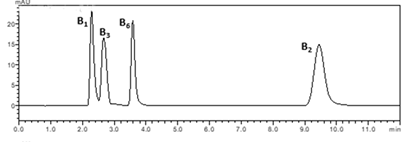
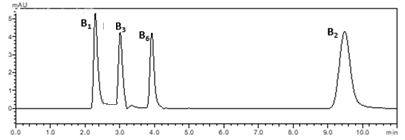
The standard HPLC chromatograms of vitamins B1, B2, B3, and B6 used to determine the vitamin contents in meat and meat analog patties samples are shown in Figure 1 and Figure 2.


The validation of the analytical method for vitamins B1, B2, B3, and B6 was performed according to AOAC guidelines 17. The validation results of the method used for the determination of vitamins B1, B2, B3, and B6 in meat patties and meat analog patties are presented in Table 1.
3.2. Vitamin B1, B2, B3, and B6 Concentrations in Meat Patties and Meat Analog PattiesThe amounts of vitamins B1, B2, B3, and B6 in raw and cooked meat patties and meat analog patties, cooking losses, amounts after in vitro digestion, and bioavailability percentages (%) are presented in Tables 2, 3, 4, and 5.
According to Table 2, vitamin B1 levels were significantly higher in meat patties thanin meat analogs (p1 < 0.001). Cooking processes caused a significant decrease in vitamin B1 content in the meat patties (p2 < 0.001); the lowest loss was observed in pan-frying with little oil (13.09%), while the highest loss occurred in deep-frying (54.75%). Similarly, vitamin B1 levels in meat analog patties also decreased after cooking, with the lowest loss in pan-frying with little oil (3.43%) and the highest loss in deep-frying (50.14%). In all cooking methods, vitamin B1 levels in meat patties were higher than those in meat analog patties (meat patties>meat analog patties, p3 < 0.05).
According to Table 3, vitamin B2 levels in raw and cooked meat patty samples prepared using different cooking methods were significantly higher compared to those in meat analog patties (p1 < 0.001). A significant decrease in vitamin B2 content was observed after cooking in the meat patties (p2 < 0.001); the lowest loss occurred in pan-frying with little oil (19.42%), while the highest loss was in deep-frying (84.28%). Similarly, vitamin B2 levels in meat analog patties also decreased, with the lowest loss in pan-frying with little oil (23.34%) and the highest loss in deep-frying (76.92%). Except for deep-frying, vitamin B2 levels in meat patties were significantly higher than those in meat analog patties for all cooking methods (meat patties>meat analog patties, p3 < 0.05). However, the difference in vitamin B2 between the two products during deep-frying was not statistically significant (p3 = 0.528).
According to Table 4, vitamin B3 levels in raw and cooked meat patty samples prepared using different cooking methods were significantly higher compared to those in meat analog patties (p1 < 0.001). Cooking caused a significant decrease in vitamin B3 content in the meat patties (p2 < 0.001); the lowest loss was observed in pan-frying with little oil (10.82%), while the highest loss
occurred in deep-frying (81.50%). Similarly, vitamin B3 levels in meat analog patties also decreased after cooking, with the lowest loss in pan-frying with little oil (17.42%) and the highest loss in deep-frying (77.13%). Vitamin B3 levels in meat patties were significantly higher than those in meat analog patties across all cooking methods (meat patties>meat analog patties, p3 < 0.05).
According to Table 5, vitamin B6 levels in raw and cooked meat patty samples prepared using different cooking methods were significantly higher compared to those in meat analog patties (p1 < 0.001). Cooking caused a significant reduction in vitamin B6 content in the meat patties (p2 < 0.001); the lowest loss occurred in pan-frying with little oil (16.83%), while the highest loss was observed in deep-frying (69.72%). Similarly, vitamin B6 levels in meat analog patties also decreased after cooking, with the lowest loss in pan-frying with little oil (31.17%) and the highest loss in deep-frying (61.26%). Except for deep-frying, vitamin B6 levels in meat patties were higher than those in meat analog patties across all cooking methods (meat patties>meat analog patties, p3 < 0.05). The difference in vitamin B6 between the two products during deep-frying was not statistically significant (p3 = 0.224).
According to Table 6, vitamin B1 bioavailability in meat patties is highest after pan-frying with little oil, slightly lower after baking, and lowest after deep-frying. Deep-frying causes a significant loss of 37.08% in vitamin B1 bioavailability. A similar decrease is observed in meat analog patties; however, bioavailability after deep-frying
(56.49%) is higher compared to meat patties. This suggests that the structural properties of meat analog products may influence vitamin release during digestion. Vitamin B1 levels in meat patties are significantly higher than in meat analog patties across all cooking methods (p3 < 0.001), although part of this advantage decreases due to cooking and digestion.
According to Table 7, vitamin B2 bioavailability in meat patties is highest after pan-frying with little oil, followed by baking, and lowest after deep-frying. However, bioavailability after deep-frying (64.82%) is close to that of pan-frying and baking. A similar decrease is observed in meat analog patties, with bioavailability after pan-frying (72.19%) being higher than in meat patties. Except for deep-frying, vitamin B2 levels in meat patties are significantly higher than those in meat analog patties for all cooking methods; no significant difference is observed between the two products after deep-frying.
According to Table 8, vitamin B3 bioavailability in meat patties is highest after pan-frying with little oil, followed by baking, and lowest after deep-frying. However, the bioavailability after deep-frying (62.59%) is quite close to that of pan-frying and baking. A similar decrease is observed in meat analog patties, with bioavailability after pan-frying (77.6%) being higher than in meat patties. Except for deep-frying, vitamin B3 levels in meat patties are significantly higher than those in meat analog patties for all cooking methods; no statistically significant difference is found between the two products after deep-frying.
According to Table 9, vitamin B6 bioavailability in meat patties is highest after pan-frying with little oil, lower after baking, and lowest after deep-frying. Bioavailability drops to 30.61% following deep-frying. A similar decrease is observed in meat analog patties; however, bioavailability after pan-frying (76.17%) is higher than in meat patties. Vitamin B6 levels in meat patties are significantly higher than those in meat analog patties for all cooking methods.
This study aimed to investigate the effects of different cooking methods (deep-frying, pan-frying with little oil, and oven-baking) on the post-cooking losses and post-digestion bioavailability levels of vitamins B1, B2, B3, and B6 in meat patties and meat analogue patties. The limited data in the literature concerning cooking-induced losses and bioavailability of B-group vitamins in meat and meat analogue products underscores the scientific importance of this research, as it fills a critical knowledge gap.
Vitamin B1
In meat patties, the highest loss of vitamin B1 occurred during deep-frying, while the lowest loss was observed in pan-frying with little oil. High-temperature cooking methods (e.g., deep-frying) were found to disrupt the structural integrity of vitamin B1, increasing losses due to its water-soluble nature. One study reported that oven-frying almost completely eliminated vitamin B1 levels, another study noted a 21.4% loss in beef tenderloin, and yet another study found vitamin B1 losses ranging from 8% to 64.4%, with the highest loss occurring during frying 18, 19, 20, 21.
A similar trend was observed in meat analogue patties; the highest loss occurred during deep-frying, while the lowest loss was seen in pan-frying with little oil. One study reported vitamin B1 losses of 9–17% during steaming and 48–50% during boiling 22.
In terms of bioavailability, no significant differences were observed between pan-frying and oven-baking, while deep-frying reduced bioavailability in both product types. One study reported that gastric pH affects the bioavailability of vitamin B1, and another study noted an average bioavailability of 68.9% in vegetables. Food composition, digestibility, and matrix components significantly influence bioavailability 23, 24.
Although meat patties are richer in vitamin B1, cooking and digestion processes reduce this advantage deep-frying has the most detrimental effect. In meat analogues, structural components may affect post-digestion vitamin release.
Vitamin B2
The cooking method significantly affected vitamin B2 levels. In meat patties, the highest loss occurred during deep-frying, while the lowest loss was observed during pan-frying with little oil. One study reported a 86.9% loss of vitamin B2 in pan-fried beef tenderloin, and another study found losses in red meat ranging from 5.09% to 89.23%, with the highest loss occurring during frying 19, 21.
Similar results were observed in meat analogue patties, with the highest loss during deep-frying and the lowest loss during pan-frying. One study reported vitamin B2 losses of 9–13% during steaming 22.
In meat patties, bioavailability did not differ significantly between pan-frying and oven-baking, but deep-frying reduced bioavailability. In patty analogues, oven-baking resulted in lower bioavailability compared to other methods. One study reported vitamin B2 bioavailability in bread ranging from 45% to 73%, with the highest bioavailability observed in whole wheat bread 10
Vitamin B3
In meat patties, the highest vitamin B3 loss occurred during deep-frying, while the lowest loss was observed during pan-frying with little oil. One study reported an 86.9% loss of vitamin B3 in cooked beef tenderloin 19. Another study emphasized that high-temperature cooking methods increase vitamin loss 19, 21.
Similar trends were observed in meat analogue patties. One study reported vitamin B3 losses of 48–50% during boiling 22.
In meat patties, bioavailability did not differ significantly across cooking methods. However, in meat analogue patties, oven-baking resulted in lower bioavailability. Çatak reported that vitamin B3 bioavailability in fortified whole wheat bread ranged from 42.1% to 94.9% 25.
Meat patties remain richer in vitamin B3, but deep-frying significantly impairs both content and bioavailability. Meat analogues show higher bioavailability after pan-frying, suggesting their structural properties may facilitate vitamin release during digestion. Deep-frying yielded the poorest outcomes for both products.
Vitamin B6
Meat patties lost the most vitamin B6 during deep-frying and the least during pan-frying. Mortensen and Purchas have shown that high-temperature cooking negatively affects vitamin B6 content 20, 26.
A similar trend was observed in meat analogue patties. Murakami and colleagues reported a decrease in vitamin B6 in amaranth seeds processed at high temperatures 27.
In meat patties, bioavailability did not differ significantly between pan-frying and baking, but deep-frying greatly reduced bioavailability. In meat analogue patties, the highest bioavailability was achieved with pan-frying. Yaman and Mızrak noted that the bioavailability of different forms of vitamin B6 (PN, PL, PM) varies depending on gastric pH 10.
Although meat patties are richer in vitamin B6, deep-frying results in significant losses in both content and bioavailability. Meat analogue patties showed higher vitamin B6 bioavailability after pan-frying, indicating that plant-based product structures may enhance vitamin release during digestion. Meat patties consistently demonstrated significantly higher vitamin B6 content across cooking methods (p < 0.001).
• This study demonstrated that cooking methods significantly affect both the content and bioavailability of B-group vitamins.
• Deep-frying was the most damaging method, causing the highest vitamin losses and reduced bioavailability.
• The high fiber content and lower digestibility of plant-based analogue products may limit the bioavailability of certain B vitamins.
• The results highlight the importance of choosing appropriate cooking methods to preserve nutritional value—an issue relevant to both food manufacturers and consumers.
No financial support was received from any instution or organization.
The authors declare that they have no conflict of interests.
| [1] | OECD. (2020). Meat Consumption. https:// www.oecd.org/ en/data/ indicators/meat-consumption.html. | ||
| In article | |||
| [2] | Ball GFM. (2004). Vitamin B1, B2, B3, Vitamins: Their Role in the Human Body. Blackwell Publishing Ltd, Oxford, UK. e-ISSN: 2148-2683. | ||
| In article | |||
| [3] | European Food Safety Authority (EFSA). (2024). An evaluation of dietary reference values for vitamins and minerals for lactating women. file:/// C:/Users/SAMSUNG/Downloads/16Ae_An-evaluation- dietary- reference- values-vitamins-and-minerals-lactacting-women.pdf. | ||
| In article | |||
| [4] | Cutroneo S, Angelino D, Tedeschi T, Pellegrini N, Martini D. (2022). Nutritional quality of meat analogues: Results from the food labelling of Italian products (FLIP) project. Front in Nutrition, 26(9): 852831. | ||
| In article | View Article PubMed | ||
| [5] | Boer J, Aiking H. (2019). Strategies towards healthy and sustainable protein consumption: A transition framework at the levels of diets, dishes, and dish ingredients. Food Quality and Preference, 73: 171-181. | ||
| In article | View Article | ||
| [6] | Kyriakopoulou K, Keppler JK, Van der Goot AJ. (2021). Functionality of ingredients and additives in plantbased meat analogues. Foods, 10 (3): 600. | ||
| In article | View Article PubMed | ||
| [7] | Benito P, Miller D. (1998). Iron absorption and bioavailability: an updated review. Nutrition Research, 18 (3): 581–603. | ||
| In article | View Article | ||
| [8] | Van den Berg H, van der Gaag M, Hendriks H. (2002). Influence of lifestyle on vitamin bioavailability. Int. J. Vitam. Nutr. Res, 72 (1): 53–59. | ||
| In article | View Article PubMed | ||
| [9] | Hur SJ, Lim BO, Decker EA, McClements DJ. (2011). In vitro human digestion models for food applications. Food Chemistry, 125: 1–12. | ||
| In article | View Article | ||
| [10] | Yaman M, Mızrak OF, Çatak J, Sargın HS. (2019). In vitro bioaccessibility of added folic acid in commercially available baby foods formulated with milk and milk products. Food Sci. Biotechnol. 1–8. | ||
| In article | View Article PubMed | ||
| [11] | Ugur H, Çatak J, Mızrak OF, Çebi N, Yaman M. (2020). Determination and evaluation of in vitro bioaccessibility of added vitamin C in commercially available fruit-, vegetable-, and cereal-based baby foods. Food Chemistry, 330: 127166. | ||
| In article | View Article PubMed | ||
| [12] | Alkaç ZK, Dağoğlu İ, Korkak FA, Kazdal SM, Dağ A. (2024). Acrylamide Formation: The Effect of Thawing and Frying Methods in Chicken and Fish Meat. Journal of Food and Nutrition Research, 12(7): 349-354. | ||
| In article | View Article | ||
| [13] | Babür TE, Gürbüz Ü. (2015). Geleneksel pişirme yöntemlerinin et kalitesine etkileri. Journal of Tourism and Gastronomy Studies, 3(4): 58-64. | ||
| In article | |||
| [14] | Riccio F, Mennella C, Fogliano V. (2006). Effect of cooking on the concentration of Vitamins B in fortified meat products. Journal of Pharmaceutical and Biomedical Analysis 41 (2006) 1592–1595. | ||
| In article | View Article PubMed | ||
| [15] | Sarwar S, Zohora FT, Khatun O, Begum P, Khatun M, Ahsan M, Islam SN. (2020). Estimation of B-vitamins (B1, B2, B3 and B6) by HPLC in vegetables including ethnic selected varieties of Bangladesh. Pharmacy and Pharmacology International Journal, 8(1): 16-23. | ||
| In article | View Article | ||
| [16] | Lee HK, Kim SY, Sok SR. (2016). Effects of Multivitamin Supplements on Cognitive Function, Serum Homocysteine Level, and Depression of Korean Older Adults with Mild Cognitive Impairment in Care Facilities. Journal Nursing Scholarship, 48(3): 223-231. | ||
| In article | View Article PubMed | ||
| [17] | AOAC (2002). Guidelines for Single Laboratory Validation of Chemical Methods for Dietary Supplements and Botanicals. Arlindton. Assocationof Official Analytical Chemists, Arlington, USA. | ||
| In article | |||
| [18] | Hanna M, Jaqua E, Nguyen V, Clay J. (2022). B Vitamins: Functions and uses in medicine. The Permanente Journal, 26(2): 89–97. | ||
| In article | View Article PubMed | ||
| [19] | Lombardi-Boccia G, Lanzi S, Aguzzi A. (2005). Aspects of meat quality: trace elements and B vitamins in raw and cooked meats. Journal of Food Composition and Analysis, 18(1): 39-46. | ||
| In article | View Article | ||
| [20] | Mortensen EG, Fuerniss HF, Legako JF, Thompson LD, Woerner DR. (2024). Nutrient Analysis of Raw and Cooked USDA Prime Beef Cuts. Nutrients, 16(17): 2912. | ||
| In article | View Article PubMed | ||
| [21] | Ertekin Tezcan E. (2020). Kırmızı etlerin b1, b2 ve b3 vitamini pişirme kayıplarının ve in vitro gastrointestinal sistemde biyoerişilebilirliğinin incelenmesi. T.C. İstanbul Sabahattin Zaim Üniversitesi Lisansüstü Eğitim Enstitüsü Beslenme ve Diyetetik Anabilim Dalı, Beslenme ve Diyetetik Bilim Dalı,Yüksek Lisans Tezi. | ||
| In article | |||
| [22] | Sunday A, Agbugui P, Solola SOA, Oyeku J. (2023). Effect of heat processıng on vıtamın composıtıon of selected staple green leafy vegetables ın nıgerıa. Food and Environment Safety Journal, 22(4): 248-254. | ||
| In article | View Article | ||
| [23] | Akça SN, Sargın HS, Mızrak ÖF, Yaman M. (2019). Determination and assessment of the bioaccessibility of vitamins B1, B2, and B3 in commercially available cereal-based baby foods. Microchemical Journal, 150:104192. | ||
| In article | View Article | ||
| [24] | Demir K, Ertekin Tezcan E, Uğur H, Yaman M. (2023). Determınatıon of Content, Cookıng Loss, And Bıoaccessıbılıty Of Thıamıne In Red Meats Usıng In Vıtro Sımulated Human Gastroıntestınal Dıgestıon System. Latin American Applied Research - An international journal, 53(3):271-278. | ||
| In article | View Article | ||
| [25] | Çatak J, Gizlici MN. (2022). the effect of in vitro simulated gastrointestinal digestive system on the biodegradation of B group vitamins in bread. Heliyon, 8(10):1-9. Heliyon 8(10):1-9. | ||
| In article | View Article PubMed | ||
| [26] | Purchas RW, Wilkinson B, Carruthers F, Jackson F. (2014). A comparison of the nutrient content of uncooked and cooked lean from New Zealand beef and lamb. Journal of Food Composition and Analysis, 35(2): 75-8. | ||
| In article | View Article | ||
| [27] | Murakami T, Yutani A, Yamano T, Iyota H, Konishi Y. (2014). Effects of popping on nutrient contents of amaranth seed. Plant Foods for Human Nutrition, 69: 25-29. | ||
| In article | View Article PubMed | ||
Published with license by Science and Education Publishing, Copyright © 2025 İrem DAĞOĞLU POLAT and Ayhan DAĞ
 This work is licensed under a Creative Commons Attribution 4.0 International License. To view a copy of this license, visit
http://creativecommons.org/licenses/by/4.0/
This work is licensed under a Creative Commons Attribution 4.0 International License. To view a copy of this license, visit
http://creativecommons.org/licenses/by/4.0/
| [1] | OECD. (2020). Meat Consumption. https:// www.oecd.org/ en/data/ indicators/meat-consumption.html. | ||
| In article | |||
| [2] | Ball GFM. (2004). Vitamin B1, B2, B3, Vitamins: Their Role in the Human Body. Blackwell Publishing Ltd, Oxford, UK. e-ISSN: 2148-2683. | ||
| In article | |||
| [3] | European Food Safety Authority (EFSA). (2024). An evaluation of dietary reference values for vitamins and minerals for lactating women. file:/// C:/Users/SAMSUNG/Downloads/16Ae_An-evaluation- dietary- reference- values-vitamins-and-minerals-lactacting-women.pdf. | ||
| In article | |||
| [4] | Cutroneo S, Angelino D, Tedeschi T, Pellegrini N, Martini D. (2022). Nutritional quality of meat analogues: Results from the food labelling of Italian products (FLIP) project. Front in Nutrition, 26(9): 852831. | ||
| In article | View Article PubMed | ||
| [5] | Boer J, Aiking H. (2019). Strategies towards healthy and sustainable protein consumption: A transition framework at the levels of diets, dishes, and dish ingredients. Food Quality and Preference, 73: 171-181. | ||
| In article | View Article | ||
| [6] | Kyriakopoulou K, Keppler JK, Van der Goot AJ. (2021). Functionality of ingredients and additives in plantbased meat analogues. Foods, 10 (3): 600. | ||
| In article | View Article PubMed | ||
| [7] | Benito P, Miller D. (1998). Iron absorption and bioavailability: an updated review. Nutrition Research, 18 (3): 581–603. | ||
| In article | View Article | ||
| [8] | Van den Berg H, van der Gaag M, Hendriks H. (2002). Influence of lifestyle on vitamin bioavailability. Int. J. Vitam. Nutr. Res, 72 (1): 53–59. | ||
| In article | View Article PubMed | ||
| [9] | Hur SJ, Lim BO, Decker EA, McClements DJ. (2011). In vitro human digestion models for food applications. Food Chemistry, 125: 1–12. | ||
| In article | View Article | ||
| [10] | Yaman M, Mızrak OF, Çatak J, Sargın HS. (2019). In vitro bioaccessibility of added folic acid in commercially available baby foods formulated with milk and milk products. Food Sci. Biotechnol. 1–8. | ||
| In article | View Article PubMed | ||
| [11] | Ugur H, Çatak J, Mızrak OF, Çebi N, Yaman M. (2020). Determination and evaluation of in vitro bioaccessibility of added vitamin C in commercially available fruit-, vegetable-, and cereal-based baby foods. Food Chemistry, 330: 127166. | ||
| In article | View Article PubMed | ||
| [12] | Alkaç ZK, Dağoğlu İ, Korkak FA, Kazdal SM, Dağ A. (2024). Acrylamide Formation: The Effect of Thawing and Frying Methods in Chicken and Fish Meat. Journal of Food and Nutrition Research, 12(7): 349-354. | ||
| In article | View Article | ||
| [13] | Babür TE, Gürbüz Ü. (2015). Geleneksel pişirme yöntemlerinin et kalitesine etkileri. Journal of Tourism and Gastronomy Studies, 3(4): 58-64. | ||
| In article | |||
| [14] | Riccio F, Mennella C, Fogliano V. (2006). Effect of cooking on the concentration of Vitamins B in fortified meat products. Journal of Pharmaceutical and Biomedical Analysis 41 (2006) 1592–1595. | ||
| In article | View Article PubMed | ||
| [15] | Sarwar S, Zohora FT, Khatun O, Begum P, Khatun M, Ahsan M, Islam SN. (2020). Estimation of B-vitamins (B1, B2, B3 and B6) by HPLC in vegetables including ethnic selected varieties of Bangladesh. Pharmacy and Pharmacology International Journal, 8(1): 16-23. | ||
| In article | View Article | ||
| [16] | Lee HK, Kim SY, Sok SR. (2016). Effects of Multivitamin Supplements on Cognitive Function, Serum Homocysteine Level, and Depression of Korean Older Adults with Mild Cognitive Impairment in Care Facilities. Journal Nursing Scholarship, 48(3): 223-231. | ||
| In article | View Article PubMed | ||
| [17] | AOAC (2002). Guidelines for Single Laboratory Validation of Chemical Methods for Dietary Supplements and Botanicals. Arlindton. Assocationof Official Analytical Chemists, Arlington, USA. | ||
| In article | |||
| [18] | Hanna M, Jaqua E, Nguyen V, Clay J. (2022). B Vitamins: Functions and uses in medicine. The Permanente Journal, 26(2): 89–97. | ||
| In article | View Article PubMed | ||
| [19] | Lombardi-Boccia G, Lanzi S, Aguzzi A. (2005). Aspects of meat quality: trace elements and B vitamins in raw and cooked meats. Journal of Food Composition and Analysis, 18(1): 39-46. | ||
| In article | View Article | ||
| [20] | Mortensen EG, Fuerniss HF, Legako JF, Thompson LD, Woerner DR. (2024). Nutrient Analysis of Raw and Cooked USDA Prime Beef Cuts. Nutrients, 16(17): 2912. | ||
| In article | View Article PubMed | ||
| [21] | Ertekin Tezcan E. (2020). Kırmızı etlerin b1, b2 ve b3 vitamini pişirme kayıplarının ve in vitro gastrointestinal sistemde biyoerişilebilirliğinin incelenmesi. T.C. İstanbul Sabahattin Zaim Üniversitesi Lisansüstü Eğitim Enstitüsü Beslenme ve Diyetetik Anabilim Dalı, Beslenme ve Diyetetik Bilim Dalı,Yüksek Lisans Tezi. | ||
| In article | |||
| [22] | Sunday A, Agbugui P, Solola SOA, Oyeku J. (2023). Effect of heat processıng on vıtamın composıtıon of selected staple green leafy vegetables ın nıgerıa. Food and Environment Safety Journal, 22(4): 248-254. | ||
| In article | View Article | ||
| [23] | Akça SN, Sargın HS, Mızrak ÖF, Yaman M. (2019). Determination and assessment of the bioaccessibility of vitamins B1, B2, and B3 in commercially available cereal-based baby foods. Microchemical Journal, 150:104192. | ||
| In article | View Article | ||
| [24] | Demir K, Ertekin Tezcan E, Uğur H, Yaman M. (2023). Determınatıon of Content, Cookıng Loss, And Bıoaccessıbılıty Of Thıamıne In Red Meats Usıng In Vıtro Sımulated Human Gastroıntestınal Dıgestıon System. Latin American Applied Research - An international journal, 53(3):271-278. | ||
| In article | View Article | ||
| [25] | Çatak J, Gizlici MN. (2022). the effect of in vitro simulated gastrointestinal digestive system on the biodegradation of B group vitamins in bread. Heliyon, 8(10):1-9. Heliyon 8(10):1-9. | ||
| In article | View Article PubMed | ||
| [26] | Purchas RW, Wilkinson B, Carruthers F, Jackson F. (2014). A comparison of the nutrient content of uncooked and cooked lean from New Zealand beef and lamb. Journal of Food Composition and Analysis, 35(2): 75-8. | ||
| In article | View Article | ||
| [27] | Murakami T, Yutani A, Yamano T, Iyota H, Konishi Y. (2014). Effects of popping on nutrient contents of amaranth seed. Plant Foods for Human Nutrition, 69: 25-29. | ||
| In article | View Article PubMed | ||