Renal clear cell carcinoma (ccRCC) is one of the most prevalent and aggressive histological subtypes of all renal cell carcinomas (RCCS) and is a metabolically abnormal cancer. Advanced ccRCC usually has a poor prognosis. Therefore, appropriate tumor markers need to be developed to predict the treatment, prognosis, and progression of ccRCC. Recombinant Frizzled Homolog 1 (FZD1) is a receptor for the Wnt signaling pathway, and overexpression of FZD1 has been detected in many cancer tissues and cells, leading to tumor development and drug resistance. However, its expression status and prognostic value in renal carcinoma remain unclear. Therefore, the purpose of this study was to explore the relationship between clinical features, overall survival, immune infiltration, and prognostic risk in patients with FZD1 and ccRCC through bioinformatics. ccRCC RNA-seq FPKM format data and clinical data were downloaded from TCGA database, and the correlation between FZD1 and ccRCC was evaluated by Cox and Logistic analysis. The results showed that the expression of FZD1 in renal carcinoma tissues was higher than that in normal tissues (P<0.001); The ROC curve showed that FZD1 had high diagnostic value (AUC = 0.877). High expression of FZD1 is associated with immune status of renal clear cell carcinoma. These data indicate that the expression status of FZD1 has diagnostic and prognostic value in patients with ccRCC, and is a feasible potential novel prognostic marker for ccRCC, and may also be used as a potential therapeutic target for alleviating ccRCC patients.
Approximately 400,000 people worldwide are diagnosed with renal cell carcinoma (RCC) each year. At diagnosis, 75% of these renal cancers are diagnosed with ccRCC, and the 5-year survival rate is 50%-69% 1, 2, however, if the ccRCC tumor measurement is larger than 7 cm at diagnosis or has metastasized, the 5-year survival rate drops to 10% 3. ccRCC is also one of the most common malignant tumors of urinary system 4. Genetically, persistent deletion of multiple tumor suppressor genes leads to ccRCC 5. Surgical resection is the primary treatment for early ccRCC, but up to 40% of patients with ccRCC develop metastasis after surgical intervention 6, while the high mortality of patients with advanced ccRCC may be due to the lack of effective treatment and reliable risk stratification to evaluate prognosis, and ccRCC is not sensitive to radiotherapy and chemotherapy 7. Clinical outcomes for ccRCC are variable, and attempts have been made to predict survival based on available clinical parameters. Variability occurs in similar clinical categories, likely due to a combination of limited biomarkers and tumor heterogeneity, which prevents a more precise prognosis. The low survival rate and the challenge of clinical variation have led to a large number of detailed cell analysis studies on ccRCC, providing mechanistic insights for targeted therapies. However, there are still gaps in our understanding of the complex and varied cell types and states in ccRCC. With the advent of modern diagnosis and treatment methods, more and more literatures have reported differences in clinical outcomes of RCC patients with the same TNM staging and similar treatment regimen 8, indicating that the TNM staging system alone cannot provide complete information on the prognosis of RCC. Therefore, the identification of early diagnostic biomarkers is crucial to determine the treatment mode and improve the clinical outcome of patients with ccRCC. The development of useful clinical prognostic markers to accurately predict the outcome is conducive to risk stratification and guide the clinical diagnosis and treatment of ccRCC.
As early as the 1960s, it was recognized that there is a relationship between immune infiltration and the prognosis of different diseases 9. The cells involved in immune infiltration are immune cells present in tumors, which can be divided into 22 types, such as T, B, NK and plasma cells. For example, NK cells play a role in tumor immunity. Receptor or co-receptor recognition of ligands on tumor cells can activate NK cells, resulting in the killing of targets with underexpression of HLAI 10. NK cell metabolism is impaired in the tumor microenvironment 11. ccRCC is a highly immunogenic tumor type in which tumor cells generate an immunosuppressive environment through a variety of immunosuppressive mechanisms, such as disrupting active antigen presentation, reducing the influence of T cells, through immunosuppressive sensitivity and T cell "incompetence" pathways. It is worth noting that the occurrence and development of ccRCC is closely related to its immune microenvironment 12. ccRCC has been shown to be surrounded by a large number of inflammatory cells, such as T cells, NK cells, macrophages, which can disrupt the patient's immune system through abnormal transformation of dendritic cells.
FZD1, belonging to the "curl" gene family, encodes seven transmembrane domain proteins that are receptors for Wnt signaling proteins 13. It has been reported that after overexpression of FZD1, it participates in the activation of Wnt signaling pathway, leading to cell growth, invasion, metastasis and chemotherapy resistance 14. FZD1 can also participate in cell microenvironment regulation of cell proliferation 15. It has been reported that the expression of FZD1 in the tumor microenvironment has a gradient effect, which can regulate the progression and spread of colon cancer, providing a new therapeutic target for colon cancer patients 16. In addition, it can mediate drug resistance in neuroblastoma, acute myeloid leukemia, and breast cancer 17. Despite the important role of FZD1 in tumor development and drug resistance, its expression status and prognostic value in renal cancer remain unclear. Therefore, in this study, we used the clinical data in TCGA, including clinical features, prognosis and survival data, to study the correlation between FZD1 and ccRCC.
From TCGA database (https://portal.gdc.cancer.gov) to download TCGA-RNAseq KIRC project STAR process data, and extract the sorting FPKM format of the data and clinical data (adjacent n = 72; Clinical data n=537). Clinical data included gender, age, weight, height, etc. Since this is a bioinformatics study, it does not require ethics committee or institutional review board approval. This study was conducted in accordance with the publication guidelines provided by TCGA.
2.2. Clinicopathological AnalysisClinicopathological analysis was performed using TCGA data. Select the Kruskal-Wallis validation data format and visualize the data using the ggplot2 package. Clinical prognostic information included overall survival (OS) and disease-specific survival (DSS). Kaplan-Meier (K-M) method was used for univariate and multivariate Cox regression analysis.
2.3. Construction and Prediction of Nomogramsurvival package was used to test the proportional risk hypothesis and perform Cox regression analysis. nomogram related models were constructed and visualized using rms package. Calibration and differentiation are the most commonly used methods to evaluate model performance. Calibration plots were constructed to evaluate the prediction accuracy of a nomogram based on a prognostic model.
2.4. Gene Set Enrichment AnalysisGene set enrichment analysis (GSEA) established a series of genes associated with FZD1 expression. The samples were divided into a high FZD1 expression group and a low FZD1 expression group, which served as a training set to distinguish potential functions and elucidate significant survival differences. The gene sets were arranged multiple times for each examination. We used standardized enrichment scores and corrected P-values to rank each phenotypic enrichment pathway.
2.5. ImmunoinfiltrationSpearman correlation method was used to analyze the correlation between FZD1 and immune cells, and Wilcoxon rank sum test was used to compare the infiltration of these cells between samples with high and low expression of FZD1.
2.6. Statistical AnalysisWilcoxon signed rank test was used to analyze the expression level of FZD1 gene in unmatched samples of renal carcinoma patients. The expression of FZD1 gene in patients with renal carcinoma was analyzed by paired sample t test. Mann-Whitney U test (Wilcoxon rank sum test) and Wilcoxon signed rank test were used to analyze the differences of FZD1 between multiple groups and between paired samples. Cox regression was used to compare the prognosis of FZD1 between high and low groups and among subgroups. ROC analysis of the data was performed using pROC package, and the results were visualized using ggplot2; spearman analysis showed the correlation between FZD1 and immune infiltration and lollipop chart. GSEA analysis with the clusterProfiler package.
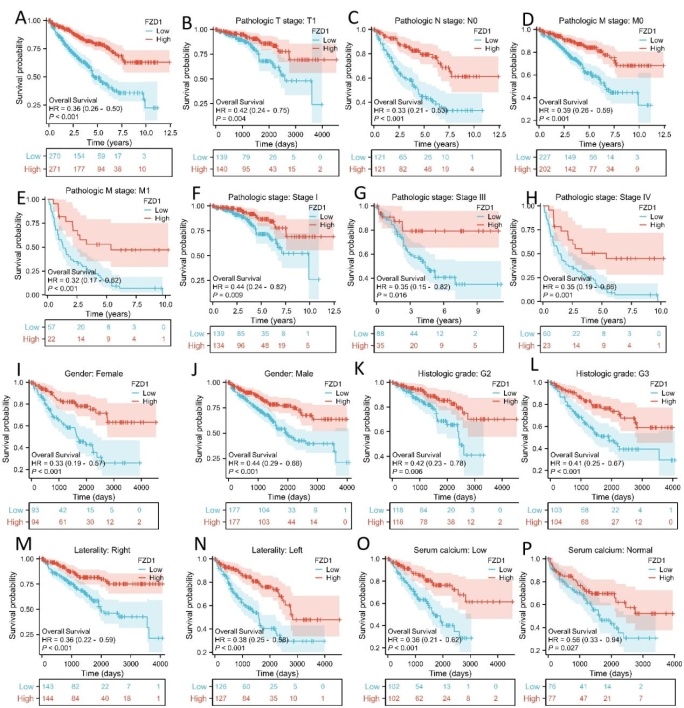
In this study, 541 samples of ccCRCC patients were retrieved from the TCGA database, including 270 samples with low FZD1 expression and 271 samples with high FZD1 expression. Table 1 lists the detailed clinical and genetic characteristics of patients with CCRCC. There were significant differences in Pathologic T stage, Pathologic M stage, Pathologic stage, Gender and Histologic grade between patients with low expression of FZD1 and patients with high expression of FZD1 (P < 0.001).
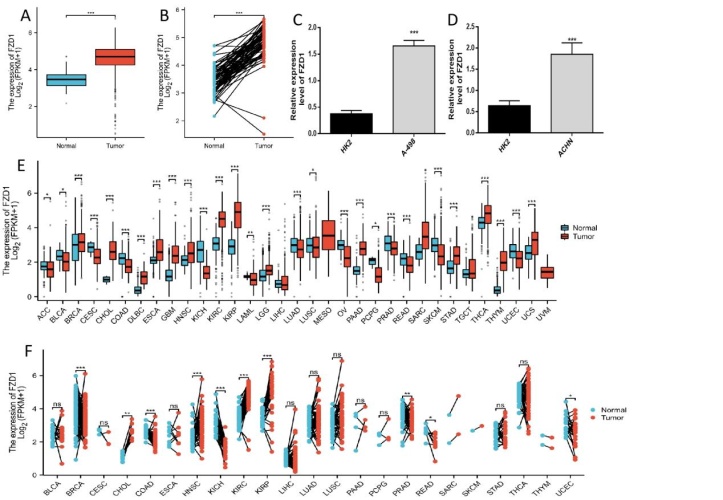
After processing TCGA-KIRC RNA-seq data, it was found that FZD1 was highly expressed in ccRCC (Figure 1A). Wilcoxon rank sum test was used to analyze paired samples and found that the results were consistent with those of unpaired samples (P < 0.001) (Figure 1B). It is suggested that FZD1 may play a role in the progression of ccRCC disease. qRT-PCR analysis of FZD1 expression in human renal cortex/proximal tubule cell line HK-2, human renal carcinoma cell line (A-498), and human renal adenocarcinoma cell line (ACHN) suggested that the expression of FZD1 was significantly up-regulated in A-498 (P) and ACHN (P) cells.
In addition, we also analyzed the expression of FZD1 in pancarcinoma. The Mann-Whitney U test found that the expression of FZD1 in 19 tumors was higher than that in corresponding normal tissues, and the Wilcoxon signed rank test found that the expression of FZD1 in 8 tumors was higher than that in corresponding normal tissues. See Figure 1C, D for details. Based on this, we hypothesized that high expression of FZD1 in ccRCC may be associated with prognosis. Therefore, single gene Logistic analysis was performed in this study (Table 2). The results were found to agree with our prediction. The high expression of FZD1 was related to Pathologic T stage, Pathologic M stage, Pathologic stage, Gender and Histologic grade stage, and the difference was statistically significant (P < 0.001).
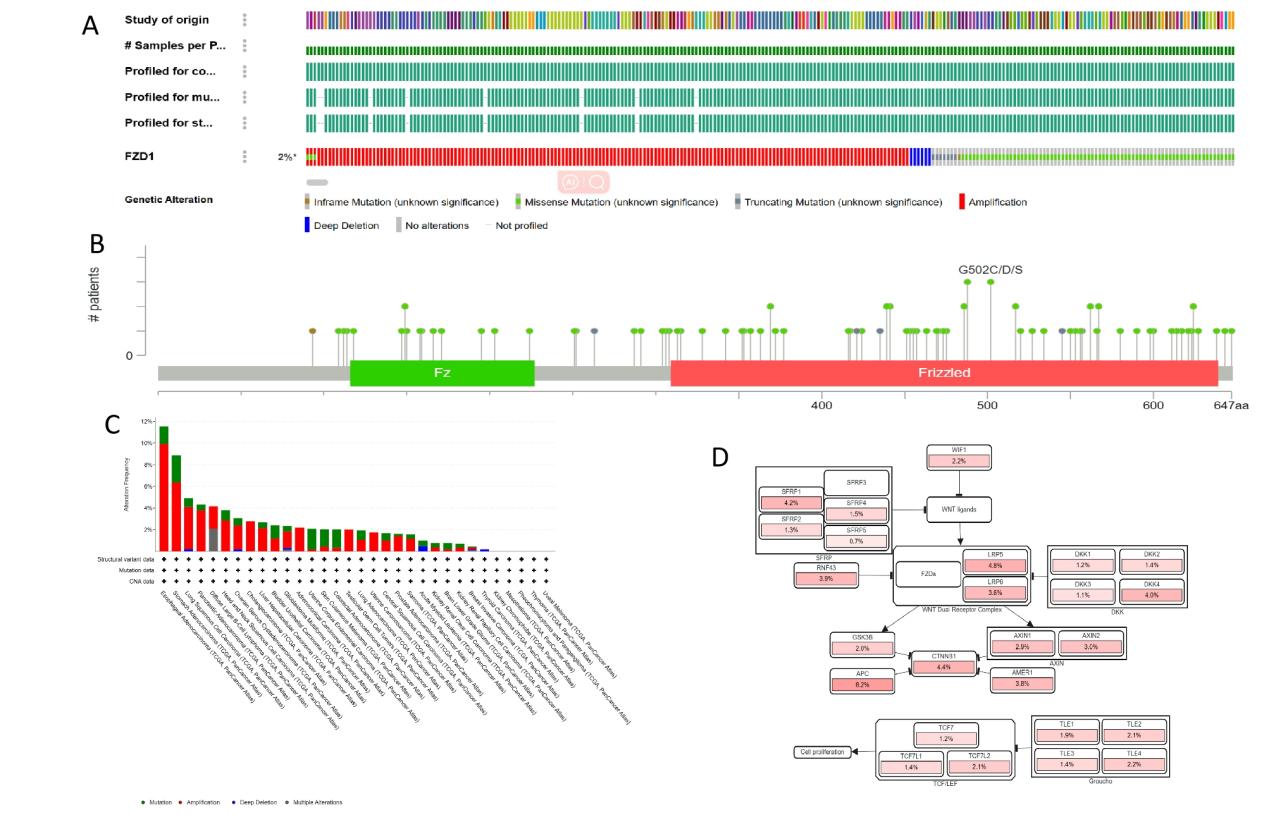
3.3. Genetic Changes of FZD1 in ccRCCThe genetic altered status of the FZD1 gene in different types of cancer in the TCGA cohort was analyzed via the cBioPortal website. As shown in Figure 2, in patients with Esophageal adenocarcinoma whose primary change was amplification, FZD1 had the highest frequency of change (9.89%). In 2.3% of all ccRCC cases, the "amplification" frequency found changes in the FZD1 gene, which is the FZD1 mutation mismatch site at G502C/D/S (Figure B) and the network diagram of FZD1 in the Wnt signaling pathway (Figure 2 D).
3.4. Multifaceted Prognostic Value of FZD1 Expression in CancerThrough the basic evaluation of FZD1 expression in different tumors, the relationship between FZD1 expression and OS in tumor patients was studied. Kaplan-Meier survival analysis (P < 0.001) and multiple clinical subgroups (Figure 3 B-O). Univariate Cox analysis (logrank test) confirmed that high expression of FZD1 was associated with a better prognosis for ccRCC [hazard ratio (HR) =0.362, 95%CI, 0.262-0.500, P < 0.001]. Multivariate Cox analysis confirmed that high expression of FZD1 was associated with better prognosis in ccRCC patients [hazard ratio (HR) =0.543, 95%CI, 0.257-1.146, P = 0.0109] (Table 3).


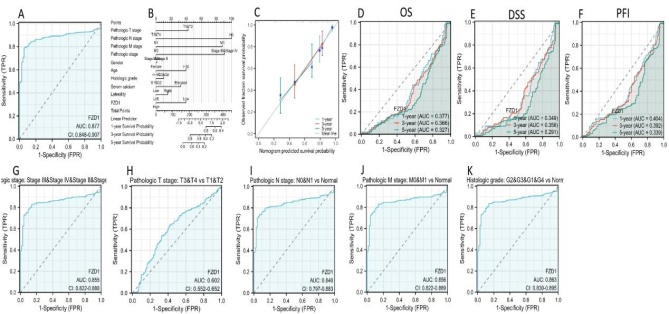
According to ROC curve analysis, FZD1 is not only closely related to the prognosis of renal cancer, but also has a high diagnostic value (AUC = 0.877) (Figure 4 A, G-K). In addition, taking into account FZD1 expression and other predictors such as age and stage, we constructed a nomogram to predict patient survival at 1, 3, and 5 years (Figure 4 B, D-F). We construct a bias correction line in the calibration plot to approximate the ideal curve (45 degree line), which indicates a complete agreement between prediction and observation (Figure 4 C).
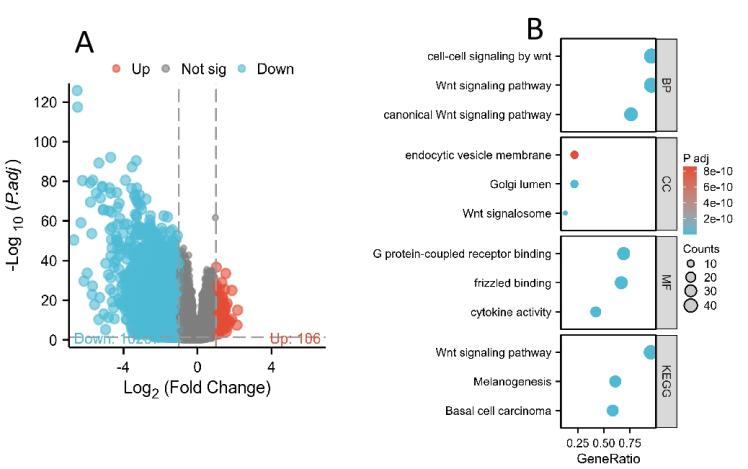
3.6. GSEA Identifies FZD1-related Signaling PathwaysRNAseq gene expression analysis was used to compare the gene expression profiles of the high expression group and the low expression group of FZD1 to clarify whether FZD1 plays a role in the occurrence and development of ccRCC. We verified the expression of FZD1 in normal and tumor samples using paired maps, which showed statistically significant differences. A total of 106 up-regulated genes were detected in the high FZD1 expression group (as reference group) (P>1.5 times) and 1023 down-regulated genes (P>-1.5 times). The expression of DEG is shown by the volcano diagram (Figure 5A). The biological process of FZD1 and KEGG results showed that it was mainly enriched in the Wnt signaling pathway, which was consistent with literature reports (Figure 5B).
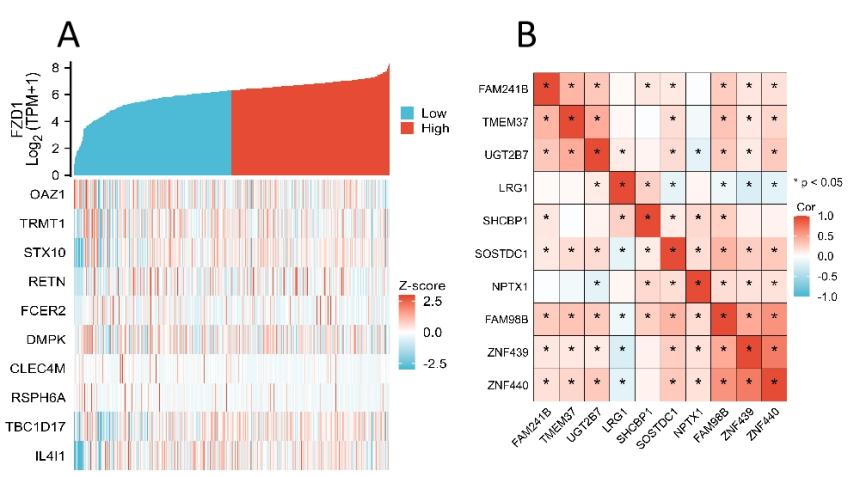
3.7. Correlation AnalysisSpearman correlation coefficient was used to analyze the expression of FZD1 related genes in the data grouped according to FZD1 gene expression. With FZD1 as the main variable, ggplot package was used to visualize the co-expression heat map of the analysis results (Figure 6). The expression of FZD1 was positively correlated with OAZ1, and negatively correlated with TRMT1, STX10, IL4I1 and other genes.
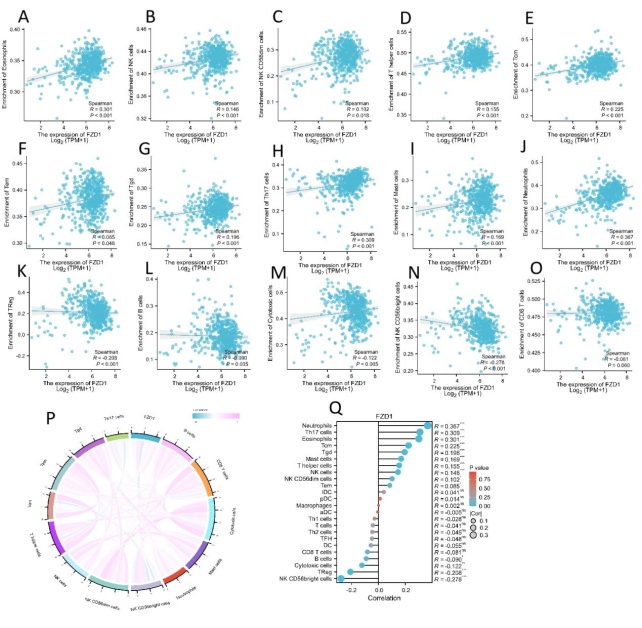
3.8. Correlation Between Immune Cell Infiltration and FZD1 ExpressionWe analyzed immune cell infiltration in ccRCC patients in the TCGA database. The expression of FZD1 was positively correlated with Eosinophils, Mast cells, Neutrophils, NK CD56dim cells, NK cells, Enrichment of Tcm, Tem, Tgd, Th1tcells and T cells (Figure 7 A-J). The results of the chord diagram were consistent with those of the immune infiltration scatter diagram. The expression of FZD1 was significantly negatively correlated with T cell infiltration, B cell infiltration, CD8 cell infiltration and Cytotoxic cell infiltration (Figure 7 P), indicating that high expression of FZD1 inhibited T cells, B cells, CD8 cells and Cytotoxic cells. It is suggested that the high expression of FZD1 is related to the immune status of ccRCC. Spearman correlation analysis of FZD1 expression and immune cell enrichment (ssGSEA generation) showed a negative correlation between FZD1 expression and the abundance of NK CD56bright cells (P < 0.001) (Figure 7 Q).


ccRCC is one of the most common kidney cancers, accounting for about 3% of adult malignancies 18. The 5-year survival rate of patients with advanced ccRCC is less than 10%, and 20-40% of patients have developed distant metastasis at the time of diagnosis 19, and the metastasis and invasion of malignant ccRCC may lead to serious adverse prognosis. Identification of tumor-specific markers and risk stratification are important for assessing patient outcomes, which may help develop new diagnostic and treatment strategies for ccRCC. In addition, predicting prognosis is important for treatment selection and the identification of prognostic biomarkers.
The composition and complex interactions of tumor immune cells have a significant influence on the aggressiveness of malignant cells. As a key component of the tumor microenvironment, checkpoint or adoptive cell transplantation of immune cells has made major breakthroughs in effectively dealing with various types of cancer, helping to improve clinical prognosis prediction, and gradually becoming an effective target for drugs. A large amount of evidence has proved that immune cells play an important role in determining the pathogenesis of ccRCC 20. Experimental techniques such as flow cytometry and immunohistochemistry are often used to measure the expression level of immune cells, but accuracy and confidence are still low. Due to technical limitations, these studies are necessarily limited to a very narrow view of the immune response, often including only one or two cell types. Therefore, there is an urgent need for a comprehensive systematic assessment of the immune landscape to more accurately understand the development of ccRCC compared to traditional single-factor predictors.
FZD1 has been shown to be abnormally expressed in a variety of malignant tumors 21, such as colon cancer, pancreatic cancer, etc., suggesting a potential role for FZD1 in processes related to tumorigenesis. The expression level and function of FZD1 vary greatly depending on tumor type. Overexpression of FZD1 in pancreatic cancer is associated with invasion, metastasis, and shorter overall survival. In this study, paired and unpaired analysis of FZD1 found that the expression level of FZD1 in ccRCC was significantly higher than that in normal tissues. This study subsequently analyzed the expression levels of FZD1 in all cancers and found that it is highly expressed in the vast majority of cancers. We found that FZD1 has significant significance in the M stage, pathological stage and grade of ccRCC patients, and plays a very important role in the prognosis of ccRCC. In addition, the results of ROC curve and line table showed that FZD1 had high diagnostic value in ccRCC. Scatter diagram, lollipop diagram and chord diagram of immune infiltration showed that FZD1 was closely related to immune cell infiltration. While we were unable to verify this phenomenon in this study, we speculate that genetic mutations and epigenetic alterations may play an important role. Genetic mutations and epigenetic changes are important for tumorigenesis and, as independent prognostic markers, also have an important impact on treatment strategies for cancer patients.
In summary, bioinformatics studies have shown that FZD1 is highly expressed in ccRCC and is related to factors such as tumor M stage, pathological stage and grade. In addition, the ROC curve suggests that FZD1 has high diagnostic value in ccRCC and may be used as a diagnostic marker for ccRCC. Immune infiltration scatter plot, lollipop plot and chord plot also suggest the potential correlation between FZD1 and immune cell invasion, which provides the basis and suggestion for further study of this mechanism of action.
There are some limitations to our study. First, this study is a retrospective data collection and analysis, so it is inevitably subject to selection and information bias. Second, because expression levels of the FZD1 gene have only been validated in public databases, it is necessary to demonstrate the prognostic value of this feature in an independent cohort to extend its applicability. Finally, further experimental validation in vivo and in vitro is necessary to illustrate the mechanisms that predict metabolic gene regulation.
This work was supported by the Integrated Project of Major Research Plan of National Natural Science Foundation of China (No.92249303).
| [1] | Huang JJ, Hsieh JJ. The therapeutic landscape of renal cell carcinoma: From the dark age to the golden age. Semin Nephrol. (2020) 40(1): 28-41. | ||
| In article | View Article PubMed | ||
| [2] | Morgantetti G, Ng KL, Samaratunga H, et al. Prostate specific membrane antigen (PSMA) expression in vena cava tumour thrombi of clear cell renal cell carcinoma suggests a role for PSMA-driven tumour neoangiogenesis. Transl Androl Urol. (2019) 8(Suppl 2): S147-55. | ||
| In article | View Article PubMed | ||
| [3] | Ahn T, Roberts MJ, Abduljabar A, et al. A review of prostate-specific membrane antigen (PSMA) positron emission tomography (PET) in renal cell carcinoma (RCC). Mol Imaging Biol (2019) 21(5): 799-807. | ||
| In article | View Article PubMed | ||
| [4] | Rini BI, Campbell SC, Escudier B. Renal cell carcinoma. Lancet. 2009; 373: 1119-32. | ||
| In article | View Article PubMed | ||
| [5] | Yu J, Mao W, Xu B, et al. Construction and validation of an autophagy-related long noncoding RNA signature for prognosis prediction in kidney renal clear cell carcinoma patients. Cancer Med. 2021 Apr;10(7): 2359-2369. | ||
| In article | View Article PubMed | ||
| [6] | Wang S, Zhang L, Yu Z, et al. Identification of a Glucose Metabolism-related Signature for prediction of Clinical Prognosis in Clear Cell Renal Cell Carcinoma. J Cancer. 2020 Jun 21;11(17): 4996-5006. | ||
| In article | View Article PubMed | ||
| [7] | Makhov P, Joshi S, Ghatalia P, et al. Resistance to systemic therapies in clear cell renal cell carcinoma: mechanisms and management strategies. Molecular Cancer Therapeutics . 2018;17(7): 1355-1364. | ||
| In article | View Article PubMed | ||
| [8] | Raghubar AM, Roberts MJ, Wood S, et al. Cellular milieu in clear cell renal cell carcinoma. Front Oncol. 2022 Oct 14; 12: 943583. | ||
| In article | View Article PubMed | ||
| [9] | Liu T, Yang K, Chen J, et al. Comprehensive Pan-Cancer Analysis of KIF18A as a Marker for Prognosis and Immunity. Biomolecules. 2023 Feb 8; 13(2): 326. | ||
| In article | View Article PubMed | ||
| [10] | Goncalves G, Mullan KA, Duscharla D, et al. IFNγ Modulates the Immunopeptidome of Triple Negative Breast Cancer Cells by Enhancing and Diversifying Antigen Processing and Presentation. Front Immunol. 2021 Apr 22; 12: 645770. | ||
| In article | View Article PubMed | ||
| [11] | Terrén I, Orrantia A, Vitallé J, et al. NK Cell Metabolism and Tumor Microenvironment. Front Immunol. 2019 Sep 24; 10: 2278. | ||
| In article | View Article PubMed | ||
| [12] | Xiao Y, Yang J, Yang M, et al. Comprehensive analysis of 7-methylguanosine and immune microenvironment characteristics in clear cell renal cell carcinomas. Front Genet. 2022 Aug 8; 13: 866819. | ||
| In article | View Article PubMed | ||
| [13] | Sagara N, Kirikoshi H, Terasaki H, et al. FZD4S, a splicing variant of frizzled-4, encodes a soluble-type positive regulator of the WNT signaling pathway. Biochem Biophys Res Commun. 2001 Apr 6; 282(3): 750-6. | ||
| In article | View Article PubMed | ||
| [14] | Zhang YP, Gao D, Wu P. [RBM38 Mediates the Proliferation of Acute Myeloid Leukemia Cells HL-60 by Regulating FZD1 mRNA Stability]. Zhongguo Shi Yan Xue Ye Xue Za Zhi. 2021 Dec; 29(6): 1775-1779. Chinese. | ||
| In article | |||
| [15] | Wang Z, Song K, Zhao W, et al. Dendritic cells in tumor microenvironment promoted the neuropathic pain via paracrine inflammatory and growth factors. Bioengineered. 2020 Dec; 11(1): 661-678. | ||
| In article | View Article PubMed | ||
| [16] | Ghatak S, Hascall VC, Markwald RR, et al. FOLFOX Therapy Induces Feedback Upregulation of CD44v6 through YB-1 to Maintain Stemness in Colon Initiating Cells. Int J Mol Sci. 2021 Jan 13; 22(2): 753. | ||
| In article | View Article PubMed | ||
| [17] | Flahaut M, Meier R, Coulon A, et al. The Wnt receptor FZD1 mediates chemoresistance in neuroblastoma through activation of the Wnt/beta-catenin pathway. Oncogene. 2009 Jun 11; 28(23): 2245-56. | ||
| In article | View Article PubMed | ||
| [18] | Dagher J, Delahunt B, Rioux-Leclercq N, et al. Percentage grade 4 tumour predicts outcome for clear cell renal cell carcinoma. Pathology. 2019 Jun; 51(4): 349-352. | ||
| In article | View Article PubMed | ||
| [19] | Han W, Fan B, Huang Y, et al. Construction and validation of a prognostic model of RNA binding proteins in clear cell renal carcinoma. BMC Nephrol. 2022 Jul 15; 23(1): 252. | ||
| In article | View Article PubMed | ||
| [20] | Krishna C, DiNatale RG, Kuo F, et al. Single-cell sequencing links multiregional immune landscapes and tissue-resident T cells in ccRCC to tumor topology and therapy efficacy. Cancer Cell. 2021 May 10; 39(5): 662-677. | ||
| In article | View Article PubMed | ||
| [21] | Wang R, Wang X, Zhang J, et al. LINC00942 Promotes Tumor Proliferation and Metastasis in Lung Adenocarcinoma via FZD1 Upregulation. Technol Cancer Res Treat. 2021 Jan-Dec; 20: 1533033820977526. | ||
| In article | View Article PubMed | ||
Published with license by Science and Education Publishing, Copyright © 2024 Min Luo, Yin Wang and Pei Feng Li
 This work is licensed under a Creative Commons Attribution 4.0 International License. To view a copy of this license, visit
http://creativecommons.org/licenses/by/4.0/
This work is licensed under a Creative Commons Attribution 4.0 International License. To view a copy of this license, visit
http://creativecommons.org/licenses/by/4.0/
| [1] | Huang JJ, Hsieh JJ. The therapeutic landscape of renal cell carcinoma: From the dark age to the golden age. Semin Nephrol. (2020) 40(1): 28-41. | ||
| In article | View Article PubMed | ||
| [2] | Morgantetti G, Ng KL, Samaratunga H, et al. Prostate specific membrane antigen (PSMA) expression in vena cava tumour thrombi of clear cell renal cell carcinoma suggests a role for PSMA-driven tumour neoangiogenesis. Transl Androl Urol. (2019) 8(Suppl 2): S147-55. | ||
| In article | View Article PubMed | ||
| [3] | Ahn T, Roberts MJ, Abduljabar A, et al. A review of prostate-specific membrane antigen (PSMA) positron emission tomography (PET) in renal cell carcinoma (RCC). Mol Imaging Biol (2019) 21(5): 799-807. | ||
| In article | View Article PubMed | ||
| [4] | Rini BI, Campbell SC, Escudier B. Renal cell carcinoma. Lancet. 2009; 373: 1119-32. | ||
| In article | View Article PubMed | ||
| [5] | Yu J, Mao W, Xu B, et al. Construction and validation of an autophagy-related long noncoding RNA signature for prognosis prediction in kidney renal clear cell carcinoma patients. Cancer Med. 2021 Apr;10(7): 2359-2369. | ||
| In article | View Article PubMed | ||
| [6] | Wang S, Zhang L, Yu Z, et al. Identification of a Glucose Metabolism-related Signature for prediction of Clinical Prognosis in Clear Cell Renal Cell Carcinoma. J Cancer. 2020 Jun 21;11(17): 4996-5006. | ||
| In article | View Article PubMed | ||
| [7] | Makhov P, Joshi S, Ghatalia P, et al. Resistance to systemic therapies in clear cell renal cell carcinoma: mechanisms and management strategies. Molecular Cancer Therapeutics . 2018;17(7): 1355-1364. | ||
| In article | View Article PubMed | ||
| [8] | Raghubar AM, Roberts MJ, Wood S, et al. Cellular milieu in clear cell renal cell carcinoma. Front Oncol. 2022 Oct 14; 12: 943583. | ||
| In article | View Article PubMed | ||
| [9] | Liu T, Yang K, Chen J, et al. Comprehensive Pan-Cancer Analysis of KIF18A as a Marker for Prognosis and Immunity. Biomolecules. 2023 Feb 8; 13(2): 326. | ||
| In article | View Article PubMed | ||
| [10] | Goncalves G, Mullan KA, Duscharla D, et al. IFNγ Modulates the Immunopeptidome of Triple Negative Breast Cancer Cells by Enhancing and Diversifying Antigen Processing and Presentation. Front Immunol. 2021 Apr 22; 12: 645770. | ||
| In article | View Article PubMed | ||
| [11] | Terrén I, Orrantia A, Vitallé J, et al. NK Cell Metabolism and Tumor Microenvironment. Front Immunol. 2019 Sep 24; 10: 2278. | ||
| In article | View Article PubMed | ||
| [12] | Xiao Y, Yang J, Yang M, et al. Comprehensive analysis of 7-methylguanosine and immune microenvironment characteristics in clear cell renal cell carcinomas. Front Genet. 2022 Aug 8; 13: 866819. | ||
| In article | View Article PubMed | ||
| [13] | Sagara N, Kirikoshi H, Terasaki H, et al. FZD4S, a splicing variant of frizzled-4, encodes a soluble-type positive regulator of the WNT signaling pathway. Biochem Biophys Res Commun. 2001 Apr 6; 282(3): 750-6. | ||
| In article | View Article PubMed | ||
| [14] | Zhang YP, Gao D, Wu P. [RBM38 Mediates the Proliferation of Acute Myeloid Leukemia Cells HL-60 by Regulating FZD1 mRNA Stability]. Zhongguo Shi Yan Xue Ye Xue Za Zhi. 2021 Dec; 29(6): 1775-1779. Chinese. | ||
| In article | |||
| [15] | Wang Z, Song K, Zhao W, et al. Dendritic cells in tumor microenvironment promoted the neuropathic pain via paracrine inflammatory and growth factors. Bioengineered. 2020 Dec; 11(1): 661-678. | ||
| In article | View Article PubMed | ||
| [16] | Ghatak S, Hascall VC, Markwald RR, et al. FOLFOX Therapy Induces Feedback Upregulation of CD44v6 through YB-1 to Maintain Stemness in Colon Initiating Cells. Int J Mol Sci. 2021 Jan 13; 22(2): 753. | ||
| In article | View Article PubMed | ||
| [17] | Flahaut M, Meier R, Coulon A, et al. The Wnt receptor FZD1 mediates chemoresistance in neuroblastoma through activation of the Wnt/beta-catenin pathway. Oncogene. 2009 Jun 11; 28(23): 2245-56. | ||
| In article | View Article PubMed | ||
| [18] | Dagher J, Delahunt B, Rioux-Leclercq N, et al. Percentage grade 4 tumour predicts outcome for clear cell renal cell carcinoma. Pathology. 2019 Jun; 51(4): 349-352. | ||
| In article | View Article PubMed | ||
| [19] | Han W, Fan B, Huang Y, et al. Construction and validation of a prognostic model of RNA binding proteins in clear cell renal carcinoma. BMC Nephrol. 2022 Jul 15; 23(1): 252. | ||
| In article | View Article PubMed | ||
| [20] | Krishna C, DiNatale RG, Kuo F, et al. Single-cell sequencing links multiregional immune landscapes and tissue-resident T cells in ccRCC to tumor topology and therapy efficacy. Cancer Cell. 2021 May 10; 39(5): 662-677. | ||
| In article | View Article PubMed | ||
| [21] | Wang R, Wang X, Zhang J, et al. LINC00942 Promotes Tumor Proliferation and Metastasis in Lung Adenocarcinoma via FZD1 Upregulation. Technol Cancer Res Treat. 2021 Jan-Dec; 20: 1533033820977526. | ||
| In article | View Article PubMed | ||