This study evaluated the effects of high pressure processing (HPP) on cathepsins D and L activities in duck meat and developed an HPP-tenderized duck meat product. Fresh duck meat was subjected to HPP at 400 or 600 MPa for 3 or 6 min. The enzymatic activities of Cathepsin D and L increased with increasing HPP pressure and time. HPP treatment of duck meat at 400 MPa for 3 min significantly decreased the shear force by 17.2%, total protein solubility by 38.6%, and the aerobic plate count by 3 log CFU/g, but did not significantly affect the pH value or cooking yield. Moreover, HPP treatment at 400 MPa for 3 min and refrigeration at 5°C for 0–9 d for autolysis, decreased cathepsin D and L activity. A 5-day autolysis treatment resulted in a lower shear force and a 38.3% decrease in total protein solubility. After 2 weeks of refrigerated storage, the aerobic plate count, color and shear force of the samples treated with 400 MPa for 3 min and autolysis at 5°C for 5 d were not significantly different from samples in week 0. HPP tenderizes and extends the shelf life of duck meat by increasing its cathepsin activity, reducing shear force, and inhibiting the growth of microorganisms.
In 1990, Japanese researchers were the first to apply high pressure processing (HPP), which uses high pressure to inactivate microorganisms in foods, such as commercial jams and jellies. The advantages of HPP are that it maintains the appearance (color) and aroma of food, minimizes nutrient loss, and extends shelf life. Since its introduction, HPP has been widely used in many products, such as vegetables, meats, juices, beverages and seafood. The global value and volume of HPP-prepared food products have been reported to exceed US$ 10 billion and approximately 200,000 tons, respectively. In general, HPP constitutes a valuable innovation in the food industry and has gradually won the favor of consumers 1. In addition to being used for food safety, HPP has been used to develop new meat products 2. Texture is an important factor in food that affects consumer acceptance. HPP has been shown to improve the textural properties of various foods, including meats, fruits, vegetables, nuts, seeds, and eggs, and prevent deterioration 3.
HPP affects the protein structure of meat, causing protein denaturation, aggregation, or gelation, and toughening or tenderization of the meat. Unlike heating, which breaks hydrogen bonds, HPP breaks hydrophobic bonds and electrostatic interactions, making meat juicier and changing its texture to be springier and chewier 4. Tenderization of meat is directly related to the tenderization of the myofibril structure by endogenous proteases in muscles, including proteases such as calpains, cathepsins, and proteasomes 5. One study indicated that HPP affects the protease activity in meat, which changes its texture and mouthfeel 1. HPP can increase cathepsin activity in meat, possibly due to the release of cathepsin from lysosomes caused by the muscle protein denaturation 6.
In previous studies, the HPP of beef at 100–500 MPa for 5 min activated cathepsin B and cathepsin L activity 7, the continuous HPP of fish at 300 MPa for 30 min deactivated cathepsin C activity 8, and the HPP of turkey at 50–100 MPa increased meat water-holding capacity and protein solubility 9.
HPP is probably the most developed non-thermal technology that is commercially available in the global market. It is applied to meat products in countries such as Spain, the United States, Italy, Japan, and Germany. HHP products include ready-to-eat pork, beef, and poultry products, with a prolonged shelf life and little to no change in taste or color 1. Due to the high price of HPP equipment, companies in North America and Europe, such as American Pasteurization, AmeriQual Foods, and HPP Food Services provide HPP OEM services. Avure and Hiperbaric are the main equipment suppliers of these companies. According to VisionGain reports, the global equipment and OEM services market was estimated to reach US$ 330 million in 2015 10.
At present, vendors in Taiwan have introduced HPP equipment for juices and meat products, primarily to enhance product quality and reduce microbial content. However, little is known about the effects of HPP on the tenderization of poultry, such as duck meat. Therefore, this study aimed to evaluate the effects of HPP on duck meat tenderization. Our findings will aid in the formulation of appropriate HPP conditions for poultry. In addition, changes in product quality indicators during storage were analyzed.
For the experiment, we purchased duck breast from Taiye Livestock Co., Ltd (Yunlin County, Taiwan). Fresh raw duck breast was treated with HPP (Avure Co., OH, USA) at 400 or 600 MPa for 3 or 6 min, respectively. Samples were refrigerated at 5°C and underwent autolysis for 9 d before being frozen in storage for further analysis. The HPP-treated product was prepared as follows: fresh raw duck breast was cut into 3 × 3 × 3 cm3 squares, seasoned, and vacuum-packed before HPP treatment at 400 MPa for 3 min. The treated samples were then refrigerated at 5°C, underwent autolysis for 5 d, and were subsequently double boiled at 80°C until the center reached a temperature of 74°C. After maintaining this temperature for 1 min, the sample was cooled and converted into an HPP-prepared product.
2.2. Enzymatic Extract PreparationHPP-treated samples (5 g) were weighed and placed in a 50 mL centrifuge tube, 15 mL of deionized water was added, and the mixture was then homogenized using a high-speed homogenizer operated at a speed 10,000 rpm for 2 min. Subsequently, the sample was placed in an ice bath and shaken for 30 min. After shaking the mixture was centrifuged at 3,500 rpm for 20 min at 4°C, and the supernatant was filtered through filter paper (Whatman No. 1) to obtain a sample of the enzyme extracts.
2.3. Cathepsin D ActivityCathepsin D activity was analyzed according to the method described by Buckow et al. 11. After placing 0.2 mL of the enzyme extract in a microcentrifuge tube, 0.6 mL of matrix solution (2% hemoglobin in 200 mM citrate buffer) was added. The mixture was and left to react to stand for 3 h at 37°C. Subsequently, 0.6 mL of 10% TCA was added. The mixture was then shaken for several seconds and, centrifuged at 12,000 rpm for 15 min. The supernatant (200 μL) was extracted for use in determining the absorbance at 280 nm using a full-wavelength multifunctional microplate reader (Infinite M200, Tecan Trading AG, Switzerland). A standard curve was prepared using tyrosine, and the protein concentration of the sample was measured and converted to g tyrosine/min/g.
2.4. Cathepsin L ActivityCathepsin L activity was measured using a Cathepsin L Activity Fluorometric Assay Kit (Biovision, CA, USA) as the following procedure. First, 50 μL of enzyme extract sample was placed in a 96-well plate. Then, 45 μL of CL buffer (cathepsin L buffer) and 5 μL of positive control were added to form the positive control group. Subsequently, 50 μL of CL buffer, 1 μL of dithiothreitol, and 2 μL of substrate AC-FR-AFC (amino-4-trifluoromethyl coumarin) or 2 μL of an inhibitor were added to each group to form the negative control group. After being left to stand at 37°C for 1–2 h, the 400 nm excitation/505 nm emission was measured.
2.5. Protein AssayA Coomassie (Bradford) protein assay kit (Thermo Fisher Scientific, USA) was used to determine the total protein content using a color test. The Coomassie dye binds to the protein in an acidic environment and reaches maximum absorbance at 465–595 nm; in this study, the color change was from brown to blue. In a 96-well plate, 4 μL of protease solution and 200 μL of 1× Coomassie dye were added to each well. After incubation for 10 min in the dark, the absorbance of the protein solution was measured at 595 nm. Finally, the protein concentration was calculated using the standard curve of a series of known concentrations of bovine serum albumin and relative absorbance values.
2.6. Aerobic Plate Count and Escherichia coli and Coliform BacteriaSamples (10 g) were placed in a blender bag and diluted to 100 g with sterile water (101-fold dilution). After homogenization using a blender, 3 mL of the diluted sample was obtained and 1 mL was added to each of two slides, which were covered with slips and left to stand for 1 min for the culture medium to solidify. The remaining 1 mL was added to a sterilized test tube with 9 mL of sterile water to achieve 102-fold dilution in this step. The transparent sides of the slides were placed facing up, and after cultivation in an incubator at 37°C for 48 h, colony counts were undertaken to determine the total plate count and the presence of Escherichia coli/coliform bacteria. The bacteria counts were expressed in colony forming unit (CFU/g).
2.7. Color MeasurementA Chroma Meter (CR-200, Minolta, Japan) was used to measure the color of the samples in terms of the L* (lightness), a* (redness), and b* (yellowness). Three repeated measurements were performed, and the mean value was used for the analysis. The color changes during storage are expressed as ΔE with the color of the duck meat measured in the week 0 as a reference sample. ΔE is the total color change calculated as follows:
 |
A texture analyzer (TA. XT plus, Stable Micro Systems, Godalming, UK) measured the shear force of the duck meat. HPP-treated duck meat was cooked in a water bath at 90°C and held for 20 min to bring the core temperature to 74°C for food safety. After cooling, the meat was cut into 2 × 2 × 2 cm3 chunks and placed on the measure platform. The max shear force was measured using a Meullenet–Owens Razor Shear (MORS) blade. The instrument settings were as follows: pre-test speed: 3 mm/s; test speed: 10 mm/s; post-test speed: 10 mm/s; strain: 75%; and trigger force: 10 g. The results were expressed in N. Five samples were measured from each group, and their mean was used for analysis.
2.9. pH ValueAfter 10 g of the sample was homogenized in 90 mL of deionized water, a pH meter (6173 pH, JENCO, Taipei, Taiwan) was used to measure its pH value.
2.10. Total Soluble ProteinTotal soluble protein was measured using a modified version of the method used by Joo et al. 12, which proceeded as follows. We began by extracting 2 g of the sample using 40 mL of 1.1 M KI solution (placed in 0.1 M KH2PO4 buffer solution at pH 7.2); the mixture was then shaken overnight at 4°C. Subsequently, it was centrifuged at 1,500 g for 20 min, and the supernatant was used to determine the protein concentration.
2.11. Cooking YieldThe Cooking yield was measured following the method described by Ketnawa and Rawdkuen 13. Specifically, 10 g of the sample was cooked for 15 min and then cooled to room temperature. After the surface was wiped dry, the sample was weighed. The equation used for calculating cooking yield was as follows:
 |
An analysis of variance (ANOVA) was performed on the experimental data using the SPSS software. If statistically significant differences were observed, Duncan’s multiple range test was used for making comparisons. In the analysis, p < 0.05 indicated a statistically significant difference. The statistical results for each group are expressed using lowercase English letters; values with different, English letters have statistically significant differences.
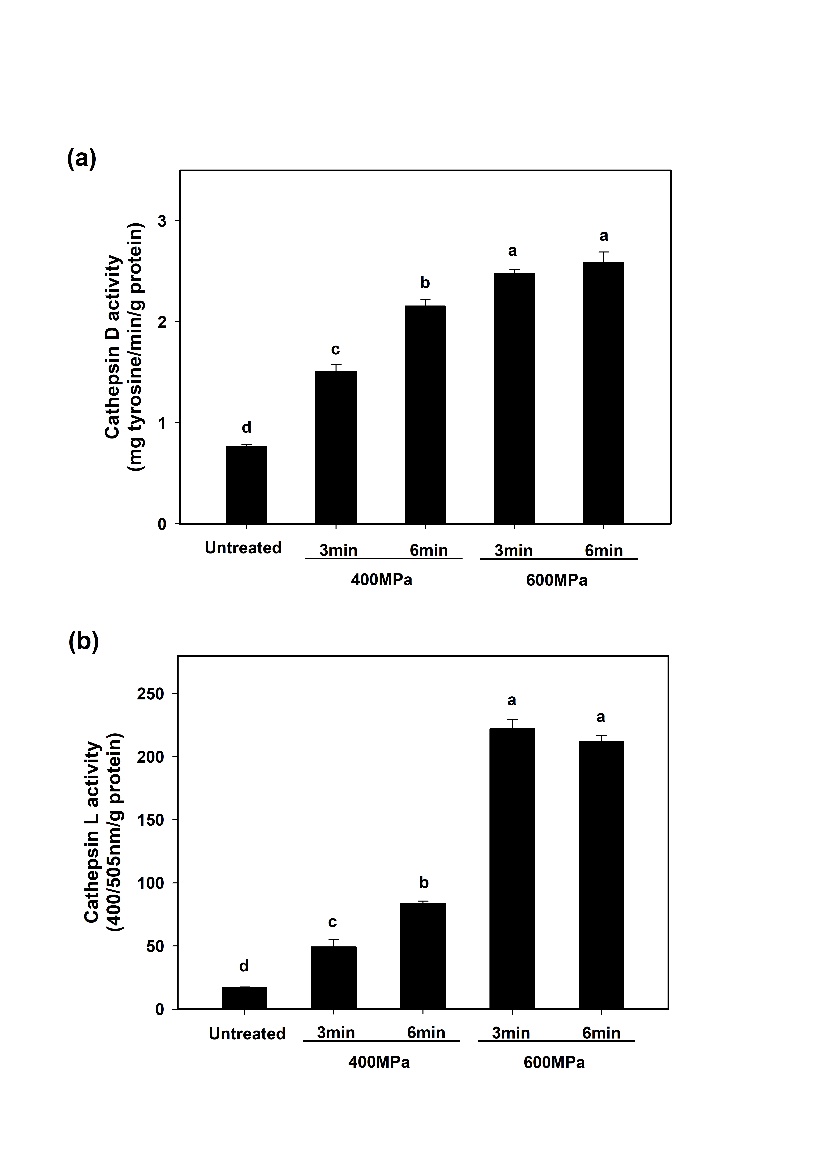
In this section, we discuss the HPP processing conditions for duck meat. Studies have indicated that the optimal conditions for pasteurizing meat and meat products using HPP is 400–600 MPa for 3–7 min at room temperature. Under these conditions, most pathogenic and spoilage microorganisms are inactivated, and the bacteria count was reported to be reduced by 4 log/unit 6. Therefore, HPP treatments at 400 or 600 MPa for 3 or 6 min were selected as the optimal conditions for our investigation. We observed that cathepsin D and cathepsin L activities in the duck meat increased with increasing processing pressure and time. At 600 MPa for 6 min, cathepsin D activity exhibited a 3.4-fold increase compared to that in the untreated group, whereas cathepsin L activity exhibited a 12.4-fold increase (Figure 1). Fidalgo et al. 14 treated mackerel meat at 150 and 300 MPa and observed that the cathepsin B activity increased by 30%, whereas in the group treated at 450 MPa, it decreased by 60%. The 300-MPa treatment also caused a 60% increase in cathepsin D. According to one study, HPP increases cathepsin activity in meat by releasing of cathepsins from lysosomes owing to pressure-induced membrane damage 6.

The pH values of the duck meat in the untreated and HPP-treated groups exhibited no notable changes and ranged between 5.7 and 6.0. Total soluble protein was lower in the HPP-treated group than in the untreated group; total soluble protein decreased by 38.6–63.6%. The 400 MPa for 3 min and 400 MPa for 6 min groups did not significantly differ in cooking yield from the untreated group. In contrast, the 600 MPa for 3 min and 600 MPa for 6 min groups had significantly lower cooking yields than the control group (Table 1). HPP causes the myofibril protein structure in the muscle to open up, and protein denaturation, gel formation, and aggregation occur when the HPP pressure exceeds 300 MPa 4. The oxidative stress caused by HPP activates endogenous peptide activity, affecting myofibrillar proteins and their functionality. When the pressure exceeds 200MPa, the myofibrils degrade and release soluble proteins. When the pressure exceeds 300MPa, protein denaturation becomes irreversible and its reversed when treated with less pressure 15. After lamb meat was treated with 150 MPa at 0°C for 5 min, its myofibril protein solubility had a significant three-fold increase 16. Lee et al. 17 discovered that in a 0.6M KCl solution, the solubilities of myosin and actin in the myofibrillar protein of beef decreased when the pressure of HPP exceeded 300 MPa. Obviously, the effect of HPP was caused by a different mechanism to the one underlying heating-induced protein denaturation. The mechanism was dependent on the pressure of HPP; lower and higher pressure increased and decreased the protein solubility of meat, respectively.
Shear force analysis of the duck meat texture is presented in Table 1. After the duck meat was subjected to HPP treatment at 400 MPa for 3 min, the shear force decreased by 17.2% compared to control group. Moreover, the shear force increased with HPP pressure and time. Coll-Brases treated dry-cured ham with 600 MPa HPP to restructured it, reduce pastiness and promote increased hardness 18. Macfarlane 16 was the first to observe meat tenderization of using HPP; they treated slaughtered ovine and meats at 103 MPa and 30°C–35°C for 1–4 min before cooking them. Shen et al. 19 treated shio koji–marinated duck breast meat with HPP at 200 MPa for 5 min, which improved water retention and reduced hardness. Moreover, HPP generally makes meat tougher except at relatively low pressures (100–250 MPa) in combination with high temperature (>60°C), under which it becomes more tender 20. The duck breast was treated at 400MPa and then heated at 95-99°C for 15 minutes. It was found that its hardness, cohesiveness, resilience and chewiness both decreased as the high-pressure heat treatment time increased 21. The outcome of HPP when used to tenderize meat depends on the pressure. The moisture content of the meat increased, and the Warner–Bratzler shear force decreased, indicating an increase in meat tenderness. In the present study, HPP at 400 MPa for 3 or 6 min increased cathepsin activity, reduced the shear force of duck meat texture, and did not affect the pH or cooking loss. Therefore, after factoring in time and cost, we selected 400 MPa for 3 min for subsequent tests.
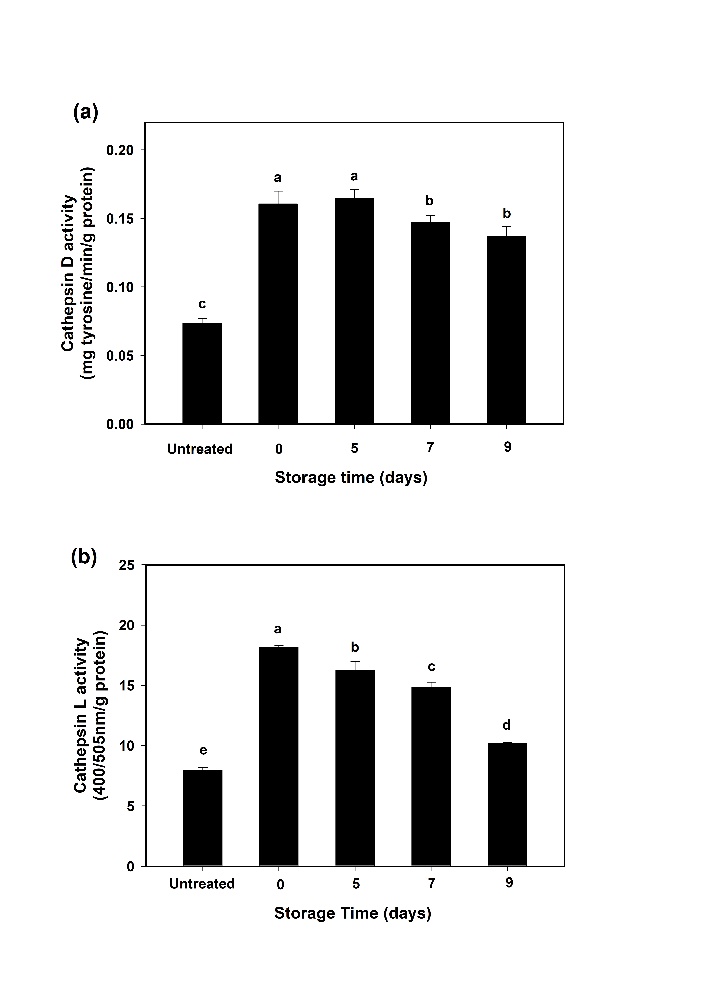
3.2. Analysis of Autolytic Degradation in Duck MeatAfter the duck meat was treated with HPP at 400 MPa for 3 min, it was refrigerated for autolysis for 0, 5, 7, or 9 d. As indicated in Figure 2, HPP at 400 MPa for 3 min increased cathepsin D and L activity by 2.2-fold and 2.3-fold, respectively. The activities of cathepsin D and L decreased with increasing autolysis time.

The pH value of duck meat during the 9–d autolysis period did not noticeably change, ranging from 5.7 to 5.8. The total soluble protein content of each autolysis group (0–9 d) was lower than that of the untreated group. Concerning cooking loss, duck meat treated with HPP at 400 MPa for 3 min did not significantly differ from the untreated group during the 0–9 d period of refrigerated autolysis (Table 2).
After HPP, the shear force decreased by 14.4%. On day 5 of autolysis, the shear force decreased by 29.3% compared with the untreated group. The autolysis results on days 7 and 9 did not significantly differ from those on day 5 (Table 2). Therefore, autolysis in refrigeration for 5 days was selected as the optimal condition. After sirloin steak was treated with HPP at 175–250 MPa, its shear force was reduced by 60%, and its sensory quality was better than that of the untreated group after 1 d of storage, indicating that HPP and storage treatments can indeed tenderize the meat and improve its quality 22. The tenderization of meat is directly related to the tenderization of the myofibril structure in the muscle by the endogenous peptidases, which include calpains, lysosomal cathepsins, and the multicatalytic proteinase complex. The presence of cathepsin in lysosomes is caused by the accumulation of lactic and phosphoric acid in meat after death, decreasing the pH value in cells, which results in the release of cathepsin after the weakening of the cell membrane. A previous study reported that refrigerated storage for tenderization is optimal at ≥ 14, 5–7, and 7–10 d for beef, pork, and lamb, respectively 23. Therefore, we inferred from the experimental results that the HPP of duck meat at 400 MPa for 3 min prompts the release of cathepsin during refrigeration until day 5, which decreased the shear force of the duck meat and achieved meat tenderization.
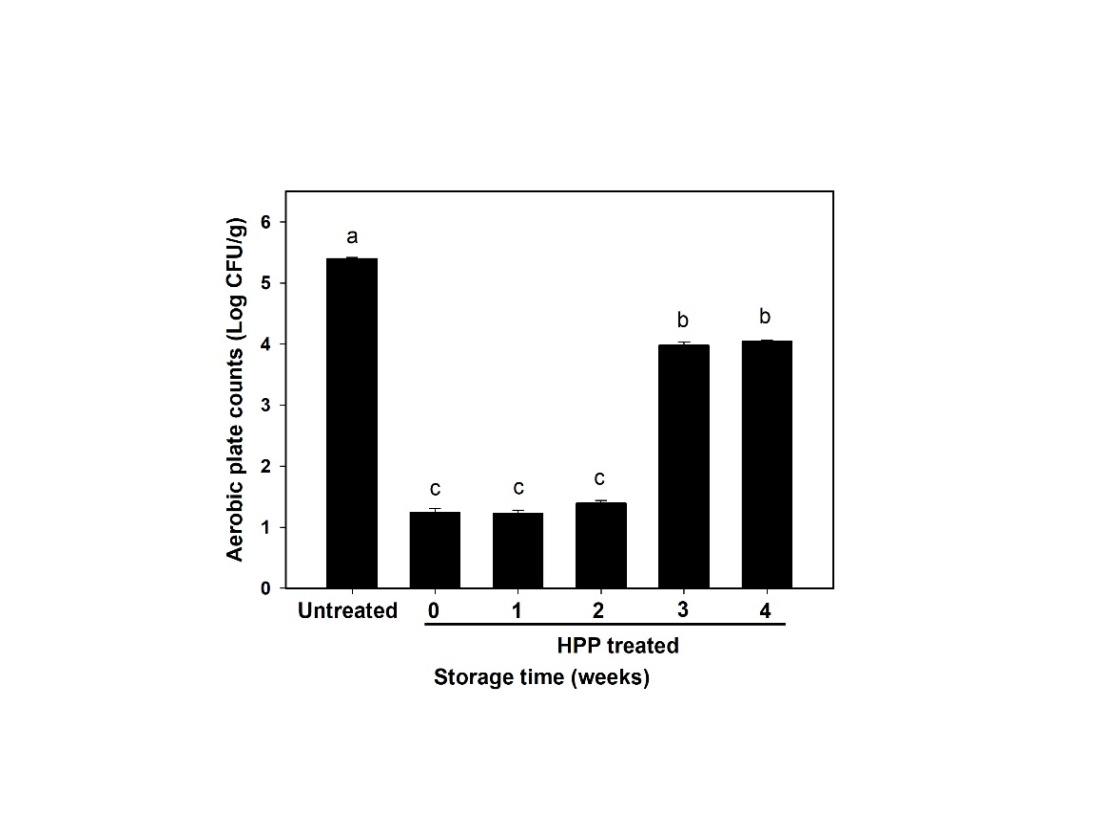
3.3. Analysis of HPP-Prepared Duck Meat Products During StorageHPP duck meat was prepared according to the aforementioned experimentally derived optimal conditions for HPP and autolysis. The product was refrigerated and stored at 5°C for 0–4 weeks, stored at 5°C for 0–4 weeks, and then sampled weekly for the analysis ofto analyze quality indicators. Initially, the aerobic plate count of untreated duck meat was > 5 log CFU/g. After HPP treatment, the aerobic plate count decreased to 1.3 log CFU/g. By week 3, the total plate count of duck meat increased to 4 log CFU/g, and no E. coli/coliform bacteria were detected (Figure 3). During the 4 weeks of storage, no statistically significant color differences were observed in the lightness (L*), redness (a*), and yellowness (b*) of the duck meat product, and the ΔE values were 0.06-0.24 during storage (Table 3). In evaluations of color, ΔE is critical in determining quality. According to Chen 24, color change is not noticeable if ΔE > 1.5. Texture shear force did not differ throughout the 4-week storage period (data not shown). These results indicate that the optimal storage period for HPP-prepared duck meat products is 2 weeks. The meat products to which HPP is currently applied include sliced ham, turkey slices, chicken pieces, and ready-to-eat products. The use of HPP maintains the flavor and nutritional content of the product, extends shelf life, reduces the quantity of additional salt necessary for the product, and eliminates the need for preservative. HPP-treated products are uncommon in Taiwan, and thus have much room for growth.
We conclude that HPP can increase cathepsin D and L activities in duck meat and can also tenderize meat. We also established a process for preparing HPP products, as follows: fresh raw duck meat was cut, seasoned, and vacuum-packed. The meat was then treated with HPP at 400 MPa for 3 min and stored at 5°C for 5 d. After heating, the HPP-prepared products were obtained. The products maintained favorable qualities during 2 weeks of refrigerated storage, exhibiting no major changes concerning total plate count, color, or texture. Our findings will aid the development of poultry products.
This research was funded by the Ministry of Agriculture, Taiwan for their financial assistance with this project (106AS-3.1.1-AD-U1). We thank the support of the Department of Agricultural Science and Technology, Ministry of Agriculture, Taiwan for conducting this research. We would also like to thank Dr. Zhu Zhong-Liang for the assistance in the HPP experiment.
| [1] | Campus, M., “High pressure processing of meat, meat products and seafood” Food Eng. Rev., 2. 256-273. 2010. | ||
| In article | View Article | ||
| [2] | Serra, X., Sarraga, C., Grebol, N., Guardia, M.D., Guerrero, L., Gou, P., Masoliver, P., Gassiot, M., Monfort, J. M. and Arnau, J. “High pressure applied to frozen ham at different process stages,” Meat Sci., 75. 21-28. 2007. | ||
| In article | View Article PubMed | ||
| [3] | Nath, K. G., Pandiselvam, R. and Sunil, C. K. “High-pressure processing: Effect on textural properties of food-A review,” Journal of Food Engineering, 351. 111521. 2023. | ||
| In article | View Article | ||
| [4] | Sun, X.D. and Holley, R.A. “High hydrostatic pressure effects on the texture of meat and meat products,” J. Food Sci., 75. R17–23. 2010. | ||
| In article | View Article | ||
| [5] | Koohmaraie, M., Kent, M.P., Shackelford, S.D. and Veiseth, E. “Meat tenderness and muscle growth: Is there any relationship?” Meat Sci., 62, 345-352. 2002. | ||
| In article | View Article PubMed | ||
| [6] | Bajovic, S., Bolumar, T. and Heinz, V. “Quality considerations with high pressure processing of fresh and value added meat products,” Meat Sci., 92, 280–289. 2012. | ||
| In article | View Article PubMed | ||
| [7] | Homma, N., Ikeuchi, Y. and Suzuki, A. “Effects of high pressure treatment on the proteolytic enzymes in meat,” Meat Sci., 38, 219–228. 1994. | ||
| In article | View Article PubMed | ||
| [8] | Low, P.S. and Somero, G. N.“Temperature adaptation of enzymes. A proposed molecular basis for the different catalytic efficiencies of enzymes from ectotherms and endotherms,” Comp. Biochem. Physiol., 49, 307–312. 1974. | ||
| In article | View Article PubMed | ||
| [9] | Chan, J. T. Y., Omana, D. A. and Betti, M. “Application of high pressure processing to improve the functional properties of pale, soft, and exudative (PSE)-like turkey meat,” Innov. Food Sci. Emerg. Technol., 12, 216-225. 2011. | ||
| In article | View Article | ||
| [10] | Huang, H. W., Wu, S. J., Lu, J. K., Shyu, Y. T., Wang, C. Y. “Current status and future trends of high-pressure processing in food industry,” Food Control., 72(12), 1–8. 2017. | ||
| In article | View Article | ||
| [11] | Buckow, R., Truong, B. Q. and Versteeg, C. “Bovine cathepsin D activity under high pressure,” Food Chem., 120, 474-481. 2010. | ||
| In article | View Article | ||
| [12] | Joo, S. T., Kauffman, R.G, Kim, B. C. and Park, G.B. “The relationship of sarcoplasmic and myofibrillar protein solubility to colour and water holding capacity in porcine longissimus muscle,” Meat Sci., 52, 291-297. 1999. | ||
| In article | View Article PubMed | ||
| [13] | Ketnawa, S. and Rawdkuen, S. “Application of bromelain extract for muscle foods tenderization,” Food Nutr Sci., 2, 393-401. 2011. | ||
| In article | View Article | ||
| [14] | Fidalgo, L. Saraiva, J. A., Aubourg, S. P., Vazquez, M. Torres and J. A. “High pressure effects on the activities of cathepsins B and D of mackerel and horse mackerel muscle,” Czech. J. Food Sci., 32, 188-193. 2014. | ||
| In article | View Article | ||
| [15] | Bolumar, T., Orlien, V., Sikes, A., Aganovic, K., Bak, K.H., Guyon, C., Stübler, A.S., de Lamballerie, M., Hertel, C., Brüggemann, D.A. “High-pressure processing of meat: molecular impacts and industrial applications,” Compr. Rev. Food Sci. Food Saf. 20 (1), 332–368. 2021. | ||
| In article | View Article PubMed | ||
| [16] | Macfarlane, J. J. “Pre-rigor pressurization of muscle: Effects on pH, shear value and taste panel assessment,” J. Food Sci., 38, 294-298. 1973. | ||
| In article | View Article | ||
| [17] | Lee, E. J., Kim, Y. J., Lee, N. H., Hong, S. I. and Yamamoto, K. “Differences in properties of myofibrillar proteins from bovine semitendinosus muscle after hydrostatic pressure or heat treatment,” J. Sci. Food Agric. 87, 40-46. 2007. | ||
| In article | View Article | ||
| [18] | Coll-Brasas, E., Arnau, J., Gou, P., Lorenzo, J.M., García-P´erez, J.V., Fulladosa, E.“Effect of high pressure processing temperature on dry-cured hams with different textural characteristics,” Meat Sci. 152. 127–133. 2019. | ||
| In article | View Article PubMed | ||
| [19] | Shen, Z. Y., Lin, R. S. and Chen, S. D. “Study on Shio Koji duck meat process by high pressure processing and microwave drying,” Taiwan. J. Agric. Chem. Food Sci. 57, 210-219. 2019. | ||
| In article | |||
| [20] | Sazonova, S., Galoburda, R. and Gramatina, I. “Application of high-pressure processing for safety and shelf-life quality of meat-a review,” Conference on Food Science & Technology FOODBALT, Jelgava, Latvia, 17–22. 2017. | ||
| In article | View Article | ||
| [21] | Khan, M.A., Ali, S., Yang, H., Kamboh, A.A., Ahmad, Z., Tume, R.K., Zhou, G.“Improvement if color, texture and food safety of ready-to-eat high pressure-heat treated duck breast,” Food Chem. 277, 646–654. 2018. | ||
| In article | View Article PubMed | ||
| [22] | Morton, J.D., Pearson, R.G., Lee, H.Y.Y., Smithson, S., Mason, S.L., Bickerstaffe, R.“High pressure processing improves the tenderness and quality of hot-boned beef,” Meat Sci. 133, 69–74. 2017. | ||
| In article | View Article PubMed | ||
| [23] | Nowak, D. “Enzymes in tenderization of meat – the system of calpains and other systems – a review,” Pol. J. Food Nutr. Sci., 61, 231–237. 2011. | ||
| In article | View Article | ||
| [24] | Chen, X. D. Drying and dried food quality. In Processing Effects on Safety and Quality of Foods, Ortega-Rivas, E., Ed.; CRC Press, USA, pp. 232–340. 2009. | ||
| In article | View Article | ||
Published with license by Science and Education Publishing, Copyright © 2024 Ya-Chien Jao, Wen-Ning Yang and Meng-Jen Tsai
 This work is licensed under a Creative Commons Attribution 4.0 International License. To view a copy of this license, visit
http://creativecommons.org/licenses/by/4.0/
This work is licensed under a Creative Commons Attribution 4.0 International License. To view a copy of this license, visit
http://creativecommons.org/licenses/by/4.0/
| [1] | Campus, M., “High pressure processing of meat, meat products and seafood” Food Eng. Rev., 2. 256-273. 2010. | ||
| In article | View Article | ||
| [2] | Serra, X., Sarraga, C., Grebol, N., Guardia, M.D., Guerrero, L., Gou, P., Masoliver, P., Gassiot, M., Monfort, J. M. and Arnau, J. “High pressure applied to frozen ham at different process stages,” Meat Sci., 75. 21-28. 2007. | ||
| In article | View Article PubMed | ||
| [3] | Nath, K. G., Pandiselvam, R. and Sunil, C. K. “High-pressure processing: Effect on textural properties of food-A review,” Journal of Food Engineering, 351. 111521. 2023. | ||
| In article | View Article | ||
| [4] | Sun, X.D. and Holley, R.A. “High hydrostatic pressure effects on the texture of meat and meat products,” J. Food Sci., 75. R17–23. 2010. | ||
| In article | View Article | ||
| [5] | Koohmaraie, M., Kent, M.P., Shackelford, S.D. and Veiseth, E. “Meat tenderness and muscle growth: Is there any relationship?” Meat Sci., 62, 345-352. 2002. | ||
| In article | View Article PubMed | ||
| [6] | Bajovic, S., Bolumar, T. and Heinz, V. “Quality considerations with high pressure processing of fresh and value added meat products,” Meat Sci., 92, 280–289. 2012. | ||
| In article | View Article PubMed | ||
| [7] | Homma, N., Ikeuchi, Y. and Suzuki, A. “Effects of high pressure treatment on the proteolytic enzymes in meat,” Meat Sci., 38, 219–228. 1994. | ||
| In article | View Article PubMed | ||
| [8] | Low, P.S. and Somero, G. N.“Temperature adaptation of enzymes. A proposed molecular basis for the different catalytic efficiencies of enzymes from ectotherms and endotherms,” Comp. Biochem. Physiol., 49, 307–312. 1974. | ||
| In article | View Article PubMed | ||
| [9] | Chan, J. T. Y., Omana, D. A. and Betti, M. “Application of high pressure processing to improve the functional properties of pale, soft, and exudative (PSE)-like turkey meat,” Innov. Food Sci. Emerg. Technol., 12, 216-225. 2011. | ||
| In article | View Article | ||
| [10] | Huang, H. W., Wu, S. J., Lu, J. K., Shyu, Y. T., Wang, C. Y. “Current status and future trends of high-pressure processing in food industry,” Food Control., 72(12), 1–8. 2017. | ||
| In article | View Article | ||
| [11] | Buckow, R., Truong, B. Q. and Versteeg, C. “Bovine cathepsin D activity under high pressure,” Food Chem., 120, 474-481. 2010. | ||
| In article | View Article | ||
| [12] | Joo, S. T., Kauffman, R.G, Kim, B. C. and Park, G.B. “The relationship of sarcoplasmic and myofibrillar protein solubility to colour and water holding capacity in porcine longissimus muscle,” Meat Sci., 52, 291-297. 1999. | ||
| In article | View Article PubMed | ||
| [13] | Ketnawa, S. and Rawdkuen, S. “Application of bromelain extract for muscle foods tenderization,” Food Nutr Sci., 2, 393-401. 2011. | ||
| In article | View Article | ||
| [14] | Fidalgo, L. Saraiva, J. A., Aubourg, S. P., Vazquez, M. Torres and J. A. “High pressure effects on the activities of cathepsins B and D of mackerel and horse mackerel muscle,” Czech. J. Food Sci., 32, 188-193. 2014. | ||
| In article | View Article | ||
| [15] | Bolumar, T., Orlien, V., Sikes, A., Aganovic, K., Bak, K.H., Guyon, C., Stübler, A.S., de Lamballerie, M., Hertel, C., Brüggemann, D.A. “High-pressure processing of meat: molecular impacts and industrial applications,” Compr. Rev. Food Sci. Food Saf. 20 (1), 332–368. 2021. | ||
| In article | View Article PubMed | ||
| [16] | Macfarlane, J. J. “Pre-rigor pressurization of muscle: Effects on pH, shear value and taste panel assessment,” J. Food Sci., 38, 294-298. 1973. | ||
| In article | View Article | ||
| [17] | Lee, E. J., Kim, Y. J., Lee, N. H., Hong, S. I. and Yamamoto, K. “Differences in properties of myofibrillar proteins from bovine semitendinosus muscle after hydrostatic pressure or heat treatment,” J. Sci. Food Agric. 87, 40-46. 2007. | ||
| In article | View Article | ||
| [18] | Coll-Brasas, E., Arnau, J., Gou, P., Lorenzo, J.M., García-P´erez, J.V., Fulladosa, E.“Effect of high pressure processing temperature on dry-cured hams with different textural characteristics,” Meat Sci. 152. 127–133. 2019. | ||
| In article | View Article PubMed | ||
| [19] | Shen, Z. Y., Lin, R. S. and Chen, S. D. “Study on Shio Koji duck meat process by high pressure processing and microwave drying,” Taiwan. J. Agric. Chem. Food Sci. 57, 210-219. 2019. | ||
| In article | |||
| [20] | Sazonova, S., Galoburda, R. and Gramatina, I. “Application of high-pressure processing for safety and shelf-life quality of meat-a review,” Conference on Food Science & Technology FOODBALT, Jelgava, Latvia, 17–22. 2017. | ||
| In article | View Article | ||
| [21] | Khan, M.A., Ali, S., Yang, H., Kamboh, A.A., Ahmad, Z., Tume, R.K., Zhou, G.“Improvement if color, texture and food safety of ready-to-eat high pressure-heat treated duck breast,” Food Chem. 277, 646–654. 2018. | ||
| In article | View Article PubMed | ||
| [22] | Morton, J.D., Pearson, R.G., Lee, H.Y.Y., Smithson, S., Mason, S.L., Bickerstaffe, R.“High pressure processing improves the tenderness and quality of hot-boned beef,” Meat Sci. 133, 69–74. 2017. | ||
| In article | View Article PubMed | ||
| [23] | Nowak, D. “Enzymes in tenderization of meat – the system of calpains and other systems – a review,” Pol. J. Food Nutr. Sci., 61, 231–237. 2011. | ||
| In article | View Article | ||
| [24] | Chen, X. D. Drying and dried food quality. In Processing Effects on Safety and Quality of Foods, Ortega-Rivas, E., Ed.; CRC Press, USA, pp. 232–340. 2009. | ||
| In article | View Article | ||