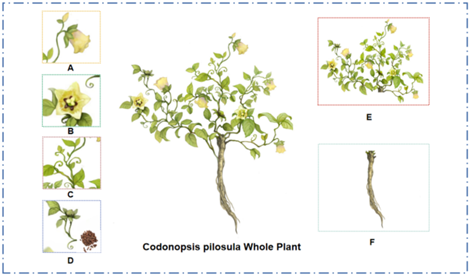
Due to the tradition of using the root as medicine and the lack of in-depth research, more than thousands of tonnes of above-ground parts of Codonopsis are still discarded every year, resulting in unimaginable waste of resources and environmental damage. In order to maximally utilize the nutrients in medicinal resources, we systematically reviewed the published literature on chemical composition, pharmacological experiments and exploitation, and summarized the amino acids, polysaccharides, saponins, terpenoids and flavonoids contained in the stems, leaves, flowers and seeds of Codonopsis pilosula into more than 130 kinds of 15 categories, and explained its anti-fatigue, anti-hepatic fibrosis, antioxidant, lipid regulating, immune enhancing, antibacterial and anticancer effects. It also summarises the new trends of its application in health food, edible mushroom cultivation, chemical medicine manufacturing and feed additives based on the amount of chemical enrichment from the perspectives of toxicity test, nutritional value and ecological benefits. The in-depth study will help to establish a more sustainable food system, improve the nutritional status of consumers, address the unmet needs in clinical, scientific research, and daily health care, and have a positive practical significance for the conservation, development and utilisation of medicinal plant resources.
Codonopsis pilosula is the dried root of Codonopsis pilosula (Franch.) Anna, C.peninsula Anna.var.modes ta (Anna.) L.T. Chen or C. tangshen Oliv, family Platycodonaceae 1, and is a traditional bulk tonic herbal medicine. 2 It is a perennial herb with twining stems 3, long cylindrical in shape with a greyish-yellow surface 1, 4, with a special odour and a slightly sweet taste 1 (Figure 1); Chinese Pharmacopoeia records that Codonopsis pilosula, which is sweet in flavor and neutral in nature, is useful for tonifying the middle-jiao, augments Qi and generating fluids and blood. 1 Modern pharmacological studies have also shown that Codonopsis pilosula has a variety of tonic effects such as antiulcer 5, stomach protection [6-7] 6, regulating blood sugar 6, anti-fatigue 8, anti-inflammatory [9-10] 9, immune regulation, anti-oxidation, anti-aging, liver protection and improvement of memory disorders. 2, 5, 6
The Codonopsis pilosula is cold resistant, whichgrows in mountains, forest margins and thickets at 1560-3100m. 4, 11 China is rich in medicinal Codonopsis pilosula resources, with many species. There are more than 40 species of Codonopsis pilosula plants in the genus Codonopsis pilosula worldwide, 39 species in China. 2
With economic development, the utilization value of Codonopsis pilosula has gradually been fully recognized, and in 2018, it was officially included in the management of food and drug substances by the Health Commission. 12 The market for Codonopsis pilosula is large in East and South Asia 13, and clinical use and health care needs have led to increased demand. 3, 14 Literature on the investigation of wild Codonopsis pilosula resources in different regions have shown that with the reclamation of mountainous areas and uncontrolled harvesting 14, the wild Codonopsis pilosula communities are declining rapidly and wild resources are facing depletion, and are now mostly planted in captivity. 3 [15-18] 15

However, Codonopsis pilosula has the dilemma of allelopathy in artificial cultivation. It is the main cause of crop failure. A study in 2010 confirmed that there is a strong self-disease (i.e., inhibition of self-growth) in cultivated Codonopsis, which is an important factor affecting the yield of ginseng in artificial cultivation. 19 Xie, M. also provided relevant evidence for the study of the barrier caused by the allelopathy of Codonopsis pilosula on artificial cultivation. 20
The roots of Codonopsis pilosula have been used as medicine for hundreds of years. 13 Practice and research have shown [21-25] 21 that in the current artificial cultivation of Codonopsis pilosula, stem and vine cutting treatments of Codonopsis pilosula at flowering stage can effectively increase herb yield and seed yield. 22, 24, 25 This is related to the inhibition of nutrient consumption by aboveground stems, reduction of leaf layer thickness, improvement of photosynthetic efficiency 21 and increase of soil temperature for root development. 22, 23, 25 In addition, cutting stems during the growth period of Codonopsis facilitates the conversion of the underground part of the leachate formation, increasing yield, root length, root weight and root diameter 24.Therefore, the aboveground part discarded by pruning during the cultivation of Codonopsis pilosula becomes waste, and its exploitation not only does not affect the yield of the traditional medicinal roots of Codonopsis pilosula, but also serves to increase yield and improve quality. [22-25] 22 This feature provides the most basic theoretical and practical basis for us to develop and utilise aboveground resources.
Previous studies have extracted, purified and analysed the chemical substances in the above-ground part of Codonopsis pilosula by UPLC-MS analysis 13, ethanol reflux extraction 15, phenol-sulphuric acid colourimetry 27, 28, Dual-enzyme synergistic ultrasound 29, HPLC 28, 29, LSCM 30 and GC-MS 31, etc. And it has been proved that above-ground part of the Codonopsis pilosula contains a large number of chemicals similar to the roots, such as amino acids 27, 28, polysaccharides 27 32, 33, sterols 13, 34, alkynes 13, and organic acids 13, etc, and the content of some of the substances is far more than that in the roots of the Codonopsis pilosula 11, 13, 29 27, 28.
Based on the chemical composition and content, the extracts and derivatives of the aboveground part of Codonopsis pilosula have corresponding pharmacological effects and high development value, such as antioxidant 35, anti-inflamatory 9, 36, immunomodulatory [35-37] 35, anti-cognitive decline 35, 38, promoting the recovery of haematopoietic dysfunction 39, replenishes nutrients 40, 41 and so on. which provides a sufficient theoretical basis for us to research and develop the above-ground part of Codonopsis.
However, the above-ground part of the Codonopsis pilosula has not been reasonably exploited. 11 Codonopsis pilosula has a wide planting area, and the annual output of roots reaches 5000 tons. 13 According to the data in 2021, the annual planting area of Codonopsis pilosula is 33 thousand hm2. 29 Xu Zeng et al. noted that thousands of tons of above-ground parts are discarded directly after harvest each year 13, and that the biological production of above-ground parts is large. The huge cultivation area and the tradition of using the roots as medicine make the above-ground part of the resources wasteful. For the purpose of protecting the wild herbal resources and maximizing the utilization of the resources under artificial cultivation, there is an urgent need and positive practical significance for the rational exploitation of the above-ground part of Codonopsis pilosula.
As a common clinical Chinese medicine, Codonopsis pilosula has a wide range of pharmacological effects such as immune modulation, anti-oxidation and anti-aging, anti-bacterial and anti-cancer. A review concluded that the material basis for its action is mainly polysaccharides, alkynyl glycosides, alkaloids and other components. 42 A number of scholars have analyzed the composition and content differences between the above-ground and root parts of Codonopsis pilosula, and the results all indicated that the compounds contained in the above-ground and underground parts of different species of Codonopsis pilosula were basically the same. 2, 12
In terms of the total content of amino acids, 27 trace elements, 27 coumarin, 29 vitamins, 43 the content of the aboveground part is basically greater than that of the medicinal rhizome. This means that the above-ground parts of Codonopsis pilosula have great potential for use, and the author summarises the chemical constituents reported in the available literature as follows (Table 1).
As early as 1992, it has been reported that the stems, leaves, flowers and roots of Codonopsis pilosula contain 17 amino acids (Asp, Thr, Ser, Glu, Gly, Gla, Cys, Val, Met, Ile, Leu, Tyr, Phe, Lys, His, Arg, Pro). 27 Zheng et al.detected 17 amino acids in the aerial parts and roots of Codonopsis pilosula in Miaoyu Town, Wushan County, Chongqing. 28 The results were consistent and pointed out the following conclusions:
Compared to the roots, the composition of essential amino acids in the above-ground parts of Codonopsis is closer to the FAO/WHO standard model in the amino acid pattern spectrum, suggesting higher nutritional value;
The total gustatory amino acids in the above-ground parts were 2.35 times higher than those in the roots, suggesting that the above-ground parts of Codonopsis pilosula would have good flavour when developed as food;
The total amount of medicinal amino acids is 1.76 times that of the root, suggesting that the medicinal value of the aerial part of Codonopsis is worth exploring.
The amino acid content in the roots of Codonopsis pilosula were determined by Wang Yan et al.in five major producing areas in China, and the results were still 17. 8 They also suggested that the content of Arg, Glu, Asp and other medicinal amino acids in the roots could be used as indicators for the nutritional evaluation of Codonopsis pilosula, and outlined that these amino acids are the material basis for the immune regulation, liver protection, gastric mucosa protection and fatigue prevention of Codonopsis pilosula. 8 According to the test results of study, the content of the aboveground part is 1.3-5.3 times that of the root. 27
Vitamins,includingA, E, C, B1, B2, B6, β-carotene, K1, were detected in the roots, stems and leaves of Codonopsis pilosula by piao et al, and the total vitamin content in stems and leaves was higher than that in roots. 43 There are 22 kinds of trace elements (Al, Fe, Ca, Mg, K, Na, Ti, Mn, P, Ba, Co, Cr, Cu, Li, Ni, Pb, Sr, V, Zn, Y, Mo, Zr ) in stems, leaves, flowers, fruits and roots, and the content of each part on the ground is 2.27-3.57 times higher than that of roots, which is higher than that of roots. 27
Fe, Si, Al, Se, Mn, Zn, B, Cu, Ni, Co, Mo, Cr and As in both the roots and the above-ground parts of the Wushan Codonopsis pilosula were found by Zheng et al., with the above-ground part containing 88.83% of the essential trace elements in the roots. 28 They also noted that the above-ground parts contained 1.24, 2.10, 2.51 and 1.04 times more silicon, selenium, manganese and zinc essential trace elements than the roots 28, respectively, except for iron, which was less than the root content.
This alone suggests that the above-ground parts of Codonopsis pilosula contain great value for exploitation.
2.2. AlkaloidsThe above-ground stems and leaves of Codonopsis pilosula have the same alkaloid components (choline)with different content as the roots. 27, 44 According to the study, the total alkaloids of Codonopsis can enhance NGF-induced PC12 cell prominence by causing a certain upstream step in the signaling pathway of a large number of mitogenic protein kinases, 45 and Choline enhances memory. 44 Xu Zeng et al. determined 11 substances with significantly different contents in the stems and leaves and roots of Codonopsis pilosulas 13: codotubulosine A,codonopsinine, adenosine, hypoxanthine, Codonopsinol C, Codonopiloside A, Codonopsinol A, radicamine A, 6-methoxy-4-formyl quinoline/ 6-methoxyquinoline-4- carbaldehyde, N-9-formyl Harman, Codonopsine 2. Codotubulosine A and codonopsinine were more abundant in the stem and leaves, while codonopsinol A and C, codonopiloside A, radicamine A, and codonopsine 2 were more abundant in the roots.The overall distribution of different types of alkaloids in stems, leaves and roots is different.
2.3. SugarsD-glucuronide, rhamnose, galactose, glucose and D-fructose were extracted from both the stems and roots of Codonopsis pilosulas, and the total content of the roots was higher than that of the above-ground parts. 27 Five polysaccharides were extracted from the pollen of Codonopsis pilosula by Liu et al, 27 which is one of the main active parts of Codonopsis pilosula. The total content of sugars in the roots was found to be higher than that in the above-ground parts by Zhang Yan Yun. 33While, their results showed that the polysaccharides in the stems and leaves of Codonopsis pilosula were the same as those in the roots, and had higher antioxidant stress activity.
2.4. SaponinsThe total saponins of Codonopsis pilosula have immunomodulatory, anti-tumor, antibacterial, hypoglycemic and lipid-lowering effects. 15 The total saponin content of the roots was determined to be seven times higher than that of the above-ground parts, 44 and Xie Min et al.isolated ginsenoside Rg1, ginsenoside Re, ginsenoside Rb1 from the above-ground parts. 20 The total saponins extracted from the stems and leaves of Codonopsis pilosula by ethanol reflux extraction have higher DPPH free radical, hydroxyl radical and superoxide anion radical scavenging ability, and the maximum scavenging rates of each free radical in the experimental concentration range are 86.92 %, 55.37 % and 82.21 %, respectively. 20
2.5. Volatile OilIn the volatile oil of roots and stems and leaves, there are a lot of fatty acids, palmitic acid content is the most, 46 mainly fatty acids, aldehydes, alcohols, olefins, alkanes and a small amount of esters and ketones. The main compounds in the volatile oil were palmitic acid (32.75 %), 9,12,15-octadecatrienal (10.42 %), linoleic acid (6.48 %), mystic acid (4.05 %), olive alcohol (2.71 %), trans-sec-butylpropenyl disulfide (2.23 %) and so on. 47
9,12,15-octadecatrienal (the second most abundant chemical in the volatile oil) is one of the two main components of the sex pheromone of Hyphantria cunea, which can be used for the synthetic lure of Hyphantria cunea 47 to reduce its harm to crops.
2.6. Glycerides and Glycerol EstersStearic acid, 3-α-linolenic acid glyceride 1-O-[α-D-galactosyl- (1→6) -O-β-D-galactoside], 3-α-linolenic acid glyceride 1-O-β-D-galactoside and 3-(7,10,13-hexadectrienoic acid) glyceride 1-O-β-D-galactoside mixture were extractedfrom the aerial part of Codonopsis pilosula by Xie Min et al., and the latter two had hypolipidemic effect. 34
2.7. FlavonoidsFlavonoids have anti-oxidation, anti-aging, anti-cancer, liver protection, anti-inflammatory and other effects. 31 Flavonoids in stems and leaves of Codonopsis pilosula were found more abundant than those in roots. 13 Luteolin, luteolin-5-O-glucoside were isolated from above ground part of Codonopsis pilosula by Xie Min et al . 20 The total flavonoids with strong antioxidant activity from Codonopsis pilosula stems and leaves was found by double enzyme synergistic ultrasonic extraction. 29 Apigenin, tricin, chrysoerio, 5-hydroxy-4’, 6, 7-trimethoxy flavone, 5-hydroxy-4’, 7-dimethoxy flavones, apigenin-7-O-β-D- glucopyranosideuteolin-7-O-β-D-glucopyranoside/luteolin-5-O-β-D-glucopyranoside/luteolin-7-galactoside/cynaroside, luteolin-7-rutinoside, tectoridin, luteolin-7-O-D-gentibioside, neokurarinol and other flavonoids were measured in the stems, leaves and roots of Codonopsis pilosula by Xu Zeng et al. 13 Among them, apigenin, tricin, chrysoeriol, tectoridin, and luteolin-glucopyranoside were higher in the stems and leaves of Codonopsis pilosula, while quercetin, kaempferol, angelicin, and psoralenwere not significantly different in stems and leaves and roots.
2.8. SteroidsSteroids,including α-spinasterol, (22E) -5α, 8α-bridging ergosta-6,22-diene-3β-ol,were also found in the stems and leaves of Codonopsis pilosula by silica gel column chromatography, MCI column chromatography and thin layer preparation, 34which also clearly stated that both can inhibit pancreatic lipase and have a hypolipidemic effect. Meanwhile,the content of Δ7-leguminol in the above-ground parts of Codonopsis pilosula was found to be 1.5 times that of its roots by Yan. 44 Studies suggest that, steroids are more common in the stems and leaves of Codonopsis pilosula. Δ7-stigmasterol and Δ5,22-stigmasterol are more enriched in stems and leaves. 13
2.9. TerpenoidsThe study showed that The aerial parts of Codonopsis pilosula contained Taraxerol acetatetaraxerol, and the content of aerial parts was 78.4 times and 4.6 times that of its roots, respectively. 44 Atractylenolide III, oleanolic acid, echinocystic acid, 8β-hydroxyasterolid/ atractylenolide, albigenic acid, rubiprasin, hopane-6α,22-diol were found in the stems and leaves and roots of Codonopsis pilosula by Xu Zeng et al. 13According to studies, Atractylenolide III, oleanolic acid and echinocereal acid have anti-inflammatory, stomach-protective, antibacterial and anti-cancer effects, 13, 48 and they are more enriched in the stems and leaves, 13 suggesting that the stems and leaves of Codonopsis pilosula have good prospects for exploitation.
2.10. CoumarinsCoralline lactone and 5-hydroxy-8-methoxypsoralen were found in the scape, stem and root of Codonopsis pilosula by HPLC by Zhang et al. In terms of content, these two substances are enriched in seeds. 29 Zhang et al.also obtained consistent results by LSCM method. 30
2.11. Alkynes, Alkenes CompoundsAlkenes was found to accumulate more in stems and leaves by Xu Zeng et al. 13 Lobetyol; PilosulyneA;PilosulyneC;PilosulyneF,Pilosulyne; 9-(tetrahydropyran-2-yl)- non-trans-8-ene-4,6-yn-l-ol;Codonopilodiynoside(D/E/F/G);tetradeca-4E,8E,12E-triene-10-yne-1,6,7-triol,ect.were detected in roots, stems and leaves, and their expression levels were different.Of these, Lobetyol,,pilosulyne and codonopilodiynoside D were enriched in the stems and leaves.Lobetylin and lobetyolinin ( polyacetyl compounds ) in roots and the above ground part of Codonopsis pilosulas(stems and leaves) were showed no significant difference by metabolomics analysis results.Xie Min et al.also isolated lobetyolin from the stems and leaves of Codonopsis pilosula. 20
2.12. LignansLignin is widely distributed in plants, including antioxidant, antibacterial, antiviral, anti-tumor and anti-asthma activities. 13, 48 TangshenosideI, tangshenosideIII, tangshenosideIV,codonosideA, codonopiloneolignanin A, ethyl-syringin, syringaresinol, lanceolune A, lanceolune B were detected in the stems, leaves and roots of Codonopsis roots, while ethylsyringin and syringaresinol accumulated more in the stems and leaves of Codonopsis pilosula. 13
2.13. Organic AcidsThe content of organic acids in stems and leaves is much higher than that in roots. 13 There are lauric acid, 2,4-non-adlenic acid, caffeic acid, chlorogenic acid / neochlorogenic acid / 3-O-Caffeoylquinic acid, 8-O-4 diferulic acid, syringic acid, etc. Among them, the relative content of lauric acid, caffeic acid, and chlorogenic acid, was higher in stems and leave than in roots, while the relative content of syringic acid was lower in stems and leaves than in root.
The antioxidant activity is generally related to polyphenols, flavonoids and saponins. 11 Flavonoids have antioxidant and anti-aging effects, 31 while flavonoids in the stems and leaves of Codonopsis pilosula are more abundant than those in the roots, and the above-ground part extracts have a more pronounced free radical scavenging capacity, 13 AtractylenolideIII also has an effect on reducing oxidative stress, while Atractylenolide III is more abundant in the stem and leaves. 13 According to research, the total flavonoids and total saponins in the stem and leaves of Codonopsis pilosula have strong antioxidant activity. 15, 29 This implies that the stem and leaves of Codonopsis pilosula have good utilization value and development prospects.
3.2. Anti-bacterialSome studies have indicated that the relevant extracts from the leaves of Codonopsis pilosula have inhibitory effects on common pathogenic bacteria such as Escherichia coli, Bacillus subtilis and Staphylococcus aureus. [49-50] 49 Bhardwaj et al.also found that the extract of the leaves of Codonopsis pilosula had an inhibitory effect on bacteria, moulds and yeasts. 49 The polysaccharides in the stem and leaves of Codonopsis pilosula can promote the growth of probiotics such as Bifidobacterium and Lactobacillus, and inhibit the growth of Salmonella and Enterococcus 51, as well as inhibit the colonization of pathogenic bacteria. 52 The conclusions of these modern pharmacological studies are mutually confirmed with the traditional effects of Codonopsis pilosula,which can tonify the middle-jiao and augment Qi ,whose meridian affinity is Spleen meridians.
3.3. Blood Lipid RegulationXie Min et al.detected α-spinasterol; (22E)-5α,8α-epidioxy-ergosta-6,22-dien-3β-ol; 9,12-linoleic acid; 3-α-linolenoylglycerol 1-O-[α-D-galactopyranosyl-(1→6)-O-β-D-galactopyranoside in the stems and leaves of Codonopsis pilosula, and found that they had inhibitory effect on pancreatic lipase activity. 34 Meanwhile, one study found that Codonopsis pollen seems to have the effect of reducing hepatic TG by accelerating lipid transport. 53 Phellopterin, which are contained in the scapes, stems, leaves and roots of Codonopsis, promote lipolysis and inhibit lipid synthesis. 13
3.4. Regulating ImmunityCodonopsis pilosula polysaccharides have strong immunomodulatory effects in both humans and animals, and the above-ground parts of Codonopsis pilosula contain high levels of polysaccharides. 31, 54 A study was shown that Codonopsis pilosula polysaccharides could modulate immunity by improving intestinal flora dysbiosis and enhancing mucosal immunity against immunosuppression caused by cyclophosphamide in mice. 52 At the same time, more literature has reported the good effect of adding the stems and leaves of Codonopsis pilosula to animal feed to improve the immunity and disease resistance of animals, and pointed out that the stems and leaves of Codonopsis pilosula can be used as immunomodulators. [56-59] 56 Related studies have also shown that Codonopsis pilosula pollen can correct the immunosuppressive state and significantly enhance humoral immunity and non-specific immunity. [60-61] 60
3.5. Other Possible Pharmacological EffectsXu Zeng et al.measured polysaccharides, lobetyolin, lobetyolinin, lauric acid, caffeic acid and chlorogenic acid and other substances in both stems and leaves and roots of Codonopsis pilosula. 13 The content of lauric acid, caffeic acid, chlorogenic acid, atractylenolide III, oleanolic acid and echinocystic acid in stems and leaves was higher than that in roots, while lobetyolin and lobetyolinin had no significant difference in stems and leaves and roots, 13 suggesting that the aboveground parts of Codonopsis pilosula may also contain higher related activities.
Atractylenolide III, Codonopsis polysaccharide and lobetyolin has the effect of protecting stomach. He et al.found that Codonopsis pilosula polysaccharide had a mild effect on normal gastric epithelial cells. 62 Codonopsis pilosula polysaccharide may maintain the function of digestive system flora by stimulating the growth of Lactobacillus was found by Fu et al. 48, which has a protective effect on the destruction of gastric mucosal immune barrier and low inflammatory risk.
Codonopsis pilosula polysaccharide, lobetyolin, luteolinic acid, oleanolic acid have anti-cancer effect. 13 Codonopsis pilosula polysaccharide can selectively inhibit gastric cancer cells and inhibit cancer cell proliferation by regulating energy metabolism. 62 Lobetyolin and Lobetyolinin inhibit drug-induced apoptosis and tumor growth, and their anticancer activity is dependent on amino acid transporter ASCT2 -mediated glutamine metabolism inhibition. 63 Yu et al.verified that luteolin can exert anti-hepatocellular carcinoma effect through AKT or MAPK-JNK signal-mediated ESR1. 64
Atractylenolide III, echinococcus acid, caffeic acid, chlorogenic acid and syringic acid all have anti-inflammatory activity and are found in higher amounts in the stem and leaves of Codonopsis pilosula. 13
A study by Lu Wan et al.indicated that Codonopsis pilosula polysaccharide may alleviate the associated memory impairment and cognitive deficits by restoring the altered synaptic protein PSD95 and synaptic aggregation protein, downregulating BACE1 activity, 65 while protecting primary neurons from Aβ1-42-induced cytotoxicity had a mitigating and ameliorating effect on Alzheimer's disease in APP/PS1 mice, significantly reducing cognitive deficits.
We describe the existing pharmacological studies on Codonopsis pilosula pollen as follows, which are briefly summarized in Table 2.
4.1. Effects on the LiverAccording to Xiao et al, the ingestion of a diet containing 6.8% codonopsis pollen significantly enhanced the recovery rate of mice with liver injury and liver necrosis already caused by CCl4, 53 significantly improved hepatic steatosis, 54 inhibited the active proliferation of fibroblasts, and served to slow down the process of fighting liver fibrosis. 53 Li et al. also found that in the early stages of chronic liver injury, the pollen of Codonopsis pilosula could play a preventive role by reducing the degenerative necrosis and inflammatory response of hepatocytes and promoting the regeneration of hepatocytes, protecting liver metabolism and preventing the development of liver fibrosis. 53, 55
4.2. Effects on Immune FunctionThe root of Codonopsis pilosula has the effect of enhancing immunity, which is related to its amino acids, total saponins, polysaccharides and other substances. As mentioned above, these substances also exist in the aboveground part of Codonopsis pilosula. The results of the study on the pollen part of the aerial part of Codonopsis pilosula showed that the pollen of Codonopsis pilosula also had strong pharmacological effects of regulating immunity, which may also be related to these substances.
Li's team found that the pollen had no significant effect on the immune organs (spleen, thymus) of normal mice, 61 no significant effect on lymphocyte conversion rate and E wreath formation, and a significant counteracting effect on these two indices inhibited by cyclophosphamide, which may have less normal effect on the organism's cellular immunity, 60, 61 also expanding the scope of action of the pollen from the side.
Li's team found that codonopsis pollen significantly enhanced the production of vacuole-forming cells and IgM in normal and glucocorticoid-inhibited mice. 61 It also increased the viability of mouse peritoneal macrophages, and both this activation and antagonism of glucocorticoid effects were mediated by the polysaccharides in Codonopsis pollen. 66
4.3. Effects on the Haematopoietic SystemThe pollen of Codonopsis pilosula significantly reduced the hematopoietic damage of bone marrow in rats caused by cyclophosphamide, increased the level of leukocytes and granulocytes, 67 and counteracted the inhibitory effect of mitomycin-induced hematopoietic system in mice, 68 while it had no significant effect on the peripheral blood picture of normal rats and had no adverse effects 67 on long-term administration.
Yin summarized seven cases of aplastic anemia patients who did not respond to cell-raising drugs and hormones. The bone marrow nuclear erythrocyte division index increased dramatically after long-term administration of Codonopsis pilosula pollen, and the bone marrow recovered well on review with no specific adverse effects, 69 obtaining remarkable therapeutic effects. Cai's team administered Codonopsis pilosula pollen to 26 patients who had various types of haematopoietic disorders and who also had poor results with anti-radiotherapy drugs after receiving radiotherapy , The results showed that 25 patients had increased white blood cells, suggesting that Codonopsis pilosula pollen has a protective effect on the haematopoietic system of such patients. 70
4.4. Effects on Smooth MuscleBoth Codonopsis pollen suspension and centrifugal fluid can activate (protein-containing part) activates the isolated aorta of rabbits and has a synergistic effect with NE ,but after deproteinization treatment can not. 71
Both Codonopsis pollen and centrifugal solution inhibited isolated rat uterine muscle (pregnant and non-pregnant) and antagonized pituitary agonism in a concentration-dependent manner. 71
(1). Jejunum : Excited jejunum. 71
(2). Ileum : Generally speaking, excites the ileum, increasing contraction force and frequency. It can also produce a small concentration to increase the ileum tension of guinea pig isolated intestine, and cooperate with Ach. 71
(3). Colon : no significant effect. 71
Codonopsis pilosula pollen (protein-containing or deproteinized part) can activate the isolated biliary tract of guinea pigs in a dose-dependent manner. 72Codonopsis pollen (protein-containing part) can activate sphincter, increase contraction frequency, and promote bile emptying effect. 72
4.5. AntifatigueAccording to the research of Shu et al., Codonopsis pilosula pollen has the effect of anti-fatigue, anti-high temperature and low temperature. 73 It is clear that Codonopsis pollen contains a large number of amino acids, trace elements, 8, 27 fatty acids, 74 polysaccharidesn 32 and other substances, so it has anti-fatigue, anti-oxidation, improve immunity and so on.
4.6. Other Pharmacological EffectThe combination of Codonopsis pilosula pollen and cyclophosphamide prolongs the survival time of experimental animals and increases the anticancer effect. 60
The administration of codonopsis pollen seems to have the effect of protecting sugar metabolism, accelerating lipid transport and reducing liver TG. 53
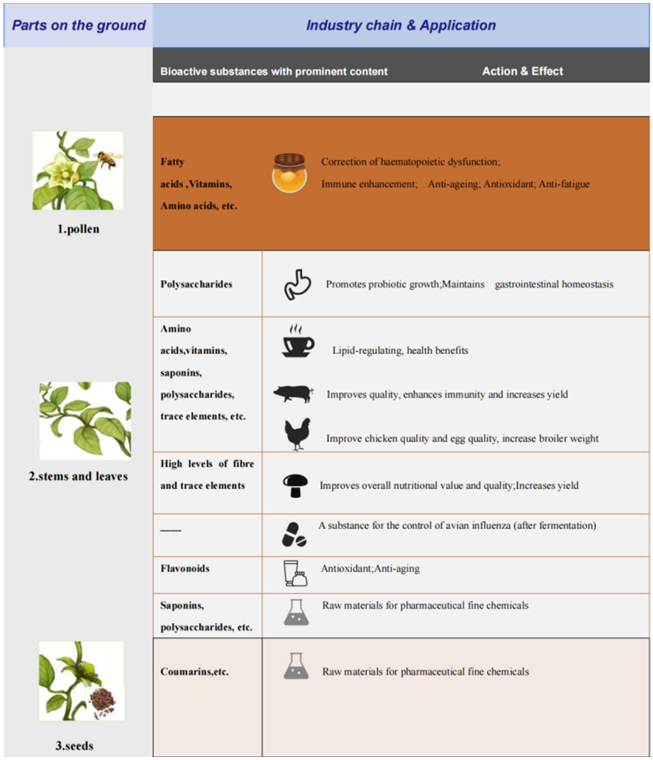
To maximise the reader's convenience in understanding exactly where and what substances are present in the above-ground parts of Codonopsis pilosula, we have plotted the most enriched chemical components of each part of Codonopsis pilosula with the industries from which they may be derived, see Figure 2.
5.1. Animal HusbandryAs mentioned above, the stems and leaves of Codonopsis pilosula contain amino acids, trace elements, carbohydrates such as polysaccharides and other bioactive components, and have rich nutrition. A considerable amount of literature has been published on the effects of feeding the stems and leaves of Codonopsis pilosula to chickens and pigs, with the animals showing increased appetite and intake, 75, 76 increased body mass, 56, 59, 77 increased immunity, 56, 59, 77 improved meat quality, 59 [75-77] 75 and improved egg quality in laying hens. [78-80] 78 This method of feeding can also reduce the meat-to-feed ratio, further increasing economic returns and reusing resources. It also has natural advantages over hormones and chemical drugs, such as being natural, less toxic 81 and less resistant, 58 and has good prospects for application in animal husbandry.
The use of the above-ground parts of Codonopsis pilosula in animal husbandry can be summarized in the following three points :
(1). As a feed additive to reduce the meat-to-feed ratio; 58, 59 76, 80
(2). Chinese medicine, veterinary medicine immune enhancers to improve immunity and disease resistance; 12 [56-59] 56
(3). As nutritional supplement 56, 75, 79 and growth performance regulator to improve growth rate and production performance. 51, 59, 75, 80
5.2. Health FoodThe chemical composition of the above-ground part of Codonopsis pilosula contains a large number of bioactive substances similar to those in the root, which can produce similar tonic effects on the human body as the root, while the total saponins and flavonoids in the stem and leaves have strong antioxidant capacity. 15, 29 The above-ground parts also have lipid-regulating 34, anti-aging 29, 47 and hypoglycaemic effects and can be used to make health products. In terms of food safety, several scholars have conducted 56 [81-82] 81 acute and chronic tests on the above-ground parts, all of which showed that the above-ground stems and leaves and pollen of Codonopsis pilosula have a wide range of safety and are safe to use. There is a growing body of literature on theoretical research and successful practice of using the above-ground parts of Codonopsis pilosula as raw material for food preparation, which is summarized below:
There has been a gradual increase in research related to the use of the stem leaves of Codonopsis pilosula in the tea industry and health drinks. It has been suggested that higher levels of lobetyol can be obtained by processing into tea 63, and there are now a series of patents and successful practices using the stem leaves of Codonopsis pilosula as raw material, such as the highly aromatic Codonopsis Pilosula Green Leaf Tea, 83 Codonopsis Pilosula Health Drink 84, Codonopsis Pilosula Leaf Tea, 85 etc.
It has been noted in the literature that Codonopsis Pilosula polysaccharides can promote the growth of probiotics such as Bifidobacterium, Lactobacillus and inhibit the growth of Salmonella and Enterococcus[51-52,76,86,-87] and are suitable as prebiotics. lingya Cao et al.showed that Codonopsis Pilosula polysaccharides can play a role in regulating the intestinal microbiota by affecting energy conversion such as amino acid metabolism, tricarboxylic acid cycle and nitrogen metabolism, which can help restore homeostasis in the intestine. 51, 86 It is promising in the improvement of the intestinal microecological environment. It is promising to extract polysaccharide components from the above-ground parts as raw materials for related production.

Pollen honey is rich in nutrition, and the flowers of Codonopsis Pilosula have a long history of being used as a nectar source. Ding et al. identified eight fatty acids and vitamin C (especially unsaturated fatty acids) in Codonopsis Pilosula pollen, thus having anti-ageing, antioxidant and immune boosting effects. 74 Other studies have reported that the nectar of Codonopsis Pilosula has the effect of promoting the recovery of haematopoietic function and raising white blood cells, 69, 72 making it an excellent tonic for tumour patients during radiotherapy. According to Tian et al., the pollen of Codonopsis Pilosula is safe and non-toxic to humans, without chronic accumulation of toxicity, and can be safely consumed. 73, 82
5.3. Pharmaceutical IndustryThe main active ingredients of Codonopsis, Codonopsis saponins and polysaccharides, Cheng et al. pointed out that the content of related substances in stems and leaves is high, and the utilization space is large. 88 Some studies have also pointed out that there are abundant polysaccharides in the callus induced by the leaves of Codonopsis pilosula, and the content of polysaccharides is positively correlated with the callus. 86, 89 It is expected to carry out quantitative production through a new way of inducing callu 2 and expand the source of raw materials. The above-ground part of Codonopsis, especially the fruit (Codonopsis seeds), is rich in coumarin. 29, 30 It is expected to be used as raw materials and intermediates for drugs and refined chemical products by extracting such compounds from the above-ground part of Codonopsis, and derived into pharmaceutical related products. 90
5.4. Agriculture: Edible Fungi CultivationAt present, there have been successful practices in the cultivation of Coprinus comatus using cellulose-rich Astragalus membranaceus and licorice stems and leaves as raw materials. 91 The content of crude fiber components in stems and leaves of Astragalus and Codonopsis is higher, 58 The study also show that the crude fiber content in the stems and leaves of Codonopsis pilosula (42.46 %) was significantly higher than that in the roots (8.08 %). The contents of cellulose, hemicellulose, K, Ca, Mg, S, Fe, Zn, Mo and other trace elements in the stem and leaf culture matrix of Codonopsis pilosula are high, 40 which can meet the needs of edible fungi cultivation.
In 2019, Guo et al.produced a mainstream edible fungus cultivation matrix with the stems and leaves of Codonopsis pilosula as the main components and applied for a patent, and pointed out that such technologies have many advantages such as health benefits, economic benefits, and resource reuse. 92 Zeng et al. found that after adding the stems and leaves of Codonopsis pilosula to the culture matrix, the cultivated Pleurotus ostreatus contained the active substances of the stems and leaves of Codonopsis pilosula, 93 which had the effects of quality improvement and yield increase. And they also found that adding Codonopsis pilosula stems and leaves to the culture matrix can greatly promote the overall nutritional value, amino acid content and trace element concentration of Pleurotus Eryngii, which is consistent with the research results of Guo et al. 92
Li et al. showed that the safety evaluation of the cultivation of edible mushrooms on the stems and leaves of Codonopsis pilosula showed that the cultivated mushrooms met the national standards, 94 which has shown that the cultivation of edible mushrooms on the stems and leaves of Codonopsis pilosula as a substrate is practical and feasible.
5.5. Skincare and Related IndustriesFree radicals are considered to be the main cause of human aging, and antioxidants can scavenge free radicals. 29 According to research, the total flavonoids extracted from the stem and leaves of Codonopsis pilosula have strong antioxidant activity, 29 and Cai et al.showed that the total saponins extracted from the stem and leaves of Codonopsis pilosula had a maximum scavenging capacity of 86.92%, 55.37% and 82.21% for DPPH radicals, hydroxyl radicals and superoxide anion radicals, respectively. 15 This suggests that the stem and leaves of Codonopsis pilosula can be used as raw materials for the extraction of natural antioxidants for the production of skin care products.
5.6. Other DomainsGuo et al.used fermentation technology to ferment and extract the stems and leaves of Codonopsis pilosula, and obtained a substance that effectively prevents avian influenza, 95 which provides a new idea for us to develop and utilize the aboveground parts of Codonopsis pilosula.
In summary, there is a huge market demand for Codonopsis pilosula, 3, 14 while wild Codonopsis pilosula resources are decreasing drastically 3 [15-18] 15 and Codonopsis pilosula resources are facing a serious contradiction between supply and demand, while the above-ground part of Codonopsis pilosula is still being discarded. 40
Studies has confirmed that the aboveground parts (stem, leaf, flower, seed) and derivatives (nectar) of Codonopsis contain a large number of amino acids 27, 28, 96, flavonoids 13, 29, terpenoids 44, organic acids 13 and other bioactive substances, which have similar or even better than the root of the antioxidant 13, 15, 29, immunomodulation 31, 96, lipid regulation 34, antibacterial [49-52] 49 and other pharmacological effects and utilisation value. Codonopsis pollen also has important biological benefits such as anti-hepatic fibrosis 53, promoting haematopoiesis 54 [69-70] 69, and anti-fatigue 27, 73.
The industrial chain can be expanded to include agricultural production [92-94] 92, food [83-85] 83, pharmaceutical and chemical manufacturing 90, 95, animal husbandry [56-59] 56 76, 81, hygienic food, cosmetics 15, 29 and other industries, with the advantages of low cost 92, safety 82, high value and promising development 88. Its rational development and utilisation will help expand food sources and create a more sustainable food system. The abundant amino acids, trace elements, polysaccharides and many other nutrients similar to roots detected in its agricultural by-products (e.g., nectar of Codonopsis pilosula, cultivated mushrooms from the stem and leaves of Codonopsis pilosula, etc.) will improve the nutritional status of consumers [92-93] 92, and at the same time may be beneficial to health, enhance resistance and possibly reduce the incidence of related diseases. The rich content of flavonoids 15, polysaccharides 29, coumarins 29, 30 and other components in the above-ground part with high biological effects can expand the source of raw materials in the production of medicinal chemistry and provide low-cost raw materials for the chemical research industry or pharmaceutical and health industry 90. Applied to poultry and livestock to regulate immunity, increase the quality of the effect will provide a sustainable development of agriculture is worth the depth of the development of ideas. [56-59] 56 It also provides new ideas and new references for solving the lack of resources of Chinese herbal medicine. Reasonable shearing of the above ground part of Codonopsis pilosula can increase the quality of the root of the medicinal part, and the derivation and development of the industry can protect the environment and increase the income of the growers at the same time, which can realise the win-win situation of the economic and ecological benefits.
Our systematic review showed that the distribution of the different types of chemical components in the above-ground parts of the plant differed significantly.For example, amino acids, 27 steroids, atractylenolide III, oleanolic acid, and echinocystic acid 13 being more abundant in the stems and leaves, while coralline lactone and 5-hydroxy-8-methoxypsoralen were enriched in the seeds. 29 These results provide focused guidance for subsequent research, utilisation and development.
At present, studies related to Codonopsis pilosula above ground are still in the primary stage. 11 The chemical compositions of the aboveground parts have not been fully elucidated, and there are obvious differences in the chemical compositions, content differences and degree of enrichment of different parts of Codonopsis pilosula from different species and sources 2, 8, as well as the molecular mechanisms of certain related pharmacological effects are not yet well understood, and more validation studies are needed to systematically elucidate this point. 14.
Above all, the above-ground parts of Codonopsis pilosula have shown their great advantages and development value 11, 12 27, 96. We sincerely hope that, with the progress of research, people will recognise the developmental value of the aboveground parts of Codonopsis pilosula and gradually make rational use of it, which is of positive practical significance for the rational utilisation and innovative development of herbal resources, expanding the sources of food and chemical raw materials, and improving the socio-economic benefits and environmental protection.
Zhu Hui-feng and Liu Qian-zhen conceived the review. Liu Qian-zhen collected the literatures and wrote the manuscript. Huihui Zheng and Ruhong Jiang helped to provide and revise the paper. Zhu Hui-feng and Wan Dong is corresponding authors and revise the paper. All authors gave final approval of the version to be published, and agree to be accountable for all aspects of the work.
This study is supported by Chongqing medical scientific research project (Joint project of Chongqing Health Commission & Science and Technology Bureau. No. ZY201801002) and Grant from Rehabilitation Medicine of Southwest University, Key Disciplines of Traditional Chinese Medicine of Chongqing City (2021-4322190044).
None.
The authors thank Dian Jin (Sculpture Department, Tianjin Academy of Fine Arts) for assisting in the drawing of the Codonopsis pilosula plant diagram.
WHO, World Health Organization; FAO, Food and Agriculture Organization of the United Nations; TG, triglycerides; ASCT2, alanine-serine-cysteine transporter 2; AKT, protein kinase B; MAPK, Mitogen-activated Protein Kinase; JNK, stress-activated protein kinase; ESR1, estrogen receptor 1; PSD95, postsynaptic density protein 95; BACE1, Beta-site APP(amyloid precursor protein) cleaving enzyme 1; Aβ1-42, Amyloid β Peptide 1-42; CCl4, carbon tetrachloride; IgM, Immunoglobulin M; NE, norepinephrine; Ach, acetylcholine; DPPH, 1,1-diphenyl-2-picryl-hydrazyl.
| [1] | ChPC. Pharmacopoeia of the People's Republic of China 2020[M]. Beijing: China Medical Science Press, 2020. | ||
| In article | |||
| [2] | Bi H, Zhang L, Chen Z, et al. An overview of research on germplasm resources of Radix Codonopsis and their utilization [J]. China Journal of Chinese Materia Medica, 2008, 33(5): 590-594. | ||
| In article | |||
| [3] | Yang H, Chen Y, Guo F, et al. Resource investigation of wild Codonopsis pilosula in Tanchang county of Gansu [J]. China Journal of Chinese Materia Medica, 2016, 41(2): 186-191. | ||
| In article | |||
| [4] | Lyu Y, Zhu R, Zhang J, et al. Research progress on chemical constituents and clinical intervention of Codonopsis pilosula under the concept of homology of medicine and food [J]. Chinese General Practice Nursing, 2023, 21(4): 457-461. | ||
| In article | |||
| [5] | Li F,Chen Z, Ge J,et al. Intervention of Codonopsis Radix on ferroptosis and mitochondrial dynamics imbalance in mucosal cells of ulcerative colitis via PI3K/Akt [J].Chinese Traditional and Herbal Drugs, 2023, 54(12): 3865-3867. | ||
| In article | |||
| [6] | Wang B, Li L, Yang X, et al. Research and Progress on the Extraction of the Main Effective Components of Radix et Rhizoma Ginseng [J].Chinese Journal of Animal Husbandry and Veterinary Medicine, 2023(8): 42-45. | ||
| In article | |||
| [7] | Shi Q, Chen Z, Liu X, et al. Research progress on mechanism of action of Codonopsis Radix in treatment of gastric ulcer [J].Chinese Traditional and Herbal Drugs, 2023, 54(7): 2338-2348. | ||
| In article | |||
| [8] | Wang Y, Wang Y, Cui F, et al. Amino acid composition and nutritional evaluation analysis and variety classification of three kinds of Codonopsis medicinal materials [J]. Lishizhen Medicine and Materia Medica Research, 2021, 32(10): 2421-2425. | ||
| In article | |||
| [9] | Li L,Chen C, Hu X, et al. Research Progress on Chemical Constituents and Pharmacological Effects of Codonopsis pilosula [J]. Acta Chinese Medicine and Pharmacology, 2023, 51(3): 112-115. | ||
| In article | |||
| [10] | Li F, Yang F. Research Progress on Extraction and Isolation,Chemical Compound and Pharmacological Effects of Polysaccharide from Dangshen( Codonopsis Radix) [J].Chinese Archives of Traditional Chinese Medicine, 2023, 41(4): 42-49. | ||
| In article | |||
| [11] | Yang D, Chen Y, Guo F, et al. Study and application of above-ground parts of Codonopsis pilosula [J]. Chinese Traditional and Herbal Drugs, 2021, 52(13): 4055-4063. | ||
| In article | |||
| [12] | Zheng H, Zhu H, Zhu R. Research progress on chemical constituents and pharmacological effects of aerial parts of Codonopsis pilosula [J]. Contemporary Medical Symposium, 2020, 20(4): 23-26. | ||
| In article | |||
| [13] | Zeng X, Li J, Lyu X, et al. Untargeted Metabolomics Reveals Multiple Phytometabolites in the Agricultural.Waste Materials and Medicinal Materials of Codonopsis pilosula [J]. Front Plant Sci, 2021, 12: 814011. | ||
| In article | View Article PubMed | ||
| [14] | Zhang X, Gao J, Cao L, et al. Survey of Codonopsis Germplasm Resourceand Production Status [J]. Chinese Archives Of Traditional Chinese Medicine, 2013, 31(03): 496-498. | ||
| In article | |||
| [15] | Cai X, Sun X, Sun A, et al. Total Saponins in Stems and Leaves of Codonopsis pilosula:Extraction Process and Antioxidative Activity [J]. Chinese Agricultural Science Bulletin, 2018, 34(26): 146-151. | ||
| In article | |||
| [16] | Hu Q, Jin M. Study on the Endangered Situation and Mechanism of Changium on Hangzhou Area [J]. Heilongjiang Agricultural Sciences, 2016(6): 101-105. | ||
| In article | |||
| [17] | Li F, Li H, Ganghuan C, et al. Preliminary Investigation of Resources and Medicinal Use of Codonopsis canescens [J]. Chinese Journal of Experimental Traditional Medical Formulae, 2021, 27(1): 172-180. | ||
| In article | |||
| [18] | Geng Y, Hu G, Sun W, et al. Resources and Development Strategy of Codonopsis lanceolata in Changbai Mountain [J]. Journal of Jilin Agricultural Sciences, 2010(11): 136-137. | ||
| In article | |||
| [19] | Zhao Q, Chen J, Guo P, et al. Autotoxicity of Codonopsis pilosula [J]. Journal of Northwest Normal University (Natural Science), 2010, 46, 75-78+89. | ||
| In article | |||
| [20] | Xie M. Study on Allelopathic Effect of Codonopsis Pilosula, Astragalus Hoantchy and Chemical Constituents in Aerial Part of Codonopsis Pilosula [D]. University of Chinese Academy of Sciences, 2018. | ||
| In article | |||
| [21] | Bao X. Effect of Planting Density on Photosynthetic Characteristics and Yiel Quality of Codonopsis pilosula [J]. Agricultural Technology & Equipment, 2023(3): 17-19. | ||
| In article | |||
| [22] | Chen Y, SU Y, He X, et al. The Efects of Artificial Cutting Method on the Seed Yield of GanSu BaiTiao DangShen [J]. Western Journal of Traditional Chinese Medicine, 2014, 27(2): 8-10. | ||
| In article | |||
| [23] | Li Z. Analysis of the effect of different tip length on the yield of Codonopsis pilosula [J]. Information of Agricultural Science and Technology, 2015(6): 50-51. | ||
| In article | |||
| [24] | Xiao S, Li F, Hu L, et al. Effects of Cutting Height and Time on Yield and Content of Codonopsis pilosula[J]. Shaanxi Journal of Agricultural Sciences, 2021, 67(4): 51-53. | ||
| In article | |||
| [25] | Xiao S, Wang X, Li J, et al. Effect of Stem Cutting on Yield and Composition Content of Codonopsis pilosula [J]. Modern Agricultural Science and Technology, 2020 (1): 52, 57. | ||
| In article | |||
| [26] | Hong Q, Liu Z, Zhao H, et al. Research of Application Forms and Processing Methods of Medicinal or Edible Codonopsis Plants Resources [J]. Modern Food, 2023, 29(3):6-15+28. | ||
| In article | |||
| [27] | Jiang P, Yan Y, Zhao Z, et al. Analysis of nutritional components in aerial parts of Codonopsis pilosula [J]. Natural Product Research and Development, 1992, 4(3): 31-35. | ||
| In article | |||
| [28] | Zheng H, Xu C, Zhu H, et al. Main Active Ingredients in Aboveground Part of Miaoyu Codonopsis Radix in Wushan [J]. China Pharmaceuticals, 2023, 32(3): 76-79. | ||
| In article | |||
| [29] | Zhang Y, Chen J, Li X, et al. Accumulation and Distribution of Furanocoumarins in Rare Medicinal Plants Changium smyrnioides Wolff [J]. Natural Product Research and Development, 2012, 24(4): 510-513. | ||
| In article | |||
| [30] | Zhang Y, Chen J, Xu J, et al. Tissue localization,Distribution and Fluorescence Relative Quantitative of Coumarins in Changium smyrnioides Wolff [J]. Lishizhen Medicine and Materia Medica Research, 2011, 22(3): 625-627. | ||
| In article | |||
| [31] | Lin L, Zhuang M, Lei F, et al. GC/MS analysis of volatiles obtained by headspace solid-phase microextraction and simultaneous-distillation extraction from Rabdosia serra (MAXIM.) HARA leaf and stem.[J]. Food Chem, 2013, 136(2): 555-562. | ||
| In article | View Article PubMed | ||
| [32] | Liu Z, Zhu G, Jin S. Studies on the Polysaccharides from the Pollen of Codonopsis Pilosula(Franch.)Nannf [J]. Chemical Journal of Chinese Universities, 1991, 12(12): 1600-1604. | ||
| In article | |||
| [33] | Zhang Y. Structural characterization and in vitro antioxidant activities of polysaccharides from both roots and stems of two species of Radix Codonopsis. | ||
| In article | |||
| [34] | Xie M, Li X, Liu J, et al. Isolation and Identification of Antiobesity Ingredients in Aerial Part of Codonopsis pilosula (Franch. ) Nannf [J]. Acta Botanica Boreali-Occidentalia Sinica, 2017, 37(10): 2082-2086. | ||
| In article | |||
| [35] | Tang M, Liu Q, Liu Y, et al. Research Progress on Bioactivity and Product Development of Codonopsis pilosula Polysaccharide [J]. Science and Technology of Food Industry, 2022, 43(20): 464-470. | ||
| In article | |||
| [36] | Yin L, Yin C, Lu C, et al. Active ingredients of Codonopsis pilosula and its application in livestock and poultry production [J].Feed Research, 2023, 46(11): 155-158. | ||
| In article | |||
| [37] | Zhang J, Zhu R, Lu Y, et al. Codonopsis and its active ingredients in the immunotherapy of diseases [J].Shanxi Medical Journal, 2023, 52(14): 1069-1074. | ||
| In article | |||
| [38] | Fu J, Zhao H, Wang Y. Effect of Codonopsis pilosula polysaccharide on learning and memory ability of aging model rats and its related mechanism [J].Chinese Journal of Gerontology, 2023, 43(11): 2727-2730. | ||
| In article | |||
| [39] | Xing X, Zhao H, Li L, et al. Therapeutic Effectiveness of Codonopsis Pilosula Polysaccharide on Mice with Anemia Induced by Cyclophosphamide [J]. Clinical Misdiagnosis and Mistherapy. 2022, 35(1): 99-102. | ||
| In article | |||
| [40] | Zeng X, Li J, Lyu X, et al. Utilization of functional agro-waste residues for oyster mushroom production: Nutritions and active ingredients in healthcare [J]. Front Plant Sci, 2022, 13: 1085022. | ||
| In article | View Article PubMed | ||
| [41] | Yang X, Zhu H, Wan D, et al. Comparative Analysis of Amino Acid Composition and Nutritional Value of Roots of Codonopsis pilosula from Wushan and Other Growing Regions in China [J].Food Science, 2014, 35(15): 251-257. | ||
| In article | |||
| [42] | Shu J, Wang Y, Wang H, et al. Research Progress on quality control of pharmacodynamic active components of Codonopsis pilosula [J]. Capital Food Medicine, 2022, 13(29): 12-14. | ||
| In article | |||
| [43] | Piao K, Han C, Shen Y, et al. Study on the nutritive compositions of Codonopsis lanceolata [J]. Chinese Wild Plant Resources, 1998, 17(4): 28-30. | ||
| In article | |||
| [44] | Yan Y. Basic Research on Aboveground Parts of Codonopsis pilosula ( Bulletin )[J]. 2002, 14(1): 30. | ||
| In article | |||
| [45] | Liu J, Bao Y, Song J, et al. Codonopsis pilosula(Franch)Nannf total alkaloids potentiate neurite outgrowth induced by nerve growth factor in PC12 cells [J]. Acta Pharmacologica Sinica, 2003, 24(9): 913-917. | ||
| In article | |||
| [46] | Yan Y, Jiang P, Shen L. Study on volatile oil components in stems and leaves of Codonopsis pilosula [J]. 1993, 24(7): 384-385. | ||
| In article | |||
| [47] | Fan Q, Zhou X, A P, et al. Study on chemical constituents of volatile oil from aerial parts of Codonopsis tangshen [J]. Shaanxi Journal of Agricultural Sciences, 2009(5): 56-57. | ||
| In article | |||
| [48] | Lu F, Fu Y, Ni S, et al. Recent Advances in the Utilization of Lignin and Lignin-based Products in Pharmaceutic Preparation [J]. Journal of Cellulose Science and Technology, 2022, 30(3): 36-44. | ||
| In article | |||
| [49] | Bhardwaja P, Naryala A, Thakura M S, et al. Comparative antioxidant, antibacterial, and GC-MS analysis of methanol extract's fractions and isolation of luteolin from leaves of trans-Himalayan Codonopsis clematidea [J]. Industrial Crops & Products, 2020(144): 112046. | ||
| In article | View Article | ||
| [50] | Yang D, Chen Y, Guo F, et al. Comparative analysis of chemical composition,antioxidant and antimicrobial activities of leaves, leaf tea and root from Codonopsis pilosula [J]. Industrial Crops & Products, 2019(142): 111844. | ||
| In article | View Article | ||
| [51] | Li K, Chen W, Zhou X, et al. Efects of Codonopsis PUosula Polysaccharides on the Production Performance,Imm une Function Routine Blood Indexes and IntestinalM icroflora of Black-bone Chicken [J]. Sichuan Animal & Veterinary Sciences, 2017, 44(10): 32-34. | ||
| In article | |||
| [52] | Fu Y P, Feng B, Zhu Z K, et al. The Polysaccharides from Codonopsis pilosula Modulates the Immunity and Intestinal Microbiota of Cyclophosphamide-Treated Immunosuppressed Mice [J]. Molecules, 2018, 23(7). | ||
| In article | View Article PubMed | ||
| [53] | Li Z, Jiang J, Qing C, et al. Preventive and Cnrative effects of Bee Pollen of Codonopsis Pilosula Nannf on Chronis hepatic injury by CCI4 [J]. Journal of Kunming Medical University, 1989, 10(4): 17-21. | ||
| In article | |||
| [54] | Xiao J, Liu H, Han D, et al. Protective effect of Codonopsis pilosula pollen on liver injury from ultrastructure [J]. China Journal of Chinese Materia Medica, 1989(3): 42-44, 64. | ||
| In article | |||
| [55] | Xiao J, Qian W, Han D, et al. Therapeutic Effects of Dangshen Pollen on Experimental Hepatic Fibrosis at Ultrastructural Level [J]. Journal of Kunming Medical University, 1988(04): 7-9. | ||
| In article | |||
| [56] | Wu Z. The development of Codonopsis pilosula stem-leaf astragalus powder and studies on its immunological enhancement [D]. Nanjing Agricultural University, 2019. | ||
| In article | |||
| [57] | Ma Y, Zhang L, Su X, et al. Study on oral administration of six herbal tonics on the antibody responses induced byf oot-and-mouth disease vaccine [J]. Chinese Journal of Preventive Veterinary Medicine, 2015, 37(1): 49-52. | ||
| In article | |||
| [58] | Ren H, Zhang Z, Pang H, et al. Research and utilization of Chinese herbal medicine feed additive nutrients [J]. Journal of Animal Science and Veterinary Medicine, 2015, 34(3): 39-41. | ||
| In article | |||
| [59] | Ma Z. Effects of Codonopsis stems and leaves on growth performance of broilers [J]. Animal Husbandry & Veterinary Medicine, 2015, 47(1): 147. | ||
| In article | |||
| [60] | Li C, Hou W, Wang G, et al. Immunopharmacologic Effect of Codonopsis Pilosula Pollen [J]. Journal of Kunming Medical University, 1989(1): 38-41. | ||
| In article | |||
| [61] | Li C, Zhu X, Li Z, et al. Observation on immune function, hemogram and plasma protein electrophoresis of Codonopsis pilosula pollen in normal mice [J]. Apiculture of China, 1987(04): 16-18. | ||
| In article | |||
| [62] | He R, Ma R, Jin Z, et al. Proteomics and Metabolomics Unveil Codonopsis pilosula (Franch.) Nannf. Ameliorates Gastric Precancerous Lesions via Regulating Energy Metabolism [J]. Front Pharmacol, 2022, 13: 933096. | ||
| In article | View Article PubMed | ||
| [63] | Bailly C. Anticancer Properties of Lobetyolin, an Essential Component of Radix Codonopsis (Dangshen) [J]. Nat Prod Bioprospect, 2021, 11(2): 143-153. | ||
| In article | View Article PubMed | ||
| [64] | Yu Y, Ding S, Xu X, et al. Integrating Network Pharmacology and Bioinformatics to Explore the Effects of Dangshen (Codonopsis pilosula) Against Hepatocellular Carcinoma: Validation Based on the Active Compound Luteolin [J]. Drug Des Devel Ther, 2023, 17: 659-673. | ||
| In article | View Article PubMed | ||
| [65] | Wan L, Zhang Q, Luo H, et al. Codonopsis pilosula polysaccharide attenuates Abeta toxicity and cognitive defects in APP/PS1 mice [J]. Aging (Albany NY), 2020, 12(13): 13422-13436. | ||
| In article | View Article PubMed | ||
| [66] | Chen S, Liao Y, Zhuo G, et al. Non-specific activation of mouse peritoneal macrophages by Codonopsis pilosula pollen polysaccharide [J]. Chinese Journal of Immunology, 1991(03): 187. | ||
| In article | |||
| [67] | Lu Y, Tian K, Yang R. Observation on the protective effect of Codonopsis pollen on bone marrow hematopoietic function injury [J]. Journal of Bee, 1996(9): 6-8. | ||
| In article | |||
| [68] | Tian K, lu Y, Yang R. Effect of Codonopsis pilosula pollen on hematopoietic system in mice [J]. Journal of Bee, 1992(3): 3. | ||
| In article | |||
| [69] | Yin D. Codonopsis pollen for the treatment of aplastic anemia [J]. Journal of Bee, 1989(03): 9-10. | ||
| In article | |||
| [70] | Cai D, Zhang X, Zhou Q, et al. Preliminary observation on the effect of Lu Dangshen pollen in the treatment of 26 cases of hematopoietic dysfunction caused by radiotherapy and chemotherapy [J]. Journal of Traditional Chinese Medicine, 1987(11): 25-26. | ||
| In article | |||
| [71] | Shu Y, Zhang Z, Liang H. Preliminary study on the effect of different components of Codonopsis pollen on smooth muscle [J]. Sichuan Journal of Physiological Sciences, 1988(4): 45-46. | ||
| In article | |||
| [72] | Shu Y, Liang H, Zhang Z. Effects of different components of Codonopsis pilosula and poppy pollen on biliary tract and biliary sphincter [J]. Sichuan Journal of Physiological Sciences, 1988(04): 44. | ||
| In article | |||
| [73] | Shu Y, Liang H, Zhang Z. Anti fatigue,high-temperature and low-temperature effects of Codonopsis pilosula, poppy pollen and their extracts [J]. Sichuan Journal of Physiological Sciences, 1988, 4: 44-45. | ||
| In article | |||
| [74] | Ding X, Li X. Analysis of Fatty Acid in Codonopsis pilosula Pollen by GC-MS [J]. Acta Agriculturae Jiangxi, 2007, 19(5). | ||
| In article | |||
| [75] | Xiong F. Codonopsis pilosula stems and leaves are good feed [J]. Modern Animal Husbandry Science & Technology, 2006(3): 19. | ||
| In article | |||
| [76] | Hu J. Experiment on feeding fattening pigs with Codonopsis pilosula and its stems and leaves [J]. Feed Research, 1996(12): 20. | ||
| In article | |||
| [77] | Dong Z. Effect of Codonopsis stems and leaves on pig production performance [J]. Animal Husbandry and Veterinary Medicine, 2014, 46(12): 139. | ||
| In article | |||
| [78] | Guo F, Liu D, Zhang L, et al. Effects of Maifan Stone, Seabuckthorn Leaves and Codonopsis Stem Leaves on Protein Metabolism in Chicken Diet [J]. Journal of Traditional Chinese Veterinary Medicine, 1994(4): 13-14. | ||
| In article | |||
| [79] | Guo F, Liu D, Zhang L, et al. Effects of Seabuckthorn leaves and Codonopsis stems and leaves on egg quality [J]. Gansu Animal Husbandry and Veterinary, 1992(3): 16-17. | ||
| In article | |||
| [80] | He G, Wang J, Guo F, et al. Effect of Codonopsis stems and leaves on production performance of laying hens [J]. Journal of Traditional Chinese Veterinary Medicine, 1989(3): 9-11. | ||
| In article | |||
| [81] | Tian K, Guo C. Accumulation toxicity test of Codonopsis pollen [J]. Journal of Bee, 1993(01): 4-5. | ||
| In article | |||
| [82] | He G, Wang J, Guo F, et al. Acute and chronic toxicity test of stems and leaves of Codonopsis pilosula [J]. Chinese Journal of Veterinary Science And Technology, 1988(01): 53-54. | ||
| In article | |||
| [83] | Chen H, Yang D, Guo F, et al. A method for processing high-aroma Codonopsis pilosula leaf green tea by microwave technology. | ||
| In article | |||
| [84] | Zhang X, Zhang G, He X, et al. Codonopsis stems and leaves health drinks and Codonopsis stems and leaves tea production methods: 20170315. | ||
| In article | |||
| [85] | Wu Y, Wu Z, Li Y. Codonopsis leaf tea and its production process: 2016.02.10. | ||
| In article | |||
| [86] | Cao L, Du C, Zhai X, et al. Codonopsis pilosula Polysaccharide Improved Spleen Deficiency in Mice by Modulating Gut Microbiota and Energy Related Metabolisms [J]. Front Pharmacol, 2022, 13: 862763. | ||
| In article | View Article PubMed | ||
| [87] | Li J, Dong L, Liu Y, et al. Stimulation of Codonopsis pilosula Polysaccharide on Bifidobacterium of Human Gut Bacteria In Vitro [J]. Evid Based Complement Alternat Med, 2021, 2021: 9524913. | ||
| In article | View Article PubMed | ||
| [88] | Cheng M, Pi W, Lu T, et al. Determination of lobetyolin and polysaccharide content in the aboveground part of Codonopsis pilosula and analysis of influencing factors [J]. Journal of Chinese Medicinal Materials, 2020, 43(05): 1092-1098. | ||
| In article | |||
| [89] | Wang M. Effects of different hormone ratios on polysaccharide content in callus induced growth of Codonopsis pilosula [D]. Lanzhou University, 2004. | ||
| In article | |||
| [90] | Shang E. Synthesis and Application of Coumarin and Its Derivatives [J]. Modern Agrochemicals, 2011, 5(10): 1-3. | ||
| In article | |||
| [91] | Chai Y. Cultivation technology of Coprinus comatus by stems and leaves of Astragalus membranaceus and Glycyrrhiza uralensis[ J]. Gansu Agricultural Science and Technology, 2011(10): 60-61. | ||
| In article | |||
| [92] | Guo S, Zeng X, Chen J. An edible fungus cultivation substrate containing Codonopsis stems and leaves and its use: 2021.05.07. | ||
| In article | |||
| [93] | Zeng X, Chen J, Guo S. The Use of Stems and Leaves of Codonopsis pilosula to Cultivate Pleurotus ostreatus [J]. Acta Edulis Fungi, 2020, 27(4): 59-64. | ||
| In article | |||
| [94] | Li J, Chen X, Chen J, et al. Safety Evaluation of Pleurotus ostreatus and Flammulina velutipes Cultivated by the Stems and Leaves of Astragalus membranaceus and Codonopsis pilosula [J]. Edible Fungi of China, 2022, 41(01): 58-61. | ||
| In article | |||
| [95] | Guo Y, Chen H, Liu M, et al. A fermentation extract of Codonopsis pilosula stems and leaves and its preparation method and application: 2015.10.07. | ||
| In article | |||
| [96] | Song S, Fan S. Studies on Radix Codonopsis Resource [J].Science Popularization in University. 2022(4): 62-65. | ||
| In article | |||
Published with license by Science and Education Publishing, Copyright © 2023 Qianzhen Liu, Huihui Zheng, Ruhong Jiang, Dong Wan and Huifeng Zhu
 This work is licensed under a Creative Commons Attribution 4.0 International License. To view a copy of this license, visit
https://creativecommons.org/licenses/by/4.0/
This work is licensed under a Creative Commons Attribution 4.0 International License. To view a copy of this license, visit
https://creativecommons.org/licenses/by/4.0/
| [1] | ChPC. Pharmacopoeia of the People's Republic of China 2020[M]. Beijing: China Medical Science Press, 2020. | ||
| In article | |||
| [2] | Bi H, Zhang L, Chen Z, et al. An overview of research on germplasm resources of Radix Codonopsis and their utilization [J]. China Journal of Chinese Materia Medica, 2008, 33(5): 590-594. | ||
| In article | |||
| [3] | Yang H, Chen Y, Guo F, et al. Resource investigation of wild Codonopsis pilosula in Tanchang county of Gansu [J]. China Journal of Chinese Materia Medica, 2016, 41(2): 186-191. | ||
| In article | |||
| [4] | Lyu Y, Zhu R, Zhang J, et al. Research progress on chemical constituents and clinical intervention of Codonopsis pilosula under the concept of homology of medicine and food [J]. Chinese General Practice Nursing, 2023, 21(4): 457-461. | ||
| In article | |||
| [5] | Li F,Chen Z, Ge J,et al. Intervention of Codonopsis Radix on ferroptosis and mitochondrial dynamics imbalance in mucosal cells of ulcerative colitis via PI3K/Akt [J].Chinese Traditional and Herbal Drugs, 2023, 54(12): 3865-3867. | ||
| In article | |||
| [6] | Wang B, Li L, Yang X, et al. Research and Progress on the Extraction of the Main Effective Components of Radix et Rhizoma Ginseng [J].Chinese Journal of Animal Husbandry and Veterinary Medicine, 2023(8): 42-45. | ||
| In article | |||
| [7] | Shi Q, Chen Z, Liu X, et al. Research progress on mechanism of action of Codonopsis Radix in treatment of gastric ulcer [J].Chinese Traditional and Herbal Drugs, 2023, 54(7): 2338-2348. | ||
| In article | |||
| [8] | Wang Y, Wang Y, Cui F, et al. Amino acid composition and nutritional evaluation analysis and variety classification of three kinds of Codonopsis medicinal materials [J]. Lishizhen Medicine and Materia Medica Research, 2021, 32(10): 2421-2425. | ||
| In article | |||
| [9] | Li L,Chen C, Hu X, et al. Research Progress on Chemical Constituents and Pharmacological Effects of Codonopsis pilosula [J]. Acta Chinese Medicine and Pharmacology, 2023, 51(3): 112-115. | ||
| In article | |||
| [10] | Li F, Yang F. Research Progress on Extraction and Isolation,Chemical Compound and Pharmacological Effects of Polysaccharide from Dangshen( Codonopsis Radix) [J].Chinese Archives of Traditional Chinese Medicine, 2023, 41(4): 42-49. | ||
| In article | |||
| [11] | Yang D, Chen Y, Guo F, et al. Study and application of above-ground parts of Codonopsis pilosula [J]. Chinese Traditional and Herbal Drugs, 2021, 52(13): 4055-4063. | ||
| In article | |||
| [12] | Zheng H, Zhu H, Zhu R. Research progress on chemical constituents and pharmacological effects of aerial parts of Codonopsis pilosula [J]. Contemporary Medical Symposium, 2020, 20(4): 23-26. | ||
| In article | |||
| [13] | Zeng X, Li J, Lyu X, et al. Untargeted Metabolomics Reveals Multiple Phytometabolites in the Agricultural.Waste Materials and Medicinal Materials of Codonopsis pilosula [J]. Front Plant Sci, 2021, 12: 814011. | ||
| In article | View Article PubMed | ||
| [14] | Zhang X, Gao J, Cao L, et al. Survey of Codonopsis Germplasm Resourceand Production Status [J]. Chinese Archives Of Traditional Chinese Medicine, 2013, 31(03): 496-498. | ||
| In article | |||
| [15] | Cai X, Sun X, Sun A, et al. Total Saponins in Stems and Leaves of Codonopsis pilosula:Extraction Process and Antioxidative Activity [J]. Chinese Agricultural Science Bulletin, 2018, 34(26): 146-151. | ||
| In article | |||
| [16] | Hu Q, Jin M. Study on the Endangered Situation and Mechanism of Changium on Hangzhou Area [J]. Heilongjiang Agricultural Sciences, 2016(6): 101-105. | ||
| In article | |||
| [17] | Li F, Li H, Ganghuan C, et al. Preliminary Investigation of Resources and Medicinal Use of Codonopsis canescens [J]. Chinese Journal of Experimental Traditional Medical Formulae, 2021, 27(1): 172-180. | ||
| In article | |||
| [18] | Geng Y, Hu G, Sun W, et al. Resources and Development Strategy of Codonopsis lanceolata in Changbai Mountain [J]. Journal of Jilin Agricultural Sciences, 2010(11): 136-137. | ||
| In article | |||
| [19] | Zhao Q, Chen J, Guo P, et al. Autotoxicity of Codonopsis pilosula [J]. Journal of Northwest Normal University (Natural Science), 2010, 46, 75-78+89. | ||
| In article | |||
| [20] | Xie M. Study on Allelopathic Effect of Codonopsis Pilosula, Astragalus Hoantchy and Chemical Constituents in Aerial Part of Codonopsis Pilosula [D]. University of Chinese Academy of Sciences, 2018. | ||
| In article | |||
| [21] | Bao X. Effect of Planting Density on Photosynthetic Characteristics and Yiel Quality of Codonopsis pilosula [J]. Agricultural Technology & Equipment, 2023(3): 17-19. | ||
| In article | |||
| [22] | Chen Y, SU Y, He X, et al. The Efects of Artificial Cutting Method on the Seed Yield of GanSu BaiTiao DangShen [J]. Western Journal of Traditional Chinese Medicine, 2014, 27(2): 8-10. | ||
| In article | |||
| [23] | Li Z. Analysis of the effect of different tip length on the yield of Codonopsis pilosula [J]. Information of Agricultural Science and Technology, 2015(6): 50-51. | ||
| In article | |||
| [24] | Xiao S, Li F, Hu L, et al. Effects of Cutting Height and Time on Yield and Content of Codonopsis pilosula[J]. Shaanxi Journal of Agricultural Sciences, 2021, 67(4): 51-53. | ||
| In article | |||
| [25] | Xiao S, Wang X, Li J, et al. Effect of Stem Cutting on Yield and Composition Content of Codonopsis pilosula [J]. Modern Agricultural Science and Technology, 2020 (1): 52, 57. | ||
| In article | |||
| [26] | Hong Q, Liu Z, Zhao H, et al. Research of Application Forms and Processing Methods of Medicinal or Edible Codonopsis Plants Resources [J]. Modern Food, 2023, 29(3):6-15+28. | ||
| In article | |||
| [27] | Jiang P, Yan Y, Zhao Z, et al. Analysis of nutritional components in aerial parts of Codonopsis pilosula [J]. Natural Product Research and Development, 1992, 4(3): 31-35. | ||
| In article | |||
| [28] | Zheng H, Xu C, Zhu H, et al. Main Active Ingredients in Aboveground Part of Miaoyu Codonopsis Radix in Wushan [J]. China Pharmaceuticals, 2023, 32(3): 76-79. | ||
| In article | |||
| [29] | Zhang Y, Chen J, Li X, et al. Accumulation and Distribution of Furanocoumarins in Rare Medicinal Plants Changium smyrnioides Wolff [J]. Natural Product Research and Development, 2012, 24(4): 510-513. | ||
| In article | |||
| [30] | Zhang Y, Chen J, Xu J, et al. Tissue localization,Distribution and Fluorescence Relative Quantitative of Coumarins in Changium smyrnioides Wolff [J]. Lishizhen Medicine and Materia Medica Research, 2011, 22(3): 625-627. | ||
| In article | |||
| [31] | Lin L, Zhuang M, Lei F, et al. GC/MS analysis of volatiles obtained by headspace solid-phase microextraction and simultaneous-distillation extraction from Rabdosia serra (MAXIM.) HARA leaf and stem.[J]. Food Chem, 2013, 136(2): 555-562. | ||
| In article | View Article PubMed | ||
| [32] | Liu Z, Zhu G, Jin S. Studies on the Polysaccharides from the Pollen of Codonopsis Pilosula(Franch.)Nannf [J]. Chemical Journal of Chinese Universities, 1991, 12(12): 1600-1604. | ||
| In article | |||
| [33] | Zhang Y. Structural characterization and in vitro antioxidant activities of polysaccharides from both roots and stems of two species of Radix Codonopsis. | ||
| In article | |||
| [34] | Xie M, Li X, Liu J, et al. Isolation and Identification of Antiobesity Ingredients in Aerial Part of Codonopsis pilosula (Franch. ) Nannf [J]. Acta Botanica Boreali-Occidentalia Sinica, 2017, 37(10): 2082-2086. | ||
| In article | |||
| [35] | Tang M, Liu Q, Liu Y, et al. Research Progress on Bioactivity and Product Development of Codonopsis pilosula Polysaccharide [J]. Science and Technology of Food Industry, 2022, 43(20): 464-470. | ||
| In article | |||
| [36] | Yin L, Yin C, Lu C, et al. Active ingredients of Codonopsis pilosula and its application in livestock and poultry production [J].Feed Research, 2023, 46(11): 155-158. | ||
| In article | |||
| [37] | Zhang J, Zhu R, Lu Y, et al. Codonopsis and its active ingredients in the immunotherapy of diseases [J].Shanxi Medical Journal, 2023, 52(14): 1069-1074. | ||
| In article | |||
| [38] | Fu J, Zhao H, Wang Y. Effect of Codonopsis pilosula polysaccharide on learning and memory ability of aging model rats and its related mechanism [J].Chinese Journal of Gerontology, 2023, 43(11): 2727-2730. | ||
| In article | |||
| [39] | Xing X, Zhao H, Li L, et al. Therapeutic Effectiveness of Codonopsis Pilosula Polysaccharide on Mice with Anemia Induced by Cyclophosphamide [J]. Clinical Misdiagnosis and Mistherapy. 2022, 35(1): 99-102. | ||
| In article | |||
| [40] | Zeng X, Li J, Lyu X, et al. Utilization of functional agro-waste residues for oyster mushroom production: Nutritions and active ingredients in healthcare [J]. Front Plant Sci, 2022, 13: 1085022. | ||
| In article | View Article PubMed | ||
| [41] | Yang X, Zhu H, Wan D, et al. Comparative Analysis of Amino Acid Composition and Nutritional Value of Roots of Codonopsis pilosula from Wushan and Other Growing Regions in China [J].Food Science, 2014, 35(15): 251-257. | ||
| In article | |||
| [42] | Shu J, Wang Y, Wang H, et al. Research Progress on quality control of pharmacodynamic active components of Codonopsis pilosula [J]. Capital Food Medicine, 2022, 13(29): 12-14. | ||
| In article | |||
| [43] | Piao K, Han C, Shen Y, et al. Study on the nutritive compositions of Codonopsis lanceolata [J]. Chinese Wild Plant Resources, 1998, 17(4): 28-30. | ||
| In article | |||
| [44] | Yan Y. Basic Research on Aboveground Parts of Codonopsis pilosula ( Bulletin )[J]. 2002, 14(1): 30. | ||
| In article | |||
| [45] | Liu J, Bao Y, Song J, et al. Codonopsis pilosula(Franch)Nannf total alkaloids potentiate neurite outgrowth induced by nerve growth factor in PC12 cells [J]. Acta Pharmacologica Sinica, 2003, 24(9): 913-917. | ||
| In article | |||
| [46] | Yan Y, Jiang P, Shen L. Study on volatile oil components in stems and leaves of Codonopsis pilosula [J]. 1993, 24(7): 384-385. | ||
| In article | |||
| [47] | Fan Q, Zhou X, A P, et al. Study on chemical constituents of volatile oil from aerial parts of Codonopsis tangshen [J]. Shaanxi Journal of Agricultural Sciences, 2009(5): 56-57. | ||
| In article | |||
| [48] | Lu F, Fu Y, Ni S, et al. Recent Advances in the Utilization of Lignin and Lignin-based Products in Pharmaceutic Preparation [J]. Journal of Cellulose Science and Technology, 2022, 30(3): 36-44. | ||
| In article | |||
| [49] | Bhardwaja P, Naryala A, Thakura M S, et al. Comparative antioxidant, antibacterial, and GC-MS analysis of methanol extract's fractions and isolation of luteolin from leaves of trans-Himalayan Codonopsis clematidea [J]. Industrial Crops & Products, 2020(144): 112046. | ||
| In article | View Article | ||
| [50] | Yang D, Chen Y, Guo F, et al. Comparative analysis of chemical composition,antioxidant and antimicrobial activities of leaves, leaf tea and root from Codonopsis pilosula [J]. Industrial Crops & Products, 2019(142): 111844. | ||
| In article | View Article | ||
| [51] | Li K, Chen W, Zhou X, et al. Efects of Codonopsis PUosula Polysaccharides on the Production Performance,Imm une Function Routine Blood Indexes and IntestinalM icroflora of Black-bone Chicken [J]. Sichuan Animal & Veterinary Sciences, 2017, 44(10): 32-34. | ||
| In article | |||
| [52] | Fu Y P, Feng B, Zhu Z K, et al. The Polysaccharides from Codonopsis pilosula Modulates the Immunity and Intestinal Microbiota of Cyclophosphamide-Treated Immunosuppressed Mice [J]. Molecules, 2018, 23(7). | ||
| In article | View Article PubMed | ||
| [53] | Li Z, Jiang J, Qing C, et al. Preventive and Cnrative effects of Bee Pollen of Codonopsis Pilosula Nannf on Chronis hepatic injury by CCI4 [J]. Journal of Kunming Medical University, 1989, 10(4): 17-21. | ||
| In article | |||
| [54] | Xiao J, Liu H, Han D, et al. Protective effect of Codonopsis pilosula pollen on liver injury from ultrastructure [J]. China Journal of Chinese Materia Medica, 1989(3): 42-44, 64. | ||
| In article | |||
| [55] | Xiao J, Qian W, Han D, et al. Therapeutic Effects of Dangshen Pollen on Experimental Hepatic Fibrosis at Ultrastructural Level [J]. Journal of Kunming Medical University, 1988(04): 7-9. | ||
| In article | |||
| [56] | Wu Z. The development of Codonopsis pilosula stem-leaf astragalus powder and studies on its immunological enhancement [D]. Nanjing Agricultural University, 2019. | ||
| In article | |||
| [57] | Ma Y, Zhang L, Su X, et al. Study on oral administration of six herbal tonics on the antibody responses induced byf oot-and-mouth disease vaccine [J]. Chinese Journal of Preventive Veterinary Medicine, 2015, 37(1): 49-52. | ||
| In article | |||
| [58] | Ren H, Zhang Z, Pang H, et al. Research and utilization of Chinese herbal medicine feed additive nutrients [J]. Journal of Animal Science and Veterinary Medicine, 2015, 34(3): 39-41. | ||
| In article | |||
| [59] | Ma Z. Effects of Codonopsis stems and leaves on growth performance of broilers [J]. Animal Husbandry & Veterinary Medicine, 2015, 47(1): 147. | ||
| In article | |||
| [60] | Li C, Hou W, Wang G, et al. Immunopharmacologic Effect of Codonopsis Pilosula Pollen [J]. Journal of Kunming Medical University, 1989(1): 38-41. | ||
| In article | |||
| [61] | Li C, Zhu X, Li Z, et al. Observation on immune function, hemogram and plasma protein electrophoresis of Codonopsis pilosula pollen in normal mice [J]. Apiculture of China, 1987(04): 16-18. | ||
| In article | |||
| [62] | He R, Ma R, Jin Z, et al. Proteomics and Metabolomics Unveil Codonopsis pilosula (Franch.) Nannf. Ameliorates Gastric Precancerous Lesions via Regulating Energy Metabolism [J]. Front Pharmacol, 2022, 13: 933096. | ||
| In article | View Article PubMed | ||
| [63] | Bailly C. Anticancer Properties of Lobetyolin, an Essential Component of Radix Codonopsis (Dangshen) [J]. Nat Prod Bioprospect, 2021, 11(2): 143-153. | ||
| In article | View Article PubMed | ||
| [64] | Yu Y, Ding S, Xu X, et al. Integrating Network Pharmacology and Bioinformatics to Explore the Effects of Dangshen (Codonopsis pilosula) Against Hepatocellular Carcinoma: Validation Based on the Active Compound Luteolin [J]. Drug Des Devel Ther, 2023, 17: 659-673. | ||
| In article | View Article PubMed | ||
| [65] | Wan L, Zhang Q, Luo H, et al. Codonopsis pilosula polysaccharide attenuates Abeta toxicity and cognitive defects in APP/PS1 mice [J]. Aging (Albany NY), 2020, 12(13): 13422-13436. | ||
| In article | View Article PubMed | ||
| [66] | Chen S, Liao Y, Zhuo G, et al. Non-specific activation of mouse peritoneal macrophages by Codonopsis pilosula pollen polysaccharide [J]. Chinese Journal of Immunology, 1991(03): 187. | ||
| In article | |||
| [67] | Lu Y, Tian K, Yang R. Observation on the protective effect of Codonopsis pollen on bone marrow hematopoietic function injury [J]. Journal of Bee, 1996(9): 6-8. | ||
| In article | |||
| [68] | Tian K, lu Y, Yang R. Effect of Codonopsis pilosula pollen on hematopoietic system in mice [J]. Journal of Bee, 1992(3): 3. | ||
| In article | |||
| [69] | Yin D. Codonopsis pollen for the treatment of aplastic anemia [J]. Journal of Bee, 1989(03): 9-10. | ||
| In article | |||
| [70] | Cai D, Zhang X, Zhou Q, et al. Preliminary observation on the effect of Lu Dangshen pollen in the treatment of 26 cases of hematopoietic dysfunction caused by radiotherapy and chemotherapy [J]. Journal of Traditional Chinese Medicine, 1987(11): 25-26. | ||
| In article | |||
| [71] | Shu Y, Zhang Z, Liang H. Preliminary study on the effect of different components of Codonopsis pollen on smooth muscle [J]. Sichuan Journal of Physiological Sciences, 1988(4): 45-46. | ||
| In article | |||
| [72] | Shu Y, Liang H, Zhang Z. Effects of different components of Codonopsis pilosula and poppy pollen on biliary tract and biliary sphincter [J]. Sichuan Journal of Physiological Sciences, 1988(04): 44. | ||
| In article | |||
| [73] | Shu Y, Liang H, Zhang Z. Anti fatigue,high-temperature and low-temperature effects of Codonopsis pilosula, poppy pollen and their extracts [J]. Sichuan Journal of Physiological Sciences, 1988, 4: 44-45. | ||
| In article | |||
| [74] | Ding X, Li X. Analysis of Fatty Acid in Codonopsis pilosula Pollen by GC-MS [J]. Acta Agriculturae Jiangxi, 2007, 19(5). | ||
| In article | |||
| [75] | Xiong F. Codonopsis pilosula stems and leaves are good feed [J]. Modern Animal Husbandry Science & Technology, 2006(3): 19. | ||
| In article | |||
| [76] | Hu J. Experiment on feeding fattening pigs with Codonopsis pilosula and its stems and leaves [J]. Feed Research, 1996(12): 20. | ||
| In article | |||
| [77] | Dong Z. Effect of Codonopsis stems and leaves on pig production performance [J]. Animal Husbandry and Veterinary Medicine, 2014, 46(12): 139. | ||
| In article | |||
| [78] | Guo F, Liu D, Zhang L, et al. Effects of Maifan Stone, Seabuckthorn Leaves and Codonopsis Stem Leaves on Protein Metabolism in Chicken Diet [J]. Journal of Traditional Chinese Veterinary Medicine, 1994(4): 13-14. | ||
| In article | |||
| [79] | Guo F, Liu D, Zhang L, et al. Effects of Seabuckthorn leaves and Codonopsis stems and leaves on egg quality [J]. Gansu Animal Husbandry and Veterinary, 1992(3): 16-17. | ||
| In article | |||
| [80] | He G, Wang J, Guo F, et al. Effect of Codonopsis stems and leaves on production performance of laying hens [J]. Journal of Traditional Chinese Veterinary Medicine, 1989(3): 9-11. | ||
| In article | |||
| [81] | Tian K, Guo C. Accumulation toxicity test of Codonopsis pollen [J]. Journal of Bee, 1993(01): 4-5. | ||
| In article | |||
| [82] | He G, Wang J, Guo F, et al. Acute and chronic toxicity test of stems and leaves of Codonopsis pilosula [J]. Chinese Journal of Veterinary Science And Technology, 1988(01): 53-54. | ||
| In article | |||
| [83] | Chen H, Yang D, Guo F, et al. A method for processing high-aroma Codonopsis pilosula leaf green tea by microwave technology. | ||
| In article | |||
| [84] | Zhang X, Zhang G, He X, et al. Codonopsis stems and leaves health drinks and Codonopsis stems and leaves tea production methods: 20170315. | ||
| In article | |||
| [85] | Wu Y, Wu Z, Li Y. Codonopsis leaf tea and its production process: 2016.02.10. | ||
| In article | |||
| [86] | Cao L, Du C, Zhai X, et al. Codonopsis pilosula Polysaccharide Improved Spleen Deficiency in Mice by Modulating Gut Microbiota and Energy Related Metabolisms [J]. Front Pharmacol, 2022, 13: 862763. | ||
| In article | View Article PubMed | ||
| [87] | Li J, Dong L, Liu Y, et al. Stimulation of Codonopsis pilosula Polysaccharide on Bifidobacterium of Human Gut Bacteria In Vitro [J]. Evid Based Complement Alternat Med, 2021, 2021: 9524913. | ||
| In article | View Article PubMed | ||
| [88] | Cheng M, Pi W, Lu T, et al. Determination of lobetyolin and polysaccharide content in the aboveground part of Codonopsis pilosula and analysis of influencing factors [J]. Journal of Chinese Medicinal Materials, 2020, 43(05): 1092-1098. | ||
| In article | |||
| [89] | Wang M. Effects of different hormone ratios on polysaccharide content in callus induced growth of Codonopsis pilosula [D]. Lanzhou University, 2004. | ||
| In article | |||
| [90] | Shang E. Synthesis and Application of Coumarin and Its Derivatives [J]. Modern Agrochemicals, 2011, 5(10): 1-3. | ||
| In article | |||
| [91] | Chai Y. Cultivation technology of Coprinus comatus by stems and leaves of Astragalus membranaceus and Glycyrrhiza uralensis[ J]. Gansu Agricultural Science and Technology, 2011(10): 60-61. | ||
| In article | |||
| [92] | Guo S, Zeng X, Chen J. An edible fungus cultivation substrate containing Codonopsis stems and leaves and its use: 2021.05.07. | ||
| In article | |||
| [93] | Zeng X, Chen J, Guo S. The Use of Stems and Leaves of Codonopsis pilosula to Cultivate Pleurotus ostreatus [J]. Acta Edulis Fungi, 2020, 27(4): 59-64. | ||
| In article | |||
| [94] | Li J, Chen X, Chen J, et al. Safety Evaluation of Pleurotus ostreatus and Flammulina velutipes Cultivated by the Stems and Leaves of Astragalus membranaceus and Codonopsis pilosula [J]. Edible Fungi of China, 2022, 41(01): 58-61. | ||
| In article | |||
| [95] | Guo Y, Chen H, Liu M, et al. A fermentation extract of Codonopsis pilosula stems and leaves and its preparation method and application: 2015.10.07. | ||
| In article | |||
| [96] | Song S, Fan S. Studies on Radix Codonopsis Resource [J].Science Popularization in University. 2022(4): 62-65. | ||
| In article | |||