The rapid urbanization in China has led to significant growth in the architectural design industry. However, as urbanization slows, the market is gradually shrinking, and traditional design firms face survival challenges. With external factors unchanged, self-renewal is necessary, and cost control is the core of this transformation. The paper analyzes cost management issues arising from organizational structures, operating models, and profit distribution in traditional management systems. It proposes project-based reforms to enhance cost management capabilities. Improvements include flattening organizational structures, matrix management, standardized processes, and flexible profit distribution mechanisms to boost resource efficiency and competitiveness. Case studies confirm that project-based reforms help improve productivity and profitability, aiding firms in facing a more challenging market environment.
Over nearly 30 years of rapid urbanization in China, the urban population rate increased from 29.04% in 1995 to 66.16% in 2023, with an average annual growth of 1.28%. The growth rate in 2023 was 0.94%. Based on the urbanization experiences of developed countries such as Europe, the US, and Japan, if China's urbanization ceiling is around 70%, the process is nearing its end.
Alongside urbanization, China's construction projects also experienced significant growth. Consequently, the downstream surveying and design industry saw substantial expansion, driven not only by market growth but also by productivity increases. From 2008 to 2014, the number of architectural design firms in China rose from 8,517 to 12,174. By the end of 2021, there were over 30,000 firms, including top-tier urban planning and architectural design institutes and survey and design companies, nearly doubling in the past decade.
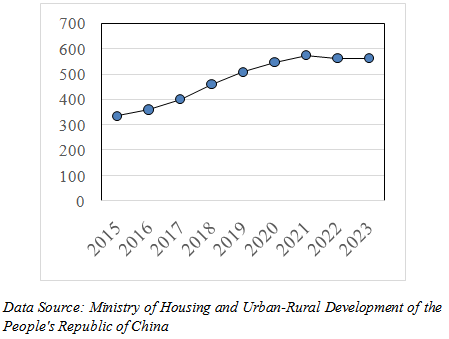
It is evident that as China's urbanization process reaches its end, the annual volume of construction will not continue to grow, and the market capacity of the surveying and design industry will also stop growing, potentially shrinking. In fact, since 2014, China has implemented various policies to regulate the real estate market. Additionally, since the end of 2019, combined with the three-year impact of the COVID-19 pandemic, the annual revenue of the surveying and design industry has stopped growing. According to income statistics from the Ministry of Housing and Urban-Rural Development over the past nine years, not only has growth ceased, but a downward trend might have emerged (Figure 1). The extent of this possibility will need further observation in the coming years.

According to statistics from the Ministry of Housing and Urban-Rural Development, in 2022, the design revenue of the architectural design industry decreased by 10.6% year-on-year. A survey by the Private Enterprises Branch of the China Survey and Design Association found that in 2022, the average income of 9 out of the top 10 private design companies decreased. The contraction of the architectural design market is a foregone conclusion, creating a significant gap between the large number of practitioners and the significantly reduced market capacity.
For individual design firms, the market contraction is a force majeure. To survive, they need self-renewal, particularly in addressing cost control challenges. Simply relying on layoffs or salary cuts only delays the inevitable. Many have begun experimenting with project-based reforms to control costs.
This study focuses on how to enhance cost management capabilities under a project-based management system through enterprise restructuring, including organizational restructuring, operational model restructuring, and profit distribution restructuring, to strengthen the survival and development capabilities of design firms.
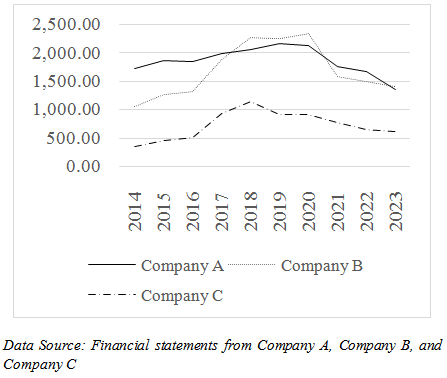
1.2. Research MethodThe article uses a case study method, selecting three representative design companies that have completed project management reforms for at least three years. Company A is a large traditional design institute with 2,000 employees, Company B is a private design firm with 2,000 employees, and Company C is a small to medium-sized private design firm with 150 employees. These companies have all experienced revenue declines in recent years (see Figure 2). By comparing cost management before and after implementing the project management system, the advantages of cost management under the new system are demonstrated. (Company names are replaced with letters due to confidentiality.)

The article is structured as follows: [Research Background and Issues] — [Theoretical Foundation] — [Analysis of Traditional Model Issues] — [Project-Based Reform Measures] — [Cost Control Effect Analysis] — [Conclusions and Recommendations].
Project-based management is a method of dividing an organization's work into a set of temporary tasks to achieve specific goals and outcomes. It combines project management methods and tools with organizational management. The project system includes various subsystems, such as scope, time, cost, quality, human resources, communication, and risk management. These elements together form the overall project. Only through coordination and mutual support among these elements can the project system operate efficiently and achieve its overall goals.
The book Project Cost Management: A Systems Approach 1 comprehensively explains all aspects of project cost management, from cost estimation and budgeting to cost control, providing a systematic approach. It emphasizes that cost management is a systematic process throughout the project lifecycle, rather than an isolated activity. The methods proposed help project managers grasp the overall project cost, avoiding a narrow focus on local costs while neglecting overall cost-effectiveness. It also explores the interrelationships between cost and other project elements (such as time and quality), providing an important perspective on cost in project integration management.
2.2. "Reengineering the Corporation" TheoryIn Reengineering the Corporation: A Manifesto for Business Revolution, the focus is on fundamentally rethinking and radically redesigning business processes to achieve significant improvements in key performance metrics such as cost, quality, service, and speed.
(1) Flat Structure Advocacy
The theory advocates breaking away from traditional hierarchical structures to create a flat organizational design. Traditional structures often result in slow information transfer and lengthy decision-making processes, which are unsuitable for rapidly changing market conditions 2.
(2) Process-Centered Team Formation
Emphasizes forming teams around business processes instead of traditional functional departments. In conventional organizations, departments often operate in silos, focusing solely on their goals, leading to inefficient process integration and low efficiency 2.
(3) Decentralization and Autonomous Decision-Making
Proposes delegating authority to frontline employees and teams, granting them more decision-making power. In traditional structures, upper management holds most of the decision-making authority, leaving lower-level employees to passively follow orders, lacking motivation and creativity 3.
Business Process Reengineering: The core of reengineering is to fundamentally rethink and redesign business processes. This involves thoroughly analyzing existing processes to identify redundancies and inefficiencies and then redesigning and optimizing them to improve efficiency and quality 4.
(1) Redistribution of Interests Due to Power Structure Changes
Reengineering emphasizes moving away from traditional hierarchical structures to flatter ones. This shift decentralizes power from upper management, giving more decision-making power to lower-level employees and teams, inevitably changing the distribution of interests 4.
(2) Process-Based Interest Distribution Adjustments
Reengineering focuses on redesigning the business management approach around processes, breaking the traditional function-based interest distribution model. In the new model, interests are distributed more based on process execution effectiveness and contributions.
(3) Interest Distribution Encouraging Teamwork
Reengineering stresses working in teams, requiring members with diverse skills and knowledge to collaborate on completing business processes. Thus, the interest distribution should adopt methods that encourage teamwork.
2.3. Cost Control TheoryCost control theory involves managing and controlling costs in business operations to achieve goals like cost reduction and profit increase. In a narrow sense, cost refers to capital expenditure for achieving specific economic objectives, and cost control means planning and regulating capital expenditures throughout the production process to guide costs in a predetermined direction.
(1) Cost Control Objectives
The basic goal of "cost control" is to reduce costs by minimizing unnecessary expenses in production and operations, aiming for an absolute reduction in cost. Increasing profit is the more fundamental goal of cost control.
(2) Cost Controllability
This is the fundamental premise for cost control. The two conditions for cost controllability are the potential for costs to develop in various ways and the manager's ability to implement control. Past costs cannot be changed by current control activities; ongoing costs are partly determined by past activities and are uncontrollable, while some parts may be controllable; all future costs can be controlled through current planning activities. This provides the theoretical foundation for establishing a comprehensive cost control system.
(3) Comprehensive Cost Control Methods
A method that involves managing and controlling all stages of business operations, including total cost control, entire process cost control, and all-staff cost control.
(4) Cost Control Stages
Practically, cost control is managed through three stages: pre-control, concurrent control, and post-control, each significantly impacting the control results.
2.4. Theoretical Guidance in This StudyThe article explores potential cost-influencing factors in organizational structure, operational models, and interest distribution patterns based on "Reengineering the Corporation" theory. It analyzes these factors using cost control theories and methods to identify the causes of cost control issues. Solutions are proposed under project management theory, and the effectiveness of these solutions is verified using pre- and post-restructuring management data from case studies.
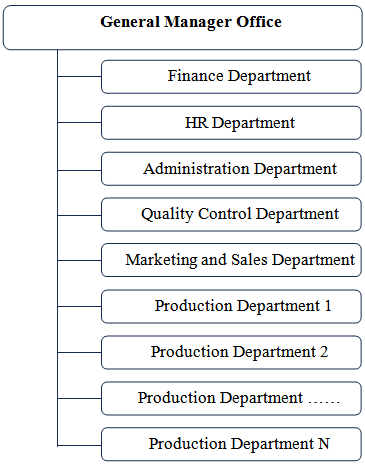
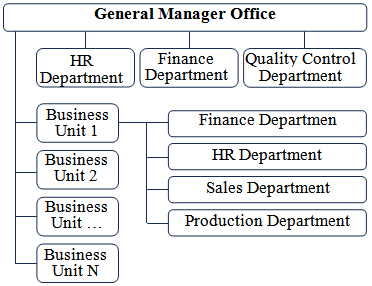
Traditional design firms typically use a functional or divisional organizational structure.
Functional Organizational Structure (Chart 3): Departments are divided by function, such as finance, human resources, administration, marketing and sales, production, and quality control. All departments are at the same level and directly managed by upper management.


Divisional Organizational Structure(Chart 4): Based on the design service process, it includes a comprehensive functional structure with parts of marketing, finance, and human resources that are authorized, alongside business or production departments, operating with profit and loss responsibility.
When a functional organization's scale increases to a certain point and requires division, business units (or subsidiaries) are created below the company level, with each unit functioning as a small-scale functional organization.
From a foundational perspective, regardless of the organizational structure, the business level is functionally structured with similar operational modes, featuring:
(1) Business departments execute contracts, with support from functional departments.
(2) Human resources are allocated by department and are relatively fixed, with financial and material resources distributed by department heads.
(3) The supply chain is selected and managed by division or business department heads.
(4) Market selection, contract amounts, and outsourcing decisions are made by division or department heads.
(5) Cost and profit control, as well as decision-making authority, are effectively managed within the divisions or departments.
In the traditional model, non-production departments do not undertake cost optimization tasks and simply operate within the budget. Production departments, like business units or divisions, have three common profit distribution models agreed upon with management:
(1) Fixed Profit Target Model: Business departments pay a fixed percentage of contract amounts as management fees to the company, usually between 15% and 30%. Departments are responsible for their own profits and losses.
(2) Fixed Output Target Model: The company sets a fixed output requirement for business departments, assessing managers based on whether they meet annual targets.
Variable Profit Target Model: Management agrees on tiered profit targets and corresponding rewards and penalties with business departments.
3.2 Analysis of Cost Controllability Issues(1) Lack of Quantifiable Cost Effectiveness in Functional Departments
In traditional design firms, departments like finance, HR, and administration have operating costs considered as fixed expenses, lacking effective evaluation mechanisms. The value of services provided by these departments is hard to measure, making it difficult to determine if their input is reasonable or assess their contribution to the company's overall performance. For example, the HR department's investment in recruitment and training lacks a clear correlation with actual value added to the company.
(2) Inability to Allocate Cross-Department Collaboration Costs
Frequent collaboration between departments lacks a unified cost allocation and settlement standard, making it challenging to account for these costs accurately. For instance, a project requiring multiple departments to work together struggles with allocating human resource costs due to differences in departmental contributions and time spent.
(3) Unclear Allocation Standards for Indirect Costs
Indirect costs, such as office rent, utilities, and management salaries, often use rough allocation methods without scientific standards. This distorts cost accounting and affects the accuracy of management decisions.
(1) Excessive Authority of Supervisors Leading to Non-Transparent Procurement Costs
Department supervisors have significant decision-making power, especially in supplier selection and pricing, which can lead to a lack of oversight, inflated prices, and quality issues, increasing unnecessary costs. This unchecked authority may also lead to corruption and cost leakage.
(2) Chaotic and Non-Transparent Human Resource Allocation
Human resource allocation lacks standardized regulations, with supervisors potentially reallocating staff based on personal preference, reducing efficiency. There's also a lack of scientific evaluation for workload and skill matching, hindering effective cost control.
(3) Difficulty in Defining Labor Costs Due to Project Overlap Within Departments
Multiple simultaneous projects often share resources, complicating precise cost allocation. This affects project profitability assessments and undermines accurate cost control.
Under traditional interest distribution models, cost controllability is often ignored:
(1) Fixed Profit Target Model
With fixed profit margins, there's no incentive from the company's perspective to control costs for additional profits.
(2) Fixed Output Target Model
Growth targets focus on output, with cost control based on historical values. As long as tasks are completed routinely without unexpected events, profit targets are usually met, with no expectation of additional profits.
(3) Variable Profit Target Model
Department heads have undisputed authority over cost interpretation. Their benefits come from both company profit redistribution and controllable costs, making profits reliant on individual managers, with no company expectation of gaining from cost control.
3.3. Analysis of Control Target IssuesBased on the above cost controllability issues, traditional design firms lack mechanisms for targeted cost control, evident in the following aspects:
Traditional design firms often fail to establish a scientific and clear cost control target system. Without systematic accumulation and analysis of historical data, it's difficult to set reasonable cost control benchmarks. Vague targets lack guidance and cannot be effectively assessed.
In a traditional structure, business departments are responsible for their own profits and losses, with their primary goal being to use costs to complete contract tasks, which conflicts with the company's profit objectives. Business departments have the final say on cost interpretation, and since most project members derive income from human resources, nearly all members (including department heads) can participate in profit distribution under the guise of cost consumption, leading to opposing cost control goals between departments and the company.
Traditional design firms use different evaluation standards for labor and non-labor costs. Factors like work efficiency, workload, and HR costs are difficult to measure uniformly and are often managed independently by departments, influenced by past projects. Additionally, the unclear definition of responsibility for cost control targets creates assessment challenges. The blurred lines of responsibility between business departments, functional departments, and project teams hinder accountability. In cross-department projects, the lack of clear responsibility leads to blame-shifting, affecting the achievement of cost control targets 5.
These issues in target setting and assessment severely limit the cost management effectiveness of traditional design firms. As market conditions worsen, these problems become more pronounced, directly impacting the company's survival and growth capabilities.
3.4. Analysis of Control Method Issues(1) Lack of Project Cost Standards
Traditional design firms generally lack a systematic project cost standard. Due to insufficient historical data and lack of professional data analysis, it's difficult to establish scientific cost estimation standards. This is evident in:
- Missing labor hour standards, making it hard to estimate the manpower required for projects.
- Unclear indirect cost allocation standards across specialties.
- Lack of quantifiable basis for project management fees.
(2) Absence of a Budget System
Budget management is often missing, reducing budgets to mere formalities, losing their foundational role in cost control. This is evident in:
- Non-standardized budget preparation, lacking uniform standards, or even absence of a budgeting phase.
- Weak budget enforcement with arbitrary adjustments.
- Missing budget assessment mechanisms, disconnecting budget execution results from performance evaluations 5.
(3) Lack of a Cost Responsibility System
The absence of a cost responsibility system directly affects cost control effectiveness. Due to organizational and interest distribution issues, it’s hard to define cost control responsibilities. Without historical data, it’s impossible to quantify responsibility standards. Cost overruns lack accountability mechanisms, and even if they exist, they are not enforced, preventing a closed-loop responsibility system.
(1) Lack of Monitoring Systems
Traditional design firms lack mechanisms to collect project data, relying on informal communication to understand project status, leading to reliance on second-hand information. Ineffective monitoring fails to establish an effective early warning system, preventing timely intervention in cost control.
(2) Ineffective Error Correction Mechanisms
Even if error correction mechanisms exist, without an effective monitoring system, it’s hard to identify cost issues during project progress. Delays in detection render these mechanisms ineffective.
(1) Lack of Tools
The absence or ineffective use of information management tools leads to low data collection rates, rendering them ineffective. Without project management methods, management software and tools are not utilized.
(2) Lack of Standardized Execution
Due to the foundational interest distribution issues in traditional design firms, especially within highly autonomous structures, execution standards rely entirely on department heads, making enforcement difficult. Even with standards, execution can be selective.
(3) Misalignment of Incentive Mechanisms
Even with comprehensive project monitoring or all-encompassing cost control, if business departments control all cost interpretations, incentive mechanisms become ineffective and unrealistic, making management goals unattainable.
3.5. Analysis of Control Stage Issues(1) Organizational Structure Dimension
The vertical segmentation of functional departments makes it difficult to prepare accurate project cost budgets. Independent operations of specialized departments lack horizontal coordination, creating blind spots in overall cost planning. For example, in early planning stages of large projects, poor information sharing among departments often leads to significant discrepancies between manpower planning and actual needs.
(2) Operational Mode Dimension
The traditional "department responsibility" model weakens cost pre-control capabilities. A single business department fully managing a project results in cost forecasts that rely on individual managers' experience rather than a scientific evaluation system. Especially in cross-department projects, budgets often fail to cover all potential costs.
(3) Interest Distribution Dimension
Budget preparation involves interest bargaining, affecting the scientific nature of cost control. Departments often reserve large buffer spaces when preparing budgets to secure more resources, leading to inflated budgets that lose their control significance.
(1) Organizational Structure Dimension
Management cannot directly control frontline projects within business departments due to structural issues, preventing access to real information and hindering cost management.
(2) Operational Mode Dimension
Projects operate independently within business departments, making it difficult for the company to access actual information or provide direct guidance. Without mechanisms, project outcomes are not proactively reported to management, and significant issues may only surface too late for remediation.
(3) Interest Distribution Dimension
There is a horizontal and vertical interest game between departments and between the company and departments. Even with sufficient focus during contract execution, cost control by the company must pass through business departments, whose actions are driven primarily by their own interest distribution methods.
Most traditional design firms conduct post-project reviews, facing issues like inaccurate data and lack of guidance.
(1) Inaccurate Data
Due to overlapping project personnel, business departments struggle to compile accurate cost data. Functional departments providing services to various business units cannot allocate costs to specific projects, making accurate statistics difficult.
(2) Lack of Guidance
Even with accurate data, differences between business departments prevent the application of uniform standards. Despite accurate data and unified standards, varying practices in resource allocation and cost management among departments hinder using these standards as pre-control guidelines.
3.6. SummaryThe intertwining of these multidimensional issues prevents design firms from achieving closed-loop cost control, ultimately affecting business performance and market competitiveness. This highlights the need for a comprehensive reform of the cost control system, considering organizational, operational, and interest distribution aspects for substantial breakthroughs.
The goal of project-based reform in cost management is to ensure that all costs are incurred and measured under project management control. To achieve this goal, adjustments are needed in three core areas: organizational structure, operational model, and interest distribution structure, along with an analysis and review of the elements of cost management.
4.1. Recommendations for Project-Based Organizational Structure ReformThe traditional multi-level management structure of design institutes is no longer suitable for current market efficiency demands. Based on reengineering theory, organizational structure reform should focus on the following goals:
(1) Compress management levels from the original four-tier structure of "institute leadership - sub-institute - department - specialty group" to a three-tier structure of "company leadership - project manager - professional team."
(2) Achieve a flattened decision-making chain, granting project managers full project management autonomy and establishing a rapid response mechanism.
(3) Establish a dedicated Project Management Office (PMO) as a supportive department for standardized project management and resource coordination.
The matrix organizational structure is the best model for achieving project-based management. The specific design includes:
(1) Horizontally setting up project teams, with project managers fully responsible for project implementation and management. The project manager’s personnel affiliation can remain within the original organization, with added project management assessment rules and standards.
(2) Vertically retaining necessary functional departments, such as the technical center, human resources, and finance, to provide professional support for projects 3.
(3) Establishing a dual reporting mechanism where project members report to both the project manager and receive guidance from functional departments 3.
Project managers are central to project-based management, and their system of responsibilities, rights, and interests should include:
(1) Responsibilities: Overall responsibility for project progress, quality, and cost; ensuring project goals are met; managing the project team.
(2) Rights: Authority over project resource allocation; approval of project cost expenditures; assessment of project team personnel.
(3) Interests: A compensation system linked to project performance; a mechanism for sharing excess project profits.
4.2. Recommendations for Project Operation Mode ReformEstablish a standardized management process covering the entire project lifecycle:
(1) Project Initiation Stage: Improve project evaluation mechanisms and establish scientific project selection criteria.
(2) Project Implementation Stage: Develop detailed project plans and establish milestone management systems.
(3) Project Closure Stage: Standardize settlement processes and establish project review and knowledge-sharing mechanisms.
For human resources, build a talent pool to achieve centralized management and develop uniform personnel allocation standards and procedures. Establish an efficiency evaluation system for resource use. For equipment resources, manage hardware and software resources centrally, set up a resource reservation system, monitor usage efficiency, and include this in cost accounting.
First, establish a project cost budgeting system with unified standards for budget preparation, phased cost control targets, and a dynamic cost monitoring mechanism. Improve cost accounting methods, establish precise direct cost aggregation, set reasonable standards for indirect cost allocation, and implement periodic project cost accounting.
(1) Supplier Management: Establish mechanisms for supplier evaluation and selection, implement graded management, and establish long-term strategic partnerships.
(2) Procurement Process Optimization: Implement centralized procurement, create a procurement price database, and improve procurement supervision mechanisms.
4.3. Recommendations for Benefit Distribution Mechanism Reform under the Project SystemEstablish a project revenue accounting system, clarify standards for revenue recognition, set up a project cost accounting framework, and determine profit distribution principles. Develop differentiated distribution plans based on project difficulty, consider risk factors, and establish an excess profit-sharing mechanism.
Design a multi-level incentive system, such as a compensation structure comprising base salary, project performance, and year-end bonuses. Implement project completion rewards, establish long-term incentives, and create instant reward systems with milestone, innovation, and special contribution rewards.
Build a multi-dimensional evaluation index system, including hard metrics like project progress, quality, and cost, as well as soft metrics like team collaboration and innovation. Include client satisfaction indicators. Implement a process-oriented evaluation mechanism with monthly and quarterly assessments, project milestone evaluations, and annual comprehensive reviews.
4.4. Advantages of Cost Control under the Project System(1) Clearer Project Cost Allocation
- The project-based management system enhances the accuracy and clarity of cost allocation:
- Direct costs can be precisely attributed to specific projects and work packages.
- Indirect costs are allocated using scientific standards.
- Cross-project costs are clearly defined to avoid confusion.
Observations from three case companies show that after implementing project-based reforms, project cost accounting became feasible, significantly enhancing cost traceability.
(2) Increased Resource Utilization Efficiency
The establishment of resource pools and unified allocation mechanisms significantly improve resource utilization efficiency:
- Higher human resource utilization avoids simultaneous personnel surplus and shortage across departments.
- Increased sharing of equipment and facilities improves asset usage efficiency.
- Integrated purchasing resources achieve economies of scale, reducing procurement costs.
(3) Controllable Cross-Department Collaboration Costs
The matrix organizational structure under the project system effectively addresses the uncontrolled costs of cross-department collaboration:
- Clear project accountability reduces departmental buck-passing.
- Unified settlement standards for human and non-human costs allow for comprehensive project cost collection.
- Standardized workflows enhance collaboration efficiency.
(1) Project-Specific Cost Target Setting
Project-based management enables more scientific cost target setting:
- Set differentiated cost targets based on project characteristics.
- Break down overall cost targets into project stages.
- Establish a project cost warning mechanism.
(2) Responsibility Assignments
Clear project manager accountability ensures precise cost control responsibility:
- Project managers bear overall responsibility for project costs.
- Project team members have clear roles and responsibilities.
- A responsibility accountability mechanism ensures target execution.
(3) More Scientific Evaluation and Assessment
The evaluation system under the project system is more rational:
- Establish multi-dimensional assessment criteria.
- Combine process assessment with outcome evaluation.
- Link assessment results directly to performance rewards.
(1)Dynamic Cost Management
Project-based management shifts cost control from static to dynamic:
Real-time monitoring of project cost changes.
Timely identification and adjustment of cost deviations.
Establishment of a cost warning mechanism.
(2) Standardized Cost Control
Establish unified cost control standards and procedures:
Develop standardized cost budgeting methods.
Establish uniform cost accounting rules.
Implement standardized cost reporting systems.
(3) Refined Cost Management
- Cost accounting is precise down to specific tasks.
- Establish a detailed cost analysis system.
- Implement refined cost control measures.
4.5. Case Analysis(1) Data Selection Scope
The article examines three companies undergoing project-based transformation, each starting and completing the process in different years, averaging about three years. Data samples include three years before and after the transformation to account for instability during the change.
(2) Data Types
Given changes in market conditions and human resource scale, overall company data isn't comparable. Instead, per capita data and ratios are used, focusing on four indicators: per capita contract value, per capita actual output, operating profit margin, and return on net assets. Some key data exists only post-transformation and is not compared.
The article organizes key financial data (Table 1, Table 2, Table 3) from relevant years for the three companies and analyzes it. Despite completing project-based transformations at different times, all three companies show consistent results:
(1) Increased Per Capita Actual Output
Post-transformation, per capita actual output significantly increased, even when companies A and C saw a decline in per capita contract value. This trend indicates that the project-based transformation boosted productivity and efficiency, enhancing market adaptability.
(2) Improved Operating Profit Margin
The increase in productivity led to a noticeable rise in operating profit margin, which aids companies in a competitive market.
(3) Enhanced Return on Net Assets
The improved return on net assets across all three companies indicates a move towards healthy development following the project-based transformation.
(1) Project-Based Reform as an Effective Response
In the context of China's urbanization reaching its peak and the shrinking architectural design market, project-based reform effectively enhances cost management capabilities. The study shows that through organizational, operational, and profit distribution restructuring, project-based reform significantly improves operational efficiency and cost control.
(2) Comprehensive Systematic Change Required
Successful project-based reform necessitates simultaneous progress in three areas: transforming organizational structure from traditional functional to a flat project matrix; shifting operational models from departmental to project responsibility; and changing profit distribution from departmental to project performance evaluation.
(3) Significant Cost Control Improvements
Analysis of three case companies indicates that post-reform, there are notable improvements in human resource utilization, enhanced cost controllability, effective control of indirect costs, and increased project profitability.
5.2. Management Recommendations(1) Gradual Reform Implementation
Design companies should adopt a phased approach, starting with small-scale trials, learning from them before wider implementation to avoid major disruptions.
(2) Establish Comprehensive Project Management Systems
Develop clear project accountability, establish scientific cost accounting systems, improve performance evaluation, and optimize resource allocation.
(3) Strengthen Talent Development
Train versatile talent with project management skills, enhance cost awareness, and establish a talent development system aligned with project-based management.
(4)Focus on Information Technology
Increase investment in project management information systems to enhance efficiency and achieve refined cost management.
5.3. SummaryAs China’s urbanization slows, the architectural design industry faces market shrinkage and income decline. Traditional design institutions have organizational, operational, and profit distribution issues that hinder effective cost management. To address these challenges, design firms need project-based reforms with strategies like flattening structures, matrix management, standardized processes, and flexible profit distribution. These measures improve cost management, resource efficiency, and clarify cost control goals and responsibilities, ultimately enhancing survival and development capabilities. Project-based reform offers an effective path for maintaining detailed cost management and competitive strength in a deteriorating market environment.
| [1] | Webster, Francis M. Project Cost Management: A Systems Approach. John Wiley & Sons, 1995. | ||
| In article | |||
| [2] | Hammer, Michael. Reengineering the Corporation. New York: HarperBusiness, 1993. | ||
| In article | |||
| [3] | Luo Jiaoyang, Zhao Feiyi. Application of Project Performance Evaluation Management in Enterprise Matrix Organization [J]. Modern Enterprise, 2024, (09): 27-29. | ||
| In article | |||
| [4] | Zhang, Junjie. China Enterprise Re - engineering Practice. Shanghai University of Finance and Economics Press, 2004. | ||
| In article | |||
| [5] | Chen Ting. Analysis of Problems and Countermeasures of Project Cost Management in Architectural Design Enterprises [J]. Quality and Market, 2022, (04): 124-126. | ||
| In article | |||
Published with license by Science and Education Publishing, Copyright © 2024 Yazhu Feng
 This work is licensed under a Creative Commons Attribution 4.0 International License. To view a copy of this license, visit
https://creativecommons.org/licenses/by/4.0/
This work is licensed under a Creative Commons Attribution 4.0 International License. To view a copy of this license, visit
https://creativecommons.org/licenses/by/4.0/
| [1] | Webster, Francis M. Project Cost Management: A Systems Approach. John Wiley & Sons, 1995. | ||
| In article | |||
| [2] | Hammer, Michael. Reengineering the Corporation. New York: HarperBusiness, 1993. | ||
| In article | |||
| [3] | Luo Jiaoyang, Zhao Feiyi. Application of Project Performance Evaluation Management in Enterprise Matrix Organization [J]. Modern Enterprise, 2024, (09): 27-29. | ||
| In article | |||
| [4] | Zhang, Junjie. China Enterprise Re - engineering Practice. Shanghai University of Finance and Economics Press, 2004. | ||
| In article | |||
| [5] | Chen Ting. Analysis of Problems and Countermeasures of Project Cost Management in Architectural Design Enterprises [J]. Quality and Market, 2022, (04): 124-126. | ||
| In article | |||