This study presents an assessment of the current coffee berry disease detection practices among coffee farmers in Ambaguio, Nueva Vizcaya, Philippines. Coffee production remains a vital source of livelihood in the area; however, diseases such as Coffee Leaf Rust and Coffee Berry Disease continue to significantly affect crop productivity and quality. At present, most farmers rely on traditional manual inspection methods to identify plant diseases. These methods are often based on visual observation and personal experience, making them time-consuming, labor-intensive, and may be inaccurate, especially in the absence of agricultural experts and technical support in rural communities. To gain deeper insight into these challenges, the study examines the existing practices, limitations, and conditions faced by coffee farmers in detecting and managing coffee berry diseases. It also explores the need for improved and technology-supported approaches such as Artificial Intelligence (AI) and mobile-based solutions for future adoption. The findings of this assessment are expected to serve as a baseline for the possible development of a smartphone-based Coffee Berry Disease Detection system tailored to the local context. Ultimately, this preliminary study aims to provide insights that can support more efficient, accurate, and sustainable disease management practices, contributing to improved coffee production, farmer livelihood, and agricultural development in Ambaguio, Nueva Vizcaya.
Coffee production is an important agricultural industry in the Philippines, providing livelihood opportunities for thousands of farmers, particularly in rural communities such as Ambaguio, Nueva Vizcaya. However, coffee farms remain vulnerable to various diseases, including Coffee Leaf Rust, Coffee Berry Disease, and Anthracnose, which significantly affect crop yield and quality. Despite this, many farmers continue to rely on traditional disease detection methods that are based on manual inspection and visual observation. These practices are often time-consuming, labor-intensive, and prone to human error. In addition, limited access to agricultural specialists in rural areas further delays the proper identification and management of diseases, resulting in increased crop losses, reduced income, and greater reliance on pesticide use.
In response to these challenges, this preliminary study assesses the current coffee berry disease detection practices among coffee farmers in Ambaguio, Nueva Vizcaya and examines the limitations associated with existing methods. The study also explores the potential relevance of modern technologies, such as Artificial Intelligence and image-based diagnostic tools, as possible future support systems for improving disease detection and management. By establishing a clear understanding of farmers’ current practices and challenges, the findings of this study are expected to serve as a baseline for future development of more efficient, accurate, and technology-assisted solutions. Ultimately, this research aims to contribute to improved disease management, enhanced productivity, and more sustainable coffee farming practices in the locality.
Coffee production is a vital agricultural activity in many developing regions, yet it remains highly vulnerable to plant diseases that significantly reduce yield and quality. Studies emphasize that diseases such as Coffee Leaf Rust and Coffee Berry Disease continue to pose major threats to global coffee production, requiring effective and timely management strategies to minimize losses 1, 2. In rural farming communities, however, disease detection is often delayed due to limited access to technical knowledge and agricultural support systems.
Research shows that many farmers still rely on traditional and manual methods of disease identification, which are largely based on visual observation and personal experience. While these practices are widely used, they are often subjective and may lead to inaccurate or late diagnosis of plant diseases. This challenge is further compounded by gaps in agricultural extension services, particularly in remote areas where farmers have limited access to expert guidance and technical assistance.
In recent years, studies have highlighted the growing potential of digital technologies in improving plant disease detection. Machine learning and image-based approaches have been explored as tools for identifying crop diseases more accurately and efficiently. For instance, systematic reviews indicate that data-driven and AI-based models can significantly enhance early detection of plant diseases, including coffee rust, by analyzing visual symptoms from field images 3, 4. Similarly, deep learning and edge-based systems have demonstrated strong performance in classifying plant diseases with high accuracy while being suitable for real-world agricultural environments 5, 6.
The literature reveals a clear gap between traditional farmer-based disease detection practices and modern technological solutions. While advanced systems show strong potential for improving accuracy and efficiency, many smallholder farmers continue to depend on conventional methods due to limited access to technology and training. This highlights the need to assess current disease detection practices among coffee farmers, which serves as the focus of this preliminary study in Ambaguio, Nueva Vizcaya.

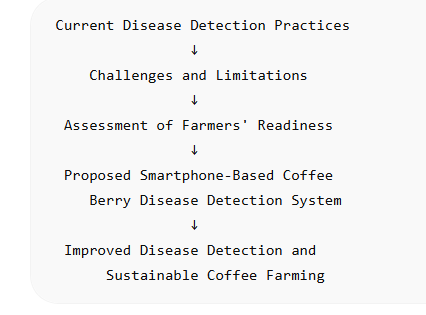
Figure 1 illustrates the proposed conceptual approach of the study for the future development of a smartphone-based Coffee Berry Disease Detection System. The process begins with the assessment of current disease detection practices employed by coffee farmers in Ambaguio, Nueva Vizcaya. This activity involves examining the existing methods used by farmers to identify coffee berry diseases, including their reliance on manual inspection, visual observation, and experiential knowledge. Understanding these practices provides valuable insights into the prevailing approaches and conditions surrounding disease detection within the locality.
The conceptual approach further involves identifying the challenges and limitations associated with current practices and assessing farmers' readiness to adopt technology-based solutions. This includes exploring issues such as delayed disease identification, limited access to agricultural experts, insufficient technical knowledge, and barriers to technology adoption. At the same time, farmers' awareness, willingness, and capacity to utilize smartphone-assisted tools are evaluated to determine the feasibility of introducing digital innovations into their farming activities.
The findings derived from these assessments serve as the basis for the future development of a smartphone-based Coffee Berry Disease Detection System that is accessible, user-friendly, and responsive to the needs of rural farming communities. The proposed approach aims to support more timely and accurate disease detection, improve disease management practices, reduce potential crop losses, and ultimately contribute to enhanced productivity and sustainable coffee farming.
Synthesis
Unlike previous studies that primarily focused on the performance of existing disease detection models and methods, the proposed conceptual approach developed by the authors emphasizes the integration of farmers' current practices, identified challenges, and readiness to adopt technology-based solutions. By considering the specific conditions and needs of coffee farmers in Ambaguio, Nueva Vizcaya, the framework provides a context-sensitive basis for the future development of a smartphone-based Coffee Berry Disease Detection System. This approach highlights the practical application of the study's findings and demonstrates the authors' contribution beyond the critical analysis of existing literature.
General Objective
The main objective of this research is to assess the actual methods used by coffee farmers in detecting and classifying coffee berry diseases, and to determine the current situation of coffee farmers in Ambaguio, Nueva Vizcaya.
Specific Objectives
1. To identify and document the current coffee berry disease detection practices used by coffee farmers in Ambaguio, Nueva Vizcaya.
2. To determine the challenges and limitations experienced by farmers in identifying and managing coffee berry diseases.
3. To assess the level of awareness and readiness of coffee farmers regarding the use of technology-based solutions for disease detection.
4. To provide baseline information that may serve as a reference for the future development of a smartphone-based Coffee Berry Disease Detection system.
Potential Impact
Social Impacts
This preliminary study provides an assessment of the current coffee berry disease detection practices among coffee farmers in Ambaguio, Nueva Vizcaya, which may serve as a basis for improving future agricultural interventions. By identifying existing methods and challenges, the study contributes to a better understanding of the farmers’ situation, particularly in terms of disease detection practices, access to agricultural support, and decision-making in crop management. The findings may help guide future programs aimed at improving awareness, knowledge, and readiness of farmers toward more efficient and technology-supported farming practices.
On a broader scale, the study may support efforts to promote sustainable agriculture by highlighting issues related to excessive pesticide use and delayed disease detection. It also provides insights that can assist government agencies and agricultural institutions in designing more targeted support systems for coffee farmers, ultimately contributing to improved productivity, resilience, and sustainability in coffee farming communities.
Economic Impacts
This preliminary assessment may contribute to understanding the economic challenges faced by coffee farmers in relation to disease detection and crop management. Inefficient or delayed identification of coffee berry diseases often leads to reduced yield, lower crop quality, and increased production costs due to unnecessary pesticide use and crop losses. By documenting these issues, the study provides baseline information that may support future strategies aimed at improving farm productivity and income stability.
In addition, the findings may serve as a reference for the development of future technology-based solutions, such as mobile or AI-assisted disease detection systems, which could potentially reduce production costs and improve market competitiveness in the long term. Strengthening coffee production in areas like Ambaguio, Nueva Vizcaya may also contribute to the growth of local economies and support the sustainability of coffee farming as a key livelihood source.
The research will utilize a descriptive research design to assess the current coffee berry disease detection practices among coffee farmers in Ambaguio, Nueva Vizcaya. The study focuses on gathering relevant information regarding farmers’ actual methods, challenges, and conditions in identifying and managing coffee berry diseases.
4.1. Data GatheringThe initial phase of the study involves the collection of primary data from coffee farmers in Ambaguio, Nueva Vizcaya. This will be conducted through structured surveys, interviews, and focus group discussions. These instruments aim to gather information regarding the farmers’ current practices in detecting coffee berry diseases, their level of awareness, and the challenges they encounter in disease identification and management. The responses collected will serve as the main basis for analyzing existing practices and conditions in the locality.
4.2. Data AnalysisAfter data collection, the gathered information will be organized, categorized, and analyzed using descriptive statistical tools such as frequency counts, percentages, and ranking. This phase will help identify common practices, recurring problems, and the overall situation of coffee farmers in relation to disease detection. The analysis will provide a clear picture of the strengths and limitations of current practices.
4.3. Interpretation of ResultsThe final phase involves interpreting the analyzed data to draw meaningful conclusions regarding the coffee berry disease detection practices of farmers in Ambaguio, Nueva Vizcaya. The results will be used to determine gaps in knowledge and practice, as well as to provide baseline information that may support future development of technology-based solutions such as a smartphone-based disease detection system.
This section presents the findings of the preliminary assessment of coffee berry disease detection practices among coffee farmers in Ambaguio, Nueva Vizcaya. The results are organized according to the objectives of the study, focusing on current practices, challenges, and readiness for technology-based solutions.
5.1. Current Coffee Berry Disease Detection PracticesThe findings reveal that most coffee farmers in Ambaguio rely heavily on traditional inspection methods as their primary method for detecting coffee berry diseases. Farmers commonly observe changes in color, texture, and the presence of visible spots or damage on coffee berries and leaves.
Based on survey responses, a majority of farmers depend on personal experience and traditional knowledge rather than formal diagnostic tools. Some farmers also reported relying on peer consultation or advice from neighboring farmers when uncertain about disease symptoms. Only a small percentage indicated access to agricultural technicians or extension workers for proper diagnosis. This suggests that disease identification is largely experience-based and informal, which may lead to inconsistencies in detection accuracy.
5.2. Challenges in Disease Detection and ManagementThe results show that farmers experience several challenges in identifying and managing coffee berry diseases. The most common issue reported is difficulty in early detection, especially when symptoms are not yet visually obvious. Farmers also highlighted the lack of technical knowledge and training in distinguishing between different types of coffee diseases.
Another major challenge is the limited access to agricultural experts and support services, particularly in remote farming areas. This results in delayed intervention, allowing diseases to spread and cause further crop damage. Additionally, farmers reported high costs of pesticides and uncertainty in proper application, which sometimes leads to overuse or misuse of chemicals.
5.3. Awareness and Readiness for Technology-Based SolutionsThe assessment indicates that while farmers are still largely dependent on traditional methods, there is a moderate level of awareness regarding modern agricultural technologies. Some respondents have heard about mobile applications and digital tools for farming, but actual usage remains very limited.
Most farmers expressed interest in using a smartphone-based application for disease detection if it is simple, affordable, and accessible even without strong internet connectivity. However, barriers such as limited smartphone skills, lack of training, and financial constraints were identified as factors affecting readiness for adoption.
5.4. Discussion of FindingsThe results clearly indicate that coffee berry disease detection in Ambaguio remains largely traditional and experience-based, with minimal integration of modern technology. While this approach has been used for many years, it is prone to limitations such as delayed detection and inaccurate identification of diseases.
The challenges identified in this study align with previous research emphasizing the need for accessible and user-friendly digital solutions in agriculture. The expressed willingness of farmers to adopt technology-based tools suggests a potential opportunity for introducing mobile-assisted or AI-powered systems in the future. However, successful implementation would require training, user education, and proper infrastructure support.
The findings highlight a significant gap between current farming practices and modern agricultural innovations. This gap supports the need for future development of a smartphone-based Coffee Berry Disease Detection system, which may improve disease management, reduce losses, and enhance productivity in coffee farming communities.
This preliminary study assessed the coffee berry disease detection practices among coffee farmers in Ambaguio, Nueva Vizcaya. The study aimed to identify the current methods used by farmers, determine the challenges they face in detecting and managing coffee berry diseases, and assess their awareness and readiness for technology-based solutions. Data were gathered through surveys, interviews, and focus group discussions with local coffee farmers.
Findings revealed that most farmers rely on traditional manual inspection and personal experience in identifying coffee berry diseases. Limited access to agricultural experts, lack of technical knowledge, and difficulty in early disease detection were identified as major challenges. The study also found that while awareness of digital farming tools is still limited, many farmers showed interest in using a smartphone-based application if it is simple and accessible.
6.2. ConclusionBased on the findings, it is concluded that coffee berry disease detection practices in Ambaguio, Nueva Vizcaya are still largely traditional and experience-based. These methods, while commonly used, are not always reliable for early and accurate disease detection, leading to potential crop losses and reduced productivity.
It is further conclude that farmers face significant challenges in disease identification due to limited technical support and resources. However, there is a positive indication of openness among farmers toward adopting technology-based solutions in the future. This suggests that there is a strong potential for introducing digital or AI-assisted tools to improve disease management in the locality.
6.3. RecommendationsBased on the results of the study, the following recommendations are proposed:
1. Agricultural agencies and local government units should provide training and seminars to improve farmers’ knowledge on coffee berry disease identification and management.
2. Extension services should be strengthened to ensure better access to agricultural experts in rural farming communities.
3. Future researchers are encouraged to further develop and test smartphone-based or AI-assisted disease detection systems suitable for local farming conditions.
4. Farmers should be encouraged to adopt improved and technology-supported farming practices to enhance early disease detection and reduce crop losses.
A follow-up study may be conducted with a larger sample size to validate and expand the findings of this preliminary assessment.
| [1] | Silva, M. C., Várzea, V. M. P., Guerra-Guimarães, L., Azinheira, H. G., Fernandez, D., Petitot, A. S., Bertrand, B., & Lashermes, P. (2021). Coffee resistance to the main diseases: Leaf rust and coffee berry disease. Brazilian Journal of Plant Physiology, 33(1), 119–147. | ||
| In article | View Article | ||
| [2] | Moreira-Morrillo, A. A., Vélez-Zambrano, J. P., Moreira, S. I., & Garcés-Fiallos, F. R. (2023). Diseases affecting the coffee crop: Elucidating the cycle of rust, thread blight and Cercospora leaf spot. Scientia Agropecuaria, 14(3), 1–15. | ||
| In article | View Article | ||
| [3] | Quiñones Huatangari, L., Ocaña Zúñiga, C. L., Castillo, A. E. H., Acosta Jacinto, R. E., Milla Pino, M. E., Ríos Julcapoma, M., Yauri Rodríguez, R., & Pérez Cabrera, A. (2022). Detection of rust emergence in coffee plantations using data mining: A systematic review. Online Journal of Biological Sciences, 22(2), 157–164. | ||
| In article | View Article | ||
| [4] | Francisco, M., Ribeiro, F., Metrôlho, J., & Dionísio, R. (2023). Algorithms and models for automatic detection and classification of diseases and pests in agricultural crops: A systematic review. Applied Sciences, 13(8), 4720. | ||
| In article | View Article | ||
| [5] | Bordin Yamashita, J. V. Y., & Leite, J. P. R. R. (2023). Coffee disease classification at the edge using deep learning. Smart Agricultural Technology, 4, 100183. | ||
| In article | View Article | ||
| [6] | Dolatabadian, A., Neik, T. X., Danilevicz, M. F., Upadhyaya, S. R., Batley, J., & Edwards, D. (2024). Image-based crop disease detection using machine learning. Plant Pathology, 73(1), 160–172. | ||
| In article | |||
Published with license by Science and Education Publishing, Copyright © 2026 Bartolome Laarnie O., Gurat Christopher A., Patricio Fidel Jr G., Tobias Sherilyn P. and Wais Armilyn H.
 This work is licensed under a Creative Commons Attribution 4.0 International License. To view a copy of this license, visit
http://creativecommons.org/licenses/by/4.0/
This work is licensed under a Creative Commons Attribution 4.0 International License. To view a copy of this license, visit
http://creativecommons.org/licenses/by/4.0/
| [1] | Silva, M. C., Várzea, V. M. P., Guerra-Guimarães, L., Azinheira, H. G., Fernandez, D., Petitot, A. S., Bertrand, B., & Lashermes, P. (2021). Coffee resistance to the main diseases: Leaf rust and coffee berry disease. Brazilian Journal of Plant Physiology, 33(1), 119–147. | ||
| In article | View Article | ||
| [2] | Moreira-Morrillo, A. A., Vélez-Zambrano, J. P., Moreira, S. I., & Garcés-Fiallos, F. R. (2023). Diseases affecting the coffee crop: Elucidating the cycle of rust, thread blight and Cercospora leaf spot. Scientia Agropecuaria, 14(3), 1–15. | ||
| In article | View Article | ||
| [3] | Quiñones Huatangari, L., Ocaña Zúñiga, C. L., Castillo, A. E. H., Acosta Jacinto, R. E., Milla Pino, M. E., Ríos Julcapoma, M., Yauri Rodríguez, R., & Pérez Cabrera, A. (2022). Detection of rust emergence in coffee plantations using data mining: A systematic review. Online Journal of Biological Sciences, 22(2), 157–164. | ||
| In article | View Article | ||
| [4] | Francisco, M., Ribeiro, F., Metrôlho, J., & Dionísio, R. (2023). Algorithms and models for automatic detection and classification of diseases and pests in agricultural crops: A systematic review. Applied Sciences, 13(8), 4720. | ||
| In article | View Article | ||
| [5] | Bordin Yamashita, J. V. Y., & Leite, J. P. R. R. (2023). Coffee disease classification at the edge using deep learning. Smart Agricultural Technology, 4, 100183. | ||
| In article | View Article | ||
| [6] | Dolatabadian, A., Neik, T. X., Danilevicz, M. F., Upadhyaya, S. R., Batley, J., & Edwards, D. (2024). Image-based crop disease detection using machine learning. Plant Pathology, 73(1), 160–172. | ||
| In article | |||