Corporate Social Responsibility (CSR) has become vital in contemporary business management, serving to enhance public image, boost employee morale, and build a reputable employer brand. This study conducted expert interviews with key corporate personnel to examine five core CSR dimensions: social environment, community relations, charitable activities, employee welfare, and health and safety. The findings indicate that CSR initiatives significantly enhance employee organizational identification, and active participation substantially boosts their commitment to the company. Based on these results, three recommendations are proposed: (1) implement CSR education programs to clarify its purpose and reduce participant burden; (2) define clear objectives to organize tailored initiatives across different themes; and (3) conduct employee satisfaction surveys to assess effectiveness and optimize future engagement strategies.
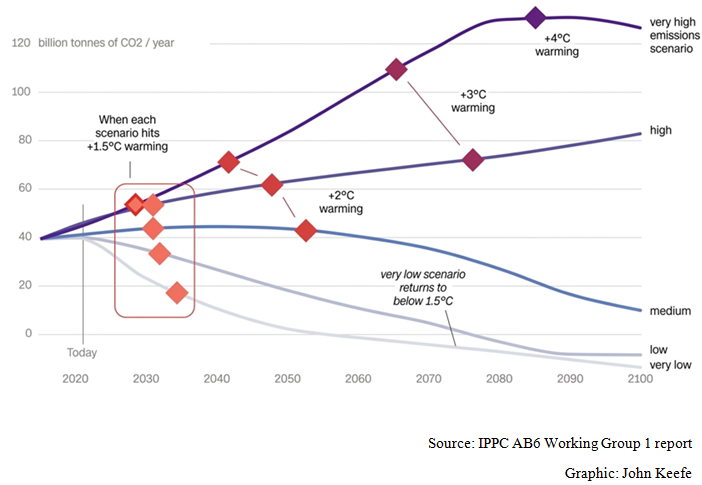
According to the report by the Intergovernmental Panel on Climate Change (IPCC), global temperatures have risen sharply by 1.1°C relative to pre-industrial levels and remain on a steady warming trajectory. As illustrated in Figure 1, near-term warming is largely locked in; regardless of future emission pathways, all modeled scenarios are projected to cross the critical +1.5°C threshold within a narrow window between 2030 and 2040. Under unmitigated high and very high emissions scenarios, global warming accelerates aggressively, breaching +2°C by the 2040s and peaking near +4°C toward the end of the century. Conversely, the medium scenario still breaches the +2°C limit by the early 2050s, whereas only the very low scenario offers a pathway to stabilize and eventually bring temperatures back below +1.5°C. These trajectories underscore that while near-term threshold breaches may be unavoidable, immediate and deep emission reductions are paramount to preventing catastrophic warming levels later in the century.
Climate-driven disasters are intensifying globally, as evidenced by this summer’s fatal heatwave in the U.S. Pacific Northwest and British Columbia, alongside the proliferation of severe wildfires worldwide. According to the California Department of Forestry and Fire Protection (CalFire), six of the state's top ten largest wildfires in history occurred within the 2020–2021 biennial alone. While anthropogenic greenhouse gas emissions and atmospheric particulate matter remain the primary drivers of this climatic shift, the resulting environmental volatility and resource scarcity underscore the urgent challenge of ensuring sustainable resource efficiency. In response to the global mandate for net-zero emissions, corporations are increasingly channeling their Corporate Social Responsibility (CSR) efforts toward environmental stewardship. By aligning their core organizational values with the United Nations’ 17 Sustainable Development Goals (SDGs), businesses are proactively addressing critical global sustainability crises ahead of the 2030 target.
The Global Reporting Initiative (GRI) collects CSR reports from around the world through its Data Partners and compiles them into the GRI Database. As of March 2020, there were a total of 135 countries, 13,722 companies/organizations, and 59,622 CSR reports available in the database, spanning from 1999 to 2020. Taiwanese companies are increasingly focusing on the issue of climate change and are moving towards sustainable business goals. They have also begun to prioritize environmental sustainability issues, using waste recycling to enhance the value of waste recovery and reuse for the benefit of the planet. For example, using coffee grounds as fabric for clothing not only reduces the pollution caused by discarded coffee grounds but also gives a new lease of life to what would have otherwise been discarded waste.

The importance of sustainable business extends beyond the generational transmission of values and philosophies. It involves treating stakeholders with integrity and fairness. Taking care of and showing concern for employees is also a crucial aspect of business operations. Companies that prioritize social responsibility often provide salary adjustments and enhance employee benefits, contributing to improved income distribution within society. Additionally, businesses with a strong track record of social responsibility have a positive impact on their corporate image, making them more attractive to talent during recruitment. Companies should focus on talent development and retention to establish a strong employer brand.
The prospects of sustainable business are promising, especially with the increasing global momentum towards achieving net-zero emissions, as evidenced by 130 countries committing to this goal. Additionally, there is a growing awareness among consumers regarding environmental conservation. Companies that embrace renewable energy and environmental sustainability are poised to thrive in this evolving landscape. As more businesses prioritize corporate social responsibility, the competitiveness of industries and nations is likely to increase. In terms of production, sustainability efforts encompass the entire spectrum from research and development to design and manufacturing processes, with a focus on environmental-friendliness, green practices, and energy efficiency. Some companies are even integrating green supply chain practices to cultivate an eco-friendly corporate image. By establishing points of differentiation from competitors, businesses are actively contributing to environmental sustainability.
Corporate Social Responsibility emphasizes that businesses have an ethical obligation to society and should contribute positively. In 1979, Archie Carroll introduced the concept of the "Pyramid of Corporate Social Responsibility," which comprises four dimensions: Economic Responsibility, Legal Responsibility, Ethical Responsibility, and Philanthropic Responsibility. Beyond the pursuit of profitability, companies face the imperative to meet stakeholder expectations and fulfill their responsibilities towards society, the environment, and their employees. In addition to the factors mentioned above, companies can also enhance their image, value, and attract top talents through CSR initiatives. According to a study by Gao 1, CSR also has a significant impact on non-financial performance. In today's highly competitive job market, companies can utilize CSR efforts to bolster their corporate image and value.
Companies are aligning themselves with the United Nations' 2030 SDGs as a direction for their sustainable development. They set CSR goals in line with the direction of sustainable development, with various departments within the company developing related implementation plans. Employees, in turn, gain a sense of achievement in their work and identification with the organization by assisting the company in achieving its CSR goals. Chen 2 suggested that a company's promotion of CSR activities enhances employees' identification with the organization. When employees have a higher level of organizational identification, their participation in CSR activities increases, further enhancing their perception of CSR within the company.
Corporate social responsibility has become a trend that businesses must address, and it is also a crucial component of sustainable business operations. Promoting social responsibility in sustainable development not only enhances a company's image but also impacts its employer brand. When promoting CSR, employees can improve themselves through participation in activities, thereby enhancing the company's employer brand. This not only fosters greater internal employee identification with the company but also attracts external top talent. After a company promotes social responsibility, it has a positive relationship with employee engagement. Increased employee engagement leads to higher retention rates and, in turn, reduced turnover costs related to hiring and training new employees.
Building upon the research motivations, this study adopts a case study methodology to conduct a comprehensive investigation and empirical analysis of the relationships among employee satisfaction, participation in CSR activities, and employee engagement. Specifically, the primary research objectives addressed through this case study approach are as follows:
a. To explore the relationship between CSR activities and employee satisfaction.
b. To examine the association between the promotion of CSR initiatives and employee involvement in CSR activities.
c. To investigate the correlation between corporate efforts in promoting social responsibility and employee commitment to the organization.
In this chapter, the literature review for this study is conducted and divided into three subsections. The first subsection discusses the current status of CSR initiatives. The second subsection explores the literature related to employee engagement. The third subsection examines the relationship between corporate social responsibility and employee engagement.
2.1. Current State and Future Directions of Corporate Social ResponsibilityTo effectively operationalize CSR within contemporary business frameworks, a multi-dimensional strategy that encompasses both external stakeholder engagement and internal human capital management is profoundly essential. Grounded in stakeholder theory, modern enterprises must balance their ecological footprint with social and community integration.
From an external perspective, environmental stewardship is strategically manifested through corporate land adoption initiatives. By actively sponsoring and cultivating non-toxic crops and organic rice, corporations not only mitigate critical issues like land abandonment and agricultural pollution, but they also stimulate the localized economy by generating sustainable farming employment opportunities, thereby contributing substantially to macroscopic environmental sustainability. This ecological commitment is seamlessly intertwined with neighborhood network cultivation and localized community relations 3.
For instance, by collaborating closely with regional medical and civic organizations to host regular community blood donation drives, enterprises play a pivotal role in alleviating regional healthcare shortages, fostering a symbiotic relationship, and encouraging civic participation among both residents and corporate staff. Furthermore, corporate philanthropy extends into diverse charitable dimensions; this includes launching donation drives for secondary goods and recycled clothing to directly assist underprivileged demographics and welfare institutions, which simultaneously promotes a circular economy and heightens environmental conservation consciousness among the workforce. Concurrently, an emerging facet of strategic philanthropy involves addressing animal welfare, executed through the systematic donation of premium, nutrient-rich pet food to local animal shelters. This intervention ensures that sheltered stray populations receive vital nutrition and preventive healthcare, effectively reducing disease susceptibility and substantially lessening the compounding financial and operational burdens borne by non-profit animal rescue organizations 4, 5
From an internal perspective, a holistic corporate citizenship framework recognizes that external social initiatives must be anchored by robust, ethically driven internal CSR mechanisms. This is systematically achieved through comprehensive employee welfare paradigms designed to enhance the quality of work-life. Specifically, the institutionalization of annual employee travel programs functions as a strategic tool to enhance organizational team bonding, giving workforce members critical opportunities for psychological relaxation and rejuvenation away from operational stressors. These macro-level benefits are further reinforced by micro-level incentives, such as structured holiday bonuses and personalized monthly birthday gifts, which collectively heighten an individual's sense of belonging, respect, and personal validation within the workspace 6.
Crucially, these socio-emotional benefits are safeguarded by strict adherence to workplace occupational health and safety standards. By conducting mandatory, comprehensive annual medical check-ups in tandem with maintaining an ergonomically safe working environment, corporations demonstrate a genuine priority for human capital preservation. These diagnostic health interventions enable employees to accurately comprehend their physical well-being, effectively promoting proactive health awareness 7. Ultimately, when employees perceive this dual alignment—where the employer actively heals the external environment and genuinely nurtures its internal workforce, it drastically optimizes employee morale, fortifies organizational identification, and cultivates an unshakeable sense of long-term commitment to the enterprise 3.
To successfully chart the future directions of CSR, enterprises must move beyond traditional reactive philanthropy toward strategic, proactive interventions that cultivate macroscopic social and environmental values.
Within the dimension of the social environment, this evolutionary shift is increasingly manifested through corporate advocacy for urban greening and ecosystem restoration via the formal adoption of public park green spaces. Rather than executing isolated, short-term environmental campaigns, modern corporations are entering into structured public-private partnerships to collaboratively manage, fund, and maintain urban green infrastructure. This continuous commitment not only directly addresses the degradation of communal ecosystems, but it also creates high-quality "Green Open Spaces" that improve urban microclimates and elevate the psychological and physical well-being of city residents, effectively turning environmental stewardship into a shared social asset.
Concurrently, future community relations are being redefined by highly targeted, strategic health interventions designed to mitigate systemic health disparities in historically marginalized regions. A critical societal vulnerability resides in rural communities, where elderly demographics frequently suffer from acute health neglect, delayed clinical treatment, and abbreviated life expectancies due to a severe deficit in local medical infrastructure and preventative healthcare literacy. To rectify this disparity, forward-thinking enterprises are mobilizing specialized human capital by collaborating directly with certified nutritionists and healthcare professionals. By conducting rural health seminars, delivering structured nutritional counseling, and distributing practical preventative wellness knowledge, corporations empower rural seniors with the autonomy to proactively manage their health. This structural approach systematically elevates local health literacy, reduces the incidence of chronic preventable diseases, and substantially alleviates the long-term operational and financial strains imposed on rural healthcare systems.
Finally, regarding educational support, organizations are shifting toward establishing dedicated corporate foundations for longitudinal talent development. By offering scholarships to underprivileged and exceptional students alongside structured corporate internships, companies integrate financial aid with practical workplace immersion. This approach bridges the gap between education and market demands while creating a resilient talent pipeline.
2.2. Employee Engagement: A Literature ReviewEmployee engagement refers to the psychological state of employees, encompassing their level of identification with the organization and their commitment to their work. In the context of corporate development, it is essential to recognize that success doesn't solely rely on technological prowess or business strength. The level of employee engagement plays a pivotal role. Without the active participation and dedication of employees, sustainable operation becomes an arduous task.
Employee engagement can be divided into four levels:
a.Sense of Security: Employees may experience a sense of insecurity primarily due to job uncertainty and lack of continuity. Job insecurity has a significantly negative impact on work engagement. Companies should enhance employees' sense of job security by addressing three dimensions: workplace provisions beyond essential office equipment, providing a friendly work environment to reduce discomfort, and maintaining work-life balance. Apart from work-related benefits, companies should also take care of their employees by offering leisure activities. This is crucial for nurturing a sense of security and well-being among employees, ultimately reducing turnover rates.
b.Sense of Honor: Recognizing employees' contributions and accomplishments is vital in fostering a sense of honor. Besides material rewards, acknowledging employees' dedication and successful task completion contributes to a sense of honor. As per Zhang Ting-Yu 8, individual and group senses of honor impact an individual's team engagement and their attitude when encountering challenges.
c.Sense of Belonging: Chen 9 emphasized that when employees identify with and have a sense of belonging to the organization, they tend to be loyal and work toward common goals. Conversely, when employees lose their sense of belonging or don't identify with the organization, they stagnate or may choose to leave.
d.Sense of Achievement: Employees often experience work-related fatigue when they don't derive a sense of accomplishment and recognition from their work. When employees feel satisfied and acknowledged for their contributions, they become more engaged in their work. Chuang 10 pointed out that personal achievement at work, such as accomplishing self-set goals and tasks, generates positive feelings and a sense of self-fulfillment. It's also crucial in gaining recognition from others and contributing significantly to the organization or team.
2.3. The Relationship between Corporate Social Responsibility and Employee EngagementHe 11 pointed out that corporate social responsibility can be categorized into internal and external aspects. Internal corporate social responsibility focuses on improving employee quality and optimizing the work environment. In contrast, external corporate social responsibility primarily addresses society and the environment, benefiting internal stakeholders as well. Chen 9 mentioned that the starting point for a company's commitment to corporate social responsibility, driven by genuine care and goodwill toward society rather than merely enhancing corporate image, leads to increased employee identification and engagement with their work. Li 12 found that when external evaluations of a company's commitment to corporate responsibility are favorable, employees take pride in their association with such a company. This not only enhances their self-esteem but also indirectly fosters a sense of identification and engagement with the company. Furthermore, when employees develop a commitment to the company during challenging times, it tends to reduce employee turnover.
Chen 9 also noted that the more employees participate in corporate social responsibility activities, the stronger their organizational identification with the company becomes. This increased identification improves relationships among employees and attracts like-minded job seekers to the company, thereby effectively enhancing their engagement with the organization. Allowing employees to participate in corporate social responsibility activities can effectively foster their engagement with the company. Huang 13 argued that corporate social responsibility initiatives have a positive impact on corporate culture, organizational identification, and employee engagement. This contributes to the enhancement of employee engagement.
Based on the research objectives and the findings from the literature review, this research is divided into three sections: Section 3.1 outlines the research structure, Section 3.2 discusses the research methods, and Section 3.3 describes the research subjects and provides an overview.
3.1. Research MethodsThis study adopts a case study methodology focusing on an enterprise within the biotech food industry. Established in 1995, the case company has navigated over a quarter-century of growth, transforming from a small-scale dietary supplement ingredient importer with fewer than 10 employees into a robust enterprise exceeding 150 staff members. Driven by continuous expansion and strategic transformation, the company has scaled its operations from a single entity into a group of three distinct companies. Its core business has evolved from simple raw material import and trading to encompassing a new firm dedicated to ODM formula research, development, and turnkey contract manufacturing layout. Furthermore, in 2012, the group established a biotech food ingredient manufacturing plant dedicated to the R&D and production of localized, internationally competitive health food raw materials. Supported by a professional team of registered dietitians and marketing experts, the company actively enhances the brand competitiveness of its clientele.
Currently, the case company serves as an agent for hundreds of raw materials from numerous renowned international brands. This extensive portfolio is backed by a highly capable R&D team, a dedicated testing and inspection unit, and regulatory affairs specialists. Leveraging their professional dosage from R&D and regulatory expertise, the dietitian team designs diverse, customized formulations for clients. The company also boasts prestigious certifications, including the Symbol of National Quality and Good Manufacturing Practice.
The strategic vision of the company is anchored in three primary pillars: "Product Innovation," "Quality and Efficiency Enhancement," and "Multilateral Promotional Integration." By integrating global resources and capitalizing on its profound market insights, long-standing academic-industrial collaborations, and robust technological capabilities, the company successfully identifies market demands and initiates targeted research agendas, thereby accelerating the time-to-market for its R&D achievements.
This study primarily employs in-depth interviews. The focus is on how employees perceive their participation in corporate social responsibility activities during the implementation of corporate social responsibility initiatives and how this affects their engagement with the company. Therefore, in-depth interviews are the main data collection method, supplemented by an employee satisfaction survey. The research analysis combines relevant literature, journal data, and interview content, and involves the analysis and comparison of the interviewees' responses.
This research utilizes qualitative research methods, including literature analysis, case studies, and in-depth interviews. It obtains relevant information through case studies and interviews. Here's an explanation of the applied research methods:
a. Case Study Methodology The case study approach is employed as the primary research design to facilitate a context-rich, holistic, and empirical investigation of a contemporary phenomenon within its real-life organizational setting. By focusing on a single, specific enterprise within the biotech food industry, this methodology allows for the collection of extensive, multi-faceted qualitative data. This comprehensive data collection is essential for untangling and analyzing the complex dynamic processes, tracking both internal organizational cultures and external market pressures. Ultimately, the case study framework provides the necessary depth to examine the intricate interrelationships between corporate initiatives and member responses that cannot be fully captured by restrictive quantitative measures.
b. In-Depth Interviews To extract nuanced insights from the selected case, this study utilizes semi-structured, direct, and highly personalized in-depth interviews as the core data collection instrument. This qualitative technique relies on a skilled investigator to cultivate an open, interactive dialogue, allowing participants to move beyond surface-level answers. To ensure a thorough and exhaustive exploration of each subject, an individual interview session lasting approximately 90 minutes was dedicated to each of the eight participants. This extended timeframe allows the researcher to delve deeply into the underlying motivations, core beliefs, personal attitudes, and emotional drivers of employees across different departments regarding CSR participation and organizational commitment. Through probing questions and active listening, this method successfully reveals the subjective experiences, cognitive frameworks, and unspoken organizational dynamics that directly influence employee engagement.
3.2. Research SubjectsTo gather diverse perspectives for this study, purposive sampling was utilized to recruit eight key participants, which are labeled A through H, from various core divisions within the case organization. The sample consists of four male and four female professionals, ensuring gender balance. In terms of organizational hierarchy, the participants primarily comprise high-level and mid-level management, including four Department Heads, such as Audit, Management, Legal, and Marketing, three Section Heads, such as Operations, R&D, and Product Planning, and one specialized staff member from the Product Planning Section. As shown in Table 1, this diverse composition provides a comprehensive cross-functional representation of the firm's operational and strategic leadership.
Based on the research objectives and literature review, this study has pre-designed interview content and topics from various perspectives. During in-depth interviews, a relaxed conversational approach is used, and open-ended questions are posed, with further probing questions based on the interviewee's responses. Depending on the interview interaction and the interviewee's answers, adjustments to the interview content and sequence are made as necessary.
The interview outline developed for this study is categorized into the following five main thematic areas:
a. Social Environment.
b. Community Relations.
c. Employee Benefits.
d. Charitable Activities.
e. Health and Safety.
The interview outline organized by theme is presented in the following table:
This chapter analyzes the impact of CSR initiatives on employee morale through interviews with various department managers within the company. The interview content is summarized and analyzed, and the results are categorized into five major thematic areas to explore the relationship between CSR activities, employee satisfaction, employee participation in CSR activities, and employee engagement with the company.
4.1. Interview Design and ContentThe semi-structured interview guide contains nine key questions designed to evaluate CSR from four major perspectives: strategic necessity, organizational impact, operational challenges, and practical implementation. Specifically, the questions explore the core rationale for CSR and its direct effects on employee morale, identification, and belonging, while identifying internal and external execution barriers. Furthermore, the framework incorporates industry-specific initiatives tailored to the case company, including environmental conservation, community relations, philanthropy, employee welfare, and workplace health and safety. Together, these questions comprehensively capture the relationship between corporate sustainability efforts and employee engagement. The questions are as follows:
a. In your opinion, should companies promote CSR? Why should they promote it?
b. Can the promotion of CSR by companies enhance employee morale, increase their sense of identity with the company, and foster a sense of belonging among employees?
c. In your view, what are the challenges companies face in promoting CSR, both internally and externally?
d. From your perspective, what CSR initiatives should companies focus on in the future to enhance employee morale and the company's image?
e. Regarding the social environment, what are your thoughts on companies contributing to environmental conservation, such as adopting land adoption initiatives?
f. In terms of community relations, do you think it would be beneficial for companies to collaborate with nutritionists to support local communities and elderly residents in rural areas?
g. Concerning charitable activities, have you participated in any charitable activities? What charitable activities should companies engage in to enhance their corporate image?
h. Regarding employee welfare, which aspects of employee welfare should companies prioritize to enhance employee identification with the company?
i. In terms of health and safety, the company conducts annual health check-ups. Do you find this helpful? Can it improve employee satisfaction with the company?
4.2. Compilation and Organization of In-Depth InterviewsBased on the qualitative consensus among the interviewees, the underlying motivations and rationales for promoting CSR can be systematically categorized into three interconnected dimensions: regulatory and trend adaptation, philosophical social reciprocity, and strategic sustainable operations.
First, regarding regulatory and trend adaptation, Participant A emphasized that legacy environmental regulations and legal frameworks no longer align with contemporary demands, necessitating proactive corporate governance. Corroborating this view, Participants E and F noted that as an organization scales up, embracing CSR becomes an inevitable global mandate. They argued that because businesses are inherently embedded in society, fulfilling social responsibilities is a fundamental duty that simultaneously yields mutual benefits for the enterprise, its clientele, and the overarching macroeconomic environment.
Second, with respect to philosophical social reciprocity, the core logic of Participants C, G, and H converged heavily on the ethos of "taking from society and giving back to society." They argued that corporations must unify internal resources to drive positive transformations within the social environment, thereby fostering a collective sense of social responsibility among individual employees and nurturing human capital to contribute back to the community.
Finally, from the perspective of strategic sustainable operations, Participant D elucidated that the execution of CSR serves to entrench a long-term vision of sustainability into daily business activities, explicitly preventing irreversible ecological and societal degradation. From a pragmatic management perspective, Participants B, E, and H further asserted that modern CSR has evolved from discretionary philanthropy into a core benchmark for corporate survival and profitability. Internalizing CSR principles not only elevates external brand image and market competitiveness but also yields significant internal dividends, including enhanced employee engagement, effective talent cultivation, and a substantial reduction in turnover-related costs.
Regarding the organizational impact of CSR, the qualitative consensus among the interviewees strongly demonstrates that well-structured CSR initiatives function as a catalyst for elevating employee engagement, organizational identification, and a sense of belonging.
Foremost, multiple participants (Participants B, C, and D) established that both internal and external CSR practices yield a profoundly positive impact on employees' cognitive frameworks. Participant D noted that an employee’s subjective perception of these sustainability activities directly modulates their level of alignment with the firm. This alignment is further augmented by cross-departmental feedback systems; as Participant A elucidated, transparent communication regarding CSR milestones allows personnel to comprehend the tangible social and ecological contributions of their work. This shift from pure profitability to social stewardship enables employees to deeply resonate with the corporate culture, transforming ethical corporate values from mere slogans into meaningful realities.
However, the efficacy of this internal alignment is contingent upon strategic execution and content relevance. Participant E critically observed that whether CSR successfully boosts engagement and belonging heavily depends on the specific nature and design of the social initiatives promoted. Supporting this conditional perspective, Participant F suggested that when CSR is executed in the right direction, such as combining enhanced employee benefits with regular, hands-on charitable volunteerism, it directly translates into higher organizational attachment.
Ultimately, these initiatives reshape the internal operational climate and long-term organizational culture. Participant G pointed out that demonstrating genuine corporate empathy toward societal needs fosters a more harmonious internal environment, thereby improving daily inter-departmental coordination. Cultivating such a virtuous organization, as Participant H concluded, naturally attracts high-caliber, upright talent. This alignment fills employees with organizational pride, turning them into brand advocates who positively reinforce the corporate culture across generations.
When evaluating the systemic barriers to promoting CSR, the qualitative insights from the interviewees illuminate a multifaceted matrix of internal organizational friction and external institutional pressures.
Internally, the primary challenges reside in cognitive misalignment, change resistance, and resource allocation conflicts. Several participants (Participants A, D, F, and G) highlighted that a fundamental lack of employee awareness and understanding regarding CSR spirit frequently culminates in low organizational alignment and initial skepticism. Participant G critically noted that CSR execution cannot simply be top-down coercion; when organizational identification is insufficient, personnel inevitably question new mandates. Furthermore, integrating sustainability frameworks imposes severe operational strains. As elucidated by Participants A and E, CSR initiatives demand substantial temporal and cognitive investments from staff, sparking internal conflicts over increased workloads and the balance between standard duties and civic responsibilities. Participant E underscored that these efforts often divide human resources without yielding immediate, quantifiable performance improvements, prompting a strategic dilemma on whether to integrate social activities into standard working hours. To mitigate these internal fractures, Participants A, F, and G emphasized that robust internal cohesion and targeted educational training are mandatory prerequisites to dismantle resistance and foster a shared corporate ethos before driving external initiatives.
Externally, organizations must navigate an increasingly complex landscape governed by regulatory compliance, market demands, and resource constraints. Participants B and H observed that CSR has fundamentally transformed from a discretionary, visionary initiative driven by idealistic business owners into an institutional necessity. This shift is accelerated by shifting government policies, stringently evolving legal regulations, environmental tax regimes, and heightened consumer expectations. Complying with these rigid international frameworks, as Participant A mentioned, demands significant administrative overhead. Moreover, from a competitive standpoint, Participants C and E stated that navigating external resource and talent allocation while trying to differentiate the firm within a crowded market presents a profound challenge. Ultimately, these findings indicate that successful CSR integration requires a dual strategy: cultivating internal readiness through corporate education while simultaneously developing dynamic capabilities to adapt to shifting macroeconomic and legal environments.
Regarding the pragmatic execution of future sustainability frameworks, the qualitative evidence from the interviewees outlines a comprehensive repertoire of actionable initiatives that can be systematically synthesized into three core strategic thrusts: ecological restoration and carbon mitigation, community engagement and philanthropy, and strategic value-chain integration.
First, in terms of ecological restoration and carbon mitigation, multiple participants prioritized hands-on environmental stewardship and carbon footprint management. Participant D advocated for direct institutional control over greenhouse gas emissions and the minimization of the firm's carbon footprint to achieve systemic decarbonization. To operationalize these goals on a tangible level, Participants B, C, E, and F proposed the regular organization of community-wide environmental events, such as tree planting, waste reduction campaigns, and marine debris remediation (e.g., beach and mountain cleanups). Notably, Participants B and F suggested that pairing these initiatives with educational guided tours for children or transforming them into corporate "Family Days" complete with experiential DIY projects and social activities can substantially incentivize employee participation and foster internal cohesion.
Second, with respect to community engagement and philanthropy, the findings emphasize localized social impact through strategic alliances. Participant A recommended forging institutional partnerships with established non-profit organizations, such as nursing homes and orphanages, to leverage the case company’s core competencies by providing specialized nutritional supplements to vulnerable populations like the elderly and children. Similarly, Participant E proposed adopting neighborhood parks in collaboration with local government agencies, thereby creating safe, accessible communal spaces that encourage physical well-being and active citizenship among residents.
Finally, from the perspective of strategic value-chain integration, Participants G and H illuminated how land resources can be leveraged to generate shared value. Participant H noted that utilizing land assets for sustainable agriculture, eco-recreation, and carbon sequestration directly aligns corporate operations with international energy conservation benchmarks, fundamentally shifting public perception from viewing the company as profit-driven to being genuinely philanthropic. Maximizing this strategic alignment, Participant G envisioned an innovative "land adoption" model that creates equitable employment opportunities for marginalized local communities. By incorporating the traceable, high-quality agricultural yield from these adopted lands directly into the case of company's product formulations, the firm can simultaneously guarantee product quality control and synthesize an authentic, socially responsible brand narrative.
In exploring the deployment of corporate nutritionists to fortify community relations, the qualitative evidence from the interviewees reveals a powerful strategic alignment between professional core competency leverage, community health empowerment, and institutional brand alignment.
First, regarding professional core competency leverage and public health enhancement, multiple participants emphasized using the firm’s regulatory and nutritional expertise to address societal disparities. Participant H noted that introducing professional educational resources to medically underserved areas serves as a critical public health intervention that raises overall regional well-being, though he cautioned that the long-term impacts of such regional outreach must be evaluated against mainstream mass media. Supporting this macrosocial view on a communal scale, Participants A and F advocated for forming institutional alliances with charitable foundations or childcare facilities to deploy corporate nutritionists directly to remote rural areas and neighboring senior citizen centers. By organizing tailored lifelong learning classes and nutritional health seminars for vulnerable populations like the elderly and children, the company can cultivate a significantly deeper and more resilient social connection.
Second, with respect to community health empowerment, the findings highlight the transformation of passive neighborhoods into active, health-conscious ecosystems. Participants B and C suggested hosting localized health education courses designed to explicitly empower residents with practical wellness knowledge. Participant G further proposed that to maximize local engagement, the curriculum should be dynamically aligned with current seasonal demands, trending market topics, and breaking health-related events. This strategic framing ensures that the educational content remains highly relevant and attractive to the general public.
Finally, from the perspective of institutional brand alignment and participant motivation, the initiatives serve a dual purpose of social welfare and corporate advocacy. Participant D elucidated that the advocacy of corporate nutritionist functions as a subtle yet effective marketing channel, enriching residents’ health literacy while simultaneously increasing their cognitive familiarity with the company's brand and core values. However, to translate interest into sustained participation, several operational strategies were underscored. Participants E and G recommended integrating promotional incentives, gifts, or prizes to boost resident motivation during seminars. Concurrently, from an internal management standpoint, Participant G highlighted the necessity of supporting the corporate nutritionists executing these programs by offering specialized rewards, performance incentives, and calculating appropriate overtime compensation for their extended working hours.
In evaluating potential charitable and philanthropic activities, the qualitative data from the interviewees underscores a diverse range of social interventions that can be systematically categorized into three main strategic domains: vulnerable group empowerment and eldercare, operational-philanthropic integration, and macro-level sustainability and educational sponsorship.
First, regarding vulnerable group empowerment and eldercare, multiple participants advocated for direct, high-impact societal support. Participants A, C, and G placed a heavy emphasis on mitigating social isolation by providing practical life assistance, routine environmental cleanups, and comprehensive care for elderly individuals living alone, specifically through collaborations with established non-profit organization. Furthermore, Participant C proposed expanding the firm's social outreach through specialized interventions, such as supporting horticultural therapy initiatives for children with special needs and establishing sustainable aid networks for marginalized demographics. To ensure the success of these programs, Participant A highlighted that cultivating high employee engagement is a critical operational prerequisite.
Second, with respect to operational-philanthropic integration, several interviewees recommended embedding charitable giving directly into the firm’s routine corporate practices. This approach seeks to replace traditional, material holiday gifts with socially responsible alternatives. While Participant B suggested replacing corporate holiday gifts with tangible products manufactured by sheltered workshops and charitable organizations, Participants E and F advocated for a more direct approach by redirecting gift budgets into institutional donations for charitable causes. Participant E elucidated that this substitution acts as an internal corporate alignment tool, allowing employees to directly experience and internalize the company’s authentic commitment to philanthropy. Additionally, Participant E recommended regular, accessible activities such as blood drives and financial contributions to foster a culture of altruism within the workplace.
Finally, from the perspective of macro-level sustainability and educational sponsorship, Participant G outlined an ambitious, high-visibility blueprint designed to simultaneously fulfill social responsibilities and elevate corporate reputation. This includes aligning corporate infrastructure with international standards like RE100 for energy conservation and carbon reduction. On a community level, Participant G championed rural educational equity, suggesting the sponsorship of foundational learning resources, organizing two-day museum excursions, and funding unique town experiences for underserved youths. To further augment brand equity, the participant recommended investing in regional talent development, such as sponsoring rural choirs, athletes, and orphans.
In evaluating the optimal configuration of employee welfare to drive internal organizational commitment, the qualitative findings from the interviewees illustrate that internal CSR must be conceptualized through three distinct layers: social cohesion and camaraderie, familial dependency support, and strategic career security.
First, regarding social cohesion and camaraderie, several interviewees emphasized the importance of relational-building activities to fortify the organization's social fabric. Participants A, B, F, and G strongly endorsed the regular institutionalization of company-wide employee trips. As explicitly noted by Participants B, F, and G, these collective excursions serve as a vital mechanism to bridge geographical and divisional gaps among staff members, thereby consolidating organizational cohesion, cultivating camaraderie, and fostering a shared corporate identity. Participant A added that introducing accessible, immediate rewards acts as a foundational baseline for demonstrable corporate care.
Second, with respect to familial dependency support, the evidence underscores the strategic value of extending corporate welfare beyond the individual employee to encompass their immediate household. Participant C championed the institutionalization of comprehensive family care systems, arguing that integrating employees' family members into the corporate ecosystem creates a holistic sense of alignment. To operationalize this familial care, Participants A, D, and E proposed targeted financial interventions, specifically the provision of children's tuition subsidies and academic scholarships for underprivileged or gifted youth. Participant D elucidated that addressing these critical domestic financial pressures directly modulates and enhances an employee's psychological sense of belonging to the enterprise. However, Participant A cautiously framed this expansion by noting that high-cost initiatives, such as establishing dedicated educational foundations, should remain contingent upon the firm reaching a certain economic scale and maintaining sustainable baseline profitability.
Finally, from the perspective of strategic career security, Participant H re-conceptualized employee welfare by shifting the focus from transactional, material perks to transformative organizational design. The participant argued that the most resilient foundation for organizational identification lies in establishing a forward-looking management trajectory that provides employees with clear advancement stages and personal growth opportunities. By purposefully engineering a "worry-free" operational environment, the company can ensure that employees' long-term careers progress on the right track. This sophisticated framework demonstrates that while foundational financial and social perks are necessary to satisfy immediate hygiene factors, true employee retention and engagement are unlocked when corporate welfare aligns with strategic talent development and psychological safety.
When examining the deployment of annual health check-ups as an internal CSR, the qualitative consensus among the interviewees underscores that proactive wellness programs function as a critical driver for preventative health empowerment, organizational identification, and human capital sustainability.
First, regarding preventative health empowerment and employee inertia, multiple participants (Participants A, B, D, and G) noted that employees typically exhibit a passive attitude toward personal health diagnostics, often neglecting screenings until physical symptoms manifest. To dismantle this inertia, Participant A highlighted the operational necessity of hosting institutional health screenings directly within standard working hours, which significantly improves participation compliance. This systematic intervention, as corroborated by Participants B and D, successfully elevates employees' physical self-awareness and facilitates early disease prevention. Intriguingly, Participant E observed a notable behavioral shift toward personal wellness autonomy: under the catalyst of corporate-sponsored screenings, employees' willingness to proactively pursue deeper, voluntary diagnostics has experienced a steady, annualized increase.
Second, with respect to organizational identification and corporate care synergy, the empirical evidence demonstrates that health check-ups act as a powerful instrument for demonstrating corporate altruism. Participant C framed annual check-ups as a cornerstone of strategic employee care. Maximizing the unique core competencies of the case organization, Participant F elucidated that while mandatory health screenings are a standard compliance baseline for food manufacturing facilities, the case company differentiates itself by integrating its professional nutritionists to provide customized, post-diagnostic follow-up health education. This holistic, supportive loop allows personnel to accurately decode their biometric profiles, thereby directly augmenting employee job satisfaction and psychological alignment with the corporate culture.
Finally, from the perspective of human capital sustainability, Participant H re-conceptualized employee wellness by aligning it with macroeconomic corporate governance and long-term organizational viability. The participant asserted that employees constitute an enterprise's most vital capital asset; therefore, institutionalizing comprehensive wellness indicators is not merely a discretionary benefit but a foundational mandate for operational planning and task delegation. By providing a sophisticated spectrum of disease indicators, the firm actively safeguards its organizational resilience, signaling a genuine commitment to workforce well-being that ensures sustainable productivity and corporate longevity.
4.3. Analysis of Research ResultsThe challenges of promoting CSR in companies come from both internal and external factors. Internally, challenges include a lack of deep understanding of CSR, while externally, the absence of a national framework for CSR policy development by the government is a significant obstacle. Regarding the social and environmental aspects, interviewees recommended activities such as family days, collaborating with other charitable organizations for beach or mountain cleanups, and incorporating family or charity events to increase employee participation. Additionally, adopting and caring for public parks and green spaces for employee involvement in environmental activities can provide nearby residents with clean and comfortable spaces for exercise and leisure.
In terms of community relations, interviewees strongly endorsed the idea of hosting health seminars in the community. Such seminars not only educate local residents on health topics but also enhance the company's visibility and image in the community. Regarding charity activities, interviewees suggested that the traditional practice of giving gifts during festivals could be replaced with products related to charity. Additionally, organizing charity events to support the elderly or disadvantaged groups was recommended. In terms of employee welfare, interviewees proposed the regular organization of employee trips. This not only strengthens the bonds among employees but also enhances cohesion within the company. Furthermore, employee trips provide an opportunity for employees' family members to become part of the corporate community. Concerning health and safety, companies should not only provide a good working environment but also take care of their employees' health. Regular health check-ups not only help employees understand their health status but also provide an opportunity for the company to use statistical data from these check-ups for health education, thereby raising awareness about healthcare among employees.
In summary, Table 3 systematically synthesizes the empirical findings by mapping out the specific interview fields, the number of participants, and the core ideas presented. The matrix highlights a strong consensus among all eight interviewees on strategic frameworks, while capturing targeted operational suggestions from specialized personnel subsets.
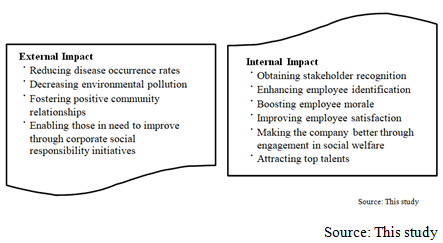
Based on the above analysis, the research results are presented in the form to illustrate the reasons and methods for promoting corporate social responsibility, and to address the impacts from internal and external factors and the benefits generated for the company in Figure 2.
This study highlights that the promotion of CSR faces a dual challenge: internal cognitive gaps among employees and the external absence of a unified national policy framework. To overcome these barriers and align with organizational values, the case company can implement a multi-faceted CSR strategy across four pillars: environmental stewardship through family-centric cleanups and park adoptions; community empowerment via nutritionist-led health seminars that elevate brand visibility; strategic philanthropy by replacing corporate holiday gifts with charitable products; and comprehensive internal CSR through regular employee trips and institutionalized annual health check-ups. Integrating post-diagnostic health education and familial involvement not only mitigates domestic strains but also fosters a robust sense of organizational belonging. As synthesized in the study's fishbone diagram, systematically deploying these localized CSR initiatives enables the enterprise to achieve its core sustainable values while effectively cultivating employee engagement, morale, and long-term institutional resilience.
Based on the interview findings, this study proposes three suggestions for organizations seeking to effectively implement CSR. First, organizations must address internal barriers before launching external campaigns. Management should invest in comprehensive training programs to deepen employees' understanding of CSR core objectives. Crucially, to prevent change resistance, companies must carefully design these initiatives to avoid placing excessive temporal burdens on staff. Integrating CSR tasks into standard working hours is highly recommended to sustain morale and drive meaningful engagement. Second, rather than executing sporadic acts of philanthropy, firms should establish clear, thematic portfolios that align with employee capabilities and organizational core competencies. A robust framework should bridge four distinct pillars: environmental stewardship, community empowerment, strategic philanthropy, and internal workplace welfare. Third, to ensure long-term resilience, companies must transition from top-down directives to participatory governance. Implementing systematic feedback mechanisms is critical. Special attention must be dedicated to capturing the insights of ordinary, frontline personnel rather than relying solely on senior executives, thereby ensuring that resource allocation aligns precisely with broader stakeholder expectations.
Although this study provides valuable insights, several limitations should be noted. First, as a single-case study within the biotech food sector, the findings are deeply tied to the case firm's unique context and may not fully generalize to other industries or organizational scales. Second, the qualitative nature of this research captures deep employee perceptions but lacks long-term quantitative metrics to measure exact correlations with financial or operational performance. Third, the analysis represents a cross-sectional snapshot heavily constrained by current macroeconomic factors and the absence of a unified national CSR policy framework.
Job Descriptions of Interviewees
a. Interviewee A - Audit Department Supervisor Job Description
(1).Plan and ensure the design of internal audit and control systems and compliance with regulations.
(2).Inspect and evaluate the control status of current operational regulations and complete internal control self-assessment operations within the company.
(3).Execute and improve the design of internal audit and control systems and compliance with regulations.
(4).Plan and ensure the accuracy of equity operations.
(5).Execute and review departmental data file management and system data maintenance.
b. Interviewee B - Operations Department Supervisor Job Description
(1).Plan and ensure the efficiency and effectiveness of operational workflow.
(2).Execute and verify departmental document preparation and review.
(3).Execute and improve operational workflow and maintain customer relationships.
(4).Track and manage business performance, assisting in achieving performance goals.
(5).Execute routine personnel management in the department (attendance, education and training, job performance), collect daily employee and performance indicators.
(6).Plan and take responsibility for departmental performance outcomes.
c. Interviewee C - Management Department Supervisor Job Description
(1).Plan and evaluate the development of the group's system technology, utilizing information technology to enhance company efficiency.
(2).Plan the development of the group's organizational development and human resources management direction to fully utilize organizational goals and human resources.
(3).Integrate general affairs and administrative management for optimization, enhancing the efficiency and effectiveness of the company's overall operational resources.
(4).Execute routine personnel management in the department (attendance, education and training, job performance), collect daily employee and performance indicators, plan and take responsibility for departmental performance outcomes.
(5).Maintain external relations to assist in enhancing the corporate brand image.
d. Interviewee D - Corporate Governance Supervisor Job Description
(1).Execute and review contract amendments and related non-litigation matters.
(2).Plan and execute legal advocacy and education and training.
(3).Plan and ensure the execution of litigation cases and legal matters.
(4).Plan and improve the provision of legal advice for business decision-making.
(5).Handle ESG corporate governance and intellectual property rights layout and protection matters.
(6).Execute and review contract amendments and related non-litigation matters.
(7).Plan and execute legal advocacy and education and training.
(8).Plan and ensure the execution of litigation cases and legal matters.
(9).Plan and improve the provision of legal advice for business decision-making.
(10).Strategy layout and protection of intellectual property rights.
e. Interviewee E - Product Planning Department Supervisor Job Description
(1).Project benefit assessment, planning, and execution.
(2).Project progress and risk management.
(3).Cross-department project integration management and process improvement.
(4).Feasibility and market assessment and planning of products.
(5).Planning and management of product marketing and promotion.
f. Interviewee F - Research and Development Specialist Job Description
(1).New product formula development.
(2).Customized formula development.
(3).Search for new raw materials.
(4).Laboratory management.
(5).Education and training.
g. Interviewee G - Product Planning Department Supervisor
(1).Product planning and marketing promotion management.
(2).Sales activities and business promotion management.
(3).Marketing tool production and integration management.
(4).Execute routine personnel management in the department (attendance, education and training, job performance), collect daily employee and performance indicators, plan and take responsibility for departmental performance outcomes.
(5).Promote marketing education.
(6).Business marketing - business support.
h. Interviewee H - Marketing and Planning Department Supervisor
(1).Exhibition marketing.
(2).Media marketing.
(3).Marketing promotion activities.
(4).Online marketing planning.
(5).Product promotional planning.
(6).Website maintenance and marketing planning.
(7).Public relations activities and marketing projects.
Video animation editing and production.
| [1] | Gao, Z. H. (2010). The Impact of the Level of Corporate Investment in Corporate Social Responsibility on Employee Organizational Identification and Organizational Citizenship Behavior. National Central University, Institute of Human Resource Management. | ||
| In article | |||
| [2] | Chen, Y. C. (2015). The Impact of Employee Perceived Corporate Social Responsibility on Participation in CSR Activities: The Mediating Role of Organizational Identification. National Central University, Institute of Human Resource Management. | ||
| In article | |||
| [3] | Freeman, R. E. and S. Dmytriyev. (2017). Corporate social responsibility and stakeholder theory: Learning from each other. Symphonya. Emerging Issues in Management, (1), 7-15 | ||
| In article | View Article | ||
| [4] | Kraus, S., S. U. Rehman, and F. J. S. García. (2020). Corporate social responsibility and environmental performance: The mediating role of environmental strategy and green innovation. Business Strategy and the Environment, 29(7), 2715-2725. | ||
| In article | |||
| [5] | Askew, O. M. (2022). Broadening the scope of CSR: The intersection of animal welfare, corporate philanthropy, and community impact. Journal of Business and Socio-Economic Development, 2(2), 114-128. | ||
| In article | |||
| [6] | Bowen, F., A. Newenham-Kahindi, and I. Herremans. (2010). When community engagement strategy matters for organizational outcomes. California Management Review, 53(1), 29-53. | ||
| In article | |||
| [7] | Glavas, A. (2016). Corporate social responsibility and employee engagement: Enabling employees to bring more of their whole selves to work. Frontiers in Psychology, 7, 796. | ||
| In article | View Article PubMed | ||
| [8] | Chang, T. Y. (2015). A Study on the Correlation of Team Honor, Team Cohesion, Knowledge Sharing, and Creative Performance - A Case Study of the Wang Science Competition in Institutions. National Taiwan Normal University, Department of Industrial Education. | ||
| In article | |||
| [9] | Chen, C. H. (2015). A Study on the Relationship between Corporate Social Responsibility, Employee Job Satisfaction, and Organizational Identification. National Taipei University of Technology, Institute of Technology and Vocational Education. | ||
| In article | |||
| [10] | Chuang, J. F. (2018). Job Satisfaction and Turnover Intention: A Comparison between Early Childhood Education and Other Professions. National Dong Hwa University, Department of Early Childhood Education. | ||
| In article | |||
| [11] | Ho, Y. T. (2022). Work and Corporate Social Responsibility: The Mediating Effect of Employee CSR Beliefs on Employer Brand and the Interfering Effect of CSR Goal Acceptance. National Sun Yat-Sen University, Institute of Human Resource Management. | ||
| In article | |||
| [12] | Lee, P. R. (2009). An Empirical Study on the Impact of Employee Perceived Corporate Social Responsibility on Organizational Commitment and Turnover Intention. National Taiwan Normal University, Department of Industrial Education. | ||
| In article | |||
| [13] | Huang, C. M. (2021). A Study on Employee Engagement in Logistics Companies - A Case Study of Company H in Taiwan. National Taiwan Ocean University, Department of Transportation Science. | ||
| In article | |||
Published with license by Science and Education Publishing, Copyright © 2026 Tzu-Ching Weng, Fu-Ju Lee and Hsin-Yi Chi
 This work is licensed under a Creative Commons Attribution 4.0 International License. To view a copy of this license, visit
http://creativecommons.org/licenses/by/4.0/
This work is licensed under a Creative Commons Attribution 4.0 International License. To view a copy of this license, visit
http://creativecommons.org/licenses/by/4.0/
| [1] | Gao, Z. H. (2010). The Impact of the Level of Corporate Investment in Corporate Social Responsibility on Employee Organizational Identification and Organizational Citizenship Behavior. National Central University, Institute of Human Resource Management. | ||
| In article | |||
| [2] | Chen, Y. C. (2015). The Impact of Employee Perceived Corporate Social Responsibility on Participation in CSR Activities: The Mediating Role of Organizational Identification. National Central University, Institute of Human Resource Management. | ||
| In article | |||
| [3] | Freeman, R. E. and S. Dmytriyev. (2017). Corporate social responsibility and stakeholder theory: Learning from each other. Symphonya. Emerging Issues in Management, (1), 7-15 | ||
| In article | View Article | ||
| [4] | Kraus, S., S. U. Rehman, and F. J. S. García. (2020). Corporate social responsibility and environmental performance: The mediating role of environmental strategy and green innovation. Business Strategy and the Environment, 29(7), 2715-2725. | ||
| In article | |||
| [5] | Askew, O. M. (2022). Broadening the scope of CSR: The intersection of animal welfare, corporate philanthropy, and community impact. Journal of Business and Socio-Economic Development, 2(2), 114-128. | ||
| In article | |||
| [6] | Bowen, F., A. Newenham-Kahindi, and I. Herremans. (2010). When community engagement strategy matters for organizational outcomes. California Management Review, 53(1), 29-53. | ||
| In article | |||
| [7] | Glavas, A. (2016). Corporate social responsibility and employee engagement: Enabling employees to bring more of their whole selves to work. Frontiers in Psychology, 7, 796. | ||
| In article | View Article PubMed | ||
| [8] | Chang, T. Y. (2015). A Study on the Correlation of Team Honor, Team Cohesion, Knowledge Sharing, and Creative Performance - A Case Study of the Wang Science Competition in Institutions. National Taiwan Normal University, Department of Industrial Education. | ||
| In article | |||
| [9] | Chen, C. H. (2015). A Study on the Relationship between Corporate Social Responsibility, Employee Job Satisfaction, and Organizational Identification. National Taipei University of Technology, Institute of Technology and Vocational Education. | ||
| In article | |||
| [10] | Chuang, J. F. (2018). Job Satisfaction and Turnover Intention: A Comparison between Early Childhood Education and Other Professions. National Dong Hwa University, Department of Early Childhood Education. | ||
| In article | |||
| [11] | Ho, Y. T. (2022). Work and Corporate Social Responsibility: The Mediating Effect of Employee CSR Beliefs on Employer Brand and the Interfering Effect of CSR Goal Acceptance. National Sun Yat-Sen University, Institute of Human Resource Management. | ||
| In article | |||
| [12] | Lee, P. R. (2009). An Empirical Study on the Impact of Employee Perceived Corporate Social Responsibility on Organizational Commitment and Turnover Intention. National Taiwan Normal University, Department of Industrial Education. | ||
| In article | |||
| [13] | Huang, C. M. (2021). A Study on Employee Engagement in Logistics Companies - A Case Study of Company H in Taiwan. National Taiwan Ocean University, Department of Transportation Science. | ||
| In article | |||