Now more than ever there is a call for individuals with STEM qualifications, especially in Jamaica to innovatively use their skills to build STEM infrastructure. As such, there have been several initiatives to promote STEM Education in Jamaica with a focus on teacher quality, student engagement, and equipping schools with resources. This research was developed as a qualitative exploratory single case study that focuses on the impact of STEM Education within the banking sector. It facilitated an interview with one STEM Education graduate who works in the banking sector and has applied STEM knowledge in his/ her professional practice. Furthermore, this study captures the graduate’s experience offering insights into the increasing importance of STEM competencies, particularly with the evolution of non-traditional professional fields. The research explored the applicability of STEM methodologies acquired through the STEM Education programme to financial services, including the challenges faced and opportunities that emerge to utilize these techniques, impacting decision-making and operational efficiency. It also explores the role of professional development. This was further informed by document analysis of publicly available banking reports and official publications to garner a rich, contextualised understanding of practice. The findings suggest that, within this exploratory case, STEM Education contributed to digital banking, customer engagement, and operational efficiency, by strengthening analytical reasoning, data-driven decision-making, and problem-solving. However, the participant identified challenges associated with applying STEM knowledge such as time constraints, limited preparation for banking-specific issues, and insufficient structured professional development. Additionally, the case highlighted opportunities arising from exposure to fintech, data analytics, and AI-driven innovation. The study shows the potential transferability of STEM Education across various sectors, particularly to financial services. Based on these findings, the study suggests the need for stronger alignment among education, industry, and policy to better support the effective and sustainable application of STEM skills across emerging professional contexts, including the financial sector.
Globally, there has been a growing conversation regarding the significant of STEM (Science, Technology, Engineering, and Mathematics) skills. According to Bloomberg 1 and Huxley 2, these competencies have grown more crucial to the worldwide financial services industry, especially in developing standards for data analysis, risk assessment, decision-making, and digital transformation. As a result of fast-developing global economy, many financial institutions are seeking STEM-trained professionals who possess strong quantitative reasoning like mathematicians, analytical, and coding skills similar to scientists. Nowadays, these institutions of adapted artificial intelligence, blockchain technologies, and Fintech solutions are being integrated in banking, thus intensifying the demand for these professionals 3.
In Jamaica, banking has been a cornerstone of the economy, which has stabilised the financial flows among individuals, governments, and organizations, as well as supporting economic growth, despite the challenges 4. Even though the banking system has been very beneficial, it has been heavily criticized, especially in recent times, for inefficiencies, distrust by the Jamaican people, and high compliance burdens 5. As such, there have been recent reforms by the government, including the government’s new public sector banking policies and sector diagnostics, emphasising modernization, risk management, and sustainability 6, 7. These reforms have influenced the need for the banking system to employ STEM graduates who have the expertise to apply in streamlining processes, ensuring compliance, and innovating financial services.
1.1. Purpose of the StudyThe purpose of this study was to explore how a STEM graduate can apply his/her skills within the Jamaican banking system to facilitate decision-making, data analysis, financial modeling, and operational efficiency. Also, this research sought to identify the primary challenges and opportunities this graduate experience in adapting STEM methodologies to financial operations such as compliance and risk assessment. Additionally, the study examined the role of professional development in sustaining this graduate competencies and improving their impact in a non-traditional STEM area. Furthermore, this study leveraged an exploratory qualitative case study to provide valuable insights into the lived experiences of a graduate who studied STEM education while working in the financial sector. This nuanced perspective is critical to provide an understanding of an individual’s career trajectories as well as his/her steps in transforming workforce development strategies to respond to Jamaica’s changing economic needs.
1.2. Significance of the StudyThis study is significant for several reasons, including workforce readiness of financial sector workers, the need for cross-industry learning, and relevant curriculum design. It is essential for people to be workforce-ready and also adds value to the literature by providing an exploratory illustration of transferability of STEM competencies from the classroom to the financial market. This is particularly relevant in Jamaica, given the high youth unemployment, where innovation-driven growth is now at the forefront, which has been highlighted in studies as the need to prepare graduates for diverse career fields 8. Additionally, this study advances cross-industry learning by demonstrating, through an in-depth case, how core features of STEM Education (critical thinking, problem-solving, design thinking and quantitative reasoning) can contribute to transforming banking and finance. For instance, Jamaica’s financial sector presently needs robust risk analysis and predictive modeling based on its challenges, which can be addressed through the employment of STEM graduates having analytical skills that they have acquired from teaching practice and research 9. Furthermore, this research will inform curriculum design, by identifying from the perspective of a graduate working in the banking sector, potential gaps between industry demands and academic training. In doing so, the study will offer recommendations to STEM institutions with educational programmes to consider embedding entrepreneurial and financial applications where relevant. Even though the findings are based on a single exploratory case, they provide valuable insights that may inform future curriculum development and subsequent research, though unable to statistically generalise.
Overall, this study aligns with Jamaica’s Vision 2030 which emphasise human capital development, innovation, and financial stability. Thus, this research emphasizes the dual role of STEM education, involving fortifying the education system while ensuring graduates are equipped with expert skills and knowledge to support core sectors of the economy like finance.
1.2. Research QuestionsThe following research questions guided the study:
1. How does a STEM Education graduate apply STEM methodologies in banking operations?
2. What challenges and opportunities does a STEM Education graduate face in implementing STEM concepts in banking?
3. How has STEM education influenced a STEM Education graduate’s ability to make decisions, analyse data, and operate efficiently in the banking field?
4. How relevant is professional development in strengthening a graduate’s STEM-based skills in the banking sector?
5. What are a STEM Education graduate’s perceptions of the value of their STEM education in financial services?
This research explored STEM education literature including theoretical frameworks, and its banking applications. This study is vital because scientific and analytical skills shape education and industry performance. STEM improves problem-solving and workforce readiness locally and globally. Data-driven finance needs STEM for innovation and risk management. STEM graduates drive fintech and predictive modeling, yet skill transfer challenges remain.
2.1. Human Capital TheoryHuman Capital Theory, developed by Gary Becker and Theodore Schultz, focuses on the role that education plays a crucial role in individuals’ education attainment targets and productivity which is not only or necessarily within the bounds of the classroom. Ross 10 explained that this theory emphasizes the knowledge, skills and experiences acquired by individuals are important for current and future employment. This theory is actively used by government to assess the employability of individuals to enhance productivity in the job market and increase economic development. As such, government do economic planning through the various government ministries, particularly education and labour to decide on driving the development of individuals skills and knowledge suited for the different sectors starting with early childhood education through to university level; and also assess the needs of the different sectors and shape the education system to provide graduates who can take up the jobs to provide labour capital. Now, with the dynamic nature of the job markets and needs, STEM Education has increasingly become important to equip graduates with the experiences, skills, education, and competencies to guarantee employability for innovation and can solve complexities with the job scope which may be outside the traditional teaching careers 10. Chandran et al. 11 conducted a study to purpose a framework that provides measures of the human capital index (HCI) related to small and medium manufacturing enterprises (SMEs). This study collected data from 100 SMEs experts using questionnaires focusing on the dimensions and sub-dimensions of human capital (HC), uncovering that the core dimensions considered by the SMEs, include experience, skills, education, abilities and training. The findings for these firms indicate that these are the attributes they placed most of their emphasis on when employing individuals and deciding whether individuals can obtain organizational tenure. In the context of financial services, employees do also consider these skills which to them is more than just obtaining subject knowledge but equipped to apply the knowledge and competencies making their STEM Education qualification valuable. The employers within the financial sectors are desirous of employing graduates who have STEM training where they can complete data-driven tasks through problem-solving, reason analytically, technologically fluent, and have quantitative literacy. These skills and experiences are crucial due to the demand for risk assessment, performance analysis, and financial modeling; which can only be provided by individuals educated with reasoning beyond the traditional classrooms focusing on in-depth mathematical, technological, and scientific knowledge. Additionally, employers in the banking sector want to know these graduates are trainable and can maneuver emerging financial technologies and analytical tools as well as have rich insights into regulatory requirements. Overall, this theory focus on workforce readiness across various sectors of the economy, especially in financial services which goes beyond just formal education but coupled with adaptable skills to increase productivity.
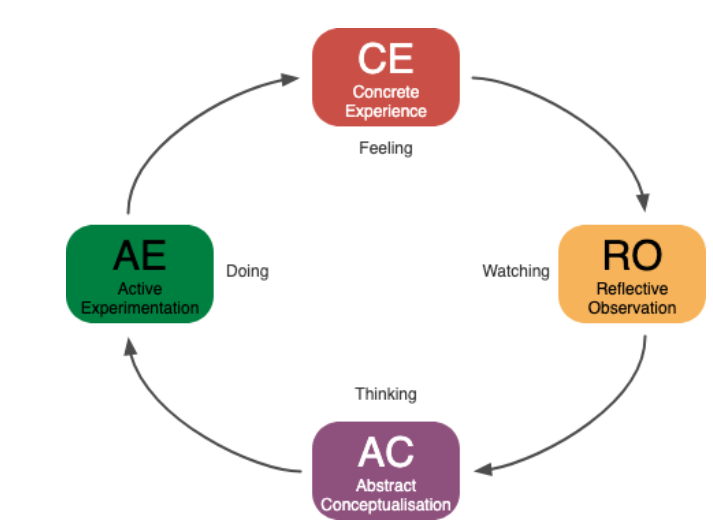
2.2. Experiential Learning TheoryExperiential Learning Theory was put forward by David Allen Kolb in 1984, where he expressed that individuals garner comprehension of concepts by “learning from experience” 12, 13. Kolb further inferred that individuals learn based on what they experience, what they believe, what they think, and from observed behaviours. The theory is established based on four cyclical stages as seen in Figure 1, the processes that facilitate individuals’ acquisition of knowledge, including concrete experience, reflective observation, abstract conceptualization, and active experimentation 12, 13, 14. May-Varas & Mead 12 and McLeod 14 explained the cycle stating that the concrete experience stage is the trying out phase where learners carry out hands-on actions or tangible participation. For example, an individual decided to become a bearer so he bought a bike but has never ride it, so he practice riding by getting on however he falls when he tries moving it. This experience, McLeod 14 explains allow the individual to reflect and identify what he notices as he attempted to ride the bike but fell to decide on what to do next.
This next stage is referred to as reflective observation used to garner insights into why you are not getting the desired outcome by watching others, such as another bearer getting on his bike and moving off. This is known to cause deep thinking of the situation and identifying possible ideas leading to the abstract conceptualization where the individual makes connections to the ideas to recognize what he or she actually learnt. This helps to guide the individual next step in riding the bike, calling for active experimentation, using what he learnt by testing and refining his skills.

Furthermore, research studies indicated that experiential learning enhances skill acquisition, training transfer, and job performance within the banking sector. This cyclical process is also fitting for real-world banking experiences, especially when an individuals is first taking on a job function or role. For instance, an individual is handing a loan application for the first time, then the first stage concrete experience is where he or she enters relevant data from the completed form, check pay slips, and review credit scores. However, the individual noticed as he or she tries to move to the next phase in the process, error messages popped up but it is unclear as to what it means. Thus, this individual called the supervisor who explained and showed him or that he did not select certain risk indicators necessary with the type of loan applied for. So, he or she took note of the corrective measure seen done by the supervisor and even asked questions, which is part of the abstract conceptualizing stage where he or she is thinking and making connections of what was done wrong and what the supervisor did to make note of strategies to consider. He or she may realize that a weighing such as debt ratios might need adjustment to improve the process. Lastly, he or she actively experiment by taking the organized notes to attempt a new loan apply and adjusts the risk models as suited to the application. Akter and Rahman 15 concluded that a significant influence of pre-training and post-training provides essential skills among bank's staff in this era of digital age. Experiential learning through well planned training is important to ensure that bank staff continue to learn skills to help the company be successful 16.
2.3. Transfer of Learning TheoryEdward Thorndike and Robert Woodworth developed the transfer of learning theory which was initially considered theory of identical elements. The theory explains that individuals are able to transfer acquired knowledge and skills in different scenarios 17, 18. Haskell 18 stated that individuals consolidate the newly acquired knowledge so they can problem solve situations. According to Mitu et al. 16 training is significantly associated with employee performance in private commercial banks in Bangladesh, however the successful transfer of training will contribute to the improvement within workplace.
Sala & Gobet 17 did a study in Western countries schools where students performed poorly in mathematics. The study included 2788 individuals who participated in chess instruction and 2433 individuals in control groups. The study revealed that students who went to chess lessons improved their academic skills and cognitive abilities. Research studies have shown that chess requires individuals to be attentive, remembering the steps, planning how to advance in the game, and developing their numerical and spatial relationships making them equipped in finding strategies to solve problems 17, 19, 20, 21, 22. These skills obtained from playing chess are used to apply to various subject areas including mathematics. Now, this theory is applicable to this study where graduates of STEM Education programmes have obtained data analytical, quantitative reasoning, systems thinking, technological and problem-solving skills while studying which is transferable to financial services. The theory infers that individuals working in the banking field need these skills to make the following functions operationalized: credit risk assessment, financial modeling and forecasting, data-driven decision-making, fraud detection and compliance, and operational efficiency and performance analysis. Furthermore, students who study STEM Education are likely to be exposed to tools and methods such as spreadsheets (Excel and Google sheets), SPSS, graphs, basic data visualization, charts, data collection and interpretation methods, mathematical modeling, and Scratch. These tools and methods are directly applicable to banking tasks including using advanced Excel, statistical and financial modeling focusing on risk analysis, forecasting, and risk metrics and performance indicators (KPIs). The Tenets of STEM education such as interdisciplinary learning, problem-based learning (PBL) real-world applications critical thinking and metacognitive reasoning enhance transfer learning theory 23. This transferal is possible because the competencies focused on in the STEM Education programme and the financial services are similar in nature giving individuals opportunities to reinforce what they learn in the banking field.
2.4. Diffusion of Innovation TheoryThe Diffusion of Innovation Theory, developed by Rogers, emphasizes the role of innovators and early adopters in facilitating organizational change and improvement. According to Guo & Huang 24, these individuals possess the knowledge, skills, and competencies necessary to create, adapt, and implement new ideas in response to emerging organizational needs. Within the context of this study, STEM-trained graduates can be viewed as innovators or early adopters because they have acquired specialized education and professional training in science, technology, engineering, and mathematics (STEM). Hence, the individuals are equipped with analytical, technological, and problem-solving capabilities that enable them to utilize data-driven approaches, make informed decisions, and apply scientific and mathematical reasoning to enhance organizational performance. As a result, they can deal with risk analysis, and adopt new technologies such as digital banking and Fintech tools within the banks to improve operations. For instance, NCB Financial Group (NCBFG) developed TFOB Limited, a fintech arm strategically to facilitate digital financial services 25, 26, 27. This involved the employment of graduates from STEM areas who created the Lynk, digital portfolio wallet, presently being utilized by a large number of Jamaicans across the island. TFOB Chief Growth Officer Dr. Luke Foster, described the team of developers as innovative, strategic, creative, and problem-solvers 28. Now, this wallet provides support to the development Jamaica’s digital currency, Jam-DEX 29. The government was able to provide payments to individuals participating in the Programme of Advancement Through Health and Education (PATH) and Christmas Work Programme using Lynk in 2022. Just like NCB, Sagicor Bank and JN Bank have similar developed digital wallets leveraging skills of STEM-trained graduates.
2.5. Theories of Financial Intermediation and RegulationThe theories of financial intermediation and regulation are well-suited for financial services focusing on regulatory requirements to ensure they are compliant, as well as allocating resources and managing risks 30, 31, 32. Financial intermediation is relevant to banking fields, since banks serve as intermediaries to mobilise funds and allocate them, their main function. As such, the theories of financial intermediation is relevant to this study where STEM-enabled skills allow graduate working in the banking fields to model and analyse risk, apply quantitative reasoning, and systems thinking to enhance the core function of the bank so that resources are allocated efficiently. Also, individuals working in banks having STEM competencies can facilitate improvement of the workflows and develop and implement innovative products. For instance, TFOB Limited, a subsidiary of NCBFG consists of graduates from STEM areas who work assiduously to develop innovative products such as Lynk to improve efficiency in the bank operations 28, 29. On the other hand, the theories of regulation is adaptable by financial systems, particularly central banks that assess and clarify the prudence of businesses policies and regulatory frameworks to ensure the objectives are well-defined. This has allowed banks to better govern data for customer data privacy, model risk management, and establish compliance analytics. Banks like Bank of Jamaica (BOJ) has established regulations such as anti-money laundering rules to ensure compliance by applying analytical and problem-solving skills of trained STEM graduates involving data analysis, predictive modeling, and forecasting.
2.6. STEM Education OutcomesSTEM education has increasingly become an essential element of innovation and workforce development in today's global economy. Furthermore it plays a critical role in preparing individuals with the knowledge and competencies needed to address complex challenges and contribute to technological and economic advancement. Research studies indicate that graduates with STEM qualifications possess strong critical thinking, analytical, and problem-solving skills, which enhance their ability to succeed across a wide range of industries 33. According to Cox & Orrell 34, McGunagle & Zizka 35, and National Science and Technology Council 36, STEM graduates also are often recognized for their creativity and capacity for innovation, enabling them to develop novel solutions and adapt effectively to evolving workplace demands.
Presently, in Jamaica, emphasis is being placed on STEM, the “national dream”, where more and more individuals are being prepared for diverse careers 37. With this campaigns have been launched and there are ongoing discussions between educators and policymakers in narrowing the skills gaps so help facilitate the transformation of the Jamaican economy 38. However, even with the present focus on STEM initiatives, there still remain challenges such as persistence low performance in mathematics which is crucial to advance STEM programmes and projects 39. Professor Michael Taylor 40 from UWI Mona 41 emphasized that STEM has to become a national programme where everyone become invested, the public, government and the private sector, otherwise there will be little to no impact of STEM. Despite Jamaica's designation as a STEM Island by Prime Minister Dr. the Honourable Andrew Holness on April 24, 2024 42, the realization of this national vision will involve a comprehensive and collaborative framework encompassing investment in STEM initiatives, research partnerships, and deployment of human capital. Singh-Wilmot 37 pointed out that it is going to take more than just the reformation of curriculum but a greater focus on innovation, entrepreneurship, and ensuring that individuals are equipped to join the workforce to facilitate economic transformation. Currently, higher-education leaders and institutions have been identifying initiatives such as the UWI’s BOOST (Building Out Our STEM Teachers) to help in raising STEM awareness particularly across educational institutions. Singh-Wilmot 37 identified that scientific capacity building is crucial to help drive STEM initiatives including training STEM teachers, scientists, and engineers so that have the intellectual abilities to make Jamaica competitive in the long run being more scientific civilized. Additionally, resources will need to be allocated including re-quipping or re-furbishing laboratory facilities which can be used across various sectors. With the implementation of BOOST, UWI has partnered with National Baking Company which provided US $1 million to facilitate STEM Education programme 43. This partnership has allowed a scholarship scheme which focuses on building quality STEM teachers who can deliver STEM subjects effectively and strategically in Jamaican classrooms. Even so, Mitchell 44 pointed out that the mathematics failure rate as indicated a “broken pipeline” affecting STEM progression, since the pass rate fell by 33.4% in 2024, indicating a need for interventions. Weston 45 shared that the Ministry of Education, Skills, Youth and Information (MoESYI) launched the project, namely the Reskilling Teachers Using Artificial Intelligence (AI) in STEM Education to Raise Students’ Maths Identity (RAISE) Initiative at 20 primary and secondary schools. The main thrust of this initiative is to equip educators with STEAM methodologies to improve learning outcomes, especially mathematics performance. American Friends of Jamaica (AFJ) Inc. donors Lisa and Peter Walker funded the initiative with US$100,000.00 by equipping teachers with cutting-edge AI technology tools and strategies.
2.7. STEM Competencies Related to Data-Driven FieldsSTEM competencies are needed to provide data-driven solutions in industries. Globally, STEM programmes are redefining themselves across institutions to ensure that their students graduate being data literate, can reason quantitatively and make analysis 46, 47. These skills provide industries with professionals who can analyse and solve complex problems, develop and implement models, and apply systemic thinking and predictive analytics. Additionally, STEMgenic Global 48 shared that with the global change, the workforce now needs individuals who can code using software such as Python, being digital fluent, and having statistical reasoning skills. In the financial sector, these competencies are well-suited mostly due to the increasing digitalization and need for financial institutions to remain compliant. Furthermore, the financial system especially in Jamaica is craving efficiency and innovation, needing employees who can facilitate data analytics and financial modelling. As such, STEM Education graduates have increasingly become more equipped to bring analytical rigour and problem-solving skills beyond classroom in areas such as data engineering and banking operations. Ref 49, Ref 50 and Ref 51 shared that more emphasis is being placed on data/information literacy to equip graduates to become professionals who can analyse complex data sets, judge the quality of data and translate the result to make decisions within the industry. The study further indicates that these graduates transfer skills such as data collection, communication, visualization, and modeling which are needed for workplaces focusing on intensive data analytics.
2.8. Relationship between STEM Education and Financial ServicesOver the years, the integration of STEM competencies within the financial services industry has increased significantly. There is an increase in financial technology (fintech) firms, coupled with the increasing demand for digital banking solutions, predictive analytics, and data-driven decision-making, has transformed the way financial institutions operate. Consequently, banks initiated measures such as predictive modelling and machine learning to strengthen risk management practices, enhance operational efficiency, and improve customer service delivery 52, 53, 54, 55, 56. Furthermore, to maintain their competitive edge, financial institutions have to enhance its technological and data competencies 57, 58. Also, globally banking services have become modernized so there are banks currently under pressure to get with the times, and also the public considered them to be inefficient and lack trust in them 5, 59. Moreover, it is crucial for banks to improve and address the public concern because they are at the heart of the financial ecosystem and can evolve through innovation 4. Now, to facilitate innovation and modernization, banks need to fortify its regulation system for compliance, and facilitate financial modeling and technological integration; which can be addressed by employing STEM graduates who have training in systems design and analytical problem-solving 60. Additionally, to deal with risk including possible fraudulent activities, banks are employing individuals with STEM capabilities who can use predictive modeling and machine learning to assess and manage risks as well as facilitate forecast and customer analytics 61. As banks modernize, there is need for their supervisory bodies to modernize as well, especially since digital financial services are presently being offered to the public 62, 63, 64.
2.9. Challenges and Opportunities with STEM Education in Professional IndustriesThe integration of STEM skills into professional and industrial environments offers significant opportunities for innovation and organizational growth, however it presents several challenges. One notable challenge is that many STEM education graduates are often trained for academic contexts, which may limit their readiness to adapt to corporate environments characterized by performance-driven objectives and profit maximization 65. Furthermore, research studies have highlighted that graduates from vocational and professional education programs may experience skill mismatches due to gaps between their training and the competencies required in corporate settings, thereby necessitating further professional development 55, 66. However, Ref 67 shared that there are now opportunities that corporations can derive from these graduates due to cross-industry learning where students become exposed to industry through internships and other activities that facilitate innovation. These graduates are equipped with experimentation, design thinking, and logical reasoning where students are exposed to corporate case studies of how they would deal with situations or scenarios. This can help financial services by providing sustainable solutions for risk management, digital transformation, and fintech adoption. Nonetheless, individuals struggle to transfer their STEM skills in corporate due to compliance mechanisms established, now exposed to different performance metrics for appraisal, and toolchains to deal with certain tasks. Ref 65 pointed out that there is need for continuous upskilling and engaging individuals in short courses so they obtain micro-credentials to keep up with the rapid changes in industries due to technology evolution. Güngör 68 pointed out that there were constant barriers including insufficient school-industry cooperation and lack of resources needed to equip students in education programme to make them proficient and stay current.
2.10. Summary and Gaps in the LiteratureThe literature revealed that there is a thrust for STEM integration in industry fields particularly in facilitating banking transformation. Jamaica has established STEM initiatives such BOOST at UWI Mona and RAISE across several primary and secondary schools. However, there is limited literature that refers to STEM Education graduates transition into industry fields instead of the classroom, particularly in banking services in Jamaica. This study seeks to address the gap in literature by exploring the impact of STEM methodologies within the banking sector connecting theoretical perspectives which focus on innovation diffusion, human capital, experiential learning, intermediation and regulation.
This study utilized a qualitative exploratory single case study design. This involved an interview with one STEM Education graduate who works in the Jamaican banking sector. This graduate will hereafter be named FINSTEM throughout this study, a pseudonym. This design allowed the researchers to capture the graduate’s contextualized experiences in applying STEM knowledge within the commercial banking space. This approach was specifically used to obtain an in-depth understanding of a real-world contemporary phenomenon within a bounded case. This participant was selected using purposive sampling as an information-packed and unique case having the characteristics of a recent STEM Education graduate currently employed in the banking industry. At the time of the study, there were predominantly teachers who enrolled in the STEM Education programme, along with only one graduate employed in the Jamaican banking sector. Therefore, this participant represented a singular isolated instance suitable for in-depth qualitative inquiry. This facilitated the researchers to provide valuable insights into the transferal of STEM skills, including data analysis, problem-solving, critical thinking and decision-making, relevant for the day-to-day banking operations. While the researchers focus was not on statistical generalization, they desired to provide a rich, contextualised descriptions to facilitate a deeper comprehension of STEM Education integrative influence on daily banking operations. Consequently, the case study design enabled a comprehensive examination of the transferability effects of STEM education outside of the educational settings on workforce adaptability.
3.2. Conceptual FrameworkThis study’s conceptual framework was developed with primary focus on the theories Human Capital Theory, Experiential Learning, and Transfer of Learning Theory. The integration of these theories provides a strong pillar for understanding and interpreting how STEM methodologies may be applied across sectors, particularly the financial sector within the context of this exploratory case study. For this study, the Human Capital Theory is suited because it refers to how formal education and professional development can contribute to increasing individual productivity and potentially support economic development. Moreover, with the increasing need for professionals possessing problem-solving, technological, and analytical competencies in 21st-century workplaces, STEM-trained graduates become important since they fit the bill. They are equipped to enhance the banking sector in terms of data-driven analysis, risk analysis, and decision-making which requires these applicable skills more beyond the traditional teaching roles. This conceptual framework validates the exploration of how one STEM Education graduate applied these competencies within the banking sector rather than assuming similar experiences among all graduates. Additionally, the study emphasizes participant’s ability to adapt on the job they through learning from experience, reflecting on workplace situations, and applying STEM competencies, based on the perspective of the Experiential Learning Theory. In the banking industry, this involves the participant translating theoretical STEM concepts into practical applications such as risk modelling, data analytics, and operational decision-making. Hence, as the participant engage with various job functions, he/she was able to reinforce prior learning, refine his/her competencies through practice, and develop greater proficiency over time. Finally, the Transfer of Learning Theory, is particularly relevant because it provides a lens through which the researchers interpreted how knowledge acquired during the STEM Education programme was transferred to real-world banking phenomenon which involves hands-on actions. Instead of measuring level of application across multiple graduates, this theory was used to explore how transfer occurred within a single, information-rich case. The integration of these theories provides a rigorous framework for the qualitative exploratory single-case study design. This is because the narrative facilitates an in-depth understanding of how the participant transferred his or her STEM knowledge and competencies into the banking sector and offers analytical insights into curriculum relevance, workforce adaptability, and the transferability of STEM competencies to non-traditional professional settings.
3.3. Data Collection and Data AnalysisThe data was collected from an in-depth, well-structured interview with the graduate, who was asked several open-ended questions. The participant’s responses were recorded using Microsoft Teams after receiving permission at a mutually convenient time. This allowed the participant to freely speak and offered opportunities for probing to clarify unclear statements and deepen the responses. The instrument captured the background and demographic information of the graduate, focusing on the participant’s journey that led to working in the banking field and studying STEM Education. Data was also collected on the participant’s professional experiences in identifying and implementing STEM concepts in his/ her work, along with the tools and/or methodologies regularly used. Additionally, the instrument captured the challenges and opportunities of leveraging STEM Education in the banking environment, and the impact it has on his/her professional development. The instrument was developed with direct alignment to the study’s research questions, thereby ensuring that each interview question generated evidence relevant to the exploratory objectives of the study.
Following the data collection, the researchers used Braun and Clarke’s 69 six-phase thematic analysis to analyse the transcription through repeated reading, familiarization with the data, and identifying emerging themes and codes, which were organized in tables aligned with the corresponding research questions. Coding was undertaken inductively to allow themes to emerge naturally from the participant’s experiences while remaining informed by the study’s conceptual framework. After this, the extracted information was refined, ensuring coherence and relevance during the interpretation of the findings, while preserving the participant’s voice and experiences through the use of verbatim quotations where appropriate.
The study also includes document analysis of documents from commercial banks, namely NCB Jamaica and Scotiabank Jamaica, which are publicly available, including annual reports and official website information. These banks were selected because they are the two largest commercial banks in Jamaica’s financial sector. Moreover, the information obtained provided an authentic representation of real banking environments that contextualized the relevance and application of STEM within banking services. Furthermore, these institutions have demonstrated a strong commitment to digital transformation through investments in digital banking platforms, data-driven decision-making, innovation, and fintech development 70, 71.
The document analysis was conducted alongside the interview data to strengthen the credibility and trustworthiness of the findings through methodological triangulation. Instead of validating or generalizing the participant’s experiences, the written evidence was used to provide contextual support and facilitate comparison of the participant’s accounts with publicly available evidence relating to banking operations, digital transformation, and technology adoption. This approach enhanced the richness and analytical depth of the single case by situating the participant’s experiences within the wider organizational context of Jamaica’s commercial banking sector.
3.4. Ethical ConsiderationsPrior to the data collection, the education institution was contacted through communication in a letter obtaining consent. The researchers obtained ethical approval for the study from the relevant institutional research ethics committee prior to commencing data collection. The participant from the institution volunteered to participate agreeing not to provide any sensitive information about the institution or the financial institution he/ she works with. The participant also consented to participate in the study before the interview was conducted. Additionally, this individual was informed about the nature of the study, the voluntary nature of participation, its intent for publication, confidentiality and anonymity, and the right to withdraw from the study without penalty at any time prior to data analysis. To further protect the participant's identity, the researchers created a pseudonym (FINSTEM) and ensured to remove or anonymised all potentially identifiable personal or organizational information during transcription and reporting. Moreover, the researchers ensure to take great care in reporting the findings so that the participant's identity did not inadvertently become revealed, especially since this study involved a single participant. All collected data were securely stored and maintained in accordance with research ethics requirements using password-protected electronic storage accessible only to the research team and were used solely for the purpose of this study. Additionally, the researchers analysed publicly available documents and information as part of the study because there were no ethical risks or breaches associated with using publicly accessible organizational information rather than confidential institutional records. Also, the inclusion of these documents enhanced transparency, credibility, and methodological triangulation while providing valuable contextual insights that complemented the participant’s lived experiences without compromising confidentiality.
This study organized the findings into themes aligned with the research questions. It investigated how the participant view the integration of STEM skills within the banking sector, focusing specifically on problem-solving, data-driven decisions, and daily operations. The study reports the challenges and barriers he/ she experienced in applying STEM methodologies, and the potential for innovation uncovered within his/ her banking context. The study also presents findings on skill advancement and the perceived relevance of STEM Education within the financial sector.
4.1. Commercial Banks Context to FindingsThe commercial banks, NCB Jamaica and Scotiabank Jamaica reported that they employ STEM graduates, though no record of any of these graduates previously studying STEM Education but rather traditionally those who studied Science, Technology, Engineering, and Mathematics (STEM). They employ individuals who are Information Technology (IT) Officer / Systems Analyst, Data Analyst / Business Intelligence Analyst, Risk Analyst / Credit Risk Officer, Actuarial Analyst / Quantitative Analyst, Digital Banking Officer / FinTech Specialist, Innovation or Transformation Analyst, Operations Analyst / Process Improvement Officer, Cybersecurity or Information Security Analyst, amongst others. These employees work in areas such as customer service platforms, contact centres, customer analytics, service optimisation, online transaction systems, digital platform monitoring, and process improvement. These graduates were employed to apply STEM methodologies including structured, systematic problemsolving, analytical reasoning, data interpretation and analysis, systems thinking, process optimization, and evidencebased decisionmaking. Scotiabank Jamaica 71 shared that the bank focus on leveraging digital banking platforms, automated services, and datadriven operations. This allows STEM graduates to apply statistical reasoning and logical modelling in interpret performance metrics, assess customer behavior, and improve service efficiency, to ensure modern banking operational challenges are addressed. Scotiabank Jamaica 71 noted that they have done several initiatives including STEM and Financial Education, Customer First Initiatives, and The Annual Best of the Best Recognition Program. The STEM and Financial Education is a community service project where 70 students were engaged in STEM Immersion session mainly on Computer Science and Coding Robotics. Also, through this same initiative students were engaged in financial literacy sessions, and a competition was held called JAJ’s annual Innovation Challenge for these students to generate possible solutions that are workable to “to educate and encourage Jamaicans to become financially savvy” 71. The Customer First Initiatives, however, focus on providing clients with personalized experiences, improving digital experiences, streamlining services, empowering frontline workers, building bridges by usage of Digital Saturdays, and enhanced fraud management. Through this initiative, Scotiabank frontline staff have been provided with “conversation guides, standardized scripts, knowledge aids, and resources” to address customer experiences with confidence and showing empathy 71. Also, through digital innovation, mobile applications are provided to customers for personalized service and virtual access. The bank also created a programme to management fraudulent activities. On the other hand, The Annual Best of the Best Recognition Program is used to identify employees who exemplars are making “extraordinary contributions to the Bank’s culture, strategy, and priorities”. NCBJ has invested in innovation centres and digital transformation initiatives to engage STEM graduates to apply STEM methodologies within various areas of the bank. One such initiative is the Innovation Internship Programme which involves virtual sessions over four weeks engaging tertiary students 70. Through this initiative, training sessions are provided focusing on agile principles, design thinking, and scrum methodologies. Following these sessions, students are engaged in activities requiring them to prototype solutions for real business challenges.
4.2. Results Based on Research Question 1How does a STEM Education graduate apply STEM methodologies in banking operations?
This research question facilitated the exploration of STEM strategies implemented by the participant in banking operations to garner insights into the STEM concepts applicable, description of specific banking tasks or decisions warranting the usage of STEM approaches, and the software and/ or tools most appropriate. It also captures the participant’ observation of banking protocols within the context of the case (Table 1).
Theme 4.2.1. Application of STEM methodologies
The study uncovered that the main STEM methodology applied by the graduate within this case, and supported by the banking practices revealed in the document analysis, is data-driven problem-solving. FINSTEM, the participant stated that this involved leveraging applied research approaches. Scotiabank Jamaica and NCB Jamaica identify the importance of individuals who have been exposed to STEM practices equipping them with skills such as systematic problemsolving, analytical reasoning, and evidencebased approaches to facilitate banking operations. These banks indicate that individuals need to be equipped to apply the scientific method and engineering design processes where they can define problems, identify relevant variables, test possible solutions, and refine outcomes. The employees work in areas such as customer service platforms, contact centres, and online transaction systems where they recognize and address operational challenges to deliver service outcomes. Scotiabank Jamaica provides opportunities for students to apply analytical and systems thinking to deal with realtime banking problems, such as transaction efficiency and customer engagement; while NCBJ highlights the value of employees who think systemically to analyse interconnected banking processes focusing on each process separately, thus facilitating overall service performance 70, 71. The participant also shared that customers frequently have challenges within the banking operations requiring responses that are both systematic and evidence-based. FINSTEM expressed that “We noticed a decline in usage of our online banking platforms among customers so I designed a short survey and analyzed the responses and identified usability issues for my research.” This example illustrates how transferable STEM-based research skills can be applied in the real-world, specifically in their professional practice. He/ She mentioned that based on the STEM applied research methods acquired during his/ her programme, he/ she was able to follow the steps in identifying the problem at hand faced, recognize a suitable research design, followed by data collection, analysis, interpretation and diagnosis. It was indicated that she noticed a measurable issue, namely the decline in using online banking platforms that the banks have been encouraging customers to use. Consequently, he/ she developed a survey design to obtain customers’ perspectives to help identify what usability issues have dissuaded them from using the platforms. Based on the data collected, the relevant personnel could derive the most suitable solution through data-driven decision making. These steps reflect the participant’s clear application of structured scientific inquiry and analytical reasoning to address real-world banking issues. Within this case, these findings coincide with the competencies and employee characteristics emphasised by NCB Jamaica and Scotiabank Jamaica 70, 71.
The findings from this case clearly align with the Transfer of Learning Theory, where the graduate recognized the adaptability of STEM concepts learnt during his/her STEM Education programme to a non-traditional STEM field such as banking services. She recognized the need to transfer her applied research knowledge and developed analytical competencies to engage effectively in real-world problem-solving using data-driven approaches. Similarly, the Experiential Learning Theory is applicable, as FINSTEM, through direct engagement with the workplace problems, continue to refine what he/ she learnt by applying his/ her knowledge to identify problems and develop solution processes through research and reasoning. These findings suggest that, within this exploratory case study, evidence-based decision-making within the financial services industry can be supported by STEM methodologies. The participant's experiences indicate that these competencies contributed to improvements in online platforms where focus is placed on user experience and engagement. The findings also highlight the potential for STEM education programmes to equip graduates with competencies that extend beyond the classroom to facilitate effective problem-solving in professional environments. Furthermore, this case suggests that STEM graduates may benefit from opportunities to apply their knowledge and skills to address operational challenges within sector such as the financial services sector, potentially contributing to improved efficiency, innovation, and organizational performance.
Theme 4.2.2. Data-driven decision-making practices
In addition to the STEM methodology data-driven problem-solving, the interview revealed that the graduate demonstrated elements of scientific inquiry, applied research, systems thinking, customer-centric analytics, human-centered design and continuous improvement orientation following her recommendation to collect and analyse data. This further builds on applied STEM knowledge through the use of applied research methods. Both Scotiabank Jamaica and NCB Jamaica emphasise data-driven decision-making practices which is necessary for banking operations. Scotiabank Jamaica indicates a focus on enhancing digital services and adjust workflows on a case-by-case basis where employees leverage performance metrics, customer usage patterns, and service response times 71. Similarly, NCB Jamaica focuses on customer analytics and digital platform monitoring by leveraging large datasets 70. Their employees use these data to identify trends from these datasets, assess the various types of risks, and inform suitable service improvements. The participant demonstrated that through research involving data collection from customers by asking them questions followed by drawing conclusions, he/ she could garner insights into user behaviour based on their interaction with online banking platforms. This provides evidence for comprehending why customers’ usage of online banking had declined and helped to obtain insights into customers’ usability issues and user experience. Additionally, this systematic data collection and analysis provided information that could support decision-making process pertaining to online banking. Furthermore, the study found that this process demonstrated the potential use of customer-centered, diagnostic analytics to inform the decision-making processes. These decisions could be informed by not by assumptions but rather by actual empirical data directly from customers and analysis of the patterns in their responses, providing insights into the underlying issues affecting reduced usage of digital platforms. This approach reflects the principles of scientific inquiry and human-centered design based on real-world data, as the data collection facilitated greater understanding that could inform the refinement of digital banking services including system functionality by understanding user experience. Furthermore, the findings suggest within this case that decision-making is increasingly becoming evidence-based, allowing targeted interventions to be proposed to address customer issues to enhance platform usability and strengthen customer support strategies. These findings align with the documented emphasis of Scotiabank and NCB Jamaica on using data to support strategic and operational decisions as they improve their online and digital banking services 70, 71. Within this case, these STEM competencies also align with both the Transfer of Learning Theory and Experiential Learning Theory. This highlights how the graduate applied his/ her STEM knowledge and job experiences to support the decision-making process continually by focusing on real customer data and their feedback. Moreover, given the documented increasing importance on data-driven practices within the financial sector, this case illustrates the potential relevance of transferable STEM skills in supporting customer-centric, efficient, and adaptive banking operations.
Theme 4.2.3. Use of analytical and technological tools
Furthermore, the findings emphasized that the role of analytical and technological tools, which help inform digital banking improvements, particularly in providing support for banking operations and decision-making. The participant reported that currently “Data dashboards are used to track daily transaction volumes, allowing supervisors to either reallocate or reassign staff different roles as needed.” It was indicated that the staff, particularly supervisors at the bank, relied on real-time performance monitoring to inform managerial decisions. This was done based on the transactional data displayed on dashboards, which were primarily visible for internal access. The dashboards were characterized by key Data-Driven Decision-Making (DDDM) elements, including the use of real-time data, monitoring of key performance indicators (KPIs), evidence-based supervisory decision-making and predictive awareness of workload patterns. This finding indicates that supervisors within this case are leveraging analytical and technological tools, such as dashboards, to support data-driven staffing decisions. Thus workforce allocation was informed by transaction volumes rather than assumptions or static scheduling practices, thereby supporting efficiency and responsiveness. This, the participant explained, allowed supervisors to be more responsive as demand fluctuates at the bank. This reflects the application of STEM, specifically through data analytics, systems thinking, and optimization principles, as management adjusts workflows and improves service delivery. Within this case, the bank’s use of dashboards shows a technology-enabled, data-informed approach to making decisions. These findings are consistent with documented information provided by NCB Jamaica and Scotiabank, which highlight the use of data dashboards, digital banking systems, and performancetracking software. Scotiabank Jamaica 71 indicates that it uses analytical tools to focus on automated services and digital channels, which aligns with this case. This is further supported by reports indicating that employees leverage these tools to monitor system performance and customer interactions. NCBJ, on the other hand, places emphasis on equipping individuals with the skills of agile project management, design thinking, and digital prototyping in modern banking environments. This was highlighted through the bank’s initiative Innovation Internship Programme where tertiary students are exposed to analytical and technological tools to assist with building these capabilities 70. Following the training sessions, the participants are required to engage in using these tools to complete activities directly involving iterative analysis and solution testing. This theme also aligns to the Transfer of Learning Theory and Experiential Learning Theory, as the participant demonstrated how he/she transferred analytical and technological competencies garnered from his/ her studies in the STEM Education programme in the banking field. His/Her experiences further show how workplace engagement enabled the continuous adaption of decisions by leveraging operational data based on real-time feedback.
Theme 4.2.4. Operational efficiency and workflow optimization
The findings further indicate that the bank focuses on maximizing resource utilisation to maintain service effectiveness, operational efficiency and workflow optimization within the banking environment by using STEM-informed practices. NCB Jamaica and Scotiabank Jamaica focus on equipping their employees with the requisite skills to identify inefficiencies, streamline processes, and reduce service bottlenecks. One of Scotiabank Jamaica’s goals is to enhance its turnaround times in dealing with customers and to ensure that service delivery is accurate to optimize its workflow and adjust its operational processes as necessary 71. Similarly, NCB Jamaica focuses on staff coordination across departments using iterative problemsolving approaches rather than onetime solutions, which helps to maintain efficiency in complex banking systems. As previously mentioned, the supervisors leveraged dashboards to reallocate staff based on actual transaction/ customer demand using real-time transactional data access. This, the participant expressed, enabled the human resources to respond more quickly for efficient staffing, especially during high demands (peak periods) when several customers are at the bank needing help, to ensure that sufficient staff were available. Within this case, this suggests that the bank was able to maintain consistent customer service quality by minimising bottlenecks and service delays. This involves the application of data-driven optimization and systems thinking, where supervisors used operational data to make informed staffing decisions that supported reduced staff idle time, balanced workload distribution, faster customer transaction processing, and improve service delivery without necessarily increasing staffing costs. Additionally, the study uncovered that based on the STEM tools and practices used and approaches, supervisors could facilitate the dynamic reassignment of staff roles to ensure workflow optimization. This was consistent with demand patterns to reduce congestion at high-volume points and streamline operations. Within this case, these practices show workflow optimization indicators such as flexible task reassignment, continuous process adjustment, the reduction of process bottlenecks, and data-informed redesign of daily workflows. This case further illustrates the application of STEM-related competencies such as analytical reasoning, process optimization, and problem-solving, within daily financial services. Furthermore, the findings align with both the Transfer of Learning Theory and Experiential Learning Theory, as the graduate demonstrated how he/ she applied STEM-related competencies through real-time feedback and practical experience within the financial services context.
4.3. Results from Research Question 2What challenges and opportunities does a STEM Education graduate face in implementing STEM concepts in banking?
This research question facilitated the researchers in gaining insights into the challenges, barriers, opportunities and success stories shared by the STEM Education graduate working in banking. It examined the challenges he/she experienced in applying STEM concepts, perceived gaps in programme preparation, and any resistance encountered on the job (Table 2). It also explores the participant’s perspectives on opportunities for further STEM integration in banking and the evolving role of STEM in financial services.
Theme 4.3.1. Structural barriers
Currently, NCB Jamaica and Scotiabank Jamaica are operating in Jamaica governed under the primary regulators Bank of Jamaica (BOJ) and Financial Services Commission (FSC). These regulators focus on ensuring that the financial sector is highly regulated and compliant. The findings reported that even though the participant was equipped with STEM knowledge and competencies applicable in banking operations, his/her ability to perform on the job was at times affected by structural factors including organizational culture, workplace experiences, and operational constraints. These constraints may become restrictive due to the requirement for banks to adhere to the banking regulatory frameworks. The participant pointed out a key barrier arising from the tension between efficiency-driven workplace expectations and the time-intensive nature of STEM-based problem-solving. He/ She expressed that “the supervisors will remind me about time constantly… This leads me to sometimes ask clients to leave and come back at another time when the branch is not as busy”. This indicates that while the participant aimed to provide thorough customer support, the organization also appears to prioritise speed and throughput. Within this case, the participant’s comments suggest that speed was an important workplace expectations. Therefore, employees may at times prioritise experiencebased or precedentdriven decisions over analytical evidence. This has the potential to limit employees’ use of integrated STEM approaches as they seek to innovate or analyse solutions which can cause frustration that fuels resistance. He/ She pointed out that he/ she applied STEM-informed approaches which, by their nature, required more time, expressing that “my methods can take a while to be completed so I may take more time with each client than my other colleagues.” This suggests that based on the characteristics of STEM methodologies, there is often a need to apply a more diagnostic approach to properly identify the problem at hand for each customer and use step-by-step reasoning to minimise customer frustration. Consequently, more time is typically needed but may not be available in high-demand banking environments. Therefore, the use of STEM approaches may become situational rather than consistently embedded, depending on workload and time constraints. It is important to note that the participant did not report direct resistance to STEM practices; instead, the findings suggest that operational constraints associated with the workplace environment.
The findings highlight that supervisors appeared to emphasize efficiency, indicating a potential trade-off between the quality and quantity of service. In other words, the findings suggest that management placed considerable emphasis on serving more customers within limited time while balancing analytical support. This case therefore shows how staff performance expectations may be influenced by speed alongside analytical approaches and practices. Another challenge revealed in the findings is the relationship between client interaction and digital readiness, which influenced the participant’s ability to apply STEM methodologies in banking. This was conveyed based on the participant’s statement, “clients will often get agitated when they do not understand certain concepts… it is my job to make their learning as seamless as possible.”
The participant explained that communication was crucial to his/ her role and that applying STEM skills required him/ her to translate complex financial and digital systems clearly to customers using appropriate words and jargons which they can understand. The findings indicate that this was particularly evident in cases where customer digital literacy is limited, customers used outdated devices, or customer frustration was evident. This shows the additional complexity involved when supporting customers experiencing banking-related challenges.
The findings suggest that besides being excellent communicators, STEM practitioners may also need to adapt, adjust, and have patience coupled with analytical competencies. The findings highlight that within this case, even when a STEM graduate possesses the relevant skills for the banking environment, workplace support plays an important role in enabling their application. The findings suggest that the successful application of STEM approaches depended on balancing the bank expectations, addressing clients’ needs, and the realities of day-to-day banking operations. Thus, when these factors were not in sync, the participant experienced challenges transferring his/ her STEM competencies effectively within the workplace context. The findings also suggest that the Transfer of Learning Theory alone does not sufficiently explain the participant’s experience, as the transfer of STEM competencies was influenced by contextual workplace factors such as workload, client demands, or institutional norms. Additionally, the Experiential Learning Theory provided further insight into how the participant continually adapted his/ her methods and problem-solving in response to real-time pressures, client behaviours, and the routines and expectations of the bank. Based on the graduate experiences on the job, he/she demonstrated that STEM methodologies were applied adaptively rather than linearly, as he/ she learnt from repeated cycles of reflection, experience, and adaptation.
Theme 4.3.2. Skills gaps and transition challenges
The findings reported that the participant was equipped with strong STEM foundational skills such as problem-solving and analytical thinking and had an understanding of the application of STEM knowledge in general business contexts. These skills provided a foundation that he/she could confidently draw on especially when completing unfamiliar tasks. However, the participant expressed that “real-world finance case studies tied directly to banking would have prepared me… deeper exposure to financial technologies and financial modeling would bridge [the gap]… to see where STEM could have been applied more in my work.” This suggested that his/her transition into the banking sector revealed perceived gaps in sector-specific preparation. Within this case, the findings indicate that general STEM preparation did not necessarily provide exposure to the specialized tools as well as the business-friendly language to facilitate dealing with complex analyses. Consequently, the participant had to adapt to new systems and software, workplace routines as well as dealing with constraints on the job. Moreover, financial services may require knowledge of banking regulations, financial products, risk assessment frameworks, compliance procedures, customerfacing protocols, and banking-specific workplace expectations, areas which the participant perceived as requiring greater contextual exposure. This suggests a need to better bridge the gap between day-to-day banking operations and what students learn in the STEM Education programme. Based on the participant’s experience, limited exposure to banking-specific learning experiences have created the need for extra time, on the job training, or even mentoring. Hence, the transition from education to practice was not seamless for the participant, leading him/ her considering learning independently by aligning his/ her STEM training with banking operations. The findings suggest that sector-specific preparation impacted not only the participant’s being technically ready for the job but also based on his/ her early confidence in identifying where STEM competencies could be applied. He/ She explained that greater exposure to tools, scenarios, and real-life examples in the banking field would have helped him/ her “see where STEM could have been applied more” within his/ her workplace. The gap identified by the participant is the need for contextual workplace experiences not his/ her STEM competencies in order to deal with practical demands of a bank. As he/ she gained experience, learnt about real bank processes and interacted with customers, he/she was increasingly able to align his/ her STEM training and workplace practices. The participant’s experience align with the Transfer of Learning Theory and Experiential Learning Theory, indicating that limited prior exposure to banking-specific scenarios required him/her to contextualize existing STEM competencies through workplace experience. In other words, he/ she engaged with practical examples, tools, or scenarios on the job that provided experience for reflection, adaptation, and a clearer understanding of where STEM concepts could be applied. Furthermore, the findings suggest that besides contextualized learning experiences, organizational support may assist graduates entering non-traditional work fields in bridging the gap between their existing STEM competencies and sector-specific practices. The documentary evidence provides examples of based on banking industry-based opportunities, including Innovation Internship Programme and Vision Achiever Program by NCB Jamaica and Scotiabank Jamaica, respectively, provide participants with exposure to innovation and technology within banking and entrepreneurship-related contexts 70, 72.
Theme 4.3.3. Opportunities for innovation and STEM expansion
The findings showed that despite the STEM graduate experiencing issues with transitioning into banking from STEM Education, the participant identified promising opportunities for growth through the application of STEM competencies. These opportunities suggest potential for innovation and expansion of STEM-driven practices within the banking sector. The findings reported that such opportunities were reflected in the participant’s use of STEM competencies to communicate with customers, enhance operational processes, and engage with new technologies. The findings suggest that STEM skills such as analytical thinking, data interpretation, and problemsolving can support innovative banking solutions within the banking sector. Within this case, these skills unlocked chances to use STEM on purpose in the job. The participant shared based on his/ her experiences the potential for STEMdriven innovation, as he/ she explained that “I helped to reintegrate flagged online banking users who hadn’t logged in for 3 months… which helped re-engage over 200 dormant users in one month.” This outcome illustrates how STEM-backed methods, such as data monitoring, customer analytics, and targeted intervention strategies helps drive client reactivation. The findings indicate that the participant contributed to more digital interaction by reaching out to inactive customers, adaptation based on user activity, and leverage structured follow-up strategies. Within this case, this highlights how evidence-based methods can improve customer relationships and digital banking operations. The findings identify future digital banking possibilities as banks became more modernized using technology and innovative tools. Records show that NCB Jamaica and Scotiabank Jamaica have made investments in fintech, electronic banking, and analytical platforms. These developments empower tech talent with relevant STEM competencies to drive initiatives like customer analytics, digital service enhancement, and operational improvement 71, 73, 74. The participant highlighted that “there are major opportunities in AI-driven fraud detection and improvement… If more staff are trained in STEM, the bank could improve efficiency, client centricity, and security.” This highlights the participant’s view that improved worker expertise can drive the expansion of data analytics and artificial intelligence, which is pivotal to financial institutions operations and competition. This means there is need for banks to invest in both new tools and the training for workers to use them well. Furthermore, the participant pointed out that the STEM Education programme gained useful expertise in areas including data literacy, coding, and understanding emerging technologies, which may have increasing relevance to daily banking tasks and operations. He/ She noted that “bankers can utilize data literacy, coding basics, and an understanding of emerging technologies to stay competitive.” The participant suggests these skills are not universal yet, but will gain value as banking becomes more tech-driven.
The findings therefore identify the need for mainstreaming analytical capabilities such as IT support, cybersecurity, or data science into other areas of banking where data interpretation, technology use, innovation, and problem-solving are relevant. Furthermore, the findings align with the Transfer of Learning Theory and Experiential Learning Theory, where the participant demonstrated that a clear business result can occur by using adaptable skills, and shared ideas to apply those talents to new banking tools. His/Her experience also demonstrates how involvement with real-world challenges, customer behaviours, and financial systems offers chances to sharpen current skills and discover new methods via on-the-job training.
Theme 4.3.4. Organizational readiness for STEM approaches
The findings suggest that, from the participant's standpoint, there is a clear chance for the organisation to build better STEM capabilities across the entire workforce, despite the perceived value of these competencies within banking operations. A major finding was the requirement for structured employee development and a better match between STEM skills and job demands. The participant explained that “if more staff are trained in STEM, the bank could improve efficiency, client centricity, and security.” He/She observed that comprehensive staff enhancement in areas including data literacy, coding, and technological awareness could support operational efficiency, customer service, and security. This points to a mismatch between needed STEM skills and current worker ability. Rather than indicating leadership hesitation, the participant's statement suggests a clear path for comprehensive STEM workforce growth.
The findings indicate while STEM practices exist in parts of the organization, stronger institutional backing would help apply these skills more steadily. From the participant's view, current STEM use may rely partly on existing worker skills and personal drive. This shows a clear need for stronger, system-backed support. This highlight the relevance of human capital development and organizational strategy in supporting a more data-driven, technology-enabled environment.
Furthermore, the participant emphasized that staff training is important because effective STEM programs need deep teacher training, not just new software or digital tools. Documentary evidence indicates that NCB Jamaica and Scotiabank Jamaica degrees of readiness vary but they have made investment in digital transformation, innovation initiatives, and structured development programmes 70, 71. This points to a shift toward digital methods, though STEM skills are still not the same across all departments and staff. The participant’s insights further suggest that investing in people alongside technology helps banks build the strength they need to handle new industry demands. Within this case, the findings indicate that the Transfer of Learning Theory and Experiential Learning Theory illustrate how structured workplace development programs enable the practical application and mastery of STEM capabilities. The data indicate that better integration of STEM proficiencies into professional training programs may foster more reliable and enduring use across banking tasks.
4.4. Results from Research Question 3How has STEM education influenced a STEM Education graduate’s ability to make decisions, analyse data, and operate efficiently in the banking field?
This research question explored how STEM learning shaped the way the participant handles operational efficiency in banking with focus on the application of STEM to specific decisions, use of analytical tools and methodologies, and reported positive outcomes and efficiency improvements (Table 3). It also captures the participant’s perspective on the contribution of STEM competencies to digital innovation, his/ her observations of decision optimization and reporting and analytics practices.
Theme 4.4.1. Analytical reasoning and problem-solving
The findings reflect that the participant experienced positive outcomes from the STEM curriculum contributing to his/ her capacity for analytical reasoning and structured problem-solving within banking operations. These skills were reflected in how he/she approached digital service issues, operational challenges, and performance monitoring. Records indicate that analytical expertise is crucial for diagnosing service issues, identify inefficiencies, evaluate system performance, and recommend practical, datasupported solutions 75. Similarly, the participant has indicated that he/ she used these skills to think critically, analyse complex situations, and approach problems in a structured way within the banking environment. His/ Her report reveals that exposure to STEM curriculum supported his/ her ability to break down problems into smaller pieces, identify patterns, gather evidence, and consider possible solutions. This was revealed through the participant’s investigation to address the decline in usage of online banking platforms using systematic, evidence-based methods rather than relying on intuition or routine practices. This was reflected in the participant’s account: “We noticed a decline in usage of our online banking platforms among customers, so I designed a short survey and analyzed the responses and identified usability issues for my research.” The findings indicate that the participant’s STEM training contributed to his/ her reported approach to thinking and working, particularly through a more structured and logical approach to problem-solving, where decisions could be informed by data and aimed at generating actionable insights. The participant stated that “I can interpret data more effectively, ask better questions about system design, and understand the mechanics behind the tools we use.” His/ Her statement signifies an augmented capacity for critical analysis and underscores the development of higher-order thinking skills. The findings indicate that the participant demonstrated critical inquiry by analysing information in a structured way, questioning how and why systems function as they do, and exploring the underlying logic behind workplace tools and processes. The participant his/her approach to inquiry had improved through being able to ask able to ask, “better questions”, which may support more informed diagnosis of issues and consideration of evidence-based improvements. Within this case, these features show how logical thinking can help facilitate pattern recognition, identification of inefficiencies, and reason through challenges with greater clarity. This shift from passive task execution to active problem framing and exploration may be particularly relevant in modern banking environments, where decisionmaking relies heavily on data, technology, and the ability to adapt to complex, fastchanging operations. Furthermore, the findings suggest that, for this participant, STEM training is more than just being equipped with technical skills but rather a deeper way of thinking about the analytical tools and processes used in banking. In other words, the training appears to have supported an analytical mindset characterized by thinking logically, pattern recognition, breaking down complex tasks into smaller parts, and approaching problems using evidence rather than assumptions. While the participant noted the use of standard programs like Excel, the evidence implies that their STEM background mattered more for their logical approach than for their digital proficiency. These findings align strongly with the Transfer of Learning Theory and Experiential Learning Theory, focusing on the participant’s ability to apply analytical skills developed through the STEM Education programme, while refining them through practical application, feedback, and engagement with real-world challenges in the banking environment.
Theme 4.4.2. Decision-making effectiveness
The findings indicate that the participant viewed the skills gained from the STEM Education programme as enhancing their capacity to make effective, data-informed decisions within financial services. The participant his/her approach to daily workplace decisions extended beyond routine tasks to include evidence-based reasoning, analytical thinking and contextual understanding. Within this case, the findings suggest a more deliberative and analytical approach to decision-making, involving evaluating information, identifying alternative approaches, and providing actions aligned with observed trends or customer behaviours. The participant applied clear reasoning to daily tasks while also describing data-informed practices within the wider operational setting. He/She demonstrated the ability to diagnose problems, identify what caused the problems and propose improvement measures. For instance, he/she stated that “I also proposed a one-on-one approach for online enrollment and reactivations of online banking instead of having clients receive guidance over the phone.” The findings imply that this evaluation technique enabled improved customization for clients needing distinct care. Here, the subject demonstrated critical thinking to address unique user demands.
At the operational level, the findings also illustrated the use of data dashboards and reporting systems to support the bank's decision-making processes. The participant indicated, “data dashboards are used to track daily transaction volumes, allowing supervisors to either reallocate or reassign staff different roles as needed.” Additional findings revealed that supervisors leveraged these real-time analytics and visual reports to track key performance indicators, and evaluate daily workflow data when adjusting staffing in response to operational demands. Based on what the participant said, these tools gave quick data that could guide the decisions, including reallocation of resources, adjustment of staff, and responses to customer demands, particularly in high-demand environments. Consequently, analytical thinking appeared not just in the participant's personal work, but he/ she also observed these operational procedures in the bank. The participant went on to say that “visual reports are used during daily team huddles and monthly training to explain weekly and monthly KPIs and service-level performance.” The use of visual reporting tools such as charts, dashboards, and summary graphics illustrates how performance information was communicated across teams to support the interpretation of performance metrics, identifying trends, and aligning their actions with organizational goals. Integrating these visuals into staff briefings and staff training promotes a unified understanding of key indicators and collaborative planning. Although the study does not confirm that visual tools alone enhance collaboration or success, it highlights their value in creating common goals and smart team talks. The findings in this case reflect both Transfer of Learning Theory and Experiential Learning Theory. The participant put STEM-based analytical and problem-solving skills into practice. His/ Her job tasks then allowed him/ her to build better decision-making skills through real data, customer input, and operational activities.
Theme 4.4.3. Efficiency gains and performance improvements
The data demonstrates how the participant used STEM knowledge to make banking operations faster and more effective. He/ She agreed, noting that logical thinking and smart problem-solving led to happier clients and better work performance. For instance, he/ she stated that “I helped to reintegrate flagged online banking users who hadn’t logged in for 3 months… which helped re-engage over 200 dormant users in one month.” The findings demonstrate that the graduate participated in a customized, empirically-backed intervention that yielded the reported re-mobilization of “re-engage over 200 dormant users in one month.” This creates a measurable impact for the case. It reflects increased digital platform involvement from the targeted users. The participant shared that he/ she employed a structured follow-up approach once the dormant users were identified and based on discussions with his/ her supervisor, a direction was chosen that aided this renewed participation outcome. Additionally, the findings identified efforts aimed at improving operational efficiency improved, as noted by the participant: “we have currently devised a plan to combat productivity issues and reduce customer wait time.” This demonstrates an early, helpful action plan for spotted delays and service gaps, even though the final outcome is not yet clear. The findings also reported that digital tools were being used into banking operations focusing on enhancing service delivery. The participant captured this when he/ she said, “the mobile app and the internet banking platform are being used to do transactions that do not require the client to come in branch… to increase customer satisfaction and decrease in branch wait time.” In this case, the participant understood digital banking tools to provide tech-enabled productivity gains by transferring eligible transactions away from physical branches. Customers were also encouraged to use these tools, which the participant felt helped lower branch traffic and improve service speed. Similarly, recorded evidence from NCB Jamaica indicates that investments have been made in digital infrastructure that facilitate realtime operations on the mobile app and the internet banking platform. This provides contextual support for the participant’s account of an increasingly digital banking environment and the opportunities for employees with relevant STEM competencies to contribute to process and service improvements. The Transfer of Learning Theory and Experiential Learning Theory also align to this case, as the participant showcased analytical and problem-solving talents built during STEM studies, and further strengthened those skills by addressing live business challenges in the banking sector.
Theme 4.4.4. STEM contribution to innovation
Under this theme, the findings suggest that the participant used skills from their STEM education background to help with digital banking projects and customer engagement. The participant shared that “I am now the Digital ambassador for the branch having received the most successful sign-ups for the year.” This demonstrates that based on the graduate's performance, they received a digital leadership assignment within their branch. Although this milestone is not entirely due to STEM training, the feedback suggests that their data analysis, problem-solving, and technical skills fit the role well. This role allowed the participant to to contribute to advanced technology-driven initiatives, especially those supporting digital adoption among customers. This was conveyed through his/ her involvement in helping customers to access online banking tools, re-engage with dormant online accounts, and complete digital sign-ups, illustrating a contribution to digital adoption within the branch. In this particular case, the candidate demonstrated competencies including problem-solving, systems and user-centered thinking, and data analysis and interpretation for customer engagement on digital platform. Additionally, the findings revealed that the participant selected to assume further responsibility for an initiative aimed at improving operational processes and customer engagement. He/ She said that “I am one of two staff members who have been selected to spearhead the online sign-up process because of my dedication and efficiency.” Through this role, the individual advanced a digital banking initiative by applying logic and troubleshooting to the online registration process. The findings thus demonstrate how STEM-related skills enable the detection of user requirements, systematic problem resolution, and client engagement in digital banking. Furthermore, the participant’s accounts of becoming a digital ambassador signifies that his/ her valued output brought increased responsibility for digital advancement. They used this role to support staff and customers with digital banking. Instead of systemic transformation, the finding shows how individual STEM expertise advances local adoption and organizational learning. Similarly, documented evidence from NCB Jamaica has explored STEM initiatives through partnerships, practical training roles and research-led tasks that familiarize college students with technological applications and problem analysis within the financial sector 41, 76. This yields extended background proof for STEM in modern bank operations. The data reflects key principles from the Transfer of Learning Theory and Experiential Learning Theory. The participant successfully transferred their STEM background into real-world digital banking tasks. Furthermore, his/ her daily work role offered ongoing opportunities to strengthen these abilities via practical customer interactions and digital operations.
4.5. Results from Research Question 4How relevant is professional development in strengthening a graduate’s STEM-based skills in the banking sector?
This research question examines how the participant’s view professional development as a tool to enhance his/ her STEM skills in banking and drive career advancement. It investigates his/ her past training experiences, the necessity of continuous learning in STEM and analytics, and his/ her ongoing mastery of new technologies specific to the banking sector.
Theme 4.5.1. Role of professional development
The findings suggest that continuous education serves a key function in refining and applying technical competencies within the financial industry, notably where niche expertise is vital. The participant explained that “I have not transitioned, I am just taking a break from education,” indicating that he/ she did not perceive the shift to the banking sector as a permanent departure from education. Rather, it demonstrates the transfer of STEM knowledge to a different professional arena. Consequently, the findings emphasize how career support helps workers apply their established STEM skills in unfamiliar industries. This may be in the form of structured onboarding, mentorship, and targeted upskilling initiatives aligned with industry-specific demands. The results highlight the importance of ongoing professional growth for staff moving into banking from varied educational and career backgrounds. The participant noted that he/she proactively pursued learning during his/her daily work, indicating that self-driven education played a key role in his/her career development. This journey points to a non-linear career path, which demands constant evaluation of required knowledge and the strategic application of current skills in a new setting. Providing targeted training programs in banking software, financial technology, or practical analytics can thus help bridge knowledge gaps and align existing skills with sector needs. Official records also show that organized professional advancement options are present within the wider Jamaican banking industry. Scotiabank Jamaica offers development STEM initiatives including the THRIVE Program, internships, and rotational placements that provide exposure to banking environments and opportunities to develop relevant professional competencies 77, 78. NCB Jamaica, similarly provides opportunities through its Innovation Internship and industrybased partnerships that exposes participants to its various innovation and practical banking contexts 70. While these measures highlight the importance the banking industry assigns to professional development, they do not confirm personal participation. Transfer of Learning and Experiential Learning theories offer a useful lens for the findings. They show how prior STEM abilities must be adapted via continuous learning, hands-on work, self-reflection, and flexibility in a new workplace.
Theme 4.5.2. Lifelong learning and skills upgrading
The data shows that lifelong learning and regular skill updates matter a lot in the banking sector, mainly due to shifting technologies and regulations. Such learning can further strengthen STEM competencies. The subject stated they drive their own professional education, mentioning that “I engage with online courses and do further reading/research during my spare time.” This indicates that he/ she engaged in self-directed learning to extend his/ her knowledge and skills, recognizing the value of continuous education after foundational STEM studies. This coincides with the documentary evidence from Scotiabank and NCB Jamaica highlighting continuous staff education and college partnerships that create pathways for professional growth to match shifting banking trends 43, 77. This approach to professional growth reflects that the participant bore personal duty for adjusting their skill set to match an advancing banking ecosystem, particularly as technological transformation heightens exposure to fintech, data analytics, and digital platforms. Thus, continuous refinement of competencies such as analytical thinking, problem-solving, and technological awareness can support staff adaptability to shifting job requirements. In this instance, the participant's self-guided learning illustrates a method for preserving and expanding vital competencies past formal training. However, independent study and institutional training should complement rather than replace one another. Structured corporate programs reinforce personal drive by supplying reliable, job-relevant training opportunities. Such support proves vital when staff members require specialized sector skills to adapt to shifting banking tech and trends. Additionally, Experiential Learning Theory and Transfer of Learning Theory offer helpful viewpoints to make sense of these results. The participant’s ongoing education shows how past STEM skills grow and adapt via fresh training and job tasks. Moreover, active experience highlights how tackling daily banking duties drives personal evaluation and ability building. Overall, these views imply that ongoing education helps move and polish STEM skills inside a financial workplace.
Theme 4.5.3. Workplace learning and adaptability
These discoveries emphasize the importance of continuous workplace education and resilience within a modern, digital banking landscape. Such capabilities are likely crucial for workers applying technical and scientific insights while financial technologies and procedures continue to transform. NCB Jamaica indicates that its focus is on experiential learning on the job as individuals engage in innovative programmes allowing them to address operational challenges, apply analytical reasoning under pressure, and adjust approaches based on feedback 70. Scotiabank Jamaica, on the other hand, provides internship opportunities that expose individuals to diverse banking contexts across multiple business units, creating opportunities to use established abilities across various roles 78. The participant expressed that “we use fintech platforms for mobile transactions, AI chatbots for customer service, and fraud detection software that flags suspicious activity in real time.” This account shows the high-tech setting of the participant’s work. It highlights how staff must keep building new skills to handle changing digital tools. Within this context, workers must update their skills in real time as new systems appear. The participant emphasized that learning on the job must become active, situational, and part of daily tasks. Furthermore, the participant’s exposure to these tools shows that hands-on learning—through direct use, problem-solving, and watching others—is key to meeting changing job needs.
The results indicate that classroom learning by itself cannot fully ready people for fast-changing tech workplaces. The participant pointed out that on-the-job practice is a key partner to early STEM training. He/ She highlighted that skills like critical analysis, tech comfort, and system awareness help workers handle digital banking tasks. However, the participant's report does not prove direct hands-on work with every listed system. In this case, touching new tech helps workers keep learning and adapting as jobs change. Moreover, Experiential Learning Theory and Transfer of Learning Theory offer valuable frameworks for analyzing these results. The participant's journey demonstrates how on-the-job exposure creates chances to apply and expand prior skills by engaging with tools and authentic financial scenarios. Experiential learning also clarifies how direct work involvement, self-reflection, and flexibility support ongoing skill growth in a changing career setting.
Theme 4.5.4. Alignment between professional development and banking needs
The results point to the need to match professional growth programs with the changing skill needs of the banking sector. The participant’s focus on independent study via web classes and self-guided research shows personal drive. Yet, the data implies this type of study works best alongside organized, job-related training. The participant noted that it is vital to offer learning choices that staff can easily reach and that fit exact banking goals. These choices might include joint, industry-focused programmes that build skills for specific jobs and new banking trends. Also, in this study, the participant’s heavy use of self-study brings up questions about how well personal training links to company goals. Even so, the data does not prove that training is broken or scattered across the whole company.
The findings underscores the potential benefits of systematic career development initiatives bridging scientific and technical abilities with specialized banking functions. Additionally, there needs to be alignment between STEM education and banking-specific applications to ensure that graduates moving into non-standard industries find chances to adapt their current knowledge and skills in a more targeted, structured manner for high-impact contributions. This approach can help drive data-backed choices and improve how we use online tools and new tech. Moreover, as the banking sector adopts more technology, professional growth can serve as a key tool to help workers adapt to new job duties. Here, the participant's background shows that mixing personal learning goals with organized workplace training helps workers use and improve their STEM skills. Transfer of Learning Theory and Experiential Learning Theory help explain this result. Both theories show that people need chances to use and test their skills in real situations. Training tied to the workplace can thus help the worker link current STEM skills to the exact needs of modern banking.
4.6. Results from Research Question 5What are a STEM Education graduate’s perceptions of the value of their STEM education in financial services?
The results in Table 5 for this research question reveal what motivated the STEM graduate to study STEM Education and how he/ she viewed the use of their STEM background inside the banking sector. The findings also reported how participants view the worth and importance of STEM education for financial services. This includes their views on its possible future value in banking.
Theme 4.6.1. Perceived value and relevance of STEM education
The findings reported on the participant’s reflective academic journey as he/ she shared the personal drive behind their STEM education journey and how it added value across different work experiences. He/ She shared that “the fact that I was a part of the final group of non-specializing primary trained graduates is what led me to STEM education… along with much encouragement from my lecturers I decided to do this masters because it would become my specialization.” He/ She noted that his/her formative training in primary education influenced his decision to seek advanced qualifications in STEM fields. According to his/ her account, he/ she enrolled for professional specialization in education rather than as preparation for the banking sector. The findings further suggest that despite operating in a distinct professional environment, the participant recognized that abilities forged through science, technology, engineering, and math, including data evaluation, issue resolution, and technical fluency, translated directly to their position in the financial sector.
This was evident in the participant’s report of his/ her active role in tackling challenges like inactive online banking users and driving digital adoption ultimately led to recognition as a Digital Ambassador. Overall, this case demonstrates how the practical value of STEM education extends far beyond traditional classroom settings. The findings implies that the participant's STEM abilities were not limited to their formal training but were transferable to different professional environment, especially in the banking field. The participant's account further shows how STEM competencies—such as analytical thought, data analysis, and practical problem-solving—guided his/ her work in banking. While he/ she noted shortcomings in industry-specific training, he/ she still viewed their STEM background as valuable for daily tasks and workplace adaptability. These results support the Transfer of Learning Theory and Human Capital Theory. These theories show how formal skills can move into a new job setting. Still, for this single case, the results show only contextual transfer, rather than a broad impact on overall job readiness or productivity.
Theme 4.6.2. Transferability of STEM skills
Based on previous themes, the findings revealed the participant’s understanding that quantitative and technical expertise crosses boundaries within financial institutions. The participant emphasized that STEM education may have relevance beyond the classroom roles, explaining “Yes, especially for those in operations, compliance, or the IT department. The program sharpens critical thinking, builds confidence with technology, and encourages innovation.” This finding shows the participant's belief that skills gained from STEM learning, particularly critical thinking, problem-solving, and technological fluency, may have relevance within an increasingly digital banking environment. Based on the participant’s statements, the findings suggest that STEM-equipped employees may potentially contribute to process optimization and operational efficiency, analytical reasoning and risk assessment, and improve their usage of digital systems and emerging technologies, especially in modern banking. The participant emphasized that tech confidence and innovation are key gains from the program. He/ She pointed out that his/ her work with digital banking projects shows how these skills apply in a banking job. Also, while the data does not prove STEM graduates master every tool or task right away, this account shows that tech-readiness and flexibility help people learn new and unknown systems. The results also highlight the participant’s view of innovation as an additional transferable benefit of STEM education. In this case, this appeared through his/ her stated capacity to spot workplace issues, weigh potential fixes, and support digital banking projects. This shows how skills learned in one school setting can shift to solve problems in a new job environment. Moreover, Transfer of Learning Theory and Human Capital Theory offer helpful frameworks to read these results, because the participant’s journey shows how gained STEM skills keep their worth when used in a different career field.
Theme 4.6.3. Career impact and professional identity
The results revealed that the participant identified prospective work and professional advancement paths tied to STEM abilities within the context of a rapidly transforming banking sector. For instance, NCB Jamaica has continually made investments in several initiatives such as STEM scholarships, innovation programmes, and education partnerships. These initiatives create spaces to grow tech and math abilities and learn about fresh ideas in the finance sector 70. The participant reported “there are major opportunities in AI-driven fraud detection and improvement… If more staff are trained in STEM, the bank could improve efficiency, client centricity, and security.”
The findings highlight the contributor's belief that upcoming shifts in finance could build stronger roles for STEM abilities, especially in tasks related to innovation, technology, and strategic improvement. The findings further indicates that the participant saw modern banking as driven by data and technology. This shift opens the door for skills in artificial intelligence, fraud detection, and digital finance. Within this case, the participant valued linking STEM skills with financial services. The findings also show the participant viewed his/ her STEM background as a key part of his/ her work identity in banking. This view appears in his/ her outlook on future STEM roles and his/ her past work as a Digital Ambassador and online sign-up leader. These moments show how he/ she started using school-learned STEM skills in a new job setting. The participant further viewed STEM education as potentially relevant to enhancing efficiency, client experience, and security. His/ Her perspective suggests that persistent professional enhancement could yield pathways to reinforce competencies vital for evolving banking domains. Also, as banking becomes increasingly exposed to AI, data analytics, and digital systems, perceived feasible avenues for vocational growth across domains associated with technology integration, process optimization, and innovative strategies. For this specific case, the evidence demonstrates that STEM abilities may support a developing work identity and highlight different job options, rather than proving that STEM learning causes direct career progress. The findings find meaningful context through Human Capital Theory, Transfer of Learning Theory, and Experiential Learning Theory. Human Capital Theory underscores the strategic importance of building individual knowledge and capabilities. Transfer of Learning Theory details the mechanism by which STEM competencies transferred into an alternative professional domain. Experiential Learning Theory illustrates how immersion in actual banking operations and challenges facilitated both the enhancement of prior skills and the acquisition of new professional maturity.
Theme 4.6.4. Programme relevance to non-traditional STEM sectors
The results show that abilities from STEM disciplines could apply outside conventional technical careers, such as in financial services. The participant noted that “bankers can utilize data literacy, coding basics, and an understanding of emerging technologies to stay competitive. STEM education is a means of providing those skills and knowledge.” This demonstrates his/ her perspective that STEM disciplines foster competencies valuable outside typical technical careers, notably in contemporary banking amidst its digital and data-driven evolution. The results also indicate that, from the viewpoint of the participant, skills like data literacy, fundamental programming, and tech savvy can boost flexibility in banking. These skills, according to the participant, help workers use digital tools, read data well, and understand new trends. Instead of proving that STEM graduates hold an edge, the feedback shows these skills keep staff ready for changing tech needs in finance. This case thus shows how skills from a STEM Education programme can apply across different fields. Records from NCB Jamaica and Scotiabank Jamaica similarly demonstrate financial commitments toward educational grants, youth academic backing, and digital-first financial services 70, 71, 73. These corporate patterns supply background validation regarding the growing priority assigned to innovation and competency building in the financial sector, though they fail to independently validate the practical utility of the STEM Education programme itself.
4.7. Further Discussions and ImplicationsThe study provides valuable insights into the application of STEM knowledge and competencies on financial services, particularly in terms of their perceived relevance within this case. The results demonstrate the ways capabilities gained via STEM instruction transition into financial sectors and remain pertinent past traditional STEM domains 33, 79. Additionally, the participant showed the practical use of analytical reasoning, structured problemsolving, and data literacy to design a survey instrument, analyse customer data, and inform decision-making processes. In other words, this case shows that skills learnt in STEM Education extend beyond specific subjects. They can also work well in different job areas like banking. This perspective is consistent with existing literature which identifies STEM competencies as adaptable procedural abilities bridging educational settings and employment arenas. Research studies continually emphasise STEM competencies including data analysis, systems thinking, and evidencebased reasoning as they apply across various fields through methods linked to skill and knowledge transfer 46, 67. In the banking sector, the wider literature identifies applications for STEM-related competencies in areas such as market intelligence, customer profiling, risk assessment, and service improvement. Bloomberg 1 and Huxley 2 reported that financial institutions are increasing relying heavily on analytical and computational skill sets, providing broader context for the relevance of the competencies observed in this case. In a similar case, current research demonstrates that competencies relating to data modelling, algorithmic thinking, and systems analysis can support market intelligence, customer outreach, and inclusive financial services 52, 53, 80. This wider body of research goes beyond the insights gathered from a lone participant, anchoring his/ her personal experiences within the fluid technological shifts reshaping financial services. However, the findings highlight that the transfer of STEM competencies within this case involved both opportunities and challenges. The participant’s experience suggests that possessing transferable competencies alone may not ensure his/ her seamless application within a different professional environment. Organizational realities, time constraints, customer needs, and the alignment between academic preparation and workplace demands, guided the method and moments for deploying these competencies. These findings mirror existing studies that underscore the enduring execution hurdles associated with adopting digital technologies 7, 59. These results consequently emphasize the necessity of situational flexibility when applying expertise across different professional environments. Furthermore, the findings reinforce the more comprehensive view of STEM to be seen as a ‘vehicle rather than a destination,’ as graduates adapt professional identities and transfer their skills to meet the analytical and operational demands of banking where competencies can potentially be transferred across different professional fields 5, 37. Looking at it through a Jamaican lens, this idea also relates to national development goals to make STEM education relevant for digital transformation as mechanisms for developing cross-functional human abilities 54, 81. The participant throughout the study gave accounts demonstrating the practical application of his/ her STEM expertise within the banking sector. For instance, he/ she noted that through applied research and methodical investigation, he/ she examined declining digital platform usage. His/ Her methodology centered on gathering consumer metrics to pinpoint user-experience friction, demonstrating the use of systematic investigation in resolving a banking problem. The participant also reported customer-centred approaches along with participation in digital banking projects, highlighted by the documented reactivation of more than 200 inactive users. This evidence offers concrete examples of how STEM skills were practically applied within their banking position. However, the study likewise uncovered the determinants affecting this inter-industry transition, including organizational priorities, time constraints, and the level of alignment between training and workplace demands. Human Capital Theory, Transfer of Learning Theory, and Experiential Learning Theory offer overlapping views to make sense of these results. Human Capital Theory shows the worth of skills learnt in school. Transfer of Learning Theory explains how the participant used existing STEM skills in a new job. Experiential Learning Theory shows how practical banking work, thought, and change helped shape those skills. Together, these theories show that skill use depends on past knowledge, the new setting, and chances to practice. The results also offer lessons for STEM education initiatives and the financial sector. For STEM learning, the participant's noted gaps point to the benefit of adding exposure to varied industry settings. This can happen through practical case studies and new technologies. The clear request for real-world financial cases, fintech tools, and financial modeling gives a way to improve cross-sector skills. Programmes can do this without losing their main educational goal. This step helps graduates better understand how STEM skills fit into different professional fields. For financial organizations, these results indicate that formal professional training can effectively augment independent learning, helping staff apply relevant STEM skills within distinct banking operations. Instead of substituting for autonomous study, organizationally integrated training can offer systematic avenues for personnel to enhance skills linked to nascent technologies, data analytics, and digital banking methods. Lastly, the participant's insights underscore a practical conflict between productivity-oriented service demands and the duration occasionally needed for analytical, client-focused resolution. This points to the prospective benefit of aligning operational efficiency with windows for deep analysis when client issues demand comprehensive investigation.
4.8. ConclusionThe study demonstrated how abilities gained through STEM learning are useful and practical in the banking industry, particularly strong analytical, problem-solving, and data-driven decision-making skills. The findings suggest that within this case, the participant applied research approaches and STEM methodologies to provide evidence-based insights into real-world banking challenges. This reinforces the potential value of STEM-training in equipping professionals to address operational issues and driving innovation within the banking sector, while illustrating that their skills and expertise are applicable beyond the traditional settings. These challenges identified were primarily contextual, including limited sector-specific training, time constraints, and workplace expectations which emphasise speed and efficiency. Nevertheless, the study also revealed favorable results tied to the participant’s use of STEM abilities. This included bringing back over 200 inactive digital banking customers and aiding customer outreach programmes. The findings also show that holding flexible STEM skills does not always guarantee easy use in the financial sector. Good use depends on context-based learning, job support, and match with daily operations. Thus, this case highlights the value of STEM learning beyond the classroom. It also stresses the need for supportive work settings and continuous career training to back skill transfer.
4.9. RecommendationsThe data highlights a need to better connect science, technology, engineering, and mathematics (STEM) training with commercial markets and policy rules. The paper suggests that teacher training paths should include real workplace exposure via data science projects and industry case studies, such as financial technology. This helps graduates apply their technical skills inside the financial sector. Furthermore, financial institutions can build professional training programmes that boost staff skills in data use and digital innovation. Thus, this can bridge technical talent with banking know-how. At the government level, new policy structures should be developed to support cross-field teamwork between universities and private companies. These partnerships will help students match core technical skills with the real demands of modern workplaces.
4.10. Delimitations and Future ResearchWhile the qualitative exploratory single-case design yielded deep insights into the participant’s experience, it restricts the broader application of the findings. The data analysis was also limited by the scope of available institutional banking records that might have added context. Still, the study provides useful data to shape future research with larger, diverse samples across various financial institutions in Jamaica for wider comparison. Future work might also investigate other industries to see how STEM skills apply to workforce flexibility and innovation in different fields.
The authors would like to thank the participant in this study who made this project worthwhile.
| [1] | Bloomberg. (2024, March 15). Sign of the times: Finance industry embracing STEM professionals. Bloomberg L.P. https:// company/stories/ sign-times-finance-industry-embracing-stem-professionals/. | ||
| In article | |||
| [2] | Huxley. (2025). Where would today’s financial services be without STEM professionals? Huxley Knowledge Hub. industry-insights/ where-would-today-s-financial-services-be-without-stem-professionals/. | ||
| In article | |||
| [3] | ResearchGate. (2023a). STEM and new fintech ventures. ResearchGate. https:// publication/ 386166648 _STEM_and_new_ fintech_ventures. | ||
| In article | |||
| [4] | World Finance. (2020, June 12). Jamaica’s banking sector stabilises country’s economy. World Finance. https:// banking/jamaicas-banking-sector-stabilises-countrys-economy. | ||
| In article | |||
| [5] | Jamaica Observer. (2023, January 21). The grim reaping reality of the Jamaican banking system. https:// 2023/01/21/the-grim-reaping-reality-of-the-jamaican-banking-system/. | ||
| In article | |||
| [6] | Government of Jamaica. (2025). Public sector banking policy draft 2025. Ministry of Finance and the Public Service. https:// uploads/ Economy_Master1 _rev11.pdf. | ||
| In article | |||
| [7] | Inter-American Development Bank. (2020). Jamaica: Financial system diagnostic and recommendations. IDB Publications. jamaica-financial- system-diagnostic-and-recommendations. | ||
| In article | |||
| [8] | NSF – National Science Board. (2022). The state of U.S. science and engineering 2022. National Science Foundation. https://ncses.nsf.gov/pubs/nsb20212. | ||
| In article | |||
| [9] | ScienceDirect. (2024). Financial intermediation and banking performance. science/article/pii/ S1057521924005283. | ||
| In article | |||
| [10] | Ross, S. (2026, February 20). Human capital theory: Key to workforce productivity and business success. Investopedia. ask/answers/032715/ what-human-capital-and-how-it-used.asp. | ||
| In article | |||
| [11] | Mubarik, M. S., Chandran, V. G. R., & Devadason, E. S. (2018). Measuring human capital in small and medium manufacturing enterprises: What matters? Social Indicators Research, 137(2), 605-623. | ||
| In article | View Article | ||
| [12] | May-Varas, S., Margolis, J., & Mead, T. (2023). Experiential learning theory. In Educational learning theories (3rd ed.). Open Oregon Educational Resources. https:// openoregon. pressbooks.pub/educationallearningtheories3rd/chapter/chapter-6-experiential-learning-theory-2/. | ||
| In article | |||
| [13] | Open Text—Washington State University. (n.d.). Experiential learning theory. https:// opentext.wsu.edu/ theoreticalmodels for teachingandresearch/ chapter/experiential-learning-theory/ Open Text WSU. | ||
| In article | |||
| [14] | McLeod, S. (2025, March 19). Kolb's learning styles and experiential learning cycle. Simply Psychology. learning-kolb.html. | ||
| In article | |||
| [15] | Akther, S., & Rahman, M. S. (2022). Investigating training effectiveness of public and private banks employees in this digital age: An empirical study. International Journal of Manpower, 43(2), 542–568. https://doi.org/10.1108/IJM-04-2021-0240. | ||
| In article | |||
| [16] | Mitu et al. (2016). The effectiveness of training and development on employee performance at private commercial banks in Bangladesh: SEM approach. International Scholar Journal of Accounting and Finance, 2(2), 43-54. https:// publication/339780778_International_ Scholar_Journal_of_Accounting_and_Finance_ The_Effectiveness_of_Training_and_Development_on_ Employee_Performance_at_Private_ Commercial_Banks_ in_Bangladesh_SEM_Approach. | ||
| In article | |||
| [17] | Sala, G., & Gobet, F. (2016). Do the benefits of chess instruction transfer to academic and cognitive skills? A meta-analysis. Educational Research Review, 18, 46-57. | ||
| In article | View Article | ||
| [18] | Haskell, R. E. (2001). Transfer of learning: Cognition, instruction, and reasoning. Academic Press. | ||
| In article | |||
| [19] | Costa, A. L., & Kallick, B. (Eds.). (2008). Learning and leading with habits of mind: 16 essential characteristics for success. Association for Supervision and Curriculum Development (ASCD). | ||
| In article | |||
| [20] | Piscopo, S., & Trinchero, R. (2012). SAM Chess and mathematics learning project [Research project report]. Kasparov Chess Foundation Europe. | ||
| In article | |||
| [21] | Trinchero, R., & Sala, G. (2016). Chess training and mathematical problem-solving: The role of teaching heuristics in transfer of learning. Eurasia Journal of Mathematics, Science and Technology Education, 12(3), 655-668. | ||
| In article | View Article | ||
| [22] | Scholz, M., Niesch, H., Steffen, O., Ernst, B., Loeffler, M., Witruk, E., & Schwarz, H. (2008). Impact of chess training on mathematics performance and concentration ability of children with learning disabilities. International Journal of Special Education, 23(3), 138-148. | ||
| In article | |||
| [23] | Smith et al. (2022). Principles of Problem-Based Learning (PBL) in STEM Education: Using Expert Wisdom and Research to Frame Educational Practice. Education Sciences, 12(10), 728. | ||
| In article | View Article | ||
| [24] | Guo, Q., & Huang, W. (2025). Analyzing the diffusion of innovations theory. Scientific and Social Research, 6(12). | ||
| In article | View Article | ||
| [25] | NCB Financial Group Limited. (2022, October 11). NCB Financial Group Limited (NCBFG) advises of approval of additional services at its subsidiary, TFOB (2021) Limited. https://www.myncb.com/News/NCBFG-announces-engagement-of-consultant-3-1-29. | ||
| In article | |||
| [26] | NCB Financial Group Limited. (2023, August 24). Organisational changes at Lynk. https://www.jncb.com/about-us/news-room/news/co-branded-credit-card-for-jma-members-0fc97c4530c9de473906fb75f97da312. | ||
| In article | |||
| [27] | Lynk. (2024). Lynk digital payments platform. https://www.lynk.us/. | ||
| In article | |||
| [28] | Medley, H. (2021, October 31). NCB Group enters fintech market. The Jamaica Gleaner. . com/article/business/ 20211031/ncb-group-enters- fintech-market. | ||
| In article | |||
| [29] | Jamaica Observer. (2022, July 25). JAM-DEX officially launched through Lynk app. https:// 2022/07/25/jam-dex-officially-launched-through-lynk-app/. | ||
| In article | |||
| [30] | Boot, A. W. A., Hoffmann, P., Laeven, L., & Ratnovski, L. (2020). Financial intermediation and technology: What's old, what's new? (IMF Working Paper No. 20/161). International Monetary Fund. | ||
| In article | View Article | ||
| [31] | Khiaonarong, T., & Goh, T. (2020). Fintech and payments regulation: Analytical framework (IMF Working Paper No. 20/75). International Monetary Fund. | ||
| In article | View Article | ||
| [32] | Konstantakopoulou, I. (2023). Financial intermediation, economic growth, and business cycles. Journal of Risk and Financial Management, 16(12), Article 514. | ||
| In article | View Article | ||
| [33] | ERIC. (2020). STEM education: A review of global perspectives. https://files.eric.ed.gov/fulltext/ED606494.pdf. | ||
| In article | |||
| [34] | Cox, D. A., & Orrell, B. (2020, July 15). STEM perspectives: Attitudes, opportunities, and barriers in America's STEM workforce. American Enterprise Institute. https:// report/stem-perspectives- attitudes-opportunities- and-barriers-in-americas-stem-workforce/. | ||
| In article | |||
| [35] | McGunagle, D., & Zizka, L. (2020). Employability skills for 21st-century STEM students: The employers' perspective. Higher Education, Skills and Work-Based Learning, 10(3), 591–606. | ||
| In article | View Article | ||
| [36] | National Science and Technology Council. (2020). 2020 progress report on the implementation of the Federal STEM education strategic plan. Executive Office of the President. files/documents/stem/2020- stem-progress-report.pdf. | ||
| In article | |||
| [37] | Singh-Wilmot, M. (2024, August 8). Jamaica: STEM island dream can come true. University of the West Indies, Mona. dr-marvadeen-singh-wilmot- jamaica-stem-island-dream-can-come-true. | ||
| In article | |||
| [38] | 21st Century Educators. (2021). Transforming Jamaica through STEM. https://21stcented.com/contributor/transforming-jamaica-through-stem/. | ||
| In article | |||
| [39] | Jamaica Gleaner. (2025, January 27). Math failure rates are symptoms of a broken STEM pipeline. 20250127/math-failure-rates-are-symptoms-broken-stem-pipeline. | ||
| In article | |||
| [40] | Taylor, M. (2021). Boost STEM to be a national programme. University of the West Indies, Mona. https:// calls-boost-be-national-programme. | ||
| In article | |||
| [41] | UWI Mona. (2024, September 12). Professor Michael Taylor calls for BOOST to be a National Programme. news/research?page=1 Mona Campus. | ||
| In article | |||
| [42] | Office of the Prime Minister. (2024, April 29). Jamaica declared a STEM island. Office of the Prime Minister. https://opm.gov.jm/jamaica-declared-a-stem-island/. | ||
| In article | |||
| [43] | University of the West Indies, Mona. (2021). The UWI benefits from partnership with National Baking Company Foundation for US$1 million STEM education programme. UWI Mona Marketing and Communications Office. https:// news/uwi-and-national-commercial-bank-foundation-partner-increase-teachers-digital-studies. | ||
| In article | |||
| [44] | Mitchell, P. (2025, January 27). Math failure rates are symptoms of a broken STEM pipeline. The Jamaica Gleaner. letters/20250127/math-failure- rates-are-symptoms-broken-stem-pipeline. | ||
| In article | |||
| [45] | Weston, D. (2025, March 21). Education ministry aims to "RAISE" students' performance in mathematics. Jamaica Information Service. education-ministry- aims-to-raise-students- performance-in-mathematics/. | ||
| In article | |||
| [46] | Oxford Scholastica. (2023). Data analysis skills for STEM students. https://www.oxfordscholastica.com/blog/technology-articles/data-analysis-skills-for-stem-students/. | ||
| In article | |||
| [47] | ResearchGate. (2022). Developing professional skills in STEM students: Data information literacy. https:// 362003974_Developing_Professional_Skills_in_ STEM_Students_Data_Information_Literacy. | ||
| In article | |||
| [48] | STEMgenic Global. (2023). Industry 4.0 and the role of STEM skills. https://stemgenicglobal.com/industry-4-0-stem-skills/. | ||
| In article | |||
| [49] | DataCamp. (2025, April 9). Introducing the State of Data & AI Literacy Report 2025. https:// blog/introducing-the-state-of-data-and-ai-literacy- report-2025. | ||
| In article | |||
| [50] | Morgan, L. (2025, January 28). What data literacy looks like in 2025. InformationWeek. https://www.informationweek.com/data-management/what-data-literacy-looks-like-in-2025. | ||
| In article | |||
| [51] | Tableau. (n.d.). Data literacy explained: Definition, importance, examples, and more. https://www.tableau.com/data-insights/data-literacy/what-is. | ||
| In article | |||
| [52] | Alliance for Financial Inclusion. (2024a). Fintech data for supervision and market intelligence. 2024/10/ DFS_FINTECH_ DATA_FOR_SUPERVISION_AND_MARKET_INTELLIGENCE.pdf. | ||
| In article | |||
| [53] | Alliance for Financial Inclusion. (2024b). FinTech and digital financial services ecosystem data for supervision and market intelligence. 2024/10/ DFS_FINTECH_DATA_ FOR_SUPERVISION_AND_ MARKET_INTELLIGENCE.pdf. | ||
| In article | |||
| [54] | Alliance for Financial Inclusion. (2024c). Policy, programs and implementation: Annual report 2024. 08/POLICY- PROGRAMS-AND- IMPLEMENTATION-ANNUAL-REPORT-2024.pdf. | ||
| In article | |||
| [55] | ResearchGate. (2023b). Review of predictive modeling and machine learning applications in financial service analysis. publication/386422838_Review_of_ predictive_modeling_and_machine_learning_ applications_in_financial_ service_analysis. | ||
| In article | |||
| [56] | Leo, M., Sharma, S., & Maddulety, K. (2019). Machine learning in banking risk management: A literature review. Risks, 7(1), Article 29. | ||
| In article | View Article | ||
| [57] | Jinka, P. (2025). The impact of AI and machine learning on financial data processing. World Journal of Advanced Research and Reviews, 26(3), 119–129. | ||
| In article | View Article | ||
| [58] | Pazouki, S., Jamshidi, M. B., Jalali, M., & Tafreshi, A. (2025). The integration of big data in FinTech: Review of enhancing financial services through advanced technologies. World Journal of Advanced Research and Reviews, 25(1), 546-556. | ||
| In article | View Article | ||
| [59] | Jamaica Observer. (2024, November 28). Modern time banking blues. 11/28/modern- time-banking-blues/. | ||
| In article | |||
| [60] | Wynter-Adams, D.-M. (2023, May 19). STEM as a vehicle for the future, not a destination. University of Technology, Jamaica. uploads/2023/ 05/ stem-a-vehicle-not-destination-wynter-adams.pdf. | ||
| In article | |||
| [61] | Edoh, N. L., Olamijuwon, O., Chigboh, V. M., Zouo, S. J. C., & Osiri, J. (2024). Improving healthcare decision-making with predictive analytics: A conceptual approach to patient risk assessment and care optimization. International Journal of Scholarly Research in Medicine and Dentistry, 3(2), 1–10. | ||
| In article | View Article | ||
| [62] | Alliance for Financial Inclusion Digital Financial Services Working Group. (2024d). Digital financial services regulation: Current state of practice report. Alliance for Financial Inclusion. 2024/10/Digital-Financial- Services-Regulation-Current-State-of-Practice-Report.pdf. | ||
| In article | |||
| [63] | Consultative Group to Assist the Poor. (2023). Digital financial services for financial inclusion: Tools for supervisors. CGAP. publication/digital-financial- services-for-financial-inclusion-tools-for-supervisors. | ||
| In article | |||
| [64] | World Bank. (n.d.). Inclusive digital financial services: A reference guide for policymakers and regulators. https://digitalfinance.worldbank.org. | ||
| In article | |||
| [65] | European Centre for the Development of Vocational Training. (2023, November 28). Teaching professionals: Skills opportunities and challenges (2023 update). https:// en/data-insights/teaching-professionals-skills-opportunities-and-challenges-2023-update. | ||
| In article | |||
| [66] | ERIC. (2021). Learning and development challenges in education and industry. https://files.eric.ed.gov/fulltext/ED615126.pdf | ||
| In article | |||
| [67] | Bethel University. (2023). Academic skills in the workplace. https://www.bethel.edu/blog/academic-skills-in-the-workplace/. | ||
| In article | |||
| [68] | Güngör, G. (2020). Problems and solution suggestions encountered in vocational skill training in vocational high schools: Teachers’ views. ERIC. https:// files.eric.ed.gov/ fulltext/ ED615126.pdf ERIC. | ||
| In article | |||
| [69] | Braun, V., & Clarke, V. (2006). Using thematic analysis in psychology. Qualitative Research in Psychology, 3(2), 77–101. 1478088706qp063oa. | ||
| In article | |||
| [70] | N.C.B. Foundation. (n.d.). Overview. National Commercial Bank Jamaica. Retrieved August 2, 2026, from https://www.jncb.com/about-us/ncb-foundation/overview. | ||
| In article | |||
| [71] | Scotiabank Jamaica. (2023). Scotia Group Jamaica annual report 2023. https:// jm.scotiabank.com/ content/dam/ scotiabank/ international/ jamaica/ documents/ Scotia_Group_Jamaica_ Annual_Report_2023.pdf. | ||
| In article | |||
| [72] | Scotiabank Vision Achiever Program. (n.d.). Our participants. https://jm.scotiabank.com/small-business/scotiabank-vision-achiever/our-participants.html. | ||
| In article | |||
| [73] | Jamaica Information Service. (2023). Education ministry endorses NCB Foundation's robotics championship. https://jis.gov.jm/education-ministry-endorses-ncb-foundations-robotics-championship/. | ||
| In article | |||
| [74] | STEM Builders Ja. (n.d.). Digital preparation classes. https://stembuildersjm.com/. | ||
| In article | |||
| [75] | Jamaica Information Service. (2019). Success of Scotiabank contact centre proves Jamaica is world class. https://jis.gov.jm/success-of-scotiabank-contact-centre-proves-jamaica-is-world-class-paulwell/. | ||
| In article | |||
| [76] | Trust for the Americas. (n.d.). NCB Foundation and Trust for the Americas partner to launch digital and innovation centre. https://trust-oea.org/en/n-c-b-foundation-and-trust-for-the-americas-partner-to-launch-digital-and-innovation-centre/. | ||
| In article | |||
| [77] | Scotiabank. (n.d.-a). THRIVE program: Students and new graduates. https:// careers/en/ careers/careers-students-and-new-grads/thrive-program.html. | ||
| In article | |||
| [78] | Scotiabank. (n.d.-b). Investment banking rotational summer internship. https:// careers/en/ careers/careers-students-and-new-grads/ investment-banking-rotational-summer-internship.html. | ||
| In article | |||
| [79] | SpringerOpen. (2018). The impact of STEM education on career pathways. STEM Education Journal, 5(1), 1–10. https://stemeducationjournal.springeropen.com/articles/10.1186/s40594-018-0118-3. | ||
| In article | |||
| [80] | International Monetary Fund. (2020). Financial intermediation and technology: What’s old, what’s new? IMF Working Paper 2020/161. https:// view/journals/ 001/2020/161/article-A001-en.xml IMF eLibrary. | ||
| In article | View Article | ||
| [81] | Basnayake, D., et al. (2024). Financial inclusion through digitalization and economic growth. International Review of Financial Analysis. https:// www.sciencedirect.com/ science/article/pii/S1057521924005283. | ||
| In article | View Article | ||
Published with license by Science and Education Publishing, Copyright © 2026 Shaneille Samuels, Corey Williamson and Conroy Hall
 This work is licensed under a Creative Commons Attribution 4.0 International License. To view a copy of this license, visit
http://creativecommons.org/licenses/by/4.0/
This work is licensed under a Creative Commons Attribution 4.0 International License. To view a copy of this license, visit
http://creativecommons.org/licenses/by/4.0/
| [1] | Bloomberg. (2024, March 15). Sign of the times: Finance industry embracing STEM professionals. Bloomberg L.P. https:// company/stories/ sign-times-finance-industry-embracing-stem-professionals/. | ||
| In article | |||
| [2] | Huxley. (2025). Where would today’s financial services be without STEM professionals? Huxley Knowledge Hub. industry-insights/ where-would-today-s-financial-services-be-without-stem-professionals/. | ||
| In article | |||
| [3] | ResearchGate. (2023a). STEM and new fintech ventures. ResearchGate. https:// publication/ 386166648 _STEM_and_new_ fintech_ventures. | ||
| In article | |||
| [4] | World Finance. (2020, June 12). Jamaica’s banking sector stabilises country’s economy. World Finance. https:// banking/jamaicas-banking-sector-stabilises-countrys-economy. | ||
| In article | |||
| [5] | Jamaica Observer. (2023, January 21). The grim reaping reality of the Jamaican banking system. https:// 2023/01/21/the-grim-reaping-reality-of-the-jamaican-banking-system/. | ||
| In article | |||
| [6] | Government of Jamaica. (2025). Public sector banking policy draft 2025. Ministry of Finance and the Public Service. https:// uploads/ Economy_Master1 _rev11.pdf. | ||
| In article | |||
| [7] | Inter-American Development Bank. (2020). Jamaica: Financial system diagnostic and recommendations. IDB Publications. jamaica-financial- system-diagnostic-and-recommendations. | ||
| In article | |||
| [8] | NSF – National Science Board. (2022). The state of U.S. science and engineering 2022. National Science Foundation. https://ncses.nsf.gov/pubs/nsb20212. | ||
| In article | |||
| [9] | ScienceDirect. (2024). Financial intermediation and banking performance. science/article/pii/ S1057521924005283. | ||
| In article | |||
| [10] | Ross, S. (2026, February 20). Human capital theory: Key to workforce productivity and business success. Investopedia. ask/answers/032715/ what-human-capital-and-how-it-used.asp. | ||
| In article | |||
| [11] | Mubarik, M. S., Chandran, V. G. R., & Devadason, E. S. (2018). Measuring human capital in small and medium manufacturing enterprises: What matters? Social Indicators Research, 137(2), 605-623. | ||
| In article | View Article | ||
| [12] | May-Varas, S., Margolis, J., & Mead, T. (2023). Experiential learning theory. In Educational learning theories (3rd ed.). Open Oregon Educational Resources. https:// openoregon. pressbooks.pub/educationallearningtheories3rd/chapter/chapter-6-experiential-learning-theory-2/. | ||
| In article | |||
| [13] | Open Text—Washington State University. (n.d.). Experiential learning theory. https:// opentext.wsu.edu/ theoreticalmodels for teachingandresearch/ chapter/experiential-learning-theory/ Open Text WSU. | ||
| In article | |||
| [14] | McLeod, S. (2025, March 19). Kolb's learning styles and experiential learning cycle. Simply Psychology. learning-kolb.html. | ||
| In article | |||
| [15] | Akther, S., & Rahman, M. S. (2022). Investigating training effectiveness of public and private banks employees in this digital age: An empirical study. International Journal of Manpower, 43(2), 542–568. https://doi.org/10.1108/IJM-04-2021-0240. | ||
| In article | |||
| [16] | Mitu et al. (2016). The effectiveness of training and development on employee performance at private commercial banks in Bangladesh: SEM approach. International Scholar Journal of Accounting and Finance, 2(2), 43-54. https:// publication/339780778_International_ Scholar_Journal_of_Accounting_and_Finance_ The_Effectiveness_of_Training_and_Development_on_ Employee_Performance_at_Private_ Commercial_Banks_ in_Bangladesh_SEM_Approach. | ||
| In article | |||
| [17] | Sala, G., & Gobet, F. (2016). Do the benefits of chess instruction transfer to academic and cognitive skills? A meta-analysis. Educational Research Review, 18, 46-57. | ||
| In article | View Article | ||
| [18] | Haskell, R. E. (2001). Transfer of learning: Cognition, instruction, and reasoning. Academic Press. | ||
| In article | |||
| [19] | Costa, A. L., & Kallick, B. (Eds.). (2008). Learning and leading with habits of mind: 16 essential characteristics for success. Association for Supervision and Curriculum Development (ASCD). | ||
| In article | |||
| [20] | Piscopo, S., & Trinchero, R. (2012). SAM Chess and mathematics learning project [Research project report]. Kasparov Chess Foundation Europe. | ||
| In article | |||
| [21] | Trinchero, R., & Sala, G. (2016). Chess training and mathematical problem-solving: The role of teaching heuristics in transfer of learning. Eurasia Journal of Mathematics, Science and Technology Education, 12(3), 655-668. | ||
| In article | View Article | ||
| [22] | Scholz, M., Niesch, H., Steffen, O., Ernst, B., Loeffler, M., Witruk, E., & Schwarz, H. (2008). Impact of chess training on mathematics performance and concentration ability of children with learning disabilities. International Journal of Special Education, 23(3), 138-148. | ||
| In article | |||
| [23] | Smith et al. (2022). Principles of Problem-Based Learning (PBL) in STEM Education: Using Expert Wisdom and Research to Frame Educational Practice. Education Sciences, 12(10), 728. | ||
| In article | View Article | ||
| [24] | Guo, Q., & Huang, W. (2025). Analyzing the diffusion of innovations theory. Scientific and Social Research, 6(12). | ||
| In article | View Article | ||
| [25] | NCB Financial Group Limited. (2022, October 11). NCB Financial Group Limited (NCBFG) advises of approval of additional services at its subsidiary, TFOB (2021) Limited. https://www.myncb.com/News/NCBFG-announces-engagement-of-consultant-3-1-29. | ||
| In article | |||
| [26] | NCB Financial Group Limited. (2023, August 24). Organisational changes at Lynk. https://www.jncb.com/about-us/news-room/news/co-branded-credit-card-for-jma-members-0fc97c4530c9de473906fb75f97da312. | ||
| In article | |||
| [27] | Lynk. (2024). Lynk digital payments platform. https://www.lynk.us/. | ||
| In article | |||
| [28] | Medley, H. (2021, October 31). NCB Group enters fintech market. The Jamaica Gleaner. . com/article/business/ 20211031/ncb-group-enters- fintech-market. | ||
| In article | |||
| [29] | Jamaica Observer. (2022, July 25). JAM-DEX officially launched through Lynk app. https:// 2022/07/25/jam-dex-officially-launched-through-lynk-app/. | ||
| In article | |||
| [30] | Boot, A. W. A., Hoffmann, P., Laeven, L., & Ratnovski, L. (2020). Financial intermediation and technology: What's old, what's new? (IMF Working Paper No. 20/161). International Monetary Fund. | ||
| In article | View Article | ||
| [31] | Khiaonarong, T., & Goh, T. (2020). Fintech and payments regulation: Analytical framework (IMF Working Paper No. 20/75). International Monetary Fund. | ||
| In article | View Article | ||
| [32] | Konstantakopoulou, I. (2023). Financial intermediation, economic growth, and business cycles. Journal of Risk and Financial Management, 16(12), Article 514. | ||
| In article | View Article | ||
| [33] | ERIC. (2020). STEM education: A review of global perspectives. https://files.eric.ed.gov/fulltext/ED606494.pdf. | ||
| In article | |||
| [34] | Cox, D. A., & Orrell, B. (2020, July 15). STEM perspectives: Attitudes, opportunities, and barriers in America's STEM workforce. American Enterprise Institute. https:// report/stem-perspectives- attitudes-opportunities- and-barriers-in-americas-stem-workforce/. | ||
| In article | |||
| [35] | McGunagle, D., & Zizka, L. (2020). Employability skills for 21st-century STEM students: The employers' perspective. Higher Education, Skills and Work-Based Learning, 10(3), 591–606. | ||
| In article | View Article | ||
| [36] | National Science and Technology Council. (2020). 2020 progress report on the implementation of the Federal STEM education strategic plan. Executive Office of the President. files/documents/stem/2020- stem-progress-report.pdf. | ||
| In article | |||
| [37] | Singh-Wilmot, M. (2024, August 8). Jamaica: STEM island dream can come true. University of the West Indies, Mona. dr-marvadeen-singh-wilmot- jamaica-stem-island-dream-can-come-true. | ||
| In article | |||
| [38] | 21st Century Educators. (2021). Transforming Jamaica through STEM. https://21stcented.com/contributor/transforming-jamaica-through-stem/. | ||
| In article | |||
| [39] | Jamaica Gleaner. (2025, January 27). Math failure rates are symptoms of a broken STEM pipeline. 20250127/math-failure-rates-are-symptoms-broken-stem-pipeline. | ||
| In article | |||
| [40] | Taylor, M. (2021). Boost STEM to be a national programme. University of the West Indies, Mona. https:// calls-boost-be-national-programme. | ||
| In article | |||
| [41] | UWI Mona. (2024, September 12). Professor Michael Taylor calls for BOOST to be a National Programme. news/research?page=1 Mona Campus. | ||
| In article | |||
| [42] | Office of the Prime Minister. (2024, April 29). Jamaica declared a STEM island. Office of the Prime Minister. https://opm.gov.jm/jamaica-declared-a-stem-island/. | ||
| In article | |||
| [43] | University of the West Indies, Mona. (2021). The UWI benefits from partnership with National Baking Company Foundation for US$1 million STEM education programme. UWI Mona Marketing and Communications Office. https:// news/uwi-and-national-commercial-bank-foundation-partner-increase-teachers-digital-studies. | ||
| In article | |||
| [44] | Mitchell, P. (2025, January 27). Math failure rates are symptoms of a broken STEM pipeline. The Jamaica Gleaner. letters/20250127/math-failure- rates-are-symptoms-broken-stem-pipeline. | ||
| In article | |||
| [45] | Weston, D. (2025, March 21). Education ministry aims to "RAISE" students' performance in mathematics. Jamaica Information Service. education-ministry- aims-to-raise-students- performance-in-mathematics/. | ||
| In article | |||
| [46] | Oxford Scholastica. (2023). Data analysis skills for STEM students. https://www.oxfordscholastica.com/blog/technology-articles/data-analysis-skills-for-stem-students/. | ||
| In article | |||
| [47] | ResearchGate. (2022). Developing professional skills in STEM students: Data information literacy. https:// 362003974_Developing_Professional_Skills_in_ STEM_Students_Data_Information_Literacy. | ||
| In article | |||
| [48] | STEMgenic Global. (2023). Industry 4.0 and the role of STEM skills. https://stemgenicglobal.com/industry-4-0-stem-skills/. | ||
| In article | |||
| [49] | DataCamp. (2025, April 9). Introducing the State of Data & AI Literacy Report 2025. https:// blog/introducing-the-state-of-data-and-ai-literacy- report-2025. | ||
| In article | |||
| [50] | Morgan, L. (2025, January 28). What data literacy looks like in 2025. InformationWeek. https://www.informationweek.com/data-management/what-data-literacy-looks-like-in-2025. | ||
| In article | |||
| [51] | Tableau. (n.d.). Data literacy explained: Definition, importance, examples, and more. https://www.tableau.com/data-insights/data-literacy/what-is. | ||
| In article | |||
| [52] | Alliance for Financial Inclusion. (2024a). Fintech data for supervision and market intelligence. 2024/10/ DFS_FINTECH_ DATA_FOR_SUPERVISION_AND_MARKET_INTELLIGENCE.pdf. | ||
| In article | |||
| [53] | Alliance for Financial Inclusion. (2024b). FinTech and digital financial services ecosystem data for supervision and market intelligence. 2024/10/ DFS_FINTECH_DATA_ FOR_SUPERVISION_AND_ MARKET_INTELLIGENCE.pdf. | ||
| In article | |||
| [54] | Alliance for Financial Inclusion. (2024c). Policy, programs and implementation: Annual report 2024. 08/POLICY- PROGRAMS-AND- IMPLEMENTATION-ANNUAL-REPORT-2024.pdf. | ||
| In article | |||
| [55] | ResearchGate. (2023b). Review of predictive modeling and machine learning applications in financial service analysis. publication/386422838_Review_of_ predictive_modeling_and_machine_learning_ applications_in_financial_ service_analysis. | ||
| In article | |||
| [56] | Leo, M., Sharma, S., & Maddulety, K. (2019). Machine learning in banking risk management: A literature review. Risks, 7(1), Article 29. | ||
| In article | View Article | ||
| [57] | Jinka, P. (2025). The impact of AI and machine learning on financial data processing. World Journal of Advanced Research and Reviews, 26(3), 119–129. | ||
| In article | View Article | ||
| [58] | Pazouki, S., Jamshidi, M. B., Jalali, M., & Tafreshi, A. (2025). The integration of big data in FinTech: Review of enhancing financial services through advanced technologies. World Journal of Advanced Research and Reviews, 25(1), 546-556. | ||
| In article | View Article | ||
| [59] | Jamaica Observer. (2024, November 28). Modern time banking blues. 11/28/modern- time-banking-blues/. | ||
| In article | |||
| [60] | Wynter-Adams, D.-M. (2023, May 19). STEM as a vehicle for the future, not a destination. University of Technology, Jamaica. uploads/2023/ 05/ stem-a-vehicle-not-destination-wynter-adams.pdf. | ||
| In article | |||
| [61] | Edoh, N. L., Olamijuwon, O., Chigboh, V. M., Zouo, S. J. C., & Osiri, J. (2024). Improving healthcare decision-making with predictive analytics: A conceptual approach to patient risk assessment and care optimization. International Journal of Scholarly Research in Medicine and Dentistry, 3(2), 1–10. | ||
| In article | View Article | ||
| [62] | Alliance for Financial Inclusion Digital Financial Services Working Group. (2024d). Digital financial services regulation: Current state of practice report. Alliance for Financial Inclusion. 2024/10/Digital-Financial- Services-Regulation-Current-State-of-Practice-Report.pdf. | ||
| In article | |||
| [63] | Consultative Group to Assist the Poor. (2023). Digital financial services for financial inclusion: Tools for supervisors. CGAP. publication/digital-financial- services-for-financial-inclusion-tools-for-supervisors. | ||
| In article | |||
| [64] | World Bank. (n.d.). Inclusive digital financial services: A reference guide for policymakers and regulators. https://digitalfinance.worldbank.org. | ||
| In article | |||
| [65] | European Centre for the Development of Vocational Training. (2023, November 28). Teaching professionals: Skills opportunities and challenges (2023 update). https:// en/data-insights/teaching-professionals-skills-opportunities-and-challenges-2023-update. | ||
| In article | |||
| [66] | ERIC. (2021). Learning and development challenges in education and industry. https://files.eric.ed.gov/fulltext/ED615126.pdf | ||
| In article | |||
| [67] | Bethel University. (2023). Academic skills in the workplace. https://www.bethel.edu/blog/academic-skills-in-the-workplace/. | ||
| In article | |||
| [68] | Güngör, G. (2020). Problems and solution suggestions encountered in vocational skill training in vocational high schools: Teachers’ views. ERIC. https:// files.eric.ed.gov/ fulltext/ ED615126.pdf ERIC. | ||
| In article | |||
| [69] | Braun, V., & Clarke, V. (2006). Using thematic analysis in psychology. Qualitative Research in Psychology, 3(2), 77–101. 1478088706qp063oa. | ||
| In article | |||
| [70] | N.C.B. Foundation. (n.d.). Overview. National Commercial Bank Jamaica. Retrieved August 2, 2026, from https://www.jncb.com/about-us/ncb-foundation/overview. | ||
| In article | |||
| [71] | Scotiabank Jamaica. (2023). Scotia Group Jamaica annual report 2023. https:// jm.scotiabank.com/ content/dam/ scotiabank/ international/ jamaica/ documents/ Scotia_Group_Jamaica_ Annual_Report_2023.pdf. | ||
| In article | |||
| [72] | Scotiabank Vision Achiever Program. (n.d.). Our participants. https://jm.scotiabank.com/small-business/scotiabank-vision-achiever/our-participants.html. | ||
| In article | |||
| [73] | Jamaica Information Service. (2023). Education ministry endorses NCB Foundation's robotics championship. https://jis.gov.jm/education-ministry-endorses-ncb-foundations-robotics-championship/. | ||
| In article | |||
| [74] | STEM Builders Ja. (n.d.). Digital preparation classes. https://stembuildersjm.com/. | ||
| In article | |||
| [75] | Jamaica Information Service. (2019). Success of Scotiabank contact centre proves Jamaica is world class. https://jis.gov.jm/success-of-scotiabank-contact-centre-proves-jamaica-is-world-class-paulwell/. | ||
| In article | |||
| [76] | Trust for the Americas. (n.d.). NCB Foundation and Trust for the Americas partner to launch digital and innovation centre. https://trust-oea.org/en/n-c-b-foundation-and-trust-for-the-americas-partner-to-launch-digital-and-innovation-centre/. | ||
| In article | |||
| [77] | Scotiabank. (n.d.-a). THRIVE program: Students and new graduates. https:// careers/en/ careers/careers-students-and-new-grads/thrive-program.html. | ||
| In article | |||
| [78] | Scotiabank. (n.d.-b). Investment banking rotational summer internship. https:// careers/en/ careers/careers-students-and-new-grads/ investment-banking-rotational-summer-internship.html. | ||
| In article | |||
| [79] | SpringerOpen. (2018). The impact of STEM education on career pathways. STEM Education Journal, 5(1), 1–10. https://stemeducationjournal.springeropen.com/articles/10.1186/s40594-018-0118-3. | ||
| In article | |||
| [80] | International Monetary Fund. (2020). Financial intermediation and technology: What’s old, what’s new? IMF Working Paper 2020/161. https:// view/journals/ 001/2020/161/article-A001-en.xml IMF eLibrary. | ||
| In article | View Article | ||
| [81] | Basnayake, D., et al. (2024). Financial inclusion through digitalization and economic growth. International Review of Financial Analysis. https:// www.sciencedirect.com/ science/article/pii/S1057521924005283. | ||
| In article | View Article | ||