The study looks at the green transformation of our future, which may be unfamiliar to many, and the path and milestones towards a sustainable and green Europe. It's importance is crucial, because if the European Union is successfully put on a sustainable and green path by 2050, the continent will benefit from its economic and innovative advantages. The aim of this research is to present and explore the precursors that ultimately led to the Green Deal. Today, the Green Deal is the most comprehensive and far-reaching EU sustainability strategy for the period up to 2050. What other alternative sustainability strategies existed in front of the EU? Why did the creation of a circular economy become important as opposed to a linear economic model? What sovereignty and security risks does a green economic transition allow Europe to reduce? In this paper, we bring together the alternative sustainability solutions that the EU faced and that still influence the transformation of its economy today. The two possible policy development models currently facing Europe could have a profound impact on the future implementation of the Green Deal and the achievement of its goals. A comparative assessment of these models has shown why it is important for Europe to achieve the objectives of the Green Deal and the associated growth in economic development and global competitiveness, and to reduce its dependence on imports of energy and raw materials. We found that the creation of the Green Deal was a direct consequence of the political and economic development path that the EU chose for itself, while the challenge posed by a competing political model would certainly mean the end of the GD program and the economic decline of the EU. This possible political model would undermine the cooperation between the member states that has resulted in the creation of a single market, which would lead to the failure of the Green Deal and the deterioration of the quality of life of European citizens, the further exploitation of the natural environment, and ultimately the collapse of the Union.
The history of the development of the European Union emanates from a recent past. The events of the 20th century, which shaped the history of the European Union, highlighted the importance of closer economic cooperation between countries. As a background, the Second World War caused considerable economic and social damage to European countries. Following such an event, the most important question was how to relaunch the European economy. The aim was to kick-start economic growth immediately, but this required certain conditions. One of these was, of course, financial aid, which soon arrived in the form of the Marshall Plan. Thus, the European Reconstruction Programme was launched, which, due to the specifications and imperatives of the time, was more focused on the western countries. Economists and policy makers soon realised that financial support alone would not be enough to get economic growth back on track in Europe. The Organisation for European Economic Cooperation (OEEC), the predecessor of the Organisation for Economic Cooperation and Development (OECD), which had already been set up, made a number of recommendations to the European countries, in addition to the need to implement the Marshall Plan effectively. Production inputs were needed . By starting trade, they tried to re-establish the necessary factors for production in all countries. Perhaps it is not surprising that the development history of the union began with the conclusion of contracts that were mainly raw material trade agreements.
Several studies presented that the Green Deal is comparable with the 1930’s New Deal program in the USA, because both of the two economic programs aim was to restart and transform the economy after a economical breakdown and crisis (Great Depression/Pandemic lockdown). The two epoch have similarities but the root causes were different. 1
At the end of 2019, the European Commission has launched the ambitious "Green Deal" to relaunch the European project. The European project, which unfortunately foundered and stalled because the European Union could not present a united front and take united action on a number of political or social issues. It is too often seen as a vast free trade area undermined by tax competition, social and environmental dumping, inconclusive monetary integration and an inability to speak with a single voice against autocrats from all sides. Under the aegis of the Green Agreement, a series of proposals and 'strategies' have led to the development of a broad plan, remarkable for its coherence and truly ambitious objectives. The Green Agreement covers a wide range of areas: climate, circular economy, energy, biodiversity, pollution and food. 2
The economic shutdown due to the pandemic was the second reason, alongside the European project, that prompted the Commission to launch the Green Deal programme to prevent the adverse effects of the environmental crisis and climate change. Capitalism's focus on profit exploitative attitude towards nature and its negative impact on biodiversity is a direct consequence of the emergence and global spread of pandemic epidemics. This is exacerbated by globalization, which facilitates the rapid spread of diseases. Weak regulations fail to curb unsustainable practices, allowing ecological degradation to persist. Transitioning to more sustainable economic models is imperative to address these interconnected challenges, safeguarding both biodiversity and public health for future generations.The approach of 'rationalist liberalism' within the European Union demonstrates a foundational understanding of climate science. It advocates for 'green capitalism' and 'green growth,' aiming to reduce emissions through international agreements, technological advancements (particularly in renewable energy and electric vehicles), and shifts in consumption patterns. This approach emphasizes corporate ecological responsibility as a significant driver of change. Governments are expected to guide industries and consumers through fiscal measures like carbon taxes and market-based mechanisms such as tradable emissions rights. Investments are strategically directed towards achieving national goals, positioning countries to lead in the emerging green economy. 3 Numerous studies have shown that climate change will exponentially increase the incidence of epidemic diseases that will spread from animals to humans in the coming decades. 4
The pandemic lockdown has clearly shown what scientists and public health experts have been warning for years - that a viral pandemic could spread widely and that infection and death will be a major disaster for both economies and societies. 5, 6
However, the economic shutdown caused by the pandemic also revealed another important result. The forced economic shutdown has led to a sharp reduction in daily emissions of pollutants and atmospheric pollutants from transport, resulting in exponential improvements in air quality and cleanliness, and a significant reduction in greenhouse gas emissions worldwide and in Europe too during the lockdown. 7
In the wake of these developments, the Green Deal has become the single most important goal for the transformation and modernisation of the European economy. A modernisation which, while maintaining the competitiveness of Europe, will also allow it to gain a competitive advantage through research and development in renewable industries.
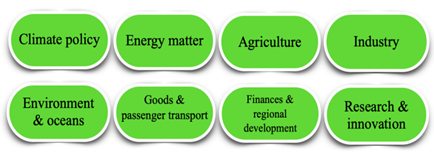
The Green Deal has eight areas that create a resource-efficient and competitive economy at the same time. However, the road to this point was long and not always smooth.
The short history of the European Union is due to the creation of new raw material trade agreements that supported and continue to encourage a lasting peace after the Second World War. However, this step has not yet automatically led to the creation of the union, since the European Union itself is an even younger supranational organization, which was established nearly 30 years ago with the Maastricht Treaty concluded by the former contracting states as the legal successor of the European Economic Community. It is important to note that the European Coal and Steel Community (ECSC), which was created at the beginning, gave birth to a structure whose effects determine the basic goals and basic criteria of the European Union's (EU) operation to this day.
The most important result of this is the implementation of the principles of the single market and the four freedoms. All of this enabled the free flow of goods, services, capital and labor, speeding up and facilitating the movement of resources between the associated countries, which was just what was needed to start production, trade and growth after the World War. However, today's green strategies were determined not only by these antecedents. The countries participating in the creation of the union wanted to establish a strong cooperation in order to ensure energy supply.
The consequence of this effort was the energy union, which tries to reduce the differences in the energy supply systems. Its primary task is to ensure the energetic transformation resulting in an affordable, safe, competitive, protected and sustainable energy system at the pan-European level. All of this is also important because today's green goals and strategic ideas are mainly related to the provision of energy supply, so an overview of the mechanism of the energy union is also critical for understanding the Green Deal.
In 2014, the union recognized that the current structure and framework could not ensure the adequate energy supply of some member states, which is why it developed this strategy, in which the reduction of dependence is the most important element. It is the basic "right" of citizens to have access to energy under any circumstances. Legislators have also recognized that one of the guarantees of citizens' well-being and safety is that it is universally available and affordable; therefore, member states treat security of supply as a top priority in their national energy policy decisions. In the second half of the 2000s, due to the Russia-Ukraine war, many member states were forced to face an international conflict during which it could not maintain its security of supply, regardless of whether it was an active participant in the conflict or not.
Moreover, The EU's energy dependence was significant regardless of the Russian-Ukrainian conflict. The Commission has shown in detail that the EU imports more than half of the energy it uses. Energy import dependence was around 90% for crude oil, 66% for natural gas, 42% for other solid fuels and 40% for nuclear fuel. 8 In the case of more than half of the member states that joined in 2004 (the Eastern-Central European and the Baltic states), the energy infrastructure is poorly connected to that of the western member states and its integration is at a low level. In the case of six member states, there was a strong dependence on a single natural gas supplier, while in the case of three others we can speak of a single electricity supply and operation company. In order to maintain supply and the competitiveness of the economy, the EU imported 1 billion euros of energy per day from external partners, which accounted for more than one fifth of the total EU imports.
Another important issue of energy security is that the modeling of global economic and market changes has shown that energy demand is expected to increase by 27% by 2030, which results in and necessitates the gradual transformation of energy supply and trade. 9 In the strategic material, the Commission defined the problems affecting critical infrastructure and the areas determining security of supply, in connection with which short-, medium- and long-term decisions must be made. The changes that the Green Deal will try to promote in the future can already be felt in these points which, having been created by the Commission, also outlined important strategic ideas that will appear in the EU decision-making mechanism in the coming years in the context of various decrees and resolutions.
The above list (Table 1.) clarifies that more efficient management of energy and the reduction of energy dependence require something more from us than simply rethinking energy policy. This is also related to the consumption of the economy, the needs specific to the economy, the energy demand of the industries, and the modernity of the technologies. So it is clear that the creation of the energy union and a transformation of EU energy policy will not be sufficient to reduce energy dependence and ensure a sustainable energy supply.
In 2014, the Russian-Ukrainian gas dispute soured sentiments, which not only heightened tensions between the two countries, but also indirectly involved many EU member states in the conflict. The basis of the disagreement between the two parties was a dispute arising from settlement and payment delays, which then escalated to the entire region. The Ukrainians wanted to pay the Russian party in accordance with their contractual obligations, but the Russians, taking into account the development of currency exchange rates and world market prices, issued an adjusted invoice, which the Ukrainian party did not accept and wanted to buy only at the price fixed for natural gas as written in the contract. The dispute became bitter and escalated to the point where the Ukrainians blocked the natural gas pipelines through which the Russian side delivered natural gas to the Central European states in accordance with the contracts. This incident led to the realization in the member states and the EU leadership that any kind of energy exposure to third countries could cause an economic crisis affecting the internal market for the EU as a whole, which could undermine not only the efficient functioning of the internal market, but also produce an adverse effect on economic and political stability.
Therefore, the Commission, in cooperation with the member states, has developed a system to improve the EU's immediate response capacity in the event of a crisis situation that threatens the security of supply. Together with the expansion of storage capacities, this means the development of reverse flows, the preparation of regional security of supply strategies and the examination of the economic and security of supply opportunities inherent in liquefied natural gas. The Union tried to respond to the challenges in the form of immediate measures. The first priority of the Union's leadership in the energy supply strategy is that the Community can increase its resilience in the event of disruptions in the energy supply and ensure priority protection of critical infrastructures, including the joint support provided to vulnerable member states during persistent energy supply disturbances.
One of the decisions concerned crude oil. In accordance with EU and international regulations, the member states must form a reserve of petroleum equivalent to 120 days' consumption. Stocks compiled in this way improve the negative effects of market price fluctuations in the event of a crisis, and at the same time eliminate the lack of physical supply. In addition, the EU's own regulations and directives also regulate the legal criteria with which the gas supply of primary or protected consumers must be ensured even during disruptions or temporary supply shortages. These common rules require the strengthening of coordination capacities and mandatory security infrastructure development investments. Added to to the physical protection of critical energy infrastructures, the security of the IT systems that operate them must also be guaranteed. 10 As a consequential result, it was important that the member states were able to help each other in the event of supply problems.
The EU has also formulated energy efficiency targets the first step being to define a 20% target value. In order to be able to achieve real energy savings and energy demand mitigation, it was necessary to identify the priority sectors and determine the specific energy efficiency target values for them, as well as create the applicable legal framework. One of the priority sectors described in this way is the construction industry, which is responsible for 40% of energy consumption and 1/3 of natural gas consumption in the EU. If the renovation and energetic modernization of the existing building stock in the member states accelerates in the construction industry (application of modern heating and cooling technologies), the energy demand of the sector could be reduced by approximately three quarters, considering the EU as a whole. In order to speed up carbon-neutral investments by citizens and the private sector, the Commission allocated 27 billion euros in the European structural and investment funds in the previous seven-year budget. It was not only important to define the priority sectors, but it was also necessary to identify how a possible EU internal market could provide a solution to reduce energy dependence.
A prerequisite for energy market integration and a high level of security of supply is regionalism and a regional political and professional approach. The high-level regional energy market integration created by the Scandinavian states is the NordPool, which was later joined by several similar European initiatives. Following this example, the Benelux states together with Germany, France and Austria created a pioneering integration of the electricity sector and gas industry. The network and transmission system operators interested in the electricity sector, together with the regulatory bodies, created the unified electricity market by connecting the network systems of the various member states. As a result of regional cooperation, the network operators and power exchanges of 16 member states created a unified system in 2014, known as "next-day market interconnection". The PRISMA platform was established in 2013 in the area of the gas sector, where 28 transmission system operators, which supply 70% of the EU's natural gas, auction their interconnector capacities in a uniform manner.
Unfortunately, the Baltic states and South-East Europe have lagged behind in the development of a well-integrated and competitive energy market, at least at the regional level, so the dependency of these member states within the EU and the international environment has remained high. From 2014, additional targeted measures were implemented in order to reduce energy market efficiency and dependence. According to the Council's proposal, at least 10% of the installed electricity generation capacity of the member states must be connected, a ratio which, taking an optimistic view, could increase from 10 to 15% by 2030. 11 However, it must not be overlooked that energy dependence has still not been resolved, although the member states can depend on each other, which leaves them in a more fortuitous situation than if they were solely dependent on sources outside the Union.
3.2. Why is Renewable Energy Appreciated?Since the birth of the Union in 1992, energy production within the EU has been gradually decreasing. It is interesting to note that the renewable energy production within the energy mix showed a linear increase even compared to the total internal energy production decline data. It can be concluded from this that, in addition to the renewable energy-producing sectors, with the increase in the production of nuclear energy and fossil fuels, this downward trend can be slowed or stopped at least in the medium term. Thanks to the increase in the use of renewable energy, the EU can register annual cost savings of many billions of euros in relation to imported fuel. In order to reduce the consumption of imported natural gas and to mitigate the resulting unilateral supplier dependence, there are significant cost-effectiveness factors in the production of renewable electricity and heat energy, which, for example, can significantly reduce the amount of imported fuels used in the EU in connection with the production of renewable heat energy.
The positive result of the ever-increasing volume of investments in renewable energy sources lies not only in the replacement of the amount of imported fuels, since as a result of technological developments, the costs spent on technologies that enable the exploitation of renewable energy sources also decrease. This means an increase in the competitiveness of renewables within the existing energy mix compared to other energy-producing sectors. In parallel with the increase in the share of renewables, the development and increase of energy storage capacities and the integration of these systems into an intelligent energy network also play a prominent role.
As long as the environmental impact problems related to the extraction of non-conventional energy sources are not resolved and the acceptance of the technology increases proportionally, shale gas as an alternative energy source, for example, will cause controversy. The production and consumption of the other traditional energy sources, coal and lignite, are continuously decreasing in the EU. Despite the decreasing trend, its share in the energy mix can still be said to be significant. Reducing the EU's energy dependence requires the modernization of buildings and local heating systems with energy-efficient and cost-effective solutions.
The EU and its member states must therefore make appreciable investments in the field of energy research and innovation. Innovative solutions will have to make it possible to produce energy from new raw materials that can be safely extracted and are available in sufficient quantities in the EU, so that the degree of dependence on external sources continues to show a decreasing trend. The financial instruments provided through the European Investment Bank will play a significant role in speeding up processes and in innovation, and in increasing investments in new technologies. 11
Decisions concerning the energy structure, as well as infrastructural and energy market unification, and attempts to reduce dependence on external suppliers, which represent national competences, must be made jointly with the Commission at the European level, and must be implemented in agreement with neighboring countries. In the short term, coordination and the common market help the EU's uniform foreign policy action and increase its ability to assert its interests. The Community must also be at the forefront of the development, support and global dissemination of sustainable energy technologies, which guarantees a competitive advantage and the benefits of an economy operating independently of competitors. 12
In order to guarantee the EU's energy security, a short-term goal is to expand energy relations with so-called third countries and provide them with the opportunity to join the single energy market, and support their access to the necessary infrastructural developments. 8
The common energy market and energy policy coordination created the conditions for the creation of the energy union. All of this prioritized the provision of safe, sustainable and affordable energy to consumers (including households and the SME sector separately). 13
The list in Table 2. predicts how we will get from the energy union strategy to the Green Deal and a sustainable EU economy. 14 The antecedents outlined so far explain the issues of security and trust, the integrated energy market and energy efficiency. It is clear that a process that has been going on for several years has taken place regarding energy supply security issues and the reduction of energy dependence. At the same time, new pillars have appeared, which foresee the need for another agreement. We had to realize that the creation of energy security cannot be solved only on the basis of market mechanisms.
The spotlight was on the experimentation and invention of new technologies and resources, as well as the question of what effect new and alternative solutions have on the environment. In order to strengthen competitiveness, clean and more environmentally friendly solutions have become important, since ultimately a clean and livable environment is also important for people to be happy and have a good quality of life. The birth of the climate strategy could result in the EU becoming a global leader in the production of renewable energy. R&D and innovation could contribute to the development of low-carbon and clean energy-producing technologies, and to the introduction of the research and innovation results inherent in clean technologies into the operation of the economy. This would also contribute to improving competitiveness. 15
Of course, the basis of the regulation on the management of the energy union is provided by the National Energy and Climate Plans prepared and integrated by the member states. The decree thus defines the strategy of the EU and the member states for the next ten years, which also includes the regulation of reports, monitoring and data provision obligations.
In the fight for sustainability, a significant breakthrough took place at the annual climate change conference of the United Nations (UN) in 2015. The members of the United Nations Framework Convention on Climate Protection (UNFCCC) decided to adopt a serious agreement binding on everyone and expected of everyone, containing commitments to reduce the emission of greenhouse gases. The text of the Paris Climate Convention was adopted at the UN General Assembly of the same year. With the convention, all the countries of the world undertook to reduce their greenhouse gas emissions which burden the climate according to specific quotas, and thereby take the necessary steps to stop or at least moderate global warming.
The importance of the convention is shown by the fact that all major global powers signed the final document of the convention and at the same time resolved to achieve the goals declared therein. Russia, the United States and China have so far refused to sign any similar UN convention agreements in order to protect their own economic interests and global trade positions. In 2015, due to the combined effect of the global diesel scandal and the opinion of science predicting a global climate catastrophe, the agreement was nevertheless signed. In this way, the global consensus regarding climate change and climate protection was created, which now forms the basis of a change in the approach to environmental protection in industry or even trade and other sectors of the economy.
The convention wanted to achieve its goals outlined above with the help of national undertakings defined for each country. In practice, this means that each country provides its own national contributions (nationally determined contributions, NDCs), which according to the principle of the convention must be an ambitious offer. The NDCs obtained in this way are collected at the secretariat of the UNFCCC, and the emission results are compared every five years with the previously defined reduction targets. 16 If a signatory member state is unable or unwilling to fulfill its commitments defined in the NDCs, it is not subject to any international legal or economic sanctions; instead, the convention itself manages the fulfillment of commitments in a kind of name and shame system. The international importance of the document is also proven by the fact that all the states of the world have signed the convention, and 184 of them have already ratified it and incorporated it into their internal legal order. The conclusion of the Paris Agreement can be considered a milestone that thoroughly prepares the ground for EU green strategies and the European Green Agreement.
The transition from a linear economy to a circular one has emerged as a pivotal strategy in addressing the pressing environmental and economic challenges faced by the European Union (EU). By reimagining the traditional "take-make-dispose" model, the circular economy offers a promising path towards sustainability across various aspects compared to its linear counterpart.
5.1. Resource Efficiency and ConservationOne of the fundamental pillars of the circular economy is the efficient use and conservation of resources. Unlike the linear economy, which perpetuates the unsustainable depletion of finite resources, the circular economy promotes resource optimization through strategies such as recycling, remanufacturing, and reuse. By keeping resources in circulation for as long as possible, the EU can reduce its dependence on virgin materials, minimize waste generation, and mitigate the environmental impacts associated with resource extraction and production.
5.2. Waste Reduction and ManagementThe circular economy prioritizes waste reduction and responsible management practices. Through initiatives like extended producer responsibility (EPR) and product stewardship, the EU aims to minimize the generation of waste and ensure that products are designed with end-of-life considerations in mind. By promoting eco-design, material recovery, and innovative recycling technologies, the circular economy enables the EU to move towards a closed-loop system where waste is seen as a valuable resource rather than a burden on the environment.
5.3. Climate Mitigation and ResilienceTransitioning to a circular economy can significantly contribute to climate mitigation and resilience efforts. By reducing the carbon footprint associated with resource extraction, manufacturing, and disposal processes, the EU can make substantial progress towards its climate targets. Additionally, the circular economy fosters the development of renewable energy sources, promotes energy efficiency, and enhances the resilience of supply chains, thereby bolstering the EU's capacity to adapt to the impacts of climate change.
5.4. Economic Growth and InnovationEmbracing the circular economy presents significant opportunities for economic growth and innovation within the EU. By promoting sustainable business models, fostering green entrepreneurship, and incentivizing circular investments, the EU can stimulate job creation, enhance competitiveness, and foster a transition to a more resilient and inclusive economy. Moreover, the circular economy drives innovation in areas such as product design, material science, and waste management, positioning the EU as a global leader in sustainable development and technology.
5.5. Social Equity and Well-beingThe circular economy promotes social equity and well-being by fostering a more inclusive and equitable society. By prioritizing resource efficiency and waste reduction, the EU can alleviate environmental burdens on vulnerable communities, reduce pollution-related health risks, and enhance the quality of life for all citizens. Additionally, the circular economy encourages collaboration, knowledge sharing, and community engagement, empowering individuals and communities to actively participate in the transition towards a more sustainable future.
The circular economy offers a multifaceted approach to sustainability that aligns with the EU's broader policy objectives and global commitments. By embracing principles of resource efficiency, waste reduction, climate mitigation, economic growth, and social equity, the EU can unlock the full potential of the circular economy as a very important part of the Green Deal and pave the way towards a more prosperous, resilient, and sustainable and more competitive future for Europe.
We can therefore see that the creation of the European Green Agreement was not without precedent. Europe recognized in time that environmental and climate change posed an existential threat to it, but first they realized that energy dependence could cause problems for the economy and competitiveness. 14 The energy union, the European energy security strategy and numerous international events together and separately reinforced the importance of developing and implementing the most effective response to the threat in Europe's leaders.
6.1. The Structure of the Green DealThe most important objective of the agreement is to transform the European Union into a modern, resource-efficient, competitive and environmentally conscious economy in the shortest possible time. 10 With this, the Green Deal wants to achieve two major goals: on the one hand, reducing the EU's energy dependence, promoting the energy security of the EU member states, and on the other hand, establishing solutions in everyday life and in the economy that do not have a negative impact on the environment. The following tasks became important for the transition:
• reduce greenhouse gas emissions and achieve net zero emissions by 2050;
• delinking the volume and rate of growth of the European economy from resource consumption;
• all regions and citizens of Europe should benefit from the general benefits of economic transformation.
Eight policy areas have been designated to achieve the goals of the agreement. Within the framework of these policy areas, the member states have measures to take. The eight policy areas are we see in fig. number 1. 17

The EU's policies and measures, as well as the budget plans for each year, must be in line with the goals set out in the Green Deal. Most grants and tenders are tied to the form in which the economic operator can implement green goals in addition to the original targets. In order to achieve the goals set in the European Green Agreement, the Commission promised to mobilize at least 1 billion euros for sustainable investments in the next decade. This enormous amount of support enables the transformation that can lead to sustainable and energy-efficient economic operation.
It allocated 30% of the EU's multi-year budget (2021-2027) and the NextGenerationEU (NGEU) EU instrument aimed at recovering from the Covid-19 pandemic for green investments. 17 EU countries must spend at least 37% of the funding received under the EUR 672.5 billion recovery and adaptability instrument for investments and reforms supporting climate objectives. Investments and reforms to be financed in this way must not violate the EU's environmental protection objectives. On behalf of the EU, the Commission intends to raise 30% of the funds available under the NGEU by issuing green bonds. The previously mentioned EU policies closely related to the Green Deal are according to the Table 5., they can benefit from the multiannual financial framework. 18
The table shows how big a role the union assigns to achieving the green goals. The highest proportion is seen in the case of sustainable growth and natural resources. The Union has an annual budget and a long-term financial framework. The annual budget represents a combination of appropriations and commitments that can be planned and used for any given year. 19 The EU budget was basically created to ensure the financing of common policies adopted by the member states. However, the annual budget, which is part of the framework of the Union, differs from the multiannual framework. The multiannual financial framework has been a concept in the European Union since 1988. 20 It’s adoption determines the planning and structure of the individual budget years, the upper limit of the amounts of money that can be spent by the EU, and also defines the rules that control the way of financing the expenses. 21
Since the multiannual financial framework has been applied, it has almost always been possible to adopt the annual budget as well. 22 The multi-year framework is also supported by the fact that, by its very nature, it makes more sense to plan investment and investment programs for the long term. 23 The most recent period of long-term planning was the 2014–2020 programming period, and the current period is 2021–2027 we live in a period of The 2014-2020 multi-annual framework had a budget of EUR 1.082 billion. For the period 2021–2027, the amount is slightly higher: EUR 1.134 billion. This amount is distributed among the seven years of the budget in accordance with strategic priorities. These priorities are supported by the policies, so cohesion policies, for example, also play an important role in ensuring that the objectives of the Green Deal are realized. 24
The EU's cohesion policy helps EU countries, regions, local governments and cities to implement major investments that contribute to the goals of the Green Deal. They must allocate at least 30% of the amount received from the European Regional Development Fund to these priorities. In addition, 37% of the Cohesion Fund specifically contributes to achieving climate neutrality by 2050. As part of the Green Deal, the Commission created the European Green Deal Investment Plan (EGDIP), also known as the Sustainable Europe Investment Plan (SEIP). This includes the Just Transition Mechanism, which focuses on ensuring a just and equitable shift to a green economy. In the period between 2021 and 2027, it will mobilize significant investments to support the citizens of the regions most affected by the transition.
The other major pillar is the InvestEU program, which provides long-term financing for achieving green goals by mobilizing significant private and public funds. The InvestEU Regulation requires that the InvestEU fund, as a whole, targets for at least 30% of investments contributing to climate objectives. The European Commission has adopted a package of proposals in order to ensure that its climate, energy, transport and tax policies are capable of reducing the net emissions of greenhouse gases by at least 55% compared to the 1990 level by 2030. In the short term, promoting and complying with the Green Deal will have the following benefits:
• fresh air, clean water, biological diversity and good quality soils;
• modern and energy-efficient buildings;
• healthy, affordable and GMO-free food;
• efficient, cost-effective and carbon-neutral public transport;
• clean, green energy and innovative technologies; long-lasting, repairable, recyclable and reusable products;
• green jobs, competitive education;
• globally competitive and resilient industry.
The Green Deal has both short- and long-term goals, which can only be achieved with the support and cooperation of EU institutions, organizations and member states.
6.2. Safeguarding Sovereignty: Europe's Green TransitionMoving to a green economy can help Europe reduce many of the sovereignty and security risks that currently leave the EU highly exposed to third countries.
Energy Independence: By investing in renewable energy sources such as solar, wind, and hydroelectric power, Europe can reduce its dependence on fossil fuel imports from politically unstable regions. This enhances energy security and sovereignty by minimizing vulnerability to supply disruptions and geopolitical tensions.
By investing in renewable energy sources such as solar, wind, and hydroelectric power, Europe can reduce its dependence on fossil fuel imports from politically unstable regions. This enhances energy security and sovereignty by minimizing vulnerability to supply disruptions and geopolitical tensions.
Green economic transitions prioritize resource efficiency and promote the use of renewable materials, reducing Europe's reliance on scarce and geopolitically sensitive resources. This mitigates the risk of resource conflicts and enhances sovereignty over essential raw materials.
A shift towards sustainability and climate resilience strengthens Europe's ability to adapt to the impacts of climate change, such as extreme weather events, sea-level rise, and biodiversity loss. By safeguarding natural ecosystems and biodiversity, Europe can protect its sovereignty over vital ecological services and maintain the security of food, water, and other essential resources.
Leading the transition to a green economy positions Europe as a global hub for innovation and technology development in renewable energy, clean transportation, and sustainable agriculture. By maintaining technological leadership, Europe can enhance its economic competitiveness and reduce reliance on foreign technology imports, thereby safeguarding its technological sovereignty.
Green economic policies prioritize public health and well-being by reducing pollution, improving air and water quality, and promoting sustainable lifestyles. By investing in clean energy and sustainable infrastructure, Europe can mitigate health risks associated with environmental degradation and strengthen sovereignty over public health outcomes.
Transitioning to a green economy fosters economic diversification, job creation, and resilience to economic shocks. By reducing dependence on fossil fuels and carbon-intensive industries, Europe can mitigate the economic risks associated with volatile energy prices, carbon regulations, and global market fluctuations, thereby enhancing economic sovereignty and stability.
Overall, a green economic transition enables Europe to reduce sovereignty and security risks associated with energy dependence, resource scarcity, environmental degradation, technological reliance, public health threats, and economic instability. By embracing sustainability and resilience, Europe can strengthen its sovereignty and security in an increasingly interconnected and uncertain world.
The near future holds many challenges for the EU at the political level. The Green Deal programme, launched by the Von der Leyen Commission in 2019, has started to have positive and negative impacts by the end of the cycle, alongside a number of international challenges. While the positive impacts show more than anything that the programme is well-intentioned and that the full economic transformation it aims to achieve is achievable, the negative impacts have also raised serious political and socio-economic questions. One of the most important negative criticisms of the programme is that it is restructuring the economy too rapidly, which is significantly undermining the economic opportunities, productivity and competitiveness of the SME sector and the majority of society. The rapid restructuring has increased the administrative burden on firms, and binding legislation in many Member States has forced operators to make expensive and costly improvements to productive assets to meet stricter emission standards. These economic burdens have ruined many family and small businesses since the programme began. This was compounded by the loss of income and revenue from the Pandemic lockdown and the negative economic impact of the unexpected start of the Russian-Ukrainian war.
Extremist political movements have recognised the potential for gaining political influence and mandates and have magnified the negative effects.The likely result could be that in the new European Parliament in 2024, the groups with an interest in slowing down or stopping the programme will be in the majority. This scenario would completely undermine the EU's achievements to date with the programme and the development of renewable energy technologies, green innovation, green jobs and the achievement of carbon neutrality by 2050. In fact, in many cases, the current Parliament has encouraged not only the Commission, but also the Council, in its legislative processes, to pursue a more ambitious green strategy and to support the integration of Green Deal objectives into the legislative text more than ever before. This progressive policy has created the EU's global environmental image and political-economic direction, but Member State societies have found the pace of the process too fast, too bureaucratic and too ambitious for their capabilities, while global competitors have found that no or minimal green transition has been made in terms of the economic fundamentals.
The other scenario is that voters will not move to the extremes and will follow the existing centrist direction, but will also expect these formations in the centre to pursue a more rational green innovation policy that is more responsive to the economy, economic actors and their opportunities, and less burdensome for the social sector.
In both cases, it is clear that the continuation of the Green Deal faces challenges for political reasons, but it is also clear that centrist political forces are interested in continuing the programme, but that a more rational implementation is acceptable, in contrast to the extreme movements that call for a complete halt to the programme and a reversal of its results. In the first case, Europe's economic transition and transformation will continue, but in a more prudent, socially sensitive and thoughtful way that will maintain the continent's competitiveness and innovative edge over its global competitors, while in the second case, a disruption could occur that would cause irreversible damage not only to the economy but also to society and the natural environment.
The global economic events, changes and happenings of recent years have shown that a structural transformation is needed to improve the competitiveness of the EU. The European Union realized that it can only maintain and/or increase its geopolitical weight and economic power globally if it can make its energy sector independent of external suppliers. All steps taken in this direction have served the purpose of the European Union being able to develop a more uniform economic structure and to simplify the political decision-making mechanisms, with the help of which it can maintain its global market position and technological superiority in the long term. Therefore, the energy supply issues of the Union did not become extremely important recently or as a result of the Russian-Ukrainian conflict.
These questions have been preoccupying EU decision-makers for a long time. The Covid-19 pandemic further deepened the problems, and the pandemic and the subsequent Russian-Ukrainian conflict made the issue of energy security and adequate energy supply really important. The Green Deal is a comprehensive and long-term strategy, one of the goals of which is to solve these problems. In addition to the existing EU measures, and beyond to the creation of the single market and the energy union, there is still more to be done to improve sustainability. It is necessary to achieve conscious consumption, the efficient use of resources, and the invention and inclusion of resources in the economy that do not even exist yet. All these together can strengthen the sustainability of the EU economy.
The Green Deal aims to offer solutions to complex problems. Modern energy sources ensure that the Union covers its entire energy needs. Therefore, R&D and development activities that help the transformation are also needed. The restructuring of industries allows the economy to use fewer or different types of resources than before. The creation of industries that are not based on exhaustible resources, but on knowledge, creativity, and the development of creativity, must be supported, since these are the resources that in many cases can represent an inexhaustible input in all branches of the economy.
In the long term, the complete economic transformation can provide a global competitive advantage over competitors with industries based on traditional energy sources, and an additional competitive advantage is the high level of innovation and technological developments, which also provide the opportunity to manage and shape global market processes and trends. However, the benefits of implementing the Green Deal do not end here. The global market share based on the new economic structure provides an opportunity to increase the international political weight of the European Union, but also to strengthen its political responsibility.
| [1] | Dale G. (2021) "Karl Polanyi, the New Deal and the Green New Deal," Transfer: Environmental Values, , vol. 30(5), pages 593-612. | ||
| In article | View Article | ||
| [2] | Bureau J-C. (2021) "La future politique agricole commune: une douche froide sur le Green Deal Le Green Deal, une impulsion nouvelle, HAL Open Science, ” Post-Print hal-04031171, HAL. | ||
| In article | |||
| [3] | Dale, G. (2008) ‘“Green Shift”: An analysis of corporate responses to climate change’. International Journal of Management Concepts and Philosophy 3(2): 134–155. | ||
| In article | View Article | ||
| [4] | Dunne, D. (2020) ‘Could climate change and biodiversity loss raise the risk of pandemics?’ Carbon Brief, 15 May. [Online] Available: www.carbonbrief.org/q-and-a- could-climate-change-and-biodiversity-loss-raise-the-risk-of-pandemics (accessed 20 May 2020). | ||
| In article | |||
| [5] | Boffey, D. (2020) ‘Big pharma rejected EU plan to fast-track vaccines in 2017’. The Guardian, [Online] Available: www.theguardian.com/world/2020/may/25/exclu- sive-big-pharma-rejected-eu-plan-to-fast-track-vaccines-in-2017 (accessed 25 May 2020). | ||
| In article | |||
| [6] | Doward, J. (2020) ‘Government under fire for failing to act on pandemic recommen- dations’. The Guardian, [Online] Available: www.theguardian.com/ world/2020/ apr/19/ government-under-fire-failing-pandemic-recommendations (accessed 20 May 2020). | ||
| In article | |||
| [7] | Ansarinasab M. & Saghaian S. (2023) "The Relationship between Environmental Quality, Sustainable Health, and the Coronavirus Pandemic in European Countries," Sustainability, MDPI, vol. 15(15), pages 1-15. | ||
| In article | View Article | ||
| [8] | European Commission, (2013) “Guidelines for Trans-European Energy Infrastructure and Repealing” Decision No 1364/2006/EC and Amending Regulations (EC) No 713/2009, (EC) No 714/2009 and (EC) No 715/2009. [Online] Available: https://eur-lex .europa .eu/legal-content/ EN/ TXT/ PDF/ ? uri=CELEX:32013R0347&from=EN. | ||
| In article | |||
| [9] | European Commission, (2015b) “Energy Union Package – Annex – Roadmap for the Energy Union” COM(2015) 80 final [Online] Available: https://eur-lex .europa .eu/ resource. html? uri=cellar: 1bd46c90- bdd4-11e4-bbe1 -01aa75ed71a1. 0001. 03/DOC_2&format=PDF. | ||
| In article | |||
| [10] | European Commission, (2019a) “Commission Recommendation on Cybersecurity in the Energy Sector” [Online] Available: https:// energy .ec .europa .eu/system/ files/2019-04/commission_recommendati- on_on_ cybersecurity_ in_the_energy_sector_c2019_2400_final_0 .pdf. | ||
| In article | |||
| [11] | European Commission, (2011) “Establishing the Composition and the Operational Provisions of the Gas Coordination Group and Repealing” Commission Decision 2006/791/EC. [Online] Available: https:// eur-lex .europa .eu/legal-content/ EN/ TXT/PDF/?uri=CELEX:32011D0812(01)&from=EN. | ||
| In article | |||
| [12] | European Commission, (2017) “Establishing a network code on electricity emergency and restoration” [Online] Available: https://eur-lex .europa .eu/legal-content/ EN/ TXT/ PDF/ ?uri=CELEX:32017R2196&fro m=EN. | ||
| In article | |||
| [13] | European Commission, (2015a) “Energy Union Package. A Framework Strategy for a Resilient Energy Union with a Forward-Looking Climate Change Policy” COM(2015) 80 final [Online] Available: https://eur- lex. europa.eu/ resource .html? uri=cellar:1bd46c90-bdd4-11e4-bbe1-01aa75ed71a1 .0001 .03/ DOC_1&format=PDF. | ||
| In article | |||
| [14] | European Commission, (2019b) “Risk-Preparedness in the Electricity Sector and Repealing” Directive 2005/89/EC [Online] Available: https://eur-lex .europa .eu/legal-content/ EN/TXT/ PDF/?uri=CELEX:3201 9R0941&from=EN. | ||
| In article | |||
| [15] | European Commission, (2020c) “The Just Transition Fund” [Online] Available: https://commission .europa .eu/ strategy-and-policy/priorities-2019-2024/european-green-deal/finance-and-green-deal/ just- transition-mechanism/just-transition-funding-sources_en. | ||
| In article | |||
| [16] | GIS, (2020) “The European Green Deal Faces Huge Challenges” 2020. February 10. [Online] Available: www .gisrep- ortsonline .com/r/european-green-deal/. | ||
| In article | |||
| [17] | European Commission, (2020b) “European Green Deal Investment Plan” [Online] Available: www .europarl .eu- ropa .eu/RegData/etudes/BRIE/2020/649371/EPRS_BRI(2020)649371_EN .pdf. | ||
| In article | |||
| [18] | European Commission, (2020a) “Energy Security: Good Practices to Address Pandemic Risk” SWD (2020) 104 final [Online] Available: www .energy-community .org/dam/jcr:b9ccb226-585a-4cea-b49d- 4da9b9481c77/ 1 .2% 20Energy% 20security% 20good%20practices%20to%20adress%20pande- mic% 20risk% 20-%20Blanca-%20EC .pdf. | ||
| In article | |||
| [19] | Tamás Szemlér (2019) “Az Európai Unió költségvetése és közös politikák: fejlődés és jövőkép” Európai Tükör, 22(1), 7–21. | ||
| In article | View Article | ||
| [20] | Leen, Auke R. (2016) “The Multiannual Financial Framework of the European Union: A Political Power Game” Athens Journal of Social Sciences, 3(1), 7–18. | ||
| In article | View Article | ||
| [21] | Rodríguez, Pilar M. (2021) “The EU Budget: The New MFF and the Recovery Instrument: Next Generation EU” Instituto Español de Analistas. IEAF-FEF Publications. | ||
| In article | |||
| [22] | Péter Halmai (2018) Az Európai Unió közös költségvetése. Dialóg Campus, Budapest. | ||
| In article | |||
| [23] | Downes R. – Moretti D. – Scherie N. (2017) “Budgeting and Performance in the European Union: A Review by the OECD in the Context of EU Budget Focused on Re- sults” OECD Journal on Budgeting, 17(1), 1–62. | ||
| In article | View Article | ||
| [24] | European Commission, (2019c) “Delivering the European Green Deal” [Online] Available: https://commission . europa .eu/ strategy-and-policy/priorities-2019-2024/european-green-deal/ delivering-eu- ropean-green-deal_en. | ||
| In article | |||
Published with license by Science and Education Publishing, Copyright © 2024 Szilárd Szélpál and János Varga
 This work is licensed under a Creative Commons Attribution 4.0 International License. To view a copy of this license, visit
https://creativecommons.org/licenses/by/4.0/
This work is licensed under a Creative Commons Attribution 4.0 International License. To view a copy of this license, visit
https://creativecommons.org/licenses/by/4.0/
| [1] | Dale G. (2021) "Karl Polanyi, the New Deal and the Green New Deal," Transfer: Environmental Values, , vol. 30(5), pages 593-612. | ||
| In article | View Article | ||
| [2] | Bureau J-C. (2021) "La future politique agricole commune: une douche froide sur le Green Deal Le Green Deal, une impulsion nouvelle, HAL Open Science, ” Post-Print hal-04031171, HAL. | ||
| In article | |||
| [3] | Dale, G. (2008) ‘“Green Shift”: An analysis of corporate responses to climate change’. International Journal of Management Concepts and Philosophy 3(2): 134–155. | ||
| In article | View Article | ||
| [4] | Dunne, D. (2020) ‘Could climate change and biodiversity loss raise the risk of pandemics?’ Carbon Brief, 15 May. [Online] Available: www.carbonbrief.org/q-and-a- could-climate-change-and-biodiversity-loss-raise-the-risk-of-pandemics (accessed 20 May 2020). | ||
| In article | |||
| [5] | Boffey, D. (2020) ‘Big pharma rejected EU plan to fast-track vaccines in 2017’. The Guardian, [Online] Available: www.theguardian.com/world/2020/may/25/exclu- sive-big-pharma-rejected-eu-plan-to-fast-track-vaccines-in-2017 (accessed 25 May 2020). | ||
| In article | |||
| [6] | Doward, J. (2020) ‘Government under fire for failing to act on pandemic recommen- dations’. The Guardian, [Online] Available: www.theguardian.com/ world/2020/ apr/19/ government-under-fire-failing-pandemic-recommendations (accessed 20 May 2020). | ||
| In article | |||
| [7] | Ansarinasab M. & Saghaian S. (2023) "The Relationship between Environmental Quality, Sustainable Health, and the Coronavirus Pandemic in European Countries," Sustainability, MDPI, vol. 15(15), pages 1-15. | ||
| In article | View Article | ||
| [8] | European Commission, (2013) “Guidelines for Trans-European Energy Infrastructure and Repealing” Decision No 1364/2006/EC and Amending Regulations (EC) No 713/2009, (EC) No 714/2009 and (EC) No 715/2009. [Online] Available: https://eur-lex .europa .eu/legal-content/ EN/ TXT/ PDF/ ? uri=CELEX:32013R0347&from=EN. | ||
| In article | |||
| [9] | European Commission, (2015b) “Energy Union Package – Annex – Roadmap for the Energy Union” COM(2015) 80 final [Online] Available: https://eur-lex .europa .eu/ resource. html? uri=cellar: 1bd46c90- bdd4-11e4-bbe1 -01aa75ed71a1. 0001. 03/DOC_2&format=PDF. | ||
| In article | |||
| [10] | European Commission, (2019a) “Commission Recommendation on Cybersecurity in the Energy Sector” [Online] Available: https:// energy .ec .europa .eu/system/ files/2019-04/commission_recommendati- on_on_ cybersecurity_ in_the_energy_sector_c2019_2400_final_0 .pdf. | ||
| In article | |||
| [11] | European Commission, (2011) “Establishing the Composition and the Operational Provisions of the Gas Coordination Group and Repealing” Commission Decision 2006/791/EC. [Online] Available: https:// eur-lex .europa .eu/legal-content/ EN/ TXT/PDF/?uri=CELEX:32011D0812(01)&from=EN. | ||
| In article | |||
| [12] | European Commission, (2017) “Establishing a network code on electricity emergency and restoration” [Online] Available: https://eur-lex .europa .eu/legal-content/ EN/ TXT/ PDF/ ?uri=CELEX:32017R2196&fro m=EN. | ||
| In article | |||
| [13] | European Commission, (2015a) “Energy Union Package. A Framework Strategy for a Resilient Energy Union with a Forward-Looking Climate Change Policy” COM(2015) 80 final [Online] Available: https://eur- lex. europa.eu/ resource .html? uri=cellar:1bd46c90-bdd4-11e4-bbe1-01aa75ed71a1 .0001 .03/ DOC_1&format=PDF. | ||
| In article | |||
| [14] | European Commission, (2019b) “Risk-Preparedness in the Electricity Sector and Repealing” Directive 2005/89/EC [Online] Available: https://eur-lex .europa .eu/legal-content/ EN/TXT/ PDF/?uri=CELEX:3201 9R0941&from=EN. | ||
| In article | |||
| [15] | European Commission, (2020c) “The Just Transition Fund” [Online] Available: https://commission .europa .eu/ strategy-and-policy/priorities-2019-2024/european-green-deal/finance-and-green-deal/ just- transition-mechanism/just-transition-funding-sources_en. | ||
| In article | |||
| [16] | GIS, (2020) “The European Green Deal Faces Huge Challenges” 2020. February 10. [Online] Available: www .gisrep- ortsonline .com/r/european-green-deal/. | ||
| In article | |||
| [17] | European Commission, (2020b) “European Green Deal Investment Plan” [Online] Available: www .europarl .eu- ropa .eu/RegData/etudes/BRIE/2020/649371/EPRS_BRI(2020)649371_EN .pdf. | ||
| In article | |||
| [18] | European Commission, (2020a) “Energy Security: Good Practices to Address Pandemic Risk” SWD (2020) 104 final [Online] Available: www .energy-community .org/dam/jcr:b9ccb226-585a-4cea-b49d- 4da9b9481c77/ 1 .2% 20Energy% 20security% 20good%20practices%20to%20adress%20pande- mic% 20risk% 20-%20Blanca-%20EC .pdf. | ||
| In article | |||
| [19] | Tamás Szemlér (2019) “Az Európai Unió költségvetése és közös politikák: fejlődés és jövőkép” Európai Tükör, 22(1), 7–21. | ||
| In article | View Article | ||
| [20] | Leen, Auke R. (2016) “The Multiannual Financial Framework of the European Union: A Political Power Game” Athens Journal of Social Sciences, 3(1), 7–18. | ||
| In article | View Article | ||
| [21] | Rodríguez, Pilar M. (2021) “The EU Budget: The New MFF and the Recovery Instrument: Next Generation EU” Instituto Español de Analistas. IEAF-FEF Publications. | ||
| In article | |||
| [22] | Péter Halmai (2018) Az Európai Unió közös költségvetése. Dialóg Campus, Budapest. | ||
| In article | |||
| [23] | Downes R. – Moretti D. – Scherie N. (2017) “Budgeting and Performance in the European Union: A Review by the OECD in the Context of EU Budget Focused on Re- sults” OECD Journal on Budgeting, 17(1), 1–62. | ||
| In article | View Article | ||
| [24] | European Commission, (2019c) “Delivering the European Green Deal” [Online] Available: https://commission . europa .eu/ strategy-and-policy/priorities-2019-2024/european-green-deal/ delivering-eu- ropean-green-deal_en. | ||
| In article | |||