sciepub.com
 Quick Submission

Recent Developments in the Screening of Atoxigenic Aspergillus flavus towards Aflatoxin Biocontrol
Firew Tafesse Mamo1, 2,#, Jonathan Nimal Selvaraj1, 2, Yan Wang1, 2, Yang Liu1, 2,
1Institute of Food Science and Technology, Chinese Academy of Agricultural Sciences, Beijing, China
2Key Laboratory of Agro-products Processing, Ministry of Agriculture, Beijing, China
#This author is the principal author of this work.
Abstract
Aflatoxins (AFs) contamination in food and feed causes health hazards to both humans and animals. Among the Aspergillus species, Aspergillus flavus produces aflatoxin B1, B2, G1 and G2. AFB1 is known for its hepatotoxic, teratogenic, mutagenic and carcinogenic nature towards humans and animals. Some A. flavus strains do not produce aflatoxins and are termed as atoxigenic strains. A. flavus also produces an indole-tetramic acid called cyclopiazonic acid (CPA). As aflatoxin contamination can’t be prevented totally, numerous reduction mechanisms have been developed. Applications of atoxigenic A. flavus strains for biocontrol have proved to be a promising method. Hence, it is vital to distinguish A. flavus into toxigenic and atoxigenic strains, for biocontrol application. The atoxigenic strains need to be carefully selected, as the strain isolated and used in the same niche proves effective. The present review analyses the different available methods like cultural, molecular, and analytical methods to identify toxigenic and atoxigenic A. flavus and their precision for the purpose of selecting them as biocontrol agents. This review also highlights the role of CPA, its biosynthetic gene cluster and the methods to detect it and also point out some works on which, atoxigenic strains that also could reduce CPA contaminations. Overall these methods can pave a way to isolate atoxigenic A. flavus free from AFs and CPA, as potential biocontrol agents to be used.
Keywords: aflatoxins, Aspergillus flavus, cyclopiazonic acid (CPA), atoxigenic strain, toxigenic strains, biocontrol
Copyright © 2017 Science and Education Publishing. All Rights Reserved.Cite this article:
- Firew Tafesse Mamo, Jonathan Nimal Selvaraj, Yan Wang, Yang Liu. Recent Developments in the Screening of Atoxigenic Aspergillus flavus towards Aflatoxin Biocontrol. Journal of Applied & Environmental Microbiology. Vol. 5, No. 1, 2017, pp 20-30. http://pubs.sciepub.com/jaem/5/1/3
- Mamo, Firew Tafesse, et al. "Recent Developments in the Screening of Atoxigenic Aspergillus flavus towards Aflatoxin Biocontrol." Journal of Applied & Environmental Microbiology 5.1 (2017): 20-30.
- Mamo, F. T. , Selvaraj, J. N. , Wang, Y. , & Liu, Y. (2017). Recent Developments in the Screening of Atoxigenic Aspergillus flavus towards Aflatoxin Biocontrol. Journal of Applied & Environmental Microbiology, 5(1), 20-30.
- Mamo, Firew Tafesse, Jonathan Nimal Selvaraj, Yan Wang, and Yang Liu. "Recent Developments in the Screening of Atoxigenic Aspergillus flavus towards Aflatoxin Biocontrol." Journal of Applied & Environmental Microbiology 5, no. 1 (2017): 20-30.
| Import into BibTeX | Import into EndNote | Import into RefMan | Import into RefWorks |
At a glance: Figures
1. Introduction
Fungi are known to produce several secondary metabolites which have a wide range of biological activities [1]. Mycotoxins are one of them, that are produced by wide variety of fungal species, which are often found in contaminated food and feed, causing a huge health risk to both human and animals [2].
Naturally many mycotoxins are known for both their carcinogenic and mutagenic abilities [3]. Among all the mycotoxins, aflatoxins (AFs) are considered to be one of the key mycotoxins and are produced by wide varieties of Aspergillus species [4, 5]. The commonly occurring aflatoxins seen in the food commodities are aflatoxin B1 (AFB1), B2, G1, and G2.
Aflatoxin B1 is mainly produced by A. flavus, A. parasiticus and A. nomius and AFB1 is highly hepatotoxic, teratogenic, mutagenic and carcinogenic in nature towards both humans and animals [2, 6, 7]. Although mycotoxin causing fungi can contaminate food products during transport and storage, mycotoxin causing fungal contamination in food crops during pre-harvest is also a significant source of mycotoxin in our food supply [8].
To manage and prevent AF contamination in crops, several control strategies like fungicide control, development of resistant cultivar and biological control have been explored and studied in the last three decades. Out of these control strategies, biological control of AFs has in recent years seemed more promising in both pre- and post-harvest crops. Atoxigenic Aspergillus fungi have been tested for their ability in the control of aflatoxin producing fungi and aflatoxin contamination. Significant levels of reduction have been achieved by the application of competitive atoxigenic strains of A. flavus and/or A. parasiticus towards aflatoxin contamination in pre-harvest. In many field studies, particularly in peanut, maize and cotton, significant (65% to 95%) reduction in aflatoxin contamination have been observed by using atoxigenic Aspergillus strains [9, 10, 11, 12, 13]. Furthermore, use of atoxigenic Aspergillus strains was highly effective in reducing aflatoxin contamination if indigenous atoxigenic Vegetative Compatibility Groups (VCGs) of A. flavus is used to competitively exclude toxigenic VCGs [14, 15, 16] in the fields.
Most commonly known co-contaminant of AFB1; cyclopiazonic acid (CPA) production could be seen in atoxigenic A. flavus strains used in the biocontrol. For example commercially registered biocontrol agent, strains AF36 has been confirmed for its CPA production [17].
Precise detection of toxigenic and atoxigenic Aspergillus species is highly essential for both research and mitigation. The compiled information in this review could be useful in devising a polyphasic, cost effective and robust approaches using one or more methods that allow accurate differentiation between toxigenic and atoxigenic strains of Aspergillus, where the atoxigenic Aspergillus strains could later be used as biocontrol agent toward toxigenic A. flavus in the field. Also we reviewed the role of CPA and its identification and production, though it is less toxic to humans. CPA production could be seen in atoxigenic A. flavus strains used in the biocontrol. In this review, we have comprehensively reviewed morphological, cultural, and molecular methods of differentiating toxigenic and atoxigenic A. flavus for the biocontrol of A. flavus thereby preventing aflatoxin contamination in food and feed.
1.1. Competitive Exclusion and Efficacy of Biocontrol AgentsOne of the earlier studies by Cotty & Bayman (1993) suggested that the biocontrol agents reduce aflatoxin contamination in the field both by physical exclusion and nutrient competition. Later, it has also been confirmed that intraspecific aflatoxin inhibition occurs only when toxigenic and atoxigenic strains come in contact for a substrate [19]. Competitive exclusion could be achieved by the addition of very high numbers of atoxigenic spores of A. flavus using the carrier nutrient substrate to the field where crops are grown. As a result aflatoxin producing strain population as well as aflatoxin level gets reduced significantly [10, 20]. Addition of biocontrol agent does not increase the overall quantities of A.flavus since the mechanism for this type of biocontrol is the displacement of toxigenic isolates in the crop environment through founder effects and differential sporulation on substrates [21].
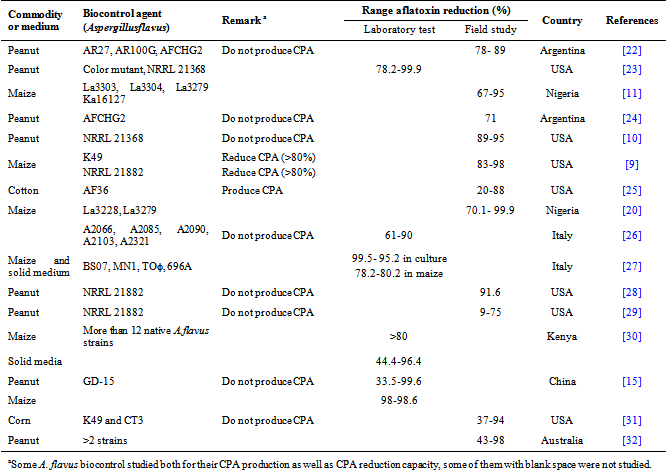
Even though, the issue of biological control of aflatoxins was studied for a longer period of time, the application of atoxigenic A. flavus in the crop fields against the toxin producing Aspergillus strains was ventured into in the last ten years. These efforts have had a significant out-come both at the laboratory as well as under the field conditions and several atoxigenic strains of A. flavus have been patented, registered, and commercialized. In USA, from 2004-2008 two atoxigenic A. flavus strains such as NRRL 21882 (active component of Afla-guard ®) and AF36 (NRRL 18543) were registered and used [9] widely. In addition, a strain K49 (NRRL 30797) has been patented by USDA [17]. Some atoxigenic strains or similar strains are under development and testing in different parts of the world such as USA, Australia, Argentina, Brazil, China, Italy, Kenya, Nigeria, Thailand, etc (Table 1). These strains are believed to act by “competitive exclusion” of the native toxigenic strains, thereby reducing the aflatoxin level in the harvested crop. In many field studies, especially in peanut, maize and cotton growing fields, significant reduction in aflatoxin contamination (65% to 95%) was observed consistently by atoxigenic A. flavus strains [11, 12, 13].




Identification of differences in the toxigenicity and genetic diversity of A. flavus populations through VCGs may help in understanding the population dynamics and provide important information that could be used to improve the efficacy of biocontrol. In addition to chemotype and genotypes, understanding the vegetative compatibility groups (VCGs) will provide a better insight to identify atoxigenic A. flavus isolates for biocontrol strategy [33, 34]. Therefore, analysis of VCGs is essential in screening potential biocontrol strains. A. flavus communities in soils and crops are composed of many VCGs [35]. The VCG which include the atoxigenic strain are supposed to enclose only atoxigenic strains [24], as gene flow within A. flavus is limited by a vegetative compatibility system [36, 37, 38]. Different VCGs are clonal lineages which differ in many characteristics, which includes aflatoxin-producing ability [39]. Some earlier studies [40, 41, 42] also revealed that communities of A. flavus VCGs from different cultivation fields, areas, and regions differ in aflatoxin-producing ability. In the community of A. flavus each VCG corresponds clearly to the mycotoxin combination production by the isolates of that VCG [43]. Deployment of an atoxigenic biocontrol isolate that belongs to a widely distributed and hold only atoxigenic VCG are the key elements in the sustainable use of biocontrol [34]. However, according to recent studies recombination has been detected between aflatoxigenic and non-aflatoxigenic A. flavus reversing to the ability to produce aflatoxins [44]. The issue of VCG as strong barrier to sexual recombination became questionable [45]. Because of this ability to recombine, it is critical to assess the frequency of such events in agricultural environments where atoxigenic biocontrol A. flavus have been introduced [46].
1.3. When to Apply Biocontrol Agents in the Field?Soils of cultivation fields are a reservoir for several fungal communities including A. flavus/A. parasiticus, invasion can occur to the part of the plant which have a direct contact with the soil fungal populations [47]. Aflatoxin contamination can occur during crop development when the crop is either damaged (e.g., by insects) or stressed by heat and drought and after maturation when the crop is exposed to high moisture and high temperature either before harvest or in storage. For example toxigenic Aspergillus flavus and Aspergillus parasiticus cause aflatoxin contamination of peanut kernels before harvest. Aflatoxin contaminations of peanut in the field occur because of late season drought stress. Aflatoxins often occur with the elevated temperature and drought stress in the fields in the final 4-6 weeks of a growing season. Contamination can also occur when dug peanut if they are not immediately harvested and stored at proper storage conditions [48]. Several researchers are suggesting the application of biocontrol agents in the time between harvesting and maturation [10, 20, 24].
2. Methods to Screen Atoxigenic Strains
Isolation of A. flavus species from their substrate is not easy. It is very tedious as Aspergillus is a diverse genus and its species varieties can occur worldwide in various habitats. Morphological and cultural based identification of toxigenic and atoxigenic A. flavus is not enough since some of A. flavus and A. parasiticushave very close morphological resemblance [5]. Therefore, the classification and identification of Aspergillus based on phenotypic characters must be accompanied with both molecular and chemotaxonomic characterization [49]
Since, the toxigenic profiles of A. flavus also vary largely, adopting a single method has not yet been reliable in differentiate toxigenic and atoxigenic strains. Hence, compiled information on different methods will provide robust approaches and even could accurately differentiate toxigenic and atoxigenic A. flavus strains. Recently a detailed combinational methods (morphological, molecular and chemical) suggested to be an effective way for identification and characterization of different Aspergillus spp within the genera of Aspergillus [49].
2.1. Sclerotial Classification of A. flavusBased on physiological, morphological and genetic criteria, A. flavus can to be subdivided into different groups. One such group is based on sclerotia size, the large strain (L) having sclerotia >400 μm in diameter, which are found in crop and soil contaminants across all continents and produce low levels of aflatoxin. Another S strain isolates from numerous small sclerotia (average diameter <400 μm) and produce higher level of aflatoxin [50]. Most of the atoxigenic isolates of A. flavus belong to the first group. Some S-strains produce both B and G- aflatoxins, whereas others produce only B-aflatoxins depending on their geographic origin [51].
Along with aflatoxins, some A. flavus strains do produce CPA [52]. The linkage between CPA and aflatoxin production has been well studied and reported (Astoreca et al., 2014; Bamba & Sumbali, 2005; Chang et al., 2009). Typical A. flavus isolates can produce only B-type aflatoxins and CPA whereas other strains produce B- and G-type AFs but not CPA [57]. Other Isolates with abundant small sclerotia (average diameter <400 µm) were initially classified as strain SBG and were found commonly in the West Africa; Benin [51]. This SBG has sclerotial morphology similar to the S-strain of A. flavus. It is also confirmed as it is phylogenetically ancestral to both A. flavus and A. parasiticus [58, 59]. Saito & Tsuruta (1993) also reported the presence of other strains shares traits with SBG in Thailand.
2.2. Microbiological Culture MethodEasy and inexpensive methods for detecting aflatoxin production in cultures are essential for economical reasons [60]. Normal culture methods are also suitable for screening large A. flavus populations for aflatoxin production along with genetic method [61].
Culture based methods are highly applicable to identify aflatoxins. Most commonly used cultural based methods are for quantifying the AFs by purification [15, 54], or for qualitative analysis to identify whether they produce AFs by appearance of blue or green fluorescence on the colonies when exposed to long wave length UV (360 nm) light [27, 62]. In addition, cultural based methods also rely on the color change in the solid medium when culture grows with yellow pigmentation (YP) on the undersides of colonies [60, 63] and also change of yellow pigment to pink red when culture is exposed to ammonium hydroxide vapor (AV) [60, 61, 64].
Differential mediums such as A. flavus and parasiticusagar (AFPA, Czapek’s yeast extract agar (CYA), yeast extract sucrose agar medium (YES), coconut agar medium (CAM), and aflatoxin producing ability medium (APA) are used for growing toxigenic Aspergillus spp [65]. The toxin production varies based on different factors such as pH, temperature and incubation period when grown on them. Yeast extract sucrose media has been mentioned as the potential medium in supporting the aflatoxin production compared to CYA [65]. Fani et al. (2014) showed that YES media was comparatively superior in supporting aflatoxin production over Czapek’s, or APA media, and different coconut agars.
2.2.1. Fluorescence and Pigmentation
Several cultural media used for detection of toxigenic strains through observations on fluorescence or visible color of pigments are yeast extract sucrose (YES) and potato dextrose (PDA). Cultures incubated for 5-7 days at 28-30°C, show fluorescence when exposed to UV light (365 nm) for toxigenic A. flavus strains [15, 60, 66, 67, 68, 69].
Beta-cyclodextrins (β-CDs) and their methylated derivatives can be used as excellent signal enhancers of aflatoxins through the formation of inclusion complexes by enhancing the fluorescent. These CDs are cyclic oligosaccharides consisting of (α-1, 4)-l inked α-D-glucopyranose units [70]. Fungi growth medium such as YES, Sabouraud dextrose and yeast extract (SD-YES) and PDA, fortified with 0.3% Mβ-cyd gives an increased fluorescence under UV exposure [61].
Addition of a methylated derivative of β-CD plus sodium deoxycholate (NaDC), hydroxypropyl-β-cyclodextrin (HBC) and bile salts (cholic acid, sodium taurocholate and sodium dehydrocholate) to yeast extract agar is suitable for the detection of toxigenic Aspergillus strains [71].
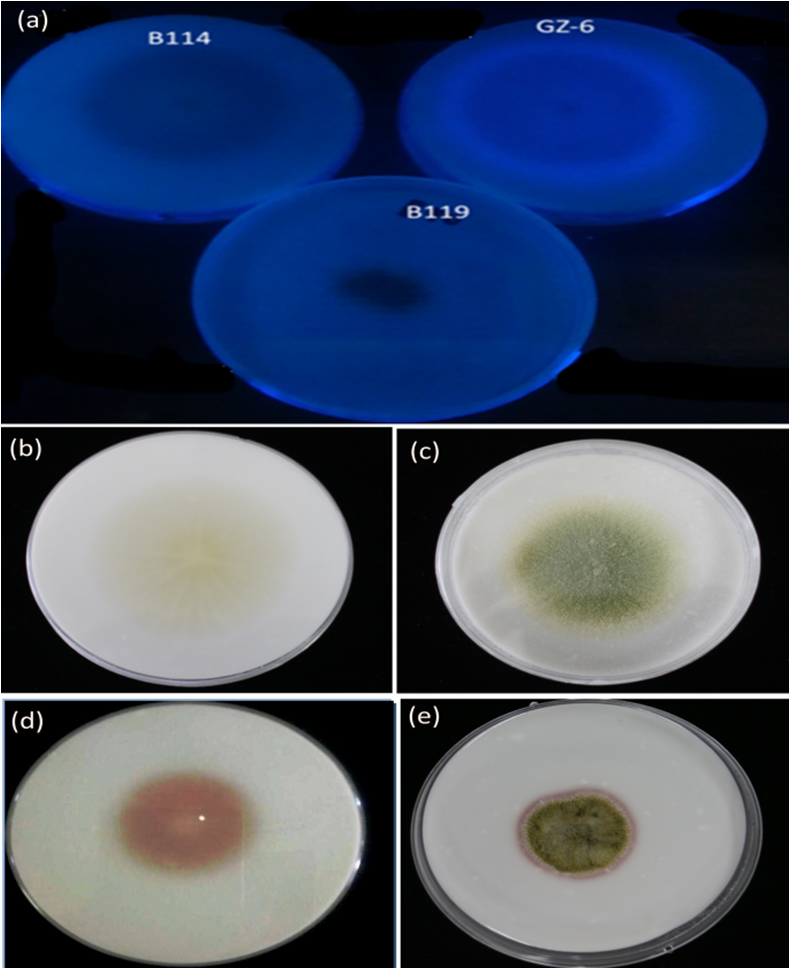
Coconut agar medium (CAM) is used for rapid detection of aflatoxin producing ability of different Aspergillus spp. [61]. A blue ring fluorescence surrounding toxigenic colonies under UV light can be seen on the reverse side of the Petri-plate (plate GZ-6 of Figure a), atoxigenic A. flavus do not give blue fluorescence [72] (Figure a , B114 and B119). Other coconut culture media used for detecting toxigenic strains are coconut milk agar (CMA), coconut extract agar, coconut cream agar, fresh coconut extract (FCE) and commercial coconut extract (CCE) as substrates (Fani et al., 2014; Fente et al., 2001). In addition, liquid formulation of CAM is also used for aflatoxin analysis by a microplate’s fluorescent reader-based assay [27]. However, due to frequent false negative results for aflatoxins, they are not highly reliable methods for studies to identify toxigenic A. flavus and A. parasiticuswhich might produce different mycotoxins other than aflatoxins [61]. Isolates considered atoxigenic can produce other toxins like CPA under optimal conditions but goes undetected. Further, the aflatoxin presence can be confirmed by thin layer chromatography (TLC) of Chloroform (CHCl3) extracts of the fungi from the fluorescing agar. Studies have reported that toxigenic isolates exhibit a characteristic blue or blue green fluorescence in agar under long wave UV light against a pink background as confirmed by TLC [60, 64, 68]. However, certain atoxigenic isolates also fluorescence under UV light [72]. For example, strains of A. flavus and A. oryzae produce several substances like asperopterin A or B and isoxanthopterin other than aflatoxins giving a blue fluorescence under UV light [73].
Yellow pigment formation in a mycelia and media also forms the basis for diagnosis of toxigenic isolates (Figure b) yellowish ring surrounding A .flavus distinctive green colony observed in front side of the plate (Figure c) [63], [74]. Vapor tests for color change have been used as another rapid method for detecting toxigenic strains of A. flavus and A. parasiticus. By exposing the toxigenic colonies to ammonium hydroxide vapors using standard procedure results in quick color change in the reverse side from brownish/yellowish/green color (Figure b & c) to plum-red [61, 64] (Figure d & e). Biochemical basis of vapor tests was studied by extracting pigments from lyophilized cultures of toxigenic strains grown on PDA. Further mixing of these pigments with ammonium hydroxide or other bases (Sodium hydroxide, potassium hydroxide, sodium carbonate, and sodium bicarbonate) resulted in color change to plum-red [60]. The pigments associated with color change are norsolorinicacid acid, averantin, averufin, versicolorin C, versicolorin A, versicolorin A hemiacetal, and nidurufin [74]. All these pigments are anthraquinone intermediates in aflatoxin biosynthetic pathway [61]. Of these, averufin was produced by atoxigenic mutants of A. parasiticus.

 Download as
Therefore, the combinations of different cultural based detection would be of great advantage for further genetic analysis in which several A. flavus isolates are tested for aflatoxin production (Abbas et al., 2004).
2.3. Molecular MethodSeveral molecular methods for aflatoxin producing capability to differentiate the toxigenic and atoxigenic aflatoxin strains have been developed in recent years. Most analytical methods are precise in detecting the aflatoxin production by the A. flavus strains. However, these methods require facilities and mycological expertise (Cigić & Prosen, 2009). On the other hand, cultural based methods though inexpensive, are less sensitive, thereby affecting accuracy [63]. But, molecular techniques provide rapid diagnosis because of their higher sensitivity and specificity, so they are currently used widely for the detection of toxigenic and atoxigenic strains of A. flavus and A. parasiticus [66,77-83]. Differentiation of toxigenic and atoxigenic strains of Aspergillus section Flavi group through molecular approaches is important as conventional approaches are not entirely reliable [84].
Studies on genomic function have shown that at least more than 29 genes are involved in aflatoxin biosynthesis. These genes are clustered within a 70-kb DNA region in the chromosome’ biosynthesis pathway, most of which have been identified and their DNA sequences have been published [85]. Aflatoxin biosynthesis pathway involves several conversions: polyketide - norsolorinic acid (NOR) - averantin (AVN) - averufin - hydroxyversicolorin - hemiacetal acetate- versiconal - versicolorin B - versicolorin A- demethylsterig- matocystin - sterigmatocystin (ST)-O-methylsterigmatocystin (OMST) - AFB1 [86]. Among those 29 genes, avfA converts averufin to versiconal hemiacetal acetate, ver-1 codes for versicolorin A dehydrogenase, which converts the versicolin A to sterigmatocystin. The omtA is involved in the conversion of sterigmatocystin to O-methyl sterigmatosystin, the nor-1 codes for a reductase which could convert norsolorinic acid to averanti. And aflR in A. flavus and apa-2 in A. parasiticus are the regulatory genes which activates the pathway genes [87].
2.3.1. Genetic Defects of Atoxigenic A. flavus Strains
Reports indicate that atoxigenic A. flavus isolates were found to be majorly associated with the deletions of a part or the entire aflatoxin gene cluster [88]. Defects in the aflatoxin gene, pksA in A. flavus AF36 isolate of cotton seed is responsible for its atoxigenic nature. Other reasons for atoxigenic nature of Aspergillus are attributable to large deletions in the aflatoxin gene cluster [89]. PCR assays have revealed that A. flavus strains with entire aflatoxin gene cluster could not produce AFs (Yin et al., 2009). Hence, analysis of deletion within aflatoxin gene cluster can be an effective method for rapid identification of the atoxigenic Aspergillus strains. Based on molecular characterization studies, it is concluded that both toxigenic and atoxigenic A. flavus isolates are genetically similar, but some atoxigenic isolates having deletions within the aflatoxin gene cluster can be identified easily by PCR assays [66, 81]. Use of multiplex PCR with three sets of primers specific for three structural genes in the aflatoxin pathway (nor-1, ver-1 and omt-A) differentiate the aflatoxin producing fungi, A. flavus and A. parasiticusfrom others only, but not aflatoxin producing and non- producing strains of the same species [90]. In another study, Kim, Chung, and Chun (2011) categorized toxigenic and atoxigenic fungi in meju, a Korean fermented soybean food starter using multiplex PCR based assay. Their studies on detecting four genes like omtB, ver-1, aflR, and omtA indicates that only toxigenic Aspergillus species produced three band patterns. Some strains with aflR expression did not produce aflatoxins [61, 77]. On combining set of primers for aflR, nor-1, ver-1 and omt-A in the aflatoxin biosynthetic pathway, quadruplex-PCR showed that toxigenic strains gave a quadruplet pattern, indicating the presence of all the genes involved in the aflatoxin biosynthetic pathway which encode for functional products. But in atoxigenic strains, the results are variable with one, two, three or four banding patterns. Further, a banding pattern in few atoxigenic strains resulted in non- differentiation between these two strains [84]. Generally the mechanisms involved in the atoxigenic nature of A.flavus strains are not fully understood [87].
Aflatoxin production by A. flavus is more stable in nature than in culture [91]. Gene expression between Aspergillus spp. can be different despite their close relatedness at the DNA level according to microarray analysis [92]. Hence, understanding the toxigenicity and atoxigenicity through molecular means at gene level is crucial step for further rapid and precise detection of these species.
In addition to their non-toxigenic nature, the strains of Aspergillus flavus used in biocontrol must be incapable of reversion to toxigenicity, thereby ensure their safe application to agricultural field. To ensure safety in the use of atoxigenic Aspergillus strains for biocontrol, the molecular mechanism underlying the atoxigenic nature of these isolated Aspergillus strains should be analyzed. The extensive deletions in the aflatoxin gene cluster of non aflatoxigenic biocontrol A. flavus isolates, serve as a safeguard in preventing adverse genetic reversion [88]. This would help us in choosing a suitable and stable strain.
As aflatoxin biosynthesis and its regulation are quite complex [85]. Amplifying all the 29 aflatoxin synthesis genes is impractical at times where a large population of Aspergillus isolates needs to be characterized for aflatoxin production. Consequently, many researchers target some aflatoxin synthetic genes in the cluster to screen out toxigenic and atoxigenic A. flavus strains in combination with other analytical and /or cultural methods.
2.4. Chemical Analytical MethodsBesides, to conventional and molecular methods currently a range of analytical methods are used with the aim of confirmation, validation or quantification of aflatoxin production. These methods includes thin layer chromatography (TLC), high-performance liquid chromatography (HPLC), liquid chromatography /mass spectroscopy (LC/MS) [76]. The vast majority of chemical analytical methods applied for accurate, selective and sensitive mycotoxin determination in various samples [76].
Numerous TLC methods have been developed for the determination of aflatoxins [93]. Most of chromatographic methods developed are based on reversed-phase HPLC coupled with fluorescence or UV detection after post-column derivatisation [94]. Despite to narrow detection range commercially available ELISA kits also provide a relatively easy assay for quantification of total aflatoxin concentration in the sample [60].
Due to the fact that aflatoxin contamination is still an on-going problem, identification with newer techniques like liquid chromatography /mass spectroscopy, biosensors, electronic nose assays is becoming increasingly popular [76, 94, 95]. For more details of quantitative and qualitative analytical methods look at the reviews [76, 94, 96].
3. Cyclopiazonic Acid
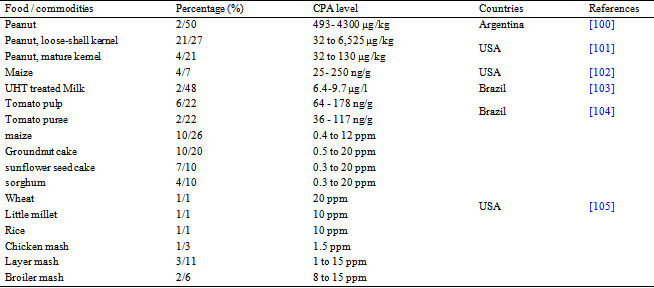
Cyclopiazonic acid (CPA), is an iodole tetramic acid, which was originally discovered by (Holzapfel, 1968) as a metabolite of Penicillium cyclopoium from ground nuts. Besides to, Penicillium species, A. flavus strains and A. oryzae, are major producers of CPA on oil seeds, nuts, peanuts and cereals (Pitt and Hocking, 2009). Other Aspergillus including A. tamarii, A. pseudotamarii and A. parvisclerotigenus were minor producers [1, 99, 100]. However, their role of CPA production in foods or feeds is not clear. The potential risk of CPA to animals and humans was initially considered low, so CPA did not receive much attention from the scientific community. Gradually, the focus changed as CPA was found to be associated commonly in occurrence with aflatoxin in the food and feed chain (Table 2). Naturally, it’s found to occur in a wide variety of crop products as a co-contaminant with aflatoxins, resulting in important economic losses [54, 55]. Thus, the co-occurrence and possible toxic synergy between these two classes of mycotoxins are important to animal health and potentially to human food safety [101]. The combination can produce degenerative changes, tumors, and necrosis in liver, pancreas, spleen and kidney [100]. Moreover, the capacity of CPA to induce disease in different animal species was studied and occasionally in human. Cyclopiazonic acid is toxic to wide variety of animals and has been implicated in human poisoning [102]. Reports have shown that its association with ‘kodua poisoning’, characterized by nausea, vomiting, depression, intoxication and unconsciousness of men after consumption of CPA-contaminated Kodo millet in some parts of North India [103, 104]. Commercially registered biocontrol agent, strains AF36 has been confirmed for its CPA production. In case of biocontrol agent application to the field, the amount of CPA may become intensified, when non CPA-producing “nontoxigenic” strains are intentionally applied to a major food and feed crops. AF36 produces CPA in maize under field conditions and that it is not effective in reducing CPA accumulation when co inoculated with toxigenic strains [17]. Therefore potential A. flavus candidate’s as biocontrol agents must be tasted well for their CPA production.




The biosynthesis of CPA was analyzed by culturing Penicillium cyclopoium in Czapaek medium. On the basis of structure analysis, carbon skeletons of CPA appeared to be derived from tryptophan, a C5 unit formed from a molecule of mevalonic acids and two molecules of acetic acids. β-CPA is also discovered as an immediate precursor of CPA (Holzapfel & Wilkins, 1971).
There is less literature on the biosynthetic gene cluster of CPA as compared to its counterpart, aflatoxin. In a study by Duran, Cary, and Calvo (2007), VeA gene was found to be involved in the production CPA in A. flavus strains, and the results showed a reduction in CPA amount in ΔVeA mutant strains. Later the putative cyclopiazonic biosynthetic gene cluster in A. flavus was found on the 87-kb sub-telomeric region next to the aflatoxin gene cluster in the A. flavus NRRL 3357 genome. The study suggested that maoA, dmaT, pks-nrps may be a mini-cluster of genes involved in CPA biosynthesis [53]. Several other genes (i.e., moxA, oxyA, ord1 and ord3) are connected with metabolic and catalytic functions, and they are clustered along with another transcription factor gene ctfR2. Hence, these genes are expected to have further functional characterization.
Furthermore, the gene CpaA is found to be involved in the biosynthesis of CPA [113]. Moreover, CPA biosynthesis gene cluster in A. oryzae has also been confirmed, and the cluster hold 7 genes (i.e. cpaR, cpaA, cpaD, cpaO, cpaH, cpaM, and cpaT) (Chang et al., 2009b). The three genes namely cpaA, cpaD, and cpaO genes are significantly important for CPA biosynthesis [53, 114, 115]. The cpaH gene is confirmed recently for its involvement in the conversion of CPA to 2-oxoCPA [116].
3.2. Extraction and Quantification of CPASimilar to other indoles, CPA can be extracted by Butanol, chloroform, chloroform-methanol, and dichloromethane. However, chloroform was considered be the best solvent in the extraction of CPA [117]. CPA can be re-extracted from the organic phase by using aqueous sodium bicarbonate; NaHCO3 (aq) solution.
Quantification of CPA from food commodities proved challenging and time consuming, as lengthy clean-up procedures are common with poor reproducibility and high detection limits are not rare [118]. Detection of CPA has been done extensively using TLC technique [26, 55, 103, 119]. Direct detection of CPA from fungi producers was used [119]. Filter paper was bathed with Ehrlich reagent in ethanol then directly applied to the spore of the fungi. The appearance of violet zone confirms the presence of CPA. However, this method cannot differentiate the presence of other indole metabolites. Chemical methods were also used as a confirmation of CPA, by spraying freshly prepared Ehrlich’s in distilled water and HCl on the plate of growing fungi [55]. Colorimetric method was also developed and reported for detecting CPA [120].
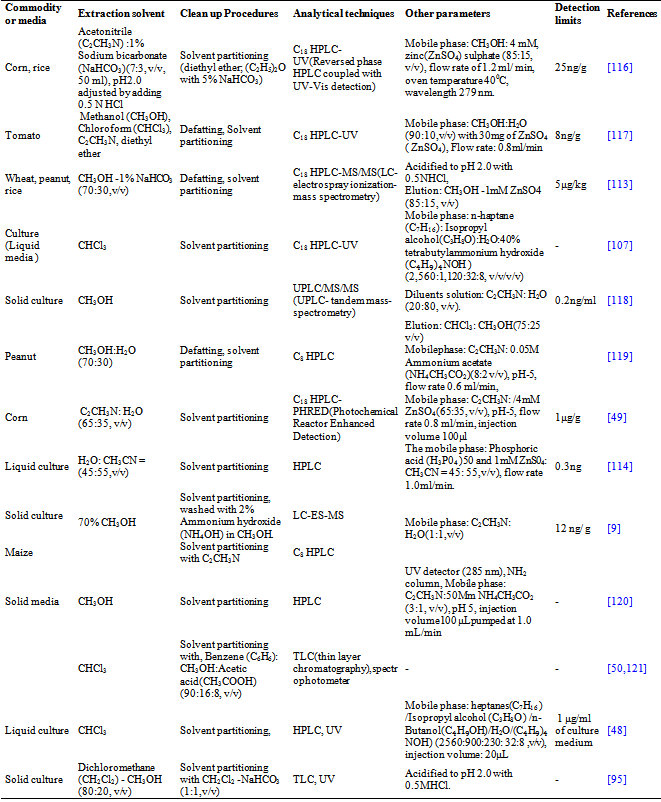
Peak identification from the chromatogram is vital in an HPLC analysis. Addition of one of the metal cations such as zinc, copper, magnesium, or calcium in the mobile phase confirmed to provide a sharp pick than conditions without cations [119]. In another study ammonium cation also resulted in a sharp peak [99]. The current trends of CPA extraction procedures by different authors are depicted on Table 3.



4. Conclusions
The most successful biological control approach to date is the application of atoxigenic strains of A. flavus to soils, where they competitively exclude naturally occurring toxigenic strains. Precise screening of the potential atoxigenic strains of A. flavus for biocontrol, by a polyphasic approach involving different cultural and molecular methods is suitable. Use of combined methods, i.e. cultural and molecular techniques is recommended. False positives or false negative with respect to aflatoxin production are not uncommon in toxigenic strain detection using cultural or conventional methods. In this regard, analytical methods such as HPLC, TLC, LC/MS and ELISA that detect toxin production in the substrate can also be confirmative when used in polyphasic approach along with cultural and molecular methods. In the molecular method, identification of deleted gene from (aflatoxin and cyclopiazonic) synthetic gene clusters plays an important role. Deletion of a particular PCR gene product is not conclusive evidence. However, the absence of several such PCR gene products could show less possibility of genetic reversion to toxigenicity. Therefore, it is vital to check the dynamics of the field as well as the possible recombination that might be occurred in a field, on which biocontrol is applied. Also it’s necessary that atoxigenic A. flavus strains as potential biocontrol agents must be free from CPA production. Furthermore, utilization of atoxigenic A. flavus strains as a biocontrol could also be extended up to CPA contamination prevention.
References
| [1] | J. C. Frisvad, U. Thrane, R. A. Samson, and J. I. Pitt, “Important mycotoxins and the fungi which produce them.,” in Advances in experimental medicine and biology, vol. 571, 2006, pp. 3-31. | ||
 In article In article | View Article PubMed | ||
| [2] | F. Wu, “Global impacts of aflatoxin in maize: trade and human health,” World Mycotoxin J., vol. 8, no. 2, pp. 137-142, 2015. | ||
| In article | View Article | ||
| [3] | J. L. Richard, “Some major mycotoxins and their mycotoxicoses-An overview,” Int. J. Food Microbiol., vol. 119, pp. 3-10, 2007. | ||
| In article | View Article PubMed | ||
| [4] | M. Z. Abdin, M. M. Ahmad, and S. Javed, “Advances in molecular detection of Aspergillus: An update,” Arch. Microbiol., vol. 192, pp. 409-425, 2010. | ||
| In article | View Article PubMed | ||
| [5] | J. Varga, J. C. Frisvad, and R. A. Samson, “Two new aflatoxin producing species, and an overview of Aspergillus section Flavi,” Stud. Mycol., vol. 69, pp. 57-80, 2011. | ||
| In article | View Article PubMed | ||
| [6] | J. Do and D. Choi, “Aflatoxins: Detection, Toxicity, and Biosynthesis,” Biotechnol. Bioprocess Eng., vol. 12, pp. 585-593, 2007. | ||
| In article | View Article | ||
| [7] | C. E. Kenneth, K. Kobbeman, B. G. Montalbano, and P. J. Cotty, “Aflatoxin-producing Aspergillus species from Thailand,” Int. J. Food Microbiol., vol. 114, no. January 2000, pp. 153-159, 2007. | ||
| In article | |||
| [8] | A. Hocking and J. Pitt, “Food , fungi and mycotoxins: an overview and update,” Biomed. Sci., no. February, pp. 98-101, 2012. | ||
| In article | |||
| [9] | H. K. Abbas, R. M. Zablotowicz, B. W. Horn, N. a Phillips, B. J. Johnson, X. Jin, and C. a Abel, “Comparison of major biocontrol strains of non-aflatoxigenic Aspergillus flavus for the reduction of aflatoxins and cyclopiazonic acid in maize.,” Food Addit. Contam. Part A. Chem. Anal. Control. Expo. Risk Assess., vol. 28, no. May 2013, pp. 198-208, 2011. | ||
| In article | |||
| [10] | J. W. Dorner, R. . Cole, W. J. Connick, D. J. Daigle, M. R. Mcguire, and B. S. Shasha, “Evaluation of biological control formulations to reduce aflatoxin contamination in peanuts,” Biol. Control, vol. 26, pp. 318-324, 2003. | ||
| In article | View Article | ||
| [11] | J. Atehnkeng, P. S. Ojiambob, P. J. Cotty, and R. Bandyopadhyay, “Field efficacy of a mixture of atoxigenic Aspergillus flavus Link: FR vegetative compatibility groups in preventing aflatoxin contamination in maize (Zea mays L.),” Biol. Control, vol. 72, pp. 62-70, 2014. | ||
| In article | View Article | ||
| [12] | J. W. Dorner, “Biological Control of Aflatoxin Contamination of Crops,” Toxin Rev., vol. 23, no. 2-3, pp. 425-450, 2004. | ||
| In article | View Article | ||
| [13] | J.. W. Dorner, “Management and prevention of mycotoxins in peanuts.,” Food Addit. Contam. Part A. Chem. Anal. Control. Expo. Risk Assess., vol. 25, no. May 2015, pp. 203-208, 2008. | ||
| In article | View Article | ||
| [14] | H. K. Abbas, R. M. Zablotowicz, H. A. Bruns, and C. A. Abel, “Biocontrol of aflatoxin in corn by inoculation with non-aflatoxigenic Aspergillus flavus isolates,” Biocontrol Sci. Technol., vol. 16, no. February 2014, pp. 437-449, 2006. | ||
| In article | |||
| [15] | L. Zhou, D.-D. Wei, J. N. Selvaraj, B. Shang, C.-S. Zhang, F.-G. Xing, Y.-J. Zhao, Y. Wang, and Y. Liu, “A strain of Aspergillus flavus from China shows potential as a biocontrol agent for aflatoxin contamination,” Biocontrol Sci. Technol., vol. 25, no. 5, pp. 583-592, May 2015. | ||
| In article | View Article | ||
| [16] | B. W. Horn and J. W. Dorner, “Evaluation of different genotypes of nontoxigenic Aspergillus flavus for their ability to reduce aflatoxin contamination in peanuts,” Biocontrol Sci. Technol., vol. 21, no. March 2014, pp. 865-876, 2011. | ||
| In article | |||
| [17] | E. D. King, A. B. Bassi, J. C. Ross, and B. Druebbisch, “An industry perspective on the use of ‘atoxigenic’ strains of Aspergillus flavus as biological control agents and the significance of cyclopiazonic acid.,” Toxin Rev., vol. 30, no. May, pp. 33-41, 2011. | ||
| In article | View Article PubMed | ||
| [18] | P. J. Cotty and P. Bayman, “Competitive exclusion of af Aspargillus flavus by an atoxigenic strain,” postharvest pathology and Mycotoxins, vol. 83. pp. 1283-1287, 1993. | ||
| In article | |||
| [19] | H. Changwei, J. Archana, S. Rebecca, D. Catherine, and E. D. Kenneth, “Intraspecific aflatoxin inhibition in Aspergillus flavus is thigmoregulated, independent of vegetative compatibility group and is strain dependent,” PLoS One, vol. 6, no. 8, pp. 1-8, 2011. | ||
| In article | |||
| [20] | J. Atehnkeng, P. S. Ojiambo, T. Ikotun, R. a Sikora, P. J. Cotty, and R. Bandyopadhyay, “Evaluation of atoxigenic isolates of Aspergillus flavus as potential biocontrol agents for aflatoxin in maize.,” Food Addit. Contam. Part A. Chem. Anal. Control. Expo. Risk Assess., vol. 25, no. May 2013, pp. 1264-1271, 2008. | ||
| In article | |||
| [21] | H. L. Mehl, R. Jaime, K. A. Callicott, C. Probst, N. P. Garber, A. Ortega-Beltran, L. C. Grubisha, and P. J. Cotty, “Aspergillus flavus diversity on crops and in the environment can be exploited to reduce aflatoxin exposure and improve health,” Ann. N. Y. Acad. Sci., vol. 1273, no. 1, pp. 7-17, 2012. | ||
| In article | View Article PubMed | ||
| [22] | M. S. Alaniz Zanon, G. G. Barros, and S. N. Chulze, “Non-aflatoxigenic Aspergillus flavus as potential biocontrol agents to reduce aflatoxin contamination in peanuts harvested in Northern Argentina,” Int. J. Food Microbiol., vol. 231, pp. 63-68, 2016. | ||
| In article | View Article PubMed | ||
| [23] | J. W. Dorner, R. J. Cole, and P. D. Blankenship, “Effect of Inoculum Rate of Biological Control Agents on Preharvest Aflatoxin Contamination of Peanuts,” Biol. Control, vol. 12, no. 12, pp. 171-176, 1998. | ||
| In article | View Article | ||
| [24] | Z. M. S. Alaniz, M. L. Chiotta, G. Giaj-Merlera, G. Barros, and S. Chulze, “Evaluation of potential biocontrol agent for aflatoxin in Argentinean peanuts,” file///C/Users/Eth/Desktop/Good Pap. VCG/Nit Morphol. J. Food Microbiol., vol. 162, no. 3, pp. 220-225, 2013. | ||
| In article | View Article PubMed | ||
| [25] | P. J. Cotty and D. Bhatnagar, “Variability among atoxigenic Aspergillus flavus strains in ability to prevent aflatoxin contamination and production of aflatoxin biosynthetic pathway enzymes,” Appl. Environ. Microbiol., vol. 60, no. 7, pp. 2248-2251, 1994. | ||
| In article | PubMed PubMed | ||
| [26] | A. Mauro, P. Battilani, and P. J. Cotty, “Atoxigenic Aspergillus flavus endemic to Italy for biocontrol of aflatoxins in maize,” BioControl, vol. 60, pp. 125-134, 2014. | ||
| In article | View Article | ||
| [27] | F. Degola, E. Berni, and F. M. Restivo, “Laboratory tests for assessing efficacy of atoxigenic Aspergillus flavus strains as biocontrol agents,” Int. J. Food Microbiol., vol. 146, no. 3, pp. 235-243, 2011. | ||
| In article | View Article PubMed | ||
| [28] | J. W. Dorner and B. W. Horn, “Separate and combined applications of nontoxigenic Aspergillus flavus and A. parasiticus for biocontrol of aflatoxin in peanuts,” Mycopathologia, vol. 163, pp. 215-223, 2007. | ||
| In article | View Article PubMed | ||
| [29] | J. W. Dorner, “Biological control of aflatoxin contamination in corn using a nontoxigenic strain of Aspergillus flavus.,” J. Food Prot., vol. 72, no. 4, pp. 801-804, 2009. | ||
| In article | View Article PubMed | ||
| [30] | C. Probst, R. Bandyopadhyay, L. E. Price, and P. J. Cotty, “Isolates to Reduce Aflatoxin Contamination of Maize in Kenya,” Plant Dis., vol. 95, no. 2, pp. 212-218, 2011. | ||
| In article | View Article | ||
| [31] | H. K. Abbas, R. M. Zablotowicz, H. A. Bruns, and C. A. Abel, “Biocontrol of aflatoxin in corn by inoculation with non-aflatoxigenic Aspergillus flavus isolates,” Biocontrol Sci. Technol., vol. 16, no. February 2014, pp. 437-449, 2006. | ||
| In article | |||
| [32] | J. I. Pitt and A. D. Hocking, “Mycotoxins in Australia: Biocontrol of aflatoxin in peanuts,” Mycopathologia, vol. 162, no. 3, pp. 233-243, 2006. | ||
| In article | View Article PubMed | ||
| [33] | T. H. Sui Sheng, C. . McAlpin, P. . Chang, and S. B. . Sarreal, “Characterization of aflatoxigenic and non-aflatoxigenic Aspergillus flavus isolates from pistachio,” Mycotoxin Res., vol. 28, pp. 67-75, 2012. | ||
| In article | View Article PubMed | ||
| [34] | J. Atehnkeng, M. Donner, S. Peter, B. Ikotun, J. Augusto, J. Cotty, and R. Bandyopadhyay, “Environmental distribution and genetic diversity of vegetative compatibility groups determine biocontrol strategies to mitigate aflatoxin contamination of maize by Aspergillus flavus,” Microb. Biotechnol., vol. 9, no. 1, pp. 75-88, 2016. | ||
| In article | View Article PubMed | ||
| [35] | L. C. Grubisha and P. J. Cotty, “Genetic isolation among sympatric vegetative compatibility groups of the aflatoxin-producing fungus Aspergillus flavus,” Mol. Ecol., vol. 19, pp. 269-280, 2010. | ||
| In article | View Article PubMed | ||
| [36] | P. Bayman and P. J. Cotty, “Vegetative Compatibility and Genetic Diversity in the Aspergillus-Flavus Population of a Single Field,” Can. J. Bot. Can. Bot., vol. 69, pp. 1707-1711, 1991. | ||
| In article | View Article | ||
| [37] | L. C. Grubisha and P. J. Cotty, “Genetic isolation among sympatric vegetative compatibility groups of the aflatoxin-producing fungus Aspergillus flavus,” Microb. Ecol., vol. 19, pp. 269-280, 2010. | ||
| In article | View Article | ||
| [38] | L. C. Grubisha and P. J. Cotty, “Genetic analysis of the Aspergillus flavus vegetative compatibility group to which a biological control agent that limits aflatoxin contamination in U.S. crops belongs,” Appl. Environ. Microbiol., vol. 81, no. 17, pp. 5889-5899, 2015. | ||
| In article | View Article PubMed | ||
| [39] | K. C. Ehrlich and P. J. Cotty, “An isolate of Aspergillus flavus used to reduce aflatoxin contamination in cottonseed has a defective polyketide synthase gene,” Appl. Microbiol. Biotechnol., vol. 65, no. 4, pp. 473-478, 2004. | ||
| In article | View Article PubMed | ||
| [40] | H. W. Schtoeder and R. A. Boller, “Aflatoxin Production of Species and Strains of the Aspergillus flavus Group Isolated from Field Crops,” Appl. Microbiol., vol. 25, no. 6, pp. 885-889, 1973. | ||
| In article | |||
| [41] | P. J. Cotty, “Aflatoxin-producing potential of communities of Aspergillus section Flavi from cotton producing areas in the United States,” Mycol. Res., vol. 101, no. 6, pp. 698-704, Jun. 1997. | ||
| In article | View Article | ||
| [42] | N. Lisker, R. Michaeli, and Z. R. Frank, “Mycotoxigenic potential of Aspergillus flavus strains isolated from groundnuts growing in Israel,” Mycopathologia, vol. 122, pp. 177-183, 1993. | ||
| In article | View Article PubMed | ||
| [43] | A. Habibi and Z. Banihashemi, “Vegetative compatibility groups among isolates of Aspergillus flavus from sesame seed in Iran and mycotoxin production,” Phytopathol. Mediterr., vol. 47, pp. 28-34, 2008. | ||
| In article | |||
| [44] | G. G. Moore, “Sex and recombination in aflatoxigenic Aspergilli: Global implications,” Front. Microbiol., vol. 5, no. FEB, 2014. | ||
| In article | View Article | ||
| [45] | R. A. Olarte, B. W. Horn, J. W. Dorner, J. T. Monacell, R. Singh, E. A. Stone, and I. Carbone, “Effect of sexual recombination on population diversity in aflatoxin production by Aspergillus flavus and evidence for cryptic heterokaryosis,” Mol. Ecol., vol. 21, no. 6, pp. 1453-1476, 2012. | ||
| In article | View Article PubMed | ||
| [46] | K. C. Ehrlich, “Non-aflatoxigenic Aspergillus flavus to prevent aflatoxin contamination in crops: Advantages and limitations,” Front. Microbiol., vol. 5, no. FEB, 2014. | ||
| In article | View Article | ||
| [47] | B. W. Horn, R. L. Greene, J. W. Dorner, and A. A. Link, “Effect of corn and peanut cultivation on soil populations of Aspergillus flavus and A. parasiticus in southwestern Georgia,” Appl. Environ. Microbiol., vol. 61, no. 7, pp. 2472-2475, 1995. | ||
| In article | PubMed PubMed | ||
| [48] | J. I. Pitt, C. Manthong, P. Siriacha, S. Chotechaunmanirat, and P. J. Markwell, “Studies on the biocontrol of aflatoxin in maize in Thailand,” Biocontrol Sci. Technol., vol. 25, no. 9, pp. 1070-1091, 2015. | ||
| In article | View Article | ||
| [49] | R. A. Samson, C. M. Visagie, J. Houbraken, S.-B. Hong, V. Hubka, C. H. W. Klaassen, G. Perrones, K. A. Seifert, A. Susca, J. B. Tanney, J. Varga, S. Kocsube, G. Szigeti, T. Yaguchi, and J. C. Frisvad, “Phylogeny,identification and nomenclature of the genus Aspergillus,” Stud. Mycol., vol. 78, no. 1, pp. 343-371, 2014. | ||
| In article | View Article | ||
| [50] | H. . Abbas, M. A. Weaver, R. M. Zablotowicz, B. W. Horn, and W. T. Shier, “Relationships between aflatoxin production and sclerotia formation among isolates of Aspergillus section Flavi from the Mississippi Delta,” Eur. J. Plant Pathol., vol. 112, no. 3, pp. 283-287, Jul. 2005. | ||
| In article | View Article | ||
| [51] | P. J. Cotty and K. F. Cardwell, “Divergence of West African and North American Communities of Aspergillus SectionFlavi,” Appl. Environ. Microbiol., vol. 65, no. 5, pp. 2264-2266, 1999. | ||
| In article | PubMed PubMed | ||
| [52] | K. C. Luk, B. Kobbe, and J. M. Townsend, “Production of Cyclopiazonic Acid by Aspergillus flavus Link,” APPL. ENVIRON. MICROBIOL., vol. 33, no. 1, pp. 211-212, 1977. | ||
| In article | PubMed PubMed | ||
| [53] | P. K. Chang, B. W. Horn, and J. W. Dorner, “Clustered genes involved in cyclopiazonic acid production are next to the aflatoxin biosynthesis gene cluster in Aspergillus flavus,” Fungal Genet. Biol., vol. 46, no. 2, pp. 176-182, Feb. 2009. | ||
| In article | View Article PubMed | ||
| [54] | A. Astoreca, G. Vaamonde, A. Dalcero, S. Marin, and A. Ramos, “Abiotic factors and their interactions influence on the co-production of aflatoxin B1 and cyclopiazonic acid by Aspergillus flavus isolated from corn,” Food Microbiol., vol. 38, pp. 276-283, 2014. | ||
| In article | View Article PubMed | ||
| [55] | R. Bamba and G. Sumbali, “Co-occurrence of aflatoxin B1 and cyclopiazonic acid in sour lime (Citrus aurantifolia Swingle) during post-harvest pathogenesis by Aspergillus flavus,” Mycopathologia, vol. 159, pp. 407-411, 2005. | ||
| In article | View Article PubMed | ||
| [56] | Chang, Ehrlich, and Fujii, “Cyclopiazonic acid biosynthesis of Aspergillus flavus and Aspergillus oryzae.,” Toxins (Basel)., vol. 1, pp. 74-99, 2009. | ||
| In article | View Article PubMed | ||
| [57] | J. W. Dorner, R. J. Cole, and U. L. Diener, “The relationship of Aspergillus flavus and Aspergillus parasiticus with reference to production of aflatoxins and cyclopiazonic acid.,” Mycopathologia, vol. 87, pp. 13-15, 1984. | ||
| In article | View Article PubMed | ||
| [58] | D. S. Egle, P. J.Cotty, and K. S.Elias, “Realtionship among isoltes of Asparegillus section Flavi that vary in aflatoxin production,” Phytophatology, vol. 84, pp. 906-912, 1994. | ||
| In article | View Article | ||
| [59] | K. C. Ehrlich, B. G. Montalbano, and P. J. Cotty, “Sequence comparison of aflR from different Aspergillus species provides evidence for variability in regulation of aflatoxin production,” Fungal Genet. Biol., vol. 38, pp. 63-74, 2003. | ||
| In article | View Article | ||
| [60] | H. K. Abbas, R. M. Zablotowicz, M. . A. Weaver, B. W. Horn, W. Xie, and W. T. Shier, “Comparison of cultural and analytical methods for determination of aflatoxin production by Mississippi Delta Aspergillus isolates.,” Can. J. Microbiol., vol. 50, no. 3, pp. 193-199, 2004. | ||
| In article | View Article PubMed | ||
| [61] | S. R. Fani, M. Moradi, C. Probst, H. R. Zamanizadeh, M. Mirabolfathy, M. Haidukowski, and A. F. Logrieco, “A critical evaluation of cultural methods for the identification of atoxigenic Aspergillus flavus isolates for aflatoxin mitigation in pistachio orchards of Iran,” Eur. J. Plant Pathol., vol. 140, pp. 631-642, 2014. | ||
| In article | View Article | ||
| [62] | A. Chowdhury, N. Hossain, and M. M. Ahmed, “Characterization of aflatoxin producing Aspergillus flavus from food and feed samples,” Springer Plus, vol. 4, pp. 1-6, 2015. | ||
| In article | |||
| [63] | H. K. Abbas, W. T. Shier, B. W. Horn, and M. A. Weaver, “Cultural Methods for Aflatoxin Detection,” J. Toxicol. Toxin Rev., vol. 23, no. 2&3, pp. 295-315, 2004. | ||
| In article | View Article | ||
| [64] | D. M. Kim, S. H. Chung, and H. S. Chun, “Multiplex PCR assay for the detection of aflatoxigenic and non-aflatoxigenic fungi in meju, a Korean fermented soybean food starter,” Food Microbiol., vol. 28, no. 7, pp. 1402-1408, Oct. 2011. | ||
| In article | View Article PubMed | ||
| [65] | A. C. Ritter, M. Hoeltz, and I. B. Noll, “Toxigenic potential of Aspergillus flavus tested in different culture conditions,” Ciência e Tecnol. Aliment., vol. 31, no. 3, pp. 623-628, 2011. | ||
| In article | |||
| [66] | M. a Mahmoud, “Molecular characterization of Aspergillus flavus and aflatoxin contamination of wheat grains from Saudi Arabia,” Genet. Mol. Res., vol. 12, no. 3, pp. 3335-3352, 2013. | ||
| In article | View Article PubMed | ||
| [67] | D. Xu, H. Wang, Y. Zhang, Z. Yang, and X. Sun, “Inhibition of non-toxigenic Aspergillus niger FS10 isolated from Chinese fermented soybean on growth and aflatoxin B1 production by Aspergillus flavus,” Food Control, vol. 32, no. 2, pp. 359-365, 2013. | ||
| In article | View Article | ||
| [68] | Z. Cvetnić and S. Pepeljnjak, “Interaction between certain moulds and aflatoxin B1 producer Aspergillus flavus NRRL 3251.,” Arh. Hig. Rada Toksikol., vol. 58, no. 4, pp. 429-34, 2007. | ||
| In article | View Article PubMed | ||
| [69] | C. A. Fente, J. J. Ordaz, B. I. Vázquez, C. M. Franco, and A. Cepeda, “New additive for culture media for rapid identification of aflatoxin-producing Aspergillus strains,” Appl. Environ. Microbiol., vol. 67, no. 10, pp. 4858-4862, 2001. | ||
| In article | View Article PubMed | ||
| [70] | T. R. Rojas-durán, C. A. Fente, B. I. Vázquez, and C. M. Franco, “Study of a room temperature phosphorescence phenomenon to allow the detection of aflatoxigenic strains in culture media,” Int. J. Food Microbiol., vol. 115, pp. 149-158, 2007. | ||
| In article | View Article PubMed | ||
| [71] | J. Jaimez Ordaz, C. A. Fente, B. I. Vàzquez, C. M. Franco, and A. Cepeda, “Development of a method for direct visual determination of aflatoxin production by colonies of the Aspergillus flavus group,” Int. J. Food Microbiol., vol. 83, no. 2, pp. 219-225, 2003. | ||
| In article | View Article | ||
| [72] | H. Almoammar, A. H. Bahkali, and K. a. Abd-Elsalam, “A polyphasic method for the identification of aflatoxigenic Aspergillus species isolated from Camel feeds,” Aust. J. Crop Sci., vol. 7, no. 11, pp. 1707-1713, 2013. | ||
| In article | |||
| [73] | T. Hanaya and H. Yamamoto, “First synthesis of asperopterin A, an isoxanthopterin glycoside from Aspergillus oryzae,” Pteridines, vol. 24, no. 1, pp. 3-6, 2013. | ||
| In article | View Article | ||
| [74] | W. T. Shier, Y. Lao, T. W. J. Steele, and H. K. Abbas, “Yellow pigments used in rapid identification of aflatoxin-producing Aspergillus strains are anthraquinones associated with the aflatoxin biosynthetic pathway,” Bioorg. Chem., vol. 33, no. 6, pp. 426-438, 2005. | ||
| In article | View Article PubMed | ||
| [75] | J. A. Donkersloot, R. I. Mateles, and S. S. Yang, “Isolation of averufin from a mutant of Aspergillus parasiticus impaired in aflatoxin biosynthesis,” Biochem. Biophys. Res. Commun., vol. 47, no. 5, pp. 1051-1055, 1972. | ||
| In article | View Article | ||
| [76] | I. K. Cigić and H. Prosen, “An overview of conventional and emerging analytical methods for the determination of mycotoxins,” Int. J. Mol. Sci., vol. 10, no. 1, pp. 62-115, 2009. | ||
| In article | View Article PubMed | ||
| [77] | D. Wei, L. Zhou, J. N. Selvaraj, C. Zhang, F. Xing, Y. Zhao, Y. Wang, and Y. Liu, “Molecular characterization of atoxigenic Aspergillus flavus isolates collected in China,” J. Microbiol., vol. 52, no. 7, pp. 559-565, 2014. | ||
| In article | View Article PubMed | ||
| [78] | Y. Yin, T. Lou, L. Yan, T. J. Michailides, and Z. Ma, “Molecular characterization of toxigenic and atoxigenic Aspergillus flavus isolates, collected from peanut fields in China,” J. Appl. Microbiol., vol. 107, pp. 1857-1865, 2009. | ||
| In article | View Article PubMed | ||
| [79] | U. Reichard, G. T. Cole, T. W. Hill, R. Rüchel, and M. Monod, “Molecular characterization and influence on fungal development of ALP2, a novel serine proteinase from Aspergillus fumigatus.,” Int. J. Med. Microbiol., vol. 290, pp. 549-558, 2000. | ||
| In article | View Article | ||
| [80] | J. Jiang, L. Yan, and Z. Ma, “Molecular characterization of an atoxigenic Aspergillus flavus strain AF051,” Appl. Microbiol. Biotechnol., vol. 83, pp. 501-505, 2009. | ||
| In article | View Article PubMed | ||
| [81] | M. Donner, J. Atehnkeng, R. a Sikora, R. Bandyopadhyay, and P. J. Cotty, “Molecular characterization of atoxigenic strains for biological control of aflatoxins in Nigeria.,” Food Addit. Contam. Part A. Chem. Anal. Control. Expo. Risk Assess., vol. 27, no. March 2015, pp. 576-590, 2010. | ||
| In article | |||
| [82] | G. G. Barros, M. L. Chiotta, M. M. Reynoso, a. M. Torres, and S. N. Chulze, “Molecular characterization of Aspergillus section Flavi isolates collected from peanut fields in Argentina using AFLPs,” J. Appl. Microbiol., vol. 103, pp. 900-909, 2007. | ||
| In article | View Article PubMed | ||
| [83] | N. Tran-Dinh, J. I. Pitt, and P. J. Markwell, “Selection of nontoxigenic strains of Aspergillus flavus for biocontrol of aflatoxins in maize in Thailand,” Biocontrol Sci. Technol., vol. 3157, no. July 2015, pp. 1-20, 2014. | ||
| In article | |||
| [84] | G. Criseo, A. Bagnara, and G. Bisignano, “Differentiation of aflatoxin-producing and non-producing strains of Aspergillus flavus group,” Lett. Appl. Microbiol., vol. 33, no. 4, pp. 291-295, 2001. | ||
| In article | View Article PubMed | ||
| [85] | T. E. Cleveland, J. Yu, N. Fedorova, D. Bhatnagar, G. a. Payne, W. C. Nierman, and J. W. Bennett, “Potential of Aspergillus flavus genomics for applications in biotechnology,” Trends Biotechnol., vol. 27, no. February, pp. 151-157, 2009. | ||
| In article | View Article PubMed | ||
| [86] | G. a Payne, G. J. Nystrom, D. Bhatnagar, T. E. Cleveland, and C. P. Woloshuk, “Cloning of the afl-2 gene involved in aflatoxin biosynthesis from Aspergillus flavus.,” Appl. Environ. Microbiol., vol. 59, no. 1, pp. 156-162, 1993. | ||
| In article | PubMed PubMed | ||
| [87] | J. Yu, “Current understanding on aflatoxin biosynthesis and future perspective in reducing aflatoxin contamination,” Toxins (Basel)., vol. 4, pp. 1024-1057, 2012. | ||
| In article | View Article PubMed | ||
| [88] | P.-K. Chang, B. W. Horn, and J. W. Dorner, “Sequence breakpoints in the aflatoxin biosynthesis gene cluster and flanking regions in nonaflatoxigenic Aspergillus flavus isolates,” Fungal Genet. Biol., vol. 42, pp. 914-923, 2005. | ||
| In article | View Article PubMed | ||
| [89] | M. Houshyarfard, H. . Rouhani, M. Falahati-Rastegar, S. Malekzadeh-Shafaroudi, E. Mehdikhani-Moghaddam, and P. K. Chang, “Gene deletion patterns in non-aflatoxigenic strains of Aspergillus flavus,” Mycol. Iran., vol. 1, no. April, pp. 87-97, 2014. | ||
| In article | |||
| [90] | R. Geisen, “Multiplex Polymerase Chain Reaction for the Detection of Potential Aflatoxin and Sterigmatocystin Producing Fungi,” Syst. Appl. Microbiol., vol. 19, no. 3, pp. 388-392, 1996. | ||
| In article | View Article | ||
| [91] | P. Bayman and P. J. Cotty, “Genetic Diversity in Aspergillus-Flavus - Association with Aflatoxin Production and Morphology,” Can. J. Bot. Can. Bot., vol. 71, no. 1, pp. 23-31, 1993. | ||
| In article | View Article | ||
| [92] | J. R. Wilkinson, J. Yu, J. M. Bland, W. C. Nierman, D. Bhatnagar, and T. E. Cleveland, “Amino acid supplementation reveals differential regulation of aflatoxin biosynthesis in Aspergillus flavus NRRL 3357 and Aspergillus parasiticus SRRC 143.,” Appl. Microbiol. Biotechnol., vol. 74, no. 6, pp. 1308-1319, 2007. | ||
| In article | View Article PubMed | ||
| [93] | L. Lin, J. Zhang, P. Wang, Y. Wang, and J. Chen, “Thin layer chromatography (TLC) of mycotoxins and comparison with others chromatographic methods,” J. Chromatogr. A, vol. 815, pp. 3-20, 1998. | ||
| In article | View Article | ||
| [94] | A. Rahmani, S. Jinap, and F. Soleimany, “Qualitative and Quantitative Analysis of Mycotoxins,” Compr. Rev. food Sci. food Saf., vol. 8, pp. 202-251, 2009. | ||
| In article | View Article | ||
| [95] | C. Juan, A. Zinedine, J. C. Moltó, L. Idrissi, and J. Mañes, “Aflatoxins levels in dried fruits and nuts from Rabat-Salé area, Morocco,” Food Control, vol. 19, no. 9, pp. 849-853, 2008. | ||
| In article | View Article | ||
| [96] | H. Z. H. Yao and J. D. M. Diana, “Developments in detection and determination of aflatoxins,” World Mycotoxin J., vol. 8, no. 2, pp. 181-191, 2015. | ||
| In article | View Article | ||
| [97] | C. W. Holzapfel, “The isolation and structure of cyclopiazonic acid a toxic metabolite of Penicillium cyclopium Westling,” Tetrahedron, vol. 24, no. 5, pp. 2101-2119, 1968. | ||
| In article | View Article | ||
| [98] | A. D. Pitt, J.I. and Hocking, Fungi and Food Spoilage, 3rd ed. New york: Springer Science and Business Media, LLC, 233 Spring Street, New York, NY 10013, USA, 2009. | ||
| In article | |||
| [99] | C. Soares, P. Rodrigues, O. Freitas-silva, L. Abrunhosa, and a. Venâncio, “HPLC method for simultaneous detection of aflatoxins and cyclopiazonic acid,” World Mycotoxin J., vol. 3, no. August, p. 3920, 2010. | ||
| In article | |||
| [100] | N. Gqaleni, J. E. Smith, J. Lacey, and G. Gettinby, “Effects of temperature, water activity, and incubation time on production of aflatoxins and cyclopiazonic acid by an isolate of Aspergillus flavus in surface agar culture,” Appl. Environ. Microbiol., vol. 63, no. 3, pp. 1048-1053, 1997. | ||
| In article | PubMed PubMed | ||
| [101] | a Gentles, E. E. Smith, L. F. Kubena, E. Duffus, P. Johnson, J. Thompson, R. B. Harvey, and T. S. Edrington, “Toxicological evaluations of cyclopiazonic acid and ochratoxin A in broilers.,” Poult. Sci., vol. 78, pp. 1380-1384, 1999. | ||
| In article | PubMed | ||
| [102] | W. G. Sorenson, J. D. Tucker, and J. P. Simpson, “Mutagenicity of the tetramic mycotoxin cyclopiazonic acid,” Appl. Environ. Microbiol., vol. 47, no. 6, pp. 1355-1357, 1984. | ||
| In article | PubMed PubMed | ||
| [103] | M. Antony, Y. Shukla, and K. K. Janardhanan, “Potential risk of acute hepatotoxicity of kodo poisoning due to exposure to cyclopiazonic acid,” J. Ethnopharmacol., vol. 87, no. 2-3, pp. 211-214, 2003. | ||
| In article | View Article | ||
| [104] | B. L. Rao and A. Husain, “Presence of cyclopiazonic acid in kodo millet (Paspalum scrobiculatum) causing ‘kodua poisoning’ in man and its production by associated fungi,” Mycopathologia, vol. 89, no. 3, pp. 177-180, 1985. | ||
| In article | View Article | ||
| [105] | V. Fernández Pinto, A. Patriarca, O. Locani, and G. Vaamonde, “Natural co-occurrence of aflatoxin and cyclopiazonic acid in peanuts grown in Argentina,” Food Addit.Contam, vol. 18, no. 11, pp. 1017-1020, 2001. | ||
| In article | View Article PubMed | ||
| [106] | J. A. Lansden and J. I. Davidson, “Occurrence of cyclopiazonic acid in peanuts,” Appl. Environ. Microbiol., vol. 45, no. 3, pp. 766-769, 1983. | ||
| In article | PubMed PubMed | ||
| [107] | Y. J. Lee and W. M. Hagler, “Aflatoxin and Cyclopiazonic Acid Production by Aspergillus flavus Isolated from Contaminated Maize,” J. Food Sci., vol. 56, no. 3, pp. 871-872, 1991. | ||
| In article | View Article | ||
| [108] | C. A. Oliveira, J. Rosmaninho, and R. Rosim, “Aflatoxin M1 and cyclopiazonic acid in fluid milk traded in São Paulo, Brazil,” Food Addit.Contam, vol. 23, no. 2, pp. 196-201, 2006. | ||
| In article | View Article PubMed | ||
| [109] | S. Motta and L. M. V. Soares, “Survey of Brazilian tomato products for alternariol , alternariol monomethyl ether , tenuazonic acid and cyclopiazonic acid,” Food Addit. Contam., vol. 18, no. 7, pp. 630-635, 2001. | ||
| In article | View Article PubMed | ||
| [110] | C. Balachandran and K. R. Parthasarathy, “Occurrence of cyclopiazonic acid in feeds and feedstuffs in Tamil Nadu , India *,” Mycopathologia, vol. 133, pp. 159-162, 1996. | ||
| In article | View Article PubMed | ||
| [111] | C. W. Holzapfel and D. C. Wilkins, “On the biosynthesis of cyclopiazonic acid,” Phytochemistry, vol. 10, no. 2, pp. 351-358, 1971. | ||
| In article | View Article | ||
| [112] | R. M. Duran, J. W. Cary, and A. M. Calvo, “Production of cyclopiazonic acid, aflatrem, and aflatoxin by Aspergillus flavus is regulated by veA, a gene necessary for sclerotial formation,” Appl. Microbiol. Biotechnol., vol. 73, pp. 1158-1168, 2007. | ||
| In article | View Article PubMed | ||
| [113] | Y. Seshime, P. R. Juvvadi, M. Tokuoka, Y. Koyama, K. Kitamoto, Y. Ebizuka, and I. Fujii, “Functional expression of the Aspergillus flavus PKS-NRPS hybrid CpaA involved in the biosynthesis of cyclopiazonic acid,” Bioorganic Med. Chem. Lett., vol. 19, no. 12, pp. 3288-3292, 2009. | ||
| In article | View Article PubMed | ||
| [114] | M. Tokuoka, T. Kikuchi, Y. Shinohara, A. Koyama, S. Iio, T. Kubota, J. Kobayashi, Y. Koyama, A. Totsuka, H. Shindo, and K. Sato, “Cyclopiazonic acid biosynthesis gene cluster gene cpaM is required for speradine A biosynthesis,” Biosci. Biotechnol. Biochem., vol. 79, no. 12, pp. 2081-2085, 2015. | ||
| In article | View Article PubMed | ||
| [115] | Y. Shinohara, M. Tokuoka, and Y. Koyama, “Functional Analysis of the Cyclopiazonic Acid Biosynthesis Gene Cluster in Aspergillus oryzae RIB 40,” Biosci. Biotechnol. Biochem., vol. 75, no. 11, pp. 2249-2252, 2011. | ||
| In article | View Article PubMed | ||
| [116] | N. Kato, M. Tokuoka, Y. Shinohara, M. Kawatani, M. Uramoto, Y. Seshime, I. Fujii, K. Kitamoto, T. Takahashi, S. Takahashi, Y. Koyama, and H. Osada, “Genetic Safeguard against Mycotoxin Cyclopiazonic Acid Production in Aspergillus oryzae,” ChemBioChem, vol. 12, no. 9, pp. 1376-1382, 2011. | ||
| In article | View Article PubMed | ||
| [117] | J. W. Kirksey and R. J. Cole, “Screening for toxin-producing fungi,” Mycopathol. Mycol. Appl., vol. 54, no. 3, pp. 291-296, 1974. | ||
| In article | View Article PubMed | ||
| [118] | A. S. Moldes-Anaya, T. N. Asp, G. S. Eriksen, I. Skaar, and T. Rundberget, “Determination of cyclopiazonic acid in food and feeds by liquid chromatography-tandem mass spectrometry,” J. Chromatogr. A, vol. 1216, pp. 3812-3818, 2009. | ||
| In article | View Article PubMed | ||
| [119] | T. Matsudo and M. Sasaki, “Simple Determination of Cyclopiazonic Acid.,” Biosci. Biotechnol. Biochem., vol. 59, no. June 2015, pp. 355-357, 1995. | ||
| In article | PubMed | ||
| [120] | B. L. Rao and A. Husain, “A simple colorimetric method for screening cyclopiazonic acid in agricultural commodities,” vol. 92, pp. 89-92, 1987. | ||
| In article | |||
| [121] | Y. Hayashi and T. Yoshizawa, “Analysis of cyclopiazonic acid in corn and rice by a newly developed method,” Food Chem., vol. 93, pp. 215-221, 2005. | ||
| In article | View Article | ||
| [122] | D. S. Motta and V. L. M. Soares, “Simultaneous determination of tenuazonic and cyclopiazonic acids in tomato products,” Food Chem., vol. 71, pp. 111-116, 2000. | ||
| In article | View Article | ||
| [123] | L. I. B. Kanzaki, R. M. L. C. Mesquita, and D. M. C. Bittencourt, “Characterization of Aspergillus species on Brazil nut from the Brazilian Amazonian region and development of a PCR assay for identification at the genus level,” pp. 1-9, 2014. | ||
| In article | |||
| [124] | P. Zorzete, A. C. Baquião, D. D. Atayde, T. a. Reis, E. Gonçalez, and B. Corrêa, “Mycobiota, aflatoxins and cyclopiazonic acid in stored peanut cultivars,” Food Res. Int., vol. 52, no. 1, pp. 380-386, 2013. | ||
| In article | View Article | ||
| [125] | P. Rodrigues, A. Venâncio, Z. Kozakiewicz, and N. Lima, “A polyphasic approach to the identification of aflatoxigenic and non-aflatoxigenic strains of Aspergillus Section Flavi isolated from Portuguese almonds.,” International journal of food microbiology, vol. 129, no. 2. pp. 187-93, 15-Feb-2009. | ||
| In article | |||
| [126] | M. Razzaghi-Abyaneh, M. Shams-Ghahfarokhi, A. Allameh, A. Kazeroon-Shiri, S. Ranjbar-Bahadori, H. Mirzahoseini, and M. B. Rezaee, “A survey on distribution of Aspergillus section Flavi in corn field soils in Iran: Population patterns based on aflatoxins, cyclopiazonic acid and sclerotia production,” Mycopathologia, vol. 161, no. 3, pp. 183-192, 2006. | ||
| In article | View Article PubMed | ||
 CiteULike
 Mendeley
 StumbleUpon
 Delicious
 Facebook
 Twitter
 LinkedIn
 aflatoxigenic A. flavus grown on plates of CAM agar under long-wave UV light, after 7 days incubation blue fluoresce exhibited by toxigenic A. flavus GZ-6 (on the top right) on the reverse side of CAM, B114 and B119 are cultures of atoxigenic A.flavus strains; do not exhibited blue fluorescence. Reverse (b) and front side (c) of toxigenic A. flavus on CAM agar plate before exposure to ammonium vapour. Color change of colony observed on the reverse (d) and front side (e) the plate after exposure to ammonium vapour as a positive reaction for aflatoxin production by A.flavus)