sciepub.com
 Quick Submission

Theoretical Approach of VTSM to Lattice Dynamical Study of Indium Antimonide (InSb)
Pandey Suresh Chandra1, Dubey Jay Prakash2, , Upadhyaya Kripa Shankar3
1Department of Physics, Mahatma Ghandhi Gramodaya Vishwavidyalaya, Chitrakoot, Satna M. P., India
2Department of Physics, Dr. K. N. Modi University, Newai, Rajasthan, India
3Department of Physics, Nehru Gram Bharati University, Allahabad, U. P., India
Abstract
A theoretical study of InSb based on the effect of van der Waal’s interactions (VDWI) and three-body interactions (TBI) into the rigid shell model (RSM) of zinc blende structure (ZBS). The van der Waal’s three body shell model (VTSM) is performed to analyze the phonon dispersion curves, Debye temperatures variation, combined density of states (CDS) curves, two-phonon Raman and anharmonic elastic properties, where the short range interactions are operative upto the second neighbours. Our results are reasonably good agreement observed between theoretical and experimental data.
Keywords: phonons, van der Waal's interactions, debye temperature variation, combined density of states curve, phonon dispersion curves, lattice dynamics
Copyright © 2016 Science and Education Publishing. All Rights Reserved.Cite this article:
- Pandey Suresh Chandra, Dubey Jay Prakash, Upadhyaya Kripa Shankar. Theoretical Approach of VTSM to Lattice Dynamical Study of Indium Antimonide (InSb). International Journal of Physics. Vol. 4, No. 6, 2016, pp 152-157. http://pubs.sciepub.com/ijp/4/6/2
- Chandra, Pandey Suresh, Dubey Jay Prakash, and Upadhyaya Kripa Shankar. "Theoretical Approach of VTSM to Lattice Dynamical Study of Indium Antimonide (InSb)." International Journal of Physics 4.6 (2016): 152-157.
- Chandra, P. S. , Prakash, D. J. , & Shankar, U. K. (2016). Theoretical Approach of VTSM to Lattice Dynamical Study of Indium Antimonide (InSb). International Journal of Physics, 4(6), 152-157.
- Chandra, Pandey Suresh, Dubey Jay Prakash, and Upadhyaya Kripa Shankar. "Theoretical Approach of VTSM to Lattice Dynamical Study of Indium Antimonide (InSb)." International Journal of Physics 4, no. 6 (2016): 152-157.
| Import into BibTeX | Import into EndNote | Import into RefMan | Import into RefWorks |
At a glance: Figures
1. Introduction
Structurally, the most semiconductors consist of a network of covalent bonds leading to an open crystal structure. The general theory of lattice dynamical model [1, 2] and in the specific case discussed for phonon dispersion curves for various II- VI and III-V compounds [3, 4, 5] exhibit tetrahedral coordination under ambient conditions. It gives rise to more dramatic changes in the physical properties of semiconductors than can be attained through temperature variation alone, including band gap closure and metallization. The InSb is a narrow band gap (0.18eV) semiconductor material transition. The molecular lattice dynamical simulation is the choice of the inter-atomic potential, which determines the failure or success of a simulation. In consequence InSb is widely used in infra-red (IR) detectors, lasers and filters etc. The phenomenological models which have been used to calculate the frequencies of ZB crystals classified into two categories (i) rigid-ion model (RIM) [6, 7, 8] and (ii) rigid-shell model (RSM) [9, 10]. The RIM involves the ion rigidity hypothesis; whereas the shell model takes into account the long-range coulomb interaction and also ionic polarizability consideration. The same remarkable theory of Kucher and researcher [11, 12] in which the previously developed polarizable atom method [13] is used to calculate the spectrum of diamond type crystals. In constructing a model for a lattice with covalent bonding there is fundamental difficulty related to the introduction of non-central forces [14]. In this usual definition of a non-central interaction [15] the corresponding force parameters are two-centre parameters, while actuality non-central forces cannot be due to rotation of one atom about another, but must be due to a change in the configuration of the atoms or bonds. Hence these force parameters must take into account at least two coordination spheres. The rigid ion model and its various ramifications [16, 17, 18, 19] have been widely used to explain several lattice dynamics properties of perfect and imperfect Z-B type crystals. These model, although economical in force parameters, ignore completely the non-central interaction in the lattice. The valance force field model (VFFM) as used by Price et al. [20] incorporates bond bending, bond-stretching and point coulombic interactions. Later on the original 14 parameter VFFM was modified on the lines of shell model by Vegelatos et al. [5] and Feldkamp et al. [21]. In addition to lattice dynamics by Garg et al. [22], have investigated the mechanical properties of zinc-blende semiconductor by using three body force shell model [TSM] and derive the expressions for the third order elastic constants (TOEC) and pressure derivatives of second order elastic constants (SOEC) on the way of Singh and Verma [23, 24]. Analysis of these models RIM [6, 7, 8]; RSM [9, 10]; VFFM [20]; TSM [22, 23, 24]; BCM [25]; DDM [26] and ECM [27] reveal that the crystal dynamics study of zinc-blende crystals is still not well understood. The present model, known as van der Waals three body force shell model (VTSM), has 14 parameter computed for each crystal with the same input data (physical properties) and VWI has been added to short-range repulsive interactions operative up to second nieghbour. So, it is obvious that along with the TBI, VWI must be taken into consideration in any discussion of lattice dynamics of these crystals. This new model, VTSM, co-operate VWI along with long range coulomb interactions, TBI and short range second neighbor interactions in the framework of RSM. The effect of TBI and VWI is quite significant and plays a very important role in the description of the lattice dynamics of Indium pnictides (InP, InSb, InAs).
In this communication, we have mainly discussed a theoretical approach of lattice dynamical study of InSb. The experimental data of InSb for phonon dispersion curves [20], harmonic and anharmonic elastic constants [28], Debye temperature variation [16, 29, 30, 31, 32], two phonon IR spectra [33, 34] are available. The second order IR spectra of InSb, provides additional information of phonon mode frequencies at critical points near the edge of the first Brillion zone. The formalism of our model VTSM has been given by Pandey et al. [35] and also from Dubey et al [36, 37, 38].
The proposed investigations have been carried out by adopting a simple method to determine a consistent set of 14 parameters (i.e. four TBI parameters b, ρ, f(r0), r0fʹ(r0); two nearest neighbor short-range repulsive interaction parameter parameters A12 and B12; four second-nearest-neighbour short-range repulsive interaction parameters A11, B11, A22, B22; distortion polarizabilities of negative and positive ions d1 and d2 and shell charges of the negative and positive ions Y1 and Y2, respectively) of VTSM. The broad outlines about the theoretical framework of present model for calculations have been classified in section 2.
2. Method of Calculation
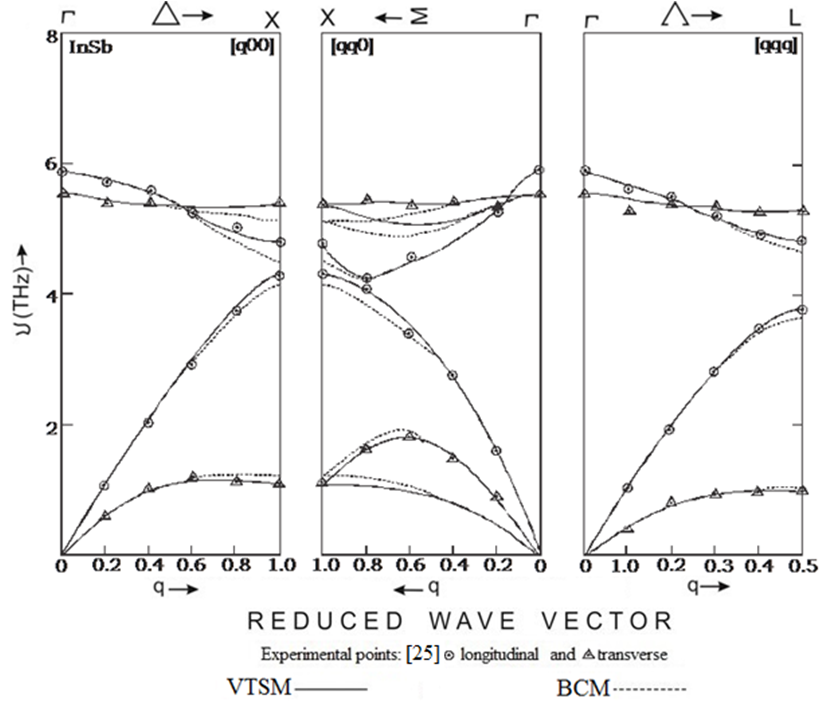
The values of the input data Price et al. [20], Banerjee and Varshni [16], Slutsky and Garland [39], Kunc et al. [40], Hass and Henvis [41] and calculated VTSM model parameters have been shown in Table 1. The values of Ai, Bi, Ci calculated from the knowledge of b, ρ; the values of various order of derivatives of f(r0) and van der Waal’s coupling coefficients. The values of VDW coefficients used by us in the present study have been determined using SKV method [42] as suggested by Singh and Singh [43] and reported by Sharma and Verma [44]. Thus our model parameters are [b, ρ, f(r0), r0f '(r0), A12, A11, A22, B12, B11, B22, d1, d2, Y1 and Y2]. The values of the VDW coefficients are shown in Table 2. Our model parameters of VTSM used to compute the phonon spectra of InSb for allowed 48 non-equivalent wave vectors in the first Brillouin zone. The frequencies along the high symmetry directions [q00], [qq0] and [qqq] were plotted against the wave vector to obtain the phonon dispersion curves (PDCs). These curves were compared with measured by coherent inelastic neutron scattering technique [45] especially TA modes are very much different not only from ours but from BCM calculations of Rajput and Browne [45] alongwith in Figure 1. Since the neutron scattering experiments provide us very few data for the symmetry directions, we have also computed CDS and the Debye temperature variation for the complete description of the frequencies for the Brillouin zone.

 Download as

 Download as
 Download as
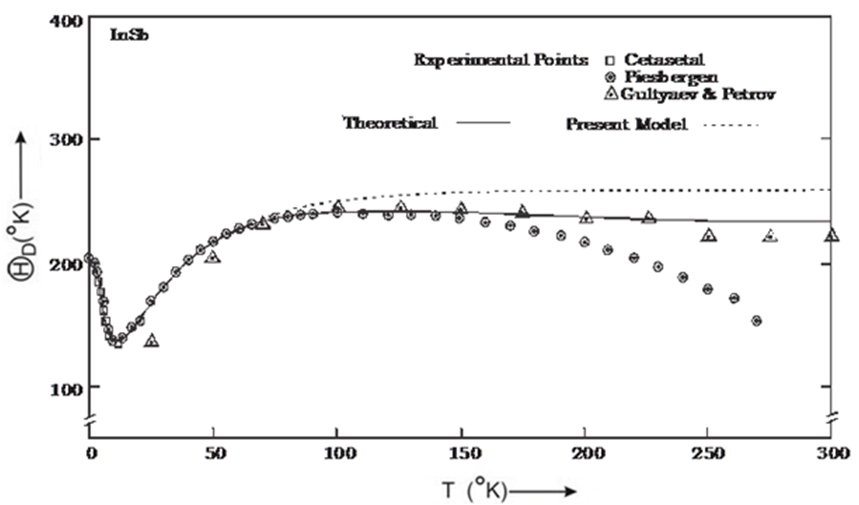
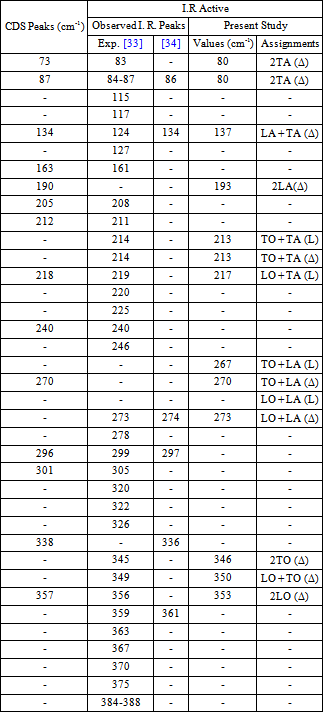
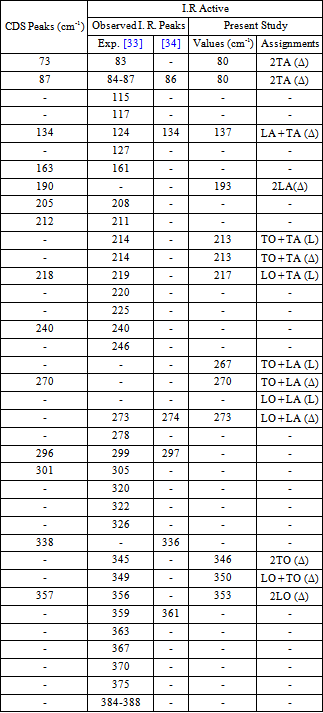
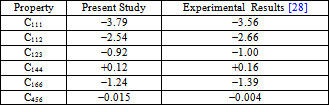
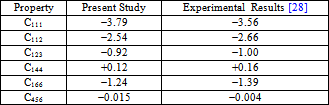
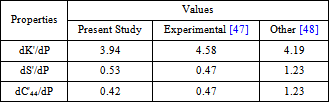
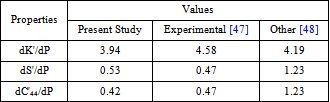
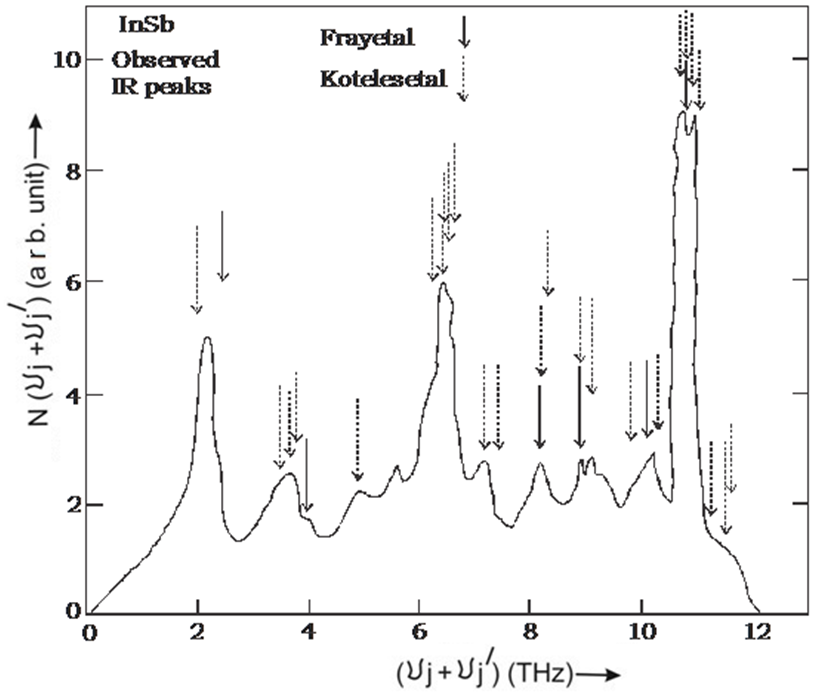
The complete phonon spectra were used to compute the combined density of states CDS, N(υj+υj) corresponding to the sum modes (υj+υj) following procedure of Smart et al. [46]. A histogram between N(υj+υj) and (υj+υj) has been plotted and smoothed out as shown in Figure 2. These curves show well defined peaks which correspond to two-phonon IR spectra. These CDS peaks have been compared with the assignments calculated and shown in Table 3. The Debye temperature variation for InSb measured from [16, 29, 30, 31, 32] and those calculated by us using VTSM has been compared in Figure 3. The measured values of TOEC by Sadao [28] shown in Table 4. The measured values of pressure derivatives of SOEC by Peresada [47] have also been calculated us compared with these calculated by Ford et al. [48] in Table 5.
3. Results and Discussion
3.1. Phonon Dispersion CurvesFrom Figure 1, our phonon dispersion curves for InSb agree well with measured data reported by Price et al. [20]. It is evident from PDC that our predictions using present model VTSM are better than those by using BCM [25]. Our model has successfully explained the dispersion of phonons along the three high symmetry directions. From Figure 1 and Table 6, it is clear that: there are deviations of 5.26% along LO(X), 2.98% along TO(X), 1.16% along LA(X), 5.36% along TA(X), 1.87% along LO(L), zero% along TO(L), 3.94% along LA(L), 5.10% along TA(L) and 0.57% along LO(Δ), 1.72% along LA(Δ), zero% along TA(Δ) from experimental results. From BCM, deviations are 5.26% along LO(X), 4.27% along TO(X), 1.16% along LA(X), 7.14% along TA(X), 2.49% along LO(L), 0.19% along TO(L), 4.20% along LA(L), 7.14% along TA(L) and 0.95% along LO(Δ), 1.72% along LA(Δ), zero% along TA(Δ). From Table 6 it is clear that VTSM has very small deviation from experimental data. Our model, VTSM has 5.26% along LO(X), 5.36% along TA(X) and 5.10% along TA(L) improvement over BCM due to inclusion of TBI and VDWI coefficients. Thus, our VTSM model has better agreement with experimental data over BCM [25].
3.2. Combined Density of StatesThe present model is capable to predict the two phonon IR spectra [33, 34]. The results of these investigations for CDS peaks have been presented in Figure 2. The theoretical peaks are in good agreement with both observed IR spectra for InSb. The assignments made by the critical point analysis have been shown in Table 3. The interpretation of IR spectra achieved from both CDS approach and critical point analysis is quite satisfactory. This explains that there is an excellent agreement between experimental data and our theoretical results.
Table 1. Input data and model parameters for InSb [Cij and B (in 1011 dyne/cm2), (in THz), r0 (in 10-8 cm),αi (in 10-24 cm3), b (in 10-12 erg), (in 10-8 cm)]


, (in THz), r0 (in 10-8 cm),αi (in 10-24 cm3), b (in 10-12 erg), (in 10-8 cm)])
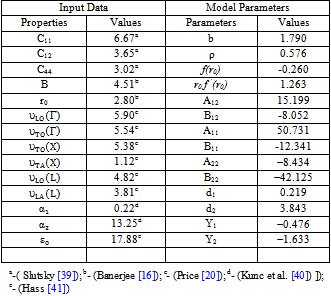


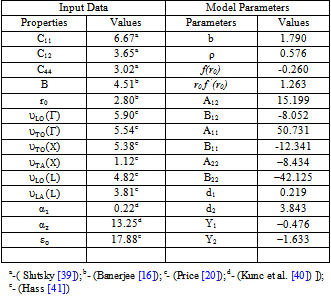
Table 2. van der Waal’s Interaction Coefficients for InSb (Cij and C in units of 10-60 erg cm6 and dij and D in units of 10-76 erg cm8)

)
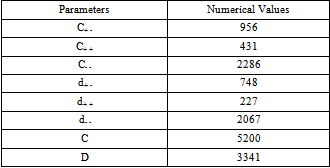
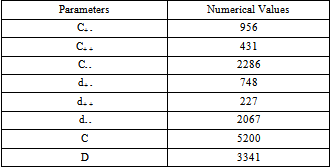

Table 3. Assignments for the observed peak positions in Combined Density of States in terms of selected phonon frequencies at , X and L critical points for InSb



 for InSb)

 for InSb)

 for InSb)


Our calculations on TOEC are reported in Table 4 and compared with measured data of Sadao [28] on TOEC of InSb. Further, pressure derivatives of SOEC for InSb have also been compared with the calculated results of Ford et al. [48] and measured data of Peresada [47] as shown in Table 5. The results are in good agreement.
3.4. Debye Temperature VariationFrom Figure 3, our study shows a better agreement with the measured data of Banerjee, Gultyaev, Cetas, Piesbergen and Passler [16, 29, 30, 31, 32] and the theoretical results reported by Rajput and Browne [45] using BCM. To conclude, we can say that our present model gives a better interpretation of the Debye temperatures variation for InSb.
4. Conclusion
The inclusion of VDWI with TBI has influenced both the optical branches and the acoustic branches. Another striking feature of present model is the excellent reproduction of almost all branches. Hence the prediction of PDC for InSb using VTSM may be considered more satisfactory than from other models BCM [45]. The basic aim of the study of two phonon IR spectra is to correlate the neutron scattering and optical measured data of InSb. In this paper, we have systematically reported phonon dispersion curves, combined density of states, Debye temperature variation and a part of harmonic and anharmonic properties of InSb. On the basis of overall discussion, it is concluded that our VTSM is adequately capable of describing the crystal dynamics of InSb. This model has also been applied equally well to study the crystal dynamics of other compound of this group InP and InAs.
Acknowledgements
The author One of us J. P. Dubey is very grateful to Dr. Pramod Kumar Pandey, Professor in department of Physics, Pt. S. N. S. Govt. P. G. College (Auto.), Shahdol (M.P.), India for many useful discussions and the computer center, B. H. U., Varanasi, for providing computational assistance and also thankful to Dr. Devendra Pathak, Vice chancellor, Dr. K. N. Modi University Newai, Rajasthan, India for encouragement.
References
| [1] | Born M. and Huang K., Dynamical Theory of Crystal Lattices, Oxford University Press 1954. | ||
 In article In article | PubMed | ||
| [2] | Maradudin A. A., Montroll E. and Weiss J., Theory of Lattice Dynamics in the Harmonic Approximation, Supplement 3, Solid State Physics, Academic Press, New York 1963-1964. | ||
| In article | |||
| [3] | Henion B., Moussa F., Pepy G. and Kunc K., Phys. Lett., 36 A, 376, 1971. | ||
| In article | |||
| [4] | Farr M. K., Traylor J.G. and Sinha S. K., Lattice dynamics of GaSb, Phys. Rev B, 11pp 1587-1594, 1975. | ||
| In article | |||
| [5] | Vegelatos N., Wehe D. and King J. S., J. Chem. Phys. 60, 3613, 1974. | ||
| In article | View Article | ||
| [6] | Vetelinos J. F., and Mitra S. S., Phys. Rev. 178, 1349, 1959. | ||
| In article | View Article | ||
| [7] | Vetelino J. F., Mitra S.S. and Namjoshi K.V., Phys. Rev., B2, 967, 1970. | ||
| In article | View Article | ||
| [8] | Vetelino J. F., Mitra S. S., Brafman O. and Damen T. C., Solid State Comm., 7, 1809, 1969. | ||
| In article | View Article | ||
| [9] | Dick B. G. and Overhauser A.W., Phys. Rev., 112, 90, 1958. | ||
| In article | View Article | ||
| [10] | Cochran W., Proc. Roy. Soc. (London), A253, 260, 1959; Adv. Phys., 9, 387, 1960. | ||
| In article | View Article | ||
| [11] | Kuncher T. I. and Tolpygo K. B., Sov. Phys. Solid State, 4, 729, 1962; 8, 261, 1966. | ||
| In article | |||
| [12] | Kuncher T. I., Sov. Phys. Semicond., 2, 98, 1968. | ||
| In article | |||
| [13] | Tolpygo K. B., Sov. Phys. Solid State, 3, 98, 1961. | ||
| In article | |||
| [14] | Oskot-Skii V. S. and Efros A. L., Sov. Phys. Solid Stae, 3, 448, 1961. | ||
| In article | |||
| [15] | Kittel C., Introduction to Solid State Physics, John Willey and Sons, New York, Chap. 3, 1968. | ||
| In article | PubMed | ||
| [16] | Banerjee R. and Varshni Y. P., Canad. J. Phys., 47, 451, 1969. | ||
| In article | View Article | ||
| [17] | Banerjee R. and Varshni Y. P., J. Phys. Soc. of Japan, 30, 1015, 1971. | ||
| In article | View Article | ||
| [18] | Talwar D. N. and Agrawal B. K., Phy. Rev. B8, 693, 1972. | ||
| In article | |||
| [19] | Talwar D. N. and Agrawal B. K., Solid State Comm., 11, 1691, 1972. | ||
| In article | View Article | ||
| [20] | Price D. L., Rowe J. M. and Nicolow R. M., Phys. Rev., B3, 1268, 1971. | ||
| In article | View Article | ||
| [21] | Feldkamp L. A., Steiman D. K., Vegalatos N., King J. S. and Venkataraman G. J., J. Phys. Chem. Solids 32, 1573, 1971. | ||
| In article | View Article | ||
| [22] | Garg V. K., Puriand D.S. and Verma M. P., Phys. Stat. Sol. (b) 87, 401, 1978. | ||
| In article | View Article | ||
| [23] | Singh R. K., and Verma M. P., Phys. Stat. Sol. 36, 335, 1969; 38, 851, 1970. | ||
| In article | |||
| [24] | Singh R. K., Many body interactions in binary ionic solids. Physics Report (Netherlands) 85, 259, 1982. | ||
| In article | View Article | ||
| [25] | Weber W., Phys. Rev. Lett. 33, 371, 1974. | ||
| In article | View Article | ||
| [26] | Hardy J. R., Phil. Mag. 4, 1278, 1959. | ||
| In article | View Article | ||
| [27] | Weber W., Phys. Rev. Lett. 33, 371, 1974. | ||
| In article | View Article | ||
| [28] | Sadao adachi semiconductor wiley in materiala for electronic and opto electronic application department of electronic engineering Gunma University, Japan 1965. | ||
| In article | |||
| [29] | Gultyaev P. V. and Petrov A. V., Sov. Phys. Sol. Stat. 1, 330, 1959. | ||
| In article | |||
| [30] | Cetas T. C., Tilford C. R. and Swenson C. A., Phys. Rev. 174, 835, 1968. | ||
| In article | View Article | ||
| [31] | Piesbergen U., semiconductor and Semimetals 2, 49, 1966. | ||
| In article | |||
| [32] | Passler S. R., AIP Advances 3, 082108, 2013. | ||
| In article | View Article | ||
| [33] | Koteles E. S. and Datars W. R., Phys. Rev. B 9, 572, 1974. | ||
| In article | View Article | ||
| [34] | Fray S. J., Johnson F. A. and Jones R. Proc. Phys. Soc. London, 76, 939, 1960. | ||
| In article | View Article | ||
| [35] | Pandey S. C., Dubey J. P. and Upadhyaya K. S., Jour. of Appl. Phys. 8, 01, 2016. | ||
| In article | |||
| [36] | Dubey, J. P., Tiwari, R. K., Upadhaya, K. S. and Pandey P. K., Turk. J. Phys. 39, 242 2015. | ||
| In article | View Article | ||
| [37] | Dubey J. P., Tiwari R. K., Upadhaya, K. S. and Pandey, P. K., Jour. of Appl. Phys. 7, 67 2015. | ||
| In article | |||
| [38] | Dubey J. P., Tiwari R. K., Upadhaya K. S. and Pandey P. K., Turk. J. Phys. in press 2016. | ||
| In article | |||
| [39] | Slutsky J. and. Garland, C. W Phys. Rev. 113, 167, 1959. | ||
| In article | View Article | ||
| [40] | Kunc K., Balkanski M. and Nusimovici, M. A. Phys. Stat. Sol. (b) 79, 229, 1975. | ||
| In article | View Article | ||
| [41] | Hass M. and Henvis B. W. J. Phys. Chem. Sol. 23, 1099, 1962. | ||
| In article | View Article | ||
| [42] | Slater J. C. and Kirkwood J. G., Phys. Rev. 37, 682, 1931. | ||
| In article | View Article | ||
| [43] | Singh R. K. and Khare P., J. Phys. Soc. Japan 51, 141, 1982. | ||
| In article | View Article | ||
| [44] | Sharma U. C. and Verma M. P., Phys. Status Solidi (b) 102, 487, 1980. | ||
| In article | View Article | ||
| [45] | Rajput B. D. and Browne D. A., Phys. Rev. B 53, 9052, 1996 | ||
| In article | View Article | ||
| [46] | Smart C., Wilkinson G. R., Karo A. M. and Lattice Dynamics, edited by R. F. Wallis 1965 ( Pergamon Press oxford). | ||
| In article | |||
| [47] | Peresada G. I., Soviet, Phys. Sol. Stat. 14, 1546, 1972. | ||
| In article | |||
| [48] | Ford P. J., Miller A. J., Saunder G. A., Yogurteu Y. K., Furdyana J. K. and. Jeezynski M. J, Sol. Stat. Phys. (C) 15, 657, 1982. | ||
| In article | View Article | ||
 CiteULike
 Mendeley
 StumbleUpon
 Delicious
 Facebook
 Twitter
 LinkedIn


 as a function of temperature T for InSb)