For the growth and maintenance of human health and balance, calories derived from mineral and organic matter from agriculture, fishing and livestock farming are required. Products such as cereals, vegetables, fruits and spirulina are only available during certain periods of the year, whereas food requirements extend throughout the year. It is therefore necessary and important to preserve a certain number of products for consumption throughout a desired season. The main difficulty associated with product preservation is the presence of water, which often promotes the growth of bacteria, yeasts and molds. In the case of spirulina drying in particular, several drying technologies are being studied to improve the quality of the dried spirulina, while reducing drying time and preserving the characteristics of the product. The objective of this work is twofolds; firstly, to review the state of art of spirulina drying technologies studied in various part of the world, and secondly, to identify the best technologies suited to countries with high solar potential and, above all, limited resources, such as Chad.
Spirulina is photosynthetic filamentous cyanobacterium belonging to the group of aquatic microorganisms. It naturally develops in alkaline waters and has been consumed for centuries, notably by the Aztecs of Mexico and the populations around Lake Chad, in the form of cakes called dihé. Spirulina is recognized for its exceptional richness in protein, vitamins, minerals, essential fatty acids, and bioactive pigments such as phycocyanin 1, 2. Due to its composition, it is used in the fight against malnutrition and nutritional deficiencies 3. Possessing antioxidant, anti-inflammatory, immunostimulants, hepatoprotective and cholesterol-lowering properties 4, 5, it contributes to the prevention of certain cardiovascular 6, 7, hepatic and inflammatory diseases 8.
In cosmetics, it is valued for its anti-aging, moisturizing, regenerating, and protective effects on the skin and hair. However, its high-water content makes it highly perishable and susceptible to microbiological degradation. To ensure proper preservation, several techniques can be used, including refrigeration, freezing, or drying. The latter remains the most widely used technique due to its effective control over the years. Furthermore, numerous studies have shown that the choice of drying method has a direct impact on the nutritional quality of spirulina’s compounds. In this context, the present article aims to review the main spirulina drying technologies, to present the evolution of research on the influence of these technologies on the preservation of nutritional qualities of spirulina and to draw a conclusion based on the analysis of the study conducted by the different authors presented.
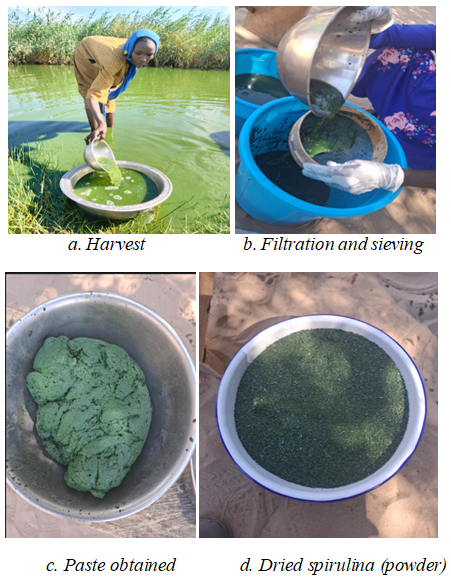
Spirulina is naturally cultivated (pounds) or artificially (photobioreactors) in a nutriment-rich environment containing the elements and minerals essential for its growth. Harvesting is carried out by extraction, which consists of extraction the spirulina suspension combined with the culture medium before filtration or sieving. During this filtration step, the algal suspension passes through fine meshes that retain the spirulina filaments. The resulting paste is pressed to reduce its water content before the drying operation. This is the pre-hydration phase, which produces a green-colored paste that constitutes the product to be dried. The images below were taken by us at the study site in the canton of Isseirom (Chad).

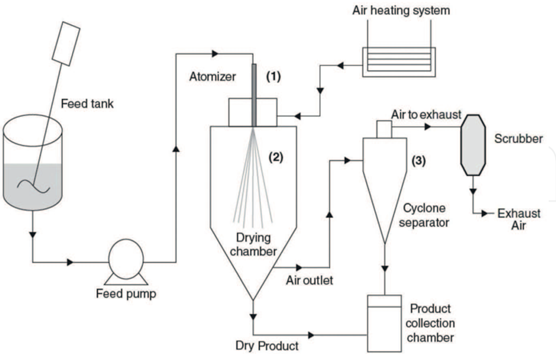
Spray drying, or atomization, is one of the most widely used drying techniques in industry. It makes it possible to directly produce a powder from a liquid suspension solution, an emulsion, or even a paste, provided the feed can be easily pumped 9. During spray drying, a gas generally hot air is used to provide the liquid with the energy required to evaporate the water and to transport the vapor 10. Spray drying consists of three stages: atomization through the production of a mist of droplets; drying of these droplets; and separation/recovery of the final dried powder.

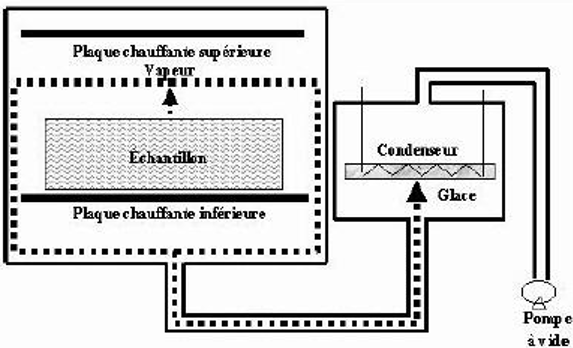
Freeze drying is a low-temperature drying process used to remove water contained in a product. It consists of three stages: freezing, which transforms the water contained in the product into ice; sublimation; which transforms the ice into vapor; and finally, desorption which removes the water molecules trapped on the surface of the dried products 12. A vacuum pump is used to extract the water vapor released by the sample 13.

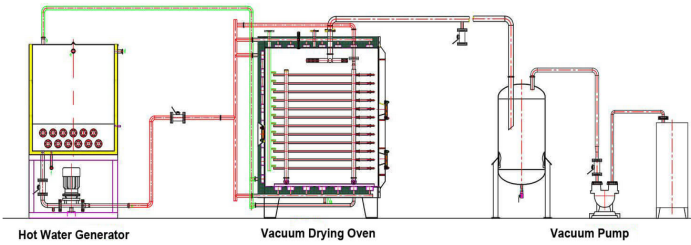
Vacuum drying is similar to the freeze drying process, with the difference that the product is dried by evaporation rather than sublimation, using vacuum to transition the product from the liquid to a solid state 15.

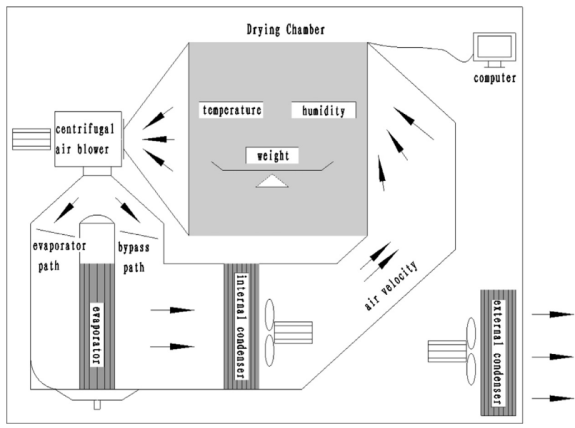
Heat pump drying (HPD) is a convection drying process in which air dehumidification is carried out by a heat pump. This type of system consists primarily of two elements: an enclosed chamber (where the products to be dried are placed), and a heat pump (refrigeration unit). The products are arranged on trays or stacked drawers 17.

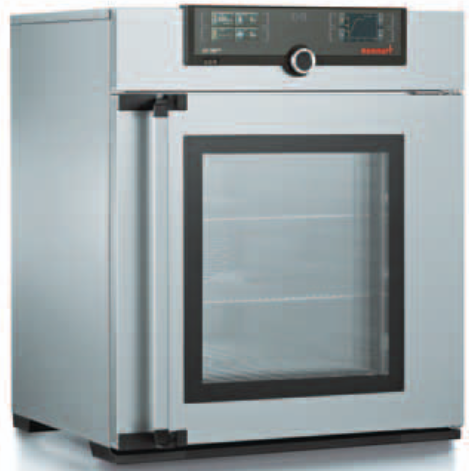
An oven (laboratory or industrial) is an equipment that maintains a controlled, stable, and homogeneous temperature environment, used to heat a product and remove its moisture.
The operating principle is based on heat transfer by convection. Ambient air is heated by electrical heating elements and then circulated inside the working chamber

A rotary dryer consists of an inclined drum that slowly rotates at a progressive angle and is equipped with internal scrapers. Hot air or gas flows through the drum, and the materials are dried as fall into this airflow 20.
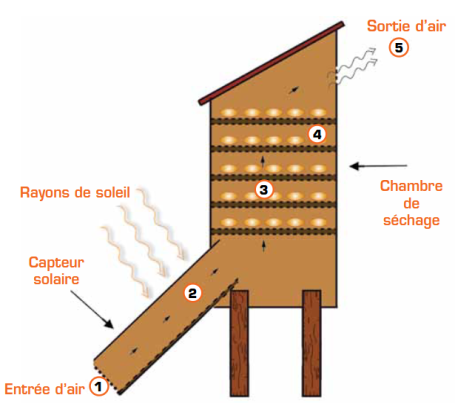
2.8. Solar DryersSolar dryers are devices that use solar radiation to dehydrate a product. When the product is directly exposed to solar rays, it is referred to as a direct solar dryer. When the products are placed in a drying chamber through which air heated in a collector (or solar collector) flow, it is referred to as an indirect dryer solar dryer. The hot air coming from the solar collector can rise naturally (natural convection) or be moved by a fan (forced convection).
In 2023, Nevers et al. 22 conducted a literature review of different drying methods used for microalgae intended for human consumption, in order to highlight the impact of drying on the nutritional and functional qualities of the resulting product. To narrow the topic and follow the same approach as this study, ten (10) articles exclusively focusing exclusively on spirulina were selected. The synthesis of these articles addressed various aspects.
First, articles 23 and 24 showed that drying spirulina is a compromise between reducing moisture, preserving nutritional quality (phycocyanin, phenolic compound and antioxidants) and obtaining an edible product. In these articles, the recommended temperatures for better preserving nutritional qualities ranged between 40 and 55 °C whereas higher temperatures allow for a faster drying but destroy smoe sensitive compounds.
Next, from a technological standpoint, articles 23, 25, 26, 27, 28 compared spirulina drying methods including convective drying, vacuum drying, heat pump drying, jet bed drying, foam-mat drying; infrarouge, lyophilization and spray drying. These authors concluded that freeze-drying preserves proteins and sugars more effectively, but it remains a costly method. Vacuum drying at 40 °C results in better quality with minimal loss of phycocyanin, low lipid oxidation and good rehydration. Heat pump drying also appears promising as it allows for operation at a moderate temperature with dehumidified air.
Elizangela G. Oliveira et al. 29, also, studied convective drying, showing that temperature, layer thickness and air velocity have a considerable impact on the kinetics and quality of dried spirulina. They determined an optimized condition for a temperature of 55°C and a layer thickness of 3.7 mm. This condition helps limit phycocyanin losses which still remain at 37% requiring further improvement.
Finally, articles 30, 31 considered the physical aspect of spirulina during the drying operation. This involved shrinkage porosity and density. They concluded that spirulina is very porous with a final porosity ranging between 68 and 80 %.
These considerations were completed by twenty (20) other articles on the same developed theme.
3.2. Solar Drying of SpirulinaA list of four (4) articles focused on solar drying of spirulina. This formed a basis as they addressed the description of solar dryers, the optimization of operating conditions and their impact on bioactive compounds.
The indirect solar dryer comprising a solar collector heating the air before it enters a drying chamber containing spirulina in the form of a cylinder (spaghetti) was used in the work of Joao Paulo Siqueira Silva et al. 32. This is to study the influence of airflow and mass load on dying time and quality of the dried product. For a temperature ranging between 34 and 42 °C the drying time is approximately 3 hours and 30 minutes. These authors also conclude that it is difficult to simultaneously maximize all bioactive compounds with a single optimal condition.
Another cabin-type solar dryer which two of whose drying chamber walls are made of glass to also capture radiation was the subject of studies carried out by J. Prakash et al. 33. This simple model to make, allowed for the drying of good quality spirulina with a moisture value of less than 10 %. The drying time is between 3 and 5 hours depending on the level of sunlight.
The studies carried out by Mohamed Fterich et al. 34 focused on improving a solar dryer equipped with a photovoltaic/thermal (PVT) system using a heat exchanger. This system increases the thermal efficiency of the drying process by recovering heat. The heat exchanger has raised the internal temperature of the dryer from 48° to 53°C.
Comparing accelerated solar drying (ASD) with vacuum drying was the objective of the study conducted by Sofia Papadaki et al. 35. For this purpose, fresh spirulina (phycocyanin: 4.928 %; chlorophyll a: 320.433 mg/g and carotenoids: 197.219 mg/g) was dried using both technologies to determine the influence of each on the dried product by measuring the phycocyanin, carotenoid and chlorophyll content. After drying they found that the phycocyanin content was 0.221 % with vacuum drying and 0.485 % with ASD. However vacuum drying resulted in better preservation of carotenoids at 55.79 mg/g compared to 19.353 mg/g with ASD. Vacuum drying also gives a good chlorophyll level of 71. 61 mg/g compared to 36. 644 mg/g in ASD.
This part is completed by a study on the technical and economic viability of solar drying by R. López Pastor et al. 36. For them, the production of microalgae, including spirulina, varied according to the season as did the amount of sunshine. This correlation makes the use of solar energy particularly suitable for drying. To support their claims, the authors chose a solar collector inclined at 30° operating with an air recirculation system at a maximum temperature of 70°C and a spray dryer. They concluded that the overall drying cost is 1.16 €/kg for the solar system versus 2. 37 €/kg for a spray dryer.
3.3. Recent Techniques and ComparisonA comparison was made between heat pump drying (HPD) and conventional tray drying (CTD) 37. The experiments were conducted at temperatures of 50° and 60°C. The authors observed that at 50 °C high-pressure drying (HPD) reduced drying time by 40 % due to the higher absolute humidity of the air within the HPD chamber. Under these conditions phycocyanin levels were approximately 14 % higher than with conventional drying while phenolic compounds and antioxidant activity were 60 % and 10 % respectively higher.
Silva and al published an article on the evaluation of internal bed rotary dryers in 2019 38. Starting with temperatures ranging from 40° to 100°C these authors were able to dry a spirulina paste containing 88% water to extract the bioactives compounds (phycocyanin, phenolics, flavonoids, etc.). They conclude that the internal bed rotary dryer is a promising alternative for drying paste microalgae, particularly spirulina.
Abou El-Kheir et al. 39 focused their work on determining the best drying temperature for spirulina for use in fish feed. Using open air drying in an oven, the authors concluded that a temperature of 120°C reduces drying time and preserves proteins, amino acids, lipids, carbohydrates and fibers.
The analysis of the characteristics of thin film drying of spirulina and sorption isotherms is the subject of the study carried out in 2009 40. The authors used perpendicular convective drying and demonstrated that the temperature and thickness of the biomass thickness influence the final quality of the product. Also, the best performance is, also, obtained at around 60°C with a load of 4kg/m². Under these conditions the dried product had a protein content of 64 % and phycocyanin content of 12.6%.
Teresa Papalia et al. 41 studied the effect of different methods of preserving spirulina (freezing, oven drying and freeze-drying) on bioactive compounds. Thes results indicate that freezing better protects certain bioactive components, while freeze-drying preserves more of the overall nutritional quality. They conclude that the preservation method strongly influences the functional value of spirulina.
The work of Ricardo S. Pohndorf et al. 42 focuses on the influence of drying, cell rupture and lipid extraction from spirulina for the potential production of biofuels. For this, two dryers are used: the tray dryer (55°C) and (110°C). Before drying, the biomass is pressed (76 % water) and introduced into the dryer with a thickness of 4 mm. This made it possible to extract up to 5. 8/100 g of lipid with the jet bed dryer.
Four (4) drying methods are compared 43 namely atmospheric drying, solar drying, vacuum drying and freeze-drying at different temperatures and times. A mass of 0.5 cm (15g) was used for drying through these 4 methods. The results showed that freeze-drying better preserves nutritional properties while vacuum drying offers a good compromise between quality and time.
Finally, Demarco M. et al. 44 studied the different spirulina drying techniques to identify a method capable of preserving nutritional quality while specifying the cost and production time. They compare air drying (AD), freeze-drying (FD), cast-tape drying (CTD) and vacuum cast – tape drying (VCTD). VCTD is an innovative technique proposed in this study that involves drying spirulina using a device consisting of an aluminum container supplied with hot water via a thermostatic bath. This technique proved effective because it combines speed, reliability, cost-effectiveness and excellent preservation of the dried spirulina’s quality.
A summary presented in tabular form covered the objectives of the study and the drying conditions with the results obtained
Analysis of the work presented in the table above has led to the following observations:
Drying is an essential step for preserving spirulina given its high-water content which makes it highly perishable. To date, no single technology makes it possible to simultaneously meet the criteria of low cost, low energy consumption and optimal preservation of all nutritional components.
Hot-air convective drying remains the most widely used process due to its simplicity, but it often leads to the degradation of heat-sensitive compounds. Several authors report that this technology leads to significant degradation of compounds such as phycocyanin at high temperatures. Consequently, the optimal temperatures are around 50 °C.
Vacuum techniques ensure better preservation of proteins, pigments and antioxidants but their generally high cost limit their use to the laboratory scale.
Studies on heat pump drying demonstrate better preservation of bioactive compounds thanks to low operating temperature ranges and air dehumidification. Furthermore, few studies have evaluated the economic performance of this technology.
Research on freeze-drying confirms that this technique ensures the best preservation of proteins, pigments and antioxidants.
However, its high-cost, high energy consumption and long processing times limit its use. It therefore remains a technique that is difficult to apply for large-scale industrial production
Emerging technologies such as infrared drying, fluidized bed drying and spray drying, offer promising potential but require further research, as the data currently available from such studies remain limited.
Solar drying is a sustainable and cost-effective alternative, particularly suited to developing countries such as Chad, thanks to its low energy consumption and sustainable nature. Indirect solar drying systems generally produce a higher-quality product than direct solar drying which is exposed directly to sunlight. However, there performance of these systems is heavily dependent on weather conditions. This can lead to variations in quality across the different seasons.
For all these reasons and considering the context of Chad characterized by abundant sunshine throughout the year and had a long tradition of spirulina production and local consumption, solar drying offers significant potential for the sustainable valorization of biomass while reducing processing costs for local communities.
The literature review presented in this study focuses on the drying techniques used for spirulina. Throughout this presentation, the aim is to understand each technology and to identify those that can be applied in developing countries like Chad, where there is significant solar potential.
Furthermore, the study revealed that it is practically difficult to find a technology that balances cost, time and the nutritional qualities of the product. When it comes to drying spirulina, it is important to strike a balance when selecting these technologies to ensure optimal drying of the spirulina.
| [1] | Goulamabasse Tessine Raza, «La spiruline: Activités thérapeutiques et son intérêt dans la lutte contre la malnutrition à Madagascar. Université de Lille», Thèse de Doctorat, Université de Lille, 135, juin 2018. | ||
| In article | |||
| [2] | Tomas Lafarga, José María Fernández-Sevilla, Cynthia González-López, and Francisco Gabriel Acién-Fernández, «Spirulina for the food and functional food industries», 137(4), mai 2020. | ||
| In article | View Article PubMed | ||
| [3] | M. Halidou Doudou, H. Degbey, H. Daouda, A. Leveque, P. Donnen, P. Hennart, M. Dramaix-Wilmet, «Supplémentation en spiruline dans le cadre de la réhabilitation nutritionnelle : revue systématique,» Revue d’Epidémiologie et de Santé Publique, 56 (2008), pp 425–431, nov. 2008. | ||
| In article | View Article PubMed | ||
| [4] | Mamoudou Barry, Moussa Ouedraogo, Seydou Sourabie et Inocent Pierre Guissou, « Intérêt thérapeutique de la spiruline chez l’homme : revue générale ». International Journal of Biological and Chemical Sciences, 8(6), pp 2740-2749, nov. 2014. | ||
| In article | View Article | ||
| [5] | Kawalpreet Kaur and Saranjeet Kaur, «Spirulina – a wonder nutraceutical against cancer: A review». Plant Archives, 21 (1) pp. 1333-1338, 2021. | ||
| In article | View Article | ||
| [6] | Joanna Arthur-Ataam, Patrice Bideaux, Azzouz Charrabi, Pierre Sicard, Bérengère Fromy, Kiaoling Liu, Saadia Eddahibi, Côme Pasqualin, Nicolas Jouy, Sylvain Richard and Anne Virsolvy. «Dietary supplementation with silicon-enriched spirulina improves arterial remodeling and function in hypertensive rats». Nutriments 2019, 11, 2574, oct. 2019. | ||
| In article | View Article PubMed | ||
| [7] | Jesús Martínez-Sámano, Adriana Torres-Montes de Oca, Oscar Ivan Luqueño-Bocardo, Patricia V. Torres-Durán and Marco A. Juárez-Oropeza. «Spirulina maxima Decreases Endothelial Damage and Oxidative Stress Indicators in Patients with Systemic Arterial Hypertension: Results from Exploratory Controlled Clinical Trial. Marine Drugs, 2018, 16, 496, dec. 2018. | ||
| In article | View Article PubMed | ||
| [8] | M. Coué, J. Falewee, A. Tesse, L. Fizanne, M. Krempf, J.M. Pommet, O. Lépine, K. Ouguerram, « Effets de l’extrait liquide de spiruline sur la stéatose hépatique », dans Congrès / Nutrition clinique et métabolisme 32 (4) 231–338, novembre 2018. | ||
| In article | View Article | ||
| [9] | https://fr.scribd.com › Manuel-Atomisation-3ACAP. [Consulté le 14 mai 2026. | ||
| In article | |||
| [10] | Alessandro Gianfrancesco, «Séchage par atomisation: propriétés de collage des particules en relation avec l’agglomération», Thèse de Doctorat, Institut des Sciences et Industries du Vivant et de l’Environnement (AgroParisTech), 229, 2009. | ||
| In article | |||
| [11] | Daniel Santos et al. «Spray Drying: An Overview», Chapter 2, In book Biomaterials – Physics and Chemestry – New Edition. 2018. | ||
| In article | View Article | ||
| [12] | https://www.miph.gov.dz/fr/wp-content/uploads/2022/06/u6-general-presentation-fr-28062022.pdf [Consulté le 13 mars 2026]. | ||
| In article | |||
| [13] | Mamoune El Himri, Abdelouahad El Himri, «La lyophilisation: une voie simple et efficace pour la préparation des nanomatériaux à basse température». Les technologies de laboratoires 5 (20), 2010. | ||
| In article | |||
| [14] | Mahacine Amrani, Amin Laglaoui. «Apport du procédé de lyophilisation sur la qualité des fraises marocaines». Scientifics study & research, VIII (3), 200. | ||
| In article | |||
| [15] | Pierre Verlhac. «Etude et optimisation des cycles de lyophilisation sur la qualité d’une souche probiotique modèle». Thèse de doctorat, Université de Lyon, mars, 2019. | ||
| In article | |||
| [16] | https: . [Consulté le 8 juin 2026] | ||
| In article | |||
| [17] | Centre Technique Agroalimentaire, «Technologie de séchage: séchage basse température - pompe à chaleur», décembre 2017 (10). | ||
| In article | |||
| [18] | Qilong Shi, Yaqin Zheng, Ya Zhao. « Mathematical modeling on thin-layer heat pump drying of yacon (Smallanthus sonchifolius) slices», Energy Conversion and Management, 70(2013), 208 – 216, 2013. | ||
| In article | View Article | ||
| [19] | Laboratoires Humeau. Etuves et armoires de séchage. | ||
| In article | |||
| [20] | https://carriervibrating.com/fr/resources/blog/5-types-of-industrial-drying-systems/ [Consulté le 12 juin 2026]. | ||
| In article | |||
| [21] | Christelle Souriam & David Amelin. Fabrication des cuiseurs et séchoirs solaires. Collection PRO – AGRO, 2014. | ||
| In article | |||
| [22] | Fábio de Farias Neves, Mariana Demarco and Giustino Tribuzi. «Drying and quality of microalgal powders for human alimentation», Microalgue – From Physiology to Application. | ||
| In article | |||
| [23] | A.P.Q. Larrosa, A.A. Comitre, L.B. VAZ and L.A.A. Pinto. «Influence of air temperature on physical characteristics and bioactive compounds in vacuum drying of artrospira spirulina», Journal of Food Process Engineering, 00(2026), 2016. | ||
| In article | View Article | ||
| [24] | Kyuya Nakagawa, Watadta Richaroen, Puchong Sri-Uam, Prasert Pavasant, Shuji Adachi, «Antioxidant properties of convective-air-dried Spirulina maxima: Evaluation of phycocyanin retention by a simple mathematical model of air drying», Food and Bioproducts Processing S0960 3085(16)30086-4, 2016. | ||
| In article | |||
| [25] | Aji Prasetyaningrum and Mohamad Djaeni, « Drying, Spirulina with Foam Mat Drying at Medium Temperature », Internat. J. of Sci. and Eng., 3(2), pp 1 – 3, 2012. | ||
| In article | View Article | ||
| [26] | Bruna R. Costa, Marla C. K. Rodrigues, Silva F. Rocha, Ricardo S. Pohndorf, Ana P. Q. Larrosa and Luiz A. A. Pinto. «Optimization of spirulina sp. Drying in heat pump: effects on the physicochemical properties and color parameters». Journal of Food Processing and Preservation, 2015. | ||
| In article | View Article | ||
| [27] | Ana Paula Quites Larrosa & Álisson Schons Camara & Ricardo Scherer Pohndorf & Silvia Faria da Rocha1 & Luiz Antonio de Almeida Pinto, «Physicochemical, biochemical, and thermal properties of Arthrospira (Spirulina) biomass dried in spouted bed at different conditions». J Appl Phycol. 2015. | ||
| In article | |||
| [28] | Hélène Desmorieux and Fabiola Hernandez, «Biochemical and physical criteria of spirulina after different drying processes». dans Proceedings of the 14th International Drying Symposium, August 2004, vol. B, pp. 900-907. | ||
| In article | |||
| [29] | Elizangela G. Oliveira, Jessica H. Duarte, Kelly Moraes, Valeria T. Crexi & Luiz A. A. Pinto. «Optimisation of Spirulina platensis convective drying: evaluation of phycocyanin loss and lipid oxidation», International Journal of Food Sciences & Technology, pp 572–1578, 2010. | ||
| In article | View Article | ||
| [30] | A.O. Dissa, H. Desmorieux, P.W. Savadogo, B.G. Segda, J. Koulidiati, «Shrinkage, porosity and density behaviour during convective drying of spirulina», Journal of Food Engineering, 97 (2010), pp 410 – 418, 2010. | ||
| In article | View Article | ||
| [31] | H. Desmorieux, J. Madiouli, C. Herraud, H. Mouaziz. «Effects of size and form of Arthrospira Spirulina biomass on the shrinkage and porosity during drying». Journal of Food Engineering, 100(2010), pp 585 – 595, 2010. | ||
| In article | View Article | ||
| [32] | Joao Paulo Siqueira Silva, Carlos Roberto Rodrigues Veloso, Marcos Antonio de Souza Barrozo, Luiz Gustavo Martins Vieira. «Indirect solar drying of Spirulina platensis and the effect of operating conditions on product quality», Algal Research, 60(2021), 2021. | ||
| In article | View Article | ||
| [33] | J. Prakash, B. Pushparaj, P. Carlozzi , G. Torzillo, E. Montaini & R. Materassi. «Microalgal biomass drying by a simple solar device», International Journal of Solar Energy, 18, pp 303 - 311 1996. | ||
| In article | View Article | ||
| [34] | Mohamed Fterich, Ahmed Saadeddine Souissi, Ezzeddine Touti, Hatem Bentaher, «Experimental and Numerical Study of the Performance Improvement of the Solar Dryer Equipped with PVT», Engineering, Technology & Applied Science Research, 14 (3), pp 13822-13829, 2024. | ||
| In article | View Article | ||
| [35] | Sofia Papadaki, Konstantina Kyriakopoulou, Marina Stramarkou, Ioannis Tzovenis, Magdalini Krokida. «Environmental Assessment of Industrially Applied Drying Technologies for the Treatment of Spirulina Platensis», Journal of Environmental Science, Toxicology and Food Technology, 11, pp 41 – 46, 2017. | ||
| In article | View Article | ||
| [36] | R. López Pastor, M.G. Pinna-Hernández, F.G. Acién Fernández, «Technical and economic viability of using solar thermal energy for microalgae drying», Energy Reports, 10 (2023), pp 989 – 1003, 2023. | ||
| In article | View Article | ||
| [37] | Bruna R. Costa, Silva F. Rocha, Marla C. K. Rodrigues, Ricardo S. Pohndorf, Ana P. Q. Larrosa & Luiz A. A. Pinto. «Physicochemical characteristics of the Spirulina sp. dried in heat pump and conventional tray dryers», International Journal of Food Science and Technology, 50, pp 2614 – 2621, 2015. | ||
| In article | View Article | ||
| [38] | Neiton C. Silva, Marcela V.C. Machado, Rodolfo J. Brandão, Cláudio R. Duarte, Marcos A.S. Barrozo, «Dehydration of microalgae Spirulina platensis in a rotary drum with inert bed», Powder Technology S0032-5910(19)30266-9, 2019. | ||
| In article | |||
| [39] | Abou El-Kheir, W. S; Ibrahim, E.A. Abd El-Razek, A. B. and Helal, A. M., «Effect of drying processes on biochemical contents of spirulina platensis as a protein source for fish diet». J. Environ. Sci, 32. Mar. 2016. | ||
| In article | View Article | ||
| [40] | E.G. Oliveira, G.S. Rosa, M.A. Moraes, L.A.A. Pinto, «Characterization of thin layer drying of Spirulina platensis utilizing perpendicular air flow». Bioresource Technology, 100 (2009), pp 1297–1303, 2009. | ||
| In article | View Article PubMed | ||
| [41] | Teresa Papalia, Rossana Sidari and Maria Rosaria Panuccio, Impact of Different Storage Methods on Bioactive Compounds in Arthrospira platensis Biomass» , Molecules 2019, 24, 2810. | ||
| In article | View Article PubMed | ||
| [42] | Ricardo S. Pohndorf, Alisson S. Camara, Ana P.Q. Larrosa, Cl audio P. Pinheiro, Monique M. Strieder, Luiz A.A. Pinto. «Production of lipids from microalgae Spirulina sp.: Influence of drying, cell disruption and extraction methods», Biomass and Bioenergy; 93 (2016), pp 25 – 32, 2016. | ||
| In article | View Article | ||
| [43] | Marina Stramarkou, Sofia Papadaki, Konstantina Kyriakopoulou, Ioannis Tzovenis, Marios Chronis & Magdalini Krokida, «Comparative analysis of different drying techniques based on the qualitative characteristics of spirulina platensis biomass», Journal of Aquatic Food Product Technology, 30 (5), pp 498 – 516, 2021. | ||
| In article | View Article | ||
| [44] | Demarco M. et al., «Production of Spirulina (Arthrospira platensis) powder by innovative and traditional drying techniques», Journal of Foof Process Engineering, 2021. | ||
| In article | View Article | ||
Published with license by Science and Education Publishing, Copyright © 2026 BEUNONE Davy, ABDELHAKIM Boukar, MAHAMAT Barka and ZOUTCHIBE Joseph
 This work is licensed under a Creative Commons Attribution 4.0 International License. To view a copy of this license, visit
http://creativecommons.org/licenses/by/4.0/
This work is licensed under a Creative Commons Attribution 4.0 International License. To view a copy of this license, visit
http://creativecommons.org/licenses/by/4.0/
| [1] | Goulamabasse Tessine Raza, «La spiruline: Activités thérapeutiques et son intérêt dans la lutte contre la malnutrition à Madagascar. Université de Lille», Thèse de Doctorat, Université de Lille, 135, juin 2018. | ||
| In article | |||
| [2] | Tomas Lafarga, José María Fernández-Sevilla, Cynthia González-López, and Francisco Gabriel Acién-Fernández, «Spirulina for the food and functional food industries», 137(4), mai 2020. | ||
| In article | View Article PubMed | ||
| [3] | M. Halidou Doudou, H. Degbey, H. Daouda, A. Leveque, P. Donnen, P. Hennart, M. Dramaix-Wilmet, «Supplémentation en spiruline dans le cadre de la réhabilitation nutritionnelle : revue systématique,» Revue d’Epidémiologie et de Santé Publique, 56 (2008), pp 425–431, nov. 2008. | ||
| In article | View Article PubMed | ||
| [4] | Mamoudou Barry, Moussa Ouedraogo, Seydou Sourabie et Inocent Pierre Guissou, « Intérêt thérapeutique de la spiruline chez l’homme : revue générale ». International Journal of Biological and Chemical Sciences, 8(6), pp 2740-2749, nov. 2014. | ||
| In article | View Article | ||
| [5] | Kawalpreet Kaur and Saranjeet Kaur, «Spirulina – a wonder nutraceutical against cancer: A review». Plant Archives, 21 (1) pp. 1333-1338, 2021. | ||
| In article | View Article | ||
| [6] | Joanna Arthur-Ataam, Patrice Bideaux, Azzouz Charrabi, Pierre Sicard, Bérengère Fromy, Kiaoling Liu, Saadia Eddahibi, Côme Pasqualin, Nicolas Jouy, Sylvain Richard and Anne Virsolvy. «Dietary supplementation with silicon-enriched spirulina improves arterial remodeling and function in hypertensive rats». Nutriments 2019, 11, 2574, oct. 2019. | ||
| In article | View Article PubMed | ||
| [7] | Jesús Martínez-Sámano, Adriana Torres-Montes de Oca, Oscar Ivan Luqueño-Bocardo, Patricia V. Torres-Durán and Marco A. Juárez-Oropeza. «Spirulina maxima Decreases Endothelial Damage and Oxidative Stress Indicators in Patients with Systemic Arterial Hypertension: Results from Exploratory Controlled Clinical Trial. Marine Drugs, 2018, 16, 496, dec. 2018. | ||
| In article | View Article PubMed | ||
| [8] | M. Coué, J. Falewee, A. Tesse, L. Fizanne, M. Krempf, J.M. Pommet, O. Lépine, K. Ouguerram, « Effets de l’extrait liquide de spiruline sur la stéatose hépatique », dans Congrès / Nutrition clinique et métabolisme 32 (4) 231–338, novembre 2018. | ||
| In article | View Article | ||
| [9] | https://fr.scribd.com › Manuel-Atomisation-3ACAP. [Consulté le 14 mai 2026. | ||
| In article | |||
| [10] | Alessandro Gianfrancesco, «Séchage par atomisation: propriétés de collage des particules en relation avec l’agglomération», Thèse de Doctorat, Institut des Sciences et Industries du Vivant et de l’Environnement (AgroParisTech), 229, 2009. | ||
| In article | |||
| [11] | Daniel Santos et al. «Spray Drying: An Overview», Chapter 2, In book Biomaterials – Physics and Chemestry – New Edition. 2018. | ||
| In article | View Article | ||
| [12] | https://www.miph.gov.dz/fr/wp-content/uploads/2022/06/u6-general-presentation-fr-28062022.pdf [Consulté le 13 mars 2026]. | ||
| In article | |||
| [13] | Mamoune El Himri, Abdelouahad El Himri, «La lyophilisation: une voie simple et efficace pour la préparation des nanomatériaux à basse température». Les technologies de laboratoires 5 (20), 2010. | ||
| In article | |||
| [14] | Mahacine Amrani, Amin Laglaoui. «Apport du procédé de lyophilisation sur la qualité des fraises marocaines». Scientifics study & research, VIII (3), 200. | ||
| In article | |||
| [15] | Pierre Verlhac. «Etude et optimisation des cycles de lyophilisation sur la qualité d’une souche probiotique modèle». Thèse de doctorat, Université de Lyon, mars, 2019. | ||
| In article | |||
| [16] | https: . [Consulté le 8 juin 2026] | ||
| In article | |||
| [17] | Centre Technique Agroalimentaire, «Technologie de séchage: séchage basse température - pompe à chaleur», décembre 2017 (10). | ||
| In article | |||
| [18] | Qilong Shi, Yaqin Zheng, Ya Zhao. « Mathematical modeling on thin-layer heat pump drying of yacon (Smallanthus sonchifolius) slices», Energy Conversion and Management, 70(2013), 208 – 216, 2013. | ||
| In article | View Article | ||
| [19] | Laboratoires Humeau. Etuves et armoires de séchage. | ||
| In article | |||
| [20] | https://carriervibrating.com/fr/resources/blog/5-types-of-industrial-drying-systems/ [Consulté le 12 juin 2026]. | ||
| In article | |||
| [21] | Christelle Souriam & David Amelin. Fabrication des cuiseurs et séchoirs solaires. Collection PRO – AGRO, 2014. | ||
| In article | |||
| [22] | Fábio de Farias Neves, Mariana Demarco and Giustino Tribuzi. «Drying and quality of microalgal powders for human alimentation», Microalgue – From Physiology to Application. | ||
| In article | |||
| [23] | A.P.Q. Larrosa, A.A. Comitre, L.B. VAZ and L.A.A. Pinto. «Influence of air temperature on physical characteristics and bioactive compounds in vacuum drying of artrospira spirulina», Journal of Food Process Engineering, 00(2026), 2016. | ||
| In article | View Article | ||
| [24] | Kyuya Nakagawa, Watadta Richaroen, Puchong Sri-Uam, Prasert Pavasant, Shuji Adachi, «Antioxidant properties of convective-air-dried Spirulina maxima: Evaluation of phycocyanin retention by a simple mathematical model of air drying», Food and Bioproducts Processing S0960 3085(16)30086-4, 2016. | ||
| In article | |||
| [25] | Aji Prasetyaningrum and Mohamad Djaeni, « Drying, Spirulina with Foam Mat Drying at Medium Temperature », Internat. J. of Sci. and Eng., 3(2), pp 1 – 3, 2012. | ||
| In article | View Article | ||
| [26] | Bruna R. Costa, Marla C. K. Rodrigues, Silva F. Rocha, Ricardo S. Pohndorf, Ana P. Q. Larrosa and Luiz A. A. Pinto. «Optimization of spirulina sp. Drying in heat pump: effects on the physicochemical properties and color parameters». Journal of Food Processing and Preservation, 2015. | ||
| In article | View Article | ||
| [27] | Ana Paula Quites Larrosa & Álisson Schons Camara & Ricardo Scherer Pohndorf & Silvia Faria da Rocha1 & Luiz Antonio de Almeida Pinto, «Physicochemical, biochemical, and thermal properties of Arthrospira (Spirulina) biomass dried in spouted bed at different conditions». J Appl Phycol. 2015. | ||
| In article | |||
| [28] | Hélène Desmorieux and Fabiola Hernandez, «Biochemical and physical criteria of spirulina after different drying processes». dans Proceedings of the 14th International Drying Symposium, August 2004, vol. B, pp. 900-907. | ||
| In article | |||
| [29] | Elizangela G. Oliveira, Jessica H. Duarte, Kelly Moraes, Valeria T. Crexi & Luiz A. A. Pinto. «Optimisation of Spirulina platensis convective drying: evaluation of phycocyanin loss and lipid oxidation», International Journal of Food Sciences & Technology, pp 572–1578, 2010. | ||
| In article | View Article | ||
| [30] | A.O. Dissa, H. Desmorieux, P.W. Savadogo, B.G. Segda, J. Koulidiati, «Shrinkage, porosity and density behaviour during convective drying of spirulina», Journal of Food Engineering, 97 (2010), pp 410 – 418, 2010. | ||
| In article | View Article | ||
| [31] | H. Desmorieux, J. Madiouli, C. Herraud, H. Mouaziz. «Effects of size and form of Arthrospira Spirulina biomass on the shrinkage and porosity during drying». Journal of Food Engineering, 100(2010), pp 585 – 595, 2010. | ||
| In article | View Article | ||
| [32] | Joao Paulo Siqueira Silva, Carlos Roberto Rodrigues Veloso, Marcos Antonio de Souza Barrozo, Luiz Gustavo Martins Vieira. «Indirect solar drying of Spirulina platensis and the effect of operating conditions on product quality», Algal Research, 60(2021), 2021. | ||
| In article | View Article | ||
| [33] | J. Prakash, B. Pushparaj, P. Carlozzi , G. Torzillo, E. Montaini & R. Materassi. «Microalgal biomass drying by a simple solar device», International Journal of Solar Energy, 18, pp 303 - 311 1996. | ||
| In article | View Article | ||
| [34] | Mohamed Fterich, Ahmed Saadeddine Souissi, Ezzeddine Touti, Hatem Bentaher, «Experimental and Numerical Study of the Performance Improvement of the Solar Dryer Equipped with PVT», Engineering, Technology & Applied Science Research, 14 (3), pp 13822-13829, 2024. | ||
| In article | View Article | ||
| [35] | Sofia Papadaki, Konstantina Kyriakopoulou, Marina Stramarkou, Ioannis Tzovenis, Magdalini Krokida. «Environmental Assessment of Industrially Applied Drying Technologies for the Treatment of Spirulina Platensis», Journal of Environmental Science, Toxicology and Food Technology, 11, pp 41 – 46, 2017. | ||
| In article | View Article | ||
| [36] | R. López Pastor, M.G. Pinna-Hernández, F.G. Acién Fernández, «Technical and economic viability of using solar thermal energy for microalgae drying», Energy Reports, 10 (2023), pp 989 – 1003, 2023. | ||
| In article | View Article | ||
| [37] | Bruna R. Costa, Silva F. Rocha, Marla C. K. Rodrigues, Ricardo S. Pohndorf, Ana P. Q. Larrosa & Luiz A. A. Pinto. «Physicochemical characteristics of the Spirulina sp. dried in heat pump and conventional tray dryers», International Journal of Food Science and Technology, 50, pp 2614 – 2621, 2015. | ||
| In article | View Article | ||
| [38] | Neiton C. Silva, Marcela V.C. Machado, Rodolfo J. Brandão, Cláudio R. Duarte, Marcos A.S. Barrozo, «Dehydration of microalgae Spirulina platensis in a rotary drum with inert bed», Powder Technology S0032-5910(19)30266-9, 2019. | ||
| In article | |||
| [39] | Abou El-Kheir, W. S; Ibrahim, E.A. Abd El-Razek, A. B. and Helal, A. M., «Effect of drying processes on biochemical contents of spirulina platensis as a protein source for fish diet». J. Environ. Sci, 32. Mar. 2016. | ||
| In article | View Article | ||
| [40] | E.G. Oliveira, G.S. Rosa, M.A. Moraes, L.A.A. Pinto, «Characterization of thin layer drying of Spirulina platensis utilizing perpendicular air flow». Bioresource Technology, 100 (2009), pp 1297–1303, 2009. | ||
| In article | View Article PubMed | ||
| [41] | Teresa Papalia, Rossana Sidari and Maria Rosaria Panuccio, Impact of Different Storage Methods on Bioactive Compounds in Arthrospira platensis Biomass» , Molecules 2019, 24, 2810. | ||
| In article | View Article PubMed | ||
| [42] | Ricardo S. Pohndorf, Alisson S. Camara, Ana P.Q. Larrosa, Cl audio P. Pinheiro, Monique M. Strieder, Luiz A.A. Pinto. «Production of lipids from microalgae Spirulina sp.: Influence of drying, cell disruption and extraction methods», Biomass and Bioenergy; 93 (2016), pp 25 – 32, 2016. | ||
| In article | View Article | ||
| [43] | Marina Stramarkou, Sofia Papadaki, Konstantina Kyriakopoulou, Ioannis Tzovenis, Marios Chronis & Magdalini Krokida, «Comparative analysis of different drying techniques based on the qualitative characteristics of spirulina platensis biomass», Journal of Aquatic Food Product Technology, 30 (5), pp 498 – 516, 2021. | ||
| In article | View Article | ||
| [44] | Demarco M. et al., «Production of Spirulina (Arthrospira platensis) powder by innovative and traditional drying techniques», Journal of Foof Process Engineering, 2021. | ||
| In article | View Article | ||