This work involves evaluating direct solar radiation by applying Kasten’s semi-empirical mathematical model and comparing the results with measurements taken at the University of Agadez experimental site (Agadez urban commune), with the aim of sizing a 20 MWe thermodynamic solar power plant. This study was conducted under three different atmospheric conditions (overcast, average, and clear skies) and using three solar collector tilt angles (0°, 17°, and 30°). Radiation calculations were performed using Excel software by incorporating appropriate equations into a program based on the Kasten model. As for the measurements, they were conducted over ten (10) typical days using two pyranometers. After correcting for the Linke turbidity factor, the resulting direct solar radiation and theoretical annual irradiation are 680 W/m² and 2,979 kWh/m²/year, respectively, compared to measured values of 767 W/m² and 3,010 kWh/m²/year. This study confirms Agadez's strong solar potential for CSP.
To harness solar energy for electricity generation, two main approaches are generally favored: photovoltaics (PV), which involves directly converting solar photons into electricity, and concentrating solar thermal power, which converts solar radiation into heat using a solar concentrator and subsequently into electricity via a thermodynamic cycle 1, 2.
Of these two solar electricity generation systems, photovoltaics represent a favorable solution for individual consumption but are very limited for large-scale production due to the high cost of storage systems and the short lifespan of batteries (3 to 7 years on average); in contrast, solar thermal technology offers heat storage capabilities that enable continuous electricity generation (even under cloud cover or at night) 3. This technology offers good efficiency. It is cost-effective and robust 4.
Previous similar studies in this field have shown, on the one hand, that in the Sahel-Sahara region, daily DNI is greater than or equal to 5 kWh/m² 5, 6 and, on the other hand, that cloud cover has a significant impact on solar radiation 7. The objective of this work is to assess the direct solar potential at the University of Agadez experimental site with a view to sizing a 20 MWe concentrated solar power plant. This DNI is determined using two methods: measurement with appropriate instruments and the use of mathematical simulation equations,specifically, the Kasten mathematical model 8. This model will employ a large number of semi-empirical formulas to estimate the solar irradiation received by a surface of arbitrary orientation placed at ground level 9, 10.
However, the reliability of semi-empirical models such as Kasten’s in the Saharan context, characterized by high atmospheric turbidity, is poorly documented 11. The aim of this work is therefore to validate this model using in-situ measurements and to quantify its deviation.
The study was conducted at the University of Agadez’s experimental site in the urban commune of Agadez, Niger.
The Agadez region is the largest in Niger, covering an area of 667,799 km², with 52.6% of the national territory. It is located in the north of Niger, between 15° and 23.23° North latitude and between 4° and 16° East longitude. This region is bordered to the north by Algeria and Libya with which it shares borders of 970 km and 350 km, respectively to the east by Chad (600 km), to the west by Mali (60 km) and the Tahoua region, and finally to the south by the Zinder and Maradi regions 12. The experimental site is located at 16.90° North latitude and 7.94° East longitude. It is at an elevation of 483 meters above sea level.
2.1. Theoretical Study of a Semi-empirical ModelAll curves were plotted using ORIGIN software (version 2018, 64-bit), and theoretical calculations were performed using EXCEL by incorporating appropriate equations in the form of a program. Given that the site's latitude is 16.90° North, the proposal is to calculate direct solar radiation for three concentrator tilt angles (0°, 17°, and 30°) under three different atmospheric conditions (clear sky, moderately clear sky, and heavily overcast sky). This approach will make it possible to analyze not only the influence of the solar collector's tilt angle but also that of environmental conditions 13, 14. The model used makes it possible to evaluate the instantaneous direct solar radiation received by a flat surface perpendicular to the sun's rays.
For a flat surface inclined at an angle β to the horizontal and facing a direction that makes an angle γ with south (with γ measured positively towards the west), direct solar radiation is given by the following relationship 1 15:
 | (1) |
 : angular height;
  : azimuth
 is the direct incident solar radiation received by a surface normal to the solar rays 9, given by equation 2.
 | (2) |
The solar constant  is also a function of the location's declination
  and is defined by equation 3 16:
 | (3) |
 average value of
This radiation is a function of the Linke turbidity factor  and the atmospheric air mass
  16
16
This atmospheric mass is calculated using the Capderou formula, through equation 4 9:
 | (4) |
Linke turbidity as a function of the Ångström coefficient BA and the precipitable water content  is given by equation 5.
 | (5) |
The Ångström coefficient is defined based on the number of aerosols contained within the atmospheric column a vertical unit at the measurement site determined by sky conditions and the precipitable water content. These coefficients are presented in Table 1.
 | (6) |
Finally, the direct normal irradiance (DNI) is obtained by equations 7.
 | (7) |
Using LOD (length of day), which is determined as follows:
• At sunrise, sin(h) = 0; the hour angle ω₁ can be derived from the following equation 8.
 | (8) |
• Similarly, at sunset, the hour angle ω₀ is the opposite of the hour angle at sunrise. We obtain  , and consequently, the length of day (LOD) is given by equation 9.
 | (9) |
on hour (h)
 | (10) |
 | (11) |
 | (12) |
To obtain the instantaneous direct normal irradiance (DNI), it suffices to determine the maximum value of direct solar irradiance  and derive its average value
  by integrating the following equation 6.
Measurements were taken over 10 ordinary days in 2026, specifically May 8, May 29, June 5, June 12, June 15, June 16, June 18, June 19, June 24, and June 25.
These are the diffuse (D) and global (G) radiation readings from which direct radiation (I) will be derived by calculating the difference between the measurements obtained from these two pyranometers.
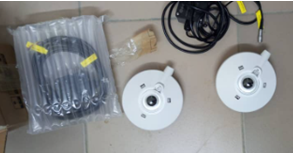
The two pyranometers used are model BGT-TBQ (L-B), with an output signal ranging from 0 to 20 mV, a sensitivity of 11.120 μV/W/m², and a measurement range of 0 to 2000 W/m² (Figure 1).


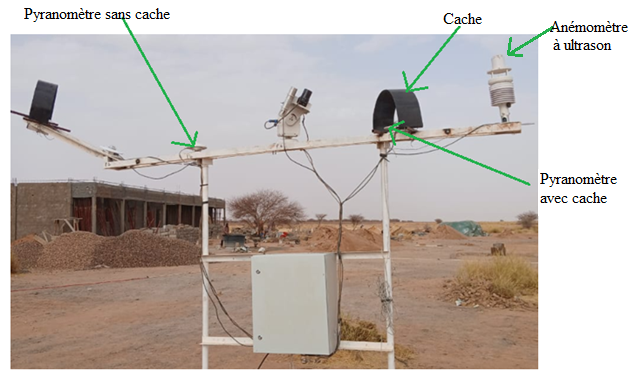
These pyranometers are placed horizontally and mounted on a support with a north-south orientation. One of the pyranometers is equipped with a shade for measuring diffuse radiation (D), while the other, without a shade, directly measures global radiation (G). These pyranometers are mounted on a metal support (Figure 2). To obtain the direct normal irradiance (DNI), the average value (Imoy) of the direct radiation is first determined from its maximum value. With Imax obtained from the various daily readings by calculating by equations 10.
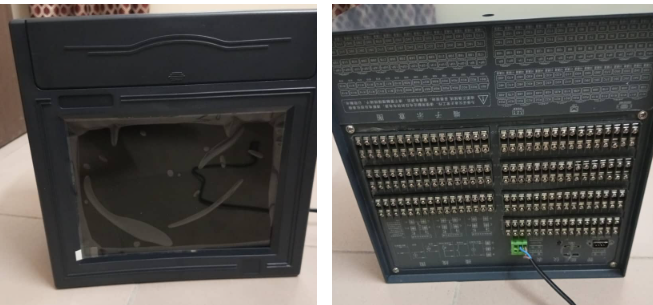
To obtain measurement results, these pyranometers are connected to a data acquisition system featuring a manual display and 48 channels configurable as logic inputs/outputs (Figure 3). It is characterized by:
• Input: DC curent 4 à 20 mA; 0 à10 mA; 0 à 20 mA;
• Input voltage: 0 à 20 mV; 0 à 100 mV; 0 à 5 V; 1 à 5 V;
• Input resistor: Res (0 à 400  );
);
• Input thermocouple: S, B, K, T, R, E, N, G;
• Input: Thermistance: PT100, Cu50, G53, Cu100, BA1, BA2;
• Output:current 4 à 20 mA;
• Output: transmission output 4 port current;
• Capacité de la charge 750 
• Alimentation de sortie 24 V DC
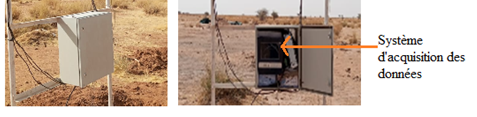
This data acquisition system is installed on the same mounting as the two pyranometers described previously (Figure 4).
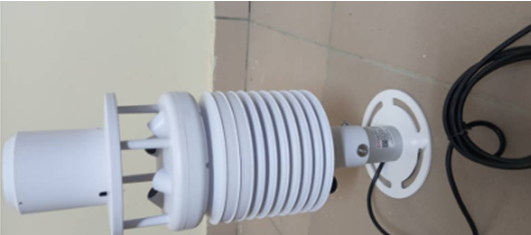
The Linke turbidity factor was corrected based on the site's hygrometric data. These hygrometric data were collected using an ultrasonic anemometer designed to measure eight parameters: rainfall, wind speed, ambient temperature, sound intensity, wind direction, ambient humidity, atmospheric pressure, and ambient air density. It is the RIKA ELECTRONIC Tech Co., Ltd. model; power supply 12–24 VDC, RS-485 output, with measurement ranges corresponding to the eight (8) physical quantities listed below:
• Ambient Temperature: 
• Wind seeped: 
• Wind direction: 
• Hygrometry or relative humidity: 
• Atmospheric pressure: 
• Air particule in atmosphere: 
• Sound pressure: 
• Rainfall: .
.
Humidity measurements yielded an annual average value of 20% for the area; more specifically, the average values for the months selected for this experiment (May and June) were 7% in May 2026 and 17% in June 2026, respectively. Based on these results, we proposed values for the precipitable water content to replace those found in the literature (Table 2). By incorporating this value into the Linke turbidity factor, we arrived at a robust formulation of Kasten’s mathematical model that yields a tangible result.
To estimate incident solar irradiation, daily on-site measurements and Kasten's mathematical model—which employs semi-empirical equations—were used 17. This model is formulated in terms of correlations. Measured and calculated values are compared, with the measured values serving as the reference for calculating the mean relative deviation. The comparison was based on the mean values of direct solar radiation. This allows for the calculation, in this case, of the relative root mean square error (RMSE) and the mean relative error (MRE) 18. These deviations are determined by equations 11 and 12.
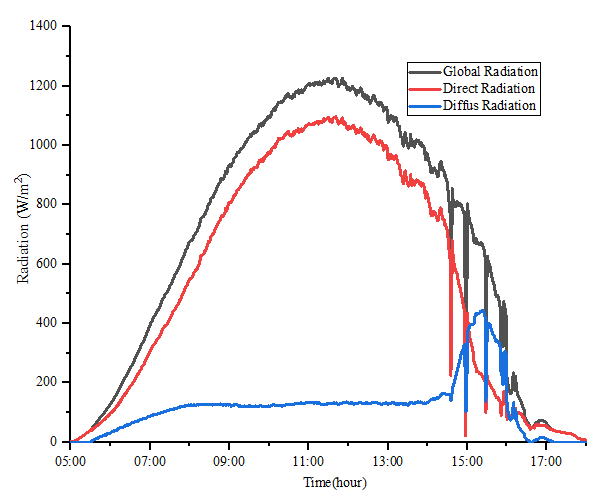
Solar radiation values measured by pyranometers made it possible to plot their variations in order to observe the pattern and behavior of each component, as shown in Figure 6. A sharp drop in direct radiation is observed after 3:00 PM, which led to an increase in diffuse radiation(Figure 6).
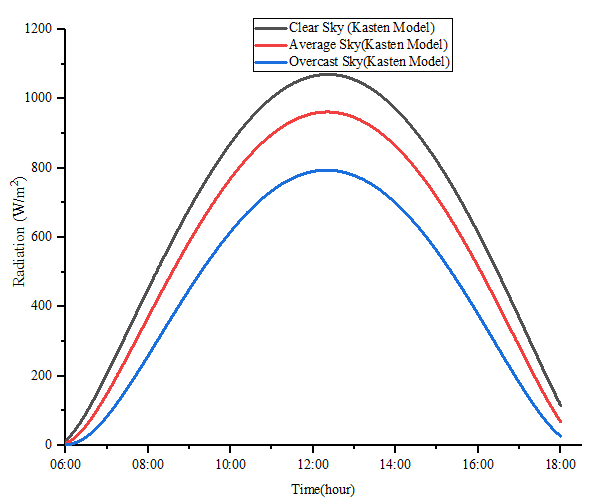
When atmospheric conditions are taken into account, the plot of the evolution of direct solar radiation determined theoretically for clear, moderately overcast, and heavily overcast sky conditions is presented in Figure 7.
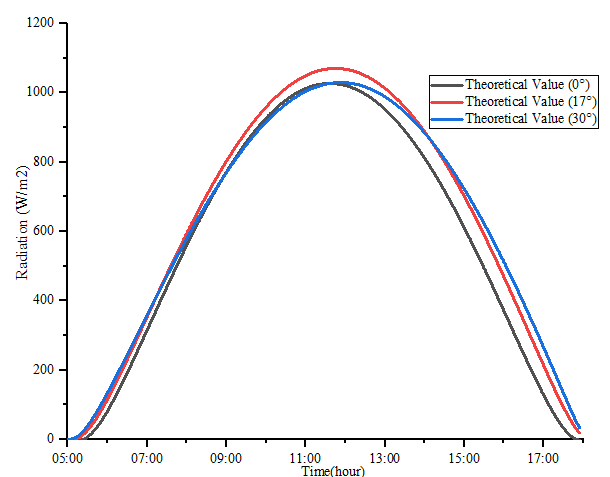
If the tilt angle of the concentrator is varied, the calculated direct solar radiation retains its initial profile but undergoes a slight variation. It is observed that the tilt angle yielding the highest solar radiation is 17°, which is closest to the location's latitude (Figure 8).
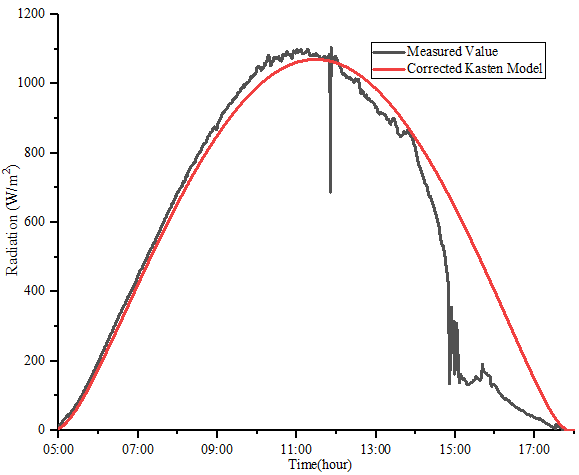
Finally, based on the assumptions yielding the best estimates of direct solar radiation specifically, a 17° tilt angle under clear-sky conditions the variation of the calculated theoretical radiation and that obtained from experimental measurements was plotted in Figure 9.
The results obtained by taking into account sky conditions and the tilt angle, combined with data from actual conditions during the ten (10) days mentioned above, made it possible to determine the average direct radiation and average annual irradiation values summarized in Table 3.
Kasten’s model had underestimated the direct radiation values for the area. This necessitated simulation work to correct the Linke turbidity factor—specifically regarding the precipitable water vapor content proposed in Kasten’s model—since humidity in this area is actually very low.
Errors calculated based on sky type—using clear-sky results as the reference—yield a relative root mean square error (RMSE) of 3.27% between clear and average skies and 8.21% between clear and degraded skies, as well as a mean relative error (MRE) of 10.20% between clear and average skies and 25.97% between clear and degraded skies. The RMSE of 3.27% indicates that under moderately clear skies, solar radiation is slightly low but acceptable. However, the ERM of 25.97% obtained when comparing degraded-sky conditions to clear-sky conditions shows that solar radiation under degraded-sky conditions may not meet the requirements for installing a concentrated solar power (CSP) plant. An analysis of errors regarding tilt angles, using the 17° angle as a reference, yields a relative root mean square error (RMSE) of 1.52% between the values obtained at 17° and 0°, and 1.03% between those obtained at 17° and 30°; it also yields a mean relative error (MRE) of 4.80% between the values obtained at 17° and 0°, and 3.25% between those obtained at 17° and 30°. These differences are relatively small; therefore, it can be stated that the tilt angle between 0° and 30° does not have a significant influence on the results. However, it is observed that this difference is smaller between the values obtained at 17° and 30°. This implies that, although the tilt angle between 0° and 30° does not significantly affect solar radiation, selecting an angle between 17° and 30° yields optimal values. Based on the measured and calculated values, and taking into account the correction applied to the Linke turbidity factor, a relative root mean square error (RMSE) of 4.57% and a mean relative error (MRE) of 11.30% are obtained, respectively. An RMSE of 4.57% is acceptable, but the MRE value of 11.30% is relatively high. It is evident that certain values are erroneous and should be excluded from the calculation. For instance, readings from June 24, 2026, showed a peak global solar radiation value of 1,666 W/m² at 11:34, with several other instances that day where radiation exceeded 1,450 W/m², even though diffuse radiation remained at its normal level of around 200 W/m². These results show not only that the two methods used to determine direct solar radiation are consistent, but also that the proposed correction to the turbidity factor makes Kasten’s semi-empirical model applicable to the Agadez region. Prior to the correction of this coefficient proposed by Kasten, the model underestimates the approximate value of the radiation at the location. The initial use of this coefficient, as proposed in the literature, stems from the fact that no precise data on these coefficients existed for the Agadez region. Indeed, the Linke turbidity factor is a parameter that influences the extinction and absorption coefficients. It also affects the meteorological parameters used in irradiation calculations—specifically temperature, which is very high in the area, and relative humidity, which is very low. The influence of this phenomenon results in relatively low levels of diffuse radiation (Figure 6), indicating less radiation attenuation in this area (due to lower levels of water vapor and aerosols). The peaks of the various observed curves show that, with a completely clear sky and a collector tilt angle of 17° (Figures 7 and 8), the instantaneous direct solar radiation is very high and can exceed 1,200 W/m² at certain times of the day. These high values can be explained by the fact that the relative humidity in the area is very low. Consequently, there is less atmospheric absorption of solar radiation. However, the curve shown in Figure 9 reveals the presence of cloud cover or rain and thunderstorm activity, given that it is the winter season. The peak instantaneous direct solar radiation is consistently observed around noon local time (GMT+1), with a typical value of approximately 1250 W/m². Another very important observation for the study of solar irradiation is that, during certain periods of the year, the sun can rise at 5:00 a.m. and set after 7:00 p.m. This results in very long daylight hours, and therefore a high level of sunshine for the area.
These results clearly demonstrate that Kasten’s semi-empirical model is applicable in this area for estimating direct solar radiation, provided appropriate corrections are made to the Linke turbidity factor—specifically regarding the precipitable water content of the Agadez region. To achieve optimal direct radiation, it is best to calculate it under clear-sky atmospheric conditions and tilt the collector at an angle close to the site's latitude. The theoretical irradiation calculated under the most favorable conditions (clear sky with optimal tilt) is 2,979 kWh/m²/year. In the worst-case scenario (overcast sky and horizontal collector position), it is 1,979.93 kWh/m²/year. Its measured value under real-world conditions is 3,359 kWh/m²/year. The irradiation value obtained under the most unfavorable conditions is well above the minimum requirement of 1,800 kWh/m²/year for a CSP system to be economically and socially viable. It can be concluded that the Agadez region possesses exceptional solar potential, with daylight hours sometimes exceeding twelve (12) hours. The tilt angle within the 0° to 30° range does not significantly affect the calculated values. The fact that a 0° tilt angle yields very high radiation values implies that, in this zone, the sun's direction is seasonal; in other words, the collector needs to be oriented towards the south or north, with even positioned horizontally and depending on the season. It is therefore possible to consider a more in-depth feasibility study not only to map the solar radiation in this area but also to assess the feasibility of constructing a concentrated solar thermal power plant.
| [1] | K. ZAKARIA, “Etude d’une centrale solaire thermique,” Badji Mokhtar Annaba-University, 2017, 1-58. | ||
| In article | |||
| [2] | S. Y. Manu, “Modélisation et expérimentation d’une microcentrale solaire a concentration : cas de CSP4AFRICA,” 2iE-Ouagadougou Burkina Faso, 2018, 123. | ||
| In article | |||
| [3] | C. A. OUSMANE, “Centrale Solaire a Concentration Pour Le Milieu Rural Au Niger : Etude Du Concentrateur et Aspects Economiques et Environnementaux”, 2iE-Ouagadougou Burkina Faso, 2017, 62. | ||
| In article | |||
| [4] | G. W. C. R. H. Aupaix, “Dimensionnement de profils de ménages pour une utilisation plus rationnelle de l’énergie,” no. Padd Ii, Belgique, 2006, 320. | ||
| In article | |||
| [5] | E. W. Ramdé, Y. Azoumah, A. Brew-Hammond, A. Rungundu, and G. Tapsoba, “Site Ranking and Potential Assessment for Concentrating Solar Power in West Africa,” Nat. Resour., vol. 04, no. 01, pp. 146–153, 2013. | ||
| In article | View Article | ||
| [6] | S. Mohamed, “Le gisement solaire,” Université Mohamed Boudiaf - M’sila, 2015,74. | ||
| In article | |||
| [7] | M. R. Yaïche and S. M. E. A. Bekkouche, “Conception et validation d’un programme sous Excel pour l’estimation du rayonnement solaire incident en Algérie. Cas d’un ciel totalement clair,” J. Renew. Energies, vol. 11, no. 3, pp. 423–436, 2008. | ||
| In article | View Article | ||
| [8] | S. DJIKA, Évaluation du potentiel solaire thermodynamique aux environs du centre d ’ enfouissement de mâchefer de SONICHAR à Tchirozérine,” UNIVERSITE ABDOU MOUMOUNI, 2022,69. | ||
| In article | |||
| [9] | B. Chaima, Estimation du rayonnement solaire incident sur un plan incliné par le modèle de Liu-Jordan: région d ’ Adrar, Abdelhafid Boussouf - Mila ,2022,80. | ||
| In article | |||
| [10] | S. DJIKA, Boubou BAGRE, SANI DAN NOMAO HAROUNA, MAKINTA BOUKAR, Evaluation of Direct Solar Radiation by the Kasten Model Compared to Online Pvgis Data around the Sonichar Clinker Burial Center in Tchirozérine Available online, www.jsaer.com Journal of Scientific and Engineering Research , 2023 , 10 ( 12 ): 107-119 Eval,” vol. 10, no. January, 2024,107–119. | ||
| In article | |||
| [11] | M. Koussa, A. Malek, and M. Haddadi, “Validation de quelques modèles de reconstitution des éclairements dus au rayonnement solaire direct, diffus et global par ciel clair,” J. Renew. Energies, vol. 9, no. 4, pp. 307–332, 2006. | ||
| In article | View Article | ||
| [12] | M. D. U. Plan et al., “Monographie regionale d’agadez,” vol. 2012. | ||
| In article | |||
| [13] | M. Mesri-Merad, I. Rougab, A. Cheknane, and N. E. I. Bachari, “Estimation du rayonnement solaire au sol par des modèles semi-empiriques,” J. Renew. Energies, vol. 15, no. 3, pp. 451–463, 2023. | ||
| In article | View Article | ||
| [14] | B. Naima, “Etude du rayonnement solaire dans la région de Batna,” UNIVERSITE DE BATNA;Algérie, 2008,98. | ||
| In article | |||
| [15] | A. Ricaud, “Gisement solaire et transferts énergétiques,” Université De GERCY-PANTOISE, 2011, 79. | ||
| In article | |||
| [16] | F. CHABANE, “Modélisation des paramètres de la conversion thermique de l’énergie solaire,” Université Mohamed Khider – Biskra,222. | ||
| In article | |||
| [17] | A. I. Image, H. Sani, D. Nomao, and M. Boukar, “Study of Four (4) Semi-Empirical Models for Estimating Direct Radiation from the Sun and Modeling for Application to the Solar Thermodynamic System,” Adv. Image Video Process., vol. 10, no. 4, 2022. | ||
| In article | View Article | ||
| [18] | Azwaw, Mansouri Nadir Makhlouf, “Dimensionnement thermique d ’ un récepteur solaire à tour à génération directe de vapeur, Université Mouloud Mammeri, Tizi-Ouzou;2021,68. | ||
| In article | |||
Published with license by Science and Education Publishing, Copyright © 2026 Seydou DJIKA, Harouna SANI DAN NOMAO, Makinta BOUKAR and Saidou MADOUGOU
 This work is licensed under a Creative Commons Attribution 4.0 International License. To view a copy of this license, visit
http://creativecommons.org/licenses/by/4.0/
This work is licensed under a Creative Commons Attribution 4.0 International License. To view a copy of this license, visit
http://creativecommons.org/licenses/by/4.0/
| [1] | K. ZAKARIA, “Etude d’une centrale solaire thermique,” Badji Mokhtar Annaba-University, 2017, 1-58. | ||
| In article | |||
| [2] | S. Y. Manu, “Modélisation et expérimentation d’une microcentrale solaire a concentration : cas de CSP4AFRICA,” 2iE-Ouagadougou Burkina Faso, 2018, 123. | ||
| In article | |||
| [3] | C. A. OUSMANE, “Centrale Solaire a Concentration Pour Le Milieu Rural Au Niger : Etude Du Concentrateur et Aspects Economiques et Environnementaux”, 2iE-Ouagadougou Burkina Faso, 2017, 62. | ||
| In article | |||
| [4] | G. W. C. R. H. Aupaix, “Dimensionnement de profils de ménages pour une utilisation plus rationnelle de l’énergie,” no. Padd Ii, Belgique, 2006, 320. | ||
| In article | |||
| [5] | E. W. Ramdé, Y. Azoumah, A. Brew-Hammond, A. Rungundu, and G. Tapsoba, “Site Ranking and Potential Assessment for Concentrating Solar Power in West Africa,” Nat. Resour., vol. 04, no. 01, pp. 146–153, 2013. | ||
| In article | View Article | ||
| [6] | S. Mohamed, “Le gisement solaire,” Université Mohamed Boudiaf - M’sila, 2015,74. | ||
| In article | |||
| [7] | M. R. Yaïche and S. M. E. A. Bekkouche, “Conception et validation d’un programme sous Excel pour l’estimation du rayonnement solaire incident en Algérie. Cas d’un ciel totalement clair,” J. Renew. Energies, vol. 11, no. 3, pp. 423–436, 2008. | ||
| In article | View Article | ||
| [8] | S. DJIKA, Évaluation du potentiel solaire thermodynamique aux environs du centre d ’ enfouissement de mâchefer de SONICHAR à Tchirozérine,” UNIVERSITE ABDOU MOUMOUNI, 2022,69. | ||
| In article | |||
| [9] | B. Chaima, Estimation du rayonnement solaire incident sur un plan incliné par le modèle de Liu-Jordan: région d ’ Adrar, Abdelhafid Boussouf - Mila ,2022,80. | ||
| In article | |||
| [10] | S. DJIKA, Boubou BAGRE, SANI DAN NOMAO HAROUNA, MAKINTA BOUKAR, Evaluation of Direct Solar Radiation by the Kasten Model Compared to Online Pvgis Data around the Sonichar Clinker Burial Center in Tchirozérine Available online, www.jsaer.com Journal of Scientific and Engineering Research , 2023 , 10 ( 12 ): 107-119 Eval,” vol. 10, no. January, 2024,107–119. | ||
| In article | |||
| [11] | M. Koussa, A. Malek, and M. Haddadi, “Validation de quelques modèles de reconstitution des éclairements dus au rayonnement solaire direct, diffus et global par ciel clair,” J. Renew. Energies, vol. 9, no. 4, pp. 307–332, 2006. | ||
| In article | View Article | ||
| [12] | M. D. U. Plan et al., “Monographie regionale d’agadez,” vol. 2012. | ||
| In article | |||
| [13] | M. Mesri-Merad, I. Rougab, A. Cheknane, and N. E. I. Bachari, “Estimation du rayonnement solaire au sol par des modèles semi-empiriques,” J. Renew. Energies, vol. 15, no. 3, pp. 451–463, 2023. | ||
| In article | View Article | ||
| [14] | B. Naima, “Etude du rayonnement solaire dans la région de Batna,” UNIVERSITE DE BATNA;Algérie, 2008,98. | ||
| In article | |||
| [15] | A. Ricaud, “Gisement solaire et transferts énergétiques,” Université De GERCY-PANTOISE, 2011, 79. | ||
| In article | |||
| [16] | F. CHABANE, “Modélisation des paramètres de la conversion thermique de l’énergie solaire,” Université Mohamed Khider – Biskra,222. | ||
| In article | |||
| [17] | A. I. Image, H. Sani, D. Nomao, and M. Boukar, “Study of Four (4) Semi-Empirical Models for Estimating Direct Radiation from the Sun and Modeling for Application to the Solar Thermodynamic System,” Adv. Image Video Process., vol. 10, no. 4, 2022. | ||
| In article | View Article | ||
| [18] | Azwaw, Mansouri Nadir Makhlouf, “Dimensionnement thermique d ’ un récepteur solaire à tour à génération directe de vapeur, Université Mouloud Mammeri, Tizi-Ouzou;2021,68. | ||
| In article | |||