In this study, raw materials composed of clay, laterite, and clinker were characterized in order to analyse their thermal and thermogravimetric behaviour and validate their use as heat storage materials in thermodynamic power plants. The raw materials were first ground (to a particle size of 100µm) and characterized using various methods (X-ray fluorescence spectrometry, X-ray diffraction, differential scanning calorimetry, thermogravimetric analysis) to better understand their different properties. This characterization made it possible to determine the various physicochemical properties of these raw materials. The aim is to make use of local materials such as clay, laterite from the Maradi region, and ash from the SONICHAR thermal power plant in order to develop new ceramic composite materials with good mechanical and thermal properties for use in thermodynamic power plants:
Thermal storage is a key area of research for the development and optimization of CSP plants around the world 1. It is a promising means of generating electricity while respecting the environment, and the current dynamic is favorable for the mass deployment of this technology 2. It is a key element for CSP plants due to the intermittent nature of electricity distribution caused by variations in demand throughout the day and across seasons 3. Under these conditions, heat storage therefore becomes a relevant solution.
However, even though the main storage materials currently available have shown interesting potential, their availability and cost do not allow for their long-term use, particularly in regions such as West Africa where the supply of materials remains difficult and expensive 8. One alternative today is to develop heat storage materials from locally available natural materials in order to offer a realistic approach that takes into account the associated new environmental, social, and economic requirements. Thus, raw materials composed of clay, laterite, and ash (clinker) from the SONICHAR thermal power plant were studied in this work with the aim of determining their physicochemical properties in order to validate them as heat storage materials in thermodynamic power plants.
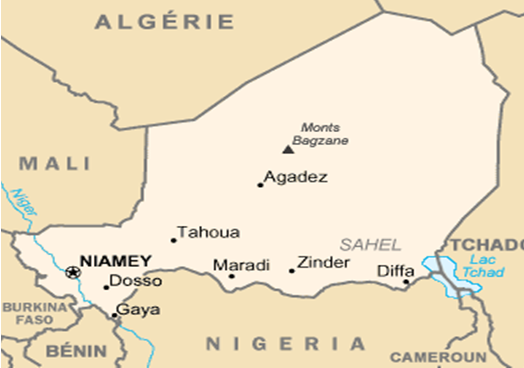
In this study, three (3) resources were used for characterization: clay, laterite, and ash. The clay and laterite were collected in the city of Maradi (location: 13° and 15°26' north latitude and 6°16' and 8°36' east longitude), and the slag was collected at the SONICHAR thermal power plant located in the Agadez region (Tchirozerine: coordinates 17° 15′ 50″ north, 7° 49′ 49″ east), as shown in Figure 1.

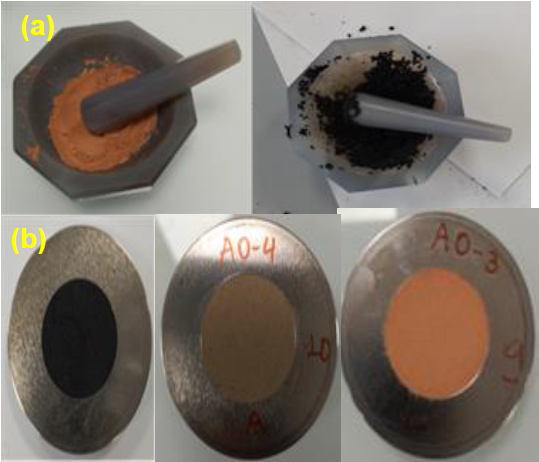
The clay, laterite, and clinker materials to be analyzed are first prepared by grinding them in an agate mortar to obtain fine particles (Figure 2 (a)). The elements constituting the materials were determined using X-ray fluorescence spectrometry. The samples were prepared by uniaxial pressing of the powders to be analyzed into pellets with a diameter of 25 mm and a thickness of 7 mm (Figure 2 (b)) The crystalline phases formed during heat treatment were identified using an X-ray diffractometer (XRD) in which the various samples were placed. This technique is based on the scattering of X-rays by matter. Once the diffractogram has been obtained, it must be processed. This involves subtracting the background noise and peaks due to the contribution of the Kα2 line, normalizing the main peaks of the two diagrams, and then identifying the main phases using Jad.6 software. A mass of 15 mg of each sample was taken for ATD/ATG analysis. These analyses were performed simultaneously between 30°C and 950°C under air scanning with a heating rate of 10°C/min. Alumina crucibles were used for the various experiments. For the DSC analyses, the following parameters were used for the different samples: the programmed heating and cooling rate was 10°C·min-1; the mass of the samples introduced was approximately 4.8, 5.3, and 6.7 mg for laterite, clay, and slag, respectively; the maximum temperature was 800°C; the experiments were carried out in air with an injection rate of 20 ml·min-1.
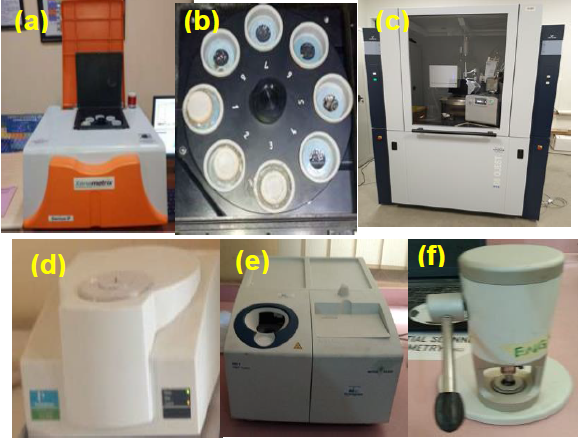
The raw materials were characterized using various methods. To determine the chemical composition, a Genius – IF Xenemetrix XRF X-ray fluorescence spectrometer (Figure 3(a) and (b)) was used. The mineralogical composition was determined by XRD, using the powder method, performed with a PANalytical Pro X diffractometer (Figure 3 (c)), with a monochromatic wavelength λCu-Kα, in a 2Ɵ scanning range between 10° and 100°. Thermal behavior was studied using TGA/DSC methods with a thermogravimetric balance (Mettler Toledo TGA/DSC 3+ model, Netherlands, Figure 3 (d)). Thermogravimetry is a technique that consists of monitoring the mass loss of a sample as a function of the treatment temperature, and DSC (Figure 3(e) and (f)) when it allows the determination of the heat flow associated with the thermal transitions of a material, such as the glass transition, melting point, crystallization temperature, and reaction enthalpies 14.


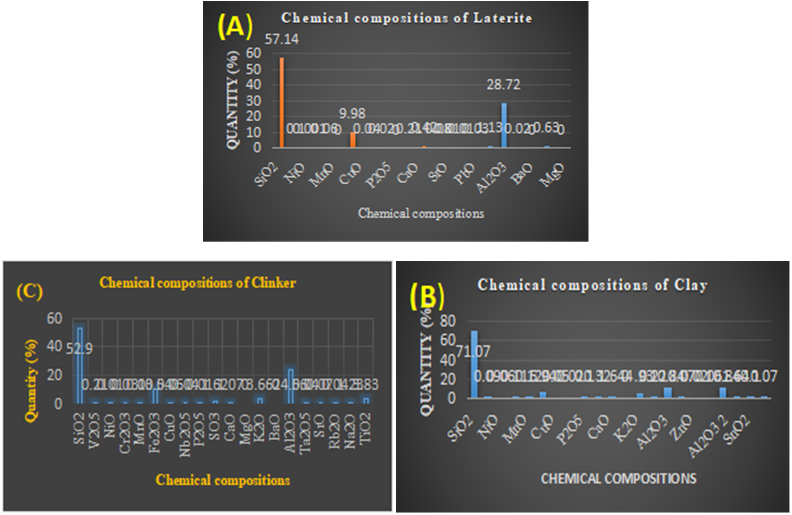
The results of the chemical composition of raw materials obtained by X-ray fluorescence analysis are presented in the histograms below.

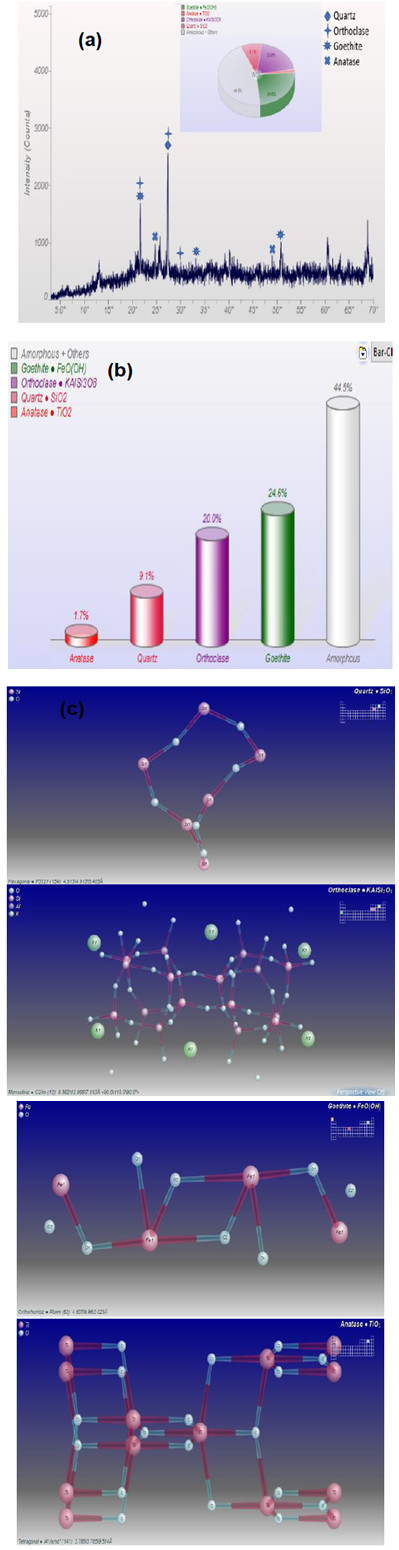
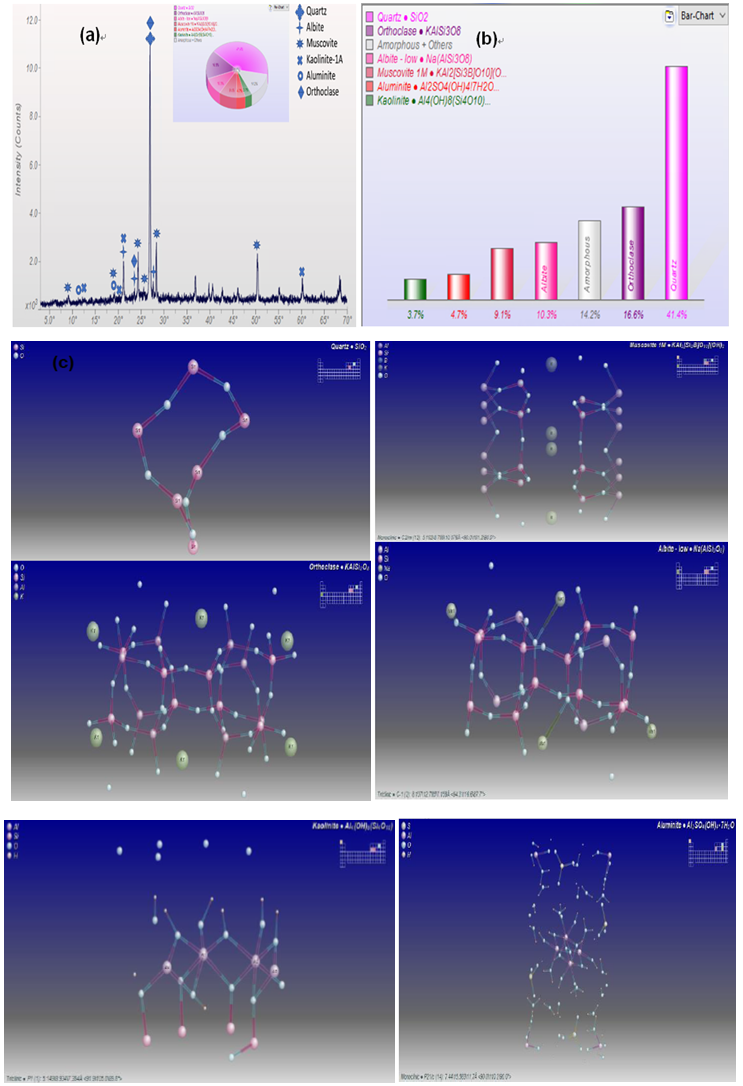
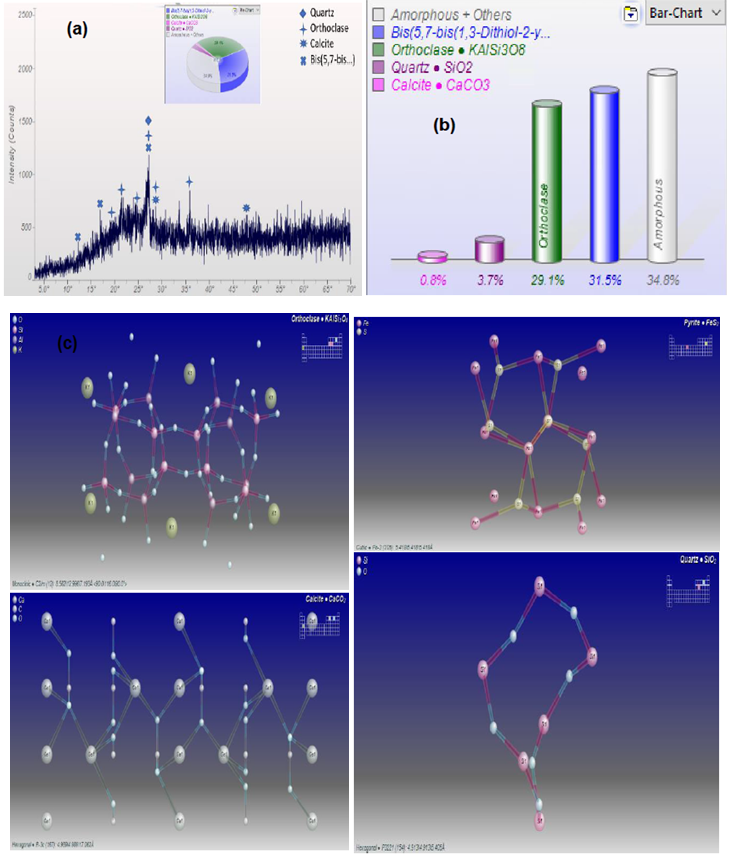
These analyses show that silica, alumina, and iron oxide are the most abundant elements in these three (3) materials. The data indicate that silica (SiO₂) is the most dominant element in clay (71%), laterite (57.14%), and clinker (52.9%), respectively. This dominance is important for the refractoriness and thermal and mechanical stability of the material. Alumina (Al₂O₃) is the second most abundant component in laterite (28.72%) and clinker (24.56%), improving the thermomechanical properties of the material. It should also be noted that, despite its low proportion, the presence of iron oxide will increase the density and thermal conductivity within the materials. This shows that they are particularly suitable for thermal storage. These results can be confirmed by the X-ray diffraction spectra (Figure 5(a) and Figure 6(a), Figure 7(a)).
X-ray diffraction (XRD) analysis identified the mineral phases present in the three samples analyzed. The diffractograms obtained (Figure 5(a) and Figure 6(a), Figure 7(a)) were analyzed using Jade.6 software 4 and revealed several peaks of varying intensities, corresponding to well-defined crystalline compounds. The peaks were attributed by comparison with standard crystallographic databases 5.

The main minerals detected in the laterite sample (Figure 5(b)) are quartz (SiO₂), orthoclase (KAlSi₃O₈), goethite (FeO(OH)), and anatase (TiO₂). This composition suggests that the material has interesting potential for thermal or refractory applications, particularly as a heat storage medium or high-temperature ceramic material 6 7. The moderate content of amorphous phases may also have a positive influence on the material's thermal absorption capacity or bulk density 8. The arrangements of the main elements in each material are shown schematically, illustrating the different positions of the atoms and their main bonds (Figure 5(c)).
The identified mineralogical composition of the other two raw materials (clay and slag) consists mainly of quartz (SiO₂), orthoclase (KAlSi₃O), muscovite ((KAl₂(AlSi₃O₁₀)(OH)₂) traces of kaolinite, calcite, iron oxide, and illite. The presence of quartz promotes thermal and dimensional stability due to its high melting point 9. In addition, the presence of iron oxide increases the density and thermal conductivity of the material 10. The presence of kaolinite, muscovite, and albite indicates a high content of phyllosilicates and feldspars, which are useful for plasticity, thermal reactivity, and mechanical properties 13. This type of composition in a material is typical for applications in refractory ceramics, construction, or thermal storage.


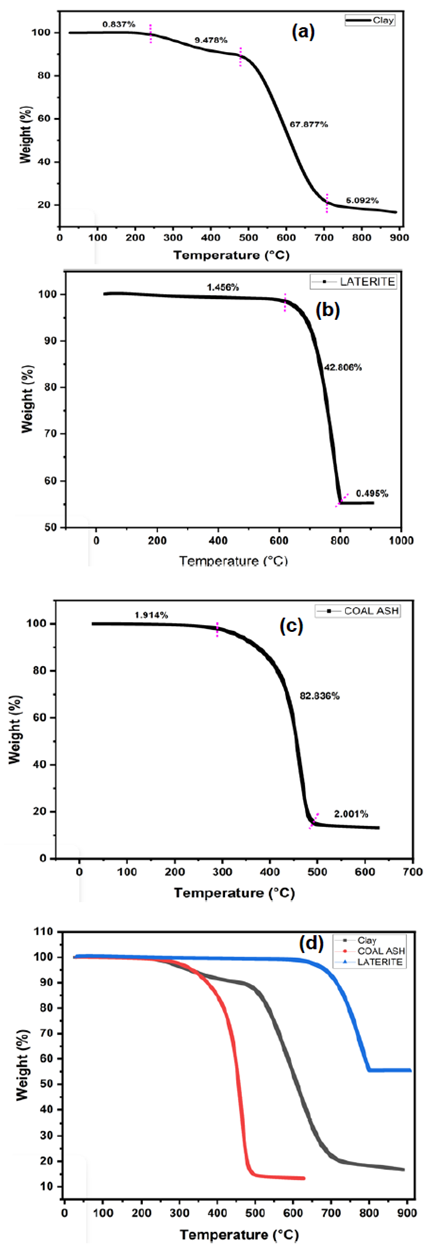
(TGA) TGA measures mass loss as a function of temperature, revealing thermal reactions such as evaporation, dehydroxylation, and chemical decomposition 14. The thermograms (Figure 8) show the weight loss as a function of temperature for the three materials (clay, laterite, and slag). This analysis made it possible to observe the variation in mass as a function of temperature and to learn about the chemical composition, thermal stability, and decomposition reactions of these materials. The ATG thermogravimetric curve for clay indicates a major loss of mass (83.28%) between 400 and 700°C. This corresponds to mineralogical transformation (dehydroxylation of phyllosilicates). Laterite shows good thermal stability, with the main mass loss (44.75%) occurring above 400°C due to dehydroxylation. On the other hand, ash exhibits the highest thermal instability, accompanied by a significant loss (86.75%) at around 500°C, while laterite is the most stable of the three (Figure 8 (d)). These results are essential for the choice of materials in thermal storage applications or in the formulation of refractory bricks 11.

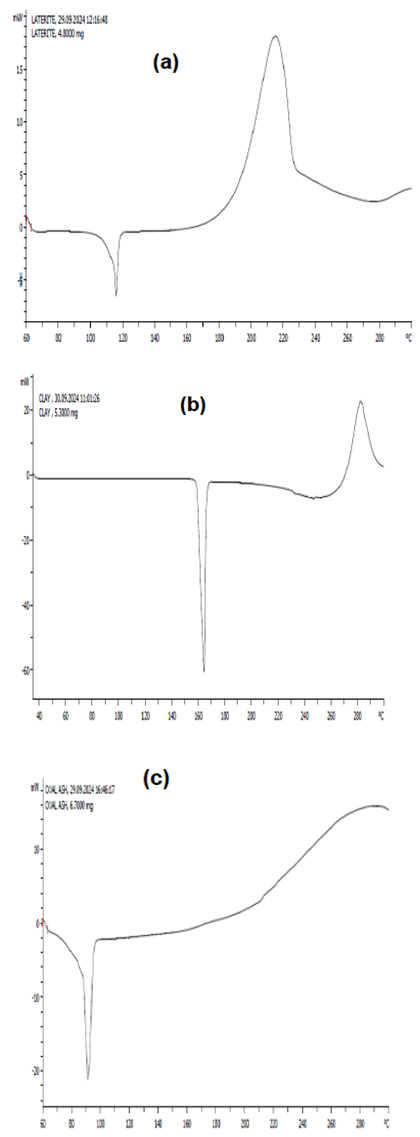
DSC (Differential Scanning Calorimetry) measures the difference in heat flow between a sample and a reference as a function of temperature 12. The DSC of laterite (Figure 9(a)) shows a slight endothermic peak around 100-130°C, which probably corresponds to the loss of free water and adsorption. Significant thermal activity accompanied by an exothermic peak is visible between 130-220°C, which could correspond to the dehydroxylation of iron and aluminum hydroxides (goethite, gibbsite) present in laterite. After 220°C, thermal stabilization is observed, indicating the end of major transformations. The clay exhibits typical behavior with physical water loss <150°C, dehydroxylation of clay minerals (kaolinite, illite, etc.) around 180°C, and the onset of structural reorganization >250°C. Slag shows few clear peaks but a gradual exothermic behavior. This may correspond to the oxidation of residual carbonaceous or metallic materials (Fe, C) and amorphous (crystalline) recrystallization 10.
The use of solid materials suitable for high-temperature energy storage is part of the search for alternatives to more conventional options, with a view to reducing storage costs.
This work has characterized clay, laterite, and clinker raw materials using various characterization techniques to determine their storage potential for use as TESM in solar thermal power plants. The results obtained from the various analyses (X-ray fluorescence, XRD, ATG/ATD, DCS) confirm the possibility of developing refractory composite ceramics based on these solid materials (clay, laterite, and slag) for use in heat storage systems.
In our further research, we plan to optimize the proportions and particle size of the powders in the mixture of clay, laterite, and clinker raw materials to formulate a single terracotta composite material for use as a TESM (thermal energy storage material) in solar thermal power plants.
| [1] | Abdoul Razac SANE 2017 Phosphate-based materials for thermal energy storage Thesis University of Toulouse. | ||
| In article | |||
| [2] | Gil, A., Medrano, M., Martorell, I., Lázaro, A., Dolado, P., Zalba, B., & Cabeza, L. F, 2010 State of the art on high temperature thermal energy storage for power generation Renewable and Sustainable Energy Reviews 14 31-55. | ||
| In article | View Article | ||
| [3] | Nicolas Calvet et al., “Sensitive heat thermal storage material for solar power plants tested under concentrated solar flux.” | ||
| In article | |||
| [4] | Lamine Zerbo, 20120Thermal Behavior of Ceramics Based on Natural Clays from Burkina Faso, J. Soc. Ouest-Afr. Chim. 034 48-56. | ||
| In article | |||
| [5] | Gil, A., Medrano, M., Martorell, I., Lázaro, A., Dolado, P., Zalba, B., & Cabeza, L. F. 2010 State of the art on high temperature thermal energy storage for power generation. Part 1—Concepts, materials and modellization. Renewable and sustainable energy reviews 14 31-55. | ||
| In article | View Article | ||
| [6] | Kenda Nitedem Eric Serge 2017 Thermal Storage Based on Local Eco-Materials for Concentrated Solar Power Plants: The Case of the CSP4 Africa Pilot Project University of Perpignan Via Domitia, presented and defended publicly on December 8, 2017. | ||
| In article | |||
| [7] | ASTM International. (2020). ASTM C1365-20: Standard Test Method for Determination of the Crystalline Silica Content of Respirable-Size Particles in Workplace Air by X-Ray Diffraction. | ||
| In article | |||
| [8] | Sherif Kharbish, “Mineralogy and physico-chemical properties of Wadi Badaa clays (Cairo-Suez district, Egypt): a prospective resource for the ceramics industry.” | ||
| In article | |||
| [9] | Zakariyaou, S. Y., Ye, H., Oumarou, A. D. M., Abdoul Aziz, M. S., & Ke, S. 2023. Characterization of equilibrium catalysts from the fluid catalytic cracking process of atmospheric residue. Catalysts 13 1483. | ||
| In article | View Article | ||
| [10] | Deer, W. A., Howie, R. A., & Zussman, J. (2013). An Introduction to the Rock-Forming Minerals (3rd ed.). The Geological Society 663-664. | ||
| In article | View Article | ||
| [11] | Kloprogge, J. T., Duong, L. V., Frost, R. L. 2005 Infrared and Raman spectroscopic study of goethite samples of different origin. Spectrochimica Acta Part A: Molecular and Biomolecular Spectroscopy 61 787–795. | ||
| In article | |||
| [12] | Dondi, M., Marsigli, M., & Fabbri, B. 1998 Recycling of industrial and urban wastes in brick production – A review. Waste Management & Research, 16 40–50. | ||
| In article | |||
| [13] | Daghmehchi, M., Rathossi, C., Omrani, H., Emami, M., & Rahbar, M. 2018 Mineralogical and thermal analyses of the Hellenistic ceramics from Laodicea Temple, Iran. Applied Clay Science 162 146-154. | ||
| In article | View Article | ||
| [14] | Fabien ROGET,Definition, modeling, and experimental validation of a thermal storage capacity based on latent heat suitable for a low-temperature solar thermal power plant. Doctoral School 352 IM2NP Laboratory. Defended on: June 11, 2012. | ||
| In article | |||
Published with license by Science and Education Publishing, Copyright © 2026 Ouzeirou ALI OUMAROU, Boubou BAGRÉ, Mahamadou HAMIDINE and Makinta BOUKAR
 This work is licensed under a Creative Commons Attribution 4.0 International License. To view a copy of this license, visit
http://creativecommons.org/licenses/by/4.0/
This work is licensed under a Creative Commons Attribution 4.0 International License. To view a copy of this license, visit
http://creativecommons.org/licenses/by/4.0/
| [1] | Abdoul Razac SANE 2017 Phosphate-based materials for thermal energy storage Thesis University of Toulouse. | ||
| In article | |||
| [2] | Gil, A., Medrano, M., Martorell, I., Lázaro, A., Dolado, P., Zalba, B., & Cabeza, L. F, 2010 State of the art on high temperature thermal energy storage for power generation Renewable and Sustainable Energy Reviews 14 31-55. | ||
| In article | View Article | ||
| [3] | Nicolas Calvet et al., “Sensitive heat thermal storage material for solar power plants tested under concentrated solar flux.” | ||
| In article | |||
| [4] | Lamine Zerbo, 20120Thermal Behavior of Ceramics Based on Natural Clays from Burkina Faso, J. Soc. Ouest-Afr. Chim. 034 48-56. | ||
| In article | |||
| [5] | Gil, A., Medrano, M., Martorell, I., Lázaro, A., Dolado, P., Zalba, B., & Cabeza, L. F. 2010 State of the art on high temperature thermal energy storage for power generation. Part 1—Concepts, materials and modellization. Renewable and sustainable energy reviews 14 31-55. | ||
| In article | View Article | ||
| [6] | Kenda Nitedem Eric Serge 2017 Thermal Storage Based on Local Eco-Materials for Concentrated Solar Power Plants: The Case of the CSP4 Africa Pilot Project University of Perpignan Via Domitia, presented and defended publicly on December 8, 2017. | ||
| In article | |||
| [7] | ASTM International. (2020). ASTM C1365-20: Standard Test Method for Determination of the Crystalline Silica Content of Respirable-Size Particles in Workplace Air by X-Ray Diffraction. | ||
| In article | |||
| [8] | Sherif Kharbish, “Mineralogy and physico-chemical properties of Wadi Badaa clays (Cairo-Suez district, Egypt): a prospective resource for the ceramics industry.” | ||
| In article | |||
| [9] | Zakariyaou, S. Y., Ye, H., Oumarou, A. D. M., Abdoul Aziz, M. S., & Ke, S. 2023. Characterization of equilibrium catalysts from the fluid catalytic cracking process of atmospheric residue. Catalysts 13 1483. | ||
| In article | View Article | ||
| [10] | Deer, W. A., Howie, R. A., & Zussman, J. (2013). An Introduction to the Rock-Forming Minerals (3rd ed.). The Geological Society 663-664. | ||
| In article | View Article | ||
| [11] | Kloprogge, J. T., Duong, L. V., Frost, R. L. 2005 Infrared and Raman spectroscopic study of goethite samples of different origin. Spectrochimica Acta Part A: Molecular and Biomolecular Spectroscopy 61 787–795. | ||
| In article | |||
| [12] | Dondi, M., Marsigli, M., & Fabbri, B. 1998 Recycling of industrial and urban wastes in brick production – A review. Waste Management & Research, 16 40–50. | ||
| In article | |||
| [13] | Daghmehchi, M., Rathossi, C., Omrani, H., Emami, M., & Rahbar, M. 2018 Mineralogical and thermal analyses of the Hellenistic ceramics from Laodicea Temple, Iran. Applied Clay Science 162 146-154. | ||
| In article | View Article | ||
| [14] | Fabien ROGET,Definition, modeling, and experimental validation of a thermal storage capacity based on latent heat suitable for a low-temperature solar thermal power plant. Doctoral School 352 IM2NP Laboratory. Defended on: June 11, 2012. | ||
| In article | |||